Introduction
Nearly a 1000 years ago, Avicenna (980–1027 AD), the Persian Philosopher and physician, first reported the association between diabetes mellitus (DM) and tuberculosis (TB) (Agarwal et al., Reference Agarwal, Ginisha, Preeti, Dwivedi and Swamai2016). In the Indian Siddha system, Yugimahamuni, the great contributor to Siddha (in his book Vaidya Chinthamani 800 AD), recorded the complexity of diabetics and how it ultimately leads to the development of TB (meganoikal) (Rajalakshmi & Veluchamy, Reference Rajalakshmi and Veluchamy1999). Gauld and Lyall (Reference Gauld and Lyall1947) found TB to be a complication of DM, with TB and DM altering the morbidity and mortality of co-morbid individuals through various interactions. It is undoubtedly true that the problem of TB–DM co-morbidity has existed for a long time, but recently there has been an interest in studying this in detail. Recent studies on this association (WHO, 2016; Jeon & Murray, Reference Jeon and Murray2008; Young et al., Reference Young, Wotton, Critchley, Unwin and Goldacre2010, Narasimhan et al., Reference Narasimhan, Wood, MacIntyre and Mathai2013) have revealed that DM triples the risk of developing TB. According to Kyu et al. (Reference Kyu, Maddison, Henry, Mumford, Barber and Shields2018), TB has a three- to fourfold increased risk because of concomitancy with DM. Diabetes mellitus has been shown to be one of the main reasons for the higher risk of progressing from latent to active TB (Jeon & Murray, Reference Jeon and Murray2008; Remy, Reference Remy2016).
Restrepo (Reference Restrepo and Venketaraman2018) found that the profile of patients with both DM and TB versus those with TB only was strikingly different, with TB–DM patients tending to be older, obese and more likely to be females, who are less likely to present behaviours associated with TB such as alcohol abuse, consumption of illicit drugs, incarceration or HIV–AIDS. Diabetes mellitus patients are more likely to be older, male and have a high mean BMI (Siddiqui et al., Reference Siddiqui, Khayyam and Sharma2016). Kornfeld et al. (Reference Kornfeld, West, Kane, Kumpatla, Zacharias and Martinez-Balzano2016) and Restrepo et al. (Reference Restrepo, Camerlin, Rahbar, Wang, Restrepo and Zarate2011) showed that newly diagnosed DM patients with TB (versus previously diagnosed DM) had a different profile as they were more likely to be males and younger patients. TB–DM patients (versus TB only) are also more likely to have lower education and higher unemployment, which complicates TB and DM management given that these socio-demographic factors are associated with lower access to health care and poorer glucose control (Abdelbary et al., Reference Abdelbary, Garcia-Viveros, Ramirez-Oropesa, Rahbar and Restrepo2016).
The risk of death increases if a person has both TB and DM. Diabetes has been found to be negatively associated with TB treatment outcomes. After controlling for age and other potential confounders, diabetes patients have a mortality risk ratio (RR) of 4.95 (Baker et al., Reference Baker, Harries, Jeon, Hart, Kapur and Lönnroth2011). Most people in developing countries (poor and deprived class) with diabetes do not go for TB diagnosis, or are diagnosed too late (WHO, 2016). According to Restrepo (Reference Restrepo and Venketaraman2018), given that an estimated 50% of DM patients in developing countries are not aware of their DM diagnosis, TB clinics are becoming hubs for a new diagnosis of DM worldwide.
Using data for 195 countries between 1990 and 2016, Kyu et al. (Reference Kyu, Maddison, Henry, Mumford, Barber and Shields2018) suggested that in countries where TB is prevalent, people with diabetes are at three times greater risk of acquiring infectious diseases. With the number of diabetic patients increasing steadily and the threat of TB looming large, patients with both conditions should be screened to ensure proper treatment. Studies have been carried out to test this TB–DM linkage in developed nations (Young et al., Reference Young, Wotton, Critchley, Unwin and Goldacre2010; Remy, Reference Remy2016). Young et al. (Reference Young, Wotton, Critchley, Unwin and Goldacre2010) showed that among the White UK population DM is associated with a two- to three-fold increased risk of TB, but found no evidence that TB increases the risk of DM. The proportion of TB cases among those with DM was elevated, and higher than that found in underdeveloped or developing countries like Nigeria, India, Peru and China. Diabetes mellitus has been shown to be highly prevalent among TB patients in Pakistan (Noureen et al., Reference Noureen, Rehman and Hanif2017) and Brazil (Baghaei et al., Reference Baghaei, Marjani, Javanmard, Tabarsi and Masjedi2013; Pereira et al., Reference Pereira, Araújo, Santos, Oliveira and Barreto2016). Fifty-nine studies in ten countries have found that DM is prevalent among TB patients, but results vary considerably across studies for the treatment outcomes of the patients (Alkabab et al., Reference Alkabab, Al-Abdely and Heysell2015).
Among the studies carried out on Indian data, Ogbera et al. (Reference Ogbera, Kapur, Abdur-Razzaq, Harries, Ramaiya and Adeleye2017) examined diabetes and TB co-morbidity among 480 individuals from Kerala and found that patients with TB who had DM tended to have a family history of DM, a history of hypertension or central obesity. A study on a cohort of TB patients registered in selected TB units of the Revised National TB Control Program (RNTCP) in Tamil Nadu revealed that half had either diabetes or pre-diabetes (Viswanathan et al., Reference Viswanathan, Kumpatla, Aravindalochanan, Rajan, Chinnasamy and Srinivasan2012). Another pioneering study conducted by Siddiqui et al. (Reference Siddiqui, Khayyam and Sharma2016) in 316 patients (both new and retreatment cases) from a Directly Observed Treatment, Short Course (DOTS) centre in south Delhi found that 16% were diagnosed with DM, of which around 10% were diagnosed before TB diagnosis and the remaining 6% at the time of DM screening at treatment initiation.
Diabetes has the potential to become an epidemic in India. India is in second place to China, with an estimated 69 million individuals being affected by diabetes, and almost one in ten adults (9.3%) estimated to be affected by the disease (IDF, 2015). There is evidence of a sharp increase in diabetic rates in India (Mohan et al., Reference Mohan, Sandeep, Deepa, Shah and Varghese2007; Jayawardena et al., Reference Jayawardena, Ranasinghe, Byrne, Soares, Katulanda and Hills2012; Akhtar & Dhillon, Reference Akhtar and Dhillon2017). On the other hand, TB prevalence had not shown any significant improvement over the same period. The Government of India’s Revised National Tuberculosis Control Programme (RNTCP), implemented in 1997, uses the DOTS strategy for TB diagnosis and treatment, available at no cost. In this scenario, testing the association between TB and DM in the Indian context using large-scale data would perhaps provide useful information for policy-makers and health providers to understand the co-morbid epidemiology and implement targeted interventions, including the treatment of co-morbidity through synergies of these health programmes. The present study aimed to provide a thorough characterization of DM–TB co-morbidity using national-level survey data, and identify risk factors using multivariable analysis. Furthermore, it attempted to answer the question ‘How does TB risk vary among diabetic and non-diabetic persons across different socioeconomic groups, BMIs and lifestyle behaviours in India?’ The effects of self-reported and diagnosed DM on TB among men and women of reproductive age were examined separately.
Methods
Data source
Data were from the fourth round of the National Family Health Survey (NFHS-4), which was conducted in 2015–16 and covered all union territories, 640 districts and 35 states of India. This was a large-scale survey conducted under the supervision of the Ministry of Health & Family Welfare (MoHFW), Government of India. The International Institute for Population Sciences (IIPS), Mumbai, was a nodal agency designated by MoHFW. The survey adopted a multistage stratified sampling design to provide various demographic and population health outcome indicators. A total of 601,509 households were interviewed with a response rate of 98% (over 90% in the case of every state and union territory), and 97% for eligible women aged 15–49 years and 92% for men aged 15–54 years.
The survey collected clinical, anthropometric and biochemical (CAB) information for respondents, including data on measured blood glucose levels. Random blood glucose level was measured using a glucometer with glucose test strips (finger-stick blood specimen) for all eligible women and (in the state module subsample of households only) eligible men. Informed consent was given by all respondents for the blood tests. The response rate for random blood glucose measurement was more than 97% for both women and men, and was uniformly high in all groups, but slightly lower in urban than rural areas for both sexes (IIPS & ICF, 2017). NFHS-4 data comprises individual-level data for 112,122 men aged 15–54 and 699,686 women aged 15–49. However, due to missing data on diabetes, the study’s final sample size was reduced to 107,575 men and 677,292 women.
All 29 Indian states were included in the study: Uttar Pradesh (UP), Bihar (BH), Madhya Pradesh (MP), Maharashtra (MH), Andhra Pradesh (AP), Kerala (KL), Karnataka (KN), Tamil Nadu (TN), Uttarakhand (UK), Jharkhand (JH), Rajasthan (RA), Odisha (OD), Assam (AS), Gujrat (GJ), Chhattisgarh (CHT), Punjab (PN), Himachal Pradesh (HP), Jammu & Kashmir (J&K), West Bengal (WB), Haryana (HR), Nagaland (NG), Goa (GA), Sikkim (SK), Meghalaya (MG), Mizoram (MZ), Delhi (DL), Tripura (TR), Arunachal Pradesh (ARP) and Manipur (MN). Also, all seven Union Territories were included: Andaman & Nicobar Island, (AN), Lakshadweep (LD), Chandigarh (CD), Dadra Nagar Haveli (DN), Daman and Diu (DD) and Puducherry (PD). Further detail of survey sampling and methodology can be found in the survey report (IIPS & ICF, 2017).
Information on TB from the survey ‘person file’ (collected through the household tool) was linked to that in the ‘men and women files’, which contained individual-level information including background characteristics, self-reported diabetes and tested glucose levels. The survey data primarily focused on female respondents and the male sample was smaller than the female sample, so the individual data files could not be combined and the analysis was conducted for men and women separately. Information on TB was available for all ages, but data on individual characteristics, including diabetes and BMI, were only available for adults aged 15–54.
Variables
The outcome (dependent) variable was ‘whether a person reported having TB’. In the household questionnaire, heads of household were asked if any of the usual members of the household had had TB. In the robust Poisson regression model, if a person reported ‘yes’ to having TB it was coded ‘1’, and ‘0’ otherwise.
The explanatory (independent) variables included the two DM variables ‘self-reported DM’ and ‘diagnosed DM’. Individuals were classified as having ‘self-reported’ diabetes if they responded affirmatively to the question: ‘Do you currently have diabetes?’ They were classified as having ‘diagnosed’ diabetes if a DM test conducted up to the date of the survey gave a blood glucose level of ≥140 mg/dl. This cut-off included both diabetes and prediabetes cases (Somannavar et al., Reference Somannavar, Ganesan, Deepa, Datta and Mohan2009; Ghosh et al., Reference Ghosh, Dhillon and Agrawal2019).
Other demographic and social factors included, based on prior predictors of TB, were age (15–29 years; 30–39 (women), 30–44 (men); 40–49 (women), 45–54 (men)); caste (Scheduled Caste (SC), Scheduled Tribe (ST), Other Backward Caste (OBC), General/other); religion (Hindu, Muslim, Christian, other); education (no education/illiterate, primary, secondary, higher); wealth index of household (poor, middle, rich); place of residence (rural, urban). The lifestyle factors BMI, smoking, drinking alcohol and use of cooking fuel (safe, unsafe) were also considered as predictors of TB.
Statistical analysis
Bivariate and multivariate analyses were performed to test the association between DM and TB (Chi-squared test). State/UT-level prevalences for TB and diabetes were calculated: the estimates for TB were among individuals of all ages, and those for DM were for adults only (males aged 15–54 and females aged 15–49 years).
In the multivariate analysis, robust Poisson regression models were used to examine the association of diabetes with TB after controlling the background characteristics for men and women separately. As TB is a ‘rare event’, a robust Poisson model was used as it fitted better than logistic regression (Zou, Reference Zou2004). Although Poisson regression is used when outcomes are measured in counts, it can be used for a binary outcome when the outcome is rare but measured in large samples (Zou, Reference Zou2004; Saikia & Ram, Reference Saikia and Ram2010). Separate models were built to see the effect of diagnosed and self-reported diabetes on TB among males and females. Model 1 and Model 3 used self-reported DM, while Model 2 and Model 4 considered diagnosed DM as predictors of TB among men and women.
A Chi-squared test was used in bivariate analysis to test the association between TB and DM and other variables. Analyses were performed using Stata 14.0 for windows (StataCorp, USA).
Results
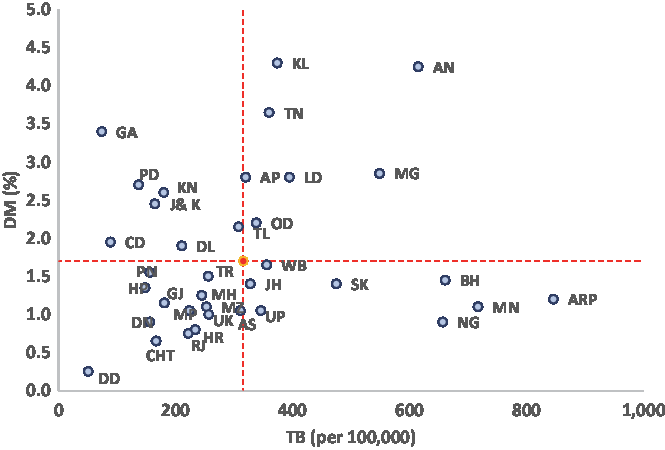
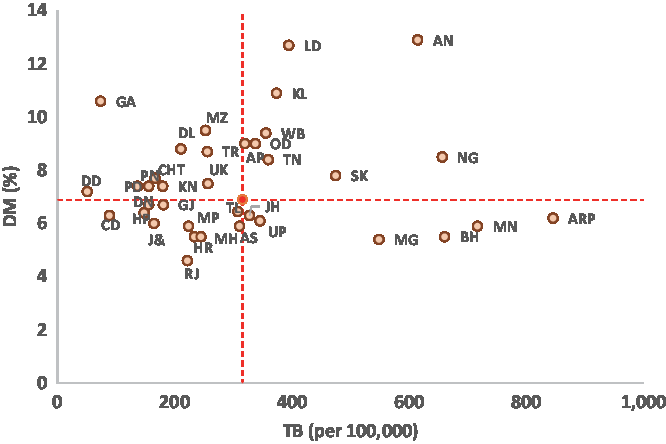
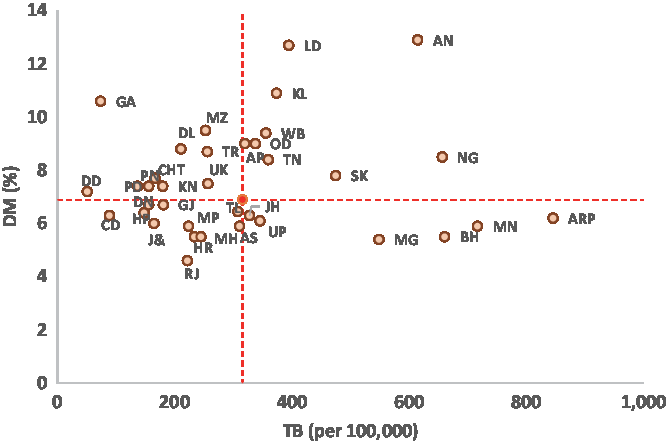
The state-level prevalences of TB and self-reported and diagnosed DM are shown in Figures 1 and 2, respectively. The red dashed lines show the all-India figures. India had 316 cases of TB per 100,000 at the time of the survey – 1.7% with self-reported DM and 7.1% who had tested positive (including prediabetes) for DM (diagnosed diabetes). Andaman & Nicobar, Kerala, Tamil Nadu and Lakshdeep and Odisha showed a marked double burden of TB and DM as co-morbidity was above the national average. In these states, co-morbidity was present irrespective of how diabetes was measured (self-reported or diagnosed). In addition, Meghalaya had above national average figures for both TB and self-reported DM, while Nagaland, Sikkim and West Bengal reported higher prevalences of TB and diagnosed DM. Bihar, Manipur and Arunachal Pradesh reported very high levels of TB but lower prevalences of DM. Furthermore, Goa showed a very high prevalence of DM but low level of TB.
Prevalence of TB by self-reported DM for states of India.

Prevalence of TB by diagnosed DM for states of India.
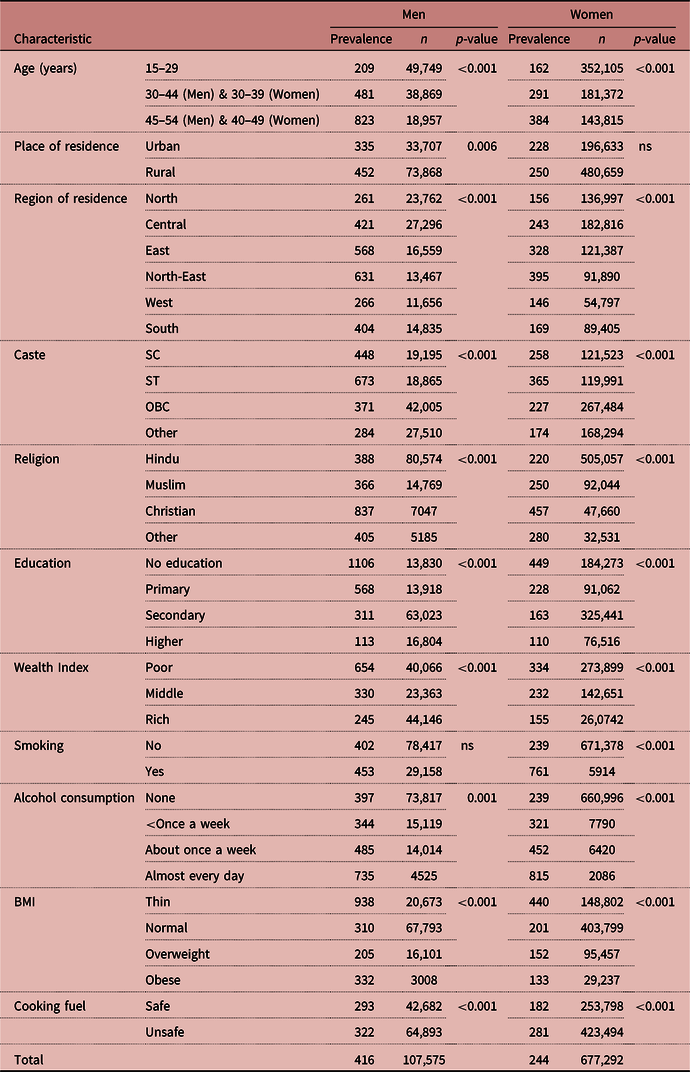
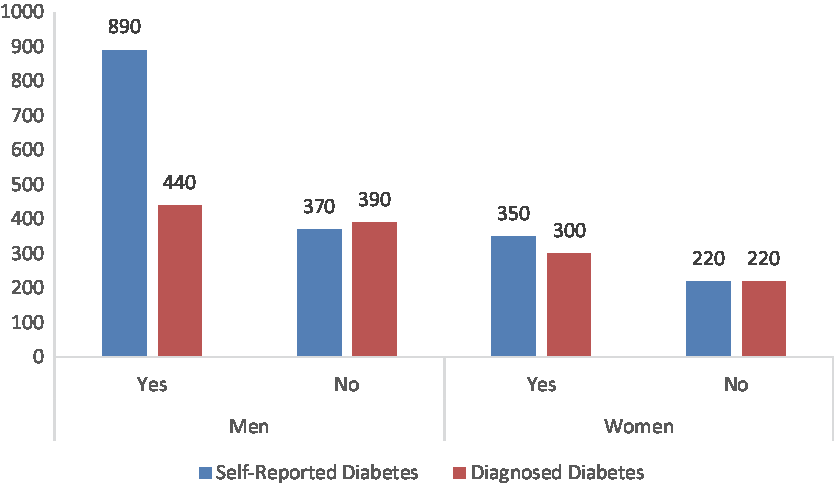
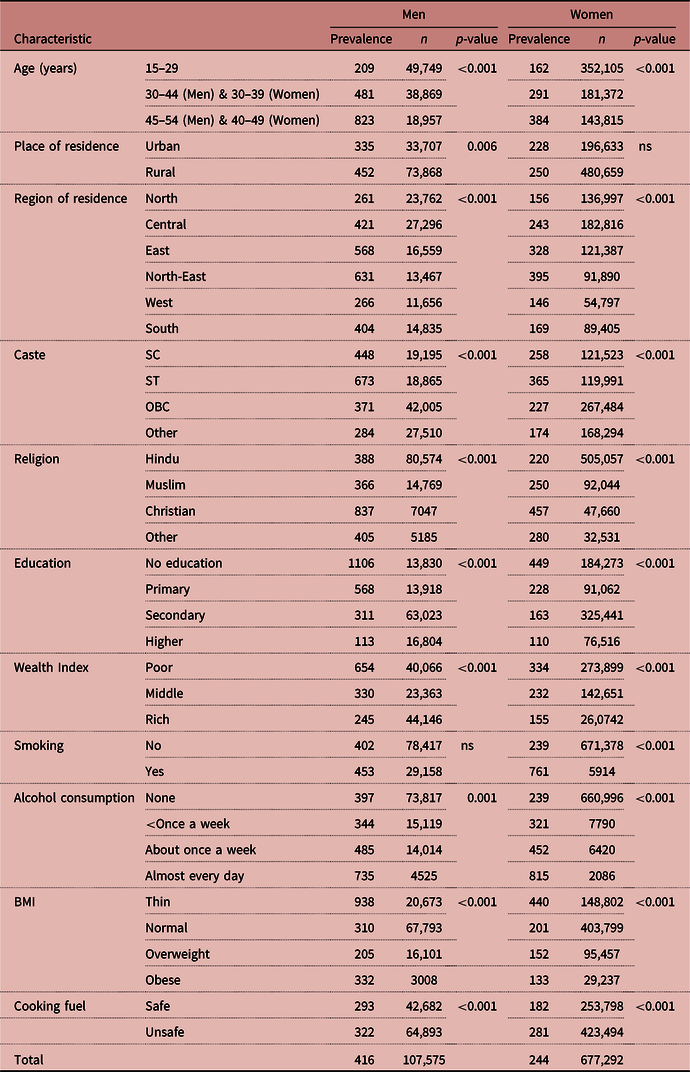
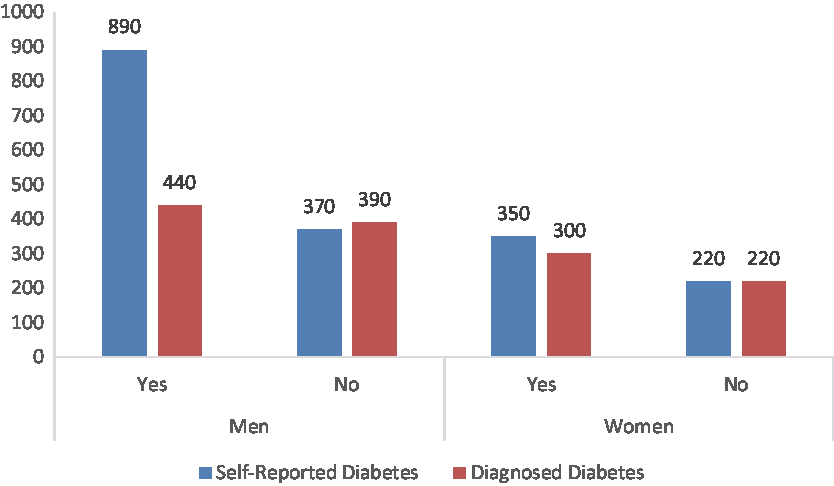
In the all-India sample, the prevalence of TB was 416 per 100,000 among men aged 15–54 and 244 per 100,000 among women aged 15–49 (Table 1). It was significantly higher among individuals (men and women) who had diabetes compared with those who did not (Figure 3). The prevalence of TB among men who self-reported having DM was 866 per 100,000 compared with 407 per 100,000 among those who did not report self-report having DM (p < 0.001). Among men who had tested positive for DM at the time of survey, the TB prevalence was 477 per 100,000, against 410 for those who were tested negative (p < 0.01). Although women with DM also showed a higher prevalence of TB, this association was not as strong as it was for men. Among both men and women, self-reported DM showed a stronger association with TB than did diagnosed DM.
Prevalence of TB (per 100,000) among men aged 15–49 and women aged 15–54 by background characteristics
ns: not significant.
Prevalence of TB (per 100,000) among men and women by DM status.
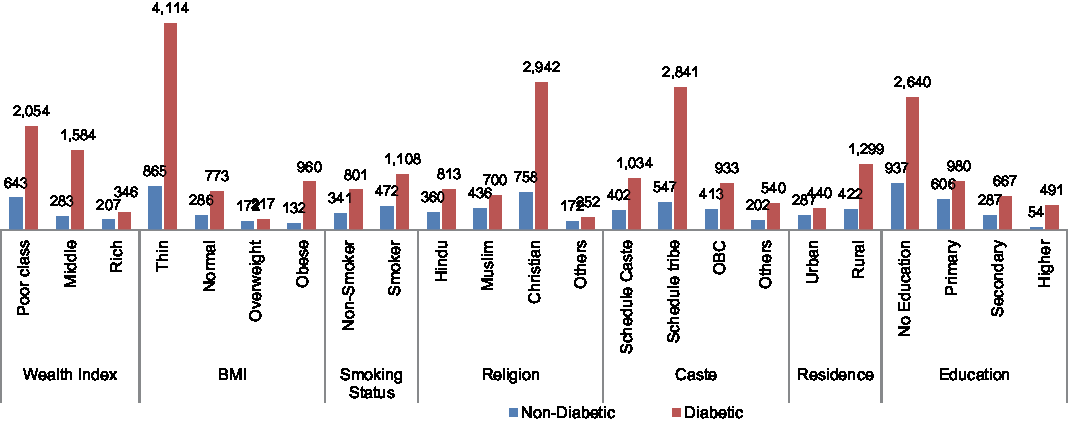
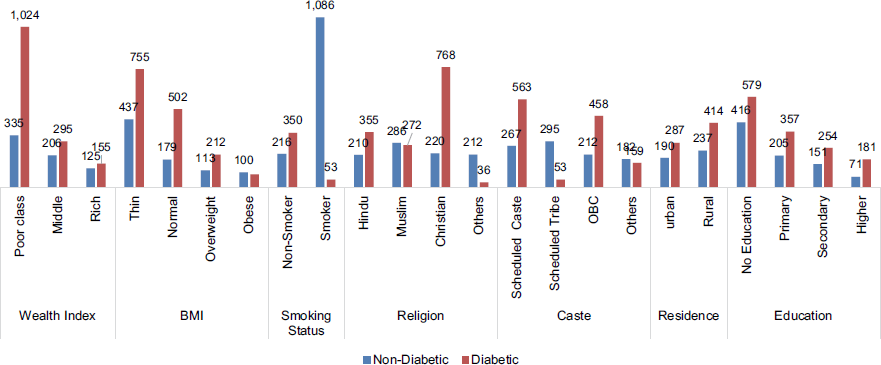
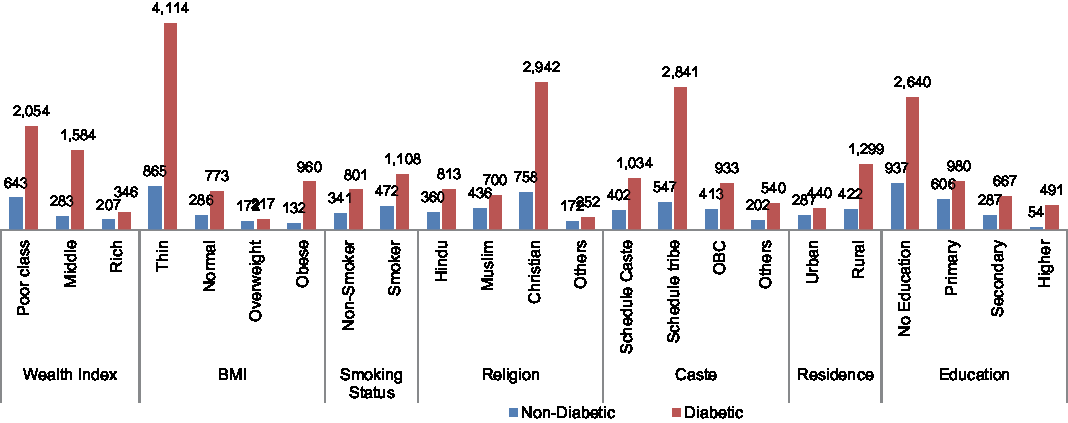
The association of TB and diabetes for men by different background characteristics had an interesting pattern (see Figure 4). Co-morbidity of TB and DM was higher among men than among women. A very high proportion of men reported TB who also had diabetes and who were thin (4114 per 100,000), poor (2054 per 100,000), uneducated (2640 per 100,000), Christian (2942 person per 100,000) and from STs (2841 person per 100,000). Similar analyses among women (Figure 5) showed that diabetic women from poor households had a higher rate of TB (1024 per 100,000) than non-diabetec women (335 per 100,000). In addition, diabetic women who were Christians, from SCs and illiterate had higher TB prevalences than their counterparts. Among diabetic women, smoking was found to be an important risk factor for TB (1086 per 100,000).
Prevalence of TB among men aged 15–54 by diabetes status and background characteristics.
Prevalence of TB among females aged 15–49 by diabetes status and background characteristics.
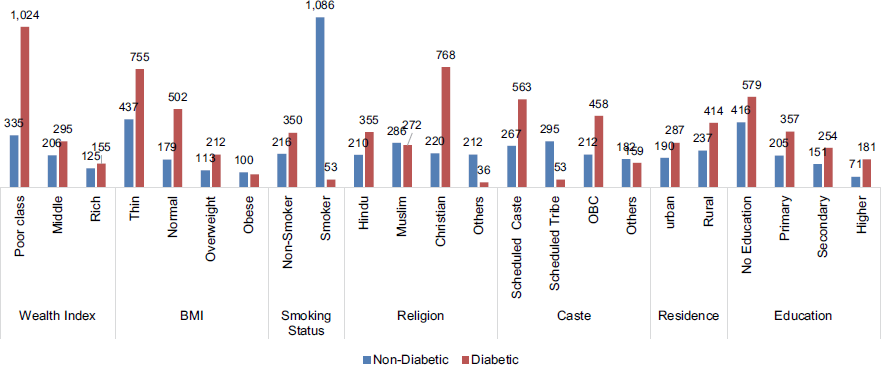
Table 1 presents the prevalence of TB by sex. Age had a positive, and BMI a negative association with TB prevalence for both men and women. Higher proportions of adult men (1106 per 100,000) and women (449 per 100,000) with no education reported suffering from TB than those with higher education (113 per 100,000 for men and 110 per 100,000 for women). Similarly, a larger proportion of men (654 per 100,000) and women (334 per 100,000) from households in the lower wealth quantile suffered from TB than those in richer households (245 per 100,000 for men and 155 per 100,000 for women). A higher prevalence of TB was observed among adult men and women belonging to STs and SCs and those who were Christians compared with other castes and religions. Similarly, a greater proportion of men (452) and women (250) from rural areas reported suffering from TB than their urban counterparts. Also, both male and female smokers reported a high prevalence of TB. Furthermore, TB prevalence was higher among persons who were from the households using unsafe cooking fuel than those who were using safe cooking fuel (322 vs 293 per 100,000 among men; 281 vs 182 per 100,000 among women).
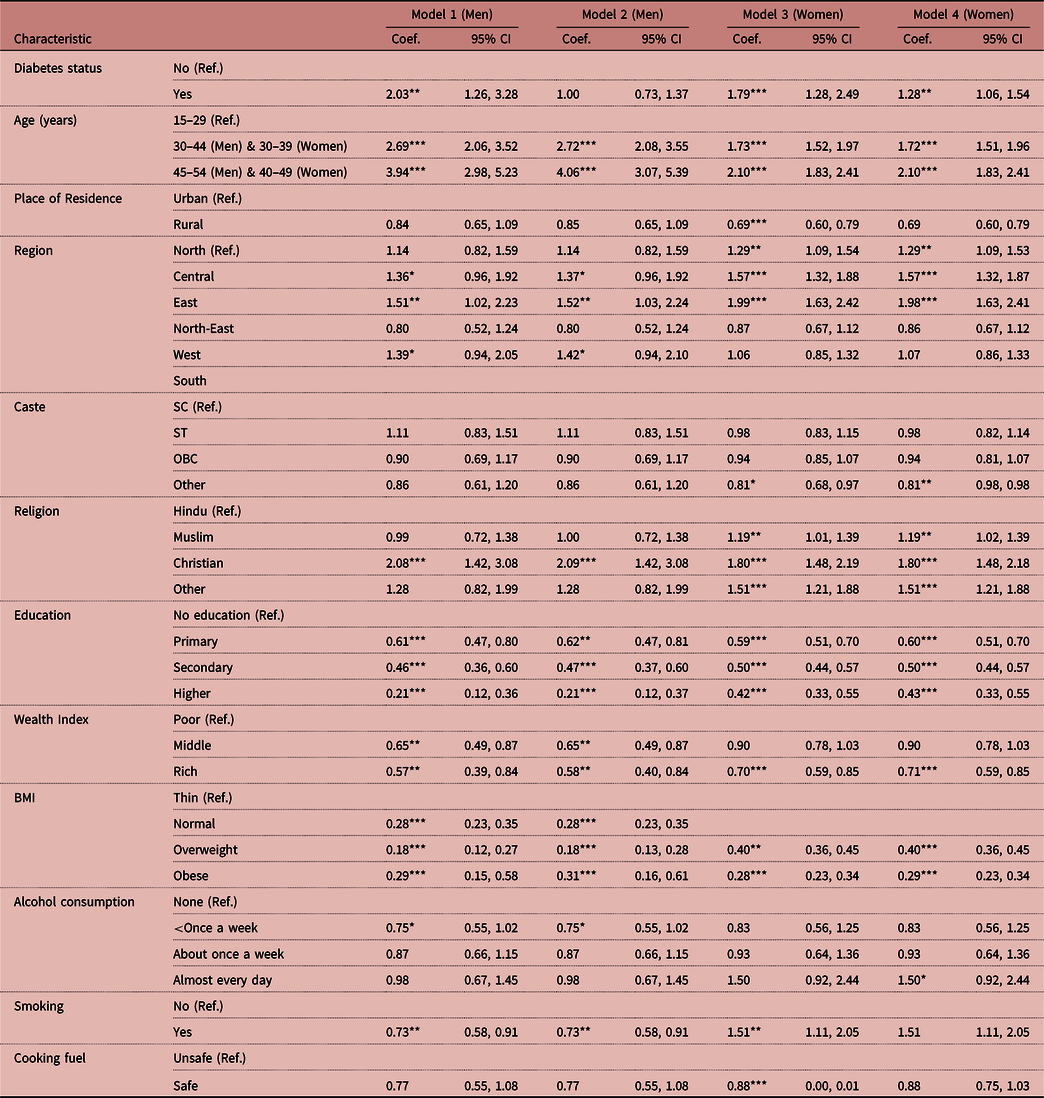
The multivariate analysis to examine the effect of DM on TB after controlling other confounders factors is shown in Table 2. A significant association was found between self-reported DM and TB for both males and females. Men and women who reported having DM were 2.03 times (p < 0.001) and 1.79 times (p < 0.001) more likely to have had TB than those who did not report DM. However, this relationship was not significant when diagnosed DM was used in Model 2. In Model 4, the relationship was significant (p < 0.05). With an increase in age, the risk of having TB increased in all models. Both men and women with higher BMIs were less likely to have had TB than those who were thin. Similarly, in all models, educated men and women had lower risks of having TB than uneducated persons. The positive association between household wealth index and TB was true for both men and women (only for highest wealth quantile). Furthermore, as evident in all models, Christians were significantly more likely to have had TB (more than 2 times, p < 0.01) than those of other faiths. Males residing in the East, North-East and South regions of India were more likely to have had TB than those in the North; in the case of women, residents of the Central, East and North-East regions were more likely to have had TB than those in the North. The effect of drinking alcohol on the risk of TB was found to be significant, and smoking among women had a positive effect on TB (1.51 times, p < 0.05).
Results of Poisson regression analysis of the factors affecting TB among men and women in India
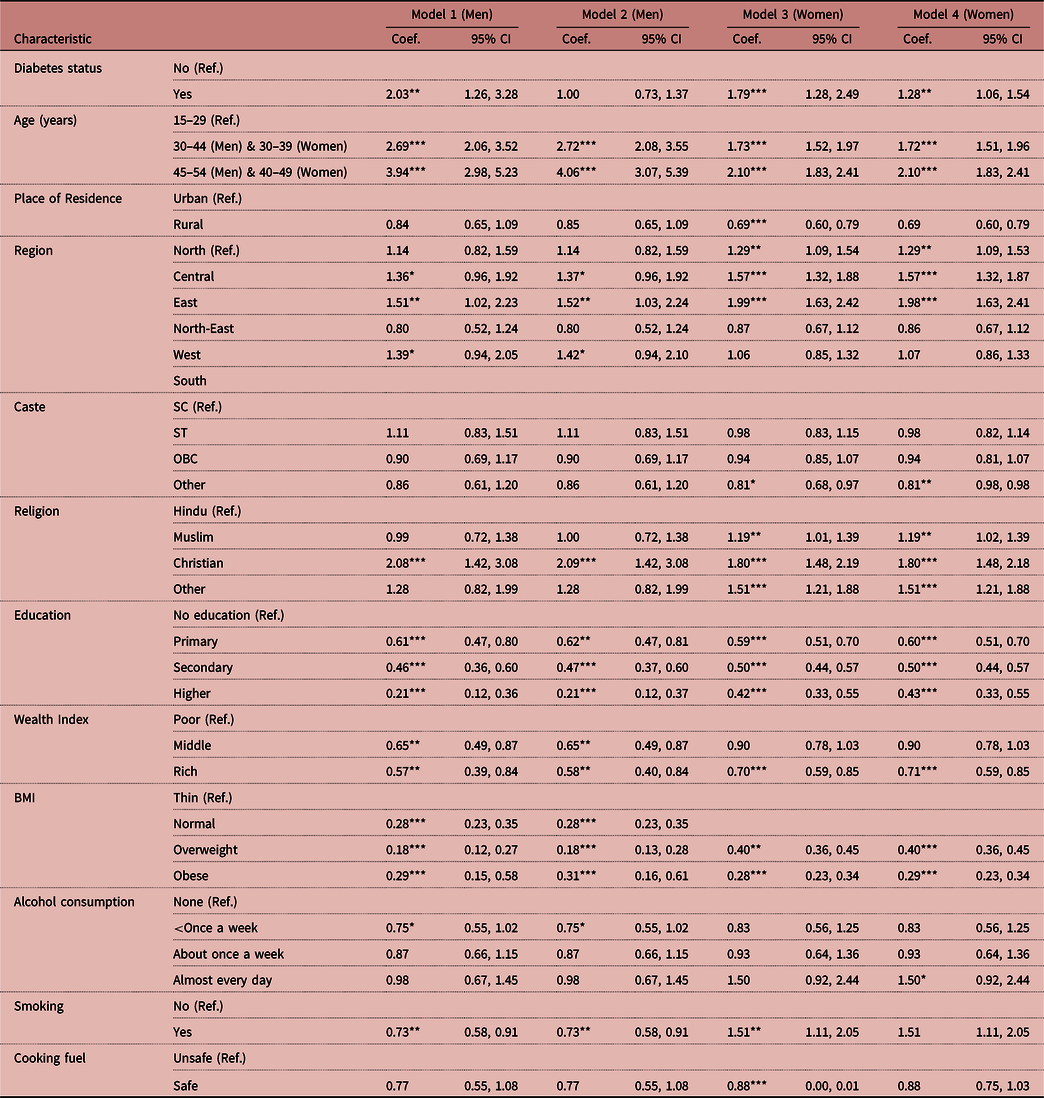
***p < 0.001; **p < 0.05; *p < 0.1.
Self-reported diabetes in Models 1 and 3; diagnosed (tested) blood glucose level (>140 mg/dl) in Models 2 and 4.
Ref.: reference category.
Discussion
Diabetes prevalence has increased worldwide, including in India, as a result of population ageing, urbanization and changes in diet and reduced physical activity patterns resulting in increasing obesity (Akhtar & Dhillon, Reference Akhtar and Dhillon2017; Restrepo, Reference Restrepo and Venketaraman2018). According to the International Diabetes Federation (IDF, 2015), over the next 30 years the prevalence of DM is projected to rise mostly in regions where TB incidence is high. Several studies have suggested that DM increases the risk of suffering from TB three-fold (Jeon & Murray, Reference Jeon and Murray2008; Kyu et al., Reference Kyu, Maddison, Henry, Mumford, Barber and Shields2018). Hospital-based studies in India testing the association between DM and TB (Viswanathan et al., Reference Viswanathan, Kumpatla, Aravindalochanan, Rajan, Chinnasamy and Srinivasan2012; Siddiqui et al., Reference Siddiqui, Khayyam and Sharma2016; Ogbera et al., Reference Ogbera, Kapur, Abdur-Razzaq, Harries, Ramaiya and Adeleye2017), have shown that this co-morbidity increases the complexity and treatment of DM–TB (Alkabab et al., Reference Alkabab, Al-Abdely and Heysell2015). To the authors’ knowledge, no prior study has evaluated this association in a heterogeneous population from different regions of India.
The two diseases TB and DM are dealt with by different programmes in India: the National Programme for Prevention and Control of Cancer, Diabetes, Cardiovascular Diseases, and Stroke (NPCDCS), and the Revised National Tuberculosis Control Programme (RNTCP). The RNTCP, implemented by the Government of India, issued guidelines for the screening of all TB patients for diabetes. Patients with TB–DM undergo the same anti-TB treatment as the general population, but it helps if diabetes is kept under control (Pacha, Reference Pacha2019). According to Sharma et al. (Reference Sharma, Visnegarwala and Tripathi2014), there are a number of barriers to the prevention and treatment of TB–DM co-morbidity. They found that while a significant number of TB patients are treated by the government health care system, diabetes patients are mostly handled by private practice.
Co-operation between public and private health care systems is needed for integrated screening, treatment and care to reduce the dual burden of TB–DM. To inform this, the present study first analysed the state-level pattern of TB–DM co-morbidity among adults. The Union Territories of Andaman & Nicobar and Lakshadweep, and two states from South India (Kerala & Tamil Nadu and Odisha), showed consistently high levels of TB–DM. This result is concordant with the findings of Kottarath et al. (Reference Kottarath, Mavila, Achuthan and Nair2015) and Kumpatla et al. (Reference Kumpatla, Sekar, Achanta, Sharath, Kumar, Harries and Viswanathan2013), who estimated the prevalence of DM among TB patients to be 19.6% in Kerala and 25% in Tamil Nadu, which are on the high side compared with the general population. South Indian states are more urbanized, and have a higher proportion of older people (Ghosh et al. Reference Ghosh, Dhillon and Agrawal2019). Furthermore, the north-eastern state of Meghalaya also reported high levels of TB–DM co-morbidity (self-reported DM). Another two north-eastern states (Nagaland and Sikkim) and one eastern state (West Bengal) reported high level of co-morbidity (diagnosed DM and TB). These states (particularly West Bengal) had higher levels of diagnosed diabetes than self-reported DM (Akhtar & Dhillon, Reference Akhtar and Dhillon2017).
This study found a significant association between DM and TB for both males and females in India in 2015–16. The rate ratio ‘TB rate among diabetics vs TB rate among non-diabetics’ suggested a higher association of TB and diabetes among men than women. The multivariate analyses suggested that both males and females were more likely to have TB if they have self-reported DM, but diagnosed DM was not a strong predictor of TB for males.
India has a large proportion of undiagnosed (tested positive at survey but not self-reported) DM (Claypool et al., Reference Claypool, Chung, Deonarine, Gregg and Patel2020). Persons testing positive for DM at the time of survey included both persons with pre-diabetes and those newly diagnosed. Newly diagnosed cases may not have been diabetic for such a long period, and therefore a positive test for DM at survey may show a weaker positive effect on TB. Furthermore, undiagnosed DM is more common among young people (Claypool et al., Reference Claypool, Chung, Deonarine, Gregg and Patel2020), which may have again reduced their risk of having TB.
Similar to the finding of Boum et al. (Reference Boum, Atwine, Orikiriza, Assimwe, Page, Mwanga-Amumpaire and Bonnet2014) and Horton et al. (Reference Horton, MacPherson, Houben, White and Corbett2016), this study found a higher prevalence of TB among men than women. This might be because, in India, more men than women use tobacco (Rani et al., Reference Rani, Bonu, Jha, Nguyen and Jamjoum2003) and are diabetic (Akhtar & Dhillon, Reference Akhtar and Dhillon2017). The present study also found that thin (BMI < 18.5) males and females were more likely to have TB than those with a higher BMI.
The study revealed that, with increase in age, the risk of having TB significantly increased in both sexes, with a greater odds ratio of suffering from TB among men than women. Hochberg and Horsburgh (Reference Hochberg and Horsburgh2013) suggested that the increased risk of TB with age may be attributed to the higher prevalence of medical co-morbidities associated with TB, which include DM, renal failure, a history of gastrectomy and malignancy. Increased reactivation of latent TB infection with increasing age of adults occurs because of higher rates of underlying malnutrition, poor immunity and smoking (Stead & To, Reference Stead and To1987; Mori & Leung Reference Mori and Leung2010). That thin persons are more likely to have TB is supported by studies by Falagas and Kompoti (Reference Falagas and Kompoti2006), Semunigus et al. (Reference Semunigus, Tessema, Eshetie and Moges2016) and Zhang et al. (Reference Zhang, Li, Xin, Li, Li and Lu2017), who observed that low BMI was associated with host susceptibility to active TB development and that the risk of TB decreased with increase in BMI.
Similar to Restrepo (Reference Restrepo and Venketaraman2018), the present study found that, irrespective of sex, with an increase in educational level the risk of TB reduced (Restrepo, Reference Restrepo and Venketaraman2018). Household wealth is another strong risk factor for TB. Co-morbid individuals have also been found to be more likely to have lower education and higher unemployment and to be from poor households, which complicates TB and DM management given that these socio-demographic factors are associated with inadequate access to health care and poorer glucose control (Malhotra et al., Reference Malhotra, Taneja, Dhingra, Rajpal and Mehra2002, Vukovic et al., Reference Vukovic, Nagorni-Obradovic and Bjegovic2008; Gilani & Khurram, Reference Gilani and Khurram2012; Desalu et al., Reference Desalu, Adeoti, Fadeyi, Salami, Fawibe and Oyedepo2013; Restrepo, Reference Restrepo and Venketaraman2018). This study found that individuals belonging to the Christian religion had a significantly higher risk of suffering from TB. Jha (Reference Jha2010) also observed a higher prevalence of TB among Christians, followed by Muslims and Hindus. The reason for this is unclear.
The regional pattern showed a significant association of TB with diabetes. Males residing in the East, North-East and South regions, and females residing in the Central, East and North-East regions of India, had higher risks of TB than those in the North region. Lifestyle behaviours such as smoking and alcohol use have a strong association with TB. Smoking increases the risk of incident TB (number of new TB cases in one year per 100,000 population), the mortality risk attributed to TB (Jee et al., Reference Jee, Golub, Jo, Park, Ohrr and Samet2009) and even the re-occurrence of TB (Panjabi et al., Reference Panjabi, Comstock and Golub2007; Thomas et al., Reference Thomas, Gopi, Santha, Chandrasekaran, Subramani and Selvakumar2005). However, the present study revealed that smoking only increased the risk of TB in women and not in men Additionally, it found a significant association between TB and alcohol consumption among men, with those consuming alcohol less than once a week having a lower risk of TB than those consuming no alcohol. Francisco et al. (Reference Francisco, Oliveira, Felgueiras, Gaio and Duarte2017) found that an alcohol intake of less than 38 g per day did not increase the risk of TB among men, but significantly it increased four-fold thereafter.
This study has several limitations. First, the NFHS-4 did not collect information on DM for all ages so analysis was restricted to those of reproductive age. As DM is highly prevalent among old-aged persons (Yakaryılmaz & Öztürk, Reference Yakaryılmaz and Öztürk2017), its effect on TB will be higher than what has been observed in the present study. Furthermore, the research was based on cross-sectional data, and the timing of initiation of the studied diseases is not known. The survey collected information on respondents’ current DM and TB status. However, it is assumed that chronic diseases, particularly self-reported DM, will have occurred prior to TB and therefore a greater effect of self-reported DM on TB was found. A reverse effect of TB could temporarily cause impaired glucose tolerance. However, due to data limitation, only the association of DM and TB could be assessed, and the effect of DM on TB was not established; the effect of TB on DM needs further evaluation, considering the timing of diagnoses and onset of the morbidities. The TB responses were reported by heads of the household for all members, and with it being a stigmatized disease, it is likely to be under-reported. Therefore, the reported prevalence of TB might be on the low side; however, under-reporting is unlikely to vary by DM status and will not influence the effect of DM on TB. Operational research using a cohort approach to establish the cause and effect relationship between DM and TB by considering all age groups and more detailed information on diseases, complications and treatment could be carried out in the future. Nevertheless, the present findings suggest a need for integrated health services for TB and diabetes, particularly among the poor, the malnourished, tribal populations and individuals with lower literacy levels.
Policy implications
India is experiencing a continuous rise in the prevalence of diabetes, and TB has not declined at the expected rate. The present study provides useful information on this co-morbidity for policy-makers. The main finding is that men in India are more vulnerable to having TB, and the co-morbidity TB–DM, than women. This needs to be brought to the attention of government programmes, which should allocate more resources to managing this co-morbidity. The study showed that men and women from poor families or tribal populations, who are thin and have with no education should be targeted in integrated adult health programmes for TB and diabetes. Given the growing epidemic of DM worldwide, DM prevention and control strategies should be included in TB control programmes and vice versa, and their effectiveness evaluated. The concurrence of the two diseases potentially increases the risk of global spread, with serious implications for TB control and the achievement of not only national but the global health objectives such as the United Nations Millennium Development Goals. In India, existing national programmes such as NPCDCS and RNTCP need to integrate TB–DM co-morbidity. Screening for DM among TB patients should be compulsory and treatment of co-morbidity should be included in adult health programmes. Furthermore, the India states Kerala, Tamil Nadu, Meghalaya, Sikkim, Nagaland, Odisha and West Bengal, and the UTs Andaman & Nicobar and Lakshadweep, are highlighted as having a higher burden of TB–DM co-morbidity.
Acknowledgments
The authors thank the reviewers for giving their useful comments for the improvement of this article.
Author contributions
AS, DP: data analysis. AS, PD: writing of original draft. PD, PN: writing, review and editing.
Funding
This research received no specific grant from any funding agency, commercial entity or not-for-profit organization.
Conflicts of Interest
The authors have no conflicts of interest to declare.
Ethical Approval
The authors assert that all procedures contributing to this work comply with the ethical standards of the NFHS-4 that has been conducted under the supervision of the International Institute for Population Sciences (IIPS), Mumbai, India, which is associated with the Ministry of Health and Family Welfare (MoHFW), Government of India (GOI). The institute conducted an independent ethical review of the NFHS protocol. More detail about the survey tools can be downloaded from http://rchiips.org/nfhs/. The interviewers obtained the respondents’ consent for participation in the survey. Separate informed consent was obtained for each type of questionnaire (household, individual, Biomarkers).