Introduction
The concept of systematic inequalities in social and health outcomes has come to form part of contemporary policy discourse over the last decade such that all political parties from left to right in the UK now pay at least rhetorical lip-service to the notion of securing ‘fairness’ (see, for example, Labour Party, 2010; Osborne, Reference Osborne2008). This rhetoric is deployed even in the face of policy decisions widely viewed as iniquitous (Yeates et al., Reference Yeates, Haux, Jawad and Kilkey2011). Moreover, there is a widespread view, expressed across the political spectrum, albeit based on different analyses of the root problem, that those in more deprived circumstances are less likely than their more affluent counterparts to be in receipt of optimal public services (Labour Party, 2010; Conservative Party, 2010; Scottish Socialist Party, 2011). Such individuals and communities are variously described as excluded, disadvantaged, underserved or hard to reach (HTR). Thus, across a number of domains a range of policies and targeted interventions has been unleashed in the last decade or so to tackle component parts of the pathways between deprivation and poor health, social and economic outcomes. However, while much has been written about excluded or HTR populations in relation to service use, there is less critical analysis of what the terminology means and how different interpretations may mediate different policy responses.
This paper is focused on understanding the concept of hard-to-reachness and has two purposes: first, to provide a critical commentary of the term hard-to-reach, particularly within the policy agenda of tackling health inequalities; and, second, to explore the policy and practice dilemmas that flow from its use, drawing on a case-study of a health improvement programme in Scotland, Keep Well (KW), aimed at tackling inequalities in cardiovascular mortality and morbidity. While offering a case-study located explicitly within the health domain, KW exemplifies key features of a broader policy approach to tackling inequalities.
Thus, in the first half of the paper we consider two related sets of conceptual questions about hard-to-reachness. First, what is the perceived policy problem? Within this we ask how the particular goals of reaching the HTR relate to wider policy goals of tackling inequalities. Second, who are regarded as HTR and for what reasons? In starting to answer these questions from a health perspective, we draw on points of connections with broader social policy debates.
What is the perceived policy problem?: Health inequalities and HTR populations
The imperative to tackle systematic inequalities in health outcomes has increasingly come to form a central stated aim of international, national and local health policies (Graham, Reference Graham2007; Judge et al., Reference Judge, Platt, Costongs and Jurczak2006; Marmot et al., Reference Marmot, Atkinson, Bell, Black, Broadfoot, Cumberlege, Diamond, Gilmore, Ham, Meacher and Mulgan2010; Benach et al., Reference Benach, Malmusi, Yasui, Martinez and Muntaner2011). Thus, in discussing how health inequalities have been conceptualised and targeted in the UK and Europe, Graham notes that health policy has largely moved away from a focus on average measures of population health to a more relative, distribution-sensitive approach. As a result, targets for reducing inequalities have become widespread as policy tools.
However, within the UK, across Europe and within the US a growing body of evidence points to confusion around the nature of the goal of tackling inequitable health outcomes and perforce the strategies required to achieve them (Graham, Reference Graham2007; Judge et al., Reference Judge, Platt, Costongs and Jurczak2006; Bauld et al., Reference Bauld, Day and Judge2008; Krieger, Reference Krieger2008). In particular, Graham illustrated the central confusion between the goals of improving the health of the most disadvantaged, reducing the gap between the most and least affluent and tackling the overall health gradient of the population. She argued that, whilst elements of all three goals were to be found in the policy documents of the UK's New Labour government (1997–2010), action focused on addressing the health disadvantages of socio-economically deprived individuals or communities and on reducing the gap between these and either the most affluent or the population average. Systematic actions to address differentials across the entire health gradient have been far less apparent. Graham posits that a focus on addressing the health of the disadvantaged, whilst important in its own right, reinforces a belief that the health problems faced by those in disadvantaged neighbourhoods are divorced from systematic social and economic inequities across the gradient and result from deficits in poor people themselves. Focusing on reducing the gap between the least well-off and the average is deemed more appropriate but also problematic because it does not address the fact that disproportionate wealth (as well as disproportionate lack of wealth) leads to an inequitable distribution of health (Lynch et al., Reference Lynch, Davey Smith, Kaplan and House2000).
The proof of the pudding, perhaps, is in the eating. Despite the increased focus on health inequalities as a policy problem and significant levels of investment in health improvement programmes that aimed to reduce the gap, the systematic variation in health outcomes between rich and poor are found to be intransigent (Thomas et al., Reference Thomas, Dorling and Davey Smith2010). Within the broad public health academic community there is consensus that, for the most part, efforts to tackle inequalities in health need to focus on material and social determinants that lie beyond the scope of health care systems (Baum et al., Reference Baum, Begin, Houweling and Taylor2009; Dorling, Reference Dorling2010; Benach et al., Reference Benach, Malmusi, Yasui, Martinez and Muntaner2011).
However, it is also argued that the NHS itself has a part to play in reducing health inequalities through a systematic focus on reducing differential access to, and usage of, health care services (Marmot et al., Reference Marmot, Atkinson, Bell, Black, Broadfoot, Cumberlege, Diamond, Gilmore, Ham, Meacher and Mulgan2010). Within this context, there has been a recent focus on augmenting the specific role of health services in preventing excess morbidity and mortality within deprived populations (Marmot et al., Reference Marmot, Atkinson, Bell, Black, Broadfoot, Cumberlege, Diamond, Gilmore, Ham, Meacher and Mulgan2010). In England, for example, this is signalled in the Health Inequalities Progress Report (Department of Health, 2007a) and in the establishment of the National Support Team for Health Inequalities (Department of Health, 2007b). In Scotland, a cross-governmental ministerial inquiry into health inequalities resulted in the ‘Equally Well’ report and implementation plan (Scottish Government, 2008a and b) which endorsed the role of preventive or anticipatory care approaches to improving the health of the most vulnerable populations. Furthermore, the notion of equity ‘proofing’ health care provision has become more mainstream (Marmot et al., Reference Marmot, Atkinson, Bell, Black, Broadfoot, Cumberlege, Diamond, Gilmore, Ham, Meacher and Mulgan2010; Department of Health, 2008; Scottish Government, 2008a).
Across the UK, health policies identify explicit roles for the national health service (and primary care in particular) in identifying and engaging those most at risk of preventable illness and least likely to access preventive services. To date, this targeted approach has been placed within the context of a more universal focus on prevention and exemplifies what Marmot et al. (Reference Marmot, Atkinson, Bell, Black, Broadfoot, Cumberlege, Diamond, Gilmore, Ham, Meacher and Mulgan2010) have described as proportionate universalism, whereby those who are deemed to be ‘hard to reach’ are the recipients of particular interventions that aim to differentially target them and increase their engagement in universally provided services. In other words, in the absence of equity in the myriad social determinants of health, they aim to provide a level playing field in terms of service receipt in relation to health need.
Simply stated, then, the policy problem is twofold: at the macro level there is the problem that material disadvantage leads to poorer health outcomes; at the micro level there is the problem that those in deprived circumstances do not, on average, engage with preventive health services to the same level as those who are more affluent, and, thus, pre-existing disadvantage is compounded. It is the latter that places an emphasis on the need to engage the HTR.
Who are the HTR and why don't they engage?
The term ‘hard-to-reach’ is used in policy discourse as a means of referring to those individuals, and groups of individuals, who are deemed to be ‘in need’ but do not make use of either universally provided services or of more targeted interventions. It is a term that is utilised across public policy domains and across countries. Both implicitly and explicitly it is the target group for policies and programmes that aim to increase engagement in education (Carpentier and Lall, Reference Carpentier and Lall2005), health (Kovandzic et al., Reference Kovandzic, Chew-Graham, Reeve, Edwards, Peters, Edge, Aseem, Gask and Dowrick2011) involvement in civic life (Brackertz, Reference Brackertz2007) and with the workplace (Yeandle and Pearson, Reference Yeandle and Pearson2001). What these diverse policy interventions have in common is the more general view that access to, and utilisation of, services needs to be augmented for certain populations. However, the types of mechanism employed by such policies and programmes range from the delivery of modified and targeted services (such as those developed through Sure Start – NESS Research Team, 2004) through the use of financial ‘sticks’ (for example, the current UK government's use of benefit withdrawal to encourage ‘employability’ (Lindsay, Reference Lindsay, Yeates, Haux, Jawad and Kilkey2011) to ‘carrots’ (exemplified by the growing use of conditional cash transfer programmes in Latin America (Bastagli, Reference Bastagli2009), where transfers are utilised to incentivise school attendance and utilisation of health services).
However, definitional problems abound. In her analysis of whether conditional cash transfer programmes promote resilience, Bastagli (Reference Bastagli2009) identifies problems in developing appropriate parameters to help identify who programmes should be targeting. In describing the use of the term HTR within the context of Australian local government planning, Brackertz (Reference Brackertz2007) argues that policy documents utilise the term to indicate a homogeneous group of constituents. She argues instead that, to be useful, hard-to-reachness should be more clearly categorised as demographic (such as place of residence), cultural (for example, social invisibility, or language spoken), behavioural and attitudinal (for example, those with previously bad experiences of participation) or structural (by which she refers to the way in which organisational practices shape access). These more nuanced definitions are largely absent from, or hidden in, the key health policy documents that aim to tackle the policy problem of hard-to-reachness.
To expand our understanding of what is meant by, and who is conceptualised as, HTR, it is helpful to consider another term that has gained currency as a means of identifying individuals and communities who are viewed as difficult to serve through either universal or targeted public service provision – social exclusion. In the last decade there has been much discussion about this concept (Burchardt et al., Reference Burchardt, Le Grand, Piachaud, Hills, Le Grand and Piachaud2002; Levitas, Reference Levitas1998; Mathieson et al., Reference Mathieson, Popay, Enoch, Escorel, Hernandez, Johnston and Rispel2008). Here we identify two ways in which thinking about social exclusion might illuminate what is meant by hard-to-reachness.
First, we argue that the two concepts relate implicitly to the same group of individuals and communities. For example, social exclusion was defined by the UK Cabinet Office's Social Exclusion Task Force (SETF) as:
a short-hand term for what can happen when people or areas have a combination of problems, such as unemployment, discrimination, poor skills, low incomes, poor housing, high crime and family breakdown. These problems are linked and mutually reinforcing. Social exclusion is an extreme consequence of what happens when people do not get a fair deal throughout their lives and find themselves in difficult situations. (Cabinet Office, 2009)
Although the above definition does not include poor health, it shares two key features with the concept of hard-to-reachness. First, it is one that can be applied at either individual or area level. Second, both terms imply homogeneity within the disadvantaged group (Brackertz, Reference Brackertz2007; Mathieson et al., Reference Mathieson, Popay, Enoch, Escorel, Hernandez, Johnston and Rispel2008).
Critics argue, however, that social exclusion has suffered from poor conceptualisation and a lack of definitional clarity. For example, it is unclear whether it is an outcome or a process; whether its defining characteristics are necessary and sufficient conditions for one to be excluded; and whether it results from structural determinants or is primarily an issue of agency (Burchardt et al., Reference Burchardt, Le Grand, Piachaud, Hills, Le Grand and Piachaud2002; Mathieson et al., Reference Mathieson, Popay, Enoch, Escorel, Hernandez, Johnston and Rispel2008).
A second way in which writings about social exclusion offer useful lessons to those interested in the concept of hard-to-reachness is in the degree to which the term can be viewed as morally charged. Labonte (Reference Labonte2006) writes convincingly that terms such as social exclusion do not explicitly acknowledge the structural determinants of inequality and can, implicitly at least, carry the suggestion that those who are not included are partly to blame for their condition. The potential for social exclusion as a concept to give off different moral messages is most aptly described by the ground-breaking work of Levitas (Reference Levitas1998). She argues that it is an ambiguous concept that acts as a means of garnering support from a wide array of political bedfellows, including those whose analysis is socialist and redistributive and who view ‘the excluded’ as having been systematically marginalised by social and economic structures, those from a neo-liberal persuasion who employ ‘the excluded’ as part of a moral underclass discourse and those from a New Labour perspective who perceive paid work as the route from exclusion to inclusion (Levitas, Reference Levitas1998). Linguistically, hard-to-reachness is arguably more clear-cut. Regardless of policy intent (as we discuss later), the term carries an explicit message that it is people (individuals or communities) who are ‘hard’ to reach in the face of services that have been ‘reaching out’ to them (Brackertz, Reference Brackertz2007).
So, what does it mean to be HTR in relation to health services? A very high proportion of the population is known to be registered with a general practice – estimated to be around 98 per cent (RCGP, 2004) and 90 per cent of NHS consultations take place in primary care (BMA Scotland, 2010). In 2007/2008, there were approximately 21.8 million patient contacts with GPs and practice nurses in Scotland, just over four contacts per person per year for the entire Scottish population (BMA Scotland, 2010). Nonetheless, the sub-population not registered inevitably has a higher representation of those with complex health and social needs such as the homeless, women fleeing abuse, transient populations and those who have been actively de-selected from practice lists. This group is likely to have an over-representation of young men, homeless people and those with chronic drug, alcohol and mental health problems (Shiner, Reference Shiner1995; Crane and Warnes, Reference Crane and Warnes2001); their needs will be different.
It is also known that the levels of consultations in poor areas are higher than in more affluent areas but that, crucially, this is not true once standardised for levels of need (Mercer and Watt, Reference Mercer and Watt2007). There is also evidence that general levels of consultation mask another important difference between the most and least deprived: attendance at screening, immunisation and preventive services is lower among those living in the poorest communities (Dixon-Woods et al., Reference Dixon-Woods, Kirk, Agarwal, Annandale, Arthur and Harvey2005). Furthermore, use of preventive services is also gendered, with fewer men taking up care (Goddard and Smith, Reference Goddard and Smith2001). From the supply side, there is evidence that primary care is not adequately resourced in the most deprived areas (Watt, Reference Watt2002; Mackay et al., Reference Mackay, Sutton and Watt2005). As a consequence, consultations are shorter, and shorter consultations are known to be associated with lower patient satisfaction (Freeman et al., Reference Freeman, Horder, Howie, Hungin, Hill and Shah2002). There is, therefore, a strong case for bolstering primary care capacity to engage those individuals and groups of individuals in preventive services. The work of researchers such as Barlow et al. (Reference Barlow, Kirkpatrick, Stewart-Brown and Davis2005), however, provides an example of how the decision of individuals to make use of services is driven by a range of factors. In a study of why women did not make use of an antenatal care intervention, they found that non-usage was caused by a lack of interest in, or misgivings about, the particular service, by a sense of being over-burdened by other aspects of daily living, by a lack of trust in services or by holding discrepant views about their vulnerability/need for the intervention.
A more theoretically interesting picture of why some groups do not make use of health services in the same way as others is found in the work of Dixon-Woods et al. (Reference Dixon-Woods, Kirk, Agarwal, Annandale, Arthur and Harvey2005). In their review of the access to health literature, they discuss the notion of candidacy which offers a helpful conceptual framework for understanding the dynamic relationship between health services and their particular patient groups. In brief, candidacy is argued to be a negotiated social construct whereby, on the basis of cultural and personal knowledge about symptoms, normative views of risk behaviours and past experience of health service encounters, people make decisions about whether their current state makes them a ‘candidate’ to use a service. Evidence supports the view that perceptions of risk are shaped, for example, by gender (Galdas et al., Reference Galdas, Cheater and Marshall2005). If individuals are in doubt of their candidacy, they may not attend services or may be susceptible to signs from their general practitioner that consultation times are pressured and therefore refrain from disclosing pertinent health worries. Once candidacy is acknowledged and presented to a general practitioner or other healthcare professional, it is then there to be reinforced or challenged as patients move through the healthcare system. In relation to hard-to-reachness the concept is potentially potent as a means of understanding the importance of structural factors, organisational systems and relationships in influencing the reach and engagement of a preventative approach such as Keep Well (KW). Thus, it helps to emphasise the bidirectional nature of hard-to-reachness, with services struggling to legitimise preventive services to a vulnerable population that questions its own candidacy. Finally, the concept is also useful in helping to view hard-to-reachness as a dynamic rather than a fixed category over time and across individual health decisions.
In summary, the concept of hard-to-reachness is problematic. It is poorly defined and insufficiently problematised in terms of how it is created or can be reduced. It has obvious connections to other dominant policy ‘problems’ such as social exclusion and health inequalities, yet the links and overlaps are poorly theorised. The aim of ensuring that those in disadvantaged circumstances are engaged in preventive health care is, nonetheless, fundamentally and morally important as a partial contribution to a wider endeavour of reducing health inequalities. Having set the scene in terms of hard-to-reachness as a conceptual puzzle we now go on to explore the policy and practice challenges it raises for those charged with its development and delivery at national and local levels of the preventive health programme, Keep Well. In the final section of the paper, we connect these challenges back to the literatures considered thus far.
The case-study: Keep Well
Keep Well (KW) is a health improvement programme implemented through primary care and aimed at tackling inequalities in cardiovascular morbidity and mortality (Scottish Executive, 2005). Notionally, the programme was modelled on the work of Julian Tudor-Hart who, through a combination of indentifying health need in routine consultations, continuity of care and empowering therapeutic patient consultations, demonstrated significant reductions in cardiovascular morbidity in comparison to other neighbouring areas in a close-knit but economically deprived community in Wales (Tudor-Hart, Reference Tudor Hart1971). The first wave of KW pilots was launched in 2006; another four waves ensued before a decision was taken in 2010 to roll out key components across Scotland. Box 1 summarises key features of the programme.
BOX 1. The Keep Well programme – Wave 1
Keep Well Policy Background: Identified as a priority in Delivering for Health (Scottish Executive, 2005) under the name of Prevention 2010.
Aim of Keep Well: To reduce inequalities in cardiovascular mortality and morbidity through engagement of the hard to reach (HTR) as measured by a reduction in the gap between pilot and Scottish averages.
Use of the term Hard-To-Reach: The term hard-to-reach (HTR) was used in early project documentation to refer loosely to those aged 45–64, registered with participating practices, that is anticipated to be living in an area with a high concentration of socio-economic problems and assumed to be less likely to be in receipt of optimal preventive services. As the programme developed the term received increasing attention. For example, guidance to the second wave of KW pilots stated that ‘the successful identification and engagement with hard to reach individuals living in our most deprived communities is viewed as the most critical aspect of this programme’. Footnote 1 Hard-to-reach’ continued to be used throughout the project as a short-hand for Keep Well's target population, and, more recently, subsequent waves of pilots were encouraged to think about particular HTR groups, such as ex-prisoners and those with mental health problems (NHS Health Scotland, online).
How was Keep Well targeted: Pilots were located in four, largely urban, areas, selected because they represented the community health (care) partnerships (CH(C)Ps)Footnote 2 with the highest concentration of their population within the most deprived data-zones in the country.
Role of pilots: Pilots were expected to reach and engage their most vulnerable populations (within the age band 45–64 years and registered with a participating general practice) in a health check to assess their risk factors for cardiovascular disease and to encourage them to accept services aimed at modifying these.
Resources and expectations: The nature of the resources made available to participating localities (initially £1M per year for two years) and the policy guidance for pilots emphasised the relatively non-radical nature of the changes that primary care was expected to make. Practices were expected to ensure that their practice registers were up-to-date and to use non-specified means to encourage those most vulnerable to attend for a cardiovascular health check and to receive appropriate treatments for identified risk factors. Additional resources could be used flexibly, for example to employ new members of staff to conduct motivational interviews with patients, to provide longer appointment times with general practitioners or other appropriate health care professionals, or to extend opening hours. The aims of improved reach and health assessment were in keeping with a range of parallel approaches within primary care aimed at reducing ill-health across the population in general, including the 2004 General Medical Services contract, and the implementation of the Quality Outcomes Framework (QOF) (NICE, 2011).
1 Notes: NHS Health Scotland (2007) Keep Well – guidelines for Wave 2 proposals (unpublished guidance to local pilots).
2 Structures introduced in Scotland in 2005 to plan, manage and implement primary care and its connections with partner organisations at a sub NHS Health Board level – covering, in 2006, an average population of 128,000 (ranging from around 20,000 for CHPs located in the Islands to 463,000 for a large, city-wide CHP).
The logic of the programme was consistent with the wider policy thinking described above. In its simplest terms, this policy logic can be represented as follows: cardiovascular health outcomes are unequally distributed across the population, and areas experiencing multiple deprivation also demonstrate inequitable levels of poor health; part of the problem of ill-health in these areas is explained by lower than average uptake of preventive health services (both in relation to supply and demand); the NHS can help to alleviate this set of problems through increasing such engagement; but, to do so, it needs to capture that part of the population not currently maximising service use – the hard to reach.
Methods
The national evaluation of KW, commissioned in 2007, was a mixed method study informed by a theory-based approach and conducted in two phases. Phase One, based on principles derived from ‘Theory of Change Approach’ (Connell and Kubisch, Reference Connell, Kubisch, Fulbright-Anderson, Kubisch and Connell1998), used documentary analysis, semi-structured longitudinal interviews and a mixture of routinely and specially collected quantitative data to explicate the theoretical underpinnings of the intervention within the five Wave 1 KW pilots. In this paper, we utilise qualitative data from the first phase to explore definitions and decisions taken in relation to the concept of HTR.
We conducted semi-structured interviews annually over three years with a sample of staff operating at national government and local pilot levels (both strategic and operational). Staff, purposively selected to provide key informant perspectives, included policy-makers within primary care and health improvement, strategic decision-makers and project managers within local pilot programmes and primary care professionals tasked with delivering KW at practice level.
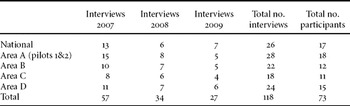
The interview schedules were framed around the aim of understanding theory, practice and progress. The protocol received ethical approval from the University of Glasgow Medical Faculty Research Ethics Committee. A total of seventy-four individuals were interviewed over the course of three years, generating 118 interviews. The geographical and temporal spread of interviews is detailed in Table 1.
Geographical and temporal spread of interviews

Interviews were carried out by all members of the team and transcribed verbatim. As a team, we underwent customised training in the use of Framework, a qualitative analysis tool developed by the National Centre for Social Research. We used this training to develop a series of thematic ‘charts’ to summarise the data. These charts were used to code all transcripts. This was undertaken across the evaluation team with considerable levels of cross-checking and the thematic charts were developed iteratively to take account of ‘new’ data and conflicting interpretations. Key themes within the original framework were purpose of KW, learning about engagement and impact on health inequalities. The resulting charts associated with these were inductively explored for the purpose of this paper.
Findings
We structure our findings around four main thematic questions:
1. What shaped KW as a policy intervention?
2. How were the HTR operationalised at national, pilot and practice levels?
3. In what ways were the target population thought to be HTR?
4. What approaches to reach were developed to tackle the policy problem?
Within each theme, we identify the key challenges for policy and practice.
What shaped KW as a policy intervention?
The core elements of the KW programme can be traced back to key health policy documents produced in 2005. These introduced the notion of anticipatory care and stated primary care as the main delivery vehicle and set a target for reducing premature mortality due to cardiovascular disease in the most disadvantaged communities by 15 per cent over the national rate by 2010 (Scottish Executive, 2005). It has been argued that Scotland's overall approach to target setting for health inequalities is most closely aligned with a focus on the ‘health of the poorest’ rather than on the predominant ‘reducing the gap’ orientation of English targets (Bauld et al., Reference Bauld, Day and Judge2008). Nonetheless, the policy documents from which KW emerged were also consistent with the purpose of ‘reducing the gap’. They manifestly did not take a ‘reducing the gradient’ approach to tackling health inequalities. In other words, KW was expected to contribute to reducing health inequalities through accelerated improvements in the health of the HTR living in the most disadvantaged communities. It would do this by tackling the recognised issue of reduced utilisation of preventive health care by those in poorer communities. Consequently, to have any possibility of reaching its goal, the effectiveness of its engagement strategies was paramount. Programmes such as KW view the HTR as those who are socio-economically vulnerable and, given the wealth of evidence supporting the socio-economic structuring of ill-health (Marmot et al., Reference Marmot, Atkinson, Bell, Black, Broadfoot, Cumberlege, Diamond, Gilmore, Ham, Meacher and Mulgan2010), this is taken to be a reasonable proxy for clinical vulnerability. Thus, tackling the poor health of those in deprived communities through improved preventive care was viewed as a legitimate mechanism for contributing to the goal of tackling inequalities in health.
Participants at a national level asked to discuss the policy drivers of this programme were largely consistent in their responses. They described how key decision-makers wanted an approach which centred on the NHS's role in tackling inequality and which complemented efforts to tackle upstream determinants of health inequalities (such as poverty). Such an approach was also expected to result in relatively short-term gains in reducing risk factors and subsequent morbidity. Finally, the then Minister for Health was viewed as strongly committed to an approach led by general practice. The initial programme, therefore, was primarily located within a medical model of health care whereby health problems are assessed in relation to presented risks and symptoms and treated using predominantly biomedical and lifestyle approaches – it bears emphasis, therefore, that it was far removed from a policy solution to the social determinants of health.
The programme was described as targeting deprivation at an area, rather than an individual, level for three stated reasons: poor neighbourhood characteristics were believed to exacerbate person poverty and ill-health; levels of deprivation were so high in some practice populations that the two approaches (area or individual targeting) would be indistinguishable; and the programme increased the likelihood of sustained organisational and professional change within participating practices.
Three main challenges were identified in relation to the overall KW approach by those involved in its development nationally and locally. First, there were early concerns about whether the model fitted the stated policy problem. So, for example, there were mixed views about whether the medical model approach to tackling the inequalities at the core of the programme could incorporate broader efforts to engage disadvantaged individuals through a recognition of the social and structural roots of their health problems; and, if not, the extent to which a narrowly focused medical programme could address the inequalities problem. Thus, the narrow focus of the programme was acknowledged to be potentially problematic.
Second, the nature of the target population was recognised to be imprecise. It was acknowledged that the majority of those living in deprived circumstances do not live in disadvantaged communities and that the programme would not, by definition, reach a sizeable proportion of the assumed HTR; conversely, it would potentially reach those who were not in medical need, the so-called ‘worried well’. In addition, the inevitability of excluding many of those most HTR through the mechanism of requiring programme ‘users’ to be registered with a general practice was recognised. Again, this emphasises early concerns that the programme was too narrow in its focus and was driven by organisational practicalities as opposed to a detailed analysis of the nature of the target group.
Third, in relation to the choice of primary care as the means of programme delivery, there were concerns about the amount of leverage that could be brought to bear both nationally and locally on general practitioners, given their independent contractor status. Other national level efforts to standardise general practice were described as, at best, putting ‘collars’ on the proverbially unherdable cats. The uneasy relationship between state and the medical profession is, of course, a theme that runs through the history of the NHS (Klein, Reference Klein2006).
How were the HTR operationalised in KW?
To understand how the HTR were operationalised, the second thematic question considers how the Scottish Government selected the five Wave 1 pilots, how those pilots selected their participating general practices and how, in turn, the target populations were identified.
The brief for the national evaluation of KW produced by NHS Health Scotland,Footnote 1 the national health improvement agency, stated that:
Wave 1, commencing in 2006, will involve GP practices in five pilot areas in local authority areas with the highest numbers of people in the most deprived 15% of the population using the Scottish Index of Multiple Deprivation.
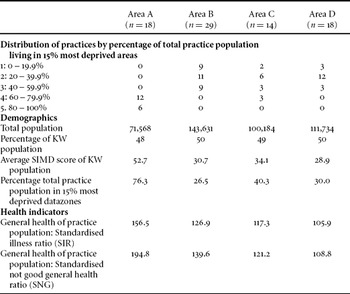
The selected pilot areas were given the opportunity to develop plans for identifying and engaging appropriate practices within their locales. Different approaches were taken by the pilots and these had a significant effect on the nature of the target populations. In Area A (where two pilots operated), there were a total of 18 participating practices (around a third of all those covered by the two CH(C)Ps). These practices were self-selected: they opted into KW. In Area B, all practices (n = 33) in the three most deprived localities (out of a total six) were invited to participate and twenty-nine agreed. In Area C, four geographical clusters of deprivation were identified and all practices covering these were asked to take part (n = 17); a total of fourteen participated. In Area D, where deprivation is less concentrated, all practices were invited to participate; a total of eighteen out of twenty-seven did so.
A number of challenges for policy and practice can be identified from the above. First, the multiplicity of approaches to capturing the most HTR populations in terms of multiple deprivation within the KW net emphasises the difficulty of operationalising what appears to be a straightforward concept at a policy level – identifying and engaging with those within a particular age-band, registered with a general practice and living within an area with high concentrations of disadvantage. Second, and echoing the challenge of engaging with general practice, not all practices identified as suitable by CH(C)Ps participated, thus not all those personally eligible within an area were included; and participating practices are likely to have differed in important ways from those that did not (the latter were themselves HTR).
As might be anticipated, these different approaches led to very different concentrations of deprivation within participating practices. Table 2 summarises the levels of deprivation and markers of ill-health across the pilot areas. Deprivation within the KW practice populations was markedly greater in the Area A pilots: the proportion of practice populations living in the most deprived data-zones was more than double that of Areas B and D and almost double that of Area C. The higher levels of deprivation corresponded to higher levels of ill-health, with the standardised self-reported illness ratio in Area A almost 57 per cent higher than the Scottish average and the not-good general health ratio 95 per cent higher. Figures for Areas B and C were also significantly raised above the Scottish average. Taken together, these figures represent a significant, if obvious, challenge for practice: if multiple deprivation is the key marker for hard-to-reachness, then the magnitude of the task of engaging the HTR is dependent on the concentrations of deprivation associated with population composition. This has implications for whether a blanket or more targeted approach is appropriate at practice-level, with the practices with high levels of deprivation in their practice population better able to implement a blanket approach (Wang et al., Reference Wang, O'Donnell, Mackenzie, Reid, Turner, Clark, Sridharan and Platt2010).
Profile of the Keep Well pilot sites

The next set of decisions taken at pilot/practice level concerned which individuals were to be targeted by the programme. For one pilot where concentrations of deprivation were less severe (Area D), patients aged firty-five to sixty-four, registered with participating practices and living in the most deprived postcodes, constituted the target population; in the other pilots, all patients registered and within the eligible age group constituted the target group. However, faced with launching the programme, pilots and practices had to make decisions about where to start within their wider target population. Variations with important implications for the notion of hard-to-reachness and in relation to tackling health inequalities were apparent. In Area A, a pilot-level definition of the HTR was initially agreed (although the most recent data confirm that this operational definition was not ever put into practice): those within the target population who had not had their blood pressure or cholesterol checked in the previous five years were flagged as HTR. This clinically driven definition is clearly a poor marker of an individual's willingness to seek appropriate healthcare. Elsewhere pilots ‘allowed’ practices to target in their own ways; at a strategic level, they felt relatively powerless to instruct general practitioners to approach the task in particular ways. This was a specific example within the programme of the more general policy problem of how to influence primary care centrally. Once again, variation was the rule rather than the exception. Whilst some practices used KW as an opportunity to try to engage those that they knew had been difficult to reach, others purposefully began with the ‘softer’ end of the HTR in an attempt to achieve ‘early wins’ and to test out their developing approaches. A third group used random targeting approaches, such as working through the target population alphabetically. With the exception of the Area D approach, there appeared to be no clear indication of systematic variation of planned approach depending on the concentration of practice-level deprivation. Pragmatic reasons were given for attempting to reach first those patients who attended regularly, described by a number of participants as ‘the low hanging fruit’. For those practices with extremely high levels of deprivation, even those individuals are likely to have been vulnerable in terms of their levels of socio-economic status. Nonetheless, ascertaining the health status of those already in regular contact with their general practitioner is intuitively not a means of engaging people who are HTR and, in practices with a less concentrated deprivation profile, concerns were raised as to whether the programme could be construed as reaching the HTR and, by implication, tackling health inequalities.
In what ways were the target population thought to be hard-to-reach?
At its most basic, the target population for KW were thought to be HTR as a function of living in the most deprived communities (although, as discussed earlier, some of the most potentially disadvantaged sub-groups were systematically filtered out through the mechanism of requiring participants to be registered with a participating general practice). The rationale for assuming that this approach to targeting would lead to the identification of those most clinically in need was based on extensive existing knowledge about the close association between clinical and socio-economic vulnerability (Sassi, Reference Sassi, Hills, Sefton and Stewart2009; Marmot et al., Reference Marmot, Atkinson, Bell, Black, Broadfoot, Cumberlege, Diamond, Gilmore, Ham, Meacher and Mulgan2010). As the project developed, the HTR started to be viewed, however, as less homogeneous. For example, from a pragmatic point of view a distinction started to be made between those regarded as HTR and those described as hard to contact. Unsurprisingly, practices found that, where there had been major housing regeneration within their practice community, their contact information was out of date. When discussing those who were contactable but still HTR because they had not attended for a health check, three explanations were proffered by professionals. One was an operational explanation centred on individuals’ work patterns – they were HTR because the hours offered by general practice did not fit with their working hours and they would be penalised financially by attendance; a second was a ‘chaotic lives’ hypothesis – namely, that people juggling a range of social and financial difficulties would find it hard to make space for health care; a third was that individuals might have had negative experiences of primary care consultations in the past. These three explanations relate to different (albeit potentially related) problems that present different policy and practice challenges requiring different solutions, from increasing flexibility of opening times through sustained efforts to provide advocacy for those suffering significant psychosocial and material disadvantage to more radical and redistributive approaches. Needless to say, only some of these solutions are in the gift of health care professionals; the responsibility for the majority of them rests with wider politics and policies (Baum et al., Reference Baum, Begin, Houweling and Taylor2009). This type of analysis of the problem was notably absent from policy and programme articulations of KW.
What approaches to reach were developed to tackle the policy problem of hard-to-reachness?
Clues to policy and practice assumptions about the ‘problem’ of the HTR can be read in the kinds of strategies utilised to increase reach. For example, as discussed earlier, KW was viewed by senior policy-makers as quite explicitly a downstream programme aimed at increasing the proportion of vulnerable individuals engaged in cardiovascular risk factor reduction and decreasing their rates of associated mortality and morbidity. To achieve this end, general practices were initially expected to contact their patients and invite them to a health check. Across the Wave 1 pilots, early reach strategies were highly conservative, with the vast majority of practices sending letters to targeted patients with fixed appointment times. These initially brought some patients in for the required health check but resulted in a high proportion of non-engagement, and each round of reminders brought diminishing returns. Pilots then moved to using open appointment times and phone calls to follow up those not keeping appointments. These were more successful, but still not universally effective. In addition, some practices used opportunistic approaches to engage patients attending for other reasons and services within the practice and, in one pilot, encouraged referrals from other organisations. Across the pilots there was a commonly held view that, whilst these types of strategy had brought significant numbers of people in for health checks, many were not HTR by any definition and the very hardest-to-reach were not being engaged. Although there were pockets of community-based activity in some geographical areas, it was well into the initial phase of funding of the Wave 1 pilots, with sizeable proportions of the target population untouched, before outreach work was systematically introduced across pilots as a means of encouraging participation. One of the perceived strengths of outreach approaches was that it came to be viewed as a means of primary care developing a more grounded understanding of the reality of disadvantaged lives and the place of health within these (Mackenzie et al., Reference Mackenzie, Turner, Reid, Wang, Clarke, Sridharan, Platt and O'Donnell2011).
Discussion
Exploration of the term hard-to-reachness through the use of a detailed policy case-study has raised a series of interrelated conceptual, policy and practice challenges that potentially impede its utility in contributing to reducing health inequalities. The relevance of these to a wider policy field lies in both the similarity of the KW policy problem/policy solution to those of a multitude of contemporary initiatives, and in the connections between hard-to-reachness and other labels for those who do less well in contemporary society.
As with comparable policies, policy-makers had two broad imperatives: to devise a solution to the problem of inequalities of outcome that would reap benefits in the relatively short-term, and to seek that solution from within statutory service provision. In response, primary care management and professionals were encouraged to develop innovative approaches to targeting and reaching their neediest population – those at the greatest risk, but not currently in optimal receipt of services. Thus, it sought solutions to inequalities recognised to be created largely through social and economic determinants outside the health service through improved uptake of existing (albeit modified) services within the health service; its imputed mechanisms of action were not at a structural level and, therefore, at best it could contribute to rather than address iniquitous outcomes (Baum et al., Reference Baum, Begin, Houweling and Taylor2009).
The potential for a contribution to this wider task is, we argue, compromised by a lack of conceptual clarity around the term HTR. There are three separate but related aspects where this fuzziness creates policy and practice problems; each of these parallels the critiques made of social exclusion in the first half of the paper.
First, as a tool to identify a target population, the term HTR is problematic in its bluntness. As with social exclusion, it does not provide adequate precision as regards its constituents. For example, it potentially conflates living in an area of relative poverty with a disinclination to make use of services and operates as a catch-all for those who live in poor places. This spatial definition of the term sits clumsily with those other groups identified as being vulnerable to poor health and social outcomes, such as the homeless, ex-prisoners, illegal drug users and those with mental health problems, regardless of geographical location. Thus, as a top-down means of targeting those who are categorised as not being in optimal receipt of services, hard-to-reachness offers dubious guidance to organisations charged with increasing access to services. The KW case exemplifies how, in the absence of definitional clarity, a mixture of clinical, behavioural, opportunistic and socio-economic factors played, in an ad hoc fashion, into local decisions about who should be viewed as the key target group.
Furthermore, the term has been argued to be morally ambiguous since it is part of wider policy discourse about reducing inequalities, yet it strongly suggests that the ‘problem’ lies with a group of people who cannot be induced to make use of services planned with their good in mind. In other words, it suggests that hard-to-reachness is an inherent characteristic of a population rather than a dynamic description of the interplay between supply of, and demand for, good public services set within a wider structural context.
The second connected area of conceptual fuzziness with the term HTR relates to the question of the central policy problem. As argued earlier, this is loosely viewed as being a problem of iniquitous health and social outcomes caused/exacerbated by non-equitable service usage. The solution that is proposed across policy domains to tackle the latter part of the problem is to encourage more even use of services. However, as with the KW case, this does not address the question of why services are not utilised equally by different groups. Leaving such questions unaddressed at the policy level provides, once again, little guidance for the development of practical solutions by service managers and practitioners. That this is a significant problem for practice is exemplified when we consider the third area of conceptual fuzziness.
The KW case-study demonstrated that pilot sites charged with reaching the HTR had received little guidance in devising appropriate means of engagement. Furthermore, the dominant early forms of approach – sending out letters with fixed appointment times (no matter that they did result in some people coming forward for health checks) – illustrate an extremely narrow conception of the ‘problem’ of non-engagement. This approach did not tackle issues such as non-recognition of health as a salient problem, difficulty in access to specific times and places, previous stigmatising encounters with health services and deep, long-term structural and social problems. In other words, this first attempt at engagement was indicative of a fundamentally limited response to the scale of the social determinants of health that offers little in tackling health inequalities. Watt (Reference Watt2011) argues, for example, that screening approaches such as KW fail to recognise the long-term, nuanced and contingent work that is involved in shifting patients from reactive to proactive modes of health-seeking enquiry and reminds us that it was this kind of approach which informed the work of Julian Tudor-Hart. Nevertheless, pilot areas did learn quickly that traditional methods of reach were inadequate and developed new approaches which, over the course of time, took many managers and practitioners to the stage of utilising more user-focused means of engagement. Outreach and community-based work became more heavily utilised as a means of developing more nuanced and bottom-up responses to the problem of underuse of preventive services among those who may be in need. Such approaches also became a way for staff to understand and articulate stories of how individuals faced barriers in using services (not least, those erected by services themselves). Practitioners and local managers were, therefore, placed in the position of constructing their own theories of hard-to-reachness to fill a conceptual and policy hiatus (Mackenzie et al., Reference Mackenzie, Turner, Reid, Wang, Clarke, Sridharan, Platt and O'Donnell2011).
We suggest that, although developed in relation to inequitable access to preventive health care, the concept of candidacy (Dixon-Woods, Reference Dixon-Woods, Kirk, Agarwal, Annandale, Arthur and Harvey2005) provides a helpful framework for policy-makers and academics, more broadly, to understand and test approaches that contribute to tackling hard-to-reachness. Their consideration of candidacy as a journey negotiated and re-negotiated over time provides pointers to more refined policy problems. These include the socially constructed nature of recognising the need for services, the navigation of access, the ‘permeability’ of identified services, the process of asserting one's legitimate right to services, the ‘adjudication’ of that right by practitioners, the process of negotiating service pathways and the ‘operating conditions’ of local service providers. Further investigation of the concept is required to contribute to an understanding of the ways in which poor material life circumstances, socially constructed norms and service provision (at policy, organisation and individual practitioner levels) operate dynamically to create, for individuals and communities, the opportunities or disincentives to engage with public services.
Conclusion
In summary, we argue that, in parallel with other policy domains, the key components of the logic that brought health improvement policy from a problem of health inequalities to the broad solution of KW, with its central notion of reaching the HTR, were not inherently problematic if seen within a much broader set of interventions to tackle the social determinants of unequal health outcomes. What was problematic was the term's lack of clarity, conceptually, politically and practically. Better theorising and testing of the term in three related areas is required: the definition of the target group, the definition of the policy problem, and the components of the policy solution.
What the term HTR offers, then, is a route to the development of more careful theoretical and policy thinking about who and where the hard to reach are, why and in what ways they are hard to reach, and how different interventions might, in various ways with heterogeneous populations, tackle structural differences in service usage and, ultimately, health and social outcomes. In this respect, the KW case-study serves as a concrete example of how policies to tackle inequalities that target particular public services need to be theorised as part of wider structures and systems and enacted wholesale rather than piecemeal.
Acknowledgements
The evaluation on which this paper draws was funded by NHS Health Scotland. We would like to thank Emma Halliday, Annette Hastings and Gerry McCartney for their insightful comments not all of which we have been able to address fully. We also thank two anonymous reviewers who provided very pertinent feedback.