The bi-directional cavopulmonary anastomosis as a staging option in patients with univentricular heart was first introduced in high-risk patients only,Reference Masuda, Kado and Shiokawa 1 but gained wider acceptance to become standard therapy, as several authors reported improved early outcome and reduction in morbidity and mortality at Fontan completion.Reference Norwood and Jacobs 2 , Reference Jonas 3 The intermediate step allows gradual volume unloading of the single ventricle and permits, at the same time, to tackle residual anatomical problems such as atrioventricular valve repair, removal of restrictive atrial septum, repair of recurrent aortic arch stenosis, or pulmonary branch stenosis before the final Fontan completion. In patients with atrioventricular valve insufficiency, the unloading process by itself reduces valve incompetence in many patients.Reference Reddy, McElhinney, Moore, Haas and Hanley 4
Encouraged by the favourable results obtained with earlier staging in hypoplastic left heart syndrome,Reference Bove 5 it was assumed that the age could probably be further reduced safely, without increasing morbidity, for other variants of univentricular hearts. Although the age at bi-directional cavopulmonary anastomosis has come down over the last few decades from around 2–3 years in the 1990s,Reference Alejos, Williams and Jarmakani 6 , Reference Frommelt, Frommelt and Berger 7 to 5–6 months in the current era,Reference Kogon, Plattner, Leong, Simsic, Kirshbom and Kanter 8 , Reference Cnota, Allen and Colan 9 there is still a lack of consensus about the optimal timing of the first Fontan step.
Reported results on cavopulmonary anastomosis in diverse patient cohorts have demonstrated mortality figures between 1 and 13%.Reference Bove 5 , Reference Alejos, Williams and Jarmakani 6 , Reference Kogon, Plattner, Leong, Simsic, Kirshbom and Kanter 8 Several risk factors for morbidity and mortality were identified: age below 3 months,Reference Friedman, Salvin and Wypij 10 decreased right ventricular function or tricuspid incompetence in a systemic ventricle,Reference Kogon, Plattner, Leong, Simsic, Kirshbom and Kanter 8 severe pre-operative cyanosis, high transpulmonary gradient, or pulmonary branch stenosis.Reference Karl 11 Unloading the single ventricle at a younger age, on the other hand, has a beneficial effect on long-term Fontan outcome,Reference Norwood and Jacobs 2 , Reference Jonas 3 and can induce a catch-up growth in infants after a previous neonatal procedure.Reference François, Bové and Panzer 12 Leaving an additional source of antegrade pulmonary blood flow may improve early and late outcome, but not all investigators agree on this point: it may promote pulmonary artery growth,Reference Alejos, Williams and Jarmakani 6 but also increase atrioventricular valve regurgitation or post-operative chylothorax.Reference Frommelt, Frommelt and Berger 7 , Reference Mainwaring, Lamberti, Uzark and Spicer 13
As the staged strategy is so obviously beneficial, it was intuitively thought that staging would increase the proportion of patients becoming adequate Fontan candidates. Recent research, however, points out that this strategy definitely introduced a tighter selection process before Fontan surgery, precluding patients for Fontan completion because of cardiac, pulmonary, or neurological reasons.Reference Tan, Iyengar and Donath 14
In a consecutive series of patients undergoing bi-directional cavopulmonary anastomosis over a 20-year period, we aim to explore trends in patient population, and to define patient and procedural factors that may be related with morbidity, mortality, and suitability for later Fontan completion.
Materials and methods
Patient population
We performed a single-centre, retrospective review of the medical records of 114 consecutive patients with functionally single ventricle who underwent a bi-directional cavopulmonary anastomosis at the Cardiac Centre of the University Hospital Gent, Belgium, between 1992 and 2012. All operations were performed by two surgeons – the first and the last author.
The institutional Ethics Committee approved the study and waived the need for patient consent, as only routine patient data noted at the time of hospitalisation and during outpatient clinic visits were utilised.
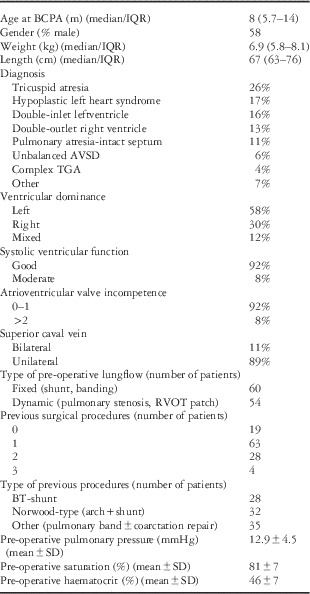
The pre-operative patient characteristics are listed in Table 1.
Pre-operative patient characteristics.
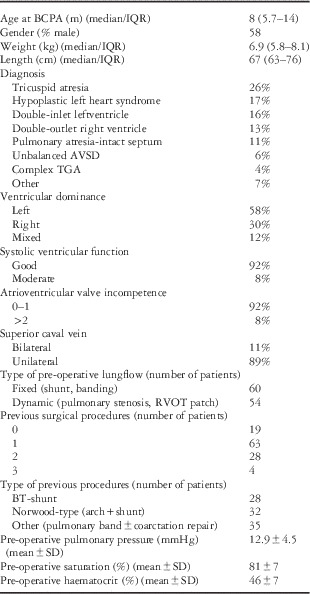
AVSD=atrioventricular septal defect; BCPA=bi-directional cavopulmonary anastomosis; BT=Blalock–Taussig; IQR=interquartile range; RVOT=right ventricular outflow tract; TGA=transposition of the great arteries
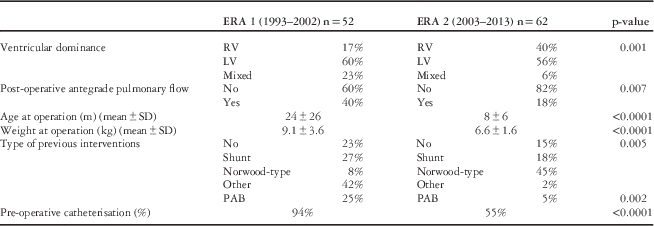
To account for trends in the patient population, the time span of the study was divided into two periods: ERA 1 from 1993 to 2002 and ERA 2 from 2003 to 2013 (Table 2). This division was mainly chosen because since 2002 Norwood and Damus-Kaye-Stansel reconstructions with shunt and with or without arch repair, as a first neonatal procedure, were more routinely used, thus implementing a change in operative complexity. The pulmonary artery banding was also used less frequently during the second period, in favour of section of the pulmonary artery with shunt placement.
Patients characteristics, divided into two study periods.
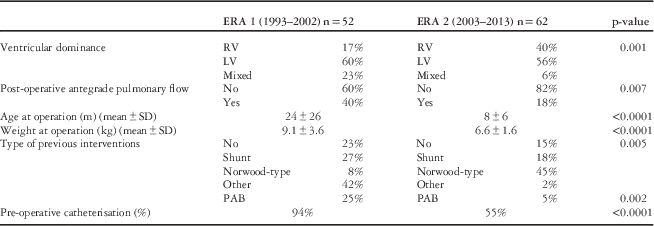
LV=left ventricle; PAB=pulmonary artery banding; RV=right ventricle
Age at operation varied considerably over the experience, but in the second decade there was a clear trend towards a younger age and lower body weight.
Patients with a dominant left ventricle accounted for more than half (58%) of the entire cohort. Tricuspid atresia was the most common diagnosis (26%), followed by hypoplastic left heart syndrome (17%); right ventricular dominance became more prevalent during the second decade (17 versus 40%), as more patients with hypoplastic left heart were surgically treated. Bilateral caval veins were present in 12 patients.
Only 17% of patients underwent no operation or intervention before the cavopulmonary anastomosis; in 83%, one to three previous interventions were performed. Pre-operative lung flow was classified as fixed – isolated Blalock–Taussig shunt, shunt in combination with complex arch repair, or pulmonary artery banding – or dynamic – that is, through a native pulmonary valvar or subvalvar stenosis. Patients with a fixed pre-operative lungflow were significantly younger at the time of operation compared with patients with a dynamic flow (fixed flow: median age 6.8 months, dynamic lung flow: median age 11.2 months, p=0.045).
Pre-operative catheterisation for direct measurement of pulmonary artery pressure and resistance occurred in 73% of patients, and was performed less frequently during the last decade, provided that imaging of the pulmonary branches was adequate and low pulmonary pressures could be inferred from echocardiography.
Methods
The cavopulmonary anastomosis was performed according to a standard protocol in all patients. Standard cardiopulmonary bypass with bi-caval drainage was used, with direct canulation of the superior caval vein at the innominate junction and the other venous canula in the right atrium towards the inferior caval vein. Previously confectioned shunts were first divided on the beating heart.
During the procedure, two surgical variants of cavopulmonary connection were utilised. The most frequently used was a uni- or bi-lateral bi-directional cavopulmonary anastomosis, mainly performed on the beating heart at normothermia and full-flow bypass. In patients with bi-lateral caval veins, usually no third venous canula for the left caval vein was needed. When an additional intracardiac procedure was obligatory, the heart was arrested with antegrade crystalloid cardioplegia at 15–20 ml per kg at moderate hypothermia (34°C) and full-flow bypass. At the start of the experience, the HemiFontan modification was used more frequently, in view of a later Fontan completion with an intracardiac tunnel. The azygos vein was always ligated and transsected.
According to our standard protocol, post-operative central venous, corresponding to mean pulmonary artery pressure, and left atrial pressures were recorded for 24 hours, and the pressure lines were removed on the first or second post-operative day. Extubation within the first 24 hours after surgery was intentionally attempted, if haemodynamics and respiratory performance allowed. Drains were left on continuous suction until effusion volume decreased below 5 ml per kg per day.
During the post-operative phase, apart from the usual haemodynamic parameters such as central venous pressure, arterial pressure, and transpulmonary gradient, arterial and venous saturations, haematocrit, inotropic score, lactate, base excess, and the use of nitric oxide were noted.
Inotropic score was defined as (dopamine dose×1)+ (dobutamin dose×1)+(adrenalin dose×100)+(noradrenalin dose×100)+(phenylephrine dose×100).Reference Cruz, Antonelli and Fumagalli 15
Patients were reviewed to assess the primary endpoints as hospital mortality and survival to Fontan completion. Secondary endpoints were defined as length of ICU stay, need for re-intubation, and need for a new drain during the same hospitalisation.
Statistical analysis
Data were analysed with the SPSS 20.0 software (SPSS Inc., Chicago, Illinois, United States of America).
Continuous values are expressed as mean with standard deviation, or as median and interquartile range, depending on the normality of data distribution. Categorical variables are stated as numbers and frequencies.
Univariate analysis of the primary endpoints as hospital mortality and survival to Fontan completion was based on χ2 analysis for categorical variables and on unpaired t-test for continuous variables. Factors reaching a p-value <0.1 for univariate analysis were entered into a multivariate logistic regression model for hospital mortality, and in a multivariate Cox regression model for survival to Fontan completion, based on a stepwise backward regression model. The significance of the obtained risk factors was expressed, respectively, by the odds ratio and the hazard ratio with 95% confidence interval. Only variables with a p-value of ⩽0.05 were considered statistically significant.
For the secondary endpoints, the univariate analysis was based on unpaired t-test or Pearson’s correlation for continuous data, and on the χ2 test for categorical data. Significant parameters were then entered in a multivariate logistic regression model for a binary response – need for new intubation and drain – and in a multivariate linear regression analysis for a continuous response (ICU stay).
Results
Interventional outcomes
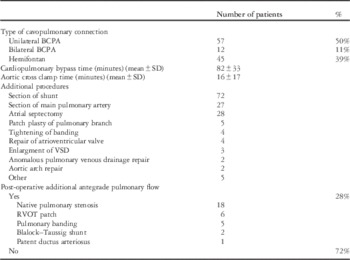
The operative characteristics are listed in Table 3.
Operative characteristics.
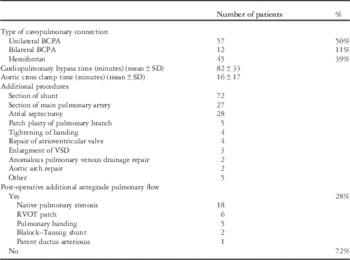
BCPA=bi-directional cavopulmonary anastomosis; RVOT=right ventricular outflow tract; VSD=ventricular septal defect
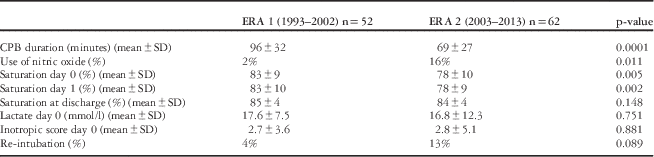
Unilateral bi-directional cavopulmonary anastomosis was utilised in half of the patients (50%), followed by the HemiFontan variant (39%) and bilateral connections (11%). Full-flow bypass at normothermia without aortic clamping was possible in 45 patients (39%). Cardiopulmonary bypass time was significantly shorter in the second decade of the study (Table 4).
Outcome characteristics, divided into two study periods.
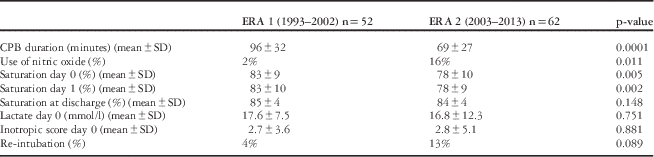
CPB=cardiopulmonary bypass
Additional procedures, apart from shunt take-down, consisted mainly of section of the main pulmonary artery and atrial septectomy. Some patients received more than one additional procedure.
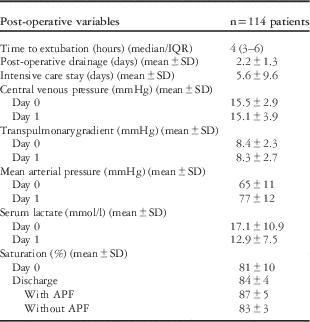
Patients were extubated at a median of 4 hours (interquartile range 3–6 hours). In 11 patients, mainly in ERA 2, inhaled nitric oxide was started because of low saturations or high central venous pressure, but without a strict protocol. Post-operative arterial oxygenation in the group starting on nitric oxide was significantly lower (69 versus 82%; p=0.0001) and transpulmonary gradients higher (10 versus 8 mmHg; p=0.029) than in patients who were not receiving nitric oxide ventilation. Among all, 10 patients (8.8%) needed to be re-intubated within 0–2 days after extubation, three of them in a resuscitation setting. There was a trend towards more patients needing re-intubation during the second part of the study (Table 4). Pleural drains were removed after a mean of 2.2±1.3 days. A new drain for a pleural effusion or chylothorax, reflecting a less-favourable univentricular physiology, was necessary in 18 patients (15.8%), this prolonged the hospital stay considerably: the mean stay was 27±19 days in the group that had a new drain inserted versus 11±7 days in patients not needing a second drain (p=0.003). Median ICU stay was 2 days (interquartile range 2–4 days).
Post-operative haemodynamic and biochemical characteristics are listed in Table 5. Serum lactate levels usually decreased within 24 hours, and arterial saturation increased after extubation in the majority of patients. Saturation at discharge was significantly higher in patients with a residual source of antegrade pulmonary blood flow (with antegrade flow 87%; without 83%, p=0.0001).
Post-operative haemodynamic and biochemical variables.
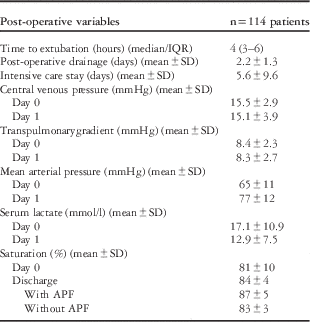
APF=antegrade pulmonary flow; IQR=interquartile range
The incidence of post-operative arrhythmias was very low: 1 patient developed a short episode of supraventricular arrhythmia, and 1 experienced an atrioventricular block during the 3 days after associated tricuspid valve repair.
Hospital mortality was 11.8% (13 patients), six of these patients had needed re-intubation. No difference in early mortality was noted between the first and the second study decades. The causes of death were respiratory failure (seven), cardiac failure (one), myocardial infarction (one), sepsis (one), dysfunctional cavopulmonary anastomosis caused by hypoplastic pulmonary branches (two), and superior caval vein thrombosis (one).
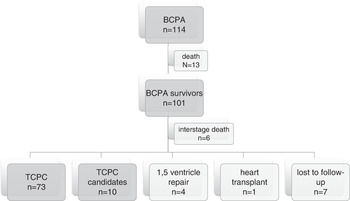
Follow-up was 94% complete, and seven missing patients originally came from abroad and had no follow-up in our centre. Interstage mortality between the bi-directional cavopulmonary anastomosis and the Fontan completion was 5.9% (six patients). The reasons for death were cardiac failure (three), sepsis (two), and unknown (one). Fontan completion with total cavopulmonary connection was performed in 73 patients, at a median age of 3.6 years (interquartile range 3–4.1 years) and a median interval of 2.6 years (interquartile range 2–3.1 years) after the bi-directional cavopulmonary anastomosis; four patients went on to the one-and-a-half ventricle pathway, one patient underwent cardiac transplantation. The remaining 10 patients are good Fontan candidates waiting for total cavopulmonary connection, thus leading to an assumed 82% Fontan completion for the survivors of the bi-directional cavopulmonary anastomosis (Fig 1).
Flow chart of the described patient cohort. BCPA=bi-directional cavopulmonary anastomosis; TCPC=total cavopulmonary connection.

Risk factor analysis
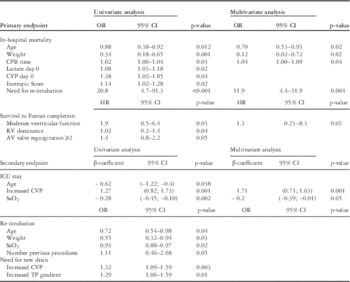
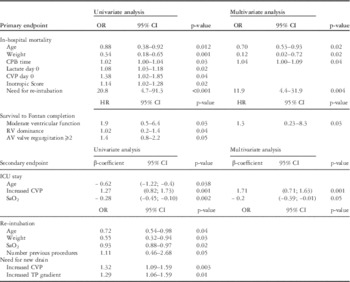
Patient and procedural factors that could be related with the secondary and primary endpoints were investigated. The results of the risk factor analysis can be found in Table 6.
Risk factor analysis.
AV=atrioventricular; CPB=cardiopulmonary bypass; CVP=central venous pressure; RV=right ventricle; TP=transpulmonary.
Younger patients manifested a longer ICU stay and had a higher incidence of re-intubation or death. Patients with a low saturation in the immediate post-operative phase stayed for longer in the ICU and had a higher chance of being re-intubated or receiving a new drain. Higher pre-operative pulmonary pressure correlated with increased need for inotropes, prolonged intubation, and drain loss. Post-operative additional antegrade pulmonary flow, on the other hand, resulted in lower lactate (p=0.01) and higher saturations (p=0.001), without influencing early or late outcomes.
Univariate analysis demonstrated that lower post-operative saturation, higher central venous pressure, and transpulmonary gradients were risk factors for new drain insertion (p<0.01). Hospital mortality was independently affected by younger age (OR 0.70, 95% CI 0.53–0.93, p=0.013), lower weight (OR 0.12, 95% CI 0.02–0.72, p=0.02), longer bypass time (OR 1.04, 95% CI 1.00–1.09, p=0.04), and re-intubation (OR 11.9, 95% CI 4.4–31.9, p=0.004). The numbers of patients receiving atrioventricular valve, aortic arch or anomalous veins repair, enlargement of a ventricular septal defect, or pulmonary branch plasty as an additional procedure were too small to calculate risks in a meaningful way. Interstage mortality was only influenced by decreased ventricular function (HR 1.3, 95% CI 0.23–8.30, p=0.03); right ventricular dominance and more than moderate atrioventricular valve regurgitation reached significance solely in univariate analysis.
Discussion
In this single-centre consecutive series of bi-directional cavopulmonary anastomosis patients, spanning a 20-year period, several trends were noted. The age of the patients gradually decreased, more patients presented with right ventricular dominance and underwent more complex repairs before the bi-directional cavopulmonary anastomosis, and additional sources of antegrade pulmonary blood flow were less frequently maintained. The total bypass time came down, and more patients were operated on the beating heart without clamping the aorta. Over the last decade, post-operative saturations on the whole were lower.
Mortality after the cavopulmonary anastomosis remains considerable, results reported in the literature demonstrate mortality figures between 1 and 13% in the modern era, in patient cohorts of diverse ages and anatomical situations.Reference Bove 5 , Reference Alejos, Williams and Jarmakani 6 , Reference Kogon, Plattner, Leong, Simsic, Kirshbom and Kanter 8 , Reference Karl 11 In our patients, we recognised some of the risk factors for early mortality that were also demonstrated by others, such as young patient age, low weight,Reference Friedman, Salvin and Wypij 10 , Reference Douglas, Goldberg, Mosca, Law and Bove 16 and prolonged bypass time.Reference Kogon, Plattner, Leong, Simsic, Kirshbom and Kanter 8
The exact timing of the intermediate cavopulmonary step remains controversial. Some groups obtained excellent results in patients of 3–5 months of age, often at the expense of a lower oxygenation, a higher risk of pulmonary artery thrombosis, and a longer ICU stay.Reference Bradley, Mosca, Hennein, Crowley, Kulik and Bove 17 , Reference Slavik, Lamb and Webber 18 In a recent review from the Paediatric Heart Network, younger age was associated with a longer length of stay and more post-operative events.Reference Cnota, Allen and Colan 9 On the other hand, early unloading of the single ventricle has a positive influence on long-term Fontan success.Reference Norwood and Jacobs 2 , Reference Jonas 3 In a previous study from our group, we also demonstrated that performing the bi-directional cavopulmonary anastomosis at a younger age can induce a catch-up body growth in infants after a previous neonatal procedure.Reference François, Bové and Panzer 12 In reality, in the current patient cohorts, we are often faced with patients below 6 months of age, presenting after a complex neonatal surgery with a Blalock–Taussig or Sano-shunt and without an additional source of pulmonary blood flow, which need obligatory surgery in the short-term due to worsening cyanosis due to shunt outgrowth. On the other hand, in a stable single ventricle patient who continues gaining weight, it may be a compromise to wait until the second half of the first year of life.
A lack of consensus also persists on the use of a second source of pulmonary blood flow. In many studies, as in ours, lower lactate levels and higher saturations were demonstrated,Reference Frommelt, Frommelt and Berger 7 , Reference Chen, Tulloh, Caputo, Stoica, Kia and Parry 19 sometimes at the expense of longer duration of pleural drainage.Reference Mainwaring, Lamberti, Uzark and Spicer 13 , Reference Yamada, Roques and Elia 20 The benefits of an extra pulmonary flow source can result in improved growth of the branch pulmonary arteries as a consequence of pulsatile flow,Reference Alejos, Williams and Jarmakani 6 less formation of pulmonary arteriovenous malformations,Reference Henaine, Vergnat and Mercier 21 , Reference Srivastava, Preminger and Lock 22 and a positive effect on late survival.Reference Chen, Tulloh, Caputo, Stoica, Kia and Parry 19 Some studies, on the contrary, could demonstrate no effect at all,Reference Kogon, Plattner, Leong, Simsic, Kirshbom and Kanter 8 or a negative effect on survival and atrioventricular valve competence.Reference Mainwaring, Lamberti, Uzark and Spicer 13 In our practice, only in patients with a narrow pulmonary banding or a very tight right ventricular outflow tract stenosis, we would consider to leave this antegrade pulmonary flow until the Fontan completion.
As the need for re-intubation appears to be an important determinant of operative mortality – 60% of re-intubated patients failed to survive – the management of ventilation and the timing of extubation might deserve renewed interest. In view of the negative effect of increased intrathoracic pressure due to positive pressure ventilation in patients with Fontan physiology, our centre has always been a proponent of early extubation after surgery for cavopulmonary anastomosis. Our results indicate that this was indeed possible in the majority of patients, with a median extubation time of 4 hours in the series, resulting in an immediate increase in saturation. Some patients, however, needed re-intubation after a short period of time, which by itself triggered a long ICU stay and often unfavourable outcome. Some of these patients had been haemodynamically perfectly stable before extubation, apart from a slightly elevated central venous pressure or a borderline saturation, which were expected to improve after removal of the endotracheal tube. When re-intubation occurred, a new echocardiography was performed, and in case of an abnormal finding, followed by a diagnostic catheterisation. This was the case in three patients, and in two of them an anatomical problem was discovered. This led to a re-do anastomosis in one patient and a pulmonary stent in the second one.
During the second decade of the study, inhaled nitric oxide was used more frequently, however, without a strict startup protocol. At this moment, it is still unclear what role nitric oxide plays in the post-operative weaning of patients after cavopulmonary anastomosis. In an elegant study, Agarwal et al looked at the effect of inhaled nitric oxide in patients on the ventilator with central venous pressure of 22 mmHg or more.Reference Agarwal, Churchwell and Doyle 23 Responsive patients showed significant reductions in the central venous pressure, and improvement in the oxygenation index, with reduction of inotropic support. Patients who failed to show any response were found to have an anatomic lesion, requiring a second operative procedure. In a prospective study, including 26 post-operative patients with a saturation of 75% or less, Adatia et al obtained no change in systemic saturation in response to inhaled nitric oxide; however, there was a significant decrease in superior caval vein pressure, suggesting that cardiac output and cerebral blood flow are more important determinants of oxygenation than pulmonary vascular resistance.Reference Adatia, Atz and Wessel 24
Other factors such as a respiratory infection, small pulmonary branches, or a pre-operative increased pulmonary vascular resistance may have played a role. We can only speculate on this last aspect, as we did not systematically catheterise the patients pre-operatively during the second part of the study, when the anatomy of the pulmonary branches and the aortic arch was clear on echocardiography. Some groups, however, perform a catheter investigation in each candidate before cavopulmonary anastomosis, according to a strict protocol, which may prove to be helpful specifically in patients who have had a neonatal or multiple operations previously.Reference Siehr, Norris and Bushnell 25 Another aspect is the frequent association of gastro-oesophageal reflux with single ventricle, which may trigger post-operative respiratory problems shortly after extubation. Some centres obtained a favourable weight gain and superb outcome results after the bi-directional cavopulmonary anastomosis, with a combination of feeding through a gastrostomy tube, associated with a Nissen fundiplication, in single ventricle infants after neonatal surgery.Reference Hehir, Cooper, Walters and Ghanayem 26
In the final aspect of our study, we investigated the suitability for Fontan completion after a successful cavopulmonary anastomosis. We, as others, consider this staging procedure not only useful to unload the single ventricle but also as an important selection step to succeed in total cavopulmonary connection.Reference Tan, Iyengar and Donath 14 Late mortality after the cavopulmonary anastomosis in our series was only determined by worsening ventricular function; right ventricular dominance and moderate atrioventricular valve regurgitation were significant in univariate analysis. In a recent competing risk analysis report from Riyadh, right ventricular dominance also came out as a risk factor for late mortality after cavopulmonary anastomosis, as well as elevated pulmonary vascular resistance, and previous palliation other than Blalock–Taussig shunt.Reference Alsoufi, Manlhiot and Awan 27
After a median interval of less than 3 years, 73% of the survivors had undergone a successful total cavopulmonary connection, and another 10 Fontan candidates with good haemodynamics are waiting for the procedure, resulting in a presumed 82% of survivors reaching the final Fontan state, which compares favourably with other studies reporting Fontan completion rates of 22–76%.Reference Alejos, Williams and Jarmakani 6 , Reference Chen, Tulloh, Caputo, Stoica, Kia and Parry 19 , Reference Alsoufi, Manlhiot and Awan 27 These findings may support the theory that the cavopulmonary anastomosis functions as a selection procedure, precluding patients from later Fontan completion because of failing cardiac or pulmonary physiology or anatomy.
Study limitations
Despite the limitations due to the retrospective design, we could trace nearly complete patient, procedural, and outcome data. During the span of the study, possible biases might have been introduced by changes in surgical or intensive care policies. We have tried to outline these by comparing two distinct study periods, and indeed demonstrating some changes that have occurred within the 20 years that the study covers. The most important change has been the introduction of neonatal Norwood-type procedures preceding the bi-directional cavopulmonary anastomosis during the second half of the study.
The drawbacks we encountered during the analysis consisted in the lack of precise data about why additional treatments such as nitric oxide were started, or in the patients who needed re-intubation what exactly triggered the need for urgent ventilation after an apparently successful first extubation.
Conclusion
This retrospective review of a single-centre experience with the bi-directional cavopulmonary anastomosis yielded several trends: during the second part of the study period patients presented at a younger age, had undergone more complex repairs before the cavopulmonary anastomosis, right ventricular dominance became more prevalent, and a second source of antegrade pulmonary flow was less frequently maintained.
The procedure remains associated with adverse outcomes, identifying lower age, longer bypass time, and the need for re-intubation as risk factors for operative mortality. As it is difficult to impact on age at presentation, strategies to improve surgical outcome must concentrate on optimising the peri-operative cardio-respiratory status. A systematic use of pre-operative catheterisation may offer more detailed information than echocardiography on pulmonary pressures and the anatomy of the pulmonary branches. Strict extubation protocols, the use of inhaled nitric oxide, and supplementary infant feeding protocols are also worth exploring, especially in patients with a less-favourable univentricular physiology.
After a successful cavopulmonary anastomosis, Fontan completion can be expected in the majority of patients, provided that ventricular function is maintained.
Acknowledgements
None.
Financial Support
This research received no specific grant from any funding agency, commercial, or not-for-profit sectors.
Conflicts of Interest
None.