There is little if any warranted doubt that all living organisms owe their existence to a continuity of descent with the common ancestors of most species ranging from millions to billions of years ago. Nor is there reasonable doubt that the life-forms of organisms have changed significantly over this period of time. We call this evolution. We enjoy less agreement when we consider whether there are overall trends, in the sense of implicit directionalities, in evolution. Should we survey the data from the point of view of seeking an understanding of the path of our own (human) coming to be, we may be inclined to see it one way. Should we begin with a guiding regard for the overwhelming numerical superiority that prokaryotes have enjoyed ever since the origins of life on earth, we may see it another way. I will take it as a more than plausibly consensual point of departure that the evolutionary trends that have occurred were contingent upon circumstances and in no sense inevitable even if coherent trends can be “retrospectively” reconstructed. My interest in this instance happens to be guided by a particular focus on vertebrate and human evolution but certainly with no prior assumption that this represents “evolution as such.” As the sole participants in the reflective enterprise of seeking to understand how we could have come to be, we should be able to forgive ourselves for showing some self-centered bias in our choice of topics, so long as perhaps we are equally reflective in our epistemology.
If the pathway by which humans came to be was the product of a contingent natural history so likewise has the pathway of our inquiry and conversation about our evolutionary history been shaped by the contingencies of our cultural, political, and ideological history. That we humans could have come to be through a process of evolution has, and increasingly once again is, given a special significance by the vehemence of those who would want to say otherwise. But the case for could, legitimate and important in itself, is not tantamount to an exposition of anything like the actual how, and the two should not be confused. The principle of natural selection taken as a principle, for all the power it may well confer to the plausibility of the could, must not be taken as in itself somehow a sufficient account of the specifics of the materiality of the “how.” If claims on behalf of a plausible could can rightfully put on the airs of well-established respectability, our ability to elucidate the material conditions of the actual how should be treated with the care and solicitude as befits its de facto infancy. No multitude of hypothetical climbs up Mount Improbable will sum up to a suitable substitute for an elucidation of the contingent material basis of actual evolutionary outcomes. Nor should we imagine that the latter will not disrupt and reconfigure the metaphorical bedrock of the former.
Current turn-of-the-century biology has been characterized by, if anything, the pursuit of “genomic biology.” Even as the optimism for what genomics will directly reveal has begun to wane (and become sublimated into other venues of “omic” research and the as yet ill-defined intentions of “systems biology” [O'Malley and Dupré Reference O’Malley and Dupré2005]), the wheels and gears of the genomic sequencing apparatus continue to turn, providing raw material for comparative evolutionary analyses along several different axes. Even if comparative genomics cannot provide all the answers, and especially if the findings of comparative genomics have not been in accord with conventional extrapolations from natural selection as an abstract principle, surely whatever clues comparative genomics can offer us for our understanding of the material basis of actual evolutionary events and transitions are well worth our effort to consider.
Which evolutionary transitions might we be seeking material explanations for first? As the only species that is asking the question we are hard-pressed not to be oriented by some manner of anthropocentric bias—although the desire to understand the material basis by which nature, in the form of humans, comes to ask itself such questions surely is intrinsically interesting and by no means merely anthropocentrically arbitrary. Be that as it may, seeking to find the basis of (human) species self-reflection in comparative genomics directly is not apt to be immediately rewarding. But it is of the very nature of evolutionary analysis to find in prior transitions the opening up of new possibility spaces, which then provide the conditions of possibility for some further evolutionary transition. I propose that what we should take as our critical intermediary target is the formation (and subsequent elaboration) of the embryonic tissue referred to as the neural crest. If we can identify and understand what innovations/transformations in the material conditions of life account for the coming to be of the neural crest then I claim we have established at least a platform from which serious inquiry into the unique features of even species self-reflective human agents could gainfully proceed.
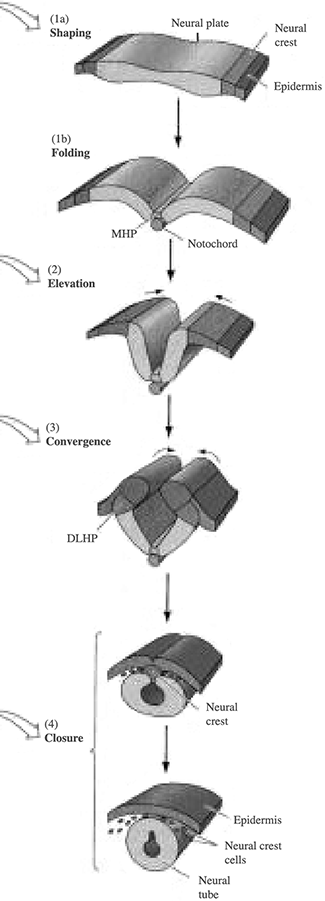
Why the neural crest? The neural crest is the hallmark of the transition to vertebrate life, it is present in all and only vertebrates, and is indeed the sine qua non of the possibility space that opens up with the transition to vertebrate life. Developmentally, the neural crest begins simply as a symmetrical stretch of epithelial cells just lateral to that of the neural plate. As the neural plate folds in the embryo on its way to becoming the neural tube, the neural crest is brought into an intermediary position between the nascent neural tube and the dorsal epithelium as it is being pulled medially on its way to fusing into the dorsal epidermis (see Figure 1).
Development of the neural tube (from Gilbert Reference Gilbert2000).

At this point a radically new developmental event in the evolutionary history of multicellular life-forms takes place. The cells of the neural crest systematically break away from the tissue-sheet pavement of a tightly connected epithelium, transforming into detached, individuated, stromal-type, migratory cells. As individual cells finding their way through the interior space of the embryo, guided by an ongoing dialogue of signal exchange between extracellular matrix and cell surface, they take up residence in, and contribute to, the further development of every tissue and every organ of the body (Le Douarin and Dupin Reference Le Douarin and Dupin2003; Le Douarin et al. Reference Le Douarin, Creuzet, Couly and Dupin2004). But more to the point, neural crest derivatives are responsible for the unique features of what I am calling the “vertebrate possibility space.” Understanding the molecular underpinnings that enable the evolutionary-developmental transition to the biology of the neural crest merits high priority in the evolutionary analysis of comparative genomics.
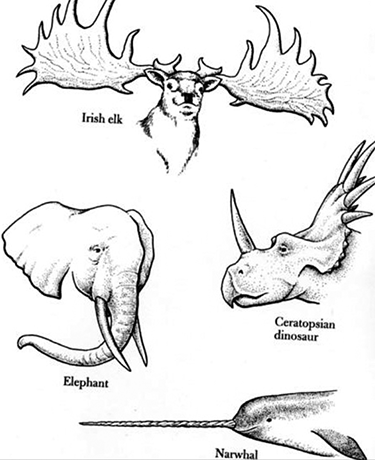
The ability to respond rapidly to contingent and transient features of an environment entails several characteristics. It entails a capacity for cells to step back or `detach' from the manifold of available ambient stimuli and make salient, or privilege, some kinds over others, thereby already exercising an emergent level of autonomy. It entails a capacity to make nuanced distinctions between closely related signals and an ability to internalize these signals (and these distinctions) resulting in rapid and fine-tuned adjustments to the internal state of the respective cells. The kind of enterprise that vertebrate existence brought into being was one characterized by two-way dialogues between the sensory surface of the organism and its ambient surround, and between the sensory surface of the organism and its viscera, its interior. It is the advent of the neural crest that makes this transition to new levels of contingent responsiveness possible. Neural crest derivates make the head of a vertebrate—the focal point of sensory openness to the world—possible (Gans and Northcutt Reference Gans and Northcutt1983). Neural crest cell derivatives form all the bones and cartilage and all or most of the connective tissue and smooth muscle of the head and face, “invent” the jaw, and provide the dentine and enamel of the teeth. In addition neural crest derivatives produce the various, and often exotic, horn, antler, and tusk appendages found in various vertebrates (see Figure 2).
Horn, antler, and tusk appendages found in various vertebrates (from Kirschner and Gerhart Reference Kirschner and Gerhart2005).

Even more dramatic is the role of neural crest derivatives in the formation of a responsive interior. The entirety of the peripheral nervous system, that is, both the sensory and enteric/autonomic systems, is formed from neural crest derivatives—thus both communicating the state of the interior to the central nervous system and coordinating the state of the interior of the body, for example, bowels, intestines, and cardiovascular system, with external exigencies. This is then further reinforced by the role of hormone-producing cells also of neural crest origin, that is, the adrenomedullary cells that mediate rapid reactions and the calcitonin-producing cells that mediate longer term responses to environmental ionic composition and fluxes. In addition (as if these were not enough), neural crest derivatives are entirely responsible for forming the pigment-producing (ultraviolet shielding) melanocyte cells of the skin as well as contributing to the formation of the heart valve and the development of the thymus and thyroid glands (Le Douarin and Dupin Reference Le Douarin and Dupin2003).
Consistent with the fact that neural crest cells first enter into a de novo pathway of differentiation after the archetypical vertebrate body plan has been shaped through the processes of gastrulation and neurulation, the neural crest derivatives retain a high level of multipotentency long into the developmental history of the organism and thus retain a capacity to respond plastically to environmental encounters and demands (Le Douarin et al. Reference Le Douarin, Creuzet, Couly and Dupin2004). The greater significance of this for evolutionary thinking will be further explored later. It is, in any event, clear that the developmental achievements of the neural crest provide vertebrates with the wherewithal for a more rapid and selective responsiveness to their surroundings (and thus among other things a far more capable predator capacity), an enhanced ability to be more independent with respect to any particular feature of their surroundings, and certainly an enhanced capacity for a signaling dialogue between viscera and central nervous system and thus a form of interactive, internal responsiveness. The relevance of all this to the downstream possibility of the human organism should at least begin to be intuitively evident.
The “material conditions of possibility” for vertebrates could surely be considered on many levels, but it is not within the scope of the present argument to attempt to survey what this could entail. For present purposes, by `material conditions of possibility' I am referring to those evolutionary changes in the molecular composition of an organism that are arguably necessary for the phenotypic changes of our present interest. For a variety of reasons that would be deemed obvious by most readers (probably too obvious), diachronic changes in genome structure would appear to be a very promising place to look for molecular-level “material conditions of possibility” for accounting for evolutionary transitions, innovations, and the like.
What is at issue is not whether changes in genome structure are relevant but rather in what way do changes in genome structure open up, or contribute to opening up, new phenotypic possibility spaces. With respect to human evolution (but relevant to any transition), and its basis in the materiality of molecular genetic changes, three hypotheses have been put forward (Li and Saunders Reference Li and Saunders2005). The earliest hypothesis, and the one most in tune with classical neo-Darwinian expectations, is that human evolution is based upon the evolution of new genes. The second hypothesis, attributed to King and Wilson (Reference King and Wilson1975) in the 1970s, is that human evolution is principally based upon changes in noncoding regulatory sequences. The third and most recent hypothesis (Olson Reference Olson1999; Olson and Varki Reference Olson and Varki2003) is that human evolution is due to a “less is more” phenomenon and that it is actually the loss of genes that plays the most critical role in opening up a new phenotypic possibility space. As should be evident, there is no apparent reason why the mechanisms suggested by these hypotheses need be mutually exclusive. As may or may not be evident, each of these hypotheses suggest different kinds of relationships between genomic structure and phenotype and thus importantly different views upon what the material basis of the evolutionary transitions in question might be.
1. The Evidence from Comparative Genomics
The realization that the human genome is not distinguished by gene number surely came as a shock to those whose expectations were oriented by the mainstream view of genes and evolution expressed in the earliest hypothesis mentioned above. Had genome size, defined in term of gene number, scaled with our intuitions about the complexity of an organism then surely a certain, at least tacit, understanding about the material conditions of new phenotypic possibilities would have been powerfully reinforced. Genes provide functions, and the more new genes the more functions, the more functions the more complexity. While some aspect of this may retain relevance, taken as a whole it does not provide the right kind of account of the material/molecular basis of human evolution. Genome sequence analysis suggests that it does not appear likely that differences between mammals will be reflected at all in gross gene number, nor is it obvious why the nematode worm C. elegans would have a larger genome size than the more complex invertebrate D. melanogaster, the fruit fly. Whereas the earlier realization that organismic complexity does not scale with overall genome size has been referred to as the C-value paradox (Cavalier-Smith Reference Cavalier-Smith1985), the more recent realization that organismic complexity does not scale with gene number has been referred to as the N-value paradox (Claverie Reference Claverie2001). Perhaps even more intriguing is the realization that the percentage of sequence difference between species does not scale with the degree of apparent difference in phenotype. Two mouse species, for example, Mus musculus and Mus spertus, which differ very little in phenotype, diverge in single nucleotide substitution as much as humans and chimps (∼1.23%), where dogs which show colossal variation in phenotypes only differ by ∼0.15% (Chimpanzee Sequencing and Analysis Consortium Reference Sequencing and Consortium2005).
Are there any salient observations then to be gleaned from comparative genomics? The answer is yes. Two categories of genomic difference have thus far emerged—differences in gene density and differences pertaining to DNA repeat sequences. The latter will be divided into findings with respect to low copy, gene-rich repeats, and to high copy, gene-poor, transposable repeats. In addition, some recent evidence in support of the less is more hypothesis will also be discussed. After introducing these findings we will consider what light they might shed on the basis of vertebrate and ultimately human evolution.
1.1. Gene Density (N-Value/C-Value)
As represented in a chart compiled by Patthy (Reference Patthy2003) that includes genomic data from over 25 eubacteria, six archaea, yeast, Arabidopsis (plant), C. elegans, D. melanogaster, S. purpuratus (echinoderm), a urochordate, and humans, what stands out as the salient fact about the human genome (which is the only vertebrate represented) is the very low density of genes per total amount of DNA. Humans (and other vertebrates so far as we know) only have 5–10 times as many genes as eubacteria or archaea but an N-value of a thousand times greater and so a lower gene density by a multiple of 100. The difference in gene density between humans and the invertebrates C. elegans and D. melanogaster (where the difference in gene number is less than twofold) is between a multiple of 10 and 20. What is even more striking in this later comparison is that when the ratio of introns to exons is examined for these three species—the two invertebrates show a ratio of just below unity, as where humans exhibit an intron to exon ratio of 24! Where coding sequence makes up 91% of the genome of E. coli, it only accounts for 1% of the human genome, with introns accounting for 24% and intergenic DNA accounting for the remaining 75%. The other multicellular organisms are composed of coding sequences consisting of 20%–31% of their genomes, with the genome of yeast, a one-celled eukaryote, consisting of 68% of coding sequence. Whereas gene numbers do not correlate with organismic complexity in particularly striking ways, the separation of coding regions by noncoding regions does appear to correlate with organismic complexity in a very striking way.
1.2. Repetitive DNA Sequences
Among vertebrates in general we may see some trends with respect to gene density (associated, e.g., with intron size and number), but especially in relation to humans versus other mammals we are not likely to see gross differences with respect to either gene number or gene density, and yet we still want to be able to say something about, for example, the difference between mice and men, at a more fine-tuned level. Where the classical view would have assumed that the principal vehicles for evolutionary innovation and difference would be seen at the level of unique coding sequences, with more complex organisms expected to have unique single copy genes that other less complex organisms lack, the evidence increasingly points toward practically the opposite finding. Where humans thus far appear to be most distinct at the molecular level is not with respect to unique gene sequences but rather with respect to DNA sequences which are found to be repetitive. I will group repetitive DNA into two classes for further analysis: (a) low copy repeats which largely make up paralogous gene families and (b) high copy repeats which are generally associated with capacity for spontaneous transposition.
1.2.1. Low Copy Repeats
A systematic study was performed comparing the DNA sequences of human chromosome 19 with closely related sequences of mouse chromosomes. What was found (Dehal et al. Reference Dehal, Predki, Olsen, Kobayashi, Folta, Lucas and Land2001) was that molecular gene sequences fall into two categories—those that are unique single copy genes and those that are members of families of highly homologous and often tandem-arrayed gene clusters. Most striking was the discovery that when it came to the rosters of unique, single copy genes, there was great conservation of sequence identity between mouse and human as where extensive differences were found in the number, coding capacity, and organization of tandem family gene clusters. Nearly a third (31%) of known and predicted genes on human chromosome 19 are part of large, clustered gene families. Clusters, for example, of so-called Zn-finger genes, a very large family of putative transcriptional effectors that includes over 700 members in the human genome, are distributed over 11 different locations on human chromosome 19. Zn-finger genes are also found in homologous regions of mouse chromosomes, but it appears that what was subject to duplicative expansion in the mouse was different than in human, suggesting that different mammalian lineages are actively generating and selecting for different protein repertoires. One noted example of this is the case of olfactory receptors where clusters can be found for both mouse and human, but the human olfactory clusters are seen to be shortened or disrupted and apparently no longer capable of coding for a functional protein.
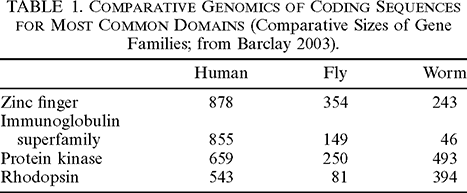
Expansion of gene families is believed to occur by a process referred to as segmental duplication, which is simply to say that what is duplicated is not whole genomes or whole chromosomes but segments only. The gene families which have been subject to evolutionary expansion do not appear to be random with respect to their functional attributes. Genes associated with membrane surface interactions as well as those associated with growth and development (along with immunity and drug detoxification) were found to be differentially expanded (Bailey et al. Reference Bailey, Gu, Clark, Reinert, Samonte, Schwartz, Adams, Myers, Li and Eichler2002). The human genome in particular is distinguished by the extent of segmental duplication observed, with over 5% of the entire human genome resulting from segmental duplication (Samonte and Eichler Reference Samonte and Eichler2002). Segmental duplication of some kind may be responsible for the expansion of gene families through exon reshuffling. Molecules associated with transmembrane signal transmission, cell-cell or cell-matrix binding, the elaboration of an extracelluar matrix, and intracellular signaling—both in the cytoplasmic and in the nucleus—are typically large proteins with a variety of functionally distinctive modular domains. The expansion of cellular/organismic versatility and complexity appears to be associated with the appearance of multimodular proteins with new configurations of old modular domains. Patthy (Reference Patthy2003) argues that many unique aspects of vertebrate evolution are made possible by the elaboration of multidomain extracellular proteins and multidomain transmembrane receptors. Some of the warrant for this view can be considered in the light of the data assembled by Barclay (Reference Barclay2003) and exhibited in Table 1.

| Human | Fly | Worm | |
|---|---|---|---|
| Zinc finger | 878 | 354 | 243 |
| Immunoglobulin superfamily | 855 | 149 | 46 |
| Protein kinase | 659 | 250 | 493 |
| Rhodopsin | 543 | 81 | 394 |
Where overall gene number difference between the human, fruit fly (D. melanogaster), and the nematode worm (C. elegans) were less than twofold, we see a considerably more pronounced difference when it comes to certain specific gene families. The immunogloblulin superfamily (IgSF) consists of large multidomain proteins that are defined by the presence of the constant (`C') domain of the Immunogloblulin molecule but differ from each other on the basis of their multimodular composition. Many of these molecules serve in mediating cell-cell or cell-matrix recognition, adhesion, and tissue stabilization. Unlike the much smaller differential in gene number between humans and the nematode worm (C. elegans), the human IgSF family exceeds that of the nematode by nearly 20 times and that of the fruit fly (Drosophila) by almost 6 times. A similar, although less pronounced, set of comparisons can be seen for the aforementioned family of DNA binding, transcriptional-effector proteins known as zinc fingers.
1.2.2. High Copy Repeats
Around 43% of the euchromatic region of the human genome is composed of highly repetitive and mobile DNA elements (Deininger et al. Reference Deininger, Moran, Batzer and Jr2003), and another 18% of the genome found within heterochromatic DNA consists of mobile elements and tandemly repeated satellite DNA. Constituting over 50% of the human genome (more than any other animal sequenced to date), highly repetitive and mobile DNA does not in itself provide any distinctive coding sequences and yet constitutes the most species-specific signature of any class of DNA sequence. Once written off as “junk” and as merely parasitic, highly repetitive DNA is now more often seen as essential for genome function and possibly the very vehicle for evolutionary transformation (Shapiro Reference Shapiro2002; Shapiro and von Sternberg Reference Shapiro and Sternberg2005). The plasticity brought about by retro-transposable elements, suggests Brosius (Reference Brosius2003, 109), “guaranteed long-term survival of species and lineages, while the lack of such plasticity would have meant stasis, possibly even extinction.” High copy repeats come in several varieties. While the roster of types is still expanding, the following constitute the three major classes. (1) About 8% of human DNA consists of retrotransposons which, like retroviruses, contain LTRs (Long Terminal Repeats) but which lack the coding sequence for an envelope protein that would allow it to leave the cell. (2) L1 (Line-1) elements are also autonomous retrotransposons which also contain their own reverse transcriptase sequence but not within an LTR. L1 elements constitute 17%–20% of the human genome. (3) Sines (short interspersed nucleotide element) are not autonomous, that is, do not contain the coding sequences for the enzymes that allow them to move around the genome and so must rely upon Line-encoded enzymes (Deininger et al. Reference Deininger, Moran, Batzer and Jr2003). A 300-nucleotide sequence known as “ALU” is the major human sine and is unique to primates. There appears to have been a burst of ALU duplication 35–40 million years ago which provided the groundwork for further ALU expansion in the hominid line (Bailey, Liu, and Eichler Reference Bailey, Liu and Eichler2003). With about one-third of segmental repeats in humans flanked by an ALU sequence, it is highly suggestive that ALU-mediated transposition has played a significant role in the expansion of gene families through segmental duplication. Comparisons of human to lemur and chimpanzee genomes suggests that while rates of single-nucleotide substitution has been consistent across all three, the human genome has expanded by 15%–20% relative to the other primates, with 90% of this resulting from new retrotransposon activity (Liu et al. Reference Liu, Comparative Sequencing Program, Zhao, Bailey, Sahinalp, Alkan, Tuzun, Green and Eichler2003).
1.3. Less Is More?
Recent findings on the genome sequence of the chimpanzee echoes many of the results discussed above but offers some new insights as well. Where all the attention to the human-chimpanzee comparison has hitherto been focused on single nucleotide difference, genomic analysis revealed that the bigger bulk of genomic difference between these species exists in relation to insertions and deletions of repeated sequences. The human and chimp genomes differ by only 1.2% with respect to single nucleotide sequences but 2.7% with respect to segmental duplications (the genomes thus differ by about 4%; Cheng et al. Reference Cheng, Ventura, She, Khaitovich, Graves, Osoegawa and Church2005). Much of this may be accounted for by differences in the expansion and proliferation of ALU repeats, as humans have 7,000 ALU elements as where chimps have only 2,300 (Li and Saunders Reference Li and Saunders2005). But what biological significance, if any, might this prove to have? Comparative analysis has shown that there are 53 genes in humans, with close homologues in chimps, that have been apparently knocked out in humans by the insertion of a repetitive element (Li and Saunders Reference Li and Saunders2005). While an analysis of the possible consequences of this is in its infancy, there is one case so far that is suggestive. A widely distributed sialic acid known as N-glycolylneuraminic acid (Neu5Gc) is synthesized from N-acetylyneuraminc acid (Neu5Ac) in mammals including other primates, but in humans the ability to do so has been lost due to the insertion of an ALU sequence in the hydroxylase gene (Chou et al. Reference Chou, Hayakawa, Diaz, Krings, Indriati, Leakey, Paabo, Satta, Naoyuki and Varki2002). This mutation appears to have occurred around 2.5–3 million years ago, which happens to be around the time that Homo erectus appears in the fossil record. It has been observed that all mammals show only a low level of N-glycolylneuramic acid in the brain no matter how highly it is expressed in other tissues, with humans being the only mammal species in which it is not expressed at all.
2. Conclusions
Charles Darwin wisely understood the scope of natural selection to be subject to the laws of variation and the laws of generation whatever those laws and attendant conditions would prove to be (Grene and Depew Reference Grene and Depew2004). Darwinists have not always been so wise. The late-nineteenth and early-twentieth-century debate between continualists and mutationists in accounting for variation became resolved in favor of Mendelism (Carlson Reference Carlson1966; Bowler Reference Bowler1992; Grene and Depew Reference Grene and Depew2004). But Mendelism enjoyed its gains by bracketing the question of generation, a fact of which embryologist-turned-doyen-of-genetics Thomas Hunt Morgan was amply aware. A theory of variation must at least assume a theory of generation; otherwise, it is functionally incomplete. Mendelism furnished Darwinism with a theory of variation that had to at least instrumentally take a preformationist stance toward the question of generation. A Darwinism that fails to recognize its dependence upon theories of variation and generation and that forgets that the scope of its principle of natural selection remains contingent upon the warrant of its theories of variation and generation is no longer Darwin's Darwinism but rather becomes a kind of “vulgar” Darwinism (Moss Reference Moss, Hösle and Illies2005). With the discovery of the double helix, new chemically based models of variation, especially that of the spontaneous single point mutation, materialized and, one might even say, became canonized, but in the absence of an adequate understanding of generation the significance of these could only be speculative. Comparative genomics has opened a new window onto the dynamics of variation and has disclosed findings that while not inconsistent with the ostensible chemistry of the double helix could not have been predicted on its basis. Advances in the cell and molecular biology of development are only just beginning to give rise to models of variation that are no longer divorced from an understanding of generation. Kirschner and Gerhart (Reference Kirschner and Gerhart2005) have referred to their new theory as that of “facilitated variation.” Let's consider the findings of comparative genomics with respect to gene density, gene repeats, and less is more, in the light of Kirschner and Gerhart's generation-based theory of variation.
At the center of facilitated variation is a theory of generation in which a capacity for exploratory behavior and phenotypic innovation is already built into the dynamics of ontogeny. Kirschner and Gerhart (Reference Kirschner and Gerhart2005, 223) speak of conserved core processes of development and cell behavior that are “built in special ways to allow them to be easily linked together in new combinations, and to be used at new times and places, to generate new phenotypes.” In Kirschner and Gerhart's model (and based on extensive evidence), the core processes of the cell have become detached from one another and kept in an inactive state until their activity is released by a specific signal. Such core processes include the formation of stable microtubles from a microtuble organizing center, transcriptional activation, and second messenger signal transformation. The linkages to other core processes are weak and transient and thus sensitive to context. New phenotypic expression can be the result of new combinations of core processes. By compartmentalizing different core processes and rendering their linkages to each other highly contingent, that is, regulated by circumstance, core processes can evolve greater specializations. In addition, through weak linkage, the effects of a mutation may on the one hand be buffered and the extent of pleiotropy mitigated through multiple levels of regulation, and yet on the other hand the effects of a mutation may be selectively amplified when it leads to a new configuration of core processes through new linkages.Footnote 1
Facilitated variation depicts a far more intimate relationship between variation and generation than neo-Darwinism had ever previously imagined. Rudimentary capacities for generating phenotypic novelty and exploratory behavior are deeply rooted in the history of life. The capacity for facilitated variation, as described by Kirschner and Gerhart (Reference Kirschner and Gerhart2005), is one of progressive detachment. Core processes are in effect constituted as such by the very fact of becoming detached from other processes. We are seeking here to understand the material basis of a particular avenue of evolutionary history, that of the vertebrates in general and of humans in particular. In this evolutionary direction (reconstructed from our own standpoint) it is the further separation of parts, that is, core processes, and the capacity to flexibly weave them together by means of complex internal and interactive conversations that have mattered. Adaptive phenotypic plasticity can no longer be separated from the evolutionary transitions that may subsequently be stabilized by genetic accommodation (West-Eberhard Reference West-Eberhard2003).
With the emergence of the neural crest a radical transition took place. A second-order “conversation,” a new level of interactivity emerged at the boundary between the morphological legacy of the old and the larger universe resulting in unprecedented flexibility and responsiveness. The viscera of the organism became reflexively available to the brain, rapid sensory responses resulted in new levels of predation, head and mouth and/or beak parts responded plastically to food types, and brains came to grow in flexible crania.
If we move away from the presuppositions of vulgar Darwinism, with its facile identification of genes with phenotypic outcomes (due, in part, to the conflationary confusion of two different senses of “the gene”; see Moss Reference Moss2003), and toward a view of the organism as, among other things, a complex, rercursively self-identifying signaling system, we can begin to make sense of the findings that comparative genomics can offer us. The loss of gene density corresponds with the gain in regulatory “conversational complexity.” The vast majority of transcribed RNA, it now appears, are not templates for protein coding and are thus not “written” in the language of protein coding but are rather semiotic elements in a regulatory syntax that we are only beginning to understand (Mattick Reference Mattick2001, Reference Mattick2003). The expansion of intron number and size (and associated enhancers, promoters, silencers, and insulators) likewise reflects the progressive capacity of DNA to serve as multifaceted staging grounds upon which context-specific (age, tissue, environment, physiological state, etc.) signaling conversations reach transcription-adjudicating consensus (Levine and Tjian Reference Levine and Tjian2003).
The expansion of repetitive DNA elements can also be appreciated in this light. Molecular-level signaling phenomena can be categorized into four principle levels: (1) signaling between cells through mobile chemical messengers and by way of extracellular matrix components, (2) signaling across cell membranes by transmembrane proteins that bind to extracellular factors and transmit signals into the cytoplasm, (3) signaling by second messenger systems that mediate between the cell surface and other compartments of the cell including the nucleus, and (4) transcriptional regulators that bind to DNA or to other proteins that collectively bind to DNA and regulate transcription. At all four of these levels, signal communication entails a capacity both to recognize a signal and to transmit a signal. Not surprisingly, the molecular communicators at all four of these levels tend to be large multimodular, multidomain proteins. Through exon shuffling and segmental duplication, the roster of signal-transmitting communicators has become greatly expanded, resulting in exponential increases in the overall detachment and complexity of the signaling system as a whole (Brümmendorf and Lemmon Reference Brümmendorf and Lemmon2001). If there is an apparent condition of possibility for the emergence of the neural crest with its myriad downstream accomplishments, it would be first of all the arrival of a sufficiently rich vocabulary of signals for allowing the de novo migratory cells to find their way across microcompartments, settle in, and differentiate accordingly. The multidomain components of the extracellular stroma, as well as the families of transmembrane receptors such as the integrins that differentially recognize them, are both prime targets of segmental duplication and players in the elaboration of a transcellular signaling vocabulary.
Vulgar Darwinism has been unable and unwilling to countenance the idea that the loss of genes could in itself be a cause of phenotypic innovation. In order to do otherwise, one must restore to one's understanding of the generative capacity of the organism an active role in the production of novel phenotypic expressions (West-Eberhard Reference West-Eberhard2003). If, as Dobzhanksy famously suggested, nothing in biology makes sense except in the light of evolution, it now appears that likewise nothing in evolution will make sense except in the light of the developmental, innovation-generative capacity of the organism. Accordingly, the evolutionary status of “a gene” can only be assessed in the light of the systematic properties of the phenotype-producing dynamics of the organism. As the evolutionary pathway of increasing complexity (from the human point of view) has been tantamount to the achievement of greater levels of internal detachment and developmental degrees of freedom, the loss of a gene could well serve to uncouple developmental processes and to further open up a latent phenotypic possibility space (again, see discussion of “Gene-P” in Moss [Reference Moss2003]). Indeed, philosophical anthropologists going back to the eighteenth century noticed that the human organism was in many ways characterized by a loss of organic maturation, differentiation, and specialization on behalf of a weaker and in some sense more juvenile but more generally flexible orientation to the world.Footnote 2
Finally, it appears to be increasingly likely that high copy repeats like the ALU sequence, so distinctive in humans, in concert with the machinery of autonomously transpositioning repeats have been the very vehicles by means of which genomes have been restructured (Shapiro and von Sternberg Reference Shapiro and Sternberg2005), exons reshuffled (Fedorova and Fedorov Reference Fedorova and Fedorov2003), segments duplicated (Bailey et al. Reference Bailey, Liu and Eichler2003), introns and other regulatory DNA sequences elaborated, gene densities attenuated (Liu et al. Reference Liu, Comparative Sequencing Program, Zhao, Bailey, Sahinalp, Alkan, Tuzun, Green and Eichler2003), and genes even “knocked out” (Chou et al. Reference Chou, Hayakawa, Diaz, Krings, Indriati, Leakey, Paabo, Satta, Naoyuki and Varki2002). As the molecular epigenetics of gene regulation become further elucidated, so too, one imagines, will the relationship between the novelty-producing generative capacity of the organism and the genome restructuring capacity of the highly repetitive transposable elements that constitute over half of the genome.