





Introduction
Palmer amaranth is one of the most troublesome and economically damaging agronomic weeds in crop production systems across the United States. The rapid growth rate, high fecundity, and propensity to evolve resistance to multiple herbicide sites of action make it one of the most economically important agricultural pests (Tehranchian et al. Reference Tehranchian, Norsworthy, Powles, Bararpour, Bagavathiannan, Barber and Scott2017). Originally native to the southwestern United States, Palmer amaranth has spread to other regions of North America and has also spread to South America and Europe (Küpper et al. Reference Küpper, Borgato, Patterson, Netto, Nicolai, de Carvalho, Nissen, Gaines and Christoffoleti2017; Torra et al. Reference Torra, Royo-Esnal, Romano, Osuna, León and Recasens2020).
The widespread adoption of glyphosate-resistant crops and the concomitant overreliance on glyphosate as the primary weed-control practice have led to the evolution of glyphosate-resistant Palmer amaranth populations across different states (Heap Reference Heap2025). Since the confirmation of the first case of glyphosate resistance in Palmer amaranth in 2006 (Culpepper et al. Reference Culpepper, Grey, Vencill, Kichler, Webster, Brown, York, Davis and Hanna2006), the number of cases of glyphosate resistance across the United States has increased geometrically (Araujo et al. Reference Araujo, Westra, Shergill and Gaines2024; Heap Reference Heap2025). Glyphosate resistance in Palmer amaranth is primarily conferred by an increased copy number of the 5-enolpyruvylshikimate-3-phosphate synthase (EPSPS) gene, although other mechanisms may also contribute (Gaines et al. 2010; Reference Gaines, Shaner, Ward, Leach, Preston and Westra2011; Küpper et al. Reference Küpper, Borgato, Patterson, Netto, Nicolai, de Carvalho, Nissen, Gaines and Christoffoleti2017; Ward et al. Reference Ward, Webster and Steckel2013). To control glyphosate-resistant Palmer amaranth and diversify herbicide options, growers have turned to alternative herbicides such as dicamba, 2,4-D, glufosinate, and mesotrione. However, the repeated use of these herbicides has also raised concerns about the potential for widespread resistance of Palmer amaranth to them (Kumar et al. Reference Kumar, Liu, Boyer and Stahlman2019; Shyam et al. Reference Shyam, Peterson and Jugulam2022; Tehranchian et al. Reference Tehranchian, Norsworthy, Powles, Bararpour, Bagavathiannan, Barber and Scott2017).
Herbicide resistance surveys have revealed alarming trends in Palmer amaranth populations. A state-level survey in Texas found that 62% of Palmer amaranth populations in the High Plains region were resistant to glyphosate, while resistance to atrazine and inhibitors of acetolactate synthase was also common (Garetson et al. Reference Garetson, Singh, Singh, Dotray and Bagavathiannan2019). In Kansas, a population with multiple resistance to 2,4-D, glyphosate, chlorsulfuron, atrazine, and mesotrione was identified, highlighting the ability of Palmer amaranth to evolve resistance to multiple herbicide sites of action (Kumar et al. Reference Kumar, Liu, Boyer and Stahlman2019). A baseline survey in Colorado and Nebraska indicated up to a 20% incidence of dicamba resistance in Palmer amaranth populations collected in Colorado (Araujo et al. Reference Araujo, Westra, Shergill and Gaines2024). Additionally, the first cases of glufosinate resistance in Palmer amaranth were reported in Arkansas, with gene amplification and increased expression of chloroplastic glutamine synthetase identified as the mechanisms of resistance (Carvalho-Moore et al. Reference Carvalho-Moore, Borgato, Cutti, Porri, Meiners, Lerchl, Norsworthy and Patterson2025).
The rapid spread of Palmer amaranth across the United States and the rapid evolution of herbicide resistance in this weed underscore the need for regular surveys and resistance screenings to monitor its spread. These efforts can help identify new infestations and emerging resistance issues, guiding the development of effective management strategies. The first case of Palmer amaranth in the Pacific Northwest (PNW) in 2022 (A.T. Adjesiwor and J. Felix, personal observations). This Palmer amaranth population was introduced into Idaho through contaminated bird feed. Since then, a coordinated extension and outreach effort among land grant universities (University of Idaho and Oregon State University), Amalgamated Sugar Company, and other commodity commissions was launched to track Palmer amaranth in the PNW, with the following objectives: 1) map the presence and spread of Palmer amaranth in the PNW; 2) confirm glyphosate resistance in PNW Palmer amaranth populations through dose-response bioassays and measurement of EPSPS gene copy number; and 3) evaluate the response of Palmer amaranth populations in the PNW to selected herbicides.
Materials and Methods
Palmer Amaranth Surveys and Sampling
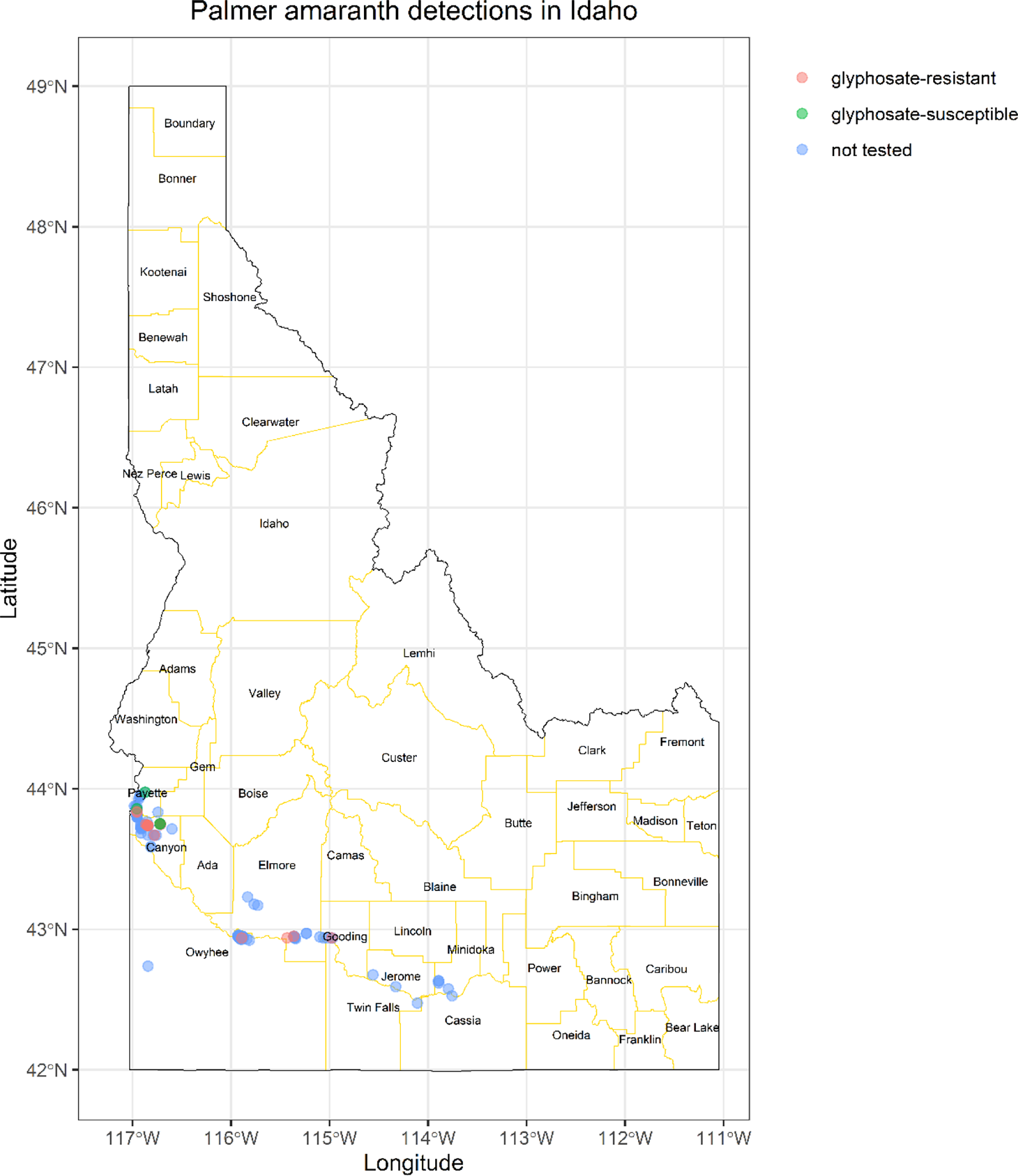
In summer 2023, agronomists and crop advisors were trained to identify Palmer amaranth, and during July and August, they visited GPS coordinates of suspected Palmer amaranth locations throughout Idaho and Oregon to confirm whether the suspected pigweeds were Palmer amaranth (Figure 1). If Palmer amaranth was present, mature seeds were collected for future dose-response assays. Tissue samples were collected from suspected Palmer amaranth plants and sent to Colorado State University for a Kompetitive Allele Specific PCR (KASP) genotyping test to confirm whether the plants were Palmer amaranth (Brusa et al. Reference Brusa, Patterson, Gaines, Dorn, Westra, Sparks and Wyse2021). The KASP test confirmed that the suspected pigweeds were Palmer amaranth and waterhemp. Two populations appeared to be hybrids. This study is focused only on Palmer amaranth populations.
Distribution of Palmer amaranth in Idaho as of September 2025. Plants were detected 154 times, affecting more than 3,642 ha of cropland, and more than 70% of sampled populations were resistant to glyphosate.

Dose-Response Bioassay
Seeds collected from Palmer amaranth populations in Idaho and Oregon in 2023 were cleaned and stored at 4 C until the experiments were initiated. Greenhouse studies were conducted in 2024 at the University of Idaho Research and Extension Center in Kimberly, to evaluate the efficacy of selected herbicides on Palmer amaranth. The experiment was laid out as a nine by four factorial completely randomized design with four replications. Factor A was nine different doses of glyphosate (0×, 0.125×, 0.25×, 0.5×, 1×, 2×, 4×, 8×, and 16×; where 1× is the field-use rate of glyphosate (1,260 g ae ha−1). Factor B was four populations of Palmer amaranth that consisted of three populations from Idaho and Oregon (ID3, ID7, OR1) that were suspected of being resistant to glyphosate, and one glyphosate-susceptible (Sus) population from Scottsbluff, Nebraska (Table 1). The ID3 and ID7 populations were selected because they had the most seeds and were representative of where most of the Palmer amaranth plants were detected.
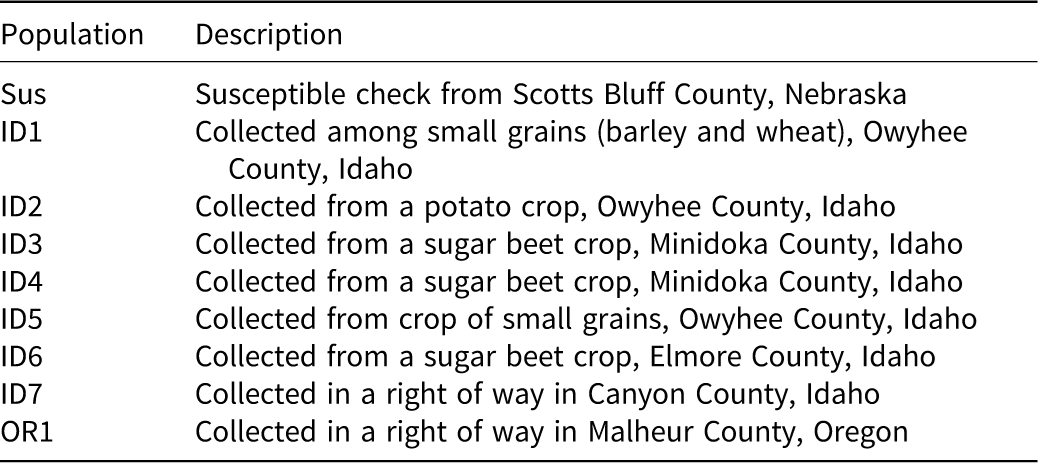
Description of Palmer amaranth populations collected in 2023 used to characterize glyphosate resistance and postemergence herbicide sensitivity.

Table 1 Long description
A table with two columns and nine rows. The first column is labeled Population and the second column is labeled Description. The table lists different populations of Palmer amaranth collected in 2023, detailing their origins. Row 1: Sus, Susceptible check from Scotts Bluff County, Nebraska. Row 2: ID1, Collected among small grains (barley and wheat), Owyhee County, Idaho. Row 3: ID2, Collected from a potato crop, Owyhee County, Idaho. Row 4: ID3, Collected from a sugar beet crop, Minidoka County, Idaho. Row 5: ID4, Collected from a sugar beet crop, Minidoka County, Idaho. Row 6: ID5, Collected from crop of small grains, Owyhee County, Idaho. Row 7: ID6, Collected from a sugar beet crop, Elmore County, Idaho. Row 8: ID7, Collected in a right of way in Canyon County, Idaho. Row 9: OR1, Collected in a right of way in Malheur County, Oregon.
On July 8, 2024 (Experiment 1), and August 23, 2024 (Experiment 2), approximately five Palmer amaranth seeds were planted in 0.9-L individual pots containing potting soil mix that consisted of 75% sphagnum peat moss, perlite, dolomitic limestone, gypsum, and a wetting agent (Sunshine Mix LC1; Sun Gro Horticulture Inc., Bellevue, WA). The average nutrient composition of the soil potting mix was 52% organic matter, 50 mg kg−1 nitrogen, 97 mg kg−1 phosphorus, and 255 mg kg−1 potassium. No additional fertilizer was applied. The experiment was conducted under a 14-h/10-h day/night photoperiod with 25±2 C day and 22±2 C night temperatures. Plants were uniformly irrigated twice daily for 2 min using an automated overhead sprinkler system. A supplemental light (Sun System; Sunlight Supply Inc., Vancouver, WA) was used to maintain a constant photoperiod (14 h of light and 10 h of dark) throughout the experiments. Plants were thinned to one seedling per pot shortly after emergence. Plants were sprayed with glyphosate when plants were approximately 7.6 cm tall using a Generation 4 Research Track Sprayer (DeVries Manufacturing Corp., Hollandale, MN) fitted with a single 8002E nozzle (TeeJet Technologies, Glendale Heights, IL) calibrated to deliver 188 L ha−1 of carrier volume at 207 kPa.
Visible Palmer amaranth control was evaluated 21 d after spraying on a scale of 0% to 100%, with 0% representing no weed control and 100% representing complete weed control or no aboveground green growth. At 21 d after herbicides were applied, the aboveground biomass was clipped and oven-dried to a constant weight at 60 C for about 72 h to measure the dry biomass. Aboveground biomass was reported in terms of percent reduction compared with the nontreated check (0 g ae ha−1 glyphosate).
EPSPS Gene Amplification
The EPSPS gene copy number was evaluated in nine suspected glyphosate-resistant Palmer amaranth populations from Idaho and Oregon (ID1, ID2, ID3, ID4, ID5, ID6, ID7, and OR1) and the Sus population (Table 1). The experiments were laid out as a completely randomized design with six replications. On July 8, 2024 (Experiment 1), and August 23, 2024 (Experiment 2), approximately three Palmer amaranth seeds were planted in 0.9-L individual pots as described in the dose-response experiments. Plants were sprayed with a 2× rate of glyphosate (2,520 g ae ha−1) when plants were approximately 7.6 cm tall using the same methods described in the dose-response experiments. Surviving plants were harvested 21 d after herbicides were applied, and tissue samples were frozen in liquid nitrogen and stored at –80 C until genomic DNA extraction. Genomic DNA was extracted from leaf tissue using the manufacturer’s protocol for the MagMAX Plant DNA Isolation Kit (Thermo Fisher Scientific, Waltham, MA), which describes plant tissue homogenization and DNA purification steps. Plant tissue homogenization steps were performed using 2.0-mL tubes containing two 5-mm stainless steel beads and an Omni Bead Ruptor 96 (Omni International, Kennesaw, GA) set to 15 Hz for 2 min. Subsequent DNA purification steps were performed with a KingFisher Apex (Thermo Fisher Scientific) equipped with a 96 deep-well head. Quantification of DNA was performed with a BioTek Synergy HTX multimode microplate reader (BioTek Instruments, Winooski, VT) and BioTek Gen5 software (v.3.08.01).
Quantitative real-time polymerase chain reaction (qPCR) was used to determine the EPSPS gene copy number with A36 serving as the reference gene. Primers for EPSPS and A36 were designed by Gaines et al. (Reference Gaines, Zhang, Wang, Bukun, Chisholm, Shaner, Nissen, Patzoldt, Tranel, Culpepper, Grey, Webster, Vencill, Sammons, Jiang, Preston, Leach and Westra2010) and Singh et al. (Reference Singh, Singh, Lawton-Rauh, Bagavathiannan and Roma-Burgos2018b), respectively. Names of the primers and their respective sequences are listed as follows: A36_F244 (5′-TTGGAACTGTCAGAGCAACC-3′) and A36_R363 (5′-GAACCCACTTCCACCAAAAC-3′) amplified A36 and EPSF1 (5′-ATGTTGGACGCTCTCAGAACTCTTGGT-3′) and EPSR8 (5′-TGAATTTCCTCCAGCAACGGCAA-3′) amplified EPSPS.
All qPCR reactions were performed on a QuantStudio 7 Flex (Applied Biosystems, Foster City, CA) using the PowerUp SYBR Green Master Mix manufacturer’s protocol (Applied Biosystems). Each 20-µL qPCR reaction consisted of 10 µL of PowerUp SYBR Green Master Mix, 2 µL of forward and reverse primers (5 µM), 4 µL of nuclease-free water, and 10 ng of genomic DNA. The thermoprofile consisted of the following: 2 min at 50 C for UDG activation, 2 min at 95 C for activation of the Dual-Lock DNA polymerase, and 40 cycles of 15 s at 95 C and 1 min at 60 C. A melt curve analysis was performed by subjecting samples to the following thermoprofile: 95 C for 15 s at a ramp rate of 1.6 C/s, 60 C for 1 min at a ramp rate of 1.6 C/s, and 95 C for 15 s at a ramp rate of 0.15 C/s. All populations had four biological replicates except the ID5 sample, which had three biological replicates because of a damaged sample. All samples were performed in triplicate. Non-template controls were included for each set of genes, and amplification was not observed in these reactions. Increase in genomic copy number of EPSPS relative to A36 was expressed as 2ΔCt, where ΔCt = (Ct A36 – Ct EPSPS) (Gaines et al. Reference Gaines, Shaner, Ward, Leach, Preston and Westra2011; Singh et al. Reference Singh, Singh, Lawton-Rauh, Bagavathiannan and Roma-Burgos2018b).
Efficacy of Selected Postemergence Herbicides
The efficacy of 2,4-D, dicamba, mesotrione, glufosinate-ammonium, and saflufenacil was evaluated on all populations listed in Table 1. The postemergence herbicide efficacy experiments were laid out as a nine by six factorial completely randomized design with four replications. Factor A was eight suspected glyphosate-resistant Palmer amaranth populations from Idaho and Oregon (ID1, ID2, ID3, ID4, ID5, ID6, ID7, and OR1) and the Sus population. Factor B was the field-use rates of 2,4-D, dicamba, mesotrione, glufosinate-ammonium, and saflufenacil (Table 2), in addition to a nontreated check.
Postemergence herbicides used in greenhouse herbicide efficacy experiments to characterize the Palmer amaranth populations.

Table 2 Long description
A table with five columns and five rows, detailing the efficacy of different herbicides on Palmer amaranth populations. The columns are labeled Herbicide, Rate, Commercial product, Manufacturer, and Adjuvant. The rows list the herbicides 2,4-D, dicamba, mesotrione, glufosinate-ammonium, and saflufenacil, along with their respective rates, commercial products, manufacturers, and adjuvants. Each row provides specific details such as the rate in grams per hectare, the commercial product name, the manufacturer, and the adjuvant used. The table presents a clear comparison of the different herbicides and their application details.
a Adjuvants included ammonium sulfate (AMS) (Ultra Pro; Loveland Products, Inc.); nonionic surfactant (NIS) (Preference; WinField Solutions); crop oil concentrate (COC) (Maximizer; Loveland Products, Inc.); methylated seed oil (MSO) (Concentrate with Leci-Tech’ Loveland Products, Inc.).
On July 8, 2024 (Experiment 1), and August 23, 2024 (Experiment 2), approximately three Palmer amaranth seeds were planted in 0.9-L individual pots as described in the dose-response experiments and thinned to one seed per pot after emergence. In these experiments, the postemergence herbicides (Table 2) were applied to Palmer amaranth plants that were 7.6 cm tall. Each herbicide was applied with the label-recommended adjuvant (Table 2). Visible Palmer amaranth control was evaluated 21 d after spraying on a scale of 0% to 100%, with 0% representing no weed control and 100% representing complete weed control or no aboveground green growth. No biomass was collected from these experiments in order to allow surviving plants to produce seeds for future experiments.
Data Analysis
Nonlinear regression analysis was used to quantify the relationship between glyphosate rate and Palmer amaranth visible control and biomass reduction. For both visible control and biomass reduction, a three-parameter log-logistic model was used (Equation 1), where Y is the response variable (visible control or biomass reduction in %), d is the upper limit asymptote, X is the rate of the herbicide applied in grams acid equivalent per hectare (g ae ha−1), e is the value of X at the inflection point of the curve, and b is the slope of the curve at e (Seefeldt et al. 1995).
 ${\rm Y} = d / (1 + [X / e]^b)$
The model parameters in Equation 1 have practical interpretations: d is an estimate of visible Palmer amaranth control or biomass reduction when no herbicide is applied (similar to the y-intercept in linear regression), and e is an estimate of the herbicide rate required to cause a 50% visible control or biomass reduction (GR50). Nonlinear regression analysis was conducted in the R statistical language using the drc package (R Core Team 2024; Ritz et al. Reference Ritz, Baty, Streibig and Gerhard2015). The level of resistance (R/S) was calculated by dividing the GR50 value (amount of glyphosate needed for 50% visible control) of the resistant biotype (ID3, ID7, OR1) by that of the susceptible biotype (Sus).
Data from the selected postemergence herbicide efficacy and the EPSPS gene amplification experiments were analyzed using a linear mixed-effects ANOVA in R statistical language (v.4.3.2) using the lme4 and lmerTest packages (Kuznetsova et al. Reference Kuznetsova, Brockhoff and Christensen2017). The Palmer amaranth population was considered a fixed effect, and the experimental run was a random effect. Estimated marginal means were separated with pairwise comparisons using multcomp and emmeans packages when the analysis of variance indicated significant treatment effects (α ≤ 0.05) (Hothorn et al. Reference Hothorn, Bretz and Westfall2008; Lenth Reference Lenth2017), which were separated at α = 0.05 using a Fisher protected LSD test.
Results and Discussion
Palmer Amaranth Detections in the Pacific Northwest
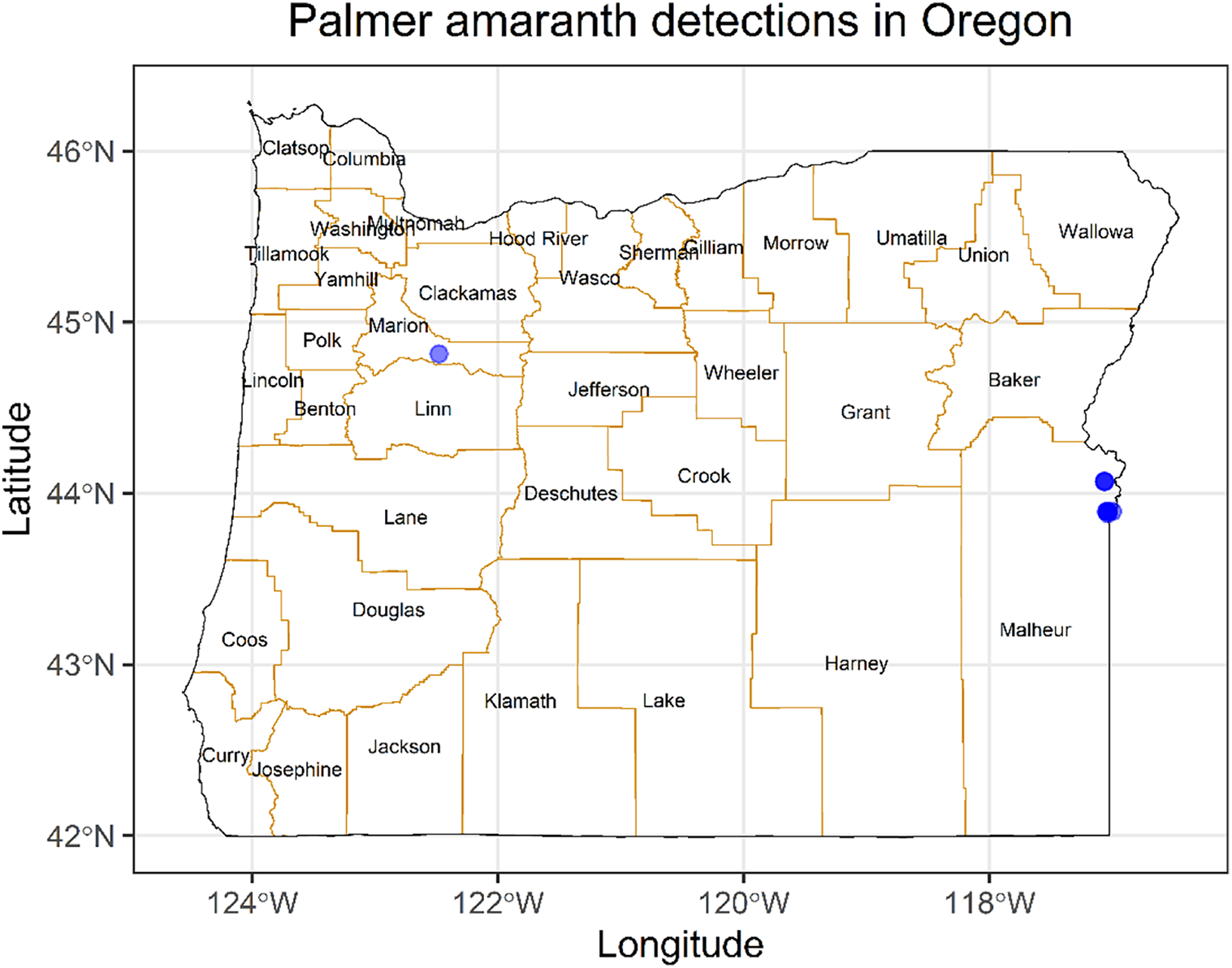
As of September 2025, 154 Palmer amaranth plants had been detected in southern Idaho, and more than 70% of sampled populations were resistant to glyphosate (Figure 1). These detections affected more than 3,642 ha among multiple crops (alfalfa, barley, corn, dry bean, potato, sugar beet, and wheat), as well as rights-of-way and private property. While only 3,642 ha are currently affected, previous research indicates that Palmer amaranth infestations can spread rapidly. For example, Norsworthy et al. (Reference Norsworthy, Griffith, Griffin, Bagavathiannan and Gbur2014) found that just 20,000 Palmer amaranth seeds introduced into a 1-m2 area spread to all corners of fields ranging in size from 0.53 to 077 ha within 3 yr after introduction. Thus, the 3,642-ha infestation could increase in thousand folds in the coming years, if left unchecked. There were six detections of Palmer amaranth in Oregon, with the majority being in Malheur County (Figure 2). Although Palmer amaranth was detected in Spokane and Walla Walla counties in Washington in 2023, there were no additional detections in the 2024 surveys. In both Idaho and Oregon, Palmer amaranth was likely introduced into the states through contaminated livestock feed, farm machinery, and contaminated bird feed. This is consistent with previous findings on Palmer amaranth introduction into different states where contaminated seeds sources and farm machinery were identified as the major sources of introduction (Briscoe Runquist et al. Reference Briscoe Runquist, Lake, Tiffin and Moeller2019; Ward et al. Reference Ward, Webster and Steckel2013).
Counties in Oregon where Palmer amaranth was detected. Palmer amaranth presence was confirmed in Malheur County, Oregon, as of September 2025.

Dose-Response Bioassay and EPSPS Gene Amplification
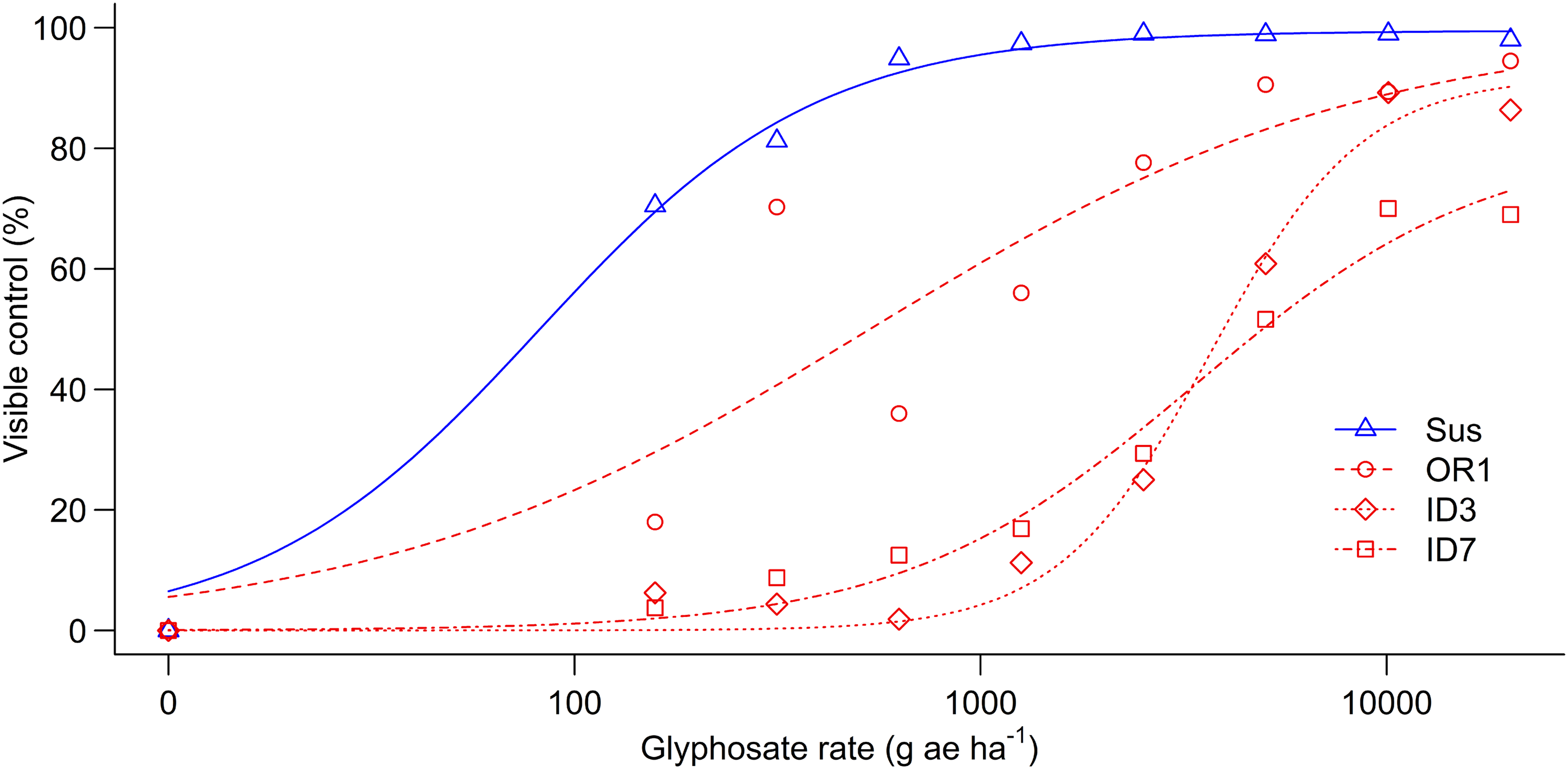
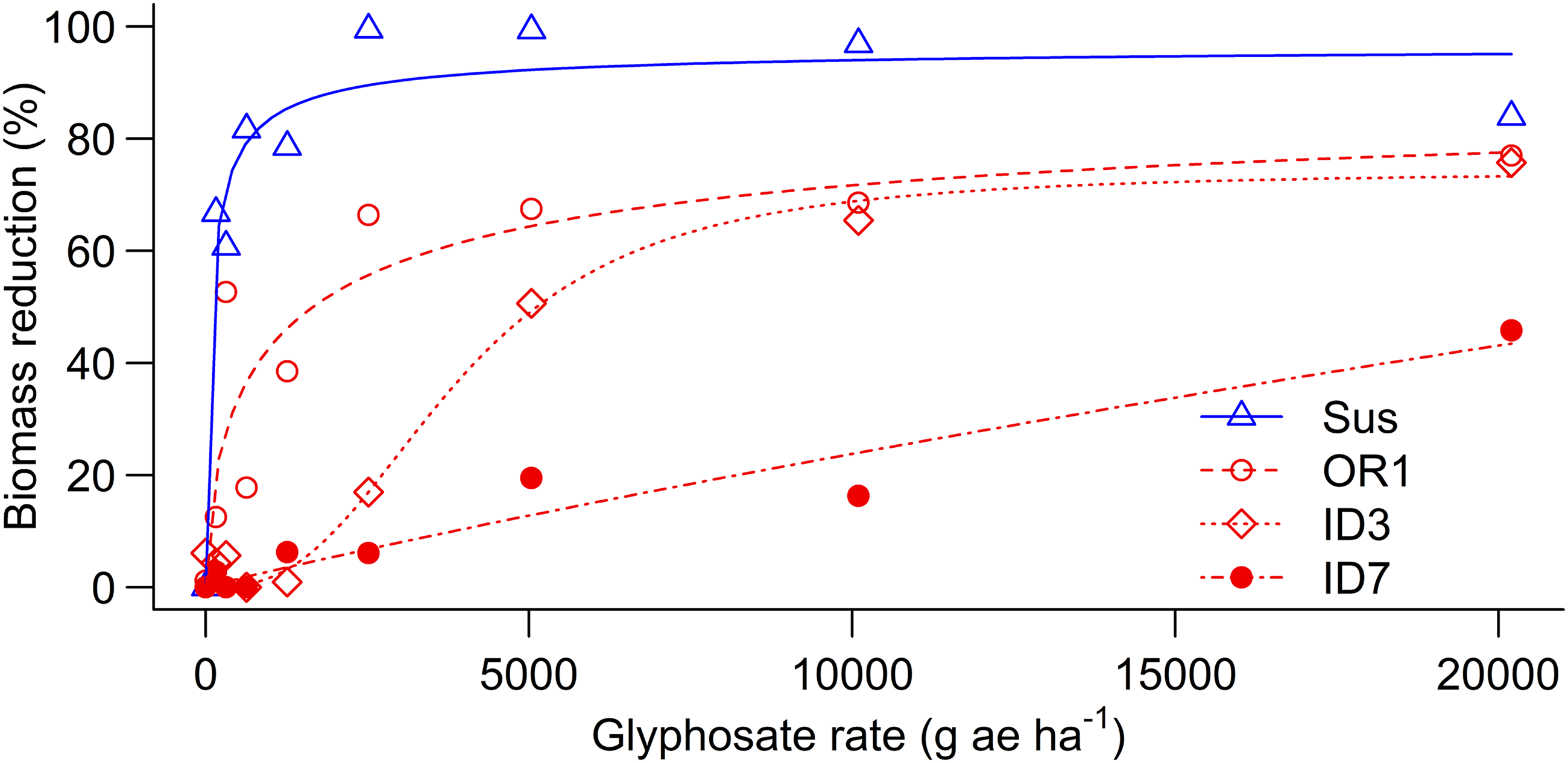
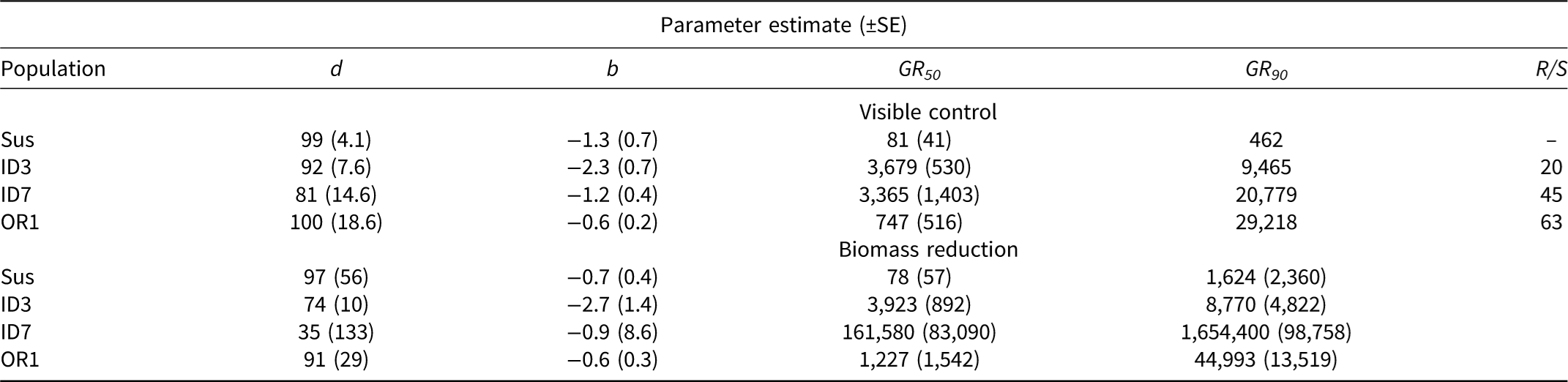
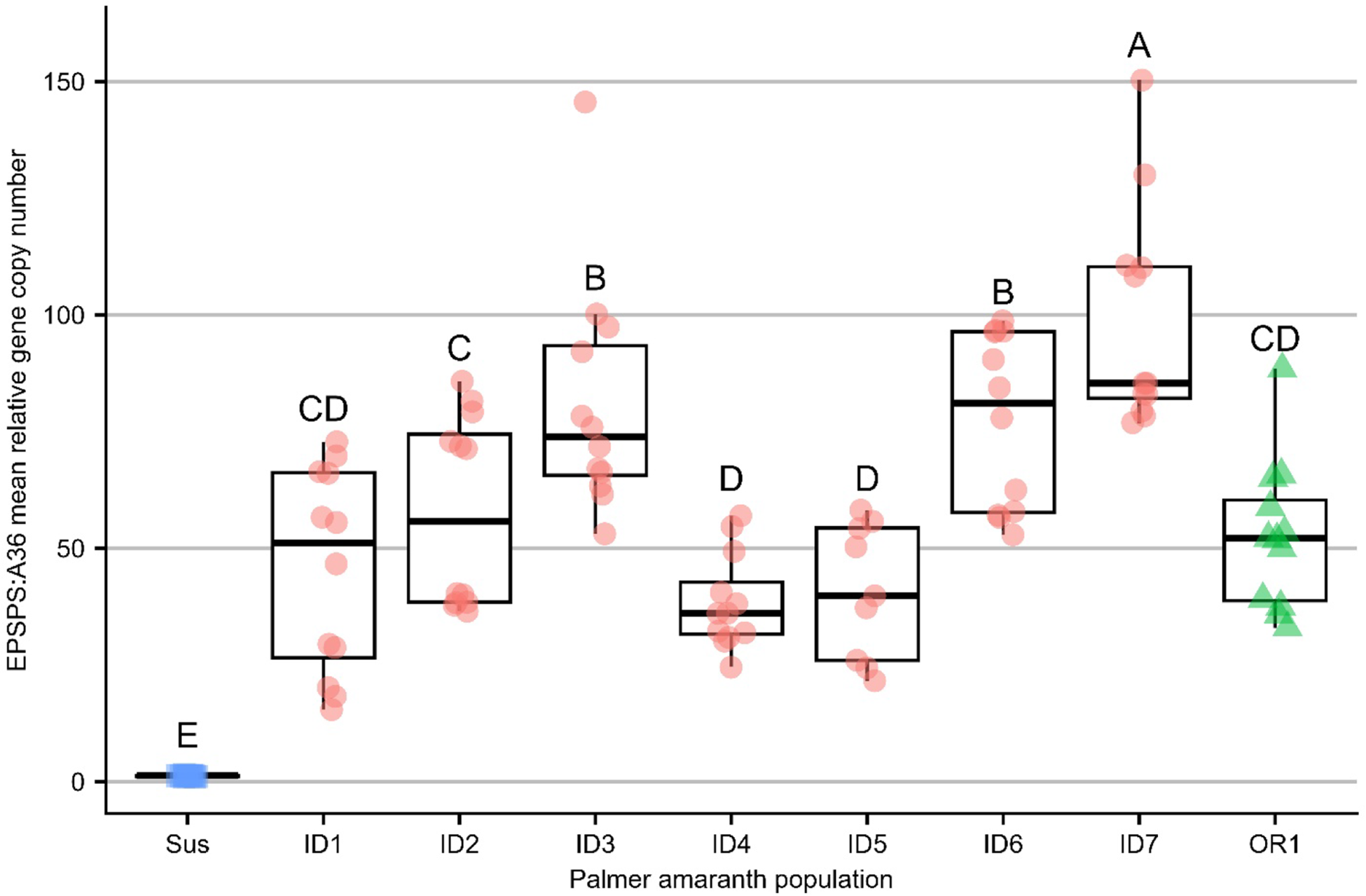
A representative sample of 23 tissue samples collected in 2023 and analyzed for EPSPS gene amplification showed that 74% (17 out of 23) of sampled populations were resistant to glyphosate (Figure 1). The dose-response bioassay confirmed glyphosate resistance in Palmer amaranth collected from the PNW (Figures 3 and 4; Table 3). Compared to the susceptible biotype, it would require 20 to 63 times more glyphosate to provide 50% control of the glyphosate-resistant Palmer amaranth biotypes (Table 1). The EPSPS gene amplification analysis of plants that survived the 2× rate of glyphosate (2,520 g ae ha−1) showed up to 150 EPSPS genes in glyphosate-resistant populations (Figure 5). There were statistically significant differences in average EPSPS gene copy numbers among the Palmer amaranth populations. All populations collected in the PNW had more EPSPS genes than the Sus population (Figure 5). Previous studies have identified EPSPS gene amplification as the primary mechanism of glyphosate resistance (Araujo et al. Reference Araujo, Westra, Shergill and Gaines2024; Molin et al. Reference Molin, Wright, VanGessel, McCloskey, Jugulam and Hoagland2018; Patterson et al. Reference Patterson, Pettinga, Ravet, Neve and Gaines2018), which can also exist as a rearranged extrachromosomal circular DNA that confers both glyphosate and glufosinate resistance in Palmer amaranth (Carvalho-Moore et al. Reference Carvalho-Moore, Borgato, Cutti, Porri, Meiners, Lerchl, Norsworthy and Patterson2025). The susceptible population used in this study has an EPSPS gene copy number of 1, which is consistent with previous findings (Gaines et al. Reference Gaines, Shaner, Ward, Leach, Preston and Westra2011; Molin et al. Reference Molin, Patterson and Saski2020). The resistant populations had 15 or more EPSPS gene copies. In a study of the relationship between glyphosate resistance and EPSPS gene copies, a threshold of approximately 15 EPSPS gene copies was identified as the average number of genes conferring glyphosate resistance in Palmer amaranth (Yakimowski et al. Reference Yakimowski, Teitel and Caruso2021).
Dose-response curves of visible Palmer amaranth control for three suspected glyphosate-resistant Palmer amaranth populations from Idaho and Oregon (ID3, ID7, and OR1) and a susceptible population (Sus) from Nebraska.

Dose-response curves of Palmer amaranth biomass reduction for three suspected glyphosate-resistant Palmer amaranth populations from Idaho and Oregon (ID3, ID7, and OR1) and a susceptible population (Sus) from Nebraska.

Parameter estimates for Palmer amaranth visible control and biomass reduction following a three-parameter log-logistic model for greenhouse experiments. a

Table 3 Long description
A table with parameter estimates for Palmer amaranth visible control and biomass reduction following a three-parameter log-logistic model for greenhouse experiments. The table has 8 rows and 6 columns. Column headers are Population, d, b, GR50, GR90, and R/S. Row labels include Sus, ID3, ID7, and OR1 for both visible control and biomass reduction. Each row provides specific values for d, b, GR50, GR90, and R/S. Notable trends include varying values of d, b, GR50, GR90, and R/S across different populations and conditions.
a Parameter estimates were calculated using Equation 1: Y = d/(1 + [X/e] b ), where b represents the slope of the curve at e (e is the value of X at the inflection point of the curve and X is the rate of the herbicide applied); d is the upper limit asymptote; GR50 represents a 50% reduction in visible control or biomass; GR90, represents a 90% reduction in visible control or biomass; R/S represents the level of resistance.
EPSPS gene copy numbers of eight suspected glyphosate-resistant Palmer amaranth populations from Idaho and Oregon (ID1, ID2, ID3, ID4, ID5, ID6, ID7, and OR1) and a susceptible population (Sus) from Nebraska. The ID1, ID2, ID3, ID4, ID5, ID6, ID7, and OR1 populations all survived 2× rate of glyphosate (2,520 g ae ha−1).

Efficacy of Selected Postemergence Herbicides
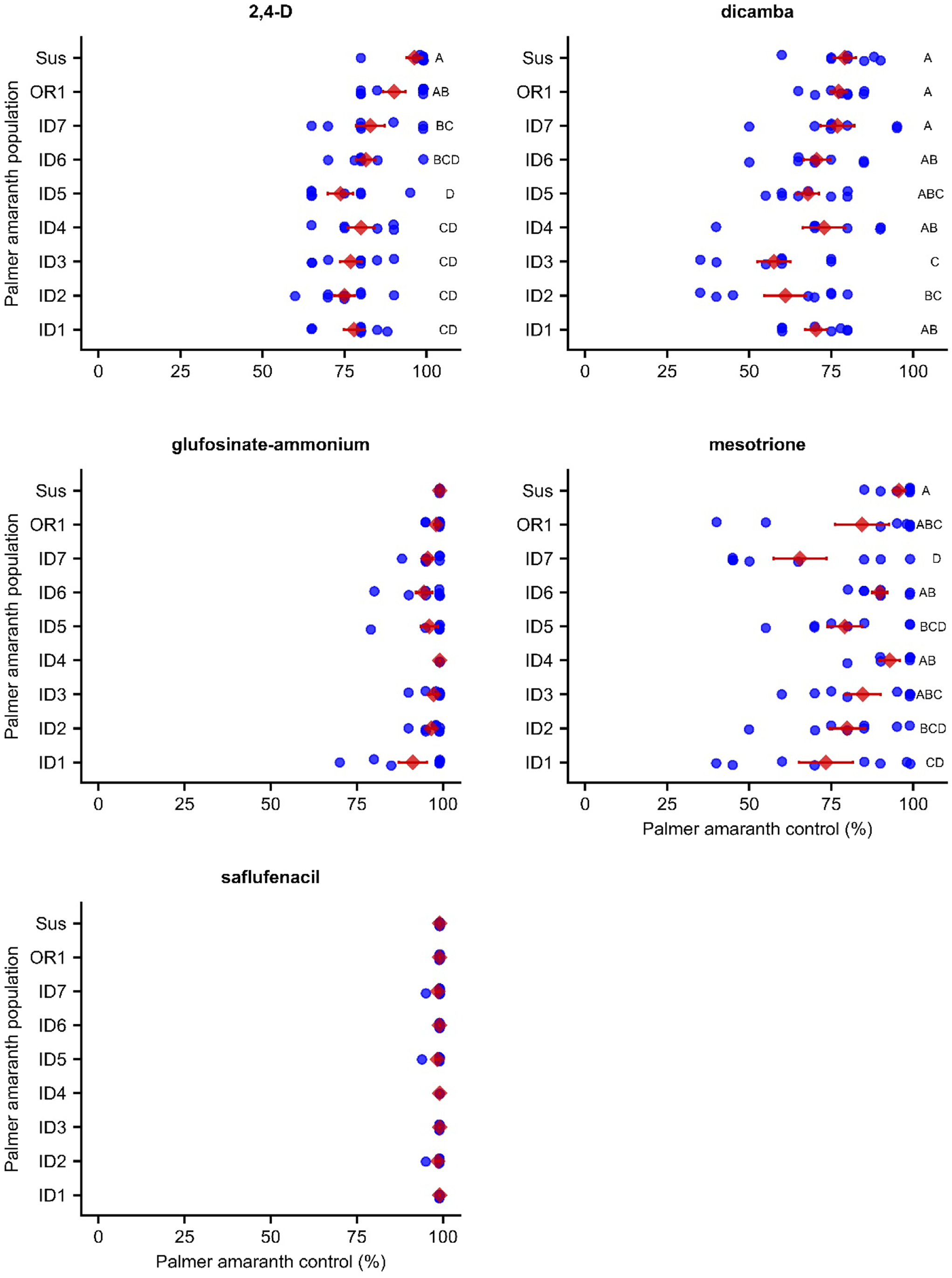
Some Palmer amaranth populations from the PNW showed reduced sensitivity to the field-use rates of 2,4-D, dicamba, and mesotrione, compared to the susceptible population (Figure 6). While this is not indicative of Palmer amaranth resistance to these herbicides in the PNW, reduced sensitivity to these herbicides would greatly affect the ability of farmers to effectively control Palmer amaranth and limit its spread in the PNW region. In the United States, Palmer amaranth resistance to 2,4-D has already been documented in Kansas (Kumar et al. Reference Kumar, Liu, Boyer and Stahlman2019; Shyam et al. Reference Shyam, Peterson and Jugulam2022). Similarly, reduced sensitivity and resistance of Palmer amaranth to dicamba has been reported in at least two states (Araujo et al. Reference Araujo, Westra, Shergill and Gaines2024; Foster and Steckel Reference Foster and Steckel2022). Weed resistance to auxinic herbicides such as 2,4-D is reported to be conferred by either target site mutation or non-target site mechanism, including reduced absorption, enhanced metabolism, or reduced translocation (Dang et al. Reference Dang, Malone, Boutsalis, Krishnan, Gill and Preston2018; Figueiredo et al. Reference Figueiredo, Leibhart, Reicher, Tranel, Nissen, Westra, Bernards, Kruger, Gaines and Jugulam2018; Kohler et al. Reference Kohler, Throssell and Reicher2004; LeClere et al. Reference LeClere, Wu, Westra and Sammons2018). Resistance to 2,4-D in a Palmer amaranth population was confirmed to be mediated by enhanced metabolism (Shyam et al. Reference Shyam, Peterson and Jugulam2022). Continued monitoring and molecular characterization are necessary to determine whether the reduced sensitivity to 2,4-D and dicamba in the PNW populations is due to target-site mutations or non-target-site mechanisms. Mesotrione resistance or reduced sensitivity has also been documented in multiple locations in the United States (Hamberg et al. Reference Hamberg, Yadav, Hartzler and Owen2024; Kumar et al. Reference Kumar, Liu and Stahlman2020; Nakka et al. Reference Nakka, Godar, Wani, Thompson, Peterson, Roelofs and Jugulam2017; Singh et al. Reference Singh, Roma-Burgos, Singh, Alcober, Salas-Perez and Shivrain2018a).
The efficacy of 2,4-D, dicamba, glufosinate-ammonium, mesotrione, and saflufenacil on eight suspected glyphosate-resistant Palmer amaranth populations from Idaho and Oregon (ID1, ID2, ID3, ID4, ID5, ID6, ID7, and OR1) and a susceptible population (Sus) from Nebraska as described in Table 1. Solid blue circles represent each replicate and solid red diamonds represent the means. Red error bars represent the standard error of the mean. Means followed by the same letters are not statistically different at a 0.05 probability level according to the Fisher protected LSD test.

Although there were statistical differences between the PNW populations and the Sus population, all PNW Palmer amaranth populations were effectively controlled with field-applied rates of glufosinate-ammonium and saflufenacil (Figure 6). This means that glufosinate-ammonium and saflufenacil would provide additional options for managing Palmer amaranth in PNW cropping systems. However, Palmer amaranth has already evolved resistance to protoporphyrinogen oxidase–inhibiting and glutamine synthetase–inhibiting herbicides in other states, indicating that the utility of the herbicides in the PNW may not last long (Heap Reference Heap2025; Priess et al. Reference Priess, Norsworthy, Godara, Mauromoustakos, Butts, Roberts and Barber2022; Salas et al. Reference Salas, Burgos, Tranel, Singh, Glasgow, Scott and Nichols2016). Even with thoughtful herbicide rotations, there is a high potential for any Palmer amaranth introduced to the PNW to be resistant to one or more commonly applied herbicides, highlighting the importance of incorporating nonchemical weed management practices in the future to prevent the movement of Palmer amaranth into other counties.
Practical Implications
Palmer has been problematic weed for farmers within the United States for decades, and the recent introduction of Palmer amaranth into the PNW will substantially change weed management practices in PNW cropping systems. The results of this study provide baseline data to track the expansion of Palmer amaranth in the PNW over the next several years. The PNW states must coordinate efforts to reduce new introductions of Palmer amaranth and limit state-to-state dispersal of this weed. Since a number of detections were along rights-of-way, state departments of transportation in the PNW need to intensify their weed management efforts along roadways to limit the spread of Palmer amaranth. The widespread glyphosate resistance in PNW Palmer amaranth populations suggest that farmers who rely exclusively on glyphosate for weed control in glyphosate-resistant crops such as sugar beet would need to incorporate effective residual herbicides into their herbicide programs. Although this study did not confirm resistance to any additional herbicides aside from glyphosate, it is imperative for growers to diversify their weed control programs to include nonchemical options (e.g., crop rotation, electrical weeding to control weed escapes, etc.) to reduce the selection for resistance to other herbicide sites of action.
Acknowledgments
We thank James Gomm, Chandra Montgomery, and Shaila Antonio-Venagas for assisting with greenhouse trial establishment and management. We are also grateful to Amalgamated Sugar agronomists for their assistance in the surveys to locate Palmer amaranth across southern Idaho.
Funding
Partial funding for this research was provided by the Snake River Sugar Beet Research and Seed Alliance, Northwest Potato Research Consortium, Pacific Northwest Resistance Initiative through Non-Assistance Cooperative Agreement58-2090-2-039 with the U.S. Department of Agriculture (USDA)–Agricultural Research Service, and grant 2024-70006-43754 from the USDA–National Institute of Food and Agriculture. Funding unrelated to this research has previously been provided to Colorado State University, University of Idaho, and University of Oregon by manufacturers of products used in this research, including BASF, Loveland Products, Inc, Syngenta, and Winfield Solutions.
Competing Interests
The authors declare they have no competing interests.


 Open access

