Introduction
Diolcogaster claritibia (Papp, Reference Papp1959) (Hymenoptera: Braconidae: Microgastrinae) was reared from diamondback moth, Plutella xylostella (Linnaeus, 1758) (Lepidoptera: Plutellidae), one of the most damaging insect pests attacking cruciferous crops throughout its nearly cosmopolitan range. Diolcogaster claritibia has been reported only from the Palaearctic region, where it has been recorded from a number of countries.
Recent work on DNA barcoding of the world species of Microgastrinae has generated over 20000 sequences (Smith et al. Reference Smith, Fernández-Triana, Eveleigh, Gómez, Guclu and Hallwachs2013), which has allowed for comparisons of material collected in different biogeographic regions. Unidentified specimens whose DNA sequences match identified species have been studied further, and as a result many species previously unknown from a region are being recognised.
Here, we report for the first time the presence of D. claritibia in the Nearctic region, compare its populations with those of the Palaearctic region, and discuss the taxonomic status of the species.
Methods
We performed a morphological examination of seven females from Europe (one from Cyprus, three from East Jordan, two from France, and one from the Netherlands), three males (one from Italy, two from Jordan), and close to 100 specimens from Canada (Alberta, Manitoba, and Ontario). Voucher specimens are deposited in the Canadian National Collection of Insects, Ottawa, Canada, and the National Museums of Scotland, Edinburgh, United Kingdom.
Morphological terms and measurements of structures are according to Mason (Reference Mason1981), Huber and Sharkey (Reference Huber and Sharkey1993), and Whitfield (Reference Whitfield1997). In the morphological section of the paper we use T1 and T2 to refer to mediotergites 1 and 2, respectively.
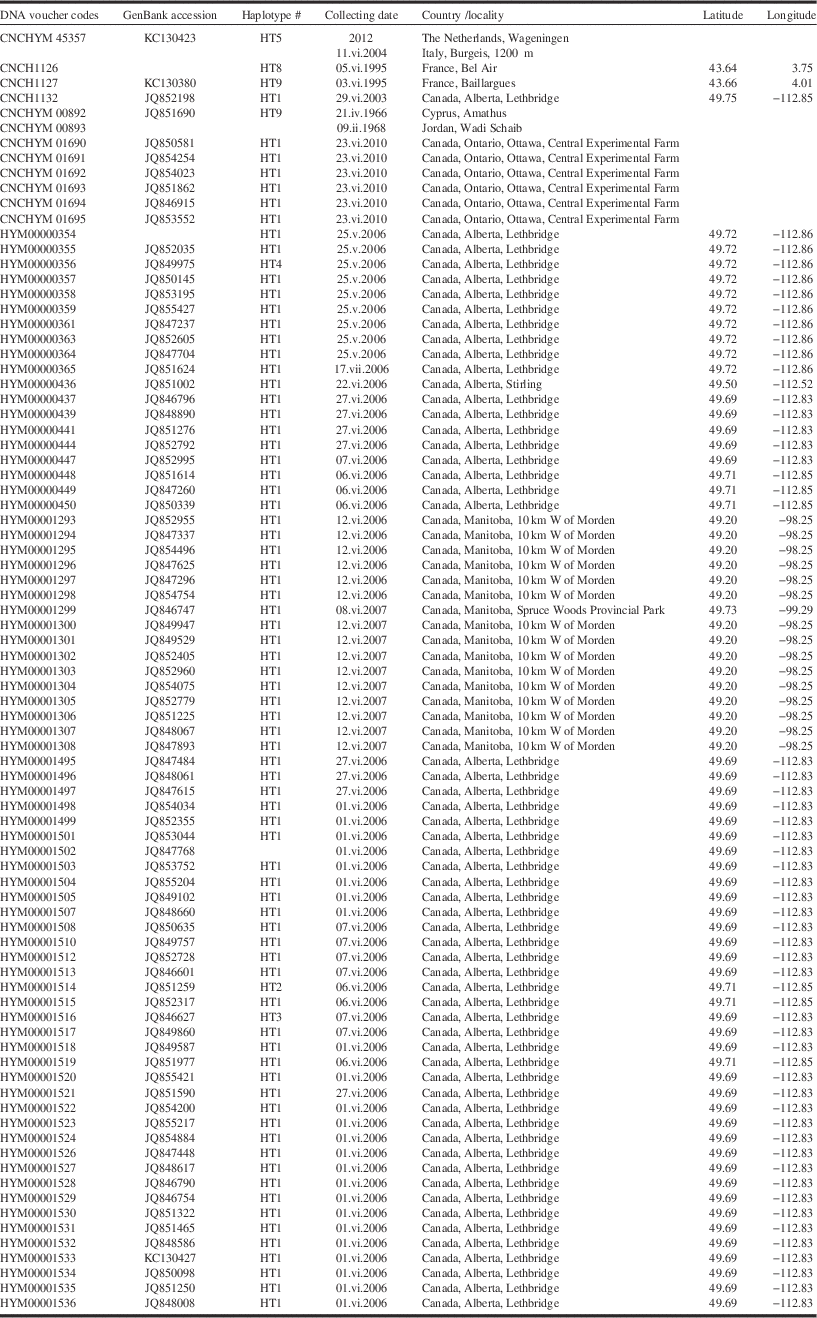
For molecular analyses, all Diolcogaster Ashmead, 1900 DNA barcodes (658 base pair region near the 5′ terminus of the COI gene) available in the Barcode of Life Data System (BOLD) (http://www.boldsystems.org) were imported into Geneious Pro 6.1 (Drummond et al. Reference Drummond, Ashton, Buxton, Cheung, Cooper and Duran2011) along with one newly generated sequence of D. claritibia from the Netherlands. This new sequence was obtained following standard protocols for DNA extraction (Ivanova et al. Reference Ivanova, Dewaard and Hebert2006) and amplification using primers LepF1-LepR1 (Smith et al. Reference Smith, Woodley, Janzen, Hallwachs and Hebert2006, Reference Smith, Wood, Janzen, Hallwachs and Hebert2007, Reference Smith, Rodriguez, Whitfield, Deans, Janzen and Hallwachs2008). Collection information and accessions (BOLD and GenBank) are available in Table 1. Fourteen of the 115 sequences were <500 base pairs long and were therefore deleted from the data set before further analysis. The remaining 101 sequences (representing eight Diolcogaster species) were aligned using the default settings for MUSCLE (Drummond et al. Reference Drummond, Ashton, Buxton, Cheung, Cooper and Duran2011). The final aligned data set contained 657 characters.
Details of specimens examined.

The column “Haplotype #” refers to numbers of different haplotypes as shown in Fig. 2.
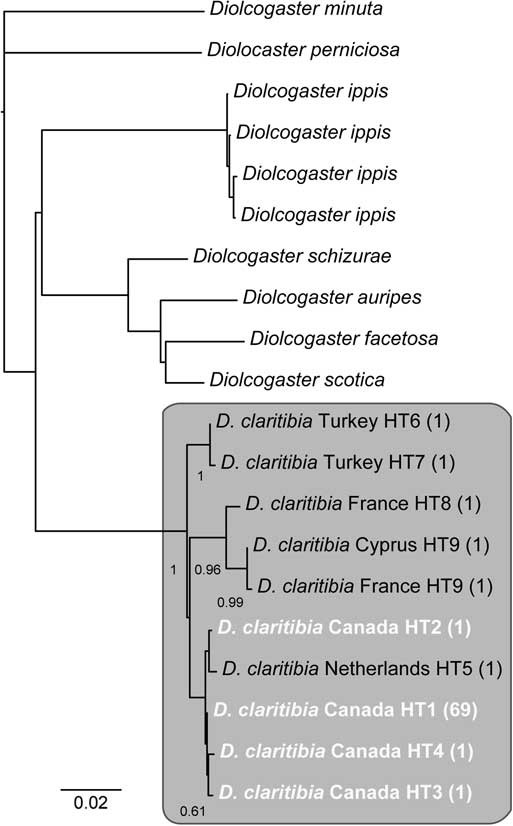
To determine if the Canadian Diolcogaster specimens are conspecific with European D. claritibia, a neighbour-joining tree (Saitou and Nei Reference Saitou and Nei1987) was constructed in Geneious Pro 6.1 (Drummond et al. Reference Drummond, Ashton, Buxton, Cheung, Cooper and Duran2011) using the TN93 model (Tamura and Nei Reference Tamura and Nei1993) (Fig. 1). To further investigate this, a Bayesian phylogenetic analysis was also performed. The aligned data set was partitioned into two parts, the first containing first and second codon positions and the second containing third codon positions because the mutation rate of third codon positions is much higher than that of first and second codon positions. Model testing done in JModelTest v.2.2.2 (Darriba et al. Reference Darriba, Taboada, Doallo and Posada2012) using the Bayesian Information Criterion selected the GTR+I model for the first partition and the GTR+G model for the second partition. Two independent Bayesian analyses with four chains each were run in MrBayes v.3.2.1 (Ronquist and Huelsenbeck Reference Ronquist and Huelsenbeck2003) for 92 million generations each. Trace files of all parameters were examined in Tracer v.1.5 (Rambaut and Drummond Reference Rambaut and Drummond2009) to verify that the runs had converged on the same stationary distribution, and to select the percentage of samples to remove as burn-in. A 10% burn-in was removed from both tree files that were then combined and resampled at 10%. A maximum clade credibility tree (MCCT) was made from the combined resampled tree file in TreeAnotator v.1.7.5 (Rambaut and Drummond Reference Rambaut and Drummond2013).
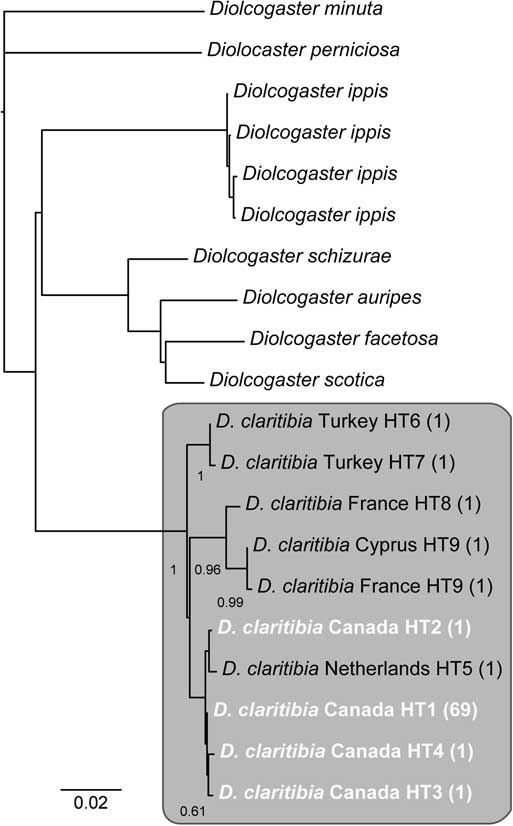
Neighbour-joining tree of COI DNA barcodes of Diolcogaster species. One representative of each haplotype (HT) is included (except for D. claritibia haplotype 2, which shows specimens found in both Cyprus and France). The number of specimens within each D. claritibia haplotype is indicated within parentheses. Posterior probabilities above 0.50 for D. claritibia groups recovered in the Bayesian analysis are shown below branches.
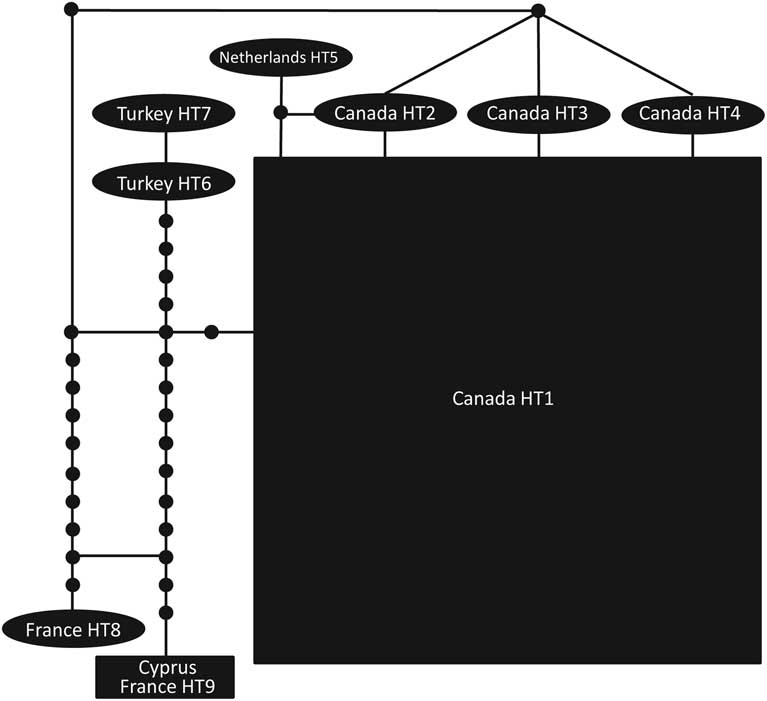
Given that few sites were variable among the Canadian and European D. claritibia sequences, a haplotype network analysis was also constructed to see if the Canadian and European D. claritibia specimens represent different mitochondrial lineages. The network building software TCS (Clement et al. Reference Clement, Posada and Crandall2000), which uses coalescent theory (Hudson Reference Hudson1990; Templeton et al. Reference Templeton, Crandall and Sing1992) and an iterative Bayesian method to evaluate the probability that DNA sequences share a parsimonious relationship without multiple substitutions underlying any single nucleotide difference, was used to construct a haplotype network of the D. claritibia DNA barcode sequences under a probability of parsimony of 0.95 and 0.93. Ambiguities were treated as missing data and all missing data was ignored in the analysis.
Results
Specimens of D. claritibia were independently found by M.R.S. (from Italy and the Netherlands) and J.F.T. (from Canada) while identifying samples of Braconidae wasps. All are new country records for the species.
The Canadian specimens represent the first record for the Nearctic region and expand the known distribution of D. claritibia to the New World. Based on previous data, the species was known to be widely distributed across the Palaearctic region from Spain to Kazakhstan and Russia (Chita and Krasnodar) (Yu et al. Reference Yu, van Achterberg and Horstmann2012).
Previously, D. claritibia had been reared from P. xylostella on Sinapis alba Linnaeus (Brassicaceae) (white mustard) and also collected as adults on Lepidium Linnaeus (Brassicaceae) species (Papp Reference Papp1981). Here we record the species from P. xylostella (probably) on an undetermined large straggly crucifer in the Italian Alps, from P. xyllostella on Brassica oleracea Linnaeus (cabbage) in the Netherlands, and from P. xylostella on Brassica juncea (Linnaeus) Czernajew, B. napus Linnaeus (canola), and S. alba (Brassicaceae) in Canada (agricultural areas of Alberta, Manitoba, and Ontario).
Based on previous references (compiled in Yu et al. Reference Yu, van Achterberg and Horstmann2012) 31 species of Microgastrinae are recorded as parasitoids of P. xylostella worldwide – though many of those records are likely to be wrong (sensu Shaw Reference Shaw1994). Most belong to Apanteles Forster, 1862 and Cotesia Cameron, 1891, with D. claritibia being the only species of Diolcogaster recorded from diamondback moth.
Morphological studies on Diolcogaster claritibia
Species description
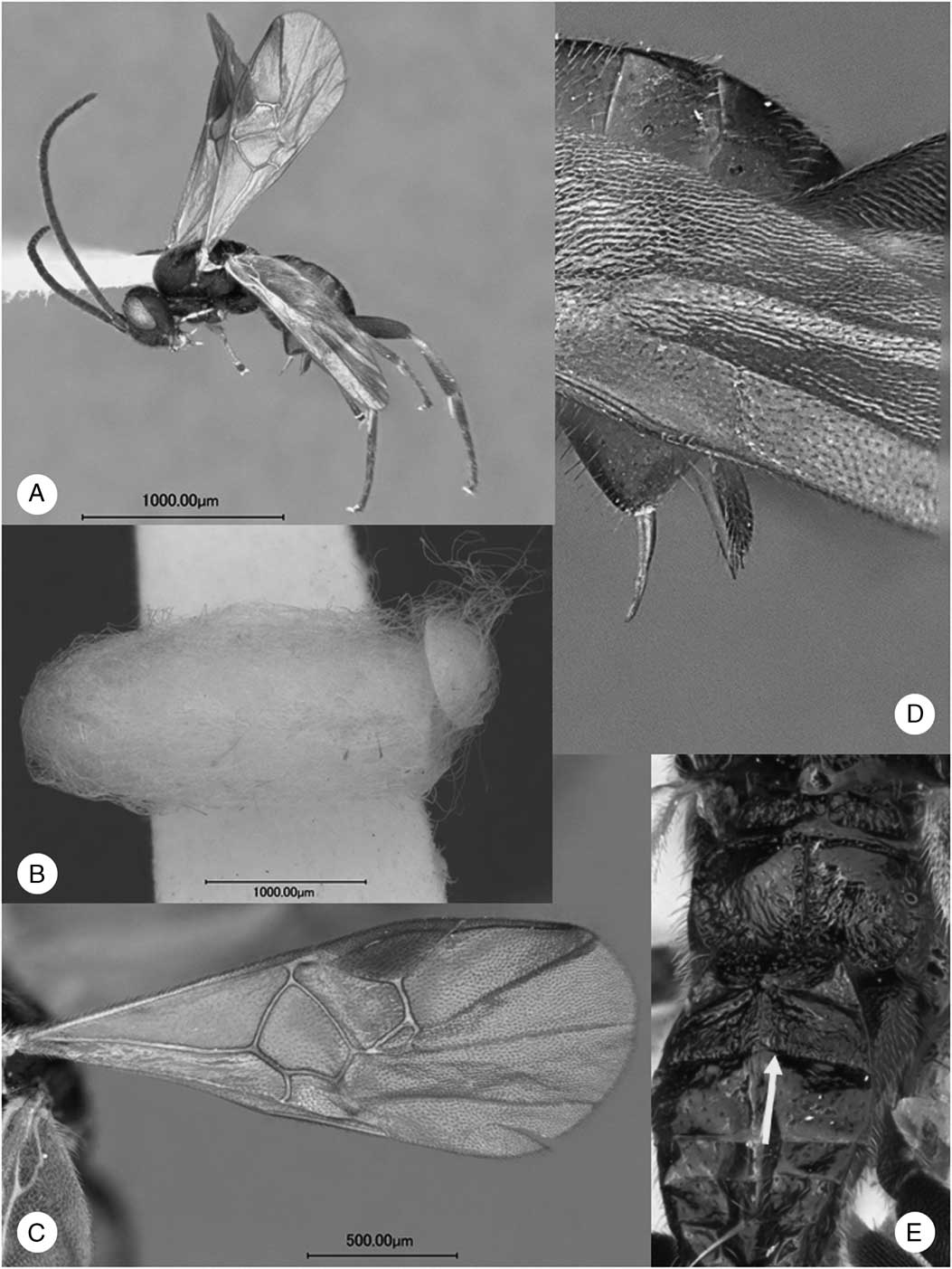
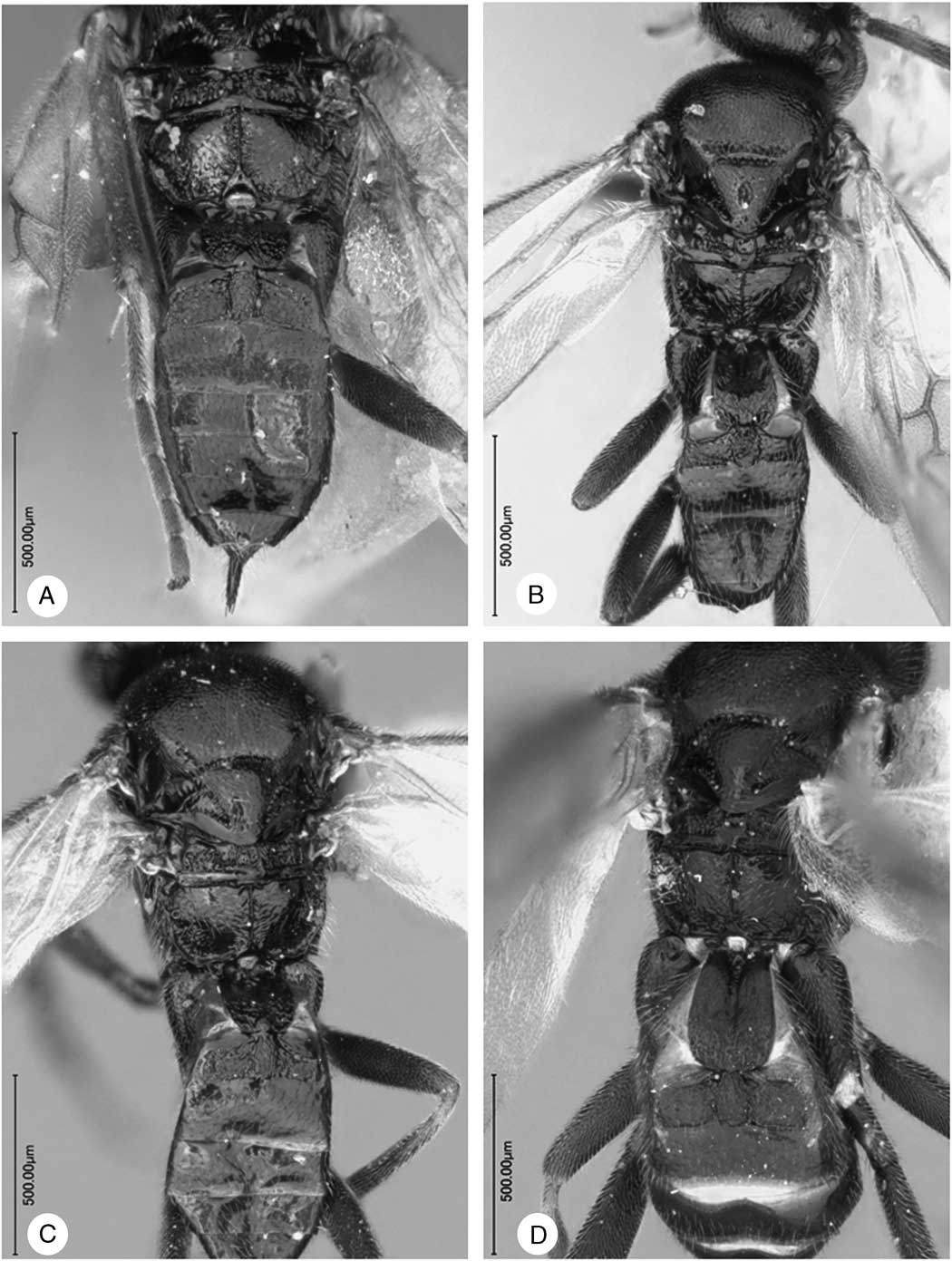
(Figs 3–4). Body length: 2.0–2.2 mm. Fore wing length 2.0–2.4 mm. Protibia fully yellow, mesotibiae and metatibiae black on apical half, yellow on basal half, rest of body fully black. Mesocutum weakly punctate with very shallow punctures. Propodeum with relatively weakly sculpture, with some rugosity around the median carina, the rest mostly smooth. T1 slightly widening up to 0.7 of tergite length (where widest point occurs), then narrowing towards posterior margin (width at posterior margin slightly wider than width at anterior margin). T1 1.3 times as long as its width at posterior margin. T1 length/maximum width 1.5–1.6 times in European specimens and 1.2–1.6 times in Canadian specimens. T2 fully sculptured at least posteriorly, with the elevated median field a little more strongly sculptured than the side areas, and each side area divided into a sculptured and almost rhomboidal posterior area slightly wider than long, and with the outward anterior corner rounded and an anterior strip with much less sculpture (usually just under half as long as the sculptured area posterior to it). T3 completely smooth. Ovipositor sheaths short, at most one-quarter the length of metatibia, with a long seta on the apex. Fore wing with triangular areolet, its posterior side in straight line with vein r.
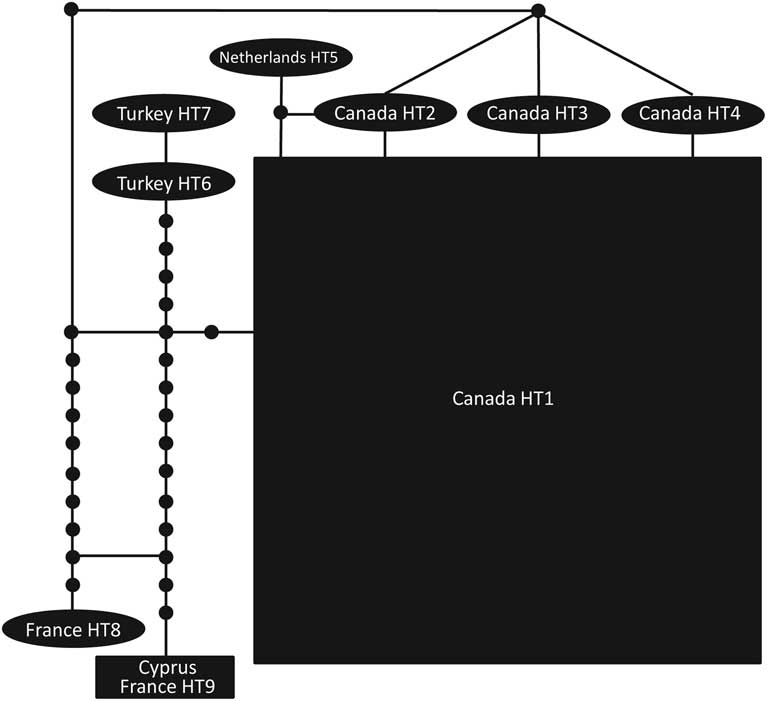
Haplotype network of COI DNA barcodes of Diolcogaster claritibia using a probability of parsimony of 0.93. Seven of the sampled haplotypes (HT) were found in only one specimen and are each represented by an oval. One haplotype, represented by a small rectangle, was found in a specimen from Cyprus and a specimen from France. One haplotype, represented by a large square, was found in 69 Canadian specimens. Small circles represent unsampled intermediate haplotypes and lines indicate single sequence differences (mutations) joining haplotypes.
Diolcogaster claritibia, specimens from Canada. (A) Habitus. (B) Cocoon. (C) Fore wing. (D) Hypopygium, ovipositor and ovipositor sheaths. (E) Mediotergite 2 (indicated by yellow arrow) and propodeum in the background.
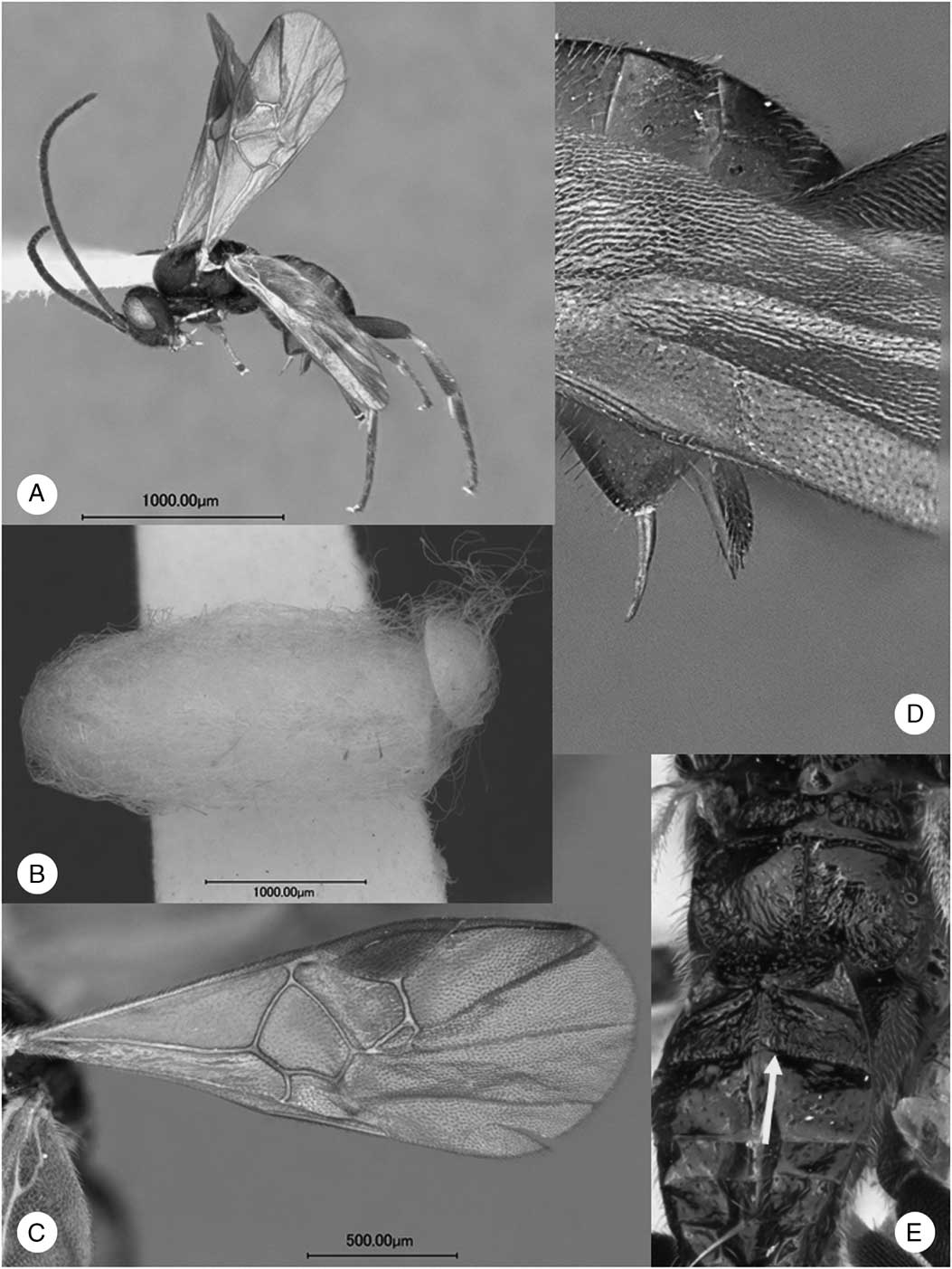
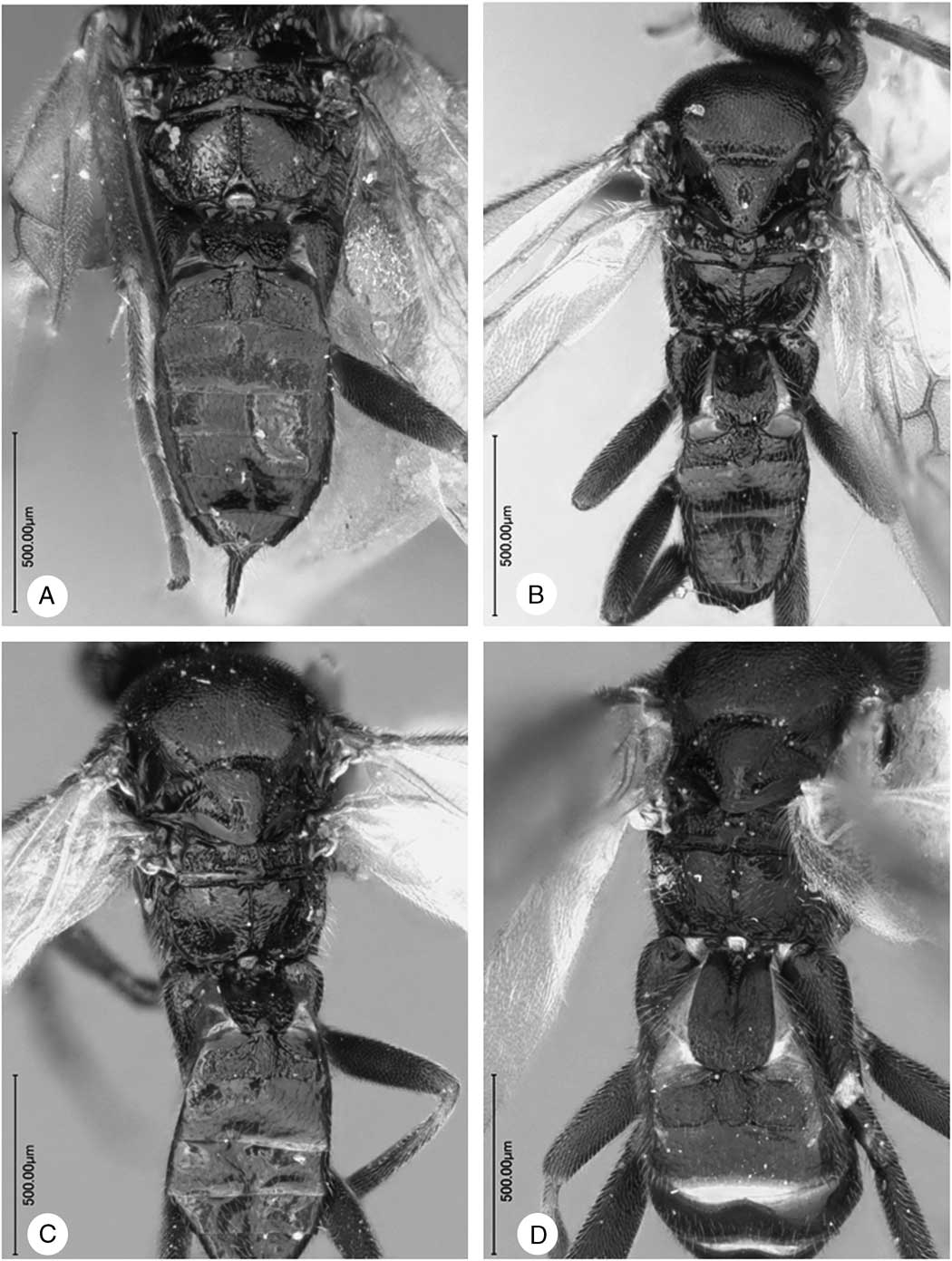
All European specimens examined have T1 mostly smooth and shiny, except for the apical 0.2–0.3, which is moderately rugose and with a weak striate area directed inwards posteriorly; and T2 tends to be much shorter, sometimes with only the elevated median field heavily sculptured, while the rest of the tergite is weakly sculptured or sometimes almost smooth. All the Canadian specimens have a uniformly sculptured, longitudinally striated T1; and T2 mostly rugose (both median and lateral fields). The mesoscutum and scutellum tend to be smoother in European specimens compared with the Canadian ones, although the differences are subtle.
Male
As for female, but T1 narrows apically a bit more, and the posterior part of the sides of T2 are substantially shinier and less sculptured than the elevated median field.
Comments
Most of the specimens from Europe (except for some from moderately northern latitudes) and the Middle East are more lightly sculptured than those from Canada. A possible explanation for this is that the former come from hotter regions.
Nixon (Reference Nixon1965, fig. 311) illustrated the basal tergites of the holotype of his Protomicroplitis orontes Nixon, Reference Nixon1965, a synonym of D. claritibia (see below). In the European specimens we examined, including the holotypes of both P. orontes and Microgaster claritibia, the sculptured side areas of mediotergite 2 are not as hugely transverse as depicted in Nixon’s paper, but viewed from in front there is a wide smooth area in front of the sculptured sides, both being of somewhat variable shape.
Molecular analysis
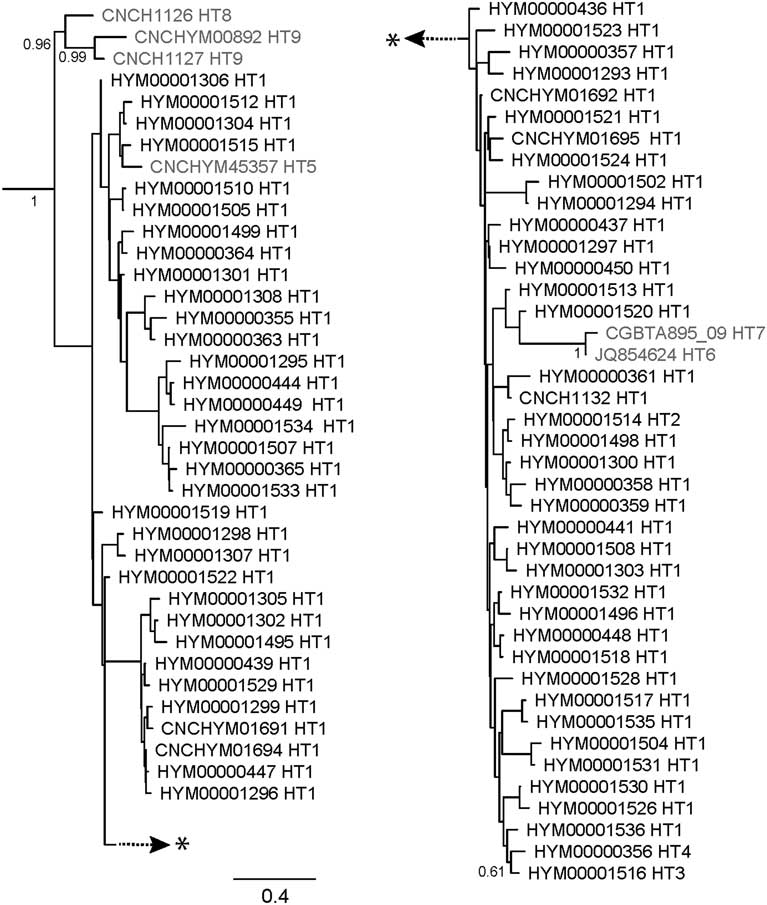
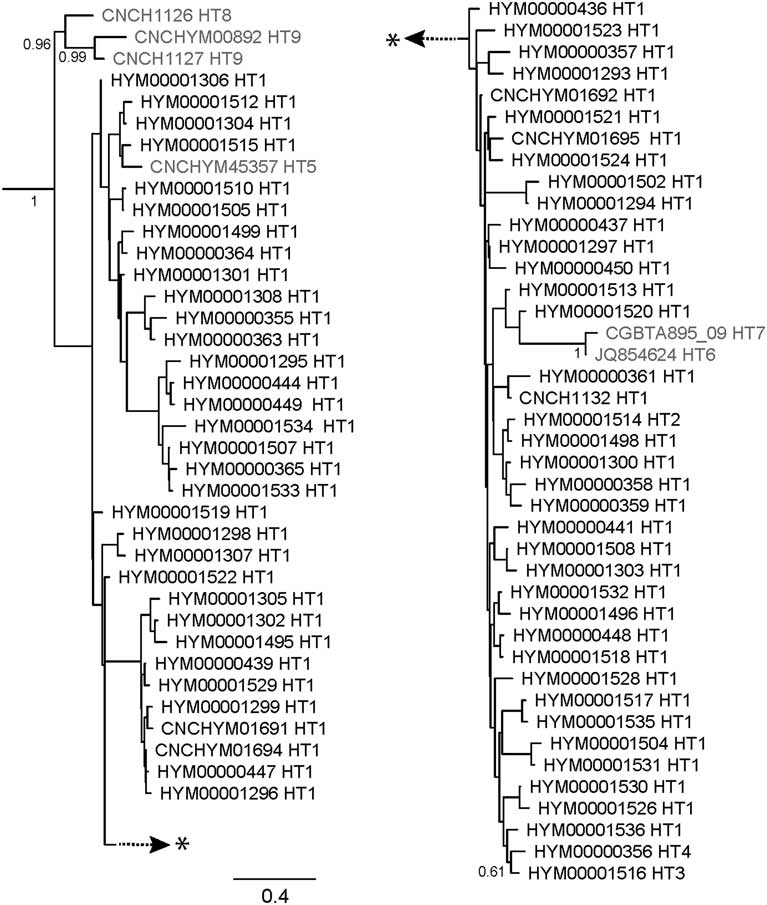
In the neighbour-joining tree, the Canadian Diolcogaster specimens cluster with the European D. claritibia specimens. The European specimens do not form a cluster distinct from the Canadian specimens. The average pairwise tree distance among the Canadian Diolcogaster and the European D. claritibia members was 1.8% when only one representative per haplotype found in the haplotype network analysis was included (Fig. 1) and 0.3% when all sequences were included. The average pairwise distance between D. claritibia specimens and members of the next closest species was 11.4% (12% when all sequences were included). The small ratio of intraspecific to interspecific distance indicates that genetic differences within the putative D. claritibia are small relative to differences between them and members of the closest species included in the analysis. In the Bayesian MCCT, the Canadian and European D. claratibia specimens formed a monophyletic group supported by a posterior probability of 1 (Fig. 5). Again, the European and Canadian specimens did not form distinct monophyletic groups.
Diolcogaster claritibia dorsal view of mesosoma and metasoma showing propodeum and meditergites. (A) Specimen from Cyprus. (B) Specimen from France. (C) Specimen from Jordan. (D) Specimen from Alberta, Canada.
The haplotype network analysis, using a probability of parsimony of 0.95, recovered two distinct mitochondrial lineages, one including specimens from Cyprus and France, and the other specimens from Turkey, the Netherlands, and Canada. Therefore, a second analysis was run using a probability of parsimony of 0.93 to join all haplotypes into one network (Fig. 2). This suggests that the Canadian specimens should not be considered a distinct species from the European specimens, but that there may be distinct mitochondrial lineages within Europe. The latter could be an artefact of very limited sampling within Europe.
Bayesian Maximum Clade Credibility Tree of COI DNA barcodes of Diolcogaster claritibia. Voucher codes followed by haplotype # are shown in grey for Palaearctic specimens and in black for Canadian specimens. Outgroups are not shown and posterior probabilities above 0.5 are shown below branches. Asterisks and arrows indicate continuation of the tree.
The available data indicate that the European and Canadian specimens should be considered one species for now, but more specimens and loci need to be sampled to conclusively determine the phylogeographic history of the species. The small number of base pair differences seen within the Canadian specimens compared to within the European specimens, the phylogeny, and the haplotype networks, suggest that D. claritibia was fairly recently introduced to North America from Europe.
The identity of Protomicroplitis orontes Nixon, Reference Nixon1965
In view of the small morphological and molecular differences found between Canadian and European/Middle East specimens, we included in our study considerations of a further nominal species from Europe: D. orontes (Nixon Reference Nixon1965), originally described from Finland in the genus Protomicroplitis but later treated as a synonym of D. claritibia by Papp (Reference Papp1981). Because it was not clear that Papp’s (Reference Papp1981) synonymy was backed by an examination of the holotype of P. orontes, we examined the holotypes of both nominal taxa. In the holotype of P. orontes the sculptured part of the T2 is divided into three areas – a central longitudinal area flanked by lateral areas. The shape and length of the lateral sculptured areas (situated posteriorly to a polished area) differs appreciably between the two holotype specimens. However, both fall within the range of variation seen in the extensive material of D. claritibia from Canada, which includes dozens of specimens with similar barcodes. For example, some specimens from Lethbridge, Alberta, Canada, have this sculptured area considerably shorter laterally than medially (corresponding to the condition in the holotype of P. orontes (see Nixon Reference Nixon1965, fig. 311), thus differing from some specimens from Ottawa, Ontario, Canada, in which this sculptured area is virtually as long laterally as medially – corresponding to the condition in the holotype of Microgaster claritibia (see Papp Reference Papp1959, fig. 15). Thus, although the condition of T2 in the holotype of P. orontes is at the edge of the range of variation seen in the European/Middle Eastern specimens that we have examined, we concur with the synonymy proposed by Papp (Reference Papp1981): M. claritibia (Papp, Reference Papp1959), senior synonym=P. orontes Nixon, Reference Nixon1965, junior synonym.
Based on the available morphological and molecular evidence, we consider all specimens examined as belonging to the same species, D. claritibia. With the new records included here, the species is considered likely to be widely distributed in the Nearctic region as well as the Palaearctic.
Acknowledgements
The authors are grateful to Pekka Malinen and Olof Bistrom, (Finnish Museum of Natural History, Helsinki, Finland) and Jenö Papp and Zoltán Vas (Hungarian Natural History Museum, Budapest, Hungary) for arranging the loan of holotypes of Protomicroplitis orontes and Microgaster claritibia, respectively.