Nomenclature
- 3D
-
three-dimensional
- ANN
-
artificial neural networks
- CRISP-DM
-
Cross-Industry Standard Process for Data Mining
- GCS
-
ground control station
- GPS
-
Global Positioning System
- GRU
-
gated recurrent units
- LSTM
-
long short-term memory
- MAVLink
-
micro air vehicle link
- MSE
-
mean square error
- OS
-
operating system
- RMSE
-
root mean square error
- RNN
-
recurrent neural network
- SoC
-
state of charge
- TCN
-
temporal convolutional networks
- UAV
-
unmanned aerial vehicle
- UAVS
-
unmanned aerial vehicle systems
- UDP
-
user diagram protocol
1.0 Introduction
Target-based optimum parameter selection has great importance in UAV operations. In addition to target-based specialised parameter selection, flight data sense-making has a critical role in flight scenario handling and management [Reference Konar, Özdemir, Erşen and Fenerci19]. There is a critical requirement to appropriate communication system background for the purpose of UAV flight data acquisition. This background enables the exact analysis of flight data and sense-making of flight dynamics. Advanced flight data sense-making may be grounded within situational monitoring and awareness, pattern recognition and relations mapping, adaptive decision-making, predictive analysis and AI integration processes. Over the years industry has been built in a diverse range of facilities and norms about data process management which is appropriate to put forward a standardised framework. Although industry standard model acceptances for data mining processes consist of different numbers of stages, they generally offer relatable sectoral solution steps. CRISP-DM was selected as the industry standard process methodology for data analytics and business intelligence solutions to be performed on the flight data set obtained after the mini-UAV flight due to its comprehensive, state-of-the-art, business and data processes and its standardisation structure accepted throughout the industry [Reference Azevedo and Santos1, Reference Chapman, Clinton, Kerber, Khabaza, Reinartz, Shearer and Wirth5, Reference Mariscal, Marban and Fernandez23, Reference Matignon24, Reference Shafique and Qaiser36]. Flight data handling which is vital to ensure effective management of data at every stage of its lifecycle requires taking over all the data in flight scenario. From an overarching standpoint, takeoff and landing phases demonstrate similar patterns, but the navigation phase indicates the flight pattern and scenario common characteristics [Reference Wenzel, Masselli and Zell42]. As a result of this matter, the navigation phase has been appointed to work on.
In addition to determining the phase and process model used, it is also important to determine the algorithms, methods and models that will be preferred when working with flight data. Reviewing literature in similar scope with flight data, it is seen that studies have been carried out by various methods in many subject headings [Reference Barabash, Dakhno and Shevchenko2, Reference Dutta, Albagory, Sait and Keshta7, Reference Ho, Grøtli, Sujit, Johansen and Sousa12, Reference Keneni17, Reference Konar, Özdemir, Erşen and Fenerci19, Reference Luan and Lin22, Reference Porat, Oron-Gilad, Silbiger and Rottem-Hovev31, Reference Stamate, Pupăză, Nicolescu and Moldoveanu40, Reference Xiao, Zhao, He, Li and Cheng44, Reference Yang, Li, Zhang, Zhu and Liao47]. It is possible to classify these studies in general terms as data acquisition and communication system studies [Reference Ho, Grøtli, Sujit, Johansen and Sousa12, Reference Konar, Özdemir, Erşen and Fenerci19], anomaly studies [Reference Xiao, Zhao, He, Li and Cheng44, Reference Yang, Li, Zhang, Zhu and Liao47] and decision support studies [Reference Barabash, Dakhno and Shevchenko2, Reference Dutta, Albagory, Sait and Keshta7, Reference Isbilen, Bektas and Konar16, Reference Keneni17, Reference Porat, Oron-Gilad, Silbiger and Rottem-Hovev31, Reference Stamate, Pupăză, Nicolescu and Moldoveanu40]. Konar et al. designed a UAV for the purpose of obtaining flight data and presented a purpose-oriented communication system solution [Reference Konar, Özdemir, Erşen and Fenerci19]. Konar et al. studied the similarity-based models for predicting turbofan engine remaining useful life [Reference Isbilen, Bektas and Konar16]. Borst et al. researched over the remaining useful life prediction of complex systems via introducing convoluted neural networks (CNN)-LSTM network adaptations [Reference Borst and Verhagen3]. Ho et al. present a solution flight data acquisition via wireless sensor network [Reference Ho, Grøtli, Sujit, Johansen and Sousa12]. Yang et al. pointed out a system that provided flight data anomaly diagnosis with the help of deep learning-supported LSTM method [Reference Yang, Li, Zhang, Zhu and Liao47]. Xiao et al. handled UAV behaviours with a recurrent neural network (RNN)-based anomaly diagnosis method [Reference Xiao, Zhao, He, Li and Cheng44]. Dutta et al. used the autonomous UAV decision support system to cope with unwanted foreign plants in agricultural lands through the poor and rich optimisation algorithm [Reference Dutta, Albagory, Sait and Keshta7]. Mihai-Alin et al. have carried out studies on improving the attitude parameters of the hexacopter UAV by means of the finite element method with the control and decision support systems they have proposed [Reference Stamate, Pupăză, Nicolescu and Moldoveanu40]. Barabash et al. have built a gradian-based decision support system for UAV control [Reference Barabash, Dakhno and Shevchenko2]. In the study they carried out, Porat et al. put forward a decision support system in order to identify the UAV with the most appropriate line of sight for the operator’s target at a glance [Reference Porat, Oron-Gilad, Silbiger and Rottem-Hovev31]. In his study, Keneni created a decision support system through a rule-based artificial intelligence approach to make the decision-making processes transparent and understandable [Reference Keneni17]. The prevalent use of artificial intelligence and machine learning methods has been determined in the literature [Reference Barabash, Dakhno and Shevchenko2, Reference Dutta, Albagory, Sait and Keshta7, Reference Ho, Grøtli, Sujit, Johansen and Sousa12, Reference Isbilen, Bektas and Konar16, Reference Keneni17, Reference Konar, Özdemir, Erşen and Fenerci19, Reference Porat, Oron-Gilad, Silbiger and Rottem-Hovev31 Reference Stamate, Pupăză, Nicolescu and Moldoveanu40, Reference Xiao, Zhao, He, Li and Cheng44, Reference Yang, Li, Zhang, Zhu and Liao47].
Flight data is evaluated as a time series. Time series are sequential datasets consisting of parameter values recorded at specified sampling intervals over a selected period [Reference Zhang and Zhang49]. When working with real-time data, it is of great importance to address time series problems. Time series analyses are actively involved in characterising the data. In recent studies, various deep learning architectures – such as RNN, LSTM networks, gated recurrent units (GRU), temporal convolutional networks (TCN) and transformer models – have been extensively employed to address time series-related problems within the scope of artificial neural network modeling [Reference Li21, Reference Nanduri and Sherry26, Reference Nanyonga, Wasswa and Wild27, Reference Shi, Xu, Pan, Yan and Zhang38, Reference Wu, Lin, Huang, Ding, Maihemuti and Xu43]. Following a detailed analysis of alternative neural network structures, it was decided to use the LSTM architecture, which has strong performance in terms of understanding and modeling time series data. To implement the methodology effectively and effectively, the systematic study was carried out by adopting the data mining standard CRISP-DM process model [Reference Gopali, Abri, Siami-Namini and Namin10, Reference Tuli, Casale and Jennings41, Reference Yadav, Jha and Sharan45, Reference Yamak, Yujian and Gadosey46, Reference Zhang and Man48].
This research addresses the prevailing gap in the aviation sector, where data mining and machine learning approaches are often unstructured or ad-hoc, by introducing a systematic framework supported by well-defined data management processes. The proposed methodology offers a structured foundation for optimising both business and data workflows, thereby supporting the development of data-driven aviation solutions. In addition, it contributes significantly to self-qualification engineering by enabling the management of highly complex and interrelated datasets. Focusing on the navigation phase – during which the general flight pattern is determined – the framework facilitates detailed phase analysis. Real-time monitoring, enabled through simultaneous data transmission, enhances situational awareness and ensures effective tracking of flight data. These advancements lay the groundwork for future UAV decisions support mechanisms through dynamic evaluation and continuous data integration.
Section 2 describes the background of hardware and software capability to the flight data acquisition process. Section 3 describes the LSTM and CRISP-DM frameworks. Section 4 describes the overall business and data handling process till their evaluation. Section 5 presents the evaluation and deployment processes related to the CRISP-DM process methodology, and Section 6 summarises the results and gives insights into the future UAV decision support studies.
2.0 Flight data sensing process
This section encompasses a mini-UAV interface that allows real-time data management through the coordinated connections between hardware and software subsystems shown in Fig. 1. Information about flight parameters is collected through sensors and transmitted to the data collection port. The port, which works via a wired connection, transmits the information from the sensors to the receiver. The receiver provides transmission to the control transmitter through the telemetry system. The wireless telemetry connection is carried out by means of data communication protocols which are called MAVLink. The remote controller is the main device controlling the UAV. Thanks to the interface connections performed, real-time data tracking is realised.
Mini-UAV flight data sensing interface.

The real-time communication system is provided by the fact that the transmission between the control receiver and transmitter is in real time. Since this connection is also realised with telemetry support, there is a general expression in the form of telemetry communication. The first phase is the implementation of MAVLink connection, which is the appropriate communication protocol for wireless data transfer. Among the various MAVLink communication types, UDP connection, which is a model with a minimum protocol mechanism, has been preferred. With the establishment of the UDP connection, a serial communication connection is established with ground control station. The suitability of the serial interface’s data transmission rate is being verified, and a handshaking mechanism has been integrated into the UDP connection to enhance data security. Once the connection between the flight control card to the ground control station is established, the system waits for the flight control board to send heartbeat messages, which are one of the handshaking protocols used by the flight control system. The heartbeat mechanism periodically monitors the viability of the nodes and comments on the real-time data transmission in the system can be performed. MAVLink message encryption will be performed to improve data security on the flight performed for the purpose of obtaining data, preventing attackers from obtaining meaningful information in the appropriate format. The readiness of the communication system for real-time data flow is controlled by means of a heartbeat message. Heartbeat messages contain system and component identifying information. The generated message content contains information about what the intended connection is and what the intended component is. The communication system is constantly monitored through an endless loop. The fact that the receiver intercepted the MAVLink message gives us information about the operational conditions of the mini-UAV. The absence of the message will continue the endless cycle. Thus, it is possible to obtain real-time flight data. Although the operational messages obtained through the infinite loop, the vitality signals of the component and the system via heartbeat and the integrated information are available. The clear identity of the message, which flight parameter the message was sent to, what the parameter sent in the message is and similar issues cannot reveal a clear information. Also, a dictionary has been assigned for the purpose of creating a framework for flight parameter definitions. This dictionary allows us to define which sensor the information comes from, which unit it has and which parameter it is associated with. The data is then converted to string format via the predefined dictionary and hashed together with a timestamp to ensure integrity and traceability. Keeping the data under recording with time information is important in real-time monitoring. The proposed communication system solution has a file instruction approach depending on the UAV energisation condition after performing the airworthiness control of the mini-UAV. File management is provided by parsing the data from the sensors. GPS and battery data are presented with different message headers, thus making attribute extraction easier by determining which flight parameter belongs to which sensor the message contains. Error management is provided by means of error and exception functions integrated into the system, preventing interruption of the data flow. The existence of a continuous debugging mechanism increases the reliability of the data set. During data acquisition, there is a loop that occurs during the general file opening, writing the message to the file, and error management steps. It is desirable to have a continuous data flow and instant access to real-time data.
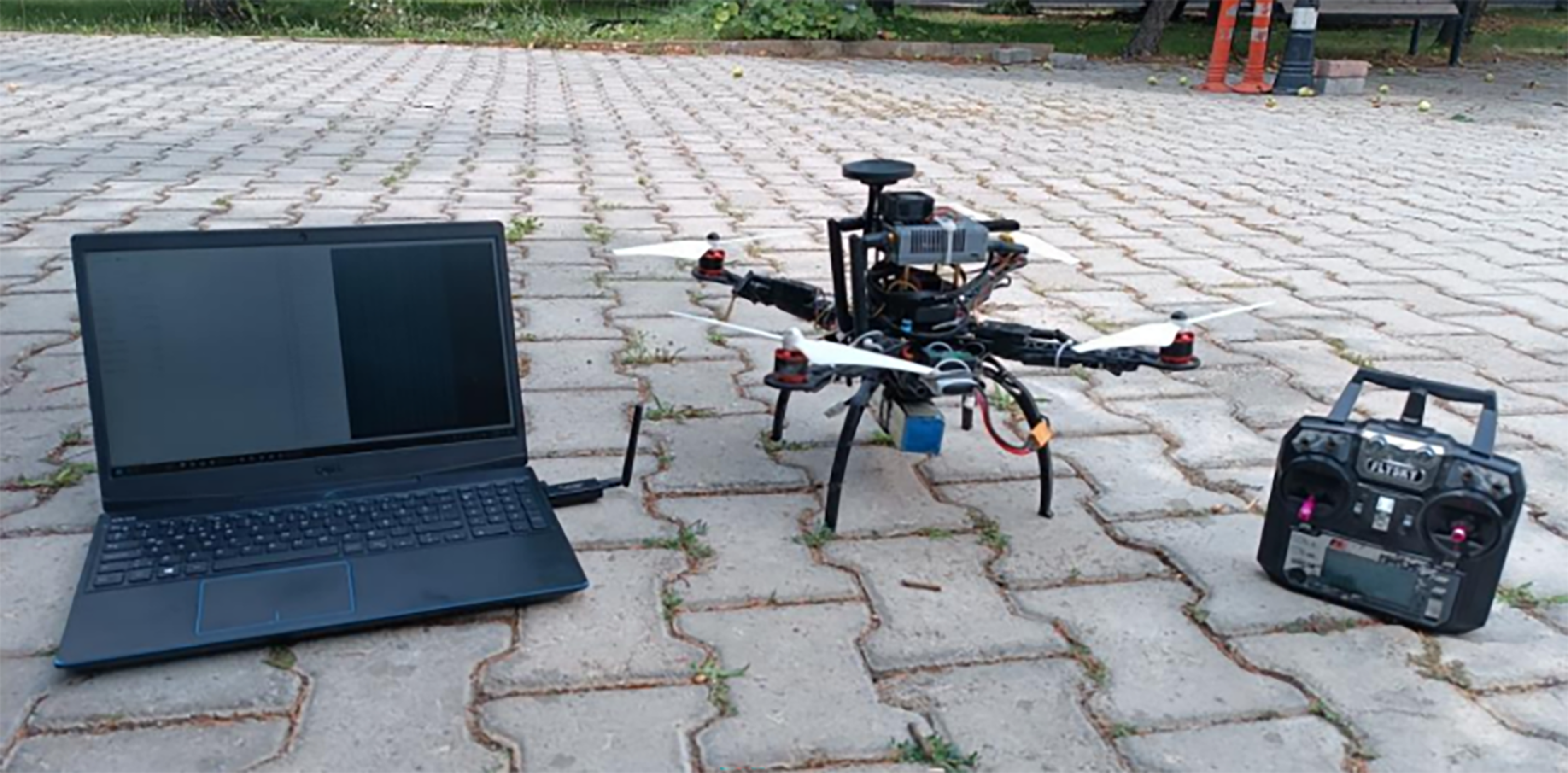
At this point, the need to keep the system performance at a reliable point is also taken into account. The proposed communication system solution aims to prevent overheating of the system and loss of performance by adding an acceptable time delay to the system. Accordingly, the communication system solution considers it appropriate for the system to go to sleep with 0.01 seconds (10 milliseconds) after each turn in the cycle by means of the internal counter located inside the electronic unit itself. The state of sleep is considered to be the state in which energy is used the least. The proposed communication system model contains the operating system (OS) design within its own structure. MAVProxy, which is the MAVLink Proxy service, is started automatically with the OS command. This automatic start-up facilitates the data flow between the UAV and the GCS. An advantage of the proxy system is that data is cached, and faster access is being provided. The use of a mini-UAV communication system with autonomous launch procedures ensures rapid and consistent commissioning of the system even under difficult operating conditions. As a result of all these critical business steps, a reliable communication architecture is obtained for the mini-UAVS. The mini-UAV shown in Fig. 2 is being prepared for the task of obtaining flight data.
Related mini-UAVS connection.

Figure 2 Long description
A laptop computer with a black screen is placed on the left side of a paved surface. In the center, there is a drone with multiple propellers and various attached components. To the right of the drone, there is a remote control with several buttons and joysticks. The paved surface has a pattern of rectangular stones with some grass growing between them. In the background, there are some trees and a bench.
3.0 The methodological framework of mini-UAVS’ flight data sense-making
This section outlines methodological background for mini-UAVS’ flight data sense making. Methodological background, which is integrated into two main sections, can be examined under comprising LSTM and CRISP-DM.
3.1 LSTM
LSTM networks, a specialised form of RNNs, are designed to effectively capture long-term dependencies by addressing the vanishing gradient problem inherent in traditional RNN architectures. The LSTM architecture provides a solution to the problem of learning long-term dependencies brought about by the disappearing gradient problem [Reference Gao, Huo, Bao, Tang, Antic and Epstein8, Reference Graves11, Reference Hochreiter and Schmidhuber13, Reference Hu, Wang, Zhang, Zhang, Zhang and Xue14, Reference LeCun, Bottou, Bengio and Haffner20, Reference Pulver and Lyu32].
From an application-oriented perspective, UAV battery-level data collected during the navigation phase exhibit cumulative discharge behaviour, nonlinear temporal trends and long-term dependency characteristics driven by sustained flight dynamics and energy consumption patterns. Capturing these dependencies is critical for accurate battery-level estimation and cannot be sufficiently addressed by shallow learning or short-memory models [Reference Duan, Lv and Wang6, Reference Gers, Schmidhuber and Cummins9, Reference Khalil, Eldash, Kumar and Bayoumi18].
Although recurrent neural architectures such as GRUs, autoregressive integrated moving average (ARIMA)-based regressors and traditional machine learning models can handle time-series data to some extent, the specific nature of UAV battery-level dynamics involves long-term dependencies, nonlinear patterns and delayed effects of system states. LSTM networks have been empirically demonstrated to effectively capture such temporal dependencies in energy-related series. For instance, recent work in battery state prediction shows that LSTM models outperform ARIMA and support vector regression (SVR) models on time-series with complex discharge patterns due to their gated memory mechanisms that preserve long-term context [Reference Özdemir29]. Similarly, in UAV-related time-series settings, LSTM-based approaches have been shown to achieve superior predictive performance compared to shallow models and alternative recurrent architectures. Therefore, guided by both the characteristics of our dataset and comparative findings in the literature, we adopt an LSTM-based forecasting framework for battery-level estimation in UAV navigation-phase data.
Prior to LSTM modeling, the multivariate flight time-series data were restructured using a sliding-window (lookback) approach to explicitly capture temporal dependencies. Each input sequence was constructed by grouping consecutive observations over a fixed lookback window of length L, while the corresponding output represented the battery level at the subsequent time step. This formulation enables the model to learn temporal discharge patterns during the navigation phase.
All input variables were normalised using min–max scaling to the range [0, 1] to ensure numerical stability and to prevent features with larger magnitudes from dominating the learning process. Normalisation parameters were computed exclusively from the training data and subsequently applied to the test data to avoid information leakage.
Following preprocessing, the dataset was reshaped into a three-dimensional tensor of the form (samples, time steps, features), which constitutes the standard input format required for LSTM-based sequential learning.
Taken together, both the intrinsic characteristics of the navigation-phase battery-level time series and the comparative evidence reported in recent literature support the selection of LSTM as a suitable architecture for this study. While RNN architectures struggle to preserve past information due to the vanishing gradient problem, GRU architectures, despite their shorter training times, exhibit performance losses on complex long-term tasks. TCN architectures, although offering the advantage of parallel processing, cannot match LSTM’s efficiency in modelling long-term dependencies. Transformers, benefiting from their attention mechanisms, provide a powerful alternative for capturing long-term dependencies but are not always practical due to their high computational costs. In light of these evaluations, LSTM, with its forget gates and advanced architecture, stands out as the preferred choice for complex time series forecasting and other applications where modelling long-term dependencies is critical [Reference Gopali, Abri, Siami-Namini and Namin10, Reference Tuli, Casale and Jennings41, Reference Yadav, Jha and Sharan45, Reference Yamak, Yujian and Gadosey46, Reference Zhang and Man48].
3.2 CRISP-DM
For data analytics and business intelligence solutions to be performed on the flight data set obtained after the mini-UAV flight, CRISP-DM is an industry standard process model for data mining [Reference Chapman, Clinton, Kerber, Khabaza, Reinartz, Shearer and Wirth5]. Over the years, the model has developed and reached wide acceptance [Reference Schäfer, Zeiselmair, Becker and Otten34, Reference Shearer37]. When the phases of CRISP-DM methodology are considered, it is necessary to understand the primary target required for context from the perspective of context that the data analyst should apply at the business understanding stage. For the most part, the customer has many goals. The analyst’s goal at this stage is to identify important factors that may affect the outcome of the project [Reference NCR, Clinton, NCR, Khabaza, Reinartz, Shearer and Wirth28]. At the data understanding stage, the characteristics of the data contained in our data set are revealed. Analyses are carried out to determine the data quality. Whether there is any deficiency in the data or an anomaly is being detected. In this context, various attributes such as the type of properties in the data set and the correlation between the properties are deciphered [Reference Cazacu and Titan4]. The data preparation stage is one of the intensive process-intensive stages in data mining. It is generally assumed that the preparation of the data covers 50–70% of the project time and effort. It may reduce the time to be allocated to show the necessary sensitivity to the stages of business understanding and data understanding performed before this stage [15]. In this phase, the data to be studied are determined, and the selection criteria of the data to be studied are clearly revealed. Data configuration is performed, and data integration is provided. Arrangements regarding the format of the data are carried out at the points deemed necessary [Reference Saltz33]. At the modeling stage, the appropriate modeling technique is determined and applied. The aim is to calibrate the parameters to the optimal value. Some of the techniques used when performing this step of the data format can be found on specific requirements. Therefore, you will usually turn back to the data preparation stage and regulations are carried out [Reference Nadali, Kakhky and Nosratabadi25]. During the evaluation phase, the results are controlled in accordance with defined business objectives. Therefore, it is necessary to define further actions and interpretation of the results. Another point to be noted is that the process should be reviewed in general [Reference Schröer, Kruse and Gómez35]. The implementation phase is associated with the implementation of data mining project results to ensure that they are available and meet the business requirements of end users. The CRISP-DM methodology defines what the application phase requirements are in a clear framework [Reference Plotnikova, Dumas and Milani30].
4.0 Experimental setup of flight data sense-making in mini UAVS’ navigation phase
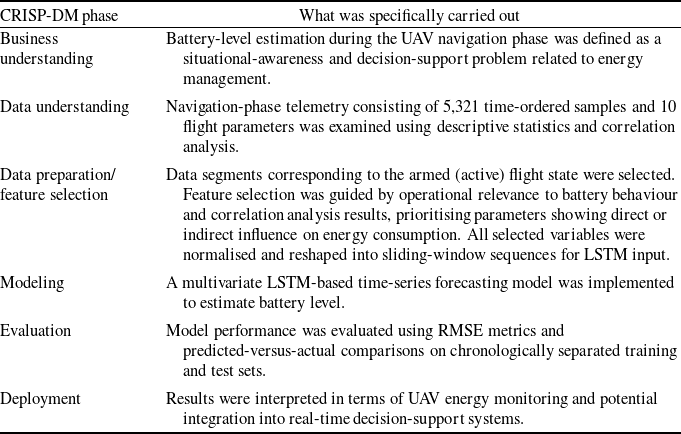
Flight data sense-making solution has been designed through the modeling of statistics and artificial intelligence algorithms, following CRISP-DM model standard for data mining solutions. Experimental setup comprises consecutively over a period of six stages. Table 1 summarises the practice-oriented implementation of the CRISP-DM framework in this study, with particular emphasis on the data preparation and feature selection stage.
4.1 Business understanding
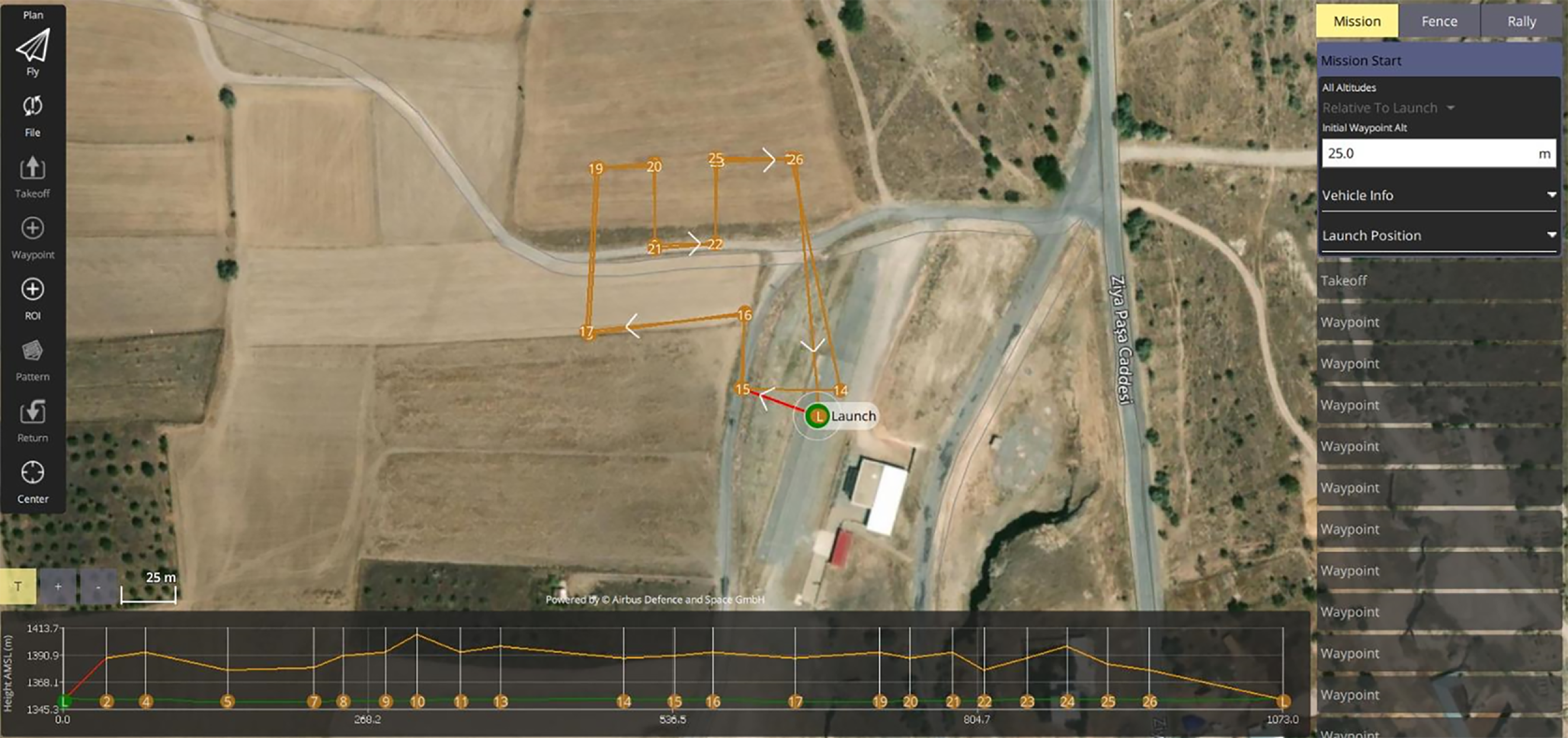
The first step starts with business understanding. To clearly define the business problem, a thorough analysis of the information related to flight data set is crucial. The flight dataset consists of the autonomous flight envelope of the mini-UAV, covering 3 minutes and 35 seconds. Assuming that the flight envelope consists of landing, take-off and navigation phases, the rapidly changing parameters during landing and take-off are ignored and the navigation phase, which constitutes the basic characteristic of the flight, is considered for examination purposes. Figure 3 demonstrates an overhead view of the waypoints and planned altitude changes. The envelope selected for the flight data analysis is the part from waypoint number 2 to waypoint number 26.
Practice-oriented CRISP-DM stages

Mini UAV flight trajectory.

Figure 3 Long description
A line graph displays the flight trajectory of a mini UAV, illustrating altitude changes and waypoints. The x-axis represents the distance in meters, while the y-axis shows the altitude in meters above mean sea level. The graph includes multiple waypoints marked with numbers, indicating specific points along the flight path. The trajectory starts at a launch point and follows a series of waypoints, with altitude variations depicted by the line graph. The graph provides a visual representation of the UAV's flight dynamics, including takeoff, navigation, and landing phases. All values are approximated.
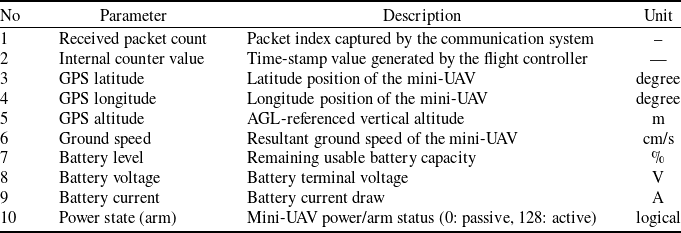
When the data set was examined, it was observed that it consisted of 12572 data lines. The selected navigation phase of the flight to be examined consists of instantaneous flight data from line 6421 to line 11740. There are 5321 observation units and 10 variables in the data set which is presented via Table 2. In order to make general observations about the data set, the data type, head, tail and missing values, quantiles information regarding the data set gives an idea about whether reliable results are produced and the health of the analysis processes.
Parameters of the mini-UAV flight dataset

The flight data set consists of ten flight parameters, namely the number of incoming packets, internal counter value, GPS latitude, GPS longitude, GPS altitude, ground speed, battery level, battery voltage, battery current, and mini-UAV energisation status.
The flight telemetry data were recorded at a fixed sampling frequency determined by the onboard communication and logging system. All parameters were synchronised and logged at the same temporal resolution, ensuring time-aligned multivariate sequences for time-series modelling.
Data collection was conducted under outdoor flight conditions during normal operational scenarios. Environmental factors such as wind and ambient temperature were not explicitly controlled or measured, as the focus of the study was on modeling battery-level dynamics under realistic navigation-phase conditions.
No additional filtering or noise reduction techniques were applied to the raw telemetry data. This decision was made to preserve the original sensor characteristics and to evaluate the robustness of the proposed LSTM-based model under real-world measurement noise.
4.2 Data understanding
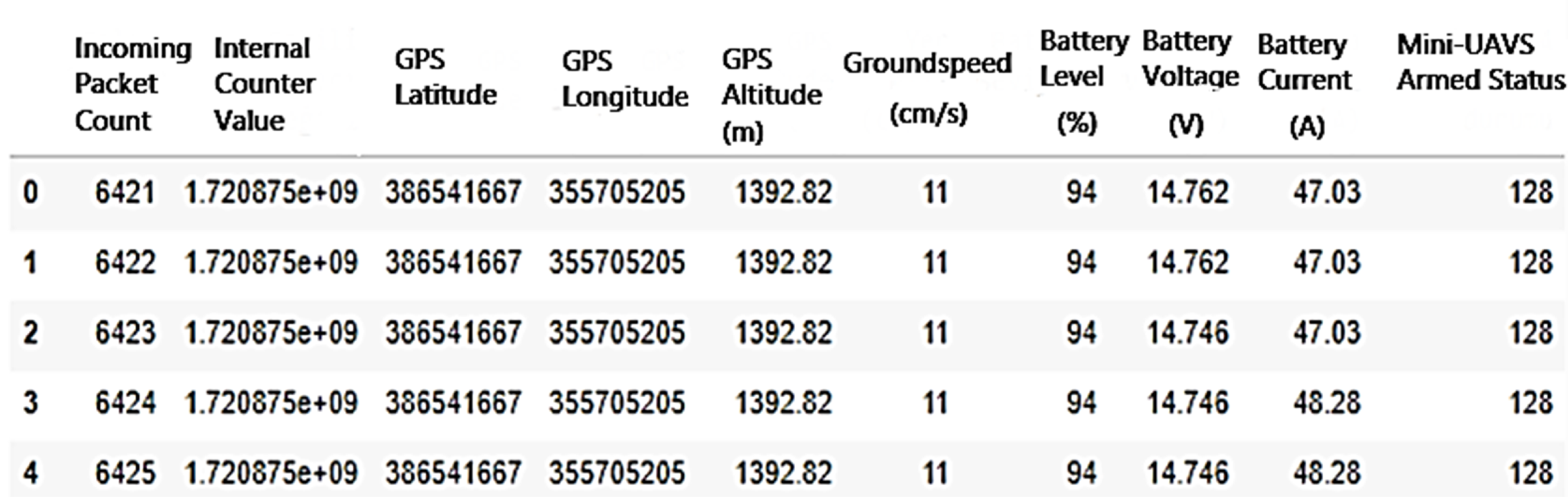
In the second stage, which is data understanding, the flight parameters in the data set will be examined in detail. Before working on the data, it is necessary to ensure the integration of the relevant data libraries, which contain specialised data structures and functions, and provide fast and reliable solutions with the aim of creating appropriate conditions for the data to be stored. Then, it is necessary to provide the relevant connections decoupled between the working environment and the data environment. In order to strengthen the understanding of data, the data framework is being created. An examination of the observation units and variables in the flight dataset, where a quick overview of the dataset is provided with the head information in Fig. 4, is a guide during the data understanding phase. It helps us to decipher the data at the points of which variables the dataset consists, what data type expressions are in the columns, what kind of information each property column contains and how this information can be used for analysis, whether there is data consistency, what values the parameters start from, what units of values can be according to the way the values are expressed, whether there are noticeable missing data and whether the data can be categorised among themselves.
Flight data quick glance with head information.

Figure 4 Long description
The table presents flight data with columns for incoming packet count, internal counter value, GPS latitude, GPS longitude, GPS altitude, groundspeed, battery level, battery voltage, battery current, and mini-UAVS armed status. It contains five rows of data, each showing consistent values across most columns. The GPS coordinates, altitude, and groundspeed remain unchanged, while the battery voltage and current show slight variations. The mini-UAVS armed status is consistently 128.
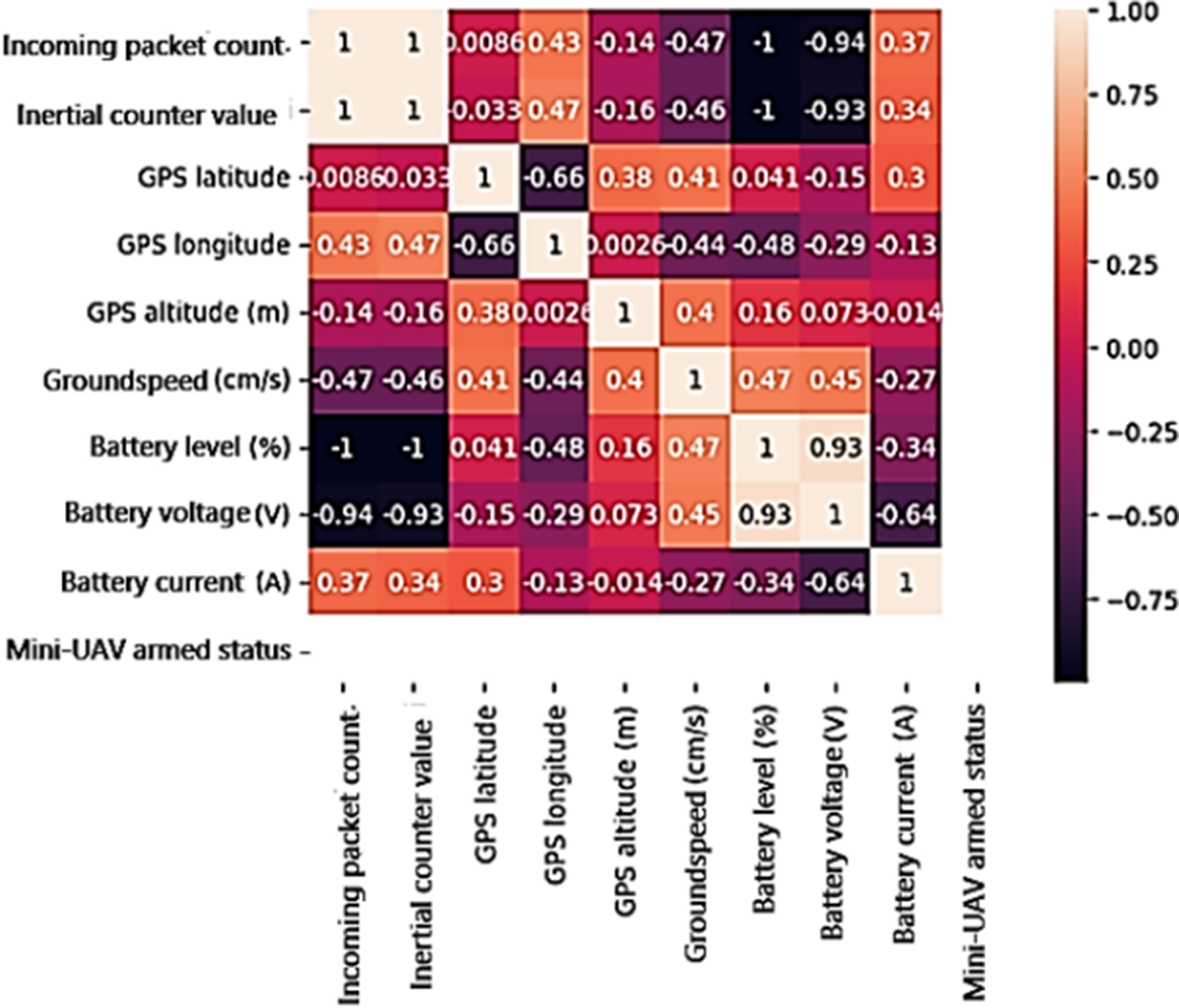
The sense-making of the parameters in the data set at the point where it is of great importance to illustrate the relevance of the parameter. Figure 5 correlation heat map of the data set has been given to flight times.
Mini-UAV flight parameters correlation heat map.

Figure 5 Long description
A heat map displays the correlations between different mini-UAV flight parameters. The heat map features a grid layout with rows and columns representing various parameters such as incoming packet count, inertial counter value, GPS latitude, GPS longitude, GPS altitude, groundspeed, battery level, battery voltage, battery current, and mini-UAV armed status. The color scale ranges from dark to light, indicating the strength of the correlation, with darker colors representing stronger negative correlations and lighter colors representing stronger positive correlations. Notable correlations include a strong negative correlation between battery level and battery voltage, and a strong positive correlation between groundspeed and GPS altitude. The heat map provides a visual representation of how these parameters interact during flight, aiding in the analysis and management of flight dynamics.
The starting point of study is data understanding stage which constructs data set sense making and working on it. For this purpose, parameter-based flight data review graphs of the data can be drawn. As a result of the correlation analysis, the battery level that was not assigned to the mini-UAV and showed high relevance to the parameters was selected for examination.
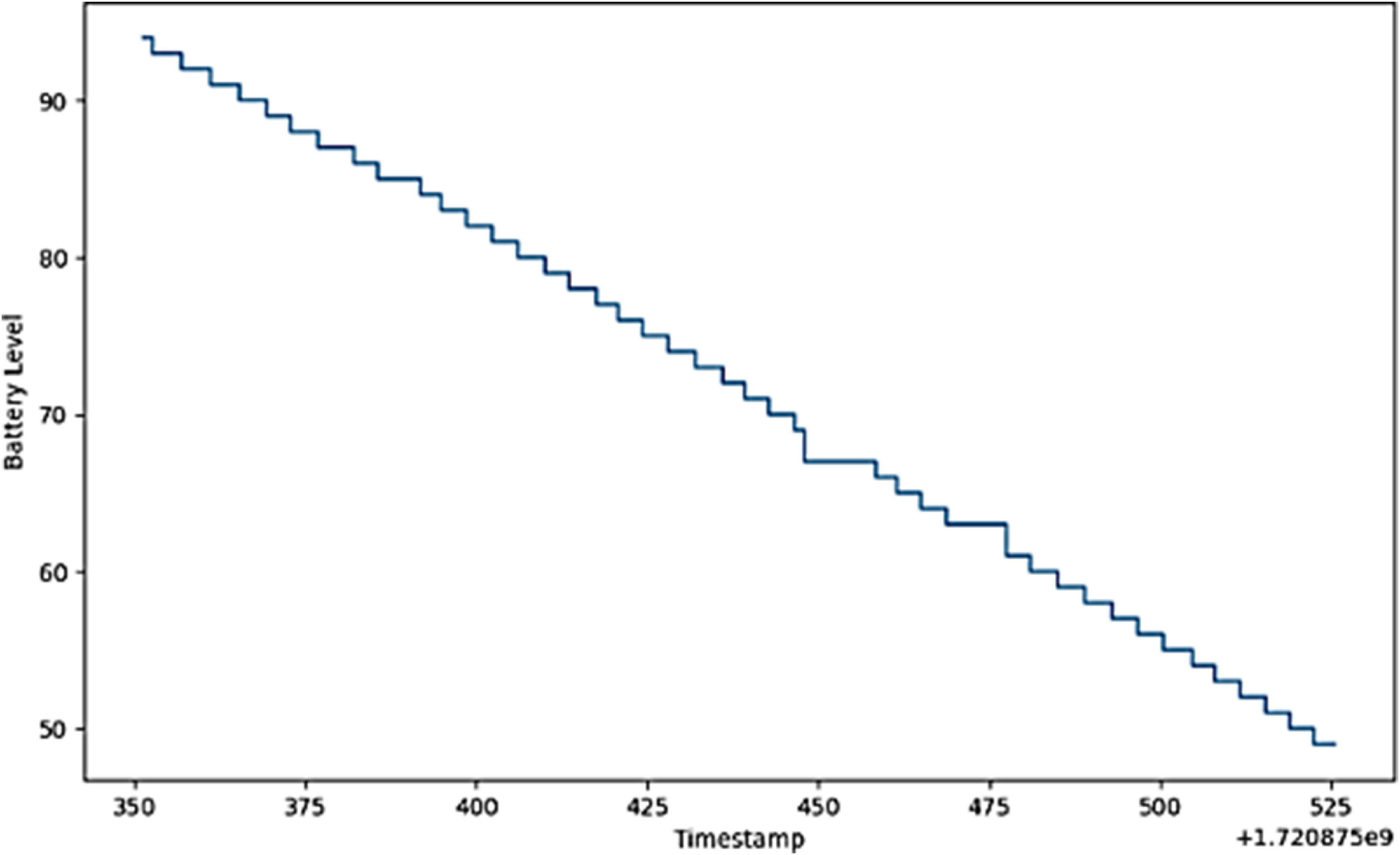
Beyond statistical correlation, battery-level estimation during the navigation phase plays a critical operational role in mini-UAV missions. Navigation-phase flight typically represents the longest continuous energy-consuming segment and directly determines whether the platform can safely complete the mission or return to the launch point. Accurate short-term prediction of battery behaviour enhances situational awareness by providing early indications of energy depletion trends, enabling adaptive mission planning such as speed reduction, altitude adjustment or route shortening. Furthermore, battery-level forecasting supports onboard decision-support mechanisms by triggering fail-safe actions and return-to-home logic before critical thresholds are reached. Therefore, predicting battery dynamics during the navigation phase is not only analytically relevant but also essential for operational safety and autonomous mission management in UAV systems. Figure 6 shows the graph of the time-dependent change of the battery level.
Battery level over time.

4.3 Data preparation
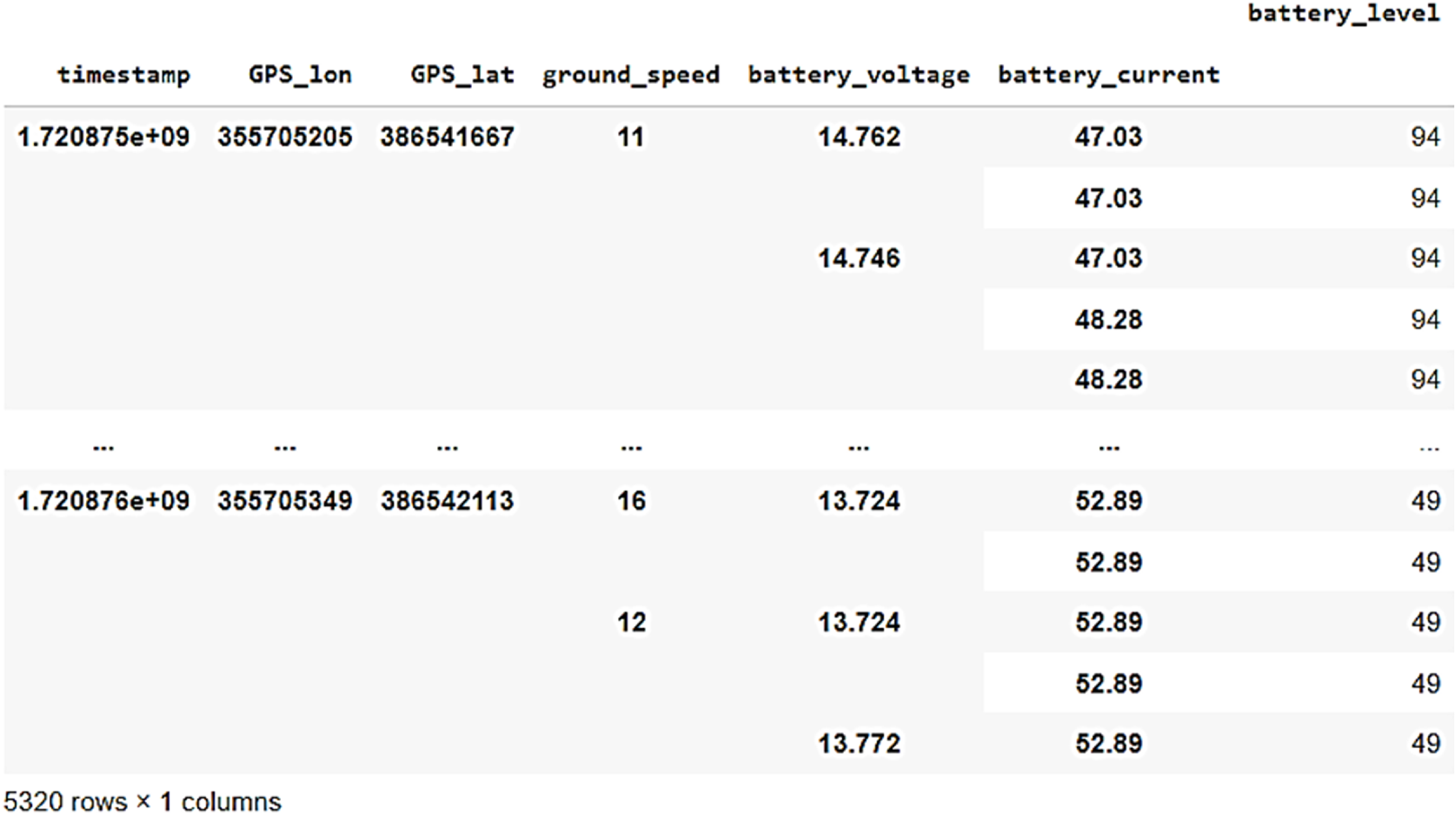
The third step is data preparation which has a prerequisite determination of the parameter to be estimated and the parameters to which it is related. In particular, feature selection during the data preparation stage was driven by both operational relevance to battery dynamics and correlation-based analysis, ensuring transparency in parameter inclusion. When the correlation heat map is examined in order to understand the relationship, parameter selection is performed by taking into account the positive and negative relevance levels on the correlation map. New data frames have been created with internal counter value, GPS longitude, GPS latitude, ground speed, battery voltage, battery current and battery-level parameters. These parameters, which are highly correlated with the battery-level value, are assigned to the index as shown in Fig. 7.
Index parameters.

Figure 7 Long description
The table presents flight data with six columns: timestamp, GPS longitude, GPS latitude, ground speed, battery voltage, battery current, and battery level. The table contains 5320 rows of data. The first row shows a timestamp of 1.720875e+09, GPS coordinates of 355705205 for longitude and 386541667 for latitude, a ground speed of 11, a battery voltage of 14.762, a battery current of 47.03, and a battery level of 94. Subsequent rows show variations in these values, with notable changes in battery voltage and current. The last row shows a timestamp of 1.720876e+09, GPS coordinates of 355705349 for longitude and 386542113 for latitude, a ground speed of 16, a battery voltage of 13.724, a battery current of 52.89, and a battery level of 49.
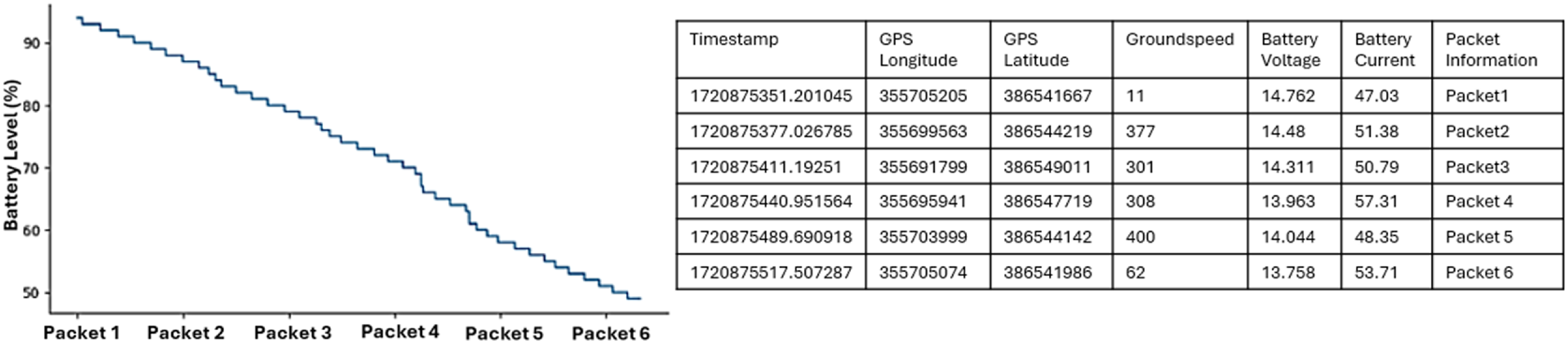
Index-assigned parameters are unprocessed data of the dataset, not used for training or test estimation. This data should be stored as they will create the actual values and show the pattern capture performance in the subsequent process. The corresponding steps are performed to model the change in battery-level values corresponding to the packages assigned to the index shown in Fig. 8.
Index parameters with related packets over time.

Figure 8 Long description
A line graph with the x axis labeled as Packet Information and the y axis labeled as Battery Level percentage. The graph shows a decreasing trend in battery level from Packet 1 to Packet 6. The battery level starts at ninety percentage in Packet 1 and gradually decreases to fifty percentage in Packet 6. The data points for each packet are as follows: Packet 1 at ninety percentage, Packet 2 at eighty percentage, Packet 3 at seventy percentage, Packet 4 at sixty percentage, Packet 5 at fifty-five percentage, and Packet 6 at fifty percentage. All values are approximated.
Before the neural network model architecture is created, it is necessary to separate the flight data set into training and test data. At the point of making the training-test distinction, the data set is converted into a training and test format by applying the 80-by-20 distinction, which is accepted as a standard. While the training set helps with the training of the model, the test set functions at the point of evaluating the model performance.
To preserve the temporal dependency inherent in time-series flight data, this 80/20 split was performed chronologically, where the first 80% of the sequential observations were used for training and the remaining 20% were reserved for testing. No random shuffling was applied during the splitting process.
Pre-modeling scaling processes are carried out at this stage through data normalisation and standardisation processes. The main reason for scaling is that the variables of methods based on gradient disappearance are of different types from each other, or performance-related problems occur due to the width of the variance, even if it is a single variable. When more than one variable is used, standardisation is also performed in order to prevent the variables from crushing each other.
In this study, all variables were scaled prior to modelling to ensure numerical stability during training and to improve convergence behaviour. Normalisation parameters were computed using only the training data and subsequently applied to the test data to avoid information leakage.
In time series estimates, reshaping for time series data is performed by adding the previous process to the series in size by taking into account the effect of the previous parameter on the next parameter. The data are converted into 3D (three-dimensional) for LSTM estimation.
Specifically, a sliding-window (lookback) approach was employed, where each input sequence was constructed using L consecutive time steps, and the corresponding output represented the battery level at the subsequent time step. Consecutive windows were generated with a stride of one, resulting in overlapping sequences that preserve temporal continuity.
To sum up, this stage covers all the preprocessing steps before modeling.
Following these preprocessing operations, the structured dataset was reshaped into a 3D tensor of the form (number of samples, lookback window length, number of features), which is required as input for LSTM-based sequential learning.
4.4 Modelling
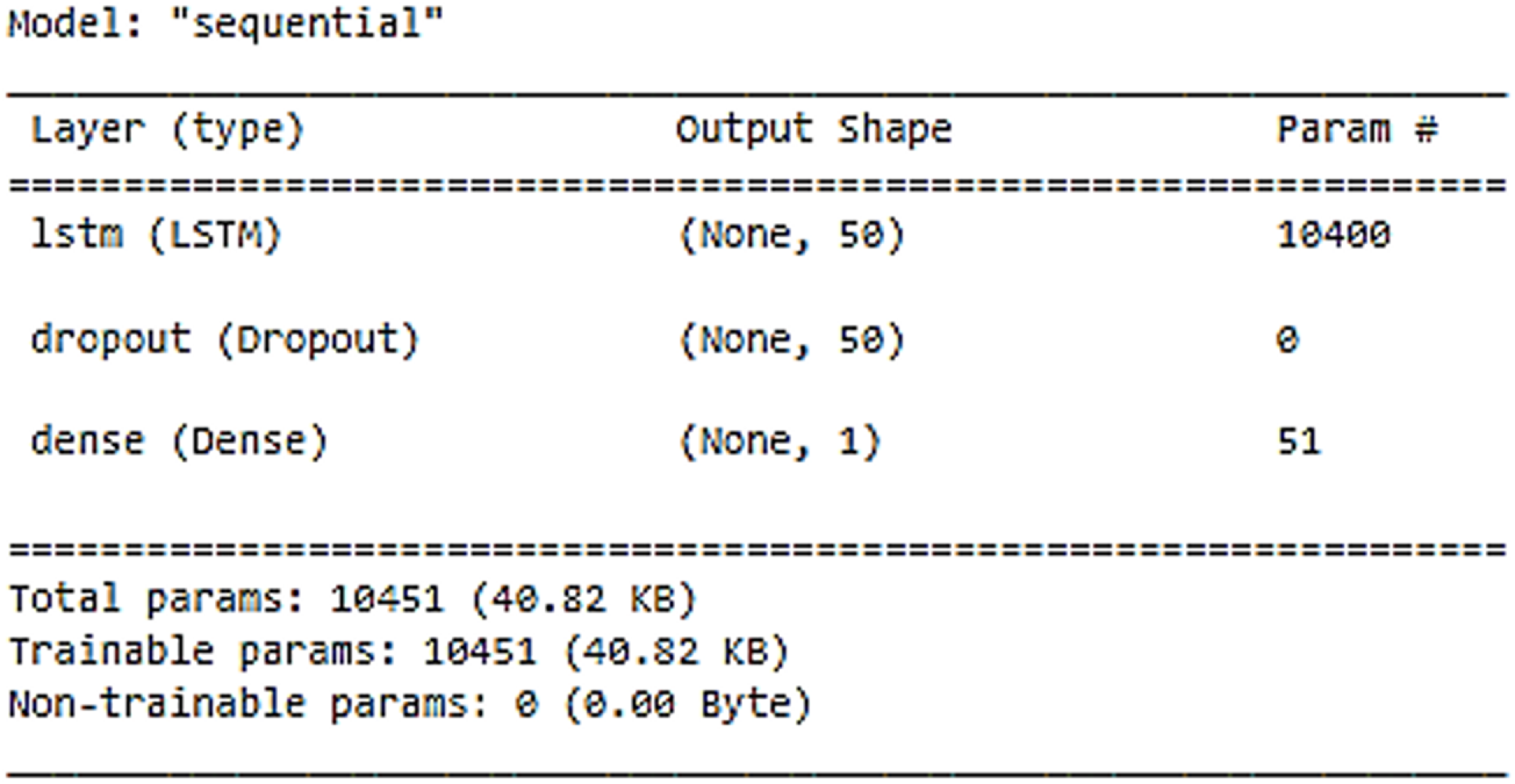
The fourth step is modelling. As a fundamental prerequisite, it is imperative to first address model features. Since we are working on a time series data set, it is stated that we will produce a sequence model appropriate to the problem type. The LSTM method, which is the appropriate method for the problem, is assigned and the layers that will consist of neurons are determined. With dropout, the model is more generalisable with iterations and fading. The model is shown in Fig. 9. A dropout rate of 0.2 was adopted, as commonly recommended in time-series LSTM applications to balance regularisation and information retention without disrupting temporal dependencies [Reference Srivastava, Hinton, Krizhevsky, Sutskever and Salakhutdinov39, Reference Yadav, Jha and Sharan45].
Model features.

Figure 9 Long description
The table presents a sequential model with three layers. The first layer is an LSTM layer with an output shape of None, 50 and 10400 parameters. The second layer is a Dropout layer with an output shape of None, 50 and 0 parameters. The third layer is a Dense layer with an output shape of None, 1 and 51 parameters. The total number of parameters is 10451, with 10451 being trainable and 0 being non-trainable.
Figure 9 illustrates the overall LSTM-based forecasting architecture employed in this study. Multivariate flight parameters are first organised into sliding-window sequences and fed into the LSTM layer, where temporal dependencies are learned through gated memory mechanisms. The LSTM output is then passed through a fully connected layer to generate the battery-level prediction for the next time step. Dropout regularisation is applied during training to reduce overfitting and improve generalisation performance.
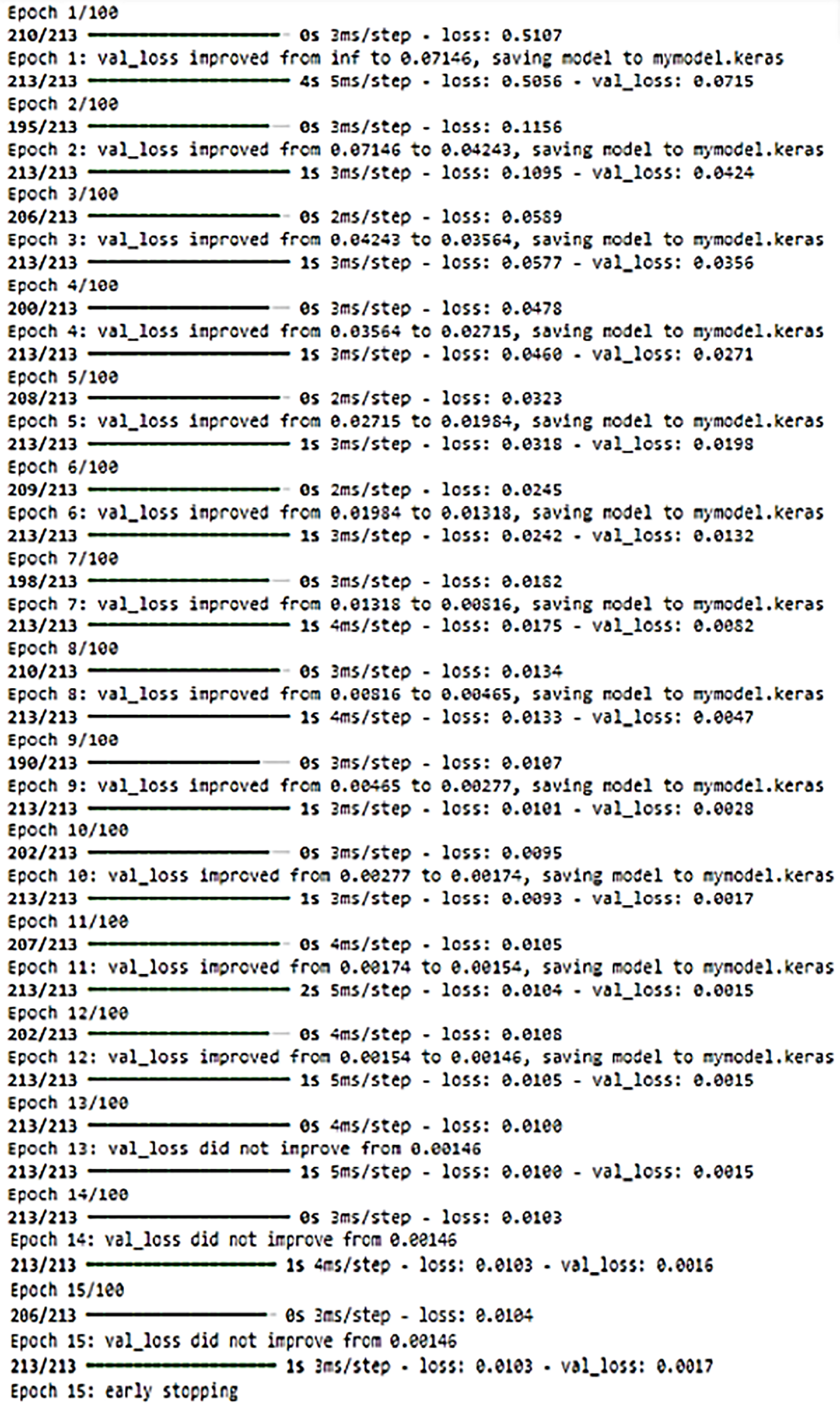
At this stage, the data set has been brought by customising in accordance with time series analysis. With the process optimisation and evaluation of a set of metrics to determine loss of the model are studied. The model aims to prevent the excess to learn early stopping with the command. It was determined that the model should stop when there is no improvement in validation loss in three periods with the assigned parameters. Training and validation loss related to the changes in the chart in Fig. 10 is presented.
Training and validation loss curves across epochs, demonstrating the convergence behaviour of the LSTM model and the effectiveness of the early stopping mechanism in preventing overfitting.

Figure 10 Long description
The line graph presents two data lines representing training and validation loss curves across epochs for an LSTM model. The x-axis indicates the number of epochs, ranging from 1 to 15, while the y-axis shows the loss values. The training loss curve starts at approximately 0.5107 and gradually decreases to around 0.0103 by the 15th epoch. The validation loss curve begins at approximately 0.7146 and also decreases, reaching about 0.015 by the 15th epoch. The graph illustrates the convergence behavior of the LSTM model, with both loss curves showing a downward trend, indicating improved model performance over time. The early stopping mechanism is evident as the training process halts at the 15th epoch to prevent overfitting. All values are approximated.
5.0 Results
This section includes stage five and six of CRISP-DM methodology. The fifth step has built into model evaluation. For the purpose of clearly handling model monitoring has been implemented. Figure 10 shows the changes in validation loss and saved models according to the assigned model characteristics.
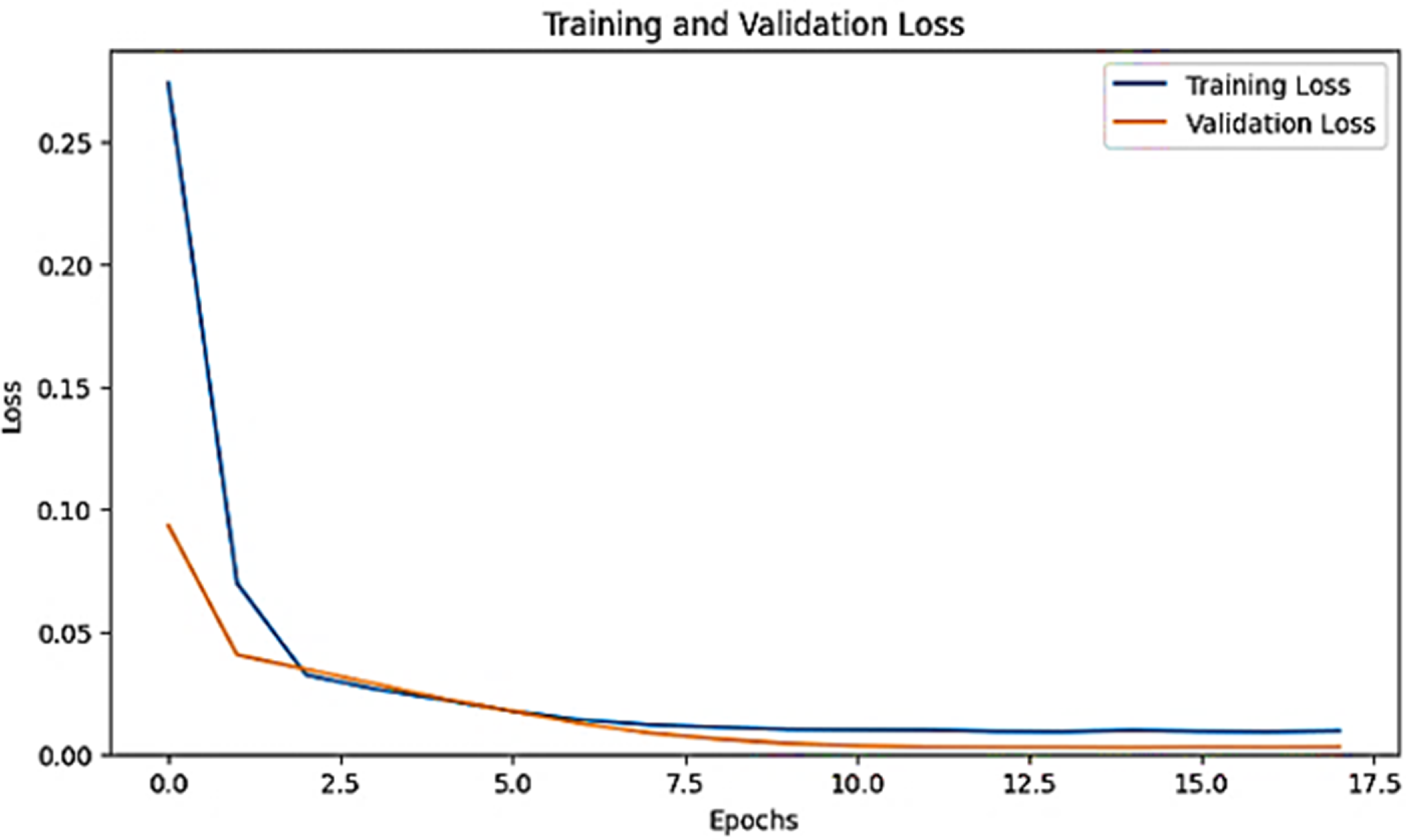
Validation and early stopping have been assigned the reference to the change in losses determined in accordance with the mechanism that came into effect. In Fig. 11 The Post scaling performed in the range of 0--1 loss is a graph of values. Figure 12 shows that step by step progress over the tess loss indications. Loss of MSE (mean square Error) are quoted. The retraining processes for the model evaluation phase are given in Fig. 13.
Normalised loss variation over epochs after post-scaling within the 0–1 range, illustrating the stability and convergence trend of the training process.

Figure 11 Long description
The line graph displays two data lines representing training loss and validation loss over epochs. The x-axis is labeled 'Epochs' and ranges from 0 to 17.5, while the y-axis is labeled 'Loss' and ranges from 0.00 to 0.25. The blue line represents the training loss, starting at approximately 0.25 and rapidly decreasing to around 0.05 within the first 2.5 epochs, then gradually declining to near 0.00 by epoch 17.5. The orange line represents the validation loss, starting at approximately 0.10 and following a similar trend, decreasing to around 0.05 within the first 2.5 epochs and then gradually declining to near 0.00 by epoch 17.5. All values are approximated.
Test loss analysis indicating the prediction error behaviour of the trained LSTM model on unseen data samples.

Training progress of the LSTM model, showing the learning dynamics and optimisation behaviour throughout the training iterations.

Figure 13 Long description
The line graph illustrates the training progress of the LSTM model, capturing the learning dynamics and optimization behavior over the training iterations. The x-axis represents the number of steps, while the y-axis indicates the loss values. The graph shows two data series: one for the training loss and another for the validation loss. The training loss decreases steadily over time, indicating the model's learning progress. The validation loss also decreases but at a different rate, reflecting the model's performance on unseen data. All values are approximated.
The root mean square error (RMSE) value obtained as a result of the training processes is symbolised by bringing it to the same format as the original data unit. Figure 14 shows the RMSE value for training and test data.
Comparison of RMSE values for training and test datasets, highlighting the predictive accuracy and generalisation capability of the proposed model.

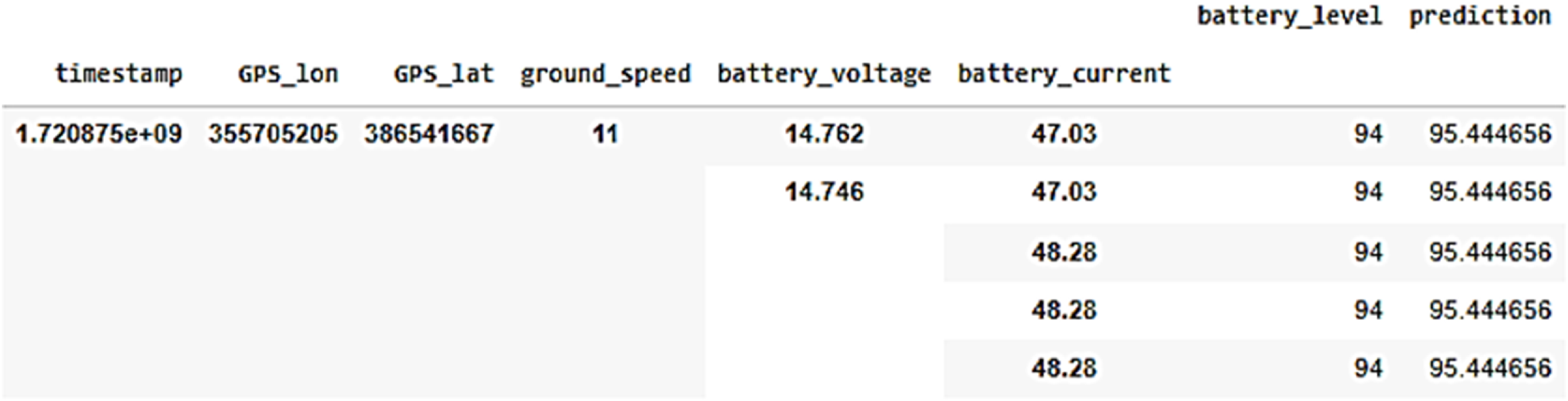
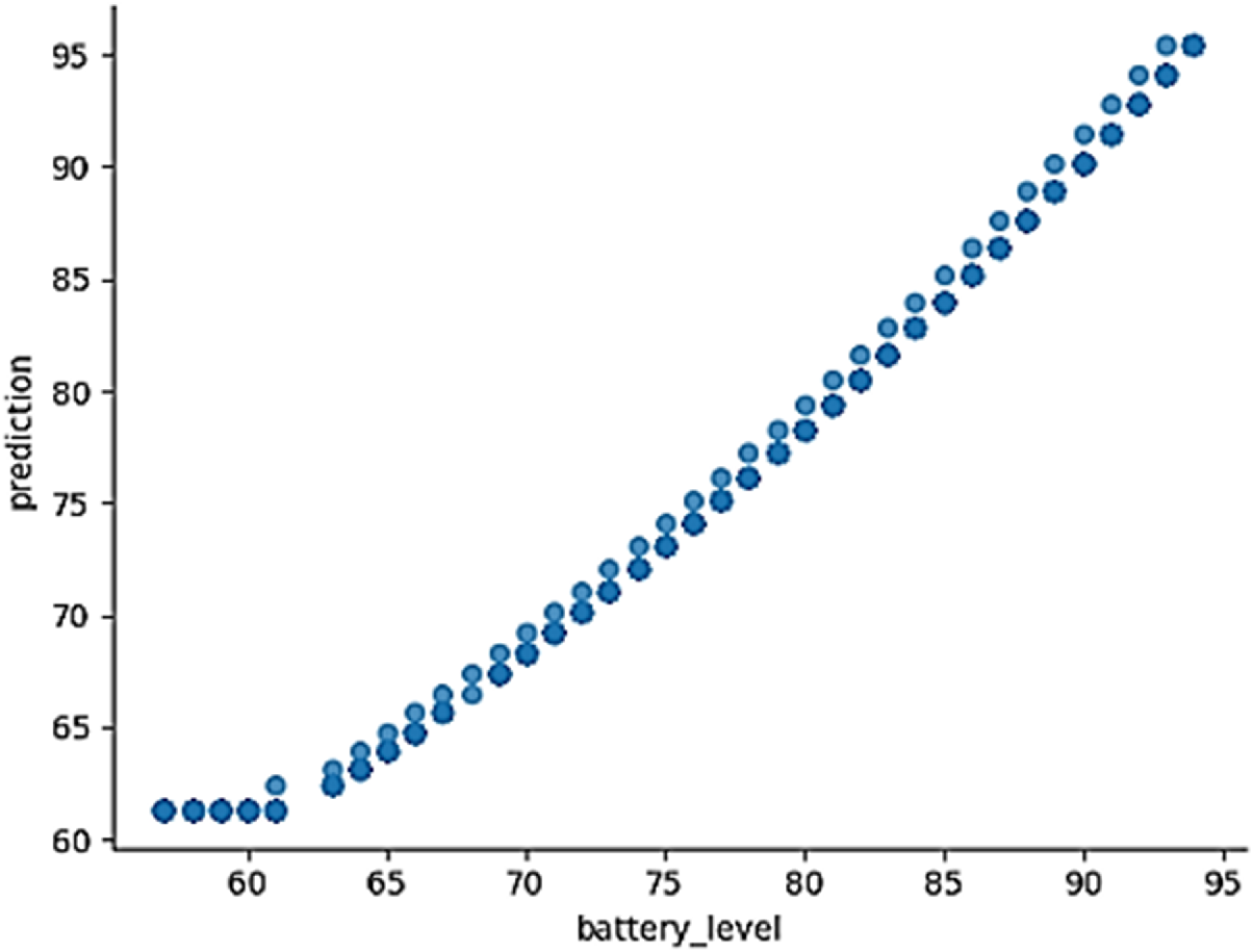
The data obtained as a result of training, and the data related to the real battery level are shown in Fig. 15. It compares the predicted and actual battery level during the training phase, demonstrating the model’s ability to closely track the observed battery dynamics. It will be observed that there is a deviation in the prediction performance at the rate specified in the train RMSE value. Figure 16 shows the connection between the data obtained as a result of training and the real values. The graph presents the predicted versus actual battery level on the test dataset, indicating the generalisation capability of the proposed LSTM model.
Difference between actual and predicted battery-level values in the training dataset, illustrating the estimation deviation and fitting accuracy of the LSTM model.

Figure 15 Long description
The table presents a comparison between actual and predicted battery-level values in a training dataset, illustrating the estimation deviation and fitting accuracy of the LSTM model. It contains six columns: timestamp, GPS longitude, GPS latitude, ground speed, battery voltage, battery current, battery level, and prediction. The table has five rows of data, each row providing specific values for these columns. Notable trends or outliers in the data are not explicitly mentioned, but the table aims to show the accuracy of the LSTM model's predictions.
Relationship between predicted and actual battery-level values in the test dataset, demonstrating the correlation and consistency of the model predictions.

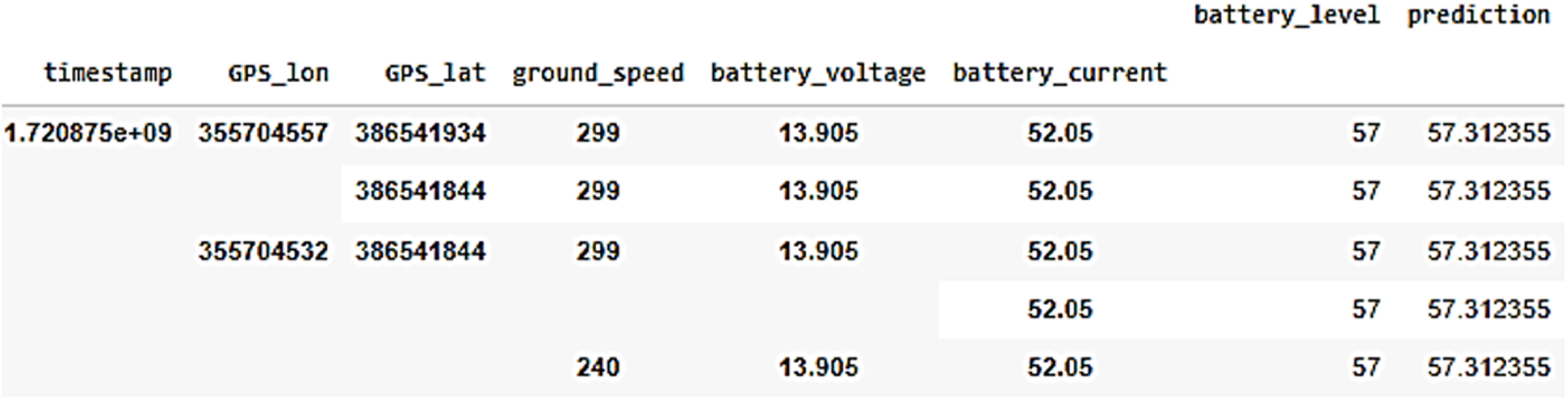
The data obtained as a result of the test and the data related to the real battery level are shown in Fig. 17. It illustrates the temporal evolution of prediction error, highlighting stable model behaviour across the navigation phase.
Comparison of real battery-level measurements and LSTM-based prediction results over time, illustrating the temporal tracking performance of the model.

Figure 17 Long description
The table presents a comparison of real battery-level measurements and LSTM-based prediction results over time. It includes columns for timestamp, GPS longitude, GPS latitude, ground speed, battery voltage, battery current, battery level, and prediction. The table has five rows and nine columns. Row 1: Timestamp 1.720875e+09, GPS longitude 355704557, GPS latitude 386541934, ground speed 299, battery voltage 13.905, battery current 52.05, battery level 57, prediction 57.312355. Row 2: Timestamp 1.720875e+09, GPS longitude 355704532, GPS latitude 386541844, ground speed 299, battery voltage 13.905, battery current 52.05, battery level 57, prediction 57.312355. Row 3: Timestamp 1.720875e+09, GPS longitude 355704532, GPS latitude 386541844, ground speed 299, battery voltage 13.905, battery current 52.05, battery level 57, prediction 57.312355. Row 4: Timestamp 1.720875e+09, GPS longitude 355704532, GPS latitude 386541844, ground speed 240, battery voltage 13.905, battery current 52.05, battery level 57, prediction 57.312355.
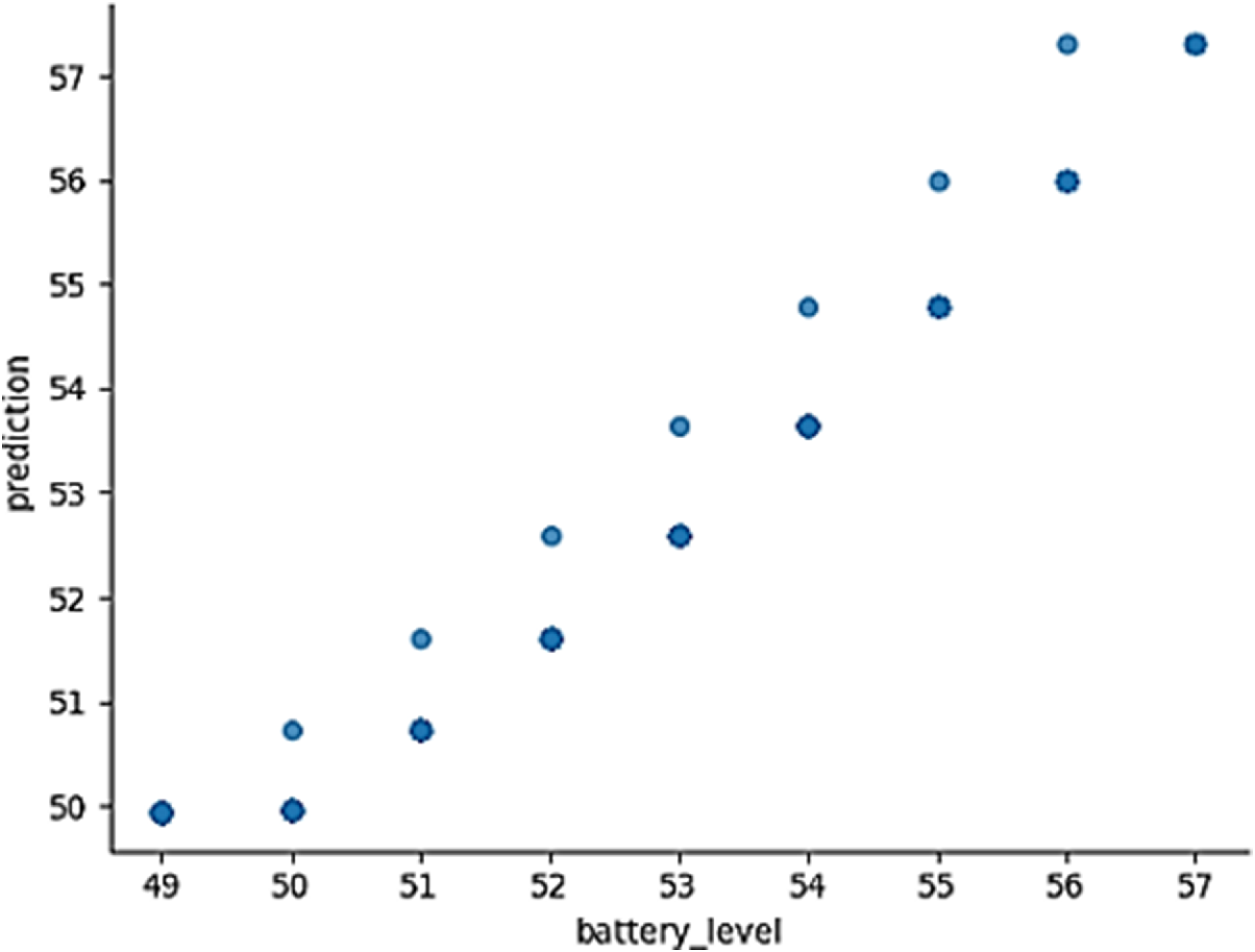
It will be observed that there is a deviation in the estimation performance at the rate specified in the test RMSE value. Figure 18 shows the connection between the data obtained as a result of the test and the real values. The graph summarises the overall prediction performance, showing consistent alignment between estimated and measured battery levels.
Scatter plot of predicted versus actual battery-level values, highlighting the distribution of prediction accuracy and potential deviation patterns.

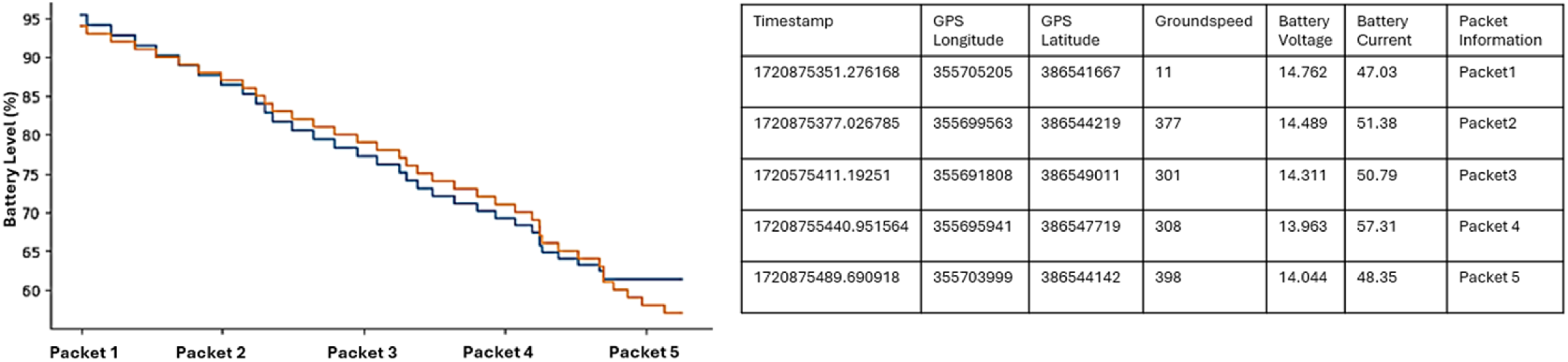
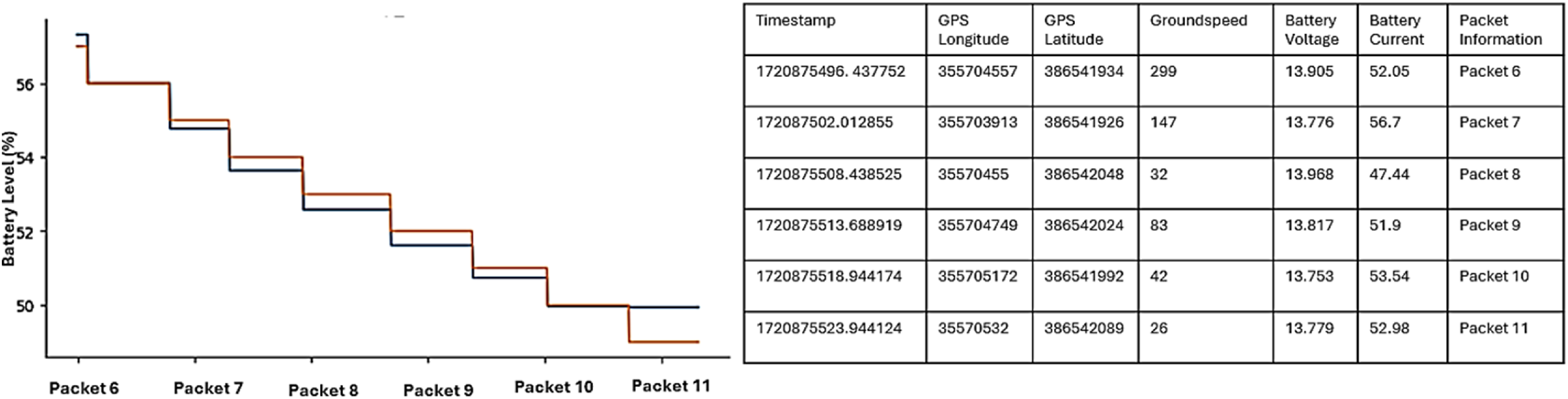
Figures 19 and 20 show the pattern-capturing performance of training and test values against the actual values.
Training set LSTM estimation and real values.

Figure 19 Long description
The line graph illustrates the battery level percentage on the y-axis, ranging from sixty to ninety-five percentage, against packet information on the x-axis, labeled as Packet 1 through Packet 5. Two lines, one blue and one orange, represent different data sets. The blue line starts at ninety-five percentage for Packet 1 and gradually decreases to sixty percentage for Packet 5. The orange line follows a similar downward trend, starting at ninety-five percentage for Packet 1 and ending at sixty percentage for Packet 5. The table next to the graph provides detailed data for each packet, including timestamp, GPS longitude, GPS latitude, groundspeed, battery voltage, battery current, and packet information. Each row corresponds to a specific packet, with values such as timestamp 1720875351.276168 for Packet 1 and timestamp 1720875489.690918 for Packet 5. The battery voltage and current values vary across packets, with battery voltage ranging from fourteen point four four four to fourteen point seven six two volts and battery current ranging from thirty point three one to fifty-seven point three one milliamperes. All values are approximated.
Test set LSTM estimation and real values.

Figure 20 Long description
A line graph compares battery level percentage against packet information, featuring two data lines. The x-axis represents packet information, labeled as Packet 6 through Packet 11. The y-axis represents the battery level percentage, ranging from 50 to 56 percentage. The red line indicates the estimated values, while the blue line shows the real values. The graph illustrates a step-like decline in battery level as packet information increases. The table on the right provides detailed data for each packet, including timestamp, GPS longitude, GPS latitude, groundspeed, battery voltage, battery current, and packet information. All values are approximated.
CRISP-DM sixth stage of deployment phase is associated with the implementation of data mining project results to ensure that they are available and meet the business requirements of end users. Lifelike and high-precision capture, pattern, performance and applicability confirms.
The obtained results demonstrate that the proposed LSTM-based model is capable of capturing the temporal dynamics of battery-level variation during the UAV navigation phase, as reflected by the low RMSE values and the close alignment between predicted and actual battery trajectories. The model effectively learns nonlinear patterns and delayed effects arising from multivariate flight parameters, indicating its suitability for navigation-phase energy monitoring.
Despite these strengths, the current approach has certain limitations. The model focuses on single-parameter prediction (battery level), and the size of the dataset is limited to a single flight scenario, which may restrict generalisability. In addition, only an LSTM architecture was evaluated in this study. Alternative deep learning models such as GRU, TCN or transformer-based architectures may offer advantages in terms of computational efficiency, parallel processing or long-range dependency modeling. A comparative evaluation of these architectures is therefore identified as a promising direction for future work.
6.0 Conclusion
In today’s world, especially at the point of increasing situational awareness, UAVs are actively involved. Mini UAVs stand out with their features such as lightness, compactness and being the most suitable for obtaining information in terms of effective mission performance in difficult mission conditions. In this study, a general analysis of flight parameters obtained as a result of obtaining flight data by mini-UAV flight was performed, the predictability of the parameters was evaluated and the relationships of the parameters according to flight scenarios were analysed by revealing the sections taken from the parameter set in the study. This study can be considered as a concrete example of situational monitoring of UAVs [Reference Özdemir29].
Although the proposed LSTM-based framework demonstrates strong predictive performance for the analysed flight dataset, several limitations should be acknowledged. First, the model was trained on a single mini-UAV flight dataset, which may restrict its generalisation capability under different environmental conditions, flight profiles or UAV configurations. Second, LSTM networks require relatively high computational resources and training time, which may limit their direct deployment on embedded or real-time onboard systems without optimisation. Finally, the model performance is sensitive to data quality and sensor configurations, indicating that additional calibration and retraining may be required when adapting the framework to different UAV platforms.
In terms of scalability, the proposed CRISP-DM-based framework provides a flexible structure that can be adapted to different UAV platforms. By redefining sensor mappings, updating data preprocessing pipelines and retraining or fine-tuning the LSTM model with platform-specific datasets, the methodology can be extended to multi-platform UAV applications. Future studies may also investigate transfer learning strategies and lightweight neural architectures to enable efficient deployment on resource-constrained UAV systems.
Despite the promising results obtained in this study, several limitations should be acknowledged. The proposed framework was evaluated using flight data collected from a single mini-UAV platform and under specific navigation-phase conditions, which may limit the direct generalisability of the findings to different UAV configurations, mission profiles or environmental conditions. In addition, the LSTM model was trained using a fixed set of input parameters and a predefined lookback window, without adaptive optimisation of temporal context length.
Beyond its predictive performance, this study makes several distinctive contributions to the existing literature. First, it demonstrates the structured integration of the CRISP-DM methodology with an LSTM-based time-series estimation model for UAV navigation-phase battery monitoring, providing a transparent and reproducible analytical workflow. Second, the study is supported by a real-time mini-UAV flight data acquisition infrastructure, enabling the use of authentic flight telemetry rather than simulated or synthetic datasets. This combination of systematic data mining principles with real-world UAV operational data represents a practical and methodological advancement over prior studies that primarily focus on standalone modeling approaches. Accordingly, the proposed framework not only contributes to battery-level estimation accuracy but also offers a transferable methodological template for data-driven UAV flight analysis.
Future work will focus on extending the proposed framework by incorporating data from multiple UAV platforms and mission scenarios, exploring adaptive windowing strategies and comparing LSTM-based forecasting with alternative architectures such as GRU and transformer-based models. Furthermore, integrating real-time battery prediction into onboard decision-support systems is expected to enhance operational robustness and autonomy in UAV applications.
Acknowledgments
This study was supported by the Scientific Research Projects Unit of Erciyes University with the FYL-2023-12576 project code. Thank you for your support.
Data availability statement
All data used during the study are available from the corresponding author by request.