1. Introduction
About 50 years ago, Hans Albert, who should become one of the most eminent German philosophers in the 20th century, published a short article on ‘Model-Platonism’ in economics in a Festschrift dedicated to Gerhard Weisser (1971[1963]). According to Albert, the concept of ‘Model-Platonism’ describes ‘the neoclassical way of economic reasoning’ and provides a general epistemological rationale for some of the alleged shortcomings of neoclassical theory. This short article has become a classic in the German-speaking debate on economic methodology and is still widely known today among older generations of German-speaking economists. Hans Albert himself turned out to become a key proponent of critical rationalism, a participant in the famous Positivismusstreit and a well-respected figure in continental and international philosophical discourse. Thereby, his article on Model-Platonism contributed significantly to his standing among social scientists, since it applied epistemological concepts in a very straightforward and intuitive manner to central questions of theory-building in the social sciences.
Given Albert's large opus and the international recognition he received, it comes as a surprise that only few of his major works have ever been translated into English. Besides a collection of essays entitled Between Science, Religion and Politics (Albert, Reference Albert1999), only two of his major philosophical works, the Treatise on Critical Reason (Albert, Reference Albert1985) and his co-edited book on The Positivist Dispute in German Sociology (Adorno et al., Reference Adorno, Albert, Dahrendorf, Habermas, Pilot and Popper1976), have been translated into English. His two most important works on economic issues, Ökonomische Ideologie und Politische Theorie (‘Economic Ideology and Political Theory’, Albert, Reference Albert1972[1954]) as well as Marktsoziologie und Entscheidungslogik (‘Market-Sociology and the Logic of Choice’, Albert, Reference Albert1998[1967]), have never been accessible for an English-speaking readership. Even his famous article on ‘Model-Platonism’, which has been revised and reprinted in Albert (Reference Albert1998[1967]), has, until very recently (Albert, Reference Albert, Arnold and Maier-Rigaud2012[1963]), not been translated into English. In this context, this paper fills a conceptual gap by introducing and contextualizing Albert's classic contribution with respect to current practice in economics as well as more recent elaborations on the role of models in neoclassical economic theory. Thereby, the ongoing relevance of the concept is illustrated and possible extensions of Albert's original critique are explored.
Essentially, Albert's critique of neoclassical economics leads him to suggest a broadening of traditional economic theory by incorporating results from economic sociology as well as heterodox economics, especially institutionalist thought. Albert obviously shared Searle's conviction that economics is, in contrast to the natural sciences, ‘largely concerned with institutional facts’ (Searle, Reference Searle2005, 1) and was, thus, alienated by ‘the institutional, motivational and cognitive vacuum within which neoclassical thinking operates’ (Arnold and Maier-Rigaud, Reference Arnold and Maier-Rigaud2012). This is evident in his original article (Albert, Reference Albert, Arnold and Maier-Rigaud2012[1963]) as well as in later publications (Albert, Reference Albert1998[1967]) and goes along smoothly with Albert's pluralist attitude to scientific research in general (Albert, Reference Albert1985).
I start with a short exposition of Albert's original argument (Section 2), which is supplemented by some general epistemological considerations on the structure of scientific theories in order to illustrate Albert's main message in a more systematic and general manner (Section 3). Afterwards, I develop a concise definition of ‘Model-Platonism’ complementing Albert's original formulation and show how this definition applies to current developments in economics (Section 4). Finally, I try to extend Albert's critique by looking more closely on the epistemological interpretation of the assumptions of economic models (Section 5). Section 6 contextualizes these arguments and offers some concluding thoughts.
2. The original argument and its epistemological foundations
At the core of Albert's original critique (Albert, Reference Albert and Topitsch1971[1963]) is the distinction between relatedness to reality, informational content and truth. Any given statement might be evaluated according to these three criteria. The first asks whether a statement bears any reference to existing objects, the second asks whether a statement provides some information about these objects and the third signifies whether a statement is correct, that is in line with the real state of affairs. For instance, while the statement ‘if the weather does not change it will stay the same’ is clearly related to reality as well as true it does not inform about future events and, therefore, carries no informational content (Albert, Reference Albert, Arnold and Maier-Rigaud2012[1963], 297).
In general, the relationship between these three criteria is rather complex. While relatedness to reality is a precondition for any given statement to bear informational content and/or (non-analytical) truth, the latter two aspects are inversely related: a statement with high informational content precludes many possible events and, thus, has a higher ex-ante probability of being empirically false. Conversely, a statement, which is true by certainty, i.e. tautological, cannot fail in an empirical test, since it does not bear any informational content. That is, of course, a general rationale of critical rationalism (Popper, Reference Popper2010[1959]).
With regard to economics, Albert argues that economists and economic theory systematically confuse the criterions of relatedness to reality and informational content and, therefore, end up with a series of theoretical conceptions, which are (nearly) true by certainty, but do not lead to any explanatory progress. Additionally, he contends that economists tend to protect or defend their theoretical results against empirical criticism by epistemologically invalid arguments or manoeuvres, so-called ‘conventional strategies’ (Albert, Reference Albert, Arnold and Maier-Rigaud2012[1963], 300). These strategies are characterized as leading to an immunization against critique (Kritikimmunisierungsstrategien) and are depicted as further weakening the epistemological position of neoclassical economics. He goes on to illustrate these alleged weaknesses with three prominent examples – the law of demand, the quantity theory of money and the theory of growth.
In more detail, Albert's criticisms against the ‘neoclassical style of economic reasoning’ can be grouped into two categories. First, he makes a series of arguments related to the theoretical structure of neoclassical economics. Specifically, he maintains that the utilization of unrestricted ceteris-paribus clauses, the indeterminate formulation of some theoretical conceptions (like the quantity theory of money or revealed preference theory) as well as the introduction of unrealistic auxiliary hypotheses (‘alibi-assumptions’ according to AlbertFootnote 1) renders theoretical statements untestable. Additionally, he expresses his dissatisfaction with regard to the specification of the intended domain of application for typical economic models, which he perceived as imprecise and vague. At the same time, Albert criticizes the relative neglect of questions of empirical adequacy compared to questions of logical consistency. In sum, he believed these tendencies to foster immunization against critique on a large scale.
All these arguments are connected to the confusion between relatedness to reality and informational content on the one hand and to the distinction between explanatory and auxiliary hypotheses within economic models on the other hand. While the latter aspect remained underdeveloped in Albert's own exposition, it is very helpful for understanding and evaluating his central arguments.
The second group of arguments Albert advances is less of a theoretical, but more of a discursive nature. Albert argues that theoretical economics is rather closed, neglecting to incorporate empirical results. On a disciplinary level, Albert observes a walling-off with regard to related disciplines such as psychology or sociology as well as a systematic neglect of more deviant traditions within economics. Both aspects are in stark contrast to the critical rationalist ideal of a pluralist and open(-minded) debate (Albert, Reference Albert1985), which has much in common with a pluralist attitude to economic research as suggested by some heterodox economists (e.g. Garnett et al., Reference Garnett, Olsen and Starr2010). While theoretical as well as discursive arguments are of equal importance for Albert's reasoning (Albert, Reference Albert, Arnold and Maier-Rigaud2012[1963]), this article concentrates on the former aspect, i.e. Albert's observations with regard to structural elements of neoclassical theorizing.
In this context, most of Albert's arguments can be traced back to a common root, namely the distinction between explanatory and auxiliary hypotheses within economic models. Take, for example, Albert's critical stance on ceteris-paribus clauses: Even in his original article, his critique is mainly focused on how these clauses are utilized rather than the fact, that these clauses are in use. Specifically, his main reservation was on using ceteris-paribus clauses in an indeterminate form simply to defend theoretical ideas against empirical results (‘something exogenous must have happened, because we did not get the expected result’), while neglecting the possibility to derive new auxiliary hypotheses out of these failed tests. This possibility arises out of a pragmatic approach to ceteris-paribus clauses. Basically, any reference to a ceteris-paribus clause as a means for defending a theoretical proposition has to be accompanied by an explicit specification of the reasons for predictive failure. This specification in turn leads to one or more new auxiliary hypotheses giving a more precise description of a model's intended domain of application (Gadenne, Reference Gadenne, Löffler and Runggaldier1999). As a result, Albert's harsh stance on ceteris-paribus clauses is strongly related to the way explanatory and auxiliary hypotheses are treated within economic modelsFootnote 2.
And indeed, the overwhelming majority of contributions to economic theory does not even introduce this differentiation at all, but rather treats all model assumptions as epistemologically equivalent premises (‘axioms’). While this makes no difference on the level of mathematical deduction, it is highly consequential for the epistemological interpretation and, thus, the testability of the theorems derived from economic models. Auxiliary hypotheses are preconditions, which have to be fulfilled in case of an empirical test, and therefore specify the intended domain of application for the explanatory statements inherent in such theorems. Let's illustrate this point with a simple example from the physical realm. Take, for instance, Galileo's law of falling bodies, which is unbounded as such. Empirical tests on earth would corroborate it, while empirical tests on Mars would lead to its falsification. But do we know anything about the applicability of his law of falling bodies on Mars? The classic formulation of the law of falling bodies is not specific enough to give us a precise answer on this question. However, from the perspective of Newtonian theory, all this is very simple. Combining a subset of the Newtonian laws with an appropriate set of auxiliary hypotheses allows for deducing the law of falling bodies. In such a formulation, it becomes clear that the Mars is as outside of its intended domain of application (since the auxiliary hypotheses specify Earth to be one of the two relevant mass points) as is an empirical test based on the fall of a parachutist (since the auxiliary hypotheses usually specify the absence of exogenous forces such as air resistance). By specifying the intended domain of application, auxiliary hypotheses also restrict the informational content of the respective theorems. In this case, the original formulation of the law of falling bodies as a single hypothesis has a greater domain of application, more informational content, but is also at greater risk to fail in an empirical test than its Newtonian reconception as part of a more general theory.
In analogy to the natural sciences, we may understand central theorems of economic models as those statements, whose informational content is relevant for judging the testability of the associated models. The typical variant of an economic model thereby postulates a series of basic assumptions or axioms from which a certain theorem is derived
 \begin{linenomath}\begin{equation*}
\frac{{{\rm A}_1,\,\,{\rm A}_2 \ldots {\rm A}_{r + s} }}{{\rm T}}.\end{equation*}\end{linenomath}
In this raw form, one might judge whether a model is related to reality, in the sense that the axioms contain descriptive elements referring to real objects, but the informational content of the model's theorem remains unclear, since we have no information on how exactly these axioms relate to reality. Is, for example, the axiom of cross-substitutability of inputs implicit in most production functions to be understood as an explanatory assumption, which may be ‘disproved’, or is it to be interpreted as an auxiliary hypothesis restricting the applicability of a model's theorems? So in order to estimate whether there is informational content in T, we need to differentiate these assumptions into a group of r explanatory hypotheses (H) and another group of s auxiliary hypotheses (AH)
 \begin{linenomath}\begin{equation*}
\frac{{{\rm H}_1 \ldots {\rm H}_{\rm r} \, \wedge \,{\rm AH}_{\rm 1} \, \ldots \,{\rm AH}_{\rm s} }}{{\rm T}}.\end{equation*}\end{linenomath}
What follows from this distinction for our theorem? Well, basically, the theorem T should apply to situations as specified by AH1 to AHs and, thus, these auxiliary hypotheses are transferred into the if-clause of the resulting theorem
 \begin{linenomath}\begin{equation*}
\frac{{{\rm H}_1 \, \ldots {\rm H}_{\rm r} }}{{({\rm AH}_{\rm 1} \, \ldots \,{\rm AH}_{\rm s} ) \to {\rm T}}}.\end{equation*}\end{linenomath}
From the perspective of logical deduction, this transformation is completely equivalent, to the one considered earlier where the auxiliary hypotheses are part of the explanation (Suppes, Reference Suppes1957). However, from the perspective of empirical testing, the decisive difference between these two transformations is that the second variant captures the implications of classifying assumptions into explanatory and auxiliary hypotheses, where the latter serve as specific restrictions for the application of the derived theorems. Since no binding conventions exist in economics on how to precisely apply this differentiation with respect to specific axioms (Albert, Reference Albert1996), a certain amount of arbitrariness is introduced with respect to the informational content of the resulting theorems. An increase in the number of axioms interpreted as explanatory hypotheses leads to a corresponding increase in informational content of the relevant theorem, which is now less restricted (i.e. more general). Conversely, an increase in the number of axioms interpreted as auxiliary hypotheses decreases the informational content.
The question which epistemological role to ascribe to various axioms is particularly vexing in the context of very unrealistic assumptions: If they are interpreted as explanatory hypotheses, the resulting theorem is highly likely to fail and, conversely, if they are treated as auxiliary hypotheses, they render the theorem inapplicable by minimizing its domain of application. So, the basic dilemma is that ‘either the theory is irrefutable or it is far too easily refuted because it is unbounded’ (Archibald, Reference Archibald1963, 227). But even if unrealistic assumptions understood as explanatory statements lead to correct conclusions there is no reason for contentment, since what we got is a classical case of ‘wrong antecedent, correct consequent’. Regrettably, there is no logical justification for judging the validity of the assumptions by the correctness of the conclusion (as suggested by Friedman, Reference Friedman1966[1953]) – indeed any such agreement between theory and reality is to be interpreted as coincidental.
In this context, Albert's critique is based on the assertion that economists do not face but rather systematically evade the dilemma associated with unrealistic assumptions. He specifically argues against ‘alibi-assumptions’, which provide a comprehensive alibi against conflicting empirical evidence, and explicitly refers to unrealistic assumptions that are interpreted as a condition for a successful application (i.e. as auxiliary hypotheses). His accusation of a Platonic style of thinking partially rests on the observation that an interpretation of economic axioms simply as logical conditions leads to a thought-experimental style of theorizing devoid of any substantial hypotheses and, thus, a lack of informational content. Technically, such an interpretation implies to treat all assumptions as auxiliary hypotheses (that is the special case where r = 0).
Albert's critique on ceteris-paribus clauses can, in turn, be interpreted as plea for providing specific explanations in case of a failed empirical test and, consequently, for introducing novel auxiliary hypotheses as a result of this process. Since all of Albert's major criticisms are strongly related to the differentiation between explanatory and auxiliary hypotheses, this distinction allows us to systematize the different shortcomings diagnosed in his classic article. While the mechanics of the alleged immunization strategies differ with respect to their treatment of the basic axiomatic structure of economic models, their result is always a decrease in, or even an elimination of, informational content. The following section tries to differentiate between different variants of immunization against critique as addressed by Albert in a hypothetico-deductive framework (Hempel, Reference Hempel1970[1965]) and, thereby, aims to provide a more systematic outlook on his most important arguments.
3. Five variants of interpreting economic models
In this section, five different possibilities of interpreting economic models are illustrated with respect to their epistemological structure in general and the testability of the resulting theorems in particular. In this spirit, the standard interpretation of economic models (1), which is often complemented by the assumption of a ceteris-paribus clause (2), is compared with three more precise, but also more critical accounts. These are Albert's interpretations of economic models as pervaded with alibi-assumptions (3), a thought-experimental style of theorizing (4) and indeterminate explanatory hypotheses (5).
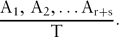
Usually, economic models are given in the following form, where a theorem T is deduced on the basis of a certain set of unspecified assumptions A
 \begin{linenomath}\begin{equation}
\frac{{{\rm A}_1 ,\,{\rm A}_2 , \ldots {\rm A}_{{\rm r + s}} }}{{\rm T}}.\end{equation}\begin{linenomath}
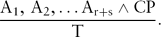
In hypothetico-deductive terms, Albert's critique suggests that this conception of economic models is insufficient and, thus, misleading. It has to be put in more precise terms in order to illustrate the epistemological subtleties associated with economic models. More specifically, the various strategies of immunization against critique Albert identifies can be illustrated by more precise variations of the previous formulation. The simplest case of such a variation, one of which economists are well aware, is to complement the previous formulation by adding a ceteris-paribus clause
 \begin{linenomath}\begin{equation}
\frac{{{\rm A}_1 ,\,{\rm A}_2 , \ldots {\rm A}_{{\rm r + s}} \wedge {\rm CP}}}{{\rm T}}.\end{equation}\begin{linenomath}
If, in such a case, a researcher resorts to the ceteris paribus clause to defend her theorem against conflicting empirical evidence, she has to precisely specify which exogenous forces caused the theory's prediction to fail and suggest one or more appropriate new auxiliary hypotheses to accommodate for the observed interference. Otherwise, it would be a case of immunization against critique via resorting to a ceteris-paribus clause, since the only usage of the ceteris-paribus clause has been to protect a theorem from being refuted.
While unspecified ceteris-paribus clauses provide theories with an alibi against conflicting empirical evidence in a very general way, it is also possible to introduce more specific alibi-assumptions. These assumptions are conceived as unrealistic auxiliary hypotheses, which are never expected to be fulfilled (e.g. the assumption of fully informed individuals) and, thus, give an opportunity to deny any relevance to empirical results, since the specific condition can never be realized. Formally, the introduction of such an alibi-assumption (AHi) among the set of auxiliary hypotheses (AH1 to AHs) can be illustrated in the following way, where the expression non-AHi represents the act of drawing on such an alibi by referring to the unrealistic character of the specific assumption AHi
 \begin{linenomath}\begin{equation}
\frac{{{\rm H}_1 \ldots {\rm H}_{\rm r} \wedge {\rm AH}_{\rm 1} \ldots {\rm AH}_{\rm s} }}{{{\rm (AH}_{\rm 1} \ldots {\rm AH}_{\rm i} \ldots {\rm AH}_{\rm s} \wedge \hbox{non-AH}_{\rm i} {\rm )} \to {\rm T}}}.\end{equation}\begin{linenomath}
The resulting expression postulates the inapplicability of T for any given situation, by imposing a contradiction in its antecedent, which renders its consequent logically true, but empirically worthless. Thus, the resulting argument ((AH1 . . . AHi . . . AHs ∧ non-AHi) → T) lacks any informational content, since possible settings for a solid empirical test of the resulting theorem are logically inconceivable. Already in his original article, Albert (Reference Albert and Topitsch1971[1963], 417) emphasized that in an extreme form (i.e. in a totally unbound interpretation) ceteris-paribus clauses render a theory tautological. The same also holds for models, which include alibi-assumptions, since their theorems have logically no domain of application as soon as they draw on their ‘alibis’.
So, ceteris-paribus clauses and alibi-assumptions work in a very similar way: They allow theories to evade empirical results, by declaring them as invalid for refuting the theorem at hand – either with reference to unexpected exogenous forces or by interpreting conflicting evidence as outside of the theorem's domain. But Albert also addressed other aspects of economic models, which deemed him to be epistemologically dubious. More specifically, he diagnosed a tendency to substitute questions of empirical adequacy with questions of logical necessity and attacked those proponents of neoclassical economics, who deemed their central assumptions to be true a priori (Albert, Reference Albert, Arnold and Maier-Rigaud2012[1963]). Reaching beyond the critique of pure apriorism in economics, his diagnosis also refers to a kind of self-sufficiency with respect to the relative importance of mathematical expositions versus empirical results.Footnote 3
Even though the prevalence of apriorism in economics has declined and empirical research has become much more prominent – two developments also recognized by Albert himself – his intuition with regard to the relative weight of empirical considerations in terms of theory construction, i.e. model building, still seems valid. The rationale for constructing economic models out of simple and empirically dubious basic assumptions has changed, but not disappeared. In earlier times, this rationale has been justified by stating that ‘only [. . .] the ignorant and the perverse’ (Robbins, Reference Robbins1945[1932], 16) would doubt the main assumptions on economic behaviour. Nowadays, the very same assumptions are justified as the ingredients of a specific, conceptual ‘story’ (Gibbard and Varian, Reference Gibbard and Varian1978; McCloskey, Reference McCloskey1998; Morgan, Reference Morgan2001), a ‘fable’ (Rubinstein, Reference Rubinstein2006) situated in a ‘counterfactual world’ (Sugden, Reference Sugden2000, 18), which is told by the author of an economic model. This ‘story’-view on economic models, which is highly popular in current economic methodology, justifies these assumptions as being part of a potentially interesting thought-experiment, that is a speculative scenario ‘without empirical commitment’ (Hausman, Reference Hausman1992, 6). In hypothetico-deductive terms such a thought-experiment takes none of its assumptions ‘seriously’, i.e. as explanatory statements, but conceives them all as auxiliary hypotheses (the special case of r = 0). In such a thought-experiment, there exist only auxiliary conditions, since no statement is effectively put to the test
 \begin{linenomath}\begin{equation}
\frac{{{\rm AH}_1 \ldots {\rm AH}_{\rm s} }}{{\rm T}}.\end{equation}\begin{linenomath}
The resulting theorem is true by definition, since it a priori applies only to situations where it is correct with absolute certainty. While the justification for the increased emphasis on mathematical exposition in relation to empirical adequacy has changed, the routine as such, which has been in the focus of Albert's critique, remained.
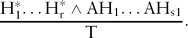
Especially with regard to the quantity theory of money (in his original article) and the role of rational choice theory in economics (in later publications, see Albert, Reference Albert1998[1967]), Albert suspected that the theorems of economic models are devoid of informational content, since central theoretical propositions in neoclassical theory are already conceptualized in a tautological way. This assertion is rather well-known (Hausman, Reference Hausman1992; Hutchison, Reference Hutchison1965[1938]), Rosenberg, Reference Rosenberg1976) and is based on the observation that, if the utilized hypotheses are indeterminate (H*), because they are already formulated tautologically, they are easily compatible with any state of the world
 \begin{linenomath}\begin{equation}
\frac{{{\rm H}_{\rm 1}^{\rm *} {\rm \ldots H}_{\rm r}^{\rm *} \wedge {\rm AH}_{\rm 1} {\rm \ldots AH}_{{\rm s1}} }}{{\rm T}}.\end{equation}\begin{linenomath}
A simple example for an indeterminate hypothesis is the assumption of utility maximization with completely flexible preferences, where any behaviour can be explained by envisaging a compatible preference structure. This agnosticism with regard to preference structures makes the resulting hypothesis so flexible that it is devoid of informational content and, thus, may accommodate any potential evidence. Lazear (Reference Lazear2000) provides a list of examples following this approach and Blinder (Reference Blinder1974) offers an entertaining account of its consequences.
This section summarized Albert's main arguments from a more technical perspective. It exposed five varying interpretations of economic models, which are subtly present in Albert's original account as well as in the practice of current economic research. The first of these accounts – the standard interpretation of economic models – is too simplistic to allow a concise analysis with regard to a model's testability. The following two interpretations – where economic models are complemented by a ceteris-paribus clause or an alibi-assumption – allow for declaring conflicting empirical evidence as unsuitable for refuting the model's predictions. In the last two cases – where models are either conceived as pure thought-experiments or contain indeterminate hypotheses – economic models are tautological by nature. The classic interpretation of economic models as hypothetico-deductive systems, introduced in the previous section, serves as another alternative way to interpret economic models.
All these accounts of economic models are explicitly and implicitly present in economic thinking as well as in the history of economic methodology. Milton Friedman's famous defence of unrealistic assumptions in economic theory (Friedman, Reference Friedman1966[1953]) is thereby strongly related to Albert's assault against alibi-assumptions, albeit both authors argue from a quite different perspective. Conceiving economic models as thought-experiments is compatible with an interpretation of economic models as representing stories situated in ‘counterfactual worlds’ (Sugden, Reference Sugden2000, 28). And ceteris-paribus clauses of course represent an age-old topic in economic textbooks and economic methodology (Hausman, Reference Hausman1990).
4. What is Model-Platonism?
What, then, does the idea of Model-Platonism contribute? First, as we have seen in the foregoing sections, Albert's critique allows for summarizing and differentiating various forms of immunization against critique on the level of economic theory. Second, Albert also emphasizes the importance of the discursive level, where he proceeds in a standard critical rationalist fashion and urges economists to be open for criticism of all sorts and to specifically design their scientific institutions in a way assuring this openness. However, along with his critique, also comes a specific view of economic theory, which is not exhaustively represented by analysing different immunization strategies. This section is dedicated to this specific view on economic theory and exposes two vital routines of the ‘neoclassical style of economic reasoning’, which mainly operate in the intellectual background of what has been discussed so far, that is the axiomatic structure of economic models.
Let's start with the term ‘Platonic’, which is to be interpreted quite literally here and has some general epistemological implications.
‘[A] view generally associated with Plato, locates the superiority of a priori knowledge in the objects known. What we know by reason alone, a Platonic form, say, is superior in an important metaphysical way, e.g. unchanging, eternal, perfect, a higher degree of being, to what we are aware of through sense experience’. (Markie, Reference Markie2008[2004])
One obvious interpretation is that Model-Platonism implies that economic models are Platonic, if they take the form of thought-experiments, which use idealized conceptions of certain objects or entities (Platonic archetypes). This clearly sounds like a pretty familiar procedure, although the rationale for the thought-experimental character of economic models (if they are conceived as such) has been transformed over the years from apriorism to story-telling ‘without empirical commitment’ (Hausman, Reference Hausman1992, 6).
This interpretation is already present in the title of his most important book on economics – Marktsoziologie und Entscheidungslogik (‘Market-Sociology and the Logic of Choice’). When interpreting economic models as thought-experiments, that is, as mainly speculative endeavours, these models operate without any obligation to accommodate empirical results. However, if the idealized assumptions employed in these models are interpreted as true forms in a Platonic sense they gain strong empirical relevance, since they are assumed to provide us with a form of knowledge far superior to observational data. The combination of these routines – a thought-experimental style of theorizing and a strong reliance on the validity of a series of idealized basic assumptions – allows for reducing the question of market interaction, which, according to Albert, is an institutional question relating to the sociology of markets, to a question of mechanic calculus.
Following this line of argument, Model-Platonism as an epistemological concept can be understood as the combination of the following two routines: the reliance on thought-experimental style of theorizing as well as the introduction of idealized, metaphysical and, hence, ‘Platonic’ arguments in the form of basic assumptions. The latter element has often been identified with apriorism, which is no longer explicitly used to justify neoclassical assumptions on human behaviour or the workings of markets, and has been replaced by the notion of economic models as devices for story-telling to provide a much less committing justification for using these assumptions. However, we still find resemblances of the Platonic idea of ‘superior insights’ through ‘true forms’ in economic models. Thereby, these insights are sometimes even believed to be generally immune to conflicting empirical evidence – an attitude, which seems truly amazing to observers of economic discourse stemming from the natural sciences, like the physicist Jean-Paul Bouchaud.
‘An economist once told me to my bewilderment: “These concepts [like rationality or equilibrium] are so strong that they supersede any empirical observation”’. (Bouchaud, Reference Bouchaud2008, 1181)
Taking assumptions like utility maximization or market equilibrium as a matter of course leads to the ‘standing presumption in economics that, if an empirical statement is deduced from standard assumptions [. . .] then that statement is reliable’. (Sugden, Reference Sugden2000, 17)
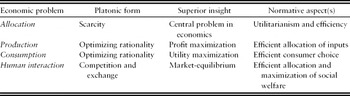
It is worth noting that this idealization in explanatory terms is accompanied by a parallel idealization in normative terms, implying that behaviour according to neoclassical postulates will deliver beneficial results. Table 1 provides a short overview on some of these residuals of apriorism in economic thinking, the superior insights they are supposed to carry and the normative interpretations accompanying these insights.
Platonic forms in neoclassical economics

The ongoing importance of these assumptions is especially evident in those areas of economic research, where empirical results are challenging standard views on economic behaviour like experimental economics or behavioural finance. Some authors even hold that the mere existence of these fields proves the increasing irrelevance of early 20th century concepts such as utility maximization (Colander, Reference Colander2000; Colander et al., Reference Colander, Holt and Rosser2004). However, from the perspective of Model-Platonism, these research-areas are still framed by the ‘superior insights’ associated with early 20th century concepts, essentially because almost all of their results are framed in terms of rational individuals, who engage in optimizing behaviour and, thereby, attain equilibrium. For instance, the attitude to explain cooperation or fair behaviour in experiments by assuming an ‘inequality aversion’ integrated in (a fraction of) the subjects’ preferences is strictly in accordance with the assumption of rational individuals, a feature which the authors are keen to report.
‘No other deviations from the standard economic approach are necessary to account for the evidence. In particular we do not relax the rationality assumption’. (Fehr and Schmidt, Reference Fehr and Schmidt1999, 819)
Fehr and Schmidt have gone to great lengths to evade a sociological or institutional explanation of the observed behaviour and to synthesize the existing evidence with the neoclassical standard model. However, their strategy to vary the preference structure of individuals renders, if applied successively, the neoclassical theory of economic behaviour completely tautological. The hypothesis of rational action itself becomes indeterminate (H*) if simply anything suitable to explain the evidence at hand can be integrated into the relevant preference-structures. In its most extreme form of economic imperialism, this strategy leads to the extraordinary claim that all forms of human behaviour can be explained by a most flexible treatment of preference structures (Lazear, Reference Lazear2000).
Aside this observation, the tendency to explain and interpret empirical evidence with strict reference to the standard model of economic behaviour by assuming appropriate preference structures pervades fields like experimental economics or behavioural finance and allows for flexible treatment of any encountered anomalies. In this context, behavioural finance is interpreted as a collection of exceptions to the standard theory, which thereby preserves its legitimization as a representation of typical and optimal behaviour on financial markets. Neoclassical theory may, thus, incorporate results from behavioural finance as special cases ‘without experiencing any fundamental changes in its own methodology’ (Frankfurter and McGoun, Reference Frankfurter and McGoun2002, 376). Experimental economics, on the other hand, goes even one step further and often, as in the case of Fehr and Schmidt (Reference Fehr and Schmidt1999), follows the basic routine of economic imperialism by consciously invoking specific variants of preference structures accommodating for the observed behaviour.
‘Experimental papers in economics usually describe the data of an experiment and then propose a theory that fits the data if various parameters are suitably chosen’. (Binmore and Shaked, Reference Binmore and Shaked2010, 89)
In the latter quote, ‘theory’ can practically be equated with the neoclassical theory of behaviour, while ‘parameters’ stands for ‘preferences’. Another indicator for the continuing relevance of traditional neoclassical assumptions in this newly arrived fields, is the tendency to design experimental situations with much courtesy to neoclassical theory. One way to do so is to restrict the subjects’ decision space strictly according to theoretical conditions.
‘The well designed laboratory experiment gives a theory its “best-shot” at making accurate predictions. The assumptions of the theory are designed into the lab experiment’. (Croson and Gächter, Reference Croson and Gächter2010, 126)
The development of dictator-games (where player A unilaterally divides an amount of money between himself and another player B) out of ultimatum-games (where player B has veto-power) in experimental economics clearly followed this ‘best-shot’-logic: while the results in ultimatum-games strictly contradicted neoclassical behavioural assumptions, the more unequal dictator-setting proved to be less severe for economic theory. From a critical rationalist viewpoint, such a strategy seems dubious, since theories should be tested as severely as possible instead of being treated kindly by minimizing the risk exposure for a given theoretical statement. However, in case this strategy fails (even a ‘best-shot’ might miss the target), the approach behind Vernon Smith's experiments on market behaviour serves as an alternative to the ‘best-shot’-logic. Smith was well aware that ensuring all relevant theoretical conditions in market experiments did often not bring forth the expected results. So, he resorted to a very specific form of market interaction – the double oral auction – to gain results comparable to the predictions of standard economic theory, even if the institutional setting of double oral auctions differs rather strongly from the standard assumptions on perfect competition. In this case, experimental conditions were not designed strictly according to theoretical presumptions, but rather to induce appropriate behaviour among the relevant test subjects.
‘[T]he methodology of experimental economics was developed mainly in the context of market experiments and was aimed at the active inducement, rather than passive observation of preferences’. (Guala, Reference Guala2006, 262)
Given these observations, it is rather unsurprising that particularly German-speaking researchers, who were still aware of Albert's original critique, first identified the Model-Platonic tendencies prevalent in experimental economics.
‘Who only strives for a neoclassical explanation of laboratory results is in danger to construct a parallel word – equivalent to a Platonic realm – to reality’. (Güth and Kliemt, Reference Güth, Kliemt, Held, Kubon-Gilke and Sturn2003, 315, Translation by the author)
So, while the mere emergence of research areas like experimental economics is sometimes deemed a clear sign for the advent of a new era (Colander et al., Reference Colander, Holt and Rosser2004), a closer look at these fields allows us to illustrate the enduring relevance of the Model-Platonism-topos and, thereby, shows the pervasion of these fields with a traditional neoclassical style of thought.
5. Extending Model-Platonism: two suggestions
This section introduces two novel views on immunization-strategies in neoclassical economics. They are insofar connected to Albert's original critique as they refer to the absence of a thorough differentiation between explanatory (H) and auxiliary hypotheses (AH) among the assumptions of economic models. Additionally, resting on slightly more general observations and arguments, they contain some of Albert's more specific insights as special cases
Before going into the details, let's first illustrate how these two arguments connect to the missing distinction addressed here. Given that there exist no definite rules to transform
 \begin{linenomath}\begin{equation*}
\frac{{{\rm A}_{\rm 1} {\rm ,}\,{\rm A}_{\rm 2} {\rm \ldots A}_{{\rm r} + {\rm s}} }}{{\rm T}}\end{equation*}\end{linenomath}
 \begin{linenomath}\begin{equation*}
\frac{{{\rm H}_1 \ldots {\rm H}_{\rm r} }}{{({\rm AH}_{\rm 1} \ldots {\rm AH}_{\rm s} ) \to {\rm T}}}\end{equation*}\end{linenomath}
Another feature of theories coming into play here is that auxiliary hypotheses are normally varied with respect to the domain of application. Applying Newton's laws on Mars requires using different auxiliary hypotheses compared to applying the very same laws on earth. In neoclassical economic thought, however, even this distinction does not fully apply, since any assumption, be it of explanatory or auxiliary character, may be subject to some modification. This observation serves as a foundation for the second argument advanced in this section called axiomatic variation.
Oscillating informational content
The introductory account presented in Section 2 defined economic models as a set of assumptions Ar +s, from which a theorem T is derived. Thereby r denotes the number of explanatory and s the number of auxiliary hypotheses to be assigned by the individual researcher. For the derivation of the relevant theorem T, this implies that the auxiliary hypotheses enter the if-clause of this theorem and, thereby, specify its domain of application. By interpreting additional assumptions as auxiliary hypotheses (instead of explanatory statements), that is by reducing r and increasing s, one narrows the scope of application of a model's theorem and, thereby, also its informational content.
This strategy resembles a form of immunization against criticism already discussed by Karl Popper in his Logic of Scientific Discovery (2010[1959]). There, Popper criticizes the strategy of introducing additional ad-hoc assumptions in order to prevent a theory from being empirically falsified by narrowing its scope. Given that there exist no shared and explicit conventions on how to differentiate between explanatory and auxiliary hypotheses, economic models may retreat from a confrontation with conflicting empirical evidence by a very similar manoeuvre. Instead of introducing a new auxiliary hypotheses ad-hoc (which is, basically, what Popper had in mind), one may declare that additional assumptions are to be seen as auxiliary (and not explanatory) hypotheses and, thus, restrict the domain of application of an economic model in a way that eschews a direct confrontation with empirical results. Hence, the invocation of additional assumptions is replaced by reassigning hypotheses from explanatory to auxiliary.
Driven to its one extreme – where all of a model's assumptions are to be interpreted as auxiliary hypotheses (i.e. r = 0) – this procedure ends up with a pure thought-experiment that by definition, only applies if it is true, and is equivalent to the fourth interpretation of economic models discussed in Section 3. The other extreme that comes to mind – interpreting all assumptions as explanatory hypotheses (i.e. s = 0) – amounts to a completely unrestricted theory of everything, or, at least, an all-encompassing theory of human behaviour. Such an interpretation of neoclassical models and specifically its basic ‘Platonic’ core assumptions, which allegedly refer to general regularities of human behaviour and interaction, is exemplified by the proponents of economic imperialism. Authors in this tradition interpret ‘the combined assumptions of maximizing behaviour, market equilibrium, and stable preferences’ as a very general approach, which is ‘applicable to all human behaviour’ (Becker, Reference Becker1990[1976], 5 and 8). In such arguments, the universality of the economic approach is explicitly justified by referring to the Platonic notions inherent in neoclassical thought (see also Table 1).
‘Economics is not only a social science, it is a genuine science. Economists use the construct of rational individuals who engage in maximizing behaviour. Economic models adhere strictly to the importance of equilibrium as part of any theory. Finally, a focus on efficiency leads economists to ask questions that other social sciences ignore. These ingredients have allowed economics to invade intellectual territory that was previously deemed to be outside the discipline's realm’. (Lazear, Reference Lazear2000, 99)
Of course, there are also interpretations of economic models, which occupy the middle ground between those extreme interpretations. However, analysing these extremes is quite illuminating. Taking into account the subtle nature of the underlying differentiation of assumptions, whose subtlety is exponentially increased by the structural lack of transparency with regard to the question how to assign one's assumptions to explanatory and auxiliary hypotheses, it is unsurprising to see interpretations according to both extremes within the whole of economic literature. For neoclassical theory as an intellectual construct such a state implies an enormously advantageous situation. Main parts of neoclassical theory may claim unbound relevance for the sphere of human action in general, while reverting to a thought-experimental interpretation of economic models, which is invincible to any empirical argument and allows for rejecting the relevance of any particular empirical result. Rhetorically, the first extreme offers an incredibly powerful offensive device (by claiming all-encompassing relevance), while the second may be considered as an opportunity to excel in defensive strategies (by ‘retreating’, i.e. systematically reducing a model's intended domain of application).
This is indeed an impressive feature of neoclassical economics, which partly explains why so many great minds are so impressed with neoclassical theory as an abstract construct, and at the same time, so pessimistic with regard to its empirical relevance (e.g. Rubinstein, Reference Rubinstein2006). Moreover, this observation indeed connects to Albert's original argument, who laments on the vague and slippery definitions with regard to economic models’ intended domain of application, which is eventually caused by a successive variation of the epistemological functions assigned to different assumptions.
Axiomatic variation
Another feature of the standard treatment of economic models is that their assumptions might be modified and changed. Generally, there is no reason to reject such a treatment, but, on the contrary, this procedure is quite common in many fields of scientific research. Usually, scientists vary the utilized auxiliary hypotheses in order to apply a specific set of general laws to a new domain.
In neoclassical economics, however, any assumption may be changed even if it has attained the status of an explanatory assumption in a given context. This is a much more controversial procedure, which is fairly uncommon in other fields of inquiry. Especially, for the domain of the natural sciences, where the underlying laws are often assumed to be ‘eternal’ in human terms, this is quite extraordinary. For the social sciences, we find that different regularities and mechanisms may hold in different times or may apply to varying geographical areas. However, from an epistemological point of view, different explanatory statements are either competing explanations or they apply to different spheres in the continuum of time and space and, thus, can be separated with respect to their domains of application by the introduction of suitable auxiliary hypotheses. In sum, the practice of neoclassical economics to freely modify even those assumptions that are considered to be explanatory statements seems quite unique within empirical science. In the words of Hausman, who speaks of core neoclassical assumptions as (economic) ‘laws’:
‘First, not all microeconomic models employ all of these laws, even when they are relevant to the explanatory tasks at hand. Not only are there models [. . .] that leave out laws that have no implications for the case at hand, but there are also microeconomic models that incorporate contraries to some of the fundamental laws of microeconomic theory. For there are models with satiation, models with increasing or decreasing returns to scale, models without profit maximization, even models without completeness and models without transitivity. It is as if physicists sometimes supposed that force is proportional to acceleration and in other models took force to be proportional to acceleration squared’. (Hausman, Reference Hausman1992, 52, Italics by the author of this paper)
While in Platonic terms the attitude of constantly modifying one's central explanatory statements – the principle of axiomatic variation – might resemble the search for the true Platonic form of human rationality or market equilibrium, the key difference between a model-platonic interpretation and Hausman's original account is the emphasis on possible implications of theoretical routines for the immunization against critique. From this perspective, one might interpret the routine of axiomatic variation as a means for such an immunization, since for every assumption A, which might be criticized for its empirical legitimacy, there either exists an alternative assumption non-A, which may account for conflicting evidence, or it can be created. The same argument holds for the respective theorems, where for every possible theorem T we can imagine an alternative theorem T’ based on a modified assumption within the same framework delivering converse results to accommodate for conflicting evidence.
In this context, the theory of asymmetric information provides an informative case. It supposes that market participants have varying degrees of information, and thereby provides an alternative assumption non-A to the contested hypothesis of fully informed individuals. By adding some assumptions on the distribution of information among market participants, where, in the standard case, consumers are assumed to have less knowledge than producers, this modification can be reapplied to the analysis of markets as a complement to the theory of perfect competition. So, if markets in a given case seem to work well and deliver stable outcomes, the model of perfect competition, based on fully informed individuals, serves as a reference point for corroborating ‘neoclassical theory’. But if markets fail to work well, it is supposed to be a case of asymmetric information – and, thus, just another instance of corroboration for neoclassical theory. Of course, a theory, which is able to explain a result E as well as the corresponding result non-E surely seems powerful. By offering alternative explanations (non-E) within the same framework, the practice of axiomatic variation makes it easier to ignore possible alternative explanations of market behaviour (as in Hayek, Reference Hayek1945; Polanyi, Reference Polanyi1957[1944] or Galbraith, Reference Galbraith1967; see also: Swedberg, Reference Swedberg, Smelser and Swedberg2005).
Surely, there is no definite reason not to subsume the theory of perfect competition and the hypothesis of asymmetric information under the common theoretical umbrella of neoclassical economics. For the theory to remain coherent, such an integration would require interpreting these two arguments either as competing hypotheses or as complementary concepts with significantly different domains of applications, which are specified by corresponding sets of appropriate auxiliary hypotheses. In economics, neither of these options seems to be the case, since the two assumptions are basically implemented as alternative explanations, without considering these restrictions, i.e. without specifying distinct domains of application or employing these two axioms as competing assumptions. Joseph Stiglitz seems to be an exception when defending the assumption of asymmetric information as an essential property of markets and, thus, as an explanatory hypothesis, which is in conflict with traditional neoclassical theory (Stiglitz, Reference Stiglitz2000). In his suggestions on the reform of economics in face of the current crisis, however, Stiglitz advocates for the converse and explicitly proposes a variant of axiomatic variation as a suitable research strategy (Stiglitz, Reference Stiglitz2010; see also: Lawson, Reference Lawson2012).
Neoclassical economics is manifoldly rich in examples for axiomatic variation. The ever-changing definitions of preference structures to adapt the economic approach for an ever-growing number of topics is considered as everyone's favourite example (see again: Becker, Reference Becker1990[1976]; Blinder, Reference Blinder1974; Lazear, Reference Lazear2000). But not only preference sets but also the nature of rationality as such is fluctuating constantly across models. An example is provided by the neoclassical literature on asset bubbles. In a well-known paper, Hart and Kreps (Reference Hart and Kreps1986) tried to redefine the notion of rational behaviour with regard to financial markets from ‘buying when prices are low’ and ‘selling when prices are high’ (basically a variation of the law of demand) to ‘buying when prices rise and selling when they fall’. While the former conception is considered as ‘incorrect’ by the authors (Hart and Kreps, Reference Hart and Kreps1986, 927), the latter is invoked as a hallmark of rationality. Although this change can already be considered to be quite a leap, the tendency to redefine rationality with respect to investment decisions goes even further: In De Long et al. (Reference De Long, Shleifer, Summers and Waldmann1990), who contributed ‘perhaps the most influential theoretical model of market inefficiency based on [. . .] destabilizing rational speculation’ (Tokic, Reference Tokic2012), the very same behaviour Hart and Kreps (Reference Hart and Kreps1986) suggest as an appropriate characterization of a rational investor is considered as rather stupid ‘herd trading’. ‘Rationality’ in De Long et al. (Reference De Long, Shleifer, Summers and Waldmann1990) is, in turn, redefined twice, where the rational arbitrageur has superior knowledge by knowing the real value of assets while the rational speculator is able to trick the herd by inducing and exploiting speculative bubbles. A close look at this kind of literature illustrates that, while the concept of rationality as a main reference point is firmly anchored in economic theory, even the very basic definition of this concept is in constant flux.
Another interesting aspect of axiomatic variation is that it allows for a partial incorporation of assumptions and results from competing theories. A point in case is provided by the development of Keynesian theory, where some of Keynes’ insights have been integrated into neoclassical theory via several steps (e.g. Hicks, Reference Hicks1937; Modigliani, Reference Modigliani1944), which served as a reference point to argue that neoclassical economics contains Keynesian arguments as special cases. A key aim of more neoclassically inspired macroeconomists was to reproduce the Keynesian result of involuntary unemployment by introducing frictions on labour markets. While Keynes established a connection between employment and effective demand to reach the same conclusion, neoclassical economists replaced some assumption A in their model (‘all markets work frictionless’) with another assumption non-A (‘all markets work frictionless, except for the labour market’) to reach the desired result T′ (involuntary unemployment) without adopting a Keynesian viewpoint. Similar things could be said about the reception of other famous dissidents, like in Leibenstein's treatment (Leibenstein, Reference Leibenstein1950) of Veblen's ideas (Veblen, Reference Veblen1994[1899]) or the reception of Schumpeter's concept of creative destruction in neoclassical growth theory (Dobusch und Kapeller, Reference Dobusch and Kapeller2009).
In sum, axiomatic variation serves as a powerful tool for immunization against critique. Although not all of the assumptions in economics are flexible to the same degree, no assumption that comes to mind is completely immune to the procedure of axiomatic variation. Being related to the distinction between explanatory and auxiliary hypotheses, axiomatic variation establishes a connection to Albert's original critique and helps to clarify his allegations against the fuzzy epistemological status of neoclassical assumptions and the vague definition of economic models’ intended domain of application.
6. Conclusions
This paper had three aims: First, to illuminate, explain and systematize Albert's original critique of Model-Platonism and, second, to give some examples for the enduring relevance of these concepts in the spirit of Arnold and Maier-Rigaud (Reference Arnold and Maier-Rigaud2012). The third was to provide the concept with some prospects for extension and reorientation.
While the first two of these aims are surely more important than the latter, the idea of extending the argument against Model-Platonism in economics might, at the very least, provide some important complements to Albert's original argument. The scope of the arguments presented is not restricted to a purely critical rationalist viewpoint. For instance, the notion of axiomatic variation could also be understood in a Lakatosian framework (Lakatos, Reference Lakatos, Lakatos and Musgrave1978[1970]), where all relevant assumptions are flexible and, thus, located in the protective belt of neoclassical economics. Similarly, the critical stance on neoclassical modelling as biased towards analytical formalism inherent in the critique of Model-Platonism, bears a certain affinity to critical-realist perspective on economic models (Lawson, Reference Lawson2003).
Furthermore, the rather theoretical perspective employed in this article should be supplemented by taking Albert's discursive dimension into account, which offers a complementary view on science as a social field. Such a perspective resembles a Kuhnian approach to science (Kuhn, Reference Kuhn1996[1962]), which has often been interpreted as being in strict opposition to critical rationalism. However, such an interpretation is at least partially misleading as has only recently been demonstrated in the course of developing a pluralist approach to economic thought, where Kuhnian as well as critical rationalist perspectives are aligned rather harmoniously (e.g. Dobusch and Kapeller, Reference Dobusch and Kapeller2012). A complementary approach to immunization strategies relying on discursive mechanisms should thereby not only address internal dynamics of economics as a social field (e.g. Dobusch and Kapeller, Reference Dobusch and Kapeller2009; Leijonhufvud, Reference Leijonhufvud1973), but also external, often political factors influencing economics as a powerful device for framing and accomplishing political aims (e.g. Amadae, Reference Amadae2003; Backhouse, Reference Backhouse2005).
Central to this paper is the question of how to interpret economic models and their assumptions. The main missing element, from which much of the critical observations discussed in this paper follow, is the availability of a thorough differentiation of explanatory and auxiliary hypotheses in neoclassical economic theory. If we could obtain a definite statement on this issue, the explanatory capability of basic neoclassical assumptions would not remain systematically clouded by immunization strategies for the next 50 years as well.
Acknowledgement
The author is indebted to Leonhard Dobusch, Volker Gadenne and three anonymous reviewers for providing valuable comments and suggestions.