Introduction
Head and neck squamous cell carcinoma (SCC) is one of the most prevalent cancers worldwide. In 2018, there were 450 000 deaths from head and neck SCC and a further 890 000 newly diagnosed individuals across the globe.Reference Johnson, Burtness, Leemans, Lui, Bauman and Grandis1 In the UK alone, there are over 12 000 new cases per year, and it is the eighth most common cancer overall, rising to fourth most common within the male demographic.2 There are over 4000 deaths from head and neck SCC in the UK yearly, with death rates increasing by 17 per cent over the last 10 years.2 Cases are often correlated with excess alcohol and tobacco use. More recently, association with human papilloma virus 16/18 or Epstein-Barr virus has also been recognised.Reference Johnson, Burtness, Leemans, Lui, Bauman and Grandis1 Rates of head and neck SCC continue to rise worldwide and approximately by 30 per cent since 1990 in the UK.2
With over 60 per cent of head and neck cancers presenting with advanced disease,Reference Schenker, Arnold, Baumen, Heron and Johnson3 palliation is often the focus of management. Relieving serious health-related suffering, be it physical, psychological, social or spiritual, is the core principle of palliative care and is paramount in maintaining dignity and comfort and improving quality of life.4 Patients with head and neck cancer often require palliative care input, whether their disease is curable or not, because of the extensive morbidity associated with both the consequences of the disease process and the treatment interventions.Reference Cocks, Ah-See, Capel and Taylor5
Palliation of head and neck cancer patients is a complex area requiring a multi-disciplinary team approach. The control of distressing advanced symptoms of head and neck SCC, including pain, bleeding, anxiety, agitation, dyspnoea and dysphagia alongside management of nutritional and hydration needs can present extreme challenges to the otolaryngology team.Reference Schenker, Arnold, Baumen, Heron and Johnson3 Furthermore, an awareness of the framework and timely consideration of appropriate levels of medical intervention, including ‘do not attempt cardiopulmonary resuscitation’ orders is imperative.
Despite the frequent involvement of otolaryngologists in the management of head and neck cancer patients, little emphasis is placed upon palliative care within the higher surgical training curriculum, leading to a distinct lack of perceived confidence in the management of such patients.
According to the Intercollegiate Surgical Curriculum Programme for Otolaryngology (August 2021),Reference Davis, Spraggs, Murray and Bussey6 clinicians are expected to develop the ability to manage the dying patient appropriately, in conjunction with the palliative care team. Trainees are expected to have the palliative care knowledge to be able to care for a terminally ill patient and appropriately use analgesia, antiemetics and laxatives.Reference Davis, Spraggs, Murray and Bussey6 Yet despite such expectations, the majority of knowledge is likely accrued through self-directed learning and direct exposure, which can be variable based on unit expertise and geographic location.
Furthermore, the considerable disruption to oncology servicesReference Roberts7 caused by the coronavirus disease (Covid-19) pandemic is expected to significantly intensify demands on palliative care services. Delays in cancer detection and expected significant backlogs will inevitably lead to more advanced disease at presentation.Reference Maringe, Spicer, Morris, Purushotham, Nolte and Sullivan8 It is thus imperative that otolaryngologists possess the knowledge and confidence to adequately assess and manage non-complex palliative care needs and terminal oncological events, such as major haemorrhage.
This study aimed to evaluate knowledge, decision-making and perceived confidence surrounding the palliative management of head and neck cancer patients among middle-grade and consultant otolaryngologists within the UK.
Materials and methods
A national 14-point confidential online survey was distributed among middle-grade and consultant otolaryngologists over a 5-week capture period. Dissemination was via social media platforms as well as central circulation through internal mailing lists and deanery training programme directors.
The survey included eight knowledge and scenario-based multiple-choice questions, which were developed collaboratively by a group of ENT surgeons and five palliative medicine consultants. Scenario formulation was based on a suitable range of real-life palliative head and neck patient encounters. Answers were ratified using a modified Delphi method to obtain global consensus. An adequate baseline knowledge and understanding of palliative head and neck cancer management was required to answer correctly, with a maximal attainable score of 10.
Further, respondent demographic data, such as training grade, subspecialty and deanery, were collated in addition to participants’ exposure to formal palliative training. Perceived confidence was assessed using a 5-point Likert scale (1 = strongly agree, 5 = strongly disagree), with further questioning on the adequacy of education to date and scope for further integration within the otolaryngology curriculum.
Results
Respondent demographic and perceived confidence
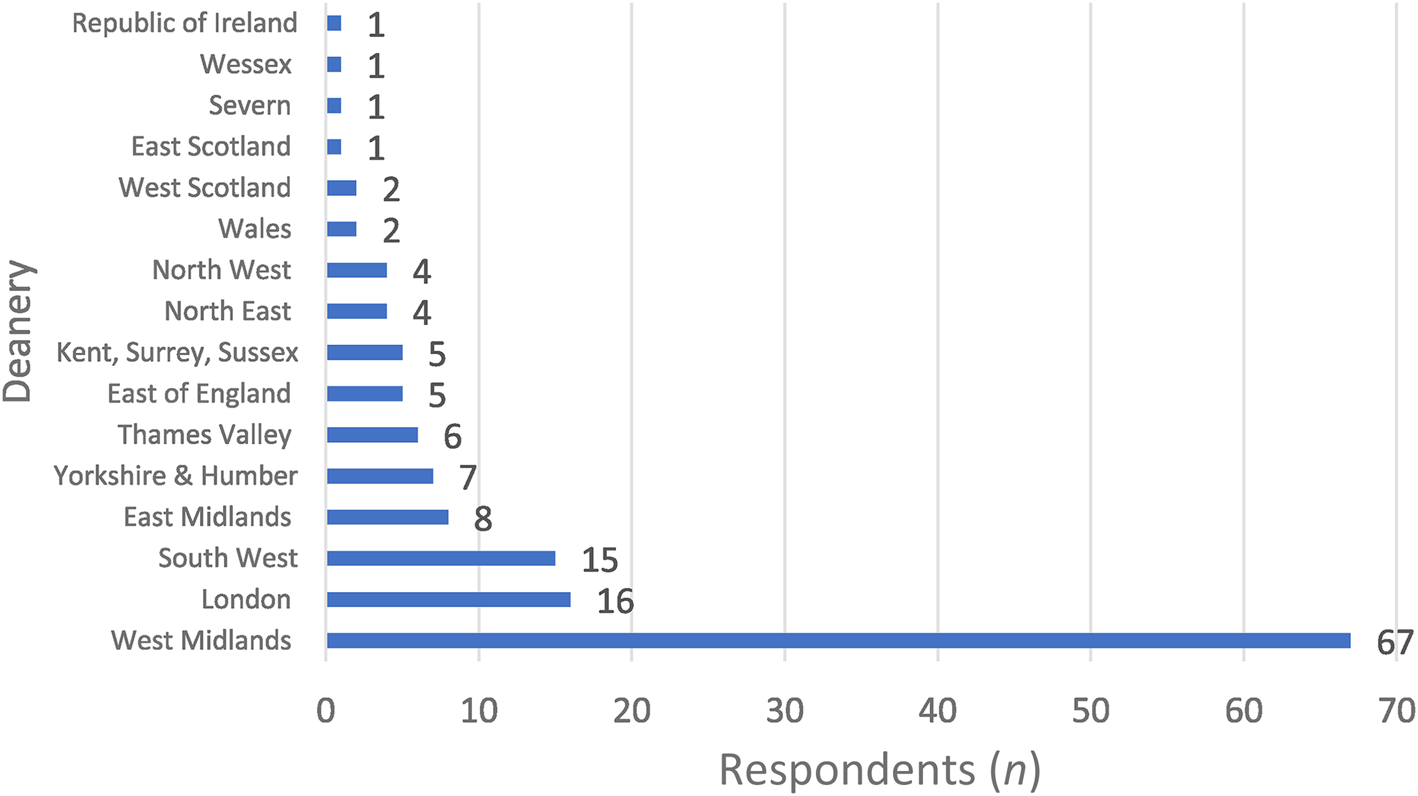
In total, 145 responses were collated from middle-grade (n = 88, 60.7 per cent) and consultant (n = 57, 39.3 per cent) otolaryngologists across the UK. The majority of responses were received from the West Midlands (n = 67, 46.2 per cent), London (n = 16, 11.0 per cent) and the South West (n = 15, 10.3 per cent) deaneries (Figure 1). Only three respondents (2.1 per cent) indicated that they had undertaken a palliative care rotation during their postgraduate training. Response to the statement ‘I am confident in the palliative management of head and neck cancer’ was as follows: strongly agree, n = 2 (1.4 per cent); agree, n = 30 (20.7 per cent); neutral, n = 58 (40 per cent); disagree, n = 37 (25.5 per cent); and strongly disagree, n = 18 (12.4 per cent).
Total number of respondents per UK deanery.

Mean score of knowledge-based questions
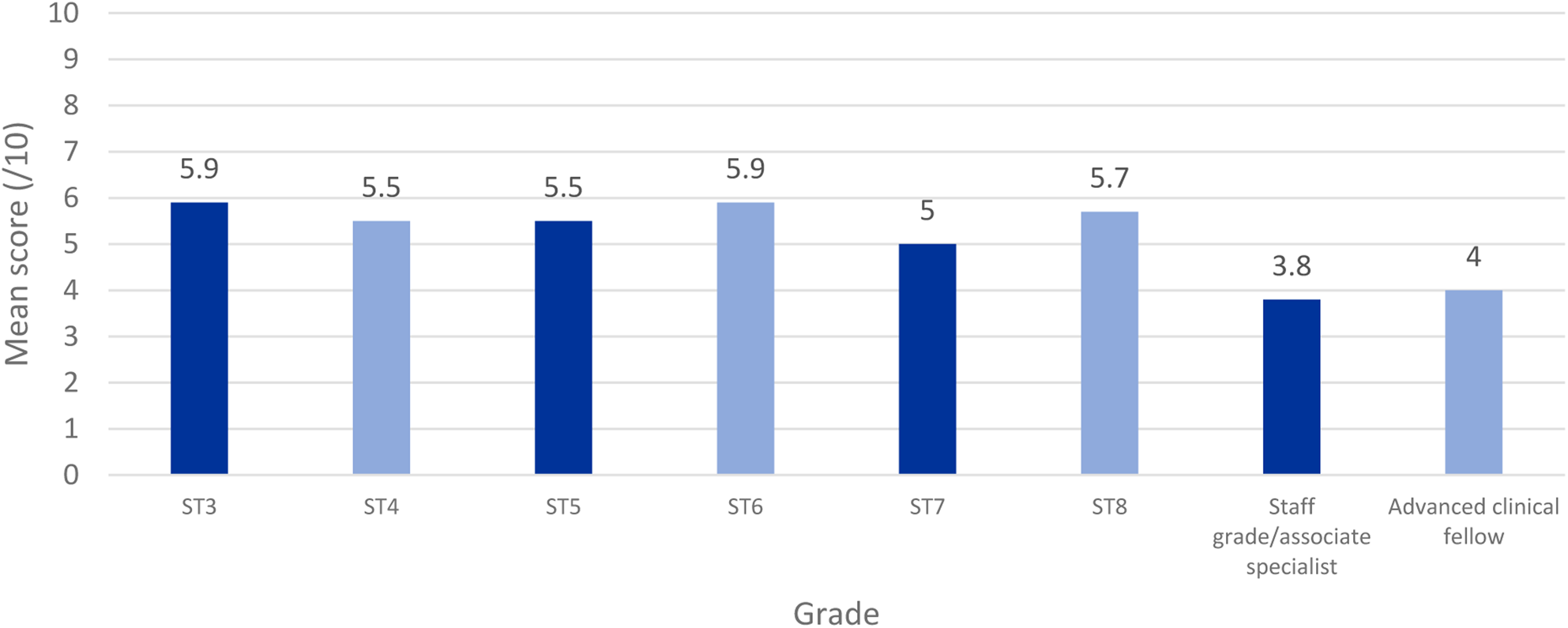
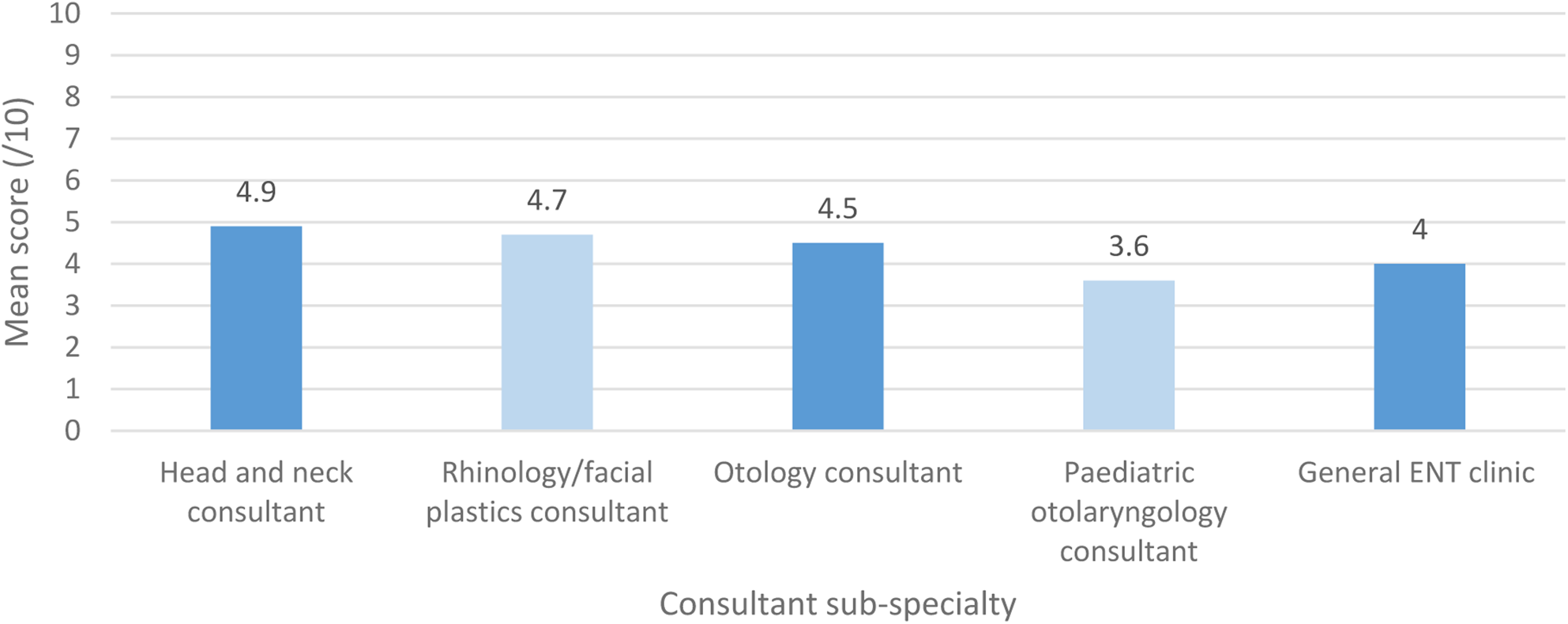
The mean overall knowledge score attained was 5 of 10. The mean scores among middle grades and consultants were 5.2 of 10 and 4.3 of 10, respectively (Figure 2 and 3).
Mean knowledge score (out of 10) by grade amongst middle-grade otolaryngologists. ST = specialty trainee year

Mean knowledge score (out of 10) by sub-specialty among otolaryngology consultants.

Knowledge-based question breakdown
On the question relating to end-of-life anticipatory medication prescribing (Figure 4), 55 (37.9 per cent) respondents correctly selected subcutaneous boluses, which was option (b). Option (c) was selected by 46 (31.7 per cent), option (d) by 18 (12.4 per cent), option (a) by 7 (4.7 per cent) and 19 (13.1 per cent) were uncertain.
Multiple choice question 1 regarding a human immunodeficiency virus (HIV) positive patient with metastatic squamous cell carcinoma (SCC) of the oropharynx.

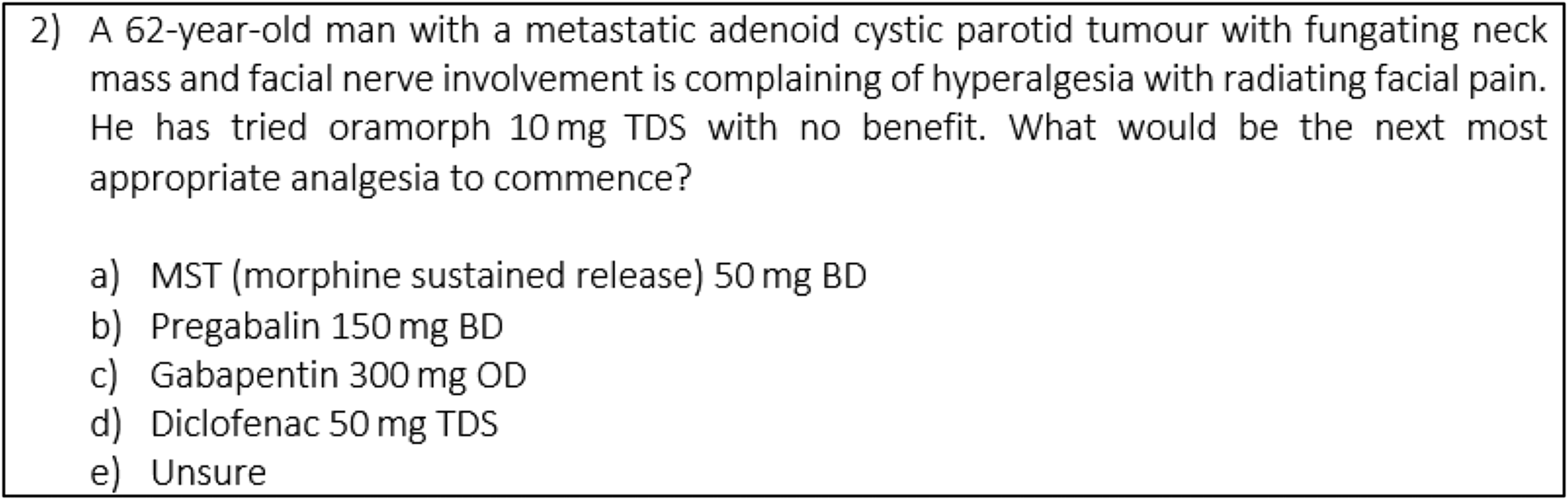
Regarding first line treatment of neuropathic pain (Figure 5), 43 (29.7 per cent) respondents correctly opted for gabapentin, which was option (c). Morphine sustained release, pregabalin and diclofenac were selected by 26 (17.9 per cent), 59 (40.7 per cent) and 1 (0.7 per cent), respectively, and 16 (11 per cent) were uncertain.
Multiple choice question 2 regarding a patient with a metastatic adenoid cystic tumour. TDS = three times a day; BD = twice daily; OD = once daily

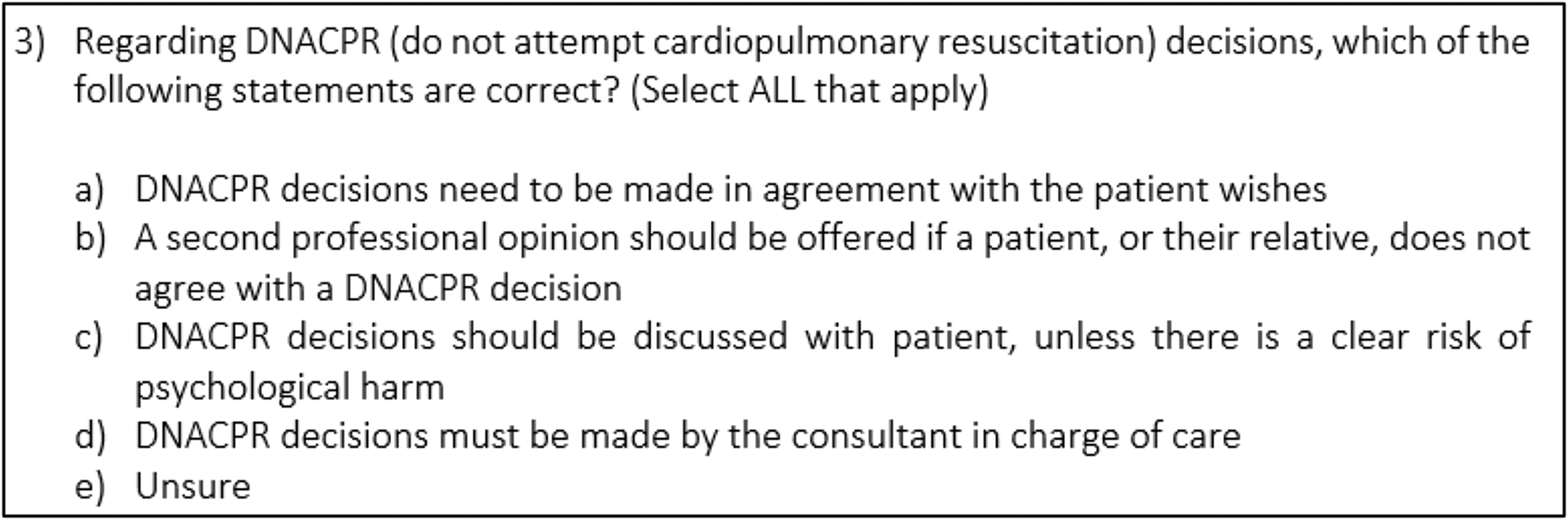
On do not attempt cardiopulmonary resuscitation decision-making (Figure 6), correct options (b) and (c) were selected by 114 (78.6 per cent) and 104 (71.7 per cent), respectively. Options (a) and (d) were chosen by 69 (47.6 per cent) and 34 (23.4 per cent), respectively, with 4 (2.7 per cent) indicating uncertainty.
Multiple choice question 3 on do not attempt cardiopulmonary resuscitation (DNACPR) decisions.

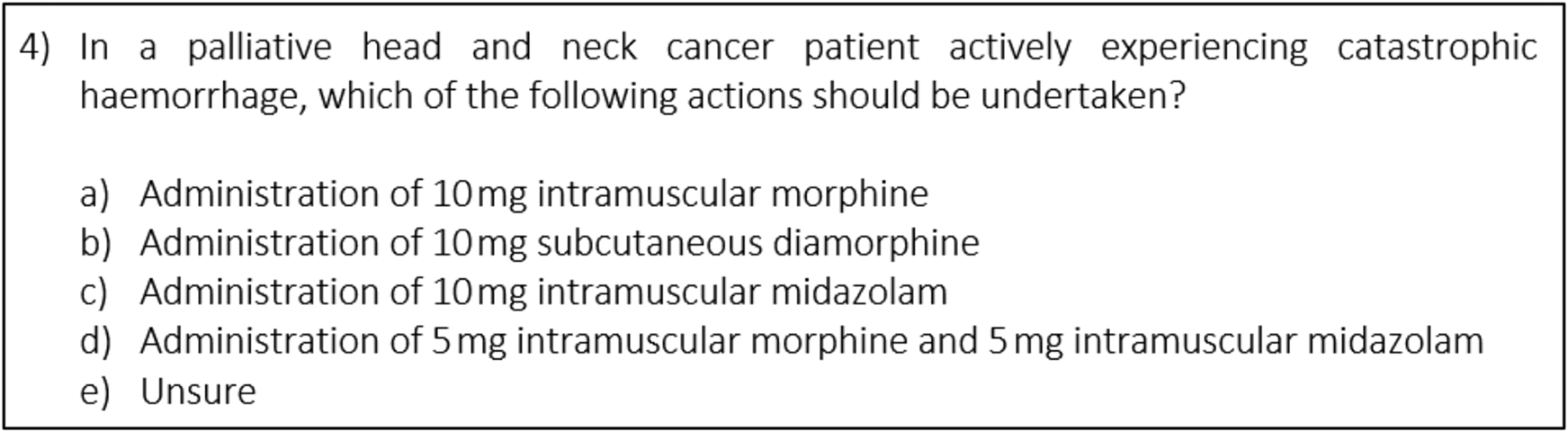
With regard to managing catastrophic bleeding in a palliative patient (Figure 7), 41 (28.3 per cent) selected the correct option of 10 milligrams of intramuscular midazolam, which was option (c). Incorrect options (a), (b) and (d) were opted for by 5 (3.4 per cent), 31 (21.4 per cent) and 53 (36.6 per cent) respondents, respectively, with 15 (10.3 per cent) who were uncertain.
Multiple choice question 4 regarding a palliative head and neck regarding catastrophic haemorrhage.

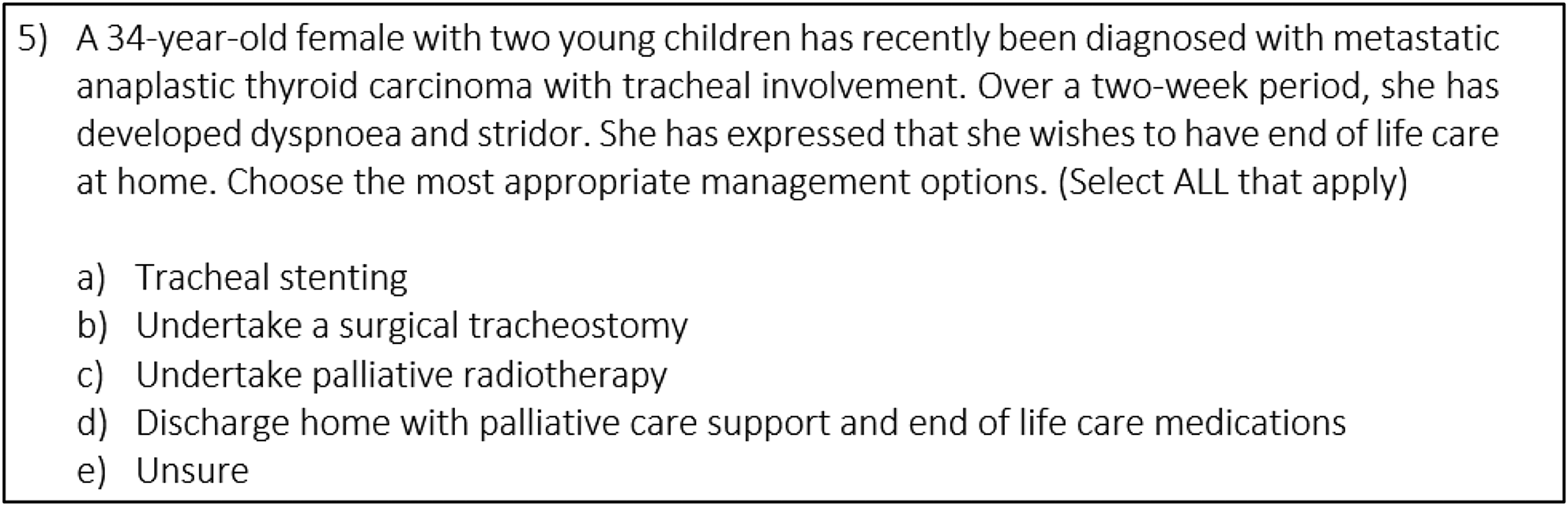
In the case of aggressive and rapidly progressive anaplastic thyroid cancer (Figure 8), the majority of respondents correctly opted for option (d); however, far fewer respondents also correctly selected tracheal stenting (a) for symptomatic relief. Surgical tracheostomy and palliative radiotherapy were inappropriately selected by 12 (8.3 per cent) and 34 (23.4 per cent) respondents, respectively. A small number of respondents (n = 10, 6.9 per cent) indicated they were unsure.
Multiple choice question 5 regarding a patient with metastatic anaplastic thyroid carcinoma with tracheal involvement.

In a challenging scenario involving significant blood loss secondary to oropharyngeal malignancy (Figure 9), only 35 (24.1 per cent) opted for the most appropriate management option (b). The majority (n = 74, 51 per cent) selected option (d), omitting blood transfusions from their management strategy. Small numbers chose options (a) and (c) involving embolisation (n = 11, 7.6 per cent and n = 17, 11.7 per cent, respectively). Only 8 (5.5 per cent) selected uncertainty.
Multiple choice question 6 regarding a patient with recurrence of T4bN3M0 oropharyngeal malignancy. A&E = accident and emergency; DNACPR = do not attempt cardiopulmonary resuscitation

In a case relating to lasting power of attorney (Figure 10), the most appropriate option would be for admission with best supportive care (b) as per the daughter's wishes, selected by 60 respondents (41.4 per cent). A similar number (n = 62, 42.8 per cent) opted for option (a), involving computerised tomography (CT) which would only be merited if invasive intervention was planned contrary to the lasting power of attorney decision. Very few selected options (c) and (d) involving surgical tracheostomy (n = 5, 3.4 per cent and n = 3, 2.1 per cent, respectively), with 15 (10.3 per cent) uncertain.
Multiple choice question 7 regarding a patient with dementia, chronic obstructive pulmonary disease (COPD) and Parkinson's disease. CT = computed tomography

The scenario shown in Figure 11 was the least divisive with 117 (80.7 per cent) respondents correctly selecting option (c) involving ceiling of care based on collaborative decision-making with the patient. Small numbers opted for alternative strategies: (a), n = 7 (4.8 per cent); (b), n = 8 (5.5 per cent); (d), n = 3 (2.1 per cent); and 10 (6.9 per cent) uncertain. See Appendices 1–8 for further information.
Multiple choice question 8 regarding a patient with T4aN2bM0 right base of tongue squamous cell carcinoma (SCC). ITU = intensive care unit

Further training
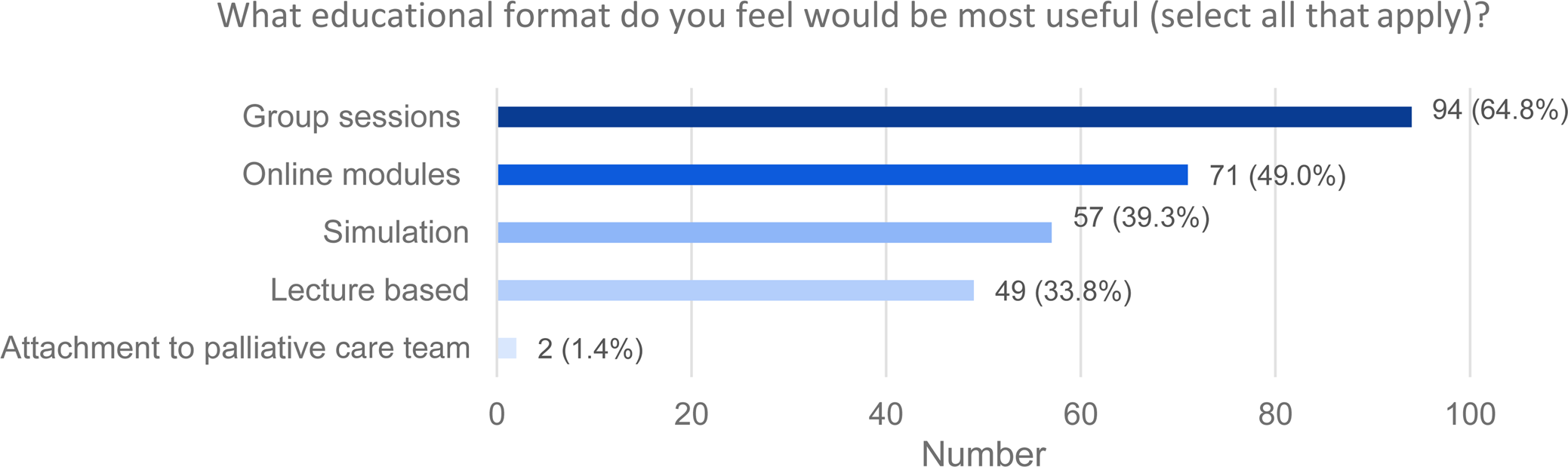
The considerable majority of respondents, 129 (88.9 per cent), agreed that further palliative care training should be incorporated into the current otolaryngology curriculum. Only four (2.8 per cent) respondents disagreed. Regarding educational modalities by which further palliative care education could be delivered, 94 (64.8 per cent) selected group sessions, 71 (49.0 per cent) selected online modules, 57 (39.3 per cent) chose simulation, 49 (33.8 per cent) opted for lecture-based teaching and 2 (1.4 per cent) suggested a period of attachment to a palliative care team (Figure 12).
Educational modalities selected by respondents.

Discussion
At its peak, the Covid-19 pandemic led to an unprecedented disruption of healthcare services and a necessary shift in priority towards identifying and treating Covid-19 infected patients.Reference Vose9 As such, routine cancer surveillance, two-week wait referrals and cancer surgery were suspended for variable periods of time. An audit of cancer diagnoses in Italy found a reduction of 39 per cent during the initial pandemic period in contrast to the previous 2 years.Reference De Vincentiis, Carr, Mariani and Ferrara10 The true impact of cancer diagnosis delay is yet to be fully determined in the UK as normal oncological services resume. However, UK-based modelling studies, unfortunately and somewhat unsurprisingly, predict a substantial rise in avoidable cancer deaths in the foreseeable future because of delayed diagnoses,Reference Maringe, Spicer, Morris, Purushotham, Nolte and Sullivan8 with two thirds of cases initially presenting with advanced disease prior to Covid-19.Reference Schenker, Arnold, Baumen, Heron and Johnson3
Specialist input from palliative care teams is often sought by clinicians at an early stage to ensure optimal management of these patients. Management of this subset of patients is uniquely complex and challenging. By nature of anatomical location, head and neck cancer and its management may have significant adverse effects on the most basic human functions, such as breathing, eating and speaking.Reference Begbie, Douglas, Finlay and Montgomery11 Furthermore, cosmetic disruption of the head and neck, inability to verbally communicate and alternative routes of nutrition may amount to significant adverse psychological impact on both patients and their family members.Reference Simcock and Simo12 With oncological burden among all specialties expected to rise profoundly as a result of the Covid-19 pandemic, specialist services are likely to become more stretched and less readily available for routine palliative care management, resulting in an expectation that head and neck disease and incidents of major haemorrhage, including carotid blowout, may increase. Therefore, sound knowledge of anticipatory medications and catastrophic haemorrhage protocol is also fundamental.
An understanding of medical and surgical management of palliative head and neck cancer patients, as well as knowledge of complications associated with surgical and non-surgical management, are core competencies outlined in the intercollegiate otolaryngology curriculum.Reference Davis, Spraggs, Murray and Bussey6 However, our experience suggests that current coverage of palliative head and neck cancer in the specialty curriculum is relatively sparse and inconsistent, with many trainees relying on prerequisite knowledge and principles acquired from rotations during junior medical training. Our survey has shown a general lack of palliative care experience, with only 2.1 per cent having undertaken a postgraduate palliative care rotation. A lack of perceived confidence among the surveyed cohort was also demonstrated, with 55 (37.9 per cent) stating a lack of confidence, 58 (40 per cent) stating neutrality and only 32 (22.1 per cent) respondents indicating that they are confident in palliative head and neck cancer management.
Our novel survey, designed and ratified by five palliative care consultants utilising the Delphi Method, included eight multiple-choice questions based on real-life patient scenarios. They were specifically designed to test knowledge and decision-making surrounding key elements of palliative care management, including prescribing, do not attempt cardiopulmonary resuscitation considerations and end-of-life care decisions relating to invasive and non-invasive interventions.
Each of the three questions assessing prescribing knowledge around anticipatory medications were answered correctly by less than half of the surveyed cohort. Regarding prescribing of anticipatory medications on an ‘as required’ basis, 37.9 per cent (n = 55) correctly opted for subcutaneous bolus injections for symptom-control. National Institute of Health and Care Excellence (NG31)13 recommend either subcutaneous or intravenous administration; however, in the palliative head and neck cancer patient with poor nutritional status, intravenous access is likely to cause further distress, making subcutaneous injection the more appropriate option. Furthermore, in the event of a palliative head and neck cancer patient experiencing catastrophic bleeds, such as in cases of carotid blowout, the aim of therapy is to alleviate anxiety and distress.Reference Charlton, Hooke, Armstrong, Vandenberg and Hardy14 Because of its rapid onset of action and administration, midazolam is the most frequently recommended drug in cases of terminal haemorrhage.Reference Harris and Noble15 Considering preparation and administration time, intramuscular administration of 10 milligrams of midazolam was the most suitable option in our survey relating to catastrophic haemorrhage, selected by only 28.3 per cent (n = 41) of respondents.
With a 5-year survival between 19 and 59 per cent, prognosis for head and neck cancer patients is relatively poor, making do not attempt cardiopulmonary resuscitation a vital consideration. Do not attempt cardiopulmonary resuscitation decisions are made where cardiopulmonary resuscitation is clinically judged very unlikely to be effective and should always be discussed with the patient and family where possible.Reference Fritz, Slowther and Perkins16 Clinicians should be aware of the principles surrounding do not attempt cardiopulmonary resuscitation decision-making. Our survey question corresponding to do not attempt cardiopulmonary resuscitation decision-making was answered correctly by the majority, with 78.6 per cent (n = 114) acknowledging the need for a second professional opinion in cases where patients or relatives disagree with a do not attempt cardiopulmonary resuscitation decision taken and 71.1 per cent (n = 104) correctly determining that do not attempt cardiopulmonary resuscitation decisions should be discussed with patients unless there is a clear risk of causing psychological harm.Reference Fritz, Slowther and Perkins16
Questions assessing end-of-life care decision-making, clinical application and invasive versus non-invasive intervention were answered with variable accuracy. In the scenario involving a relatively young patient with anaplastic thyroid cancer, expressing the desire for end-of-life care at home, most respondents (n = 115, 79.3 per cent) acknowledged the need to provide palliative care support at home in line with the patient's wishes. However, given the short history of dyspnoea and stridor signalling impending airway compromise, far fewer respondents (n = 43, 29.7 per cent) also opted for tracheal stenting as a necessary and life-preserving intervention. Similarly, in the scenario involving an actively bleeding fungating neck wound in a patient desiring comfort-focussed care, the majority (n = 74, 51 per cent) opted for do not attempt cardiopulmonary resuscitation, ward-based care with anticipatory medications and no further blood transfusions. However, 24.1 per cent (n = 31) correctly opted to follow this same management strategy with the exception of giving blood transfusions to provide symptomatic relief.
With regards to lasting power of attorney lasting power of attorney (LPA) the attorney is designated to make health and welfare decisions in the best interests of the person they represent, when a patient has lost capacity to make decisions for themselves.17 LPA decisions may only be overridden by a medical professional where the lasting power of attorney does not act in a patient's best interests or contradicts a previous advanced directive made by the patient. In the scenario we described, the patient's daughter, who has lasting power of attorney, wishes to avoid invasive intervention. Thus, in this case of new-onset stridor in a patient with significant co-morbidities, admission to the ward with best supportive care would be the most appropriate action, selected by 41.1 per cent (n = 60) of respondents. A similar number (n = 62, 42.8 per cent) also opted for CT of the base of skull to diaphragm. However, since invasive treatment is to be avoided based on the lasting power of attorney decision, any findings on CT scan would be unlikely to alter management.
The final question is based on a patient with advanced base of tongue squamous cell carcinoma (SCC), stepped down from intensive care following chest sepsis and a recent cerebral infarct, and now intermittently bleeding from his tumour. This question provoked the least discrepancy in responses, with the majority (n = 117, 80.7 per cent) correctly opting to determine a ceiling of care based on shared decision-making with the patient.
Although palliative care decisions are by no means binary and rely on sound clinical judgement applied on a case-by-case basis, our survey has evidenced global knowledge deficits, with an overall mean score of 5.0 out of 10 amongst the 145 participating clinicians of both middle grade and consultant level. Educational interventions will certainly help otolaryngologists manage increasing austerity and pressure as the National Health Service, as a whole, attempts to tackle enormous backlogs of cancer patients in the wake of the Covid-19 pandemic.
• Palliative medicine is an integral part of multi-disciplinary team approach to head and neck cancer patients at end-of-life
• Head and neck cancer can present in advanced disease, and patients can suffer catastrophic events
• Coronavirus disease 2019 has caused delay in cancer diagnosis and management, with increased presentation of advanced disease
• This study highlights a lack of palliative care education and exposure, with a consequent lack of perceived confidence and knowledge
• A significant majority of surveyed otolaryngologists advocated for specific palliative care education in the national otolaryngology curriculum
Ballou and Brasel (2019) noted that although palliative care is a central component of surgical practice, postgraduate education and training opportunities are limited.Reference Ballou and Brasel18 At present, there is a lack of consensus in the literature regarding the optimal modality through which palliative care education can be delivered. However, simple interventions, such as palliative care based workshops, have been shown to significantly improve palliative care knowledge and attitudes in the short term.Reference Pernar, Peyre, Smink, Block and Cooper19,Reference Harden, Price, Duffy, Galunas and Rodgers20 As well as group sessions, online modules were also favoured as a potential educational modality among our surveyed cohort (n = 94, 64.8 per cent and n = 71, 49 per cent, respectively). Online palliative care training has been trialled amongst undergraduate nurses and subjectively gauged to be successful.Reference Thrane21 The authors were unable to find evidence in the literature of this approach amongst surgical faculty but acknowledge that online training provides a convenient and accessible means by which education can be widely disseminated. Furthermore, simulation-based education is becoming increasingly commonplace, with the clear advantage of being able to learn and acquire valuable skills through practice without the risk of causing patient harm.Reference Bearman, Nestel and Andreatta22 Simulation-based education has been shown effectively to improve confidence and competencies in palliative care among other healthcare specialties and disciplines.Reference Goldonowicz, Runyon and Bullard23–Reference Renton, Quinton and Mayer25
Conclusion
The Covid-19 pandemic combined with evolving patient demographics has resulted in an unprecedented demand for palliative care services globally. Head and neck cancer patients provide complex clinical challenges for healthcare professionals involved in their care, and a broad working knowledge of palliative care is imperative. The results of our novel survey suggest an association between a lack of postgraduate palliative care experience, and reduced confidence in the management of palliative head and neck cancer patients by otolaryngologists. Timely involvement of core multidisciplinary team members, combined with the incorporation of educational resources, and more clearly defined learning objectives within the higher surgical training curriculum may ease patient suffering and improve quality of life.
Acknowledgements
The authors thank Anna Lock (Consultant in Palliative Medicine, Sandwell and West Birmingham NHS Trust), Hazel Coop (Consultant in Palliative Medicine, Coventry and Warwickshire Partnership NHS Trust), Jon Tomas (Consultant in Palliative Medicine, University Hospitals Birmingham NHS Trust), Nial McCarron (Consultant in Palliative Medicine, University Hospitals Coventry and Warwickshire NHS Trust) and Somiah Siddiq (Consultant ENT surgeon, University Hospitals Birmingham NHS Trust).
Competing interests
None declared
Appendix 1. Chart of performance in question 1

Appendix 2. Chart of performance in question 2

Appendix 3. Chart of performance in question 3

Appendix 4. Chart of performance in question 4

Appendix 5. Chart of performance in question 5

Appendix 6. Chart of performance in question 6

Appendix 7. Chart of performance in question 7

Appendix 8. Chart of performance in question 8