Introduction
Pica is the craving and purposive consumption of non-food items (Young, Reference Young2010). “Geophagy,” the intentional consumption of earth, is perhaps the most common type of pica. In the 2500 years since Hippocrates first described geophagy (summarized by Hippocrates and Francis Adams (1849)), it has been reported across diverse cultures and hundreds of species. The practice occurs on every inhabited continent and is most common among children and pregnant women (Young et al., Reference Young, Sherman, Lucks and Pelto2011). Indeed, the prevalence has been reported as high as 70% in some subpopulations ((Young, Reference Young2012); cf. Appendix B). Yet, despite its association with vulnerable populations, the causes and consequences of geophagy remain poorly understood.
Many physicians, scientists, and even entire communities have framed geophagy as a dirty, deplorable, and potentially dangerous practice. “You’ll go straight to the devil if you eat this clay,” explained a Kyrgyz physician and director of the Scientific Center of Haemotology (Wilensky-Lanford, Reference Wilensky-Lanford2005). Others have regarded geophagy as beneficial, e.g. by binding toxic plant secondary compounds (Johns, Reference Johns1996). Unfortunately, most of these arguments have considered only one consequence of geophagy in their estimation of its harm or value, e.g. its relationship with parasitic infections (Glickman et al., Reference Glickman, Camara, Glickman and McCabe1999) or nutritional status (Mcdonald & Marshall, Reference Mcdonald and Marshall1964). The many potential risks and attractions of geophagy, however, must be weighed concurrently in order to evaluate if, indeed, geophagic earth is healthful or not.
Throughout the following, the potential risks and benefits of geophagy will be considered holistically. A full understanding of geophagy requires expertise from many fields, including soil science, biochemistry, nutrition, anthropology, and evolutionary biology, among others. A biocultural approach is, therefore, needed, i.e. biological, ecological, behavioral, and cultural dimensions must be considered jointly, and data from each integrated for analysis (McElroy, Reference McElroy1990).
The distribution of geophagy across species, geography, life stage, and disease state is described first. Drawing upon these trends, salient hypotheses about the etiology of geophagy are then reviewed. In the third section, potential risks and benefits of geophagy are identified; the strength of evidence and frequency of reports are considered for each. Finally, current gaps in knowledge about geophagy and directions for future scientific inquiry are identified.
Contextualizing Geophagy
Geophagy across the animal kingdom
Geophagy is pervasive across time and species, as indicated by a range of population-based and ethnographic studies. Archaeological evidence from Kalambo Falls in East Africa suggests that ancestral humans (Homo habilis) consumed a calcium-rich, white clay two million years ago (Clark, Reference Clark2001), similar in mineralogical composition to earths consumed by modern geophagists (Young et al., Reference Young, Wilson, Hillier, Delbos, Ali and Stoltzfus2010b). Geophagy has also been documented widely across the animal kingdom; over 200 species of terrestrial vertebrates and arthropods have been reported as deliberately consuming earthen substances (Abrahams, Reference Abrahams and Selinus2013; Pebsworth et al., Reference Pebsworth, Huffman, Lambert and Young2018).
Geophagy across geographies
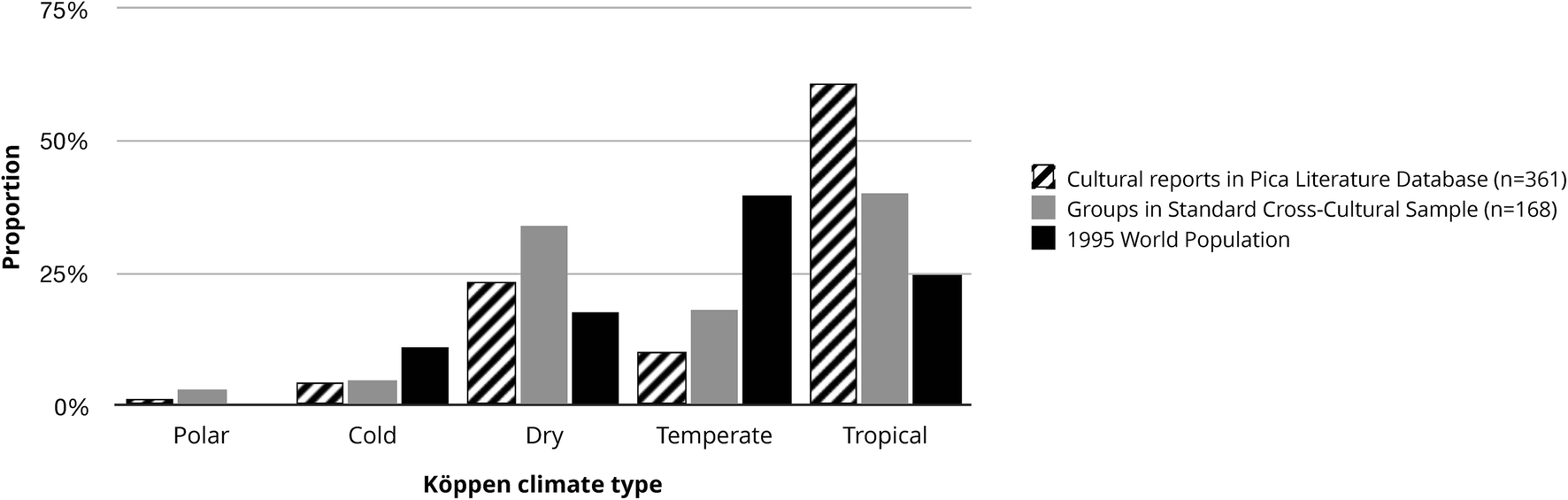
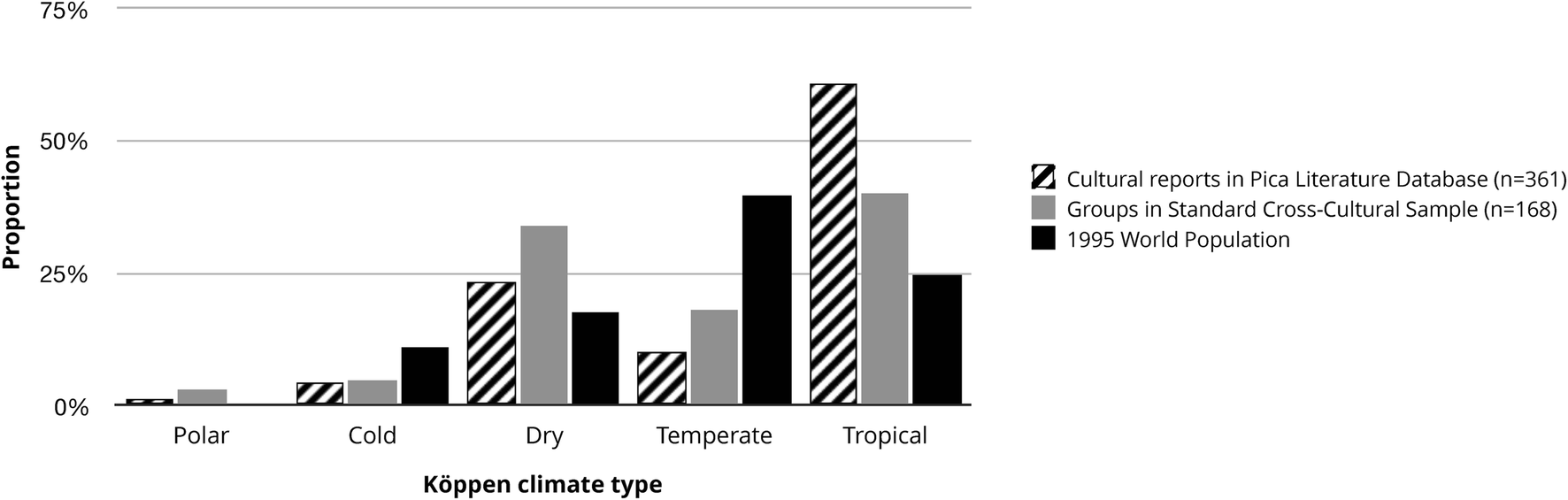
Geophagy among humans has been observed on every inhabited continent. To understand the geographic distribution of geophagy, all cultural-level reports of geophagy ever made were reviewed. For each report, the physical location of the occurrence was classified in a repository called the Pica Literature Database (Young et al., Reference Young, Sherman, Lucks and Pelto2011). Climate was classified using the Köppen climate classification system (Koeppen-Geiger climate zones: dataset, 2018). The distribution of observed reports was then compared against a standard set of phylogenetically distinct cultures (i.e. the Standard Cross-Cultural Sample, (Murdock & White, Reference Murdock and White1969)), as well as the distribution of the world’s population (Fig. 1). Geophagy is far more common in tropical climates (Young et al., Reference Young, Sherman, Lucks and Pelto2011) than would be predicted by either the distribution of the Standard Cross-Cultural Sample or the world’s population. Abrahams and Parsons (Reference Abrahams and Parsons1996) similarly found that geophagy is more common among humans in tropical climates relative to dry, cold, polar, and temperate regions.
Distribution of cultural reports of geophagy, groups in the Standard Cross-Cultural Sample, and world population by climate type
Geophagy across life stage
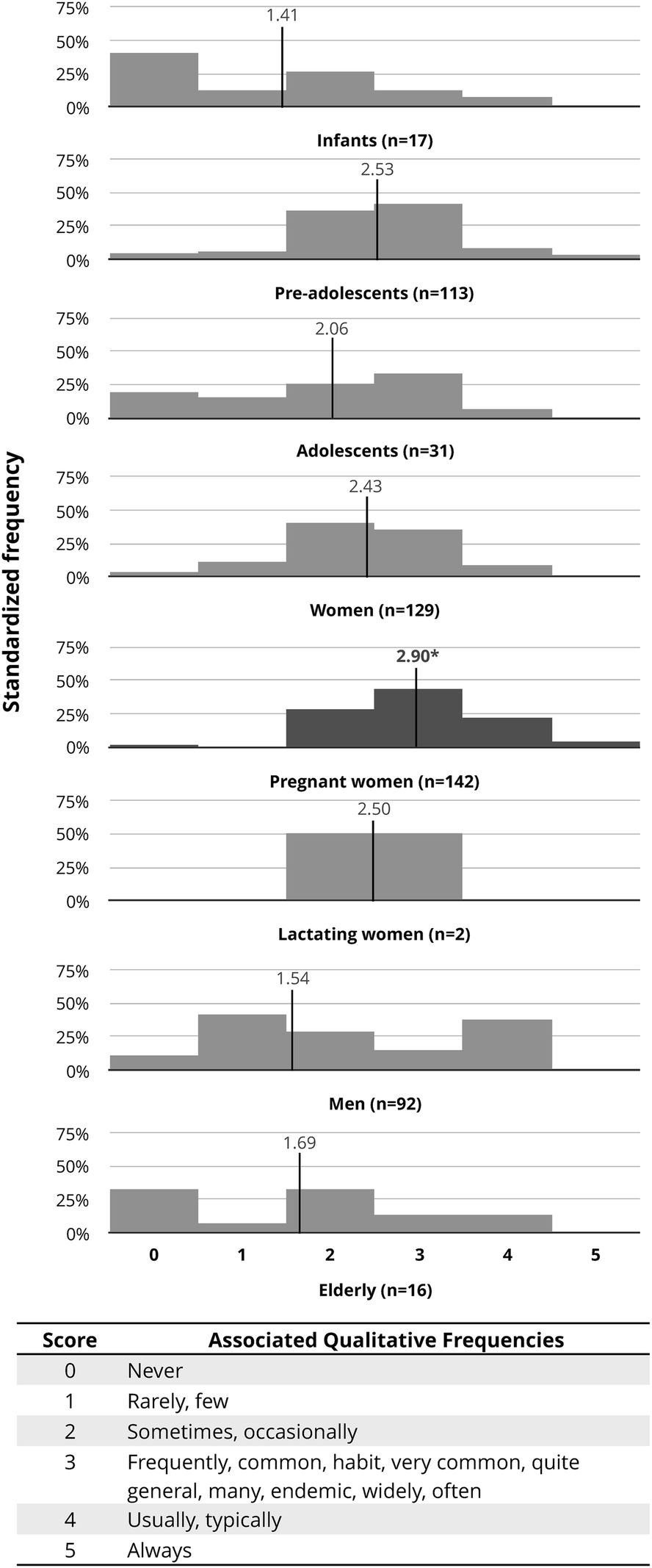
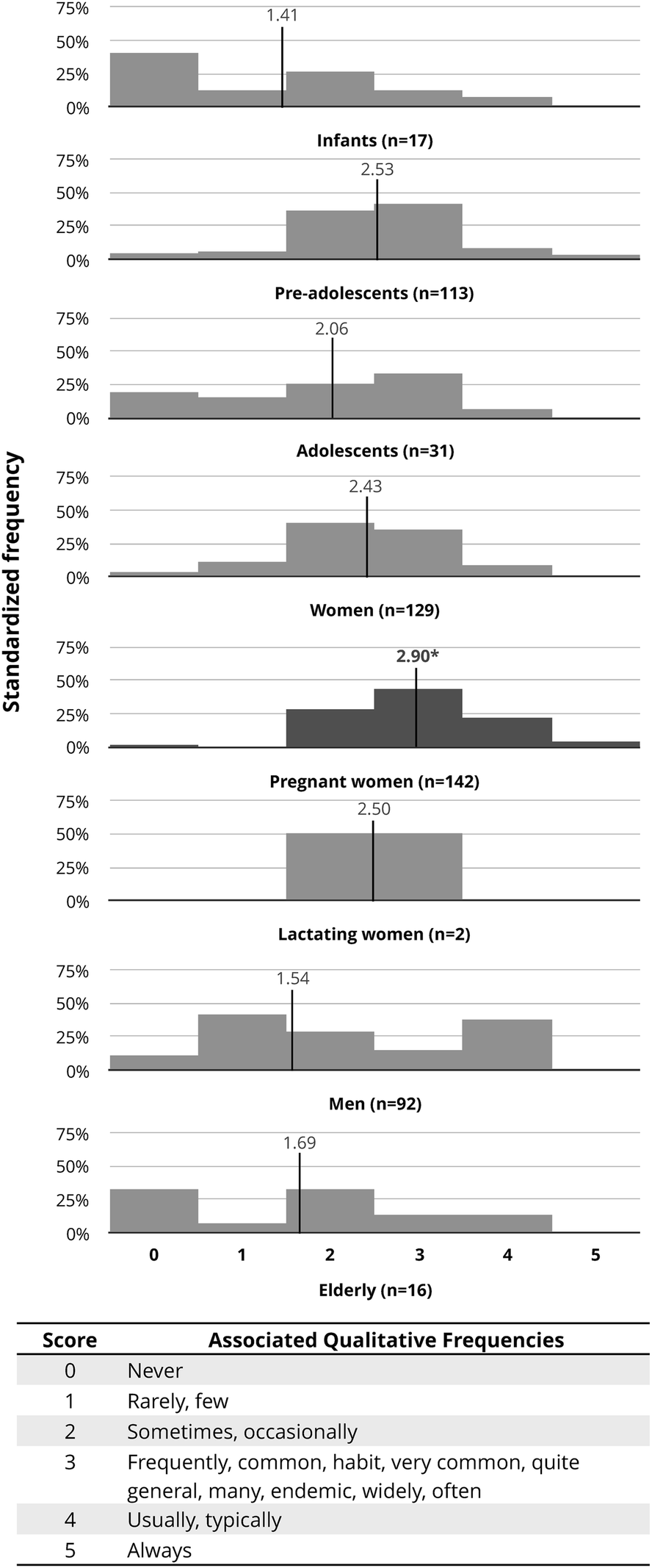
Data from the Pica Literature Database suggest that human geophagy is most common during the pre-adolescent period and pregnancy (Fig. 2). Geophagy during childhood has been examined most thoroughly among school children living in sub-Saharan Africa, where reported prevalences have been as high as 47% among South African students (Saathoff et al., Reference Saathoff, Olsen, Kvalsvig and Geissler2002) and 74.4% among a cohort of Zambian students (Nchito et al., Reference Nchito, Geissler, Mubila, Friis and Olsen2004).
Proportion of reports in the Pica Literature Database that identify geophagy frequency, by life stage. Mean geophagy score for each life stage is represented by a solid line. Pregnant women have the highest mean geophagy score relative to all other life stages
For males, the behavior wanes from childhood to adolescence, i.e. reported prevalence of geophagy decreases precipitously from age 5 through age 18 (Geissler, Mwaniki, Thiong’o, & Friis, Reference Geissler, Mwaniki, Thiong'o and Friis1997). For females, however, prevalence surges during pregnancy (Young et al., Reference Young, Sherman, Lucks and Pelto2011). In fact, the association between pica and pregnancy is so strong that Soranus, a first century Greek physician, described it as one of the three stages of pregnancy (Soranus, of Ephesus, 1991). Geophagic cravings are the greatest during the first trimester, decrease through the second and third trimesters, and then decrease dramatically postpartum (Fawcett et al., Reference Fawcett, Fawcett and Mazmanian2016), with some exceptions (Luoba et al., Reference Luoba, Geissler, Estambale, Ouma, Magnussen, Alusala, Ayah, Mwaniki and Friis2004; Saunders et al., Reference Saunders, de Carvalho Padilha, Della Líbera, Lima Nogueira, Mello de Oliveira and Astulla2009; Young et al., Reference Young, Khalfan, Farag, Kavle, Ali, Hajji, Rasmussen and Pelto2010a).
The dearth of non-human evidence suggests that the expression of geophagy may also differ by reproductive status. For instance, Pebsworth et al. (Reference Pebsworth, Bardi and Huffman2012) reported that pregnant chacma baboons spent more time consuming soil than baboons of other reproductive statuses; Brightsmith et al. (Reference Brightsmith, Hobson and Martinez2018) showed that greater time spent at clay licks by Amazonian parrots was significantly associated with breeding season. Overall, however, the relationship between non-human geophagy and gestation is less well established because biologists are commonly limited in their ability to identify reproductive status and maturation, relying almost exclusively on observation of physical traits.
Geophagy by disease state
Geophagy is often found in conjunction with one or more morbidities; most predominant among these is iron deficiency. A meta-analysis of forty-three studies found geophagy to be associated with 2.06 times greater odds of anemia, a condition that most commonly results from a shortage of iron in the body (Miao et al., Reference Miao, Young and Golden2015). Geophagy has also been documented among patients undergoing renal dialysis (Katsoufis et al., Reference Katsoufis, Kertis, McCullough, Pereira, Seeherunvong, Chandar, Zilleruelo and Abitbol2012) and people with genetic hemoglobin diseases, i.e. hemoglobinopathies (Aloni et al., Reference Aloni, Lecerf, Lê, Heijmans, Huybrechts, Devalck, Azzi, Ngalula-Mujinga and Ferster2015). Additionally, nascent literature demonstrates that some people living with HIV engage in geophagy (Kawai et al., Reference Kawai, Saathoff, Antelman, Msamanga and Fawzi2009; Kmiec et al., Reference Kmiec, Nguyen, Rouger, Berger, Lambert, Hentzien, Lebrun, Robbins, Drame and Bani-Sadr2017).
Proposed Etiologies of Geophagy
With trends in geophagy now described, a brief overview of the most salient etiologies of geophagy are presented. Hypotheses pertaining to negative consequences are described first, then those postulating positive outcomes. For a more comprehensive description of these hypotheses, see Young (Young, Reference Young2010), which presents theories regarding humans, and Krishnamani and Mahaney (Reference Krishnamani and Mahaney2000) for those related to non-human primates.
Geophagy as a non-adaptive, harmful behavior
Physicians have long posited that geophagy is maladaptive. For example, some plantation physicians in the United States thought that geophagy was a means for African slaves to commit suicide, and took extreme measures to thwart the practice (Cragin, Reference Cragin1836; Mawell, Reference Mawell1835). More recently, psychiatric case reports suggest that self-destructive urges are an impetus for pica, although these typically involve individuals with underlying mental health issues and do not typically involve earth substances (Atay, Reference Atay2014; Zganjer et al., Reference Zganjer, Zganjer, Cizmić, Pajid and Zupancić2011). These findings, thus, cannot account for the high global prevalence of geophagy.
Most scientists have concluded that any negative consequences are a byproduct of indulging cravings rather than intentional self-harm. In the last few decades, geophagy has been proposed as a non-adaptive response to iron deficiency, i.e. geophagy is an epiphenomenon of a micronutrient deficiency. Potential mechanisms involving “iron-dependent, appetite-regulating brain enzymes” have been proposed, but not rigorously articulated or investigated (Youdim & Iancu, Reference Youdim and Iancu1977).
Geophagy as an adaptive, beneficial behavior
Many hypotheses about geophagy as a behavior to treat or attenuate the impacts of an underlying disease or health condition have been proposed. One of the most common propositions is that people crave earth in response to micronutrient deficiencies: geophagic earths may supplement nutrients that are not being supplied by the current diet. Numerous studies report that some earthen substances have relatively high concentrations of certain nutrients, e.g. iron (Mahaney et al., Reference Mahaney, Milner, Hs, Hancock, Aufreiter, Reich and Wink2000; Al-Rmalli et al., Reference Al-Rmalli, Jenkins, Watts and Haris2010; Lar et al., Reference Lar, Agene and Umar2014; Miller et al., Reference Miller, Collins, Omotayo, Martin, Dickin and Young2018). Few, however, have examined the proportion of nutrients that are available for absorption after digestion. In studies that have measured bioavailability, it is found to be low or nonexistent (Pebsworth et al., Reference Pebsworth, Seim, Huffman, Glahn, Tako and Young2013; Seim et al., Reference Seim, Tako, Ahn, Glahn and Young2016). Several cell models, which most closely approximate micronutrient uptake, have even demonstrated that clay minerals (e.g. kaolinite, smectite), when mixed with other ingesta, can impede iron absorption from dietary sources (Hooda et al., Reference Hooda, Henry, Seyoum, Armstrong and Fowler2004; Seim et al., Reference Seim, Ahn, Bodis, Luwedde, Miller, Hillier, Tako, Glahn and Young2013). Data from human studies of micronutrient metabolism in the presence of clay further support this, although generalizability is restricted due to limitations in study design (Cavdar & Arcasoy, Reference Cavdar and Arcasoy1972; Minnich et al., Reference Minnich, Okçuoğlu, Tarcon, Arcasoy, Cin, Yörükoğlu, Renda and Demirağ1968; Sayers et al., Reference Sayers, Lipschitz, Sayers, Sefterl, Bothwell and Charlton1974).
Geophagy has also been proposed as a means to protect individuals who are the most vulnerable to infection. Indeed, geophagy is most prevalent among populations with developing or attenuated immune systems, i.e. children and pregnant women, respectively (Fessler, Reference Fessler2002; Simon et al., Reference Simon, Hollander and McMichael2015). Rapid cell division is also a hallmark of these life stages (Bearer, Reference Bearer1995). The concomitance of these factors render such populations particularly susceptible to harm by toxins and pathogens. Given the strong association with at-risk communities, geophagic substances, particularly those rich in clay minerals, have been theorized to protect individuals from nutritional and environmental assaults.
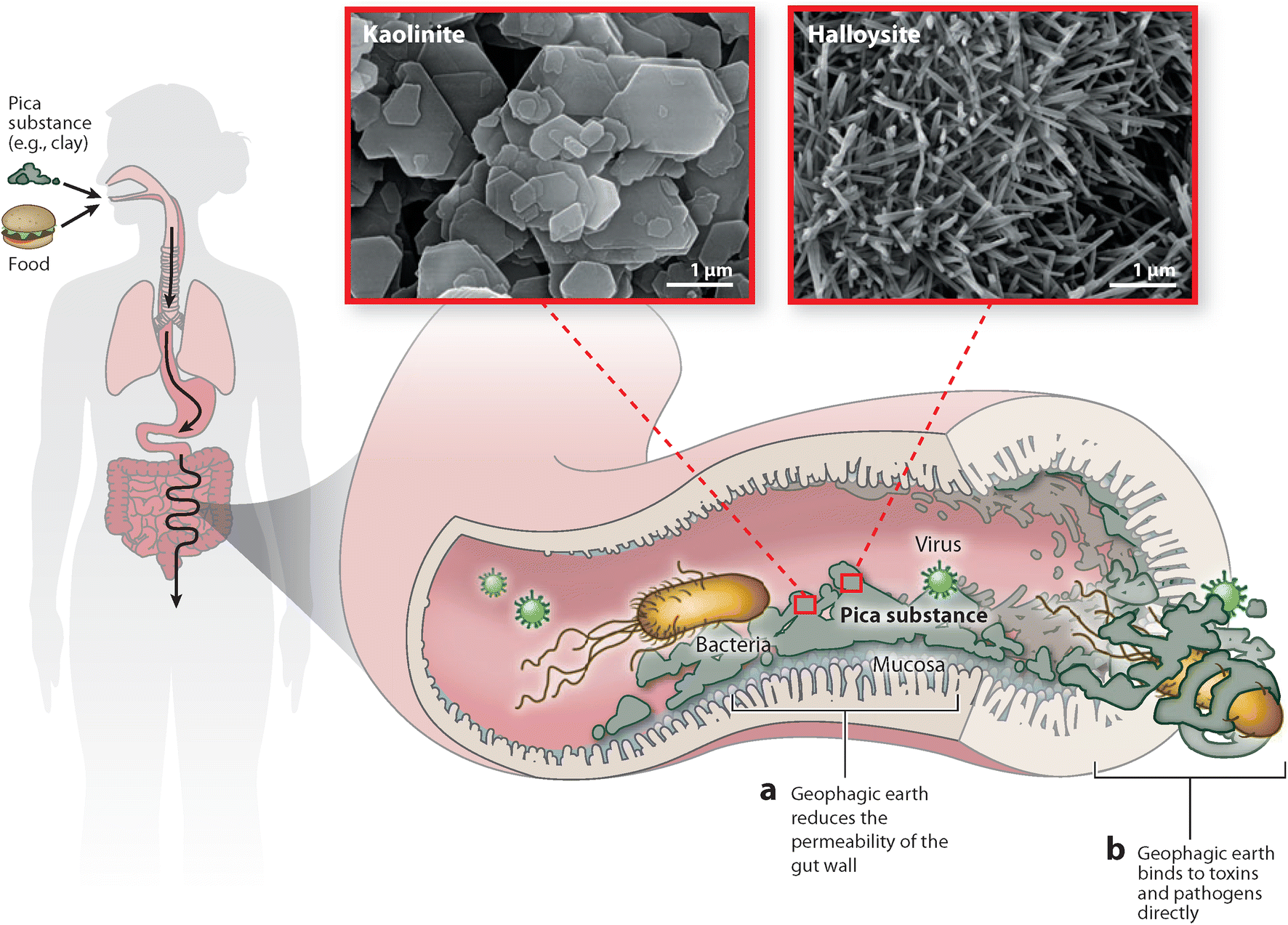
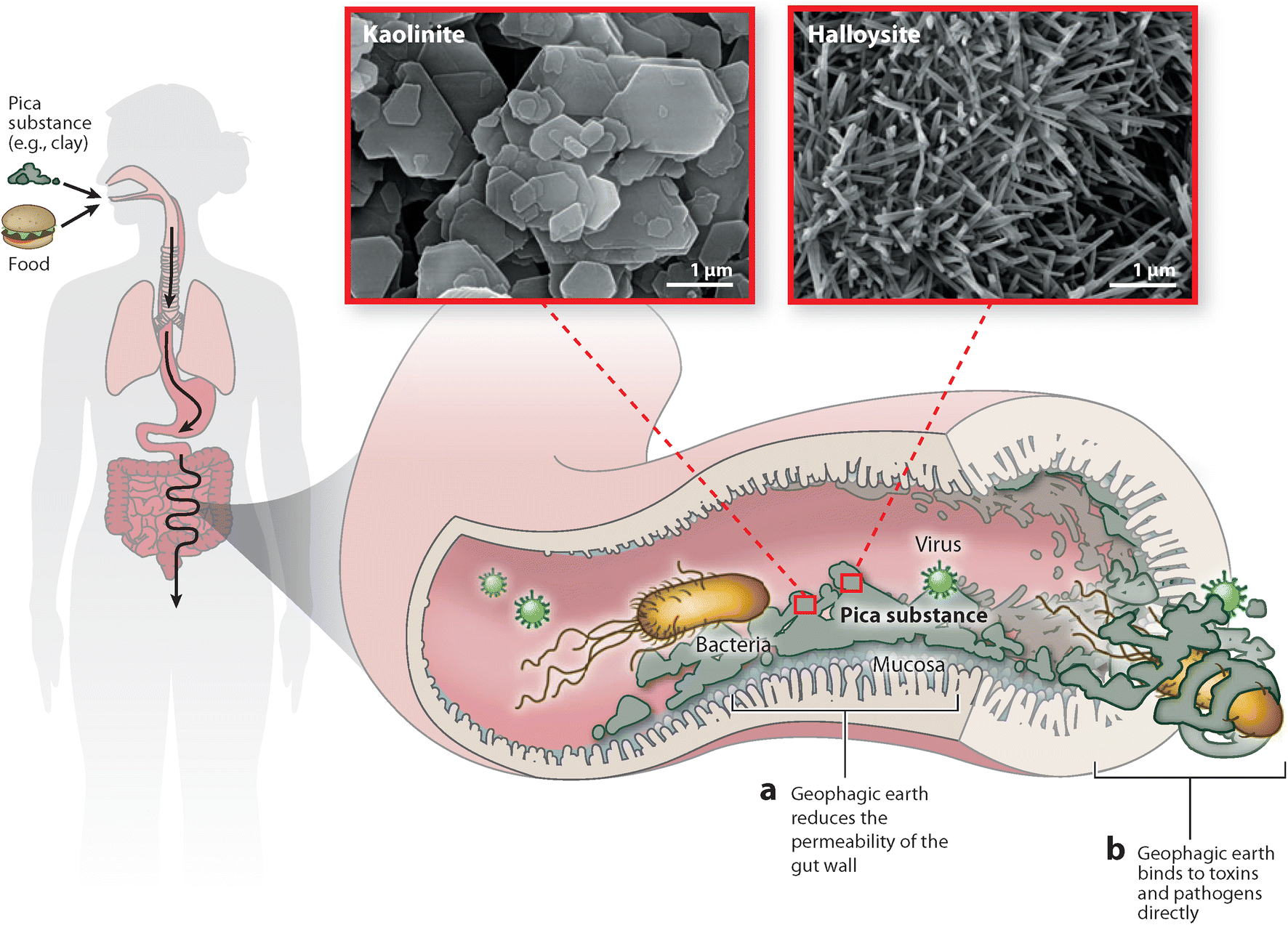
Geophagic earths have been shown to both directly and indirectly protect against ingested irritants and disease-causing agents through two pathways (Fig. 3). First, clays such as diosmectite can reinforce the integrity of the intestinal mucosal layer, which serves as a biological barrier between ingested materials and the internal milieu (González et al., Reference González, Sánchez de Medina, Martínez-Augustin, Nieto, Gálvez, Risco and Zarzuelo2004). Additionally, clays can stimulate mucin production from goblet cells; mucin proliferation thickens the mucus layer, which can trap harmful materials and prevent their contact with the brush border (González et al., Reference González, Sánchez de Medina, Martínez-Augustin, Nieto, Gálvez, Risco and Zarzuelo2004). Second, clays have a high cation exchange capacity and can directly adsorb pathogens for elimination from the gut (Barr, Reference Barr2006; Gilardi et al., Reference Gilardi, Duffey, Munn and Tell1999; Lipson & Stotzky, Reference Lipson and Stotzky1983; Ngole et al., Reference Ngole, Ekosse, de Jager and Songca2010). Both pathways, however, can also impede the absorption of beneficial substances, including dietary iron (Seim et al., Reference Seim, Ahn, Bodis, Luwedde, Miller, Hillier, Tako, Glahn and Young2013). Geophagy may, thereby, cause micronutrient deficiencies; evidence for this will be explored in greater depth in the next section.
Clays can limit the absorption of pathogens, nutrients, and medicines by (a) reinforcing the integrity of the intestinal mucosa and (b) binding directly to the substrate
Consequences of Geophagy
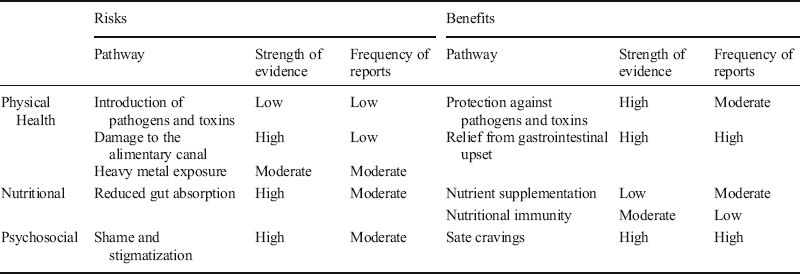
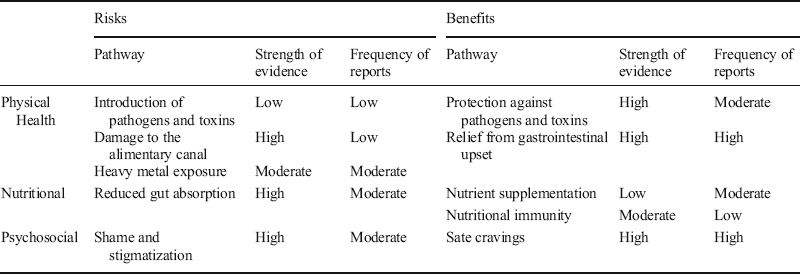
In this section, posited sequelae of geophagy are reviewed and the quality of data to support each is evaluated (Table 1). This is difficult, however, because the myriad potential consequences of geophagy have not been well characterized. Most studies are cross-sectional, such that the directionality between associated factors cannot be determined. The compositions of geophagic materials have also not been sufficiently or systematically characterized. Further, while limited data on the physiological impacts of geophagy have been published, even fewer have been reported for the psychosocial ones. Available literature, though, demonstrates that the highly variable compositions of consumed earths, patterns of consumption (e.g. frequency, quantities), and sociocultural beliefs can influence the health impacts of geophagy.
Proposed risks and benefits of geophagy, by physical health, nutritional, and psychosocial dimensions. Strength of evidence and frequency of reports for each pathway are broadly characterized as either low, moderate, or high, based on the authors’ review of current evidence
Physical health risks
Introduction of pathogens and toxins
Geophagy is widely considered a potential vector for parasites (Geissler et al., Reference Geissler, Mwaniki, Thiong'o and Friis1998a). Geophagists, however, often talk about “clean dirt” and tend to avoid earths where parasites most frequently lay their eggs, i.e. surface soil layers that are rich in humus. Indeed, individuals preferentially choose earths that have few or no geohelminth eggs (Young et al., Reference Young, Goodman, Farag, Ali, Khatib, Khalfan, Tielsch and Stoltzfus2007; Kutalek et al., Reference Kutalek, Wewalka, Gundacker, Auer, Wilson, Haluza, Huhulescu, Hillier, Sager and Prinz2010). These include subsurface, clay-rich earths that satisfy geophagists’ cravings for substances with very specific organoleptic properties, e.g. odor, taste, and mouthfeel (Young et al., Reference Young, Wilson, Miller and Hillier2008; Reference Young, Khalfan, Farag, Kavle, Ali, Hajji, Rasmussen and Pelto2010a).
Geophagic earths may also be vectors for pathogenic bacteria and fungi. Kutalek et al. (Reference Kutalek, Wewalka, Gundacker, Auer, Wilson, Haluza, Huhulescu, Hillier, Sager and Prinz2010) measured the microbial content of 88 geophagic earths and found that a majority had concentrations below Food and Agriculture Organization food safety thresholds; only two samples had potentially harmful levels of coliform bacteria. The authors also reported low concentrations of fungi present in measured samples. Importantly, according to 120 culture-level reports in the Pica Literature Database, upwards of 98% of cultures prepare their earth in a manner that is likely to kill most pathogens, e.g. by “baking, frying, sun drying, or smoking the earth” (Young et al., Reference Young, Sherman, Lucks and Pelto2011).
Damage to the alimentary canal
The hard, crunchy quality of most soils can damage the alimentary canal, from the mouth to the anus. Chewing hard clay may destroy enamel and chip teeth (Barker, Reference Barker2005; Toker et al., Reference Toker, Ozdemir, Ozan, Turgut, Goze, Sencan and Kantarci2009). As the ingested earth travels through the small and large intestines, it can absorb water that normally assists with the movement of chyme through the gut. This can cause constipation, intestinal obstruction, and, in extremely rare cases, intestinal perforation (Hunter-Adams, Reference Hunter-Adams2016; Solaini et al., Reference Solaini, Gardani and Ragni2012; Woywodt, Reference Woywodt1999). Such reports are infrequently mentioned in the literature and often result only after patients consume unusually large quantities of earth.
Heavy-metal exposure
An additional risk of geophagy is heavy metal toxicity, especially mercury and lead. Indeed, lead and mercury poisoning linked directly to geophagy has been documented, mostly among pregnant women and children (Campbell et al., Reference Campbell, Dixon and Hecky2003; Hamilton et al., Reference Hamilton, Rothenberg, Khan, Manalo and Norris2001; Lowry et al., Reference Lowry, Cherry, Brady, Huggins, D'Sa and Levin2004).
Composition analyses report considerable variations in the elemental concentrations of mercury, lead, cadmium, and arsenic in consumed soils. These differences reflect the strong influence that local geology, agricultural practices, and industrial waste disposal methods can have on soil quality. While a subset of these studies has attempted to estimate probable daily intake, i.e. the total amount of heavy metal consumed each day (Al-Rmalli et al., Reference Al-Rmalli, Jenkins, Watts and Haris2010; Arhin & Zango, Reference Arhin and Zango2017; Miller et al., Reference Miller, Collins, Omotayo, Martin, Dickin and Young2018), only one has measured bioavailability (Marschner et al., Reference Marschner, Welge, Hack, Wittsiepe and Wilhelm2006).
Despite these limited data, many geophagic substances have high concentrations of heavy metals that exceed international safety thresholds, even if consumed in small quantities (Abrahams et al., Reference Abrahams, Follansbee, Hunt, Smith and Wragg2006; Miller et al., Reference Miller, Collins, Omotayo, Martin, Dickin and Young2018; Nyanza et al., Reference Nyanza, Joseph, Premji, Thomas and Mannion2014), especially painted clays used in pottery (Al-Rmalli et al., Reference Al-Rmalli, Jenkins, Watts and Haris2010). Unfortunately, representative estimates of the proportion of geophagic substances that are dangerously high in heavy metals do not exist.
Nutritional risks
Reduced Absorption of beneficial nutrients and medicines
Geophagic earths can impede the absorption of essential nutrients through two mechanisms (Fig. 3). They can directly bind with substrate or form a matrix with mucin in the gut to create a barrier between ingesta and epithelial cells. This has been investigated most thoroughly in relation to the absorption of dietary iron. Seim et al. (Reference Seim, Ahn, Bodis, Luwedde, Miller, Hillier, Tako, Glahn and Young2013) showed that ferritin responses, an indicator of iron bioavailability, in cells exposed to clay minerals, including kaolinite, halloysite, and smectite, and white bean were significantly lower than for exposure to white bean alone, indicating that the clay inhibited iron uptake from the white bean. Several studies have also found significant relationships between geophagy and decreased serum zinc concentrations (Hooda et al., Reference Hooda, Henry, Seyoum, Armstrong and Fowler2002; Miao et al., Reference Miao, Young and Golden2015). These can be deleterious to overall health, as iron and zinc both serve as critical enzyme cofactors. In addition, clay can bind potassium, an important electrolyte that is used for muscle contractions and blood pressure regulation. Similar to individuals with eating disorders, geophagists can experience electrolyte abnormalities that subsequently lead to clinical sequelae, such as hypokalemic myopathy (George & Ndip, Reference George and Ndip2011).
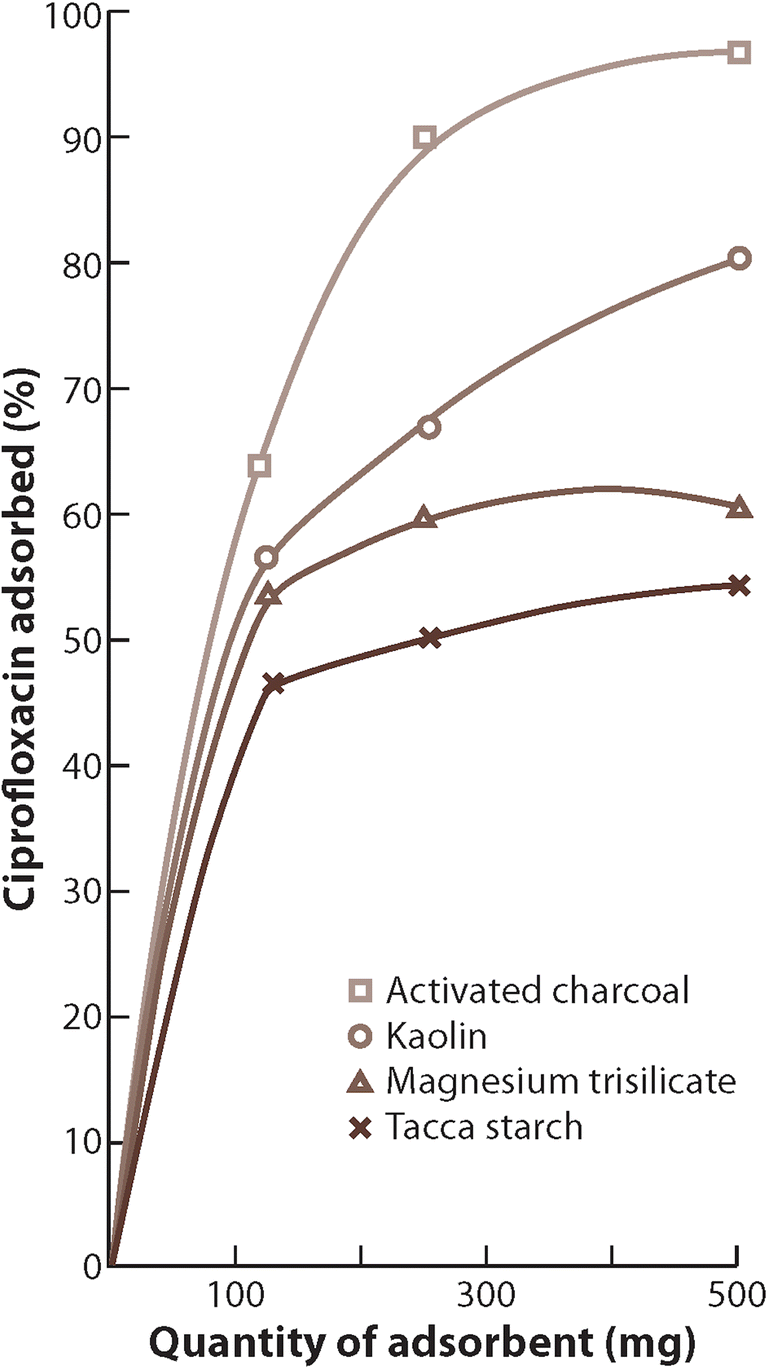
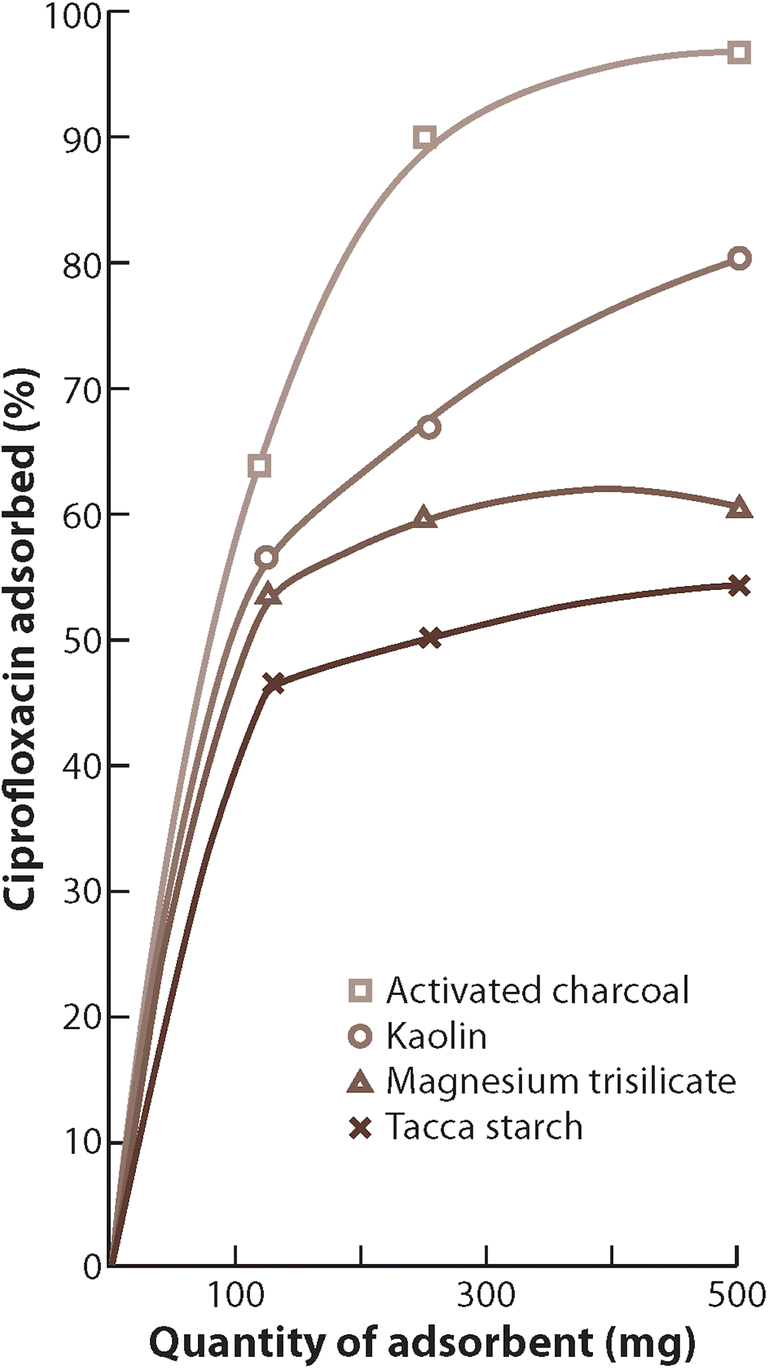
Similarly, clays can bind pharmaceuticals and reduce their efficacy. This has been well established for certain antibiotics, heart medicines, and antimalarials. For instance, Ofoefule & Okonta (Reference Ofoefule and Okonta1999) used an in vitro model to demonstrate that kaolin adsorbs the antibiotic ciprofloxacin in a dose-dependent manner (Fig. 4). At only 0.5 g, kaolin had the ability to adsorb nearly 80% of the administered antibiotic; for comparison, geophagists commonly report eating 40–60 g of geophagic earth per day (Geissler et al., Reference Geissler, Shulman, Prince, Mutemi, Mnazi, Friis and Lowe1998b; Nyanza et al., Reference Nyanza, Joseph, Premji, Thomas and Mannion2014). Such relationships may also exist with other medications, including those used to treat chronic health issues like HIV.
Proportion of the antibiotic ciprofloxacin adsorbed by amount of kaolin in solution
Psychosocial risks
Shame and stigmatization
Earth, or dirt, has been imbued with negative meanings since antiquity. The word “dirt” derives from an Old Norse term for excrement, and the serpent that deceives Eve in the Book of Genesis is forced to eat dirt as punishment (Genesis 3:14 Contemporary English Version). Such connotations, though, are not universal. As Mary Douglas asserts, “dirt is matter out of place,” meaning that the classification of objects or practices as unclean or taboo depends on culturally defined hierarchies of order (Douglas, Reference Douglas1978). Notions of dirt, and more broadly geophagy, as dangerous may, therefore, reflect cultural biases.
Many geophagists experience stigma and judgement for their cravings. These often come from cultural outsiders, as in the case of the derogatory term “sand lappers,” used to describe poor whites in the southern United States ((Young, Reference Young2012), chapter 6). Even in places like Zanzibar, where geophagy is tolerated and sometimes encouraged during pregnancy, the practice is frowned upon if it continues after delivery ((Young, Reference Young2012), chapter 6). The biomedical community has often been very harsh in their consideration of geophagy; descriptors like “bizarre,” “perverted,” “morbid,” and “disgusting” are common, even in modern academic literature. Family members have also contributed to the stigma. Geophagists can live in fear of being “caught,” as evidenced by a quote from an online discussion group: “i have hidden it from my family for 15 years. i dont know wut i would do if they found out. i guess i would have to stop then. i would be so ashamed.” The stigmatization can lead to underreporting of geophagy.
Physical health benefits
Protection against pathogens and toxins
Toxins, pathogenic organisms, and other harmful irritants are regularly introduced into the gut environment through food. Such toxins include plant secondary metabolites (e.g. Tannins, glycoalkaloids), which many plants produce to protect against pathogens and dissuade herbivores. If consumed in sufficient quantities, these can be teratogenic, mutagenic, carcinogenic, and sometimes lethal (Hui, Reference Hui2001). Enterotoxins secreted by food and waterborne bacteria (e.g. Escherichia coli) can be equally harmful by causing severe diarrhea – which robs the body of water and essential nutrients – and inhibiting the absorption of essential nutrients (Binder & Powell, Reference Binder and Powell1970). Geophagic earths, however, have the capacity to bind these harmful substances.
The detoxifying capabilities of geophagic substances are multifactorial. As previously described, clay-rich geophagic substances can both strengthen the natural defense system of the gut and adsorb pathogenic materials because of their high cation exchange capacity. Clays have been heralded as natural medicaments long before recent in vitro studies have confirmed their ability to bind bacteria, fungi, and viruses. In ancient Greece, for instance, stamped clays called “terra sigillata” were worth their weight in gold and praised for their purported health benefits; these clay tablets were often prescribed as antidotes for ingested poisons (Young, Reference Young2012). During the sixteenth century, Chinese physician Li Shizhen “listed pharmacological uses for sixty-one clays, muds, and other earths” (Young, Reference Young2012). Around the globe, many communities continue to use clays when preparing foods that contain harmful, and often unpalatable, phytochemicals; the clay binds the toxic substances and renders them safe for consumption (Johns & Duquette, Reference Johns and Duquette1991b; Young et al., Reference Young, Sherman, Lucks and Pelto2011).
Geophagic earths also serve protective functions in non-human animals. Rats, which lack an emetic reflex, preferentially choose kaolin after exposure to poison in controlled lab experiments, leading to reduced mortality (De Jonghe et al., Reference De Jonghe, Lawler, Horn and Tordoff2009; Madden et al., Reference Madden, Seeley and Woods1999; Takeda et al., Reference Takeda, Hasegawa, Morita and Matsunaga1993). Within the agricultural industry, clays are added to livestock feed in order to protect against infection by mycotoxins (Phillips, Reference Phillips1999).
Relief from gastrointestinal upset
Nausea and vomiting are commonly reported as impetuses for initiating geophagy, especially among obstetric populations (Huebl et al., Reference Huebl, Leick, Guettl, Akello and Kutalek2016). Evidence suggests that non-human primates may also consume soil as a means to quell nausea (Pebsworth et al., Reference Pebsworth, Bardi and Huffman2012, Reference Pebsworth, Huffman, Lambert and Young2018). Controlled experiments have also demonstrated that commonly consumed geophagic earths are rich in clay minerals that can effectively reduce nausea (Diko & Siewe épse Diko, Reference Diko and Siewe épse Diko2014; Yamamoto et al., Reference Yamamoto, Takeda and Yamatodani2002). Additionally, some geophagists report that consumed earths can reduce heartburn, a condition caused by reflux of hydrochloric acid in the stomach. Many ingested clays are indeed alkaline and may aid in neutralizing acidic gastric juices (Pebsworth et al., Reference Pebsworth, Bardi and Huffman2012; Young et al., Reference Young, Wilson, Hillier, Delbos, Ali and Stoltzfus2010b).
Nutritional benefits
Nutrient supplementation
Chemical analyses of geophagic substances reveal that some earths have high concentrations of essential nutrients, such as calcium (Hooda et al., Reference Hooda, Henry, Seyoum, Armstrong and Fowler2004; Johns & Duquette, Reference Johns and Duquette1991a). Total elemental composition, however, is not equivalent to the amount of nutrient available for absorption, i.e. bioavailability. Bioavailability is typically much lower than total elemental composition and is strongly influenced by the process of digestion (Wilson, Reference Wilson2003). As previously discussed, clays can even inhibit iron absorption, although this has not been rigorously explored for other nutrients. More research is needed to determine whether consumed soils can provide nutritionally and biologically meaningful amounts of nutrients.
Nutritional immunity
Geophagic substances have been shown to bind dietary iron and subsequently inhibit its uptake in cell models, which is generally thought to be harmful because iron is essential for hematopoiesis. But nearly all bacteria require iron to flourish; restricting iron absorption may, therefore, protect against the proliferation of pathogenic microorganisms (Hennigar & McClung, Reference Hennigar and McClung2016; Prentice et al., Reference Prentice, Ghattas and Cox2007). Ultimately, further research is required to understand whether geophagy causes iron deficiency and whether it can be beneficial, especially in immunocompromised populations, including individuals living with HIV.
Psychosocial benefits
Sate cravings
Anecdotally, the most commonly reported benefit of eating earth is the deep pleasure that geophagists derive from satisfying their cravings (Bonglaisin et al., Reference Bonglaisin, Chelea, Tsafack, Djiele, Lantum and Ngondé2017; Huebl et al., Reference Huebl, Leick, Guettl, Akello and Kutalek2016). People look forward to eating earth, and relish it when they eat it. For example, Alabaman Carrie Webb said, “I used to tear up a bank. When I used it regular, I don’t care what it done. I went wild over it…” (Spencer, Reference Spencer2002).
In addition to the pleasure of satisfying one’s own cravings, in some cultures it is believed that sating cravings during pregnancy is necessary for good fetal health. For example, among Mexican women, indulging pica cravings was thought to prevent birthmarks and fetal loss (Lin et al., Reference Lin, Temple, Trujillo, Mejia-Rodriquez, Goldman Rosas, Fernald and Young2015).
Unanswered Questions
Potential risks and benefits of geophagy abound. Given the high prevalence of geophagy among vulnerable populations and the plausibility of real harm, surprisingly little is definitively known about the practice. To that end, several research directions and associated methodologies are proposed to generate an evidence base for both medical and veterinary recommendations about geophagy.
In all of these pursuits, a biocultural approach is required, i.e. consideration of all relevant biological, ecological, behavioral, and cultural conditions (McElroy, Reference McElroy1990). Previous research has often overlooked the psychosocial components of geophagy, which require more rigorous analysis. Established guidelines for collecting and analyzing geophagic substances should also be adhered to (Young et al., Reference Young, Wilson, Miller and Hillier2008). Ultimately, sufficient data should be collected to adequately assess all hypotheses of geophagy.
Establish temporality of associations
Almost all studies of geophagy to date have been cross-sectional, prohibiting assessments of causality. Longitudinal studies are, therefore, needed to test the three proposed etiologies of geophagy (non-adaptive, nutritional supplementation, and protective) and to understand its consequences. Measurements of geophagic behaviors, characterizations of consumed earth (e.g. mineralogy), and consideration of the health conditions relevant to each hypothesis (pregnancy, inflammation, iron status) across time are necessary to establish causality.
Identify physiological mechanisms underpinning geophagy
Very little is known about the cellular and chemical processes that underpin geophagy. Geophagists often describe their cravings for earth using language similar to individuals addicted to drugs. Brain imaging has been transformative in the field of psychiatry for understanding and treating drug cravings (Fowler et al., Reference Fowler, Volkow, Kassed and Chang2007; Gordon, Reference Gordon2016), and could be similarly enlightening for geophagy. Understanding which regions of the brain influence geophagy may elucidate potential pathways that control the behavior. Performing these brain scans across species may also help to determine if geophagy manifests differently across and within taxa.
Analysis at the level of the gut is also needed. While in vitro models have shown that clay can bind pathogens, micronutrients, and pharmaceuticals, only a few in vivo studies have been performed, each with its own limitations (Cavdar & Arcasoy, Reference Cavdar and Arcasoy1972; Minnich et al., Reference Minnich, Okçuoğlu, Tarcon, Arcasoy, Cin, Yörükoğlu, Renda and Demirağ1968; Seim et al., Reference Seim, Tako, Ahn, Glahn and Young2016). In vivo studies that supply clay in proportions comparable to those consumed by human geophagists could reveal mechanisms by which geophagy induces or attenuates iron deficiency. These studies would also benefit from exploring the impacts on the gut microbiome, which has not been explored in relation to geophagy.
Field-based techniques
Field-ready methods for measuring the parasitological, microbial, and elemental profiles of geophagic earths could help consumers and practitioners balance risks and benefits of geophagy more effectively and efficiently. Information about these three characteristics could provide insights into potential trade-offs when consuming clays to protect against pathogens, e.g. incidental heavy metal exposure. These tests should be cheap to administer, easy to implement and interpret, and adequately sensitive to a variety of unsafe exposures.
Ultimately, health practitioners and the scientific community still have much to learn about geophagy. Greater understanding of the behavior requires broad knowledge across many diverse disciplines. Geophagy thereby presents exciting opportunities for collaboration between both the physical and social sciences.