


INTRODUCTION
The rise of the populist right across established democracies is one of the most significant political developments in recent decades. A substantial body of literature has emerged to explain the growing electoral appeal of these parties. Some scholars argue that this trend represents a backlash against globalization, where losers of economic dislocation, created by cross-border trade and technological progress, mobilize against their status loss and economic insecurity by supporting the populist right (e.g., Bolet Reference Bolet2020; Colantone and Stanig Reference Colantone and Stanig2018; Scheiring et al. Reference Scheiring, Serrano-Alarcón, Moise, McNamara and Stuckler2024; Walter Reference Walter2021). Other accounts argue instead that the popularity of the populist right is primarily a backlash against pervasive long-term cultural change in Western democracies, including immigration and growing ethnic diversity (Norris and Inglehart Reference Norris and Inglehart2019). These cultural changes, the argument goes, have displaced traditional social values, causing resentment among some citizens (e.g., Gidron and Hall Reference Gidron and Hall2017; Margalit, Raviv, and Solodoch Reference Margalit, Raviv and Solodoch2025; Rydgren Reference Rydgren2008; Steenvoorden and Harteveld Reference Steenvoorden and Harteveld2018).
While both economic and cultural explanations offer persuasive accounts of the populist right’s appeal, less attention has been paid to citizens’ direct experiences with the state. This is somewhat surprising given that anti-establishment rhetoric is at the core of the populist right’s messaging. Populist right parties frame the political system as being in constant crisis due to a “corrupt elite selling out the virtuous people” (Mudde Reference Mudde2007; Reference Mudde2016; Rooduijn Reference Rooduijn2014; Van Kessel Reference Van Kessel2015). Public service provision serves as an important case in point as it is one of the most common and direct ways in which people interact with and learn about the state. In advanced industrial economies, where support for the populist right has steadily increased, citizens expect high-quality public services in domains such as infrastructure, education, and healthcare. However, aging populations combined with sluggish economic growth have placed considerable strain on the state’s provision of these services (Harper Reference Harper2014). Recent studies suggest that austerity-induced cuts and reduced access to public services diminish political trust (Stroppe Reference Stroppe2023), decrease turnout (Cox, Epp, and Shepherd Reference Cox, Epp and Shepherd2025), and fuel support for far right and nationalist politics (Baccini and Sattler Reference Baccini and Sattler2025; Cremaschi, Bariletto, and De Vries Reference Cremaschi, Bariletto and De Vries2025; Fetzer Reference Fetzer2019). Other studies have examined how local service deprivation fuels radical right support (Arzheimer et al. Reference Arzheimer, Berning, Lange, Dutozia, Evans, Gould and Harteveld2024; Bolet Reference Bolet2020; Reference Bolet2021; Harteveld et al. Reference Harteveld, van der Brug, de Lange and van der Meer2022).
Building on this work, we argue that direct experience with declining public services creates grievances with the political establishment and increases the appeal of populist right parties. The core of our argument posits that waning public service performance is a key factor in explaining why certain voters turn to the populist right. Drawing on the concept of a social contract between citizens and rulers, it has long been assumed that citizens accept obligations, such as paying taxes and obeying the law, in exchange for a benevolent government that delivers certain public goods, including public safety, infrastructure, education, and healthcare (Besley Reference Besley2020; Levi Reference Levi1988). If the political establishment is perceived to have failed in upholding its side of this bargain, some citizens may be more inclined to support populist political forces that rally against the “corrupt elite” (Mudde Reference Mudde2016).
Our article further explores how the effects of declining public services are conditioned by cultural factors. Specifically, we argue that the populist right is able to exploit public service decline in particular when it is linked with cultural grievances about immigration. The populist right uses ethno-nationalist rhetoric not only to mobilize immigration concerns (Mudde Reference Mudde2019), but also when framing broader policy debates, including public service decline. This rhetoric exploits grievances about the state as evidence of a failure by the establishment to protect “deserving natives” from “undeserving migrants” (Halikiopoulou and Vlandas Reference Halikiopoulou and Vlandas2020; Rathgeb Reference Rathgeb2024). In the context of public service decline, the populist right tends to pin the blame directly on the over-utilization of such services by immigrants (Cordero, Zagórski, and Rama Reference Cordero, Zagórski and Rama2024; Cremaschi et al. Reference Cremaschi, Rettl, Cappelluti and De Vries2025). This leads us to expect that the effects of exposure to service decline on support for these parties will be stronger in areas experiencing increasing inflows of foreign immigrants, where the populist right’s framing of the problem resonates and appears more credible to voters.
We test our expectations in the context of the United Kingdom, focusing on Britain’s National Health Service (NHS), which for many Brits represents the embodiment of the state’s duty to care for its people (Charlesworth Reference Charlesworth2019; Moran Reference Moran2024). Yet, public satisfaction with the NHS is at its lowest level in three decades. One reason for this dissatisfaction is the decline in the number of local doctors, known as general practitioners (GPs), who serve as the main access point for citizens to the NHS. Since 2013, nearly 1,700 GP practices have closed, accounting for more than 25% of all public GP practices in England. This provides an apposite case for examining the effects of public service decline on support for the populist right. First, as most citizens access NHS services through their GP, changes to public service delivery will be felt directly by citizens in affected areas. Second, there is a broad, cross-partisan consensus in the United Kingdom that public health, as provided by the NHS, is a core public service delivered by the state. Finally, GP closures in the NHS are a salient example of public service decline not driven directly by austerity but by structural pressures, such as rising demand, staff shortages, and an aging population, which are increasingly common across developed democracies.
To examine the extent to which GP practice closures motivate electoral support for populist right parties, we consider the universe of GP practice closures in England between 2013 and 2023, using administrative data directly from the NHS. As practices began to close at different times starting in 2013, we adopt a staggered difference-in-differences design relying on spatial and temporal variation to causally identify and estimate the average effects of GP closures on attitudes and party choice. We start by examining the effects of closures on patient experiences measured via high-quality GP Patient Surveys to show that closures of GP practices result in decreased satisfaction and reports of more negative patient experiences making appointments. We then use two separate large-scale annual panel datasets to demonstrate that direct exposure to a GP practice closure increases support for the populist right.
In additional analyses, we examine how the effects of practice closures are conditioned by local contextual changes, focusing on deprivation, unemployment, and immigration. We first provide descriptive evidence that populist right parties UK Independence Party (UKIP) and Reform UK have consistently blamed immigration as a driver of declining NHS services by examining communication from both parties on YouTube and in official press releases. We then show that the effects of practice closures are conditioned by higher levels of local immigration and migrant GP practice registrations, which suggests that populist right parties’ messaging is more resonant in areas where demographic change is more visible.
These findings not only contribute to the literature by providing robust causal evidence of the influence of public service decline on support for the populist right, they also demonstrate that increased immigration serves as an important moderating factor. This suggests that the populist right’s framing of “natives” in direct competition with foreign migrants over vital public services allows these parties to broaden their electoral appeal among voters who connect public service decline with increased immigration within their local communities. This advances our understanding of the ways in which demographic change and public service deprivation combine to motivate support for the populist right.
PUBLIC SERVICES AND POPULIST RIGHT SUPPORT
A large body of literature suggests that public service provision is crucial to people’s perceptions of their quality of life and living standards (Grossman and Slough Reference Grossman and Slough2022; Vogler Reference Vogler2023). Public services, including public safety, education, infrastructure, and healthcare, can be said to form part of the social contract between rulers and the ruled, who accept paying taxes and obeying the law in return for a government that delivers core services (Besley Reference Besley2020; Levi Reference Levi1988). Yet, while there is a large literature on public service delivery, less attention has been paid to how it drives support for the populist right. Some recent important advances include studies that have looked at the impact of geographic inequalities in public service provision (Cremaschi et al. Reference Cremaschi, Bariletto and De Vries2025; Nyholt Reference Nyholt2024; Stroppe Reference Stroppe2023) and the effects of austerity and reduced access to particular types of social benefits (Baccini and Sattler Reference Baccini and Sattler2025; Cavaillé and Ferwerda Reference Cavaillé and Ferwerda2023; Cremaschi, Bariletto, and De Vries Reference Cremaschi, Bariletto and De Vries2025; Fetzer Reference Fetzer2019; Giger and Nelson Reference Giger and Nelson2011). In this article, we build on that recent literature to examine how direct experiences with declining public service delivery affect the popular appeal of the populist right.
We argue that public service delivery is one of the primary ways in which citizens interact with and evaluate the extent to which the state is both providing for them (Dowding and John Reference Dowding and John2012; Golden and Min Reference Golden and Min2013; Grossman and Slough Reference Grossman and Slough2022) and is responsive to their needs (de Kadt and Lieberman Reference de Kadt and Lieberman2020; Vogler Reference Vogler2023). Although correctly attributing responsibility for public service performance might not always be straightforward (Harding Reference Harding2015; Harding and Stasavage Reference Harding and Stasavage2014), citizens—even those who lack political interest and sophistication—are able to learn about failures in public service delivery through direct experience, especially when services are accessed by the majority of citizens, such as with public healthcare. As a consequence, a decline in the performance of public service delivery is likely to generate dissatisfaction and grievances about the functioning of the state. People’s willingness to pay taxes and respect for the law hinges on their perceptions of whether political elites are upholding their side of the social contract and investing in their communities via service provision (Besley Reference Besley2020; Levi Reference Levi1988). If this reciprocal obligation is seen to be broken and the state does not deliver core public services, citizens can also be expected to withdraw their support. When citizens count on high levels of public service provision, such as is the case in Western Europe, reduced public service performance raises concerns about the extent to which political elites care about ordinary people (Cramer Reference Cramer2016; Hochschild Reference Hochschild2018; Patana Reference Patana2022; Rothstein and Teorell Reference Rothstein and Teorell2008; Svallfors Reference Svallfors2013). While classical economic theory would expect dissatisfied individuals to move to a new location in response to a lack of public services (Tiebout Reference Tiebout1956), political science research suggests that many individuals stay, either due to a lack of resources or because they have strong connections to the area (Patana Reference Patana2022).
We argue that one way for these dissatisfied citizens to express their discontent is by casting a ballot for populist parties that generally espouse anti-establishment rhetoric, rallying against the “corrupt elite” in favor of the virtuous people (De Vries and Hobolt Reference De Vries and Hobolt2020; Kollberg Reference Kollberg2025; Mudde Reference Mudde2016; Polk et al. Reference Polk, Rovny, Bakker, Edwards, Hooghe, Jolly and Koedam2017). We expect that a steep decline in the performance of core public services leads to grievances about the state’s ability to provide for its citizens, validating the populist sentiment that the political establishment cannot deliver on its side of the bargain and thus increasing the appeal of populist political forces. Hence, any direct experience with a decline in the delivery of public services in a local area is likely to increase the appeal of populist parties for affected voters.
Our argument thus far refers to populist parties in general. Yet, populism is often understood as a thin ideology that can be combined with a more left-wing or right-wing political stance (Mudde Reference Mudde2007). The question then becomes which populist forces might gain electorally from poor public service delivery. While a key part of the answer is the nature of populist supplyFootnote 1 —which type of populist parties exist—we argue that supply is largely a function of demand for political messages within the electorate (De Vries and Hobolt Reference De Vries and Hobolt2020). Populist parties will often seek to find groups to scapegoat in their attempts to explain why public service performance is declining.
Notably, populist parties on the right tend to frame policy debates in ethno-nationalist terms as a competition between natives and non-natives. Such rhetoric is likely to resonate with voters who associate strains on public services with rising immigration, perceiving migrants as consuming more public resources than they contribute through taxes (Baccini and Sattler Reference Baccini and Sattler2025; Cavaillé and Ferwerda Reference Cavaillé and Ferwerda2023; Dancygier Reference Dancygier2010; Dancygier et al. Reference Dancygier, Dehdari, Laitin, Marbach and Vernby2025). Citizens do of course attribute public service decline to a range of factors, including government policy, underfunding, or structural pressures. Our argument does not dismiss these explanations. Rather, we contend that grievances about declining services become politically consequential when they are articulated through specific political narratives. The populist right is distinctive in linking dissatisfaction with service provision to immigration, portraying migrants as a “drain on resources” and elites as complicit in neglecting “ordinary people.” This framing casts service decline in ethno-nationalist terms of “deserving natives” and “undeserving migrants,” accusing mainstream elites of privileging newcomers over long-standing citizens (Mudde Reference Mudde2007; Rathgeb Reference Rathgeb2024).
Such narratives make immigration a plausible and readily available explanation for service decline, particularly when demographic changes are visible in local communities. Citizens may come to associate immigration with overcrowded schools and hospitals, longer GP waiting times, or greater competition for scarce resources. Even when service decline stems from other structural causes (e.g., retirements and underfunding), immigration remains a cognitively simple and politically salient attribution. Political entrepreneurs on the populist right reinforce this association, ensuring that concerns about service quality align with broader anti-immigrant and anti-elite themes (Dancygier Reference Dancygier2010; Dancygier et al. Reference Dancygier, Dehdari, Laitin, Marbach and Vernby2025).
We therefore expect the populist right’s rhetoric, which links poor public service provision to immigration, to be especially persuasive when people experience decline in service delivery alongside rising immigration. In other words, we anticipate that the impact of public service decline on support for the populist right will be stronger in areas where local increases in immigration make this connection more salient.
We test these expectations by examining a case of core public service delivery in the United Kingdom, focusing on the closure of GP practices. Our argument yields three main expectations: (a) exposure to GP practice closures generates grievances by reducing satisfaction with public healthcare provision; (b) such exposure increases support for the populist right; and (c) the effects are more pronounced in local areas experiencing rising levels of immigration.
GP PRACTICE CLOSURES
Britain’s NHS is sometimes referred to as a “national religion” (Taylor Reference Taylor2013). It may also be described as the modern embodiment of the British state’s duty to care for its people, and of its right to their loyalty. Established in 1948 as a publicly funded healthcare system of the United Kingdom, it is a free-at-the-point-of-care comprehensive health service. It forms a large part of public expenditure, costing over 11% of GDP in 2023, up from 3.5% in the 1950s, according to the U.K. Office for National Statistics. Moreover, the commitment to a publicly funded health service is one that is shared by all parties in parliament. Healthcare in the United Kingdom is thus a quintessential “valence issue” (Green and Jennings Reference Green and Jennings2012; Stokes Reference Stokes1963): voters and parties alike agree on the core objectives of high-quality, public healthcare, funded from general taxation and National Insurance contributions. The U.K.’s NHS not only plays a key role in ensuring the health of the population, it represents a point of pride for the nation, often lauded as one of the most cherished institutions in the United Kingdom (Charlesworth Reference Charlesworth2019; Moran Reference Moran2024). Moreover, it is a public service accessed by nearly all citizens. Unlike other health systems in which private insurance is commonplace, only about 12%–14% of the U.K. population has private health insurance (as of 2023), and even individuals with private healthcare frequently access the NHS for some of their healthcare needs, thus making the NHS a core public service that is accessed by the vast majority of citizens (Keith et al. Reference Keith, Lawless, Ewbank and Boshari2024).
The NHS is also a top priority for government spending, with the majority of the public expressing a clear preference for the government to spend more on the NHS. Despite occupying over a tenth of the national GDP, public opinion polling (see Figure 1) suggests that there is a broad public consensus that the government is not going far enough when it comes to funding the NHS. Indeed, the second greatest spending priority according to cross-sectional public opinion data from YouGov receives only around half of the amount of support for increased spending that the NHS receives, illustrating the importance of the NHS to the British public.
What Sector Should the U.K. Government Spend More on?
Note: YouGov tracker: What sector should the U.K. government spend more on? from April 2020–April 2024. “Don’t Know” responses not included. Data are available from YouGov (2025).

Figure 1. Long description
The X axis represents the Date from 2020 to 2024 and the Y axis represents the Percentage from 0 percent to 80 percent.
* National Health Service: A thick red line at the top of the chart. It starts near 75 percent in 2020, fluctuates between 70 percent and 80 percent, and ends at approximately 75 percent in 2024.
* Education: A blue line that fluctuates between 30 percent and 45 percent. It ends at approximately 38 percent.
* Crime and Policing: A green line that starts near 50 percent in 2020, drops sharply to 40 percent, and fluctuates between 30 percent and 40 percent, ending at approximately 38 percent.
* Climate Change: A purple line that fluctuates between 25 percent and 40 percent, ending at approximately 22 percent.
* Other sectors: Several overlapping lines in shades of orange, pink, and light blue occupy the 10 percent to 25 percent range.
* A final light brown line remains nearly flat at the bottom, consistently below 5 percent.
Yet, people are increasingly disillusioned with the performance of the NHS.Footnote 2 Importantly, this is not a simple case of welfare retrenchment or conventional austerity, since over the period of study successive governments have increased NHS spending in real terms (Arnold and Jefferies Reference Arnold and Jefferies2025). Instead, it represents a case of public service performance decline, in which citizens directly experience a deterioration in the availability and quality of services—whether driven by demographic changes, rising demand, staff shortages, or other structural pressures—which generates grievances with the political establishment. This focus on public service deterioration is relevant beyond the British context, particularly in aging societies where growing demand places increasing strain on essential services such as healthcare (OECD 2021).
In the NHS case, a key aspect of public service decline, and associated public dissatisfaction, relates to the closure of GP practices. Since 2013, over 3,000 facilities providing NHS services have closed or merged. Of these, nearly 1,700 were GP practices, constituting nearly 25% of the number of public GP practices open in England. The GP or family physician represents the primary means through which citizens access the NHS. It is the GP who treats minor illnesses and also acts as the gatekeeper for more specialized medical care. As of early 2024, over 63 million people in England alone were registered as patients at a GP practice.Footnote 3 The closure of GP practices is therefore likely to have a significant impact on the public’s experience of the NHS.
GP practices may close for various reasons, including staff shortages, resignations, and retirements (Carter and Kaffash Reference Carter and Kaffash2022).Footnote 4 From a patient’s perspective, closures can have tangible consequences. Patients may be required to travel further to access primary care or have to adjust to a new GP, while neighboring practices may face increased demand as they absorb displaced patients. This additional strain can lead to longer waiting times and a deterioration in the quality of care.
We first consider the spatial distribution of GP practice closures across England. Figure 2 presents the universe of NHS GP practice closures in England between 2013 and 2023 using data from NHS Digital (NHS England 2023). In the figure, each red point represents a separate GP practice that has closed between 2013 and 2023. Practice closures also affect a considerable number of individuals. Figure 3 presents the number of individuals affected by a practice closure between 2013 and 2023 (left), which suggests that over 600,000 individuals were registered at practices before they closed in England.Footnote 5 On the right of Figure 3, the number of practice closures per year shows that practice closures start in 2013 and peak in 2018.
GP Practice Closures between 2013 and 2023
Note: GP practice closures between 2013 and 2023 (the first closure occurs in 2013). Each red point represents a practice closure. Data are available quarterly from NHS Digital: https://digital.nhs.uk/services/organisation-data-service/data-search-and-export/csv-downloads/gp-and-gp-practice-related-data.

Figure 2. Long description
The map displays thousands of red points representing G P practice closures across England and Wales. The highest concentrations of closures are visible in major metropolitan areas.
* In the Southeast, a massive, dense cluster of red points covers the Greater London area, extending outward toward Southend-on-Sea and Reading.
* In the Midlands, a significant dense cluster is centered around Birmingham, Coventry, and Leicester.
* In the Northwest, a large corridor of high-density closures stretches between Liverpool and Manchester, extending North toward Preston.
* In the Northeast, clusters are visible around Newcastle upon Tyne, Sunderland, and Middlesbrough, with further concentrations in West Yorkshire around Leeds and Sheffield.
* In the Southwest, closures are more dispersed but show small clusters around Bristol, Plymouth, and along the southern coast near Portsmouth and Brighton.
* In Wales, closures are primarily concentrated in the South around Cardiff and Swansea, with sparse distribution in the North and central regions.
* East Anglia shows scattered closures with a small concentration near Norwich.
* The rural areas of Northern England, Central Wales, and the West Country show significantly lower density compared to the urban industrial belts.
Number of Patients Registered to a Closing GP Practice in England
Note: Left: Number of annual and cumulative patients registered to a given GP practice ahead of its closure in England. Calculations rely on the number of registered patients at a given practice in the year before it closed. Data are available monthly from NHS Digital at https://digital.nhs.uk/data-and-information/publications/statistical/patients-registered-at-a-gp-practice. Right: Number of practices that close each year. Data are available from NHS England: https://digital.nhs.uk/services/organisation-data-service/data-search-and-export/csv-downloads/gp-and-gp-practice-related-data.

Figure 3. Long description
A two-panel figure displaying data on G P practice closures.
Left Panel: Patients Affected.
The x-axis represents the Date from 2012 to 2022. The y-axis represents the Number of Patients from 0 to 700k.
- An orange line labeled Number Affected shows an overall downward trend. It starts at 172,537 in 2013, peaks slightly at 138,160 in 2015, then drops significantly to 46,810 in 2016. It reaches a low of 3,869 in 2020 before rising to 67,667 in 2022.
- A light gray line labeled Cumulative Number Affected shows a logarithmic growth curve. It begins at 172,537 in 2013 and rises steadily to reach 664,462 by 2022.
Right Panel: Number of G P Practice Closures.
The x-axis represents the Date from 2012 to 2022. The y-axis represents the count from 0 to 300.
- An orange line tracks annual closures. It starts at 9 in 2013, rises sharply to a peak of 303 in 2018, then declines to 128 in 2021, with a slight uptick to 156 in 2022. Specific data points include 65 in 2014, 112 in 2015, 186 in 2016, 172 in 2017, 253 in 2019, and 201 in 2020.
RESEARCH DESIGN
Data
We examine the consequences of GP practice closures by assembling data from multiple sources. To study patient experiences, we leverage the GP Patient Survey, which is an annual (or bi-annual, in some cases) survey fielded by NHS England and Ipsos MORI (2023). The surveys are administered for each GP practice and target a random sample of each respective practice’s registered patients who are over 16. Surveys are then weighted (by Ipsos MORI) to reflect the demographic characteristics of the local population according to the U.K. Census. These surveys provide an excellent data source for understanding patient experiences over time for every GP practice in the country.
As we are interested in evaluating whether the “treatment” of GP closures affects actual patient experiences of public service decline, we focus on two key variables obtained from the GP Patient Survey: (1) the percentage of respondents who rate their overall experience at the GP practice as “positive” (i.e., combined responses of “good” and “very good”) and (2) the percentage of respondents who rate their experience of making an appointment with their GP as “negative” (i.e., combined responses of “poor” and “very poor”). These questions are asked in each survey wave, and broadly represent the quality of care and access to care at the GP practice.
To study the effects of the closures on vote choice, we leverage two large-scale panel datasets that allow us to link individual respondents to GP practice catchment areas. First, we use the Understanding Society Panel (USOC) (University of Essex, Institute for Social and Economic Research 2023). The USOC is a large-scale annual panel survey of nearly 30,000 British households. We use 13 waves of the panel, spanning 2009 to 2022. We gained access to a protected version of the dataset, which includes detailed geographic information about respondents, thus allowing us to link the responses to GP practice catchment areas.Footnote 6 In addition to the USOC data, we add robustness to our findings by replicating the vote intention analysis using the British Election Study (BES) panel (Fieldhouse et al. Reference Fieldhouse, Green, Evans, Schmitt, van der Eijk, Mellon and Prosser2023). The BES panel is a panel survey of British voters that has been fielded since 2014.Footnote 7 The BES panel includes approximately 30,000 respondents per wave and is fielded a minimum of one time per year during the time period of study.
In addition to the USOC and BES data, we rely on data on local immigration, as well as other contextual variables, such as economic conditions and material deprivation, from the Office for National Statistics (2023) in additional analyses. We discuss specific linking and data construction procedures in the Supplementary Material (Data Merging and Treatment Assignment).
Our primary outcome variable of interest in both the USOC and BES datasets is self-reported vote intentionFootnote 8 for a populist right party in the General Election. We construct a variable that captures whether an individual intends to vote for the UK Independence Party (UKIP), the Brexit Party, the British National Party, or the Reform UK party (the successor to the Brexit Party). Each of these parties is commonly classified as both populist and right-wing (Rooduijn et al. Reference Rooduijn, Pirro, Halikiopoulou, Froio, Van Kessel, de Lange and Mudde2024). They share an anti-establishment, anti-immigration, and Euroskeptic policy platform, common to the populist right in Europe (Mudde Reference Mudde2007; Polk and Rovny Reference Polk and Rovny2017). They are also all challenger parties with no, or only limited, parliamentary representation in the House of Commons (De Vries and Hobolt Reference De Vries and Hobolt2020).Footnote 9 Their lack of significant parliamentary representation is partly due to Britain’s first-past-the-post electoral system that disadvantages smaller challenger parties with geographically diffuse support. In the European Parliament election in 2019, where proportional representation (PR) was used, the Brexit Party topped the poll in the United Kingdom with 30% of the national vote, and UKIP came first in the 2014 U.K. European Parliament election with 27% of the national vote. This illustrates that—at least in second-order national elections using PR—electoral support for these populist right parties can be substantial in the United Kingdom.
To understand the mechanisms explored later in the analysis, we examine the extent to which populist right parties linked GP practice closures—and the NHS more broadly—to immigration. To gather evidence of this connection, we analyze two sources: official UKIP press releases from 2010 to 2024 and all available YouTube videos produced by UKIP and Reform UK dating back to 2011.Footnote 10
Identification Strategy
We rely on temporal and spatial variation to identify the effects of GP practice closures using a staggered difference-in-differences design. Our design allows for comparing changes in behavior following a GP practice closure in a given location to changes in behavior at the same time in a place that has not (yet) experienced a closure. Our primary identifying assumption is that in the absence of a closure, the areas that experienced closures and the areas that did not would follow parallel trends. We assess the degree to which our identification strategy captures pre-trend differences between the treated and control units by presenting event study plots with various configurations of key control variables (e.g., immigration, deprivation, unemployment, etc.). We additionally present the distributions of the key moderators across treated and control units to assess the degree to which the two groups are balanced (Figure 8). Results from these analyses suggest that the parallel trends assumption is indeed plausible.
Moderators of GP Practice Closures on Support for the Populist Right

Figure 8. Long description
Four panels arranged in a two-by-two grid. Each panel shares a Y-axis labeled Marginal Effect of Practice Closure ranging from negative 0.04 to 0.06.
Top-left panel: X-axis is Moderator: Index of Multiple Deprivation Score. A flat regression line sits near zero with a widening gray confidence interval. Four red data points with vertical error bars are clustered between scores 0 and 40, labeled L, M 1, M 2, and H. A right-skewed histogram is at the bottom.
Top-right panel: X-axis is Moderator: Employment Rate. A downward-sloping regression line shows a negative trend. Four red data points with error bars are labeled L, M 1, M 2, and H between 70 and 85. A centered histogram is at the bottom.
Bottom-left panel: X-axis is Moderator: (log) Migrant G P Registrations Per Capita. An upward-sloping regression line shows a positive trend. Four red data points with error bars are labeled L, M 1, M 2, and H between negative 6 and negative 3. A bimodal histogram is at the bottom.
Bottom-right panel: X-axis is Moderator: (log) International Migration Per Capita. An upward-sloping regression line shows a positive trend similar to the bottom-left panel. Four red data points with error bars are labeled L, M 1, M 2, and H. A bimodal histogram is at the bottom.
A second identifying assumption we make in order to interpret our point estimates causally is that there are no spillover effects into neighboring areas. In other words, the effects of a GP practice closure are confined to the area in which the practice is located. A violation of this assumption is a possibility given that the nature of a closure may affect neighboring practices. Spillovers from closures into neighboring areas—for example, by placing additional demand on practices there—would reduce the difference in service quality between treated and control groups, biasing our estimates toward zero. However, if a practice closes in one area while a new practice opens in a neighboring area, the control group would experience an improvement in access, which could inflate rather than attenuate the estimated treatment effect. The net direction of spillover bias is therefore theoretically ambiguous. Reassuringly, the robustness checks presented in the Supplementary Material ([Re-]Opening Practices Robustness Check)—which re-estimate all models treating areas with a subsequent opening as either treated or control—yield results that are nearly identical to the primary analysis, providing empirical evidence that spillovers of this kind do not materially affect our conclusions.
A third factor we consider in the analysis is the handling of newly opened GP practices. In some cases, a practice will close and then reopen under a new management team. These instances are rare, as only 155 practices have opened since 2013 (whereas over 1,700 GP practices have closed or merged). In the primary analysis presented, we drop areas that experienced a new GP practice opening after the first closure in a given area.Footnote 11 Finally, as the BES panel data only go back to 2014, we drop all individuals who experienced a closure before the start of the panel in order to ensure that we have pretreatment observations for each outcome considered in the analysis. We present the treatment schedule and the number of individuals under treatment and control in the Supplementary Material (Treatment Schedule).
Estimation Strategies
Staggered Difference-in-Differences
A rapidly growing literature shows that two-way fixed effects (TWFE) regressions deliver consistent estimates only under strong assumptions on the homogeneity of treatment effects and non-negative weighting, creating issues in staggered DID settings (see, e.g., Borusyak, Jaravel, and Spiess Reference Borusyak, Jaravel and Spiess2024; Callaway and Sant’Anna Reference Callaway and Sant’Anna2021; De Chaisemartin and d’Haultfoeuille Reference De Chaisemartin and d’Haultfoeuille2026; Sun and Abraham Reference Sun and Abraham2021). We therefore adopt the cohort-average treatment effect estimator outlined in Sun and Abraham (Reference Sun and Abraham2021), which estimates average treatment effects for each group-time cohort. This approach is robust to heterogeneous treatment effects and overcomes the limitations associated with TWFE estimators.
We rely on this estimator to conduct two complementary analyses. The first uses annual cross-sectional data aggregated at the GP practice level to study how local closures affect patient satisfaction. The second uses individual-level panel data to examine the effects of exposure to closures on political attitudes and voting intentions. In both cases, we exploit the staggered timing of GP practice closures across space and time to identify causal effects.
Our event-study specification can be expressed generally as

where
$ {Y}_{i,t} $
 is the outcome of interest for unit
$ i $
 (a GP practice or an individual respondent) at time
$ t $
 .
$ {E}_i $
 denotes the period of first exposure to a GP practice closure. The coefficients
$ {\mu}_{\ell } $
 trace the effect of exposure at each relative time period
$ \ell $
 , with
$ \ell =-1 $
 (the year prior to exposure) serving as the omitted baseline.
In the GP Patient Survey analysis, the unit of observation is the GP practice. Deviating slightly from Equation 1, we include local authority fixed effects (
$ {\zeta}_i $
 ) to absorb time-invariant differences across local authorities and year fixed effects (
$ {\lambda}_t $
 ) to account for national-level shocks over time.Footnote
12
For the survey panel analysis, the outcome can be represented as
$ {Y}_{i,g,t} $
 , where
$ i $
 indexes individuals nested within areas
$ g $
 (census Middle Super Output Areas [MSOAs]) observed over years
$ t $
 . For simplicity of notation, we write
$ {Y}_{i,t} $
 in Equation 1, but all models include respondent, area, and year fixed effects to control for unobserved time-invariant individual characteristics, spatial heterogeneity, and national trends, respectively.
The vector
$ {X}_{g,t} $
 includes time-varying contextual covariates measured annually at the local authority level, such as the unemployment rate, material deprivation, international immigration, and migrant GP registrations. The error term
$ {\varepsilon}_{i,g,t} $
 captures idiosyncratic variation in outcomes.
This specification enables us to assess the plausibility of the parallel trends assumption by inspecting pretreatment coefficients (
$ \ell <-1 $
 ) and to estimate the dynamic treatment effects of GP practice closures relative to the pre-closure baseline (
$ \ell \ge 0 $
 ) for each analysis.Footnote
13
To ensure the robustness of our results, we additionally estimate the effects of the closures using alternative strategies. Namely, we rely on matrix completion methods to estimate the effects of the closures on the various outcomes we study. Matrix completion borrows from the computer science literature and is used to estimate a counterfactual similar to estimating missing values in a matrix. In our case, the method treats the post-treatment periods for treated units as missing values, using the pretreatment periods of the treated units, as well as the pre- and post-treatment periods of the control units, to estimate a counterfactual for the treated units. The difference between the observed treated units’ post-treatment periods and the estimated counterfactual post-treatment values is the ATT (Athey et al. Reference Athey, Bayati, Doudchenko, Imbens and Khosravi2021; Liu, Wang, and Xu Reference Liu, Wang and Xu2024). This method is similarly robust to heterogeneous treatment effects and provides a useful check on the results from the cohort-average treatment effect estimator. Results yield very similar conclusions and are further detailed in the Supplementary Material (Understanding Society Analysis and British Election Study Analysis).
Treatment Effect Heterogeneity
To examine heterogeneity in responses to GP practice closures, we follow recent applications (see, e.g., Gingerich Reference Gingerich2019; Pengl et al. Reference Pengl, Müller-Crepon, Valli, Cederman and Girardin2026; Wright et al. Reference Wright, Sonin, Driscoll and Wilson2020) and use a binning estimator introduced by Hainmueller, Mummolo, and Xu (Reference Hainmueller, Mummolo and Xu2019) to study how treatment effects vary across levels of contextual moderators.Footnote 14 Unlike multiplicative interaction models, which impose a linearity assumption on moderating variables, the binning approach flexibly recovers heterogeneous treatment effects at different levels of the moderating variables without strictly requiring linear functional forms. This estimator is particularly suited to our case given that it allows the addition of fixed effects, making it well suited for our difference-in-differences design with panel data.
For these heterogeneous treatment effect estimates to be given a causal interpretation, we require the same parallel trends assumption as in our average treatment effect estimations. We provide evidence supporting this assumption in several ways. First, our event study specifications (Figures 5 and 6) show flat pretreatment dynamics in vote intentions for the treated and control units, including when conditioning on moderators. This suggests that areas exposed to closures and those not yet exposed followed comparable trajectories prior to treatment. Second, the distributions of the moderators are balanced across treated and control groups (Figure 8), alleviating concerns that heterogeneous pre-trends are driven by compositional differences. Third, and perhaps most importantly, the Supplementary Material (Moderation Analysis) replicates the moderation analysis for all party families. The positive interaction with local immigration appears only for the populist right—the only party family that explicitly frames NHS decline in terms of immigration. Taken together, these diagnostics lend credibility to a causal interpretation of the conditional estimates.
Estimated Effects of Practice Closures on Intention to Vote for Populist Right Parties (USOC Data)
Note: Coefficient estimates for the effect of GP practice closures on vote intention for populist right parties. Parties include the British National Party, Reform UK, the UK Independence Party, and the Brexit Party. Full results with and without control variables are presented in table format in the Supplementary Material (Understanding Society Analysis). Results presented in figure correspond with model 4 (with control variables) in the Supplementary Material (Understanding Society Analysis). Included covariates are: unemployment, IMD, immigration, and GP migrant registrations. Data source: Understanding Society (waves 1-13).

Figure 5. Long description
A coefficient plot with a horizontal x-axis labeled Years relative to practice closure and a vertical y-axis labeled Coefficient Estimate and 95% C I. The y-axis ranges from negative 0.01 to 0.04. A horizontal solid line marks the zero baseline, and a vertical dashed line marks the reference point at year negative 1.
Data points are represented by black diamonds with red vertical error bars. Moving from left to right:
* At year negative 5, the estimate is slightly below 0.
* At year negative 4, the estimate is near 0.
* At year negative 3, the estimate is slightly above 0.
* At year negative 2, the estimate is approximately 0.004.
* At year negative 1, the reference point is exactly 0.
* At year 0, the year of closure, the estimate is approximately 0.002.
* At year 1, the estimate rises to 0.005.
* At year 2, the estimate increases to 0.014.
* At year 3, the estimate reaches 0.02.
* At year 4, the estimate peaks at approximately 0.025.
* At year 5, the estimate remains high at approximately 0.024.
The error bars widen significantly after year 2, indicating increased variance, but the estimates remain entirely above the zero baseline from year 2 onwards.
Estimated Effects of GP Practice Closures on Intention to Vote for Populist Right Parties (BES Data)
Note: Event study estimates and 95% confidence intervals for the effects of GP practice closures on self-reported voting for populist right parties. Parties include the British National Party, Reform UK, the UK Independence Party, and the Brexit Party. Full results with and without control variables are presented in table format in the Supplementary Material (British Election Study Analysis). Results presented in the figure correspond to model 4 (with control variables) in the Supplementary Material (British Election Study Analysis). Included covariates are: unemployment, IMD, immigration, and GP migrant registrations. Data source: British Election Study MSOA Data (waves 1-25).

Figure 6. Long description
The Y-axis is labeled Coefficient Estimate and 95 percent C I, ranging from minus 0.02 to 0.08. The X-axis is labeled Years relative to practice closure, ranging from minus 5 to 5. A vertical dashed line at minus 1 represents the reference point of the closure event.
Before the event (years minus 5 to minus 2), the data points (black diamonds with red vertical error bars) hover near the zero horizontal line, indicating no significant pre-trend. At year minus 1, the estimate is exactly zero.
Following the closure (years 0 to 5), there is a clear upward linear trend. The coefficient estimates rise steadily from approximately 0.01 at year 0 to over 0.04 at year 5. The 95 percent confidence intervals also widen over time, but the estimates from year 2 onwards remain entirely above the zero line, suggesting a statistically significant increase in the intention to vote for populist right parties following a local G P practice closure.
We employ the binning estimator to recover the conditional effects of GP practice closures on our outcomes of interest, moderated by local international migration, migrant GP practice registrations, material deprivation, and local economic conditions. We return to this analysis below.
Party Communication
As part of our analysis of the moderating effects of immigration, we provide descriptive evidence that U.K. populist right parties link NHS decline to immigration in their official communications using two corpora: (i) all videos from the official YouTube channels of UKIP (2011–) and Reform UK (2021–) and (ii) UKIP press releases (2010–24). To harmonize measurement while respecting text structure, YouTube transcripts (which lack reliable punctuation) are segmented into overlapping token windows of length
$ w=50 $
 and step
$ s=10 $
 , while press releases are analyzed at the sentence level, allowing links across adjacent sentences.
Formally, let
$ {L}_E $
 denote NHS/public-service terms,
$ {L}_N $
 immigration terms, and
$ {L}_C $
 causal/burden connectors (regex dictionaries listed in the 4ary Material [Linking the NHS with Immigration in Party Communication]). For a YouTube window
$ W $
 and proximity
$ \delta =12 $
 tokens, define

For month
$ m $
 (probabilities taken over all windows from videos uploaded in
$ m $
 ), we report two rates:

The first captures topical co-mention of NHS and immigration; the second requires a nearby causal/burden connector, indicating framing that immigration puts pressure on/leads to NHS strain.
For press releases, we compute analogous document-month rates where a co-mention requires an NHS and an immigration term in the same sentence; a linkage occurs if (i) the same sentence contains both terms and a connector or (ii) an immigration+connector sentence directly precedes/follows an NHS sentence (and vice versa). Intuitively, the co-mention rate shows how often the NHS and immigration are mentioned together, whereas the linkage rate shows how often they are explicitly tied to one another.Footnote 15
RESULTS
GP Practice Closures and Patient Experiences
The first step in our argument is that GP practice closures create grievances among affected patients. To test this part of the argument, we examine self-reported experiences of affected patients. It is important to note that the closure of a GP practice may not only affect patients of the closed practice but also those in nearby practices that are forced to absorb new patients. We therefore expect that area practices experience an increase in new patient registrations, reducing patient experiences and satisfaction. Our specification captures this clogging effect by defining as treated those practices sharing the same Census MSOA as practices that have closed. MSOAs are census output areas and contain approximately 5,000–10,000 individuals. We report the event study results for both outcome variables in Figure 4.
Effect of GP Practice Closures on Patient Experiences in Area Practices
Note: Dynamic estimates for the effects of GP practice closures on patient overall satisfaction in GP practice in the same Middle Super Output Layer (MSOA) as a closed practice. The outcome variables are the percentage of patients at a practice who report a positive overall experience at the GP practice (black diamonds) and the percentage of patients who report a negative overall experience making an appointment at the GP practice (red circles). Full results are provided in the Supplementary Material (GP Patient Survey Analysis). Given some evidence of pretreatment trend violations in these data, we additionally conduct a parallel trends sensitivity analysis following Rambachan and Roth (Reference Rambachan and Roth2023); results are presented in the Supplementary Material (Parallel Trends Sensitivity Analysis). Figure reports coefficient estimates and 95% confidence intervals. Data come from Ipsos MORI GP Patient Survey (2012-2023).

Figure 4. Long description
A coefficient plot with an x-axis labeled Years relative to practice closure ranging from negative 6 to 5 and a y-axis labeled Coefficient Estimate and 95% C I ranging from negative 0.030 to 0.030. A vertical dashed line at year negative 1 marks the event of closure.
Legend at the top:
* Black diamonds represent Positive Overall Experience.
* Red circles represent Negative Experience Making an Appointment.
Data Trends:
* Pre-closure (Years negative 6 to negative 2): Both data series hover near the zero baseline with overlapping confidence intervals, indicating no significant pretreatment trend.
* At Year negative 1: Both points are anchored exactly at zero.
* Post-closure (Years 0 to 5): A sharp divergence occurs. The black diamonds (positive experience) drop immediately to approximately negative 0.017 and continue a slight downward trend to negative 0.021 by year 5. The red circles (negative experience) jump immediately to approximately 0.009 and trend upward to approximately 0.017 by year 5.
All post-closure estimates for both categories are statistically significant as their 95% C I error bars do not cross the zero horizontal baseline. The data source is noted as Ipsos M O R I G P Patient Survey 2012 to 2023.
Figure 4 suggests that the closure of a GP practice creates a decline in patient experiences. The red coefficients capture the effects of the closures on the percentage of respondents at neighboring practices that report a negative experience making an appointment. These estimates suggest a 1–2 percentage-point increase of reporting negative experiences over the following years. Similarly, the black estimates capture the effects of an area closure on the percentage of patients at area practices that report a positive overall experience at a GP practice. These estimates suggest that a closure is followed by a 1–2 percentage-point decrease in patients reporting positive overall experiences. With both outcomes, the effects of the closures can be observed almost immediately following a closure and remain detectable for at least five years.Footnote 16
Taken together, these results suggest that individuals who are forced to switch to a new GP practice following the closure of their original practice, or who attend a practice that has been forced to absorb the patients from a closing practice, display declining satisfaction with the service. The results are consistent with the idea that the closures generate grievances among affected patients. The results also act as a manipulation check confirming that patients notice and are negatively affected by the closures.
The Electoral Consequences of GP Practice Closures
As a second step, we argue that the closure of GP practices increases support for the populist right among affected voters. We expect that declining satisfaction with experiences at the GP practice translates into grievances about the state’s ability to provide for its citizens. These grievances resonate with claims that the political establishment cannot deliver on its side of the bargain, increasing the appeal of populist political forces that rally against the establishment. We test this expectation using vote intention panel data from two data sources (Understanding Society Panel and BES).
We first present results for the effects of the GP practice closures on intention to vote for the populist right using the USOC panel. Figure 5 presents an event study of the coefficient estimates for the effects of the closures. In the time leading up to the treatment, the figure demonstrates support for the parallel trends assumption. However, in line with the second part of our argument, following a closure, voters become more likely to report intention to vote for a populist right party. The event study suggests that vote intention for a populist right party gradually increases, with estimates peaking at about 2.5 percentage points approximately 3–4 years after a closure.
We next consider results from a similar analysis using the BES panel. Figure 6 shows the estimated effects of the GP practice closures on voting intentions for populist right parties using the BES panel. As with the USOC data, Figure 6 shows that in the time leading up to the closures in the pretreatment period, the parallel trends assumption is plausible. Following a closure, however, the estimates show a clear increase in support for the populist right. In fact, the results indicate slightly larger effects than in the USOC analysis—peaking at around a four-percentage-point increase about four years following a closure. As with the USOC data, the effects are relatively persistent, outlasting the duration of the panel.Footnote 17
Taken together, the results from the analysis of vote intention using the USOC and BES data suggest that the closure of GP practices increases support for the populist right among affected voters. The effects are nearly immediate and are persistent across both data sources, lasting for at least 4–5 years. Importantly, the results are consistent in magnitude and duration across two independent data samples, suggesting that the effects are robust and not specific to the sample. While the effects are indeed relatively small, amounting to an increase of about 2–4 percentage-point in the intention to vote for a populist right party, it is worth noting that vote switching in first-past-the-post systems is costly—especially in cases in which votes go to parties with no real chance of governing. Consequently, the fact that closures create grievances that motivate individuals to switch their vote intention indicates the significance of the change that has occurred.
GP Practice Closures and Immigration
The third step in our argument is that we expect voters to be more likely to turn to the populist right if they perceive immigrants as direct competition for public services (Cavaillé and Ferwerda Reference Cavaillé and Ferwerda2023; Cavaillé and Van der Straeten Reference Cavaillé and Van der Straeten2023). Recent work finds that increased immigration creates local grievances on which populist right parties can capitalize (Dancygier et al. Reference Dancygier, Dehdari, Laitin, Marbach and Vernby2025). Populist right parties, such as UKIP, have tried to exploit these fears by pointing to immigration as a key explanation for the deterioration in NHS services.
We first provide descriptive evidence of the extent to which populist radical right parties UKIP and Reform UK have linked NHS decline to migration in party communications by using the methods detailed in the Supplementary Material (Linking the NHS with Immigration in Party Communication).Footnote 18 We then examine treatment effect heterogeneity for local migrant GP practice registrations and international migration, comparing these to estimates for local deprivation and unemployment.
We start by considering several examples from the text that are identified using the text analysis methodology detailed in the Supplementary Material (Linking the NHS with Immigration in Party Communication). We consider one example from each of the two categories: co-occurrence and co-occurrence with a causal connector. First, a statement that meets the co-occurrence threshold but does not include a connector is one from Farage on the Reform UK page:
And I again I think that Britain is broken. Maybe the prime minister doesn’t realize this, but the vast majority of us realize the NHS is not working as it was intended and needs radical reform. Of course, one of the problems is that 7.2 million foreign born people have signed up with GPs in the last 10 years alone. Can you believe that? 7.2 million people extra. So don’t be surprised if there’s a big queue to get, you know, an appointment with your local GP.
This example is one of co-occurrence, which is the lesser of the two measurements. Despite Farage clearly identifying that immigration is one of the reasons for longer GP wait times, there are no proximate causal connectors, which means that our method identified the statement but does not classify it as showing a direct causal link.
An example of co-occurrence with an explicit causal connector in close proximity appears in a 2013 video from UKIP. Here, the speaker claims that immigration places a massive strain on the NHS. Our method identifies the co-occurrence of immigration and the NHS in the same window, and then identifies the presence of an explicit causal connector in close proximity.
We’ve got 10,000 people a week coming into Britain, half a million coming in every year, nearly 5 million economic migrants in the space of the last 10 years. It is totally unprecedented, it has never happened before [and] the effects are obvious in every single part of our national life with massive strain on the NHS.
Figure 7 visualizes the extent to which populist right parties UKIP and Reform UK link public healthcare decline with immigration in communication via YouTube videos. The analysis suggests that both parties consistently speak about the two issues in tandem, while also using explicit causal language to attribute blame to immigrants. For UKIP, this occurs around the time of the first GP practice closure in 2013, during the Brexit Referendum in 2016 and during the COVID-19 pandemic in 2020. A similar pattern appears in the analysis of UKIP press releases, which is available in the Supplementary Material (Linking the NHS with Immigration in Party Communication). UKIP begins linking public healthcare decline to immigration in 2012 and continues to do so throughout the Brexit campaign. Around the time of the COVID-19 pandemic when the NHS was under significant strain, UKIP similarly points to immigration as a driver of decline in press releases.
Linking NHS Decline to Migration in YouTube Videos
Note: Topical co-occurrence with causal linkage words in UKIP and Reform UK YouTube videos. The figure presents the share of windows (
$ w=50 $
 tokens) in each month that contains (i) co-occurrence and (ii) co-occurrence with proximate causal connectors. The figure uses a 5-window moving average. Periods of greater uncertainty (e.g., fewer YouTube videos) are identified in gray. Full methodology in the Supplementary Material (Linking the NHS with Immigration in Party Communication).

Figure 7. Long description
A line graph with a legend at the top. U K I P is represented in purple and Reform U K in teal. Dotted lines indicate co-occurrence of N H S and immigration, while solid lines indicate explicit causal linkage.
The y-axis is labeled Share of windows and ranges from 0.0 percent to 4.5 percent. The x-axis is labeled Date and ranges from 2012 to 2024.
Three vertical dashed lines mark key events.
1. First G P Practice Closure in late 2013.
2. Brexit Referendum in mid-2016.
3. Reform U K Founded in early 2021.
Data trends.
U K I P co-occurrence (purple dotted) shows three major peaks. The first reaches 2.3 percent around 2013, the second peaks at 2.8 percent shortly after the Brexit Referendum, and a third plateau occurs in 2020 at nearly 1.0 percent. U K I P explicit linkage (purple solid) remains near zero, with a small rise to 0.8 percent in 2020.
Reform U K data begins in 2021. The co-occurrence (teal dotted) shows a massive spike reaching 4.4 percent in early 2023, followed by a smaller peak of 1.0 percent in early 2024. Reform U K explicit linkage (teal solid) shows a minor rise to 0.2 percent in early 2024.
Gray shaded vertical bands indicate periods of greater uncertainty.
To explore the effectiveness of this populist right strategy of linking NHS decline to immigration, we examine the extent to which different contextual variables explain heterogeneity in the effect of GP closures on voting intention. As discussed above, our expectation is that in local areas exposed to an increase of foreign residents, the effects of GP closures on populist right support are greater, as the populist right’s ethno-nationalist rhetoric linking the problem of NHS performance to immigration will seem more credible. Hence, we look at the moderating effect of new migrant GP practice registrations and international immigration. Moreover, we also consider deprivation, measured using the English Indices of Multiple Deprivation (Department for Levelling Up, Housing and Communities 2020) and area unemployment. For the analysis, we rely on the binning estimator to assess the moderating effect of the various moderators at different levels (available within the Interflex R library by Hainmueller, Mummolo, and Xu Reference Hainmueller, Mummolo and Xu2019). The estimator uses a binning procedure to bin the moderating variables when estimating treatment effects at the 20th (L), 40th (M1), 60th (M2), and 80th (H) percentiles of the moderator variables. We present the results in Figure 8.
In line with the third part of our argument, the results in Figure 8 suggest that immigration—and specifically new migrant GP practice registrations—are the most important moderators of the effects of the closures on voting intention for the populist right. Namely, in areas with the highest levels of immigration and migrant GP practice registrations, the effects of the closures are much greater compared to areas where immigration is lower. Moreover, while unemployment indeed appears to have some explanatory power in moderating the effects of the closures, unemployment does not meet traditional thresholds for statistical significance using the significance tests outlined in Hainmueller, Mummolo, and Xu (Reference Hainmueller, Mummolo and Xu2019), while both immigration and migrant GP practice registrations do.Footnote 19 These results suggest that the effects of the closures are magnified in areas with higher levels of international migration and new migrant GP registrations. This is consistent with the idea that the populist right has been successful in framing the decline in public services as a result of increased competition from migrants. Importantly, the Supplementary Material (Moderation Analysis) shows that this positive interaction with local immigration appears only for the populist right: for Labour, the Conservatives, the Liberal Democrats, and the Green Party, we find either no interaction with immigration or a negative one. This specificity is consistent with our theoretical argument—the populist right is the only party family that explicitly frames NHS decline in terms of immigration—and is difficult to explain as a product of differential pre-trends or confounding, which would be expected to produce a similar pattern across all party families.
As a further check, we inspect the distribution of the moderators for the treated and control groups. These distributions (presented at the bottom of each plot, with “treated” areas in red and “control” areas in gray) show that the treated and control groups are well balanced across different levels of the moderators, suggesting that there are not significant differences in the distribution of the moderators between the treated and control groups. Further evidence supporting the parallel trends assumption required to interpret the treatment effect heterogeneity estimates causally can be seen in Figures 5 and 6, both of which present pretreatment estimates while conditioning on the moderators.
ADDITIONAL ANALYSIS AND ROBUSTNESS CHECKS
Support for Other Parties
We expand our analysis of vote dynamics following a practice closure by estimating effects on support for other parties. We examine support for the Labour Party, the Conservative Party, the Liberal Democrats, and the Green Party. Figure 9 presents event studies for each party. Consistent with our argument, voters appear to punish the two major mainstream parties, Labour and the Conservatives. The results also suggest that voters exposed to a GP closure move slightly toward the Liberal Democrats and, to a lesser extent, the Green Party. However, these effects are smaller and less consistent than those on support for populist right parties. The effect on populist right parties is the largest and most consistently estimated across party families. We note that the Labour estimates in particular show a visually apparent downward pre-trend in the periods prior to a closure, meaning those results should be interpreted with caution as suggestive contextual evidence about the direction of voter switching rather than as causally identified effects.
Effects of GP Practice Closures on U.K. Parties
Note: Estimates and 95% confidence intervals. Standard errors clustered by ID/Year. Control variables include unemployment rate, IMD score, and immigration and migrant GP registrations. Fixed effects included for individuals, years, and MSOAs. Full results presented in the Supplementary Material (Effects of Closures on Other Parties). Data source: British Election Study (waves 1-25).

Figure 9. Long description
A multi-panel figure containing four coefficient plots arranged in a two-by-two grid. Each plot shares the same axes: the y-axis represents the Coefficient Estimate and 95% C I (confidence interval) ranging from negative 0.08 to 0.08; the x-axis represents Years relative to practice closure ranging from negative 4 to 4. A vertical dashed line is at year negative 1, and a horizontal dashed line is at 0.
* Top-left panel (Labour Party): Estimates are slightly positive before the closure, then trend downward into negative territory, reaching approximately negative 0.03 at year 4.
* Top-right panel (Conservative Party): Estimates remain near zero until year 2, where they drop sharply to approximately negative 0.03 and continue falling to negative 0.04 at year 4.
* Bottom-left panel (Liberal Democrats): Estimates are near zero before the closure and show a slight upward trend afterward, peaking at approximately 0.02 at year 2 and year 4, with a dip at year 3.
* Bottom-right panel (Green Party): Estimates remain very close to zero for most of the period, with a slight increase to approximately 0.02 at year 4.
Data points are represented by black diamonds with red vertical error bars indicating the 95% C I. Source: British Election Study (Waves 1-25).
As a further test, the Supplementary Material (Moderation Analysis) replicates the moderation analysis for all party families. An increase in local immigration intensifies the effect of GP closures only for the populist right. For other parties, we find either no interaction with immigration or a negative one (suggesting that the effect of GP closures on support is greater where immigration is lower). This is in line with our expectations, since the populist right is the only party family that explicitly links public service decline to higher levels of immigration.
Alternative Estimation Strategies
In addition to the primary analysis, we also estimate the effects of the GP practice closures using alternative estimation strategies. Namely, we adopt counterfactual estimators (Liu, Wang, and Xu Reference Liu, Wang and Xu2024) using the matrix completion algorithm (Athey et al. Reference Athey, Bayati, Doudchenko, Imbens and Khosravi2021). We estimate the effects of the closures on patient outcomes, as well as the effects of the closures on vote intention for the populist right using the BES panel in the Supplementary Material (British Election Study Analysis). The results from the matrix completion estimations are similar in magnitude, are statistically significant, and develop similarly over time, lending strong support for our argument and the conclusions drawn.
(Re-)opening Practices
On several occasions, GP practices that close will reopen as either a private practice or an NHS practice under new management. In our primary analysis, we drop areas in which a new NHS practice opens following a closure. To ensure robustness, we re-estimated the primary models while considering these areas as (i) treated and (ii) not treated. The results are presented in the Supplementary Material ([Re-]Opening Practices Robustness Check) and are nearly identical to the primary results.
Not-Yet-Treated as the Control Group
We re-estimate the effects of the GP practice closures after subsetting the data to include only individuals who are not yet treated (i.e., individuals who will experience a closure, but have not yet experienced the closure). This robustness check is intended to check whether there are unobserved characteristics in the treated group that are driving both the closures and support for populist right parties (e.g., are the areas where practices close different than areas where they do not close?). The results of this analysis, presented in the Supplementary Material (Robustness Check: Not-Yet-Treated as the Control Group), suggest that the effects are similar, though noisier given a smaller sample of 66,467 observations.
Placebo Tests
We conduct placebo outcome tests (Eggers, Tuñón, and Dafoe Reference Eggers, Tuñón and Dafoe2024) to assess the plausibility that our estimated effects are not driven by other events coinciding with GP closures. We examine outcomes correlated with support for populist right parties but unlikely to be directly affected by closures. Namely, current financial situation, future expected financial situation, satisfaction with income, and job satisfaction. The results, presented in the Supplementary Material (Placebo Tests), show no statistically detectable effects of the closures on any of those outcomes.
Do Individuals Relocate Following Closures?
We estimate the effects of GP practice closures on respondents’ (i) preferences and (ii) expectations to move to a different house. The results, presented in the Supplementary Material (Effects of Closures on Moving), suggest that the closures do not lead to respondents planning or wanting to move to another house.
Vote Intention versus Actual Vote Share
In the Supplementary Material (Vote Intention vs. Actual Vote Share), we examine the degree to which vote intention data measured in the BES panel are correlated with realized voting outcomes in the 2015, 2017, and 2019 General Elections. The analysis suggests a high level of correspondence, indicating that vote intention data provide a realistic proxy for actual voting behavior.
CONCLUSION
In this article, we argued that public service decline is an important driver of grievances and, in turn, support for the populist right. When the state falls short in upholding its obligations to the public, in our case allowing core public services to decline without making other concessions, voters may be swayed by the anti-establishment rhetoric of populist right parties that are quick to point to the failings of a political elite that is disconnected from ordinary people. We further argued that when the state’s shortcomings in public service delivery are combined with concerns about heightened competition with “undeserving” immigrants, voters are more likely to punish establishment parties by supporting the populist right.
Our findings provide robust support for these arguments. Focusing on the closures of GP practices—the primary point of contact for individuals accessing medical care in the United Kingdom and the face of the nation’s public health service—we first document widespread exposure to closures across the country, before showing that these closures have led to a significant decline in patient satisfaction. Using a staggered difference-in-differences design, we demonstrate that these grievances translate into increased support for the populist right. The effects are immediate, occurring directly following a closure, and they are persistent, lasting for at least 4–5 years following a closure.
We further show that the effects of the closures are moderated by exposure to increased local immigration. The results suggest that the effects of the closures are greater in areas with higher levels of international migration and new migrant GP registrations. We argue that this is because the populist right has been successful in framing the decline in public services as a result of increased immigration, leading voters to perceive immigrants as direct competition for scarce public services. Indeed, our analysis of the rhetoric of the populist right demonstrates that these parties explicitly link NHS service deprivation to immigration.
These findings have important implications for understanding the drivers of support for the populist right. Across multiple specifications, sources of data, and analyses, we find consistent, and causal, evidence that exposure to declining public services fuels support for the populist right. While the effects are relatively small in magnitude, they are persistent in duration and are observable in an electoral context in which vote switching is costly.
This article thus contributes to the literature on the drivers of support for right-wing populism. It expands on recent important studies that have tied increased support for right-wing populism to declining economic conditions (Bolet Reference Bolet2020; Colantone and Stanig Reference Colantone and Stanig2019; Rodrik Reference Rodrik2021), migration (Dancygier et al. Reference Dancygier, Dehdari, Laitin, Marbach and Vernby2025; Margalit, Raviv, and Solodoch Reference Margalit, Raviv and Solodoch2025), cultural change (Bolet Reference Bolet2021; Cremaschi, Bariletto, and De Vries Reference Cremaschi, Bariletto and De Vries2025; Margalit Reference Margalit2019; Norris and Inglehart Reference Norris and Inglehart2019; Steenvoorden and Harteveld Reference Steenvoorden and Harteveld2018), and austerity-related measures (Baccini and Sattler Reference Baccini and Sattler2025; Cremaschi et al. Reference Cremaschi, Bariletto and De Vries2025; Fetzer Reference Fetzer2019) by focusing on the impact of direct experiences with declining public services in shaping voters’ support for the populist right. Importantly, our article shows that public service decline interacts with cultural change—in particular local immigration increases—to fuel grievances and increase support for the populist right. This furthermore highlights the role of the state, and its services, in both fueling and dampening the rise of populism.
SUPPLEMENTARY MATERIAL
To view supplementary material for this article, please visit http://doi.org/10.1017/S0003055426101944.
DATA AVAILABILITY STATEMENT
Research documentation and data that support the findings of this study are openly available at the American Political Science Review Dataverse: https://doi.org/10.7910/DVN/PTS4YM. We are unable to publicly share data relating to the UK Household Longitudinal Study. However, we discuss procedures for accessing the dataset in Dickson et al. (Reference Dickson, Hobolt, De Vries and Cremaschi2026).
ACKNOWLEDGEMENTS
The authors would like to thank Francesco Colombo, Elias Dinas, Florian Foos, Simon Hix, Mark Kayser, Hanno Hilbig, Charlotte Cavaillé, Mathias Poertner, Tom Robinson, and Dan de Kadt for helpful comments, as well as participants at the 2024 EuroWEPS at the LSE, the 2024 CIVICA PoBI Conference at the EUI, the 2024 EPSA Conference, the 2024 American Political Science Association Conference, the 2024 EPOP Conference, and the LSE 2024 Methodology Departmental Seminar Series for insightful comments. The authors thank Luca Di Casola for excellent research assistance. The authors also thank the APSR editor and three anonymous reviewers for their constructive feedback, which has greatly improved the article. All remaining errors are our own.
FUNDING STATEMENT
This study received funding from the European Research Council (ERC Grant Agreement 864687).
CONFLICT OF INTEREST
The authors declare no ethical issues or conflicts of interest in this research.
ETHICAL STANDARDS
The authors affirm this research did not involve human participants.


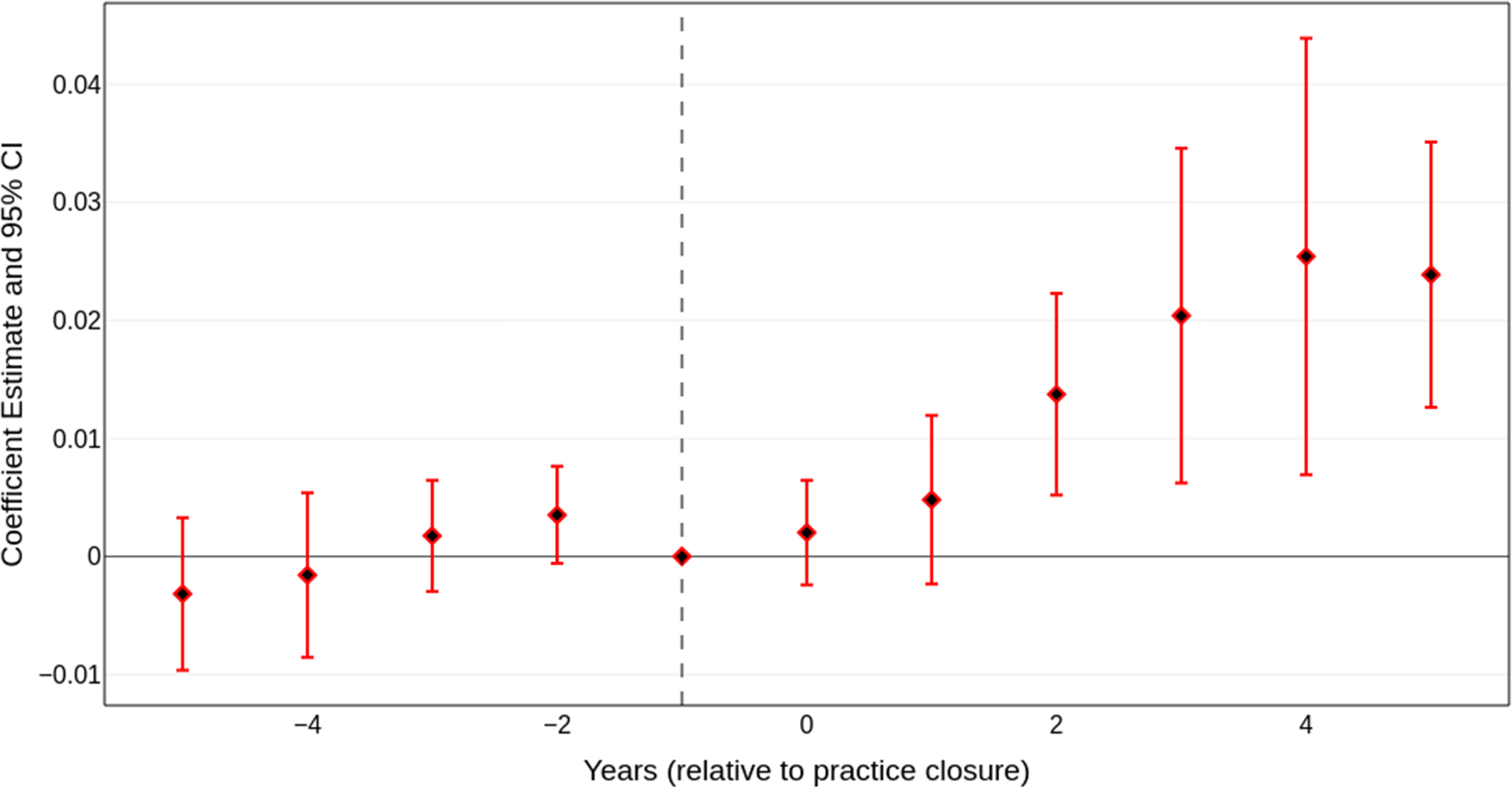
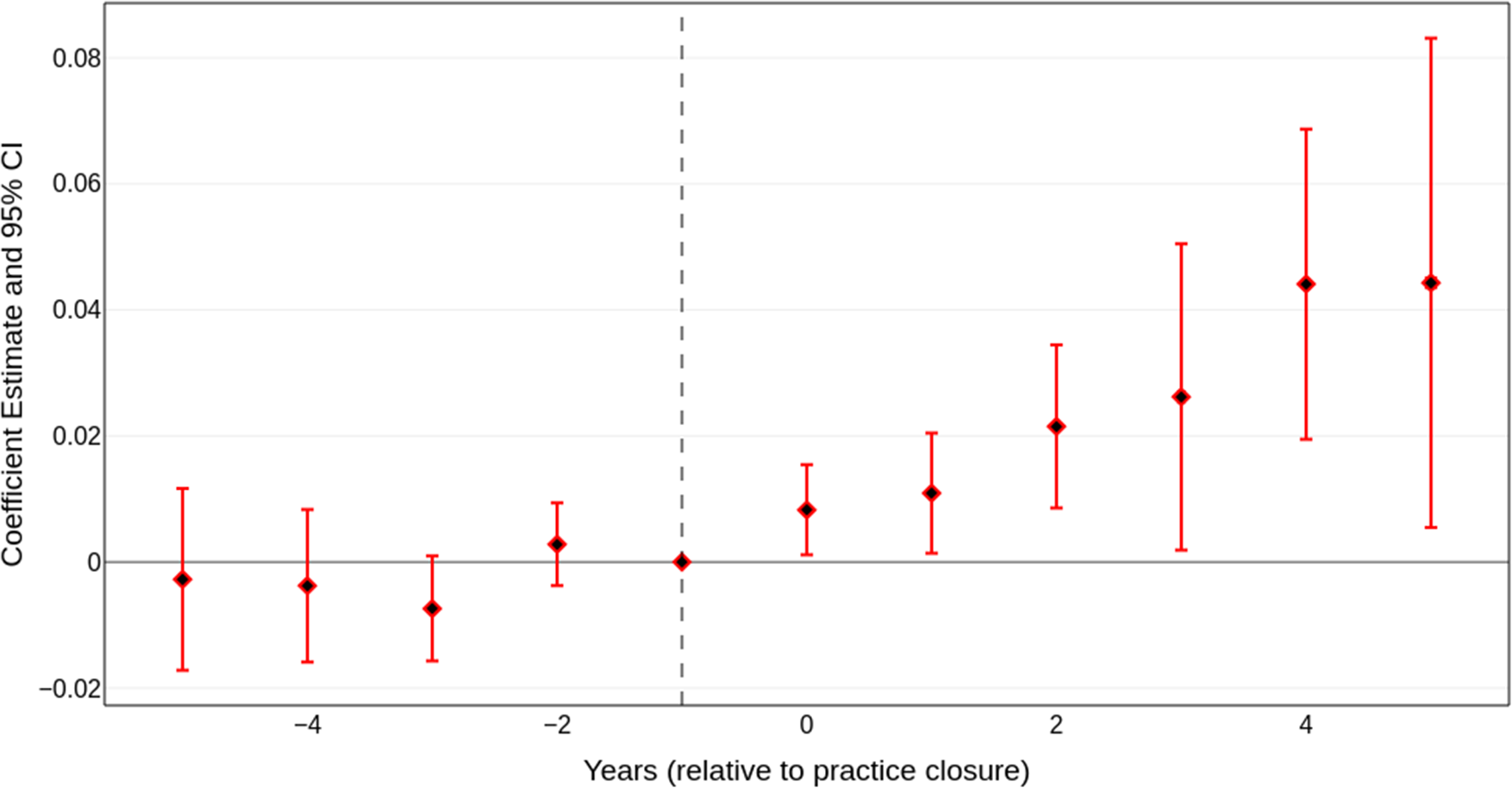
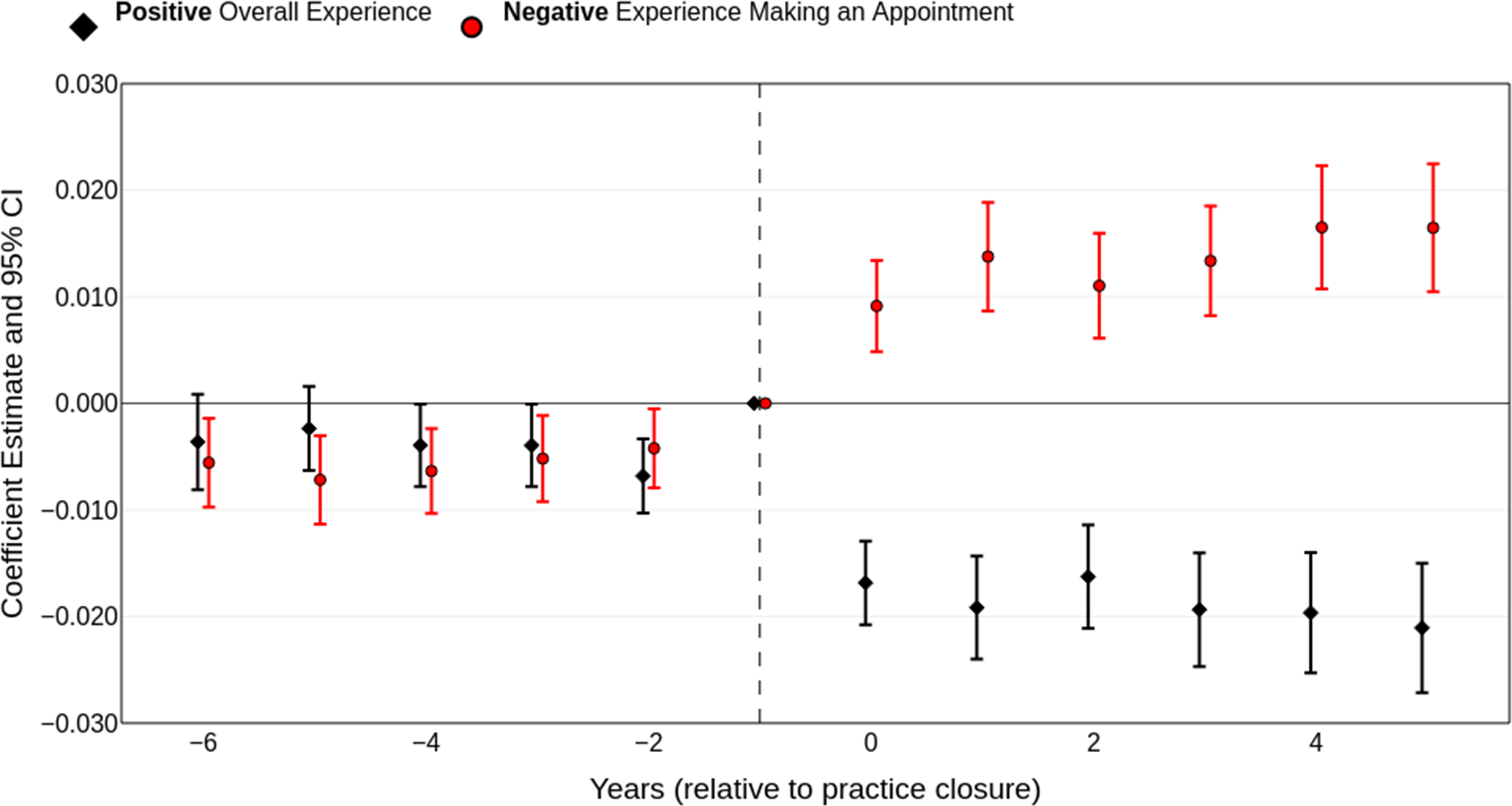


 Open access


Comments
No Comments have been published for this article.