This paper profiles three prototypical cases of girls growing to adulthood in the region, highlighting the cultural context. Observations and interviews were tools for data collection. Geographical and socio-cultural descriptions of the society are given as a commentary to draw a picture of the state. Added to that, the literature reviews and references are provided to assist understanding of the dimensions of the system. Interviews with the young women were done during the period of 2014–2015. Of all the girls interviewed, three life sketches are drawn from the data and narrated here. They represent different sections of the society based on caste. India's caste system is a social structure that divides different groups into ranked categories. They are classified according to occupation and determine access to wealth, power and privilege. The girls belonged to differently ranked categories: one from a ‘general caste category’ (GEN), one from an ‘other backward caste’ (OBC) category and, finally, from the ‘tea tribe’ which comes under the ‘scheduled caste’ (SC) category.Footnote
1
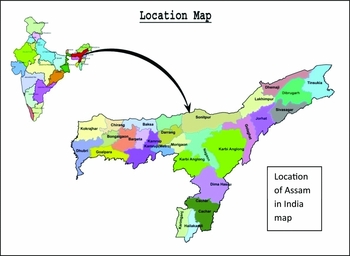
They were interviewed during field work in Jorhat and Golaghat districts in upper Assam (see Figure 1). The real names of the interviewees are changed due to ethical reasons. Prior written permission was taken from the interviewees as a ‘consent form’ signed by them, as well as their parents in the case of minors. The first author is a native speaker of local language (i.e., Assamese) and all interviews were done in that language. The data was recorded, transcribed and translated to English by the first author. Thus, this paper tries to throw light on the issues and concerns through the experiences of these three selected profiles of young women growing up in rural Assam.
Current Context in Assam
Assamese identity has become a big issue in the state. The recent political electoral process in the state has witnessed the ‘identity card’ playing a pivotal role in forming the new governance. Legal and illegal immigration, both internal and external, has contributed to this issue. Native people believe that the recent rise in the crime rate, extortion and rhino poaching is happening due to illegal immigrants from Bangladesh occupying the barren and forest lands. During the last decade, illegal immigrants were a major cause of distress among Assamese people, and political inaction regarding illegal land acquisition of forest and reserved areas by outsiders made the native population very angry. Infiltration by outsiders has made the area vulnerable to human trafficking. Due to poverty and unemployment, many locals become prey to middlemen who supply cheap human resources to the big cities. It has recently been reported that India currently accounts for the largest proportion of modern slavery (Abrams & Nauman, Reference Abrams and Nauman2016), with a total of 18 million people, this being 1.4% of the population of India and equivalent to the total population of the Netherlands. In Assam, many young men migrate to big cities looking for jobs, whereas young women are reported to have been duped by fake love affairs or fake job promises, eventually becoming victims of human trafficking agents.
According to a newspaper report published in a leading daily The Assam Tribune (2011), concern is growing over the status of adolescent girls and boys in high schools in Assam, with many in the age group 14–17 years dropping out of school. The condition of adolescent girls appears to be especially worrying, with a sizeable number of them getting married before the legal age of marriage (in India, the legal age for marriage for girls is 18 years and for boys it is 21 years). Furthermore, as reported in the daily itself, citing a UNICEF report, “There are an estimated 6.5 million adolescents in the age group 10–19 years in Assam, which amounts to 21.3% of the state's total population; 3.3 million are boys and 3.2 million are girls. Attendance levels among this age group drop as children move from elementary to secondary levels of schooling.” Poor economic condition is a major reason behind students being unable to continue their studies. Girls in this age group face additional risks in the area of health, as many of them are married off early. Consequently, many suffer health problems, which are compounded by limited access to healthcare, particularly in remote areas. Access to important health-related information is limited for girls, and many are governed by traditional rituals designed for young girls when they attain puberty. Girls in remote areas have limited knowledge on sex and reproductive health and are shy about discussing it. Knowledge on HIV-AIDS is also limited.
A study conducted by Sharma et al. (Reference Sharma, Narain, Devi, Mohapatra, Phukan and Mahanta2012) concluded that the incidence of anaemia among adolescent girl students in Assam is as high as 71.5% overall (including all types of severe, moderate and mild anaemia), and is a major public health problem among adolescent girls in the State. Another study by Bhattacharyya and Barua (Reference Bhattacharyya and Barua2013) on factors affecting nutritional status among adolescent girls living in the slums of Dibrugarh (a town in Upper Assam) revealed that low levels of literacy and larger family size have been the major factors contributing to the poor health of adolescent girls. They further observed that improvement in the nutritional status of adolescent girls requires a multi-sectored approach in order to ensure an adequate food supply, maintain a balance in food distribution and promote improved knowledge about nutrition and healthy eating habits. They concluded that health and nutritional education, especially of mothers, can play a vital role in improving the nutritional status of these adolescent girls. As reported by Rehman (Reference Rehman2014), the rate of child marriage in Assam, at 40%, is lower than the national average of 43%, but there are pockets, such as the tea gardens, where the levels are much higher. She further states that a study by the Assam Branch of the Indian Tea Association (ABITA) in one of the most tea garden-intensive districts of the state, Dibrugarh, found that one-quarter of all respondents (4,100 parents) felt that it was appropriate for girls to marry between the ages of 14 and 18 years.
Growing Up in Assam
First-hand observations reveal that people living in Assam face many challenges that others living in comparatively developed parts of the country do not. Within Assam, there are less developed areas where connectivity is a big problem. The places located around highways connected with the rest of India show relative prosperity compared to rural areas. Assam receives a massive rainfall annually and struggles with floods almost every year during the monsoon season. Floods cut off the people from the rest of the world and make survival a struggle. The fluctuations in price of daily commodities are also quite evident in rural areas. For example, the price of an egg is generally 4–5 rupees in urban and suburban areas, whereas it may be 10–15 rupees in rural areas. The lack of access to many goods and services make villagers feel isolated in various ways, and thus feeling under pressure to overcome these difficulties. Lack of educational and employment opportunities in remote areas lead many villagers to migrate to cities and large towns. This not only burdens cities with a dramatic population explosion, but also affects family members left behind to take on the responsibilities of farming or other jobs. Apart from malnutrition and poor health, people also have to face the challenges of emotional pain, depression, relationship turbulence, domestic violence, alcoholism, natural disasters and accidents.
The narratives of three girls/young women that follow bring alive the conspicuous concerns and contemporary challenges of growing up in the area.
Let us discuss the life experience of Asha:
“I am Asha.Footnote
2
I am 17 years old. I live in a village near a small town called Jorhat in Upper Assam. I study in eleventh grade in a girl's school in Jorhat. Daily, I travel 10 kilometres to school and back to attend classes. I think I am average at my studies and doing just ‘okay’ in my life. I am the third child of my parents. We were three sisters and one brother till last year. Now, one among us is no more. My eldest sister, Rekha, is 5 years older than me and was recruited as an airhostess by a, then, leading private airline company in India when she completed her high school (12th grade) a few years ago. Rekha is beautiful, smart, and ambitious. She had to shift to Mumbai (a metropolitan city) for her work. It was a dream come true for her and our parents supported her in pursuing her dreams. My father is a State Government employee and other family members look after the farmlands that we have inherited from previous generations. Rekha worked for the airline for two years until the airline company eventually went bankrupt and closed down. She was left jobless and could not manage to get a new job with other airlines. She was not a graduate and therefore could not manage to get a decent job at any other private company. At that time, she fell in love with a ‘native boy’ who lived in a suburb in Assam. As her career was not growing as expected and moreover she was madly in love, she flew back to Assam to marry him. Within a year of marriage, they faced irreconcilable differences and thus separated. She was no longer able to adjust to the rural environment and slow-paced life of Assam compared to what she experienced in Mumbai. She decided to move to Delhi (another metro city) and continued with her graduation. My father took a loan to support her aviation training, which he continues to repay in instalments. These events in life had an impact on everyone in my family. All were very upset for a while. After that, the most unfortunate incident happened. Our second sister, Nisha, who was younger than Rekha and older than me, ended her own life. She was just 17 years old when this incident happened and I was just 14 years old. Nisha took this drastic step because her boyfriend humiliated and slapped her in public. Nisha could not bear the emotional pain and gave up on her life. This incident shook up our family. The elders of my family become more protective of me and placed more restrictions on my movements. I got the shock of my life and was disheartened by the tragedies of my two elder sisters. My elder sister's broken marriage invited lots of comments and criticism from relatives and neighbours. Rekha left for Delhi to escape the criticism but back home we had to listen to the negative opinions and comments on my sister's character. I feel scared and don't think I am good enough in anything. Moreover, for some time I had developed severe headaches. My mother always reminded me of my sisters and warned me not to make any move without asking her. She says, ‘Just go to school and come back home directly. No need to talk to anybody. Keep distance from boys.’ I fear that any step of mine may upset her. I shared my feelings with my friends at school and with my grandmother at home. All of my friends have boyfriends. They introduce me to friends of their boyfriends and encourage me to start a relationship. They reassure me that nothing will happen. I feel confused all the time and am always in a dilemma. I cannot concentrate on my studies. I am not happy with my life."
Asha, endowed with a pleasing appearance and manner, has suffered from chronic depression for a while. She is average at her studies and her depression is so severe that she is reported to suffer terrible headaches every day. It was moving to see a young woman from a modest and cultured family of rural background so depressed. It was heart-wrenching to learn what she and her family underwent in recent times. Broken marriage is a taboo in Indian society and so Asha and her family are going through tough times. On top of this, she experiences peer pressure to find a boyfriend since all her friends have one. This has added considerably to the stress experienced by this young woman.
Let us discuss the life experience of Lucky, another young girl who is 24 years old and married.
“My name is Lucky and I am 24 years old. I am the oldest of four siblings. I have two sisters and a brother. We live in a village, which is 20 kilometres from the nearby town, Golaghat. My village is well connected to the town and a railway junction ‘Furkating’ is located just 10 kilometres away from my home. I completed high school at the village school itself. After that, I did my graduation from a college at Golaghat town and stayed at a paying guest accommodation for three years. My father is the head-teacher at the village school and my mother is a housewife. We all look after our ancestral farms, engaged in rice cultivation and seasonal vegetable farming. We hire contract labourers for farming, and I look after the accounts, and monitor the farm work while my father is at school. The rest of the time, he manages everything. I am the darling of my father. I completed my graduation, and soon after that, worked as a school teacher in a private school for a year. A year later, I got married at the age of 22. Some of my friends were already married before completion of their college studies. A few of them went to pursue post-graduation studies in towns like Jorhat, Dibrugarh or Guwahati. As I am the oldest girl at home, and my friends were also getting married, my parents started looking for a suitable match for me. It was an arranged marriage and I was prepared for that. The marriage was arranged by a common relative. The groom is a well-educated practicing advocate at the district session court and the only son of his parents. The family lived in a town. Therefore, my parents said ‘yes’ at once. My family and my neighbours said that I am very fortunate to have found a husband and a family like this. After the marriage, my in-laws advised me to pursue higher studies, but I wonder if I would get a seat, as my graduation marks were not so good. I am not thinking of studying any further, at least, as of now. Currently, I am just trying to adjust to the new environment and a new lifestyle of a new family. Sometimes I miss my home and my family. At home, I was the oldest sibling whereas at my in-laws’ home, I am the youngest one. This is a change for me as I have to behave myself. I found the food habits different, between the rural and urban lifestyles. At home, we would have rice three times a day but here we have food in variation. I am learning to make a roti (Indian bread) now. My friends who got married before I did, and lived in villages, compare their lives with mine. They said their in-laws do not behave properly with them and their lives are tough compared to mine. I really feel fortunate enough that my ‘Maa’ (mother-in-law) treats me like her own daughter. I am happy that I got a good husband and a supportive family. I am happy with my life. I am looking forward to extending my family!”
In contrast to Asha's experience, Lucky's life experience communicated a state of happiness and contentment. Her aspirations in life are limited, yet as a person she is satisfied. Her life is simple and regular and she is happy leading her life that way. The concept of well-being differs from person to person. It is not necessary that a person with all privileges would be happy always or vice versa. Yet, it is important to have and build up certain support systems that enable and offer back up when in need.
Sunita offers a view of yet another life experience:
“Hello, my name is Sunita. I am in the second semester of my graduation. I am 19 years old. I am doing a Bachelor of Arts (B.A.) course at J.B. College, Jorhat. It is one of the most prestigious and old colleges in upper Assam and I am proud that I could make it here! I reside in the college hostel. I belong to Sah Janagosthi (Tea Tribe) in Assam. My family has been working in tea gardens for generations. My grandparents were tea garden workers who did the tea plucking, pruning and tilling jobs. They accepted Christianity as our religion before I was born. After that, my father and our whole family converted to Christianity. The Catholic Church has helped my father financially to complete his Bachelor of Commerce degree. After completion of his B.Com., my father joined as a clerk at the same tea garden where we were born and brought up. Eventually, we moved out from the Labour Line (accommodation provided by tea garden management) to our own house. My father bought land near the main road and built a kutcha (made up of wood, mud, straw and dry leaves) house. He also bought 15 bigha (6 acres) of farmland. We do paddy cultivation and vegetable farming. Now, we have started planting tea in 7 bigha of land. We are ourselves small tea farmers now. My grandparents still live in the Labour Line. At our new home, my parents live with my brother and sister. My unmarried aunt also lives with us and she mostly works in our fields. A destitute man also lives in our house and works in our fields. Whenever I visit home, I also work on the farm be it with vegetables, rice or tea. I was good at studies. Observing this fact, Father Peter from our church arranged funds from the Manos Unidas project for my education. He arranged my admission to Saint Xavier High School at Duliajaan (a town in upper Assam). I did my high schooling there and stayed in the hostel. Father Peter gave my admission fees and monthly maintenance fee to my father. I don't know exactly how much money he has been given. I don't know much about Manos Unidas, but I know for sure that Father Peter would help me whenever we need help. After high school, I took admission to J.B. College with help from this project only. After graduation, I plan to appear for the civil service exam and become an Indian Administrative Service (IAS) officer. I feel girls in my community, along with need of money, also need guidance, a proper environment at home and in society. Most importantly, girls need parental support to do well in life. Only 1 in 10 of them is getting that and moving forward in pursuing their dreams. The rest of the girls in our community are still trapped in age-old beliefs, alcoholism, domestic violence and bone breaking poverty.”
According to Vygotsky's Social Development theory (1978), social interaction plays a fundamental role in the process of cognitive development of an individual. Vygotsky felt that social learning precedes development, and focused on the connection between people and the socio-cultural context in which they act and interact in shared experiences. This may explain the case of the Tea Tribes. These are the people who work in the tea gardens in the State. Among the Tea Tribes, early marriage is rampant for several reasons. The nimble fingers of women and girls are considered better suited to tea-plucking, and they are more easily employed and controlled by the Sardar. These are the community members who function as overseers. Long working hours and low wages, poor healthcare facilities, and a lack of other basic amenities make them a vulnerable group. Poor levels of education and a lack of schooling also make them susceptible to exploitation. Within the tea gardens, there are schools that run only up to the primary level. For higher classes, parents have to send their children to distant schools. The girls mostly drop out because of safety concerns while commuting, family issues such as having to look after younger siblings at home, financial issues such as lack of money, and also many of them lose interest in studies once the subjects in higher classes become tougher to understand, and they have nobody at home who can help them learn. Trying to adapt to a new environment in a new school makes them prone to shyness, and leads to an unwillingness to approach teachers and others for help with their studies. Very few of them can overcome such challenges and are able to educate themselves to get decent jobs outside the tea gardens. Typical to India's patriarchal society, the Tea Tribe community has always preferred male children to female ones. Unlike in other communities in India, elopement is a common occurrence among the Tea Tribes. Teenagers often run away with each other and get married, sometimes against their families’ wishes and sometimes with their families’ full knowledge. Many parents do not mind their daughters eloping as they would not be able to afford the cost of a marriage ceremony. Some of them believe that Bollywood movies, and more recently mobile phones, have contributed to the high incidence of romantic relationships and elopements.
More recent Ecological Systems theory of Bronfenbrenner and Evans (Reference Bronfenbrenner and Evans2000) argues that ‘time’ along with the macrosystem, exosystem, mesosystem and microsystem around an individual can influence their well-being. This perspective addresses how macrosystem contextual factors like an economic crisis, natural disaster or change in the political scenario impact different cohorts of adolescents and youth in different ways over time, depending on variability in timing, family characteristics and strategies. This theory relates to the current issues of the state of Assam and their influences on youth's well-being. Directly or indirectly, adolescent girls are affected by the floods, human trafficking and other contemporary issues. The modern age and the beginning of the internet era contributed to the aspirations of many young women from rural and far flung areas who now wish for a career-oriented life and so their struggles include new dimensions.
In her book, Family, Self and Human Development across Cultures, Kagitcibasi (Reference Kagitcibasi2007) mentioned that there is an inclusive ecological framework focusing on the individual, at the centre of the developmental niche. The setting includes a whole range of important environmental factors in a child's environment. They are physical settings, climate, nutrition, household, family size, language and so on. Customary upbringing, daily routines including play and work patterns, caretaking behaviours, formal and informal education along with parental beliefs, values and orientations all together interact and act in a dynamic system. Exploring the identity of the adolescent girls among 150 girls in the age group 16–19 years, Sharma (Reference Sharma1996) found that gender identity was the primary feature of the female adolescent's sense of self in India. Although formal education generated certain questioning about self-worth and future aspirations, it did not seem to overpower her sense of identification with her gender role. The importance on her role as a future homemaker is never discarded, even at the highest level of education. The case of Lucky represents the same sense of self and, despite influence from her in-laws, she could politely refuse to pursue higher education and focus mainly on her own gender role.






 You have
Access
I believe that the very purpose of life is to be happy. From the very core of our being, we desire contentment. The more we care for the happiness of others, the greater is our own sense of well-being.
(H.H.)Dalai Lama
Introduction
This paper offers a picture of the life of young women living in rural India, specifically in the state of Assam. It is drawn from a doctoral work that is in progress. Assam is a state in the north-eastern part of India. It is the largest producer of tea in the country. It also has resources such as oil and natural gas, and diverse flora and fauna in several rainforests. Worldwide, it is known for Assam Tea and the Kaziranga National Park, which is home to the endangered species, one-horn rhinoceros. Geographically, Assam can be broadly divided into three parts. Upper Assam is the area alongside the river Brahmaputra, incorporating the Brahmaputra valley, from the capital city of Guwahati to the Tinsukia district in the east, and bordering the neighbouring states of Arunachal Pradesh and Nagaland. It is so-called mainly because of its higher altitude above sea level. In the west, the area from Guwahati to the Dhubri district, bordering the neighbouring state of West Bengal and the countries of Bhutan and Bangladesh, is called Lower Assam. The third part of Assam, the Barak valley, is the region surrounding the second largest river in the state, the Barak, and it borders the neighbouring states of Tripura and Mizoram, and parts of Bangladesh.
For centuries, numerous ethnic groups with their distinctive traditions and languages have been living throughout the state. In both Upper and Lower Assam, Assamese is the official language although ethnic tribes speak their own languages among themselves. Hindi-speakers also live in the state along with both recent and historic migrant Nepalese- and Burmese-speakers. Assam as a whole is cosmopolitan in composition in terms of caste and creed. Assamese-speaking Hindus, Assamese-speaking Muslims, Bengali-speaking Hindus, Bengali-speaking immigrant Muslims, Hindi-speaking inhabitants of Bihar and Uttar Pradesh, Punjabi-speaking inhabitants of Punjab, numerous smaller ethnic groups with their own dialect like Bodo, Kachari, Mishing, Karbi, Deuri, other populations such as Nepalese, Sikhs, Christians, Buddhists, Jains and a huge diversity of so-called Tea Tribes make Assam a colourful carpet of human threads.
Although modernity and technology reach a large population in the state, nevertheless significant numbers of people face many challenges in attaining a decent quality of life. An example is the contrast between people in remote areas possessing mobile phones while still practising open defecation due to lack of public toilets. At present, it could be said that the state is in a transformational phase. One positive point observed in the state is that people are realising the value of education, and encouraging their children to do well academically. The average literacy rate in Assam is 73% (the national average is 74%) and better than many other industrially developed states in the country (Census of India, 2011). However, the state has a high rate of school dropouts, early marriages, and higher infant mortality rates (IMR) and maternal mortality rates (MMR). The incidence of anaemia is also very high in the state, which is a major concern for the well-being of young girls. These issues are most prevalent among young women. We will try to shed some light on the lives of young girls going through this challenging transitory phase to womanhood while facing all the other issues that exist in Assamese society.
Methods
This paper profiles three prototypical cases of girls growing to adulthood in the region, highlighting the cultural context. Observations and interviews were tools for data collection. Geographical and socio-cultural descriptions of the society are given as a commentary to draw a picture of the state. Added to that, the literature reviews and references are provided to assist understanding of the dimensions of the system. Interviews with the young women were done during the period of 2014–2015. Of all the girls interviewed, three life sketches are drawn from the data and narrated here. They represent different sections of the society based on caste. India's caste system is a social structure that divides different groups into ranked categories. They are classified according to occupation and determine access to wealth, power and privilege. The girls belonged to differently ranked categories: one from a ‘general caste category’ (GEN), one from an ‘other backward caste’ (OBC) category and, finally, from the ‘tea tribe’ which comes under the ‘scheduled caste’ (SC) category.Footnote 1 They were interviewed during field work in Jorhat and Golaghat districts in upper Assam (see Figure 1). The real names of the interviewees are changed due to ethical reasons. Prior written permission was taken from the interviewees as a ‘consent form’ signed by them, as well as their parents in the case of minors. The first author is a native speaker of local language (i.e., Assamese) and all interviews were done in that language. The data was recorded, transcribed and translated to English by the first author. Thus, this paper tries to throw light on the issues and concerns through the experiences of these three selected profiles of young women growing up in rural Assam.
Location map. Source: Government of Assam official website. Retrieved from http://online.assam.gov.in/AopHome-theme/images/aop/maps/Location%20map.jpg
Current Context in Assam
Assamese identity has become a big issue in the state. The recent political electoral process in the state has witnessed the ‘identity card’ playing a pivotal role in forming the new governance. Legal and illegal immigration, both internal and external, has contributed to this issue. Native people believe that the recent rise in the crime rate, extortion and rhino poaching is happening due to illegal immigrants from Bangladesh occupying the barren and forest lands. During the last decade, illegal immigrants were a major cause of distress among Assamese people, and political inaction regarding illegal land acquisition of forest and reserved areas by outsiders made the native population very angry. Infiltration by outsiders has made the area vulnerable to human trafficking. Due to poverty and unemployment, many locals become prey to middlemen who supply cheap human resources to the big cities. It has recently been reported that India currently accounts for the largest proportion of modern slavery (Abrams & Nauman, Reference Abrams and Nauman2016), with a total of 18 million people, this being 1.4% of the population of India and equivalent to the total population of the Netherlands. In Assam, many young men migrate to big cities looking for jobs, whereas young women are reported to have been duped by fake love affairs or fake job promises, eventually becoming victims of human trafficking agents.
According to a newspaper report published in a leading daily The Assam Tribune (2011), concern is growing over the status of adolescent girls and boys in high schools in Assam, with many in the age group 14–17 years dropping out of school. The condition of adolescent girls appears to be especially worrying, with a sizeable number of them getting married before the legal age of marriage (in India, the legal age for marriage for girls is 18 years and for boys it is 21 years). Furthermore, as reported in the daily itself, citing a UNICEF report, “There are an estimated 6.5 million adolescents in the age group 10–19 years in Assam, which amounts to 21.3% of the state's total population; 3.3 million are boys and 3.2 million are girls. Attendance levels among this age group drop as children move from elementary to secondary levels of schooling.” Poor economic condition is a major reason behind students being unable to continue their studies. Girls in this age group face additional risks in the area of health, as many of them are married off early. Consequently, many suffer health problems, which are compounded by limited access to healthcare, particularly in remote areas. Access to important health-related information is limited for girls, and many are governed by traditional rituals designed for young girls when they attain puberty. Girls in remote areas have limited knowledge on sex and reproductive health and are shy about discussing it. Knowledge on HIV-AIDS is also limited.
A study conducted by Sharma et al. (Reference Sharma, Narain, Devi, Mohapatra, Phukan and Mahanta2012) concluded that the incidence of anaemia among adolescent girl students in Assam is as high as 71.5% overall (including all types of severe, moderate and mild anaemia), and is a major public health problem among adolescent girls in the State. Another study by Bhattacharyya and Barua (Reference Bhattacharyya and Barua2013) on factors affecting nutritional status among adolescent girls living in the slums of Dibrugarh (a town in Upper Assam) revealed that low levels of literacy and larger family size have been the major factors contributing to the poor health of adolescent girls. They further observed that improvement in the nutritional status of adolescent girls requires a multi-sectored approach in order to ensure an adequate food supply, maintain a balance in food distribution and promote improved knowledge about nutrition and healthy eating habits. They concluded that health and nutritional education, especially of mothers, can play a vital role in improving the nutritional status of these adolescent girls. As reported by Rehman (Reference Rehman2014), the rate of child marriage in Assam, at 40%, is lower than the national average of 43%, but there are pockets, such as the tea gardens, where the levels are much higher. She further states that a study by the Assam Branch of the Indian Tea Association (ABITA) in one of the most tea garden-intensive districts of the state, Dibrugarh, found that one-quarter of all respondents (4,100 parents) felt that it was appropriate for girls to marry between the ages of 14 and 18 years.
Growing Up in Assam
First-hand observations reveal that people living in Assam face many challenges that others living in comparatively developed parts of the country do not. Within Assam, there are less developed areas where connectivity is a big problem. The places located around highways connected with the rest of India show relative prosperity compared to rural areas. Assam receives a massive rainfall annually and struggles with floods almost every year during the monsoon season. Floods cut off the people from the rest of the world and make survival a struggle. The fluctuations in price of daily commodities are also quite evident in rural areas. For example, the price of an egg is generally 4–5 rupees in urban and suburban areas, whereas it may be 10–15 rupees in rural areas. The lack of access to many goods and services make villagers feel isolated in various ways, and thus feeling under pressure to overcome these difficulties. Lack of educational and employment opportunities in remote areas lead many villagers to migrate to cities and large towns. This not only burdens cities with a dramatic population explosion, but also affects family members left behind to take on the responsibilities of farming or other jobs. Apart from malnutrition and poor health, people also have to face the challenges of emotional pain, depression, relationship turbulence, domestic violence, alcoholism, natural disasters and accidents.
The narratives of three girls/young women that follow bring alive the conspicuous concerns and contemporary challenges of growing up in the area.
Let us discuss the life experience of Asha:
“I am Asha.Footnote 2 I am 17 years old. I live in a village near a small town called Jorhat in Upper Assam. I study in eleventh grade in a girl's school in Jorhat. Daily, I travel 10 kilometres to school and back to attend classes. I think I am average at my studies and doing just ‘okay’ in my life. I am the third child of my parents. We were three sisters and one brother till last year. Now, one among us is no more. My eldest sister, Rekha, is 5 years older than me and was recruited as an airhostess by a, then, leading private airline company in India when she completed her high school (12th grade) a few years ago. Rekha is beautiful, smart, and ambitious. She had to shift to Mumbai (a metropolitan city) for her work. It was a dream come true for her and our parents supported her in pursuing her dreams. My father is a State Government employee and other family members look after the farmlands that we have inherited from previous generations. Rekha worked for the airline for two years until the airline company eventually went bankrupt and closed down. She was left jobless and could not manage to get a new job with other airlines. She was not a graduate and therefore could not manage to get a decent job at any other private company. At that time, she fell in love with a ‘native boy’ who lived in a suburb in Assam. As her career was not growing as expected and moreover she was madly in love, she flew back to Assam to marry him. Within a year of marriage, they faced irreconcilable differences and thus separated. She was no longer able to adjust to the rural environment and slow-paced life of Assam compared to what she experienced in Mumbai. She decided to move to Delhi (another metro city) and continued with her graduation. My father took a loan to support her aviation training, which he continues to repay in instalments. These events in life had an impact on everyone in my family. All were very upset for a while. After that, the most unfortunate incident happened. Our second sister, Nisha, who was younger than Rekha and older than me, ended her own life. She was just 17 years old when this incident happened and I was just 14 years old. Nisha took this drastic step because her boyfriend humiliated and slapped her in public. Nisha could not bear the emotional pain and gave up on her life. This incident shook up our family. The elders of my family become more protective of me and placed more restrictions on my movements. I got the shock of my life and was disheartened by the tragedies of my two elder sisters. My elder sister's broken marriage invited lots of comments and criticism from relatives and neighbours. Rekha left for Delhi to escape the criticism but back home we had to listen to the negative opinions and comments on my sister's character. I feel scared and don't think I am good enough in anything. Moreover, for some time I had developed severe headaches. My mother always reminded me of my sisters and warned me not to make any move without asking her. She says, ‘Just go to school and come back home directly. No need to talk to anybody. Keep distance from boys.’ I fear that any step of mine may upset her. I shared my feelings with my friends at school and with my grandmother at home. All of my friends have boyfriends. They introduce me to friends of their boyfriends and encourage me to start a relationship. They reassure me that nothing will happen. I feel confused all the time and am always in a dilemma. I cannot concentrate on my studies. I am not happy with my life."
Asha, endowed with a pleasing appearance and manner, has suffered from chronic depression for a while. She is average at her studies and her depression is so severe that she is reported to suffer terrible headaches every day. It was moving to see a young woman from a modest and cultured family of rural background so depressed. It was heart-wrenching to learn what she and her family underwent in recent times. Broken marriage is a taboo in Indian society and so Asha and her family are going through tough times. On top of this, she experiences peer pressure to find a boyfriend since all her friends have one. This has added considerably to the stress experienced by this young woman.
Let us discuss the life experience of Lucky, another young girl who is 24 years old and married.
“My name is Lucky and I am 24 years old. I am the oldest of four siblings. I have two sisters and a brother. We live in a village, which is 20 kilometres from the nearby town, Golaghat. My village is well connected to the town and a railway junction ‘Furkating’ is located just 10 kilometres away from my home. I completed high school at the village school itself. After that, I did my graduation from a college at Golaghat town and stayed at a paying guest accommodation for three years. My father is the head-teacher at the village school and my mother is a housewife. We all look after our ancestral farms, engaged in rice cultivation and seasonal vegetable farming. We hire contract labourers for farming, and I look after the accounts, and monitor the farm work while my father is at school. The rest of the time, he manages everything. I am the darling of my father. I completed my graduation, and soon after that, worked as a school teacher in a private school for a year. A year later, I got married at the age of 22. Some of my friends were already married before completion of their college studies. A few of them went to pursue post-graduation studies in towns like Jorhat, Dibrugarh or Guwahati. As I am the oldest girl at home, and my friends were also getting married, my parents started looking for a suitable match for me. It was an arranged marriage and I was prepared for that. The marriage was arranged by a common relative. The groom is a well-educated practicing advocate at the district session court and the only son of his parents. The family lived in a town. Therefore, my parents said ‘yes’ at once. My family and my neighbours said that I am very fortunate to have found a husband and a family like this. After the marriage, my in-laws advised me to pursue higher studies, but I wonder if I would get a seat, as my graduation marks were not so good. I am not thinking of studying any further, at least, as of now. Currently, I am just trying to adjust to the new environment and a new lifestyle of a new family. Sometimes I miss my home and my family. At home, I was the oldest sibling whereas at my in-laws’ home, I am the youngest one. This is a change for me as I have to behave myself. I found the food habits different, between the rural and urban lifestyles. At home, we would have rice three times a day but here we have food in variation. I am learning to make a roti (Indian bread) now. My friends who got married before I did, and lived in villages, compare their lives with mine. They said their in-laws do not behave properly with them and their lives are tough compared to mine. I really feel fortunate enough that my ‘Maa’ (mother-in-law) treats me like her own daughter. I am happy that I got a good husband and a supportive family. I am happy with my life. I am looking forward to extending my family!”
In contrast to Asha's experience, Lucky's life experience communicated a state of happiness and contentment. Her aspirations in life are limited, yet as a person she is satisfied. Her life is simple and regular and she is happy leading her life that way. The concept of well-being differs from person to person. It is not necessary that a person with all privileges would be happy always or vice versa. Yet, it is important to have and build up certain support systems that enable and offer back up when in need.
Sunita offers a view of yet another life experience:
“Hello, my name is Sunita. I am in the second semester of my graduation. I am 19 years old. I am doing a Bachelor of Arts (B.A.) course at J.B. College, Jorhat. It is one of the most prestigious and old colleges in upper Assam and I am proud that I could make it here! I reside in the college hostel. I belong to Sah Janagosthi (Tea Tribe) in Assam. My family has been working in tea gardens for generations. My grandparents were tea garden workers who did the tea plucking, pruning and tilling jobs. They accepted Christianity as our religion before I was born. After that, my father and our whole family converted to Christianity. The Catholic Church has helped my father financially to complete his Bachelor of Commerce degree. After completion of his B.Com., my father joined as a clerk at the same tea garden where we were born and brought up. Eventually, we moved out from the Labour Line (accommodation provided by tea garden management) to our own house. My father bought land near the main road and built a kutcha (made up of wood, mud, straw and dry leaves) house. He also bought 15 bigha (6 acres) of farmland. We do paddy cultivation and vegetable farming. Now, we have started planting tea in 7 bigha of land. We are ourselves small tea farmers now. My grandparents still live in the Labour Line. At our new home, my parents live with my brother and sister. My unmarried aunt also lives with us and she mostly works in our fields. A destitute man also lives in our house and works in our fields. Whenever I visit home, I also work on the farm be it with vegetables, rice or tea. I was good at studies. Observing this fact, Father Peter from our church arranged funds from the Manos Unidas project for my education. He arranged my admission to Saint Xavier High School at Duliajaan (a town in upper Assam). I did my high schooling there and stayed in the hostel. Father Peter gave my admission fees and monthly maintenance fee to my father. I don't know exactly how much money he has been given. I don't know much about Manos Unidas, but I know for sure that Father Peter would help me whenever we need help. After high school, I took admission to J.B. College with help from this project only. After graduation, I plan to appear for the civil service exam and become an Indian Administrative Service (IAS) officer. I feel girls in my community, along with need of money, also need guidance, a proper environment at home and in society. Most importantly, girls need parental support to do well in life. Only 1 in 10 of them is getting that and moving forward in pursuing their dreams. The rest of the girls in our community are still trapped in age-old beliefs, alcoholism, domestic violence and bone breaking poverty.”
According to Vygotsky's Social Development theory (1978), social interaction plays a fundamental role in the process of cognitive development of an individual. Vygotsky felt that social learning precedes development, and focused on the connection between people and the socio-cultural context in which they act and interact in shared experiences. This may explain the case of the Tea Tribes. These are the people who work in the tea gardens in the State. Among the Tea Tribes, early marriage is rampant for several reasons. The nimble fingers of women and girls are considered better suited to tea-plucking, and they are more easily employed and controlled by the Sardar. These are the community members who function as overseers. Long working hours and low wages, poor healthcare facilities, and a lack of other basic amenities make them a vulnerable group. Poor levels of education and a lack of schooling also make them susceptible to exploitation. Within the tea gardens, there are schools that run only up to the primary level. For higher classes, parents have to send their children to distant schools. The girls mostly drop out because of safety concerns while commuting, family issues such as having to look after younger siblings at home, financial issues such as lack of money, and also many of them lose interest in studies once the subjects in higher classes become tougher to understand, and they have nobody at home who can help them learn. Trying to adapt to a new environment in a new school makes them prone to shyness, and leads to an unwillingness to approach teachers and others for help with their studies. Very few of them can overcome such challenges and are able to educate themselves to get decent jobs outside the tea gardens. Typical to India's patriarchal society, the Tea Tribe community has always preferred male children to female ones. Unlike in other communities in India, elopement is a common occurrence among the Tea Tribes. Teenagers often run away with each other and get married, sometimes against their families’ wishes and sometimes with their families’ full knowledge. Many parents do not mind their daughters eloping as they would not be able to afford the cost of a marriage ceremony. Some of them believe that Bollywood movies, and more recently mobile phones, have contributed to the high incidence of romantic relationships and elopements.
More recent Ecological Systems theory of Bronfenbrenner and Evans (Reference Bronfenbrenner and Evans2000) argues that ‘time’ along with the macrosystem, exosystem, mesosystem and microsystem around an individual can influence their well-being. This perspective addresses how macrosystem contextual factors like an economic crisis, natural disaster or change in the political scenario impact different cohorts of adolescents and youth in different ways over time, depending on variability in timing, family characteristics and strategies. This theory relates to the current issues of the state of Assam and their influences on youth's well-being. Directly or indirectly, adolescent girls are affected by the floods, human trafficking and other contemporary issues. The modern age and the beginning of the internet era contributed to the aspirations of many young women from rural and far flung areas who now wish for a career-oriented life and so their struggles include new dimensions.
In her book, Family, Self and Human Development across Cultures, Kagitcibasi (Reference Kagitcibasi2007) mentioned that there is an inclusive ecological framework focusing on the individual, at the centre of the developmental niche. The setting includes a whole range of important environmental factors in a child's environment. They are physical settings, climate, nutrition, household, family size, language and so on. Customary upbringing, daily routines including play and work patterns, caretaking behaviours, formal and informal education along with parental beliefs, values and orientations all together interact and act in a dynamic system. Exploring the identity of the adolescent girls among 150 girls in the age group 16–19 years, Sharma (Reference Sharma1996) found that gender identity was the primary feature of the female adolescent's sense of self in India. Although formal education generated certain questioning about self-worth and future aspirations, it did not seem to overpower her sense of identification with her gender role. The importance on her role as a future homemaker is never discarded, even at the highest level of education. The case of Lucky represents the same sense of self and, despite influence from her in-laws, she could politely refuse to pursue higher education and focus mainly on her own gender role.
Conclusion
Adolescence as a whole is a transformational and, to an extent, a turbulent phase. This sensitive phase needs care and guidance to help adolescents successfully mature into adults. The issues discussed here may have both direct and indirect effects on adolescents. The consequences of early marriage for girls are extremely adverse. With early marriage comes early pregnancy, putting the lives of both the mother and baby at risk. Most adolescent girls and women in the tea gardens are anaemic because of their poor diets and this, if it combines with early pregnancy, leads to a higher MMR. Early marriages have also resulted in several separation cases as a result of young couples finding marriage difficult to cope with. If the girl becomes pregnant and the father is not physically, mentally, or financially prepared to shoulder the responsibility, the girl returns to her parents’ home and a future of great uncertainty. Although on a downward trend, Assam still has one of the country's highest MMR. The latest data puts the number at 328 per 100,000 live births (Rehman, Reference Rehman2014). The life experience of Sunita and her family's conversion to Christianity had a positive impact on their lives. It helped them to overcome poverty. Education gives the family new goals and confidence to explore more. Sunita is full of aspirations and that is inspiring. The importance of education is prominent in her case, as she mentioned that only 10% of girls in her community are pursuing studies. The rest of girls in her community do not complete schooling. Vigorous and sustained efforts at promotion of ‘Education for All’ are necessary to enable changes in society.
The stories of Asha, Lucky, Sunita and other girls like them living in rural areas are thought-provoking. They are facing issues of health and well-being almost every day. It is true that everyone everywhere is facing some sort of challenge and one has to overcome them to emerge strong and independent. Herein lies the importance of a support system and its role in ensuring a young girl's well-being. All three stories narrated here depict one common thing, that is, support of their family. Despite setbacks, Asha and her sister have their family to back them up and give them freedom to make their own choices. Lucky has been fortunate not to have experienced many challenges and she is happy for herself and living a family life as she desires. Her relationship with her father is compassionate and that developed confidence in her personality. On the other hand, Sunita, hailing from the tea tribe community, faced financial difficulty in earlier life but subsequently emerges as a girl with potential and lots of hope. Support from her father, her family and the religion she belongs to help her development. Well-being is a serious matter, with wide-ranging effects on a person's capabilities. In the bigger picture, individual well-being is a reflection of a nation's overall growth and progress. Amartya Sen's Capability Approach argues that focusing on freedom is a more accurate way to measure what people really value. People's capabilities are related to the valuable activities and circumstances that make up people's well-being – such as a healthy body, being safe, being calm, having good personal relationships, an educated mind, and a good job. Capabilities are a kind of opportunity for freedom. Just as a person with much money in their pocket can buy many different things, a person with many capabilities can enjoy many different activities, and pursue different life paths.
To conclude, ‘The ideas of well-being and inequality may have enough ambiguity and fuzziness to make it a mistake to look for a complete ordering of either. . . . The pragmatic reason for incompleteness is to use whatever parts of the ranking we manage to sort out unambiguously rather than maintaining complete silence until everything has been sorted out and the world shines in dazzling clarity’ (Sen, Reference Sen1992).
Acknowledgements
The authors acknowledge Dr. Neerja Sharma for her encouragement to write this manuscript. We also acknowledge help of Mr. Gareth J. Wall and Mr. Aleks Dubaic in the UK for editing and proof checking the draft.