INTRODUCTION
Binge drinking or heavy episode drinking is characterized by the consumption of large amounts of alcohol in a short period of time followed by periods of abstinence (Courtney & Polich, Reference Courtney and Polich2009). Despite being problematic in terms of health and social problems (Tsai, Ford, Li, Pearson, & Zhao, Reference Tsai, Ford, Li, Pearson and Zhao2010), the consumption pattern is highly prevalent in young adulthood (Plant, Plant, Miller, Gmel, & Kuntsche, Reference Plant, Plant, Miller, Gmel and Kuntsche2009), and in student populations in particular (Cranford, McCabe, & Boyd, Reference Cranford, McCabe and Boyd2006).
The pattern of intense alcohol consumption in a short period of time, characteristic for binge drinkers, is found to interfere with neural functioning in frontal areas (Lopez-Caneda et al., Reference Lopez-Caneda, Cadaveira, Crego, Gomez-Suarez, Corral, Parada and Holguin2012; Maurage et al., Reference Maurage, Joassin, Speth, Modave, Philippot and Campanella2012), and behavioral performance in executive tasks is compromised (see Montgomery, Fisk, Murphy, Ryland & Hilton, Reference Montgomery, Fisk, Murphy, Ryland and Hilton2012, for a review). This might influence future alcohol consumption, and binge drinking increases the risk for alcohol dependence in adulthood (Bonomo, Bowes, Coffey, Carlin, & Patton, Reference Bonomo, Bowes, Coffey, Carlin and Patton2004). Even when binge drinkers worry about their habit, they fail in their attempts to restrain consumption (Rose & Grunsell, Reference Rose and Grunsell2008), which may suggest deficits in cognitive control. Two pathways may account for this relation. First, prior studies have shown that executive control is central in the initiation of alcohol consumption, evidenced by earlier debut of alcohol consumption in children characterized by poor inhibitory control (Nigg et al., Reference Nigg, Glass, Wong, Poon, Jester, Fitzgerald and Zucker2004). Second, the neurotoxic effect of alcohol might itself fortify the predisposition (Loeber & Duka, Reference Loeber and Duka2009; Lopez-Caneda et al., Reference Lopez-Caneda, Cadaveira, Crego, Gomez-Suarez, Corral, Parada and Holguin2012). Thus, the ability to withhold the tendency to drink is dependent on well-functioning inhibitory control, that is, the ability to suppress an automatic or dominant motor response, which is subserved by the prefrontal cortices.
Response inhibition is often operationalized in terms of the Go/NoGo (GNG) task or the Stop Signal Task (SST) (Logan, Reference Logan1994). In a typical Go/No-Go task, series of stimuli are presented and participants are told to respond to a go stimulus and to withhold their response to a no-go stimulus. In such tasks, inhibitory capacity is assessed by number of false alarms or commission errors, that is, the ability to effectively suppress a dominant motor response. In the SST, participants usually perform a choice reaction task on go-signal trials. On a random selection of trials, a stop-signal is presented after a variable delay, thus warning the participants to withhold their motor response. In such tasks, inhibition is estimated based on the speed of the stop-process, relative to the go-process (stop signal reaction time; SSRT). Verbruggen and Logan (Reference Verbruggen and Logan2008) showed that the GNG and the SST are not equivalent. The stimulus-stop mapping is consistent in the GNG and inconsistent in the SST, suggesting that automatic inhibition is likely to occur in the former. In the GNG you are presented with either a stop- or a go-signal on each trial. In the SST, you are presented with a go-signal, and milliseconds later a stop-signal on a minority of the trials, requiring rapid application of cognitive control. Consequently, SST is a more appropriate measure of inhibitory control as an executive/top-down process.
Another process that can be derived from the SST is response monitoring, that is, the ability to evaluate action outcomes and let feedback signaling success or failure guide future performance (Thakkar et al., Reference Thakkar, Congdon, Poldrack, Sabb, London, Cannon and Bilder2014). Response monitoring can be operationalized in terms of reaction time adjustments as a function of trial history. Healthy participants tend to slow down following errors (i.e., post error slowing), and most studies have also found slower reaction times after successful inhibition (i.e., post conflict slowing) (Logan, Reference Logan1994; Rieger & Gauggel, Reference Rieger and Gauggel1999; Thakkar et al., Reference Thakkar, Congdon, Poldrack, Sabb, London, Cannon and Bilder2014; Verbruggen, Logan, Liefooghe, & Vandierendonck, Reference Verbruggen, Logan, Liefooghe and Vandierendonck2008). Outside the laboratory, alteration in response pattern might be adaptive for meeting changing and unexpected task requirements.
Response inhibition has not been comprehensively studied in relation to binge drinking. A few studies have identified superior choice- and movement time in binge drinkers (Scaife & Duka, Reference Scaife and Duka2009; Townshend & Duka, Reference Townshend and Duka2005), and more commission errors in female binge drinkers (Townshend & Duka, Reference Townshend and Duka2005), suggesting propensity for impulsive responding. However, most studies have found inhibitory capacity intact (Henges & Marczinski, Reference Henges and Marczinski2012; Sanchez-Roige et al., Reference Sanchez-Roige, Baro, Trick, Pena-Oliver, Stephens and Duka2014), despite abnormalities at the neuronal level (Crego et al., Reference Crego, Rodriguez-Holguin, Parada, Mota, Corral and Cadaveira2010, Reference Crego, Rodriguez Holguin, Parada, Mota, Corral and Cadaveira2009; Lopez-Caneda et al., Reference Lopez-Caneda, Cadaveira, Crego, Gomez-Suarez, Corral, Parada and Holguin2012). Also, some studies have estimated SSRT based on fixed stop delays rather than on a procedure tracking participant performance, as in the SST. In these versions, the performance of binge drinkers has been found up to par with non-binge drinkers (Goudriaan, Grekin, & Sher, Reference Goudriaan, Grekin and Sher2011). To the best of our knowledge, no studies have investigated response monitoring in binge drinkers.
Progress in the research on binge drinking is at present hampered by a diversity of definitions, and two of the most commonly used definitions of binge drinking have limitations. The National Institute on Alcohol Abuse and Alcoholism (2004) defines binge drinking as consuming 5/4 units of alcohol within 2 hr, but one central concern with this definition is the effect body composition and metabolism have on the influence of alcohol. Furthermore, the latter part of the definition, “which leads to blood alcohol concentration [BAC] of 0.08 g/dL, is often forgotten when the 5/4 criterion is applied rigorously. Thus, not all will reach high enough BACs to qualify as binge drinkers, despite drinking the defined number of alcohol units. Another common classification of binge- and non-binge drinker is based on the binge score (Townshend & Duka, Reference Townshend and Duka2002) calculated from the latter three questions of the Alcohol Use Questionnaire (AUQ; Mehrabian and Russel, Reference Mehrabian and Russell1978), where median split or 33rd percentile split of the sample’s binge score is used to ascribe group membership (see e.g., Scaife & Duka, Reference Scaife and Duka2009; Townshend & Duka, Reference Townshend and Duka2005; Townshend, Kambouropoulos, Griffin, Hunt, & Milani, Reference Townshend, Kambouropoulos, Griffin, Hunt and Milani2014). This approach considers levels of intoxication, but the split makes it difficult to draw inferences to the general population, and complicate replication since results are invariably bound to the sample under study. Thus, a more appropriate way of understanding the relation between binge drinking and cognitive performance may be to treat binge drinking as a continuous variable, instead of relying on arbitrary and sample dependent cut scores.
The current study aimed at further delineating the role of inhibition in binge drinking. Yet, response monitoring, and not only stopping per se, is fundamental to allow behavioral adjustment, such as reorientation toward new goals or initiation of new activities. Response monitoring has been studied in alcohol dependence (Lawrence, Luty, Bogdan, Sahakian, & Clark, Reference Lawrence, Luty, Bogdan, Sahakian and Clark2009), but is yet to be studied in binge drinkers who are at risk of developing alcohol dependence and other alcohol-related health problems. We postulate that severity of binge drinking will be predictive of increased SSRT, indicative of impaired inhibition of pre-potent behavior, and that severity of binge drinking is associated to attenuated post-error slowing, indicative of response monitoring failure.
METHODS
Participants
Male and female students were approached at campus of the University of Oslo and via social media. Inclusions were limited to students between 18 and 25 years of age who were drinking alcohol on a regular basis. An online questionnaire of alcohol habits, age, and student status, served as an initial screening and collection of contact information for potential participants. Exclusion criteria were then assessed in a standardized telephone interview. Exclusion criteria included neurological illnesses, moderate to severe head injury, or any head injury within past 6 months; severe physical condition (e.g., diabetes or heart disease); psychiatric illness that require admission to hospital; attention deficit hyperactivity syndrome or Asperger’s syndrome; the use of any medication known to affect cognitive functions (contraceptives, painkillers without need for prescription, and antihistamines accepted); consumption of illicit substances at least once a week at present. If applicable for inclusion, candidates were invited to participate in the test session. A total of 121 students completed the test session. The study was conducted in compliance with the Helsinki Declaration and the Ethical principles for Nordic psychologists, as issued by the Norwegian Psychological Association. All participants received both written and oral information about the project, and their right to withdraw at any time during participation. Informed consent was obtained by signature. After completion, participants were debriefed and compensated with an electronic debit card of 250 NOK (approximately
 $$ \euro $$
30).
General Procedure
After evaluation of inclusion/exclusion criteria, the participants completed, in fixed order; (1) a short demographic interview, (2) questionnaires for assessment of depressive symptoms and symptoms of anxiety [executive control might be influenced by symptoms of depression and anxiety (Ng, Chan, & Schlaghecken, Reference Ng, Chan and Schlaghecken2012), and these measures were, therefore, included to rule out potential confounding effects], and (3) SST for assessment of behavioral response inhibition. One of the authors and a research assistant trained in neuropsychological test administration conducted the testing. At testing, the subjects self-reported to be abstinent from alcohol for at least 48 hr, from caffeine and nicotine for minimum 3 hr, and other substances for minimum 7 days to avoid confounding effects of alcohol or drug consumption.
Measures
Alcohol and drugs
The Norwegian version of the Alcohol Use Disorder Identification Test (AUDIT) (Saunders, Aasland, Babor, de la Fuente, & Grant, Reference Saunders, Aasland, Babor, de la Fuente and Grant1993) was used to measure risky alcohol consumption during the past year. In Norway, one unit of alcohol contains 12.8 g of alcohol. Thus, question 3 of the AUDIT (“How often do you have six or more drinks on one occasion?” was adjusted to five drinks on one occasion, as suggested by Babor, Higgins-Biddle, Saunders, and Monteiro (Reference Babor, Higgins-Biddle, Saunders and Monteiro2001).
Alcohol drinking pattern was assessed by the scores of the last three questions of the AUQ (10: number of drinks per hour; 11: number of times intoxicated by alcohol; 12: percentage of time drunk when going out drinking; (Mehrabian & Russell, Reference Mehrabian and Russell1978) and calculated into a “binge score” by means of the equation provided in the study by Townshend and Duka (Reference Townshend and Duka2002). The AUQ has previously been shown to be a reliable measure of drinking pattern (ibid.), and the time frame of 6 months is established to be the most informative period to link alcohol consumption and alcohol-related problems (Hartley, Elsabagh, & File, Reference Hartley, Elsabagh and File2004; Townshend & Duka, Reference Townshend and Duka2002, Reference Townshend and Duka2005; Weissenborn & Duka, Reference Weissenborn and Duka2003). In the current study, binge score is treated as a continuous variable reflecting binge drinking severity.
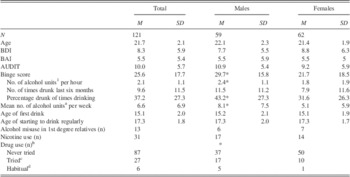
For the purposes of this study, as a rough guide to drug use, participants were given a score in which 0=no drug use; 1=tried one or more drugs a few times; 2=life time habitual use of one or more drugs (however, not within the past week). See Table 1 for types of drugs used. Nicotine use was dichotomized based on self-reported current nicotine use; 0=no current use of nicotine and 1=current use of nicotine. The use was not necessarily restricted to episodes when under the influence of alcohol.
Descriptives of the study sample

Note. Nicotine use and drug use analyzed by means of Chi-Square, otherwise t-tests.
a 1 unit of alcohol=12.8 grams of alcohol.
b Data from one participant is missing.
c Including cannabis, amphetamine, MDMA, cocaine, “poppers” and mushrooms.
d Including cannabis, cocaine and MDMA.
*p<.05.
M=Mean. SD=Standard Deviation.
Clinical symptoms
The Beck Depression Inventory-II (BDI-II) (Beck, Steer, Ball, & Ranieri, Reference Beck, Steer, Ball and Ranieri1996) was used to assess depressive symptoms. The Beck Anxiety Inventory (BAI) (Beck, Brown, Epstein, & Steer, Reference Beck, Brown, Epstein and Steer1988) was used to assess symptoms of anxiety.
Stop Signal Task
The SST is particularly suited to assess executive inhibitory control and error monitoring following inhibition failure (Verbruggen & Logan, Reference Verbruggen and Logan2008). The SST (CANTAB Cambridge Cognition Ltd.) was administrated on a Dell Latitude D610 laptop computer with a 14.1” LCD screen using 1024×768 pixels at 32-bit color quality. Press pad and external speakers were connected. This task measures the ability to inhibit an already initiated motor response (Logan, Reference Logan1994). A practice block of 16 go trials initiated the testing, and the main task consisted of 320 trials. In a minority of these (~25%), an auditory beep (the stop signal) was presented shortly after the Go-signal (right or left facing arrow requiring corresponding response on a press pad), indicating that the response should be withheld on that particular trial.
The delay ahead of the stop signal (stop signal delay; SSD) followed a tracking procedure in which SD increased by 50 ms if participants succeeded in inhibiting and decreased by 50 ms if they failed to inhibit. Over time, this tracking procedure stabilized the probability of successful inhibition around 0.5 for each subject. The SSRT was calculated by subtracting the arithmetic mean of the measured SSD at which the subject was able to stop 50% of the time (SSD 50%) from the median Go RT. Thus, the SSRT enables quantification of the covert stop process and indexes the efficacy of inhibitory control.
In addition, response monitoring was analyzed according to descriptions by Lawrence et al. (Reference Lawrence, Luty, Bogdan, Sahakian and Clark2009): median Go RTs were composed of reaction time in successful (non-error) Go trials in three conditions: (1) following go trials (2) following successful stop trials, (3) following failed stop trials. Thus, Go-after-go reaction time (median Go-after-go RT) is a reaction time measure where post-stop adjustments are ruled out, as opposed to the overall median Go RT. Post error slowing (PES) was calculated by contrasting reaction times for “Go- after-go” trials and “Go-after-failure to stop trials”, and post success slowing (PSS) by contrasting reaction time for “Go-after-go trials” and “Go-after-successful stop trials.”
Data from two subjects were lost due to hardware failure; 12 subjects failed to achieve convergence, either through too high (>60%) or too low (<40%) levels of successful inhibition. These staircase failures may arise through strategic slowing of the Go RT or through inconsistent performance or excessive distraction. Thus, they were excluded from further analysis as they invalidate the assumption of independent go and stop processes (Logan, Reference Logan1994). The restricted sample used for the SST analysis consisted of 107 participants.
Statistical Analysis
All statistical analyses were performed with IBM SPSS 22. Independent samples t tests and Chi-square were used to investigate differences between sexes on sample characteristics.
Pearson correlations were used to assess the relationships between the four variables of the SST (median Go-after-go RT, SSRT, PES, and PSS), and the sample characteristics.
Binge score, median Go-after-go RT, and SSRT were all logarithmically transformed due to skewed distributions. Simple linear regression analyses were used to investigate the predictive value of binge score on the SST variables. Residuals were investigated to ensure that parametric assumptions were met. Due to small N, bootstrapping with 10,000 bootstrap samples were conducted as non-parametric alternative to ascertain the conclusion of the regression analysis, and confidences intervals were reported, along with effect sizes. Variables that significantly correlated with the dependent variable (p<.05) were included as covariates.
RESULTS
Demographics
Table 1 shows the characteristics of the participants. There are some gender differences; the males have higher binge scores (t(119)=2.562; p=.012), they drink more units of alcohol per week (t(119)=2.435; p=.016), and report more frequent drug use (χ(118)=6.392; p=.041). The men are also marginally older than the women (t(119)=1.826; p=.070).
Relation between Binge Score and Other Sample Characteristics
Table 2 shows the relation between binge score and descriptive variables.
Pearson’s correlations between binge score and various descriptive variables

aMale = 0, female = 1.*p<.05.
** p<.001.
BDI=Beck’s Depression Inventory. BAI=Beck’s Anxiety Inventory
Stop Signal Task (SST)
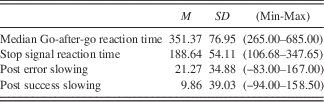
Table 3 shows the SST performance of the whole sample.
SST performance of all participants

Note. All variables reported in milliseconds.
Relations between sample characteristics and SST variables
Pearson correlations between sample characteristics found that age (r=−.199; p=.040) and BDI (r=−.191; p=.041) were significantly correlated to SSRT. Age of starting to drink regularly was correlated to PSS (r=.199; p=.030). No other variables were significantly correlated to the SST variables. Binge score was investigated separately.
Binge Drinking Predicting SST Performance
Stop signal reaction time
A simple linear regression was calculated to predict SSRT based on binge score. BDI and age were significantly correlated with the dependent variable, and, therefore, included as covariates in the analysis. Binge score, age and BDI predicted SSRT on trend level, F(3,103)=2.643, p=.053, and the model accounted for 7.1% of the explained variance in SSRT. The regression equation was: predicted SSRT=5.855−.014 * binge score −.008 (BDI) −.024 (age). Binge score was not a significant predictor of SSRT (p=.689), and since binge drinking is the variable of interest in the present study, further analysis was not conducted.
Median Go-after-go reaction time
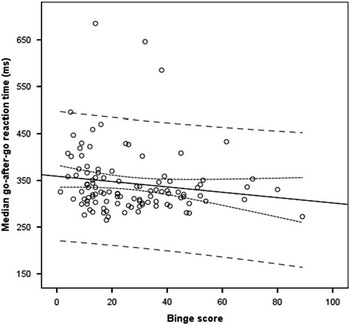
A simple linear regression was calculated to predict median Go-after-go RT based on binge score. No other variables in the dataset were correlated with the dependent variable, and covariates were, therefore, not included. Binge score significantly predicted median Go-after-go RT, F(1,105)=4.291, p=.041, and binge score accounted for 3% of the explained variance in median Go-after-go RT. The regression equation was: predicted median go-after-go RT=5.961−.045 * (binge score). Residuals were inspected for normality, and a non-parametric bootstrap with 10,000 bootstrap samples was conducted due to small N. The non-parametric analysis came to the same conclusion {95% confidence interval (CI [−.85, −.009])}. Cohen’s d=.4 indicating a medium effect size. Upon removal of data from three participants whose Go-after-go RT deviated more than three interquartile ranges, the effects of binge drinking was even stronger, F(1,102)=9.478, p=.003, R2=.085. Cohen’s d=.6 indicating a medium effect size (see Figure 1).
Post error slowing
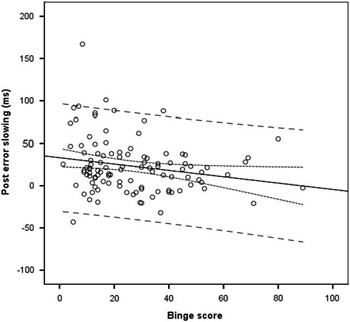
A simple linear regression was calculated to predict PES based on binge score. No other variables in the dataset were correlated with the dependent variable, and covariates were, therefore, not included. Binge score could significantly predict PES (F(1,105)=6.671; p=.011) and binge score accounted for 5.1% of the explained variance in PES. The regression equation was: predicted PES=55.113–.10.507 * (binge score). Residuals were inspected for normality, and a non-parametric bootstrap with 10,000 bootstrap samples was conducted due to small N. The non-parametric analysis came to the same conclusion, 95% CI [−20.374, −1.854]. Cohen’s d=.5 indicating a medium effect size (see Figure 2).
Post success slowing
A simple linear regression was calculated to predict PSS based on binge score. Age of starting to drink regularly was correlated with PSS, and, therefore, included as covariate. Binge score and age of starting to drink regularly significantly predicted PSS, F(2,104)=3.456, p=.035, and accounted for 4.4% of the explained variability in PES. Binge score did not predict PSS (p=.113), and since binge score is the variable of interest in the present study, further analyses were not conducted.
DISCUSSION
The main findings of this study can be summarized as follows. First, higher binge scores are associated with less adjustment following failures. Second, higher levels of binge drinking are associated to faster responses. Third, binge score is unrelated to inhibition performance as assessed by the SSRT. This study is the first to describe the association between binge drinking and response monitoring, and the finding may shed new light on why binge drinkers continue their drinking pattern.
The SST provides an interesting insight into behavioral changes after committed errors. Albeit inhibition is central to hindering excessive alcohol consumption, it is not sufficient. In addition to conflict detection and stopping, behavior must be altered to avoid failures in the future. In healthy young adults, severity of binge drinking predicts attenuated reductions in reaction times following failures to inhibit, and could be a marker for continuation and escalation of troublesome drinking pattern. This interpretation is underscored by the fact that severity of alcoholism in adults is associated with less adjustment following failures, and even decreased reaction times (Lawrence et al., Reference Lawrence, Luty, Bogdan, Sahakian and Clark2009). Also, reduced response monitoring is found in abstinent patients with cocaine dependence (Li, Milivojevic, Kemp, Hong, & Sinha, Reference Li, Milivojevic, Kemp, Hong and Sinha2006), supporting the importance of investigating this cognitive function in harmful substance use.
It is worth noticing that binge drinking is predictive of behavioral adjustment after failures only, and not after successful inhibition, suggesting that the reduced adjustment is specific to the context of failure. This may indicate that binge drinkers are less sensitive to negative consequences, which is in accordance with prior studies in binge drinkers (Stephens et al., Reference Stephens, Ripley, Borlikova, Schubert, Albrecht, Hogarth and Duka2005), and supportive of the alcoholism preparedness model, suggesting risk of problem drinking to be associated to the preparedness (i.e., readiness) to learn from certain experiences (Smith & Anderson, Reference Smith and Anderson2001).
Alternative explanations for attenuated response monitoring can be made. Loeber and Duka (Reference Loeber and Duka2009) have found subjects under the influence of alcohol to be less motivated to avoid negative consequences. Perhaps due to habituation to aversive outcomes associated with frequently being intoxicated, young adults frequently engaging in binge drinking were less motivated to adjust their behavior. In line with the suggestion by Karlsson (Reference Karlsson2012), further steps should be made to disentangle the motivational aspects of binge drinking.
Response monitoring (i.e., adjustment) is related to activation of the anterior cingulate cortex (ACC; Botvinick, Braver, Barch, Carter, & Cohen, Reference Botvinick, Braver, Barch, Carter and Cohen2001). The neuromaturational process in frontal areas is not yet finalized in young adulthood, and, therefore, vulnerable to the neurotoxic effect of binge-like alcohol consumption (Guerri & Pascual, Reference Guerri and Pascual2010). This was observed in a study by Mashhoon et al. (Reference Mashhoon, Czerkawski, Crowley, Cohen-Gilbert, Sneider and Silveri2014) where cortical «thinness» of the right mid-ACC was found in young adult binge drinkers, suggesting increased pruning in areas associated to cognitive control (Botvinick et al., Reference Botvinick, Braver, Barch, Carter and Cohen2001). The findings of the present study might be the corresponding behavior to the cortical “thinness.”
Prior studies suggest binge drinkers to be fast in terms of movement time, but not in thinking (Scaife & Duka, Reference Scaife and Duka2009; Townshend & Duka, Reference Townshend and Duka2005). The disparity between thinking time and movement time is not readily available in the SST, since responding requires only a minimum of both movement and thinking. However, both fast movement and thinking can suggest the need for even more efficient cognitive control for hindering automatic, habitual responses, or using effortful, compared to automatic, thinking.
It is then interesting to note that binge drinking is unrelated to response inhibition, which is in line with most previous research on binge drinkers (Crego et al., Reference Crego, Rodriguez-Holguin, Parada, Mota, Corral and Cadaveira2010, Reference Crego, Rodriguez Holguin, Parada, Mota, Corral and Cadaveira2009; Henges & Marczinski, Reference Henges and Marczinski2012; Lopez-Caneda et al., Reference Lopez-Caneda, Cadaveira, Crego, Gomez-Suarez, Corral, Parada and Holguin2012; Sanchez-Roige et al., Reference Sanchez-Roige, Baro, Trick, Pena-Oliver, Stephens and Duka2014), except for one study which found deficits in females only (Townshend & Duka, Reference Townshend and Duka2005). However, prior studies were mostly conducted by means of GNG-tasks, and since the SST is more appropriate for measuring inhibitory control as an executive/top-down process, as opposed to automatic inhibition measured by GNG-tasks (Verbruggen & Logan, Reference Verbruggen and Logan2008), it extends the understanding of inhibitory processing in binge drinkers. Also, binge drinking is here a continuous variable, and, therefore, better captures the relation between binge drinking and inhibition than arbitrary cut-off scores and subsequent grouping of binge- and non-binge drinkers.
Intact inhibition measured by the SST, however, does not rule out the possibility that binge drinking is caused by reduced cognitive control, especially if considering self-regulation within a dual process perspective. Self-regulation, according to the dual process models (Evans, Reference Evans2003; Strack & Deutsch, Reference Strack and Deutsch2004), depends on top-down control mechanisms (including inhibition) that ordinarily suppress automatic or reward-driven bottom-up responses when those are not appropriate to the current demands. Applied to alcohol-related problems, the dual process mode posits that alcohol abuse and dependence are not only caused by impairment of the reflective (top-down) systems, but also by an over-activation in the reflexive (bottom-up) system supporting impulsive behaviors (Lannoy, Billieux, & Maurage, Reference Lannoy, Billieux and Maurage2014). Thus, when alcohol-related stimuli are included, deficient response inhibition has been found in both sexes (Czapla et al., Reference Czapla, Simon, Friederich, Herpertz, Zimmermann and Loeber2015; Hallgren & McCrady, Reference Hallgren and McCrady2013) and in females only (Nederkoorn, Baltus, Guerrieri, & Wiers, Reference Nederkoorn, Baltus, Guerrieri and Wiers2009). However, the version of SST used in the present study is not suited for testing the dual-process hypothesis. To converge at a more comprehensive understanding of inhibition in binge drinkers, future studies should consider including emotional stimuli to the SST when testing the reflective system, as done by Nederkoorn et al. (Reference Nederkoorn, Baltus, Guerrieri and Wiers2009).
Some of the subjects in our sample have AUDIT-scores indicative of alcohol dependence, but alcohol dependence does not stand in opposition to binge drinking. Thus, strength to this study is that binge drinking was treated as a continuous phenomenon, rather than a discrete category, and this is in line with the suggestion that the transition from binge drinking to alcohol dependence best is viewed as quantitatively different phenomena, rather than independent pathologies (e.g., Courtney & Polich, Reference Courtney and Polich2010). Subjects with AUDIT scores equal to and above 1 were, therefore, included. Despite the difficulty of separating global amount of alcohol consumption from drinking pattern, neither AUDIT scores, nor weekly alcohol consumption, were correlated with any of the dependent variables. Also, when amount of consumed alcohol was included in the regression equation, the binge score still captured unique variance in cognitive performance. This suggests that decrements are attributable to drinking pattern, rather than a combination of drinking pattern, symptoms of addiction, and global amount of alcohol consumed.
The study is cross-sectional, and it is, therefore, not possible to draw any causal inferences regarding dispositional factors vs consequences of excessive alcohol consumption. Prospective and longitudinal studies are needed to indicate causality between binge drinking and cognitive performance.
All subjects were withdrawn from nicotine 3 hr before and during testing. We did not take record of abstinences, and there is a possibility that symptoms of withdrawal have confounded the results. However, analyses revealed non-significant correlations between the target variables and nicotine use. Another limitation included self-report of abstinence from alcohol for minimum 48 hr, rather than confirming it with breathalyzer or blood samples. Most prior studies in the binge drinking population have not used objective measures for controlling this, and some have even allowed the participants to drink alcohol until 12 hr before the experiment, or drink up to six units of alcohol the preceding day (e.g., Townshend & Duka, Reference Townshend and Duka2005; Townshend et al., Reference Townshend, Kambouropoulos, Griffin, Hunt and Milani2014), standing the risk of assessing hangover symptoms, rather than effects attributable to binge drinking.
The participants presented relatively high levels of anxiety and depressive symptoms. Analyses revealed that clinical symptoms were also unrelated to target variables, apart from SSRT, where depressive symptoms were included as covariates to avoid potential preclusion of the relation between binge score and cognitive performance. Binge score and clinical symptoms were also not related.
SUMMARY
The present study indicates a relation between attenuated response monitoring and severity of binge drinking in the context of preserved inhibitory capacity and fast reaction times. The study supports the view that binge drinking is a continuous phenomenon rather than discrete category. Thus, reduced response monitoring as a function of binge drinking severity is potentially an early marker of susceptibility for alcohol related problems in later life, and is important for understanding why binge drinkers continue their pattern of alcohol consumption despite the negative consequences it poses.
Binge score predicts median Go-after-go reaction time. For illustration purposes, the raw data are shown rather than the transformed variables. The solid line represents prediction line, dotted lines represent confidence intervals of the mean, and dashed lines represent 95% confidence intervals.

Binge score predicts post error slowing. For illustration purposes, the raw data are shown rather than the transformed variables. The solid line represents prediction line, dotted lines represent CI of the mean, and dashed lines represent 95% CI.

ACKNOWLEDGMENTS
The work was supported by the Department of Psychology at the University of Oslo. We are grateful to Emilie Smith Astrup for her assistance in the data collection, and Dag-Erik Eilertsen for statistical support. All authors declare no conflicts of interest.