

Hong Kong and Singapore are small, high-income, free market economies with an attractive business and investment climate, close in geographic proximity, comparable in terms of population, and sharing a common colonial background.Footnote 1 Yet Hong Kong has struggled to obtain investment in the pharmaceutical sector while Singapore has succeeded in attracting investment in all facets of the sector and becoming a regional focal point for the global pharmaceutical industry.
Such disparity is not simply the result of a lack of interest by the government of Hong Kong. To the contrary, the government has from time to time addressed the perceived need to further develop high-technology research and development (R&D)Footnote 2 and specialist manufacturing. For example, InvestHK prominently features both biotechnology and pharmaceuticals as key sectors for inward investment, while the Hong Kong Legislative Council recently discussed the notion of transforming Hong Kong into a “pharmaceutical centre for Asia-Pacific”.Footnote 3 Given this interest in the sector, this article seeks to understand why Hong Kong has almost wholly failed to attract foreign direct investment (FDI) in the pharmaceutical sector while Singapore has become a hub for pharmaceutical FDI.Footnote 4
In the attempt to explain this striking difference between the two seemingly similar jurisdictions, our inquiry broadly draws on a socio-legal methodological approach and utilizes an interdisciplinary perspective on the development of the pharmaceutical sector. More specifically, the article focuses on the interface between law and public policy and examines the design of regulatory framework and laws in the context of public policy debate on pertinent societal concerns. The ‘Law and Policy’ approach this article relies upon is one of an analysis of policy, in that it is analytical and descriptive in its attempts to explain policy choices and their resulting effects, rather than an analysis for policy, which would seek to formulate policy or make recommendations for policy development. This article is part of a larger research project, which ultimately will engage in analysis for policy and make recommendations regarding the pharmaceuticals and patent laws in Hong Kong.
It is not the intention of this article to create or test economic theory. Instead, the aims are more targeted and policy focused – to evaluate factors identified in the economic literature as playing a decisive role in multinational companies’ (MNCs) decision-making practices in order to ascertain the divergence point between Hong Kong and Singapore. While the article does not propose specific recommendations, the discussion is informative and suggestive for law and policymaking as it leads to a clear conclusion – a large gap in policy direction and implementation exists between Hong Kong and Singapore. While this may be self-evident to some onlookers, it has not been recognized by the government of Hong Kong. Without a clear change in policy direction, the gap in pharmaceutical FDI between the two jurisdictions will undoubtedly widen. Stated more bluntly, any notion of Hong Kong transforming itself into a pharmaceutical centre is unrealistic unless and until the jurisdiction develops policies designed to attract, nurture, and maintain a pharmaceutical industry.
Part I briefly introduces the concept of FDI and its importance to the pharmaceutical industry before comparing the performance of Hong Kong and Singapore in attracting FDI in the sector. Part II analyses three relevant factors economists have deemed to be key determinants of FDI: economic climate, legal protection, and the policy and regulatory setting. The comparison reveals no significant difference in economic or legal factors between the two jurisdictions but finds considerable divergence in the policy and regulatory frameworks, which are considered to be critical to the disparity of pharmaceutical FDI between Hong Kong and Singapore. Part III concludes with the recommendation that if Hong Kong is serious about developing into a regional pharmaceutical centre it must be proactive and formulate a sector-specific policy which not only evaluates the feasibility of such an objective but also determines whether FDI would facilitate the attainment of its broader strategic goals.
I. FOREIGN DIRECT INVESTMENT AND THE PHARMACEUTICAL INDUSTRY IN HONG KONG AND SINGAPORE
The pharmaceutical sector, more than most, is highly dependent upon FDI. The reason for this is the highly capital and technology intensive nature of the sector.Footnote 5 The barriers to entry are high and the industry is controlled by a handful of global giants. Few countries attempt to nurture a home grown industry, and instead seek to attract investment in the sector from established companies. Such investment could take many different forms, most notably in setting up a lab to conduct R&D or establishing a manufacturing facility.
That countries seek to attract FDI in the pharmaceutical sector is unsurprising. Foreign investment has long been viewed as necessary to promote economic growth and development.Footnote 6 In addition to the transfer of capital, FDI is broadly associated with other positive externalities such as the diffusion of knowledge and the importation of advanced technology (so-called “technology transfer”), know-how, and technological and managerial skills.Footnote 7 Recipient countries also benefit from FDI in countless other ways, including increased levels of employment and tax revenue, expansion of local production and exports, and enhanced local innovation capacity.Footnote 8 With the perceived benefits of FDI so great,Footnote 9 it is also unsurprising that countries compete to attract foreign investment.
This aspect of FDI – that is, why firms invest in one country over another – has long attracted the attention of academics and policy-makers. This article relies on available studies and evidence to examine the relevance of a range of location-specific factors identified in the economic literature as key FDI determinants in order to better understand why Hong Kong has failed and Singapore succeeded in attracting FDI in the pharmaceutical industry. More specifically, the article focuses on the relevance of various location-specific factors in order to explore the policy implications of robust FDI in the pharmaceutical sector in Singapore against the absolute absence of such FDI in Hong Kong despite seemingly similar conditions.
The fact that Hong Kong has not succeeded in attracting FDI in the pharmaceutical sector is not in doubt. The pharmaceutical industry in Hong Kong is clearly underdeveloped, with minimal local manufacturingFootnote 10 and negligible R&D.Footnote 11 The domestic industry consists of a small number of companies producing primarily generic pharmaceuticals predominantly for the local market.Footnote 12 Imports make up the bulk of the overall pharmaceutical market,Footnote 13 which in total accounts for a miniscule 0.5 percent of GDP in 2012.Footnote 14 Moreover, local pharmaceutical manufacturing is not forecasted to grow in the near future. Looking beyond manufacturing, Hong Kong does not appear to host any significant R&D activities.Footnote 15
In contrast, the biopharmaceutical sector is thriving in Singapore, with companies specializing in the pharmaceutical, biotechnology, and medical technology research and manufacturing.Footnote 16 Biomedical manufacturing in Singapore has almost quadrupled in the period between 2000-2010, from S$6 billion to S$23.3 billion, and now accounts for 5 percent of GDP.Footnote 17 Singapore has also become a regional R&D hub, hosting high level facilities of several MNCs and employing over 7,000 workers.
The difference between Hong Kong and Singapore in attracting MNCs to establish and maintain pharmaceutical production could not be starker. In Hong Kong, the presence of pharmaceutical MNCs is limited to marketing and sales activities, with no MNC having established any local production or R&D subsidiaries. In sharp contrast, virtually all of the leading multinational pharmaceutical companies have established manufacturing operations in Singapore,Footnote 18 with production ranging from generics to the best-selling patented products.Footnote 19 This activity has led industry analysts to refer to Singapore as the “[pharmaceutical] trading base for the South East Asian region”.Footnote 20 Remarkably, pharmaceuticals are now the leading sector for manufacturing FDI in Singapore, attracting S$44.5 billion in 2011.Footnote 21 It is thus not an exaggeration to say that the pharmaceutical manufacturing sector has become an integral part of Singapore’s economy. In terms of R&D, Singapore has established itself as one of the leading locations for pharmaceuticals in the world.Footnote 22
The difference between pharmaceutical FDI between Singapore and Hong Kong is perhaps foreseeable given the make-up of inward FDI in the two jurisdictions. While both Hong Kong and Singapore are among the most open to and largest global recipients of FDI,Footnote 23 the manufacturing sector is the second highest category of inward FDI in Singapore, accounting for over 20 percent of the total in 2011,Footnote 24 whereas manufacturing FDI in Hong Kong accounted for less than one percent of total FDI in 2011.Footnote 25 Hong Kong is clearly focused on a service-oriented economy whereas Singapore has developed a more diversified economy. But it would be a mistake to assume that Hong Kong has completely abandoned other sectors. On the contrary, manufacturing still accounts for 3 percent of total employmentFootnote 26 and Hong Kong often promotes itself as an attractive destination for conducting R&D. In fact, InvestHK (the government agency responsible for attracting FDI) even promotes the “biomedical” sector as one of its seventeen featured investment sectors, calling Hong Kong the “ideal location … [and] an attractive market for biotech and pharmaceutical companies”.Footnote 27 Given the government’s apparent interest in the pharmaceutical industry, the lack of FDI and activity is curious and warrants further inquiry.
Two questions thus arise with regard to the disparity between the large-scale pharmaceutical FDI in Singapore and its absence in Hong Kong. Firstly, what is or are the cause(s) of Hong Kong’s lack of pharmaceutical FDI? Secondly, are local stakeholders in Singapore better-off due to the presence of FDI in the pharmaceutical sector; in other words, does the absence of pharmaceutical FDI in Hong Kong deprive its populace of the benefits accrued by such FDI in Singapore? The first question deals with the identification and evaluation of FDI determinants specific in the context of each jurisdiction. The second question ultimately requires the evaluation of net benefits of FDI in Singapore and identifying whether such benefits are available to Hong Kong stakeholders, albeit achieved by alternative means. While this article focuses on the first question, some of its findings might contribute to further research on the implications of FDI for industry and healthcare sectors.
Section II examines location-specific factors identified by economists as among the most prominent for FDI decisions, analysed in the context of the pharmaceutical sector in Hong Kong and Singapore.
II. KEY DETERMINANTS OF FDI IN HONG KONG AND SINGAPORE: A COMPARISON
While it is clear that a diverse range of factors can bear on MNCs’ decisions to invest in a particular economic sector of a country, this section reviews location-specific factors distinguished in the economic literature as the most prominent determinants of FDI. Such determinants can be broadly categorized into economic, legal, and policy and regulatory-related characteristics. Each will be addressed in turn.
A. Economic Determinants of FDI
The economic literature emphasizes the importance of the investment climate in the potential host state as one of the key determinants for FDI. In this regard, various factors such as market size, the availability of skilled workers, and the general openness and soundness of the economy are all relevant factors.Footnote 28 An evaluation of these factors reveals no significant difference between the economic climate in Singapore and Hong Kong.
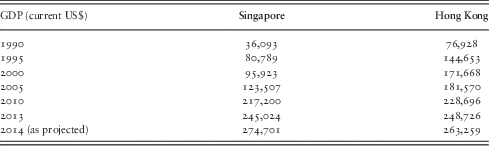
Turning first to market-driven FDI considerations, economic literature views market size and growth potential of a recipient country measured by real GDPFootnote 29 as a prominent factor for decisions of MNCs to invest in manufacturing in host countries.Footnote 30 Such considerations are unsurprising, and are linked to potential profitability and to ensure returns on investment by reaching economies of scale.Footnote 31Table 1 compares the market size of Hong Kong and Singapore as measured by GDP.Footnote 32 The statistics reveal that while Hong Kong’s GDP is slightly higher than that of Singapore, Singapore is quickly catching up and expected to overtake Hong Kong in the near future. More specifically, while Singapore’s GDP was less than half of that of Hong Kong in 1990 it is now virtually identical. Thus, market size has not been a determining factor in locating pharmaceutical manufacturing FDI in the region, or at least between Singapore and Hong Kong.
Real GDP of Singapore and Hong Kong in 1990 – 2013 (millions of US$)
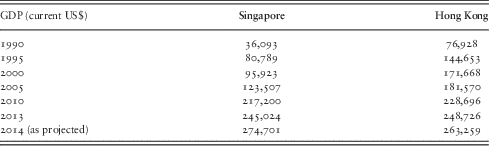
Source: The World Bank (2013)
Another factor thought to be a critical FDI determinant is market characteristics such as the availability of skilled workers.Footnote 33 Here again, the statistics on the post-secondary education attainment reported by the national authorities do not reveal any significant difference between Singapore and Hong Kong.Footnote 34 Moreover, while education enrolment and attainment rates are useful indicators of labour quality pertaining a country’s general FDI attractiveness, for knowledge and technology-intensive sectors (such as the pharmaceutical industry) the human capital factor should be specified as to the availability of particular expertise in the field. Again, available data on tertiary graduates with relevant degrees is comparable, but beyond such statistics it is not possible to more accurately gauge the availability of qualified local labour in the sector in order to compare the jurisdictions and predict its effect on FDI decisions. Moreover, both Hong Kong and Singapore rely heavily on importing highly-skilled and well-paid foreign workers for many jobs, including architects, engineers, investment bankers, academics, and lawyers. In this regard, Singapore has even implemented a special programme aimed to “support local manpower needs and enable the Singaporean pharma[ceutical] manufacturing industry to secure more foreign investments”.Footnote 35 Thus, in the case of Hong Kong and Singapore the availability of skilled workers are comparable and neither would have difficulty in importing necessary skill-sets.
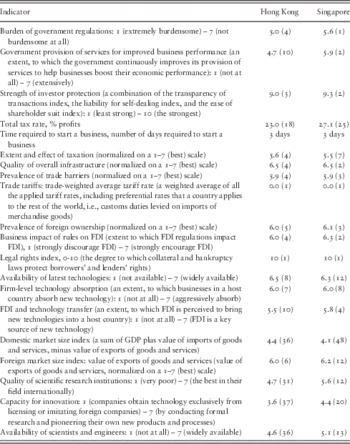
Finally, a host state’s general stability, openness, soundness, and the predictability of its economic and political regime are of such importance that they are considered as the classical variables of FDI.Footnote 36 Here again, Hong Kong and Singapore share many similarities. For instance, according to the UNCTAD FDI Attraction Index, Hong Kong holds the first position and Singapore third in the list of the countries “with high absolute inflows because of their attractive investment climates and the important ‘hinterlands’ for which they act as gateways, and with outsized inflows relative to the size of their economies.”Footnote 37 Moreover, even a cursory reading of the World Economic Forum’s Global Competitiveness Report 2012-2013, which generally characterizes the investment climate in terms of a country’s openness to trade and market liberalization (both of which have been found to be important for FDI decision-making), reveals only slight variance in the overall assessment of the investment climate of Hong Kong and Singapore.Footnote 38 A selection of indicators pertaining to the general investment climate as evaluated by the World Economic Forum is presented in Annex 1.
Likewise, a study by Atkinson et al. assessing APEC economies’ trade, market access, and foreign direct investment environment, policies and regulations finds that Hong Kong and Singapore are among the economies that “exhibit the greatest openness to trade, market access, and foreign direct investment”.Footnote 39 Furthermore, the International Country Risk Guide ranked the investment profiles of Hong Kong and Singapore, respectively, at second and fourth positions among 140 countries that “pose the least risk for international business, based policy related to taxation, operations and repatriation restrictions, and labor costs”.Footnote 40 Most recently, according to the World Bank’s ease of doing business index, Singapore holds the first and Hong Kong the second position among 189 economies.Footnote 41
Thus, with no substantial difference between Singapore and Hong Kong in investment climate or attractiveness, it is highly unlikely that the small variances in certain factors would produce the drastically different FDI statistics in the pharmaceutical sector outlined above.
B. Legal Determinants of FDI
Most economists and commentators agree that the legal environment of a host state is among the most important FDI determinants. While numerous laws and regulations factor into this equation, this subsection briefly compares the legal systems of Hong Kong and Singapore generally before focusing on and comparing the protection of intellectual property rights (IPRs), as IPRs are critical to the success of pharmaceutical development and manufacturing and for our purposes can serve as a useful proxy in comparing the regimes in Hong Kong and Singapore.
The legal architecture and framework of Hong Kong and Singapore are broadly similar. Both are based on English common law, value the rule of law, and provide for transparent and predictable laws, regulations, and enforcement. For example, the World Bank’s Worldwide Governance Indicators Report ranks Hong Kong and Singapore high with regard to the rule of law governance dimension – which includes such factors as quality of contract enforcement, property rights, the police and court system, as well as the probability of crime and violence – among 215 countries over the period 1996-2012.Footnote 42
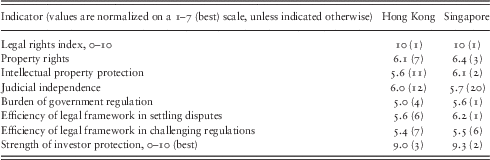
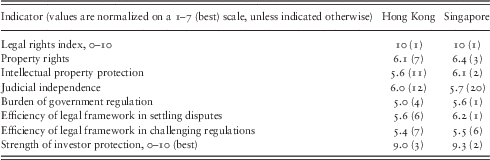
Similarly, both Hong Kong and Singapore rank highly in the World Justice Project’s Rule of Law Index on factors such as absence of corruption, limited government powers, order and security, fundamental rights, open government, regulatory enforcement, and civil and criminal justice.Footnote 43 Moreover, the World Economic Forum’s Global Competitiveness Report 2012-2013 finds only slight variations between Hong Kong and Singapore with regard to indicators pertaining to the legal framework such as legal rights, property rights, judicial independence, and the efficiency of legal framework in settling disputes (see Annex 2).Footnote 44
In short, Hong Kong and Singapore both provide a sound and stable legal framework from which to conduct business. Thus, while the soundness of the legal framework undoubtedly contributes to the overall climate for business and investment, it cannot be the decisive factor in accounting for the disparity between manufacturing FDI in the pharmaceutical sector as between Hong Kong and Singapore.
We now turn to the level of protection and enforcement of IPRs, which are viewed by many to be critical for investment decisions in the pharmaceutical sector. Most economic studies associate IPRs with long-term efficiency gains leading to increased innovation, technology transfer, welfare, and economic growth.Footnote 45 Several studies also find a positive relationship between the perceived strength of the IPRs regime and FDI; meaning strong IPRs and protection lead to an increase in FDI.Footnote 46
Of course, not all FDI is equally reliant on IPRs and therefore it seems prudent to utilize industry-specific assessments on the role of IPRs for FDI. Javorcik undertook such a study, finding differences in the reliance on patents across industries and concluding that firms in industries relying heavily on IPR protection are more likely to invest in transition countries with stronger IPR protection.Footnote 47 Among economic sectors, pharmaceuticals (along with chemicals) are perhaps the most reliant industrial sector on IPRs. Owing to the asymmetry between the high costs of developing new drugs and the low marginal costs of reproducing drugs, the pharmaceutical industry depends on the limited term legal monopoly granted by patents to recoup R&D costs and the profit necessary to provide incentive to create/invent new drugs.Footnote 48
As former British colonies, Hong Kong and Singapore have long recognized patent rights and provided for strong protection. Both jurisdictions meet the international standard for IP protection and enforcement and, in many instances, exceed the standard.Footnote 49Table 2 provides indicators of patent protection strength in Hong Kong and Singapore as estimated by the well-regarded Ginarte and Park Index (GP Index) for the period between 1960 and 2005.Footnote 50 The GP Index, developed for 110 countries and initially covering the period of 1960–1990 (evaluated in 5-year intervals), presents the unweighted sum of scores in five separate categories: the scope of patent coverage (i.e., patentable subject matter), membership in international patent agreements, provisions for loss of protection, enforcement mechanisms, and duration of protection. Countries’ rankings range between 0.00 (e.g., Angola, Burma, Ethiopia, Indonesia, Mozambique in 1960s) and 4.88 (the score maintained by the United States between 1995 and 2005). While Singapore comes out with a slightly higher figure than Hong Kong, both jurisdictions are well-above the average.
GP Index of Patent Rights Protection for Hong Kong and Singapore

Source: Ginarte and Park (1997), as amended by Park (2002)
More recently, Liu and La Croix used the GP Index as a model in constructing the Index of Intellectual Property Rights in Pharmaceutical Innovations (PIPP Index).Footnote 51 The intent of the PIPP Index is to assess the specifics of patent protection relevant to pharmaceutical innovations. The PIPP Index, which includes 154 countries and covers the period between 1960 and 2005, finds that within the range between ‘0’ and ‘5’, the aggregated score of Singapore has developed from 0.21 in 1965 to 3.03 in 2000. Unfortunately, Hong Kong is not included in the PIPP Index. However, a constructed assessment of Hong Kong yields broadly similar results to that of Singapore.Footnote 52
While issue can be taken with the design of the measurement system underlying both indices, the relevance of these studies for our purposes is simply to serve as a reference point to discuss the role of IPRs on FDI in Hong Kong and Singapore. The GP Index and our estimation of Hong Kong’s ranking based on the PIPP Index provides empirical substantiation for what is obvious upon reading the laws of the two jurisdictions – Hong Kong and Singapore have comparable IP and patent regimes in terms of both strength and effectiveness.
It should also be noted that both jurisdictions, until recently, even granted patents in the same manner; that is, without substantive examination of patent applications. In July 2012, however, Singapore amended its Patents Act replacing the self-assessment model with a positive grant system. While Hong Kong undertook public consultations regarding the implementation of an original patent grant system in 2011 as opposed to the current system of registration based on a patent granted in the United Kingdom, European Patent Office, or China,Footnote 53 the system remains unchanged to date. Given the recentness of the divergence and minimal anticipated effect on the security of a patent, one can confidently state that the change has played no role in the longstanding divergence in FDI in the pharmaceutical sector between Singapore and Hong Kong.
The laws and regulations of Hong Kong and Singapore provide virtually the same level of IPR protection. Both jurisdictions are viewed as regional leaders in terms of IP protection and enforcement and, as mentioned previously, in many instances both jurisdictions not only meet but actually exceed the minimum standards provided for in the relevant international agreements. Despite the similarities, the level of FDI differs between the two jurisdictions, and widely differs in the pharmaceutical sector. As a result, we can discount IPRs as the reason for such variation.
C. Policy and Regulatory Framework
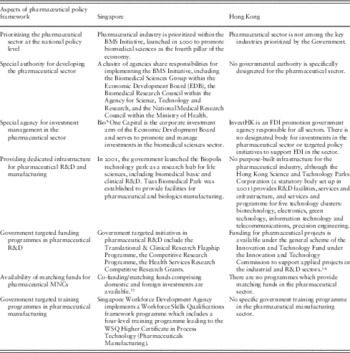
Having discounted a more attractive investment climate and a disparity in the legal framework as reasons why global and regional pharmaceutical MNCs establish facilities in Singapore and not Hong Kong, it is worth analysing the issue in light of the relevant policy and regulatory framework applicable for FDI in the pharmaceutical sector. It is here that differences between the two jurisdictions emerge. Table 3 reveals contrasting approaches to policymaking in the pharmaceutical sector of Hong Kong and Singapore.
A Comparison of the Pharmaceutical Policy Framework in Singapore and Hong Kong

Source: Compiled by the Authors.
Simply stated, Singapore has prioritized the pharmaceutical sector (within the more comprehensive framework of the Biomedical Sciences (BMS) Initiative) and created a regulatory framework conducive to foreign and domestic investment. In contrast, Hong Kong lacks a clear pharmaceutical policy. Moreover, a review of publicly available policy documents reveals no specifically targeted policy initiatives from the Hong Kong Government either to support the development of domestic pharmaceutical production or to attract FDI in the sector.
Footnote In 2000, Footnote Singapore launched a comprehensive policy programme – the BMS Initiative – with the objective to develop the biomedical sector into one of its main economic pillars and to promote Singapore as “the Global Hub for the Biomedical Sciences in Asia”.Footnote 56 Comprising pharmaceuticals, biotechnology, medical technology, and healthcare services sectors, the Government deemed the development of the BMS cluster to be a national priority within a larger strategy of economic diversification, export-oriented industrialization, and a substantive shift from reliance on labour-intensive industries towards a knowledge and technology-based economy.Footnote 57
This programme can be viewed as one of the latest steps in Singapore’s longstanding efforts to upgrade and modernize the economy. Singapore’s strategic policy of restructuring the manufacturing sector and promoting capital, knowledge and technology-intensive industries dates back to the 1970s,Footnote 58 and the role of FDI in this process has always been given particular prominence. While the Ministry of Trade and Industry (MTI) is responsible for formulating the overall economic development and growth strategy at the national level, the Economic Development Board (EDB), established within MTI in 1961, has become a “one-stop and lead government agency for planning and executing economic strategies to enhance Singapore’s position as a global hub for business and investment” and “to facilitate and support both local and foreign investors in manufacturing and services sectors to develop and expand new business opportunities, especially capital-intensive, knowledge-intensive and innovation-intensive activities”.Footnote 59
Even in 1986, the Report of the Economic Committee explicitly recognized the role of FDI to the Singaporean economy when it stated that MNCs “have brought with them capital, technology, management expertise, and markets, and provided well-paying jobs for our people”.Footnote 60 The Report emphasized the significance of FDI in terms of domestic technological capacity building and advancement:
[F]oreign investments in Singapore are crucial [...] They create opportunities which we would not otherwise have. It is not so much the money they bring to Singapore which matters. Economic development in Singapore has never been constrained by lack of investible funds. What matters is the knowhow, the technology, the markets which foreign investors bring.Footnote 61
Singapore’s active – some may say interventionistFootnote 62 – policies intensified in the aftermath of the 1997-1998 financial crisis with a view to “find new niches based on higher productivity and higher value-added activities” and to promote “Singapore’s diversification into higher technology, higher value added products and services”.Footnote 63 As part of this developmental drive, Singapore selected BMS as one of four “strategic clusters identified as the advance guard of the move to higher value production” (also including electronics, chemicals, transport).Footnote 64 In part, through the development of an internationally competitive pharmaceutical and biomedical industry, Singapore sought economic diversification that would, among others, allow it to mitigate the gradual decline in the electronic industry that used to be the major contributor to the country’s overall manufacturing output.Footnote 65
Presently, a network of authorities in Singapore share responsibilities for the implementation of the BMS initiative, including the EDB (the body responsible for investment into Singapore), the EDB Investments (the body responsible for the strategic corporate investment), and the Agency for Science, Technology and Research. Moreover, as a special division within the EBD, the Biomedical Sciences Group was set up to facilitate private sector manufacturing and R&D, while Bio*One Capital was established as an investment promotion agency specifically in the biomedical sciences sector.
Space constraints do not allow us to discuss at length Singapore’s strategies and measures to attract FDI, but it is clear that Singapore has visibly and transparently prioritized the pharmaceutical sector. As a consequence, the strategic recognition of pharmaceuticals as a key sector allowed Singapore to develop and implement a more systematic and targeted approach to policymaking, both in the pharmaceutical sector generally and particularly pharmaceutical FDI. Such targeted policy-making has resulted in a range of special regulatory measures to support the wider general investment environment. The government’s success in attracting MNCs in the pharmaceutical sector is now viewed as “the main engine of growth in [the Government’s] diversification strategy by introducing alternatives to electronics and chemical manufacturing”.Footnote 66 This is in line with the conclusions of a recent OECD report, which states that Singapore:
has made significant progress in developing its STI [science, technology and innovation] capabilities, a process that was initially based on attracting and leveraging global MNEs to transfer increasingly advanced technological operations to Singapore, and developing infrastructure and human resources to absorb and exploit new technologies rapidly.Footnote 67
Notably, recent recommendations proposed by the Singapore Economic Strategies Committee indicate that Singapore will continue pursuing its FDI strategy in strengthening its position “as a location of choice for the world’s leading companies […] seeking to internationalise” and viewing MNCs as “key players in [the] economy” and “major source of new technologies allow[ing] Singapore to stay plugged into the developed country markets – which although slow growing, will remain sizeable sources of sophisticated demand”.Footnote 68
Singapore obviously views FDI as a source of more sophisticated manufacturing, which, in turn, can lead to expansion of trade/exports catering for the “sophisticated demand” of the “developed markets.” Pharmaceutical FDI in Singapore is thus highly integrated into the overall national policy framework.
In sharp contrast, Hong Kong does not have any policy programme targeted at the pharmaceutical industry and the sector has never been among the priorities on the Government agenda. One commentator summarized the situation as follows:
policy for strategic development of this [pharmaceutical manufacturing] sector is lacking when compared to Singapore and Malaysia that have actively promoted biotechnology and pharmaceuticals as new growth areas of their national economy”.Footnote 69
The pharmaceutical sector has never prominently featured in national strategic policymaking. Much like Singapore, Hong Kong has identified four key industries for strategic development: financial services, trading and logistics, tourism, and professional and producer services. These sectors, as the Government states, “have been the driving force of Hong Kong’s economic growth, providing impetus to growth of other sectors and creating employment”.Footnote 70
In addition, the Government identified a number of emerging industries including innovation and technology, medical services, cultural and creative industries, education services, testing and certification services, and environmental industries as possessing potential for further development. While the classification of “innovation and technology” as an “industry” is rather peculiar, the more substantive issue is what is included within this broadly formulated category. Although the category of innovation and technology can theoretically include pharmaceuticals as a technology-intensive sector, the Government has not published or made available any policy document that elaborates upon or details the contents and scope of the category.
What can be confirmed is that the Government does not have a dedicated agency vested with the responsibility for development of the pharmaceutical sector. The Commerce and Economic Development Bureau, a government agency for economic development,Footnote 71 has neither a special division nor any comprehensive programme dedicated to the pharmaceutical sector. Perhaps more tellingly, the Census and Statistics Department does not list the pharmaceutical industry as a separate economic sector or provide any specific-industry statistics. The business and research company, the Business Monitor International, concludes the omission is “possibly because [the pharmaceutical industry] is simply not important enough”.Footnote 72
The Government seems to generally recognize the importance of technological advancement for the economic development. For instance, in the 2013 Policy Address the Government called for the enhancement of innovation capacity as a means to further economic development.Footnote 73 More specifically, the Government emphasized the “great importance to the significant contribution of innovation and technology to the development of the economy and industries” and reiterated its commitment to “focus on the development of the highly competitive sectors of the innovation and technology industries in light of Hong Kong’ strengths”.Footnote 74 These statements were not, however, followed up with any specific policy or plans for the pharmaceutical sector. For instance, the pharmaceutical sector is not even mentioned as one of the ongoing initiatives by Innovation and Technology Commission.
The acknowledgement of Hong Kong’s “weakness” in developing a clear and meaningful economic strategy was highlighted at a discussion in the Legislative Council in early-2013. It is worth quoting the extended statement of Chan Kin-por, a member of the Legislative Council, regarding the direction of the Hong Kong economy:
…over the past decade or so, Hong Kong had kept on looking for new ways [to restructure the economy] but these efforts were in vain. [...] the large number of government proposals has rendered our direction unclear. As we all know, it takes plenty of time and resources to promote the development of a single industry. Meanwhile, careful planning and efforts are required. If we do not have a clear goal, we will not be able to make focused efforts but will just waste our time and resources. Therefore, if we have to promote economic restructuring, we must first have a clear direction …Sometimes, the government may even have to make plans for economic restructuring. Apart from tax concessions or special privileges, it should also provide all sorts of assistance to business operators. For South Korea and Singapore, their governments have greatly supported and promoted the respective development of high-tech industries and headquarters economy in their countries.Footnote 75
Although lacking a clear and targeted policy, Hong Kong does occasionally make statements regarding the pharmaceutical sector. For instance, the 1998 Report of the Commission on Innovation and Technology set forth a vision of developing Hong Kong into:
an innovation-led, technology-intensive economy in the 21st century, serving the region not only as a business and financial centre, but also as a leading city in the world for the development and use of information technology; [...] a world centre for the development of health food and pharmaceuticals based on Chinese medicine; a leading supplier in the world of high value-added components and products where Hong Kong already excels today; a regional centre for supplying professional and technological talents and services; and the marketplace for technology transfer between the Mainland and the rest of the world.Footnote 76
More recently, a session of the Hong Kong Legislative Council in October 2012 clearly demonstrated the absence of any meaningful policy or objective with regard to the pharmaceutical sector. The session addressed the question of development of the pharmaceutical sector posed by industry groups, in particular the notion that the Government should promote the diversification of manufacturing interests by:
develop[ing] Hong Kong into a ‘pharmaceutical centre’, as well as attract world-renowned pharmaceutical manufacturers through the preferential policy under the Mainland and Hong Kong Closer Economic Partnership AgreementFootnote 77 to produce and manufacture pharmaceutical products in Hong Kong in order to enter the vast mainland market, and mainland pharmaceutical manufacturers may have their pharmaceutical products produced and tested in Hong Kong for export to various places in the world.Footnote 78
At the session, the Secretary for Food and Health was called to report on the gross value of production and exports of Hong Kong’s pharmaceutical industry as well as the “specific policies to be put in place in the future to facilitate the development of the pharmaceutical industry, so as to develop Hong Kong into the pharmaceutical centre of the Asia-Pacific Region”Footnote 79. In response, the Secretary stated that the Food and Health Bureau understood:
that local licensed manufacturers are mainly engaged in the manufacture of non-patented drugs for domestic sale. The [Census and Statistics Department] does not have figures on the gross domestic output of the industry of manufacture of western drugs”.Footnote 80
The importance of this statement cannot be overemphasized – the Government does not track and cannot estimate the contribution of pharmaceutical manufacturing to the economy. For a Government which has discussed turning Hong Kong into a pharmaceutical centre, this admission is striking.Footnote 81
While the issues raised in the 22-minute discussion of the Legislative Council indicate some willingness on the part of the Government to more fully develop local manufacturing and export capacities of the sector, no comprehensive policy programme or specific measures to achieve these strategic goals have emerged. On the contrary, the sector continues to be virtually ignored.Footnote 82
Thus, whilst at times Hong Kong raises the importance and potential impact of increased local pharmaceutical manufacturing, it has thus far failed to issue any clear policy objectives in this regard.
In contrast, Singapore formulated a strategy and long-term objectives and prioritized the sector in a tangible manner. Moreover, while Singapore has established an integrated network of government authorities to share responsibilities for and cultivate the development of the pharmaceutical sector within the Biomedical Sciences Initiative, Hong Kong lacks any dedicated authority over the sector. Finally, while Singapore allocates R&D grants specifically for pharmaceutical projects – i.e., a targeted ‘top-down’ approach – Hong Kong favours a bottom-up approach which forces applicants in the pharmaceutical sector to apply and compete against all other sectors. It is not the aim of this article to evaluate the effectiveness of the Singaporean model; instead the point is simply that Singapore has set out clear policy objectives, targeted policy measures, and a regulatory framework so as to aggressively attract FDI in the pharmaceutical sector. The substantial differences in FDI in the pharmaceutical sector are therefore unsurprising.
III. CONCLUSION
Hong Kong and Singapore are both open to FDI and share many similarities, including free market economic policies and a robust legal framework. Yet only the latter has succeeded in attracting FDI in the pharmaceutical sector. Through a comparative analysis of FDI determinants, this article has sought to establish the source of the disparity in pharmaceutical FDI among Hong Kong and Singapore and ultimately identifies targeted regulatory policy as the crucial determinant which explains the significant variation.
Drawing broadly on socio-legal and law and public policy methodologies, this article has not intended to build or test any economic theory or model but instead has pursued a more modest and straightforward aim – to attract the attention of the policymakers. While Hong Kong has aspirations to become a pharmaceutical centre in the Asia-Pacific, the government has thus far failed to set out any objectives and initiate action to facilitate the development of the pharmaceutical sector. In contrast, the government in Singapore has played an integral role in the development of the sector, including by formulating a well-developed sector specific strategy to attract MNCs. This strategy has been effective, and Singapore is a regional hub for the pharmaceutical industry in both R&D and manufacturing.
This is not to suggest that Hong Kong should develop a strategy and offer incentives to attract FDI in the pharmaceutical sector; such an assessment is premature and could only be made after comprehensive analysis of the benefits and risks for Hong Kong. What this article does suggest is that the strategy of relying on Hong Kong’s geographic position in the region and broad-based attractiveness is not working. Competition for FDI in the pharmaceutical sector is intense, and Hong Kong’s laissez-faire approach, which sees the government playing a minimum role, is not going to attract FDI in the sector. This is especially the case as Singapore and other countries in the region are actively pursuing pharmaceutical FDI through targeted planning and incentives (including subsidies and preferential tax treatment).
In short, policy matters in the pharmaceutical sector. If the government is serious in its desire to transform Hong Kong into a regional hub for the pharmaceutical sector it must first formulate a sector-specific policy and undertake a wider analysis to determine whether pharmaceutical FDI would facilitate the attainment of its broader strategic goals. At the same time, Hong Kong should understand that it will need to compete with other countries – including those that already possess large-scale pharmaceutical FDI, including but not limited to Singapore – as a potential destination and gateway to larger markets in the region. Without adopting a coherent, integrated strategy and implementing targeted and supportive policy measures that reflect the specifics and complexities of pharmaceutical FDI, Hong Kong’s aspiration to become the “pharmaceutical centre for Asia-Pacific” is more wishful thinking than a feasible target.
Global Competitiveness 2012-2013 Report: Selected Indicators Pertaining to the General Investment Climate– Rankings of Singapore and Hong Kong Among 144 Evaluated Countries

Global Competitiveness 2012-2013 Report: Selected FDI Factors Pertaining to the Legal Framework – Rankings of Hong Kong and Singapore Among 144 Evaluated Countries