Weed management in pumpkin is difficult, due to its wide between-row and in-row spacing (Riggs Reference Riggs2003; La France Reference La France2010). Pumpkin roots are located in the topsoil (Bodnar and Fitts Reference Bodnar and Fitts2000), and deep soil cultivation can be harmful (La France Reference La France2010). Superficial and repeated cultivation is recommended (La France Reference La France2010). However, pumpkins grow vigorously and vines spread across the ground well before complete canopy closure, and thus cultivation is difficult and there are space and time for weeds to grow (La France Reference La France2010). Chemical weeding is another strategy available. However, few herbicides are registered for pumpkin production in Canada and they have demonstrated limited efficacy (Bodnar and Fitts Reference Bodnar and Fitts2000; Kembel et al. Reference Kemble, Sikora, Zehnder and Bauske2000; Riggs Reference Riggs2003). Since herbicides and mechanical weeding do not consistently control weeds in pumpkin, it is necessary to develop new weeding strategies.
Direct seeding into a cover crop mulch is a promising way to control weeds in pumpkin production (McClurg et al. Reference McClurg, Reiners, Riggs and Rouse2003). Winter rye ranks among the best cover crops in eastern Canada (Hayes et al. Reference Hayes, Verhallen and Taylor2005). Rye can germinate at low temperatures (−1 to 2 C) and vegetative growth can resume at 4 C (Hayes et al. Reference Hayes, Verhallen and Taylor2005). Thus, it can survive eastern Canada’s harsh winter conditions (Hayes et al. Reference Hayes, Verhallen and Taylor2005). Winter rye suppresses weeds both physically and chemically. Ryan et al. (Reference Ryan, Curran, Grantham, Hunsberger, Mirsky, Mortensen, Nord and Wilson2011a) demonstrated that rye cover crop aboveground biomass can reach up to 8,100 kg ha−1. Other researchers have reported biomasses greater than 10,000 kg ha−1 (Poffenbarger et al. Reference Poffenbarger, Mirsky, Weil, Maul, Kramer, Spargo and Cavigelli2015; Webster et al. Reference Webster, Simmons, Culpepper, Grey, Bridges and Scully2016). Mirsky et al. (Reference Mirsky, Curran, Mortenseny, Ryany and Shumway2011) demonstrated that rye biomass increased from 4,000 kg ha−1 in early May to 10,000 kg ha−1 in late May. This amount of biomass reduces light transmittance to the soil, thus reducing weed emergence (Teasdale and Mohler Reference Teasdale and Mohler1993). It has been shown that transmittance through the cover crop declines exponentially with increasing biomass (Teasdale and Mohler Reference Teasdale and Mohler1993). Webster et al. (Reference Webster, Simmons, Culpepper, Grey, Bridges and Scully2016) showed a log-logistic relationship between an increasing amount of rye residues and a decline of germination of small-seeded weeds such as Palmer amaranth (Amaranthus palmeri S. Wats.). A biomass of 5,200 kg ha−1 reduced light transmission to the soil by almost 50%, with a corresponding 50% decrease in Palmer amaranth germination. Winter rye also releases DIBOA [2,4-dihydroxy-1,4(2H)-benzoxazin-3-one] and BOA [2(3H)-benzoxazolinone], which are allelochemical compounds contributing to weed suppression (Barnes and Putnam Reference Barnes and Putnam1987).
Under certain conditions, rye cover can reduce crop yield (Carr et al. Reference Carr, Horsley, Gunderson, Winch and Martin2013; Clark et al. Reference Clark, Decker and Meisinger1994). According to Clark et al. (Reference Clark, Decker and Meisinger1994), yield loss is mainly caused by nitrogen (N) immobilization in the soil during rye degradation. N immobilization occurs when the C:N ratio is greater than 25:1 (Clark et al. Reference Clark, Decker, Meisinger and McIntosh1997). Several authors demonstrated that winter rye mulch aboveground C:N ratio ranges from 26:1 to 83:1 (Clark et al. Reference Clark, Decker and Meisinger1994; Clark et al. Reference Clark, Decker, Meisinger and McIntosh1997; Kuo and Jellum Reference Kuo and Jellum2002; Poffenbarger et al. Reference Poffenbarger, Mirsky, Weil, Maul, Kramer, Spargo and Cavigelli2015; Snapp and Borden Reference Snapp and Borden2005). Roots can reach a C:N ratio of 100:1 (Snapp and Borden Reference Snapp and Borden2005). Wells et al. (Reference Wells, Reberg-Horton, Smith and Grossman2013) measured extremely low levels of plant-available N under rolled–crimped plots. Duiker and Curran (Reference Duiker and Curran2005) reported that rye cover crop does not affect crop yield if sufficient N is applied. A potential strategy to increase N in rye cover crop is to combine it with an N-fixing legume such as hairy vetch. When winter survival is good, hairy vetch seeded at 34 kg ha−1 can provide as much as 152 kg N ha−1 (Spargo et al. Reference Spargo, Cavigelli, Mirsky, Meisinger and Ackroyd2016). Rosecrance et al. (Reference Rosecrance, McCarty, Shelton and Teasdale2000) measured a high N immobilization for rye cover crop alone, a high N mineralization for hairy vetch cover crop alone and a low N mineralization for rye–vetch cover crop mix. This work supports the results of Clark et al. (Reference Clark, Decker, Meisinger and McIntosh1997), who obtained C:N ratios of 42:1 for rye, 11:1 for vetch, and 14:1 for rye–vetch mixture. Kuo and Jellum (Reference Kuo and Jellum2002) obtained similar results, with C:N ratios of 26:1 for rye, 12:1 for vetch and 17:1 for rye–vetch. Poffenbarger et al. (Reference Poffenbarger, Mirsky, Weil, Maul, Kramer, Spargo and Cavigelli2015) demonstrated that C:N ratio decreased when the proportion of vetch biomass increased in a rye–vetch mixture, going from 83:1 for rye monoculture to 16:1 for vetch monoculture. They concluded that the C:N threshold of 25:1 is obtained with a 50:50 hairy vetch:cereal rye biomass proportion.
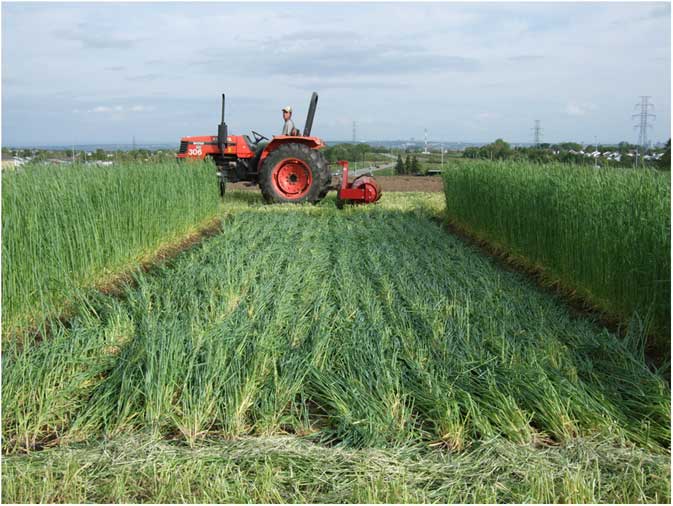
Generally, cover crops can be terminated in two ways, by mowing or rolling. Mowing leads to a faster degradation of residues and thus decreases long-term weed control effectiveness (Creamer and Dabney Reference Creamer and Dabney2002). Moreover, mowing can produce an uneven mulch of varying thickness throughout the field (Creamer and Dabney Reference Creamer and Dabney2002). Rolling cover crops forms a uniform mulch into which the crop can be easily seeded (Figure 1). The winter rye optimal growth stage to use a roller-crimper is Zadoks 61 (rye anthesis) (Mirsky et al. Reference Mirsky, Curran, Mortensen, Ryan and Shumway2009; Zadoks et al. Reference Zadoks, Chang and Konzak1974). The hairy vetch optimal rolling stage is early pods (Mischler et al. Reference Mischler, Duiker, Curran and Wilson2010a). If terminated before those stages, rye and vetch can survive and compete with cash crops. However, in cold weather regions like eastern Canada, it can be difficult to reach these stages without delaying crop seeding. It is even more difficult to get both cover crops to reach their optimal stages at the same time. The use of herbicides before rolling can be a solution to terminate rye–vetch cover crops while minimizing risks of regrowth. Few studies on rye–vetch cover crops have been conducted in eastern Canada. Even fewer studies have evaluated the impact of rolled mulch on pumpkin yield. Thus, there is a need to assess how to manage rolled rye–vetch cover crops in pumpkin production under cold weather conditions.
Uniform rye mulch from using a roller-crimper.

Objectives of this research were to evaluate 1) if it is beneficial to combine hairy vetch with winter rye, and if so, at what seeding rate; 2) the optimal growth stage of cover crops at time of rolling; 3) if glyphosate application is necessary to manage the mulch cover; and 4) how direct seeding of pumpkin into a cover crop mulch compares to conventional seeding without a mulch. We hypothesized that 1) the use of a mixture of winter rye and hairy vetch as cover crops, 2) the use of a roller-crimper to form a uniform mulch, and 3) direct seeding, would be an efficient combination to manage weeds and to optimize pumpkin yield. Answering these questions will help establish a sustainable weed management strategy for pumpkin growers in eastern Canada.
Materials and Methods
Site Descriptions and Field Operations
Field experiments were conducted during the 2012/2013 and 2013/2014 seasons at the Laval University Agronomic Station in Saint-Augustin-de-Desmaures near Quebec City, QC, Canada (46.73°N, 71.52°W). A different site was used each year. In 2012/2013, the experiment was established on a St. Bernard sandy loam (65.0% sand, 31.3% loam, 3.7% clay) with heavy weed pressure dominated by hairy galinsoga (Galinsoga quadriradiata Cav.). In 2013/2014, the site was established on a Gentilly sandy loam (50.4% sand, 42.9% loam, 6.7% clay) with a lighter weed pressure dominated by common lambsquarters (Chenopodium album L.) and redroot pigweed (Amaranthus retroflexus L.). The previous crop was oat at both sites. In fall, research sites were plowed with a moldboard plow and harrowed with a vibrating tine cultivator. Fall fertilization based on soil analysis was broadcast preplant incorporated. In the first year, 110 kg ha−1 of 27-0-0 (30 kg N ha−1) was applied, and in the second year, 200 kg ha−1 of 13-17-16 (26 kg N ha−1) was applied. In both years, 150 kg ha −1 of 27-0-0 (40 kg N ha−1) was broadcast perpendicularly to plots in the spring when rye had two to three leaves (Zadoks 13).
Experimental Design
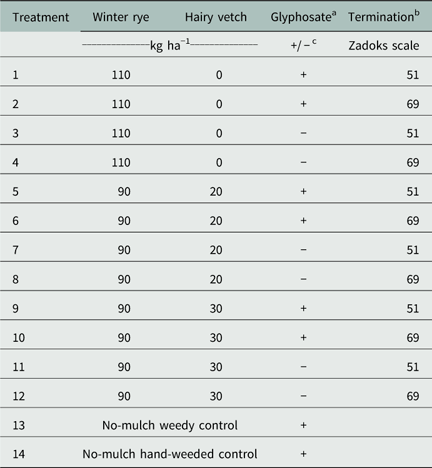
Plots were arranged in a randomized complete block design with four replications and 14 treatments (Table 1).
Treatments of the experimental protocol.

a Glyphosate application at a rate of 0.45 kg ae ha−1 on cover crops two days before rolling and 0.9 kg ae ha−1 on controls at the second termination date.
b Cover crop termination using a roller-crimper according to winter rye growth stage.
c Plus sign (+) indicates with glyphosate; minus sign (–) indicates without glyphosate.
Cover Crops
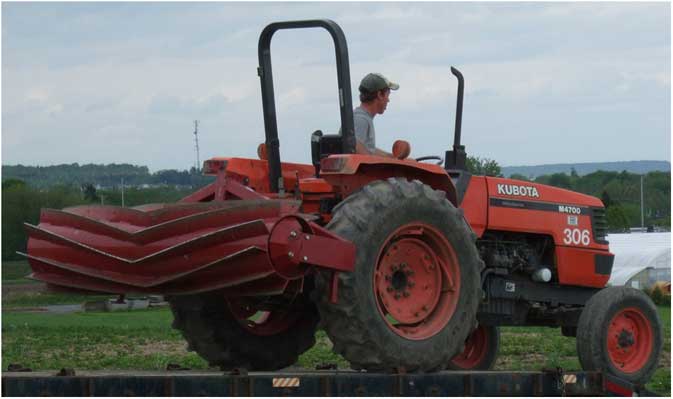
‘Gauthier’ winter rye (La COOP Univert, 229 rue Dupont, Pont-Rouge, Québec, Canada, G3H 1P3) and common hairy vetch (La COOP Univert, 229 rue Dupont, Pont-Rouge, Québec, Canada, G3H 1P3) were used as cover crops. In fall, plots were seeded August 31, 2012, and September 9, 2013, using a Wintersteiger plotseeder at a depth of 2 to 3 cm. Plots were 3.24 m wide (18 rows spaced 18 cm) and 9 m long. Rye seeding rate treatments consisted of 110 kg ha−1 when rye was seeded alone and 90 kg ha−1 when rye was combined with hairy vetch. Recommended rye seeding rate is 110 to 150 kg ha−1 (Robert Reference Robert2017). This rate was lowered when rye was combined with hairy vetch to limit competition between both cover crops and to promote hairy vetch establishment. Recommended hairy vetch seeding rate is 20 to 30 kg ha−1 (Verhallen et al. Reference Verhallen, Hayes and Taylor2005). For this study, both 20 and 30 kg ha−1 hairy vetch were tested combined with winter rye. Two control plots without cover crops were also included. In spring, cover crops were terminated according to winter rye growth stage, at early heading (Zadoks 51) or flowering (Zadoks 69). Termination dates were late May for Zadoks 51 and early June for Zadoks 69. A water-filled, 2.4-m-long by 40-cm-diam roller-crimper (I&J Manufacturing, Gordonville, PA) was used lengthwise on the plots to form the mulch (Figure 2). Two days before rolling, selected cover crop plots were treated with 450 g ae ha−1 of glyphosate (Roundup WeatherMax®, 540 g ae L−1, Monsanto Canada, 900 One Research Road, Winnipeg, Manitoba, Canada, R3T 6E3). A CO2 backpack sprayer (R&D Sprayers, Opelousas, LA) equipped with six TJ-8002 DG nozzles (Teejet Technologies, Wheaton, IL) spaced 50 cm apart on a 3-m boom was used. The boom was operated at a height of 50 cm above the rye canopy at a pressure of 255 kPa delivering a spray volume of 200 L ha−1 at 3.2 km h−1. No-mulch controls received 900 g ae ha−1 of glyphosate at Zadoks 69 application timing to ensure they were weed-free before pumpkin seeding. No further weeding was then accomplished in the weedy control. The weed-free control was hand-weeded weekly until complete pumpkin canopy closure.
Roller-crimper used at the Laval University Agronomic Station. The roller-crimper is 2.4 m long by 40 cm diam with 20 cm separated blades arranged in chevron pattern and weighs 920 kg when filled with water (I&J Manufacturing, Gordonville, PA).

Pumpkin
‘Field Trip’ pumpkin (La COOP Unicoop, 1376 Chemin Royal, St-Pierre-Iles d’Orléans, Québec, Canada, G0A 4E0) was seeded by hand at a depth of 2.5 cm. A spade was used to make the holes. Each pumpkin plant was seeded double and thinned at the three-leaf stage to guarantee uniform population. Each plot contained 20 plants spaced 90 cm on the row and 1.5 m between the rows. N fertilization was done by hand at early bloom growth stage. A dose of 167 kg ha−1 (45 kg N ha−1) of ammonium nitrate (27-0-0) was broadcast before rainfall to form a 15-cm-diam circle around each plant. The standard recommendation for pumpkin fertilization is 80 kg N ha−1 at seeding and 35 kg N ha−1 at early bloom, totaling 115 kg N ha−1 (Pellerin Reference Pellerin2010). In this study, the total N fertilization equaled 115 kg N ha−1 (30 kg N ha−1 in fall, 40 kg N ha−1 in spring, and 45 kg N ha−1 at early bloom). N mineralization by hairy vetch was expected to compensate for N uptake by rye. During the growing season, plots were not irrigated and no insecticide or fungicide treatments were needed.
Evaluations
Variables studied to evaluate mulch quality were aboveground dry biomass and mulch percent groundcover during pumpkin growing season. Variables measured to evaluate mulch efficacy against weeds were weed percent groundcover during pumpkin growing season and weed aboveground dry biomass. Rye regrowth, pumpkin plant dry biomass, and pumpkin marketable yield were measured to evaluate the effects of treatments on pumpkin. Evaluation dates are expressed in weeks after pumpkin emergence (WAE).
Cover Crop Dry Biomass
Cover crop dry biomass was measured before rolling. All winter rye and hairy vetch foliage was harvested in a 0.25-m2 (50- by 50-cm) quadrat at 2.5 cm above the ground and separated manually. Biomasses were placed in paper bags, dried at 60 C until constant weight, and weighed. In 2013, in order to get a general idea of cover crops biomass, only one replication was sampled. However, all plots were sampled in 2014 in order to conduct an ANOVA on the data.
Mulch and Weed Groundcover
In 2013, it has been observed that some treatments were affecting mulch groundcover. Thus this data was collected in 2014. Weed groundcover was evaluated both years. Mulch and weed groundcover were visually evaluated four times during the growing season at 2, 4, 6, and 8 WAE and expressed in percentage (%) using a scale from 0% to 100% (0% meaning no cover, 100% meaning plot completely covered).
Weed Dry Biomass
Both years, all weeds found in a 0.25-m2 quadrat were cut at 2.5 cm above the ground at 8 WAE. Weeds were placed in paper bags, dried at 60 C, and weighed.
Rye Regrowth and Pumpkin Plant Dry Biomass
In 2013, it was observed that rye regrowth affected pumpkin development. Thus, these data were collected in 2014. At 6 WAE, one representative pumpkin plant per plot was chosen and cut at 2.5 cm above the ground. All fruits were removed to keep only the foliage. Pumpkin plants were then placed in paper bags, dried at 60 C, and weighed. At 8 WAE, all rye vertical stems found in a 0.25-m2 quadrat were cut at 2.5 cm above the ground, placed in paper bags, dried at 60 C, and weighed.
Marketable Yield
Six pumpkin plants were randomly chosen in each plot and harvested by hand. The peduncle was cut 3 cm above the fruit with a sharp knife. Fruits were cleaned and categorized as marketable or not, and then weighed by category. The main criteria for downgrading were diseases, malformation, and immaturity. The number of fruits per plant and fruit size were also measured.
Statistical Analysis
Data were analyzed by ANOVA using the GLM procedure from SAS version 9.3 (SAS Institute, Inc., Cary, NC). Homogeneity of variance and normality of residuals were verified to meet ANOVA postulates. Treatment means were compared with each other using a priori contrasts, 13 in total, with a threshold of α=0.05. Combined analyses across years were performed to verify year by treatment interactions. Due to significant interactions, both years were analyzed separately.
Results and Discussion
Weather Conditions
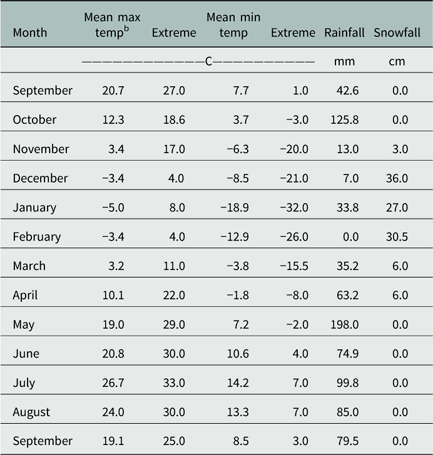
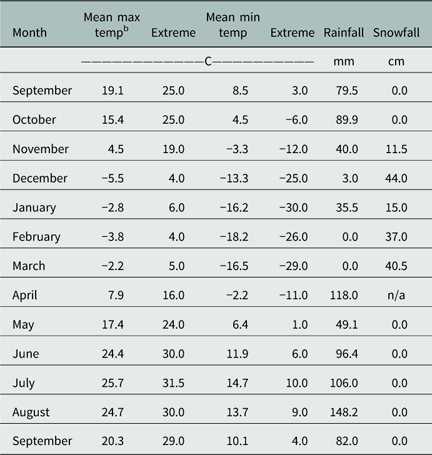
Monthly weather data reports are shown in Table 2 for 2012/2013 and in Table 3 for 2013/2014.
Weather data report for 2012/2013 growing season.Footnote a

a Data provided by Environment and Climate Change Canada for Deschambault, Quebec weather station (46.40°N, 71.55°W).
b Abbreviation: Temp, temperature.
Weather data report for 2013/2014 growing season.Footnote a

a Data provided by Environment and Climate Change Canada for Deschambault, Quebec weather station (46.40°N, 71.55°W).
b Abbreviation: N/a, not available; temp, temperature.
Cover Crops Growing Season
Cover crops grew from early September to late May. The two main environmental factors affecting cover crops winter survival are cold temperature and snow cover. In fall 2012, the first significant snow accumulation (13.0 cm) occurred December 27. Prior to that date, temperatures from −11.0 to −20.0 C were observed 11 times without snow cover. In fall 2013, the first significant snow accumulation occurred December 9, with an accumulation of 10.0 cm of snow. Before that date, temperatures of −12.0 and −16.0 C were observed without snow cover.
Pumpkin Growing Season
The pumpkin growing season went from early June to late September. The two main weather factors affecting pumpkin growth are temperature and rainfall. The mean maximum temperature observed from June to September was 22.6 C in 2013 and 23.7 C in 2014. Total rainfall from June to September was 339.2 mm in 2013 and 432.6 mm in 2014.
Cover Crop Dry Biomass
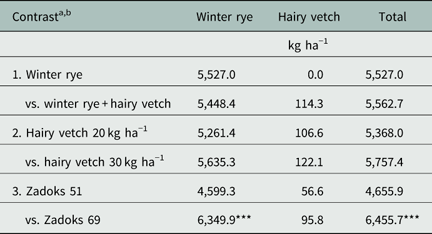
In 2014, the aboveground cover crop dry biomass was significantly affected by the timing of termination (Table 4). Total dry biomass went from 4,655.9 kg ha−1 at Zadoks 51 (June 1) to 6,455.7 kg ha−1 at Zadoks 69 (June 8), an increase of 39% in 7 days. In 2013, statistical analysis was not possible as only one replication was sampled. However, the same trend was observed with a total dry biomass of 3,043.3 kg ha−1 at Zadoks 51 (May 27) and 5,563.8 kg ha−1 at Zadoks 69 (June 5) (data not shown). These results support those of Mirsky et al. (Reference Mirsky, Curran, Mortenseny, Ryany and Shumway2011), who obtained a rye dry biomass increase of 37% in 10 days. Clark et al. (Reference Clark, Decker, Meisinger and McIntosh1997) and Mischler et al. (Reference Mischler, Curran, Duiker and Hyde2010b) also reported an increase of rye dry biomass when delaying termination date. According to Teasdale and Mohler (Reference Teasdale and Mohler1993), mulch biomass is the most important factor for weed control. Thus, Zadoks 69 is likely to provide more biomass and better weed control.
Single degree of freedom comparisons of above groundcover crop dry biomass in 2014.

a Abbreviation: Vs., versus.
b Zadoks 51, rye early heading; Zadoks 69, rye flowering.
***indicates significance at Ρ<0.001.
Adding hairy vetch to winter rye did not significantly affect total dry biomass. In 2014, hairy vetch dry biomass was not significantly higher in rye–vetch mulches (114.3 kg ha−1) than it was in rye mulches (0.0 kg ha−1). Moreover, there was no significant difference between the two hairy vetch seeding rates (106.6 kg ha−1 for 20 kg of vetch per hectare and 122.1 for 30 kg of vetch per hectare) and the two termination timings (56.6 kg ha−1 at Zadoks 51 and 95.8 kg ha−1 at Zadoks 69). In 2013, hairy vetch also contributed slightly to the mulch dry biomass with 0.2 kg ha−1 at Zadoks 51 and 3.4 kg ha−1 at Zadoks 69 (data not shown). These results demonstrate that the heavy total dry biomass obtained in this study is mainly attributable to winter rye.
Low contribution of vetch to mulches in both years is mostly due to poor winter survival. The temperature fell below −10 C without snow cover eleven times in fall 2012 and two times in fall 2013. This resulted in severe winterkill both years, especially following fall 2012. Spargo et al. (Reference Spargo, Cavigelli, Mirsky, Meisinger and Ackroyd2016) obtained similar results when a temperature of −12 C during two consecutive nights without snow cover killed a substantial proportion of hairy vetch cover crop. These results go against those of Verhallen et al. (Reference Verhallen, Hayes and Taylor2005) who stated that hairy vetch can survive to extremely cold weather, though they did not provide a minimum temperature. Moreover, hairy vetch probably did not have enough time to get well established before winter. The recommended seeding date for hairy vetch is mid-August, and plots were seeded in early September (Sarrantonio Reference Sarrantonio1994; Verhallen et al. Reference Verhallen, Hayes and Taylor2005). Also, winter rye is a very competitive crop and it probably affected hairy vetch establishment. The high rye seeding rate used in the mixture with hairy vetch probably contributed to vetch suppression. Previous studies demonstrated that a 50:50 mixture is more likely to work (Clark et al. Reference Clark, Decker and Meisinger1994; Clark et al. Reference Clark, Decker, Meisinger and McIntosh1997; Poffenbarger et al. Reference Poffenbarger, Mirsky, Weil, Maul, Kramer, Spargo and Cavigelli2015; Wells et al. Reference Wells, Reberg-Horton and Mirsky2016)
Mulch Groundcover
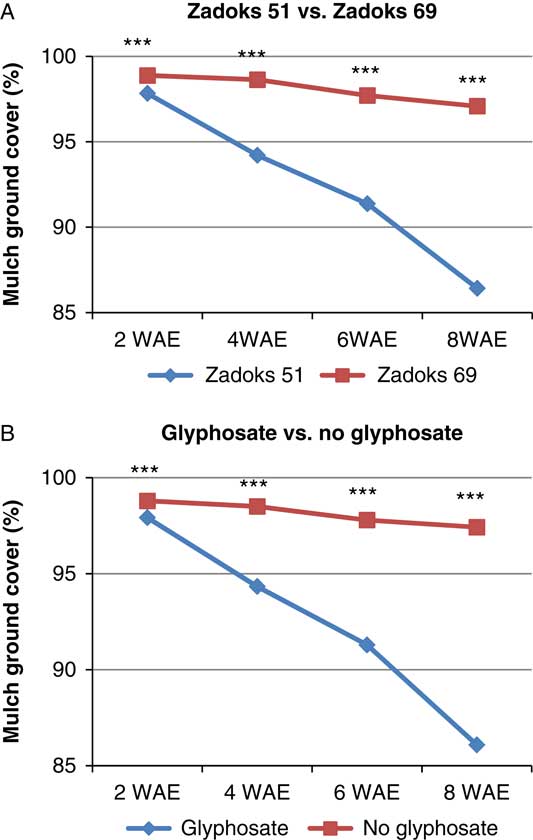
In 2013, it was observed that some treatments affected mulch groundcover. To quantify this observation, percent groundcover of rye–vetch residues was evaluated during the 2014 growing season. Termination date and glyphosate use significantly affected mulch groundcover (Figure 3). Mulches rolled at Zadoks 69 provided an excellent groundcover during the entire pumpkin growing season. At 8 WAE, 97% of the ground was still covered by residues. Meanwhile, mulches rolled at Zadoks 51 covered 86% of the ground. Mulches without glyphosate maintained an excellent groundcover during the entire season with a 97% groundcover at 8 WAE. Glyphosate-treated mulches covered 86% of the ground at the same time.
Mulch percent groundcover (%). (A) Rolling at Zadoks 51 (rye early heading) versus Zadoks 69 (rye flowering), and (B) glyphosate-treated versus non-glyphosate-treated mulch at 2, 4, 6, and 8 weeks after pumpkin emergence (WAE) in 2014. ***indicates significant at Ρ<0.001.

These results suggest that using glyphosate accelerated rye mulch degradation. They are similar to those of Snapp and Borden (Reference Snapp and Borden2005), who demonstrated that glyphosate induces rye senescence. As mulches rolled at Zadoks 69 kept a tremendous groundcover over the season, we can affirm that the glyphosate-treated mulch degradation rate is directly correlated to above groundcover crops biomass.
Weed Groundcover
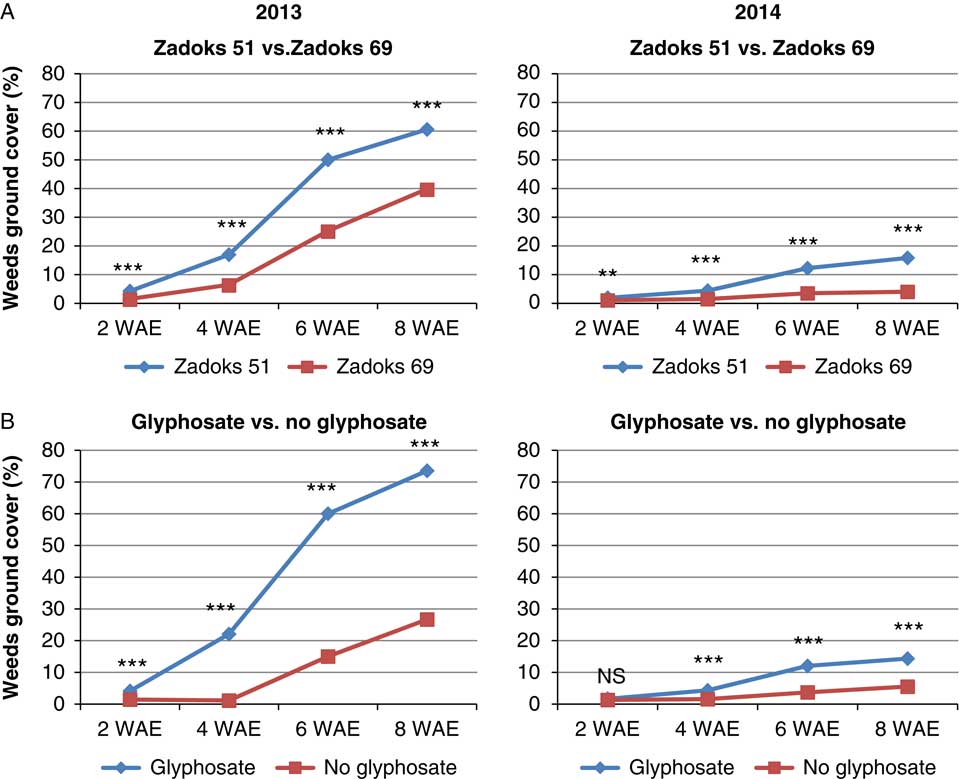
Weed pressure was very different between 2013 and 2014. In 2013, weed pressure was extremely high and dominated by hairy galinsoga. In 2014, weed pressure was much lower and dominated by common lambsquarters and redroot pigweed. In both years, weed groundcover was significantly influenced by mulch termination date and the use of glyphosate (Figure 4).
Weed percent groundcover (%). (A) Rolling at Zadoks 51 (rye early heading) versus Zadoks 69 (rye flowering), and (B) glyphosate versus non-glyphosate-treated mulch at 2, 4, 6, and 8 weeks after pumpkin emergence (WAE) in 2013 and 2014. ** and ***indicate significant at Ρ<0.01 and Ρ<0.001, respectively. NS, not significant; vs, versus.

Mulches rolled at Zadoks 69 were highly effective against weeds and had lower weed groundcover than those rolled at Zadoks 51. At 8 WAE, the percentages of weed groundcover were 40% versus 61% in 2013 and 4% versus 16% in 2014. These results are consistent with those of previous studies. A greater mulch biomass provides higher groundcover and results in better weed control. A greater biomass limits light transmittance and inhibits weed germination and growth (Teasdale and Mohler Reference Teasdale and Mohler1993; Webster et al. Reference Webster, Simmons, Culpepper, Grey, Bridges and Scully2016).
Because glyphosate was applied only once, and very early in the season, its use significantly decreased the ability of the mulch to control weeds. In 2013, 74% of the ground was covered by weeds at 8 WAE in glyphosate-treated plots. Without glyphosate, weeds covered only 27% of the ground. In 2014, weed groundcover at 8 WAE was 14% with glyphosate and 6% without glyphosate. As previously shown, glyphosate induced a faster degradation of rye residues which resulted in a weaker weed control in glyphosate-treated plots.
In order to observe the combination of these two factors, single degree of freedom comparisons between plots treated with glyphosate at Zadoks 69 (Z69G) and control plots were performed (data not shown). At 8 WAE, weed groundcover was significantly higher (Ρ<0.001) in Z69G (50%) than it was in the weed-free control (0%) in 2013. On the other hand, there was no difference between the two in 2014 (5% versus 0%, respectively). Both years, at the same time, the no-mulch weedy control was completely covered by weeds (100%) and was significantly different from Z69G (P<0.001). Adequate weed control obtained in Z69G shows that glyphosate-treated rye mulch efficacy against weeds is correlated with cover crop biomass.
Weed Dry Biomass
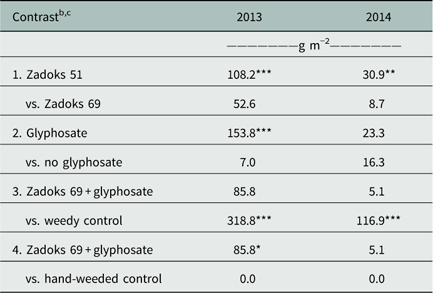
Total weed aboveground dry biomass was evaluated at 8 WAE (Table 5). In both years, rye mulch terminated at Zadoks 69 had a significantly lower weed dry biomass than rye mulch terminated at Zadoks 51, with 51% less in 2013 and 72% in 2014. These results are consistent with those of Ryan et al. (Reference Ryan, Mirsky, Mortensen, Teasdale and Curran2011b), who observed a reduction of weed dry biomass with increasing rye mulch biomass.
Single degree of freedom comparisons of aboveground total weed dry biomass at 8 weeks after pumpkin emergence (WAE) in 2013 and 2014.Footnote a

a 8 WAE was August 12 in 2013 and August 25 in 2014.
b Abbreviation: Vs., versus.
c Zadoks 51, rye early heading; Zadoks 69, rye flowering.
*, **, and ***indicate significance at Ρ<0.05, Ρ<0.01, and Ρ<0.001, respectively.
Using glyphosate significantly increased weed dry biomass in 2013, but had no influence in 2014. This shows that rye residue degradation caused by glyphosate had a major impact on mulch weed control when weed pressure was high but had little impact in a more normal weed pressure field.
To evaluate these two factors combined, Z69G treatment was compared to weedy and weed-free controls. In both years, Z69G had significantly less weed dry biomass than the weedy control. Weed dry biomass went from 318.8 g m−2 to 85.5 g m−2 in 2013 and from 116.9 g m−2 to 5.1 g m−2 in 2014, a reduction of 73% and 95%, respectively. Z69G was slightly different from the hand-weeded control in 2013 (85.8 g m−2 versus 0.0 g m−2), and there was no difference in 2014 (5.1 g m−2 versus 0.0 g m−2). These results confirm the very high efficacy of Z69G against weeds.
Rye Regrowth and Pumpkin Plant Dry Biomass
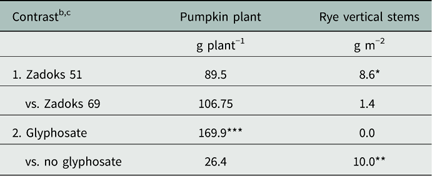
In 2013, it was observed that rye regrowth affected pumpkin development. To quantify this observation, dry biomass of one representative plant per plot at 6 WAE and of rye vertical stems at 8 WAE was measured in 2014 (Table 6).
Single degree of freedom comparisons of pumpkin plant dry biomass at 6 weeks after pumpkin emergence (WAE) and rye vertical stems dry biomass at 8 WAE in 2014.Footnote a

a 6 WAE was August 12; 8 WAE was August 25.
b Abbreviation: Vs., versus.
c Zadoks 51, rye early heading; Zadoks 69, rye flowering.
*, **, and ***indicate significance at Ρ<0.05, Ρ<0.01, and Ρ<0.001, respectively.
Termination date did not influence pumpkin plant dry biomass, but significantly influenced rye regrowth. Rolling rye at Zadoks 69 rather than Zadoks 51 decreased rye vertical stems dry biomass by 84% (from 8.6 g m−2 to 1.4 g m−2). These results support those of Mirsky et al. (Reference Mirsky, Curran, Mortensen, Ryan and Shumway2009), who revealed that rye is well controlled by the roller-crimper from Zadoks 61.
The use of glyphosate before rolling significantly affected pumpkin plant dry biomass and rye regrowth. The average pumpkin plant dry biomass was 169.9 g plant−1 with glyphosate versus 26.4 g plant−1 without glyphosate. Using glyphosate also reduced rye vertical stems dry biomass by 100% (from 10.0 g m−2 to 0.0 g m−2). The use of glyphosate before rolling was essential to limit rye interference with pumpkin. Without glyphosate, rye regrowth greatly restricted pumpkin growth. Those results are consistent with those of previous studies. Carr et al. (Reference Carr, Horsley, Gunderson, Winch and Martin2013) demonstrated that rye is not well controlled by the roller-crimper alone at Zadoks 63 and is controlled at 85% at Zadoks 73. At Zadoks 63, they obtained no yield of maize (zea mays L.), soybean [Glycine max (L.) Merr.], and buckwheat (Fagopyrum esculentum Moench). At Zadoks 73, they obtained no yield of maize and a low yield of soybean and buckwheat. Late seeding and water stress are the two hypotheses raised to explain the loss of yield. Mischler et al. (Reference Mischler, Curran, Duiker and Hyde2010b) observed a great control of rye using the roller-crimper combined with a previous application of glyphosate. They also obtained a soybean yield similar to that of the no-mulch weeded control.
Marketable Yield
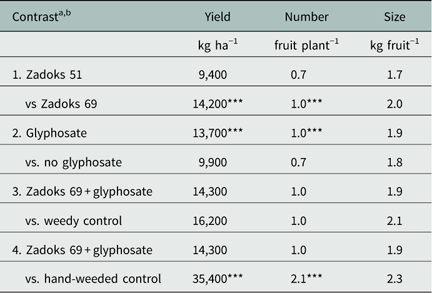
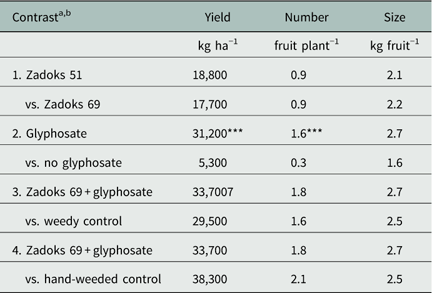
Pumpkin marketable yield was influenced by termination date in 2013 and by glyphosate use in 2013 and 2014. In 2013, yield was significantly higher in mulches terminated at Zadoks 69 (14,200 kg ha−1) versus Zadoks 51 (9,400 kg ha−1) and in mulches treated with glyphosate (13,700 kg Ma−1) versus nontreated ones (9,900 kg ha−1) (Table 7). In 2014, using glyphosate greatly increased marketable yield, from 5,300 kg ha−1 without glyphosate to 32,100 kg ha−1 with glyphosate (Table 8). In all cases, higher yield resulted from a higher number of fruits per plant (1.0 versus 0.7 in 2013 and 1.6 versus 0.3 in 2014). Marketable fruit size did not differ among any treatments.
Single degree of freedom comparisons of pumpkin marketable yield, number of fruit per plant, and fruit size in 2013.

a Abbreviation: Vs., versus.
b Zadoks 51, rye early heading; Zadoks 69, rye flowering.
***indicates significance at Ρ<0.001.
Single degree of freedom comparisons of pumpkin marketable yield, number of fruit per plant and fruit size in 2014.

a Abbreviation: Vs., versus.
b Zadoks 51, rye early heading; Zadoks 69, rye flowering.
***indicates significance at Ρ<0.001.
The absence of any significant effect of termination date on yield in 2014 is probably due to the lower weed pressure. At 8 WAE, weeds covered 61% of Zadoks 51 mulches in 2013 against 16% in 2014. Zadoks 69 mulches, being more effective against weeds, resulted in better yield under high weed pressure, but were not necessary at a lower weed pressure. Glyphosate use was the most important factor in obtaining a good marketable yield. As previously shown, without glyphosate rye regrowth acts as a weed and competes with pumpkin for space, light, water, and nutrients. This seriously affects pumpkin growth and, ultimately, decreases its yield.
In neither year was Z69G significantly different from the weedy control. In 2013, Z69G yield was 14,300 kg ha−1 against 16,200 kg ha−1 for the weedy check. They both had an average of 1.0 fruit per plant. In 2014, Z69G had a yield of 33,700 kg ha−1 against 29,500 kg ha−1 for the weedy control. They had an average of 1.8 and 1.6 fruit per plant respectively. Compared to the weed-free control, Z69G marketable yield was significantly lower in 2013 (14,300 versus 35,400 kg ha−1) and did not differ in 2014 (33,700 versus 38,300 kg ha−1). In 2013, lower yield in Z69G is attributable to a lower number of fruit per plant, with an average of 2.1 in the weed-free control against 1.0 in Z69G. The number of fruit per plant did not differ in 2014 with an average of 2.1 in the hand-weeded control and 1.8 in Z69G.
These results are consistent with those of Forcella et al. (Reference Forcella, Eklund and Peterson2015). They concluded that pumpkin marketable yield is 25% lower in rolled rye mulch without glyphosate than it is in bare soil, even with low rye regrowth and excellent weed control. This decrease was also due to a smaller number of fruit per plant. Fruit size was not affected by mulch either.
The hand-weeded control is an ideal environment devoid of any stress. Thus, higher yield was obtained both years in this treatment. The weedy control is a high-stress environment, with weeds competing with pumpkin for space, light, water, and nutrients. This competition caused low yields both years in this treatment. Z69G is an environment with low weed pressure and without rye regrowth. In both years, Z69G had the best yield among rye-crimped treatments. Its yield was similar to that of the hand-weeded control in 2014, but was 60% lower than that of the hand-weeded control in 2013. Three hypotheses are raised to explain these results.
First, N may have been limiting pumpkin growth in rye-crimped treatments. Rye degradation is well known to induce soil N immobilization (Rosecrance et al. Reference Rosecrance, McCarty, Shelton and Teasdale2000; Wells et al. Reference Wells, Reberg-Horton, Smith and Grossman2013). In our study, hairy vetch probably did not provide the expected amount of N because of severe winterkill. However, the use of glyphosate is known to hasten rye degradation and enhance N mineralization (Snapp and Borden Reference Snapp and Borden2005). This possibly explains the similar yield observed between Z69G treatment and the hand-weeded control in 2014. Using glyphosate may have resulted in N mineralization rather than N immobilization. Further studies are needed to confirm this hypothesis.
Second, field weed pressure may have been a major factor influencing pumpkin yield. In 2013, at 8 WAE, weeds covered 50% of Z69G plots and weighed 85.8 g m−2. Pumpkin yield in the Z69G treatment was significantly lower than that in the hand-weeded control. In 2014, at the same time, weeds covered 5% of Z69G plots and weighed 5.1 g m−2. Pumpkin yield of Z69G treatment was then similar to that of the hand-weeded control.
Finally, water stress may have reduced Z69G yield in 2013. According to Carr et al. (Reference Carr, Horsley, Gunderson, Winch and Martin2013), cash crop yield potential depends on precipitation received following cover crop termination with a roller-crimper. They affirm that surviving rye competes with the crop for the limited amount of water available during the growing season. In our study, plots were not irrigated. From June to September, rainfall totaled 339.2 mm in 2013 and 432.6 mm in 2014. The 2013 site was not protected from the strong winds present near the St. Lawrence River, while the 2014 site was surrounded by trees, creating a wind-protected environment. A site surrounded by windbreaks and 93.4 mm more rain may explain the greater Z69G yield in 2014.
In conclusion, adding hairy vetch to winter rye mulch provided no benefits because of severe winterkill and little contribution to the mulch. Secondly, the optimal growth stage to terminate rye is flowering (Zadoks 69). It is essential to obtain the greatest mulch biomass possible prior to rolling in order to maintain excellent weed control throughout the growing season. Thirdly, using glyphosate prior to rolling rye is crucial to get adequate pumpkin growth. Without glyphosate, there is rye regrowth that competes with pumpkin. Z69G has been the best rye-crimped treatment, resulting in excellent weed control during both years and a yield similar to that of the no-mulch weed-free control the second year. Further studies are needed to identify factors that contributed to reduced pumpkin yield in Z69G treatment in 2013. This information is essential to offer pumpkin producers an alternative as efficient and consistent as the conventional system.
Acknowledgments
The authors would like to thank Susanne Buhler, research professional, for her appreciated help in the planning and realization of this project. We would also like to thank the technical team at the Agronomic Station, Francis Gagnon, Marc Bourgeois, and Jérôme Aubin. A special thanks to all summer students who worked countless hours on this project and to Nicolas Bédard from Bédard et Blouin, Inc. farm for pumpkin seeds. DM was supported by the Natural Sciences and Engineering Research Council of Canada (NSERC) and the Fonds de recherche du Québec – Nature et technologies (FRQNT). This project was carried out as part of strand 4 of the Prime-vert program Appui au développement et au transfert de connaissances en agroenvironnement, with funding of the Ministère de l’Agriculture, des Pêcheries et de l’Alimentation du Québec through the Quebec phytosanitary strategy for agriculture. No conflicts of interest have been declared.