Infidelity is a system of negations; it is nothing—believes nothing—does nothing good.
—Beware of Bad Books (New York: American Tract Society, 1826)By Systems; I understand any number of men joined in one Interest or one Business.
—Thomas Hobbes, Leviathan (1651)Steam has of course been noticed ever since the heating of water and boiling of victuals were practiced. The daily occurrence implied by the expression “the pot boils over” was as common in antediluvian as in modern times. … From allusions in the most ancient writings, we may gather that the phenomena exhibited by steam were closely observed of old. Thus Job in describing Leviathan alludes to the puffs or volumes that issue from under the covers of boiling vessels.
—Thomas Ewbank, A Descriptive and Historical Account of Hydraulic and Other Machines for Raising Water, Ancient and Modern: with Observations on Various Subjects connected with the Mechanic Arts: including the Progressive Development of the Steam Engine, 12th ed. (1851)I. Prologue: America's God
Statistics point to a “surge” in evangelical publications as well as in the practices of evangelical piety in the first half of the nineteenth century.Footnote 2 In order to explain these parallel trends, however, mere measurement falls short in adequately addressing the strange power evangelical media institutions assumed during this period. In 1825, for example, the American Tract Society announced its agenda of “systematic organization,” a directive that applied equally, and simultaneously, to words on the page, to readers on the ground, and to the airy abstractions of the nation-state.
So long as public opinion maintains its existing supremacy, who does not feel the immense importance of moulding it by a moral and religious influence, and of securing and augmenting our civil and political liberties by the most unconfined diffusion of the lights of science and religion throughout a community whose political existence depends on the intelligence, and, more especially, on the integrity of the people.Footnote 3
In this essay, I will approach the “immense” project of “moulding” public opinion by focusing on the combinatory effects of specific evangelical media practices.Footnote 4 These practices included the representation of the population as an object of redemption and religious inquiry; the promotion of a subject-centered epistemology as prerequisite for being included in such a large-scale project of redemption; the differentiation of “true religion” from imperfect or corrupt forms of political behavior; the deployment of mass media to shape the meanings of democratic progress and social transparency; and finally, the sensuous cultivation of rational reading habits in light of these meanings.
Each of these media practices was double-edged, targeting “the local situation and habits of the people.”Footnote 5 And each revolved around the desire for systematicity—not in the sense of direct control but in “securing and systematizing the exertions of others.” For example, both major evangelical media organizations, the American Tract Society and the American Bible Society, subscribed to a “practical system” of “doing good which is level to every capacity, and adapted to every condition.” The conditions that “demand[ed] the employment of a system combining catholicity, itinerancy, directness, and permanence” were matters of demographic calculability. These conditions included “the vastness of our territory and the sparseness of the population; the enormous increase of foreign emigration; the inadequacy of ministerial instruction and other means of grace; the meager supply of religious reading; the prevalence of vicious books; the neglect of Christian duty in visiting the abodes of the destitute; [and] the existence of error in numberless forms.” Such issues, however, could only be addressed “on a vast scale” by addressing individuals “at the fireside, through the eye and the ear.”Footnote 6
Consequently, evangelical media practices were not related to individuals in an essential way but nonetheless affected individuals in a particular way.Footnote 7 In coordinating the production of information about “true religion” with information they had previously gathered about intimate, domestic details, evangelicals made their calculations in terms of “the masses [who] have their rights, as well as individuals.”Footnote 8 To be sure, the statistically driven efforts of evangelical media did not seek to eradicate the idiosyncrasies of everyday life (sin was, after all, originary). On the contrary, they sought to account for the private realm in such a way as to bring it into the orbit of a community that was in the process of being imagined. Such efforts were effective inasmuch as they made the imagination of the social the primary function of each and every individual.Footnote 9 Evangelical publishers, in this scheme, were “a mighty throbbing heart gushing [their] thrilling thought-currents through all the swelling arteries of the world's life.”Footnote 10 Individual readers, in turn, were conduits of this “life blood” pouring into them “with accelerated force.”Footnote 11
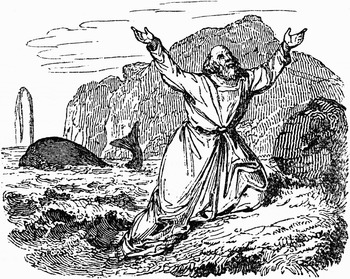
Despite evangelical claims to the contrary, “systematic organization” did not yield hard data. It was, however, tangible—in the same way a child's imagination of God's omniscience or the adult imagination of his or her complicity in an invisible network of social vectors has affective and lasting results. Or as the children's tract The History of Jonah (1833) suggests, its own power of instruction was not coercive but ever a looming prospect. For to invite the reader to imagine how God knows “all things that all the people in the world, are now thinking, feeling, saying, and doing” was to “promote … active piety” and “call into exercise the reflecting and reasoning powers”Footnote 12 (fig. 1).
The History of Jonah, for Children and Youth (American Tract Society, 1833). Used by permission of the American Tract Society.

According to contemporary testimony, the “moral power of the [evangelical] press” consisted of something more than the formal properties of Latin letters lying flat. Rather, the power consisted of the active residue of signification that accompanied these letters: from the desire that suffused their composition to the gears and steam that produced them to the intricate strategies that marked their dissemination, delivery, and reception. Descriptions of “the machinery of this system” were pervaded by the language of indeterminacy, incandescence, and automation.Footnote 13 As Henry Ward Beecher noted, the experiential form of the first convention of the American Bible Society anticipated its function. It was a “sublime spectacle,” he wrote. Each attendee had “had his own mind prepared by an agency which he had scarcely recognized, and of whose ubiquitous influence he had no knowledge.”Footnote 14 In “bringing the Gospel into contact with those who absent themselves from the sanctuary,” tract societies would “be the means of incalculable good.”Footnote 15 The “power of the press” was “resistless.”Footnote 16 Its “mechanical arrangements for multiplying” and the “magnitude” of its operation guaranteed its “indefinite expansion.”Footnote 17 Even critics could not help but be impressed by the organizational effects of evangelical media. As Unitarian William Ellery Channing wrote, “an electric communication [was] established” between the members of voluntary societies that enabled them to accomplish “wonders.” But Channing also expressed concern over the “minute ramifications of these societies, penetrating everywhere,” noting that “one of the most remarkable circumstances or features of our age is the energy with which the principle of combination or the action by joint forces, by associated numbers, is manifesting itself … This principle of association is worthy the attention of the philosopher, who simply aims to understand society, and its most powerful springs.”Footnote 18
In light of such testimony, this essay will address, rather than quantify, the cumulative effect of evangelical media practices. As I will demonstrate, the “systematic organization” of media in the form of information as well as the bodies and imaginations that encountered such information was, indeed, “immense.” Evangelical media practices, I argue, made possible particular conceptions of the self, the social, and the means to understand them both; manufactured somewhat narrow definitions of “true” religion and interpretive propriety; shaped characters who readily adopted these conceptions, assumed these means, and adapted themselves, in practice, to these definitions. Simply stated, the power of evangelical media must be approached in terms of the conceptual spaces they helped initiate and foreclose in antebellum America. For in structuring both the meaning of “true religion” and the subsequent expectations of mundane life, evangelical media practices helped make salvation a matter of “national safety” rather than simply or solely a matter of faith.Footnote 19
Evangelical media practices, from this perspective, were neither religious nor secular. Their significance, instead, lies in the power they assumed in defining a particular symmetry between piety, epistemology, and politics. Like the Scottish Sunday School teacher in Catherine Warden; or, the Pious Scholar, evangelical media institutions “aim[ed] to make [students] understand what they committed to memory, not only as subjects of belief, but as incitements to action—subjects that directed them in their conduct towards God, towards their fellow-men, and in the manner in which they ought to attend to the eternal salvation of their own souls.”Footnote 20 Within the strange loops professed here—the back and forth between memory and action, reading and belief, piety and social ethics—evangelicalism was baptized in the spirit, rather than in the name, of secularism.
In conceptualizing the essence of religion and promoting this essence in terms of private reason and social ethics, evangelical media practices both contributed to and were informed by the discursive formation of secularism in antebellum America.Footnote 21 Rather than being the antithesis to religiosity, evangelical secularism was constituted by those feelings, attitudes, and practices that animated definitional categories about religion and was manifest in the deployment of those definitions at the level of the population. To frame evangelical media practices in terms of secularism—a “conceptual environment that presupposes certain ways of defining how religion, ethics, the nation, and politics relate to each other”—shifts the analytical emphasis from the meaning-making activities of evangelicals to the question of how evangelicals (and others) were made meaningful to themselves.Footnote 22 To frame evangelical media practices in terms of secularism also serves to illuminate how media forms do not simply deliver messages to the masses who, in turn, discern their meaning. On the contrary, media forms are, first and foremost, mediating. So while evangelical letters (and printed numbers) described a world in which there were clear lines between private and public, subject and object, true religion and false, their circulation added up to nothing less than a dissolution of these categorical boundaries.
R. S. Cook, secretary of the American Tract Society, suggested as much when he described the formation of printing presses at the Society's headquarters in New York City—“Twelve of these oracular machines pursue their endless task, without weariness or suffering; preaching more of Flavel's sermons in a week than he preached in a lifetime—dreaming Bunyan's Dream over a thousand times a day—reiterating Baxter's ‘Call’ until it would seem that the very atmosphere was vocal with, ‘Turn ye, turn ye; for why will ye die?’ ”Footnote 23 Cook voiced no qualms about the fact that the biological presence of either Flavel or Baxter was no longer necessary for their words to be meaningful, that is, effective. Neither did those Americans who were converted, in the field, by agents and their encomiums to the wonders of the American Tract Society. A world—this world in which machines (and institutions) possessed not simply a logic but an agency of their own—was strangely reminiscent of the determinism of Calvinist creed and the animism of savage superstition, those terms that marked the constitutive outside of evangelical piety. In this scheme, “true religion” was not unrelated to mechanical saturation, dependent on technologies of reproduction as well as readers who encountered their ambience with the turn of every page.
At mid-century, evangelical secularism was quite literally amorphous, haunting words, animating ethical sensibilities, motivating and coordinating practices without announcing itself as such. Consequently, evangelical secularism must be approached indirectly. A metaphysical solvent rather than a substantive ideology, evangelical secularism was a highly charged atmosphere in which epistemology continuously dissolved into politics, politics into epistemology. Because evangelical secularism cannot be reduced to any one thing and, for that matter, did not even exist at the level of empirical reality, this essay will move across a number of interrelated sites, no single one of which captures the phenomenon in question: evangelical reviews of “infidel” fiction, evangelical histories of evangelicalism, evangelical representations of true and false religion, the logic, practices, and statistical presentations of evangelical media institutions, and finally, evangelical instructions on how to read, what to read, and why. Together, resonating, these sites added up to more of a medium than a message, more than the sum of individual actions, and more than the words on any page.
II. Reading Melville and the Question of Mediation
Evangelical secularism becomes something other than translucent during moments of transgression. These are times when evangelicals must defend their claims to truth and reason in light of them being marked as artifactual and wholly unreasonable. Given his firsthand encounter with both the missionary cause and evangelical media, Herman Melville's fiction may be as good a place as any to begin exploring what he once referred to as “evangelical pagan piety.”Footnote 24 Melville's first novel, Typee: A Peep at Polynesian Life during a Four Months' Residence in the Valley of the Marquesas (1846), was about the specter of cannibalism. It was also condemned by evangelical, and in Melville's words, “senseless” reviewers who “go straight from their cradles to their graves & never dream of the queer things going on at the antipodes.”Footnote 25
Typee is told in the first person by Tommo, a young sailor who abandons his whaling ship and ends up chronicling the customs, laws, and habits of the Marquesan islanders. Tommo pays particular attention to the “Typee,” which “in the Marquesan dialect signifies a lover of human flesh.” The question of whether the Typee are really cannibals is integral to both the substance and arc of his narrative. At the beginning of the novel, for example, Tommo recounts his conversation with the “natives of Nukuheva” and writes that it was “quite amusing” to “see what earnestness they disclaimed all cannibal propensities on their own part, while they denounced their enemies—the Typees—as inveterate gormandizers of human flesh; but this is a peculiarity to which I shall hereafter have occasion to allude.” And allude he does to this disclaimer, comparing the “system” of Typeean ritual to the practices of Protestant missionaries and suggesting that accusations of cannibalism were wholly ironic. Throughout his narrative, Tommo juxtaposes the humanity of the Typee with the “death-dealing machines” of “white civilized man” and the abuses committed in “the business of mission.” Having “evangelized into beasts of burden” everyone in their path, the “cruelty” of missionaries was “remorseless.” According to Tommo, the “atmosphere” of the Typee was “cool [and] delightful.” The “tainted atmosphere of a feverish civilization” had become self-consuming. This process of turning life against itself, like cannibalism, was literally unspeakable. “How feeble is all language to describe the horrors.”Footnote 26
Melville's “voluptuous” prose struck a chord among American evangelical leaders. They responded quickly, attacking Melville for his “slurs and flings against missionaries” as well as his “utter disregard of truth.”Footnote 27 A common refrain among evangelicals was Melville's “flagrant” infidelity. Although never defined with any theological rigor, such infidelity was assumed to be anathema to piety and, more significantly, detrimental to the cultivation of civilized sensibility. For example, in William Oland Bourne's “Typee: The Traducers of Missions,” there is more at stake than Melville's “pertinacity of misrepresentation.” For as Bourne insisted, his rather lengthy review in Christian Parlor Magazine was not an “analysis of [Typee's] contents, its literary execution, or its claims to fidelity.” Bourne, instead, took issue with the threat that Typee's circulation posed. Despite the fact that Typee was a “work coming from the press of one of the first houses in this country, and published simultaneously by the same house in London,” it was nonetheless “an apotheosis of barbarism! A panegyric of cannibal delights. An apostrophe to the spirit of savage felicity!” If left unaddressed, in public, Bourne suggested, Typee threatened to infiltrate sensibilities, to mediate the masses “like the ominous characters of blood” traced by primitive tribes. Attempting to invert Melville's inversion of cannibal and Christian, Bourne likened Typee to an “omnipotent and talismanic ‘TABU’ ” object, one borne of deceit and obfuscation. Typee was a violation of the kind of circulation guaranteed by democratic exchange. In its animistic allure, the very language of Typee could corrupt the capacity of individual readers to make judgments by and for themselves.Footnote 28
Bourne, it should be noted, did not fit neatly within evangelical categories of self-identification. On one hand, Bourne was a self-styled reformer. He called for the “brilliant establishment of Christianity in the hearts of people” of “insulated tribes” and believed that “the presentation of a written and printed language” was essential to the task. Bourne also promoted the “Liberty that angels use” and argued for the abolition of slavery based on what he viewed as the republican-inflected teachings of Jesus. On the other hand, Bourne was a member of the National Institute for the Promotion of Science. He was also a poet of some renown and the author of works that owed much to the liberal currents of Transcendentalism and “free-thinking” sensibilities.Footnote 29
What bound together Bourne's allegiances was his commitment to language as a source of metaphysical truth and his interest in shaping the context in which language was practiced, that is, produced, disseminated, and received.Footnote 30 Words, in both the evangelical and Romantic register, could embody the immediacy of truth, whether that truth referred to the divine or human condition. In Bourne's idealistic rendering, language was not necessarily a process of mediation but could function as a natural expression of metaphysical order. It could be relied on to provide certain knowledge of God, the world around, and the self. Bourne inhabited a space in which ideological currents of evangelicalism and Romanticism intersected. His commitment to a particular kind of social space and linguistic practices within it undergirded Bourne's apostrophic condemnation of Typee's publicity.
Bourne's commitment also explains his choice to riff on Melville's more voluptuous phrasings and narrative threads, re-presenting them as an egregious example of what did not count for either divine or human truth. Stringing a random selection of Melville's words together with his own, Bourne distilled what he believed to be the essence of Typee's literary “abandon.” Assuming the voice of Tommo as he succumbs to the “beauteous nymph Fayaway,” Bourne writes:
Come, oh Celestial Spirit of Primitive Bliss! and waft me on thy golden pinions to the lovely abodes of the Typeans! … Come, oh yearning soul of the angelic Fayaway! let me henceforth be the chosen partner of thy tabued pleasures! let me bask beneath the mild ray of thine azure eye, and repose on the swelling oval of thy graceful form! … With thee let me sport on the mirror-surface of thy sacred waters, and ramble beneath the refreshing shades of the cocoa and the palm!Footnote 31
In his deliberately outrageous impersonation, Bourne plays on the double meaning of infidelity, depicting Tommo's penetration as a modality of sin and pleasure and not of truth. Tommo rambles beneath. Tommo is intoxicated by the beauty of natural form. He loses himself to nature but gains no knowledge of its secrets.Footnote 32 Tommo's interpretive gaze, it seems, was a perversion of Bourne's evangelical and Romantic sensibilities, each depending on a wholly unified subject and a conception of Nature that corresponded to this unification.Footnote 33
The infidelity that Bourne ascribed to Typee evoked disunity, bodily and psychic penetration, the excessive emotionality of the feminine, and all that threatened to infringe on the rugged and autonomous reason of the solitary reader. By contrast, Bourne's re-presentation of Typee relied on the assumption that his imagined audience would be able to distinguish the constitutive outside of truth (and themselves) when it was presented to them. All publicity was good publicity when there existed ontological distinctions between self and other, private and public. All publicity was good publicity given that individual readers could potentially exercise their common capacity for rational discernment. Deliberate promotion, in other words, rather than prohibition was the most effective response to Melville's infidelity. To secure Typee's presence in public as an object of collective discrimination would ensure that its “tabu” powers were kept in check.
The decision by Bourne (and his editors) to publicize a fictional and carefully constructed “extract” from Typee was indicative of their faith in a public sphere properly constituted as republican. For as Christian Parlor Magazine insisted, “the American Christian Citizen” possessed “reverence for the laws of his country, and a scrupulous submission to them … Liberty in its just definition, the liberty for which our fathers struggled, is not freedom from law, but freedom according to law, and on this point it is to be feared we need instruction and warning. The theory of republicanism is eminently beautiful.”Footnote 34 Republicanism, in other words, was not a theory but a systematic reflection of moral law. It was that which regulated reasoned exchange and democratic dialogue. It was, for all intents and purposes, a mediating principle that guaranteed epistemological immediacy. Consequently, Bourne could be confident that his “extract” of Typee would be received and understood according to certain tendencies, particular structures of feeling that would render obvious Melville's infidelity. “To give circulation to such statements as our author makes may seem unwise,” wrote Bourne, “but as extracts from it of the nature we condemn are obtaining a channel through the public journals, we have determined to do our part in the work of making him known to the public.”Footnote 35
According to Bourne, circulation and unimpeded flow of literature—particularly, but not exclusively, evangelical literature—would secure the conditions of republican governance.Footnote 36 This version of circulation, however, was of a particular type—words moving through space in a sustained and orderly fashion, empowering individuals rather than compromising (that is, mediating) their individuality. “The Press,” argued Bourne, now driven by the “expansive force of steam,” had “opened the resources of science to millions of thinking, active, aspiring minds, and poured abroad over the world floods of light which are heaving and swelling in their fullness, as each new inquirer delves to the nether rock, points his glass into the blue depths, or touches the unconscious matter with the galvanic probe to learn its mysteries.”Footnote 37 Like an engine's conversion of steam into a “perpetual circular movement,” mass media would transform the world and enact a permanent separation of truth from fiction. It would do so by “converting” individuals who would then convert mystery into reliable knowledge, circulating that knowledge and making it available to the entire populace.Footnote 38 Print technology, in the right hands, would initiate a mastery of nature at the level of public opinion. A massive penetration of Nature's mirrored surfaces would, in turn, offer a sustained defense of metaphysical truth from the obfuscating (and less weighty) claims of infidel novelists.
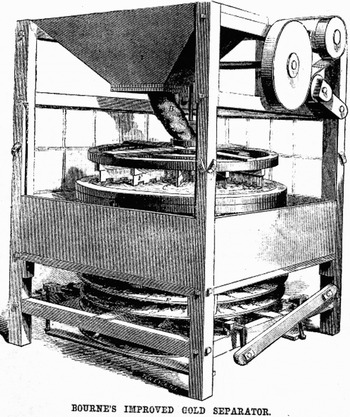
Bourne's insistence on the promise of techno-science was not limited to rhetoric. In 1857, for example, Bourne received a U.S. patent for a machine that deployed a current of air to separate gold from the quartz matrix in which it was found. Later, in 1860, Bourne would receive a U.S. patent for his “improved bed for ore-separators.” This invention resembled his “Improved Gold Separator” in producing “an intermittent or continuous current of air or water upward from beneath the bed for the purpose of effecting a concentration or separation of the heavier from the lighter materials.” Like Bourne's vision of the power of the press to enact a natural separation of truth from fiction, both of these machines would rapidly and effectively deposit the heavier and more valuable substances “while the lighter pass off over the waste edge of the machine”Footnote 39 (fig. 2).
Scientific American (February 18, 1860). Courtesy Scientific American.

At stake in Bourne's “review” of Typee was the impurity of its language, understood as a confusion and corruption of the human enterprise.Footnote 40 As the space between words and their ultimate referents could be made transparent, so, too, could the space between individuals' self-interest. For Bourne, the harnessing of technology would make clear the complementary truths of evangelicalism and natural science, revealing them to be bound up in the same scheme of universal order. Print technology could also enable individuals to live their lives in harmony with this order, to align their thoughts and actions with how the world was in essence.Footnote 41 If the “Press” were allowed to perform its mission, it would secure the physical conditions of a social space in which all words could be independently judged according to the degree to which they corresponded to the metaphysical order of that space.
Again, Bourne's faith in print technologies was premised on the wholly ironic concept of non-mediating mediation. His faith was equal parts “sola scriptura,” Common Sense visions of ordinary language, and Romantic poetics, the latter captured most strikingly in Ralph Waldo Emerson's ambiguous notion of the poet as creating the truth of the world by submitting to its unmodifiable metaphysics.Footnote 42 At root in each was a vision of autonomy or autonomous meaning achieved through linguistic incorporation, of consciousness merging with the natural or spiritual “facts” that words signified. Bourne assumed that because words were organic containers of truth, the perpetual circulation of them could make universal knowledge universally accessible to all who chose to recognize its universality.Footnote 43 In making this wager on the “interplay of reality with itself,” Bourne sought to play the “game” of “not interfering, allowing free movement, letting things follow their course; laisser faire, passer et aller—basically and fundamentally … acting so that reality develops, goes its way, and follows its own course according to the laws, principles, and mechanisms of reality itself.” And it was precisely this kind of unmediated state—the natural “option of circulation”—that Bourne understood as metaphysical truth and, by extension, the fundament of social order and the natural state of human consciousness.Footnote 44
*
Despite his flirtations with “free-thinking,” Bourne's faith in non-mediating mediation was also in keeping with the home missionary efforts of evangelicals. Following the legal disestablishment of religion, evangelical reformers like Bourne established a “Benevolent Empire” of voluntary associations that approached, “systematically,” issues of life, death, and the various impediments to salvation—rampant materialism, alcoholism, dueling, swearing, and the profanation of the Sabbath.Footnote 45 The majority of associations that emerged in the first half of the nineteenth century were heavily invested in print media as a missionary organ, an embrace of publicity consummated in periodicals like the New-York Evangelist and Christian Parlor Magazine and, most significantly, in such print-centered organizations as the American Bible Society (1816) and the American Tract Society (1825). In contrast to earlier publishing collectives, the American Tract Society (ATS) and the American Bible Society (ABS) were highly coordinated affairs and national in scope.Footnote 46
Financed by wealthy businessmen, administered by agents at the local level, and rigorously coordinated at the national level, these organizations sought to maximize soteriological profits within a “moral economy.” In their drive toward efficiency, the ATS and ABS were interdenominational. They did not involve themselves in sectarian debate (all of their publications required approval by each member of a modestly diverse publishing committee) and were loathe to address hot-button cultural issues like abolitionism. Instead, they concentrated on the bare bones of evangelical piety—that destitute souls were in need of conversion, that salvation would come in the form of recognizing one's destitution and accepting Christ's death as a pardon and, finally, that such conversion signified one's acceptance into an immortal community. Although the moment of conversion could happen in a variety of contexts, reading—and the kind of epistemic empowerment instantiated by reading—was a privileged vehicle for maintaining the emotional assurance of redemption.
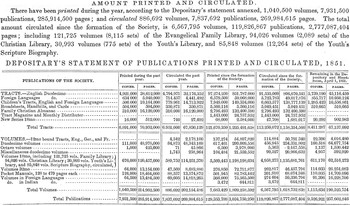
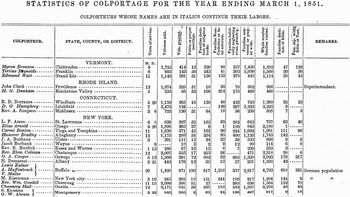
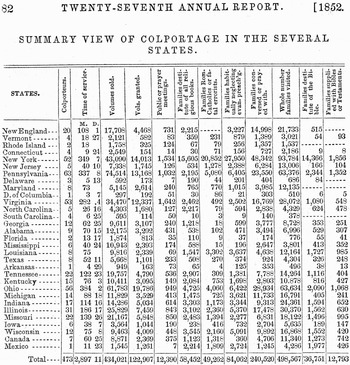
“Universal circulation” was a common rhetorical theme of evangelical publishers as well as an explicit agenda. “Systematic” production and distribution were pursued in the service of aligning the saving grace of God and a secular space of social interaction. Ever preoccupied with production numbers and circulation statistics, evangelical publishers suggested that the so-called secular world (media, technology, and the marketplace in which publicity was achieved) would bring about its own transformation, religiously speaking. In 1851, for example, the ATS reported that the “power of the press” had precipitated the “aggressive movement by which the masses” have been “reached and supplied” with “6,567,795 copies of standard religious works.” These works (as well as promotional literature about the efficient and effective dissemination of them) were designed for continuous circulation (unlike, say, the fleeting circulation of newspapers). The circulating presence of Bibles and tracts would secure “the authority of the divine Legislator.” Such circulation would also serve to overcome political disorder, and make manifest the uniformity of consciousness. “We do believe that if good men beheld each other's goodness through a nearer medium, and one less obscured, they would be more under the direction of a reciprocated confidence.”Footnote 47
The “Benevolent Empire,” then, was not simply a matter of brick, mortar, or even the warm bodies of reformers or church attendees. On the contrary, it was an empire of media, mediation, and the management of information. Such “reciprocated confidence” was more ethereal, perhaps, than bodies, but nonetheless tangible. “What elements of power are here entrusted to us!” proclaimed Presbyterian Robert Baird in 1851, the “us” referring to evangelical media organizations in general. “These arts of printing that multiply the Word of God literally with every minute; these accumulations of capital still active, still accumulating; these means of communication over sea and land, through the broad earth—who does not hear the voice of God in all these?”Footnote 48 Baird, the author of Religion in the United States (1843), one of the first and most comprehensive histories of evangelicalism, was simply repeating a common theme—the celebration of mass media and the anxious denial of the affective role evangelicals played in mediating the messages they produced and distributed.Footnote 49 The ABS, for example, claimed that “its sole object [was] to promote the circulation of the Holy Scriptures without note or comment” as if their notes or comments or strategies of distribution did not affect the community they were promoting.Footnote 50 Similarly, in their inaugural address, the executive committee of ATS described their enterprise as the most “practical system” of addressing the “extended population” precisely because it cultivated what was most natural and common within individuals—their capacity to “weigh” and “deposit” information directly into consciousness.Footnote 51
Although the evangelical press may not have been among those included in Tommo's critique of “the business of mission,” the effects of evangelical publishing were as intense, microscopic, and impervious to description. This despite the fact that by the close of 1853, ATS dutifully reported that 116,435,00 tracts were in circulation, a total of 982,619,267 individual pages (leaving aside tracts published in foreign languages, broadsheets, or Almanacs!).Footnote 52 Numbers, however, do not do justice to the power of evangelical representation. R. S. Cook, for example, in his attempt to describe the effects of the ATS, struggled to articulate (and justify) its new and seemingly apophatic form of power. It “does not plant churches or supply pastors; it does not send forth men as public heralds of the Gospel; it does not administer ordinances; it does not advocate or defend the peculiarities of any particular sect.” On the contrary, he wrote, “it paves the way for permanent religious institutions … It spreads the leaven of truth among the masses that most need its power. Though restricted in the scope of its agencies, it is unrestricted in the range of its adaptation. It can go everywhere [even] if it cannot do every thing; and all its tendencies are purely evangelical and saving.”Footnote 53 For Cook, the power of the evangelical press was precisely its non-mediating power of mediation. But in Cook's description, however, one senses the will toward a particular kind of mediation—the desire to condition the reception of messages, to charge words with an aura of facticity, and to generate the range of affective meanings upon which the population should act.
The “system” of evangelical media was, indeed, remarkable in making “personal religion a personal concern [for] all the millions it reaches.”Footnote 54 In representing the essence of “true religion” as it was manifest in history as well as within consciousness and social life, evangelical media promoted (with the peculiar force that accompanies words that announce themselves as metonyms of God's will) particular styles of being an ordinary human and particular strategies for representing this ordinariness to the self. Or to borrow a description from Tommo, mining the wicked ironies of his prose, the power of evangelical media to define the relationship between sacred importance and secular minutiae was akin to primitive ritual. “So strange and complex in its arrangements is this remarkable system,” he writes, that “I am wholly at a loss where to look for the authority which regulates this potent institution.” “Situated as I was in the Typee valley, I perceived every hour the effects of this all-controlling power, without in the least comprehending it. Those effects were, indeed, widespread and universal, pervading the most important as well as the minutest transactions of life. The savage, in short, lives in the continual observance of its dictates, which guide and control every action of his being.”Footnote 55
III. Systematicity and the Metaphysics of Evangelical Secularism
My re-presentation of Tommo's description of the “remarkable” systematicity of the Typee valley calls attention to the metaphysics of evangelical secularism, a discursive power that affected the manner in which antebellum Americans such as Bourne assumed a range of subject positions. Bourne's hybrid identity, for example—evangelical, reformer, free-thinker, Romantic poet, engineer—becomes less hybrid when one accounts for his sustained commitment to a metaphysical order, an exterior space of regularity to which each of his various practices sought correspondence.Footnote 56 For Bourne, as for evangelical publishers in general, there was no essential distinction between component parts of reality. Everything operated within, and according to, the same universal pattern. In reflecting the very principles of existence, this notion of order made each component part of physical nature appear to work in terms of an overarching network of meaning. This order encompassed life as it was in essence. It brought a searing realness of consistency to bear on the present and affirmed utter continuity between the past and the future. And finally, this “remarkable” systematicity fixed the relationship between the religious and the secular in such a way so that the “most important” and “minutest transactions of life” became ontologically indistinct.
For a range of conservative Protestants, systematicity was bound up in a style of reasoning in which the various possibilities of truth or falsehood had already been determined. On one hand, systematicity had everything to do with the way evangelicals approached expressly religious issues—God and providential history, piety as well as the Bible. First and foremost, systematicity was the essence of “true religion.” It was the grammar of piety and resulted in “the voluntary consecration of one's entire self, body, soul, and spirit, ‘a living sacrifice, holy and acceptable unto the lord.’ ” Systematicity was also the nexus between human ethics and divinity. “System in beneficence tends to make free-will offerings the fruit of a more cheerful spirit, and renders beneficence a delight, as it is a duty.” On the other hand, systematicity had everything to do with how evangelicals approached worldly experience, pre-empting any ruptures such experience may have portended. As the principle of life itself, systematicity conferred “consistency and efficiency to the character of Christians, by bringing their life into harmony with their doctrines and professions.”Footnote 57 Evangelicals also relied on the concept of systematicity to distinguish “true religion” from all that was infidel—bad religion, to be sure, but also suspect politics and corrupt epistemologies. Atheism, irreligion, and licentiousness were, by definition, asystematic, inconsistent with either “organic laws of the State” or “any laws whatsoever.” That which was “contrary to the nature of religion” was also contrary to nature and “subversive” of “virtue, morality, and good manners.”Footnote 58
In what follows, I will chart the circulating routes through which the metaphysics of systematicity assumed physical form. I am particularly interested in how the notion of systematicity was represented and deployed by evangelicals in the mid-nineteenth century—in media representations of themselves as well as in their technical deployment of media as a missionary tool. For such categorical dependence on a vision of perfect order also possessed a technological hue, a distinct valuation of “systematic treatment” (from the Greek, technologia). “Systematic organization,” for example, was a well-worn phrase among evangelical leaders who embraced technics and technologies for missionary purposes. It signified not only the mechanical forces now at their disposal but also the kind of world these forces would help usher in. Or as William Oland Bourne wrote in the Christian Parlor Book a few years after he had reviewed Typee, steam engines were “now moulding the world to the might of their genius.” Although “ingenious devices” had historically been “used to operate upon [the population's] ignorance, their fears, and their credulity,” they would now serve the purposes of evangelicalism by severing the chains of epistemological and political despotism.
Bourne's story of evangelical triumph was also a story of disenchantment and increasing political security. Technological innovation—or more precisely, the circulation of knowledge about specific innovations pertaining to the “elastic force of vapors”—promised to liberate humanity from priest craft and superstition. It would do so not by argument but by detailing the mechanisms of their skilled manipulation of the populace. Citing early theorists of feedback technologies—Archimedes and Hero of Alexandria (whose treatise had just been translated into English)—Bourne then celebrated the “splendid labor agent of Watt” and “the fiery steed of Stephenson” as having brought to public attention the inner workings of “priestly workshops” and “superstitions palmed upon the people.” According to Bourne, self-regulating technologies, once “stripped of their coverings,” would reveal the essential order of the universe, “enlighten man, and lead him onward to his God.”Footnote 59
For Bourne, such exposure was but the latest development in the Protestant Reformation, a moment in which the “wonderful and ennobling revelations” of “Science” would transform human life into a systematic proposition, akin to “the locomotive of Stephenson.” Bourne, here, was cribbing from Thomas Ewbank's treatise on hydraulics and “air machines,” the twelfth edition having been published in 1851.Footnote 60 Ewbank, the U.S. commissioner of patents (1849–1852), had traced the history of human manipulation of natural elements—water, fire, and air. In an effort to reveal the “impostures of the heathen priestcraft,” Ewbank had celebrated the “diffusion” of technical knowledge by way of technology. Such diffusion, he argued, would expose those “who applied some of the finest principles of science to the purposes of delusion.” Ewbank's agenda was to communicate to “the GREAT MASS of our species,” providing them with “DESCRIPTIONS OF USEFUL MACHINES” in order to produce “more useful member[s] of society.” Knowledge of air machines would expose the “effectual frauds” of heathen, civil governors, and all manner of “state tricks.”Footnote 61 In Bourne's reading of Ewbank, evangelicalism became the privileged vehicle for applying scientific principles to the population in order to secure the humanity of those within it.
Bourne's insistence on evangelicalism's continuity with technological innovation was neither insignificant nor unique.Footnote 62 In 1851, for example, John Maltby argued that “Christianity” was not simply amenable to “secular progress,” but that it was an essential component of it. Maltby was a Congregationalist minister and member of the American Board of Commissioners for Foreign Missions. Earlier in his career he had called for a home missionary “system” that would “bring the most remote parts of our nation into cordial cooperation, awaken mutual interest in the same grand and harmonious design, produce a feeling of brotherhood, and thus bind us all together by a new chord of union.”Footnote 63 By 1851, the “grand and harmonious design” had become a first principle. The “nineteenth century,” wrote Maltby, was distinguished by the “engrossing” idea of “Progress,” not only “in one thing” but “in every thing;—Progress in Literature,—Progress in Science,—Progress in the application of Science to the arts of life.” As opposed to earlier epochs with other ideals—Poetry, Philosophy, National Glory, for example—the age of Progress did not lead “off in a single line of pursuit” but hurried “men upon different lines of endeavor.” It also had no foreseeable end, “resulting in improvements indefinitely various,—inventions startling as miracles,—and wealth like the golden veins of an exhaustless mine.”Footnote 64
Whether or not this “idea” of the “age” would precipitate an advance in “human welfare,” however, depended on “the presence or absence of Christianity in the counsels that shall guide this Progress.” Maltby lashed out against those who “flatter” themselves, who tell themselves that they “know how to refuse the evil and choose the good,” and who are “fool-hardy” and “rash” in believing that Progress has nothing to do with “revealed religion.” Such individuals were like children playing with “surgical instruments.” They had failed to embrace the rule of life itself. “They will physic away their health, cut their fingers, and may be, their throats besides!”
A crass humanism, in other words, was not a viable option in an age of Progress. It is here that two versions of the secular emerge, the first being the adjective that refers to the “permanent good of the world” and the second being the chaotic world of “human passions.”Footnote 65 This latter version of secularity functioned as a straw man for Maltby. This was secularity as a condition of obfuscation. It was anathema to “secular progress” and was akin to infidelity—irrational, senseless, and blind to the object(ive) lesson “on the pages of history.” If such secularity is allowed to triumph, warns Maltby, progress will cease. Americans will be “thrown fatally from the track,” their fossilized fate to be examined by a future generation “as the Mastodon relics of other ages have been.”
Religion, in this version of modernization, was integral to the progress of “human welfare” yet also dependent on it. Christianity had initiated “the voyage we are [now] making.” It was the only “counsel” that could effectively steer the ship of state from the “soundings of the lee-shore” and secure the permanence of present conditions. Yet these conditions—philosophical, scientific, political, economic, medical, and technological progress—were precisely those which had enabled Christianity to assume control over the present. Anyone who denied this historical fact was “guilty of high treason against the race.” Maltby, then, was not simply advocating the adoption of Christian principles throughout every sphere of social life but calling attention to the principles that made piety and “human welfare” effectively the same. Such principles were primordial. They were outside the flux of time yet extant in the stirrings of the age. And if recognized and embraced for what they were—systematic principles of metaphysical order—they would guarantee the prosperity of the age, a time in which Christianity and secular progress would perpetually reinforce one another.Footnote 66
“True religion,” according to evangelicals, not only corresponded to divine script but was also the means of revealing essential principles of the human—reason, coherency, and legibility—to the human in the name of human progress. Because evangelical piety was consistent with principles of universal reason and the principal vehicle for universal morality, “true religion” was that which best reflected the metaphysics that already governed secular existence. This agenda—of reproducing religious life by calling attention to its “secular” credentials and aspirations—was not contradictory. On the contrary, this maneuver was incredibly successful and perfectly consistent with how evangelicals understood themselves to be—truly religious rather than simply religious or merely Christian.Footnote 67
Gil Anidjar's argument about the way in which Protestant Christianity in the age of colonialism “actively disenchanted its own world” is not unrelated to such mid-century collusions between evangelicalism and systematicity.Footnote 68 For in their embrace of a particular version of modernization, evangelicals sought to govern themselves “by the deliberate choice of goals and rational selection of means.”Footnote 69 In breeding “a judicious concern for the actual workings of society,” evangelicals like Maltby and Bourne represented a “different way of thinking power” and “a different way of thinking the relations between the Kingdom of Heaven and the Kingdom of Earth.”Footnote 70 Confronted by the anxious prospect of somehow losing reality, evangelicals made reality, itself, in addition to God, an object of their belief. In doing so, evangelicals “reincarnated” themselves as secular and elaborated a “peculiar discourse” about themselves. This discourse was, of course, composed of signs referring to the substance of evangelicalism—creeds, practices, history, etc. But in addition to being a group of intertwined representations, this “peculiar discourse” was also composed of practices that systematically formed the objects to which these signs referred.Footnote 71
IV. Every Hour the Effects of Common Sense
Historian Mark Noll, more than any other scholar of his generation, has called attention to the peculiar stories evangelicals told themselves about themselves at mid-century. In America's God, Noll charts the making of what he calls the “evangelical synthesis”—the integration of Scottish Common Sense philosophy and republicanism that, by mid-century, had become “an ethical framework, a moral compass, and a vocabulary of suasion for much of the nation's public life.” Noll argues that antebellum evangelicals were so adept at promoting this “synthesis” that they forged what he calls “America's God.” This ethereal object of worship was not simply the province of self-proclaimed evangelicals but, more important, served as an ideological horizon for the majority of Americans. “Theologians,” Noll surmises, “translated the historic Christian message into the dominant cultural languages of politics and intellectual life so successfully that these languages were themselves converted and then enlisted for the decidedly religious purposes of evangelism, church formation, moral reform, and theological construction.” By integrating the grammars of piety, politics, and epistemology, evangelicals both reflected and spurred an emergent national imaginary. “The key moves in the creation of evangelical America,” writes Noll, “were also the key moves that created secular America.”Footnote 72
According to Noll, evangelicals absorbed Common Sense reasoning as a method of “examining one's own consciousness as an object, treating the deliverances of consciousness as data, and gathering these data inductively into broader conclusions (even ‘laws’) about the nature of human existence itself.”Footnote 73 Such data, according to evangelical readings of Dugald Stewart, Francis Hutcheson, and Thomas Reid, were reliable, anterior to, and independent of subjective experience.Footnote 74 For evangelicals interested in making faith an epistemological proposition, Common Sense offered a philosophical defense of the immediacy of consciousness and the essential continuity between thinking subject, object world, and divinity. “Such is the manner of true faith; it realizes the fact, that heaven is really engaged about us, with us, and in us … There is a virtue, and there is a power in this faith, not from the logic by which it may be sustained and defended, but” because “reason belongs to it, because it derives its light from the Divine Logos, the source of knowledge and wisdom … True Christian faith is, therefore, incapable of denial”Footnote 75 (italics mine). This style of reasoning was a matter of governance, of cultivating the capacity to observe consciousness and to act determinatively on that knowledge.Footnote 76 Faith, and the reason that “belongs to it,” were potentially in each of us, waiting to be organized.
Subsequently, the promise of Common Sense reasoning was also, by definition, a public matter. The sense of a latent political order within Common Sense resonated with the ideals of republicanism, a mode of polity whose “ideological flexibility” enabled evangelicals—as well as a great number of Americans regardless of religious persuasion—to fold “public life into the drama of redemption.” In its broad appeal, the republican will to virtue came to signify not only “disinterested service to the common good” and the prerequisite for public morality, but also “a life guided by God's will and cultivated in personal and domestic devotion.” In becoming a “public spirit,” virtue would precipitate both political security and private morality, citizenship and salvation. According to Noll, “the ebb and flow of meanings” between “the spheres of secular and religious discourse” was a fundamental source of American modernity. “Coruscating evangelical energy”—in catalyzing particular approaches to interiority, objectivity, moral agency, social ethics, and the market—was instrumental in the formation of an antebellum public sphere.Footnote 77
Noll's version of this public sphere was a space that Americans entered into voluntarily, a space in which evangelicalism “communicated above all a system of inner motivation” and “promot[ed] resentment against traditional, aristocratic political authority.”Footnote 78 Within this space, Americans could exercise their rational autonomy, deliberate, and decide what was true, good, and beautiful in a fashion approaching the democratic ideal.Footnote 79 Noll, for his part, is writing against the “social control” thesis as an explanation for how evangelicals became so dominant at mid-century—in religion, in politics, in general cultural significance.Footnote 80 According to Noll, viewing the evangelical surge at mid-century in terms of evangelicals' desire to regulate themselves and the world around them does not do justice to the complexity of that desire or to its effects.Footnote 81 Building on scholarship that grants “religious actors” the proper degree of “self-awareness” and “agency,” Noll's version of evangelical dominance is a story of “intuitively persuasive reason” taking hold, autonomy being cultivated, and political liberties expanding.Footnote 82
Although Noll's rejection of the “social control” thesis is not unwarranted, his is a mere reversal, foreclosing the very possibility of disciplinary power in the making of American life.Footnote 83 Ironically, Noll ends up affirming the same conclusion of those he rejects—namely, that the evangelical will to power was successful on its own terms. Noll accepts, at face value, the stories mid-century evangelicals told themselves in order to be themselves, defining human agency according to formal properties of belief and degrees of interiority.Footnote 84 Noll's story of individuals achieving both epistemic and political leverage is one that originates and plays out on the level of conscious choice, conscious action, indeed, on the level of consciousness alone. The play of ideas happens independently from the bodies and contexts these ideas inhabit, that is, from the conditions that mediate those ideas.Footnote 85 Noll's argument, then, is a reception history of evangelical ideals with no critical discussion of reception; a chronicle of the desire for epistemological and political immediacy with no sustained attention to how this desire was mediated; and finally, a rendition of the antebellum public sphere that leaves unquestioned the historical conditions of its possibility.Footnote 86 To be fair, this is not part of Noll's agenda. But in leaving out those issues that would, perhaps, call into question the boundary between the religious and the secular that underlies his argument about the migration of meanings, Noll mitigates against an exploration of the circumstances that have enabled the story he is telling to become so persuasive.
Tracy Fessenden has recently explored what she calls “the Protestant-secular continuum,” the invisible consensus of American Protestantism that has enabled histories like Noll's to be written, and more ominously, to be accurate.Footnote 87 Not only do such histories assume a secularized understanding of piety as the meaning-making actions of a lone individual, but they also align this piety with definitive versions of human nature and potential. As we shall soon see in the historical narrative of Robert Baird, representations of evangelicalism as integral to a democratic social space have long served to mediate, seamlessly and all but invisibly, attempts to measure the historical importance of evangelicalism. As Michael Warner has suggested in a different context, the appealing ideal of the public sphere as an unmediated and deregulated space is not of recent vintage but rather found traction in the early republic and gained momentum throughout the nineteenth century.Footnote 88 This concept of the public sphere, in addition to being an enabling fiction, leaves little, if any, room to acknowledge the regulatory dimensions of mediation.Footnote 89
Noll's failure to account for issues of mediation—that is, how evangelicalism took hold at the level of intuitive reason—is odd given that the media practices of evangelicals played such a massive role in promoting the synthesis of theistic Common Sense and Christian republicanism. For according to evangelicals at the time, it was in and through media that these styles of reasoning and political imagination would be made real. ATS, for example, became a primary vehicle for disseminating the tenets of Scottish Common Sense to the American public. Leading purveyors of Common Sense such as Archibald Alexander (who helped establish Princeton Theological Seminary, a major hub of Common Sense throughout the nineteenth century) lent their support to ATS, their editorial oversight, and even their hand-picked contributions to the publishing docket.Footnote 90 Robert Baird, a formidable agent of evangelical publicity at mid-century, claimed that the triumph of evangelicalism as a republican power was premised on the “liberty of the Press” and “the systematic periodical distribution of tracts.” Because it was being “driven by steam,” the “great power” of the press to “circulate” would make God's Word a tangible entity. It would be made real, verifiable, effective—a miracle Baird himself had witnessed as an agent for the American Bible Society and American Sunday-School Union.Footnote 91
In drawing attention to the evangelical penchant for the systematic organization of mass media, mine is not a subtle reclamation of the social control thesis. The “industrialization of evangelicalism in America”Footnote 92 resulted in the control of neither society nor self. On the contrary, the media practices of evangelicals generated sensual criteria for evaluating the true, the good, and the beautiful—for others, to be sure, but, more importantly, for themselves. America's God, from this perspective, was not simply a theological product—a mere representation of the divine passed between elites—but also a political effect of secularism. For in addition to infusing politics and reason with a divine imprimatur, America's God also served to authorize certain norms about the human in relation to “true religion,” regardless of whether that human had chosen to be redeemed. Noll, to his credit, is ambivalent about the incorporation of piety by the directives of modern science and the evangelical preoccupation with issues better left to those pursuing political security rather than eternal salvation. I, too, am troubled by the process in which “the notion of government” became the “controlling paradigm to explain what was good or evil about the functioning of the universe.”Footnote 93 I am more troubled, however, by the viral effects of that paradigm and the way in which “the spheres of secular and religious discourse” were actively constructed by evangelicals, how the conditions of ebbing and flowing became a primary focus of evangelical practice, and, finally, how the concepts of “true religion” and “secular progress” were aligned in such a way as to become practically equivalent.
The remainder of this essay explores the “evangelical surge” in terms of its capillary effects on the lives of the populace. It charts a process by which the metaphysics of evangelical secularism assumed a degree of physicality. This process was bound up with the way in which evangelicals wielded new technologies and oriented themselves vis-à-vis technology, that is, the “systematic treatment” of the human, by the human, and for the human. The corporealization of evangelical secularism may be glimpsed in the historical treatments of evangelicalism (both now and then); in the way evangelicals delimited the concept of “true religion” and legitimated the “business of mission”; through the technological pathways in which the message of evangelicalism arrived and circulated among strangers; and finally, in the way evangelicals sought to regulate the aesthetics of literary reception by framing reading as a biological practice. By taking seriously the mechanics of coruscation and the logic of intuitive persuasion, one may begin to appreciate the strange contours of secularism and its reverberations in everyday life. Consequently, mine is an attempt to reassess the role media representations and practices played in the making of an evangelical public sphere. These representations and practices, I argue, were an instantiation of secularism to the extent that they naturalized hierarchical patterns implicit in the equation of saved souls and “best subjects” of civil society.Footnote 94
V. A Conversion Narrative of Evangelical Secularism
I began this essay with reference to Noll's magisterial treatment of evangelicalism not simply to point out its limitations but to evoke a persistent desire among Protestants to represent themselves vis-à-vis the American population. “The Christian History of Society has never yet been written,” wrote reformer Thomas Grimke in 1833. “When the pen of some future Luke shall record its eventful scenes, that Christian History will be founded, not so much on the annals of Churches, as on those of social institutions, whose spirit is regenerating the nations, whose influence is pervading, with life-instilling energy, all the classes, and the very depths and recesses of society.”Footnote 95 Protestant reformers like Grimke were becoming extremely self-conscious about their own history and the way in which this particular history related to the evolution of American society in general. For in addition to becoming rather adept in the technological aspects of representation, Protestant leaders aspired to make their story public, to get the word out in an increasingly saturated media environment, and to make those words part of the story they were telling. For Grimke, the “energy” of Christianity, its power and para-institutional scope, the way it flowed in and through an entire population, had become an issue in need of historical explanation.
One of the first and most comprehensive histories to proffer such an explanation was Robert Baird's Religion in the United States of America (1843). Baird graduated from Princeton Theological Seminary in 1822 and remained active in local affairs as both a tutor and occasional minister. When Princeton's first printing press went into operation in 1824, a “blaze of philanthropic zeal [broke] out” and a number of organizations were formed. “The Bible cause, the Colonization scheme, the Sunday Schools, the cause of popular education—the Tract cause—the Missionary cause, were all espoused by organization and received the aid of the new press.” As superintendent of the Nassau Bible Society, Baird helped coordinate the statewide effort of Bible distribution by inserting circulars into “almost every newspaper in the commonwealth.” He also advised local agents in collecting information on “several important topics not immediately connected with their Biblical operations”—age, literacy rates, educational status, and disabilities. As a member of the Philadelphia Society, a Presbyterian cooperative, Baird continued his domestic missionary outreach and helped survey “the whole territory of the State” in order to “ascertain the destitution of the schools.” Baird “was one of the most efficient agents employed in this enterprise” whose work led to the allocation of state funds to support public schools.Footnote 96 Soon after, Baird became an agent for the American Bible Society, traveling around New Jersey and distributing Bibles to the destitute. He performed similar work for the American Sunday-School Union and became involved in the transatlantic Evangelical Alliance. As secretary of that organization, Baird performed missions in southern Europe and wrote numerous works to promote its cause and to position evangelicalism as a global phenomenon.
Baird composed Religion in the United States while living in Geneva. First published in Glasgow, Baird's work was directed at both European and American audiences. It was representative of the evangelical desire to organize religious identity as something that could be narrated, historically and progressively. Baird's explanation of evangelical power, in other words, possessed an air of inevitability.Footnote 97 According to Baird, evangelical piety was taking hold among the populace not simply because it provided the most direct access to divinity but also because it complemented the pursuits of liberty, virtue, and knowledge. In framing the progress of evangelicalism as both an epistemological and political matter, Baird's history defined religion as an essentially interior phenomenon that was essentially related to the evolution of civil society. In its detailed account of what evangelicals viewed as the inspired movement from “religionism” to “true religion,” secularism emerged as the effective subtext of Religion in the United States.Footnote 98
Baird's treatise on the political aspects of “true religion” may be read, in part, as a response to the “fanciful conjecture” of Alexis de Tocqueville.Footnote 99 Baird rejected Tocqueville's suggestion that democracy could be compromised by “complicated rules” of “public opinion.” Such rules, wrote Tocqueville, “are both minute and uniform” and constituted a disciplinary “network” that does “not break men's will, but softens, bends, and guides it.”Footnote 100 Baird took particular issue with Tocqueville's suggestion that religion was a “ready-made opinion,” adopted by Americans “without examination” and, therefore, not subject to rigorous philosophical debate. In Baird's estimate, Tocqueville did not appreciate the subtlety of republican governance—the way in which it promoted the free exchange of individual opinions, thus guaranteeing that public opinion would be an organic representation of the whole.Footnote 101 It was obvious to Baird what was happening in America: a full-scale reformation in which “true religion” would finally and fully triumph precisely because the people, as a whole, were allowed to exercise their freedom to practice it.
Such wide-scale freedom was made possible by Scottish Common Sense, what Baird referred to as the “handmaid” of evangelical piety. According to Baird, Common Sense was not equivalent to piety but offered a convincing explanation of the mechanics of piety to those who practiced it. Consequently, evangelicals proficient in the writings of “[Thomas] Reid,” “Dugald Stewart,” and other Scots could rest assured that their faith operated in accordance with “the faculties and powers of the human mind, and of the principles which govern its operations.” In this reading of Common Sense, piety was a wholly voluntary process consisting of the investigation of “facts, or the relations of phenomena, respecting the operations of mind itself, and the intercourse which it carries on with the things of the external world.”Footnote 102 Or as the Rev. Albert Barnes wrote, “Christian piety” was the “index of intellectual advancement” and integral to the advance of “modern science.” Because piety called “forth the active powers of the mind” it produced “true independence of thinking and investigation.”Footnote 103 As Baird and leaders like Barnes attested, faith was, first and foremost, a matter of securing knowledge in the immediacy of the moment.
Within Baird's sweeping narrative there existed a deep interdependency between “principles that guide the operations of the human mind” and “the laws of our moral constitution.”Footnote 104 Common Sense, in other words, was not simply consistent with evangelical piety but was, by extension, an effective and just means of governance. Or as Thomas Reid, one of Baird's acknowledged sources, wrote, it was not “impossible that reasonable men should agree in things that are self-evident.” It was, therefore, “desirable” that the “decisions of common sense … be brought into a code, in which all reasonable men should acquiesce.”Footnote 105 The uniformity of consciousness, in other words, guaranteed the potential demystification of social relations (not to mention just leadership and civil obedience). For Baird, “sympathetic feelings” were the natural extension of such uniformity. Such feelings, in turn, fueled this process of demystification by generating a network of individuals in which political power circulated unimpeded. Because “God has decided, that the social and sympathetic feelings of our nature ought to be enlisted in the cause of religion,” reasoned Baird, “it would be strange, indeed,” if “that powerful principle which binds man to his fellow” were “never employed by the Holy Spirit in bringing those who act in masses, on every other subject, to act, at least sometimes together in coming to the ‘obedience of truth.’ ” In Baird's rendering, such truth was contained within the bonds of co-existing individuals rather than being externally imposed on them. Consequently, individuals became metonymic extensions of the same “truth,” interchangeable because they were all equally subject to it.Footnote 106
Baird affirmed, at every turn, the progress of evangelicalism in America, aided by his “statistical view” of what was to be done if “religion [was] to keep progress with the increase of the population.”Footnote 107 In Baird's depiction of the “religious economy of the United States,” the particularity of the individual was emphasized even as it receded into the background. According to Baird, “the energy of action possessed by the voluntary principle” was the sine qua non of both personal piety and political progress. This “energy” saved souls, to be sure, but also maximized “liberty” for the population as a whole. Within Baird's narrative, the voluntary principle was not simply an article of faith but “extend[ed] itself in every direction with an all-powerful influence.” In its “vast versatility,” suggested Baird, “the voluntary plan in America” animated both “true religion” and political liberation, enabling the causes of one to feed off the effects of the other. The “wide application of the voluntary principle” made possible something systematic: a natural (yet non-institutional) union between the fundamentals of piety and the organizing principle of the population. So while “true religion” was a voluntary affair, a matter of achieving, independently, immediate knowledge of Christ, such private acts existed for the sake of the “voluntary system.” Americans, in exerting themselves to “the utmost,” would become living ciphers—not of God but of their true selves, giving structure to the human spirit by continuously organizing its presence.Footnote 108
Religion in the United States paralleled emergent histories of civil society—works of political economy that, despite their somewhat different emphases regarding the logic of populations, nonetheless assumed that a logic did, in fact, exist.Footnote 109Religion in the United States, like Henry Carey's Harmony of Interests (1851), to name but one contemporary work of political economy, aggressively recognized the population as a living system, something that would tend toward stability if only managed properly.Footnote 110 Assumed in both of these narratives was a present conflict between the individual and the collective will. Both narratives also implied the necessary existence of a third entity in and through which this tension could dissolve.Footnote 111 Whereas Carey explicitly labeled this entity the “American System,” Baird danced grammatically around its edges, alluding to its divine pedigree and approaching this forceful presence most often in terms of the “voluntary principle.” In both works, however, a formless and continuous power enabled both the population and the individual within it to organize themselves in relation to one another and independently from one another. So in both renderings of the modernization process, private and public were ideally distinct but potentially conflated. Individuals were each part of the same system into which they were born. Consequently, liberty or salvation depended on recognizing, and perfecting one's integration within, a totality that was, itself, subject to perfection.
Baird's language regarding this totality was often ambiguous given that it was for him both sacred and profane, a worldly matter as well as sanctified. Baird's portrayal of civil society and the “Holy Spirit” in terms that resembled one another was consistent with his desire to integrate them. It was also consistent with the myriad ways in which Baird positioned voluntarism as the means to secure the public presence of order and the presence of divinity within the individual. As the direct object of voluntary action, civil society was all but equivalent to the “existence, the personality, the offices, and the saving operation of the Holy Spirit.”Footnote 112 But then again, not exactly. For at no juncture did Baird explicitly equate the Holy Spirit with the order precipitated by the voluntary actions of humans. Both, however, were immanent reverberations of an ultimate source. And it was precisely the presence of this source between the lines of Baird's text that allowed him to use the logics of civil society and the Holy Spirit all but interchangeably. Baird's progressive narrative, then, left the lingering impression that both divine reason and political rationality corresponded to something, quite literally, in between. Although embodied in the “systematic effort” and “manner” of evangelicals, it was unknown to all but God. It remained unutterable within the public sphere that it alone was responsible for creating and maintaining. “How beautiful is this spirit!” Baird exclaimed in a letter to the New-York Evangelist. “It seeks to do good without attracting to its possessor the regards of the public. It is unknown to all but God himself. And yet how liberal!”Footnote 113
Coursing between the lines of Baird's narrative of divine reason and political rationality was an implicit insistence on a rule of order from which both followed. This subtext of order allowed Baird, on one hand, to posit a categorical boundary between the religious and the secular and, on the other hand, to delimit this boundary in such a way that it would be effectively and efficiently overcome.Footnote 114 Such overcoming was guaranteed by the fact that evangelicalism possessed a worldly telos and the world a religious one. In fixing the relationality between “true religion,” human nature, and political security, Baird created a horizon in which human knowledge and divine inspiration folded in on each other, in which salvation in the next world and liberty in this one emulsified before one's eyes.Footnote 115 Such were the stories that evangelicals told themselves over and over again at mid-century. A tentative separation. Mediation. Systemization. The inevitable revelation of utter continuity between God, civil society, and self. Such was the dream of transparency and perfect order—“a place for everything, and everything in its place; a time for everything, and everything in its time.”Footnote 116
Religion in the United States was written in the spirit, rather than in the name, of secularism, a medium through which the “gigantic” synthesis of personal piety and civic order would unfold.Footnote 117 Baird's account of evangelical progress, then, was not simply an account. It was also a conversion narrative, one in which the population, conceived as a singular and dynamic entity, was as convertible, if not more so, than the individual. On one hand, Religion in the United States chronicled the conversion of the American people into an ordered and intrinsically stable system. On the other hand, it sought to make a particular “State” exist in reality, encouraging individuals to think of themselves as part of a voluntary assembly.Footnote 118 Indeed, the subtitle of Baird's work—an Account of the Origin, Progress, Relations to the State, and Present Condition of the Evangelical Churches in the United States with Notices of the Unevangelical Denominations—celebrated the fact that evangelicalism and the “State” were progressively folding into one another. The symbolic boundaries between the religious and the secular spheres were inherently collapsible precisely because Baird was up to something much more significant than simply calling for the rationalization of piety or even the sanctification of social order already extant. He was also hinting at a macrocosmic law to which all things, eventually, would correspond, a future to which the present inevitably referred.
Consequently, the “State” to which evangelical churches were progressively relating was not viewed as institutional. It did not impose order, externally, on the populace. On the contrary, Baird conceived of the “State” as in no way resembling an “it.” Rather, the “State” was an energy that operated within human history, a non-mediating medium that would allow individuals to act voluntarily, on their own terms, as a people.Footnote 119 As a control variable for both “religion” and the organization of the population, this energy made the evolution of evangelicalism and social order part of the same horizon of possibility. Moreover, this energy secured the meaning of evangelicalism as emancipation from the fetters of artificial, and therefore unreasonable, authority. Although Baird approached this energy in and through the language of voluntarism, it remained essentially unnamed within his account. Like Tommo, Baird was at a loss to name it. This regulatory energy, however, was nothing less than the spirit—not “Holy” per se, but that of secularism.
VI. Interlude: The Incorporation of Infidelity
In Baird's hands, secularism was not simply the unnamed subtext of true religion. It was also that which defined ideas and actions that were outside the terrain of this truth. Near the end of Religion and the United States, for example, in a section titled “Efforts of the American Churches for the Conversion of the World,” Baird defended government policies of Indian removal. He also celebrated the efforts of the American Board of Commissioners for Foreign Missions (ABCFM) in terms that extended his previous argument about religious and political progress. “Their object,” wrote Baird, was to “plant the institutions of the gospel where they do not exist” such that they “acquire a self-supporting, self-propagating energy.” The training of a “native ministry” was tantamount to making the “great system of missionary operations” more efficient, the primary goal being that the native population learn to regulate itself. Here, the spirit of secularism assumed a colonial hue. As Baird proclaimed (quoting the ABCFM's Thirty-Second Annual Report), “in most of our missions we are opposed by three formidable obstacles, namely distance, expense, and climate. England was opposed by the same obstacles in her conquest of India. And how did she overcome them? By employing native troops; and it is chiefly by means of them she now holds the great populous country in subjection. We too must have native troops in our spiritual warfare. Why not have an army of them? Why not have as numerous a body of native evangelists as can be directed and employed.”Footnote 120 Missionary activity, in other words, was a matter of geopolitical security, of promoting “true religion” in the service of making native populations assume political responsibility for themselves. It was also the means of bringing the global population into the evangelical fold. “Is not Providence,” asked Baird, “affording us the means of stamping our own peculiarities of mind and character upon the less earnest and active nations which we have left so far behind us in social development?”Footnote 121
Baird's treatment of foreign missions is revealing inasmuch as it calls attention to the religio-political force field generated by evangelical narratives of “true religion.”Footnote 122 Within this consequential conceptual space, “true religion” became the antithesis not to the “secular” world, in general, but to “false religion” in particular—animists, fetishists, polytheists, Catholics, “errorists,” and all those whose practices did not conform to the public sphere as constituted by evangelicals.Footnote 123 For in addition to conditioning the relationality between true religion and the redemption of the population, evangelical narratives conditioned the meaning of their antitheses—infidelity and insecurity.
In antebellum America, the “religions” of others became an object of intense scrutiny among various home missionary movements and a distinctive narrative thread of evangelical publications. ATS, for example, devoted a significant part of its budget to not only reaching the “heathen governments” of “foreign and pagan lands” but also publicizing their success. The criteria for measuring religions and the judgments that ensued were the epistemological immediacy of Common Sense and the political transparency promised by republicanism. Infidelity, as any number of articles and tracts attested, was caused by “man's want of knowledge” and a population's “lack of information” about itself as much as it was by innate depravity. Infidelity, in other words, was a matter of reasoning and social organization as much as theology. It evoked, first and foremost, a state of being improperly mediated. Evangelicals, then, were not necessarily free from sin, but they were certainly not infidels given that they knew how to know as individuals within a group setting.Footnote 124
As the tract, Visit to the Chinese Coast, read: “The inhabitants [of China] are very numerous … They have many curious laws and customs, and in some respects are a very wise people” (fig. 3). Continually noting the magnitude of the Chinese population—“three hundred millions”—the tract grudgingly acknowledges their achievements—constituted by their “curious” traditions and, one imagines, by the sheer fact that there are so many of them. But neither the wisdom nor the numbers amount to much good. Theirs was an unsystematic knowledge, a collective wisdom that bore no relation to the way things were in essence. Subsequently, the tract accuses them of infidelity, impugns their intellect, and points out their silliness, excitability, and senselessness. This was no way to run a country.Footnote 125 The “poor Chinese,” we learn, have been utterly distracted when presented with missionary translations of the Bible. “Many difficulties attended the circulation, for the Chinese are very conceited.” Not only did they “think that all the rest of the world are savages,” the Chinese were obsessed with their “idols” and with building “monuments of Satan's power” rather than tending to the business of political security and managing their “overcrowded population.” Their wisdom, in other words, was circumstantial, superficial, and a mediated product of desperate and crowded living conditions. They were incapable of practicing “true religion” because they were incapable of appreciating the metaphysical order behind the surface of things. As one missionary admitted, “I had often the mortification to learn, that my auditors had all the while been intimately surveying my clothes, while they scarcely heeded my exhortations.”Footnote 126
Charles Gutzlaff, Visit to The Chinese Coast (American Tract Society, ca. 1840). Used by permission of the American Tract Society.

Contrary to the so-called wisdom of the east, the case for the “tremendously true” doctrines of Christianity was self-evident. “Let them display, in its professed eye-witnesses, similar proofs of veracity,” went a popular argument from the eighteenth century reproduced as tract #123 by the American Tract Society. Mocking the “impostures of Mahomet,” “Heathen Deities,” and Deists,” it declared in no uncertain terms: “LET THEM SUBMIT TO THE IRRESISTIBLE CERTAINTY OF THE CHRISTIAN RELIGION.” The “truth” of evangelicalism was a function of its relationship to imposture and the “fact” that it could and would be verified by the population: “1. That the fact be such as men's outward senses can judge of; 2. That it be performed publicly, in the presence of witnesses; 3. That there be public monuments and actions kept up in memory of it; 4. That such monuments and actions shall be established, and commence, at the time of the fact.”Footnote 127
“True religion” in this scheme was wholly secular; false religion a perversion of the epistemological and political order of things. Unlike true religion, false religions deviated from an understanding of the real as a reasonable, coherent, and legible enterprise.Footnote 128 They were that which stood outside the progressive interplay of evangelicalism and the unfolding of modernity. Consequently, evangelicals were wholly on the inside with God securing secular “prosperity” on earth in order to secure his divine standing. As the inaugural address of ATS confirmed:
The state of our country is one of unparalleled prosperity … our population is becoming “as the sand which is by the sea in multitude.” … The light of science and the arts is diffusing its influence through every part of our growing Republic. Our plans of internal improvement and public utility are raising our dignity and glory in the view of future ages; and our happy religion, born of God, descended from Heaven, and dwelling in undisturbed security in the Western World, has already exerted its efficient power in forming here, a people for his praise.Footnote 129
Evangelicals, in this scenario, were merely responsible for maintaining this elegant system of feedback. Security was always at risk from the outside precisely because it had been virtually achieved within.
Although foreign missions such as the ABCFM tended to the salvation of individual souls, their target was the native society itself. To effect the moral conditions of a society, it was thought, would naturally lead to the transformation of individual character. Assuming the population to be the primary object of their project, missionary power, like that of English colonizers, came to depend on “the systematic redefinition and transformation of the terrain on which the life of the colonized was lived.”Footnote 130 Integral to this management of the atmosphere, the space between moral conditions and moral character, was the printing press and the circulation of Bibles, testaments, and tracts in a host of native tongues. At work here was an assumption about the universalism of truly religious language as well as a confidence that the words themselves would signify truth despite the restless sensoria of the heathen crowd (fig. 4).
Specimen Verses from Versions in Different Languages and Dialects in which the Holy Scriptures Have Been Printed and Circulated (New York: American Bible Society, 1876). American Bible Society Archives.

VII. Secularism and the Business of Mission
At mid-century the power of evangelical secularism was not simply a subtext of narratives about “true religion” or even infidelity. The metaphysics of secularism was also gaining physical traction in and through evangelicals' conception of America as an organizable social space, their strategies of organization, and the problems generated in the process of systemization.Footnote 131 “The propagation of the gospel in other lands,” wrote Baird, “forms a natural sequel to what has been said of their endeavors to plant and to sustain the institutions of the gospel on their own soil.”Footnote 132 Or as the American Home Missionary Society declared in 1849,
we wish every minister in the land, would make himself familiar with the geography of our country. Let him study its map; observe the length of its territories, its great slopes and basins, its systems of rivers and plains, the distribution of its products, the extent of its coasts. Let him consider the political history of our country; how the states have come in, one after another, how the centre of representative population has been moving westward, and has now passed the Alleghanies [sic], and is going on with accelerated speed. Let him take the established ratio of increase of population—three per cent., compound, per annum—as deduced from sixty years past, and let him work out, by a short arithmetical process, the numbers for the next half-century. Let him compute the relative rates of foreign immigration and natural increase, and infer what share strangers are to have in forming institutions for our children. Let him weigh well the adaptedness, condition and power of the various organizations for benefiting our people, and learn how the money and labor can be most efficiently applied. Let him ascertain what Home Missions have already achieved; and on what fields and in what proportion their action is still most desirable.Footnote 133
Evangelical media institutions positioned themselves at the frontline of an epic battle—in “foreign and pagan lands,” but more important, on their own soil.Footnote 134 In pursuit of a “systematic personal Christian effort for the salvation of men,” organizations such as ATS and ABS were not so much interested in the direct confrontation with the intimate details of sin but, rather, in the distant management of the American population performed with military precision. According to R. S. Cook, a secretary for ATS, the pace of American expansion and western immigration threatened to “baffle[] all the calculations of political economists and all the enterprises of Christian benevolence.” Neither numerical assessment nor traditional missionary outreach could keep pace. With the advent of steam power, “the barriers of civilization were all thrown down, and the restraints of public opinion, neighborhood influence, and gospel truth were cast off.” Although the “difficulties” of “evangelization” had become “overwhelming,” the evangelical press was up to the challenge, considering itself “one of the mightiest weapons for the maintenance and defense of truth.”Footnote 135 As ATS instructed its agents, “It is not enough to plant a fort on the borders of the enemies' country, dangerous only to those who assail it, or come within the range of its guns; but it is also required that the church-militant should be in the field, extending its conquests to every hamlet and every heart.” Once the “aggressive principle”Footnote 136 had been effectively deployed, an “army of Bibles” and tracts would secure order just as standing armies had done in the past. With the “dangers of ignorance and vice” threatening to overwhelm the “home field,” the problem of the “masses” came to the fore.Footnote 137
In seeking to make “personal religion a personal concern [for] all the millions it reaches,” ATS approached the population as a network of discrete nodes. Within this “system,” the individual became an element internal to the trends, problems, and prospects of the population.Footnote 138 Tract distributors, in addition to delivering this centrally produced message about personal religion to distant locales, distributed surveys and gathered statistical data in order to “adapt[] to the multiplied wants of the people.”Footnote 139 These traveling agents of the ATS, proclaimed Archibald Alexander, had become “more efficient and no less necessary” than the police.Footnote 140 Alexander's comment is striking in how it trumpeted evangelical reform societies as a new form of power looming on the nineteenth-century horizon, a point hinted at by the historian Nathan O. Hatch when he describes evangelical media's “democratic urge to multiply.”Footnote 141
The institutional logic of evangelical media was undergoing a profound shift in the first half of the nineteenth century. Both ATS and ABS were on the cutting edge of articulating rationales for corporate organization and deploying strategies of bureaucratic management.Footnote 142 The “home field” had long been a site of missionizing impulses, from the Puritan stronghold in Massachusetts Bay through the first and second Great Awakenings. Although the ideological edge of the Protestant faith being pushed had remained somewhat consistent—freedom of conscience over and against the worldly claims of government and ecclesiastical institutions—the cultivation of piety, by mid-century, had become a matter of systematic treatment.Footnote 143 In their “systematizing mania,” antebellum evangelicals sought to create, maintain, and manage the conditions of circulation—of words, people, and ultimately spirit.Footnote 144 Although the messages produced by evangelical missionaries were not radically different from their predecessors, the ways and means of mediation were undergoing an unprecedented transformation. The difference that new media technologies and technical strategies made in recasting the production, distribution, and reception of evangelical words was substantial in making the metaphysical solvent of secularism a tangible force in the world.
Like previous reformers, evangelical media organizations were wary of civil interference even as they insisted that religion should be a political force. But the logic by which evangelicals arrived at such a conclusion as well as the techniques adopted to pursue this logic had shifted. The arguments of an earlier generation of post-Puritans—those like Congregationalist Ezra Stiles for whom the practice of “true religion” would perfect “our system of dominion and civil polity”—were still being made.Footnote 145 But not exclusively. For now the relationship between forms of civil polity and the Kingdom of God was also a matter of mutual imbrication. According to the logic of the evangelical press, for example, “universal circulation” would eventually usher in God's Kingdom on earth. Or as the ATS predicted: “a spiritual telegraph, stretching from one abode to another, will constitute the net-work by which the great family of man may be bound together in a common brotherhood, along whose wires the electricity of love, kindled at the cross, may flash around a regenerate world.”Footnote 146
The logic of religion perfecting and perpetuating the state, although still very much part of evangelical identity at mid-century, had mutated. So, too, had the institutional practices of governmental reason that evangelicals adopted in “press[ing] home the claims of God, and unfold[ing] the riches of Christ, in ten times ten thousand abodes.” Whereas an earlier generation had relied on local outreach and the face-to-face contact of itinerancy, tract and Bible societies were decidedly more bureaucratic in orientation and virtual in their effects. But this mutation was not simply a matter of scale or even the technologies of print involved. The procedural logic of statecraft was undergoing a massive transformation in the early nineteenth century that had everything to do with the urge to multiply the “spiritual good of the masses.”Footnote 147
In the aftermath of the American revolution, government officials moved away from viewing the individual in his or her unique particularity and citizenship as the general (and artificial) state with which such particularity corresponded. Rather, they began to consider the individual to be a citizen, in potentia, and particularity as simply a variation on the essential nature of the human. The individual, in other words, was no longer the primary object of governmental reason. The individual was, instead, a statistic, an endlessly reproducible effect of how one approached the population.Footnote 148 For someone like Thomas Jefferson, governmental reason was a matter of surveying the territory of the United States as a container of raw data—abstract “inhabitants”—which, in turn, could be calculated in such a way as to identify trends, problems, and possible reconfigurations.Footnote 149
Evangelical media organizations readily integrated these new approaches to political knowledge, declaring that their “system [was] not needless, even in the land of the Puritans.” In their efforts to produce the most efficient means of enveloping “our whole country” with the language of “true religion,” ATS and ABS adopted strategies of corporate management.Footnote 150 To control the means of production, each organization consolidated their printing and binding operations in a central location. Each employed the “judicious and systematic division of labor,” cost-accounting techniques, differential pricing, and elastic modes of production.Footnote 151 Each organization also coordinated local distribution routes. “General agents” for the American Tract Society, for example, were “expected to ascertain the condition and plan for the cultivation of all parts of their field; to secure the services of valuable colporteurs; to confer personally with candidates; to encourage those in the field; to communicate intelligence for the public journals, and to perform much other labor for the promotion of the general interests of the cause committed to his hands.” In setting up channels of transport, securing depositories, and coordinating the efforts of Auxiliary Societies, general agents sought “efficiency” within the system.Footnote 152 The goal of evangelical publishers was to facilitate “constant intercourse” within a network: to disseminate tracts and Bibles “with cheapness, security, and expedition to the most distant places”Footnote 153 (fig. 5).
Twenty-Sixth Annual Report of the American Tract Society (1851). Used by permission of the American Tract Society.

Although not designed for economic profit, evangelical publishers nonetheless internalized the logic of the market.Footnote 154 By re-envisioning the market's goal of pure circulation in terms of spirit rather than money, they understood themselves as participants in a moral economy. By adopting the practices of economic calculability, “Christian publishing houses” sought to maximize the production of souls rather than capital. And in anticipation of the consumer economy, evangelical publishers were in the business of catalyzing desire. Rather than simply meet and fulfill the existing needs of the “ductile masses,” their directive of redemption entailed having production drive demand, to “form the appetite and create the necessity for tenfold greater issues.” Otherwise, “self-interest would shape the supply to the demand” and the market, itself, would assume power over the evangelical hand guiding it. If this were allowed to happen, “the mightiest agent God has given to the world for moulding public opinion and sanctifying the public taste, would be moulded by it.”Footnote 155
Tracts, themselves, were considered an effective way to represent and manage the individual opinions that made up the public. ATS, for example, solicited new tracts from readers of tracts—with prize money and the promise that, if chosen, their tract would “be fitted in the highest possible degree to meet the moral wants of this great community.”Footnote 156 A tract in this scenario was non-disposable, catalytic, a self-sustaining presence that would align individual opinions with the same script. Tracts fed off of themselves in a protective manner, continually charging and recharged by their own propensity for circulation among the populace. “One book prepares the way for another,” precipitating the “reflex influence” of missionary action and forging new channels of providential influence. The “power” of tracts, although taking hold during the “mystic flash” of solitary study, was “cumulative.”Footnote 157 Tracts were electric, like the charge of a battery.Footnote 158 They did not simply “bind where circumstances part” but, more important, generated and sustained a “wide field” for Society agents to potentially intervene.Footnote 159
VIII. Colportage: So Strange and Complex in its Arrangements
In order to ensure the salvation of each and every member of the population, evangelical media organizations sought to “penetrate[] the remote and sparsely settled districts of the country.”Footnote 160 This agenda was, of course, made possible by the multi-tiered structure of tract and Bible societies, but the burden of “hunt[ing] up the scattered families unblest yet even with the influence of a newspaper” was shouldered by itinerant book peddlers. ABS had utilized, from its inception, field agents to “secure a greater share of patronage than can be procured in any other way.” In 1841, the ATS followed suit. Building on its network of local distributors, ATS instituted the colportage system in order to keep pace with the “rapid increase of our population.” Colporteurs, like ABS agents, were salaried members of the ATS, carefully recruited and chosen “to combine with the press … the prayerful, personal agency of individual Christians.” Colporteurs were also subject to elaborate instruction manuals and trade publications such as the American Messenger, devoted to their continuing training in the field. By 1851, the ATS was employing over 500 colporteurs and even owned steamboats for missions along the Mississippi River. In the span of ten years, colporteurs had charted more than 2 million missions and visited over 11 million individuals (approximately half of the population)Footnote 161 (fig. 6).
Twenty-Sixth Annual Report of the American Tract Society (1851). Used by permission of the American Tract Society.

As instruments of “public relations,” colporteurs were to avoid “religious controversy” in their office and “should be silent on topics of political agitation.” Their neutrality consisted merely of “advanc[ing] the reign of Christ in our world; interfering with none of those points in which the spiritual, devoted followers of Christ are unhappily sundered from each other.”Footnote 162 The goal of each colporteur was to become an anonymous presence in the lives of those who “did not believe in religion.” Each person they encountered was to become a node in the expanding network of evangelical power. Colporteurs were to divest themselves of personal opinions so as not to “offend local prejudices” and were instructed to treat each individual they encountered in the same depersonalized manner.Footnote 163 Colporteurs, like the “true religion” they served, were idealized as neither controversial nor political. In their wholly acceptable anonymity, colporteurs operated according to universal principles of truth.
Conceived as an objective cipher, colporteurs were an integral part of a “system” of “mechanical execution” envisioned as non-mediating.Footnote 164 Colporteurs, nonetheless, practiced a hands-on approach, as evidenced by their detailed reports. Besides their supply of books and tracts, the most important item the colporteur carried with him was his field journal. “The colporteur was expected” to “visit every abode; and his reports, based on personal observation furnish perhaps, the most available materials for a moral census of the country.”Footnote 165 This “moral census” reported on the presence or absence of religious literature in the household as well as on personal reading habits. It included information about denominational affiliation or lack thereof, health, geography, “mode of settlement,” ethnic backgrounds, the “intellectual and moral condition” of those encountered, and “the prevalence of error, and the means of corruption among the masses.”Footnote 166 The goal of this census was to gain interpretive leverage on the moral condition of the “whole population”—Baptists, Methodists, Presbyterians, Dutch Reformed, Quakers, Catholics, Mormons, Universalists, infidels, and freethinkers, that is, “to gather authentic facts, which should in the aggregate present a fair and accurate view of the country as it is.”Footnote 167
Rather than perform the same presentation for each family, colporteurs were encouraged to incorporate “special adaptations of the Society's labors to the wants of his field, by the presentation of which he may increase both his efficiency and acceptableness.” By “adapt[ing] his remarks to the condition of those he addresses,” a colporteur was better able to elicit information from “the people,” regardless of religious affiliation or lack thereof.Footnote 168 By adjusting, on a case-by-case basis, to the information they had gathered, colporteurs and Bible Society agents would “put in motion that system of operation which is best fitted to the local situation, habits, and moral condition of the people.”Footnote 169 As R. S. Cook wrote in his instructions to ATS agents, “the variety of the Society's publications, and their adaptation to the multiplied wants of the people, is greater than is often apprehended.”Footnote 170
The objective of colporteurs was not simply to disseminate tracts, but also to survey the effects of tracts on their audience, to measure these effects in terms of demographics, and to feed back this information to the local branch society and ultimately to the national organization. The national organization could then adjust its strategies of dissemination and modify their instruction to agents in the field.Footnote 171 By gathering statistical data and relaying it back to the relevant branch society, colporteurs were at the cutting edge of developing an archive that could then be used at the national level. “It is almost entirely through the discoveries made by [Branch] Societies, in their various districts, and their subsequent activity in the work of distribution, that the beneficent object of this Institution can be thoroughly effectuated, and the precious boon dispensed where it is most pressingly required.”Footnote 172
Decisions about production and strategy were reflexive, dependent on the “moral and religious statistics” colporteurs were collecting about “the people.” Once the population had become a matter of “immediate inspection,” field agents could respond swiftly to demographic shifts. “The adaptation of colportage to every class and condition of our varied population” had the effect of making the population appear as a naturally given entity. The use of information—compiling data, processing information, charting aggregate patterns, and acting on those perceived patterns—secured the validity of that information not in essence but as semiotic leverage for advancing their cause at the level of the population. “Timbre is scarce in Nebraska,” reported one colporteur. “Families settle along river branches and rills. For several years, therefore, the laborer in this field will have to use such a system as I adopted. The state of morals in many of the towns along the river is deplorable; some infidel publications are already in circulation. Labor now, while the people are in this forming state, seems especially promising of good.”Footnote 173
The colportage system played an integral role in targeting the potential to be properly socialized, promoting individuals' imagination of themselves as part of a divine network of which they were already a part. “These instrumentalities,” reported the ATS, “constitute one of the most powerful levers for the elevation of the human race.” Colporteurs, in other words, were instrumental in targeting the population as a series of individuals. “I Visited every family,” reported one colporteur, “& as a general rule conversed on the subject of personal religion.” From the perspective of the colporteur, individuals were but metonyms of an essential order on the cusp of being actualized. Just as steam was converted to power according to the laws of thermodynamics, colporteurs sought to organize individuals they encountered into a working social system. “One has said that ‘the colporteur enterprise is in morals what steam is in mechanics.’ Whether it turns large wheels or small ones, there is precision, energy and expansion.”Footnote 174
As “laborers in the cause of truth and right worship,” colporteurs embodied the institutional logic of the ATS, the success of which depended less on the absolute coordination and control of its own activities and more on its capacity to make the air dense with the concept of “true religion.”Footnote 175 In report after report, colporteurs described their own success in terms of a convincing articulation of “true religion” via their tracts rather than the lasting salvation of those they encountered, the latter being the sole purview of God's judgment. These encounters are even more remarkable in the way in which they demonstrate how opposition to the colporteur was expressed through recourse to a concept of religion that had everything to do with interior deliberation, the immediacy of knowledge, and the fact that a religion was either true or not depending on the quality of that deliberation or knowledge. For even in those reports “spared the institutional editing”Footnote 176 of the ATS, the notion of a religion that is true, that one possesses or not, that one should be interested in or not, infused the colporteur encounter.
Saturated with the ethos of republican self-rule and the epistemic assumptions of common sense, the terrain of the colporteur encounter was often contested but rarely overcome. “In one district a woman refused taking a tract [because] it was a free country [and] every one had a right to enjoy their own opinion” about religion. Similarly, an irritated Universalist “said that religion was a good thing … but did not want any body to come tell him about his state.” Another man “did not believe the tracts were true,” having previously read an error-ridden tract “about a young lady who lived in the town where he formerly resided.” After the agent explained to him that this tract “was not published by the American Tract Society,” the man's skepticism subsided. A similar disposition toward religion was shared by a Catholic who rejected a colporteur's assertion that her doctrines “were contrary to common reason and [her] own sense.” She countered with the “truth” of her religion conceived of as an interior and transformative assent to how things were in essence. Another man told a colporteur that he had already read the tract being offered “and there was nothing in it.” But “he then began to read the tract to me,” wrote the colporteur, “remarking on it as he went along. He inquired why the exact date was not put down? He said it was a fact they could not prove … I soon found that he wished to dispute with me and as he said he was going to convert me to his religion I very soon found that he was a Roman Catholic and he began to reason with me to convince me that that was the only true religion.” After some back and forth on ecclesiastical history, the colporteur stated that he did not consider any “denomination of religion as sufficient without a change of heart.” The man agreed “and with this remark and an urgent request to call again I left him. Was there no influence exerted on that man's mind? The judgment day will show.”Footnote 177
Even if the colportage system failed to get the entire population on the same page, individual reports speak of success in soliciting, even from detractors, eerily standard categories of religious normalcy and deviancy. To the degree that it was successful on this count, colporteurs cultivated a particular version of piety, affecting how individuals came to know themselves and how they would act in accordance with that knowledge. A colporteur presentation, then, was instrumental, a moment when the line between description and prescription blurred and the individual was provided with the terms of his or her individuality. Most important, such instrumentality was not lost on those encountered and surveyed by the colporteur.
To be observed by an agent of a national organization was to note the signifying aura of the rather ordinary-looking gentleman at your door. As one colporteur reported, he had “endeavored as much as circumstances would permit to leave a favourable impression on the minds of the people of the principles on which the work was prosecuted—explaining briefly the organization of the Society, its object, &c.” Another ATS agent reported his conversation with a woman who was initially “reluctant.” “I conversed with her some length of time endeavoring to convince her that these messengers of salvation have undoubtedly been instrumental in converting thousands of [ ] souls. As I was about leaving her she asked me the title of the Tract. After telling her of the contents of it she rec'd it without hesitation and promised to read it with attention.” To hear about the benevolent exploits of the ATS or the ABS was to sense an immense power directly in front of you, particularly for those who had yet to be fully integrated into a burgeoning economy of information. “As we would expect,” wrote one colporteur, individuals often took “a deep interest in the work of the Society.” To sense, however fleetingly, the “moral census” being compiled was to inhabit the psychological space of a statistic. “Tell them,” instructed the national office, “that you come to offer at cost the publications of a benevolent society supported by thirteen different denominations of Christians and then explain to them the character of your volumes”Footnote 178 (emphasis mine).
To entertain the company of a visiting colporteur was to recognize yourself, implicitly, as an object of calculation. On one hand, such recognition catalyzed an awareness of the moral calculus employed by the colporteur as he compiled your data, normalizing a series of binary relations integral to secularism (true religion versus false, religious affiliation versus unchurched, salvation versus “spiritual destitution,” literacy versus illiteracy, temperance versus corruption). Such awareness served to intensify the authority of the colporteur's missionary premise precisely because it suggested that you were a subject who could, in fact, calculate the morality of your person and those around you. On the other hand, such recognition involved a fleeting yet powerful feeling of being a social atom that was normal precisely because you were subject to social laws.Footnote 179 For to receive a tract, book, or Bible from a colporteur was to receive a tangible sign, however small, of a vast organizing logic that was neither visible nor easily recognized. There was joy in such recognition, based not on intimacy but rather on an intimate knowledge of a network that could not, by definition, assume a singular identity. “As I called at one house this lady said on coming to the door ‘how happy I am to see my tract distributor.’ ” The colporteur was taken aback by the intensity of the emotional display. “This lady,” he took care to note, “was an entire stranger to me.”Footnote 180
At its most successful, the colporteur encounter assured the individual that he or she was significant in the universal scheme of things, that you were not alone even when you were, that even your most intimate failings possessed a social explanation (and not simply a theological one). Even encounters that colporteurs deemed to be failures could be considered successful on this count, catalyzing paranoid visions of an encroaching market or state apparatus. Although most of the people visited by colporteurs “knew” the ATS as a “giving institution,” some, for example, insisted that “book-huckstering was a money making affair” and accused colporteurs of “roguery” after hearing “enough already about the Tract Society.” “We have frequently had to defend” ourselves “against the charge of dishonesty and of speculating in selling Sacred scriptures!” wrote a trio of colporteurs in New Jersey. “A Gentleman in one instance expressed the belief that the public money of New Jersey was in some way appropriated, in part, to pay for these religious books—He could not tell how it was done—but said that he was under that impression!”Footnote 181
The New Jersey gentleman's suspicions were, perhaps, unfounded, but not surprising given that the Society advertised—in annual reports, in speeches and sermons, in promotional tracts—its own organizational acumen. Annual reports of the ATS detailed their own business practices as a form of missionary outreach. Production numbers, distribution charts, and testimonials to the organization were “strict records of the power of religion and the grace of God”Footnote 182 (fig. 7). In a tract published by the ATS, the Rev. Edward A. Lawrence argued that the model of “systematic beneficence” adopted by associations such as the ATS was essential to the vitality of evangelicalism. “Let them study the character and operations and claims of the various humane and benevolent associations, as exhibited in their lucid and condensed reports and other publications.”Footnote 183 Other tracts took a more personal approach, relating stories of colporteurs' perseverance and success as a mark of the Society's perseverance and success.Footnote 184
Twenty-Seventh Annual Report of the American Tract Society (1852). Used by permission of the American Tract Society.

Like a colporteur visitation, such meta-commentaries generated a phenomenological key by furnishing “the best illustrations of the efficiency for good, under God, of this enterprise.” The presentation of “data” invited individuals to read the meaning of their own sociality and to organize their lives in accordance with the political imagination being promoted by evangelical media. Words about the distribution of words and their circulation among “the people” became tangible referents of the “public”—something that was immaterial and whose reality was purely mathematical. Meta-commentaries served the mission of media organizations by presenting knowledge about the public to the individual—the reading habits of the population, its contours, its common elements. The functionality of these presentations depended on their visibility, their verification of a particular model of the public sphere directed at individuals on the verge of accepting its terms.Footnote 185
Colporteurs may not have been able to determine, with absolute certainty, whether “any cases of conversion” could “be traced to some of the vol[ume]s.”Footnote 186 Their very presence, however, not to mention the presence of the materials they carried with them, inspired the individuals they encountered to recognize themselves in a particular way and their place in the world from a particular vantage point. Such moments were tremendously complex. They were haunted by a systematicity that included the publishing agenda of the national organization, the distribution of tracts through the network of colportage, colporteurs gathering data and measuring the effects of reading, the auxiliary societies then measuring the results of these measurements, national officials receiving and translating this knowledge into further matters of decidability surrounding what tracts would be produced and when, where to distribute them, how to measure their effects, what to tell colporteurs and why. And so on and so forth.
“We leave the naked statistics to speak for themselves.”Footnote 187
IX. Technologies of Voluntary Attention
In addition to their complex system of distribution and self-promotion, evangelical publishers were equally concerned with interior matters. Tracts, for example, were highly personalized affairs. Each tract was conceived and produced with an eye toward its target audience—community leaders, poor families, children, the physically or spiritually afflicted, drunkards, deists, or freethinkers.Footnote 188 Each tract was meant to be read in one's spare time and relied on the drama of direct address—“Sailor!” called out one tract, “this is the only haven of safety for your immortal soul.”Footnote 189 Some tracts were even written as letters addressed directly to the reader.Footnote 190 As Harriet Beecher Stowe wrote in the New-York Evangelist, reform organizations were only useful to the extent that they cultivated the “interior or hidden life” as the locus of piety. For Stowe, versed as she was in the affective power of the written word, the “whole state of the times seems to call for an effort to bring back the Christian mind to a deeper internal scrutiny and life.”Footnote 191
Such nostalgia was premised on the fact that the solitary act of reading had been the lifeblood of evangelicalism since Luther's claim of “sola scriptura.” Words, according to the tradition of Protestant hermeneutics, were not animate in and of themselves. They were anchored in but separate from the world of objects. They possessed no material force of their own but directly pointed to real reality, be it the natural world, intentionality, or God.Footnote 192 Because language was technically inert, words could be evaluated as more or less encompassing of the metaphysical veracity to which they referred. The consequences of language, then, were potentially predictable. Evangelical publishers, for example, sought to harness the representative potential of words in order to produce the clarifying effects of “truth.” Because language, at base, was the means of “specific and individual description,” evangelicals within the media were confident that “we are enabled to determine and fix the meanings of words in particular use; so as to give clear and intelligible definitions … If this were not true we should have no physical science, and the labors of Newton, Davy, and Cuvier would turn out an utter failure.”Footnote 193
Drawing on this model of textual piety in an age of mass media, evangelical reformers derived comfort from the fact that words could provide direct access to, and personal clarification of, metaphysical order. By preaching the “Gospel to the eye,” evangelical publishers imagined themselves as providing a more intimate, more immediate, and more reliable encounter with “Evangelical Truth” than could be provided by other methods.Footnote 194 In claiming to address “the mind through the eye” as the “living ministry” addressed the mind “through the ear,” the ATS made a not-so-subtle case for the superiority of the written word over speech.Footnote 195 Tracts were not only more indelible versions of God's word—Latin letters lying flat that could be scrutinized by the reasoning guaranteed by Common Sense—but could be passed around, cut up and rearranged, discussed with visual certainty, and instantly recalled, unlike last Sunday's sermon.Footnote 196 Although generally in favor of revivalist means of missionary outreach, evangelical publishers, not surprisingly, privileged reading as a process in which the individual could achieve “mastery over” thought and, by extension, eternal salvation.Footnote 197 Such mastery is exemplified in the confession of a “profane drunkard” and self-proclaimed “wickedest man” in the county who, on his way home from a bar, began reading a tract “with the word Eternity in large letters at the head of it.” Being “worse for liquor” at the time, “my attention got fixed on the word Eternity, and I became alarmed at my state as a sinner. By the time I got home I was nearly sober. I read it and reread the tract until I had it committed to memory.” Six months later the man was not simply sober but had built a church on his property.Footnote 198
Given their faith in language as an objective cipher of metaphysical truth, evangelical publishers promoted a particular kind of literacy as securing both “the happiness of life and the immortal interests of the soul.”Footnote 199 In addition to being the most reliable vehicle for ascertaining the laws of physical existence, the act of reading promised “the discovery of the real nature of God” and knowledge of his “infinite glory.”Footnote 200 In the name of aiding readers in ascertaining “Evangelical Truth” in non-biblical works, the ATS issued instructions on how to achieve self-mastery in the process of reading. The goal, here, was to counteract the submission of “one's self to the control of fancy” and to resist becoming “the plaything of every literary harlequin who chooses to amuse and delight us.” This masterful subject could then possess the real meaning of words as opposed to living “in an imaginary world.” To grasp this meaning one had to read with empirical sensitivity and to approach words with technical precision. For this meaning had substance and could be objectively seen. ‘ “We should read with diligence,” with “attention,” with “practice” and “prayer.” “We should read with reflection—think of what we read—ponder it—compare it—weigh it—make our observations—form our own conclusions.”Footnote 201
According to evangelical treatments of the subject, the act of reading was a privileged ritual of cultural production.Footnote 202 Reading was also the privileged vehicle for authorizing the peculiar discourse of evangelical secularism. On one hand, reading would provide the most viable means of internal scrutiny demanded by “true religion.” Reading was a means of “self-culture” and would break the “charms” of the “world” and “worldly men.”Footnote 203 In this moment of deep examination, secular obfuscation ceased to exist precisely because the reader's “understanding is illuminated with the knowledge of himself.” On the other hand, reading was a particular form of submission to the orderly essence shared by self and world, a “cultivation and development” of “mental powers” that cannot be forgone “without criminality.” To “undertake seriously and systematically, a process of self-education” via reading was a “moral obligation” that would serve the “good of the country.” The Bible, for example, in addition to being the readerly occasion for spiritual agency, was also a code of political security based on the continued execution of that agency. “We have a higher reason for pressing the Bible into politics,” declared the New-York Evangelist. “The well-being of the state imperiously demands it … All depends upon a conformity of affection and action to the teachings of this book. The good of the country, therefore, is promoted just as its sentiments—its laws and institutions come into sympathy with this legislation of heaven.”Footnote 204
For evangelicals, reading promised to align the condition of the soul with the conditions of civic order. As “great instrument[s] of moral renovation,” tracts precipitated and perpetuated the loop between epistemology and social conscience, “self-government” and the “rule of others.” The Rocket, for example, is a story about the triumph of reading and technology, or more precisely, reading as a technology of evangelical secularism. The Rocket was written by Helen Cross Knight and, like other tract narratives, addresses issues of piety as they arise in settings that were not explicitly religious. And like many tract writers, Knight makes clear distinctions between right and wrong, piety and sin, but generates little tension between the truth of religious faith and the inherent order of the world.Footnote 205 Tracts such as The Rocket inspired readers to think about the world and interpret its signs. They informed readers as to why they should feel particular ways within the particularity of the social. “Words produce actions,” intoned the keynote speaker at the 1856 convention of the American Baptist Publication Society. “The public mind, and consequently public and private transactions, are pre-eminently the product of the Press. From books men derive thoughts. These thoughts become motives; and those motives action … The printed page, then, is a thing of power.”Footnote 206
The Rocket tells the story of George Stephenson (1781–1848) and his son, Robert (1803–1859), civil engineers and railroad pioneers. The reader is first introduced to George, a young, illiterate boy whose first job was to tend the pumping engine at a coal factory in Newcastle, England. George “loves his engine” and keeps “it in prime order.” In his “mastery” of machinery, George wanted to know more about technology. He “wished he knew the history of engines, and how they were thought out at first. Somebody told him about Watt, the father of steam-power, and that there were books which would satisfy his curiosity. Books! What good would books do poor George? He cannot read.”Footnote 207
As a plotting device, George's illiteracy was the first obstacle that, once overcome, would lead to both his salvation and “secular progress.” By his late teens, George had learned to read “by the light of his engine-fire.” George's reading “was to open the gates into great fields of knowledge. Read he must.” George soon became well-known (and more justly compensated) as an “engine doctor.” Watt's steam engine had been “a curious success in its way,” setting George on his path and “other minds thinking.” A few years later, George introduced his son, Bobby, to “the curious and cunning power of machinery.” Inspired by his father, Bobby stored “his mind with principles, facts, and illustrations” to discuss at home. Soon the son became as knowledgeable as the father when it came to matters of Scottish Philosophy. “The Edinburgh Encyclopedia was at his command as was James Ferguson's Astronomy Explained.”Footnote 208
The remainder of The Rocket charts the Stephensons’ engineering feats and celebrates their role in extinguishing the technophobia of the “ignorant and unthinking” masses. Their prized engine, the Rocket, was the Stephensons' contribution to the political stability of the entire globe. It was a “blessing for the world,” taking its “place as one of the grand moving powers of the world.” It is only in the last few pages that an ostensible religious tone is struck when Knight suddenly locates the development of the railway within the prophecies of Isaiah—“Men make good tools and instruments for themselves. They forget they are perfecting them for God also, who is using them, and who will use them to make known the precious gospel of his Son.”Footnote 209 In its depiction of the political and divine orders engineered by the Stephensons, The Rocket stands out for its attention to technologies of automation.Footnote 210
What is most interesting about The Rocket, then, is the way it made convincing a particular version of reality as calculable. It narrativized the evangelical imperative, expressed elsewhere as the need “to act rationally, with a just reference to probable results, and these cannot be ascertained except by the exercise of our talent for calculation. Some calculations are very hard to be made, and the hardest are often the most important. Such especially is the case with those which relate to the eternal interests of the soul.”Footnote 211 As Knight made clear, the Stephensons were heroic examples. Their “singleness of purpose,” Knight informs her reader, will “bring you safe to his sweet presence in heaven at last.” They were smart, energetic, calculating. “ ‘Neglect nothing.’ was their motto.” To “neglect nothing” was to transform the mind into a kind of engine in which “calculations more or less intricate must be constantly made.” This imperative was neither religious nor secular but something else entirely.Footnote 212 It was the cultivation of a particular code of epistemic virtue, what might be called secular objectivity.Footnote 213 Such virtue, furthermore, replicated the institutional logic of evangelical media. “It is an important thing to think,” wrote one ATS agent in the field. “The Christian should be a thinking, considering, reflecting person … thinking accurately, [ ] thinking connectedly,” and “banishing from his mind every subject which was not worthy of continuous and systematic thought.” The agent then retorted, “But what has this to do with a tract report, say you?” His answer: “thinking awakens feeling and if we felt more we should strive to do more for feeling produces action … If Christians felt more, they would act with greater efficiency—We should then see many of the members of our churches who ought to be Tract Distributors but who are not” become part of, and not simply the objects of, the ATS.Footnote 214
The Rocket was part of a vast evangelical literature revolving around the subject of readerly attention.Footnote 215 The code of epistemic virtue that tracts were in the business of promoting resulted in a particular kind of assurance, specifically, that the individual reading was, in fact, not subject to media but at peace with the message before him or her. According to the Presbyterian minister J. H. M'Ilvaine (a “life member” of the ATS), “voluntary attention” immunized readers from “all the influences that may be at work upon us … so numerous and so powerful, that they constitute a disturbing element in the truthfulness of our judgments and conclusions.” M'Ilvaine insisted that human consciousness, in its natural state, was resistant to forces of mediation coursing through culture.Footnote 216 If working properly, nothing could prevent it from discerning “those general laws and principles by which the facts connected with any subject are bound together.”Footnote 217
This promise of intelligibility was premised on the world (or the tract) at hand announcing itself, from the beginning, to be a representation. “It is not on the surface, but within, under, behind all facts and outward appearances, that are to be found those causes and principles, laws and relations, which link them together, and give simplicity to complexity, unity to multiplicity, and beauty to variety.”Footnote 218 In being voluntarily attentive, the subject became the interpreter of a text that had already advertised itself as allegorical. Texts, in turn, offered assurance that apparent discontinuity—be it the developmental tensions within a tract storyline or the disorder of the material world—was, indeed, absolutely apparent. Surface details, in either case, would be resolved by the end of the story.
Reassurance that an overarching scheme of order was operative in the most worldly of situations—on a farm, at home, on a ship, in the street—served to guide readers in future interpretation of texts, to be sure, but also in experiences essential to their identity—on a farm, at home, on a ship, in the street.Footnote 219 The moment of sensing a preexisting totality—either within the narrative itself or in the world to which it referred—was a moment when evangelical media practices insinuated themselves into the very pores of social being, making certain sensibilities feel right and rendering particular feelings nonsensical. In this moment the “printed page” was
This “mystic flash” was nothing less than the metaphysics of secularism becoming a meta-sequence, a revelatory moment that generated “knowledge of the conscience and an ability to direct it.”Footnote 221 By speaking to lone readers in their study, evangelical tracts provided those readers with the same incentive toward and pathways of self-examination. Tracts marked those readers with the terms of their own individuality—“the liberty of being men and Christians.”Footnote 222 And finally, tracts attached them to an identity that was, by definition, universal.
Printed pages, then, were viral matters, replicating themselves in and through the individual.Footnote 223 “Where they have Bunyan, they use his language; as so with Baxter, Dodderidge, Payson, and others. Where they have but few books, the impression is deep.”Footnote 224 This mimetic process, as described by one colporteur, generated a particular kind of subject. This subject, having recognized the validity of “Republican institutions” like ATS as well as the “ability of the people to govern themselves,” readily internalized the terms of evangelical piety as the means of self-control. “The Word of God,” opined the New-York Evangelist, “contains the elements of individual freedom. It takes the conscience into God's keeping; and when this is done with any man, or any body of men, there is an end to bondage. There is no more room for ecclesiastical or political despotism.”Footnote 225
This “end to bondage,” in addition to eliding its dependence on an elaborate network of media incentives, also prepared antebellum readers for, perhaps, another kind of burden. For as R. Laurence Moore has pointed out, evangelical reformers, “determined to foster the habit of reading” at mid-century, “were a major force in creating a commercially exploitable reading public in America and determining its tastes.”Footnote 226 For although evangelical publishers did not express a consistent message regarding capitalism, their practices were, nonetheless, compatible with an ongoing market revolution.Footnote 227 To say as much is neither to condemn an unholy alliance between God and mammon nor to argue for the collaboration of religion and the secular in everyday life. Nor is it to rest easy with the assertion that evangelicalism was as integral to the market revolution as the market was to evangelicalism. Rather, to recognize the compatibility between evangelical media institutions and a host of so-called secular formations of American modernity—the market revolution being perhaps the most obvious—is once again to glimpse the strange materiality of secularism, an atmosphere in which human and divine economies became conceptually distinct yet practically equivalent.
X. Conclusion: The Persistence of Secularism
Evangelical media practices did not simply generate the conditions of “secular America” but were, themselves, conditioned by the conceptual atmosphere of secularism. This atmosphere was not antithetical to religiosity. Instead, it was saturated with those feelings, attitudes, and practices that animated definitional categories about religion. And most significantly, this atmosphere assumed material weight in the deployment of those definitions at the level of the population. Consequently, representations of “true religion” were more than representations and less than didactic schemes to inculcate specific doctrines of evangelicalism. On the contrary, they were narrative performances of secularism. By not recognizing essential differences between religious and “secular progress,” narratives as diverse as Religion in the United States, “Christianity and Secular Progress,” and The Rocket recontextualized the analytical and political practices of evangelicalism in a secular key. They shifted their referents from creeds and institutions, respectively, toward one's life, in general, as it related to family, friends, and the increasing presence of strangers. To become truly religious, according to these narratives, was not to turn away from the world but to cultivate a reasonable attitude within it and an attentive disposition toward it. To become truly religious, then, was to coordinate one's attitudes and behaviors with principles essential to the maintenance of civil society.
On one hand, the discourse of evangelical secularism conjured an overarching metaphysics to which historical details or personal habits necessarily corresponded. On the other hand, it depended on the assumption that present conditions possessed a degree of discontinuity, be it traces of despotism or illiteracy. The fact that the present had yet to correspond, fully, to a universal code gave narrative performances of evangelical secularism an aggressive urgency, a sense that their version of reality was in the process of becoming. These narratives thrived on a circumscribed space of necessary instability—secularity conceived of as the temporary condition of obfuscation or as a focus on monetary rather than moral profit—and the promise of overcoming it. As these narratives were disseminated with technological force, their “essential function” was to imagine and domesticate the negative, “to respond to a reality in such a way that this response cancels out the reality to which it responds—nullifies it, or limits, checks, or regulates it.”Footnote 228 As “something like an imperial discourse” in antebellum America, evangelical secularism helped set the terms that all arguments about religion had to adopt in order to become intelligible.Footnote 229
To paraphrase N. Katherine Hayles on the subject of modernity, the principle of feedback, or “reflexivity,” must be appreciated if one is to begin to grasp the rich and complex history of evangelical secularism.Footnote 230 To suggest the concept of feedback as a frame for understanding the powerful narratives of evangelical secularism is not simply to note the synergy within them—how, for example, Common Sense epistemology and republican politics catalyzed the authority of one another by appealing to principles of immediacy (positive feedback). Nor is it merely to call attention to the cumulative force of these narratives, what William Ellery Channing called the “action by joint forces.” Most important, the frame of feedback suggests that the circulation of these narratives has added up to more than the sum of their parts.Footnote 231 These interrelated narratives served to reinforce their own authority in the moment of their reception and beyond—their effects feeding back into the process from which they arose. Such appreciation of feedback shifts the focus from ideology to the way in which ideas become living convictions—self-perpetuating and enabling rather than essentially misguided. From the perspective of traditional mechanics, ideological regulation amounts to sustained repetition of a single sequence. From the perspective of feedback, however, such repetition is responsive to the point of becoming a meta-sequence, “or a sequence for determining other sequences, in which a goal is compared to some outcome and action is then taken to bring the next outcome closer to the goal.”Footnote 232 To account for the principle of feedback is to account for the degree to which evangelical media practices have instantiated secularism as a matter of common sense. It is also to reimagine what was religiously significant about these practices.
Tract society leaders, for example, were sensitive to the fact that the narratives they were in the business of distributing were both spiritual and material objects—not simply commodities but words that virtually assumed an agentive, even biological, force. “Ponderous presses seem to have become instinct with intelligence and Christian zeal,” wrote Cook. “They seize the moistened paper with their iron fingers, draw it over the waiting type, stamp it with immortal truth, and place it on a wooden hand, which lays it gently upon the table, while it seems to say, ‘There, I have given the truth more wings, that it may fly abroad and it may fill the earth.’ ”Footnote 233 Indeed, the process by which these pages were imagined, inscribed, cut, bound, distributed, and read by firelight was tremendously complex. It depended on all manner of new technologies that moved beyond mere mechanics into the sphere of automation: the science of statistics (the quantification and mapping of “spiritual destitution” for the purposes of extending the “system to every portion of the land”); stereotypography (the ability to copy and store plates for subsequent print runs), steam-powered presses, and the Fourdrinier papermaking machine.Footnote 234 All four innovations, it should be noted, were central in creating the conditions for mass mediation, increasing production exponentially, and reducing the cost of paper dramatically. Furthermore, they each approached or operated according to the principle of feedback: statistical data continually conditioning decisions regarding distribution; stereotypography making possible repetition without difference; the steam press in its ability to regulate both its pressure and speed; and the Fourdrinier machine measuring and responding to the density of the paper rolling off its belt in order to regulate the input of fiber.Footnote 235
To be sure, the technological prowess of evangelicals “reconfigured traditional understandings of church bodies, local communities, and families,” but it also established circuits between individuals, between individuals and the social environment in which they encountered tracts, and finally, between stories about “true religion” and the metaphysics of secularism pulsing between the lines of those stories.Footnote 236 Both the principle and application of feedback was integral to the establishment of these circuits. The evangelical embrace of feedback, then, did not simply consist of plates, levers, governors, or ink.Footnote 237 It also consisted of the particular manner in which evangelicals invested in the social as both an organizable space and horizon of possibility. It consisted of efforts to manage the practices of reading, or more precisely, to code the symbolic space in and through which words assumed their meaning. And it consisted of the way in which evangelicals narrativized strange loops between epistemology and politics, religious and secular progress, the individual and the population.
Like the elaborate ritual life Tommo witnessed among the Typee, evangelical media practices were significant not because they enforced religious or secular behavior. On the contrary, they were significant because they spurred the imagination of one's identity and mediated one's actions in relation to newly minted concepts of religion and secularity. Secularism, in other words, emerged by way of a process that was antithetical to an evangelical understanding of how the world was in essence. To be clear, this is not to accuse mid-century evangelicals of false consciousness. I do, however, want to stress the ironies of evangelical practice, that is, how their flight from the mediating grasp of subjective bias and political institutionsFootnote 238 generated “something like the imperial discourse” of secularism—the atmosphere in and through which they recognized and conducted themselves as evangelicals. And although evangelicals were not the only Americans who breathed in this atmosphere or dispersed it through their actions, they did develop a convincing ontology that made the recognition of secularism an unreasonable proposition. The mediations of secularism, however, were as pervasive as they were incomprehensible. Indeed, the very name, “secularism,” may be too specific, too precise an analytic category to encompass the strange and often phantasmagoric quality of modernity. America's God was, perhaps, more godlike than antebellum evangelicals or even contemporary historians have acknowledged. Or to paraphrase Emile Durkheim on a somewhat different matter, Durkheim the student of so-called primitive ritual, secularism begins nowhereFootnote 239 (fig. 8).
Thomas Ewbank, A Descriptive and Historical Account of Hydraulic and Other Machines for Raising Water, Ancient and Modern: with Observations on Various Subjects connected with the Mechanic Arts: including the Progressive Development of the Steam Engine, 12th ed. (1851). Image author.

*
“Steam engines,” wrote Thomas Ewbank, “are but modifications of guns.” They are “changing every thing, and every thing for the better.”Footnote 240 Drawing on Ewbank's text, William Oland Bourne argued that the diffusion of “scientific principles unknown to the vulgar and uninitiated” was a story of evangelical “progress,” of disenchantment and increasing political security. “Science, with all its wonderful and ennobling revelations, in our practical age, is destined to accomplish more than the mind can at present conceive.” Pointing to the “magnificent triumphs over matter, time and space, which the swift-coming future is to unfold,” Bourne noted that “in 1765, Watt … demonstrated the expansive force of steam, and its value as a mechanical agent; and from that time to this, steam, as the great civilizer, has only demonstrated the possibilities of the human mind.” Citing the Marquis of Worchester's Century of Inventions (ca. 1665 and reprinted in 1825), Bourne argued that the steam engine held out the promise of securing life itself, of, perhaps, even extending life beyond the grave: “An engine, so contrived, that working the primum mobile forward or backward, upward or downward, circularly or cornerwise, to and fro straight, upright, or downright” and “unanimously and with harmony agreeing, they all augment and contribute strength unto the intended work and operation; and, therefore, I call this a semi-omnipotent engine, and do intend that a model thereof shall be buried with me.”Footnote 241
Bourne's dismissal of Melville's cannibal prose, then, is not surprising given his enthusiasm for the kinds of security promised by technologies of automation—political, epistemological, and biological. Bourne's enthusiasm, however, also hints at another possibility—might the kind of world ushered in by mid-century evangelicals still be a pressing issue, so pressing, in fact, that it is all but impossible to question? To what extent do schemes of evangelical signification reverberate within contemporary understandings of antebellum history and its religiosity? Do Common Sense and republicanism still haunt the scholarly air?
These questions may seem counterintuitive given that models of Protestant consensus have long been criticized. And rightly so, for what those grand narratives left out was any real sense of gender, race, doubt, conflict, ethnicity, and nature, that is, all those religious subjects who constituted the outside of public Protestantism and were the exceptions to its majority rule.Footnote 242 But even the most timely of interventions tend to justify themselves in one of two ways: 1) in the name of expanding the boundaries of what counts as (and who possesses) religiously significant belief, or 2) in the name of relocating the religious center of American history to what was once considered the margins. Consequently, the story of antebellum religious history has become ever more inclusive. Religious and secular meanings collaborate; dark corners are illuminated where religion was once thought not to have existed. But one senses, even amid the encyclopedic growth of the field, that the epistemological and political vectors of secularism have remained unacknowledged and unquestioned.Footnote 243 For if historians of American religion do not integrate, into the stories they are telling, a robust interrogation of their own criteria for inclusion, collaboration, and illumination, they will be hard-pressed to gain any leverage on the making of religion as a category of analysis. They will also risk repeating an all-too-familiar story about religion as a site where the freedom of the individual and the promise of democratic transparency are at stake.
Antebellum religious history calls out for the open-endedness of genealogy—analyses that build on previous scholarship and address what, how, and why individuals and institutions came to understand and practice “religion.”Footnote 244 For in asking how nineteenth-century Americans began to convince themselves that they were either religious or not or somewhere in between, the looming presence of secularism comes into momentary (always momentary) focus. To allow the afterimage of secularism, or something like it, to linger on the scholarly horizon is to begin writing different narratives about that era and its religious significance.
For what is most significant about the antebellum period was the way in which secularism mediated a range of statements about religion—from conservative and liberal Protestantism to Catholicism to metaphysical religion but also, simultaneously, a range of sometimes competing logics—capitalism, democracy, liberalism, abolitionism, mass media, mechanization, penology, social science, etc. Noting the persistence of secularism, however, assumes neither its ubiquity nor omnipotence. On the contrary, it holds out hope for a kind of resistance by questioning two pervasive and entangled assumptions in the field: 1) a universalizing conception of religion as abstract and removed from the workings of power, and 2) the status of the subject whose religion depends on either/or conceptions of agency, intentionality, and deliberation. In assuming the former, historians leave unthought the historical contingencies that have made religion synonymous with belief and religious practice a consistent reflection of conscious assent. In assuming the latter, historians are blinded to a middle ground in which beliefs are practices, democratization can be repressive, and discipline is a kind of choice.Footnote 245 In other words, framing antebellum religious history with secularism in the foreground moves away from versions of Protestant consensus, narratives of religious liberalism or creative spirituality, and various iterations of the social-control thesis.
With secularism in the foreground, new avenues of inquiry emerge that do not take religion for granted as a natural site of knowledge or practice. For as I have shown in this essay, the “true religion” known and practiced by a significant number of antebellum Americans was anything but natural. On the contrary, it was really made up—by individuals, to be sure, but also by forces only tangentially related to them and never quite in their control. To focus on the mediations of secularism is necessarily to focus on something that may seem anathema to either antebellum evangelicals or contemporary historians who rely on a conception of a wholly agentive self. Human subjects, accordingly, possess at least the possibility for immediate access to their own thoughts and to the practices of others, who are safely removed from organized forces and systemic structures, a removal that guarantees both the political and epistemological premises of this agentive self. But agency is not an either/or prospect. It happens, but always in and through power, discipline, and concepts. One might counter that to focus on secularism in this way risks re-establishing a macro-frame of analysis, one that could simply be filled in with successive micro-analyses of power. Perhaps. But that is not my intention. What I do intend, however, is a more disturbing relationship to religion and its so-called antitheses, a new story for us to tell ourselves, in order to become ourselves, in the present.