Introduction
In the second half of the 20th century, the West African Sahel and dry savanna region experienced a dramatic change in climate. The rainfall pattern changed from abundant rains in the 1950s and 1960s to progressively drier conditions in the 1970s and 1980s (Hulme, Reference Hulme1996; Giannini et al., Reference Giannini, Biasutti and Verstraete2008). This change led to recurrent droughts which have contributed to a reduction in the region's agricultural production potential (Sissoko et al., Reference Sissoko, van Keulen, Verhagen, Tekken and Battaglini2011). For this reason, farmers in the Sahel and dry savanna region often expand their agricultural lands, and cultivate marginal areas in attempts to reduce the ever-growing yield gap. This has led farmers to abandon traditional practices especially bush fallow that allows farmland to rejuvenate.
Many areas of Sub-Saharan Africa that were previously arable land are becoming infertile or deprived of nutrients, thereby jeopardizing the region's long-term prospects for agricultural productivity (Bationo et al., Reference Bationo, Hartemink, Lungu, Naimi, Okoth and Thiombiano2006). Thus, the decline in soil fertility, extreme climatic shocks, the high cost of agricultural inputs and insecurity of rural household livelihoods are widely recognized as the main factors contributing to rural poverty and a decrease in farming productivity (Franzel, Reference Franzel1999). These factors paint a dismal picture for the ability of Sub-Saharan Africa to achieve food security for its teeming population (Lugandu et al., Reference Lugandu, Dulla, Ngotio and Mkomwa2012). Further, many regions are facing severe shortages of fuelwood, fodder and food (FAO, 2003; De Leeuw et al., Reference De Leeuw, Njenga, Wagner and Iiyama2014). This situation can be explained by the pressure on these resources caused by population growth, climate variability, overgrazing, the use of outdated farming techniques and equipment, and poor pest and disease control. However, nurturing trees on farmland can contribute to building resilience to climate change and increasing food security and farmers’ incomes (Bayala et al., Reference Bayala, Kindt, Belem and Kalinganire2011).
Agroforestry practices among subsistence West African farmers
The integration of trees into farming systems is a traditional land-use developed by subsistence farmers throughout much of Sub-Saharan Africa to deliver multiple socio-economic and environmental outcomes (Ndayambaje, Reference Ndayambaje2013). Trees contribute to the needs of rural households such as firewood, construction materials and non-timber forest products (NTFPs) for human and animal consumption. Thus, trees are often retained during land clearance for agriculture in order to sustain their valued provision of goods and services for rural farming households (Arnold and Townson, Reference Arnold and Townson1998; Kristensen and Balslev, Reference Kristensen and Balslev2003). Trees can also serve as a ‘savings account’, providing a livelihood safety net including to buffer against the shocks experienced during periods of food scarcity (Wunder et al., Reference Wunder, Börner, Shively and Wyman2014). Trees are therefore especially important for the rural poor who are particularly vulnerable to the adverse impacts of climate change.
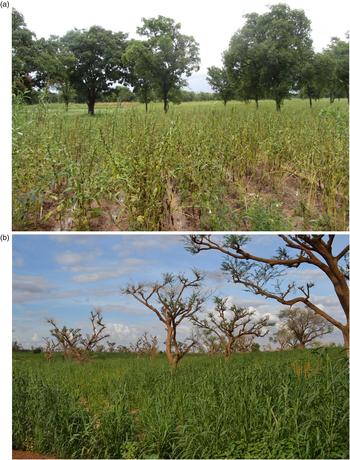
Sub-Saharan farmers’ association of trees and annual crops has created the concept of ‘parkland systems’ around villages throughout the region (Grolleau, Reference Grolleau1989). The parkland system is based on the selection of desirable woody plants, which includes preferred species and preferred individuals within a species (Maranz and Wiesman, Reference Maranz and Wiesman2003). The parklands that form the most widespread farming systems in the savanna zone of West Africa are those in which annual crops are grown under scattered remnant trees that were preserved by farmers during the initial woodland clearing (Bayala et al., Reference Bayala, Sanou, Teklehaimanot, Ouedraogo, Kalinganire, Coe and Van Noordwijk2015). Activities in these parklands indicate that the ultimate management goal is the diversification of the production system to increase farmland productivity (Boffa, Reference Boffa2000; Bayala, Reference Bayala2002). The parkland systems are a recognized agroforestry approach that helps to increase productivity and sustain food security, while also preserving the biophysical environment (Fig. 1).
Pictorial representation of typical agroforestry system; (a) Vittelaria paradoxa parkland associated with sesame; (b) Faidherbia albiba parkland associated with millet.

The current adoption of tree conservation on farmland in Sub-Saharan Africa is driven by considerable decreases in timber and other tree-based resources as a result of the dwindling size of natural vegetation stands in the region (Oino and Mugure, Reference Oino and Mugure2013). This decrease is strongly linked to the fact that rural and urban households use wood as their primary source of energy because they lack the funds to purchase alternative fuels such as electricity, butane gas and certain renewable energies (Karekezi and Majoro, Reference Karekezi and Majoro2002; Dovies et al., Reference Dovies, Witkowski and Shackleton2004). The high pressure exerted on the forest resource is the origin of deforestation, and forest and land degradation (Mekonnen and Köhlin, Reference Mekonnen and Köhlin2009). Agroforestry systems play an important role in the production of biomass to satisfy the daily energy (firewood, charcoal), construction material and NTFP needs of households while also providing important environmental services (Oino and Mugure, Reference Oino and Mugure2013; Bayala et al., Reference Bayala, Sanou, Teklehaimanot, Kalinganire and Ouédraogo2014).
Besides timber and NTFPs, important environmental services provided by trees on farms in Sub-Saharan Africa include shelter, soil enrichment and erosion prevention, watershed protection, rehabilitation of degraded lands and reducing the ecological risks associated with high climatic variability in the region (Bayala et al., Reference Bayala, Sanou, Teklehaimanot, Kalinganire and Ouédraogo2014). Agroforestry as a land-use system also provides other benefits such as carbon sequestration and biodiversity conservation (Acharya, Reference Acharya2006; Garrity and Stapleton, Reference Garrity and Stapleton2011). This provides opportunities for payments for environmental services, including through the Reducing Emissions from Deforestation and Forest Degradation (REDD+) program advocated by the United Nations.
Determinants of agroforestry adoption
The promotion of agroforestry must be sensitive to the socio-economic conditions of households and the characteristics of their physical environment in order to meet local needs and preferences (Ndayambaje, Reference Ndayambaje2013). Such a targeting will help to create and promote locally-acceptable and sustainable agroforestry projects. Many studies have focused on the socio-economic factors that motivate farmers to engage in the planting and conservation of trees in their fields (e.g. Salam et al., Reference Salam, Noguchi and Koike2000; Mahapatra and Mitchell, Reference Mahapatra and Mitchell2001). For example, Pattanayak et al. (Reference Pattanayak, Mercer, Sills and Yang2003) reviewed 120 articles on the adoption of agricultural and forestry technology by smallholders and concluded that five categories of factors explain technology adoption. The factors include household preferences, resource endowments, market incentives, biophysical factors and risk and uncertainty. Furthermore, studies have shown that the age of the household head, education level, gender, household wealth, household size, farmland size and access to agricultural inputs all influence farmers’ adoption of agroforestry technologies (Omuregbee, Reference Omuregbee1998; Ndayambaje, Reference Ndayambaje2013). In a study of patterns of tree adoption on farms in Ethiopia, Iiyama et al. (Reference Iiyama, Derero, Kelemu, Muthuri, Kinuthia, Ayenkulu, Kiptot, Hadgu, Mowo and Sinclair2017) found that favorable climatic conditions and institutional arrangements to control free grazing influence adoption. Jerneck and Olsson (Reference Jerneck and Olsson2013) found that in Kenya, food-secure and opportunity-seeking farmers are more likely to adopt agroforestry. Scherr (Reference Scherr1992) found that in Kenya, a community-based approach to extension services is more suitable for local conditions than a commodity-based approach.
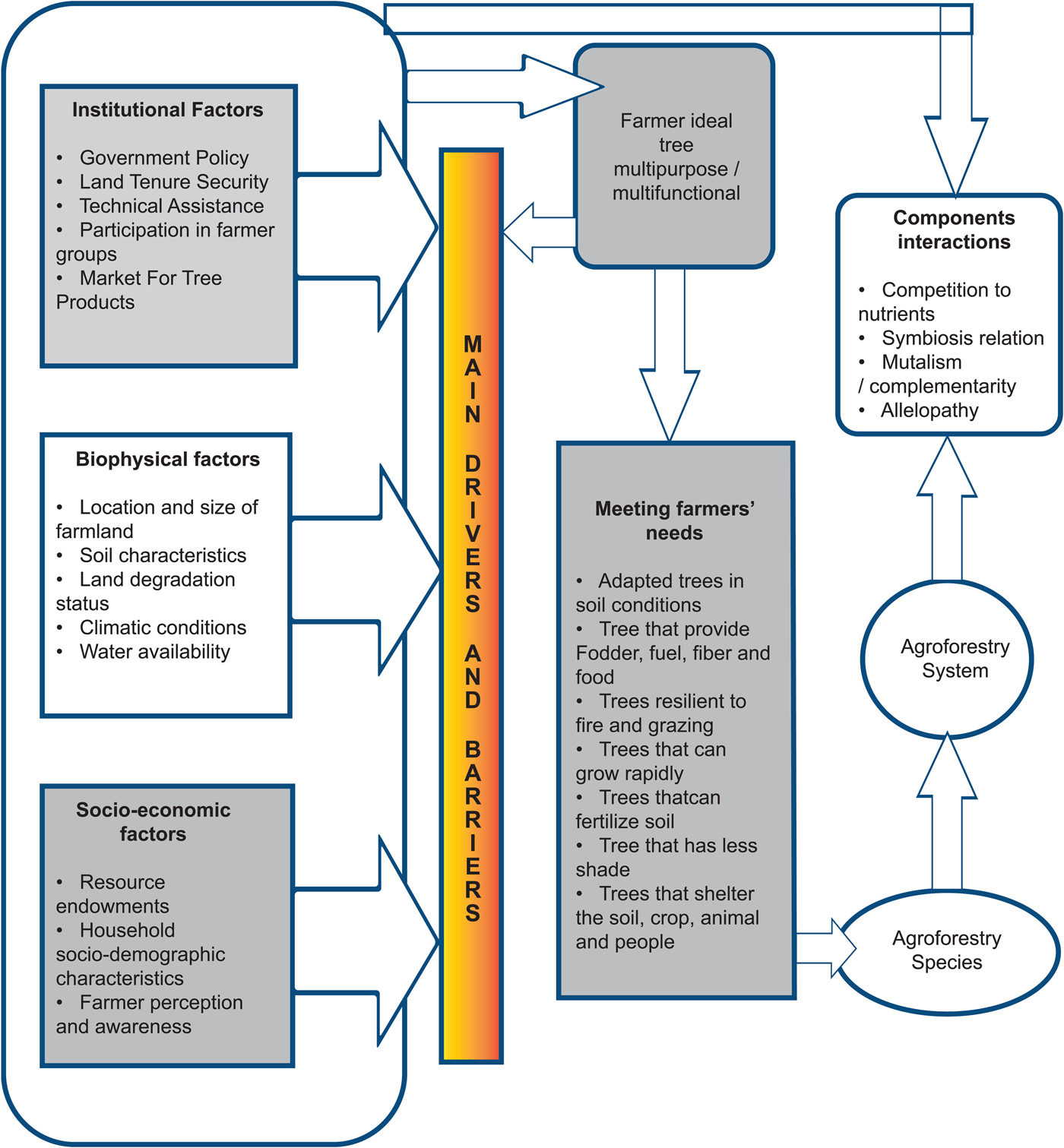
Achieving successful promotion and widespread adoption of innovative technologies regarding the retention of trees in cropping systems requires paying particular attention to the socio-economic attributes of rural communities and farmers (Buyinza and Ntakimanyire, Reference Buyinza and Ntakimanyire2008). Therefore, it is important to have a better understanding of farmers’ decisions to adopt agroforestry technologies. In most Sub-Saharan African countries, efforts to promote tree conservation practices have not been very successful in achieving sustained or widespread adoption. This situation highlights the need to better understand the influences of participation in on-farm conservation in Sub-Saharan Africa. The conceptual framework of this study relates to the factors that interact to influence farmers’ decisions to undertake tree conservation on farmland, considering the spillover effects on livelihoods (Fig. 2).
Conceptual framework for the conservation of trees on farmland, adapted from Hachoofwe (Reference Hachoofwe2012).

We assume that certain factors serve as drivers of adoption. Farmers’ adoption of tree conservation on farmland is determined by a combination of household socio-economic characteristics, resource availability, environmental factors, biophysical characteristics of the land and institutional support. It is important to understand the relationship between these factors and the process of adoption of new technology to improve farm production and sustainable land management.
Food security and protection of the environment in Burkina Faso
In Burkina Faso, several conventions such as the National Program of Land Management (PNGT), the National Program for Adaptation to Climate Change (PANA) and the United Nations Convention to Combat Desertification (UNCCD) have been signed by the government in order to support the protection and sustainable management of the environment. Furthermore, efforts have been made by the government and various technical and financial partners to support research into the development and implementation of technologies to enhance soil and water conservation. These technologies include ‘zaï’, ‘half-moon’, mulching and tillage methods (Zougmoré et al., Reference Zougmoré, Guillobez, Kambou and Son2000; Kagambega et al., Reference Kagambega, Thiombiano, Traoré, Zougmoré and Boussim2011; Sop et al., Reference Sop, Kagambega, Bellefontaine, Schmiedel and Thiombiano2012), which can be used to improve soil productivity and fertility, and enhance the restoration of degraded land. Zaï refers to small planting pits that typically measure 20–30 cm in width, are 10–20 cm deep and spaced 60–80 cm apart, and are used for collecting water and nutrients from compost. Half-moon basins are dug on bare and crusted soil with a gentle slope of less than 3% to form a half-circle. They act as micro-water catchments, and can hold as much as four times the amount of water that normally runs off the land (Zougmoré et al., Reference Zougmoré, Zida and Kambou2003).
Frameworks for the conservation of protected areas and the participatory management of forest resources have been established in Burkina Faso (Coulibaly-Lingani et al., Reference Coulibaly-Lingani, Savadogo, Tigabu, Odén and Ouadba2010). Farmer-managed natural regeneration (FMNR) is being promoted to restore tree cover in the agricultural landscape. FMNR is a simple, low-cost forest restoration method that can be used to convert degraded areas into productive farmland (Shono et al., Reference Shono, Ernesto, Cadaweng and Durst2007). More precisely, instead of clearing all farmland during sowing, farmers are encouraged to select stems sprouting from living stumps of previously felled trees, and to actively manage their regeneration by pollarding or various forms of coppice management (Reij and Garrity, Reference Reij and Garrity2016). Despite these efforts, the problems associated with land degradation and insufficient food production in Burkina Faso have not been resolved. This could be because most farmers in the country have insecure land tenure, use little agricultural inputs, which promotes shifting cultivation, and have not received a formal education (Etongo et al. Reference Etongo, Djenontin, Kanninen and Fobissie2015). Although parkland management practices and FMNR are important activities for promoting the conservation and sustainable management of natural regrowth/revegetation, the widespread adoption beyond certain localities in Sahelian countries is yet to be achieved (Reij and Winterbottom, Reference Reij and Winterbottom2015; Reij and Garrity, Reference Reij and Garrity2016). While technical issues related to FMNR practice can be easily overcome by farmers, it remains a challenge to induce institutional innovations to enable communities to agree on enforceable social contracts to protect tree regrowth and to respect the regrowth on their neighbors’ land (Iiyama et al., Reference Iiyama, Derero, Kelemu, Muthuri, Kinuthia, Ayenkulu, Kiptot, Hadgu, Mowo and Sinclair2017). For these reasons, it is important to increase our knowledge of the biophysical, policy, institutional and socio-economic determinants of adoption of sustainable agroforestry practices by rural communities in Burkina Faso.
Objective of the study
This study sought to examine factors influencing farmers’ decisions to incorporate trees into their farmlands. We also aimed to identify natural resource management strategies that could be used to promote tree cover on farmlands to enhance biodiversity conservation, support climate change adaptation and sustain food security. The findings can provide agricultural policy-makers and planners with a greater understanding of the drivers of agroforestry adoption by farmers and appropriate agricultural management strategies for promoting the integration of trees into farming systems. The findings also provide guidelines for developing an agroforestry system that meets farmers’ needs and preferences.
Study site
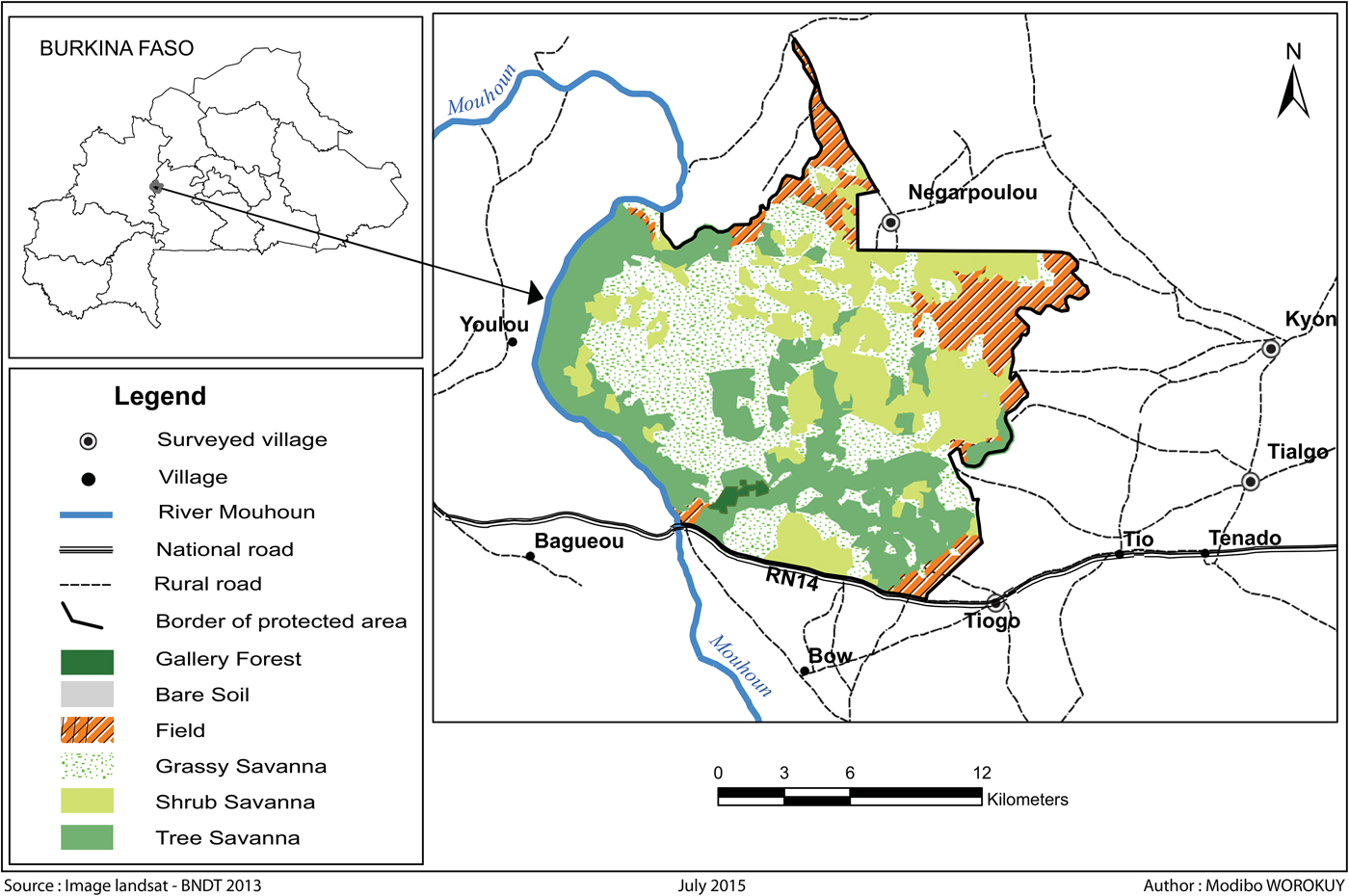
This study was conducted in four villages (Negarpoulou, Kyon, Tialgo and Tiogo) located in Sanguie Province (12.13′N, 2.42′W), Burkina Faso (Fig. 3). All four villages are located within close proximity of the Tiogo State Forest. The choice of the villages was based on the presence of agricultural land-uses, which integrate trees and crop production. We also took into account the proximity of the villages to the Tiogo State Forest, where various projects dealing with sustainable forest management have been undertaken along with the promotion of agroforestry buffer zones as a conservation and productive land-use strategy. We assumed that the closer a village is to the forest the greater the interaction between locals and State Forest officials, which may increase the potential to influence locals’ decisions to adopt agroforestry (Ezebilo, Reference Ezebilo2012).
Location of the study site.

The Tiogo State Forest was designated by the colonial French administration in 1940 and covers an area of approximately 30,000 ha. It is located along Burkina Faso's only permanent river (The Mouhoun River, formerly known as The Black Volta). Phyto-geographically, Tiogo State Forest is situated in the Sudanian regional center of endemism in the transition from the north to the south Sudanian zone (Fontès and Guinko, Reference Fontès and Guinko1995). The Sudanian savanna is an area stretching across the African continent from Senegal in the west to the Ethiopian highlands in the east. It is characterized by a 6–7-month dry season and a mean annual rainfall of between 700 and 1200 mm (Breman and Kessler, Reference Breman and Kessler1995).
The total population of the studied villages is approximately 45,506 (INSD, 2007). The main livelihood activities of the residents include extensive livestock grazing and harvesting of fuelwood, poles for construction and various NTFPs such as thatching materials and edible and medicinal plants. The main crops grown are Sorghum bicolor, Panicum miliaceum, Zea mays, Arachis hypogaea, Vigna unguiculata and Gossypium hirsutum. The people mainly engage in subsistence agriculture, which is entirely rainfall-fed (Sawadogo, Reference Sawadogo2009). Farmers typically retain some trees when clearing land for agriculture. Species commonly found on farms include: Adansonia digitata, Bombax costatum, Detarium microcarpum, Eucalyptus camaldulensis, Lannea microcarpum, Mangifera indica, Moringa oleifera, Parkia biglobosa, Sclerocarya birrea, Tamarindus indica, Gmelina arborea and Vitellaria paradoxa.
Research method
Survey design and data collection
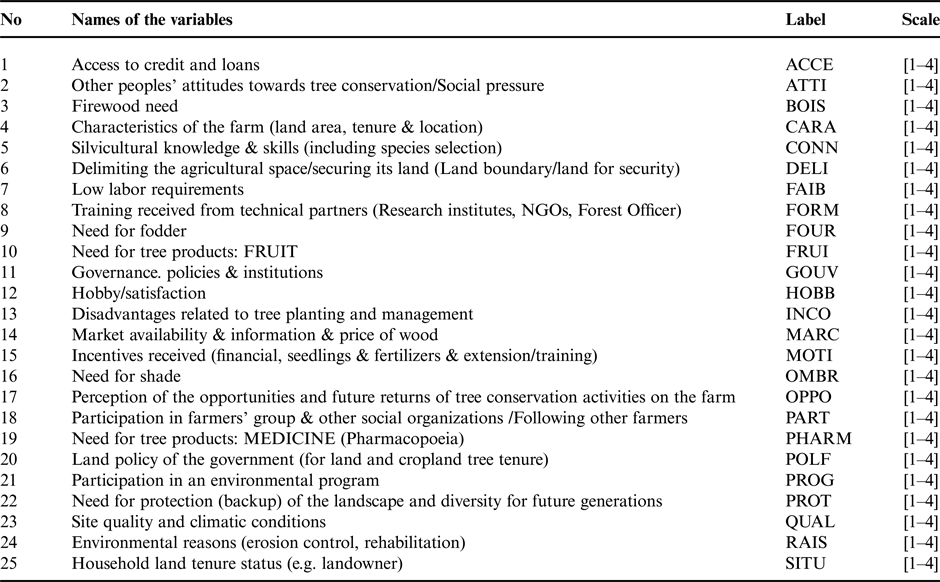
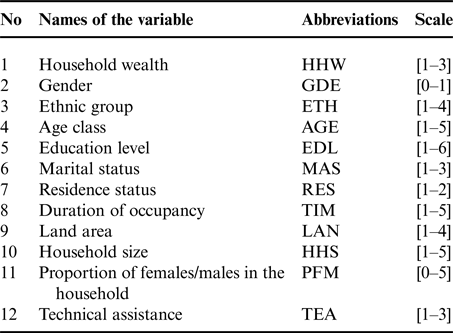
Data were collected by means of household surveys using personal interviews. Prior to the household survey, focus group discussions and interviews with key informants were held. The focus group participants and key informants included leaders of the local forest management cooperatives, local chiefs, government officials and members of local non-governmental organizations (NGOs) and other special interest groups. The primary aim of the discussions was to obtain a background understanding of the local practice of tree conservation on farmland (qualitative data) and to compile a list of farmers for further investigation. Information acquired during these discussions allowed us to identify key drivers of tree conservation in the villages (Table 1). Knowledge of these drivers was used in the design of the questionnaire.
Names, abbreviations and scales of the variables included in the factor analysis.

Initial farmer wealth ranking was also conducted in order to include a representative number of farmers from different wealth categories in the sample. The Participatory Analysis of Poverty and Livelihood Dynamics method was used to rank each farming household according to their wealth status using a stratified sampling approach (Krishna et al., Reference Krishna, Kristjanson, Radeny and Nindo2004; Phiri et al., Reference Phiri, Franze, Mafongoya, Jere, Katanga and Phiri2004). To do this, household wealth status was ranked based on criteria determined by key informants (see Supplementary Data in Appendix 1). The order of rankings that emerged was poor, moderate and wealthy.
A total of 300 household heads were randomly selected (i.e. 75 in each village) after taking into account the wealth status of households. In order to have an equal representation of wealth status groups in each of the villages, 25 household heads from each of the wealth categories were selected. The survey focused on household heads because in the study area, they make decisions on major issues, including land management and agriculture. Although men are more likely to be household heads in Burkina Faso, their decisions on agricultural production are often shaped by the views of their wives and children. For this reason, the opinion of all members of a household is to a greater extent captured by a household head's decisions.
Prior to the interviews, each of the household heads was asked whether he/she was willing to participate in the interview. The household heads were interviewed after giving their consent. All the household heads that were selected for the interviews agreed to be interviewed. Interviews were conducted at farmers’ homes to avoid the influence of other farmers, and were carried out by a trained enumerator. The main researcher was also present during all interviews to verify the accuracy of questionnaire completion. A pre-tested semi-structured questionnaire was used for gathering information, and each interview lasted about 1 h.
After explaining the purpose of the interview (i.e. adoption of agroforestry to help mitigate the adverse effects of climate change) and assuring the interviewees about the confidentiality of their responses, they were asked to rate the drivers of tree conservation on farmland and whether they have adopted agroforestry practices on their farmland. The interviewees were asked about their selection of tree species, and their silvicultural knowledge and practices utilized on their farmland including any strategies for improving tree planting and conservation activities. Demographic and socio-economic questions related to their household size, level of education, gender, age, residence and land tenure status and their forest-based income generating activities. The interviewees were also asked whether they had received any technical assistance from the State Forest service or NGOs. For the drivers of tree conservation on farmland, the interviewees were asked to rate them on a 4-point Likert-type scale (Clason and Dormody, Reference Clason and Dormody1994) as 1: not important, 2: moderately important, 3: important and 4: very important. Interviewee adoption of agroforestry on their farm took a ‘yes’ or ‘no’ answer. An unbalanced Likert-type scale was used in this study in order to reduce the tendency of interviewees to choose the middle point scale. This is a means of reducing potential biases in the results of this study.
Data analysis
Drivers of tree conservation on farmland
Descriptive statistics were first used to summarize the profile of the interviewees and information related to the conservation of trees on farms. Factor analysis was employed to identify latent dimensions underlying indicators that determine the conservation of trees on farms (Table 1). This statistical approach involves finding a way to condense information about a number of original variables into a smaller set of dimensions (factors) with minimum loss of information (Hair et al., Reference Hair, Anderson, Tatham and Black1998). Each factor is interpreted according to its loadings, i.e. the strength of the correlations between the factor and the original variables (Tabachnick and Fidell, Reference Tabachnick and Fidell1996). Creating a small set of factors can reveal ‘latent’ patterns in the relationships between the variables. Principal Component Analysis (PCA) was used to extract factors using Varimax rotation to ensure that the extracted factors were independent and unrelated to each other, and to maximize the loading on each variable and minimize the loading on other factors (Bryman and Cramer, Reference Bryman and Cramer2005).
To test the relevance of factor analysis for the dataset, the Bartlett Test of Sphericity and the Kaiser–Meyer–Olkin (Kaiser, Reference Kaiser1974) measure of sampling adequacy were applied. Kaiser–Meyer–Olkin's overall measure of sampling adequacy for our dataset (0.886) was well above the recommended threshold value of 0.5 (Kaiser, Reference Kaiser1974). This indicates that patterns of correlation in the dataset are relatively compact and that factor analysis can therefore be applied. The results of the Bartlett Test of Sphericity were also highly significant (χ 2 = 2658.145, df = 190, P < 0.0001), which further suggests that factor analysis can be applied to the dataset, and supports the factorability of the correlation matrix.
Factors with eigenvalues exceeding 1.5 were considered significant following Kaiser's criterion. The number of factors that were retained was guided by three decision rules: Kaiser's criterion, inspection of the screeplot and Horn's parallel analysis (Horn, Reference Horn1965). Parallel analysis is one of the most accurate approaches to estimating the number of components. The size of eigenvalues obtained from PCA is compared with those obtained from a randomly generated dataset of the same size. An inspection of the screeplot revealed a clear break after the third component; therefore, three components were retained for further analysis (Pallant, Reference Pallant2013). This was further supported by the results of parallel analysis, which showed only three components with eigenvalues exceeding the corresponding criterion value for a randomly generated data matrix of the same size (25 variables × 300 respondents).
Multiple linear regression analysis was used to explore the association between participation indicators and interviewees’ socio-economic and demographic characteristics. In order to estimate the subject score for each factor, the Anderson-Rubin approach (Tabachnick and Fidell, Reference Tabachnick and Fidell1996) was applied. This is a method for estimating factor score coefficients, which ensures orthogonality of the estimated factors. The resulting scores have a mean of 0.0 and a standard deviation of 1.0 and are uncorrelated. The following model was developed using Ordinary Least Squares (OLS) regression:
 $$\eqalign{{\rm Facto}{\rm r}_i = & \,\,{\rm Constant} + \beta _1{\rm HHW} + \beta _2{\rm GDE} + \beta _3{\rm ETH} \cr & + \beta _4{\rm AGE} + \beta _5{\rm EDL} + \beta _6{\rm MAS} + \beta _7{\rm RES} \cr & + \beta _8{\rm TIM} + \beta _9{\rm LAN} + \beta _{10}{\rm HHS} + \beta _{11}{\rm PFM} \cr & + \beta _{12}{\rm TEA} + \varepsilon} $$
where Factori represents the factors found from the factor analysis, β 1 to β 12 represent the coefficients of the socio-economic, demographic and policy-related variables (see Table 2 for details of the explanatory variables) and ε is the error term, which is independently and identically distributed. Tests of features of the dataset that could impair the reliability of estimates (including specification, multi-collinearity and spatial autocorrelation) indicated that OLS regression assumptions have not been violated.
Name, abbreviations and scales of the variables in the regression equation model.

Determinants of the adoption of tree conservation practices on farmland
The binary logistic regression model was used to examine the socio-economic and demographic determinants with respect to the retention of trees on farmlands. The logistic regression model is written as:
 $$\eqalign{&{\rm Choice}\;{\rm to}\;{\rm adopt}\;{\rm conservation}\;{\rm of}\;{\rm trees}\;{\rm on}\;{\rm farm}:\cr &\quad P(y) = {\rm exp}(\beta _0 + \beta _x)/(1 + {\rm exp}(\beta _0 + \beta _x))}$$
where β 0 and β 1 are coefficients estimated based on the data: P(y) = probability of the event y coded with 1 when happening and otherwise 0.
A logistic regression is the logit, the natural logarithm (ln) of an odds ratio (Agresti, Reference Agresti1996; Peng et al., Reference Peng, Lee and Ingersol2002). The odds of y represent the likelihood of it occurring. The odds are the ratio of the probability of y, i.e. P(y), occurring versus the probability of y not occurring (1 − (P(y)). The logistic model predicts the logit of the response variable (y) from the explanatory variables (x):
 $$\eqalign{{\rm Logit(}y{\rm )} &= {\rm natural(odds)} = {\rm ln}(P(y)/1 - (P(y) \cr & = \beta _0 + \beta _x.}$$
The extension of the logistic regression model incorporating many independent variables, as in our study, is similar to the following model:
 $$\eqalign{{\rm Logit}(y){\rm} & = {\rm ln}\left( {P(y)/1 - P(y)} \right) \cr & = \beta _0 + \beta _1x_1 + \beta _2x_2 + \beta _nx_n}$$
where β 0 is the intercept and β 1, β 2…β k are the coefficients of the independent variables x 1, x 2 … x n.
Initially, the models contained 18 explanatory variables that were introduced simultaneously, and stepwise linear regression was used to select the best combination of variables based on the most significant ones. Before performing the logistic regression, correlations between the explanatory variables were explored. We found that correlation between the variables did not exceed 0.40, which implies that collinearity is not a serious problem in the estimated model. The significance of the logistic regression parameters was assessed by χ 2 likelihood ratio and deviation tests, and Hosmer–Lemeshow's and Wald's statistics (Tabachnick and Fidell, Reference Tabachnick and Fidell1996). SPSS 20 software (SPSS for Windows, Release 2013 Chicago: SPSS Inc.) was used for all statistical analyses.
Results and discussion
Profile of respondents
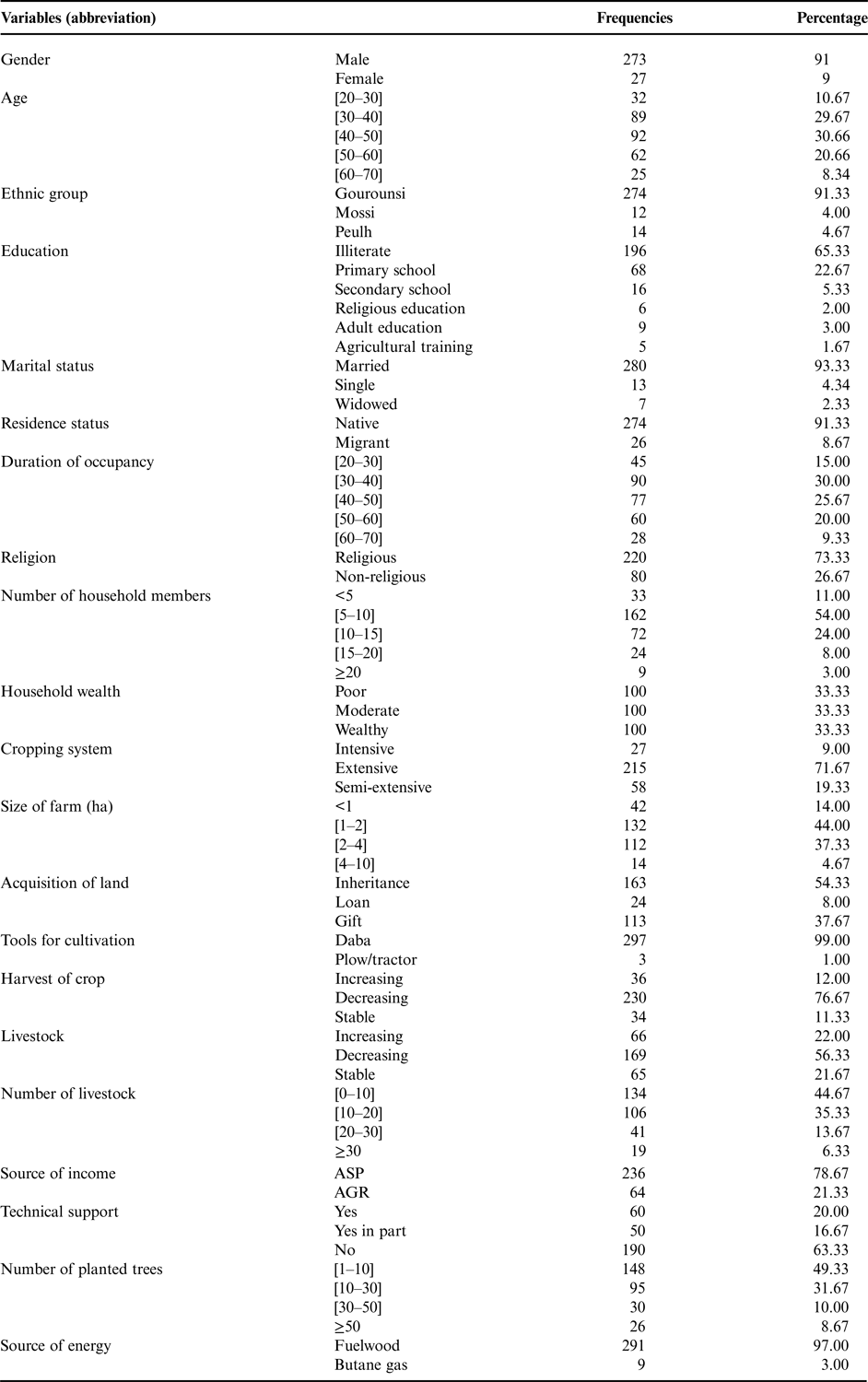
The frequencies of respondents in each class with respect to the socio-economic and demographic variables are shown in Table 3. Most of the respondents (91%) were men, with 40% aged 20–40 years. In addition, more than half of the respondents (54%) had between five and ten persons in their household. Most of the respondents were from the Gourounsi ethnic group (91%). Most (65%) do not have a formal education and only a few had completed secondary school education (5%). The respondents’ major sources of income were agriculture (79%) and the selling of NTFPs (79%), whereas 21% generated their income through other activities. Most of the farmers (72%) practice an extensive cropping system whereby they use small inputs of labor, fertilizer and capital relative to the land area being farmed. Only a few practiced more intensive cropping systems.
Profile of the respondents.

Note: ASP: selling of NTFPs cash crop and livestock; AGR: small trades.
Almost all the respondents used fuelwood as their main source of energy. The high use of fuelwood is one of the factors that encourages the preservation of trees on farmland throughout the study site. Indeed, the results revealed that during recent years all respondents had retained some trees on their farmland for future firewood use. This finding is consistent with previous research in Africa (Pearce, Reference Pearce2001; Buyinza and Ntakimanyire, Reference Buyinza and Ntakimanyire2008; Coulibaly-Lingani et al., Reference Coulibaly-Lingani, Savadogo, Tigabu, Odén and Ouadba2010). For example, in a Burkinabe study of factors influencing people's participation in a forest management program, Coulibaly-Lingani et al. (Reference Coulibaly-Lingani, Savadogo, Tigabu, Odén and Ouadba2010) found that biomass fuel is the principal energy source for household needs and farm-grown trees provide approximately 96% of the studied villagers’ energy requirements.
Factors influencing farmers’ decisions to protect and manage trees on their farmland
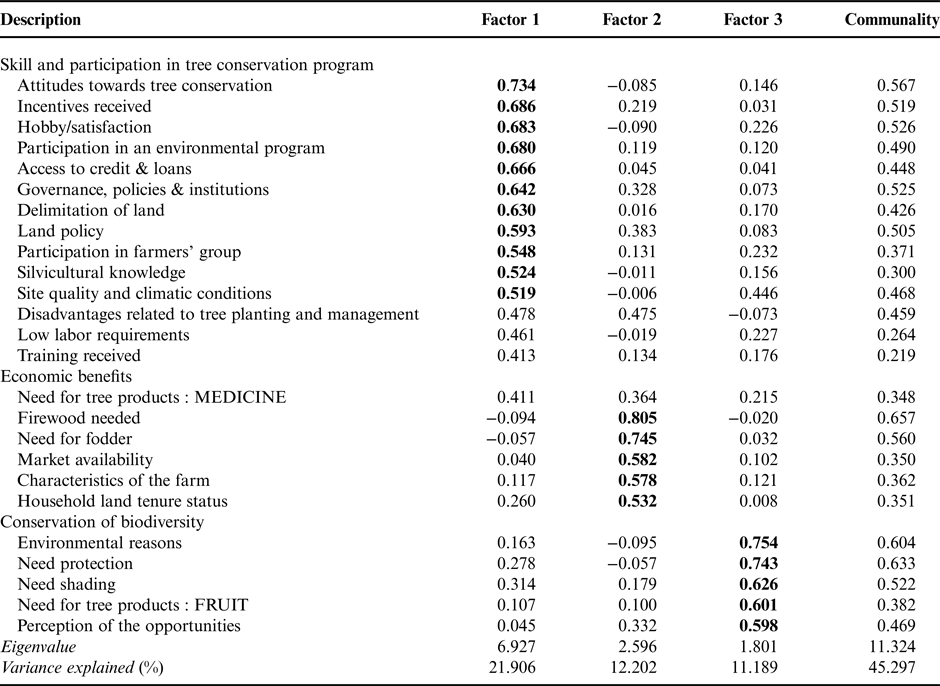
The results of the correlation matrix revealed that many coefficients had the value of 0.3 and above. The Kaiser–Meyer–Olkin value was 0.7, which exceeds the recommended level of 0.6. The Bartlett Test of Sphericity was statistically significant, which supports the factorability of the correlation matrix (χ 2 = 2658.145, df = 190, P < 0.001). The three-component solution explained a total of 45% of the variance, with components 1–3 contributing 22, 12 and 11%, respectively (Table 4). The total explained variance is not high, which is typical for studies involving cross-sectional data of this nature. To make the interpretation of these three components easier, Varimax rotation was applied. The rotated solution revealed the presence of a simple structure, with three components showing a number of strong loadings and all variables loading substantially on only one component. There was a weak positive correlation between the three factors (r 2 = 0.4). Factor analysis summarized the original 25 indicators within three factors that accounted for 45.3% of the total variance (Table 4). This may simply illustrate the diversity of respondents. The communalities (loadings) representing the overall importance of each variable in the PCA as a whole was low (<0.5 i.e., variables for which the common factors explain little variance) for disadvantages related to tree planting and management (INCO), low labor requirements (FAIB), training received from partners (forest and agriculture service, NGOs etc.) (FORM) and tree products needed for medicine (PHARM). The reasons why communalities for measured variables are low is that these variables are unrelated to the factors influencing farmers’ decisions, and thus share little in common with other measured variables in that domain. These results showed that these indicators accounted for little of the common variability among the variables and contributed little to the PCA solution.
Pattern and structure for PCA with Varimax rotation of three factors solution of indicators of participation in tree conservation on farmland.

Note: Rotation method: Varimax with Kaiser normalization. Rotation converged in five iterations (N = 300) and major loadings (with a value larger than 0.50 in absolute terms) for each variable item are highlighted in bold. The communality measure is the squared multiple correlation coefficient (SMC). ‘Skill and particatipion in tree conservation, ‘economic benefits’, and ‘Conservation of biodiversity’ are names that the researchers developed based on interpretation of the loadings in each factor.
The relatively high values for the other communalities indicated that the factors explained most of the variation in the original variables. A variable with a high communality of 0.7, for example, indicated a significant correlation between that variable and other variables contributing to a common factor. The dominant variables for skills and participation in a tree conservation program explained 22% of the variation. This first factor is constituted by 14 indicators (Table 4). The high importance placed the variable ATTI, which suggests peer/social pressure could play an important role for agroforestry adoption in this region (0.734). These indicators also include incentives received such as finance, seedlings, fertilizers and extension/training. Others are access to credit and loans, participation in an environmental program, governance, policies and institutions, delimitation of agricultural space/securing land (border zones/land for security), and land-use policy of the government (for land and cropland tree tenure). Participation in farmers’ groups and other social organizations/following other farmers silvicultural knowledge and skills (including species selection), along with disadvantages related to tree planting and management, site quality, climatic conditions, low labor requirements and other people's attitudes towards tree conservation/social pressure had the highest loading (0.7).
Our findings are consistent with previous research such as that by Allendorf et al. (Reference Allendorf, Swe, Oo, Htut, Aung, Aung, Allendorf, Hayek, Leimgruber and Wemmer2006) and Vodouhê et al. (Reference Vodouhê, Coulibaly, Adégbidi and Sinsin2010). These authors found that people's positive response to natural resources management influences their attitude towards conservation. Furthermore, Coulibaly-Lingani et al. (Reference Coulibaly-Lingani, Savadogo, Tigabu, Odén and Ouadba2010) found that participation in decision-making and economic benefits strongly influence participation in forest management in rural Burkina Faso. If the intention of policy-makers and planners is to stimulate farmers to embrace biodiversity conservation, more effort should be geared towards involving farmers in decision-making in the design of agroforestry programs such as FMNR.
Farmers should be trained in natural resource management. This training needs to emphasize the benefits of agroforestry especially the roles it can play for food security, poverty alleviation and climate change adaptation. Our findings show that there was a lack of farmer training from technical partners (State Forest service and NGOs). Such training added little to the PCA solution and was allocated a low loading (0.413). This suggests that inadequate training could lead to low adoption of agroforestry by farmers, and especially if the training does not incorporate local knowledge and farmer innovation (Sinclair and Walker, Reference Sinclair, Walker, Buck, Lassole and Fernandes1998; Meijer et al., Reference Meijer, Catacutan, Ajayi, Sileshi and Nieuwenhuis2015). Environmental education should build on positive perceptions that people already hold, and work towards mitigating negative perceptions wherever possible. This could be an important way to motivate people to develop or reinforce positive perceptions about biodiversity conservation, as reported by Vodouhê et al. (Reference Vodouhê, Coulibaly, Adégbidi and Sinsin2010). Our findings are consistent with those of Ezebilo (Reference Ezebilo2012) who found that in rural Nigeria, locals with primary and high school levels of education perceived community forestry positively. This suggests that environmental education will play a key role in encouraging farmers to adopt agroforestry on their farms. Agroforestry produces several ecosystem services that some farmers are not very familiar with, such as carbon sequestration, water and air purification and recreational experience. Environmental education is required to reveal the benefits of these services to farmers, which should help to encourage their support for and participation in agroforestry projects.
The dominant variables for the second factor, which explained 12.20% of the variation, were firewood requirement, need for fodder, market availability information including the price of wood, characteristics of the farm (land area, tenure and location), and household land tenure status (e.g. landowner). This indicates that farmers preserved trees on farms in order to obtain economic benefits (goods and services) such as windbreaks, fodder, fuelwood, a source of income, soil improvement, medicines, shade and construction materials, as also reported by several other authors (Franzel, Reference Franzel1999; Adewuyi, Reference Adewuyi2006; Jamala et al., Reference Jamala, Shehu, Yidau and Joel2013). Our findings confirm those of Etongo et al. (Reference Etongo, Djenontin, Kanninen and Fobissie2015) who found that insecurity of land tenure contributes to deforestation in Burkina Faso. They are also consistent with the findings of Ezebilo and Mattsson (Reference Ezebilo and Mattsson2010) who found that NTFPs contribute significantly to household livelihoods in villages around the Cross River National Park, Nigeria. This suggests that an agroforestry strategy focusing on the provision of NTFPs that will generate a sustainable income for farmers, has the potential to encourage farmers to adopt agroforestry. To this end, it is important for policy-makers and planners to design and implement agroforestry pilot farms, which farmers could then visit, learn from and emulate on their own properties.
The third factor explained 11.19% of the variation. Five indicators (environmental reasons, need to protect the landscape and diversity for future generations, perception of the opportunities and future returns from tree conservation activities on the farm, need for tree products e.g. fruit, and need for shading). These results are consistent with Coulibaly-Lingani et al. (Reference Coulibaly-Lingani, Tigabu, Savadogo, Oden and Ouadba2009), Vodouhê et al. (Reference Vodouhê, Coulibaly, Adégbidi and Sinsin2010) and Jamala et al. (Reference Jamala, Shehu, Yidau and Joel2013), who found that economic benefits of tree products represent a strong incentive for people to undertake conservation measures. In order to encourage farmers to embrace agroforestry, the government, through agricultural extension agents, should provide farmers with access to affordable trees species that are resistant to diseases, pests and adapted to the changing climate. Furthermore, there is need for more effective agricultural extension services in Burkina Faso, especially in terms of the dissemination of information to farmers. The extension services should be more farmer-centered, and periodically evaluated to identify areas that require more attention, as advocated by Franzel et al. (Reference Franzel, Denning, Lillesø and Mercado2004). It is important to note that farmers often differ in terms of their preferences and demands for tree species to plant on their farms. For this reason, it is important to provide farmers with opportunities to access seeds of a range native and exotic economic tree species. For example, in an Ethiopian study, Iiyama et al. (Reference Iiyama, Derero, Kelemu, Muthuri, Kinuthia, Ayenkulu, Kiptot, Hadgu, Mowo and Sinclair2017) found that farmers often integrate several species of native and exotic trees on their farms to meet variable farm conditions, needs and asset profiles. This suggests that if the intention of the government is to encourage farmers to embrace agroforestry, tree promotion efforts in Burkina Faso should focus on the provision of native and exotic tree species that match the varying ecological conditions throughout the country.
Does farmer participation in tree conservation programs depend on their socio-economic and demographic attributes?
The multiple regression models developed to examine the relationships between socio-economic and demographic attributes of respondents and their potential to participate in agroforestry programs revealed that variables such as household wealth, ethnic group and age class were statistically significant for all three participation indicators (Table 5). Other variables include residence status, household size and the proportion of female/male household members. The adjusted R square values for the socio-economic and demographic attributes were low: 0.016, 0.054 and 0.011 for skill development and participation in tree conservation programs, economic benefits and the conservation of biodiversity, respectively. This indicates that the model explains little of the variability of the response data around its mean. The household size and ethnic group were both significant with respect to the decision to participate in skill development and tree conservation programs (Factor 1). Individuals with larger families greatly depend on forest resources to diversify household livelihoods, as they may find it difficult to access alternative sources of subsistence (Coulibaly-Lingani et al., Reference Coulibaly-Lingani, Tigabu, Savadogo, Oden and Ouadba2009). According to Oino and Mugure (Reference Oino and Mugure2013), farmers engage in agroforestry practices of various types and characteristics that fit their individual-household situations.
Estimated regression standardized beta coefficients () of the latest variable equation for participation in tree conservation programs.

Note: Statistically significant estimates are indicated by asterisks **P < 0.05; ***P < 0.005.
Factor 1: Skill and participation in tree conservation program; Factor 2: Economic benefits; Factor 3: Conservation of biodiversity.
A significant relationship between household wealth, age, residence status and economic benefits (Factor 2) was found, indicating that these variables are important in land and forest management programs that generate income for households in the West-Center region of Burkina Faso. The objective pursued by farmers is to improve their livelihood. Thus, farmers with poor or moderate household wealth are motivated to participate in any programs and activities that facilitate them achieving these objectives.
For the conservation of biodiversity, significant relationships were only found between the ratio of women to men (Factor 3). Male and female respondents experience different situations that influence their participation in forest management programs. Indeed, women's personal and household activities constrain their participation in community organizations in southern Burkina Faso (Coulibaly-Lingani et al., Reference Coulibaly-Lingani, Savadogo, Tigabu, Odén and Ouadba2010). Thus, norms shape the division of labor between the genders, and the role of women as care-givers and nurturers often prevents them from sparing time from domestic duties to participate in forest management activities (Nuggehalli and Prokopy, Reference Nuggehalli and Prokopy2009). Social organization among the Gourounsi (ethnic group), where woman are occupied with farm and household activities (child care, fetching water, cooking food and farming), prevents them from attending meetings related to decision-making concerning the conservation of forest resources (Coulibaly-Lingani et al., Reference Coulibaly-Lingani, Savadogo, Tigabu, Odén and Ouadba2010). Thus, understanding the various factors that influence farmers’ decision to participate in tree conservation programs could be used for developing an appropriate strategy for promoting a sustainable agroforestry program, which is acceptable to most farmers in Burkina Faso. As women play an important role in agroforestry, planning and implementation of the strategy must include women. The strategy must be used to promote potential ways that encourages women to access the agroforestry program.
Socio-economic determinants of decisions to protect and manage trees on farmland
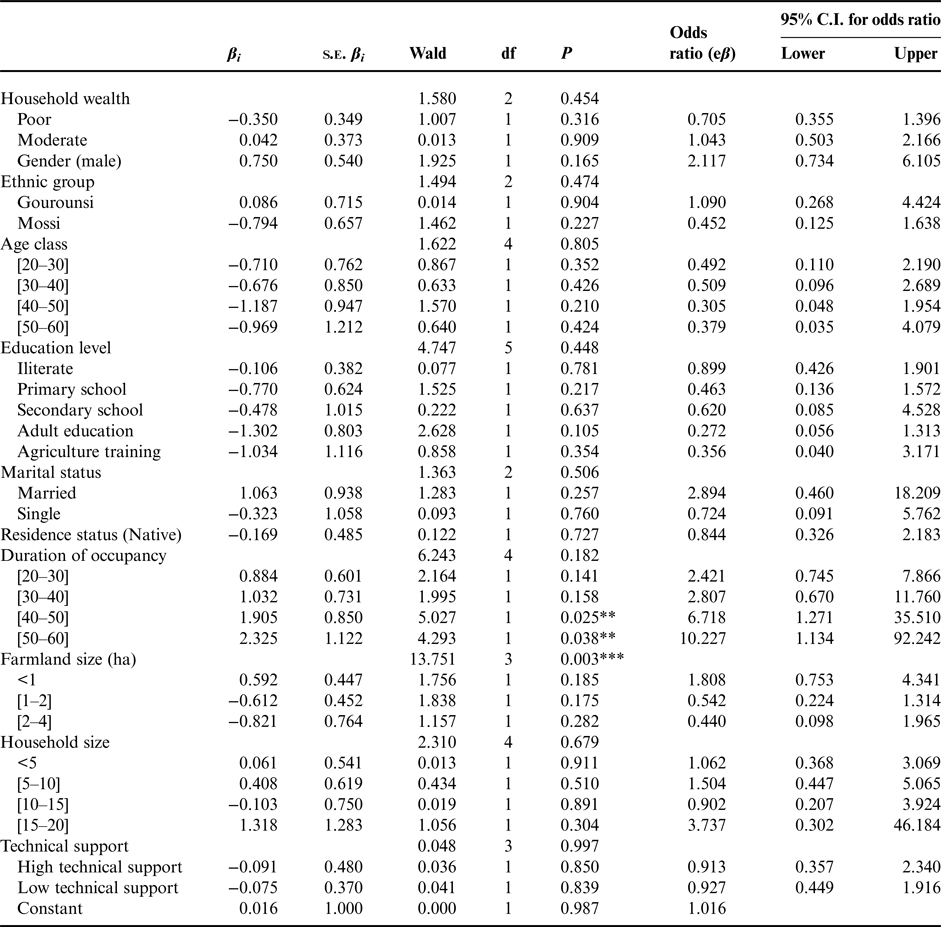
Binary logistic regression was used to explore the impact of a number of factors on the likelihood that respondents would adopt agroforestry (Table 6). The model contained 11 independent variables (wealth levels, gender, ethnic group, age, education, marital status, status of residence, duration of residence, farm size, household and technical support). The full model containing all predictors was statistically significant. The overall assessment of the logistic regression model and the Hosmer-Lemeshow goodness-of-fit statistics revealed a fit with the data: χ 2 (8, N = 300) = 7.116, P = 0.524. The model as a whole explained between 14.40% (Cox and Snell R square) and 20.40% (Nagelkerke R squared) of the variance associated with the decision to adopt agroforestry, and correctly classified 70.7% of the cases. The −2Log likelihood value for the data in the model is 321.575, indicating fitness of the model. Certain variables were positively associated with the conservation of trees on the farm and other variables were negatively associated. The negative β coefficients indicated that those variables reduced the likelihood of adopting agroforestry technologies (Zerihun et al., Reference Zerihun, Muchie and Worku2014).
Binary logistic regression model of the household characteristics influencing adoption of tree conservation on the farm.

Note: Statistically significant estimates are indicated by asterisks**P < 0.05; ***P < 0.005; Hosmer & Lemeshow Test: χ 2 = 7.116. df = 8. P = 0.524; −2Log likelihood = 321.575; Cox & Snell R 2 = 0.144 and Nagelkerke R 2 = 0.204; Overall percentage of correct prediction = 70.7%.
Moderate wealth status of the household had a positive coefficient with an odds ratio of 0.057, which implies that wealthy households are more likely to adopt agroforestry technologies than poor households, although the level of significance is low. Wealth level can influence adoption in several ways: higher income farmers may be less risk averse, have more access to information and have greater capacity to mobilize resources in order to cultivate trees in fallows (Franzel, Reference Franzel1999). Other authors have also suggested that wealthier farmers rather than poor farmers are more likely to create improved fallows (Phiri et al., Reference Phiri, Franze, Mafongoya, Jere, Katanga and Phiri2004; Keil et al., Reference Keil, Zeller and Franzel2005). The findings suggest the need to understand the motive of various farmers prior to the design of an agroforestry adoption strategy. For example, in a Kenyan study, Jerneck and Olsson (Reference Jerneck and Olsson2013) found that food-secure and opportunity-seeking farmers have the potential to invest in land and labor for tree planting and management. Risk-averse farmers are less likely to invest their time in tree planting and management because they are often constrained by a food production imperative.
Gender-related decision-making, which is often linked to intra-household resource allocation, is an important determinant of the adoption of agroforestry technologies by both men and women (Kiptot and Franzel, Reference Kiptot and Franzel2012). Our results show that men are more positively associated with the conservation of trees on the farm. Buyinza and Ntakimanyire (Reference Buyinza and Ntakimanyire2008) reported that men are more likely to establish plantations on their fields than women. According to Thangata (Reference Thangata1996), the probability of agroforestry adoption was higher for men than women. Women are less likely to test and adopt improved fallows by planting trees for social reasons and because of their lower wealth levels (Franzel, Reference Franzel1999). Other reasons, such as inheritance systems, the lack of rights for women to grow trees and less access to credit and land for exploitation (secure land and tree tenure) can also explain this situation (Kiptot and Franzel, Reference Kiptot and Franzel2012; Bourne et al., Reference Bourne, Kimaiyo, Tanui, Catacutan and Otiende2015). However, women must be engaged in the development and promotion of agroforestry programs because they are often the primary users of tree resources and obtain substantial benefits from them, in terms of food, fuelwood and other products and services, and particularly in times of need. They are also more informed and concerned by the lack or abundance of these resources that they depend on for their daily needs. Coulibaly-Lingani et al. (Reference Coulibaly-Lingani, Savadogo, Tigabu, Odén and Ouadba2010) recommended that increasing women's participation and more equitable benefit-sharing among user groups are essential in improving the success of participatory forest management programs. Kiptot and Franzel (Reference Kiptot and Franzel2012) proposed various technological, policy and institutional recommendations (access to extension services and market information, improving women's access to financial resources, land tenure reforms etc.) to promote more active participation of women in agroforestry development to ensure greater benefits can accrue to them. It is important to note that only a small number of women participated in our study, which makes it difficult to draw exhaustive conclusions about gender-related issues for agroforestry adoption in the Burkina Faso context. We therefore advocate for more research on the influence of gender on the adoption of agroforestry in Burkina Faso.
Our results show that local people's perceptions of conservation of trees on farms were influenced by their origin (ethnic group), age, education level, farm size and technical support. These results are consistent with those of Vodouhê et al. (Reference Vodouhê, Coulibaly, Adégbidi and Sinsin2010). Other authors have suggested that indigenous people may express anti-environmental attitudes for a variety of reasons, including low education levels, lack of awareness about environmental issues and a lack of engagement within their new community (Sah and Heinen, Reference Sah and Heinen2001; Allendorf et al., Reference Allendorf, Swe, Oo, Htut, Aung, Aung, Allendorf, Hayek, Leimgruber and Wemmer2006). According to Buyinza and Ntakimanyire (Reference Buyinza and Ntakimanyire2008), technical support (environmental education) could play an important role in adoption of new and innovative technologies by the public. In addition, our results also concur Jamala et al. (Reference Jamala, Shehu, Yidau and Joel2013) who reported that technical assistance is needed to facilitate the spread of agroforestry practices. However, it is similar to the results of Coulibaly-Lingani et al. (Reference Coulibaly-Lingani, Tigabu, Savadogo, Oden and Ouadba2009) in the same region of Burkina Faso as our study. The period of residence is an important factor in participation in programs that contribute to the development of a village. Thus, the fact that migrants spend a long time in a locality encourages them to work to improve their livelihoods, and they therefore feel that they belong to the people of their village.
Farmers’ silvicultural practices and suggested strategies for improving tree conservation on farmland
There were five main silvicultural practices utilized by the farmers on their farmland. These were the protection of seedlings against fire (94%), wood cutting (93%) and fodder harvesting (77%), enrichment planting (85%), FMNR (87%) and direct seeding of tree seeds (66%).The following quote from one interviewed farmer reflects the practices adopted by most farmers in the study site: ‘for the protection of young plants against grazing and bushfires, we surround young plants (with) thorny branches cut from other shrubs. During the plowing, we avoid to damage young preferred plants. At the end of the rainy season, crop residues are piled up in one place in order to avoid the expansion of accidental fires. When we have the fund, we buy at the market the multipurpose plants that we plant in our farmland. We keep in the farmland only the dominant stems of the resprout and also carry out direct seeding’.
The main strategies suggested by the farmers for improving tree conservation activities were facilitating targeted incentive programs (84%) and extension in the form of silvicultural training/environmental education (80%) and on-ground technical assistance (75%), and flexibility for land tenure and tree ownership security (73%). One of the interviewed farmers in Negarpoulou village commented on the need for an improved availability of extension and incentives: ‘awareness and incentives for tree conservation in the farmland is an effective way for many people to know the importance of promoting tree conservation on farmland. Here, there is long time that we have not received technical assistance. Environmental education for adults and our children at school could benefit us’. Another non-landowning farmer's comments reflected the general opinion of many of this type of interviewee: ‘if the land tenure and tree secure were flexible, they would be motivated to invest in their restoration because most of the loaned land is generally unsuitable for cultivation. But, when the rights to used land and tree are not equitably arranged, the owners are capable to ask you to return land, once you invested to restore through plantation lands’.
Concluding remarks
This study provides insights into farmers’ decisions to incorporate trees into agricultural land-use systems in the Center-West region of Burkina Faso. In order to improve the adoption of agroforestry by farmers in this region, the government and their rural development NGO partners could empower farmers with forest management skills and provide measures that encourage their participation in tree conservation programs. These measures may include a more effective agroforestry extension service, and the provision of locally-suitable tree seeds and simple agricultural equipment for working the soil. Agroforestry extension services should be designed to match local biophysical and socio-economic conditions. This will ensure the local farmers’ immediate needs and preferences are understood and effectively addressed. It is also important for different categories of farmers to be actively involved in the design of agroforestry programs such as Farmer-Managed Natural Regeneration. This is important to improve these programs’ relevance to and acceptance by all types of farmers. The government of Burkina Faso and their NGO partners could encourage and stimulate the promotion of agroforestry technologies by helping local communities to resolve the constraints to improved tree conservation on farms. The promotion of agroforestry can be used as a toolkit to fight rural poverty, food insecurity, desertification and the negative impacts of climate change. The findings from this study should contribute to the design and delivery of agroforestry projects that address farmers’ needs and preferences, thus helping improve community food security and adaptation to climate change.
Supplementary material
The supplementary material for this article can be found at https://doi.org/10.1017/S1742170517000369.
Acknowledgements
The authors are grateful to the International Foundation for Science (IFS) for the financial assistance (Grant Agreement No. D/5613-1) to carry out this study. Thanks are also due to CGIAR Research Program on Dry Lands (CRP 1.1) for support. The authors are also grateful to anonymous reviewers who made significant suggestions for improving this paper. We thank the interpreters, local populations of surveyed villages and the agents of the forestry and agriculture services who helped during data collection. We also thank Dr John Meadows for proofreading and editing this paper.