Implications
Rangelands are an important forage resource for Mediterranean farming systems, providing cheap forage and a reservoir of biodiversity. In the last few decades, grazing practices have changed, causing rangeland degradation. Today, the challenge is to propose management practices that take into account the diversity of rangeland vegetations and cope with the variable forage availability while maximizing feed intake and animal performance with minimum farm labour. This article reviews studies about rangeland utilization in the Mediterranean basin, and points out where further research is needed in order to answer this challenge and thus secure agro-pastoral farming systems in the Mediterranean basin.
Introduction
In the countries surrounding the Mediterranean basin, most of the grazing lands are rangelands (Bounejmate et al., Reference Bounejmate, Norton, El Mourid, Khatib, Bathikha, Ghassali and Mahyou2004; Hadjigeorgiou et al., Reference Hadjigeorgiou, Osoro, Fragoso de Almeida and Molle2005; Ruiz et al., Reference Ruiz, Mena, Castel, Guinamard, Bossis, Caramelle-Holtz, Contu, Sitzia and Fois2009). Rangelands can be defined as highly heterogeneous natural vegetation communities with high conservation value, growing in harsh environments (poor soils, unfavourable climatic conditions) and characterized by high heterogeneity in the spatial and temporal distribution of the forage resource. Because their forage production is usually of low quality and cannot be easily controlled, rangelands have been less valued in the last few decades than cultivated or fertilized grasslands: their use has mainly been restricted to very extensive systems or to limited periods of the year where animals have low nutrient requirements. A major issue today is how to manage rangeland utilization by the herd or flock to secure both animal production and the renewal of natural feed resources, at various spatiotemporal scales. In the present socio-economic context of the Mediterranean basin, traditional practices that proved to be efficient years ago no longer apply, especially because they require labour that is not available any more. A challenge for research is therefore to propose management practices adapted to extensive and simplified systems, which reconcile short-term system profitability and long-term preservation of the forage resource and biodiversity associated to rangelands (Hadjigeorgiou et al., Reference Hadjigeorgiou, Osoro, Fragoso de Almeida and Molle2005).
In Southern Europe, rangelands are becoming underexploited, which causes shrub encroachment, increased fire risk and reduction in floristic diversity (Zarovali et al., Reference Zarovali, Yiakoulaki and Papanastasis2007). The main reasons for this are the abandonment of farmland and the specialization of farming systems (Bouju, Reference Bouju2000). Increasingly, farms tend to raise large numbers of animals with little financial and human means. Therefore, management strategies are kept as simple as possible, especially for large areas such as rangelands, while cultivated land provides most of the feed resources. In general, the more the systems are intensified, the less the number of grazing animals and the duration of the grazing period on rangelands (Riedel et al., Reference Riedel, Casasùs and Bernuès2007). Traditional practices known as favourable to rangeland utilization, such as mixed species herds and collective organization of grazing management, have almost disappeared (Bourbouze and Gibon, Reference Bourbouze and Gibon1999). Recently, rangelands have regained farmers’ interest because, on the one hand, they represent an opportunity to extend farms with little investment, and on the other European Union agricultural policies, through agri-environmental schemes, have secured the utilization of rented land and subsidized pastoral developments such as fences (Léger, Reference Léger1999).
In Northern Africa, rangelands are often overexploited, which reduces vegetation cover, modifies floristic composition with a decrease in the abundance of perennial species, causes degradation of soil water reserves and fertility and increases erosion (Nedjraoui, Reference Nedjraoui2004). Such intensive utilization of rangelands can be explained by the low profitability of animal production, which encourages farmers to minimize financial and labour efforts and to develop complementary activities (Bouju, Reference Bouju2000). Therefore, herds or flocks are moved less and are fed almost exclusively on rangelands, where they range freely or are watched by women or children. Traditional rules regulating the use of collective pastoral resources such as seasonal preservation (‘Agdal’) are no longer enforced. Bourbouze (Reference Bourbouze2000) explains that where rangeland resources have not been taken over by individual farmers, their utilization no longer responds to collective decisions and conservation objectives, but to the private interests of farmers who are increasingly settled. In the last few decades, the frequency of draughts has increased. Consequently, exceptional subsidies for buying feed have become almost normal and have led to feeding systems increasingly based on conserved forage, concentrate and agricultural by-products (Bourbouze and Gibon, Reference Bourbouze and Gibon1999; Cialdella et al., Reference Cialdella, Genin and Ouled Belgacem2004). Resorting to purchasing feed means that larger numbers of animals can be kept on restricted areas of rangeland, which in turn may further increase the grazing pressure. Fortunately, the opportunity for such a strategy varies between countries and with time, depending on the relative prices of meat and cereals and on possible subsidies (Bourbouze, Reference Bourbouze2000).
The objective of this article is to review studies about rangeland utilization in the context of the Mediterranean basin. We focus on the biological and management components of rangeland utilization on paddock to farm scale. For simplicity, we do not consider the socio-economic factors such as dependence on subsidies, cost of specific equipment, such as fences or electronic devices and other factors, which can play a role in Mediterranean systems, such as land status (Bourbouze and Gibon, Reference Bourbouze and Gibon1999) or protection against predators (wolves: Ciucci and Boitani, Reference Ciucci and Boitani2005; Lapeyronie and Moret, Reference Lapeyronie and Moret2007). When Mediterranean references were not available, we chose to discuss the applicability to Mediterranean systems of references obtained in controlled conditions, or very different farming systems (i.e. huge herds or flocks free-ranging in large open landscapes in the USA and Australia).
This article considers four issues, all in line with the general objective of managing rangeland utilization in order to secure both animal production and the renewal of natural feed resources: (i) characterize vegetation diversity, (ii) feed the herd or flock on rangeland, (iii) cope with the seasonal and year-to-year variability in forage production and (iv) minimize human intervention and farm work. In this article, we first analyse these issues and later summarize the current knowledge about animal and herd behaviour in Mediterranean farming systems. Finally, we describe management tools that should help answer these issues based on the knowledge of foraging behaviour.
Issues related to rangeland utilization in the Mediterranean basin
Characterize the diversity of rangeland vegetations
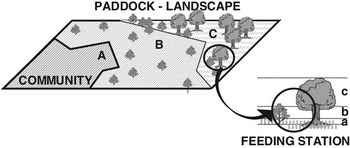
Mediterranean rangelands are made up not only of natural vegetation communities including a variety of grass and forb species, but also often of shrubs and trees, which produce multi-dimensional heterogeneity at the scales of the landscape or large paddock, of the vegetation community and of the feeding station (Figure 1). The presence of ligneous species radically changes the forage value of the vegetation community and its dynamics, and consequently the diet selected by the animals. Characterizing vegetation diversity with variables related to animal intake and resource dynamics is necessary to answer the questions of when and how to use a given vegetation community in order to take the best out of it without spoiling it in the long term. While interesting classifications based on functional approaches of grass species have been proposed for grasslands (Duru et al., Reference Duru, Al Haj Khaled, Ducourtieux, Theau, de Quadros and Cruz2009), little has been done to our knowledge for shrubland and woodland communities. The main Mediterranean shrubland communities are maquis (dense shrub communities on siliceous soils), garrigue (open shrub communities on calcareous soils) and phrygana (open, dwarf shrub communities on friable soils); the main woodland communities are dense coniferous woodlands, dense broadleaved woodlands and sparse silvopastoral woodlands (Papanastasis et al., Reference Papanastasis, Yiakoulaki, Decandia and Dini-Papanastasi2008).
Rangeland spatial heterogeneity at various spatial scales. The landscape or large paddock comprises different vegetation communities (A, B, C), which are made of assemblages of herb, shrub and tree species, which are in abundance and whose state may vary from one feeding station to another. The forage resource is also distributed vertically, with grass and fallen fruit on the ground (a), and leaves and fruit on the branches of bushes and trees (b, c).

Vegetation diversity in rangeland is supported by physical, biotic and human factors. Ouled Belgacem and Papanastasis (Reference Ouled Belgacem and Papanastasis1995) found that up to 60% of the vegetation heterogeneity in western Crete rangelands could be attributed to distance from watering points, while the remaining 40% could be attributed to soil and topographical factors. In the Mediterranean basin, shelters providing water, supplementation and a resting place for the night act as focal points. Papanastasis et al. (Reference Papanastasis, Ghossoub and Scarpelo2009) observed that in the vicinity of shelters (0 to 50 m), vegetation communities were dominated by herbaceous and annual species (Capsella bursa-pastoris and Poa bulbosa), while far from the shelters (200 to 800 m), shrubs (Quercus coccifera) and perennials (Dactylis glomerata) were most abundant. Such a vegetation gradient might be explained not only by grazing factors, such as increased defoliation, faeces deposition and trampling near the focal point, but also sometimes by human factors such as increased shrub clearing with fire (Ouled Belgacem and Papanastasis, Reference Ouled Belgacem and Papanastasis1995).
Maximize feed intake and animal performance on rangeland
A problem raised by the utilization of rangeland in Mediterranean countries is often the limited consumption of potentially invasive shrubs, due to their low nutritive value or high content in secondary compounds. Low organic matter digestibilities for Mediterranean browse species (0.50 to 0.55 measured in vitro) are reported and explained by the high content in secondary compounds such as tannins (Papanastasis et al., Reference Papanastasis, Yiakoulaki, Decandia and Dini-Papanastasi2008). Tannins are a group of substances (comprising hydrolysable and condensed forms) that bind to proteins in the rumen and can have either positive or negative effects on intake and digestion depending on the animal species and experience, the proportion in the diet and the absorption of feed additives (for a comprehensive review, see Makkar, Reference Makkar2003). For Mediterranean browse species, 0% to 24% condensed tannins in dry matter (DM) are reported (Cabiddu et al., Reference Cabiddu, Decandia, Sitzia and Molle2000; Landau et al., Reference Landau, Perevolotsky, Bonfil, Barkai and Silakinove2000a; Frutos et al., Reference Frutos, Hervas, Ramos, Giraldez and Mantecon2002), with usually higher values measured in summer on mature vegetation compared to spring or winter. Species with medium to high condensed tannin content reported by these authors, such as Quercus ilex (3% to 8% DM), Erica arborea (27% to 30% DM), Myrtus comunis (12% to 15% DM) and Pistacia lentiscus (10% to 24% DM), are typical of maquis communities. The more open garrigue and phrygana also include a sizeable proportion of herbaceous species, which contain little or no tannins (Barroso et al., Reference Barroso, Martìnez, Paz, Parra and Alarcòn2001).
Foraging on rangelands usually produces acceptable animal performance for dry or pregnant females, but poor performance for lactating ones. In French lamb-producing systems, the utilization of rangelands for grazing dry or pregnant ewes in winter spared 40% to 60% of the conserved forage needed for the winter period, without a dramatic fall in animal performance (Gautier and Moulin, Reference Gautier and Moulin2004). Osoro et al. (Reference Osoro, Olivan, Celaya and Martinez2000) observed that in rangeland dominated by Calluna vulgaris, dry ewes were able to increase their live weight and body condition, while ewes suckling lambs exhibited poor performance. Henkin et al. (Reference Henkin, Gutman, Aharon, Perevolotsky, Ungar and Seligman2005) observed acceptable animal performance (20% lower calf weight at weaning than for conventional systems) for a silvopastoral cow–calf system based on rangeland utilization, with supplementary feeding introduced in summer and winter periods. Molénat et al. (Reference Molénat, Foulquie, Autran, Bouix, Hubert, Jacquin, Bocquier and Bibe2005) obtained satisfactory lamb growth (230 to 250 g daily weight gain) for ewes and lambs grazing at low stocking density on native Causse rangeland at the end of the lactation period, without any supplementation, because lactation occurred in spring when the herbaceous vegetation was most abundant and green.
Cope with seasonal and year-to-year variability of forage production on rangeland
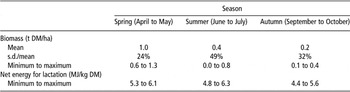
The forage resources provided by rangelands are highly variable between seasons and years. Chemmam et al. (Reference Chemmam, Moujahed, Ouzrout and Guellati2009) reported significant differences in herbage abundance and quality between seasons in a 2-year study of a natural pasture in Algeria. They measured 1.5t DM/ha (DM) available biomass and 15% crude protein (CP) in spring, but only 1.2t DM/ha and 9% CP in summer. The seasonal and yearly variations in biomass production and net energy for lactation of a natural pasture community in the French Causse rangeland are reported in Table 1. These features illustrate the importance of seasonal dynamics and fluctuations between years for biomass production, which contrasts with the relative stability of the nutritive value.
Seasonal variations in the forage characteristics of a natural pasture community in the French Causse rangeland

DM = dry matter.
Above-ground DM biomass production refers to Molénat et al. (Reference Molénat, Foulquie, Autran, Bouix, Hubert, Jacquin, Bocquier and Bibe2005) for the period 1990 to 2003; nutritive value measured in net energy for lactation refers to G Molénat (unpublished result) for the period 1996 to 2002.
When rangelands include shrubs or trees, the seasonal availability of their sprouts, leaves, flowers and fruit may smooth the variations in the total amount of edible matter. Papanastasis et al. (Reference Papanastasis, Yiakoulaki, Decandia and Dini-Papanastasi2008) report that shrublands are more productive than grasslands in similar conditions and that their forage production depends mainly on shrub density and height. Shrubs contribute to the total forage production, but limit the production of the herbaceous layer. Herbaceous and woody species not only differ in the amount and quality of biomass production, but also most interestingly in the period when they are available for grazing: winter and spring for herbaceous species, summer and autumn for shrubs and trees (Papanastasis et al., Reference Papanastasis, Yiakoulaki, Decandia and Dini-Papanastasi2008).
Seasonal variability of rangeland production is rarely in line with the nutritional requirements of the flock or herd. In meat production systems, the energy requirements of lactating females are multiplied by 1.6 for cattle and 2.3 for sheep compared with dry females (Institut National de la Recherche Agronomique (INRA), 2007), but if the young are kept in the farm and graze when their mothers are dry, these differences are smoothed. Getting the periods of highest theoretical biomass production and highest animal requirements to coincide is advisable but rarely sufficient to secure the feeding system, due to year-to-year variations in rangeland production.
Minimize human intervention and farm work
The easiest way to control the foraging behaviour of a herd or flock is to put it under the guidance of a shepherd (Najari et al., Reference Najari, Khaldi, Jaouad, Ben Hammouda and Djemali2004). The shepherd guides the feeding choices of the animal group and produces a sequence of synergic phases where the utilization of rangeland diversity is aimed in some phases at stimulating animal motivation to eat and in others at promoting the intake of the coarsest resources (Meuret, Reference Meuret1997). The sequence of locations grazed might be adjusted either to animal behaviour (e.g. hunger) or to specific environmental objectives (e.g. limit shrub encroachment) (Meuret, Reference Meuret1996). In a study comparing the feeding behaviour of sheep free-ranging or shepherded, Rochon et al. (Reference Rochon, Duval and Goby2009) showed that the guidance of a shepherd increased the distance walked by the flock (2 km instead of 1.6 km/day), which foraged in a closer group and consumed more shrubs. Shepherding does not attract young people anymore because of the harsh working conditions. Besides, farmers might not have the financial means to hire a shepherd.
In the last few decades, traditional pastoral systems have been increasing the proportion of cultivated and purchased feed, both in Northern Africa and Southern Europe. Therefore, rangeland utilization should be considered in the global context of a feeding system including pastoral and cultivated resources (Bourbouze and Lazarev, Reference Bourbouze and Lazarev1991). In the feeding system, feed crops can be used to provide: (i) conserved forage for the periods unfavourable to grazing (winter, summer, etc.), (ii) concentrate feed for supplementation at pasture or (iii) high-quality grazed herbage. Feed crops and forage conservation require a considerable amount of work, which leaves less time for grazing management. In Northern Africa, access to and ownership of plots in the cropping zone influences the timing and intensity of rangeland utilization, which happens for Bedouin flocks (Dutilly-Diane et al., Reference Dutilly-Diane, Saint-Macary, Tiedeman, Arab, Batikha, Ghassali and Khoudary2006). In Southern Europe, rangeland utilization is often restricted to free-ranging dry females in unfavourable seasons or climatic years, especially in farms with high production objectives (Lasseur, Reference Lasseur2005; Quétier et al., Reference Quétier, Marty and Lepart2005). When a herd or flock free-ranges, both the distribution of the grazing pressure and the daily intake depend on the vegetation communities visited during the day. The latter results from the knowledge the animals have of the environment, feeding preferences and social interactions. The question is, how to achieve an ‘optimal’ rangeland utilization with little or no direct human intervention?
Animal and herd behaviour in Mediterranean rangelands
In grassland environments, the mechanisms directing selective intake have been extensively studied (see reviews of Bailey et al., Reference Bailey, Dumont and WallisDeVries1998; Baumont et al., Reference Baumont, Prache, Meuret and Mohrand-Fehr2000; Rutter, Reference Rutter2006). It is generally accepted that feeding choices of plants or feeding stations are a compromise between the abundance and quality of vegetation and the effort that is needed to seize it. Animal feeding choices would be aimed at maximising their nutrient intake rate. When offered different plant types (e.g. grass and legume species or herbaceous and shrub species), ruminants select mixed diets. Higher intake rates are achieved when plant types are offered separately or successively, which is usually interpreted as the result of a lower selection cost. The accumulation of experimental work has allowed the development of a number of simple models predicting daily intake at pasture (see e.g. Avondo et al., Reference Avondo, Bordonaro, Marletta, Guastella and D’Urso2002; Baumont et al., Reference Baumont, Cohen-Salmon, Prache and Sauvant2004; Jouven et al., Reference Jouven, Agabriel and Baumont2008), usually according to the abundance and digestibility of the available herbage.
In rangeland environments, such models developed for grassland environments might not apply, because (i) the ranking criteria for determining foraging behaviour may be different and might include searching costs for travelling and sorting out plant parts, (ii) morphological and physiological abilities of animals and their previous foraging experience might modify the foraging behaviour on rangelands and (iii) the animals might adapt their physiology to the harsh environment.
Vegetation and landscape characteristics that modify foraging behaviour of animals
Mediterranean rangelands usually include woody vegetation with mechanical and chemical defences against browsing. As discussed by Papachristou et al. (Reference Papachristou, Dziba and Provenza2005), browse consumption introduces new criteria for predicting diet selection, such as the presence of thorns or concentration of potentially toxic secondary compounds (e.g. tannins, terpenes). Spinescence is aimed at decreasing leaf and shoot losses for the plant. It reduces the bite size and intake rate and increases the total handling time, especially for large herbivores, by forcing the animals to select the parts without thorns (Cooper and Owen-Smith, Reference Cooper and Owen-Smith1986). In experimental trials involving penned animals, a depressive effect of tannins on intake was observed and related mainly to reduced palatability of feed due to tannin astringency (Landau et al., Reference Landau, Silakinove, Nitsan, Barkai, Baram, Provenza and Perevolotsky2000b).
The daily intake measured for small ruminants grazing rangeland vegetation can be up to 2-fold higher than that predicted for models based on the average organic matter digestibility of the vegetation, suggesting that rumen fill constraints might be overcome (Agreil et al., Reference Agreil, Meuret and Fritz2006). Direct observations of intake dynamics during a meal and during the grazing down of paddocks suggest that feeding choices on rangeland might be driven by the objective of stabilizing intake rather than maximizing it (Agreil et al., Reference Agreil, Fritz and Meuret2005). As a secondary objective, ruminants might also choose to mix feeds in order to optimize their intake of nutrients and to neutralize toxins (Provenza et al., Reference Provenza, Villalba, Dziba, Atwood and Banner2003).
In situations of extensive grazing, feeding preferences for plants or feeding stations vary with the spatial distribution of the vegetation: animals will select a more preferred resource if it is aggregated (Dumont et al., Reference Dumont, Carrère and D’Hour2002). This might result both from individual spatial memory, which is higher for aggregated resources and small paddocks (Dumont and Petit, Reference Dumont and Petit1998), and from conspecific attraction, which reduces individual spatial exploration (modelling study by Dumont and Hill, Reference Dumont and Hill2001). Aggregation also reduces searching and travelling costs.
While water availability is a criterion for selection on the scale of the vegetation community, topography seems to influence the choice of feeding stations and resting areas (Bailey et al., Reference Bailey, Gross, Laca, Rittenhouse, Coughenour, Swift and Sims1996). Research studies on rangeland grazing by cattle show that they usually prefer gentle slopes and avoid travelling long horizontal and vertical distances from water (Bailey, Reference Bailey2005). Lapeyronie (Reference Lapeyronie2001) observed for gregarious species such as Merino sheep that geomorphology modifies the shape of the grazing flock: animals tend to be sparse in convex areas and tightly packed in concave areas; in open areas, flock shape tends to be symmetric. The importance of water availability and topography may vary depending on the associated biotic factors. For example, Bailey et al. (Reference Bailey, Kress, Anderson, Boss and Miller2001) compared the individual grazing patterns of beef cows differing in breed, age and nutritional status. They found that dry cows travelled further from water (+15% vertical distance from water) than lactating ones, and that the breed originating from mountainous terrain (Tarentaise) used the whole area better than the breed developed in gentler topography (Hereford). Climatic variability, and especially heat during the summer, may also interfere with the abiotic factors mentioned before. In a preliminary study, Thomas et al. (Reference Thomas, Wilmot, Alchin and Masters2008) observed in Australian rangelands that during hot days sheep travelled less, stood closer to water points and modified their preferences for feeding sites, probably in relation to shade availability.
Animal characteristics and experiences that determine the ability to forage on rangelands
Research studies converge in showing that sheep, goats and cattle exhibit complementary feeding behaviour. On this subject, published results are available for animals and vegetation communities typical of the Mediterranean basin. In contrast to sheep and cattle, which are primarily grass feeders, goats are intermediate feeders that tend to select a wide range of plants in their diets, and opportunistic feeders that adapt their diet to the vegetation offered. Nolan and Nastis (Reference Nolan and Nastis1997) studied diet selection of cattle, sheep and goats co-grazing Mediterranean rangeland. They observed that cattle exhibited a fixed foraging strategy between seasons and years, while small ruminants exhibited a more versatile behaviour and were able to extend the range of plants consumed in the dry season when overall vegetation availability was low. Papachristou (Reference Papachristou2000) and Yiakoulaki et al. (Reference Yiakoulaki, Zarovali and Papanastasis2009) measured individual choices of sheep and goats grazing shrubland or woodland. Their results converge: goats ate more browse (60% to 90% of the diet) and a wider array of plants than sheep, which in contrast selected herbaceous species (50% to 100% of the diet). Experimental trials of Rogosic et al. (Reference Rogosic, Pfister, Provenza and Grbesa2006) involving penned sheep and goats offered Mediterranean shrubs suggest that goats are physiologically better suited to use shrubs. The ability of goats to forage in rangelands containing high proportions of shrubs can be explained by their bipedal stance, which gives them better access to leaves and fruit, to their good digestion of lignified items, and to the ready adaptation of their rumen microflora to changes in diet composition (Nastis, Reference Nastis1997). Silakinove (Reference Silakinove1997) illustrates how goats raised in harsh environments are able to reduce their metabolism, adapt their digestive efficiency and neutralize the negative effects of tannins. Physiological adaptations to digest tannin-rich feed include salivary proteins that bind to tannins, faster ruminal degradation of hydrolysable tannins and, maybe, more efficient liver detoxification (Makkar, Reference Makkar2003). Similar to species, breeds may also differ in their ability to exploit rangelands, and especially browse (Brand, Reference Brand2000). Usually, the effect of breed is less evident than the effect of species (Rook et al., Reference Rook, Dumont, Isselstein, Osoro, WalliesDeVries, Parente and Mills2004).
Individual feeding preferences are the result of interactions between genetically inherited morphological and physiological characteristics and foraging experiences, which are particularly critical in early life. When herbivores are confronted with a diversity of plants differing in their nutrient and toxin content, they need to learn how to mix their diet in order to avoid aversive effects. In the context of mixed diets, aversive effects may be modified by nutrient–nutrient, toxin–nutrient and toxin–toxin interactions, and herbivores may optimize their intake of nutrients and toxins on the basis of their experience of the mix of foods offered (see reviews of Provenza, Reference Provenza1996; Provenza et al., Reference Provenza, Villalba, Dziba, Atwood and Banner2003). The social environment in a group of foraging animals enhances the learning efficiency in such complex situations because each animal no longer needs to discover everything by itself (Provenza, Reference Provenza2007). In groups of gregarious animals, movements from one patch or vegetation community to another are initiated by leaders, which are usually the elder animals of the group or the ones with the greatest experience of the foraging environment (Bailey et al., Reference Bailey, Dumont and WallisDeVries1998).
Domestic ruminants develop their ability to exploit a given habitat if they are regularly confronted with it in the farming system where they are reared. Lécrivain et al. (Reference Lécrivain, Lasseur and Armand2004) observed that sheep feeding behaviour differed depending on the strategic importance attributed to rangelands in the farming system: sheep from a pastoral farm exploited much more the shrub component than sheep from an intensive lamb producing farm, which concentrated their grazing pressure on grass. Similarly, Aharon et al. (Reference Aharon, Henkin, Ungar, Kababya, Baram and Perevolotsky2007) compared two goat production systems differing in breed purposes (milk/meat) and supplementation. They showed that each system induced a different utilization of rangeland vegetation by the flock, in terms of grass/shrub ratio intake, proportion of ligneous species ingested and consumption of undesirable species.
Animal behavioural and physiological adaptations to cope with seasonal forage availability
Diet selection of free-ranging ruminants varies between seasons, especially for goats that as discussed earlier, can readily adapt their digestive physiology. On daily time scales, ruminants may compensate for lower intake rates by longer feeding times and lower sward quality by higher selectivity in order to maintain the necessary level of energy intake (Prache and Peyraud, Reference Prache and Peyraud2001). Evidence of changes in feeding behaviour and composition of goat intake with time are mostly based on direct observations (Dumont et al., Reference Dumont, Meuret and Prud’hon1995; Perevolotsky et al., Reference Perevolotsky, Landau, Kababia and Ungar1998; Kyriazopoulos et al., Reference Kyriazopoulos, Sklavou, Nastis and Papanastasis2009). For example, free-ranging goats grazing Greek shrublands selected mostly Phillyrea latifolia in April, Pistacia lentiscus in August and their preference was distributed between Olea europea, Phillyrea latifolia and Pistacia Lentiscus in December (Kyriazopoulos et al., Reference Kyriazopoulos, Sklavou, Nastis and Papanastasis2009). At landscape scale, Ganskopp and Bohnert (Reference Ganskopp and Bohnert2009) observed that free-ranging cattle distribution in US rangeland pastures was significantly correlated with forage quality (high CP content and DM digestibility, low neutral detergent fibre content), and speculate that landscape-level nutritional dynamics may at least partly explain the seasonal changes in cattle distribution.
When the herd or flock has to face alternative periods of low and high feed availability, the production cycle is secured by two well-known mechanisms: the mobilization and reconstitution of body reserves and the adjustment of animal performance, milk production for the lactating females or growth rate for the young (Blanc et al., Reference Blanc, Bocquier, Agabriel, D’Hour and Chilliard2006). In Lebanese Baladi dairy goats, each time the feed availability increases (i.e. each time they are moved from rangeland to crop residues), milk production and body condition are improved (Kharrat and Bocquier, Reference Kharrat and Bocquier2010). Under unfavourable feeding conditions, reproduction is delayed. For example, Barbary ewes in Tunisia become pregnant only when they reach a sufficient body condition score (Atti et al., Reference Atti, Thériez and Abdennebi2001). For growing animals, compensatory growth allows recovery from a period of low feed availability and restricted growth by accelerating growth rates when feed availability increases again (Ryan, Reference Ryan1990).
Management practices for rangeland utilization in the Mediterranean basin
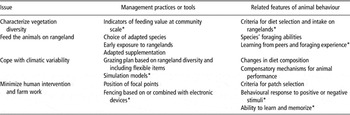
Table 2 summarizes, for each rangeland utilization issue discussed in this paper, the management practices or tools that can help answer it and the related features of animal behaviour. In the following paragraphs, these management practices or tools are discussed in the context of the Mediterranean basin.
Management practices or tools, which can help answering the issues about rangeland utilization in the Mediterraean basin and features of animal behaviour on which they rely

*Indicate the main points that need further research.
Well-known management practices to improve the utilization of rangeland diversity
Differences in foraging behaviour between sheep, goats and cattle are such that matching the livestock species to the type of rangeland is the first step towards reconciling animal production and rangeland preservation. In Portuguese pastoral systems, farmers choose the species (goat v. sheep) and breed in relation to topography (slope, altitude) and shrub density (Pacheco, Reference Pacheco1999). Since they have similar nutrient and management requirements, co-grazing of sheep and goats can be an efficient way to take advantage of their different foraging abilities (Animut and Goetsch, Reference Animut and Goetsch2008). Mixed grazing of cattle, sheep and goats produces a higher overall capture of vegetation resources, provided the diversity and spatial distribution of vegetation communities is such that the animals can exhibit complementary feeding behaviour (Nolan and Nastis, Reference Nolan and Nastis1997). In mono-species flocks or herds, the diversity of individual preferences can play a similar role, but with much smaller effects (Provenza and Papachristou, Reference Provenza and Papachristou2009). In spite of this, mixed flocks are becoming rare because they increase labour requirements (Pacheco, Reference Pacheco1999).
In free-ranging management, the human factor is weak compared to the feeding and moving behaviour of the flock. Nevertheless, farmers may control the spatial distribution of grazing by modifying the position and availability of feed, shelters and water. The distribution of supplementary feed (e.g. feed blocks) can be a way to increase the appeal of a vegetation community and thus the grazing pressure on it. Water development has proved to be an effective strategy to encourage uniform distribution of cattle across the landscape, especially if the position of water tanks follows seasonal changes in the vegetation cover (Del Curto et al., Reference Del Curto, Porath, Parsons and Morrison2005). Ganskopp (Reference Ganskopp2001) was able to modify long-term grazing distribution of cattle in rangeland by changing the position of water tanks, while moving salting areas had only short-term effects.
Within a vegetation community, a number of plants or plant parts may be rejected or very little consumed by the animals either due to a high fibre content or to the presence of secondary compounds. It is well known that supplementation with concentrate or other nutrient-rich feed can significantly increase the consumption of coarse forage resources (Ben Salem and Smith, Reference Ben Salem and Smith2008). In order to avoid negative effects of secondary compounds, animals can be administrated nutrient supplementation to help detoxification or feed additives inactivating secondary compounds, such as polyethylene glycol (PEG), that bind with tannins (Rogosic et al., Reference Rogosic, Estell, Ivankovic, Kezic and Razov2008). As seen before, even without human intervention, ruminants might be able to adapt their feeding behaviour (smaller eating bouts) and digestion (higher salivation and higher microbial synthesis efficiency) to tannin-rich diets (Landau et al., Reference Landau, Silakinove, Nitsan, Barkai, Baram, Provenza and Perevolotsky2000b). Rogosic et al. (Reference Rogosic, Estell, Ivankovic, Kezic and Razov2008) reported experiments where 1, 2, 3 or 6 shrub species were fed to goats or sheep, which received different feed additives (PEG or activated charcoil). The results show a positive and significant effect of feed additives on intake when only a few shrub species were offered. When six shrub species were offered simultaneously, the overall intake was higher and no effect of the feed additive was observed. This suggests that offering a diversity of foods is the most simple and convenient way to improve intake and performance.
Indicators to support grazing management decisions in heterogeneous rangelands
The simplest indicator traditionally used for grazing management is stocking density. High stocking densities are necessary to force the animals to diversify their diet (Provenza, Reference Provenza2007) and eat less palatable items, for example, to get sheep to browse some Quercus coccifera (Etienne and Rigolot, Reference Etienne and Rigolot2004). Stocking density might be simplistic for Mediterranean rangelands, where intake depends on the mix of species offered and on the relative availability and palatability of the coexisting species (Nolan and Nastis, Reference Nolan and Nastis1997).
When the animals graze small paddocks (<10 ha) or when grazing is managed by a shepherd, indicators of vegetation state are needed to (i) choose the vegetation community or paddock to be grazed at a given time of the year and (ii) decide when to leave for another community or paddock to avoid either a fall in animal performance or degradation of the vegetation. Usually, sward height is used as an indicator to plan the time and duration of grazing in homogeneous grassland paddocks. Recently, indicators based on functional traits of grass species have been proposed (Duru et al., Reference Duru, Al Haj Khaled, Ducourtieux, Theau, de Quadros and Cruz2009). Mediterranean rangelands including high proportions of shrubs or trees require specific indicators.
An example of indicators for Mediterranean rangelands is proposed by Agreil et al. (Reference Agreil, Meuret and Vincent2004). These authors adopt the animal point of view, and categorize plants or plant parts on the basis of their acceptability (edible or not for the animal species considered) and the bite size they induce. Based on numerous field observations on sheep, goat and heifers grazing garrigue rangeland, Agreil and Meuret (Reference Agreil and Meuret2004) show that ruminants eat alternately ‘big items’ (i.e. edible vegetation items producing big bites and a high intake rate) and ‘small items’ during a meal, the first being most important to stabilize daily intake. When only ‘small items’ are available, the intake rate falls sharply, and the cost of foraging becomes very high. Besides, a total consumption of ‘big items’ might damage the plants producing them and thus their presence in the following seasons or years. The amount of ‘big items’ (e.g. tall grass for sheep or dense shrubs for goats) could be used as an indicator of the likelihood that a given vegetation state might induce sufficient biomass intake. Agreil’s methodology, which requires close monitoring of the state of vegetation, could also be used to characterize the foraging potential of a community or paddock. Unfortunately, it does not fully address the problem of vegetation degradation, since the long-term consequences of grazing might depend on the type of vegetation community and the season of utilization.
Grazing plans based on the complementarity between forage resources to cope with the variability of forage production
In grassland-based systems, a number of management practices have been identified as important for the balance between animal performance and rangeland preservation. They include especially: characterizing each paddock by its function in the feeding system (Fleury et al., Reference Fleury, Duboeuf and Jeannin1996), applying moderate stocking densities (Dumont et al., Reference Dumont, Rook, Coran and Röver2007) and adjusting the residual sward height to overall forage availability on farm scale (Duru et al., Reference Duru, Fiorelli, Peyre, Roger and Theau2002).
In agropastoral systems, the complementarity between cultivated and natural vegetations has been extensively studied with systemic approaches, especially by French scientists. Given the diversity of Mediterranean rangelands, the complementary nature of different rangeland vegetations could be exploited similarly. A simple and straightforward way to classify rangelands depending on their forage potential could be to consider the percentage of shrub or tree cover. This variable, in fact, is highly correlated with species composition, production dynamics and quality of herbaceous vegetation (Zarovali et al., Reference Zarovali, Yiakoulaki and Papanastasis2007). Another variable of interest would certainly be the dominant shrub species, which can either be eaten or rejected by the animals (depending sometimes on the animal species) and can therefore contribute or not to the forage resource. Rangeland types could be further differentiated on the basis of their seasonal forage potential.
Functions and utilization objectives can be attributed to rangeland paddocks according to vegetation type, environmental objectives, animal production cycle and distance from livestock buildings (Guérin and Gautier, Reference Guérin and Gautier2004). In order to cope with the unpredictable climatic conditions, such grazing plans should be flexible, with rules modifying the utilization objectives on the basis of vegetation or flock state at key periods of the year (Guérin et al., Reference Guérin, Bellon and Gautier2001). For each type of rangeland, it would be most interesting to simulate the impact of different utilization dynamics through the year to determine which management strategies should be supported by agri-environmental schemes.
Simulation models of agro-pastoral systems to investigate grazing dynamics in rangelands and evaluate management practices
A few simulation models have tackled the problem of intake in highly heterogeneous vegetations, either by empirically introducing a shrub component (Armstrong et al., Reference Armstrong, Gordon, Grant, Hutchings, Milne and Sibbald1997a and Reference Armstrong, Gordon, Hutchings, Illius, Milne and Sibbald1997b) or by considering a wider array of plant species (Freer et al., Reference Freer, Moore and Donnelly1997). In both cases, the abundance and digestibility of the plant material were the main criteria for diet selection. As far as we know, no mechanistic model of selective intake has ever been designed for, or even tested on, Mediterranean rangelands. Agreil and Meuret (Reference Agreil and Meuret2004) proposed predicting feeding choices on garrigue rangeland from a functional description of the vegetation, which they divide into items inducing ‘big bites’ and items inducing ‘small bites’. Their conceptual model contrasts with some previous models, which predicted that the animals would first graze the best vegetation items, either the top layer of the sward (Baumont et al., Reference Baumont, Cohen-Salmon, Prache and Sauvant2004) or the most digestible plant parts (Freer et al., Reference Freer, Moore and Donnelly1997). On a daily time scale, it is thought compatible with the model of Jouven et al. (Reference Jouven, Agabriel and Baumont2008), which predicts selective intake according to ‘biomass × digestibilitys’ of edible plant parts. In fact, in this model, ‘big items’ would be selected due to their high biomass, and ‘small items’ due to their usually higher digestibility. Differences between animal species or breeds in their feeding choices can be introduced with the selectivity coefficient ‘s’ as a power of digestibility. This model will soon be tested against field data for Mediterranean rangelands, but its validity might be restricted if the concentration of secondary compounds in plants is high and becomes the major criterion of diet selection.
Recently, many dynamic models of grassland-based feeding systems have been developed (cow–calf systems: Jouven and Baumont, Reference Jouven and Baumont2008; Martin et al., Reference Martin, Hossard, Theau, Therond, Josien, Cruz, Rellier, Martin-Clouaire and Duru2009; dairy cow systems: Andrieu et al., Reference Andrieu, Poix, Josien and Duru2007). In these models, paddock utilization is chosen by the user or simulated as a function of vegetation type, topography and distance from the cowshed; the exact timing and duration of grazing on each paddock is flexible and depends on the current state of the vegetation on the paddock and on the total forage availability on the farm. Model predictions suggest that feeding strategies based on the complementarities between grassland types secure forage self-sufficiency against climatic variability and that management practices favourable to forage self-sufficiency in the long term (10 years or more) also preserve grassland floristic diversity. Unfortunately, to our knowledge, none of the published models on the scale of the feeding system have been designed or adapted for Mediterranean agro-pastoral systems.
Automated devices to assist grazing management and reduce farm labour
Automated devices for grazing management are promising tools to minimize human intervention in grazing management and farm work. They can be used for two main tasks: (i) to gain information on the state of the system (vegetation state, herd or flock geographical position) and (ii) to apply management decisions.
Modern technologies can greatly assist the study of rangeland spatial utilization by free-ranging ruminants. Global Positioning Systems (GPS) and Geographical Information Systems can be used efficiently to gather data on flock or herd spatial behaviour (Barbari et al., Reference Barbari, Conti, Koostra, Masi, Sorbetti Guerri and Workman2006) and are currently the most popular tool for studying the distribution of grazing pressure on rangeland. Recently, research has also investigated the potential of virtual fencing to control animal distribution in extensive grazing systems. Combining GPS with a collar delivering a message (stimulus) to the animal can be used to keep livestock within a restricted perimeter (cattle: Anderson, Reference Anderson2001; goats: Fay et al., Reference Fay, McElligott and Havstad1989). The basic principle is to train animals to change direction when they receive (through a collar) an audio stimulus (warning), followed, if necessary, by an electric stimulation (punishment). The stimulus can be activated either by the vicinity of an electromagnetic field or by the geographic position, which may be less precise. Virtual fencing with electromagnetic fields carried by a simple electric wire on the ground has recently been tested experimentally on small groups of cattle (each equipped with a collar) in an alley (Bishop-Hurley et al., Reference Bishop-Hurley, Swain, Anderson, Sikka, Crossman and Corke2007), but still needs to be tested on small ruminants and in extensive conditions (large flocks, large surfaces). In large flocks, the issue would be to take advantage of group cohesion in order to equip only a limited number of animals. Obviously, the adoption of such technologies is constrained by their cost in already economically marginal farming systems.
Sorting animal groups and managing them separately is a time-consuming practice. Combining individual electronic identification and selective gates between paddocks would offer the opportunity to automatically sort the animals and give them access to different resources depending on their requirements or on the production objectives. The control of animal movements and their grazing targets on the territory would be fundamentally based on the knowledge of their behavioural response to positive and negative stimuli (Laca, Reference Laca2009). Maton et al. (Reference Maton, Montagnac, Viudes, Bouquet and Bocquier2008) describe automated sorting and geolocalizing devices, which could interestingly be adapted to grazing management.
Conclusion
In the future, rangeland utilization in the Mediterranean basin will need to reconcile animal production and rangeland preservation. In order to achieve this objective, further research is needed to answer the following issues.
Characterize the diversity of rangeland vegetations
For herbaceous vegetations, approaches based on the functional traits of grass species can be an interesting way to characterize communities, provided the functional traits studied can be easily related to variables determining animal intake. For shrublands and woodlands, there are still research efforts to make as to our knowledge only one simple but controversial approach has been proposed.
Maximize feed intake and animal performance on rangeland
The utilization of rangeland diversity on paddock and farm scale is optimized by complementarities between breeds, animal categories and individuals. Individual foraging efficiency may be improved by sharing experience with peers, especially between more experienced older animals and younger animals. If the farming system is organized in such a way as to enable animals to learn to use the diversity of rangeland resources, the farmer can rely on their ability to select and ingest a diet adapted to their requirements (but not necessarily to high production objectives). Given the current knowledge of animal and flock behaviour, favourable points in the farming system would be giving access to rangeland vegetation in the early life, mixing experienced and inexperienced animals, adapting supplementation and applying high stocking densities to ‘force’ them to test and eat a diversity of plants. Scientific knowledge about feeding behaviour still needs to be refined for complex environments such as rangelands. A better understanding of the criteria determining foraging behaviour in Mediterranean rangelands is needed in order to propose specific management options.
Cope with the seasonal and year-to-year variability in forage production
Rangeland heterogeneity in space and time, which at first can seem a disadvantage compared to the controlled production of grasslands, is in fact an interesting feature of Mediterranean farming systems. On a farm scale, the diversity of rangeland vegetation communities is an advantage due to their complementary production dynamics: different communities can support different utilizations in terms of timing and intensity of grazing. On a paddock or landscape scale, the diversity of species smoothes out the seasonal variations in forage quality and, for shrublands and woodlands, in forage production: rangeland utilization is thus much more flexible than grassland utilization. On the scale of the feeding station, the diversity of vegetation items stimulates animal motivation to eat and enables each individual to select the most suitable diet. Planning a suitable utilization of such diversity is difficult. Simulation models will be needed as decision aids or to test management strategies against seasonal and long-term variability in climatic conditions and rangeland heterogeneity.
Minimize human intervention and farm work
The adoption of automated and electronic devices for grazing management, in the framework of precision livestock farming, could minimize human intervention and labour at farm scale. The implementation of such tools is based not only on the knowledge of animal feeding and social behaviour but also on animal learning and memorial capacities. To develop cost-effective systems, knowledge about these aspects needs to be refined. The new tools also need to be evaluated on the field, taking into account sanitary issues, traceability, protection against predators, compatibility with environmental issues and recreational uses of rangelands. The sustainability of their cost for small farms as can be found in the Mediterranean basin remains, of course, the major criteria.
Acknowledgements
We would like to thank the anonymous reviewers for their useful comments on the manuscript.