INTRODUCTION
The handover of power which took place in late 2012 significantly raised the expectation for the rule of law in China. In the Central Committee's Report to the ruling Chinese Communist Party (CPC) 18th National Congress, the Party for the first time placed the “rule of law” (Fazhi) as “the fundamental means of governance” and urged “a government under the rule of law” (Fazhi Zhengfu) to be established by 2020.Footnote 1 This is further affirmed by the new leader Xi Jinping, Secretary-General of the Chinese Communist Party (CPC), when he urged the establishment of “China under the Rule of Law” (Fazhi Zhongguo) in a more recent speech.Footnote 2.
Wenhua Shan

Such a significantly raised expectation on the rule of law, undoubtedly, would not be possible without a significantly strengthened legal education system. Indeed, much has been debated among China's legal educators as to how legal education should respond to the changed and changing circumstances within and beyond China. The most significant move so far has been the “Outstanding Legal Personnel Education Scheme” (the “Outstanding Scheme”). This article therefore explores the history, the main aspects and the issues of the current legal education system, before examining the contents and implications of the new “Outstanding Scheme”. It concludes that the new scheme will significantly improve the structure, contents and methods of Chinese legal education, and will forcefully boost the cooperation between the law schools and the legal practice sectors. However, further measures are needed to achieve the desired results of the scheme and to place the Chinese legal education into an internationally competitive position.
I. LEGAL EDUCATION IN CHINA: A BRIEF HISTORY
A brief review of the history helps to put the current reform in historical context, against which the reform might be better understood. The 60 years or more of Chinese legal education can be roughly divided into two broad periods with the adoption of the Reform and Opening-up policy in 1978 as the watershed. Generally, the first 30 years were the period when Chinese legal education was established and then effectively abandoned, whilst the latter 30 years had witnessed its resumption and rapid development.
1. The Pre-Reform period (1949–1978)
After the founding of People's Republic of China in 1949, the Government determined to abolish the previous legal system and legal education, and instead introduced a new legal system and legal education in China, with Marxism theory as the guiding light. In practice, China modelled on the experiences of the Soviet Union. Russian educators were, therefore, imported to China in the early 1950s, whilst teaching materials were translated from Russian into Chinese, as well as Soviet pedagogical techniques being adopted as teaching methods.Footnote 3 A few legal education institutes were then set up. For instance, the Department of Law was created to teach law at Renmin University of China in 1950, followed by other legal institutes such as Beijing University Department of Law, Beijing College of Political Science and Law (currently China University of Political Science and Law), and Fudan University School of Law. In the 1950s, the Central Government adjusted and remodelled the Law Departments of those Universities and reduced the number of them from thirty-four to sixFootnote 4, with a view to optimising the distribution of legal institutes in the country.
The “Cultural Revolution” (1966–1976) marked a disastrous turn to legal education in China, which effectively abandoned legal education altogether. Most law departments and institutes were closed down with the exception of one university and one institute, which also stopped admitting students.Footnote 5 Many of the law professors had to seek non-legal careers. China's legal education therefore fell into paralysis during the ten-year “Cultural Revolution”.
2. The Post-Reform period (1978-present)
The Third Plenary Session of the Eleventh Central Committee of the Communist Party of China of 1978, which embarked on the policy of Reforms and Opening-up, signalled a revival of legal education in China. In order to support economic reform and opening-up to the outside world, China decided to resume legal education and the construction of legal infrastructures. Since then, legal education has flourished throughout the country.
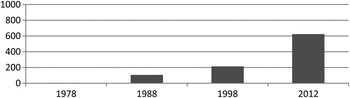
In 1978, six legal institutes were successively restored and started to recruit students. They included Beijing University Department of Law, Renmin University of China Department of Law, Beijing College of Political Science and Law (currently China University of Political Science and Law), Southwest College of Political Science and Law (currently Southwest University of Political Science and Law), East China College of Political Science and Law (currently East China University of Political Science and Law), Northwest College of Political Science and Law (currently Northwest University of Politics and Law)Footnote 6 The size of legal education in China reached the level of pre-Cultural Revolution stage. Rapid growth was seen in the 1980s, when almost all comprehensive universities and some specialised colleges set up law departments or schools. The number of law schools/departments reached 106 in 1988, an 18 times’ increase within ten years. This number was doubled in 1998 to reach 214, which was again tripled by the end of 2007 reaching 615.Footnote 7 In short, there had been a 100 times’ increase in law school/departments within 30 years, a spectacular development in the legal education landscape in China. As of 2012, there are 624 legal education institutes in the country, according to statistics frm the Ministry of Education.Footnote 8 (Chart 1)
Number of Legal Education Institutes in China 1978–2012

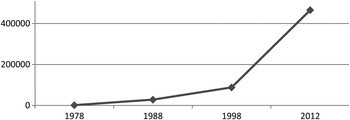
Likewise, the undergraduate law student population has been dramatically increased during the same period.Footnote 9 In 1978, 1299 undergraduate law students were recruited by the six universities and colleges. This number reached 28,325 in 1988, 87,977 in 1998, and over 300,000 at the end of 2007Footnote 10. In 2012, there were over 450,000 undergraduate law students enrolled in Chinese universities and colleges. (Chart 2)
Number of Undergraduate Law Students in China 1978–2012

If the rapid increase of law schools and students in the 1980s and 1990s were correspondent to the economic development of the country, the sharp growth in the first decade of the 21st century was mainly due to the dramatic overall expansion of higher education that took place then. Law experienced a more dramatic expansion compared with other subjects, mainly because it appealed to students and it was less expensive to set up and operate. Yet such expansion proved to be too rapid for the economy and society to absorb. As a result, low employment rate and uneven quality of education have become more and more visible issues. Those, and other, issues are to be discussed below.
Also, it is noted that the approach towards legal education had experienced some changes during this period.Footnote 11 Since 1978, through the 1980s, the Soviet approach of legal education, adopted in the pre-reform period emphasising political attainment, was abandoned. Instead Chinese law schools generally followed the continental European approach, emphasising the overall development of their law students rather than the training of professional legal skills. Such an approach, however, was somehow changed again since the 1990s after the socialist market economy concept was accepted in China. An Anglo-American approach was introduced into Chinese legal education, with the Socratic approach and legal clinic being practiced in some law schools. However, the continental educational approach remains dominant, and the Anglo-American methods are used only as supplementary techniques.
II. LEGAL EDUCATION IN CHINA: MAIN ASPECTS
1. Legal Education Providers
On the basis of educational objectives, current legal education can be classified into two categories.Footnote 12 One is for academic qualifications, which is normally provided by universities or schools of law. This is the core of legal education which offers all degree programmes ranging from LLB to PhD. The other is for vocational education, namely professional training for judges, procurators, and lawyers.Footnote 13 This kind of education is usually provided by colleges of judges, prosecutors and lawyers.Footnote 14
As the main providers of legal education, law schools and universities were divided into three categories before 1998, on the basis of their nature and level. Firstly, there were law colleges and universities under the jurisdiction of Ministry of Justice. They included five universities: China University of Political Science and Law, Southwest University of Political Science and Law, Northwest College of Political Science and Law, Zhongnan College of Political Science and Law, East China College of Political Science and Law. Secondly, there were universities directly under the jurisdiction of Ministry of Education, such as Beijing University, Tsinghua University, Renmin University, Jilin University, et al. Finally, there were universities subject to local authorities, which had law departments. They were necessary supplements to the above two categories of national legal education institutes. Since 2000, however, all of those five law colleges and universities were detached from the Ministry of Justice. Most of them became subject to relevant provincial authorities, except China University of Political Science and Law and the Zhongnan University of Economics and Law, which became universities under the direct administration of the Ministry of Education.Footnote 15
2. Academic legal education
As mentioned above, academic legal education offers degrees of various levels, from bachelor to doctorate.
LLB
The first degree is at Bachelor level, which is called Bachelors of Law (LLB). After graduation from the senior high school and successfully passing the National College Entrance Exam, students apply to a law school or university to study for their first degree in law. After successfully completing their four year studies they are awarded a LLB degree, with which they may take the National Entrance Exam for Graduate Students if they wish to purse a higher degree, e.g. a masters’ degree. They may also take the National Judicial Exam (NJE) if they wish to become a judge, prosecutor or a lawyer.Footnote 16
LLM
Unlike the LLM programme in most western countries which normally takes only one year, a LLM degree in China takes two or three years of full-time study. Typically, each student is allocated a supervisor to guide his or her study and research. Apart from taking courses, students are required to write a dissertation of certain length (normally around 30-thousand-words), which has to be defended in an oral examination. Indeed, it would be closer to an MPhil or MA in an Anglo-American university.
JM
Since 1995, China has established a new legal education programme, the Jurist Master or J.M. Modeled on JD program common in the USA,Footnote 17 this programme used to admit only candidates from a non-legal background. In other words, applicants have to have a first degree in a subject other than law. Recently, this was changed and law graduates are also allowed to attend JM courses. The JM program is more practice-oriented hence incorporates more practice-related components such as legal writing, model court, internship, et al. They are also required to write a dissertation under supervision by a staff.
PhD
China did not start formal PhD education until the early 1980s. Hence the PhD education history in China has been relatively short. In 1981, 151 universities were selected by the State Council to confer PhD degrees, among which only three universities were entitled to confer the degree of PhD in law. Now the number of the universities and institutes that could confer PhDs in law has reached 37.Footnote 18 Some universities also offer interdisciplinary law PhD degrees. The Law and Governance PhD programme, for example, is a unique (XJTU) PhD programme created by the Xi'an Jiaotong University aiming at promoting interdisciplinary research between legal and management studies.
A PhD in law normally takes three or four years of full time study. Candidates are expected to attend a few courses and write a dissertation under the supervision of a senior member of staff which normally would be a full professor. The dissertation will be defended at a viva. The dissertation shall be within 100,000 Chinese characters and is expected to make a significant contribution to learning. Many universities require that they shall publish a certain number of articles in a certain level of journals before they can apply for a viva. Most PhD graduates go to higher education institutes for teaching and research. Others go to a variety of other sectors including judicial institutions, governmental departments, law firms and private companies.
It is also possible to do a PhD on a part-time basis, which is the so-called “thesis-based PhD”. They are not expected to attend regular classes but are expected to submit coursework, or any other means of assessments for the compulsory courses. The thesis requirement is the same as for full time PhD candidates. However, some universities attach extra requirements for their graduation. For example, XJTU requires part-time PhD students to have received an award of provincial or above level for research excellence. The LLM can likewise be done on a part time basis and there is a special category of JM programme that are open only for part-time candidates. It is however normally impossible to obtain a LLB through part-time studies at a university.
All law degree programmes may accept foreign students. In the XJTU Law School, for instance, there are foreign students at the LLB, LLM and PhD levels. The admission procedures for foreign students are separated from domestic applicants. At XJTU, the application is made through the School of International Education although the academic decision is made by the law school. It might also be possible for foreign students to apply for scholarship provided by the China Scholarships Council (CSC), which might cover the full cost of the entire degree programme including tuition fees, accommodation and maintenance.
Moreover, China has established the post-doctorate research system since 1985.Footnote 19 It is not a degree programme but an opportunity to conduct research work on the basis of one's PhD dissertation, with some guidance from a designated contact at the host institute. Such post-doc programs, as well as the PhD programs, are normally selected and approved by the central governmental authorities. In 1997, the number of the post-doctorate research centres in law was 11, which reached 19 in 2010.Footnote 20
3. Judicial Exam and Vocational Legal Education
To become a qualified legal professional such as a judge, prosecutor or a lawyer, one has to pass the NJE. China's NJE was firstly held on 30-31 March 2002, with a predetermined pass rate of 7%.Footnote 21 The competitiveness of this exam has rendered it a name as the “No. 1 Exam in China”. Before 2002, there were separate exams for lawyers, judges and prosecutors.Footnote 22
Judges or procurators who had already been in-service in their early years without a bachelor degree or without passing the NJE, are required to attend professional training to meet the relevant qualification requirements. For that purpose the State Judges’ College and the State Procurators’ College were respectively set up in 1997 and 1998. Similar colleges or institutes have since then been set up at provincial and lower levels. Originally the State Judges’ College was set up as a part-time professional training institute. It became a regular college in December 2001.Footnote 23 The training contents for judges and procurators include legal knowledge, practical skills, political theories and professional ethics.Footnote 24 Also, newcomers to the judiciary must attend a certain period of professional training at a judges’ college at appropriate level before they can serve in a court.
The vocational education for lawyers in China comprises two parts: one is the education for apprentice lawyers, and the other is that for practicing lawyers.Footnote 25 Under the Lawyers Law, the China Bar Association is responsible for organising professional training for lawyers. According to a regulation promulgated by the Ministry of Justice in 1997, all lawyers are required to take training courses each year of no less than 40 class hours.Footnote 26 However, unlike the continuing education of judges and prosecutors, for a long time the continued professional training for lawyers has not been institutionalised. Most of such trainings were done by temporary agencies or training organisations. In November 2012, the National Lawyers’ College was officially established in Hebei Province to fill the gap.Footnote 27
4. Curriculum
Different levels of education have different curriculums. Indeed, institutes vary significantly from each other in the specific courses offered, particularly at postgraduate levels. However, in order to guarantee that all LLB graduates have a solid grasp of legal knowledge, the Ministry of Education has prescribed 16 core courses that must be offered in each institute offering LLB programmes. Such courses include: Jurisprudence, Chinese Legal History, Chinese Constitution Law, Administrative Law and Administrative Procedural Law, Civil Law, Commercial Law, Intellectual Property Law, Economic Law, Criminal Law, Civil Procedural Law, Criminal Procedural Law, International Law, Private International Law, International Economic Law, Environmental and Resources Law, and Labour and Social Security. These core courses are all compulsive ones. Among them, the first fourteen were determined in 1998, and the remaining two were added in 2007.Footnote 28
Undergraduate legal education in China is designed as general legal education. In other words, undergraduate students are not specialised in any specific area of law, but in the general subject area of law. This explains why Chinese LLB students are expected to take such a wide range of core modules. The idea is that law undergraduates should be offered basic training in legal concepts and skills. More specifically, undergraduates should have learned upon graduation the basic theory and knowledge of every branch of law, the basic methods and skills for legal analysis, the new trends in legal theory; practical skills to handle problems, document research and basic methods of gathering materials, and the fundamental ability to do theoretical research.Footnote 29
At postgraduate level, the curriculum is more specialised and varied. For LLM programmes, for instance, both common curriculum and speciality courses are offered. Common curriculum, most of which are compulsory, mainly refer to political and foreign language courses. Speciality courses are offered as either compulsory or elective courses. Students in the LLM programme may take different courses depending on their specific subject areas of research. This also applies to the PhD programme, which has far less in terms of taught courses but a much heavier workload for the dissertation.
The JM curriculum is different from the LLM as it is generally the first law degree education. A solid and wide basic knowledge base is therefore crucial. Essentially they cover the same core courses of the LLB although the way they are taught should be different–they should be more practice-based. In addition, a number of compulsory practical courses are included, such as legal writing, moot court, and legal negotiation skills, as mentioned above. The JM students are also expected to do a dissertation, which is much shorter than the LLM dissertation.
5. Teaching methods
Lectures are the main method of teaching in Chinese law schools, particularly for undergraduate courses, although other methods are increasingly used particularly in postgraduate teaching. In a typical law classroom, teachers fill most of the class time with systematic lecturing, going through the specific theory or rules as detailed in the textbook. Some teachers use PPT slides or handouts in lectures but other do not. Seminar, class or group discussions are rarely used.Footnote 30
However, as mentioned above, there is a trend in recent years of importing US pedagogies into Chinese classrooms with the case-centred teaching style and practice-oriented pedagogy. Some law schools have started to introduce more “unconventional” teaching methods such as moot court and legal clinic. In reality, nevertheless, case study was only occasionally used, as examples to explain legal theories. In other words, they act only as teaching aids, not the main teaching method.Footnote 31 Moot court and legal clinic are offered only in a few schools and are yet to be used in a structured and systematic manner.
To summarise, China has established a comprehensive and complex legal education system consisting of both academic and vocational education. In academic legal education, there are law degree programmes of all levels ranging from LLB, to LLM and PhD. More recently, JM has been introduced to China to enhance practice-oriented and interdisciplinary education, modelled on the JD programme from the United States. Some elite universities have started to accept international students for their degree programmes, some of which have obtained scholarship provided by the Chinese government. Vocational legal education is mainly provided by vocational training institutes such as the Judges’ College, the Prosecutors’ College and the Lawyers’ College at national and local levels.
Whilst the general approach is closer to the continental European legal education, more recently elements of the Anglo-American legal education have also been imported and practiced. Indeed one may call this, “a legal education system with Chinese characteristics” or a “Chinese Model”.Footnote 32 Such a system or model has nevertheless been subject to increasing criticism particularly among the elite educators in the country.Footnote 33 An analysis of the key issues of the Chinese legal education follows.
III. LEGAL EDUCATION IN CHINA: KEY ISSUES
Many issues have been touched upon in the current debate on the reform of the Chinese legal education. Among them, the focuses have been on the following five aspects: quality assurance; professional skills; internationalisation demands; outdated curriculum; and regional imbalance.
1. Quality assurance
As mentioned above, the last 30 years have witnessed a dramatic expansion of Chinese legal education, with over 100 times of increase in law schools and over 300 times of increase in undergraduate student population.Footnote 34 This development is pleasing and problematic at the same time. One the one hand, the expansion helps to produce legal personnel that are much needed in contemporary China in her endeavour to set up a rule of law system to tackle the increasingly common and pressing social, economic and political challenges. On the other hand, the expansion has been too rapid for the state and society to absorb. As a result, the employment rate of law graduates, which was once among the highest, has become one of the lowest in the country, as compared with graduates from other subjects.Footnote 35
Compared with legal education in the USA, China has a much higher percentage of universities that offer first law degree education. In the US statistics show that there are 202 ABA-accredited law schools,Footnote 36 out of 2968 universities offering bachelor degree education, or over 1700 universitiesFootnote 37 offering postgraduate degree education.Footnote 38 In other words, less than 7% of bachelor universities, or less than 12% of graduate universities offer first law degree (JD) education. In China the percentage is 56% (624 out of 1112 universities offering bachelor degree educationFootnote 39), which is 8 or 5 times of that in the USA. This shows that law subject has been much more common a subject in Chinese universities than in US universities. Chinese legal education, in general, appears to have become a kind of “mass education”, rather than an “elite education”, as many educational elites might like it to be.Footnote 40 Such assessment would be more valid considering that many law programmes started only a few years ago and are rather poorly resourced in terms of staffing, accommodation, libraries and other resources.
Various proposals have been made to improve the employment situation. For instance, one proposal has been to “cut” some of the law programmes that fall short of the minimum standard of quality assurance.Footnote 41 Indeed attempts had been made by the education authority to conduct an evaluation of certain law schools and departments.Footnote 42 However, it has not been implemented nationally as it was deemed premature at this stage.
Indeed, forcing some of the institutions out of legal education by administrative measures might not be preferable. Ultimately it should be the “market”, rather than the “ministers”, that should decide the size of Chinese legal education. If, for instance most graduates from certain law schools could not find a job after graduation, then they will attract fewer and fewer students.Footnote 43 Eventually, such law schools will phase out.
China is a big country. Considering that China has a population that is more than five times that of the United States, it is not impossible to accommodate 624 law schools. Indeed the number of LLB students in China is just about 3 times the number of the US JD student population.Footnote 44 The real question, or problem, is quality; are they good enough to undertake the tasks of legal construction and development in the country? And if not, how can they be improved to the desired standard? This is where the government could play a crucial role, by designing a set of standards against which law schools and universities might be assessed and supported. Clearly, given the size of the country, legal education providers might not necessarily have to be the same but could, and indeed should be, diversified, horizontally into different categories and, vertically into different levels. But as they all produce bachelors in law (LLB), they should at least meet the minimum standards. It is on the basis of such standards that they might be diversified to developing their own characters. Also, professional bodies such as bar associations could play a significant role, for instance, in providing accreditation similar to that of the USA.
2. Professional skills
The separation between legal education and legal practice has often been criticised, but the problem is yet to be resolved. There are two main reasons. The first reason is institutional. There is no smooth channel for Chinese law graduates to enter into the legal profession. Like graduates from other disciplines, law graduates have to pass two national exams, namely the NJE and the National Public Services Exam (NPSE), to enter the judicial institutions. There are two problems here. On the one hand, the NJE is already very difficult with a pre-set 7% of passing rate, but the NPSE creates another hurdle and makes it even more difficult for law graduates to enter the judicial institutions. On the other hand, since law graduates also have to take the NJE in the same way as graduates from other disciplines, it is felt that their four year legal education has not been sufficiently recognised. In the UK, for instance, the legal profession represented by the Law Society and the Bar Council work closely with law schools to monitor the quality of legal education. As a result, qualified law graduates are automatically permitted to become an intern of law firms, whilst graduates from other disciplines have to take an intensive conversion course before they may enter into the legal profession. No such close cooperation exists between Chinese law schools and the legal profession at the moment.
The second reason is to do with the historical background against which Chinese legal education was restored. Since legal institutions were abandoned during the Cultural Revolution, when legal education was resumed in 1978 it was not possible for law professors to make use of existing cases or other practices of the legal profession. Also, because China generally adopts the continental legal system, it was only natural that the continental legal education approach was also adopted.
As a result, Chinese legal education places significant emphasis on legal theories and knowledge, with little attention paid to practical professional skills. The mission of most, if not all, law schools seems to be training legal academics, not to train practitioners.Footnote 45 Most law courses in China focus on “the studying of legal theories, concepts and statutes” and lecturers pay little attention to the process of reasoning or to the training of professional skills.Footnote 46
For a long time the legal educators have been debating whether legal education should be academic education or vocational education.Footnote 47 As indicated above, most if not all law schools have actually long followed the route of academic education. As Xu observed, this is partly due to the fact that Chinese law schools have to cultivate academic strength in order to earn appropriate status within the country.Footnote 48 For instance, much of the attention of the Deans of law schools is directed by the state authorities in the application for LLM, PhD programs or State Key Disciplines, leaving little time for them to think about what would be the best approaches of teaching for students.
Now it seems a consensus has emerged among educators that professionalisation should be a way forward.Footnote 49 Accordingly, more practice-oriented teaching methods have been introduced by some law schools and universities, such as legal clinic and moot court, aiming at training practical skills. However, there are a few hurdles preventing such teaching methods to be widely and regularly used. First, things like moot court and legal clinic require considerable resources including accommodation, equipment and their maintenance. Second, there is a shortage of experienced staff who can effectively coach such practical courses. Again, to recruit new competent staff or to train existing staff for this purpose would require further financial support. Third, given the “publish or peril” culture in universities including law schools, it is a constant challenge to make sure that there are competent staff that are committed and devoted to such courses.Footnote 50 Finally, since seminars have not become a common method of teaching, to take this on board as a regular method of legal teaching requires a change of the overall curriculum in universities, which is often difficult.
3. Internationalisation demands
Although law is primarily a local knowledge, it is also an international phenomenon. Modern Chinese law has essentially been an outcome of the functioning of comparative and international law, and it has also started to influence the development of laws in other countries.Footnote 51
As China emerges as a major power in the world, the demands for internationalised Chinese lawyers have been intensified. For instance, there is a shortage of Chinese lawyers that are able to participate in discussions at various international organisations such as the United Nations and the World Bank, or to appear before international courts and tribunals such as the International Court of Justice and the dispute settlement body of the World Trade Organisation. Increasingly, there are stronger and stronger demands for Chinese legal scholars to present papers at major academic conferences and seminars. Also, the implementation of China's “going global” strategy requires more and more internationalised Chinese lawyers to provide quality legal support. Clearly, there is a very strong demand for the education of internationalised Chinese lawyers.
On the supply side, the shortage is obvious. Most Chinese law schools are not sufficiently resourced to train such internationalised lawyers. Therefore the conventional method of internationalisation of legal education has been to send students to overseas institutes for exchange. Recently, attempts have been made by some law schools to strengthen “in-house provision” of internationalised legal education, by recruiting internationalised staff and establishing internationalised curriculum and educational projects. In XJTU Law School, a series of measures have been taken to internationalise legal education. First, the school recruited a number of new staff graduated from leading overseas universities, some of which previously held senior academic posts. Secondly, agreements have been entered into with institutes such as the Lauterpacht Centre for International Law at the University of Cambridge, to foster cooperation in legal education. Thirdly, it has implemented the “Silk Road International Workshop and Roundtable Series on International Economic Law”, which is sponsored by the Ministry of Education and has attracted leading scholars from the world to give a series of lectures to young faculty members and research students from home and abroad. Similar measures have also been adopted by other institutes. Notably, Xiamen University has established the Xiamen Academy of International Law, which offers a summer programme on annual basis, in a similar way to the Hague Academy of International Law.
These are nonetheless the exceptions rather than the norm, and even in those schools, internationalisation is yet to be further strengthened and systematised.
4. Outdated curriculum
It has been argued that China's undergraduate law curriculum is short of interdisciplinary, comparative and cutting-edge courses.Footnote 52 First, it is thought that, “Chinese law school must cultivate interdisciplinary talents by breaking the boundaries between different disciplines”Footnote 53, and that law schools should, “offer more interdisciplinary courses such as ‘Law and Economics,’ ‘Law and Engineering’, or, ‘Psychological Analysis of Judicial Process’.Footnote 54 Second, “the more profound proposal for increasing global content in law schools is that international, comparative and transnational legal study should not be compartmentalised and taught separately”.Footnote 55 Rather, those dimensions of legal study should be, “integrated into the traditionally domestic core of law school curriculum”.Footnote 56 Third, Chinese law schools should provide cutting-edge law courses such as “Law and, Biotechnology” and “E-Intellectual Property Law”, and, “the teaching of law could be integrated with research activities at research institutes”.Footnote 57
On the other hand, some of the existing courses have been viewed as “unrelated to the study of law but still enjoy a very high proportion of credits”Footnote 58, such as the Basic Theory of Marxism, Introduction to Mao Zedong Thoughts, Deng Xiaoping Theory, the History of Communist Party of China. These courses, however, formulate the “Chinese characteristics” of legal education, which may not be changed by the law schools.
5. Regional imbalance
The gap in wealth between the eastern and western parts of China is well known to the world. Little is known that such a gap also exists in legal education. Whilst law graduates in the eastern regions find it more and more difficult to find a job, many counties in the western regions have had difficulty in finding an eligible person to fill a judge's post.Footnote 59 Another example is that until 2011 when XJTU established the first PhD programme in Law and Governance, there had been no PhD programme in law in the vast north-western region, which accounts for one third of the land territory of the entire country.
In short, the key issues relating to China's legal education concerns quality assurance, professional skills, internationalisation demands, outdated curriculum and regional imbalance. However, the central concern has been the overall quality of legal education. The other four elements are all important aspects of the overall quality issue. The key question facing the current Chinese legal education is therefore how to improve the quality of education, in the aftermath of the dramatic expansion in quantity, against great domestic expectation and fierce international competition. And the government's answer is the newly enacted “Outstanding Legal Personnel Education Scheme”, which is elaborated below.
IV. LEGAL EDUCATION IN CHINA: THE NEW “OUTSTANDING LEGAL PERSONNEL EDUCATION SCHEME”
To take up the challenges facing Chinese legal education in the 21st century, particularly those discussed above, China formally launched the “Outstanding Legal Personnel Education Scheme” on 26 May 2012.Footnote 60 The scheme was jointly enacted by the Ministry of Education and the CPC Central Political and Legal Affairs Committee on 23 December 2011,Footnote 61 and provided guidelines for China's most important legal education in the decade to come. The main contents of the scheme are summarised as follows.Footnote 62
1. Overall objectives
This scheme aims at: formulating a scientific and advanced legal educational ideology with Chinese characteristics, establishing an open and diversified legal education system that fits the conditions of China; and cultivating groups of high quality legal personnel with firm belief, high moral standing, rich knowledge and strong practical skills, within a decade.
2. Specific tasks
To achieve the overall objectives specified above, five more specific tasks are identified. They include:
(1) To classify the education for outstanding legal personnel on the basis of their different educational objectives.
Three categories of outstanding legal personnel are identified here. Firstly, the education and training of practice-oriented and inter-disciplinary legal professionals is the main focus of the scheme. The purposes are to enhance the education of legal professional ethics, strengthen the training of practical skills, to improve students’ ability to apply knowledge of law and other disciplines to solve practical legal problems, and to promote deep coordination between legal education and the legal profession. This category of legal personnel is apparently designed to address the second issues discussed above, namely the “practical skills” issue.
Secondly, a category to cultivate groups of outstanding foreign related legal personnel with world vision, sound knowledge of international rules and ability to participate in international legal affairs and to protect the national interests of China, so as to meet the needs of the political multi-polarisation and economic globalisation of the world and the opening-up of China. This category of legal personnel is in turn designed to address the third issue discussed above, i.e., the “internationalisation demands” issue.
Thirdly, to train groups of legal personnel with strong commitment and competent practical skills to serve the legal institutions at grassroots level in the western region of the country. This category is, in turn, designed to address the above mentioned fifth issue, namely the “regional imbalance” issue.
(2) To make innovations on China's legal education system.
Two particular innovative mechanisms are mentioned here. One is a joint education mechanism between universities and practical sectors, under which universities works jointly with the practical sectors to set the aims of education, to design curriculum, to development quality textbooks, to formulate teaching teams, to establish internship centres, so as to explore a regular and institutionalised mechanism for outstanding legal education.
The other is a joint education mechanism between domestic and overseas legal institutes. The purposes are to strengthen exchange and cooperation between domestic and good overseas law schools, to promote exchange of staff and students, as well as mutual recognition of academic credits and joint degree arrangements, so as to make good use of quality overseas legal educational recourses and build up a mutually complementary legal education mechanism.
(3) To promote the education on socialist legal ideology.
The main purpose of this task is to enhance education on students’ professional consciousness and professional ethics, and to strengthen their commitment to serve the construction of a socialist state under the rule of law.
(4) To strengthen practical legal education.
It is emphasised that the portion of practical education should be increased, making sure that the credit for practical education counts for no less than 15% of the total credits. The encouraged practical education methods include legal methods, case study, moot court, legal clinic, among others. Meanwhile, law schools are encouraged to set up internship centres at professional institutions and make full use of their facilities, so as to improve their ability in legal interpretation, legal reasoning, legal argumentation and legal fact finding.
(5) To enhance the quality of the faculty members.
Two measures are mentioned in the scheme. One is to explore a mutual appointment system between law schools and practical sectors, thereby encouraging experienced experts from the practical sectors to teach at law schools, whilst encouraging staff of law schools to be seconded to legal professional institutions. In the end, the purpose is to establish a body of law faculty members that combines legal academics and practitioners.
The other measure is to encourage key staff members to go to overseas institutes to study and conduct research, thereby improving their professional level and teaching ability. At the same time, it is also encouraged to actively recruit high level legal talents including world class scholars from overseas to teach and conduct research in China.
3. Implementing measures
To carry out this scheme, more specific measures have been spelt out. They include:
(1) To establish outstanding legal personnel education centres. More specifically, around 80 “Practice-Oriented and Interdisciplinary Legal Professional Personnel Education Centres”, around 20 “Foreign-related Legal Personnel Education Centres”, and around 20 “Western Grassroots Legal Personnel Education Centres” are to be established.
(2) To implement a “Double-1000” scheme between universities and practical sectors. Accordingly, 1000 excellent law teachers shall be elected and seconded to professional organisations such as courts or other judicial organs for one to two years. At the same time, 1000 staff with abundant practical experiences from these practical organizations shall be selected to teach in universities for one to two years.
(3) To set up legal practice education centres. On the basis of the “Bachelors Teaching Project”, 100 “Model Legal Practice Education Centres” are supported to be established through the cooperation between universities and practical sectors. Meanwhile universities are encouraged to establish such centres taking into account the conditions of their localities.
(4) To conduct international exchange and cooperation in legal education. With the support of the China Scholarship Council, law students are strongly encouraged to further their studies abroad, and for key teaching staff in universities to study or conduct research in overseas institutes.
(5) To build up high level textbooks. Key law textbooks should be compiled and put in use. Based on China's legal practice, case materials combining both theory and practice should be compiled. Moreover, high quality overseas legal textbooks may also be introduced on a selective basis.
(6) To lay down standards for outstanding legal personnel education. Each participating university shall formulate its own standards on outstanding legal personnel education, in accordance with the educational categories and the need of practical sectors. On the basis of those standards, Ministry of Education and CPC Central Political and Legal Affairs Committee will then establish the national standards on outstanding legal personnel educaiton.
4. Preliminary implementation
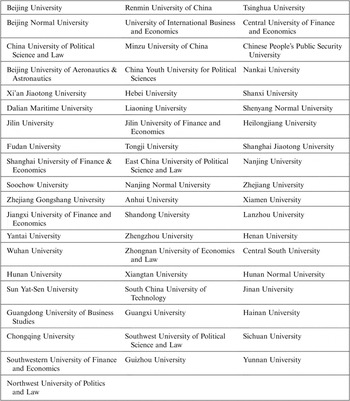
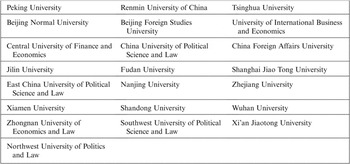
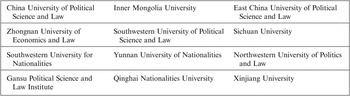
In November 2012, Ministry of Education and CPC Central Political and Legal Affairs Committee announced the completion of the first round of selection of the “Outstanding Legal Personnel Education Centres”. As a result, 58 universities were granted “Practice-Oriented and Interdisciplinary Legal Professional Personnel Education Centres”, 22 universities “Foreign-related Legal Personnel Education Centres” and 12 universities “Western Grassroots Legal Personnel Education Centres”. A list of the selected universities for the three categories of centres is attached in Annexes A-C. At the time of writing this paper, the selected universities are drafting their implementation plans, in accordance with the national scheme detailed above.
Meanwhile, some professional organisations have started to implement the “Double-1000” plan. In Shaanxi Province, for example, Xi'an City Intermediate People's Procuratorate has entered into agreements with XJTU and another two universities, under which each year three or more members of teaching staff from those universities are selected to be seconded to the procuratorates of different districts in Xi'an, serving as Associate or Assistant Prosecutors for a year. Meanwhile, XJTU law school carries on with the practice of sending members of staff or PhD students to work at the Ministry of Commerce (MOFCOM) or the Ministry of Foreign Affairs (MFA) for a few months or a year. In Jiangsu Province, the Jiangsu Higher People's Court also launched cooperation with six law schools as an implementation of the national “Outstanding Scheme”.Footnote 63
5. Implications
Given that the scheme is still at its earliest stage of implementation, it is too early to give a definitive assessment of its implications. It might nevertheless be possible make some preliminary evaluation on the basis of the actual and planned implementation measures. On the whole, it can be expected that the quality of legal education in China particularly in the selected universities would be significantly improved. More specifically, the scheme will have a tremendous impact on the structure, the contents and methods of Chinese legal education, as well as its interaction with the practice sectors.
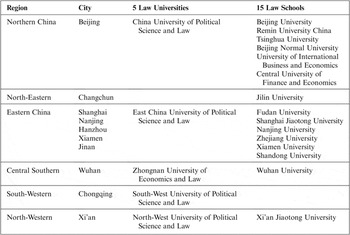
First of all, the scheme is changing the structure of legal education in China, with the emergence of a “5 + 15” structure of outstanding legal education centres. A close look at the three lists can find out that only 20 universities were awarded both the first (“practice-oriented and interdisciplinary”) and second (“foreign-related”) categories of centres, which were centres of general significance. Those universities can accordingly be considered as the most significant institutes for legal education. Among them, the 5 universities mainly specialised in law (the law universities) are all conferred two centres, which proves the overall strength of those university in legal education. Among the remaining 15 institutes, 13 are comprehensive “985” universities, which are the most important universities in China. Two are “211” universities that focused on business and finance subjects, which demonstrates the close link between law and business (the Zhongnan University of Economics and Law is actually also a business university at the same time as it is a law university). This new “5 + 15” structure (see Chart 3) is set to lead the Chinese legal education and its reform in the decade to come.
The New “5 + 15” Structure of China's Outstanding Legal Education

Geographically, seven of the institutes with two centres are located in Beijing, confirming the unrivalled strength of the capital in legal education. This is followed by Shanghai with three institutes and then by Wuhan and Xi'an with two institutes awarded both centres. The fact that Xi'an has two institutes awarded two centres is particularly pleasing given the aforementioned need to redress the imbalance between the eastern and western regions.
Secondly, the contents or curriculums of Chinese legal education will be changed, with an emphasis on practical, interdisciplinary and internationalised courses. In XJTU, for example, we have already redesigned our curriculum, to make room or preparation for interdisciplinary and internationalised education. Unlike other law schools, undergraduate students in our law schools do not attend general university English classes but the English classes offered to students of the School of Foreign Language, specialising in English. In other words, they receive professional English training rather than general university English education. As a result our undergraduate students are well prepared for internationalised studies. Also, most international and comparative law modules, particularly those for postgraduate students, are taught either in English or bilingually combining both Chinese and English. Some of them are taught by distinguished visiting professors from leading overseas universities. On the other hand, in order to promote interdisciplinary studies, we have launched a “2 + 4” interdisciplinary education programme, under which law undergraduate students after admission to XJTU are placed in schools of other disciplines to study for 2 years, before they return to the law school for another 4 years of legal education. Successful students can obtain a LLB and a LLM, and possibly also a second bachelors degree in their disciplines of their first 2 years of studies. Furthermore, in the Law and Governance PhD program, we have included coursed offered by staff from other schools such as the School of Public Administration and the School of Management.
In our plan to implement the “Outstanding Scheme” at our school, we will set out two “Outstanding Classes”, one for interdisciplinary legal studies and the other for foreign-related legal studies. The interdisciplinary class will follow the “2 + 4” pathway but increase the practical skill components, e.g., by sending them to practical sectors such as local courts or legal departments of local governments for 6 months to one year internship. The foreign-related class will receive the intensive professional English training at the Foreign Language School mentioned above, and will have most of their courses taught bilingually or in English. Also, agreements have been signed with good overseas law schools to make sure that all or most of them could study abroad to get international experience or/and an academic degree. Such practice would become more and more common in Chinese law schools, particularly in “5 + 15” institutes.
Third, there will be changes in methods of legal teaching. Seminars, which are commonly regarded as very useful in promoting practice-oriented legal thinking, will become more and more widely adopted. More specialised courses to train professional skills such as case studies, moot court, and legal clinics, will also be more widely practiced. At XJTU Law School, a Falv Fang (Legal Workshop) has been established, which combines accommodation and equipment for moot court, moot arbitration tribunal and legal clinic.
Last, but not least, the cooperation between law schools and practical sectors will be significantly enhanced. In particular, the implementation of the “Double 1000” plan and the joint education mechanism between the schools and the practical sectors will boost tremendously the cooperation between the two sides. As a result, practical sectors will benefit from the expertise of law staff from leading universities. This would be particularly helpful in some western regions where qualified judges and prosecutors are in short supply. On the other hand, law schools will benefit from the teaching provided by experts from the legal profession, and their input in activities such as joint course/curriculum design and joint textbook compilation. Law school can also benefit from the enhanced practical knowledge and skills of their staff seconded to work at the practice sectors. Eventually law students will receive a more balanced education combining both advanced legal knowledge and professional legal skills. This would therefore be a win-win situation, which will help in the construction of a solid “legal professional community” in China that share the same knowledge, skills and values.
However, whilst the scheme is a great scheme that is poised to significantly boost the quality of Chinese legal education, there are uncertainties as to how much a difference it may make. Three points can be made here.
First, whilst the scheme has detailed the measures to be taken to implement it, it has not detailed how such universities and practical sectors will be funded to support such reform measures. The scheme only mentions that participating universities will be funded through the “Undergraduate Teaching Project”. However, since some participating universities are not included in the project, it is unclear whether, and how, those universities will be funded. Whilst the scheme also mentions that local governments should provide financial support to participating universities, nothing has happened so far. As an important national scheme, the central government should provide strong financial support to guarantee its success. This is particularly true given that the central government is in a much better financial position than the local government at the moment. If the participating universities are expected to carry out the scheme on the basis of self-funding, the actual effect of such a grand scheme will certainly be thwarted.
Second, whilst the scheme will certainly boost the quality of legal education in the participating universities, it is unclear how it might impact the non-participating universities, which account for the vast majority of Chinese law schools. Obviously some of them might still hope for a chance to get in the scheme given that there may be other rounds to select the remaining 22 centres for practice-oriented and interdisciplinary legal personnel and 8 centres for the Western Grassroot legal personnel. The bulk of them cannot expect it. For those law schools it is uncertain what prospect is awaiting them. The heads of some of those law schools have already started to worry whether their schools will survive. Although the scheme helps in pointing out the direction of the development of Chinese legal education, it is certainly impossible for all of 624 schools to become “outstanding” legal education providers. How to treat such law schools remains unclear as a national policy. As said above, the preferred approach would be for the government to set up minimum standards to guarantee the quality of legal education, so that those schools could plan their future accordingly.
Last, but not least, the scheme does not touch the institutional problem of the “double-exams” for law graduates to enter into the judicial institutions. As said above, this creates a significant hurdle to law graduates in their job-seeking efforts. In this regard, the British approach might be used as a reference. Thus the legal professional bodies should work together with the legal educators to set up and monitor the standards of legal education. Accordingly, graduates from such accredited law schools who have successfully completed all the qualifying law courses should be waived the NJE and could directly enter into the professional institutions. The NJE should be required only for other graduates. Also, the NPSE should only be required for such law graduates when they apply for non-legal public services posts.
V. CONCLUSIONS
Legal education is the fundamental and fore-running component of a sound and strong legal system. Since the Reform and Opening up policy adopted in 1978 particularly in the last two decades, Chinese legal education experienced a dramatic increased in the number of law schools and law students. As the quantity sharply grows, the quality issue has emerged and became more and more prominent. This has damaged not only the employment prospect of law graduates but also the general reputation of Chinese legal education.
The “Outstanding Legal Personnel Education Scheme” came at the right time with the right measures and promises to be a great landmark in China's legal education reform in the decade to come. It will significantly change the structure, contents and methods of Chinese legal education, particularly legal education in the participated universities. Also it will forcefully boost the cooperation between legal academia and practical sectors. Nevertheless, further measures need to be taken to solve the financial issue of the scheme, to set standards for legal education applying to the non-participating institutes, and to establish a smooth channel for qualified law graduates to enter into the legal profession.
If the scheme is fully implemented and the other issues also effectively addressed, it can be expected that not only the current problems now facing the legal education system will gradually be eased off; Chinese law schools may soon become one of the leading legal education forces in the world.
Annex: Lists of Universities Selected in 2012 to Establish National Centers under the “Outstanding Legal Personnel Education Scheme”
Practice-Oriented and Inter-disciplinary Legal Professional Personnel Education Centres (58)

Foreign-related Legal Personnel Education Centers (22)

Western Grassroots Legal Personnel Education Centers (12)

Acknowledgements
The author would like to thank his research assistants, Miss Juan Du for her assistance in preparing the first draft, and Miss Luella Wang for proofreading the final draft.