China is undergoing one of the greatest bursts of nation-building the world has ever seen. Because the contemporary era is commonly labeled as one of “globalization,” because the reform (post-1978) era in China is often depicted as that of “opening up to the outside world” (duiwai kaifang), and because some of the theoretical literature on nation-building has been criticized as outmoded modernization theory, nation-building in reform-era China has not received the attention it deserves.
Four database searches conducted in February 2011 demonstrate the relative lack of scholarly attention to nation-building in reform-era China. In each search, I compared works published since 2000 with the words “globalization” and “China” in the title to those with the words “nation-building” (with and without a hyphen) and “China” in the title. Of the books in my university library, there were 24 with the words “China” and “globalization” in the title, but only two with “China” and “nation-building.” These two focused on nation-building in late-imperial and Republican-era China. A search of JSTOR revealed 47 journal articles on globalization and China, but only one on nation-building and China, which was a review of a book about Republican-era China. A ProQuest search revealed 589 sources with “China” and “globalization” in the title, but only six with “China” and “nation-building.” Of the six, three referred to the Republican era, two discussed Chinese aid efforts in foreign countries, and the final one was a newspaper article titled “Heroics, China, Stalin and Nation-building.” Finally, a search on Google Scholar uncovered 854 titles with “China” and “globalization” in the title, but only eight with “China” and “nation-building.” Of the eight, four were about the Republican era, two were about China's role in foreign countries, and two were relatively narrow book chapters about how nation-building (among other things) affected anthropological research in China in one case and tourism branding in the other.
The types of scholarly fashion that contribute to the theoretical erasure of nation-building are numerous. Consider first those forms of Eurocentric epochal thinking that place “nation-building” before “globalization.” Saskia Sassen, for example, argues that since the 1980s “building national states” has been replaced by “building global systems inside of national states” (Reference Sassen2006, 16) as the most important form of global structuring. Ulrich Beck, Anthony Giddens, and Scott Lash (Reference Beck, Giddens and Lash1994) argue that contemporary individualism, aesthetics, and politics should be explained in reference to a “reflexive modernization” that comes after the industrialization, urbanization, and nation-building of a first-order modernization. Certainly these scholars' works are more subtle than I have space to analyze here, but when combined with the trends explored above, in which Chinese “nation-building” appears to occur during the Republican era and “globalization” today, their emphases seem misleading. In contrast to Sassen, Beck, Giddens, and Lash, I argue that, especially in China, industrialization, urbanization, and nation-building are inseparable from and at least as important as “globalization” and “reflexive modernization” as starting points for understanding social change.
Another group of scholarly trends stems from the dismissal of modernization theory during the 1980s and 1990s. Robert Foster's work (Reference Foster and Foster1995) illustrates many of these trends. He argues for a switch of terminology from nation-building to “nation making” to distinguish his work from that of the modernization theorists of the 1960s and 1970s.Footnote 1 I agree with his critique of teleological, unitary forms of modernization theory that imagine “an inexorable historical (evolutionary) process in which traditional communities must yield, often painfully, to modern forms of social life (of which the nation-state is the form par excellence)” (Foster Reference Foster and Foster1995, 4). But if we are to reject unitary forms of modernization theory, is there anyone who imagines it is purely coincidence that at the same time that China is industrializing at the fastest rate it ever has; it is also urbanizing at the fastest rate ever; it is also expanding and standardizing its education system at the fastest rate ever; it is also building up its transportation and communications infrastructure at the fastest rate ever; it is also seeing its citizens move around the country in search of work, love, and/or excitement to a (vastly) greater extent than ever before; and its population is speaking a standardized national dialect to a greater extent than ever before? Regardless of the degree to which we wish to reject modernization theory, these overlaps are worthy of analysis.
Foster's shift from nation-building to nation making also changes the topic from the processes by which the citizens of a given country come to share commonalities or to “integrate” in various ways (see McAlister [1973] for examples of work focused on these concerns), to the diverse ways in which nations have been narrated and imagined in formal speeches, everyday talk, acts of consumption, and so on. In so doing, he (and the other contributors to his volume) build upon the now classic work of Homi Bhabha (Reference Bhabha1994, 139–70) and Partha Chatterjee (Reference Chatterjee1993) on the importance of narrative and social diversity in the formation of nationalisms (a much more common topic in contemporary China studies than nation-building). That foci on narrating the nation and fragmented nationalisms have been fruitful, however, does not imply that the analysis of the construction of national commonality is useless.
Finally, and closely related to this shift of topic, is a preference for the analysis of diversity and fragmentation over the analysis of commonality, standardization, and integration, a preference that perhaps reflects a fear of reinforcing stereotypes about robot-like conformity in Asian countries. In analyzing the construction of commonality here, I insist that commonality implies neither uniformity nor the production of a political or social consensus. In a wide variety of ways, the construction of commonality entails further social and political diversification. For those ethnic minorities in China who wish to establish their own separate nations and who reject literacy in Chinese characters and fluency in standard Mandarin as appropriate measures of an educated person, the recent success of the Chinese education system in expanding literacy and the use of standard Mandarin are sources of resentment and resistance rather than national integration. Such resentment is one of many causes behind the ethnic tensions that led to riots in Tibet in 2008 and Xinjiang in 2009. Further, economic inequalities within China make it impossible for all Chinese citizens to embrace commonality in the same way, even when they might want to. In addition, even in those contexts where Chinese educational normalization is embraced, measuring students against norms, as Foucault argues (Reference Foucault1979, 184–94), is simultaneously a matter of homogenation and individuation. Also, conscious reactions to the recognition of commonality can include cultivating new forms of individuality and making ever lesser degrees of difference count for more and more in social relations. Moreover, the sharing of common skills and desires leads to competition as well as identification (Kipnis Reference Kipnis2008, 157–83). Finally, sharing a language and opportunities for communication allows for argumentation as much as agreement. Conversely, even argument can be said to produce commonality, as those involved in an argument develop a sense of what has been said that makes their conversation opaque to outsiders.
Despite the fact that the construction of commonality and the production of diversity are inevitably intertwined processes, the analysis of commonality deserves attention. As Bruno Latour's (Reference Latour1994; Reference Latour2005, 63–86) work on technological mediation suggests, points of commonality have an important role to play in many types of human interaction. As he puts it, the embodiment of the knowledge of “mediators” like languages, currencies, legal systems, and regimes of identification enable “anonymous and isolated agencies to become, layer after layer, comparable and commensurable” (Latour Reference Latour2005, 230). Conversely, as AbdouMaliq Simone (Reference Simone2001) argues for African cities, the absence of national forms of commonality can have powerful consequences for the manner in which urban dwellers interact with the world.
For this article, I define nation-building to include any activity, planned or not, that increases the degree of commonality in lived experienced and communicative practice among people living in a particular country, especially those that simultaneously help to bridge local differences and to distinguish citizens of one country from those of another, but also including those that increase commonality across both the country and the globe (such as education in mathematics, which is commonly called globalization). A few statistics illustrate the types of concrete activities that I consider to be nation-building as well as their extent in reform-era China. Over the past twenty years, the percentage of children entering senior middle school has more than doubled (from 38 percent of the population age cohort in 1988 to 86 percent in 2009), while the number of new enrollments at the tertiary level increased tenfold (from .59 million in 1989 to 6.39 million in 2009, which is more than 25 percent of the age cohort born in 1990).Footnote 2 Three years of preschool has also been popularized in many parts of the country, bringing the total number of years spent in educational institutions to 15 for the majority of young people and to 19 for the significant (no longer elite) minority of those who attend university. During the same period, the number of Internet users has increased (from zero) to 384 million (CNNIC 2010, 3), mobile phones have become ubiquitous, the number of kilometers of roads has quadrupled (with the number of kilometers of interprovincial superhighways going from zero to nearly 60,000), and the length of electrified railway lines has increased fivefold (Zhongguo Jingji Nianjian Weiyuanhui Reference Zhongguo Jingji Nianjian Weiyuanhui2008, 907). This massive increase in education and communication and transportation infrastructure combines elements of what sociologists of modernization (e.g., Beck, Giddens, and Lash Reference Beck, Giddens and Lash1994) call first-order and second-order modernization, and has produced a large degree of compatibility of communicative practice and experience across China's immense population, especially among the young. The increased compatibility eases social interaction across the nation, thereby encouraging geographic mobility, the dis-embedding of people from local communities and their re-embedding elsewhere, and the imagining of the nation itself as a potential community (Anderson [1983] Reference Anderson1991; Weber Reference Weber1976). This article explores three dimensions of recent Chinese nation-building—education, city building, and Internet usage—with an eye to exploring the manner and extent to which they create commonalities of lived experience and social interaction across the country.
I pick these three dimensions because they illustrate very different aspects of the nation-building process. Education is deliberately planned to produce a particular type of Party-loving, patriotic human subject, though the actual effects of educational policies are often counterintuitive. It is an arena in which standardization (guifanhua) is explicitly articulated as a goal. In contrast, while the expansion of cities is proceeding in China at an unprecedented pace, the generic feel of many of these urban spaces is not the result of a deliberate plan. It is rather the unintended outcome of both intentional planning processes (which, however, are not designed to create uniform urban spaces), and unplanned economic, political, and social pressures. Despite this complex background, the similarity of China's new urban spaces contributes both to commonalities in the experience of people living in diverse urban centers and the ability of migrants and travelers to navigate urban spaces in places that are new to them. Finally, the Internet in China has become an intensely national social arena. It is a space in which participants expect to encounter fellow Chinese nationals and in which nationalism is often expressed. The construction of the Internet as a national social arena furthers aspects of communicative standardization developed through the education system, as well as the efforts of the Chinese Communist Party (CCP) to control the political tone of expression on the Internet. As with the education system, attempts at political control do not succeed in producing a compliant population in any simple fashion, but do shape the norms and dynamics of communication in particularly national ways. As with the construction of cities, the factors that influence a commonality of communicative practice on the Internet are much more diverse than the planning efforts of Party officials.
Educational Standardization
The old imperial examination system was always thought of as a way of building a common culture among the ruling class. All Mandarins memorized the same Confucian classics in preparation for the exams. But now that education is universal, the process has been extended from the elite to the masses. As the number of people literate in Chinese characters and able to understand standard spoken Mandarin exceeds one billion, the central Chinese government has self-consciously viewed the curriculum as a tool to build a unified, patriotic, and Party-loving national culture. Rural children all over the country are targeted to have their classroom habits “regularized” (guifanhua).Footnote 3 Many of them spend most of their childhoods in boarding schools studying or participating in other structured activities fifteen hours a day, seven days a week. A standardized manner of approaching math problems, exercising, chores, artistic creation, handwriting, and test-taking is imposed on all. A unified set of patriotic themes is taught in literature, history, social science, and thought and morality classes. Even though some of this standardization takes place at the provincial rather than the national level, allowing for some relatively localized content to enter the curriculum, all provinces must have their curriculums approved by the national education bureau, resulting in a large degree of similarity. The fact that all of this content is assessed through standardized exams only increases the degree of unity in what is studied and learned across the country, and even the forms of cynicism that high school students develop in reaction to this onslaught are common to previously well-separated locales. While Maoism can also be said to have inundated the population with a standardized set of readings and political rituals (Madsen Reference Madsen1984), a relatively low degree of literacy meant that this standardization was not embodied in the same way as contemporary education.
The nation-building effects of the education system are reinforced by the emphasis on what Børge Bakken (Reference Bakken2000) calls exemplarity. Exemplary governing involves the selection and promotion of models of various types that can be put forth as ideals. These models are used when children first learn to write Chinese characters and when they learn to compose essays, but also in almost every other realm of governing. There are model workers, husbands, mothers-in-law, students, teachers, corporations, villages, towns, birth control advocates, and so on. Metaphorical expressions often link the logics of modeling in one of these realms, such as calligraphy, to others. The word “study” (xue), for example, often means to imitate a model in a process of internalization—mental or bodily memorization. Just as one “studies” writing by tracing model characters, so does one “study” how to be a person (zuoren) by imitating the behaviors and dispositions of one's teacher.
Chinese education reformers eager to critique what they see as latent authoritarianism in Chinese pedagogy have often railed against this reliance on models. For example, in a newspaper editorial in Southern Weekend (Nanfang zhoumo), Mo Gong argued:
Our schools put forth all sorts of authoritative models: thought models, political models, model schools, model academics, model teachers and so on. These authorities cannot be doubted, cannot be criticized and cannot be analyzed; they only can be followed. This sort of education is far removed from the type of citizenship education a modern society should promote. It is a feudal legacy. (Mo Reference Gong2005, 27)
Such views, however, are not universally held, and in my ten years of research on education (including visits to almost one hundred schools, months of classroom ethnography, and household surveys, mostly in Shandong province), despite meeting in person and reading works by a plethora of such critics, I have not seen a reduction in the importance of models.
The exemplary Chinese curriculum begins with the basic habits that are enforced for both teachers and students. Teachers are required to dress appropriately, to stand with good posture at the front of the class, and, to the extent of their abilities, to speak standard Mandarin. In the recent past, when village primary schools were more common, some “community-sponsored” (minban) teachers had not graduated from a certified normal school. But during the 1990s and 2000s, village schools have been consolidated into larger and more centrally located primary schools and “community-sponsored” teachers have been gradually replaced by properly certified normal school graduates.Footnote 4 By 2005, almost all of the teachers I met in my research in several counties in Shandong spoke excellent standard Mandarin, while a minority of older teachers in rural primary schools spoke their Mandarin with a local accent. The percentage of teachers able to speak standard Mandarin has increased rapidly over the past two decades, and county education officials in three different rural counties in Shandong told me that by 2015 all teachers would be able to speak accentless, standard Mandarin. In all of the scores of rural primary schools I have visited there were billboards posted on the wall announcing the importance of speaking standard Mandarin (see figure 1), and the teachers I saw always did so to the best of their ability when in the classroom, though they often spoke in local dialect when in their offices.
Primary school billboard.

The ability of people all over China to speak and understand standard Mandarin has increased dramatically. Those unable to understand standard Mandarin are at best a tiny minority. For older people in traditionally non-Mandarin-speaking areas, television has contributed as much to this linguistic revolution as schools. But for younger people, who almost universally not only understand standard Mandarin but also speak it, education has been decisive. While I would not assert that local dialects are dying, I have met many young people from dialect-speaking areas who have told me that even when they are playing with friends, they speak Mandarin rather than a local dialect.
Students also learn a basic set of classroom interaction rituals in the first years of primary school. Students arrive at their desks a few minutes before a class begins. A warning bell tells them when they need to become quiet, and the teacher usually enters the classroom after the warning bell. When the teacher enters, the head student (banzhang) stands and says “Begin class” (shangke) and the rest of the students stand. In unison they chant “Hello Teacher” (Laoshi Hao). The teacher responds with a variant of “Hello students, be seated,” and the class begins. At the end of the class, the teacher signals the head student again, who leads the rest of the students in again rising and saying in unison “Goodbye teacher.” When students wish to speak, they raise their hands while seated, and (regardless of whether they have raised their hand to request to speak) if the teacher requests that a student speak, he or she stands and speaks in standard Mandarin. After finishing, the student will remain standing for any discussion of his or her response until the teacher tells the student to sit down. If a student has poor posture at his or her desk, or does not speak clearly when the teacher calls out his or her name, the teacher will criticize the student. When students perform in front of the class, the class always offers applause before moving on to evaluation and criticism of the performance. I have seen variants of these rituals performed in most of the classrooms I have visited and heard descriptions of them from students from a dozen provinces.
Primary school principals often told me that the cultivation of good habits (peiyang hao xiguan) was at the center of their pedagogic strategies. They stressed that rural students in particular needed attention paid to their habits, as their parents could not teach these themselves. Good habits include the classroom behaviors described above; a proper approach to homework with a regular time each day to complete homework; reviewing materials covered in previous classes and preparing materials for upcoming classes; proper attention to detail in completing assignments, including punctuation, presentation, and completeness; and proper personal hygiene. Good habits were thought of as the basis for future success in secondary school. Principals learned which habits to inculcate in children by reading nationally circulating education journals and from memos passed down through the education bureaucracy.
Education bureaucracies at all levels work to standardize approaches to teaching. In line with exemplary understandings of “standards,” anything that differs from the standard is understood to be inferior to it, generally the result of poverty and the resultant underinvestment and backwardness. In the broader context of rapid modernization and exemplary norms, “standard” (biaozhun) facilities are in fact ideal facilities. In addition, by requiring standardized tests in all subjects, usually twice a year, county-level education bureaus can easily determine if certain teachers are outperforming others in exam scores. The bureaus use this knowledge to promote standardized approaches to teaching. Education bureaus often set up computer intranets through which teachers in a given district can share lesson plans and teaching tips. In Shandong, all schools were wired into such intranets and all teachers had access to a computer linked to an intranet. When a teacher is particularly successful, he or she is encouraged to post teaching tips. Teachers with good test results who impress members of the bureaucracy are given bonuses and held up as models for the rest of the teachers. In short, teachers are not just teaching the same curriculum from the same textbooks in pursuit of the highest scores on the same standardized test, they are also being pressured to adopt exactly the same methods of teaching this standardized package.
No discussion of nation-building could be complete without attention to the heavy dose of nationalism and pro-Party propaganda that suffuses the curriculum, particularly in subjects like history, government, literature, and political thought and morality classes. For example, in the 2005–6 year-six literature textbook used in Shandong primary schools (a book that is memorized cover to cover), six of the twenty-seven lessons were about the sacrifices and accomplishments of Party members during various twentieth-century wars. Another five of the essays were about topics that I would classify as soft nationalism—such as depictions of the beauty of various places in the beloved country. The remainder of the essays or poems included traditional Chinese stories and translations of essays by foreign authors. While none of these latter essays could be considered explicitly nationalistic or pro-Party, they all contained a moral message of some form or another by, for example, depicting the sacrifices of family members for one another, or efforts to promote the ecological balance of the planet. There were no essays with explicitly sarcastic or ironic stances. The way in which the essays as a whole incorporate moral positions is thus didactic, and the explicitly pro-Party parts of the book utilize this didactic structure to promote an unquestioning view of the moral superiority of the Party. As many researchers writing about moral education in China have argued, the Party promotes a form of moral education in which morality, politics, and ideology are intertwined and in which morality is often defined in terms of correct ideology and politics (see, for example, Nie Reference Nie2008).
Pro-Party pedagogy, however, does not directly lead to the production of non-questioning, pro-Party subjects. Secondary and tertiary students do not generally accept the view that the Party is a beneficent organization, or that patriotism necessarily involves loving the Party (Nie Reference Nie2008; Rosen Reference Rosen, Link, Madsen and Pickowicz1989, Reference Rosen1994). Nevertheless, this teaching does have nation-producing effects. Across the country, secondary and tertiary students learn about the student movements in the name of science and democracy that occurred in Beijing in 1919, but are largely ignorant of the massive pro-democracy movement that took place in Beijing in 1989. Patriotism is generally embraced as an ideal even when narratives of Party members as model patriots are questioned (Nie Reference Nie2008). And even when official pedagogic narratives produce nothing but cynicism, it is a form of cynicism that is widely shared. Jokes made about curricular items in a high school in, say, northeast China will very likely be understood and appreciated by students in the southwest.Footnote 5 In Michael Herzfeld's terms ([1997] Reference Herzfeld2005), such jokes may be seen as the type of “cultural intimacy” that is important to nationalisms everywhere: “If the nation is credibly represented as a family, people are loyal to it because they know that families are flawed—that is part of love—and so they rally to the defense of its compromising but warmly familiar intimacy” (cited in Fong Reference Fong2004, 644).
The experiential impact of Chinese secondary education reaches its symbolic apex during the University Entrance Examinations, now held annually in June. The pressure of the examinations themselves and the discipline enacted to study for them make them a rite of passage that consolidates the national generational identity of those who sit the exam at the same time. In retrospect, those who have completed the exams describe the suffering involved in terms of the “bitterness” they have eaten, invoking a political mode of speaking that has a deep genealogy in China and has often been used to consolidate social identities of one form or another (Cockain Reference Cockain2011). In this manner, young Chinese claim a position as worthy citizens alongside their elders who suffered the material deprivations and political upheavals of earlier eras.
Whatever their value, the linguistic, social, and scientific knowledge standardized across the curriculum, as well as the classroom habits, unstated presumptions, and experiential impact of Chinese mass education, are continuing to consolidate a Chinese nation. The fact and evolving shape of this commonality does not guarantee a particular political outlook or even nationalism per se, but, in the face of external pressure or criticism, it certainly can become a basis for political commonalities.
Mimetic Urban Spaces
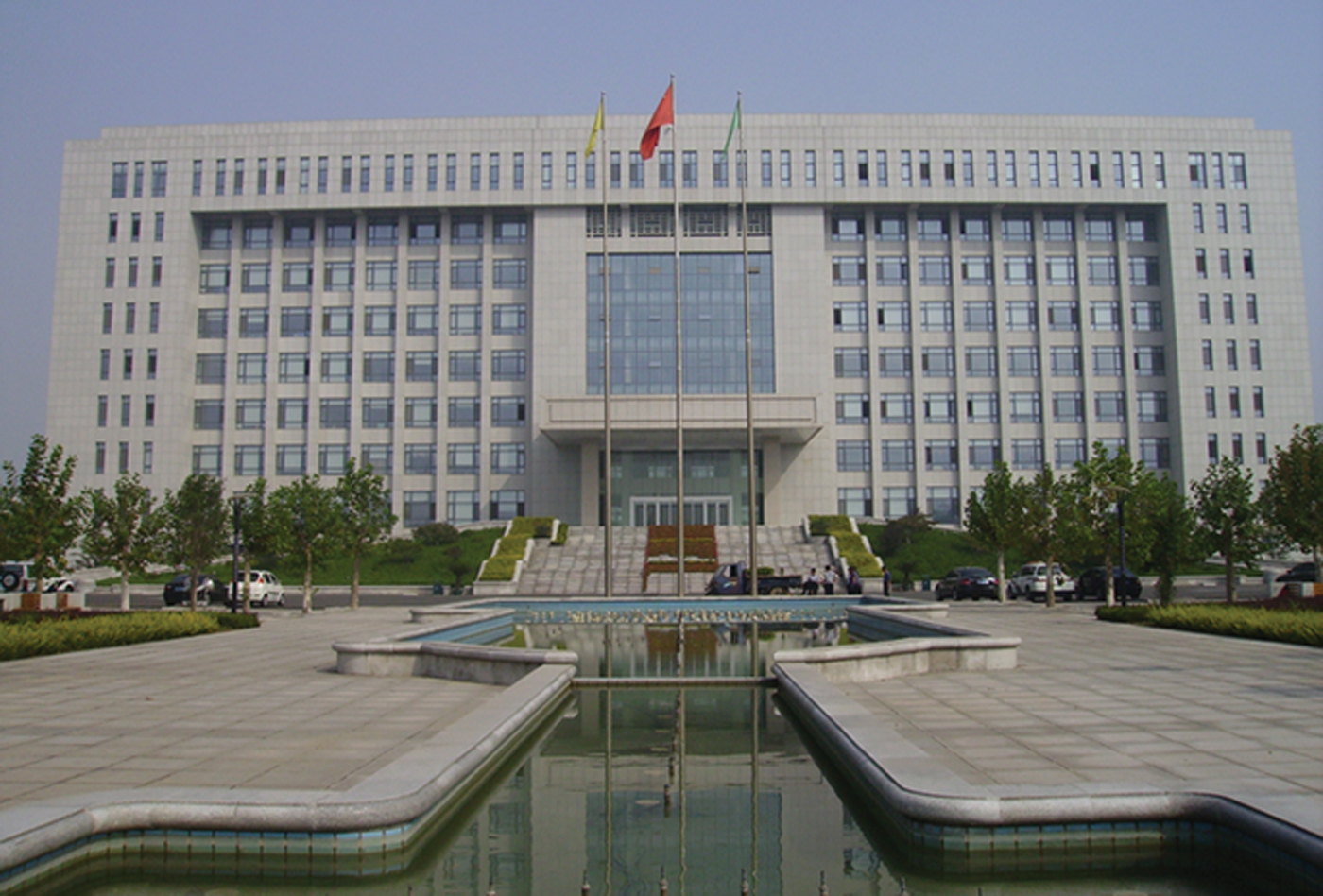
While some of China's largest, historical urban centers feature distinctive geographical and architectural characteristics, in my travels across the country I have been impressed by the degree of similarity among newer small and medium-size cities. These similarities occur at the level of the overall layout of the city, of the architecture of government and apartment buildings, in the design and placement of parks and public spaces, and in the nearly ubiquitous presence and design of public squares (guangchang).
Many of China's newer cities have been built in the past two decades. Places that were formerly towns or county seats or even prefectural centers with populations ranging from ten thousand to several tens of thousands of people are now mid-size cities with populations of a few hundred thousand people. As the cadres governing these urbanizing centers have requisitioned previously agricultural land for urban construction, in sometimes more and sometimes less reasonable fashion,Footnote 6 cities have grown not just by expanding marginally at the outskirts, but also by building completely segregated “new cities” (xincheng) and “development zones” (kaifaqu) adjacent to the older town center. As You-tien Hsing describes (Reference Hsing2010, 102–8), in the 2000s new cities were built under conditions of strict and strategic urban planning, which, under the cover of satisfying planning aims from above, was manipulated to maximize real estate returns for urban governments and developers. Many of the small and mid-size cities that I have visited around China, especially in Shandong province but also in Jiangsu province and Anhui province, have a tripartite spatial division: an old town where land use is relatively mixed; a development zone in which there is an attempt to attract industries and which, if successful, is filled with factories and also the housing for the factory workers and the services those workers require; and a “new city” filled with government offices, parks, schools, pedestrian malls, and new real estate developments for relatively well-heeled local residents.
The similarity of the “new cities” is especially striking. The layouts of the cities as a whole are similar; the design of the buildings and the arrangement of buildings designated as government headquarters are similar; the parks are similar; the school campuses are similar; and the layout of residential complexes and design of the apartment buildings are similar. Residential districts resemble those of the newly built “small districts” (xiaoqu) of larger urban areas, which David Bray (Reference Bray2008) depicts as being designed to facilitate political control and policing within the community. I have seen similar parks, campuses, and buildings in cities as far from the eastern seaboard as Korla, Xinjiang, and even in Kashgar most of the old city is being demolished to make room for new-style Chinese urban development.
Once, during an interview with the head of the planning department of a county seat, I asked why so many newly built urban areas resembled one another. He responded:
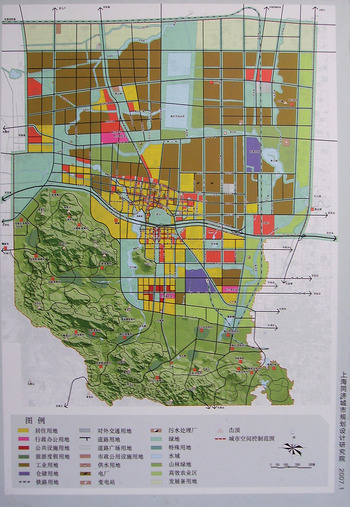
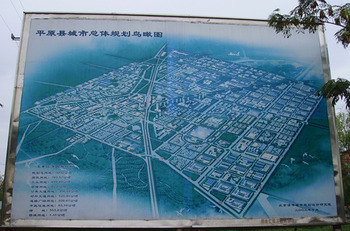
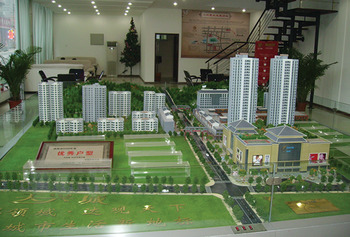
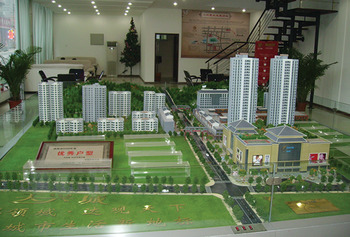
We talk about that all of the time, so I wanted to ask you the same question. You are the anthropologist. Aren't you the expert in why people from a particular place and time tend to imitate one another, develop cultural similarities in the clothes they wear, the ideas they speak and the food they eat? Anyway, in our conversations the following factors come up. First, most of the building has been completed in the past ten years. This is a period in which certain building materials have been the most available and the least expensive, certain building techniques have been the most well known among contractors and the least expensive to use, and certain building machinery has been widely available. It is also a time when a particular legal environment for city planning has been relatively constant. All cities must now develop formal city plans [see figures 2–4]. While architects and designers would love to have the opportunity to do something new, that costs more money. Most prefectural and county governments are all asking the planning firms and departments for the least expensive plan available that satisfies legal requirements. The least expensive one is the most standardized one. You just plug in the particular size, shape and geographical features of the targeted space. Finally, when designing their own offices for the central headquarters of the government for a particular city or county, government officials all have similar desires. They want something that looks imposing (you qipai), that gives the government a sense of grandeur. That inevitably involves large buildings faced with plazas in a style that imitates Tiananmen Square and the largest government buildings in the centers of power in China—both provincial capitals and, of course, Beijing.
Urban plan as displayed in planner's office in city A.

Urban plan as displayed on public billboard in city B.

Model from developer's office in city C.
In the analysis of this planner as well as that of You-tien Hsing, emerging similarities in built form relate to complex dynamics of power relationships, rather than simple top-down planning. Local officials wish to build new cities because, under the revenue-sharing, legal, and political conditions of twenty-first-century CCP government, this activity is beneficial for them in several ways. The revenues raised through land sales stay in local coffers and enable other projects. The building of new cities makes local cadres look good both in the eyes of their superiors and the local populace. These projects create opportunities for graft, rent seeking, and the personal enrichment of local leaders and their families. Within such a political/legal environment, real estate developers adopt certain strategies to maximize their profits, as the purchasers of apartments enact a particular economic logic of consumption, which balances a desire for modernity with a need for thrift at a particular level of income.
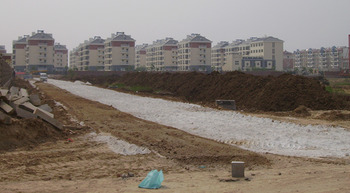
As the planner suggests, the logic of imitation in purchasing or designing apartments and buildings bears some resemblance to the logics of social immersion and imitation in the fashion industry (Kroeber Reference Kroeber1919; Simmel Reference Simmel and Levine1971, 294–323), and perhaps every other area of consumption as well. Through imitation individuals submerge themselves in social groupings, and through differentiation elites mark themselves off from the masses, sparking further trends of emulative imitation. But unlike fashion, architectural choices, once made, are not easily changed. The rich cannot easily abandon choices just because too many of the hoi polloi follow. Moreover, in a period of rapid economic expansion, during which land prices constitute more and more of the price of a building, building features that seemed exclusive a few years ago rapidly lose their glamour. Just as apt as the general dynamics of social imitation suggested by a comparison with fashion are the logics of exemplarity discussed above. Urbanization represents modernity and, especially in the smaller cities of the hinterland, those who desire modernity may be attracted to the exemplary modernity of China's more central places (see figures 5 and 6). For local leaders who have some say in the design of government buildings, a desire for imposing buildings that iterate their power, and the imitation of exemplary centers of power higher up the political hierarchy go hand in hand (see figures 7 and 8). Moreover, insofar as these same leaders control the approval of apartment buildings and enforce the movement of villagers whose land is confiscated for these apartment buildings, the moving of villagers can take the form of a disciplinary modernity—just like schoolchildren are required to imitate the exemplary writing styles and behaviors laid out in their texts, so are ex-peasants required to imitate the exemplary lifestyles of modern, urban city dwellers.
New apartment buildings in city D.

New apartment buildings in city A.

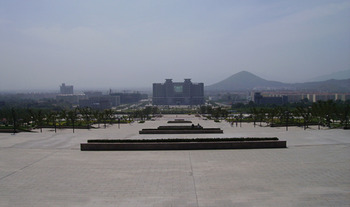
Government headquarters in city D.

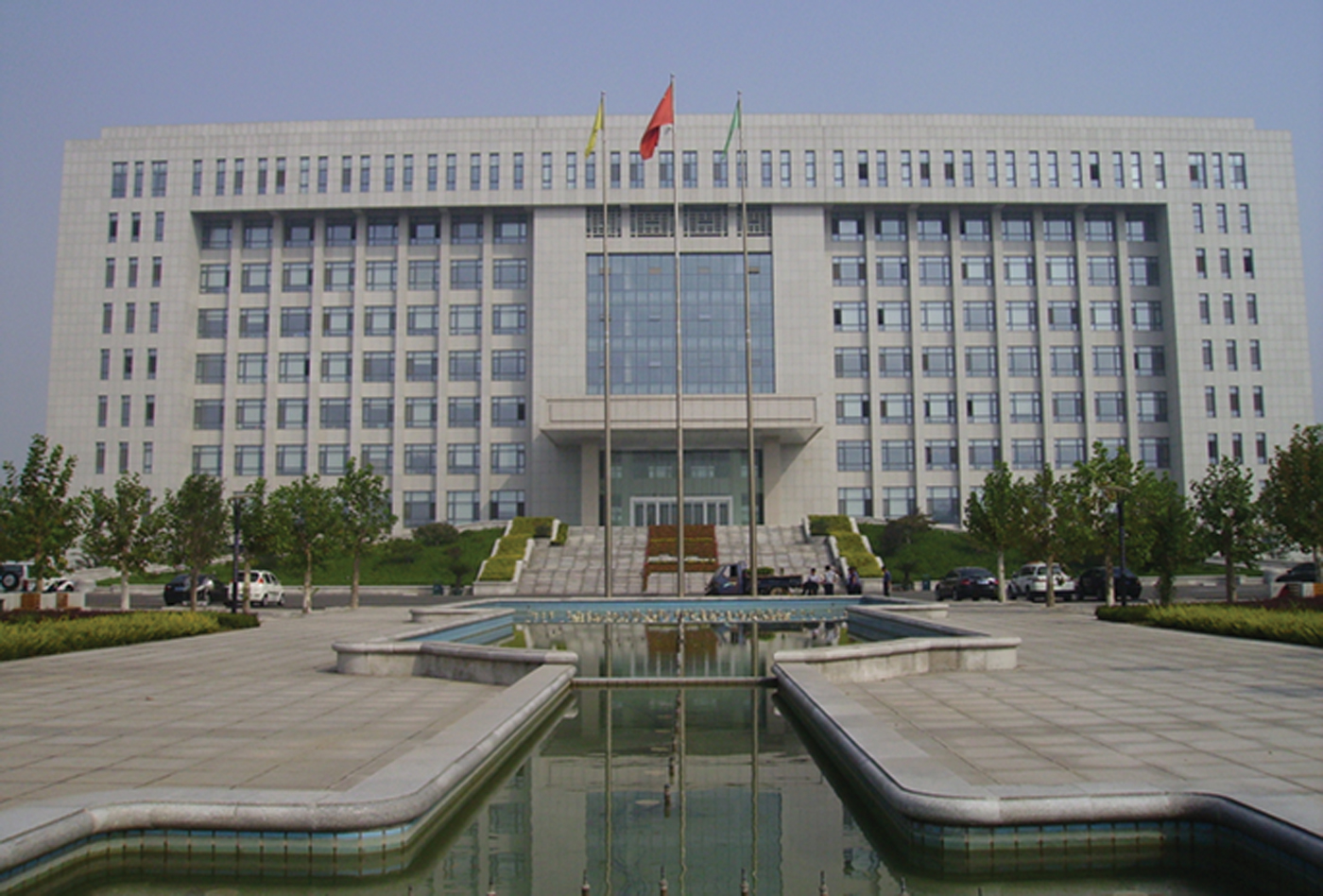
Government headquarters in city A; note square glass center to allow the flow of geomantic force from the mountain, a common feature in government headquarters.

Under the “new socialist countryside” policy, mimetic urbanization is spreading to rural areas. To improve the lives of the rural poor, the central government has earmarked funds to subsidize the building of new housing. In the process of rebuilding, villagers are moved from traditional courtyard-style houses (pingfan) to multistory apartment buildings located near transportation networks. Villages are commonly consolidated in the process, with two or more villages being combined into a single housing complex. In many places, only a minority of villages are targeted for reconstruction as the cost is too great; when new housing is built, the subsidies from higher levels of government only cover a small part of the actual costs. As with land requisitioning on the urban fringes, the moving of entire villages occurs with various degrees of consent and coercion in different places and, as with new cities more generally, must be understood in terms of a complex interplay of interests and power relations. Local leaders encourage such moves because by moving villagers from courtyard houses to high-rise apartment buildings, the area of land used for housing is decreased, opening up new land for agricultural use. By opening new agricultural land in one place, local leaders can transform agricultural land into building sites elsewhere without creating a net decrease in arable land, thus making their land dealings more legal and acceptable in the eyes of those higher up the bureaucratic ladder. For the purposes of this essay, however, what is important is that the new socialist countryside policy increases the rate at which the Chinese population is moved into generic, new, twenty-first-century Chinese-style apartment buildings, expanding the influence of a generic urban style to “rural” China.
Fads and styles of building everywhere, from gothic churches in Europe to strip malls in suburban America, no doubt emerge because of the kinds of factors described above—the availability and economy of building with certain materials and with certain techniques; the wider political and social environment that makes building certain types of building desirable or profitable to certain types of actors; and competitive, emulative social dynamics that lead to imitation. But what makes the standardization of building urban spaces in China so powerful is the ever-accelerating rate at which urban China has been built anew. Buildings have been completed at a rate of 600 million square meters of floor space per year since 1996, 1 billion square meters per year since 2001, and 2 billion square meters per year since 2007. In 2009 buildings totaling 2.3 billion square meters of floor space were completed (All China Data Center 2010a). By comparison, U.S. housing starts in 2009 totaled roughly 109 million square meters (U.S. Census Department 2010). The concentration of building in a particular epoch in a single country increases the degree of similarity of built space around the country. Such a concentration is particularly evident in China today.
One of the more ubiquitous features of newly built urban areas in China is the plaza (guangchang). They are common enough for the topic of “plaza culture” (guangchang wenhua) to have become an explicit topic in Chinese journals (see, for example, Liu Reference Liu2004; Zhang Reference Zhang2008). Governments of almost any size build plazas in front of their headquarters in pursuit of imposing grandeur. These plazas take Tiananmen Square as their ultimate reference point. They are smoothly paved and often contain a well-placed monument or fountain. They are open spaces that can be used for meetings with the public and for official political rallies and rituals, which is often the justification for their building. Because of their political function, government plazas are also targeted by protestors, but they are usually well-defended by police forces intent on preventing protests. Plazas that are seen as too large or imposing for the level of government that built them are often mocked with the phrases “leaders' pet project” (shouzhang gongcheng) or “face building [image enhancing] project” (mianzi gongcheng). I have seen plazas in front of government buildings in villages, many townships, and every county-level or prefectural-level city with a rebuilt government headquarters that I have visited (see figures 7 and 8).
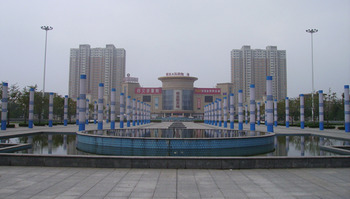
In addition to plazas built in front of government headquarters, plazas are often found in public parks, near shopping malls, and in front of the headquarters of large corporations, which, in their own pursuit of grandeur, imitate the building style of government headquarters (see figures 9–10). Though one of the main motivational forces behind the building of plazas is political image, such motivation does not limit the use of plazas to fulfilling the desires of governments. Plazas are used by urban residents and visitors for a wide variety of social and pleasurable activities. The fact that plazas are not surrounded by walls defines them as public places for social interaction and mingling. Their smooth paving makes for good roller-skating, and parts of plazas are often marked off for this purpose. In at least two county seats I visited, new stores devoted to selling roller skates (and roller-skating as a major fad among children) emerged after the completion of town plazas. Not only do children enjoy skating, but often roller-skating rinks (located in the midsts of plazas) become socializing venues for young migrant workers. Public dancing often takes place on plazas in the evenings, especially dances of the type where each participant does exactly the same steps in collective movements. Public exhibits of one form or another are often set up on plazas as are public performances. Local residents and visitors alike target plazas for evening strolls, as places to sit and socialize, and as places “to seek some action” (kan renao). The fact that plazas can be enjoyed in this fashion has led to the reproduction of plazas in parks and commercial centers as well as government centers.
Corporate headquarters designed to look like government headquarters with plaza in front.
Shopping center with plaza in front.

The increasing similarity of urban space across China constructs commonality in several ways. Built environment structures urban experience visually, politically, and socially. New cities look alike; the types of political controls their residential structures facilitate and the types of political rituals their public spaces are designed to accommodate resemble one another; the types of socializing that take place in public spaces, including activities like roller-skating and dance, come to resemble one another. This sort of experience is replicated further through its capture in film, fiction, and television. This commonality of experience increases the navigability of urban spaces by Chinese who are travelling to cities away from their hometowns, whether as migrant workers, businesspeople, or tourists.
The Chinese National Internet
The Internet cannot be considered a simple tool of standardization, but in China it is a structured forum of communication that presumes an imagined national community and is based upon sets of knowledge that are national. The national undergirding of the Chinese Internet begins with the physical infrastructure on which the Internet relies: broadband wiring, wireless bases, computers, and 3G mobile phones. These are all being constructed at spectacular rates. Investment in telecommunications infrastructure exceeded US$277 billion in 2009. In the same year, the number of Internet users in China reached 384 million people, close to 29 percent of the population. Throughout the first decade of the twenty-first century, the annual rate of growth of the number of Internet users has ranged from 18 to 75 percent (CNNIC 2010, 11). In addition to subsidizing the construction of housing, the new socialist countryside policy has subsidized computer purchases by rural households, expanded network access in rural areas, and resulted in a growing penetration of the Chinese Internet in rural areas. In 2009, there were over 106 million rural Internet users (CNNIC 2010, 2).
Beyond the physical expansion of the Internet, the wide and growing extent of literacy in simplified Chinese characters allows those with access to the Internet to communicate easily with other Chinese-literate Internet users. The association of simplified Chinese characters with the People's Republic of China (PRC) means that when one chats, blogs, plays games, or seeks a lover on the Internet in simplified Chinese characters, one expects to be interacting with Chinese citizens. While the international scope of the Internet means that these citizens could be physically located anywhere in the world, it is most likely that they were raised in the PRC, experiencing the education depicted in the first part of this article. This makes Chinese-character Internet use markedly different from English-, French-, or Spanish-language Internet use, but perhaps more similar to Japanese, Korean, or Russian Internet use.
In addition to the linguistic infrastructure, the dynamics of political interaction that result from the CCP's attempts to influence the content of material read and expressed on China's Internet help to differentiate Chinese and non-Chinese Internet dynamics. The Chinese government has constructed a firewall to prevent access to certain websites, has pressured Internet providers to censor posts with views it does not approve, uses keyword algorithms to search out activity it does not like, and pays thousands of bloggers to post viewpoints favorable to the government. However, despite this government activity, as with the building of cities, the national dynamics that emerge on the Chinese Internet cannot be understood in simple top-down terms. It is rather an ever-evolving relationship between government propagandists and those who would like to sidestep, contest, or elude their control. As Guobin Yang puts it in his book on Chinese online activism:
Both the forms and practices of state power and online activism have become more sophisticated over time. They interact with and adapt to each other, and the coevolution of online activism and Internet control in the past decade presents an almost quasi-experimental case to evaluate the effects of this interaction. (Yang Reference Yang2010, 13)
For my purposes, what is important about this coevolution is that it further differentiates the Chinese Internet from the rest of the Internet as a space of virtual interaction. From the perspective of an individual user, being literate in Chinese characters is not enough to become a fully literate Chinese netizen (wangmin). In their attempts to evade the censors, Chinese netizens develop a particular and evolving online vocabulary, particular and evolving understandings of what cannot be said directly, and particular and evolving understandings of when one of their interlocutors is likely to be blogging or chatting as an agent of the government.
Perhaps some of the most famous examples of the type of specialized discourse that has emerged on the Chinese Internet are the stories of the battles between the “grass-mud horses” and “evil river crabs” that raged on the Chinese Internet in early 2009. A children's song that depicts the horses defeating the crabs to protect their grassland home supposedly drew 1.4 million listeners, and a cartoon on the topic received more than 250,000 hits. But these were hardly topics fit for children. The term “grass-mud horse” is a homophone of “fuck your mother” (cao ni ma), while “river crab” is a homophone for the Chinese word for “harmonious” (hexie). “Harmonious” is a key term in current government propaganda about promoting a harmonious society. Promoting a harmonious society is the standard excuse for censorship, and Chinese netizens whose words are censored often say that they have been “harmonized.” The battle between grass-mud horses and river crabs was thus an allegory for the battle between government censors and those who would say “unharmonious” things.Footnote 7 Such an allegory is not only opaque to non-Chinese speakers, it is also uninterpretable to those who are literate in Chinese but have not closely followed blogs and web-life within China, as it necessarily has to be if it is to evade the censors for even a few weeks.
The political regulation of the Chinese Internet helps to set it off from the rest of the Internet. Few people other than researchers and those who are socially connected to China choose to surf this heavily regulated Internet space. Once the Chinese net becomes relatively segregated for political reasons, the language developed there helps to segregate it further. The specialized language of the Chinese Internet both reflects the dynamics of escaping political regulation described above and evinces the linguistic evolutions that occur in any new communicative medium, as demonstrated by the difficulty that older, Western technophobes can face in understanding their children's text messages. In addition to the specialized language are the particular habits of surfing the Internet that have developed in China. These specificities are perhaps most visible in the difficulties large Western Internet companies, like Yahoo and Google, have had in developing their Internet market share. In contrast to most of the rest of the world, where it is by far the top search engine, in China Google comes in a distant second to the Chinese company Baidu. Google's problems have as much to do with mismatches between the services it offers and those desired by Chinese surfers as they are about political regulation per se.Footnote 8
Analyzing the Chinese Internet as a national space also implies understanding the logic by which it transcends more local communities. Guobin Yang describes the utopian imagination that many Chinese Internet users bring to the Internet, especially early in their experience. The Internet enables these viewers to escape the constraints of the locally defined social worlds in which they live—those of their families, schools, workplaces, and communities. One such user said, “On the Internet, people travel freely in the boundless spaces of their imagination, so much less constrained by the limited spaces of real life” (Yang Reference Yang2010, 169). Another said that on the Internet “you do what you want to do, say what you want to say. It's easy to make friends. If you meet people you cannot get along with, you can easily stop meeting them” (Yang Reference Yang2010, 169). A third described how her Internet friends were more of a family to her than her parents, while a fourth contrasted the Internet with school: “[On the Internet] you could talk about anything without constraint. It was different from school, where you had to follow the ideas in the textbooks whenever you spoke and you would be scolded by teachers if you were not cautious. Here, if there was anything you disagreed with or didn't like, you could talk back” (Yang Reference Yang2010, 171). For these users, the Internet enables a form of social dis-embedding from local constraint, but this is not solely a form of liberation, for upon leaving their local worlds, Chinese Internet users enter the politically regulated space of the Chinese nation. More than twenty years ago, Benedict Anderson depicted newspapers as creating imagined national communities (Anderson [1983] Reference Anderson1991); similarly, today, Chinese Internet users depict the discussion forums that they frequent as communities or even families (Nyíri, Zhang, and Varrall Reference Nyíri, Zhang and Varrall2010). The dangers and constraints of this space—such as government censors, personal attacks, and hackers—cause many Chinese netizens to conceive of this world in the terms of traditional martial arts literature—as the “Rivers and Lakes” (jianghu) where there are both chivalric heroes and conniving villains, where there is adventure and freedom but also danger, seduction, competition for attention, and intrigue (Yang Reference Yang2010, 168–69).
As an intensely national space, it is perhaps not surprising that the Chinese Internet is a site for fostering, defining, and enforcing Chinese nationalism. This nationalism can take the form of rooting out corruption to strengthen the nation and that of hunting out “traitors” who dare to betray the nation, as famously happened to Grace Wang (or more precisely, her family) during the Chinese student protests in defense of the Olympic torch in the buildup to the 2008 Olympics (Nyíri, Zhang, and Varrall Reference Nyíri, Zhang and Varrall2010). A Chinese student at Duke University, Wang dared to suggest dialogue with supporters of Tibetan independence during the height of tensions between the pro- and anti-Tibetan protestors and was consequently labeled a traitor by Chinese netizens during the protests. In addition to vilifying her on the Internet, Chinese netizens identified the location of her parents' apartment in the city of Qingdao, which was vandalized with graffiti saying “kill the traitor” and “kill the entire family” (Nyíri, Zhang, and Varrall Reference Nyíri, Zhang and Varrall2010).
The 2008 protests also demonstrate how the Internet serves to link a transnational Chinese student community through an intensely national medium. Chinese students all over the world chatted, blogged, and posted pictures and videos and then commentaries in simplified Chinese characters on web portals and discussion forums that are run from China. Using these forums allowed the students to express themselves in much more strident and patriotic terms for their Chinese audiences than the more measured terms they attempted to use when speaking in English for the international media (Nyíri, Zhang, and Varrall Reference Nyíri, Zhang and Varrall2010). The postings further demonstrated the extent to which the students were socially oriented towards one another. The students went to great lengths to demonstrate their patriotism to their fellow Chinese netizens; “othering” those who did not participate; depicting those who did as handsome, beautiful, heroic, and desirable; and competing with one another to make the most ardent postings. Befitting a generation that has undergone the intensive education depicted above, these students also saw themselves as distinct from older Chinese both at home and among migrant communities abroad. They simultaneously desired to portray themselves as worthy Chinese patriots to their elders as they insisted on the distinctiveness of the experiences and the pressures that their generation has borne. Despite needing to compete and succeed as individuals in order to find employment and support their families, they are, in the end, patriotic Chinese. In the face of such pressures, the protests could also be seen as an opportunity to seek the camaraderie and egalitarian communitas that educational competition represses.
As with any sector of the Internet, the Chinese Internet is a platform for diversified expression. Nevertheless, it reinforces evolving, national, linguistic mores and can become a tool in the enforcement of a normative nationalism. More importantly, the Chinese Internet does not just reflect preexisting forms of nationhood, but is at the center of creating new forms of nationhood. Whether this nationhood is the long-distance nationalism of overseas Chinese university students or escape from the constraints of family and school by domestically located Chinese high school students, it is a form of nationhood that could not have existed fifteen years ago.
Conclusion
In this article I have emphasized the recent construction of national commonality within China as both a corrective to and an acknowledgement of two countervailing foci in the literature: Chinese nation-building as a historic event and globalization as a driver of present-day social change. The Chinese nation-building of the present undoubtedly builds upon the nation-building efforts of past eras, adding yet another historical layer to an already multi-tiered structure. It expands upon practices and imaginations, such as nationwide examinations and conceptions of the world as “Lakes and Rivers” that have been around for over a millennium. It builds upon ideas developed during the late nineteenth and early twentieth centuries, when the drive to build a modern Chinese state and nation were firmly established in the minds of elites and reflected in the policies they attempted to carry out (see, for example, Duara Reference Duara1988). And in the case of education, it rounds out a gradual process of creating a modern national system that has taken place over the entire twentieth century (Thøgersen Reference Thøgersen2002). But while acknowledging the importance of these historical roots, I want to emphasize just how much of this nation-building has occurred over the past two decades and how the forms and results of this nation-building—a huge expansion of urban space and a generation of highly literate, Internet-savvy youth—differ radically from previous eras.
The relationship of what is commonly called globalization to contemporary nation-building is equally complex. As Meyer and Ramirez (Reference Meyer, Ramirez and Schriewer2003) argue, the Chinese education system shares much with education systems all over the globe. Everywhere, governments think it imperative to educate all citizen-children in schools with age-graded classrooms, in language arts, mathematics, and sciences. Likewise, many of the building techniques, designs, and materials in use in China today could be found around the world, and the Internet, as a whole, must be taken as a global phenomenon. But that contemporary Chinese nation-building is informed by global trends should not blind us to the ways that these trends are twisted to distinctive national purposes and, in the end, serve to build commonalities in ways that distinguish the Chinese nation from that of other regions and countries. In short, any form of historical reasoning that conceives of late Qing to 1978 China as a period of nation-building and post-1978 China as period of globalization should be abandoned.
To tie together the three sections of the paper, consider one mundane encounter I had with a young Chinese man in a mid-sized Shandong province city. He was 21, came from a rural area of Henan province, and worked at a local aluminum refinery as a welder. We met at a roller-skating rink in front of a shopping plaza in the development zone where I often went to speak with migrant workers. I had met him several times before, and we exchanged mobile phone numbers. That day he was distraught because his girlfriend was leaving town (and him) for a job in another city. We went together from the skating rink to an Internet bar where he chatted online with friends from the Henan, tertiary technical school from which he had graduated. As we left the Internet bar, he told me (in accentless, standard Mandarin):
I'm sick of this place. My friend said they need welders at the factory where he works (in a mid-sized Jiangsu province city). Factories all recognize my (graduation) certificate and need skilled welders like me. I think I'll go there. It can't be worse than this place and it won't be hard to adjust. All these places are the same (difang dou yiyang), but you never know where you might get lucky and prosper.
At the subjective level of individual Chinese youth, the construction of commonality across the Chinese nation is an invitation to break away from the local structures of family, community, and school to enter the broader labor markets, cultural communities, marital markets, and competitive arenas for social recognition of the nation. While taking up this invitation for some involves transnational forms of mobility, this transnationalism is not necessarily an abandonment of the national for the global, but, often, a prelude to a return to the country. This breaking away from more local structures may be experienced as a form of liberation or loneliness or individualism and can result in numerous forms of singularity; but, at the same time, it involves embodying and engaging with the standardized forms of Chinese nationhood that produce the Chinese nation as a form of social fact.
Acknowledgements
Thanks to Judith Farquhar, Luigi Tomba, Jonathan Unger, Tom Cliff, Jamie Coates, Sin Wen Lau, and other colleagues for their input. Audiences at the University of Chicago, University of Toronto, Yale University, and Westminster College provided stimulating discussion, while Jeffrey Wasserstrom and the referees for the Journal of Asian Studies made valuable suggestions. Financial support for the research undertaken for this article was provided by an ARC Discovery Grant, DP0984510.