Introduction
Posttraumatic stress disorder (PTSD) and panic disorder (PD) are highly prevalent, debilitating psychiatric disorders (Kessler et al., Reference Kessler, Sonnega, Bromet, Hughes and Nelson1995; Kessler et al., Reference Kessler, Berglund, Demler, Jin, Merikangas and Walters2005a, Reference Kessler, Chiu, Demler and Walters2005b; Neria et al., Reference Neria, Nandi and Galea2008, Reference Neria, DiGrande and Adams2011; Management of PTSD Work Group, 2017). Although phenomenologically distinct, these two clinical syndromes overlap in symptoms and psychological features. Clinical similarities include frequent panic attacks, high baseline anxiety levels, deficits in emotional regulation, and avoidance of distressing stimuli (North et al., Reference North, Suris, Davis and Smith2009). Therapeutic approaches to PTSD and PD also share core features, with two broad treatment types having different treatment foci. While exposure-based treatments expose patients to their anxiety-provoking triggers, affect-focused treatments ask patients to focus on their emotions as they emerge, identify them and their consequences, and discuss them openly with their therapist. Elucidating neural biomarkers predictive of therapeutic outcome in these two different treatment types might assist in identifying clinical targets for treatment selection and improving existing treatments (Patel et al., Reference Patel, Spreng, Shin and Girard2012).
The hippocampus is considered to play an important role in psychopathology through its involvement in memory functions (Brohawn et al., Reference Brohawn, Offringa, Pfaff, Hughes and Shin2010) and fear-related learning processes (Corcoran et al., Reference Corcoran, Desmond, Frey and Maren2005; Quirk and Mueller, Reference Quirk and Mueller2008). Indeed, research has shown hippocampal abnormalities in both PTSD (Stein et al., Reference Stein, Koverola, Hanna, Torchia and McClarty1997; Driessen et al., Reference Driessen, Herrmann, Stahl, Zwaan, Meier, Hill, Osterheider and Petersen2000; Vythilingam, Reference Vythilingam, Heim, Newport, Miller, Anderson, Bronen, Brummer, Staib, Vermetten, Charney, Nemeroff and Bremner2002) and PD (Bandelow et al., Reference Bandelow, Baldwin, Abelli, Altamura, Dell'Osso, Domschke, Fineberg, Grünblatt, Jarema, Maron, Nutt, Pini, Vaghi, Wichniak, Zai and Riederer2016; Reference Bandelow, Baldwin, Abelli, Bolea-Alamanac, Bourin, Chamberlain, Cinosi, Davies, Domschke, Fineberg, Grünblatt, Jarema, Kim, Maron, Masdrakis, Mikova, Nutt, Pallanti, Pini, Ströhle, Thibaut, Vaghi, Won, Wedekind, Wichniak, Woolley, Zwanzger and Riederer2017), implicating smaller overall hippocampal volume (O'Doherty et al., Reference O'Doherty, Chitty, Saddiqui, Bennett and Lagopoulos2015; Rubin et al., Reference Rubin, Shvil, Papini, Chhetry, Helpman, Markowitz, Mann and Neria2016), diminished hippocampal activity (Etkin and Wager, Reference Etkin and Wager2007), and altered connectivity (Lazarov et al., Reference Lazarov, Zhu, Suarez-Jimenez, Rutherford and Neria2017). Recently, we reported a clinical trial of PTSD associating smaller overall hippocampal volume with poorer treatment response following Prolonged Exposure (PE), an exposure-based treatment (Rubin et al., Reference Rubin, Shvil, Papini, Chhetry, Helpman, Markowitz, Mann and Neria2016).
Although most clinical research investigating the hippocampus has studied it as a unitary structure, functionally discrete hippocampal sub-regions along its longitudinal axis have increasingly been recognized based on gene expression and anatomical connectivity (Fanselow and Dong, Reference Fanselow and Dong2010; Chen and Etkin, Reference Chen and Etkin2013; Zarei et al., Reference Zarei, Beckmann, Binnewijzend, Schoonheim, Oghabian, Sanz-Arigita, Scheltens, Matthews and Barkhof2013). Research has shown functional differences between anterior and posterior hippocampus (AH and PH), indicating the primary involvement of PH in spatial and episodic memory and cognitive functions. The more ‘limbic’ anterior region appears primarily involved in emotion and affect (Fanselow and Dong, Reference Fanselow and Dong2010; Small et al., Reference Small, Schobel, Buxton, Witter and Barnes2011; Poppenk et al., Reference Poppenk, Evensmoen, Moscovitch and Nadel2013), and closely linked to emotional behavior (Fanselow and Dong, Reference Fanselow and Dong2010; Zeidman and Maguire, Reference Zeidman and Maguire2016). Despite this increased attention, treatment-focused research addressing the different roles of these sub-regions is lacking (Chen and Etkin, Reference Chen and Etkin2013; Lazarov et al., Reference Lazarov, Zhu, Suarez-Jimenez, Rutherford and Neria2017). Better understanding the neural abnormalities of these sub-regions and their association with treatment outcome is thus vital in identifying potential novel treatment targets (Patel et al., Reference Patel, Spreng, Shin and Girard2012).
We sought to explore hippocampus sub-region correlates of psychotherapy outcome in two patient samples (PTSD, PD) that underwent pre-treatment structural magnetic resonance imaging (MRI) scans as part of two large randomized controlled trials (Markowitz et al., Reference Markowitz, Petkova, Neria, Van Meter, Zhao, Hembree, Lovell, Biyanova and Marshall2015; Milrod et al., Reference Milrod, Chambless, Gallop, Busch, Schwalberg, McCarthy, Gross, Sharpless, Leon and Barber2016). The first sample, comprising 35 unmedicated patients with chronic PTSD, was randomized to 14-week treatment with PE, Interpersonal Psychotherapy (IPT), or Relaxation Therapy (RT). The second sample, comprising 24 patients with PD, was randomized to a 12-week treatment of Cognitive Behavioral Therapy (CBT), Panic-Focused Psychodynamic Psychotherapy (PFPP), or Applied Relaxation Training (ART). As IPT and PFPP both focus on affect and emotions affecting relationships in the patient's present life (Markowitz et al., Reference Markowitz, Milrod, Bleiberg and Marshall2009, Reference Markowitz, Petkova, Neria, Van Meter, Zhao, Hembree, Lovell, Biyanova and Marshall2015; Milrod et al., Reference Milrod, Chambless, Gallop, Busch, Schwalberg, McCarthy, Gross, Sharpless, Leon and Barber2016), outcome of these affect-focused treatments might correlate with baseline anterior hippocampal volume, as it is known to process abstract emotional aspects of memory and learning (Bannerman et al., Reference Bannerman, Grubb, Deacon, Yee, Feldon and Rawlins2003, Reference Bannerman, Sprengel, Sanderson, McHugh, Rawlins, Monyer and Seeburg2014; Fanselow and Dong, Reference Fanselow and Dong2010; Abdallah et al., Reference Abdallah, Wrocklage, Averill, Akiki, Schweinsburg, Roy, Martini, Southwick, Krystal and Scott2017; Zeidman and Maguire, Reference Zeidman and Maguire2016). Conversely, for PE, CBT, and ART, all exposure-based treatments, therapeutic outcome might correlate with posterior hippocampal volume, as this sub-region influences spatial and episodic memory and cognitive functions, closely related to specific details of events, rehearsed in imaginal exposure (Doeller et al., Reference Doeller, King and Burgess2008; Kaplan et al., Reference Kaplan, Horner, Bandettini, Doeller and Burgess2014). As RT lacked an affect or exposure focus, it was omitted from present analyses.
Based on our prior finding associating greater whole hippocampal volume with PE efficacy in PTSD (Rubin et al., Reference Rubin, Shvil, Papini, Chhetry, Helpman, Markowitz, Mann and Neria2016), and lack of prior research associating hippocampal sub-region with treatment outcome, we suspected an association with larger hippocampal sub-region volume. That is, the larger posterior hippocampal volume might predict increased exposure-based therapeutic response, while larger anterior hippocampal volume might predict increased affect-based therapeutic response. In sum, this study aimed to explore potential correlations of baseline anterior and posterior hippocampal volume with clinical symptom change following different treatments (Markowitz et al., Reference Markowitz, Petkova, Neria, Van Meter, Zhao, Hembree, Lovell, Biyanova and Marshall2015, Reference Markowitz, Neria, Lovell, Van Meter and Petkova2017; Milrod et al., Reference Milrod, Chambless, Gallop, Busch, Schwalberg, McCarthy, Gross, Sharpless, Leon and Barber2016).
Methods
PTSD sample
The study enrolled patients between April 2008 and November 2012 at the New York State Psychiatric Institute (Markowitz et al., Reference Markowitz, Petkova, Neria, Van Meter, Zhao, Hembree, Lovell, Biyanova and Marshall2015). Of the 35 patients undergoing pretreatment structural MRI scans, 11 patients received PE, 14 IPT, and 10 RT (the last, as noted, were excluded from present analyses). Following initial phone screen, eligible individuals signed informed consent for an extended intake evaluation interview to ascertain a primary diagnosis of PTSD and exclusion criteria. Independent evaluators (Ph.D. level) established current and lifetime diagnoses using the Clinician-Administered PTSD Scale (CAPS; Weathers et al., Reference Weathers, Keane and Davidson2001) and the Structured Clinical Interview for the Diagnostic and Statistical Manual of Mental Disorders (SCID-DSM-IV; First et al., Reference First, Spitzer, Gibbon and Williams1995; Markowitz et al., Reference Markowitz, Petkova, Neria, Van Meter, Zhao, Hembree, Lovell, Biyanova and Marshall2015). Eligible patients signed IRB-approved treatment study consent, were randomly assigned to PE or IPT in 1:1 ratio, stratified by major depressive disorder (MDD) defined by a SCID diagnosis of MDD and score ⩾20 on the 24-item Hamilton Depression Rating Scale (HAM-D; Hamilton, Reference Hamilton1960). The IPT and PE groups did not differ statistically in age, sex, education, or baseline CAPS scores.
Treatments
PE (Foa and Rothbaum, Reference Foa and Rothbaum1998) comprised ten weekly 90-min sessions delivered (900 min) over 14 weeks. PE helps the patient reconstruct a coherent trauma narrative, presents a rationale for facing feared trauma reminders, helps the patient to construct a fear hierarchy, and uses repeated imaginal and in vivo exposures to help patients habituate to traumatic memories and potentially extinguish them. IPT for PTSD (Markowitz, Reference Markowitz2016) comprised 14 weekly 50-min sessions (700 min). Unlike PE, IPT focuses not on past trauma but on its current interpersonal sequelae, on patient numbness to affect, and on using affect as a guide to handling daily interpersonal encounters. IPT seeks to help patients determine who they can trust, build social skills and social support, and re-establish a sense of mastery of the environment.
Patients
Patients were 18–65 years old, with a primary DSM-IV diagnosis of PTSD and CAPS score ⩾50 (i.e. reflecting at least moderately severe PTSD; Blake et al., Reference Blake, Weathers, Nagy, Kaloupek, Gusman, Charney and Keane1995). Exclusion criteria were present or past psychotic disorders, bipolar disorder, unstable medical conditions, substance dependence, active suicidal ideation; antisocial, schizotypal, borderline, or schizoid personality disorder; prior non-response to ⩾8 weeks of a PE or IPT; and concurrent outside psychotherapy or pharmacotherapy.
Measures
Treatment-blinded independent evaluators used established assessments. PTSD symptom severity was assessed using the CAPS, considered the canonical observer instrument for DSM-IV PTSD symptom severity. It has established validity (Weathers et al., Reference Weathers, Keane and Davidson2001) with good internal consistency (Cronbach's α = 0.87) and interrater reliability for all three clusters (intrusion, hyperarousal, and avoidance subscales; r values >0.92). Treatment response was defined a priori as >30% improvement from baseline in CAPS score, and remission as final CAPS score <20 (Weathers et al., Reference Weathers, Keane and Davidson2001). Depressive symptom severity was assessed by HAM-D (Hamilton, Reference Hamilton1960), the most widely used observer-rated measure. Study independent evaluators showed excellent interrater reliability on the CAPS (Shrout-Fleiss intraclass reliability coefficient = 0.93) and Ham-D (0.89) (Markowitz et al., Reference Markowitz, Petkova, Neria, Van Meter, Zhao, Hembree, Lovell, Biyanova and Marshall2015).
PD sample
The study enrolled patients between September 2006 and March 2012 at Weill Cornell Medical College (WCMC) and University of Pennsylvania (Penn). Twenty-four patients underwent pre-treatment structural MRI scans: nine patients received CBT, 11 PFPP, and four ART. Individuals eligible after telephone screen signed informed consent for an intake interview to determine DSM-IV PD as a primary diagnosis and to assess exclusion criteria. Independent evaluators (M.A.’s) established current and lifetime diagnoses using the Anxiety Disorders Interview Schedule (ADIS-IV; DiNardo and Brown, Reference DiNardo and Brown1995). PD severity was assessed using the 7-item Panic Disorder Severity Scale (PDSS; Shear et al., Reference Shear, Brown, Barlow, Money, Sholomskas, Woods, Gorman and Papp1997). Eligible patients signed IRB-approved informed consent and were randomly assigned to CBT, PFPP, or ART in a 2:2:1 ratio using within-site stratification of depression and agoraphobia. The CBT, PDPP, and ART groups did not differ statistically in age, sex, education, or baseline PDSS scores.
Treatments
CBT followed a version of the Panic Control Therapy protocol (Barlow and Craske, Reference Barlow and Craske2006), modified to fit the 24-session/45 min twice-weekly study format. CBT involved education about anxiety and panic, identification and correction of maladaptive thoughts about anxiety and panic, training in slow, diaphragmatic breathing, and in session exposure to bodily sensations designed to mimic those experienced during panic (interoceptive exposure). In vivo exposure homework assignments were introduced at Session 17 for patients with significant agoraphobic avoidance. Session 24 covered review and relapse prevention. PFPP (Milrod et al., Reference Milrod, Busch, Cooper and Shapiro1997) was divided into three phases: Treatment of Acute Panic, Treatment of Panic Vulnerability, and Termination. Treatment strategy assumes that panic symptoms have psychological unconscious meanings that need uncovering to achieve relief. Elucidating the meaning of symptoms involves viewing them in a more complex fashion, a process that improves Reflective Functioning (Fonagy and Target, Reference Fonagy and Target1997). To this end, therapy explores circumstances and feelings surrounding panic onset, personal meanings of panic symptoms, and feelings and content of panic episodes. ART followed Cerny's ART manual (Cerny et al., Reference Cerny, Klosko and Barlowunpublished) modified to a twice-weekly, 24-session format. Progressive muscle relaxation training focuses attention onto muscle groups, tensing the muscle group for 5–10 s, attending to the sensations of tension, relaxing the muscle group, attending to the difference between the sensations of tension and relaxation, and suggests deepening relaxation. ART involved no cognitive restructuring or interoceptive exposure, but an in vivo exposure component applied the learned relaxation skills to anxiety-provoking circumstances such as riding the subway.
Patients
Patients were 18–70 years old, with a primary DSM-IV diagnosis of PD. Exclusion criteria comprised psychotic disorders, bipolar disorder, unstable medical conditions, substance dependence, and acute suicidality.
Measures
The study employed established assessments collected by treatment-blinded independent evaluators. The Anxiety Disorders Interview Schedule Lifetime Version for DSM-IV (ADIS-IV-L; DiNardo and Brown, Reference DiNardo and Brown1995) is a structured interview designed to assess current episodes of anxiety disorders and to permit differential diagnosis among DSM-IV anxiety disorders. The 7-item PDSS, the primary dependent variable, provides a diagnosis-based, composite, global rating of PD severity. Treatment response was defined a priori as ⩾40% improvement from baseline PDSS total score (Shear et al., Reference Shear, Brown, Barlow, Money, Sholomskas, Woods, Gorman and Papp1997; Barlow et al., Reference Barlow, Gorman, Shear and Woods2000). PDSS has acceptable psychometric properties (Shear et al., Reference Shear, Brown, Barlow, Money, Sholomskas, Woods, Gorman and Papp1997) and internal consistency (Cronbach's α = 0.65). Study independent evaluators showed excellent PDSS interrater reliability [Intraclass Correlation Coefficient (ICC) = 0.95].
Both samples (PTSD, PD)
Imaging study exclusion criteria comprised ferromagnetic implants (e.g. pacemaker); metal braces or retainers; irremovable transdermal medication patches; history of concussion, seizure disorder, or other neurological illness; claustrophobia; and a positive pregnancy test.
Three patients with PTSD dropped out (one IPT, two PE), leaving 22 (13 IPT, nine PE) patients who completed the study protocol and provided endpoint CAPS scores. Three patients with PD dropped out (one PFPP, one CBT, one ART), leaving 24 (11 PFPP, nine CBT, four ART) patients who completed the study protocol and provided endpoint PDSS scores.
MRI Data Acquisition
Imaging for both samples as performed on the same GE Sigma 3 T whole body scanner (Milwaukee, WI) using a GE single channel quadrature head coil for both transmitting and receiving radio frequency signal. Head positioning in the magnet was standardized using the canthomeatal line. A T1-weighted sagittal localizing image was used to position axial functional images parallel to the anterior commissure-posterior commissure line. High-resolution anatomical MRI brain scans were acquired using a T1-weighted 3D spoiled gradient echo pulse sequence (TR = 6.1 ms, TE = 2.4 ms, matrix = 256 × 256, 170 slices, thickness = 1 mm, FA 11°).
Data analysis
Regional gray matter volume (GMV) was assessed with whole brain voxel-based morphometry (VBM) using SPM12 (http://www.fil.ion.ucl.ac.uk/spm Welcome Trust Centre for Neuroimaging, London, UK), implemented in Matlab R2016a (MathWorks). Briefly, images were first segmented into gray matter, white matter, and cerebrospinal fluid (CSF) using the unified segmentation procedure (Ashburner and Friston, Reference Ashburner and Friston2005). The segmented images were then spatially normalized using the Diffeomorphic Anatomical Registration Through Exponentiated Lie Algebra (DARTEL) algorithm (Ashburner, Reference Ashburner2007). These fully normalized images were resliced with trilinear interpolation to a final voxel size of 1.5 × 1.5 × 1.5 mm3. An additional ‘modulation’ step multiplied each spatially normalized gray matter image by its relative volume before and after normalization, ensuring the preservation of the total amount of gray matter in each voxel. Finally, the optimally processed gray matter images were smoothed with an isotropic Gaussian kernel (full-width half-maximum = 8 mm) to ensure a normal distribution of the data as required by subsequent statistical parametric tests. The total volume of the gray matter, white matter, and CSF was determined, and total intracranial volume (TIV) was calculated from the sum of the volume of the gray matter, white matter, and CSF and used as a covariate in the statistical analysis.
The hippocampus was divided along the anterior-posterior axis into three equal sections (y = −10 to −21 mm, y = −21 to −32 mm, and y = −32 to −43 mm) as in prior research (Chen and Etkin, Reference Chen and Etkin2013; Lazarov, et al., Reference Lazarov, Zhu, Suarez-Jimenez, Rutherford and Neria2017). Only AH and PH were included in statistical analyses.
Statistical analysis
Statistical analyses employed SPSS 24 software (SPSS Inc. Chicago, IL, USA). Within each diagnostic group (PTSD, PD), independent-sample t tests were used to compare treatment groups on baseline clinical symptoms, age, and years of education. χ2 tests were used to analyze differences in sex and race.
To test our hypotheses that anterior and posterior hippocampal GMV would predict treatment outcome, we conducted linear regression analyses separately in each diagnostic group (PTSD, PD) and within each treatment group, with pre-to-post-clinical score changes (CAPS or PDSS) as the dependent variable, and whole hippocampus and AH and PH as predictors, adjusted for TIV, age, and sex. Such adjustments are standard in the field and in our previous neuroimaging research (e.g. Rubin et al., Reference Rubin, Shvil, Papini, Chhetry, Helpman, Markowitz, Mann and Neria2016). We tested the differences of the coefficients from these regression analyses using the Z-test: Z = (b1 − b2)/(√SEb12 + SEb22). To explore whether the ratio or difference between hippocampus sub-regions influenced in the results, we conducted linear regression analyses with CAPS or PDSS (pre/post) score reduction as the dependent variable, dividing and subtracting, as separate analysis, the GMV of AH v. PH (PH/AH and PH-AH) as independent variables, adjusted for TIV, age, and sex.
Results
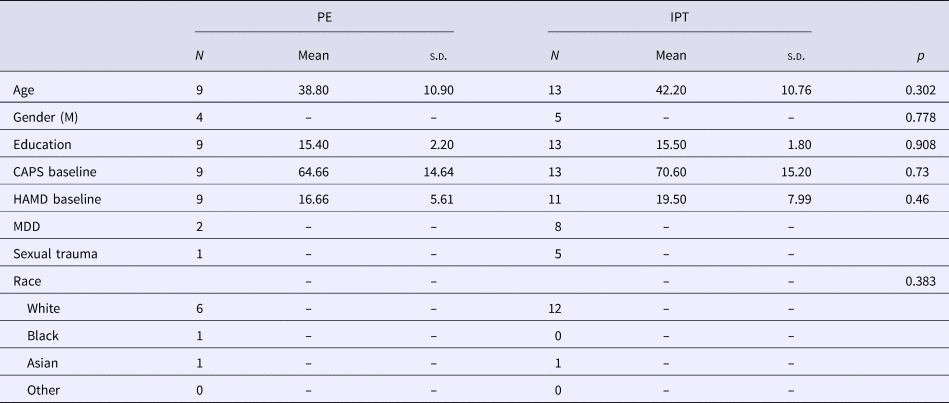
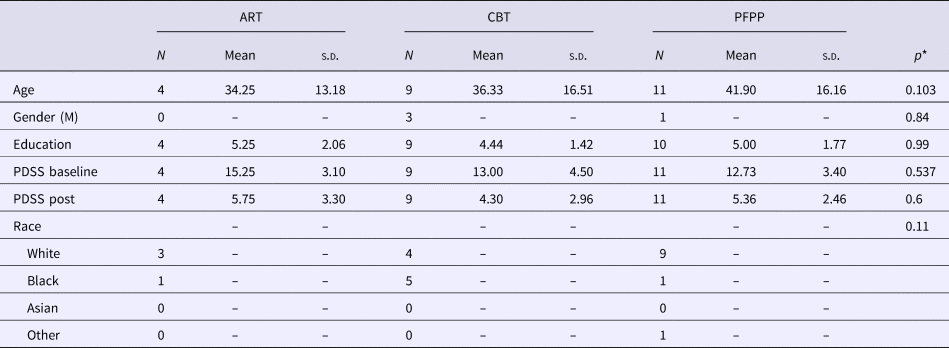
Table 1 and 2 present demographics of both imaging samples, indicating no significant differences among the treatment groups.
Demographic table for PTSD sample

Demographic table for PD sample

*p value is between the affect-focused treatment (PFPP) and exposure-based treatment (ART, CBT)
PTSD sample results
Seven (54%) IPT completers (n = 13) and 5 (55%) PE completers (n = 9) met treatment response criteria (>30% CAPS improvement) at week 14 (Markowitz et al., Reference Markowitz, Petkova, Neria, Van Meter, Zhao, Hembree, Lovell, Biyanova and Marshall2015).
Linear regression analysis found that baseline whole hippocampus GMV was not associated with CAPS changes in either PTSD treatment group (IPT: t = −0.74, p = 0.48; PE: t = 0.02, p = 0.98). For IPT, but not PE, regression analyses found that baseline AH GMV predicted symptom changes measured by CAPS reduction (IPT: t = −3.619, p = 0.009; PE: t = 0.533, p = 0.631), adjusting for PH, TIV, age, and sex. This finding does not appear to be a power effect driven due to the smaller PE sample size, as the amount of variance explained by all independent variables (AH, PH, sex, age, TIV) was robust in both treatment groups (IPT: r 2 = 0.831, f 2 = 4.92; PE: r 2 = 0.90, f 2 = 9.0). The direction of the association indicated that smaller pre-treatment anterior hippocampal volume was associated with larger CAPS improvement in IPT. In effect, a 0.01 decrease in AH GMV was associated with a greater final CAPS improvement of 15.9 points, a clinically meaningful difference (Weathers et al., Reference Weathers, Keane and Davidson2001). For PE and IPT, CAPS reduction was not associated with baseline posterior hippocampal volume (IPT: t = 2.071, p = 0.077; PE: t = 0.347, p = 0.752).
Further analyses testing the difference of the coefficients among the treatment groups revealed significantly different AH regression weights between IPT and PE (Z = 3.00, p = 0.0027). The PH showed equivalent regression weights between IPT and PE (Z = 1.56, p = 0.11). In post hoc analyses, subtracting or dividing anterior from posterior hippocampal volume yielded no significant findings for any treatment.
To ensure that outlier scores did not explain the association of IPT outcome with anterior hippocampal GMV, we removed the one patient with scores >2 standard deviations from the mean and reran the analyses, which were unchanged: baseline AH volume still predicted IPT CAPS changes (p = 0.003, t = −4.836), adjusting for TIV, age, and sex.
PD sample results
Eight (73%) of the 11 PFPP completers met treatment response criteria (⩾40% PDSS improvement) at week 12; for CBT (n = 9) and ART (n = 4), response rates were 100% and 75%, respectively.
Linear regression analysis found baseline whole hippocampus GMV was not associated with PDSS changes in any of the PD treatment groups (PFPP: t = −0.70, p = 0.52; CBT and ART: t = 0.01, p = 0.98). For PFPP, but not the other treatments (CBT or ART), regression analyses indicated baseline AH GMV predicted symptom changes measured by PDSS reduction (PFPP: t = −5.95, p = 0.01; CBT and ART: t = −1.399, p = 0.221), adjusting for PH, TIV, age. and sex. This finding did not appear to be a power effect driven due to smaller treatment (CBT or ART) sample sizes, as the variance explained by all independent variables was again robust in all treatment groups (PFPP: r 2 = 0.941, f 2 = 15.67; CBT and ART: r 2 = 0.61, f 2 = 1.56). The direction of the association indicated that smaller baseline anterior hippocampal volume was associated with greater PDSS improvement in PFPP. In effect, a 0.01 decrease in anterior hippocampus GMV was associated with a greater final PDSS improvement of 3.47 points, a clinically meaningful difference. Baseline posterior hippocampal volume was not significantly associated with any treatment (PFPP: t = −0.948, p = 0.413; CBT and ART: t = −0.186, p = 0.86).
Analyses testing coefficient differences between affect-focused treatment (PFPP) and exposure-based treatments (CBT and ART) revealed significantly different AH regression weights (Z = 2.286, p = 0.01). The PH showed equivalent regression weights between affect-focused and exposure-based treatments.
In post hoc analyses, subtracting or dividing anterior from posterior hippocampal volume yielded no significant findings for any treatments.
Discussion
Our main finding suggests that hippocampal sub-regions might differentially predict affect-focused, but not exposure-based, treatment outcomes among patients with PTSD and PD. Whereas whole hippocampal volume did not predict treatment outcome, baseline anterior hippocampal volume significantly predicted therapeutic outcomes for IPT and PFPP, two affect-focused interventions. No comparable significant relationship emerged for posterior hippocampal volume.
IPT and PFPP do not involve exposure-based techniques (Markowitz et al., Reference Markowitz, Milrod, Bleiberg and Marshall2009, Reference Markowitz, Petkova, Neria, Van Meter, Zhao, Hembree, Lovell, Biyanova and Marshall2015; Busch et al., Reference Busch, Milrod, Singer and Aronson2012; Markowitz, Reference Markowitz2016; Milrod et al., Reference Milrod, Chambless, Gallop, Busch, Schwalberg, McCarthy, Gross, Sharpless, Leon and Barber2016) but instead focus on aiding patients to identify different emotions and relate them to emotionally charged aspects of their lives. Thus, affect-focused treatments involve an emotional aspect of memory that may engage AH (Zeidman and Maguire, Reference Zeidman and Maguire2016; Abdallah et al., Reference Abdallah, Wrocklage, Averill, Akiki, Schweinsburg, Roy, Martini, Southwick, Krystal and Scott2017). Based on our previous findings with a PE trial in PTSD (Rubin et al., Reference Rubin, Shvil, Papini, Chhetry, Helpman, Markowitz, Mann and Neria2016), we had originally anticipated that greater anterior hippocampal volume might predict better affect-focused treatment outcome; surprisingly, an opposite pattern emerged. A potential post hoc interpretation of this finding is that smaller baseline AH indicates neural deficits characterizing patients for whom affect-based treatment (IPT in PTSD, or PFPP in PD) may be particularly efficacious. Thus, reduced AH volume might represent a potential treatment target. This neuroanatomical finding could further suggest that, following treatment, anterior hippocampal volume might increase, through neurogenesis, or show greater density, reflecting greater functional connectivity to other brain areas (cf., Ismaylova et al., Reference Ismaylova, Di Sante, Gouin, Pomares, Vitaro, Tremblay and Booij2018). This hypothesis would accord with the affect-focused treatments’ aim of improving clinical symptoms such as affective numbing, which could rely on AH engagement. Moreover, the AH may play a crucial role in recalling and imagining emotionally charged decision making, needed in emotionally charged settings or relationships, which affect-focus treatments emphasize and target, such as when using role-playing exercises in IPT (Zeidman and Maguire, Reference Zeidman and Maguire2016), or in transference interpretation in dynamic therapy (Busch et al., Reference Busch, Milrod, Singer and Aronson2012). Accordingly, anterior hippocampal volume could potentially serve as a biomarker for treatment selection.
Our complementary hypothesis, that baseline posterior hippocampal volume would predict PE outcome, was not confirmed. The lack of a significant finding may reflect inadequate statistical power across three varying treatments (PE n = 9; CBT = 9; ART = 4), i.e. a Type II statistical error. Finally, we found no relationship between sub-regional (AH-PH) volume ratio and treatment outcome, suggesting that these results are specific to each hippocampal region. These findings, that different hippocampal regions might predict efficacy of differing domains of psychotherapy is an unprecedented finding, albeit clearly requiring more research to test this hypothesis.
This study has several limitations. Small sample sizes present the risk of false positive and negative findings. Although our sample sizes are small, the variance explained by the independent variables is robust in all treatment groups. Despite the small sample size for each treatment group, we decided not to pool patient into two separate ‘treatment-type’ groups (viz., exposure-based and affect-focused) as patients carried different diagnoses (PTSD and PD). Pooling them, while increasing sample size, would have created noisier, more heterogeneous samples, obscuring potential results. Thus, the present study demands replication with larger samples, which might allow pooling across psychopathologies. Future studies employing larger patient samples could also conduct similar, but within diagnostic group, analyses, adding functional fMRI and post-treatment follow-up imaging to determine whether affect-focused psychotherapies normalize the anterior hippocampal volume deficit observed here. Despite these caveats, the present study raises the intriguing possibility that anterior hippocampal volume might constitute a biomarker for affect-focus treatments’ response in PTSD and PD.
Author ORCIDs
John C. Markowitz, 0000-0003-2364-8363
Acknowledgements
The IPT study was supported by grant R01 MH079078 from the National Institute of Mental Health (Dr Markowitz, PI), and salary support from the New York State Psychiatric Institute (Drs. Markowitz, Neria). The PFPP study was supported by NIMH R01 MH70918-01A2 and NIMH R01 MH 070664 as well as the Brain and Behavior Research Network. Dr Suarez-Jimenez's work is supported by grant K01 MH118428-01 from the NIMH. Dr Mann reports royalties from the Research Foundation for Mental Hygiene for commercial use of the Columbia-Suicide Severity Rating Scale. The authors thank Eva Petkova, Ph.D. for her generous statistical input on a version of this article. Dr Milrod's work is also supported by a Fund in the New York Community Trust established by DeWitt Wallace and Weill Cornell Medical College CTSC Community Engagement Award and Pilot Award NIMH UL1-TR-002348. Trial Registration Clinicaltrials.gov Identifiers: NCT00739765 and NCT00353470.