The instant that the cold is discovered, we are already outside in the cold.
Watsuji Tetsuro, FudoMarch 1944: a certain Zhou Chongzhao had fallen deeply into debt in when he petitioned to resign his post as technician's assistant at the Songpan Meteorological Observation Station in south-west China's Sichuan Province. His replacement was to be a young woman of twenty-two sui named Sun Zebing, but before she could transition to a permanent post, she needed to demonstrate a scientific understanding of meteorological phenomena.Footnote 1 Among the eight tasks on her intake assessment, Sun was asked to describe the nature of heat, the various kinds of thermometer, the difference between evaporation and boiling, how wind is created, and how to correctly measure air pressure. She also converted several figures from Celsius into Fahrenheit and vice versa. ‘In everyday life’, she wrote on one portion of the test, ‘body temperature acts as the standard, temperatures higher than this are called “hot,” and temperatures lower than this are called “cold”.’ Such judgements were subjective, she explained, whereas ‘in science there is an instrument that specifically measures temperature called a “thermometer”’.Footnote 2
Zhou and Sun were among the first generation of state-deployed meteorologists on the Sino-Tibetan frontier. In the Chinese geographical imagination, Tibet lay well within guanwai, the lands ‘beyond the pale’, where it was believed – notes Jack Hayes – that ‘the elements and Tibetans were brutal’.Footnote 3 First-hand reports on the people and landscapes of Tibet were plentiful in China by the 1940s, but meteorology presented a new way of viewing the landscape that deliberately disregarded the embodied experience of the observer in favour of instrument-mediated readings. This process resulted in a bifurcated archive, in which stations disseminated quantitative weather charts as a matter of public interest while only privately recording the qualitative, embodied experiences of observational staff when something went wrong. In this sense, the meteorological record from south-west China is fundamentally unlike those of other methods of empirical observation, such as ethnography and travel writing, which treated the embodied experience of the observer as a matter of public interest.
This essay considers how the meteorological archive might disrupt our understanding of the relationship between observation and empire. Historians of China, resonating with scholars of European empire, point out that travel writing, ethnography, cartography and other methods of observation became integral parts of the colonial toolkits of the Qing empire (1644–1911) and its successor states, the Republic of China (ROC) (1912–49 in the mainland) and the People's Republic of China (1949–present).Footnote 4 Scholars commonly articulate the relationship between observation and empire in terms of desire: for example, Emma Teng writes that Qing travel writers began to ‘depict the open spaces of the frontier in terms not of desolation but of potential and opportunity’, and Stevan Harrell observes that Chinese writers and artists have tended to eroticize the frontier.Footnote 5 The literature on imperial observation tends to focus on relatively elite observers, including popular writers, academics and government officials, to the exclusion of less glamorous observers such as meteorologists. The writings of imperial elites melded romance, adventure and the production of knowledge into a single enterprise, resembling what some scholars have labeled the ‘cult of heroic fieldwork’. It is worth asking, then, how observers outside the ‘cult of heroic fieldwork’ viewed their work and the frontier in general.Footnote 6
First, let it be noted that meteorology has not always been at odds with the cult of heroic fieldwork. Early European meteorologists were often polymaths who pursued weather analysis as a component of grander adventures, such as the pioneering meteorologist Nils Ekholm, whose interest in atmospheric circulations stemmed largely from his preoccupation with balloon expeditions to place the Swedish flag on the North Pole during the 1890s.Footnote 7 Similarly, Deborah Coen writes that the German Austrian meteorologist Heinrich von Ficker perceived an ‘ambiguous line between personal experience and scientific observation’ and believed that the meteorological travel narrative would become a popular genre. Coen further notes, however, that Ficker failed to predict the emergence of a largely automated and ‘statistics-driven meteorology’ during the mid-twentieth century.Footnote 8 Pursuing the implications of that evolution of meteorology for frontier meteorologists of the early twentieth century, this essay is concerned with observers who operated in a statistics-driven milieu at Chinese weather stations in Tibet during the 1940s. I broadly interpret the role of meteorological observer to include those who held the job title of ‘observer’ (guance yuan), as well as others (observers’ assistants and technicians) who collaborated on producing weather reports – but to exclude managerial personnel who, to my knowledge, were not directly involved in reading instruments on a regular basis.
In fact, it is the peculiar dynamic between observers and the bureaucrats who managed them that positions meteorology of the 1940s as a unique window on the relationship between observation, status and empire. Across the Tibetan plateau, young Han men became stranded at their stations, where they faced illness, poverty and isolation as they pleaded with their superiors for relief. This essay draws on the rich archival records of meteorological stations in greater Tibet from Songpan to Lhasa, but its focus is on life at the Kangding Meteorological Observation Bureau (Kangding qixiang cehou suo) from its founding in 1938 until the end of the republican era (1949). Much like Fiona Williamson in her study of the Hong Kong Observatory (this issue), I make use of handwritten petitions and letters of complaint to recover the history of a meteorological station from below, revealing it to be a microcosm of empire. Unlike Hong Kong, Tibet was never expressly a ‘colony’ of any empire, but this should not preclude the adoption of imperialism as a lens on Chinese state building in ethnographic Tibet.
In fact, my analysis is predicated on the idea that Chinese state building in ethnographic Tibet was an imperial project despite the demise of the formal empire and the emergence of the Chinese nation state in 1911–12. While the possibility that empire can exist after its formal demise is a controversial notion, it has attained broad acceptance in the American context through such works as Daniel Immerwahr's How to Hide an Empire, which illustrates that the establishment of the US republic led to its rapid territorial expansion and the mistreatment of indigenous peoples.Footnote 9 In the same vein, Prasenjit Duara observes that twentieth-century nationalism in Japan and China did not preclude imperialism, but rather ushered those states into an era of ‘imperial nationalism’ in which Japanese and Han peoples subjected the peoples of their respective peripheries – Manchuria, Xinjiang, Tibet and so on – to ‘new conditions of inequality and endangerment’ in the process of consolidating the borderlands.Footnote 10 Duara credits sciences of frontier observation, including anthropology and geography, with facilitating this expansionist trend, as does Laura Hostetler in her recent study of ethnography in modern China.Footnote 11 While Han–indigenous interethnic relations – a crucially important facet of the study of Chinese imperialism – are beyond the scope of this essay, I address Han observations of a frontier landscape onto which the Republic of China was attempting to project its authority. Working from the premise that meteorological observation was a component of Chinese ‘imperial nationalism’ on the frontier, I demonstrate that young Han observers could at once be accessory to empire and victims thereof.Footnote 12 Their unpublished letters offer a rare glimpse into the frontier as experienced by reluctant or unwilling agents of the state.
New eyes on the frontier
Today Kangding (Tibetan: Dartsedo) is a relatively small city in the mountains of western Sichuan Province, but from 1939 to 1950 it was a provincial capital. Here sat the government of Xikang, a newly established (and short-lived) Chinese province on the Sino-Tibetan frontier. For the Han Chinese, Kangding represented a gateway between the nation's familiar interior (neidi) and the lands ‘beyond the pale’ (guanwai), which in this setting corresponded to the Kham region of eastern Tibet.Footnote 13 The city's very name in Chinese, meaning ‘Kham pacified’, attests to the history of Han interventions in Tibet, a process that began in earnest with the Qing's forceful annexation of Kham in 1905 and extended through and beyond the Communist annexation of central Tibet in 1950.Footnote 14
In the 1920s and 1930s a cohort of Chinese intellectuals made their names by descending – or rather, ascending – upon eastern Tibet and returning to the neidi to share their first-hand observations with the literate public.Footnote 15 Among the more popular outings were Liu Manqing's Journey by Carriage through Kham and Tibet (Kang Zang yao zheng, 1933), Ren Naiqiang's Illustrated Guide to Xikang (Xikang tujing, completed 1934), Ke Xiangfeng's Bird's-Eye View of Society in Xikang (Xikang shehui zhi niaokan, 1944), and the stunning photographs of Zhang Xueben that appeared in a number of publications.Footnote 16 Historians including Yudru Tsomu and Yajun Mo have argued that the boom in Chinese surveys of the Kham region was driven by nationalists’ determination to promote Kham as an integral part of the Chinese nation state, and by popular fascination with the ‘primitive’ people and landscapes of the frontier.Footnote 17 These historians contend that various forms of empirical observation abetted the larger project of colonizing eastern Tibet with Chinese settlers and integrating it into the nation state as a Chinese province.
The Chinese state began systematic meteorological observation in Tibet only during the late 1930s.Footnote 18 This is remarkable, first, because officials of the Qing empire in Beijing and elsewhere were acquainted with modern weather instruments through foreign influences well before the twentieth century, and second, because systematic climate data would presumably have benefited the cause of frontier agricultural development that became a priority for the Qing court and the subsequent republican administration.Footnote 19 Consider that by the late nineteenth century, settlers on the American frontier were collecting quantified rainfall, temperature and other data to assess the prospects of agriculture and other environmental modifications.Footnote 20 Armed with the telegraph, they shared readings from old instruments in new ways.Footnote 21 Some in Beijing were certainly aware that the British had worked with Jesuits to establish a system of meteorological stations in the treaty ports for the Chinese Maritime Customs Service in the 1870s, and that the Japanese had established a network of meteorological stations in Taiwan after acquiring the island in 1895.Footnote 22 Several meteorological journals circulated after the fall of the Qing empire, beginning with Qixiang yuekan (Meteorology Monthly) in 1913. But effective meteorology relies on a higher degree of centralization and standardization than most field sciences, and the political upheavals of the nineteenth and early twentieth centuries made it impractical for China to establish a national network of training programmes and observation stations.
During the 1920s Chinese officials increasingly viewed the study of qixiang – or ‘atmospheric phenomena’ – as economically important, thanks largely to the advocacy of overseas-trained scholars like Zhu Kezhen and Lü Jiong. As a professor at Nanjing University in 1922, Zhu explained to his protégé Li Zhiji that ‘the relationship between qixiang and agriculture is extremely important’, and that ‘in ancient times, though science was not yet developed, our country already knew this. Agricultural products and yield amounts should be determined by looking at variations in qixiang’.Footnote 23 Meteorologists as far afield as Yunnan helped communicate the modern notion of qixiang to the public, such as when the Yunnan Provincial Kunming Observation Bureau published a tract on Qixiang and Superstition, the introduction to which asserted that that ‘atmospheric phenomena [qixiang xianxiang] bear an extremely intimate relationship with human life’.Footnote 24
Incidentally, the phrase ‘new qixiang’ (or ‘new atmosphere’) had by this time become a popular metaphor for revolutionary change. Weeks after Han Chinese rebels overthrew their Manchu rulers in the Revolution of 1911, the Eastern Times (Shibao) heralded ‘new qixiang for the great Han’ in the form of a poem replete with plays on the characters qi and xiang.Footnote 25 Under President Chiang Kai-shek, the revolutionary front drifted toward China's ethnically diverse borderlands to the north and west, such that in 1935 the journal Borderlands Service forecasted ‘new qixiang for the west Sichuan borderlands’ in light of government efforts to unify the region's plural religions and ethnic groups in a region where ‘the land is mainly high mountains and deep valleys’.Footnote 26 When much of the Sichuan borderlands was incorporated into the new Xikang Province in 1939, the newspaper Da bao reported ‘new qixiang in Xikang’ as ‘the Han and Tibetan ethnic groups merge together with great passion’.Footnote 27 And when a university-trained agronomist named Duan Tianjue assumed leadership of Xikang's agricultural improvement bureau, a local gazette forecasted that the development of agriculture in that province ‘is certain to a see a turn of new qixiang’.Footnote 28
That last statement was something of a double entendre in that one of Duan Tianjue's many duties as chief of the Xikang Province Bureau of Agricultural Improvement was overseeing the network of qixiang observation stations that was established in Xikang in late 1938 and expanded over subsequent years.Footnote 29 There he oversaw several dozen meteorological labourers who, like himself, were Han migrants from the Chinese interior. While Duan published heroic and galvanizing essays on the future of frontier agriculture, some meteorological personnel under his command privately expressed less enthusiasm for their work.Footnote 30 In October 1942, Duan received a letter from a disaffected observer named Liang Gongle who desperately wished to leave Kham. Liang's complaints about the position were simple enough: he saw no future in it. Life was miserable, lonely and cold. ‘I hope you will permit me to return home’, Liang expressed to Duan, ‘so that I will not be a wasted person for our scientifically advancing society, and I shall be grateful beyond measure’.Footnote 31
The observer's discontent was surely an inconvenience to Duan, but to Liang it was a tragedy. He narrated himself as a well-meaning ‘youth’ (qingnian) caught in the winds of mammoth struggles: namely the rise of a Chinese republic, the war with Japan and the enterprise of frontier construction. ‘If we speak of fate’, he lamented, ‘I was cast into the Mandate of Heaven’. Liang's letter of 1942 expresses individual agency through his determination to escape the frontier and the strictures of his service – strictures that derived from the structure of the weather service.
Strictures and structures
China's first foray into meteorology on the national level began with the 1928 founding of the Central Institute of Meteorology (Zhongyang qixiang yanjiusuo) at Academia Sinica in Nanjing, which was then newly under Guomindang control. National standardization was a top priority, and in 1931 a meeting headed by that institute promulgated the Nationally Implemented Regulations for Meteorological Observation (Quanguo qixiang guance shishi guicheng). In 1937, the Japanese invasion of Nanjing forced the Meteorological Institute to flee west, first to Wuhan, and eventually to Chongqing, where the Guomindang would establish the Republic of China's new wartime capital.Footnote 32 Observation remained a mostly local affair until 1941, when the Central Meteorological Bureau (Zhongyang qixiang ju, henceforth CMB) was established and placed directly under the Administrative Yuan. This bureau began to network with observation stations in multiple provinces, though these were all situated in China's far west – Qinghai, Gansu, Sichuan, Xikang and Yunnan – because of territorial loss in the east.
On the third of October 1938, the studious reader of the Central Daily newspaper may have spied a story comprising a single sentence in the ‘Other news’ section at the very bottom of the page: ‘The students of the Xikang Meteorology Training Programme have determined to journey to Kham next month, [where they] plan to establish four meteorological observation stations in Kangding, Ganzi, Ba'an and Xichang, as well as ten rain measurement stations.’Footnote 33
The team succeeded in establishing a small network of weather stations in Kham, with its headquarters in the city of Kangding. The establishment of Xikang Province in 1939 spurred the promulgation of the Xikang Province Temporary Regulations for Observation Bureaus at Various Levels (Xikang sheng ge ji cehousuo zanxing guicheng), which mandated adherence to the Nationally Implemented Regulations document and delineated a hierarchical organizational structure. A bureau chief would oversee a meteorological bureau under the direct authority of the provincial establishment office (jianshe ting), which in turn oversaw a provincial network of county stations. These stations were ordered in terms of priority, with stations at higher tiers registering more types of observations more frequently than those at lower tiers.Footnote 34
The new regulations defined the weather bureau in Kangding (the provincial capital) as the highest-ranked in Xikang Province and the nerve centre for a provincial network of observation stations. As of December 1940, it hosted ten personnel, including four observers at its own ‘tier two’ station: a supervisor, two observers and an assistant observer, as well as administrative personnel who oversaw the entire provincial operation, including a secretary and an accountant. The staff were young: the average age of all personnel was twenty-seven sui, but that of observers (including interns) was twenty-two. The management – acting chief Wang Tingfang and administrative chairman Guo Fan – were university-educated, while others had at most a high-school or middle-school education.Footnote 35
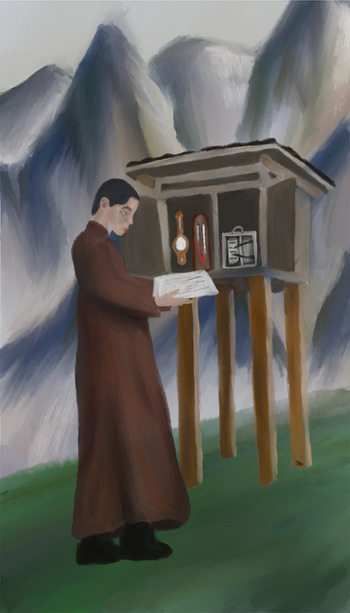
Work as a Kangding weather observer must have been tedious. Archival sources from the late 1940s allow us to construct a fairly detailed image: when all went according to plan, a team of two observers made seven distinct observations each day between 3 a.m. and 9 p.m. for a total of 217 observations per month. Each observation required a worker to visit the ‘hundred-leaf box’ (baiyexiang), known in English as a Stevenson screen, which the bureau had constructed on site out of lumber and placed on a patch of level ground. Its contents included the barometer, the hygrometer, the standard thermometer and the U-shaped Six's thermometer, which made it possible to record daily high and low temperatures by observing the positions of two metal sliders.Footnote 36 A completed chart, such as the one compiled by observers Chen Qingyao and Liu Shuxing in January 1948, included 896 data points and dozens of ‘miscellaneous’ margin notes. The data included barometric pressure, air temperature, relative humidity, wind force and direction, cloud cover, sunshine, rainfall and visibility. For averages and rainfall totals, one observer did the primary calculations and the other checked them. Both observers affixed their personal chops in the bottom right corner, after which the bureau submitted one copy to the provincial establishment office and another to the CMB. Another copy remained in the archive of the provincial bureau of agricultural improvement.Footnote 37 During the 1940s, Chinese stations in Tibet never seriously attempted the sort of forecasting that Sarah Carson describes at the India Meteorological Department (this issue), so these weather charts were the final product of the observation process.
A young weather observer attends to the Stevenson screen at the Kangding Meteorological Observation Station. Illustration by Luodan Rojas based on historical reference photographs.

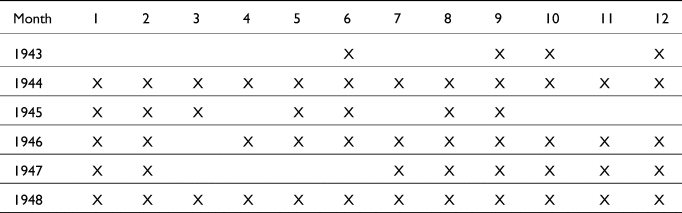
Any attempt to retrieve these records uncovers a minor mystery: of the seventy-two monthly Kangding weather charts that one would expect to find in the archive for the years from 1943 to 1948, some eighteen appear to be missing, as do all charts from the months prior to January 1943 (Table 1). Only two years, 1944 and 1948, are fully represented. Further, there are precious few charts from the many rain measurement stations outside Kangding, or even the tier three meteorological station in Taining.
Availability of monthly weather charts for Kangding in the Sichuan Provincial Archives from 1943 to 1948, as determined by the author. Available charts are marked with an X and can be found in the archives of the Xikang Province Bureau of Agricultural Improvement (Min 249) or the Central Meteorological Bureau (Min 19). It is possible that some of the missing charts can be found elsewhere.

Assorted memos present substantial evidence that station chiefs were simply unable to obtain the missing data. Stations outside Kangding frequently reported missing or broken instruments, particularly as the price of new instruments skyrocketed amid the runaway inflation of the war period.Footnote 38 But supervisors at the Kangding bureau more frequently cited another sort of mitigating factor: the underperforming worker.
Chen Yongfu was the quintessential underperforming worker. An observer at the Kangding station in 1943, his truancy disgruntled his supervisor, who complained that Chen had been visiting the Stevenson screen just four times daily instead of the usual eight, and some of his colleagues, who sent a scathing testimony about him to Duan Tianjue (then chief of the Bureau of Agricultural Improvement). Their letter paints Chen as a vagabond whose daily life is anathema to the bureaucratic discipline required of a weather observer. Chen, they claimed, sidelined as a doctor at the Kangding market, where ‘people from all walks of life’ came seeking diagnosis. He had fallen into company that was unruly and coarse ‘without regard to time or place’ and cavorted with the amorous actresses of the Kangding theatre. Because of this the ‘good’ people of the Kangding weather bureau and provincial government ‘look upon Mr Chen with disdain’.Footnote 39
When pressed by the Central Meteorology Bureau to expand Xikang's weather service, Duan Tianjue's successor raised two objections: first, the price of meteorological instruments was ‘soaring’ beyond the means of the provincial bureau, and some stations had become ‘laughing stocks’ (xiaobing) by adopting instruments of inferior make. Second, too few recruits were up to the task of checking the Stevenson screens: ‘the emphasis is on perseverance and [one] must have extraordinary willpower’, he explained, ‘otherwise it is difficult to obtain accurate numbers’. From a managerial perspective, then, the resources that were available to the weather service were defective, whether they were instruments or human resources. Now, let us consider how those same ‘human resources’ viewed their predicament.
Imperial misery
Chen in fact offered his side of the story in a series of letters to his superiors in which he insisted that he was neither lazy nor undisciplined, but rather a prisoner of the weather service. After Chief Luo of the Kangding bureau repeatedly denied his requests for leave, he circumvented Luo and wrote directly to Lü Jiong, then chairman of the CMB. A letter of 31 March 1944 asserts that ‘four times I requested long leave but I was told that I was making things hard for Mr Luo, when in fact Mr Luo was trying to make things difficult for me’.Footnote 40 The bureau had reneged on its guarantee of leave after one year of service, and he was determined to leave whether or not a suitable replacement was found. He was writing to the central bureau in a final appeal for a ‘certificate of resignation’ (cizhi shu), an official recognition that he had not absconded.
Notably, Chen's complaints are present in the archive only because he was forced to negotiate in writing with those who were empowered to adjudicate their legitimacy. They are the expressions of a miserable Han settler, expressions of a sort that one is unlikely to find in print because they contravened the interests both of the officials charged with settling the frontier and of the print capitalists who sold stories about ‘new qixiang’ on the frontier. Globally, print literature about imperial service tends to capitalize on the romance and excitement of a select few figures, and to ignore the experience of the vast ‘anonymous empire’ whose lives are less camera-ready, as historian Jeffrey Auerbach points out in the book Imperial Boredom. ‘What was it like’, asks Auerbach of the British Empire, ‘to be a soldier on the frontier in South Africa, to trek through the jungles along the Zambezi, to accompany a colonial administrator to a hill station in India, or to be employed as a governess in Western Australia?’Footnote 41 What was it like, we might ask of the Chinese state, to be a weather observer on the frontier in Kham, or to carry a sociologist up the road from Ya'an to Luding, or to farm a plot of newly conquered land?
Unfortunately, few records survive of the first-hand experiences of Han labourers and subsistence farmers in eastern Tibet during this era, so historians must rely on the writings of relative elites. For example, in 1910 during an early campaign to settle Kham with Han farmers, the Qing imperial official Zhao Erfeng notified potential settlers that ‘the indigenes (manzi) are all lazy’ and that Han settlers could inherit the land in perpetuity ‘so long as you work hard and are not lazy’.Footnote 42 Zhao's fixation on young, healthy, upstanding Han men, as Scott Relyea observes, was motivated by his conviction that the indigenous men of Kham were incapable of diligent labor, and simultaneously by his frustration with the fact that few Han farmers ever answered his calls – and that those who did were often quick to abandon Kham and return to the interior.Footnote 43 As republican officials reprised Chinese efforts to settle Kham after the fall of the Qing, they faced an enigma: why did so many settlers choose to abandon the Tibetan frontier? One essay of 1935 on ‘The wax and wane of migration to Xikang’ acknowledged that numerous farmers and labourers (carpenters, stonemasons, metalworkers and so on) had come to misfortune in Kham, but the author pinned the problem on the ignorance and moral decay of the settlers themselves: some had succumbed to the lure of cheap opium, while others pursued sex with Tibetan women only to get waylaid and stranded in the grasslands.Footnote 44 ‘Youths arrive here and do not know benefit from harm’, read the essay, ‘and quite a few die in tragic circumstances’.Footnote 45 In a subversive read, the 1935 essay betrays not only a blatant contempt for Khampa Tibetans but also a subtler contempt for the Chinese imperial underclass that carried the weight of empire while reaping few of its benefits.
That contempt for the underclass is especially explicit in a travel account from 1939 in which the Kham-bound sociologist Ke Xiangfeng trained his ethnographic lens on the porters, or ‘coolies’ (kuli), with whom he shared the road, including those who bore the litters on which he and his colleagues ascended to the mountains for field research.Footnote 46 The porters are a constant problem in Ke's literary treatment, being ‘indolent’, strung out on opium, clumsy and only briefly deserving of sympathy when one slips on a rain-damp road and tumbles down a hill, gashes his head and moans with pain until he is replaced.Footnote 47 Ke's oft-reprinted Travels in Xikang, like so many other published field journals, seizes on the undignified bearing of the labouring class to accentuate the dignity of the fieldworker.
If the pain of the imperial underclass is usually documented by those who inflict it, is there a way to access it more directly – that is, to tap into an ‘archive of imperial misery’? It may be that the texts from which scholars glean the ‘eyes’ and the ‘gaze’ of empire are poorly suited to this purpose. Travel writing, ethnography and even geographical survey work can be elite enterprises in which the labourer is replaceable, and thus silent in the written record. Meteorology, by contrast, presents an exaggerated form of the dynamic between the supervisor and the worker, in which labour was so regimented that even a temporary lapse in diligence must be accounted for in writing, in which the physiology of the worker was not only observed but carefully documented, and in which the worker could not simply be allowed to leave before a suitable replacement was found. Among various empirical methods of observing the frontier, meteorology thus lends itself unusually well to the assembly of an archive of imperial misery, at least in Kham during the 1940s. Earlier we became acquainted with the complaints of the technician's assistant, Liang Gongle. Below I further explore how he and others narrated the physical and psychological discomforts of life on the frontier.
Meteorology and misery
In the spring of 1942, Chinese readers in the neidi might have spied a weather report in Meteorology News and Updates by Wang Tingfan, a young man from Japanese-occupied Jiangsu Province who was then the acting chief of the Kangding Weather Bureau. ‘Report’ may be too banal a word for the document, for this was an atmospheric drama conveyed with rare precision: on the afternoon of 30 March, the air pressure gradually dropped from two o'clock onward, and the wind changed direction, its force growing stronger and then quickly retreating. Thunder started sounding at 16:25, the first thunderstorm of the year. March had received a total rainfall of 16.4 millimetres, a mere one-fifth of the previous March's rainfall. Over the course of the month, wrote Wang, ‘at times it was like a sweltering summer and at times there was heavy rain or snow with the majesty of a harsh winter, conducive to contracting illness’.Footnote 48 Not printed were the names of the observation staff who assisted Wang with the report, or the fact that the station itself was periodically plagued by illness.
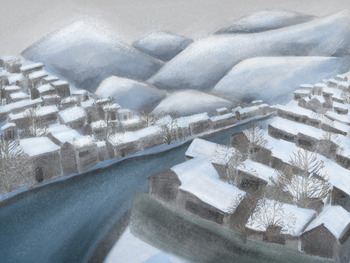
A winter storm engulfs the city of Kangding in 1942. Illustration by Luodan Rojas based on historical reference photographs.

Among the station's recent casualties was one Yi Zhongyong, who had developed a debilitating cough. Yi, a former secondary-school principal from Wan County in Sichuan Province, was one of five ‘volunteers’ (zhiyuan) who submitted to medical exams in the wartime capital, Chongqing, in late 1938 before departing for meteorological service in Xikang. In the photograph that accompanies his health form and application, he looks young but severe, the edges of his mouth arcing subtly down. His hair is trimmed close to his head, with about two inches on top and almost nothing on the sides. He is thin and wearing a collared shirt, buttoned to the top. At 64.5 inches and 112 pounds, Yi's physique was similar to those of his fellow recruits, though small by today's standards. Following his physical in August he was reported to be in impeccable health except for one problem: a ‘murmur’ in his upper left lung. The doctor at Methodist Union Hospital appraised Yi as ‘surgically negative’, but with a qualifier: ‘mild pulm. TB’ – mild pulmonary tuberculosis.Footnote 49
Why did a young man with this diagnosis leave urban Sichuan for a remote volunteer post in the Zheduo mountains? With China at war, it is easy to imagine the obligation he may have felt to the nation as a qingnian, or ‘youth’. Historian Frank Dikötter has argued that the emergence of ‘youths’ as a social category in republican China coincided with ‘biologizing discourses’ in which biology became central to discussions of humanity. In ways new to China, the youthful body (and particular the youthful male body) was idealized in tandem with the youthful mind as they were ‘turned into a powerful symbol of regeneration, vitality and commitment to modernity’.Footnote 50 But Yi's diseased body was, at best, imperfectly youthful, and it is possible that he believed the frontier life would benefit his health. What we might call the ‘salutary frontier’ was a popular trope in Chinese publications at least by the late 1940s: one prominent government official insisted that ‘if your soul yearns for the beauty of Switzerland, you need not seek abroad what lies near at hand. Our borderlands are the perfect setting to exercise your body and soul and make a contribution [to the nation]’.Footnote 51 A book on borderlands service by the sociologist Huang Fensheng similarly promised that ‘the climatic and topographical environment of our cold, crisp borderlands offers natural exercise [tianran duanlian] [that] will come to benefit the imperative of bodily health’.Footnote 52 Moreover, Yi may have known that Europeans had been treating tuberculosis patients at mountain sanatoriums since the 1850s (though doctors there typically prescribed bed rest, not labour).
Like most observers in the Kham weather service, Yi was based at the tier two station in Kangding and sometimes travelled to other stations, which were generally higher and colder. One important tier three station was Taining, where the province performed some of its most important agricultural experiments, a journey of about a day by horse from Kangding.Footnote 53 Over Yi's first year in Kham, his pulmonary condition deteriorated, as recorded in a series of tortured petitions. In September 1939 he petitioned to resign from the bureau, citing health problems. By November he was desperate. ‘Since entering Kham, because the environment [shuitu, ‘water and earth’] are not conducive [to my health], my illness has flared up, and since July my coughing disease has taken a turn for the worse and has developed into consumption [lao]’, he wrote from the bureau's Kangding office on 20 November. ‘I cough all day and night without ceasing, and I cannot stand it for another moment!’ He requested three months’ leave, during which time he would visit a doctor in Chengdu (capital of Sichuan Province) and then return to Kham ‘and endeavour to be of service’. Appealing to the sympathy of his superiors, Yi implored, ‘who does not have brothers, sons and nephews? And when those brothers, sons and nephews attend to affairs in other hamlets, who can guarantee that they will not fall ill?’Footnote 54
In January 1940, the weather bureau had yet to acquiesce. Yi wrote again, this time placing blame squarely on the climate:
I have been here for one year since I entered the Kham service. My body grows weaker by the day. Moreover, the land of Kham is situated on a plateau and the climate is severely cold. Thus my illness has progressed, and hardly a day has been tranquil. Since July of last year when I returned to the Kangding office from a survey trip to Taining, my coughing disease has become consumption. Each day I hack and cough violently with my every motion, and I cannot but be distressed.Footnote 55
His third and final petition from January 1940 abandons pathos and alludes instead to his body's lack of utility. ‘If I remain at the Kangding Station, I am but a superfluous object, and it is impossible to attend to daily observations. This is detrimental to the public and of no benefit.’Footnote 56 If allowed leave for medical care in Chengdu, not only would he be grateful, but he would ‘again someday labour effectively’. Finally, his request was permitted, and Yi disappears from the archive.
Yi was hardly alone in suffering. On 1 July 1939, just days before his fateful trip to Taining, observer Dong Yuzhong stumbled into the Kangding Weather Bureau after a disastrous attempt to reach the Taining site. On the afternoon of the previous day he had set out for Taining with an assistant observer, but his assistant observer's horse collapsed and perished en route. Dong placed his injured assistant on his own horse and the pair turned around at six o'clock, making it ten li (about five kilometres) before they sheltered at an inn. Upon reaching the Kangding office, Dong petitioned for sick leave, complaining that he had ‘suffered from the wind and rain’ and that his ordeal had caused a ‘grave illness’ (da bing).Footnote 57
Wang Tingfang declined Dong's petition, instructing the Kangding bureau to ‘encourage him in his hardships’ and to ‘command him onward’ for the benefit of the weather service.Footnote 58 The CMB was extremely reluctant to grant sick leave to Kham personnel precisely because it was requested so often. In March of the same year, Wang had granted sick leave to observer Wang Songqiao, who complained that his ‘serious illness’ could not be treated in Kangding. Letters from the latter in May and August reported that his ‘weak constitution’ (tizhi suruo) forbade him from making the journey back to Kham per the doctor's orders. A Kangding Weather Station work report indicates that Wang Songqiao was finally relieved of duty in August.Footnote 59 The report further reveals that, altogether, half of the staff resigned in 1940, including three who resigned because of illness and two who resigned for personal reasons.Footnote 60 Wang Tingfan himself inherited the position of acting chief from original bureau chief Wang Wenhan after the latter fell ill.
Others suffered from psychological anguish, as exemplified by the case of Liang Gongle. In 1941 Liang was pursuing an education in Sichuan when he grew ill and withdrew from his programme with the intention of resuming it later. In the meantime he resided in Kangding for reasons unclear, and on 18 November he received instructions from the Xikang Province Meteorological Bureau to travel to Bathang (then known in Chinese as Ba'an, or ‘Bathang pacified’) for service as a meteorological observer. In a letter to Duan Tianjue in 1942, Liang explained that he obeyed the order in spite of his apprehensions about ‘the myriad hardships in material life and transportation in guanwai’, and found himself ‘very lonely and very cold, on a journey of tens of thousands of li across wastelands, traveling solo into the wild’. He understood bearing hardship to be part of his duty as a public servant and a member of the Chinese ethnic nation (minzu) during the ‘War of Resistance’ against Japan, and felt that he was subject to forces beyond his control – or ‘cast into the Mandate of Heaven’ (tian ming). A year into his service in Bathang, however, Liang regretted that he was both underutilized at the rain measurement station and unable to support himself on his pay from the bureau, and thus forced to ‘rush around’ buying and selling things in order to support himself. ‘Overall’, he wrote, ‘after one year in Ba'an one sighs with dejection and longs for beloved friends’. He lamented that overnight ‘a public servant has turned to living as a petty merchant, [and] how despicable is that? Moreover, how tragic?’Footnote 61
Complaints about financial hardship were typical. In another example, the very Dong Yuzhong who had earlier complained of illness signed a joint petition in late November of 1940 in which he and his co-author lamented that ‘the cost of living is high, and aside from sundry pocket money for food and petty purchases, we have no remaining funds, thus since arriving in Kham, not only do we have no savings, but we have also accumulated significant debt’.Footnote 62 In September of the same year one Wang Fengju had petitioned to resign his post, citing the high cost of living and his need to support a household.Footnote 63 By the Kangding bureau chief's own confession, ‘the cost of living in Kangding is absurdly high’.Footnote 64
Liang ultimately turned to the strategy Yi had adopted the previous year: he emphasized his body's lack of utility to the nation in its current post, rather than his personal suffering, as justification for his wish to resign. He described himself as a ‘wasted person for the nation’ (wei guojia minzu zhi feiren):
Once this brief moment passes, after a few years the age for studies will have passed me by, my memory faculties declining day by day, and eventually I will become a wasted person for our nation … If this bureau feels that youths like me should work hard and strive in the future, I hope you will permit me to return home, or find a way for me to obtain specialized training in meteorology or agriculture, so that I will not be a wasted person for our scientifically advancing society, and I shall be grateful beyond measure.Footnote 65
Duan was sympathetic in his response, acknowledging Liang's hardships but imploring him to press on until a suitable replacement could be found. ‘This post of Ba'an is on the frontier and transportation is quite inconvenient’, he acknowledged, and ‘during this War of Resistance, public workers must bear great hardship’.Footnote 66 ‘Guanwai life is hard’, he wrote on a later occasion, but ‘you rightly indicated that you would fulfil your responsibilities’. Ultimately Duan urged Liang to ‘keep working hard’ (jin yi bu nüli).
Word of Liang's flightiness caused concern at the CMB in Chongqing, where Lü Jiong issued a renewed command on 4 August 1943 to instate him as ‘observatory technician's assistant and simultaneously acting chief’ of the Ba'an station, with a still-paltry salary of 110 yuan per month.Footnote 67 In November Lü heard back from Chen Yongfu at the Kangding bureau, who informed him that the letter could not be delivered because ‘the manager [Liang] has already absconded [taowang]’.Footnote 68 Liang's disappearance appears to have left the station defunct.Footnote 69 In a 1943 report to the Central Bureau, Kangding chief Luo Suoren complained that ‘of the original personnel, apart from Mr. Liang [Gongle] at Ba'an having already left unexpectedly, the work force is insufficient’, citing low pay and high costs of living as the primary reasons.Footnote 70
In fact, Lü Jiong fielded similar letters from weather stations across the Tibetan plateau. If we take these letters at face value, it is clear that being stranded at a Tibetan weather station could be devastating to Han settlers, who retained a deep sense of connection to their ancestral homes and to the neidi more generally, as well as a keen sense of filial duty, and who sometimes grew dejected over their inability to return home, attend to ailing parents and bury the dead. Two further examples, incidentally from Tibetan areas outside Xikang, illustrate this point in vivid colours: in 1944 the technician's assistant Zhou Chongzhao (with whom this essay opened) petitioned for leave from the Songpan station, explaining that the cost of travel had hindered his obligations to his family and placed him deeply in debt. Now, he related, ‘I hear that my father is ill and I am overcome with sadness, because my feelings for my father are so deep.’ The local station chief reported to the CMB that he had repeatedly tried to console Zhou but ‘all to no avail’, after which he granted Zhou's request and arranged a replacement.Footnote 71
Less fortunate was Deng Mingyuan, a technician's assistant at the Lhasa Meteorological Observation Station. The Lhasa station was founded as early as 1934 in autonomous (or ‘suzerain’) central Tibet through a collaboration between the CMB and the Mongolian–Tibetan Affairs Council of the ROC, with consent from the Tibetan government. According to Deng's original agreement with the CMB, he expected to be relieved of duty after five years in Lhasa, but when his term expired in 1945, the bureau neglected to send the expected replacement for his position, on top of which the Mongolian–Tibetan Affairs Council failed to disburse an expected stipend for travel back to Sichuan and the Lhasa bureau chief had been withholding his pay for months. Deng despaired that he was ‘buried under a mountain of debt’ and incapable of funding his trip along the road home from Lhasa, where ‘for thousands of li there is not a single guesthouse or inn’. Lü Jiong replied in November that a transfer was in order and that Deng could ‘continue to work with an easy heart’, but the letter offered no details. Deng's enduring desire was to return to his ancestral home town of Changsha in Hunan Province after it emerged from Japanese occupation in 1945, but the road was long indeed. By December 1945, Deng's father had passed away in his absence. A clearly embittered Deng despaired that ‘the bond of emotions among family has been severed forever’, and that ‘this regret is without limit’.Footnote 72 Two years later he was still appealing to the CMB for relief from the ‘bitter sufferings of mind and body’ in this ‘foreign land in the wilderness of the frontier’.Footnote 73
The CMB finally arranged a transfer in 1948 – but to Deng's dismay, he was ordered to assume the position of acting chief of the Kangding Meteorological Observation Bureau, which, as we have seen, was facing myriad problems of its own. Deng, who had no desire to remain on the Tibetan plateau, instead proceeded to the Leshan Meteorological Observation Station in Sichuan, where he insisted that he had never received the bureau's letter ordering him to Kangding. Soon after completing the journey from Lhasa to Leshan, Deng fell ill and convalesced for six months as he continued to appeal for a transfer to his home town.Footnote 74 He may well have still been in Sichuan in 1949 when the People's Liberation Army swept through on orders from another Hunanese man named Mao Zedong.
Conclusion: the politics of reflection
To be a meteorological observer on the frontier of republican China was to be a ‘public servant’ (gongwuyuan) and to perform a ‘service’ (fuwu) to the nation, which entailed an expectation that one subordinate ‘private’ concerns (si) to the needs of the ‘public’ (gong). This gong/si dualism guided negotiations within the weather service, such as when Yi Zhongyong rhetorically diverted from his personal suffering to the uselessness of his diseased body to the state, or when Liang Gongle supplemented his account of psychological anguish with the suggestion that he was a ‘wasted person for the nation’ and that his mental faculties could better serve the republic in another capacity. When their petitions fell on deaf ears, disaffected workers sometimes reasserted their own needs (‘I cannot stand it for one more moment’) or even rejected the premise that their private concerns contravened the needs of the public, such as when Deng Mingyuan declared to the CMB that ‘by gong or by si, by sentiment or by reason, I can no longer remain in Lhasa’.Footnote 75
Of course, the so-called ‘public benefit’ (gong li) of frontier meteorology was perceived as such from the vantage point of bureaucrats in an imperial nationalist state. The Chinese, like the Japanese in Taiwan and the French in Mauritius during the previous century, were now employing scientific weather observation in eastern Tibet to guide agrarian interventions in the landscape as part of a state-guided settlement effort.Footnote 76 That goal remained largely aspirational before the Communist era given the dysfunction of the weather service.Footnote 77 The work of the Kangding bureau might have had a modest impact on Chinese understandings of the relationship between climate and elevation on the Tibetan plateau in the form of general climate profiles that were occasionally published during the 1940s.Footnote 78 The observers themselves are invisible in such reports, which were governed by the apparent logic that embodied experience was immaterial to the meteorological record, even though, as we have seen, the observers were often eloquent and expressive writers.
Note that a different logic governed the reflections of certain intellectuals, as illustrated by the fact that relatively detached or ‘scientific’ survey reports on Kham by relatively elite authors like Ren Naiqiang and Ke Xiangfeng were supplemented by dramatic published accounts of the authors’ travels.Footnote 79 Ke's published travel journal not only noted the daily weather as he observed it but also employed those very observations to draw explicit connections between his personal journey and the general climate profile of the Kham region, all without recognizing any contradiction between concerns that were private and public in nature. While accounts such as his were punctuated with expressions of discomfort and of alienation from the comforts of home, that discomfort never percolated into despair or regret. And how could it? Unlike the poorly compensated meteorological observer who was bound to the same Stevenson screen month after month and year after year, the university sociologist and his peers were generously sponsored by the provincial government and hosted by local officials on round-trip itineraries that assured a timely return to the neidi, where they were duly credited for their efforts. All of these factors ensured that the select few fieldworkers who represented the experience of frontier development to the public had no personal reason to resent that endeavour. Of course, it is these edited, published reports on Tibet that were accessible to people of the neidi, including those who pondered migrating to the frontier.
If historians now appreciate that empirical depictions of the frontier helped to interest metropolitan publics in imperial projects ‘whose benefits accrued mainly to the very few’, we should also appreciate that many citizens who were mobilized to the frontier suffered tremendously for the advancement of others.Footnote 80 Imperial violence such as the conquest of Tibet – begun in the late Qing empire and largely completed under the People's Republic of China – is reducible neither to conflict between one ethnic group (Han) and another (Tibetans), nor to conflict between state and non-state actors or even settlers and indigenous peoples. It is thus contradictory to state, as Carole McGranahan recently did, that ‘there is no one Khampa [Tibetan] perspective and experience’ while simultaneously treating what she terms ‘Chinese settler colonialism’ as a monolithic ‘Chinese’ enterprise.Footnote 81 Instead, much as historians have shown that Japanese imperialism of the twentieth century subjected Japanese settlers in Manchuria (and elsewhere) to cold, isolation and mass starvation, Chinese imperialism in Tibet (and elsewhere) thrived and thrives on the exploitation of a broad imperial underclass by relative elites with an active interest in suppressing the complaints of their subordinates.Footnote 82 So, if we wish to draw imperial misery into the light, to compile a figurative ‘archives of imperial misery’, where do we look? This essay has tentatively shown that the low-ranking knowledge worker – literate and immersed in the state bureaucracy yet often rendered invisible in the public record, and even in histories of science, technology and empire – can embody a surprising degree of pain and dissent.
Acknowledgements
The author would like to thank Fiona Williamson for guidance and editorial suggestions; Mariko Tamanoi, Shao Dan, Laura Hostetler, Roderick Wilson, Robert Morrissey and Josh Levy for reading and commenting on earlier versions of this essay; two anonymous peer reviewers for their constructive feedback; and archivists at the Sichuan Provincial Archives for help with retrieving key materials. This publication was supported by a postdoctoral fellowship from the Council on East Asian Studies at Yale University, as well as an IIE Fulbright Research Fellowship.