Introduction
Germination requirements and timing of seedling emergence have been studied in a large number of Apiaceae species in the northern temperate climate. Large-scale screening studies revealed that many of these species have a chilling requirement and germinate in late winter or in spring (Roberts, Reference Roberts1979; Grime et al., Reference Grime, Mason, Curtis, Rodman, Band, Mowforth, Neal and Shaw1981; Baskin and Baskin, Reference Baskin and Baskin1988). Spring emergence is a common strategy amongst plant species growing in a temperate climate (Grime, Reference Grime2001). In this way, frost damage to seedlings during winter is avoided and seedlings can grow for a period in conditions of reduced competition in spring.
According to Martin (Reference Martin1946), most Apiaceae species have an embryo that has not completed growth at the moment of dispersal. An underdeveloped embryo in these seeds implies that after dispersal the embryo has to grow to a ‘critical’ size before germination starts. This growth causes a delay in germination, which has been termed morphological dormancy (MD) (Nikolaeva, Reference Nikolaeva and Khan1977). Very often dormancy in these species is controlled by an additional physiological dormancy (PD), preventing germination at times unfavourable for seedling establishment. Seeds with both an underdeveloped embryo and physiological dormancy are referred to as morphophysiologically dormant (MPD). Eight types of MPD have been discerned in angiosperms (Baskin and Baskin, Reference Baskin and Baskin1998). These types are classified according to temperature requirements for dormancy break and embryo growth, and based on the ability of gibberellic acid (GA) to overcome dormancy.
So far only three out of eight types of MPD have been found to occur in Apiaceae species. Autumn-germinating seeds of Apiaceae in the temperate climate either lack PD or PD is broken by high-temperature stratification before embryo growth is initiated. Seeds of these species have MD or non-deep simple MPD type I (Baskin and Baskin, Reference Baskin and Baskin1990a, Reference Baskin and Baskinb). For spring-germinating species of the Apiaceae, there are two possible scenarios with respect to timing of PD and MD break. In seeds with non-deep simple MPD type II, PD is broken by chilling before embryo growth can be initiated (Vandelook et al., Reference Vandelook, Bolle and Van Assche2007a, Reference Vandelook, Bolle and Van Assche2008). In seeds with non-deep complex and deep complex MPD, on the other hand, PD and MD are broken simultaneously during chilling (Baskin and Baskin, Reference Baskin and Baskin1991; Walck and Hidayati, Reference Walck and Hidayati2004). Seeds with non-deep complex MPD require a period of warm stratification before cold stratification is effective.
Seeds with deep complex MPD require cold stratification for embryo growth and dormancy break, but inter-specific variation in the intensity of dormancy exists. For instance, the time required for the majority (>75%) of the seeds to have completed embryo growth at 5°C ranges from 8 weeks in seeds of Osmorhiza aristata to 22 weeks in seeds of Erythronium grandiflorum (Baskin et al., Reference Baskin, Meyer and Baskin1995; Walck et al., Reference Walck, Hidayati and Okagami2002). Differences in temperature requirements for dormancy break also exist between species with deep complex MPD seeds. In most seeds with deep complex MPD, 5°C is effective for dormancy break. Seeds of Osmorhiza depauperata, however, require very low temperatures for chilling, as dormancy break occurs at 1°C but not at 5°C (Walck and Hidayati, Reference Walck and Hidayati2004).
Although not all inter-specific variation in dormancy is covered by the classification system of Baskin and Baskin (Reference Baskin and Baskin2004), the system has proved to be useful for comparative studies on biogeography, ecology and evolution of seed dormancy (see Baskin and Baskin, Reference Baskin and Baskin1998). Variation in dormancy might be further resolved by studying the underlying physiological mechanisms (Hilhorst, Reference Hilhorst, Bradford and Nonogaki2007). Stokes (Reference Stokes1952a, Reference Stokesb, Reference Stokes1953) revealed in a series of studies that nutrient reserves stored in the endosperm of Heracleum sphondylium seeds became available for growth of the embryo during chilling at 2°C. Similarly, sugars are mobilized in seeds of Anthriscus sylvestris, Chaerophyllum bulbosum and Aegopodium podagraria during cold stratification at 5°C (Janiesch, Reference Janiesch1971). The role of GA in endosperm breakdown has been discussed for Apium graveolens (Jacobsen and Pressman, Reference Jacobsen and Pressman1979).
In the Apiaceae species examined so far, germination starts immediately after growth of the embryo in the seed is completed. A study on dormancy break of Aegopodium podagraria L. seeds showed that embryo growth and germination occurred at 5°C (Janiesch, Reference Janiesch1971). There was, however, a considerable lag period between completion of embryo growth and germination. This lag period could indicate that the dormancy-breaking mechanism in A. podagraria seeds differs from other Apiaceae species studied so far. Whereas Janiesch (Reference Janiesch1971) only examined dormancy break and germination in lab conditions, we also set up experiments to examine phenology of embryo growth, seed germination and seedling emergence in natural conditions. Based on these experiments, temperature requirements for embryo growth and germination were examined, enabling us to determine the factors controlling dormancy break and germination in natural conditions. Additionally, to fit the dormancy mechanism of A. podagraria in the dormancy classification system of Baskin and Baskin (Reference Baskin and Baskin2004), more extensive experiments in controlled conditions were required. Therefore, we determined the effect of different temperature conditions and of GA3 on dormancy break and germination.
Materials and methods
Plant material
Aegopodium podagraria is a perennial herb, reproducing both sexually by seeds and vegetatively by rhizomes (Chabot-Jacquety, Reference Chabot-Jacquety1984). This nitrophilous species is commonly found on moist soils in mildly shaded sites such as hedgerows, open forests and forest edges, but also in more open places such as meadows and riverbanks (Hegi, Reference Hegi1975). A. podagraria is a temperate-climate species, occurring in Europe and central Asia, except for the Mediterranean region and the extreme north (Hultén and Fries, Reference Hultén and Fries1986).
Seeds (mericarps) of A. podagraria were collected from plants growing in a moist, open woodland near Diest, Belgium (50°48′N, 5°23′E). Experiments were performed on two different batches of seeds harvested in early August 2005 and 2007. All experiments were started within 1 week after collecting the seeds. Malformed seeds were removed from the batches and excluded from the study. Some Apiaceae species have been shown to have a considerable amount of seeds lacking an embryo (Flemion and Henrickson, Reference Flemion and Henrickson1949). Therefore, we cut 120 A. podagraria seeds in half and looked for a viable embryo under a dissection microscope. This preliminary experiment indicated that in the population we sampled, about 17.5% of the visually intact seeds contained no embryo.
Phenology of embryo growth and seedling emergence
Embryo growth in seeds of A. podagraria was studied by burying seeds in an experimental garden near Leuven, Belgium (50°51′N, 4°41′E) and exhuming them at regular time intervals. Each of 20 nylon bags was filled with 30 seeds and 10 g of white sand. These bags were buried at a depth of 5 cm in August 2005. A nylon bag was exhumed every 14 d, and the embryo length of 20 randomly selected seeds was measured. The embryo to seed length ratio (E:S ratio) was determined by cutting seeds in half under a dissection microscope and measuring embryo length and seed length using an ocular micrometer. The E:S ratio was not calculated for seeds that had germinated; instead, for these seeds we applied the critical E:S ratio, i.e. the E:S ratio for seeds with a fully grown embryo. The critical E:S ratio was determined as the average E:S ratio of 20 randomly selected seeds with a split seed coat, but no radicle protrusion.
Phenology of seedling emergence was studied using seeds collected in 2007. Three replicates of 50 seeds were sown at a depth of 1 cm in plastic pots filled with potting soil. These pots were buried at soil level, in an open place in the garden and covered with a net to prevent disturbance by birds. This experiment was monitored for 1 year, during which time emerged seedlings were counted and removed every week. To measure the temperature experienced by seeds during burial, daily maximum and minimum temperatures at a soil depth of 1 cm were determined. Temperature was recorded manually before 10.00 hours using digital thermometers, and averaged over 1-week periods.
The role of stratification in dormancy break
The effect of various pretreatments on subsequent germination was tested on A. podagraria seeds collected in 2005. Following the respective pretreatments, three replicates of 50 seeds were placed in 10 cm Petri dishes on filter paper (MN 440) moistened with c. 10 ml of distilled water. Germination was tested for 4 weeks at constant temperatures of 10°C, 23°C and at daily fluctuating temperatures of 15/6°C and 20/10°C (12 h/12 h). During incubation, seeds were exposed to a 12-h photoperiod. Light (PPFD = 52 μmol m− 2 s− 1) was provided by cool white fluorescent tubes (Philips TLD 80). In the case of daily fluctuating temperatures, the photoperiod coincided with the high temperature part of the cycle.
In the control experiment, we tested whether fresh seeds were dormant by placing them at the above-mentioned temperatures immediately after harvesting. Four pretreatments were imposed, whereby batches of about 600 seeds were: (1) stored in dry conditions at room temperature (c. 20°C) for 6 months; (2) placed on moist filter paper at 23°C for 12 weeks; (3) subjected to a moist cold stratification at 5°C for 0, 4, 8, 12, 16 or 20 weeks; and (4) placed moist at 23°C for 0, 4, 8 or 12 weeks and subsequently transferred to 5°C for 12 weeks. Following each pretreatment, seeds were moved to the germination temperatures for 4 weeks, after which the total percentage of germinated seeds was determined. Seeds that had germinated during stratification were not included in the final germination percentages.
Embryo growth and germination in controlled conditions
The temperature required to initiate embryo growth in seeds of A. podagraria was determined by placing seeds of the 2005 batch in temperature-controlled incubators. Seeds were placed on filter paper in Petri dishes and moistened with distilled water. Batches of approximately 250 seeds were placed in Petri dishes and incubated at 5°C or 23°C for 16 weeks. Another batch of c. 200 seeds was incubated at 23°C for 12 weeks and then transferred to 5°C for another 12 weeks. During incubation, seeds were exposed to a 12-h photoperiod. Every 2 weeks, 20 seeds were selected randomly from each batch, and the E:S ratio was determined as described above.
Germination of A. podagraria seeds collected in 2007 was tested at a range of temperature conditions for an extended period of time. We performed the experiment both on freshly harvested seeds and on seeds that had been pretreated first in moist conditions at 23°C for 12 weeks. Since seeds are dispersed in mid-summer, this 12-week warm stratification period simulates summer conditions. Three replicates of 50 seeds were placed on moist filter paper in Petri dishes and moved to temperature-controlled incubators. During the course of the experiment, distilled water was added regularly to keep filter papers moist. Seed germination was tested at constant temperatures of 5°C, 10°C and 23°C and at daily fluctuating temperatures of 15/6°C and 20/10°C, in a 12-h photoperiod. Germinated seeds were counted and removed weekly during 36 weeks of incubation.
Effects of GA3 on embryo growth and germination
We tested the effect of three different GA3 concentrations and a control on germination and embryo growth of A. podagraria seeds collected in 2005. Three replicates of 50 seeds each were placed in Petri dishes on one piece of filter paper moistened with 10 ml of a 0, 10, 100 or 1000 mg l− 1 GA3 solution. Seeds were incubated for 20 weeks at 10°C and at 23°C. Filter papers were kept moist by adding distilled water regularly. Germinated seeds were counted weekly and the total percentage of germinated seeds was calculated. At the end of the experiment, the E:S ratio of 20 randomly selected seeds was also determined for both temperature conditions and each GA3 concentration applied.
Statistical analysis
The effect of stratification and of incubation temperature on final germination percentage was analysed statistically using a two-way ANOVA (Statistica 6.0, StatSoft Inc., Tulsa, Oklahoma, USA). A one-way ANOVA followed by a Tukey multiple comparisons test was applied to analyse the effects of duration of stratification on final germination percentages. The effect of GA3, temperature condition and the interaction of these two factors on embryo length after 20 weeks were analysed using a two-way ANOVA. All data were arcsine transformed prior to analysis, to stabilize variances.
Results
Phenology of embryo growth and seedling emergence
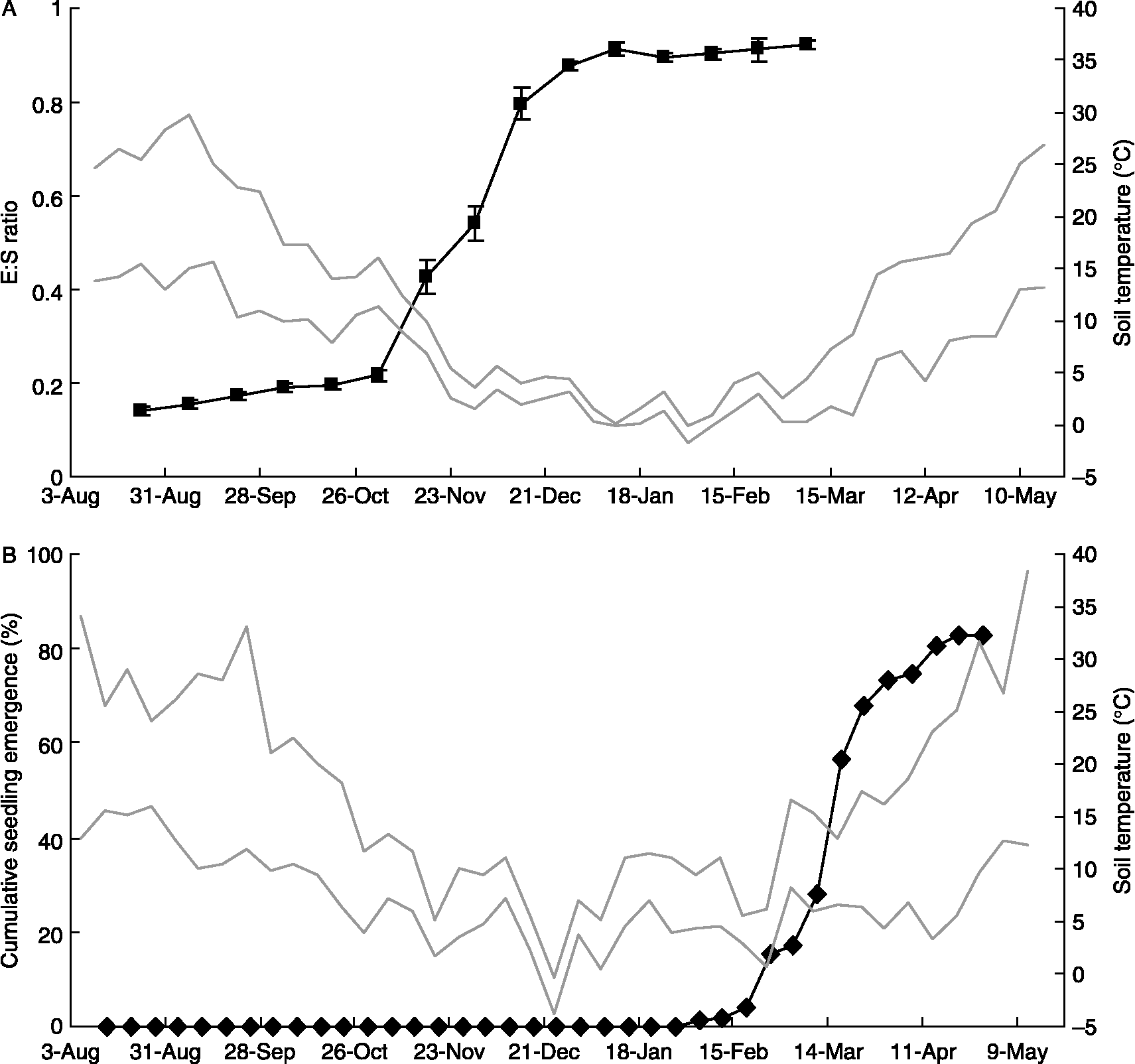
Seeds of A. podagraria had an initial E:S ratio of 0.14 ± 0.01 (mean ± SE) and before they could germinate the embryo had to grow to a critical E:S ratio of 0.88 ± 0.04. From the time of burial in August 2005 until 2 November 2005 the E:S ratio increased to 0.22 ± 0.01, indicating that embryos had grown only slightly (Fig. 1A). The first significant embryo growth was observed in seeds exhumed on 16 November 2005; mean maximum and minimum soil temperatures during the preceding week were 10.0°C and 6.9°C, respectively. In the bag exhumed on this date, the embryos had grown to an E:S ratio of 0.43 ± 0.04. The E:S ratio of the A. podagraria seeds increased continuously at low temperature conditions during early winter. The embryo in seeds exhumed on 28 December 2008 had grown to an average E:S ratio 0.88 ± 0.01, equalling the critical E:S ratio for germination; mean maximum and minimum temperatures during the preceding week were 4.4°C and 3.1°C, respectively. The E:S ratio of the seeds in the bags exhumed thereafter increased only slightly. No germinated seeds were found in the nylon bags until 8 March 2005, when about 65% of the seeds had germinated.
Mean ( ± SE) embryo to seed length ratio (A) and cumulative percentage seedling emergence (B) of Aegopodium podagraria seeds buried in a garden near Leuven in 2005 and 2007 respectively. Grey lines represent average daily maximum and minimum soil temperatures at 1 cm depth.
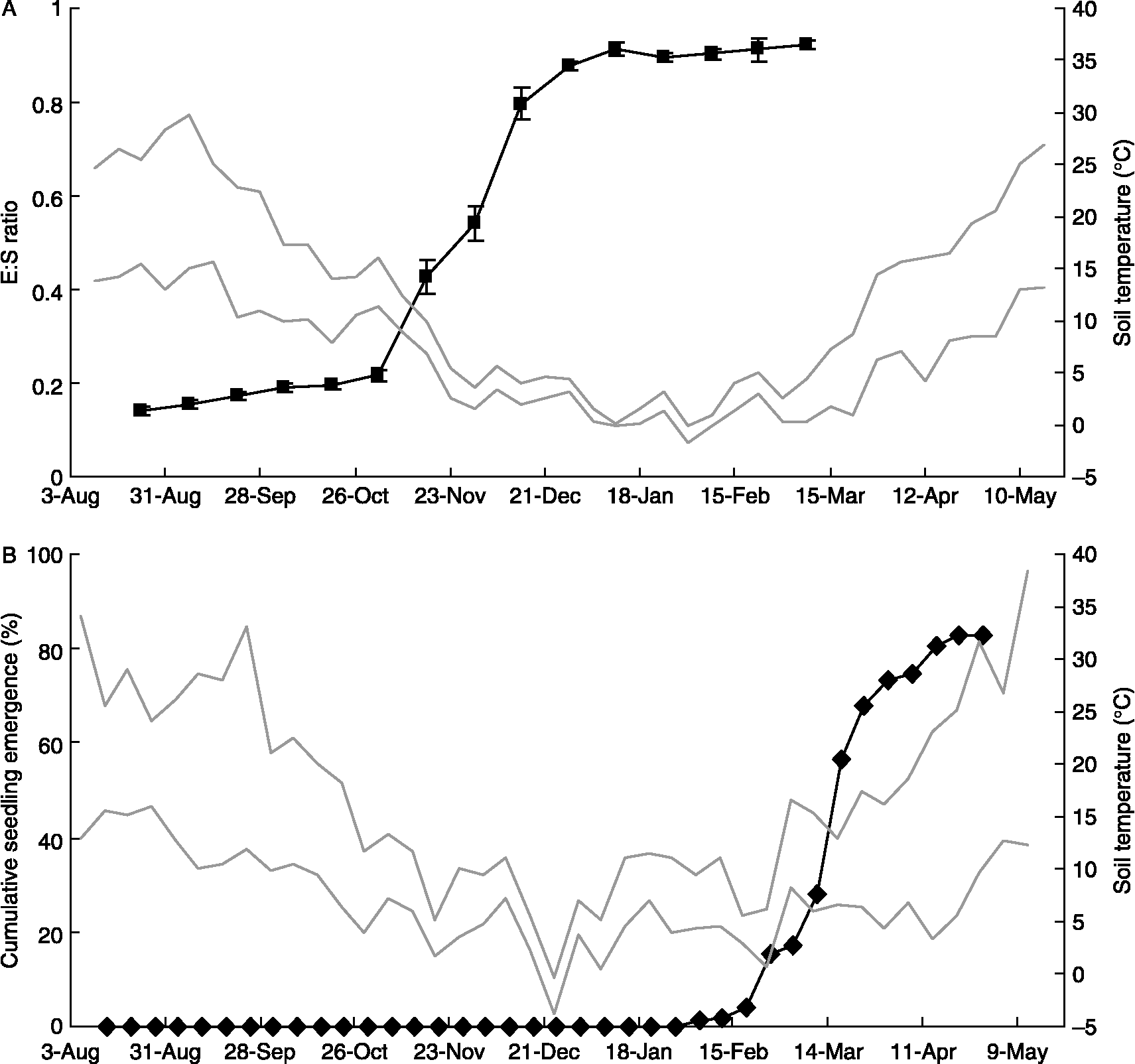
Seedling emergence of A. podagraria in the garden was concentrated in the first spring after burial (Fig. 1B). The first seedlings were observed on 5 February 2008; mean maximum and minimum temperatures during the preceding week were 9.5°C and 4.3°C, respectively. Emergence of seedlings peaked between 19 February 2008 and 15 April 2008, and 82.7% had emerged by 29 April 2008. No seedlings were observed to emerge thereafter.
The role of stratification in dormancy break
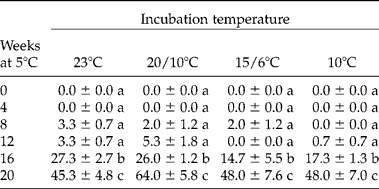
Freshly harvested seeds did not germinate after 4 weeks of incubation at constant 10°C and 23°C or at daily fluctuating temperatures of 15/6°C and 20/10°C, suggesting that seeds of A. podagraria are dormant at maturity (Table 1). No germination was observed after incubation at these temperature conditions following a 6-month dry storage or a 12-week moist stratification period at 23°C (data not shown). Subjecting seeds to a period of cold stratification prior to incubation resulted in significantly higher (P < 0.001) germination percentages at all temperatures tested (Table 1).
Mean (±SE) final germination percentage of Aegopodium podagraria seeds incubated at four temperatures for 4 weeks, following different periods of cold stratification at 5°C. Values followed by the same letter, within an incubation temperature, are not significantly different at the P<0.05 level (Tukey multiple comparisons test)
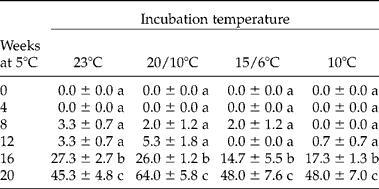
The increase in percentage germination due to prolonged cold stratification was similar at all temperatures tested, which was confirmed by the lack of a significant interaction effect (P>0.05) between duration of cold stratification and incubation temperature. At least 8 weeks of cold stratification were required for any germination to occur. However, even after 12 weeks of cold stratification, mean germination percentages were still below 6% for all temperatures tested. Higher germination percentages were attained for seeds that were cold stratified for 16 weeks (>25%) or 20 weeks (>60%). Seeds subjected to 20 weeks of cold stratification had already germinated to about 5% during stratification.
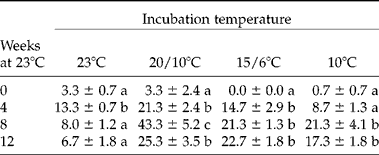
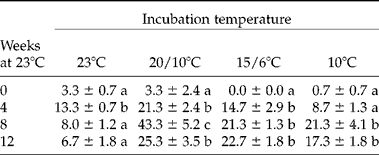
Pretreating seeds at 23°C in moist conditions prior to chilling resulted in significantly higher (P < 0.001) germination percentages at all temperatures tested (Table 2). Extending the period of warm stratification had no clear-cut effect on final germination percentage. Germination percentages decreased with an increase in duration of warm stratification prior to chilling for seeds incubated at 23°C, but they increased for seeds placed at 15/6°C.
Mean (±SE) final germination percentage of Aegopodium podagraria seeds incubated at four temperatures for 4 weeks, following different periods of warm stratification at 23°C and a 12-week stratification period at 5°C. Values followed by the same letter, within an incubation temperature, are not significantly different at the P<0.05 level (Tukey multiple comparisons test)
Embryo growth and germination in temperature-controlled conditions
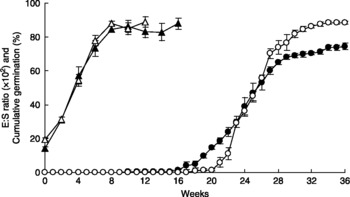
Seeds incubated continuously at 23°C for 16 weeks had an average E:S ratio of 0.18 ± 0.01, which was slightly higher than the E:S ratio of freshly harvested seeds (0.14 ± 0.01). In seeds incubated at 5°C, embryos started to grow immediately after incubation (Fig. 2). After 8 weeks of incubation at 5°C, the seeds had already attained an average E:S ratio (0.85 ± 0.02) comparable to the critical E:S ratio (0.88 ± 0.04) required for germination. The E:S ratio remained fairly constant in the following weeks and had increased slightly to 0.88 ± 0.03 after 16 weeks at 5°C. A very similar pattern of embryo growth was observed in seeds that were pretreated in moist conditions at 23°C for 12 weeks prior to incubation at 5°C. The embryos in these seeds had grown to an E:S ratio of 0.88 ± 0.03 after 8 weeks of incubation at 5°C following transfer from 23°C.
Mean ( ± SE) embryo to seed length ratio (triangles) and mean ( ± SE) cumulative germination percentage (circles) of Aegopodium podagraria seeds incubated at 5°C. Seeds were incubated either immediately after harvesting (closed symbols) or pretreated first at 23°C for 12 weeks (open symbols).

No seeds germinated during 36 weeks of incubation at 10°C, 23°C, 15/6°C or 20/10°C, irrespective of a 12 week pretreatment at 23°C. Germination was recorded only in seeds incubated at 5°C (Fig. 2). The first germinated seeds were recorded after 10 weeks of incubation, but significant germination did not start until 16 weeks after incubation. A peak in germination was recorded between week 18 and week 30. A final germination percentage of 74.5 ± 2.1% was attained after 36 weeks of incubation. Again, a similar germination pattern was found for seeds pretreated at 23°C for 12 weeks prior to incubation at 5°C. Although in these seeds significant germination was not recorded until 20 weeks after transfer to 5°C and a final germination percentage of 88.4 ± 0.8% was attained after 36 weeks.
Effects of GA3 on embryo growth and germination
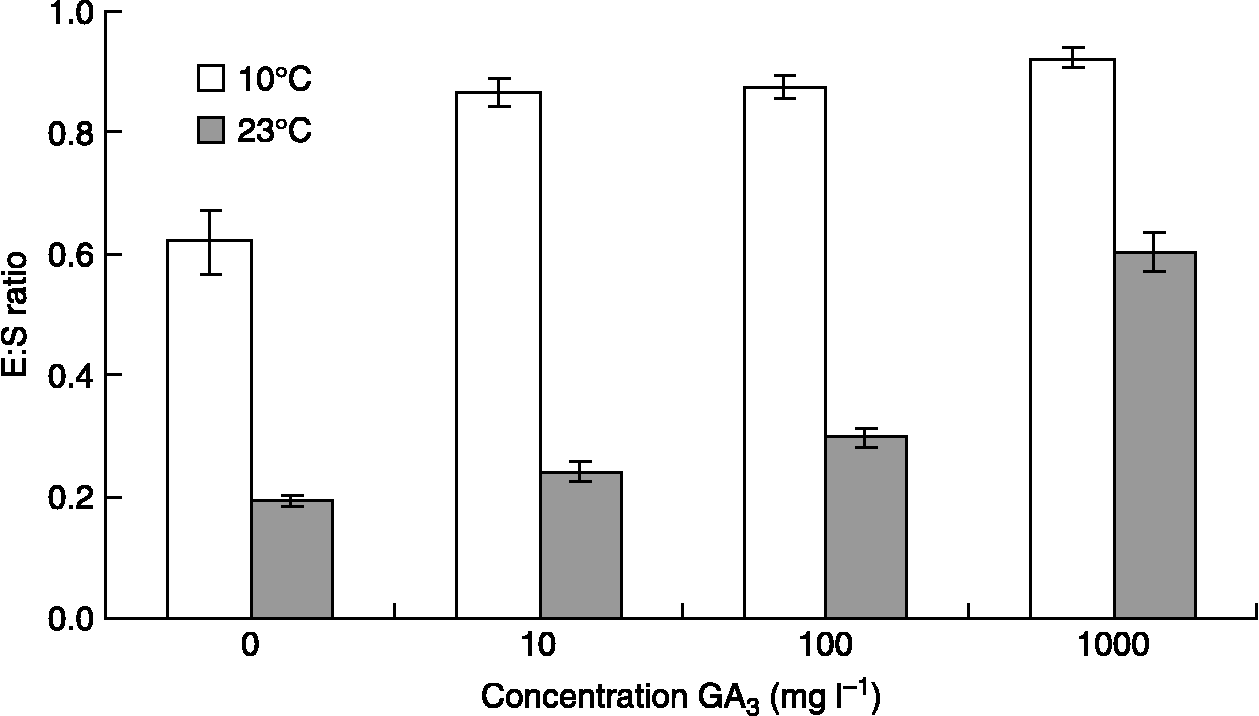
Addition of GA3 did not result in any germination of A. podagraria seeds incubated at 10°C or 23°C. However, adding GA3 did significantly (P < 0.001) affect the E:S ratio of seeds incubated at 10°C and 23°C. Moreover, a significant interaction was found between GA3 concentration and the incubation temperature. Low concentrations of GA3 (10 mg l− 1) resulted in a larger E:S ratio after 20 weeks of incubation at 10°C, while for seeds incubated at 23°C the largest increase in E:S ratio was noticed when a 1000 mg l− 1 solution of GA3 was applied (Fig. 3).
Mean embryo to seed length ratio of Aegopodium podagraria seeds in response to different concentrations of GA3. Seeds were incubated at 10°C (open bars) and 23°C (closed bars) for 20 weeks. Vertical bars represent SE.
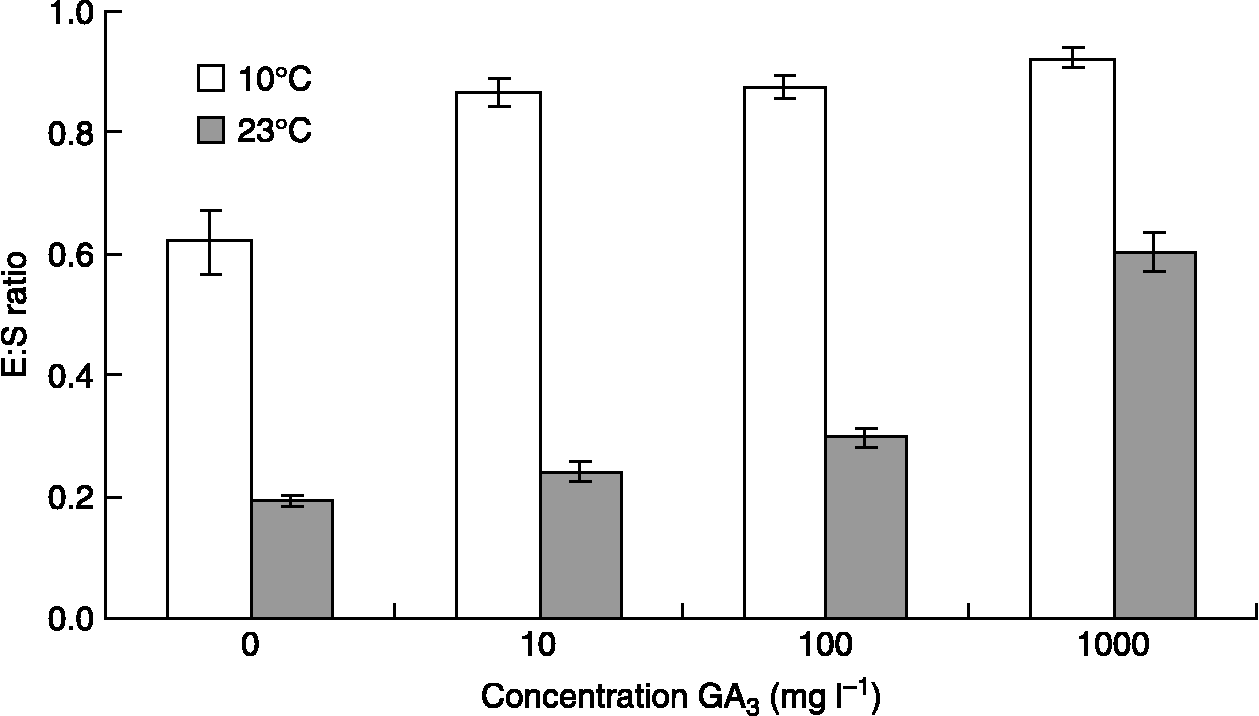
The E:S ratio of seeds incubated at 10°C was always higher compared to seeds incubated at 23°C, irrespective of the GA3 concentration applied. Addition of GA3 to seeds placed at 10°C resulted in fully developed embryos in most seeds after 20 weeks of incubation. Seeds incubated at 23°C for 20 weeks had attained an E:S ratio well below the critical E:S ratio required for germination, even when a 1000 mg l− 1 GA3 solution was added (0.60 ± 0.03).
Discussion
Seeds of Aegopodium podagraria have an underdeveloped embryo at the time they are dispersed in summer. Before the seeds can germinate, the embryo has to grow to more than six times its initial length. In natural conditions, growth of the embryo during summer is limited (Fig. 1). A rapid increase in embryo size was observed in late autumn as temperatures started decreasing. In temperature-controlled conditions, embryo growth was observed only at 5°C and started immediately upon incubation (Fig. 2). In most seeds, the critical E:S ratio was attained after 8 weeks of incubation at 5°C, irrespective of a 12-week high-temperature pretreatment. Janiesch (Reference Janiesch1971) obtained very similar results, as seeds of A. podagraria collected in Münster, Germany required on average 55 d at 5°C to complete growth of the embryo. Embryo growth was very similar for seeds we placed at 5°C, irrespective of a 12-week pretreatment at 23°C.
In our experiment, the embryo had grown to its full size in most seeds by midwinter, but seedlings mainly emerged when temperatures started rising in spring. Experiments in controlled conditions showed that the majority of the seeds do not germinate immediately after growth of the embryo is completed. Despite the fact that most seeds had completed embryo growth within 8 weeks of incubation at 5°C, less than 10% germination was recorded for seeds moved to higher temperatures conditions after a cold stratification of up to 12 weeks (Table 1). After embryo growth was completed, an additional period of at least 8 weeks at 5°C was required for germination to occur (Fig. 2). Seeds incubated continuously at 5°C attained 50% germination after approximately 26 weeks. Again, this was very similar to the 180 days required for A. podagraria seeds collected by Janiesch (Reference Janiesch1971). Grime et al. (Reference Grime, Mason, Curtis, Rodman, Band, Mowforth, Neal and Shaw1981) observed that A. podagraria seeds collected in the Sheffield region (UK) had germinated to 100% during a 12-month stratification at 5°C. Pretreating seeds did affect germination, as seeds that were subjected to a pretreatment at 23°C prior to incubation at 5°C started to germinate later and to a higher final percentage (Fig. 2).
During low-temperature stratification of A. podagraria seeds, three stages can be discerned: (1) embryo elongation; (2) breaking of physiological dormancy; and (3) germination. Disentangling these different stages could provide useful clues for understanding the processes of dormancy break and germination in this species. A first question arising is whether an additional physiological mechanism is present during the embryo elongation phase. Baskin and Baskin (Reference Baskin and Baskin2004) mentioned that embryos in morphologically dormant seeds begin to grow within a maximum period of 2 weeks and that seeds germinate within 30 days. Embryos in seeds of A. podagraria grow readily without any pretreatment when placed at 5°C and they attain the critical size in about 8 weeks. Since biological processes, in general, are slower at low temperatures, one might argue that only morphological dormancy has to be overcome during this stage. The same argument of slow embryo growth at low temperatures could apply to seeds with deep complex MPD in general. However, Baskin et al. (Reference Baskin, Chester and Baskin1992) found that embryos in seeds of Thaspium pinnatifidum had grown to 1.5 mm after 4 weeks at 5°C and that these seeds germinated to 61% within 4 weeks following transfer to 15/6°C. The embryo in T. pinnatifidum seeds incubated immediately at 15/6°C for 4 weeks had grown to 2.3 mm, but less than 10% of the seeds had germinated during 16 weeks of incubation at 15/6°C. These results indicated that in these seeds, there is more to low-temperature stratification than stimulating embryo growth. That is, low temperatures promote embryo growth, after which they break physiological dormancy of the embryo. These observations are consistent with Nikolaeva's formula for deep complex MPD (see Baskin and Baskin, Reference Baskin and Baskin2008) and with the results obtained for A. podagraria in our study. Embryo growth in seeds of A. podagraria is completed during chilling at 5°C, and then seeds require an additional period of cold stratification to break physiological dormancy.
Typically, GA does not induce germination of seeds with deep complex MPD incubated at high temperatures; however, it can promote some embryo growth, e.g. in Delphinium tricorne (Baskin and Baskin, Reference Baskin and Baskin1994) and Anthriscus sylvestris (Baskin et al., Reference Baskin, Milberg, Andersson and Baskin2000). In seeds of A. podagraria, GA did not overcome dormancy completely, but it did significantly affect embryo growth, both at 10°C and 23°C (Fig. 3). Nikolaeva (Reference Nikolaeva and Khan1977) distinguished three types of physiological dormancy (PD), i.e. non-deep, intermediate and deep PD. A prolonged cold stratification requirement for dormancy break, the inability of dry storage to overcome dormancy and the fact that GA3 did not promote germination indicates that seeds of A. podagraria have deep PD. Since an additional cold stratification is required for dormancy break, cold stratification in seeds of A. podagraria clearly has a second function besides making nutrients available for embryo growth, as was suggested by Janiesch (Reference Janiesch1971) and Stokes (Reference Stokes1953). The physiological mechanisms underlying dormancy break due to cold stratification are still far from clear, especially in seeds with deep physiological dormancy (Finch-Savage and Leubner-Metzger, Reference Finch-Savage and Leubner-Metzger2006).
Once physiological dormancy was broken in seeds of A. podagraria, they were able to germinate at a range of constant and fluctuating temperature conditions (Table 1). Stokes (Reference Stokes and Ruhland1965) suggested that once afterripening was completed, the expansion of the embryo was a normal growth process, which was subject to normal biological Q10 temperature effects. Nikolaeva (Reference Nikolaeva and Khan1977) also stated that germination of seeds stratified at 2–5°C proceeds more efficiently at elevated temperatures, although she considered 10°C to be optimal. Daily fluctuating temperatures of 20/10°C seemed to be optimal for germination of A. podagraria seeds after 20 weeks of cold stratification (Table 1). For seeds of Chaerophyllum temulum incubated at a range of constant temperatures after chilling at 5°C, the optimum temperature for germination ranged between 10°C and 20°C (Vandelook et al., Reference Vandelook, Bolle and Van Assche2007b). The rate of germination, however, increased with increasing temperatures between 5°C and 30°C. Seeds of Osmorhiza occidentalis and O. chilenses, on the other hand, germinated only at temperatures below 5°C, even after dormancy was broken (Baskin et al., Reference Baskin, Meyer and Baskin1995). Seeds of A. podagraria incubated continuously at 5°C for 21 weeks germinated to c. 19% (Fig. 2), but those transferred to 20/10°C after 20 weeks at 5°C had germinated to c. 57% within the first week after transfer. Therefore, germination at 5°C was not a good indicator for dormancy loss in seeds of A. podagraria. Note, however, that the final germination percentage of A. podagraria seeds incubated at 20/10°C following 20 weeks at 5°C was relatively low (64%). Three factors contributed to this low germination percentage, i.e. (1) about 17.5% of the visibly intact seeds contained no embryo; (2) 5% of the seeds had already germinated during cold stratification; and (3) some seeds required a longer cold stratification period for dormancy break.
In seeds with deep simple MPD, e.g. Jeffersonia diphylla (Baskin and Baskin, Reference Baskin and Baskin1989), Sambucus pubescens and S. canadensis (Hidayati et al., Reference Hidayati, Baskin and Baskin2000) and Fraxinus excelsior (Villiers and Wareing, Reference Villiers and Wareing1964), high temperatures are required for embryo growth. After embryos have grown to the full length required for germination, cold stratification is required to break physiological dormancy of the embryo. Thus, dormancy break in seeds of A. podagraria is similar to that of seeds with deep simple MPD, in that cold stratification is required to break physiological dormancy after the embryos have grown. However, seeds of A. podagraria differ from those with deep simple MPD in that low (not high) temperatures are required for embryo growth.
Acknowledgements
We would like to thank Carol Baskin for providing useful comments on the manuscript.