Introduction
Chemoradiotherapy has replaced surgery as the preferred method of treating primary oropharyngeal cancer. The use of chemoradiotherapy for advanced oropharyngeal cancer represents an opportunity for organ preservation, particularly of the base of the tongue and the pharyngeal wall as they relate to the swallowing processes. The five year survival rate for oropharyngeal cancer has not improved significantly over the past decades, remaining at about 50 per cent due to local failure.Reference Jesse and Sugarbaker1 In addition, locoregional recurrences after chemoradiotherapy are the most frequent cause of treatment failure of patients with oropharyngeal squamous cell carcinoma (SCC). Recurrence rates of oropharyngeal cancer following primary treatment have been reported in the range of 29–72 per cent.Reference Righini, Nadour, Faure, Rtail, Morel and Beneyton2, Reference Nichols, Kneuertz, Deschler, Lin, Emerick and Clark3 This high frequency of local and regional recurrence has made the control of recurrence a key treatment objective.
Although salvage surgery is considered the best treatment approach for patients with recurrent oropharyngeal cancer, recurrences represent a significantly greater challenge, and patients who develop recurrences have long-term survival rates of approximately 23–35 per cent.Reference Goodwin4
The object of this study was to analyse our experience with concurrent chemoradiotherapy for oropharyngeal SCC, the results of this therapeutic strategy, and the factors associated with the prognosis.
Patients and methods
In our institution, most patients with oropharyngeal SCC are initially irradiated up to approximately 40 Gy and receive oral administration of S-1 (65 mg/m2/day) concurrently. The response to chemoradiotherapy is then evaluated for each patient by endoscopic examination and computed tomography (CT). Those with a poor response underwent curative surgery. Those with a good response received definitive chemoradiotherapy up to approximately 70 Gy with oral administration of S-1 for curative intent (Figure 1).
Algorithm for the management of oropharyngeal squamous cell carcinoma. CR = complete response; PR = partial response; NC = no change.

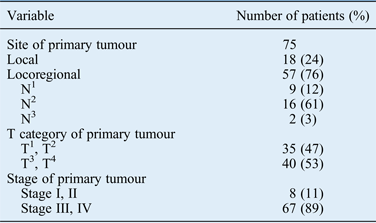
Between 2004 and 2011, 96 patients with newly diagnosed oropharyngeal SCC without distant metastases were started on concurrent chemoradiotherapy with S-1 at Kyushu University Hospital. Seventy-five of those 96 patients (78 per cent) were treated with concurrent chemoradiotherapy up to 70 Gy to preserve organ function. They were included in this study. Twenty-five of these patients (33 per cent) had recurrent oropharyngeal SCC after concurrent chemoradiotherapy. The patient characteristics are shown in Table I.
Site and stage of primary tumours
Tumours were considered persistent if they were diagnosed within three months after the initial treatment, and recurrent if detected more than three months after completion of the primary treatment. Salvage time was defined as the time after completion of secondary treatment until death or last follow up. For patients who recurred more than once, salvage time was only considered from the time of their first re-treatment. Patients with recurrent oropharyngeal SCC who were disease-free three months after salvage treatment of their recurrence were considered salvaged. The tomor-node-matastasis (TNM), recurrent TNM classification, staging and staging of recurrent tumours were based on the UICC 2009 classification. Based on tumour size and involvement of surrounding structures, patients were staged I–IV.
Our policy is to treat recurrent oropharyngeal SCC surgically whenever possible. Post-operative chemotherapy and/or RT were used for adjuvant therapy. In general, locoregional recurrences were considered feasible for curative surgical salvage when the primary tumour and the neck nodes could be completely resected and appropriately reconstructed. Patients with distant metastasis were generally not considered suitable for curative salvage unless the tumour was confined to one lobe of the lung that could be removed by lobectomy without compromising residual lung functions.
Other forms of treatment were given to patients who refused or were considered to be not feasible for surgical salvage. Chemotherapy was given when the general condition of the patient was satisfactory and the patient had acceptable renal, liver and bone marrow function. The chemotherapy agent used was cisplatin with 5-fluorouracil or docetaxel. The mean follow-up period was 25 months (range 8–53 months).
Results
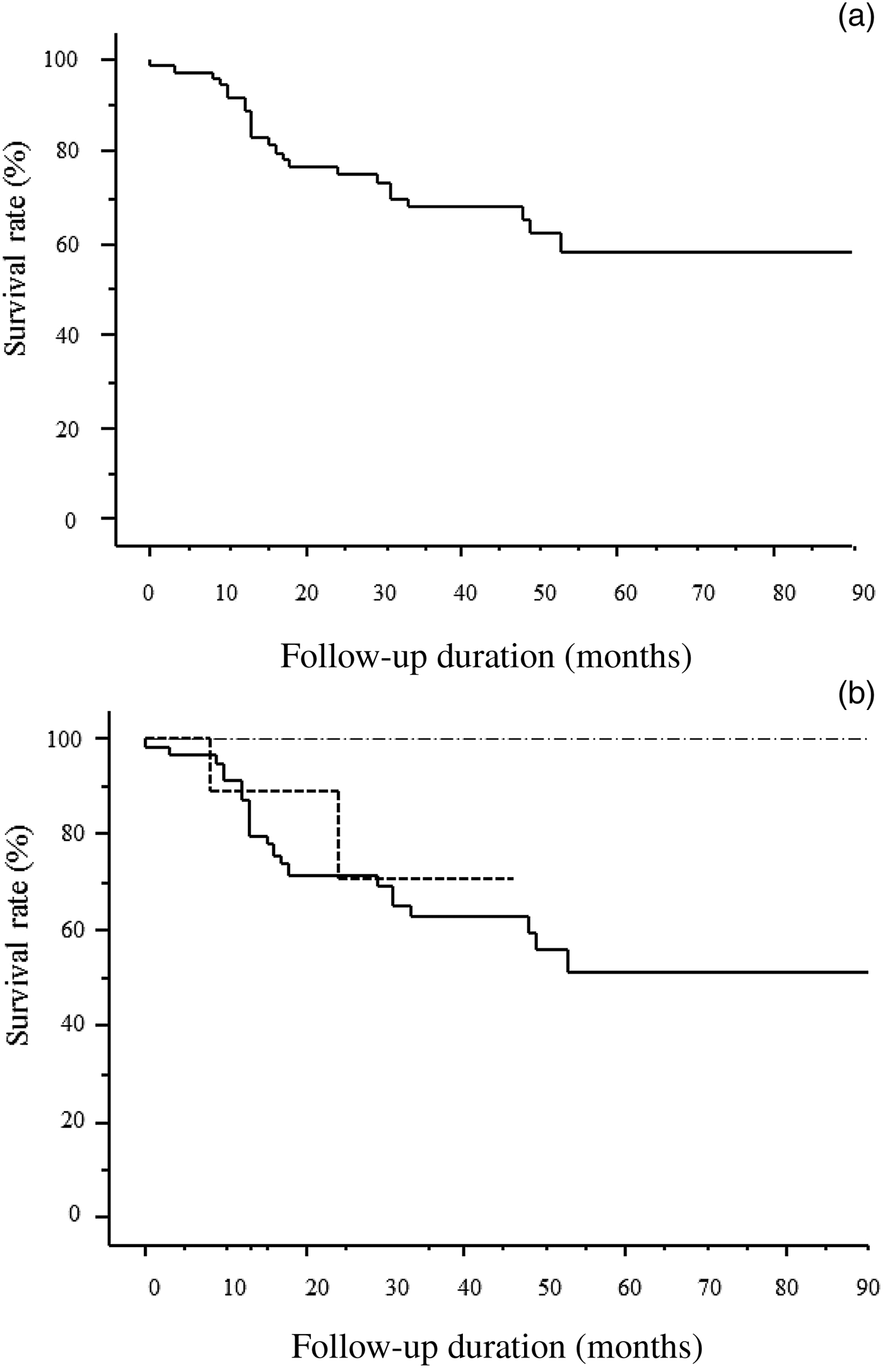
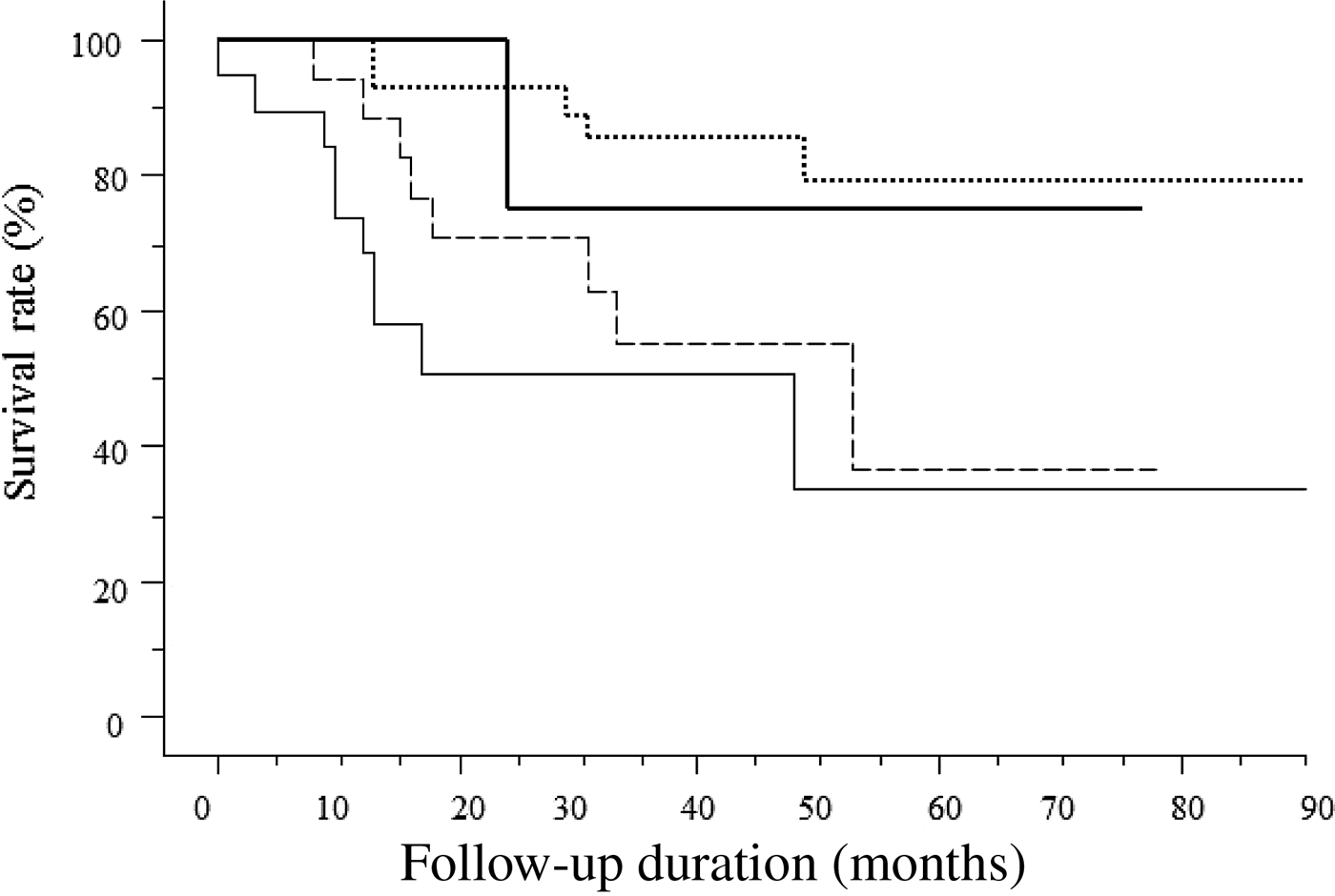
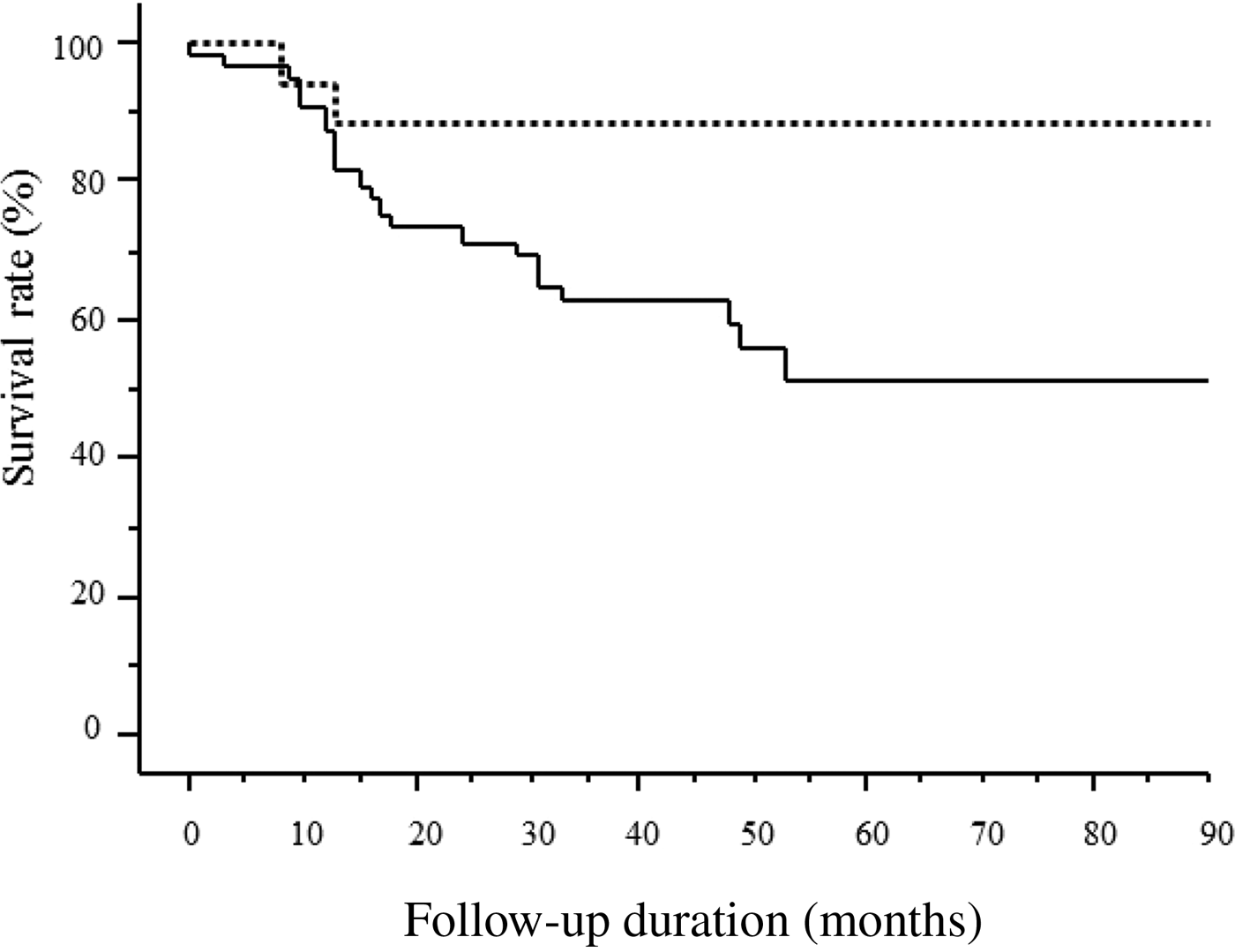
The three-year actuarial survival rates for 75 patients treated with concurrent chemoradiotherapy by disease stage were as follows: stage II, 100 per cent; stage III, 71.1 per cent; stage IV, 51.7 per cent; and overall, 58.2 per cent (Figure 2a, b). The three-year disease-free survival for T1, T2, T3 and T4 disease was 75, 79.3, 36.7 and 33.8 per cent, respectively (Figure 3). Patients without neck metastases fared better than N positive patients with a three-year disease-free survival of 88.1 versus 51.7 per cent (p < 0.01) (Figure 4).
(a) The three-year disease-free survival time. (b) The disease-free survival time by clinical stage of primary tumour.  , Stage II;
 , Stage III;
 , Stage IV.
The disease-free survival time by tumour (T) classification of primary tumour.  , T1;
 , T2;
 , T3;
 , T4.
The disease-free survival time by node (N) classification of primary tumour. N negative group had significantly better survival than N positive group. *p = 0.0001.  , N negative;
 , N positive.
Twenty-five of 75 patients (33 per cent) developed recurrences. Figure 5 shows the time of detection of recurrence clinically after initial treatment. Ninety-six per cent of the recurrences were detected within 24 months after the initial concurrent chemoradiotherapy. The mean time of detection of recurrence from the initial concurrent chemoradiotherapy was 10.3 months (range 3.1–33.2 months).
Histogram of the time of clinical detection of recurrence after concurrent chemoradiotherapy.
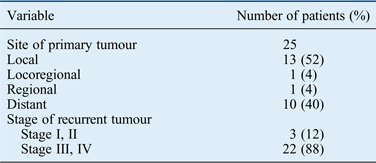
The site distribution and stage of primary and recurrent tumours is shown in Table II. Three patients (12 per cent) developed stage I–II recurrences, whereas 22 patients (88 per cent) developed stage III–IV recurrences. Table III shows the salvage rate by the site of primary and recurrent tumours. The total salvage rates of recurrence were 21 per cent. Of the 75 patients, 13 failed at the primary site and 3 patients were salvaged with additional surgery. One patient recurred locoregionally, one patient recurred regionally, and ten patients recurred at distant lesions. The sites of distant metastases were eight lung, one liver, and one bone. Two of them were salvaged.
Site and stage of recurrent tumours
Salvage cure rate by location of primary and recurrent tumours
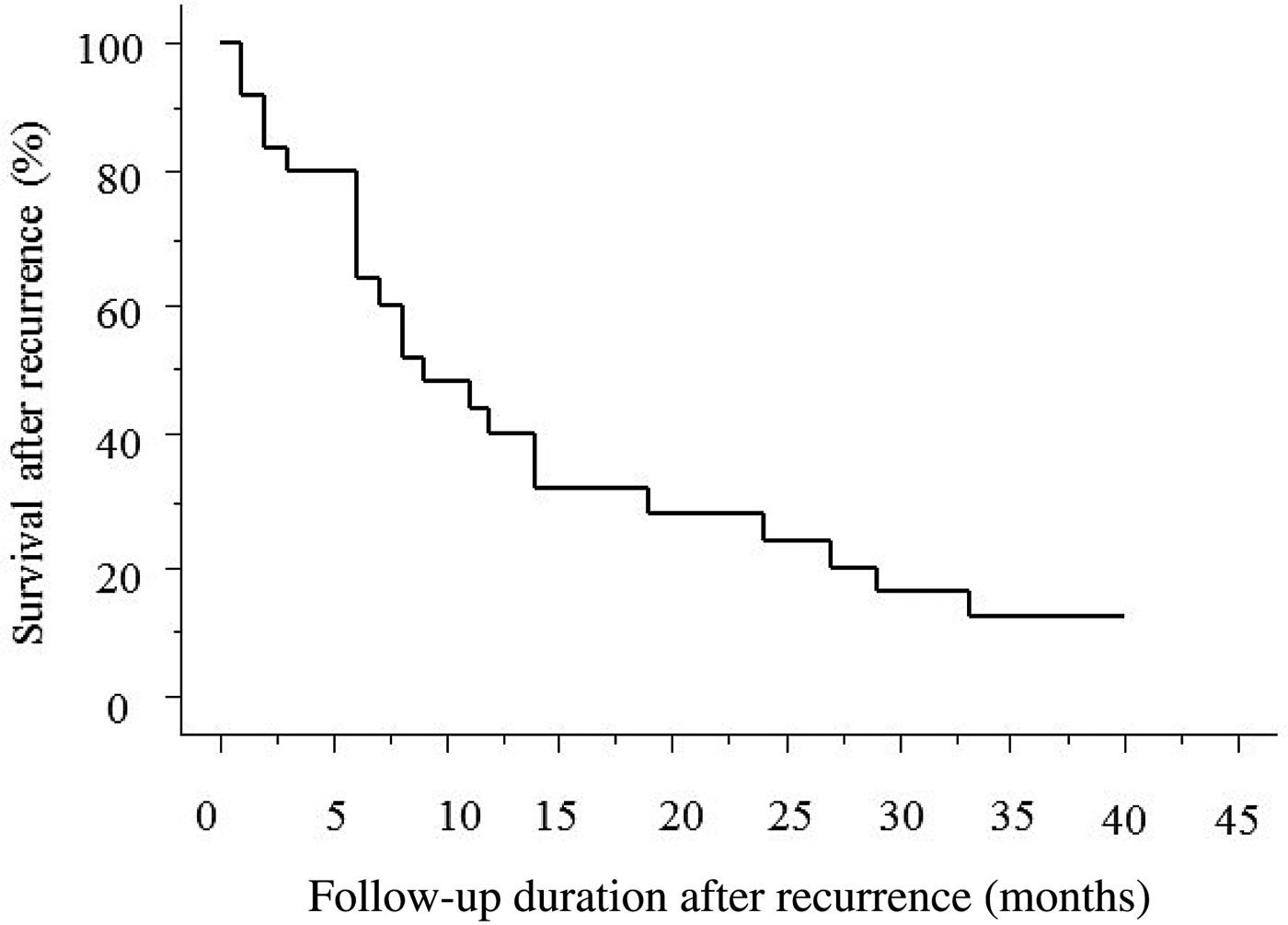
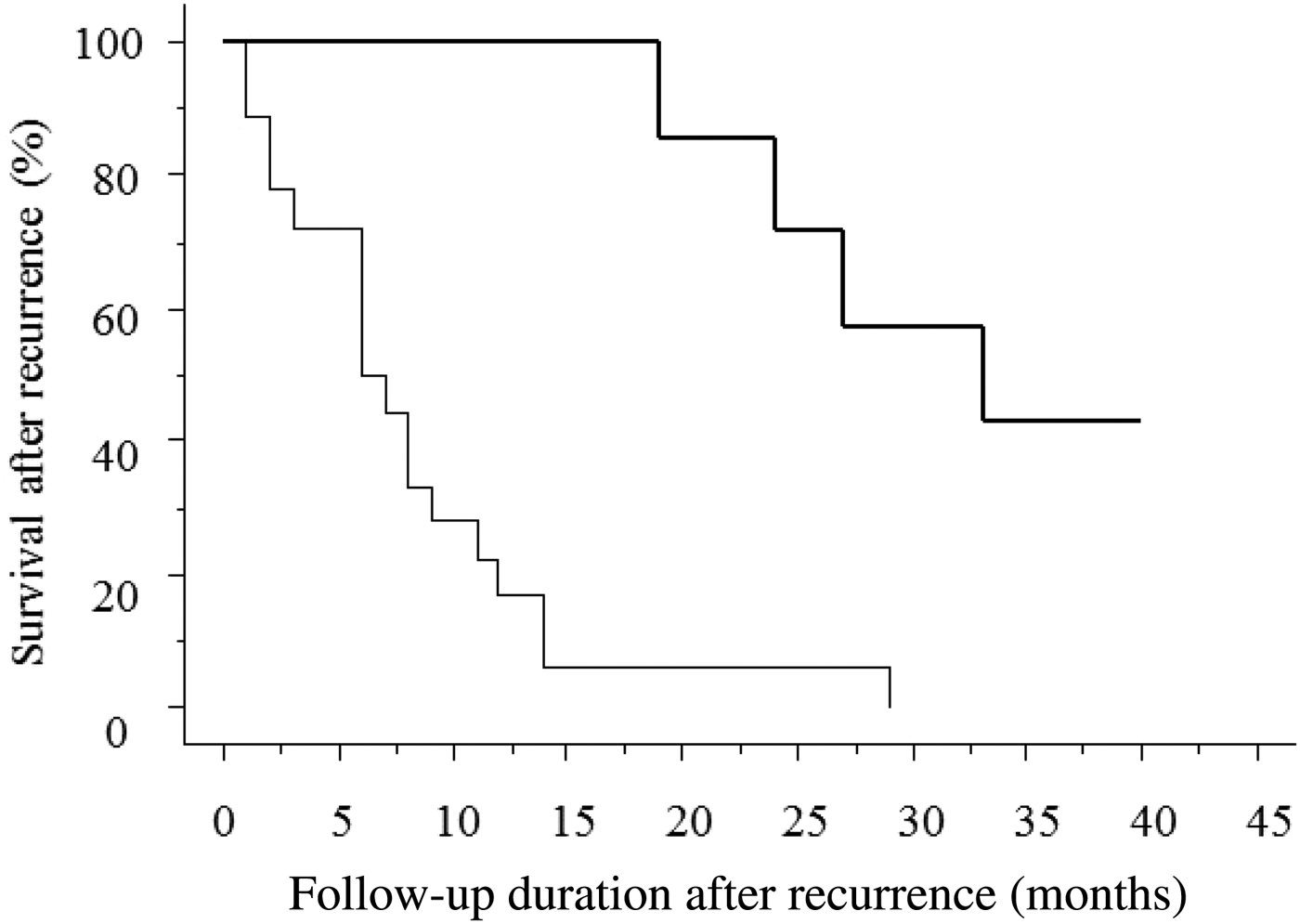
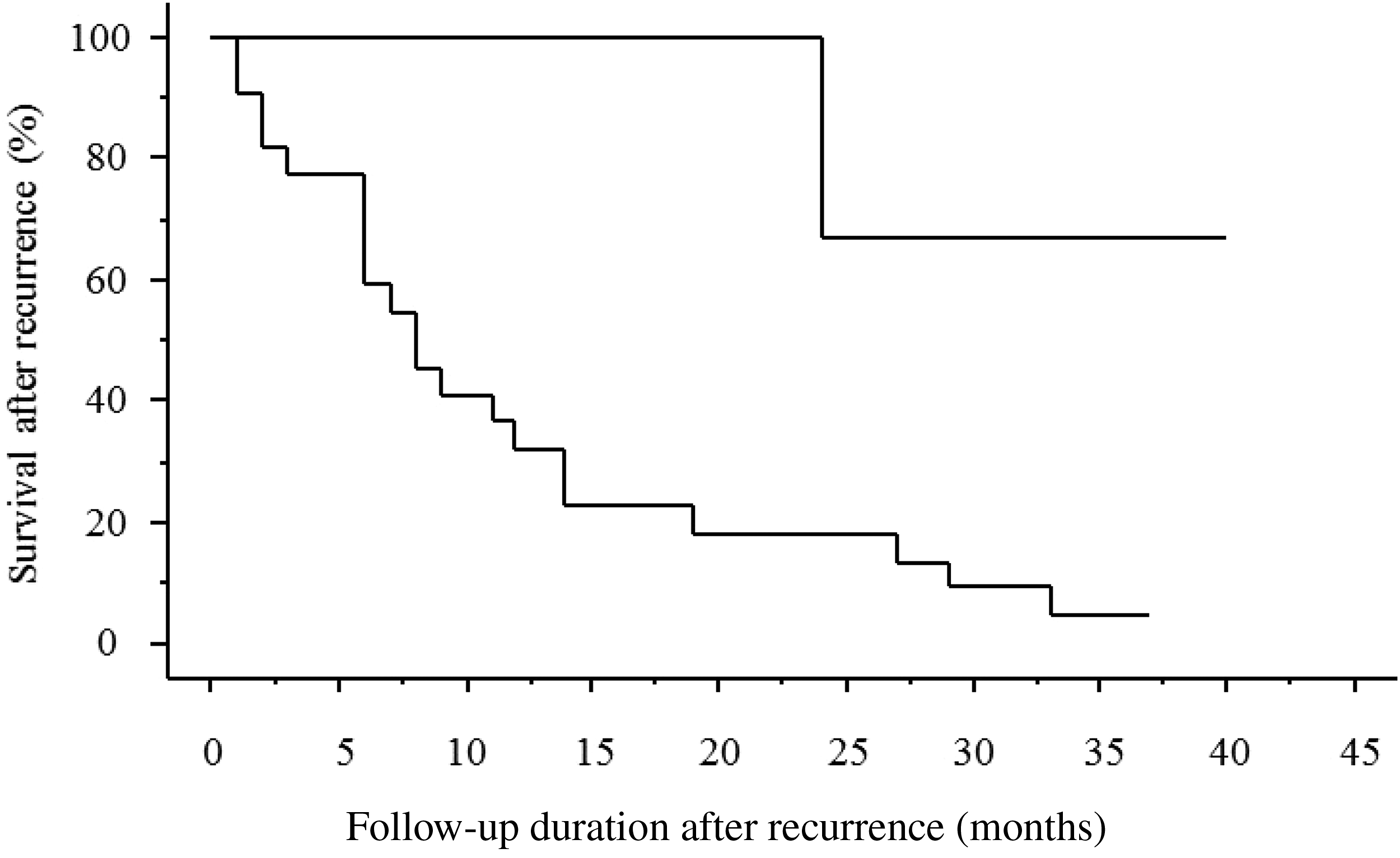
The three-year actuarial survival rate after recurrence was 12.0 per cent (Figure 6). Patients who underwent salvage surgery followed by chemotherapy had significantly improved salvage time compared with patients who received chemotherapy and/or RT for their recurrence (p < 0.05) (Figure 7). The early stage of the recurrent tumours trended toward a significantly long salvage time (Figure 8).
Salvage survival time after recurrence.
Salvage survival time by salvage treatment.  , Salvage surgery;
 , Chemotherapy and/or RT. Salvage surgery group had significantly better survival than chemotherapy and/or RT group. *p = 0.0001
Salvage survival time by stage of recurrent tumour.  , Stage I, II;
 , Stage III, IV; p = 0.10.
Discussion
Primary RT, typically with concurrent chemotherapy, has recently been accepted as a standard management option for the organ-sparing treatment of oropharyngeal SCC. In this study, the three-year actuarial survival rate for stages II, III and IV disease were 100, 71.7 and 51 per cent, respectively. These rates are comparable with those observed in previous studies.Reference Calais, Alfonsi, Bardet, Sire, Germain and Bergerot5, Reference Cohan, Popat, Kaplan, Rigual, Loree and Hicks6 On the other hand, it was reported that 9–20 per cent of patients developed local/regional recurrences and 7–10 per cent developed distant metastases.Reference Chen, Schrag, Hao, Stewart and Ward7–Reference Huang, Xia, Chuang, Weinberg, Glastonbury and Eisele9 Our results also showed that 15 patients (20 per cent) developed local/regional recurrences and 10 patients (13 per cent) developed distant metastases. These results showed that local control is an important prognostic factor for oropharyngeal SCC patients, and treatment failure after concurrent chemoradiotherapy is primarily related to locoregional tumour recurrence, whereas isolated distant metastases occur less frequently.
We compared clinical outcomes between patients who underwent salvage surgery and those who receive chemotherapy and/or RT alone. As a result, the overall three-year tumour-free actuarial survival rate after recurrence was 42.9 per cent in patients treated with salvage surgery. For those patients whose recurrent tumours were considered not feasible for surgical salvage, chemotherapy and/or RT were not effective and could only achieve a mean survival of six months. On the other hand, Zafereo et al. described the multimodality management and outcomes of 168 patients with local and locoregional recurrence of oropharyngeal SCC treated initially with radiation or chemoradiotherapy. Of the 168 patients in their series, 41 underwent salvage surgery, 18 received re-irradiation with or without chemotherapy, 70 received palliative chemotherapy, and 39 received supportive care. The five-year overall survival rates for the patients undergoing these four management strategies were 28, 32, 0 and 0 per cent, respectively.Reference Zafereo, Hanasono, Rosenthal, Sturgis, Lewin and Roberts10 Goodwin also reported that a recurrence-free survival rate for recurrent oropharyngeal SCC patients was only 25 per cent at two years.Reference Goodwin4 These results suggest that salvage surgery is not the only curative treatment for patients with recurrence, although salvage surgery can be the only curative alternative for selected patients. Surgical treatment after concurrent chemoradiotherapy results in severe scar formation and has a significant negative effect on quality of life (QoL). When a patient is diagnosed with recurrent disease, factors such as prognosis for successful treatment, post-surgical complications and the patient's QoL must also be taken into account.
The results of our investigation indicated that long-term survival after recurrence is linked to recurrent TNM stage, with patients with recurrent stage I/II having better disease control than those with recurrent stage III/IV disease. Bachar et al. examined the long-term outcomes of 175 recurrent tonsillar cancers initially treated with primary RT and managed with surgical salvage.Reference Bachar, Goh, Goldstein, O'Sullivan and Irish11 The five-year overall and cause-specific survivals were 23 and 40 per cent, respectively. Advanced T and N classifications of the recurrent tumours were found to be significant predictors of time to death. Agra et al. also demonstrated that patients with recurrent TNM stage I/II had a five-year survival of 43.6 per cent, compared with 24.1 per cent for patients with recurrent TNM stage III/IV.Reference Agra, Carvalho, Ulbrich, de Campos, Martins and Magrin12 In fact, 88 per cent of our patients with recurrence were diagnosed in the advanced stage, strongly indicating the need for a policy of stricter surveillance and the effective use of imaging studies such as CT, magnetic resonance imaging and positron emission tomography-CT to detect recurrence early.
• Chemoradiotherapy has replaced surgery as the preferred method of treating primary oropharyngeal cancer
• Locoregional recurrences are the most frequent cause of treatment failure of patients with oropharyngeal squamous cell carcinoma, and salvage surgery is often limited
• The three-year actuarial survival rate for 75 patients treated with concurrent chemoradiotherapy was 58.2 per cent. Twenty-five of 75 patients (33 per cent) developed recurrences
• Surgical salvage was only feasible for early recurrent tumour
In conclusion, our current findings suggest that only a very select group of patients with recurrent oropharyngeal SCC initially treated with concurrent chemoradiotherapy can be cured with salvage surgery. Unfortunately, we are still far from being able to predict the treatment results for chemoradiotherapy, and thus it is still difficult to identify the candidates for surgery who would have a poor response to chemoradiotherapy.