





Introduction
‘While it is good to know our friends, it is even more important to know our enemies and how to fight them’, wrote Alphonse Dubois in the preface to Les animaux nuisibles de la Belgique (1893). He continued: ‘Which animals are ravaging our fields and crops or attacking our farmyards? Understanding their behaviour and their modes of propagation will allow us to target them in their lairs, set traps for them and hunt them effectively’.Footnote 1 Dubois’ formulation rests on the assumption that the harmful nature of animal ‘enemies’ can objectively be determined and their elimination rationally organised. This work followed his earlier Histoire Populaire des Animaux Utiles de la Belgique (1873) and reinforced his argument by now addressing the opposite category of animals.Footnote 2 Were there really such clearly identified enemies that were hostile to human interest? Which animals were counted as les animaux nuisibles, those animals perceived to be damaging agriculture? On what grounds were such judgements made? Taking Dubois’ question as a starting point, this article examines how categories of unwanted non-human life in rural areas were historically produced and understood, and how these classifications structured human–animal relations.
Historically, plants and animals were frequently divided by humans into three broad categories: those considered useful to humans, those regarded as useless or not important, and those considered harmful. This classification was taught and reinforced throughout life, shaping public opinion to such an extent that eradicating certain species on a large scale seemed justified when they were perceived as a nuisance. Nonetheless, the notion of which animals are categorised as a ‘harmful’ species is not fixed. Moreover, an animal’s reputation can change completely from useful to harmful or vice versa within just a few years, decades, or centuries. Such judgements were socially and contextually constructed, varying across groups, situations, and historical periods. The perception of animals can be shaped by a range of factors, including location, social status, historical context, and specific circumstances. Ultimately, as previous research concluded, understanding what is considered harmful requires acknowledging this diversity of perspectives and the social dynamics that underpin them.Footnote 3 Recognising this instability invites us to examine the diversity of local situations in which the label ‘harmful’ was given to animals.
To analyse these local dynamics, this study concentrates on one specific location within a limited timeframe: the province of Brabant in Belgium during the first half of the nineteenth century. This region largely corresponds to the present-day provinces of Flemish Brabant and Walloon Brabant combined. During the French period, the region was known as the Department of the Dyle. Under Dutch rule, it was renamed South Brabant, to distinguish it from the Dutch province of North Brabant. After the Belgian independence, the province was renamed simply Brabant (Figure 1). At that time, Brabant consisted of 334 municipalities and was characterised by considerable geographic diversity, with varying soils, land covers, landscapes, and waterways, including the Dijle, Zenne, and Demer basins.Footnote 4 In this period, land cover in Brabant consisted predominantly of arable land, alongside smaller areas of forest, and, in third place, hay meadows.Footnote 5 In terms of land use, this arable land was devoted primarily to grain cultivation. In 1812, no less than 72% of the arable land was used for cereals.Footnote 6 Brabant provides a particularly valuable context for this study, as it allows us to bring to light a largely unexplored and unique corpus of primary sources. Starting from three distinct types of sources, the study aims to uncover what each of them can reveal about the presence of verminised animals in relation to rural communities dealing with these challenges.
Provincial borders of Kingdom of Belgium, 1830. Source: Quetelet Center UGent.

The first primary sources we are incorporating are the preparatory questionnaires for the Dictionnaire Géographique de Brabant by Vandermaelen and Meisser.Footnote 7 A majority of the municipalities of the province of Brabant responded with which ‘damaging’ animals appeared in their regions. A second source is yearly agricultural reports mentioning damage by animals to agriculture in the Staat van den Landbouw from 1819 until 1828.Footnote 8 A third set of sources consists of the legislation concerning animal management constituted by the French administration and later the legislative institutions of the province of Brabant. Together, these administrative surveys, agricultural reports, and legislative frameworks provide three distinct perspectives on human-animal relations; they reflect which animals were perceived as harmful, which animals caused damage to agriculture, and which animals were targeted by legislation. By comparing these three different types of sources, this study demonstrates how documentary practices produced three distinct realities of damaging animals. Particular attention is paid to the contexts in which these sources were produced and to silences in the sources: which animals are not mentioned? Although scholarship has shown that governments across Europe developed legal frameworks and extermination strategies to mitigate the economic risks posed by wildlife, less attention has been paid to the material practices through which damaging animals were constructed. By foregrounding the documentary production of ‘harmfulness’ itself, the paper not only demonstrates which animals were considered harmful. It also shows that the category of the damaging animal was not merely discovered but actively produced through everyday administrative practices and institutions. In doing so, the article offers a detailed reconstruction of a local case study in Brabant and also engages with broader methodological questions about how historians can approach animals in the past.
Damaging animals in historiography
Research on ‘imperfect creatures’, as recovered by Cole from the margins of historical literature, and on ‘uncharismatic’, ‘unwanted’, or ‘verminised’ species is expanding.Footnote 9 Much of the work is organised around preselected, individual species, particularly animals that are highly visible, symbolically charged or public favourites. Large mammals such as elephants, foxes, and wolves have attracted substantial research interest.Footnote 10 Wolves’ long history of persecution, eventual extermination, and recent return in some European regions has made them a favoured subject. This focus is visible in studies on various regions, including Luxembourg and neighbouring French territories.Footnote 11 Another reason for the emphasis on wolves is the availability and richness of source material. Wolf extermination produced extensive administrative and legislative documentation, as demonstrated by Profit’s work on the diversity of sources on damaging animals in the French archives.Footnote 12 In addition to large mammals, in the Low Countries and neighbouring regions, birds have received considerable research attention.Footnote 13 Their visibility and charismatic appeal have long made them attractive subjects of study. At the same time, their perceived impact on grain production meant that species such as crows and sparrows were frequently targeted by control measures. This further increased scholarly interest.Footnote 14
Despite this historiographical trend, research on unwanted non-human life is increasingly turning its attention to smaller unwanted organisms such as rodents, insects, and even germs and fungi.Footnote 15 Within the history of insect scholarship, McNeill’s has played an important role in shaping the field.Footnote 16 Building on this growing body of literature, several studies have explored the relationship between insects and agricultural production, including Sprenger’s work on Brandenburg-Prussia and Stockland’s work on France.Footnote 17 Very recent studies by Weeda on public health and Meijer on domestic environments have begun to address the historical role of insects in the Low Countries, but research on insects in agricultural settings remains scarce.Footnote 18 This gap is particularly striking given that many provinces in the Low Countries possess extensive primary source material on the destruction of caterpillars and other insects, yet these sources have not generated a comparably large body of historical scholarship as, for example, wolves.
Alongside a more species-centred literature, a smaller body of scholarship has taken a broader, multi-species approach to animals considered harmful. Works such as De Rijk’s Vogels en mensen in Nederland, Raye’s The Atlas of Early Modern Wildlife, and Williamson’s Environmental History of Wildlife examine a wide range of animals, rather than starting from predefined species.Footnote 19 An influential contribution to the study of animals considered damaging to agriculture is Lovegrove’s Silent Fields, which analyses the long-term persecution of birds and mammals in rural Britain. Through detailed examination of churchwarden accounts, Lovegrove reveals state-supported extermination programmes aimed toward animals. Importantly for this paper, it shows a clear focus on the top-down control of larger animals and birds during the nineteenth century; smaller animals and insects are largely absent from the analysis. Lovegrove argues that the killing of a wide range of verminised animals was so deeply embedded in everyday practice that it is difficult to grasp from a contemporary perspective.Footnote 20 This observation underscores the importance of reconstructing historical animal categories from within the sources themselves. The categories through which animals are perceived and evaluated are socially learned and often differ from present-day classifications.
This observation raises a broader question of how and why animals were classified as damaging in the first place. Bowker and Leigh Star define ‘classification’ as a spatio-temporal segmentation of the world.Footnote 21 Applied to animals perceived as damaging, this suggests that animals were verminised in a specific time and place, and this classification could change over time. Locality is particularly important in this regard, as whether a particular animal is welcome or not and how it is valued depends on the place in which it is encountered. A marten encountered while nibbling on car cables, for example, is not perceived the same way as a marten encountered in a forest. Ritvo argues that animals were generally regarded as harmful when humans perceived them as using the human world to their own advantage rather than serving only human purposes.Footnote 22 This is particularly applicable to fields and other agricultural spaces which form a landscape that humans intensely shape and control and where certain animals were considered out of place. Applying Scott’s framework, categories such as ‘damaging animals’ transform living beings into administratively manageable objects.Footnote 23 Through top-down efforts to organise and standardise agriculture, the natural world of organisms is simplified into categories such as ‘useful’ and ‘harmful’, and this structure makes them easier to control. Bowker and Leigh Star further emphasise that classifications are both material and symbolic: they are a combination of physical entities and socially constructed systems. Therefore, although human attitudes toward animals may appear to be mere perceptions, this classification mediates action and has the potential to influence behaviour.Footnote 24
Rather than treating such categorisations as stable, the following section outlines six possible determinants that could influence shifts in the perceptions and acts toward animals over time. The first and most obvious factor is shifts in agricultural structures. As Jones showed for Britain, changes in land use created new habitats and altered the distribution of animal populations. In some cases, this intensified human-animal conflicts.Footnote 25 Periods of agricultural crisis, such as harvest failures or climatological challenges, could further increase the focus on animal control. Lambrecht highlighted how such pressures could lead to the scapegoating of certain species, such as house sparrows in the province of West Flanders in Belgium.Footnote 26 Besides direct agricultural factors, a second factor influencing perceptions and acts is political reasoning. Meyer demonstrated that in German-speaking areas during the late seventeenth and early eighteenth centuries, influenced by Linnaeus, animals were increasingly framed as economic and cultural problems. Their control was regarded as both a moral and practical duty, which was reinforced by a stronger reciprocal obligation between state and citizen.Footnote 27 Jansen demonstrates how the construction of harmful animals was further shaped by Enlightenment thinking and the formation of the modern nation-state.Footnote 28 A third important dimension is the relationship between hunting and agriculture. The relative importance and value assigned to these two activities influence policymaking. Depending on the prioritisation of hunting or agriculture, some species were classified as pests or as game. Although hunting became more accessible over the course of the nineteenth century, it largely remained the domain of the wealthier classes.Footnote 29 This raises questions about how social hierarchies shaped the classification of animals.
Fourth, scientific knowledge also contributed to shifting perceptions on animals. With the emergence of entomology, ornithology, and biology as fields of both professional and amateur study, new ideas began to circulate about the interconnectedness of natural systems and the roles of different species. These insights sometimes challenged earlier classifications of animals as purely harmful or useful. A clear example is the case of insect-eating animals in the use of biocontrol. At the end of the eighteenth and beginning of nineteenth century, throughout Europe, the killing of granivorous birds, like the house sparrow, intensified.Footnote 30 At the beginning of the nineteenth century, however, studies revealed their substantial consumption of insects, particularly those harmful to crops. The view that sparrows primarily caused agricultural damage was increasingly questioned, and the decline of those birds was sometimes reported to be the reason for increasing insect populations. At the heart of these debates lay the question of whether birds caused more damage through their consumption of grain or provided greater benefits by limiting insect populations. This issue divided both the public and scientific communities and was discussed widely in meetings, newspaper columns, and journal articles written by farmers and naturalists alike.Footnote 31
A fifth factor influencing perceptions and acts toward ‘damaging animals’ is ecological factors. Climate and weather could strongly affect populations which in turn could greatly influence both the perceived and actual damage. Changes in habitat or population size could alter an animal’s presence and therefore their perceived role and value. The rabbit, introduced to the Low Countries in the thirteenth century, provides a clear example of this. Initially, the animal was rare and considered a valuable luxury item reserved for the nobility. Over time, the animal gradually adapted to their new landscape and the colder northern climate and escaped from protected warrens. Its growing population caused significant damage to agriculture, and this transformed its reputation from valuable commodity to damaging animal.Footnote 32 Finally, institutional documentation, archival structures, and source availability have influenced both historical perceptions and modern historiography. The way primary sources were produced and preserved influenced which animals were recorded as damaging. This article emphasises the importance of allowing archival materials to guide analysis, while also taking into account these broader societal and ecological dynamics influencing human-animal relations.
Sources and methodological model
The study incorporates three different sources that each create a different perspective toward damaging animals. The first source corpus is the preparatory materials for the Dictionnaire Géographique de Brabant or the Tableaux remplis par les autorités communales pour le Dictionnaire Géographique de la province du Brabant.Footnote 33 The initiators of this project were Philippe Vandermaelen (1795–1869), a Belgian cartographer and founder of the Établissement géographique de Bruxelles, and François-Joseph Meisser (1793–1867), a physician, professor at the Université libre de Bruxelles, and collaborator of the Établissement. In 1822, Vandermaelen invested 100,000 francs in the establishment of a library. He began systematically collecting maps, travel accounts, and reports on geology, mineralogy, zoology, and related fields. He published his renowned Atlas Universel between 1825 and 1827, followed by the Atlas de l’Europe between 1828 and 1830. With royal approval, Vandermaelen also initiated the publication of the Dictionnaire géographique, historique, statistique, géologique, industriel et commercial du royaume des Pays-Bas. Beginning in 1829, he distributed pre-printed questionnaires throughout the country to gather detailed information on geography, geology, industry, natural history, and other subjects. However, this ambitious project was abruptly interrupted by the outbreak of the Belgian Revolution in 1830. Collaborative initiatives with the northern provinces came to a halt and geographical or statistical works concerning the United Kingdom of the Netherlands quickly lost their relevance. Vandermaelen did not abandon his efforts, and on 11 May 1830, he officially founded the Établissement géographique de Bruxelles. This private institution operated without government subsidies and initially focused on projects serving the newly established Kingdom of Belgium.Footnote 34 One of its first major undertakings was the preparation of the Dictionnaire Géographique (DG) for the Belgian provinces. To obtain up-to-date and local information from every municipality, the institution again distributed detailed questionnaires covering a wide range of topics. The first volume, the Dictionnaire Géographique de la province de Liège, was published in 1832. Vandermaelen entrusted its editorial supervision to Meisser.Footnote 35 After Liège, further provincial dictionaries were published in the following order: Namur (1832), Hainaut (1833), Antwerp (1834), East Flanders (1834), Limburg (1835), West Flanders (1836), and Luxembourg (1838). He secured the cooperation of government ministers, who instructed provincial governors to oversee the distribution process. The governors, in turn, requested mayors to complete (or have completed) the questionnaires. Throughout the kingdom, questionnaires requesting data on all kinds of fields circulated widely.Footnote 36
Preparations for the Dictionnaire Géographique de la province de Brabant took place between 1829 and 1833. Although substantial preparatory work was carried out, the final summary publication for Brabant was never completed. Consequently, Brabant remains the only province for which the original completed questionnaires have been preserved. The other preparatory materials were likely disposed of after the publication of the summaries. This is why the questionnaires for Brabant offer a rare insight into the unedited testimonies of local authorities. Vandermaelen and Meisser obtained responses from 218 of the 334 municipalities in Brabant. Figure 2 shows the provincial and municipal borders of Brabant around 1830 and indicates the municipalities that returned complete questionnaires. In the eastern and southern parts of the province, the large majority of municipalities were surveyed. Coverage is more limited in the central-western region of Brabant. No questionnaires have been preserved for the largest cities. The questionnaires followed a uniform layout. They consisted of standardised, pre-printed forms that were filled in by municipal officials, mainly mayors and municipal secretaries. For research purposes, a database was created in which each municipality’s responses were recorded, including which wild animal species were mentioned, in what quantities, and whether additional remarks were provided. The structure of the questionnaire already reveals implicit classifications of animals. Separate questions addressed wild animals for hunting, domesticated animals, bees, fish, and harmful animals. This article focuses specifically on the question related to damaging animals: ‘Wild and harmful animals; quadrupeds and insects harmful to humans, cereals, fruits and vegetables; how numerous are they? What are their species?’ Figure 3 provides a general overview of the number of mentions per animal listed as harmful in the first source. Animals are listed according to the translation of the general vernacular name they gave the animals. Most animals are referred to using fairly generic terms. The DG presents damaging animals as localised, everyday nuisances in rural life. The source shows how local authorities, such as mayors and municipal secretaries, classified and verminised certain species. Harmfulness emerges primarily as a perceptual category, embedded within this specific case study. As such, it can show us what the perceived harm was of different animals.
Municipal boundaries of Brabant (1830) with surveyed municipalities indicated.
Source: Database author and Quetelet Center UGent.

Database author based on Dictionnaire Géographique.

The second source incorporated in this study is the Staat van den Landbouw (SVL) from 1819 until 1828. These publications are annual agricultural summaries compiled by agronomist Jan Kops (1765–1849), who served as Commissioner of Agriculture from 1800.Footnote 37 Between 1806 and 1828, with the exception of the years 1811, 1812, and 1813, when publication was interrupted due to the Napoleonic wars, Kops published these annual reports covering a wide range of agricultural topics. The reports provide systematic data on crop yields, harvest, and the effects of weather, alongside a specific section dedicated to ‘natural disasters and vermin.’ This section documents agricultural damage caused by wild animals, pest control techniques, and reflections on the relationship between weather and populations of damaging animals. Each Staat van den Landbouw was compiled based on information supplied by provincial agricultural commissions. These commissions were tasked with submitting reports on the ‘state of the crops’ in their regions two times a year to the central committee. Here, Kops processed and synthesised the information into the published reports. Kops attempted to provide the most accurate possible overview of agricultural conditions that year. The reports therefore focus on specific cases of damage of a specific moment and time. From 1806 onwards, the SVL covered the Northern Netherlands. Following the political unification of the Northern and Southern Netherlands, from 1819 onwards, the reports also incorporated observations from the southern provinces. In 1818, a provincial agricultural commission was established in South Brabant. At the establishment of the commissions in the Northern Netherlands, it was stipulated that members should be ‘experienced farmers’ or individuals skilled in agricultural matters, and it was recommended that a veterinary expert be included in the commission. Members received no compensation for their service.Footnote 38 At the commission for South Brabant, eight members were appointed, among them Viscount van der Fosse, Joseph Baron van Volden of Lombeek, Joseph de Snellinck, and Philippe Pollart de Canivris.Footnote 39 They were mainly large landowners and members of the nobility, and several of them were also politically active at municipal (notably in Brussels), provincial, or national levels. Philippe Pollart de Canivris was a naturalist and librarian and wrote a piece on empirical field observations on periodic natural phenomena and their impact on agricultural practices.Footnote 40 The president was the Viscount van der Fosse, most likely referring to Hyacinthe van der Fosse, the brother of the Viscount Alexandre van der Fosse. Other members were named Willens, Marij, Adrien de Kin, and Guillaume Joseph Marcq. In 1819, 6 additional members were appointed, bringing the total number to fourteen.Footnote 41 Although Van der Poel, in his study of the commissions in the Netherlands, identified a small number of less wealthy farmers among the members, he, similarly, concluded that the commission was overwhelmingly composed of large landowners and members of the nobility.Footnote 42 Between 1819 and 1828, the SVL records 24 references of damaging animals in the province of South Brabant. The Staat van den Landbouw thus reflects the perspective of provincial agricultural commissions and agronomists, often wealthy elite of the region. As they provide yearly reflections on the state of damage to agriculture, it produces a reality of constant structural, cyclical, and climatologically driven threats by certain animals. Figure 4 provides a general overview of the different occurrences of damage by animals to certain crops mentioned in the second source.
Database author based on Staat van den Landbouw.

The third set of sources consists of legislation concerning animal management in Brabant from the same period. This allows for a third view into human-animal relations by revealing which animals were officially controlled and eliminated as perceived threats. For the French period, the study incorporates legislation targeting unwanted animals in the documents of the departmental administration of the Dyle, mostly preserved in the State Archives of Belgium in Vorst. Most of these measures were issued by the central French administration. For the subsequent Dutch period, the Mémorial administratif was consulted to identify provincial decrees concerning the control of harmful animals.Footnote 43 Although naturalist writings played an important role in nineteenth-century debates about harmful animals, they are not treated here as a separate source corpus. Most naturalist works focused either on broader regions or did not concentrate on a specific locality and therefore do not provide material specific to the province of Brabant. Where relevant, references to naturalist literature, such as the aforementioned work of Dubois or others, will be incorporated to provide additional context. However, the primary focus of this study remains on these three documentary practices though which animals were classified within the province of Brabant.
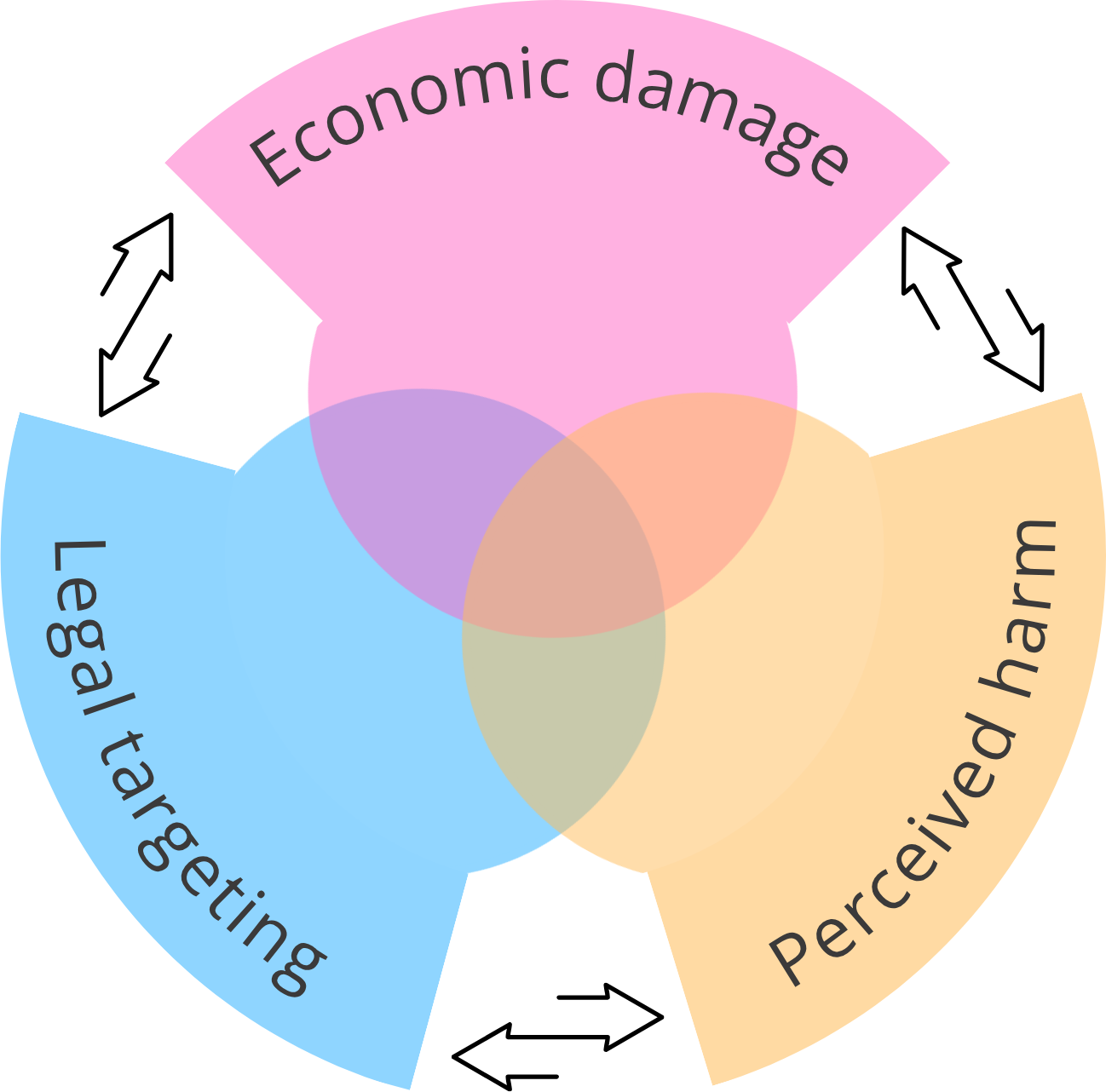
The three source corpora analysed in this study, the Dictionnaire Géographique, the Staat van den Landbouw, and the legislative records, each produce a distinct reality of human-animal relations. Each source type generated its own ‘animal reality’, and animals could move between these classifications over time. Based on these sources, we delineate three animal categories that we will explore further through our analysis. The first category emerges from the DG and reveals which animals were verminised at a more local level within the province. The first category is the ‘perceived harm’; animals are framed as troublesome within the knowledge systems of mayors and municipal secretaries, focusing on an everyday rural experience. The second category is ‘economic damage’ and emerges from the SVL. In this source, animals are presented as agents in agricultural loss; it produces a more technocratic and economically orientated classification where animals materially affected agricultural output. The emphasis lies on recurring, structural threats to agricultural productivity, and the influence of ecological drivers such as weather and climate. A third category, ‘legal targeting’, consists of animals explicitly targeted through legislation during the French and Dutch periods. It shows which harmfulness was translated into legal action. In this category, animals were formally controlled and exterminated.
These three categories – animals perceived as harmful, species believed to cause tangible economic damage and animals subjected to legal action – can be understood as three intersecting but independent categories (Figure 5). At first glance, a relation of gradual progression can be assumed, whereby negative perception led to the recognition of economic damage, which in turn results in legislation toward certain animals if the damage exceeds a certain impact. Whether this relationship consistently followed such a pattern, however, remains an open question. It is possible that some animals were causing economic damage despite overall not enjoying an outspoken negative perception or that certain species were legally persecuted even when the impact of their damage was limited or contested. Therefore, this study approaches perceived harm, economic damage, and legal targeting as overlapping categories that could reinforce on another, but could also operate independently. Moreover, the position of a species within this model was not necessarily fixed and could shift between categories. The arrows in the model emphasise this dynamic relationship. The model serves as a flexible framework for exploring the extent to which different categories of damaging animals were represented across three different types of source material.
Methodological model of animal categorisation.

As a detailed discussion of every species would exceed the scope of this article, we focus instead on a handful of notable examples. We begin with the smallest on the list, the insects, with a focus on the caterpillar, the most frequently mentioned animal in the sources. In order to also listen to the silences within the sources, we then turn to birds, using the house sparrow as a case study. The analysis then proceeds to small mammals, including rats, mice, and moles, and ends with a discussion of the carnivorans. Through these specific animals, the analysis demonstrates which animals were framed in which of the three categorisations of our methodological framework and how and why this classification could shift over time.
Insects: the caterpillar
In the DG, numerous small creatures were identified as being damaging, such as snails, flies, aphids, worms, spiders, wasps, and beetles. None of these, however, were classified as harmful as consistently as the caterpillar. When present in large numbers, they could strip forests or orchards of their foliage, which affected fruit and timber yields. In no fewer than 98 municipalities within the DG, the caterpillar is pointed out as a damaging animal. According to the municipal authorities, the greatest damage occurred in orchards used for fruit and tree cultivation. In the questionnaires, fruit, trees, or fruit trees are mentioned as the caterpillar’s target more than 35 times and, less frequently, damage to vegetables is also noted. Similarly, in the SVL the majority of references to harmful animals concern caterpillars. They mainly caused damage to various types of trees, such as fruit trees, forests, and coppice wood, as well as to different kinds of cabbages and root vegetables. The sources repeatedly testify of enormous destruction caused by these insects. Some years were described as an ‘astonishing multitude’, ‘extraordinary damage’, and a ‘major disaster’. Because of the structural nature of the SVL data, caterpillars are mentioned almost every year, which makes it clear that caterpillar damage was not incidental but represented a recurring and persistent problem for agriculture. In certain years, caterpillars caused even greater destruction than usual. The SVL noted 1809 as such a year, when Kops observed, ‘There are few years in which caterpillars have caused such extensive and widespread devastation’.Footnote 44 Likewise, between 1824 and 1829, the Low Countries suffered severe caterpillar infestations. Although caterpillars are mentioned countless times as an enormous source of devastation, their impact did not primarily affect the crops most crucial to food security. In the nineteenth century, grain remained the cornerstone of agricultural production and shortages in wheat or rye could still trigger subsistence crises. Caterpillars mainly affected fruit trees and forests, which at that time were largely owned and managed by large landlords. Since the members of the agricultural commissions reporting to Kops were predominantly large landowners and members of the nobility, this may indicate a bias toward the types of damage that were the most visible and economically significant to them.
Yearly, the SVL described and examined new and old methods for combating caterpillars. These ranged from manual removal to mechanical and chemical methods such as lime coating, smoke, fire sprayers, and traps. These control efforts were also formally regulated through legislation. This was not a new development: already during the Austrian period, repeated measures were taken against caterpillars.Footnote 45 Legislative institutions framed caterpillars as a collective threat to agriculture and economic stability. It required coordinated governmental intervention rather than only voluntary individual action. Similarly, during the French period, the fight against caterpillars was a clear matter of governmental responsibility. The Minister of the Interior instructed departmental commissioners to supervise the systematic removal of caterpillars, to conduct on-site inspections, and to submit detailed reports. The urgency of the situation led to the emergency law in March 1796, which obliged all owners, farmers, tenants, and cultivators to remove caterpillars from the trees on their own or managed properties within ten days after publication of the law. Non-compliance was punishable by fines equivalent to three to ten days of compulsory labour. The municipal executive commissioners were tasked to inspect and report on this matter. The law mandated its own annual reprinting, which highlights that it was meant to be a lasting measure. Repeated reminders of this law were sent out to all the departments in 1799, 1803, and 1805.Footnote 46 From 1823 onwards, similar measures continued at the provincial level. Almost every year, the Mémorial administratif de la province du Brabant Méridional published decrees commanding all residents to clear their trees of caterpillars by March 25, under penalty of a fine ranging from three to ten days’ wages. Caterpillar webs had to be destroyed by burning, and it was the duty of mayors, bailiffs, and aldermen to strictly oversee compliance and report back to the provincial deputies.Footnote 47 The repeated emphasis on these regulations highlights the perceived seriousness of the problem but also the limited success on long term of the measures taken. Despite yearly, intensive efforts, the measures frequently failed, with caterpillars rapidly returning in large numbers. Around the mid-1820s, Kops had to conclude that, ‘The extermination of caterpillars lay beyond human control and depended only on seasonal conditions’.Footnote 48
In the case of the caterpillars, the three sources demonstrate a convergence between the three categories of our methodological framework; caterpillars were perceived as harmful, they inflicted economic damage and were legal targeted. Municipal officials, agronomists, and policymakers alike represented caterpillars not as an incidental or sporadic nuisance, but as a chronic and structural threat. The case shows how perception, economic reasoning, and legal practice could reinforce one another and reveals how administrative persistence did not necessarily translate into effective population control.
Birds: the sparrow
As said before, the survey for the DG also contained several other questions relating to wild animals that fall outside the scope of this paper, concerning the presence of game, fish, and bees. Although these questions are not analysed in detail here, they nonetheless offer some revealing contrasts. When respondents were asked about the presence of game, they frequently mentioned various bird species, such as partridge, quail, woodcock, and thrush. By contrast, when respondents were asked specifically about harmful animals, birds were largely absent from the lists. In neither question were birds explicitly mentioned: the question on harmful animals referred only to ‘quadrupeds’ and ‘insects’, and the question concerning game likewise did not single out birds.Footnote 49 Yet respondents frequently included them when discussing game, but not when identifying harmful species. Certain species of birds seem to have been more easily associated with the category of game than with that of damaging animals. Similarly, there is no mention in the SVL of damage by birds in this region. The absence of corvids and other grain-eating birds, such as the house sparrow, as well as birds of prey and owls, is surprising, especially since these species were frequently identified as harmful in earlier periods and in various natural history works. This absence is unlikely to be explained by a lack of suitable habitat or food resources, since, as shown in the introduction, grain cultivation was extensive in Brabant.
The absence of house sparrows is particularly remarkable because, during the first half of the nineteenth century, many municipalities in the Low Countries maintained active mussengilden or ‘sparrow clubs’, similar to those in certain regions of England.Footnote 50 Sparrow clubs were local organisations in agricultural regions with the purpose of controlling and exterminating house sparrows and, at times, other animals such as other birds or moles. The clubs followed certain written regulations that organised the extermination efforts, as well as membership and committee criteria. Beyond their pest control role, these clubs also functioned as social entities, organising festivities and rituals.Footnote 51 In the Low Countries, however, they were not numerous in Brabant but they were especially centred around the provinces of Zeeland, West Flanders, and Antwerp. Different from other provinces and earlier centuries, no formal legislation for the elimination of crows and other birds existed during the studied period for Brabant.Footnote 52 In contrast, England began to implement top-down and long-lasting legislation regarding the killing of sparrows in the eighteenth century. Parishes instructed the payment of bounties for killing sparrows. Based on churchwardens’ accounts, Lovegrove has estimated that the minimum number of sparrows killed and eggs collected between 1700 and 1930 likely exceeded 100.000.000.Footnote 53
The absence of granivorous birds from these sources might suggests that they were not perceived as harmful, they did not inflict sufficient economic damage to be reported, and they were not subject to top-down control measures through legal regulation. However, this conclusion is based solely on three types of sources from Brabant and it remains possible that other sources do portray sparrows as harmful. The absence likely ties into the previously stated societal debate of the early nineteenth century regarding the extent to which certain bird species were harmful to agriculture by eating grain or beneficial by consuming crop-damaging insects. As early as 1806, the SVL rejects the extermination of birds, as they were perceived as allies in the fight against insects. Kops wrote, ‘It is often necessary to tolerate one harm to prevent an even greater one’.Footnote 54 This was repeated numerous times throughout the source.
Small mammals: rodents and moles
In 1802, the Minister of the Interior of the French Empire distributed a small instructional booklet to six departments, including the department of the Dyle, that had suffered above-average damage from rats and mice during the previous two years. The author of the booklet suggested that the rapid multiplication of these animals could be linked to mild winters or the disappearance of natural predators. It provided an overview of control methods, such as traps and poisons. It stressed that rodent control had to be collective and well-coordinated; cooperation between farmers and the active involvement of local authorities was presented as essential.Footnote 55 In the booklet, the use of arsenic was discussed, with careful attention to the risks involved. This concern is echoed in a letter from the mayor of Sint-Joost-ten-Node to the prefect of the Department of the Dyle, in which he requested permission for farmers to use arsenic, a substance that was officially prohibited by law. In the reply, its use was authorised under strict conditions: only trusted farmers were allowed to apply it, and only under close supervision.Footnote 56 The decision to permit this measure suggests the severity of the damage by rodents at that time.
In the DG, 67 municipalities mention mice and 57 mention rats as damaging animals. Using vernacular terminology, respondents referred to various species of voles, field mice, wood mice, and rats. Mice and rats were listed very frequently as harmful, mostly without further explanation or detail, suggesting that their inclusion was often almost automatic. They clearly had a very poor reputation. In contrast, the SVL mentions mice and rats in Brabant only twice. This should, however, be interpreted with caution. If we take a broader look at the complete region of the Low Countries, the SVL does reveal certain periods in which mice are mentioned more frequently. 1819 and 1822, for instance, stand out as years in which stored crops, grain, and grasslands suffered damage from mice. Rodents are well known for their cyclical population dynamics, with population peaks occurring at regular intervals of three to five years. Long-term studies of house mice, for example, show that population densities remain extremely low in most non-outbreak years but can increase by more than three orders of magnitude during outbreak years.Footnote 57 The structured and continuous nature of the SVL data is unique in that it allows such fluctuations to become visible. It is therefore possible that a hypothetical SVL for Brabant around 1800, when the instructional booklet was distributed, would also have recorded higher numbers of mice. In 1835, hay meadows accounted for 6.9% of land use in Belgium. Although this was a relatively small proportion of the total cadastral area, hay meadows could provide an ideal habitat for voles. As mentioned in the introduction, this was nevertheless the third-largest land-use category. Arable land was by far the dominant category, covering for 69,4% of the total cadastral area, while forests accounted for 13.1%.Footnote 58 For multiple species of rats and mice, the grain-based agricultural economy and its associated grain storage systems would have been the main attraction. The outbreak of 1819 and 1822 was translated into legislation. In 1822, the Minister of Public Education, National Industry, and Colonies introduced a bounty system for mice. It offered a premium of 25 cents per hundred mice killed to ‘encourage and motivate the country’s inhabitants to exterminate these creatures’.Footnote 59
A clear difference nonetheless emerges between the sources. The DG presents rodents almost automatically as damaging animals and thus consistently frames them as vermin. The SVL, by contrast, refers to rodent damage only at specific moments, suggesting a closer connection to population dynamics. This contrast indicates that while rodents were structurally perceived and categorised as harmful, their tangible economic impact on agriculture became visible during specific outbreaks. Such peak years, as 1819 and 1822 demonstrate, were more likely to trigger additional legislative measures.
Another small mammal that appears frequently in the DG questionnaires is the mole. They are mentioned 52 times and described as a great threat to vegetable and grain crops. In Baal, the mayor and municipal secretary complained about the high number of moles despite considerable efforts to kill them using traps.Footnote 60 Similar concerns were voiced in Heverlee and Vaalbeek, where the moles’ burrowing activities reportedly disrupted agriculture by forming mounds and disturbing the soil. Apparently, this uprooting deprived plants of earth and moisture; once their roots were exposed, the crops withered and died.Footnote 61 By contrast, the SVL does not report any mole-related damage in Brabant. Across all SVL reports for the provinces of the Netherlands between 1806 and 1838, moles are mentioned only 15 times among approximately 1000 recorded animal observations.Footnote 62 Nor is there any trace of specific legislation targeting the mole during this period. Both the legislative institutions and the agricultural commissions reporting to Kops might have been influenced by the views of contemporary naturalists, who emphasised the ecological benefits of the mole rather than its harm. Julien Deby, for example, described in his Histoire Naturelle de la Belgique the animal’s ecological benefits, and although Dubois expressed some hesitation, he ultimately classified the mole as one of the Animaux Utiles. Both authors cited similar reasons: molehills were rich in organic matter from moles and earthworms, making them excellent compost. Moreover, the tunnels dug by moles could act as natural drainage channels. Lastly, moles fed on worms, larvae, weeds, and even snails, animals that were considered greater pests. Based on these arguments, they concluded that the mole was more beneficial than harmful.Footnote 63 Local authorities in Brabant around 1830, however, clearly did not share this interpretation and perceived the mole unequivocally as vermin. A comparison of the three sources thus shows that, although the mole was verminised by the municipal authorities, it did not cause damage on a scale that led to systematic reporting in the SVL or to formal legislative intervention. Control measures appear to have remained largely bottom-up initiatives undertaken by farmers rather than the result of official legalisation.
Carnivorans
Foxes were mentioned 42 times as damaging animal in the DG. Interestingly, two municipalities in the DG did not classify the fox as vermin but they mention the fox at the question where the types of game that occur were asked. In Belgium, fox hunting gained popularity throughout the nineteenth century, influenced by British traditions.Footnote 64 In England, the fox occupied a paradoxical position: while it was condemned as malicious vermin, it was simultaneously protected as the central figure in fox hunting, an elite sport and symbol of social status. This form of hunting had already become fashionable in England by the latter half of the seventeenth century.Footnote 65 It is clear that, in Brabant, the municipality authorities at that moment viewed the fox rather as damaging than as game. Another carnivoran frequently mentioned was the weasel. ‘Weasels should be seen as friends and not as enemies of the farmer’, asserts Dubois. According to him, no other animal hunts rats and other small mammals as effectively as the weasel. The high number of pests it kills, he argues, outweighs the minor damage it causes by a factor of one hundred.Footnote 66 In England, too, the weasel was initially perceived rather positively. The animal was far less persecuted than other small predators and was even protected in some regions because of the very advantages Dubois emphasised. However, as the nineteenth century progressed and smaller species began to receive legal protection for hunting purposes, the weasel’s status declined.Footnote 67 The mayors and secretaries of Brabant clearly did not share Dubois’ view. In 26 instances, the weasel is explicitly labelled as vermin. The mayor of Heverlee was among the few to elaborate in detail, describing the animal as a ‘wild and harmful quadruped’ that ‘frequently devours and steals hens, chicks and their eggs’.Footnote 68 Apart from the fox and the weasel, the questionnaires also refer no fewer than 49 times to the stone marten. The stone marten is primarily nocturnal and has an omnivorous diet, consuming both plant-based foods (such as fruits and berries) and animal prey, including small mammals, birds and eggs.Footnote 69 Different municipalities mention that this feeding behaviour was a nuisance as the weasel ate their chickens, pigeons, eggs, and poultry.Footnote 70 The scope of this research does not allow to discuss every animal in detail but the data of animals such as the otter and badger, who are now largely absent in the Dyle region, might be interesting for baseline research.
There is a clear imbalance between the number of carnivorans mentioned in the DG and the SVL. Although damage caused by smaller animals such as insects still dominates, in the DG, complaints about martens, foxes, weasels, and related species are regularly reported. In contrast, the SVL data for Brabant do not mention a single carnivoran. More broadly, across the entire SVL dataset, only a handful of damage cases involve larger mammals, often per animal as few as two records for the entire study period. Although these animals did not cause sufficient agricultural damage to be systematically reported, they were nevertheless perceived as harmful by the municipal authorities.
We can also take a look at the legislation toward carnivorans present in Brabant. In a decree issued in 1797, the central administration of the Republic stated that every three months, or as frequently as possible, hunts for wolves, foxes, badgers, and other harmful animals were to be organised in all national forests and rural areas.Footnote 71 They also request that an annual report on the destruction of wolves be submitted each year, in order to assess the usefulness of the bounties for the destruction of wolves. However, this request had to be repeated several times, as no reports were initially received. After reminders, 31 cantons of the department of the Dyle eventually responded that they had not submitted such reports because wolves were entirely absent from their territories.Footnote 72 Only the canton of Genappe mentioned the capture of wolves. In 1799, six wolf cubs were captured there, for which a bounty of 120 francs was paid, and in 1800, five wolf cubs for which the hunters received 100 francs in total, or 20 francs per cub.Footnote 73 Interestingly, because this legislation was imposed on a large scale by the French central government, it did not correspond to the actual needs or realities of the local municipalities in the department of the Dyle. Designed at a different administrative scale and for different ecological realities, the policy proved largely irrelevant locally. This mismatch is further underscored by the fact that after the French period, legislation aimed at the eradication of large carnivores, like the carnivores themselves, was largely absent from the department of the Dyle. In terms of the categorisation framework used in this paper, wolves therefore appear as a rare case in which legal targeting occurred without a corresponding presence in the categories of perceived harm or economic damage at the local level.
Conclusion
What counted as undesirable animal behaviour was never self-evident. As the historiography demonstrates, categorisations of harmfulness depended not only on who was observing, when, where, and for what purpose, but also on a complex interplay of agricultural structures, political reasoning, economic priorities, scientific authority, population dynamics, and institutional forms of documentation. Informed by these historiographical insights, this study adopts a source-driven approach. Rather than imposing predefined categories of harmfulness onto the past, it allows archival sources to reveal which animals were perceived as damaging in a specific place and time. At the same time, it shifts attention away from charismatic and well-studied species toward smaller, less visible, and often unwanted animals. Drawing on three complementary source corpora, the Dictionnaire Géographique, the Staat van den Landbouw, and legislative records, it demonstrates how human-animal relations were historically constructed through perception, economic evaluation, and legal intervention, respectively. The analysis of specific case studies such as caterpillars, house sparrows, rodents, moles and carnivorans reveals the complex and often contested ways in which animals were classified.
The Dictionnaire Géographique produces a reality of localised, everyday nuisances as perceived and reported by municipal authorities. Animals such as mice and rats were often listed almost automatically, without further justification, suggesting that their harmfulness was taken for granted. Comparing the different animal-related questions in the Dictionnaire reveals tensions between hunting and agricultural interests. While a small number of references explicitly point to fox hunting, local authorities generally framed these animals primarily as sources of damage. In contrast, birds were typically classified under the category of game and were not commonly regarded as harmful animals. The Staat van den Landbouw provides a reality of constant structural, cyclical, and climatologically driven threats by certain animals. In this view, insects, particularly caterpillars, dominate the narrative. Their repeated appearance across multiple years transformed them into emblematic agricultural pests. Legislation produced yet another reality: certain animals were framed as permanent public enemies whose destruction was presented as a civic duty. The recurring decrees against caterpillars, for instance, reinforced their status as symbolic and collective threats, even when the effectiveness of eradication measures was doubtful. Interestingly, the legislation reveals a tension between central regulation and local ecological realities. In the case of the wolf, legislation operated at an administrative scale that did not correspond to local realities. In other cases, such as with rodent control, legislation adapted to specific animal population outbreaks.
The comparison of sources reveals the implementation of different categories of damaging animals, such as perceived harm, economic damage, and legal targeting. Caterpillars occupied all three categories of the framework: they were widely perceived as harmful, caused recurring economic damage, and were subject to constant legal control. In contrast, birds largely fell outside these classifications: throughout the three analysed sources, they were neither systematically classified as harmful nor documented as causing measurable economic loss nor formally targeted by legislation. Other animals were verminised but rarely caused economic damage or became subjects of legislation, such as different carnivorans, like the fox and the weasel. Furthermore, rodents were consistently recognised as vermin, but their material impact became only visible during population peaks, at which point they entered the category of economically damaging species. These peaks occasionally prompted legal intervention. In this context, ecological factors such as weather conditions and cyclical fluctuations in animal populations played a crucial role in shaping human-animal relations.
The comparison also shows that naturalist views did not translate into a uniform local perception. The mole and the weasel, for instance, were repeatedly defended by scientists as beneficial, yet local authorities continued to frame them as vermin, despite the near absence of mole- or weasel-related damage in the Staat van den Landbouw and the lack of specific legislation targeting the species. Nevertheless, naturalist perspectives may have aligned more closely with local views regarding birds. Despite their long history of systematic persecution, birds such as crows or sparrows do not appear regularly in the sources. This silence may indicate a growing recognition of their ecological roles. Certain bird species were increasingly perceived as beneficial rather than harmful. The Staat van den Landbouw explicitly aligned with these naturalist insights, pointing toward insectivorous birds as allies in biocontrol.
By analysing the content, silences, and context of multiple sources, the study demonstrated how categories of unwanted animals were historically produced. Documentary practices did not merely describe instances of animal damage; they actively shaped which animals became visible as problems and how their harmfulness was defined. Throughout the sources, the high number of references to insects and small mammals is particularly striking. This shows a divergence between the Low Countries and contexts such as England, where legislation appears to have concentrated longer on the top-down control of large animals and birds. In Brabant, by contrast, the management of small animals and insects was prioritised. This can partly be explained by the fact that large carnivoran populations had already mostly disappeared from Brabant by that time. Interestingly, the prominence of insects in contemporary sources exposes a disconnect between modern historiographical focus and historical lived experience. Whereas large carnivores and birds have received considerable scholarly attention, the primary sources demonstrated that insects and rodents more consistently shaped everyday agricultural practices. This suggests that they deserve to occupy a more central place in historical analysis.



 Open access

