Introduction
On April 25, 2014, Flint, Michigan (USA) changed its municipal water supply source from Detroit-supplied water (from Lake Huron) to the Flint River.Reference Dixon 1 The switch in water source resulted in corrosion of water distribution pipes and leaching of lead and other contaminants into municipal drinking water.Reference Dixon 1
Lead toxicity can affect every organ system and result in neurological, renal, hematological, endocrine, gastrointestinal, cardiovascular, reproductive, and developmental effects. 2 Children are more susceptible than adults to adverse effects from lead exposure because of hand-to-mouth actions, higher physiological uptake rates, and developing biological systems.Reference Murata, Iwata, Dakeishi and Karita 3 No safe level of lead has been identified.
On September 24, 2015, a Hurley Medical Center (Flint, Michigan USA) researcher released results of a study which demonstrated that after the water source change, there was increased incidence of elevated blood-lead levels in children who were residents of Flint, Michigan.Reference Hanna-Attisha, LaChance, Sadler and Schnepp 4 Subsequently, Genesee County Board of Commissioners and Genesee County Health Department (Flint, Michigan USA) issued a lead advisory on September 25, 2015 advising residents to use water only from the cold water tap for drinking, cooking, and making baby formula.Reference Dixon 1 On October 1, 2015, Genesee County Board of Commissioners and Genesee County Health Department declared a public health emergency and advised residents of Flint, Michigan not to drink the municipal water unless it had been filtered through a National Sanitation Foundation (NSF; Ann Arbor, Michigan USA)-approved filter certified to remove lead in accordance with American National Standards Institute (ANSI; Washington, DC USA) standard 53. 5 On October 15, 2015, funding was authorized to switch the water source back to Detroit-supplied Lake Huron water, and on January 16, 2016, President Obama declared a state of emergency for Genesee County.Reference Dixon 1
In addition to possible health effects from lead exposure, there were concerns about potential behavioral health impacts on community members experiencing the Flint water crisis. Previous reports of human-induced emergencies have shown that behavioral health concerns within the affected population are usually widespread and can be substantial.Reference Buttke, Vagi and Bayleyegn 6 - Reference Sabucedo, Arce and Senra 11 These studies have found higher levels of stress, anxiety, and depression in individuals and communities exposed to human-induced emergencies compared to typical levels of stress, anxiety, and depression for those communities.
On March 31, 2016, the Flint Community Resilience Group, Mental Health Workgroup’s Data and Gap Analysis Sub-Workgroup, with members from Michigan Department of Health and Human Services (MDHHS; Hart, Michigan USA), Genesee County Health Department, Genesee Health System, and the University of Michigan-Flint contacted the Centers for Disease Control and Prevention (CDC; Atlanta, Georgia USA) to discuss investigating behavioral health effects linked to the Flint water crisis. On April 6, 2016, MDHHS formally requested technical assistance in conducting a Community Assessment for Public Health Emergency Response (CASPER) in Flint, Michigan.
A CASPER is an epidemiologic technique designed to provide household-based information about a community’s needs in a timely, inexpensive, and representative manner. 2 It can also be adapted to collect individual-level information.Reference Buttke, Vagi and Bayleyegn 6 Both household and individual-level information can be used to initiate public health action, facilitate disaster planning, and assess new or changing needs during the recovery period.Reference Malilay, Flanders and Brogan 12 The objectives of this CASPER were to assess the following: (1) household-level, self-reported behavioral health concerns for two age categories of household members (21 years and older and under 21); (2) individual-level, self-reported behavioral health concerns; (3) household access to behavioral health services and perceived barriers to access; (4) self-reported physical health concerns; (5) water-related resource needs and barriers to resources; and (6) communication with the affected community. This paper will focus on behavioral health findings.
Materials and Methods
Methods
The Flint Community Resilience Group’s Data and Gap Analysis Sub-Workgroup, with technical assistance from the CDC, conducted a CASPER in Flint, Michigan from May 17 through May 19, 2016. The two-page questionnaire addressed household-level demographics; communications; water sources and uses; behavioral health concerns by two age categories, under 21 and 21 years of age and older (defined by Medicaid coverage rules specifically created for Flint, Michigan residents); 13 access and perceived barriers to behavioral health services; chronic disease diagnoses from health care professionals; self-reported physical health worsened by the Flint water crisis; and individual-level behavioral health concerns.
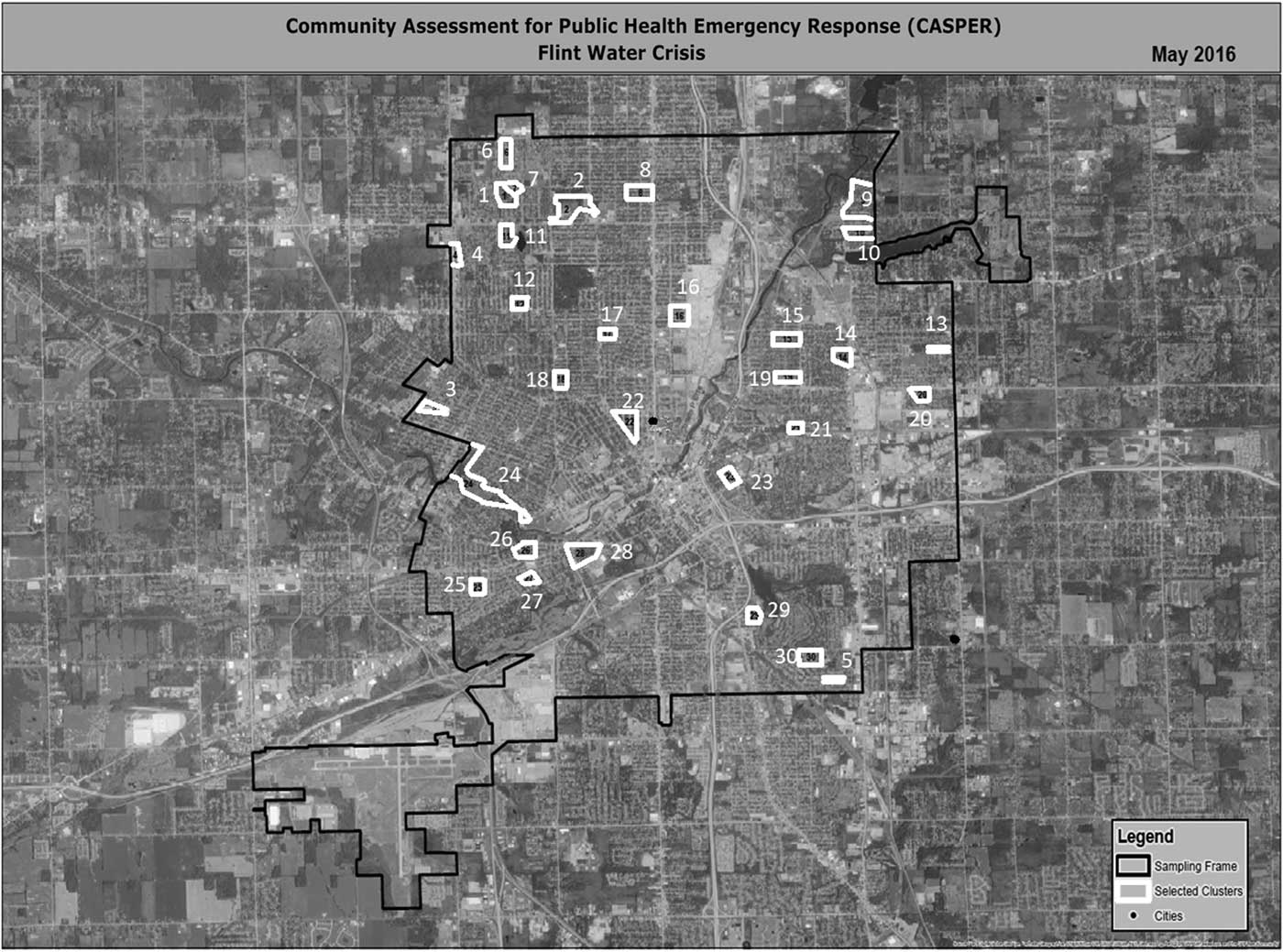
A multi-stage cluster sampling methodology was used to select a representative sample of households to be interviewed within the sampling frame. 14 The sampling frame was defined as the geographic city limits of Flint, Michigan (Figure 1), with a total of 24,983 households based on current housing data provided by the Flint City Planning and Development Office (Flint, Michigan USA). In the first stage, using the ESRI ArcGIS (ESRI; Redlands, California USA) CASPER tool, 30 Census blocks (clusters) were selected from the predefined sampling frame with a probability proportional to the number of housing units within each cluster. 14 In the second stage, interview teams using systematic random sampling selected seven households from each of the 30 selected clusters for a goal of 210 total interviews. Two-person interview teams were assigned to two or three clusters, were provided with detailed maps of their clusters, and were instructed to go to every nth household (where “n” is the total number of households in the cluster divided by seven) to select the seven households per cluster to be interviewed. Teams made three attempts at each selected household before replacement of a household. In the third stage, participants were selected if they were 18 years or older, present at the time of the household-level interview, and to standardized participant selection, had an upcoming birthday nearest to the date of interview.
Sampling Frame and Selected Clusters in the City of Flint, with Selected Clusters Circled.

The CDC provided the interview teams with a three-hour, just-in-time training on the overall purpose of CASPER, household selection methods, questionnaire content, and interview techniques. All interview teams included at least one person with public health survey administration experience and one community member. Teams conducted face-to-face interviews between 2:00 pm and 7:30 pm. All potential respondents approached were given a copy of the consent form. Teams also provided public health informational materials regarding the Flint water crisis to all potential respondents and interested persons. Eligible respondents were aged 18 years or older and resided in the selected household. At the completion of the interview, respondents were given a pre-stamped postcard to receive a US$30 gift card to the Flint Farmers’ Market. Additionally, interviewers were instructed to complete and submit to Genesee Health System confidential referral forms whenever they encountered urgent physical or behavioral health needs.
Data Analysis
Weighted cluster analyses were conducted to report the projected number and percentage of households with a particular response in the sampling frame. Two weighting variables were calculated: one to account for the probability that the responding household was selected and one to account for the probability that the individual respondent within the household was selected. Results were weighted based on whether the question referred to the individual or to the household. Data analysis was conducted in Statistical Analysis Software (SAS; version 9.3; SAS Institute Inc.; Cary, North Carolina USA) to calculate the unweighted frequencies, unweighted percentages, weighted frequencies, and weighted percentages with 95% confidence intervals. For all results, unless otherwise stated, the percentages in the text represent weighted percentages.
The national Behavioral Risk Factor Surveillance System (BRFSS) is a system of health-related telephone surveys that annually collect health-related risk behaviors, chronic conditions, and preventative service use data in all 50 states, as well as the District of Columbia and US territories. 15 The sampling frame for BRFSS is the state of Michigan with participants selected through random digit dialing of landline and cell phone numbers. By contrast, the sampling frame for the CASPER was confined to the city limits of Flint, Michigan with participants selected using the methods discussed above. Although these surveys are not directly comparable because of the differences in sampling frames, BRFSS data provide some context for the CASPER findings. Several individual-level, behavioral health questions were adopted from BRFSS and administered to individual respondents chosen in the third stage of sampling. Social context questions assessing financial worry or stress were compared to identical questions in the 2012 Michigan BRFSS, the most recent year the specific survey questions were asked.Reference Kroenke, Spitzer and Williams 16
Quality of life questions were compared to identical questions in the 2014 Michigan BRFSS.Reference Kroenke, Spitzer and Williams 17 To assess statistically significant differences, 95% confidence intervals were compared for the same question across CASPER individual-level and Michigan BRFSS results.Reference Tryon 18 Results were determined to be statistically significant at P≤.05 if the confidence intervals did not overlap. Questions about symptoms associated with depression from the Patient Health Questionnaire-2 (PHQ-2) module in BRFSS and the anxiety questions from the Generalized Anxiety Disorder-2 (GAD-2) module in a hospital-based Patient Health Questionnaire study were also adopted for use in the CASPER. Responses for the PHQ-2 and GAD-2 were scored from zero (not at all) to three (nearly every day), and a combined score was calculated by adding the scores from the two questions within each module.Reference Buttke, Vagi and Bayleyegn 6 Total PHQ-2 scores of at least three have a sensitivity of approximately 80% and a specificity of approximately 90% for major depressive disorder; 19 total GAD-2 scores of at least three have a sensitivity of 86% and a specificity of 83% for generalized anxiety disorder, and a sensitivity of 65% and a specificity of 88% for any anxiety disorder. 20
It has been a decade since the PHQ-2 depressive symptom questions have been asked as part of a BRFSS optional module in Michigan; therefore, PHQ-2 data collected as part of this CASPER was not compared to BRFSS data collected 10 years ago. The GAD-2 is not currently available in the BRFSS questionnaire core section, nor the optional modules, and has no population-based data available for comparison. This study was exempted by the CDC Institutional Review Board.
Results
Response Rates and Demographics
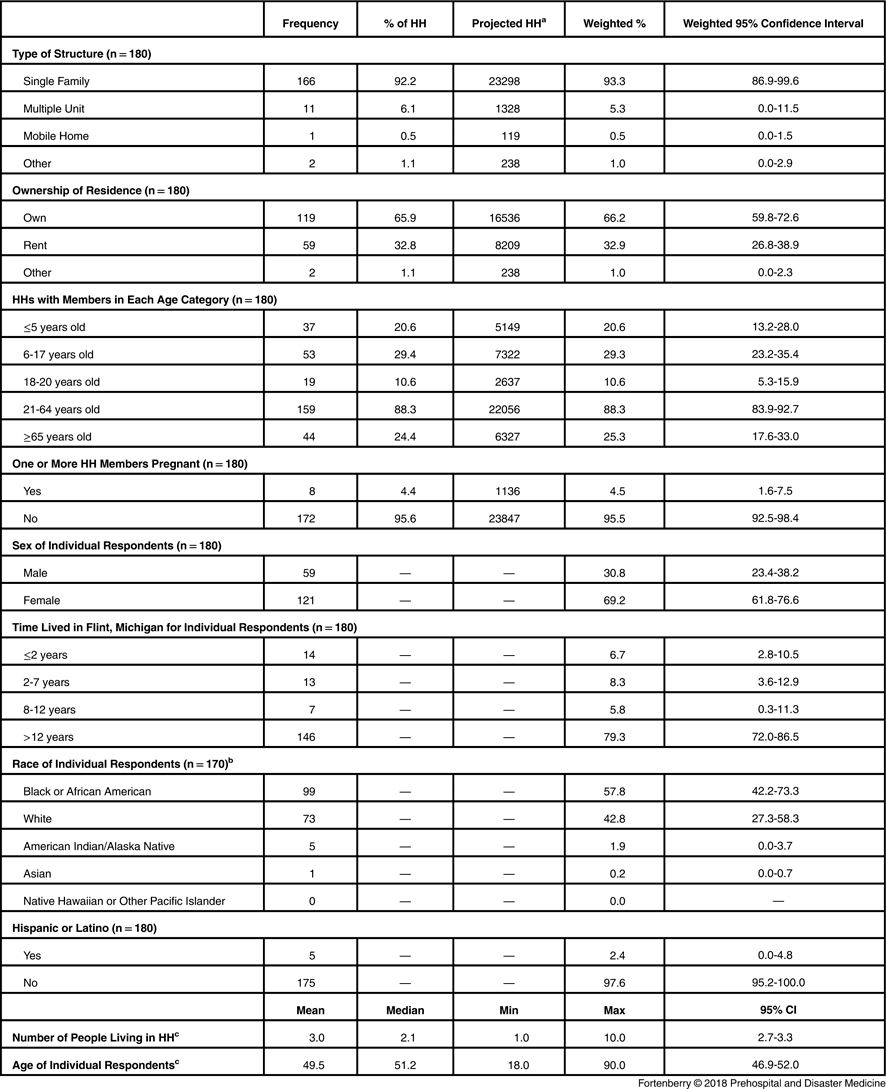
The interview teams completed 180 interviews for a completion rate of 85.7%. The contact rate, or percentage of interviews completed out of houses approached, was 42.5%. When vacancies were excluded from the denominator, the contact rate was 52.5%. Of the households with an eligible participant answering the door, 75.0% completed an interview. Of households interviewed, 93.3% lived in a single-family home and 66.2% owned their residence. The majority of households (88.3%) had one or more members aged 21-64 years, 60.5% of households had one or more members aged 20 years or younger, and 25.3% of households had one or more members aged 65 years or older (Table 1). Among households, 4.5% had at least one pregnant woman living in the home at the time of the interview. The average number of people living in a household was three (1-10) people.
Demographics of Household (HH) and Individual Respondents in Flint, Michigan - May 2016

a 24,983 is the total number of households within the geographic city limits of Flint, Michigan.
b Multiple responses could be selected; some responses were missing (n=1) or respondents refused (n=9).
c Weighted statistics presented.
The majority of individual respondents identified as black (55.2%) or white (40.9%), and non-Hispanic (97.6%; Table 1). The majority of individuals (79.3%) lived in the community for more than 12 years. The mean age of individuals was 49.5 years and 69.2% were female.
Household Self-Reported Behavioral Health Concerns
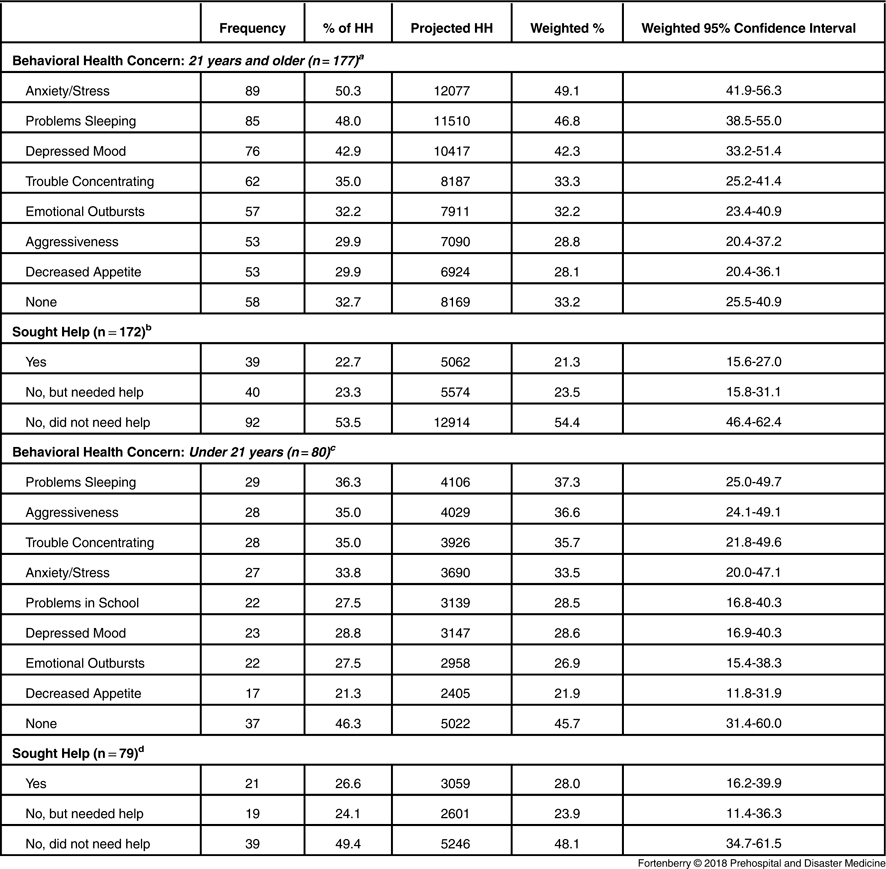
Of all households, 65.3% (95% confidence interval [CI], 57.4-73.2) reported that one or more household members aged 21 years or older had at least one self-reported behavioral health concern more than usual (more than usual for them) since October 2015. Among households with members aged 21 years or older, many reported members experiencing anxiety/stress (49.1%), problems sleeping (46.8%), depressed mood (42.3%), or trouble concentrating (33.3%) more than usual (Table 2).
Household (HH) Self-Reported Behavioral Health Concerns for Members Aged 21 years or Older and Less than 21 years in Flint, Michigan - May 2016

a Multiple responses could be selected; Not applicable (n=3); Don’t know (n=3).
b Not applicable (n=8); Don’t know (n=1).
c Multiple responses could be selected; Not applicable (n=100); Don’t know (n=1).
d Not applicable (n=101).
Of households with at least one household member aged less than 21 years, 53.3% (95% CI, 39.1-67.4) reported one or more household members aged less than 21 years had at least one self-reported behavioral health concern more than usual since October 2015. Among households with members of this age range, many reported these members experienced problems sleeping (37.3%), aggressiveness (36.6%), trouble concentrating (35.7%), and anxiety or stress (33.5%) more than usual (Table 2).
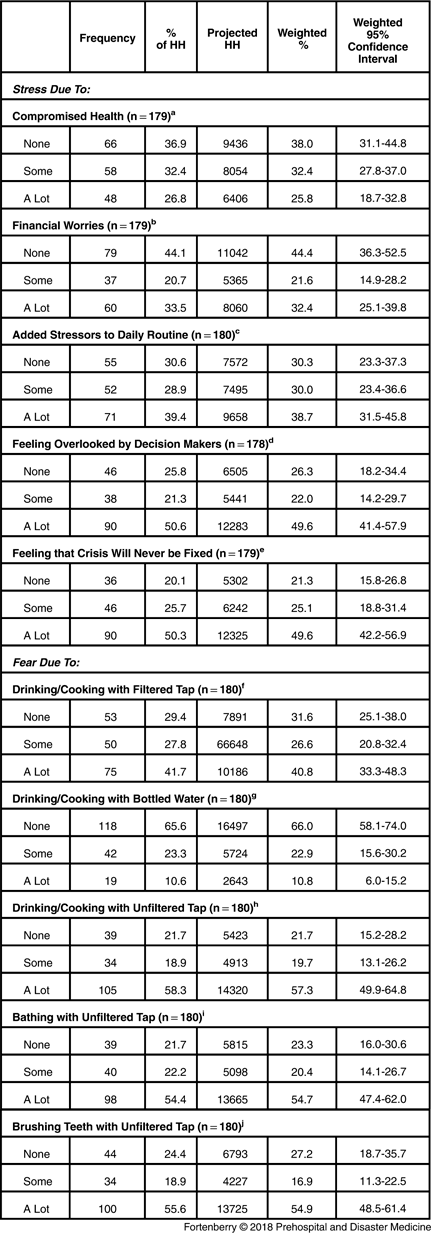
Since April 2014, 25.8% of households reported a lot of stress related to compromised health (Table 3). Approximately one-half (49.6%) of households reported a lot of stress related to feeling overlooked by decision makers, and 49.6% reported feeling that the Flint water crisis will never be fixed. When asked what their most trusted source of information about the Flint water crisis was, many households reported only trusting themselves or did not trust anyone (31.2% [95% CI, 12.7-49.8]); trusting none of the sources (eg, school system, federal agencies, or social media; 26.4% [95% CI, 7.8-44.9]); and having no trust in government (10.2% [95% CI, 0.0-16.3]; data not depicted in tables).
Household (HH) Self-Reported Stress and Fear due to the Flint Water Crisis, Flint, Michigan - May 2016

a Missing (n=1); Don’t know (n=6); Refused (n=1).
b Missing (n=1); Don’t know (n=2); Refused (n=1).
c Don’t know (n=1); Refused (n=1).
d Missing (n=2); Don’t know (n=3); Refused (n=1).
e Missing (n=1); Don’t know (n=6); Refused (n=1).
f Don’t know (n=2).
g Don’t know (n=1).
h Don’t know (n=2).
i Don’t know (n=3).
j Missing (n=1); Don’t know (n=2).
Since April 2014, many households (41.2%) experienced a lot of fear due to the Flint water crisis regarding drinking or cooking with filtered tap water (Table 3). Also, 22.6% of households felt some fear of drinking or cooking with bottled water (Table 3).
The majority of households felt a lot of fear in bathing (54.7%) and brushing their teeth (54.9%) with unfiltered tap water (Table 3). Because of the Flint water crisis, many household behaviors surrounding hygiene and water use changed, including the following: 78.1% (95% CI, 73.6-82.6) of households reduced water usage; 66.7% (95% CI, 61.0-72.3) decreased duration of bathing/showering; 58.5% (95% CI, 51.9-65.1) decreased frequency of bathing/showering; and 57.8% (95% CI, 52.1-63.5) changed bathing/shower methods altogether (eg, using baby wipes or hand sanitizer for washing; data not depicted in tables).
In terms of increased substance use, the majority of households did not report increased use of substances (ie, alcohol, illicit drugs, or off-label use of prescription or over-the-counter drugs) since October 2015. However, 23.0% (95% CI, 16.1-29.8) of households reported at least one member increasing the use of nicotine products (ie, cigarettes, e-cigarettes, or chewing tobacco; data not depicted in tables).
Household Access to Behavioral Health Services and Perceived Barriers to Access
Of all households, 44.7% of households with at least one household member aged 21 years or older had at least one member in that age category who felt they needed help, and 21.3% of households with member(s) in this age category had at least one member who sought help for behavioral health concerns from a counselor, pastor/clergy member, therapist, or case/social worker (Table 2). For households with at least one household member under 21 years, 51.9% had at least one member who felt that they needed help and 28.0% had at least one member who sought help (Table 2). Regardless of age, 22.2% (95% CI, 15.5-29.5) of households reported difficulties seeking help; 48.3% (95% CI, 30.8-65.8) had a hard time trusting in the health care system or health care providers; 30.2% (95% CI, 17.3-43.2) thought services were too expensive; 24.6% (95% CI, 11.2-38.0) had no transportation; 13.8% (95% CI, 0.0-29.6) were disabled or homebound; 13.2% (95% CI, 0.7-25.7) were worried about what others would think; and 11.9% (95% CI, 1.2-22.6) lacked health insurance (data not depicted in tables).
Individual Self-Reported Behavioral Health Concerns
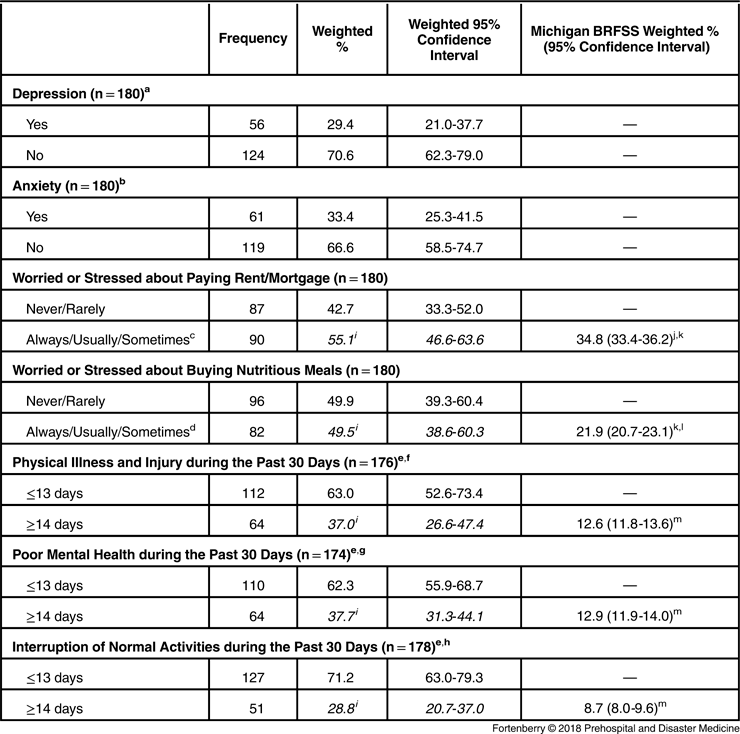
Twenty-nine percent of individuals self-reported symptoms of depression and 33.4% self-reported symptoms of anxiety (Table 4). Fifty-five percent of individuals reported being always, usually, or sometimes stressed or worried about paying their rent or mortgage, which is significantly higher than the 34.8% reported in the 2012 Michigan BRFSS. Results were determined to be statistically significant if the 95% confidence intervals did not overlap. Compared to 21.9% reported in the 2012 Michigan BRFSS,Reference Tryon 18 49.5% of individuals in this CASPER reported being always, usually, or sometimes stressed or worried about buying nutritious meals (Table 4). When asked about the current greatest household need, the top three open-ended responses were financial concerns (33.4% [95% CI, 26.2-40.5]), safe water (27.3% [95% CI, 19.5-35.0]), and plumbing/home repairs (14.8% [95% CI, 8.0-21.6]; data not depicted in tables). Approximately 37.0% of individuals reported having a physical illness and/or injury for 14 or more days within the last 30 days, which was significantly higher than 12.6% reported in the 2014 Michigan BRFSS20 (Table 4). In this study, 37.7% of individuals reported having poor mental health (eg, stress, depression, and emotional problems) for 14 or more days within the last 30 days, which was significantly higher than 12.9% reported in the 2014 Michigan BRFSS. 20 Almost 29.0% of individuals reported that poor physical and mental health limited their usual activities (eg, self-care, work, or recreation) for 14 or more days within the last 30 days. This was significantly higher than 8.7% reported in the 2014 Michigan BRFSS 20 (Table 4). When compared to the 2013-2015 Michigan BRFSS county-level data, 21 quality of life indicators reported by Flint residents, including poor physical health (14.5 [95% CI, 12.1-17.3]), poor mental health (13.9 [95% CI, 11.1-15.4]), and activity limitation (11.7 [95% CI, 9.5-14.4]) were significantly higher in this CASPER (data not shown).
Self-Reported Individual Behavioral Health Concerns of Respondents from Flint, Michigan, May 2016, and Corresponding Michigan Behavioral Risk Factor Surveillance System (BRFSS) Results

a Patient Health Questionnaire-2.
b Generalized Anxiety Disorder-2.
c Refused (n=3).
d Refused (n=2).
e BRFSS asked respondents if experienced health indicator “on at least 14 days in the past month.”
f Missing (n=4).
g Missing (n=6).
h Missing (n=2).
i Significantly different P≤.05 level.Reference Kroenke, Spitzer and Williams 17
j Among all adults, the proportion who reported always, usually, or sometimes being worried about having enough money to pay rent/mortgage in the past year.
k Michigan Behavioral Risk Factor Surveillance System (BRFSS) 2012.
l Among all adults, the proportion who reported always, usually, or sometimes being worried about having enough money to buy nutritious meals in the past year.
m BRFSS 2014.
Discussion
At the household-level, almost one-half of households surveyed in this CASPER self-reported a need for behavioral health services for one or more household members. Increased behavioral health concerns in crisis-affected communities have been observed after other human-induced events.Reference Buttke, Vagi and Bayleyegn 6 - Reference Sabucedo, Arce and Senra 11 For example, after the Exxon Valdez oil spill in Alaska (USA) in 1989, higher rates of anxiety disorder, posttraumatic stress disorder, and depression were observed in residents with a high level of exposure to the spill.Reference Buttke, Vagi and Bayleyegn 6 , Reference Palinkas, Petterson, Russell and Downs 7 , Reference Osofsky, Osofsky and Hansel 22 Similarly, anxiety and depression were observed in Alabama (USA) and Mississippi (USA) households following the 2010 Deepwater Horizon oil spill.Reference Buttke, Vagi and Bayleyegn 6 In this study, the percentages of individuals reporting symptoms of depression and anxiety were comparable to or higher than results from the 2010 Deepwater Horizon oil spill CASPER.Reference Buttke, Vagi and Bayleyegn 6 Additionally, negative quality of life indicators in the previous 30 days were almost three-times higher in this assessment compared to the 2014 Michigan BRFSS.
Increased anxiety and depression are expected post-disaster and are most common within two years following an event; however, longer term effects for up to 14 years may also occur, which not only impacts individuals’ but the community’s resilience.Reference Arata, Picou, Johnson and McNally 8 , Reference Green, Lindy and Grace 23 Due to higher prevalence of negative quality of life indicators and a considerable percentage of individuals in Flint reporting symptoms of depression and anxiety, additional recovery resources might be considered for behavioral health interventions and follow-up assessment of behavioral health concerns may be warranted.
Behavioral health concerns are influenced by many factors during response to and recovery from a human-induced emergency; these include financial hardship, mistrust in the adequacy of restoration procedures, and increased duration of the recovery process as compared to natural disasters.Reference Arata, Picou, Johnson and McNally 8 , Reference Chung and Kim 10 Because over one-half of households and individuals indicated worry or stress about finances, and the need for financial relief was reported in open-ended responses about current greatest household need, economic factors are likely to have an impact on accessing behavioral health services; thus, they could be considered as a component of behavioral health follow-up activities.Reference Buttke, Vagi and Bayleyegn 6 , 24
As of October 2015, residents of Flint, Michigan were advised not to drink unfiltered municipal tap water but were encouraged to consume filtered municipal tap water. 25 However, as of May 2016, more than two-thirds of households had at least one member who felt some or a lot of fear using filtered tap water for drinking or cooking. This might have been due to continued distrust, stress, and anxiety that households reported since the Flint water crisis. Encouraging the community to use filtered tap water is important in decreasing dependence on bottled water. Additionally, it is essential to acknowledge fear and mistrust in messaging.Reference Reynolds and Seeger 26
The community’s mistrust of officials and reliance on themselves for information was reflected in the most trusted information sources reported during the Flint water crisis. Of those who responded “Other” for trusted information resource, more than one-half of household respondents reported in open-ended responses, trusting no one, only trusting themselves, or trusting none of the listed sources. By relying on survey respondents to provide answers such as trusting themselves or no one for an open-ended question rather than including these responses as listed options, the level of distrust in the community may have been under-estimated. Over one-half of households had one or more members who experienced stress because they felt they were being overlooked by decision makers or experienced fear that the Flint water crisis would never be fixed. Similar feelings of mistrust and uncertainty of the future were reported in the months after the Deepwater Horizon oil spill.Reference Chung and Kim 10 Increased community involvement and engagement in the ongoing recovery of the Flint water crisis could assist in building trust in officials, communicating information in Flint, and easing anxiety and stress among the affected population.Reference Couch and Coles 27 Community involvement empowers the community and builds social support, which moderates stress.Reference Couch and Coles 27 , Reference Southwick, Vythilingam and Charney 28
Limitations
This CASPER was subject to certain limitations. First, the frequency of female respondents was 69.0% in the Flint, Michigan CASPER. According to the 2010 US Census estimates, female persons represent 52.0% of the Flint, Michigan population, suggesting individuals might not be representative of the sampling frame due to an over-representation of females. 29 This survey reflected self-reported information from a single point in time with individuals available during the sampling times, and their responses could differ from the population not surveyed. Additionally, the increased worry or stress experienced in this community cannot be attributed entirely to the Flint water crisis on the basis of this study alone. Other factors, including individual household circumstances and the economic recession, had likely influenced the behavioral health and financial concerns of the Flint residents. 30 , Reference Frasquilho, Matos and Salonna 31
Conclusions
Because almost one-half of households self-reported a need for behavioral health services and a higher prevalence of negative quality of life indicators among individuals was self-reported, the findings of this CASPER may be used to inform policy makers in Michigan on additional health care needs of the residents affected by the Flint water contamination crisis, including: directing resources to behavioral health interventions; repeating CASPER to follow-up on behavioral health concerns and evaluate interventions after one year; considering the impact of economic factors when implementing behavioral health interventions; and ensuring community involvement and engagement in the recovery phase of the Flint water crisis to help ease community stress and anxiety.
Acknowledgements
The authors thank Jody Lewis and Kenyetta Jackson of the Michigan Department of Health and Human Services, Jeffrey Coady from the Substance Abuse and Mental Health Services Administration, and the Data and Gap Workgroup and the Community Resilience Group for their assistance in questionnaire development and data collection. They also appreciate Deputy Tanner of the Genesee County Sherriff’s Department for giving the field survey teams a safety briefing. They acknowledge many in the Health Studies Branch in the National Center for Environmental Health at CDC for their time and support. Also, they are grateful to the field survey teams for volunteering their time and their enthusiasm in conducting the interviews. Lastly, they thank the survey respondents for sharing with them their time and experiences.