Introduction
The proportion of proteins in corn endosperms influences grain texture, with higher prolamin content (above 10%) indicating vitreous endosperm, which negatively affects starch digestibility in animals due to the formation of a prolamin matrix around starch granules (Hoffman and Shaver, Reference Hoffman and Shaver2020). Most corn grown in Brazil is vitreous, posing a challenge to animal nutrition.
Ensiling rehydrated corn grain improves its nutritional value by reducing vitreous content, breaking down the prolamin matrix, and enhancing starch digestibility. This process also allows for better production scheduling and reduced storage costs (Pereira et al., Reference Pereira, Pereira and Lopes2013). Studies have shown that rehydrated corn grain silage with water exhibit good fermentation profiles, low dry matter (DM) losses, and presence of high lactic acid bacteria, contributing to good aerobic stability and low proteolysis (Arcari et al., Reference Arcari, Martins, Tomazi and dos Santos2016; Carvalho et al., Reference Carvalho, Ávila, Bernardes, Pereira, Santos and Schwan2017).
However, some studies report considerable fermentation losses and low aerobic stability, potentially due to water activity inside the silo (Rezende et al., Reference Rezende, Rabelo, Veiga, Andrade, Härter, Rabelo and Reis2014). Ingredients can help maintain a proper fermentation profile and reduce losses. Cactus pear, with its high moisture content and hydrocolloid mucilage, can serve as a rehydration source, enhancing the fermentation process by providing nutrients and promoting lactic acid production, which inhibits spoilage microorganisms (Pereira et al., Reference Pereira, Santos, Oliveira, Araújo, de Sá Paulino, Perazzo and Leite2021).
The mucilage from cactus pear is rich in soluble carbohydrates, which support lactic acid bacteria (LAB) and contribute to good fermentation and preservation of the ensiled material (Mokoboki et al., Reference Mokoboki, Sebola and Matlabe2016). Despite this, there are no studies on the microbial community profile of corn silages rehydrated with cactus pear.
This study aimed to evaluate the fermentation profile, chemical composition, aerobic stability, and taxonomic diversity of corn grain silage rehydrated with water or cactus pear.
Materials and methods
Local considerations of the experiment
The experiment was conducted at the Forage Laboratory of the Animal Husbandry Department, Agricultural Sciences Center, Federal University of Paraíba (CCA/UFPB), located in the Brejo Paraibano microregion. The geographic coordinates of the site are 6°58′12″ S latitude, 35°42′15″ W longitude, and an elevation of 619 m. The study took place between October 2019 and February 2020.
Ensiling and quality analysis of rehydrated corn grain silage
Two forms to rehydrate corn grain silage were tested: corn grain silage rehydrated with water (CW) and corn grain silage rehydrated with cactus pear (CCP); each form of rehydration was subjected to four opening times (30, 60, 90 and 120 days). The experiment was developed in a 2 × 4 factorial completely randomized design (two forms of rehydration and four opening times) and four repetitions, totaling 32 experimental units.
The ground corn was obtained from commercial stores, with a particle size of 3 mm. For ensiling corn grain with water, the grain was rehydrated using a watering can. The ratio used was 470 ml water to rehydrate 1 kg ground corn grain. The cactus pear used was the Mexican Elephant Ear variety (Opuntia spp.), two years of age. For ensiling corn grain with cactus pear, the ratio used was 375 g cactus for 625 g ground corn grain. Cactus pear was chopped in a stationary forage harvester (PP-35, Pinheiro Máquinas, Itapira, São Paulo, Brazil) to particle sizes of approximately 2.0 cm and mixed with ground corn to be ensiled.
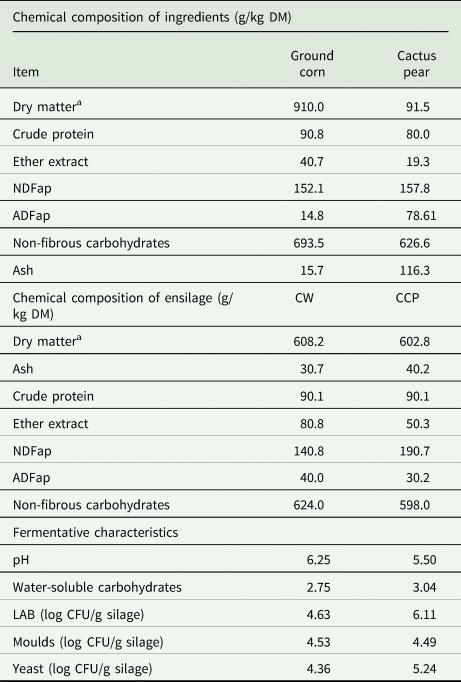
The material was ensiled to contain 60% DM for both the silage of grains rehydrated with water and the silage of grains rehydrated with cactus pear. To calculate inclusion, samples of cactus pear cladodes were previously collected to determine the plant's DM, as well as samples of corn grains according to AOAC (2016), protocol 934.01 (Table 1).
Chemical composition of the ingredients, mixture and fermentative characteristics at the time of ensiling

a Based on natural matter, NDFap = neutral detergent fibre corrected for ash and protein; ADFap = acid detergent fibre corrected for ash and protein; CW = corn grain silage rehydrated with water; CCP = corn grain silage rehydrated with cactus pear.
The silage was made in 32 experimental polyvinyl chloride (PVC) mini silos measuring 10 cm in diameter × 30 cm in height, sealed hermetically. After determining the DM contents of cactus pear and corn, the proportions of the mixtures were determined to achieve the determined DM levels. After mixing, the material was immediately compacted with wooden sockets to reach a specific density of approximately 850 kg/m3 on a fresh matter basis in each experimental silo.
All experimental silos were equipped with a Bunsen valve to allow gas to escape. At the bottom of each silo, 1 kg dry sand was added, covered with non-woven fabric (TNT) to capture effluents. At the end of this process, silos were sealed and stored at room temperature in a covered, dry, and ventilated room until opening times (30, 60, 90 and 120 days after ensiling).
Assessments of pH and microbial populations
Values of pH were determined in samples of approximately 25 g ensiled material from each treatment, added with 100 ml water. The reading was performed after 1 h, according to Bolsen et al. (Reference Bolsen, Lin, Brent, Feyerherm, Urban and Aimutis1992), using a potentiometer. Ammonia nitrogen (NH3-N) was determined according to Detmann et al. (Reference Detmann, Souza, Valadares Filho, Queiroz, Berchielli, Saliba, Cabral, Pina, Ladeira and Azevedo2012).
Microbial populations were quantified before ensiling and in the four silo opening times (30, 60, 90 and 120 days after ensiling), using selective culture media for each microbial group: MRS (Man, Rogosa and Sharpe) agar containing 1.5 ml/l acetic acid for LAB and potato dextrose agar containing 1% tartaric acid at 10%, for moulds and yeasts.
Microbial groups were counted in 10 g samples from repetitions of each treatment, added with 90 mL sterilized phosphate buffer solution, and homogenized for 1 min, obtaining a dilution of 10−1. Next, successive dilutions were made to obtain dilutions from 10−1 to 10−9; the cultivation was carried out in sterile disposable Petri dishes (González and Rodríguez, Reference González and Rodríguez2003).
Dishes were incubated according to specific incubation temperatures for each microbial group (Ávila et al., Reference Ávila, Carvalho, Pinto, Duarte and Schwan2014; Santos et al., Reference Santos, Pereira, Garcia, Ferreira, Oliveira and Silva2014). For LAB, at 37°C for 48 h, and moulds and yeasts, at 28°C for 72 h. Petri dishes with values between 30 and 300 colony-forming units (CFU/g silage) were considered eligible for counting.
Assessments of aerobic stability
The aerobic stability test was evaluated by monitoring the internal temperature of silages exposed to air. Silage samples were placed without compaction in experimental PVC silos without lids after opening and kept in a closed environment at a controlled temperature (25°C). Temperatures were checked every 30 min using thermometers (digital immersion) at the centre of the silage mass for 120 h. The beginning of deterioration was considered when the internal temperature of the silages reached 2°C above the ambient temperature (Kleinschmit and Kung Jr, Reference Kleinschmit and Kung2006).
Assessments of chemical composition
Samples of ingredients and experimental silages were dried in a forced air oven at 55°C for 72 h and ground in a knife mill (Willey mill, Arthur H. Thomas, PA, USA) with a 1 mm sieve and stored in plastic containers for DM determination {AOAC (1990); method 934.01}, ether extract (EE; AOAC, 2016, method number 920.39). Crude protein (CP) was calculated by determining total nitrogen content using the micro-Kjeldahl technique {AOAC (1990); method 920.87} and using a fixed conversion factor (6.25). The content of neutral detergent insoluble fibre (NDF) was determined using the methodology described by the Association of Official Analytical Chemists {AOAC (1990); method 973.18}, with α-amylase.
The soluble carbohydrate content was determined by the concentrated sulfuric acid method, as described by Dubois et al. (Reference Dubois, Gilles, Hamilton, Rebers and Smitch1956). The analyses of ammonia nitrogen (NH3-N) concentration were determined according to Detmann et al. (Reference Detmann, Souza, Valadares Filho, Queiroz, Berchielli, Saliba, Cabral, Pina, Ladeira and Azevedo2012).
Analysis of the silage bacterial community by sequencing 16s rRNA marker genes (metataxonomy) using high-throughput sequencing
The bacterial community of silages was analysed in the material immediately before sealing the silos and 30 and 60 days after the ensiling process. Two treatments were chosen to represent the shortest ensiling period (CW 30 days and CCP 30 days), and two treatments were chosen to represent the longest ensiling period (CW 120 days and CCP 120 days). DNA extraction from silage samples was carried out using the commercial kit (Power Soil DNA Isolation Kit, Mobio, Carlsbad, CA) as recommended by the manufacturer. The V3–V4 region of the 16s rRNA gene was amplified by polymerase chain reaction (PCR) (95°C for 3 min, followed by 25 cycles at 95°C for 30 s, 55°C for 30 s, 72°C for 30 s, and final extension at 72°C for 5 min) using PCR Initiation 16s Amplicon Primer = 3′ TCGTCGGCAGCGTCAGATGTGTATAAGAGACAGCTACGGGNGGCWGCAG′ and PCR Reverse 16s Amplicon Primer = 5′-GTCTCGTGGGCTCGGAGATGTGTATAAGAGACAGGACTACHVGGGTATCTAATCC 3′. PCR was performed in triplicate, in a final volume of 25 μl containing 12.5 μl 2 × KAPA HIFI Hotstart Readymix Price, 5 μl of each primer, and 2.5 ng template DNA. Purified PCR products were quantified by the fluorometric method using Qubit 3.0 (Life Invitrogen). The library was prepared using adapters of the Nextera XT sample preparation kit (Illumina). Subsequently, DNA fragments were purified with the Agencourt Ampure XP reagent (Beckman). After purification, the library was validated on a fragment analyser (Agilent Technologies). Paired-end sequencing was performed in Miseq using kit v2 for 2 × 250 bp (Illumina) according to the manufacturer's recommendations.
Data sequencing processing
The raw sequences, unpaired and paired, were subjected to processing by the Qiime 2 V.19.7 platform (Bolyen et al., Reference Bolyen, Rideout, Dillon, Bokulich, Abnet, Al-Ghalith, Alexander, Alm, Arumugam, Asnicar, Bai, Bisanz, Bittinger, Brejnrod, Brislawn, Brown, Callahan, Caraballo-Rodríguez, Chase, Cope, Da, Diener, Dorrestein, Douglas, Durall, Duvallet, Edwardson, Ernst, Estaki, Fouquier, Gauglitz, Gibbons, Gibson, Gonzalez, Gorlick, Guo, Hillmann, Holmes, Holste, Huttenhower, Huttley, Janssen, Jarmusch, Jiang, Kaehler, Kang, Keefe, Keim, Kelley, Knights, Koester, Kosciolek, Kreps, Langille, Lee, Ley, Liu, Loftfield, Lozupone, Maher, Marotz, Martin, McDonald, McIver, Melnik, Metcalf, Morgan, Morton, Naimey, Navas-Molina, Nothias, Orchanian, Pearson, Peoples, Petras, Preuss, Pruesse, Rasmussen, Rivers, Robeson, Rosenthal, Segata, Shaffer, Shiffer, Sinha, Song, Spear, Swafford, Thompson, Torres, Trinh, Tripathi, Turnbaugh, Ul-Hasan, van, Vargas, Vázquez-Baeza, Vogtmann, von, Walters, Wan, Wang, Warren, Weber, Williamson, Willis, Xu, Zaneveld, Zhang, Zhu, Knight and Caporaso2019), where they were joined, selected by maximum and minimum sizes (200–500 bp), a minimum score of Phred quality of 20, and dereplicated using VSearch (Rognes et al., Reference Rognes, Flouri, Nichols, Quince and Mahé2016). Chimaeric sequences were removed using Uchime (Edgar et al., Reference Edgar, Haas, Clemente, Quince and Knight2011). Clustering was performed using the de novo method, with 99% similarity between the centroid groups, in which it was possible to obtain the OTU (operational taxonomic unit).
The number of sequences per sample was normalized to 14 900 reads for alpha (uniformity of richness) and beta (principal component analysis, PCA) ecological diversity analyses, aligned by Mafft (Katoh et al., Reference Katoh, Misawa, Kuma and Miyata2002), and then used for phylogenetic tree construction using fasttree2 (Price et al., Reference Price, Dehal and Arkin2010). Visualizations of taxonomic composition, especially relative abundance and alpha diversity, were made using the Philoseq v package. 1.8.2 (McMurdie and Holmes, Reference McMurdie and Holmes2013) of R Software v.3.5.7. The taxonomic classification was assigned using the Naïve Bayes method with 99% for the V3–V4 region (Quast et al., Reference Quast, Pruesse, Yilmaz, Gerken, Schweer, Yarza, Peplies and Glöckner2013).
The alpha diversity was assessed by estimating the ecological indices of community richness and evenness, respectively, Chao1 and Shannon. The beta diversity was evaluated by the graphical visualization of PCOA (principal coordinate analysis), and the unweighted qualitative metric was chosen to construct the base distance matrix for the analysis, generated from Unifrac (Lozupone and Knight, Reference Lozupone and Knight2005).
Statistical analysis
Data were tested by analysis of variance and the means were compared using the Tukey test at a 5% level of significance. The effect of the interaction between treatment and opening time was subjected to regression analysis and models were selected based on the significance of the equation parameters at a 5% level of significance.
Alpha and Beta diversity as well as relative abundance analyses were carried out using the R Studio version 4.2.2 software, using the Phyloseq analysis package https://joey711.github.io/phyloseq/. For diversity indices, Tukey's tests were applied, considering a P-value <0.05 as a statistical difference. The two-sided T-test with Bonferroni correction was applied for comparisons between the two groups. Three samples per treatment were standardized based on the analysis of rarefaction curves and sequencing depth.
Results
Fermentation profile and microbial populations
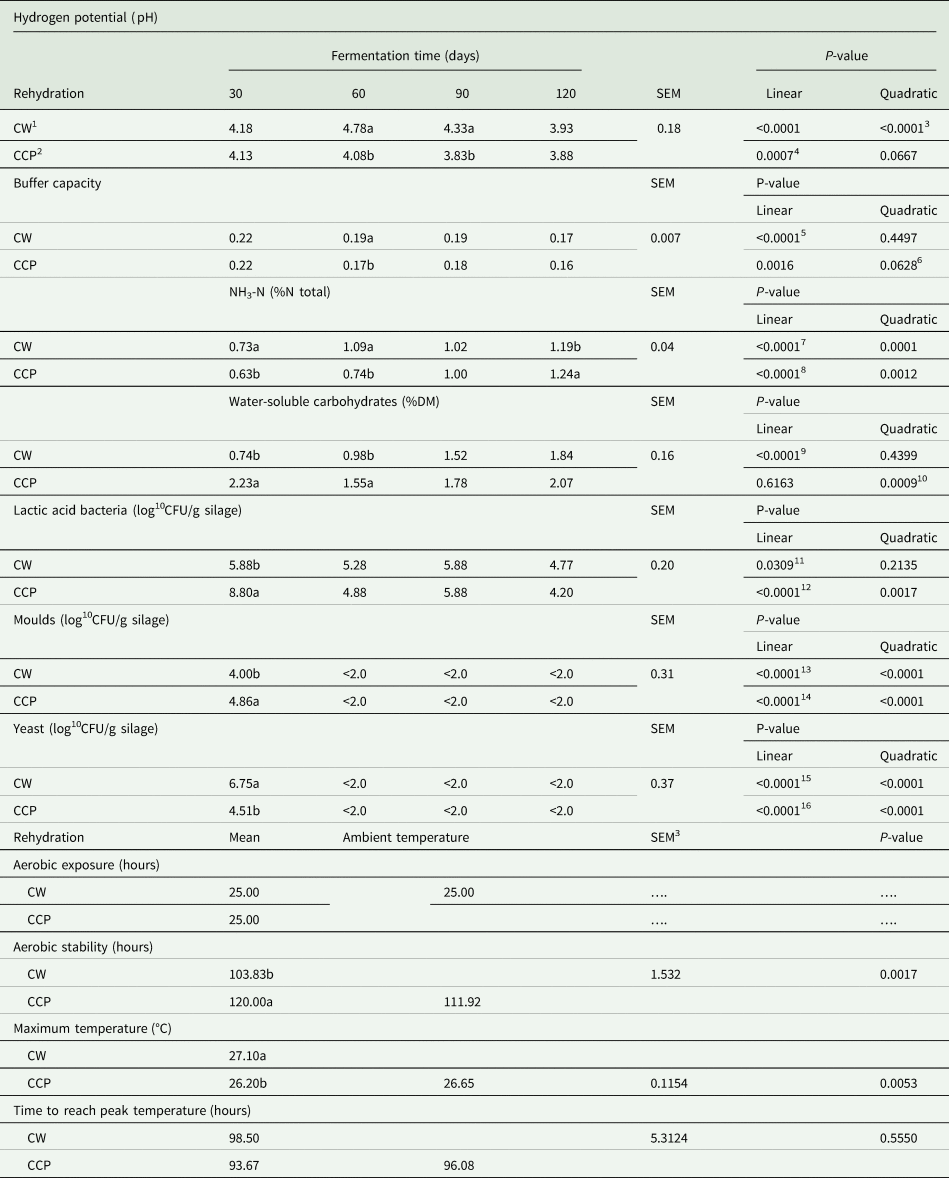
The results demonstrated an interaction effect between rehydration method and opening time on pH, buffering capacity, concentrations of NH3-N and water-soluble carbohydrates, as well as the populations of lactic acid bacteria (LAB), moulds and yeast (Table 2). Specifically, the pH values were higher in corn grain silage rehydrated with water compared to silage rehydrated with cactus pear. This difference was observed at both 60 days (average pH values of 4.78 and 4.33, respectively) and 90 days (average pH values of 4.33 and 3.83, respectively).
Fermentative characteristics and aerobic stability of corn grain silages rehydrated with water or cactus pear during different fermentation periods

1 Corn grain silage rehydrated with water (CW).
2 Corn grain silage rehydrated with cactus pear (CCP); SEM = standard error of the mean. Effect of rehydration: Means followed by lowercase letters in the columns differ from each other using the Tukey test at 0.05 probability; Period effect: a linear or quadratic effect is suggested at a 0.05 level of significance.
3 y = 3.355 + 1.13x−0.25 × 2; R 2 = 0.8418.
4 y = −0.1x + 4.23; R 2 = 0.7692.
5 y = −0.015x + 0.23; R 2 = 0.8824.
6 y = −0.017x + 0.225; R 2 = 0.6964.
7 y = 0.131x + 0.68; R 2 = 0.7317.
8 y = 0.209x + 0.38; R 2 = 0.9747.
9 y = 0.384x + 0.31; R 2 = 0.9799.
10 y = 0.2425x 2−1.2375x + 3.1825; R 2 = 0.8684.
11 y = −0.273x + 6.135; R 2 = 0.4328.
12 y = −1.28x + 9.14; R 2 = 0.6642.
13 y = −1.2x + 4; R 2 = 0.6.
14 y = −1.458x + 4.86; R 2 = 0.6.
15 y = −2.025x + 6.75; R 2 = 0.6.
16 y = −1.353x + 4.51; R 2 = 0.6.
There was a linear decreasing effect on buffering capacity in CW and CCP silages. The CW silage at 60 days presented higher values than the CCP silage (averages of 0.194 and 0.168). For NH3-N, CW was superior to CCP in the 30-day opening time, with average values of 0.73 and 0.63%, and at 60 days, with average values of 1.09% and 0.74%, respectively. However, at 120 days, the CCP treatment showed a higher content of NH3-N (1.24%).
For soluble carbohydrates, the CW silage presented higher values than CW at 30 days (averages of 0.73 and 2.23) and 60 days (averages of 0.98 and 1.55); the CW silage showed an increasing linear behaviour while the CCP silage showed a quadratic effect, with a minimum point of 1.93. Regarding LAB, the CCP silage (8.80 log10CFU/g silage), after 30 days, presented a higher concentration of LAB than the CW silage (5.88 log10CFU/g silage).
For moulds, at the 30-day opening, the CCP silage (4.86 log10CFU/g silage) showed a higher count of mould than the CW silage (3.99 log10CFU/g silage). Both silages showed a decreasing linear effect on mould count during the opening days. As for yeasts, the CW silage had a higher count of yeasts (6.75 log10CFU/g silage) than the CCP silage (4.51 log10CFU/g silage).
There was a significant difference in aerobic stability (P = 0.0017) (Table 2). The corn grain silage rehydrated with cactus pear showed no loss of stability over 120 h. However, the CW silage had a drop in stability by 103.83 h. For the maximum temperature (P = 0.0053), corn grain silage rehydrated with water presented a higher temperature (27.10°C) than the CCP silage (26.20°C). There was no significant difference between the types of rehydration to reach the peak temperature.
Chemical composition
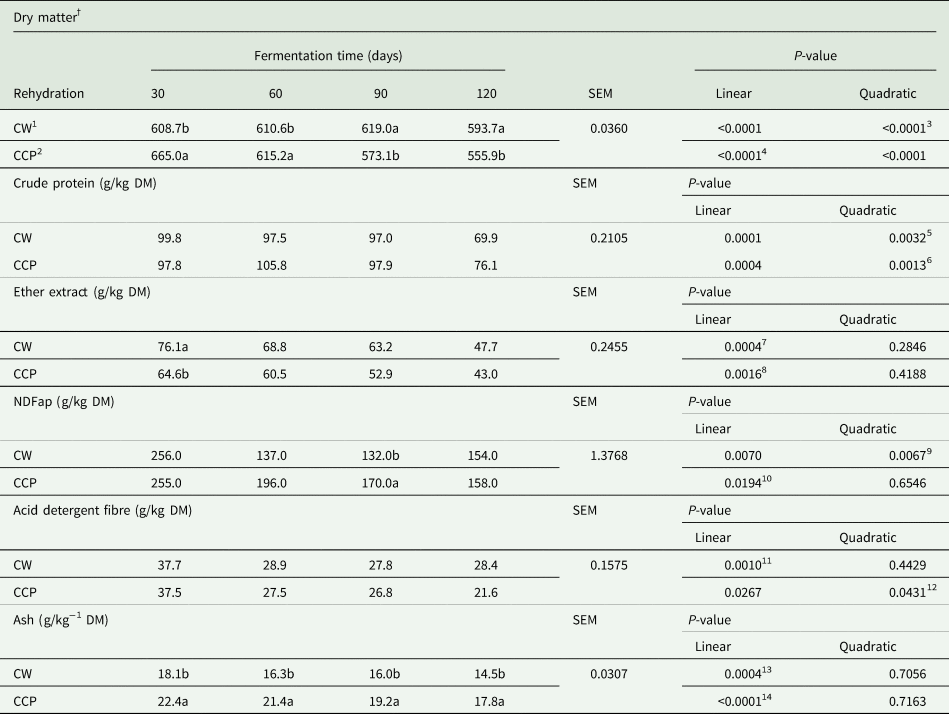
There was an interaction effect on DM, CP, EE, NDFap, ADF and ash. Regarding rehydration, a higher DM content was found on opening times 30 and 60 for CCP. However, for times 90 and 120, the highest DM content was observed in CW (Table 3). The interaction effect showed a decreasing linear behaviour on EE, ash, DM and NDF in the CCP silage and ADF in the CW silage (Table 3). No significant difference was detected for CW and CCP between the types of rehydration for the CP variable with mean values of 84.1 and 87.7 g/kg DM, NDFap 124.8 and 190.4 g/kg DM, and ADF 23.6 and 25.1 g/kg DM. For the EE, there was a significant difference only in the opening time at 30 days, where the EE content was higher for CW (76.1 g/kg) than CCP (64.6 g/kg).
Chemical composition of corn grain silages rehydrated with water or cactus pear during different fermentation periods

† On natural matter, NDFap = neutral detergent fibre corrected for ash and protein.
1 Corn grain silage rehydrated with water (CW).
2 Corn grain silage rehydrated with cactus pear (CCP); SEM = standard error of the mean. Effect of rehydration: Means followed by lowercase letters in the columns differ from each other using the Tukey test at 0.05 probability; Period effect: a linear or quadratic effect is suggested at a 0.05 level of significance.
3 y = −6.8x 2 + 30.34x + 583.15; R 2 = 0.7572.
4 y = −36.94x + 694.65; R 2 = 0.9605.
5 y = −6.2x 2 + 21.98x + 82.6; R 2 = 0.9329.
6 y = −7.45x 2 + 29.95x + 75.4; R 2 = 0.9996.
7 y = −9.08x + 86.65; R 2 = 0.946.
8 y = −7.24x + 73.35; R 2 = 0.9687.
9 y = 35.25x 2−207.35x + 423.75; R 2 = 0.9628.
10 y = −25.2x + 274; R 2 = 0.5725.
11 y = −2.9x + 37.95; R 2 = 0.6377.
12 y = 1.2x 2−10.84x + 46.45; R 2 = 0.9281.
13 y = −1.11x + 19; R 2 = 0.9409.
14 y = −1.6x + 24.2; R 2 = 0.9816.
Taxonomic diversity
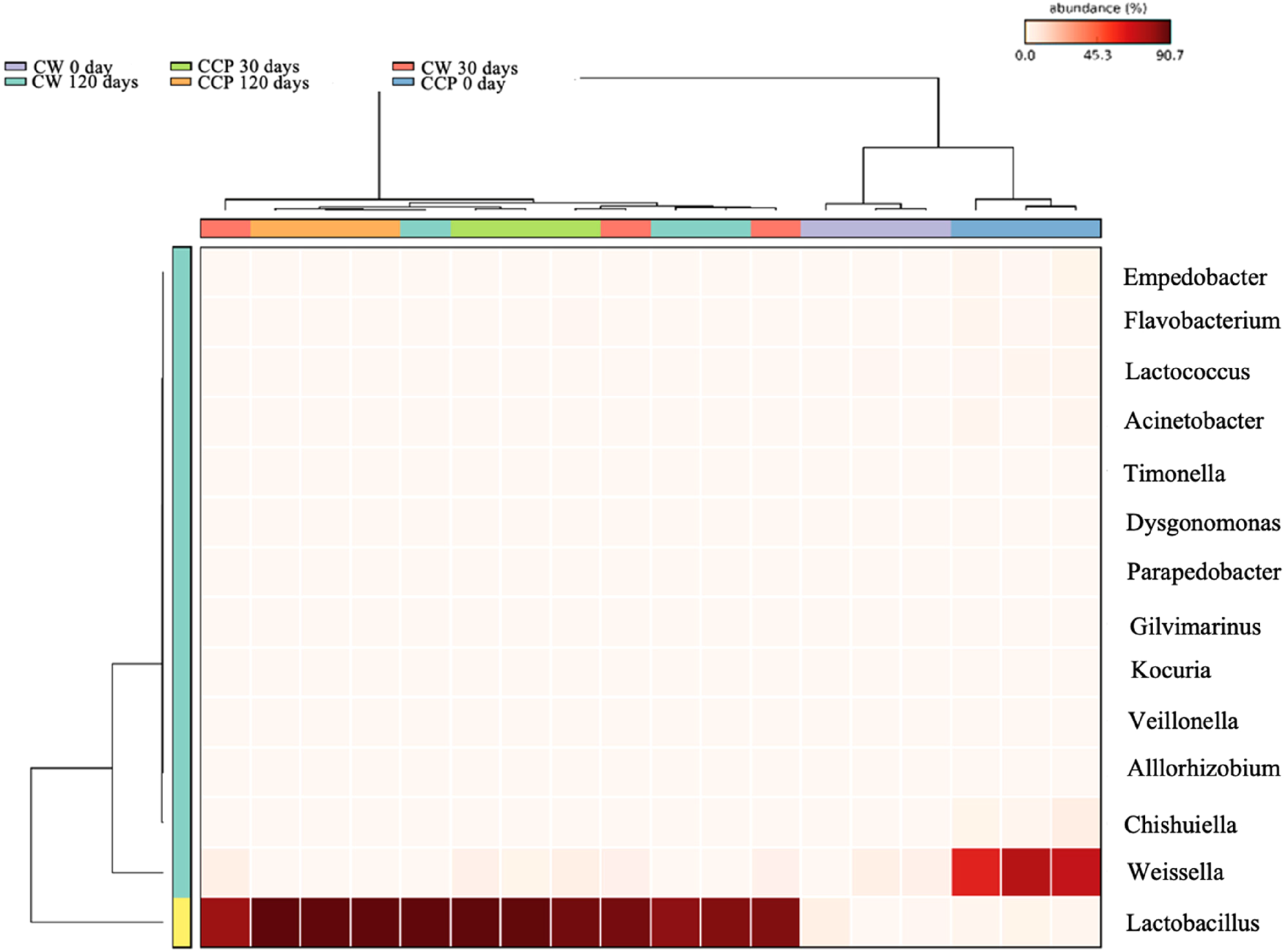
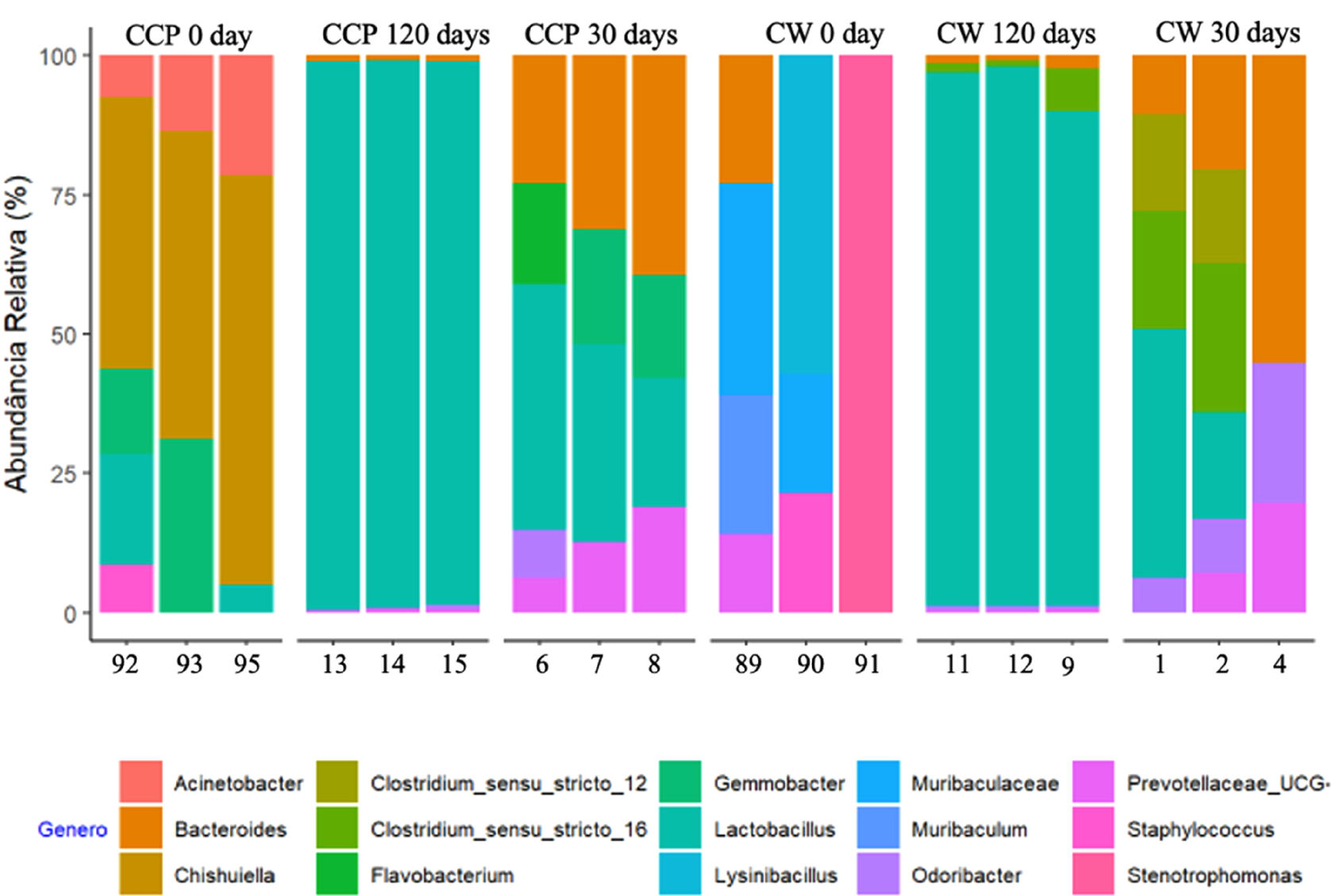
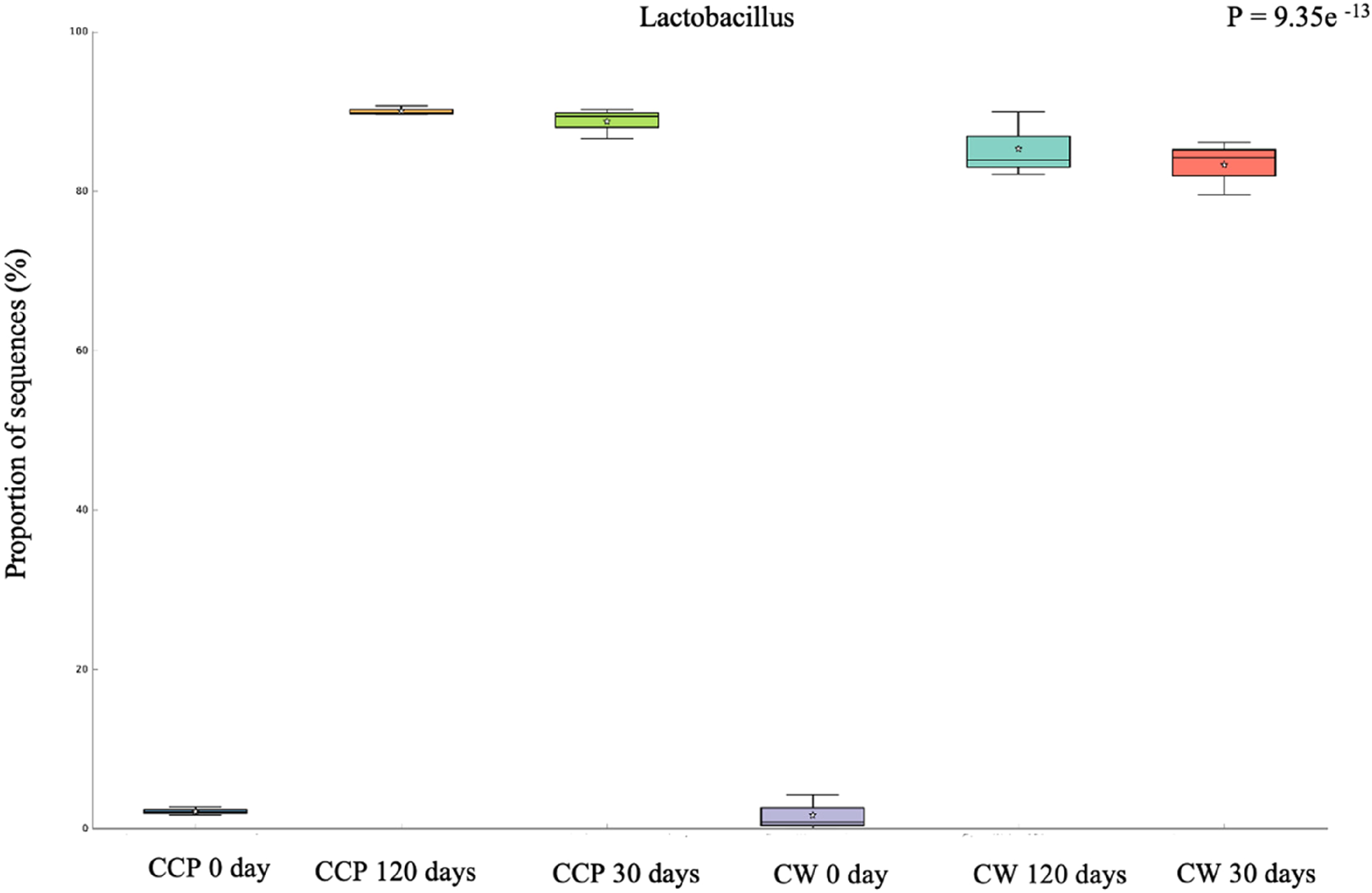
At time zero, the microbiotas of the CW and CCP treatments differed mainly in the abundance of the Weissella genus, which was more abundant in the CCP treatment. However, from 30 to 120 days, in all treatments, microbiotas were taxonomically very similar, with no significant differences. In both silages, there was an increase in bacteria of the Lactobacillus genus (Fig. 1).
Analysis of multiple groups using the Heatmap graph using cluster analysis on corn grain silages rehydrated with water or cactus during different fermentation periods. CW = corn grain silage rehydrated with water; CCP = corn grain silage rehydrated with cactus pear. The vertical dendrogram shows the clustering between treatment samples. The horizontal dendrogram shows the clusters formed between the bacterial genera in each treatment that present statistical differences.

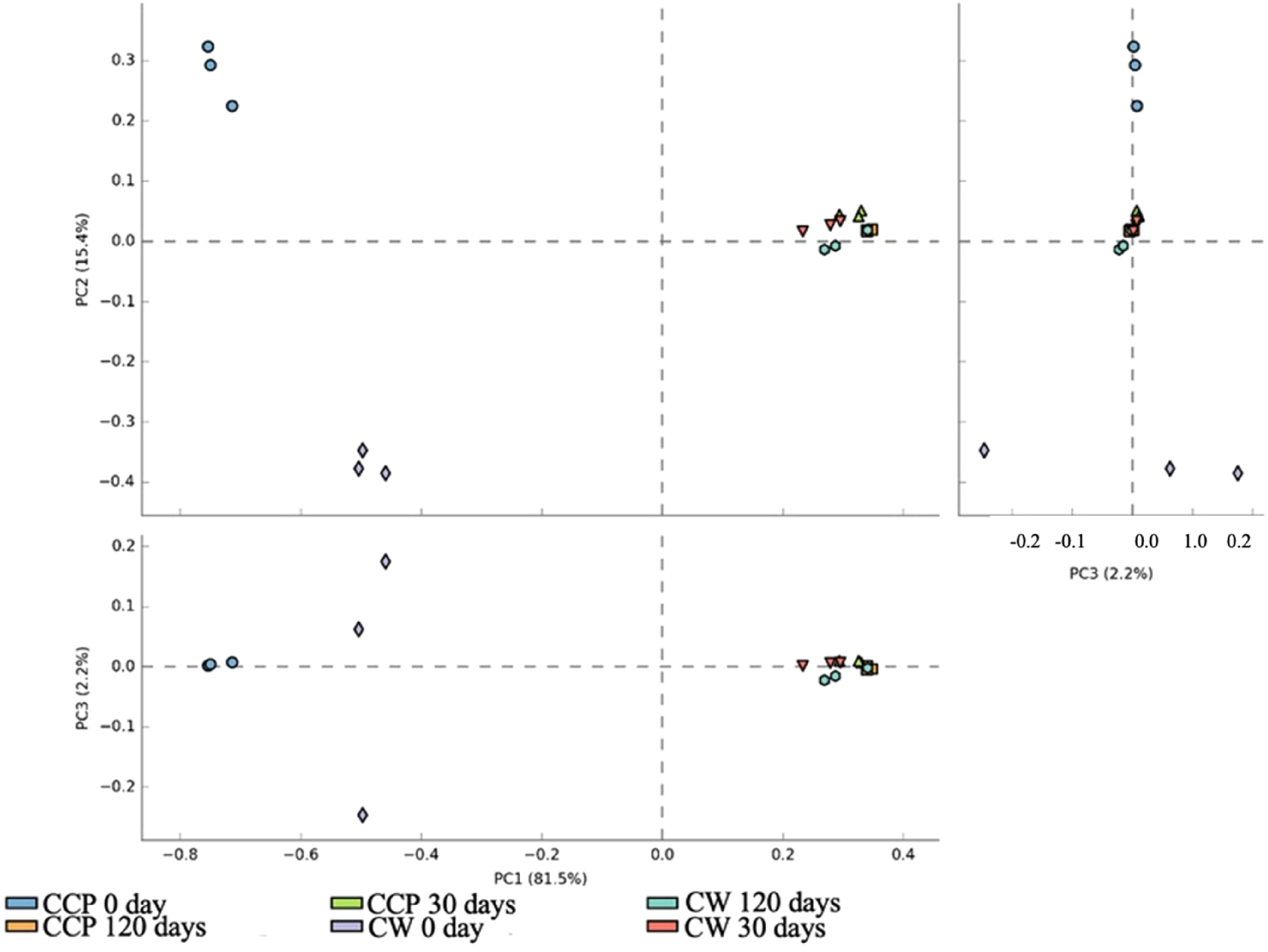
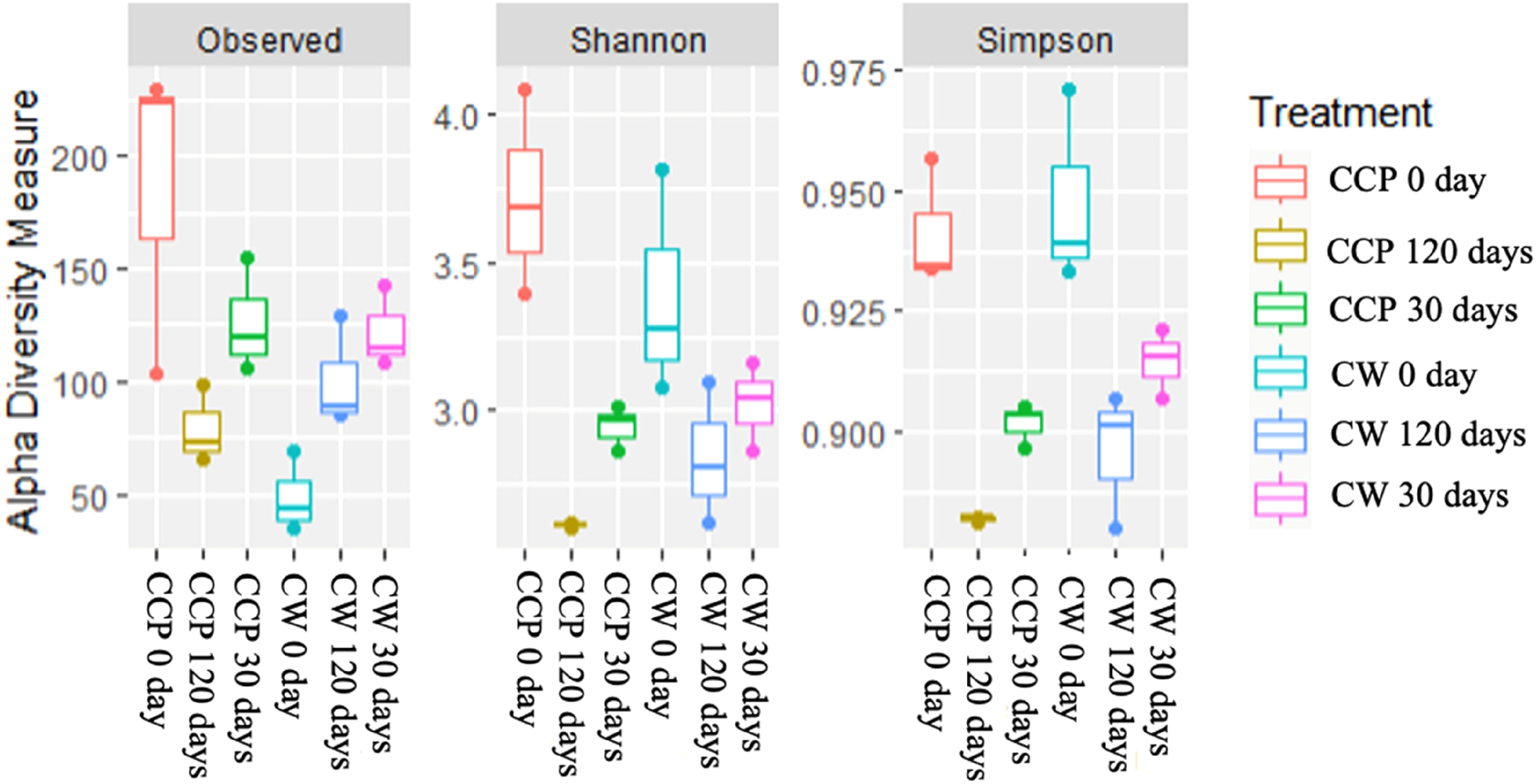
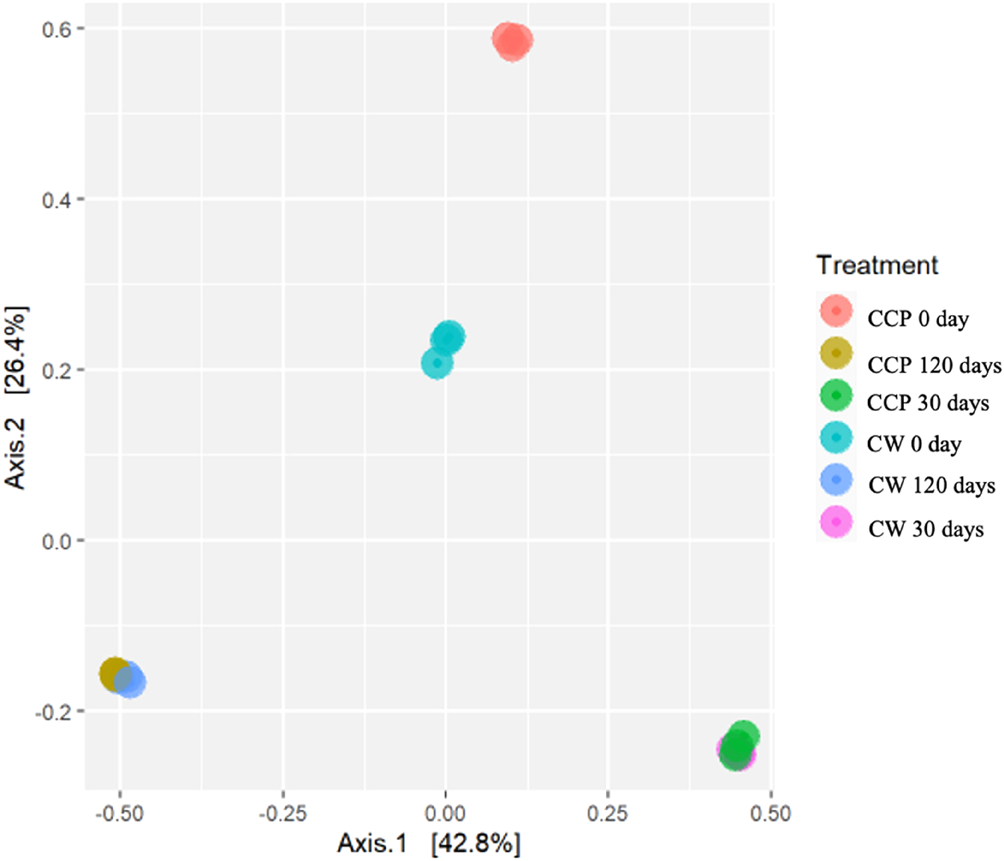
The microbial communities in the CW and CCP treatments differed at time zero. However, after ensiling, the composition of these treatments stabilized and remained unchanged at 30 and 120 days (Fig. 2). At time zero, the CW and CCP treatments exhibited greater diversity compared to subsequent opening times. In contrast, at 30 and 120 days, the other treatments showed reduced microbial diversity in the silage (Fig. 3).
Similarity analysis through analysis of main components in corn grain silages rehydrated with water or cactus during different fermentation periods. CW = corn grain silage rehydrated with water; CCP = corn grain silage rehydrated with cactus pear.

Analysis of alpha diversity using observed features, Shannon, and Simpson indices in corn grain silages rehydrated with water or cactus during different fermentation periods (0, 30 and 120 days). CW = corn grain silage rehydrated with water; CCP = corn grain silage rehydrated with cactus pear.

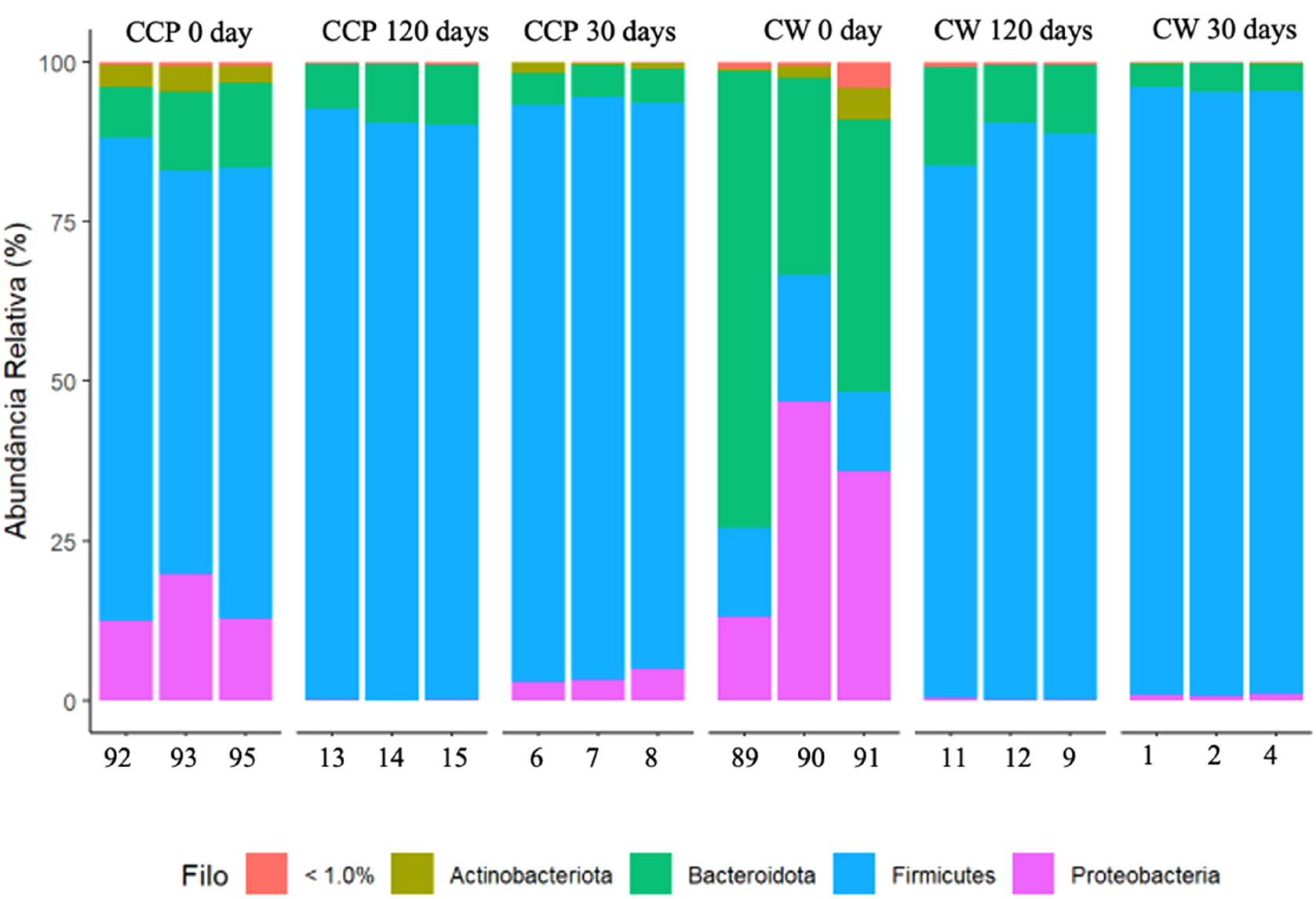
The microbial composition in the CW and CCP treatments differed significantly at time zero. However, at 30 and 120 days, the communities in silage rehydrated with water or cactus pear became similar (Fig. 4). In all metagenomes, there was a predominance of the phylum Firmicutes, except for the metagenome of the treatments with water at time zero, where a predominance of the phylum Bacteroidota was found (Fig. 5).
Beta diversity analysis of metagenomes using a PCoA graph in corn grain silages rehydrated with water or cactus during different fermentation periods (0, 30 and 120 days). CW = corn grain silage rehydrated with water; CCP = corn grain silage rehydrated with cactus pear.

Analysis of relative diversity at the phylum level with a minimum abundance of 1% in corn grain silages rehydrated with water or cactus during different fermentation periods (0, 30 and 120 days). CW = corn grain silage rehydrated with water; CCP = corn grain silage rehydrated with cactus pear.

The composition of the genera in the communities of CW and CCP silages was more different at the beginning. The CW silage community at time zero had a composition of Stenotrophomonas, Muribaculaceae, Muribaculum, Bacteroides, and Prevolellaceae- UCG (Fig. 6). The composition of the CCP silage community at time zero was composed of genera such as Clostridium, Chishuiella and Acinetobacter. Over opening times 30 and 120, there was an increase in the Lactobacillus genus in both treatments.
Analysis of relative diversity at the genus level with a minimum abundance of 1% in corn grain silages rehydrated with water or cactus during different fermentation periods (0, 30 and 120 days). CW = corn grain silage rehydrated with water; CCP = corn grain silage rehydrated with cactus pear.

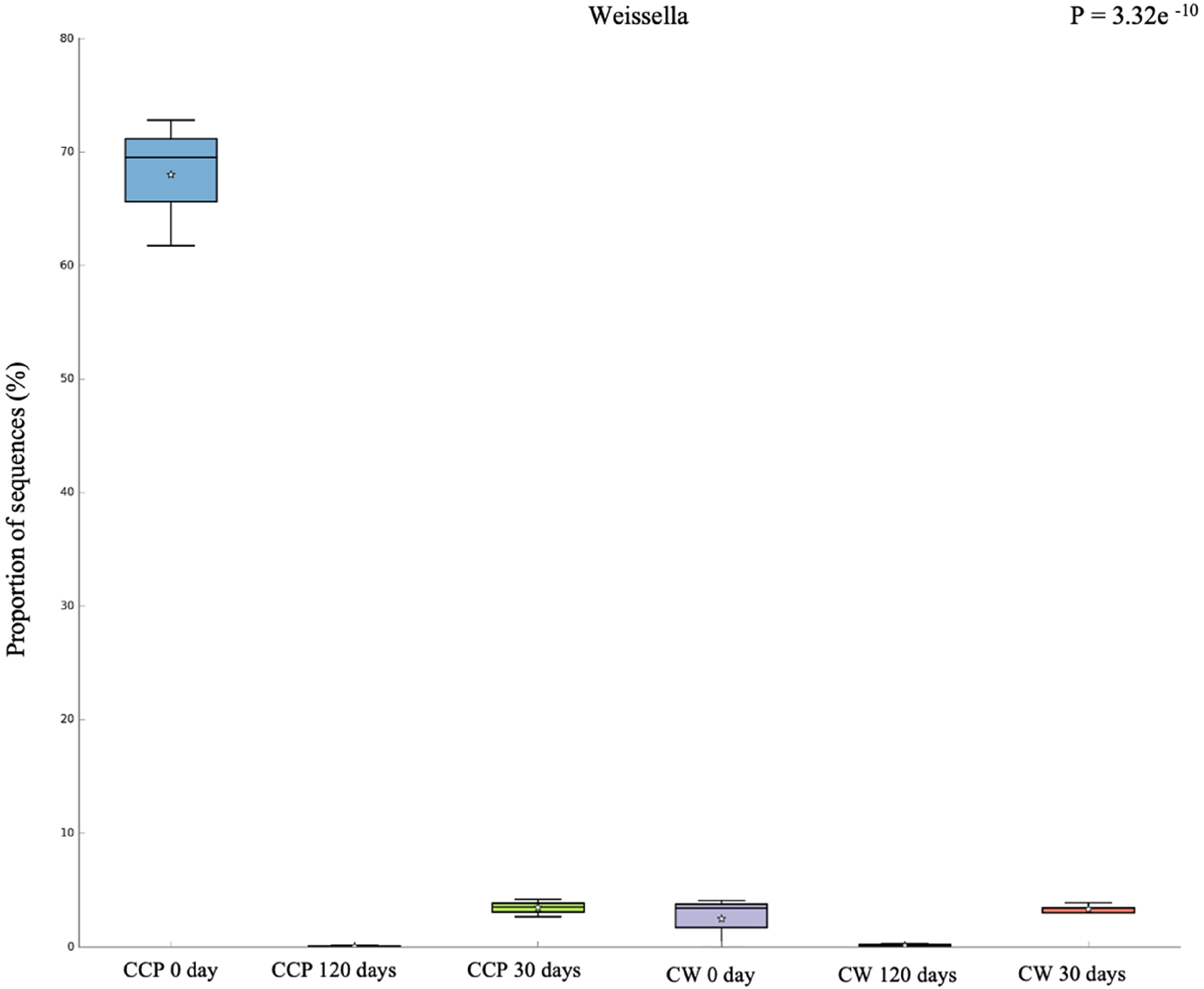
Figure 7 shows that the CCP day 0 treatment had a higher predominance, approximately 70%, of the Weissella genus than the other treatments. In Fig. 8, regardless of the treatment, there was an increase in the Lactobacillus genus throughout the fermentation process.
Differential abundance analysis of the genus Weissela in corn grain silages rehydrated with water or cactus during different fermentation periods (0, 30 and 120 days). CW = corn grain silage rehydrated with water; CCP = corn grain silage rehydrated with cactus pear.

Differential abundance of the genus Lactobacillus in corn grain silages rehydrated with water or cactus during different fermentation periods (0, 30 and 120 days). CW = corn grain silage rehydrated with water; CCP = corn grain silage rehydrated with cactus pear.

Discussion
The decrease in pH of corn grain silage rehydrated with cactus pear at 30 and 60 days can be explained by the high content of soluble carbohydrates in the CCP (Abidi et al., Reference Abidi, Ben Salem, Nefzaoui, Vasta and Priolo2013). In addition to being a source of rehydration for corn grain silage, cactus pear produces mucilage, which has a lower water activity. This lower activity inhibits the growth of undesirable bacteria, such as enterobacteria, resulting in a lower pH. In the present study, silages presented pH values between 3.7 and 4.2, which show that they were well preserved with no fermentation losses (Kung Jr. et al., Reference Kung, Shaver, Grant and Schmidt2018).
Cactus pear as a source of hydration was effective in preserving soluble carbohydrates, as it promoted lower losses of soluble carbohydrates in the silage and maintained an adequate pH, indicating good fermentation. Cactus pear contains buffering compounds, which prevent a rapid decline in pH, making the intake of soluble carbohydrates gradual and not accentuated (Basso et al., Reference Basso, Adesogan, Lara, Rabelo, Berchielli, Teixeira, Siqueira and Reis2014; Carvalho et al., Reference Carvalho, Ávila, Pinto, Neri and Schwan2014).
As for NH3-N, an increase was found according to the days of fermentation for both silages, in which corn grain silage rehydrated with cactus pear showed higher NH3-N, similar to that reported by Carvalho et al. (Reference Carvalho, Ávila, Bernardes, Pereira, Santos and Schwan2017). The gradual increase in ammonia during fermentation times may be related to the breakdown of the protein matrix around the starch granules during ensiling (Hoffman et al., Reference Hoffman, Esser, Shaver, Coblentz, Scott, Bodnar and Charley2011), a factor that can be observed according to the protein content before ensiling (Table 1) and the protein content at 120 days (Table 3).
The buffer capacity consists of the ability of the ensiled mass to resist pH variations (McDonald et al., Reference McDonald, Henderson and Heron1991), which may indicate proteolysis caused by the ensiling process since its proportion is promoted by residual amino acids (Evangelista et al., Reference Evangelista, Siqueira, Lima, Lopes and Rezende2009). The highest buffering capacity in the CW silage at 60 days is related to the highest pH values in this same period, indicating higher proteolysis in this silage and greater resistance of the ensiled mass to pH reduction.
The predominance of LAB in corn grain silage rehydrated with cactus pear, especially at the beginning of fermentation, indicates the benefits of this use supply to animals. The high content of soluble carbohydrates in cactus pear positively influenced the predominance of LAB, considering that they use this substrate as a source of energy to produce lactic acid, which is responsible for good fermentation (Carvalho et al., Reference Carvalho, Ávila, Pinto, Neri and Schwan2014).
The pH of the silages also corroborated these results, considering that pH ~ 4.0 is associated with higher fermentation of lactic acid bacteria (McDonald et al., Reference McDonald, Henderson and Heron1991). Silva et al. (Reference Silva, Nascimento, Campos, Alves, Resende, Daniel and Siqueira2019), working with corn grain silages rehydrated with water, found pH values close to those observed here, between 4.0 and 4.2.
Although the silages contained mould and yeast in the initial fermentation time, the results showed that the silages achieved adequate fermentation (Table 2). This initial amount is due to the microorganisms present in the forage in the field. The concentration of heterolactic bacteria, when producing acids such as acetic, prevents the proliferation of yeasts and moulds because of their antifungal action, avoiding undesirable microorganisms over the fermentation time (Muck and Kung Jr, Reference Muck and Kung1997).
On rehydrated corn grain silage, Carvalho et al. (Reference Carvalho, Ávila, Bernardes, Pereira, Santos and Schwan2017) also observed yeasts below the detection level (<2.0 log CFU/g). However, for moulds, they found higher values than the present study, showing that our silages were well preserved.
Low mould detection is of great importance for ruminant nutrition. Fungi of the Fusarium genus, common in corn crops, are the main producers of mycotoxins. Mycotoxins interfere with cellular metabolism, causing damage to the cells of the gastrointestinal tract, leading to nausea, vomiting and diarrhoea. These symptoms occur because the toxins damage the intestinal mucosa, impairing the digestion and absorption of essential nutrients, such as proteins and carbohydrates. Additionally, mycotoxins can disrupt the production of important reproductive hormones, affecting the ovaries, sperm production and the reproductive cycle in general. This can result in infertility, pregnancy issues and reduced milk production, directly impacting the reproductive efficiency and productivity of ruminants (Fink-Gremmels, Reference Fink-Gremmels2008). The large intake of these mycotoxins, when associated with other mould also likely to be present in corn silage, can cause embryonic mortality in ruminants (Dänicke and Winkler, Reference Dänicke and Winkler2015).
Despite the lower DM content in the CCP treatment in the opening times of 90 and 120 days, no major losses were observed, indicating that the silages showed good fermentation. It is worth noting that rehydrated corn grain silage is not a bulky feed, being included as a concentrate in the total diet.
The EE content was higher in the CW silage at 30 days due to the higher content of this nutrient in this silage; there was a considerable difference in the EE between the two silages before fermentation (Table 1). According to the NRC (2001), the maximum limit of EE in diets for ruminants should not exceed 7% of the total diet. So, with the values observed here, there is no risk of reducing ruminal fermentation with the supply of rehydrated grain silages.
The higher values of NDFap in CCP silages are directly related to the composition of forage cactus. When combined with the values of corn grains, they result in silages with higher concentrations of this fibrous fraction, as illustrated in Table 1. Furthermore, it is expected that neutral detergent fibre (NDF) values will decrease over the fermentation period in corn grain silages, regardless of the rehydration method used. This phenomenon is mainly attributed to the acid hydrolysis of the fibrous fraction during the fermentation process. As fermentation progresses, there is an intensified degradation of hemicelluloses, which are the major components of NDFap (Kung Jr et al., Reference Kung, Shaver, Grant and Schmidt2018; Bueno et al., Reference Bueno, Jobim, Daniel and Gierus2020). This degradation results in a reduction in NDFap levels, which improves the digestibility of the silage. These findings corroborate the results of Diogenes et al. (Reference Diogenes, Medeiros, Moura, Edvan, Oliveira, Silva Filho, Silva, Araujo, Oliveira and Bezerra2023), who reported a reduction in these fractions in corn grain silages rehydrated with whey and forage cactus mucilage.
The highest aerobic stability and the lowest temperature found in the CCP silage may be related to the lower yeast and higher LAB counts, which were initially predominant in the CCP treatment. In a study on the microbial community in cactus pear, Pereira et al. (Reference Pereira, Santos, Araújo, Oliveira, Pinho, Zanine and Nascimento2019) reported the presence of bacteria with a homofermentative and heterofermentative profile, the main isolates were Lactobacillus plantarum, Weissella cibaria, Weissella confusa, and Weissella paramesenteroides.
The results from this study provide evidence of the importance of corn grain silage rehydrated with cactus for the producer, indicating a longer period for the silage to remain in the field under aerobic conditions without increasing temperature. Its use in arid regions where there is a shortage of water becomes advantageous, given the high-water content of the cactus pear.
The interaction of microorganisms present in silage, soluble carbohydrates, and pH are factors that directly influence aerobic stability (Jobim et al., Reference Jobim, Nussio, Reis and Schmidt2007). Bacteria with homofermentative metabolism quickly acidified the medium, probably due to the higher availability of substrates of cactus pear, while bacteria with heterofermentative metabolism converted lactic acid into acetic acid, resulting in higher availability of this acid. The use of bacteria with two fermentative profiles promoted a higher concentration of acetic acid, which has antifungal activity, controlling the silo temperature and promoting higher aerobic stability (Basso et al., Reference Basso, Adesogan, Lara, Rabelo, Berchielli, Teixeira, Siqueira and Reis2014). In our study, in addition to the high concentration of bacteria with a homofermentative profile, the use of cactus pear promoted the highest proportion of bacteria of the Weissella genus upon ensiling (Fig. 7).
Another important factor is that cactus pear contains buffering compounds such as oxalic, malic, citric and malonic acids, resulting from the Crassulacean acid metabolism. These acids promote a slower drop in pH, preventing the consumption of soluble carbohydrates in greater quantities (Table 2), and can have antifungal action, ensuring high aerobic stability (Pereira et a l., Reference Pereira, Santos, Araújo, Oliveira, Pinho, Zanine and Nascimento2019).
Comparing the abundances of genera present in the treatments (Fig. 1), the Weissella genus predominated in the CCP treatment at the beginning of fermentation. Weissella bacteria belong to the group generally known as lactic acid bacteria. They are heterofermentative, producing CO2 from carbohydrate metabolism (Fusco et al., Reference Fusco, Quero, Cho, Kabisch, Meske, Neve and Franz2015) explaining the greater reduction in pH and lower count of yeasts in this silage during the opening period.
The data on the composition of the communities (Figs 2 and 4) evidence that the ensiling process over the days occurred correctly, with an increase in the number of desirable bacteria such as the Weissella and Lactobacillus genera. The decrease in the diversity of the other metagenomes found in both treatments during the silage-making period (Figs 3 and 6) shows that the predominant genera throughout the days acted beneficially, improving the aerobic stability of the silage and controlling the medium, as they reduced the pH and preserved the ensiled mass.
As well as pH and chemical composition, the microbiota is another indicator of silage quality. Sequencing of the 16S rDNA gene revealed that phylum Firmicutes was predominant in the CCP treatment in all opening times (Fig. 5). The phylum Firmicutes encompasses lactic acid bacteria, which are important in the ensiling process, preserving the ensiled mass and improving aerobic stability. This explains the aerobic stability in the CCP treatment.
Increasing concentrations of acetic acid is desirable, as it is an antifungal compound (Kung Jr. et al., Reference Kung, Schmidt, Ebling and Hu2007). The use of cactus pear in rehydrated corn grain silages, upon ensiling, resulted in a 70% increase in the predominance of the Weissella genus, composed of bacteria that produce acetic acid (Fig. 7).
The inclusion of cactus pear in rehydrated corn silages promoted a favourable environment for lactic and acetic acid-producing bacteria such as Lactobacillus and Weissela, decreasing the pH of the ensiled material. Therefore, corn grain silage rehydrated with cactus pear promoted a better silage fermentation: constant pH and within standards, slightly higher NH3-N indicating the breakdown of the protein matrix, higher content of soluble carbohydrates serving as substrate for LAB, higher count of LAB at the beginning of fermentation, followed by their predominance and lower count of yeast. In terms of chemical composition, corn grain silage rehydrated with cactus pear presented better levels of NDFap and ash. In aerobic stability, this silage obtained more stability and lower temperature. In the sequencing of the 16S rDNA gene, it showed an abundance of desirable genera for good fermentation. The use of cactus pear as an ingredient to rehydrate corn represents an alternative to the use of water without negatively impacting the quality of the resulting silage.
Conclusion
Silages rehydrated with cactus pear showed promising results in terms of fermentation profile, aerobic stability and chemical composition. Additionally, the incorporation of cactus pear positively impacted beneficial taxonomic communities, identifying important groups for preserving the ensiled mass. A fermentation period of 60 days is recommended before opening the silo.
Author contributions
J. S. O., G. G. L. A. and E. M. S. conceived and designed the study. C. J. B. O., P. G. B. G., G. F. L. C., E. S. J., G. M. L., N. B. V., P. C. T. J. and V. M. R. L. conducted data gathering. H. S. C. performed statistical analyses. R. L. S. and F. N. S. S. wrote the article.
Funding statement
The research was supported by the Foundation for Research Support of the State of Paraíba Pronex notice (Finance code 06/2018), the National Council for Scientific and Technological Development (CNPq, Brazil).
Competing interests
The authors declare there are no conflicts of interest.
Ethical standards
Not applicable.