Introduction
Sainfoin (Onobrychis viciifolia) is an excellent forage legume, which was grown in Europe before the widespread use of commercial fertilizers. In many parts of Europe, the cultivation of forage legumes has decreased, especially in the 1980s, when the impact of support payments from the Common Agricultural Policy (CAP) was to favour intensive production. Following CAP reforms in 2005, a single farm payment was introduced, which is uncoupled from production volumes but linked to environmental, food safety and animal welfare standards. The new policy aims to make European Union (EU) farmers more competitive. Higher levels of inorganic nitrogen fertilizers suit high-yielding grass Trifolium sp. mixtures. This trend is now changing, and pressure to reduce energy consumption and environmental pollution and to improve agricultural sustainability is driving lower input agronomy. The cost of inputs, especially nitrogen and phosphate, has more than doubled in the past 5 years, and farmers are reconsidering the use of forage legumes, which are better suited to low input regimes. Forage legumes have been shown to increase the efficiency of nitrogen use and reduced nitrogen transit from the soil. Moreover, global warming is projected to increase the yield of forage legumes, relative to grasses, due to a combination of their relative responses to heat, light and nutrient sequestration (Haynes, Reference Haynes and Brady1980; Clarke et al., Reference Clarke, Davison and Fulloon2000).
The Onobrychis genus belongs to the Fabaceae family and Hedysareae tribe. It is widespread in temperate zones of North America, Europe and Middle East. O. viciifolia is of significant agricultural use as a perennial forage and fodder legume. O. viciifolia tolerates drought, cold and low nutrient status. These properties make it very popular on Middle East plateaus and some areas of Spain, Italy and Eastern Europe. In Europe, cultivation of O. viciifolia has also suffered from increased competition from higher yielding forages (mostly Medicago sativa and Trifolium sp.).
Recent research works have highlighted several additional beneficial properties of O. viciifolia for livestock, and this is mainly due to the nature of its particular secondary metabolites. Furthermore, it is known to enhance diversity and stability of agroecosystems, representing a valuable pollen and nectar source for honey production. O. viciifolia and related species would benefit from characterization and development to fully exploit these properties. Rigorous taxonomic characterization is limited and sometimes contradictory. Very little has been done in terms of either molecular genetics or cytological characterization, which is crucial to initiate modern breeding programmes. Realization of the potential of O. viciifolia is limited by a number of issues including low productivity, erratic establishment and variability in the presence of beneficial phytochemicals in different genetic lines.
Taxonomy
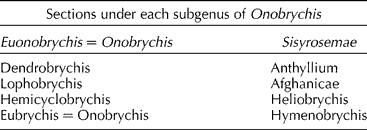
O. viciifolia belongs to the genus Onobrychis, which belongs to the tribe Hedysareae of the subfamily Papilionoideae of the Fabaceae family (previously Leguminosae). Many contradictions are found in the taxonomy of Onobrychis, mostly due to the different approaches in species delimitation, resulting in a varying number of recognized species (Emre et al., Reference Emre, Turgut-balik, Sahin and Kursat2007). Yildiz et al. (Reference Yildiz, Ciplak and Aktoklu1999) suggested that the genus Onobrychis comprises about 170 species, based on fruit morphology. They are classified into two subgenera, Sisyrosema and Onobrychis, and eight sections. Guner et al. (Reference Guner, Ozhatay, Ekim, Baser and Press2000) estimated that there are 54 species of Onobrychis divided into five sections. Širjaev (Reference Širjaev1925) produced a useful classification, which is presented in Table 1. O. viciifolia is the most widespread species (Celiktas et al., Reference Celiktas, Can, Hatipoglu and Avci2006) for which several synonyms are used in the literature: Hedysarum onobrychis L., Onobrychis sativa Lam., Onobrychis viciaefolia Scop. and O. viciifolia Scop. Sánchez-Yélamo (Reference Sánchez-Yélamo2006) characterized a subset of the genus using isozyme methods; section Eubrychis was clustered in a main group, while taxa in the subsections Hispanicae, Brachysemiae and Macropterae appear differentiated from the subsection Vulgatae. Using a classification based on seed protein profiles, Emre et al. (Reference Emre, Turgut-balik, Sahin and Kursat2007) showed species of sections Lophobrychis, Onobrychis and Hymenobrychis clustered together. More recently, Ahangarian et al. (Reference Ahangarian, Kazempour Osaloo and Maassoumi2007) noted that subgenus Sisyrosemae seems to be derived from subgenus Onobrychis based on intervening transcribed sequences of the nuclear ribosomal DNA.
Classification of the Onobrychis genus adapted from Širjaev (Reference Širjaev1925)

Botanical description of O. viciifolia
O. viciifolia is an erect or suberect plant, from 40 to 100 cm in height (Frame et al., Reference Frame, Charlton and Laidlaw1998). Many hollow stems, arising from basal buds, form a branched crown. Each stem has pinnate leaves formed with 10–28 leaflets grouped in pairs on long petioles and with a terminal leaflet. The stipules are broad and finely pointed. The inflorescences develop on axillary tillers with about 80 pinkish red, or rarely white, melliferous flowers (Fig. 1). Each flower can produce a kidney-shaped seed contained in a brown pod. The fruit is either spiny or spineless. The degree of spininess is characteristic for different lines and is genetically determined (Thomson, Reference Thomson1951b). The size of the true seeds is variable from 2.5 to 4.5 mm long, 2 to 3.5 mm broad and 1.5 to 2 mm thick (Fig. 2). Unmilled seed and milled seed weigh approximately 24 and 15 g/1000 numbers, respectively. The fruit colour is mainly determined by the ripeness at harvesting time. A deep taproot with a few main branches and numerous fine lateral roots forms the root system.
Onobrychis viciifolia. (with kind permission from K. Stueber at http://www.biolib.de/) (A colour version of this figure can be found online at journals.cambridge.org/pgr).

Onobrychis viciifolia seed variability: 1208, 1292, 1257 and 1126 correspond to different accessions collected at the National Institute of Agricultural Botany, Cambridge UK CB30LE (A colour version of this figure can be found online at journals.cambridge.org/pgr).

O. viciifolia is divided into two agricultural types. The ‘common’ type (O. sativa var. communis Ahlefed) is from central Europe and remains prostrate in the year of sowing. It is also named single-cut O. viciifolia because regrowth after the first spring cut is only vegetative. The giant type or double-cut O. viciifolia (O. sativa var. bifera Hort.) is from the Middle East and reflowers after being cut (Badoux, Reference Badoux1965). The giant type has proportionally less stem per plant, longer stems and more internodes per stem. It also has more leaflets per leaf than the common type (Thomson, Reference Thomson1951a). Otherwise, they are very similar with respect to seed weight, colour and spininess of the unmilled fruit (Thomson, Reference Thomson1951b). Negri and Cenci (Reference Negri and Cenci1988) characterized 20 populations of O. viciifolia from central Italy and noted morphological differences according to altitude. High altitude led to populations with reduced dimensions; leaflets had a round shape, prostrate growth habit and shorter peduncle of inflorescence but a greater length of inflorescence.
Cytological aspects
O. viciifolia is reported to be either a diploid or a tetraploid species with respectively 2n = 2x = 14 and 2n = 4x = 28 chromosomes (Frame et al., Reference Frame, Charlton and Laidlaw1998). However, Abou-El-Enain (Reference Abou-El-Enain2002) discusses the occurrence of series of 2n = 22, 27, 28 and 29 chromosomes (2n = 3x+1, 4x-1, 4x and 4x+1), which demonstrates the role of aneuploid alteration from the chromosome number based on multiples of x = 7 in the evolution of this species. Most literature, though, only refers to the tetraploid type (Negri et al., Reference Negri, Veronesi and Falcinelli1987; Kidambi et al., Reference Kidambi, Mahan and Matches1990; Tamas, Reference Tamas2006), with an average chromosome length of 3.39 μm. A recent study has confirmed that diploid types exist but are very rare (Hayot et al., unpublished) (Fig. 3).
Metaphasic O. viciifolia meristematic root cell, (a) diploid with 2n = 2x = 14 and (b) tetraploid with 2n = 4x = 28.

Breeding system
O. viciifolia is an outbreeding insect-pollinated species. A range of insect species successfully pollinate flowers, but the most important are Apis mellifera (honey bee), Bombus sp. (bumble bees) and, to a lesser extent, Osmia (solitary). Although it is possible to self-pollinate sainfoin plants under controlled conditions, resultant plants lack vigour and produce few if any viable seeds (Beat Boller, pers. commun.). Onobrychis along with many other members of the Fabaceae is considered to be an obligate insect-pollinated species (Hanley et al., Reference Hanley, Franco, Pichon, Darvill and Goulson2008).
History of cultivation
O. viciifolia has been cultivated for hundreds of years in many parts of the world, including Asia, Europe and North America (Frame et al., Reference Frame, Charlton and Laidlaw1998). One in seven fields in southern England were covered in pink flowers until the mid 1940s. Cotswold Seeds Ltd. hold English covenants from the 1800s, stating that tenant farmers were required to grow O. viciifolia to maintain soil fertility. Farmers considered it as the ‘best cog in the farming wheel’ for sustainable farming, improving soil fertility of poor chalky soils covering parts of southern England. A once-popular rotation in Hampshire in the 1830s consisted of a 4-year O. viciifolia ley followed by wheat, turnips and spring barley.
O. viciifolia is native to South Central Asia and was introduced into central Europe in the 15th century (Burton and Curley, Reference Burton and Curley1968). It was first cultivated in Southern France in 1582, following which it spread across Europe (Piper, Reference Piper1924) and into North America by 1786. It was being cultivated in the UK by the mid 17th century (Hartlib, Reference Hartlib1652) and gained popularity in many areas of Britain where it was used to feed the heavy horses, and the aftermath (leafy stubble) was used for grazing lambs (Koivisto and Lane, Reference Koivisto and Lane2001). Today, it is still popular in Eastern Europe, Italy, Spain, Iran and, especially, Turkey where about 94,000 ha were grown in 2001 (Eken et al., Reference Eken, Demirci and Dane2004). Elsewhere, over the last 40 years, O. viciifolia has experienced a constant decline in Europe (Borreani et al., Reference Borreani, Peiretti and Tabacco2003). It is recorded that more than 150 tonnes of seeds were sold every year in the late 1950s in the UK, enough for 2500 ha (Hill, Reference Hill, Lane and Wilkinson1997). In the late 1970s, only approximately 150 ha were cropped. Today, O. viciifolia has become rare in the UK, and this is due, in part, to its poor response to the changing requirements and circumstance of British agriculture (Hutchinson, Reference Hutchinson1965). Rochon et al. (Reference Rochon, Doyle, Greef, Hopkins, Molle, Sitzia, Scholefield and Smith2004) pointed out that the decline of forage legumes in Europe has been due to the farmers support payments towards intensive production using cheap inorganic fertilizers since the early 1970s, together with the expansion and dominance of autumn cereal cropping from the 1960s (Hill, Reference Hill, Lane and Wilkinson1997). In Italy, Borreani et al. (Reference Borreani, Peiretti and Tabacco2003) noted that structural changes, allied to the gradual disappearance of livestock farms in hilly areas, may have contributed, especially the reduction in draught horses (Newman, Reference Newman, Lane and Wilkinson1997), for which it was a major feed. Finally, agronomic limitations have contributed to its decline, including low yield, low persistence and poor regrowth after the first cut, compared with M. sativa (Sims et al., Reference Sims, Muir and Carleton1968; Borreani et al., Reference Borreani, Peiretti and Tabacco2003).
Agronomy
Climate and soil requirements
O. viciifolia grows in a wide range of climatic conditions in Europe, North America, Asia, Australia and New Zealand, in neutral and alkaline soils of pH 6 or above, in dryland and irrigated areas. In the UK, it has always been linked with calcareous chalky or limestone soil (Frame et al., Reference Frame, Charlton and Laidlaw1998) and is intolerant of water logging (Sheldrick et al., Reference Sheldrick, Thomson and Newman1987). Only a thin and patchy sward grew on clay soil at pH 6 with failures on alluvial sand at or below pH 5 in the Thames Valley (Bland, Reference Bland1971). Doyle et al. (Reference Doyle, Thomson and Sheehy1984) estimated that O. viciifolia could potentially be grown on 950,000 ha in England and Wales, where the soil is sufficiently alkaline. Meyer and Badaruddin (Reference Meyer and Badaruddin2001) compared the frost tolerance of young seedlings of several legume species; O. viciifolia seedlings were more resistant than M. sativa and most of the Trifolium species. Only Trifolium hybridum seedlings were more resistant. Although there is little published data, there is considerable observational evidence that O. viciifolia is tolerant of relatively high temperatures; in 2009 and 2010, it was grown in small plots in northern Greece and southern Spain, where temperatures of >32°C were often recorded (Ioannis Hadjigeorgiou, pers. commun., Agricultural University of Athens).
Sowing and weed control
O. viciifolia seeds are sold in two forms, ‘unmilled’ fruit containing a singe seed and cleaned, ‘milled seed’ (Thomson, Reference Thomson1951b). Authors disagree as to which perform better in terms of germination (Wiesner et al., Reference Wiesner, Carleton and Cooper1968; Chen, Reference Chen and Lanzhou1992). In the UK, O. viciifolia is normally drilled between April and July when the soil is warm enough for rapid germination and when there is sufficient moisture. A seed rate of 7 kg/ha and a row spacing of 60 cm are recommended for seed production (or 40 kg/ha × 15 cm for hay production) (Goplen et al., Reference Goplen, Richards and Moyer1991). An optimal plant density of 100 plants/m2 produced the maximum yield of 62.5 kg/ha in a greenhouse study (Sheehy et al., Reference Sheehy, Minchin and McNeill1984).
O. viciifolia is usually considered to be a non-aggressive crop with slow regrowth after cutting; therefore, weed competition needs to be minimized at establishment; in a study by Moyer (Reference Moyer1985), weeds formed 98% of the biomass in the absence of herbicides during the first year. Establishment is improved by drilling in combination with Festuca pratensis or Phleum pratense or by undersowing with spring barley. A mixture with Lotus corniculatus was also effective (Cooper, Reference Cooper1972). A small range of herbicides can be used including [4-(2-methyl-4-chlorophenoxy) acetic acid)] for broad leaves weeds and [4-(2-methyl-4-chlorophenoxy) butyric acid] at the first trifoliate stage. Carbetamide [(R)-1-(ethylcarbamoyl) ethylcarbanilate] maintains swards during the winter (Sheldrick and Thomson, Reference Sheldrick and Thomson1982; Frame et al., Reference Frame, Charlton and Laidlaw1998). In addition to aiding establishment, grass and O. viciifolia mixtures yield more than each component separately (Dubbs, Reference Dubbs1968; Frame et al., Reference Frame, Charlton and Laidlaw1998; Koivisto and Lane, Reference Koivisto and Lane2001). Liu et al. (Reference Liu, Lane and Davies2006) recommended a rate of 2:1 of O. viciifolia to F. pratensis.
Symbioses
Symbiotic interactions occur between Gram-negative Rhizobiaceae and legume plant roots. In the resultant nodules, differentiated bacteroides use a nitrogenase enzyme complex to reduce atmospheric nitrogen to ammonia, which is subsequently converted to amino acids in the plant. In return, the rhizobia receive products of photosynthesis. The interaction shows a degree of specificity and is dependent upon a reciprocal molecular dialogue between the host plant and the rhizobia (Sprent, Reference Sprent2003). Bacteria from the genera Mesorhizobium, Rhizobium and Bradyrhizobium all interact with Onobrychis (Baimiev et al., Reference Baimiev, Baimiev, Gubaidullin, Kulikovo and Chemeris2007). Unlike some leguminous species, O. viciifolia can be cross-inoculated by Rhizobium species from several other host plant species, including Hedysarum sp., Coranilla sp., Dalea purpurea, Dalea candida, Astragalus alpinus, Oxytropis maydelliana and Oxytropis arctobia. (Burton and Curley, Reference Burton and Curley1968; Prévost et al., Reference Prévost, Bordeleau and Antoun1987).
Onobrychis forms arbuscular mycorrhizas (AM), which is a symbiosis between plant roots and fungi. It is one of the most widespread symbiotic associations found in plants and, unlike nodulation, is relatively non-specific, highly compatible and long lasting. The endophytes are primarily from the genus Glomus; they access carbon products from photosynthesis, while the fungus increases sequestration of mineral nutrients, especially phosphate from the soil through the extensive mycelium (Barea and Azcon-Aguilar, Reference Barea and Azcon-Aguilar1983; Harrison, Reference Harrison1998). AM can also improve nitrogen fixation, through phosphate supply and uptake from the soil (Barea et al., Reference Barea, Azconaguilar and Azcon1987).
Nitrogen fixation and fertilization
Overall, nitrogen fixation rates of O. viciifolia have been measured to be within the range of other forage legumes (Liu, Reference Liu2006). The rate of nitrogen fixation in O. viciifolia nodules has been described as ‘sometimes insufficient’, and nitrogen deficiency symptoms can be seen in inoculated plants (Burton and Curley, Reference Burton and Curley1968; Sims et al., Reference Sims, Muir and Carleton1968). This may be associated with energy supply; O. viciifolia required gross photosynthesis of 258 kg carbohydrate/ha/d compared with 234 kg carbohydrate/ha/d for M. sativa (Sheehy and Popple, Reference Sheehy and Popple1981).
In comparison to other legumes, the nitrogen fixation rate of O. viciifolia has been measured in terms of both the amount of nitrogen fixed and expressed in terms of resultant increase in yield. For O. viciifolia, the rate in most situations was between 130 and 160 kg/ha, compared with 140 and 210 kg/ha for M. sativa; this resulted in an increase in yield of 17 and 25%, respectively (Provorov and Tikhonovich, Reference Provorov and Tikhonovich2003). Upper limits in a nitrogen-free situation were higher, at 270 and 550 kg/ha. However, these data should be viewed with caution, since neither the O. viciifolia variety, nor the rhizobial identity was specified. In another study by Prévost et al. (Reference Prévost, Bordeleau and Antoun1897), 47 different rhizobial strains were assessed with a good cultivar, Melrose, in a nitrogen-free, pot experiment. The impact of the resultant symbiosis varied from ‘ineffective’ in terms of growth response to ‘high’. Numerically, the range was from 8 to 140 mg total nitrogen/pot. The authors concluded that plant growth is dependent on an effective symbiosis, but that several strains of rhizobia were unable to meet nitrogen requirements. They further noted that under their experimental conditions, all inoculated plants showed symptoms of nitrogen deficiency at early growth stages, but that with ‘effective’ strains, these symptoms disappeared with time.
In general, nitrate fertilization is known to reduce nodulation and nitrogen fixation rates of legumes (Hartwig and Nosberger, Reference Hartwig, Nosberger and Younie1996). However, low levels of inorganic nitrogen stimulate nitrogen fixation in O. viciifolia, with consequent biomass production increasing by 20–30% (Koter, Reference Koter1965; Sims et al., Reference Sims, Muir and Carleton1968, 1975). This yield relationship was not, however, observed with more fertile soil conditions and may be variety dependent. Badoux (Reference Badoux1965) reported a 4% reduction after a 90 kg/ha/year treatment with giant O. viciifolia. Bland (Reference Bland1971) reported that O. viciifolia responded well to farmyard manure, phosphate and potash; Sheehy et al. (Reference Sheehy, Minchin and McNeill1984) noted that O. viciifolia required more P2O5 and NO3 than M. sativa but less K2O and CaCO3. A number of other studies are somewhat contradictory in terms of absolute amounts, probably due to differences in soil fertility, but generally agree that moderate phosphate and potash, together with low levels of nitrogen, increase productivity and stand persistence (Meyer, Reference Meyer1975; Shan et al., Reference Shan, Singh, Kachroo and Khanday1991; Tufenkci et al., Reference Tufenkci, Erman and Sonmez2006). In an extension of the study of comparative rhizobial effectiveness, Prévost et al. (Reference Prévost, Bordeleau and Antoun1897) considered the effectiveness of the best strains in the presence of low levels of NO3–N. They found that at early stages of growth, even the best rhizobial strains had no significant effect on shoot or root dry matter, but at later growth stages, up to 68% of nitrogen in the plant was derived from fixation, and that at harvest, yield was significantly higher than both controls and less-effective strains. In conclusion, it seems likely that O. viciifolia is dependent on some mineral nitrogen at early growth stages, regardless of rhizobial identity. Later growth stages will significantly benefit from an effective symbiosis.
Forage and fodder characteristics
O. viciifolia in the UK is traditionally used as a hay crop, although it can be cut for silage (Bland, Reference Bland1971; Sheldrick et al., Reference Sheldrick, Thomson and Newman1987). The leafy ‘stubble’ can be used for light grazing, but only in the late autumn, to allow the crop time to replenish root reserves (Sheldrick et al., Reference Sheldrick, Thomson and Newman1987). Depending upon the growing conditions, O. viciifolia will yield between 7 and 15 tonnes/ha dry matter, which was c. 20% lower than M. sativa. This was due to a lower leaf area index, a more prostrate canopy structure and less efficient nitrogen fixation (Frame et al., Reference Frame, Charlton and Laidlaw1998). Regrowth is slow, and it is important to allow enough time to replenish root reserves to maintain its persistence and longevity.
Seed production
O. viciifolia is generally regarded as an outbreeding species, with a self-incompatibility system (Tasei, Reference Tasei and Pesson1984). Negri et al. (Reference Negri, Veronesi and Falcinelli1987) suggests that the system may not be strict, and that self-fertilization can occur; however, recent studies in Switzerland showed that selfing rates are very low (Beat Boller, pers. commun.). Honey bees (A. mellifera) and leafcutting bees (Megachile rotundata) are efficient pollinators (Goplen et al., Reference Goplen, Richards and Moyer1991). During peak bloom in June–July, which takes about 60 d, it is recommended that optimal seed yield requires two to three colonies of honey bees or 20,000 leafcutting bees per hectare. Authors do not, however, agree on the optimal requirement for pollinators; it has been suggested that 20 hives were not sufficient for bee saturation on 2.4 ha (Dubbs, Reference Dubbs1968). O. viciifolia produces seeds on an inflorescence consisting of 5–80 flowers, each of which can produce one seed, although seed set rarely exceeds 55%. A plant may produce 5–40 tillers, each with 3–5 inflorescences. The number of flowers per inflorescence, inflorescences per tiller and tillers per plant are a function of interrelated environmental and genetic factors (Carleton and Wiesner, Reference Carleton and Wiesner1968). Seed size is inversely proportional to the number of seeds per head (Carleton and Wiesner, Reference Carleton and Wiesner1968). Seed yield per hectare is generally 500–900 kg of clean seeds, but yields of 1100 kg/ha have been obtained with some cultivars in Canada (Goplen et al., Reference Goplen, Richards and Moyer1991). Seed longevity is maximized by storing them in the unmilled state (Thomson, Reference Thomson1952).
Pest and diseases
O. viciifolia is relatively free from serious pest and disease problems compared with other legumes (Goplen et al., Reference Goplen, Richards and Moyer1991). In the UK, root, crown and stem rot caused by Sclerotinia trifoliorum occurs (Hughes, Reference Hughes1949), but crown and root rot caused mainly by Fusarium solani is probably the most important factor affecting longevity. Wilt caused by Verticillium can also be a problem in the UK and Germany. Stem and leaf diseases include leaf spot (Ramularia onobrychidis and Septoria orobina), ring spot (Pleospora herbarum), leaf and stem spot (Ascochyta onobrychidis), rust (Uromyces onobrychidis), chocolate spot (Botrytis conerea) and powdery mildew (Erysiphe polygoni). Powdery blight (Ascochyta fabae) has been reported in Iran and Turkey.
Root-feeding insects can make establishment of new stands difficult and reduce the longevity of established stands. Adult Sitona scissifrons weevils become active in the field in June and eat the edges of the leaves leaving characteristic notches along the leaves. This damage could be disastrous at the seedling stage in the field (Wallace, Reference Wallace1968). Their larvae feed on the roots, and this reduces the persistence of O. viciifolia plants because pathogens invade the root scars (Morrill et al., Reference Morrill, Ditterline and Cash1998). Other members of Sitona (S. lineata, S. calloso and S. crinita) have damaged O. viciifolia in Europe (Wallace, Reference Wallace1968). Larvae of a clearwing moth, Sesia chalcidiformis, feed also with roots of O. viciifolia in Europe (Wallace, Reference Wallace1968). Some other insect species can damage the stems and leaves of O. viciifolia, but most of them cause only minor damage. These include sugarbeet webworm (Loxostege similalis and L. sticticalis) and larvae of Colias eurytheme, C. edusa, C. hyale, Phytonomus farinosus and Hypera trilineata (Wallace, Reference Wallace1968). Sucking insects damage the stems, leaves and in some case the developing seeds, especially the potato leafhopper (Empoasca fabae). Lygus elisus, L. hesperus and Adelphocoris lineolatus feed on buds, flowers and seeds (Morrill et al., Reference Morrill, Ditterline and Cash1998).
A number of insect species damage seed production in Europe. The O. viciifolia midge (Contarinia onobrychidis) is a serious pest in some parts of Europe, particularly in England. The larvae form galls in the flower heads, and the seeds fail to develop (Wallace, Reference Wallace1968). Eurytoma onobrychidis, the O. viciifolia seed chalcid, is also a serious pest in some areas of Europe (Wallace, Reference Wallace1968). Other insects can also damage seed production in Europe but are less aggressive; these include Perrisia onobrychidis, Apion pisi, Odontothrips intermedius, Otiorhynchus ligustici and Melanotus erythropus. Seed production in the USA is decreased by a bruchid, Bruchidius unicolor, and Bruchophagous spp., a seed-infesting insect. The root-knot nematode (Meloidogyne spp.) and the stem and bulb nematode (Ditylenchus dipsaci) have both been found on O. viciifolia in the USA (Mathre, Reference Mathre1968).
Beneficial aspects
Food source for bees and other pollinators
The decline in wild and managed pollinators in the UK, Europe, the USA and parts of Asia has been widely reported (Biesmeijer et al., Reference Biesmeijer, Roberts, Reemer, Ohlemueller, Edwards, Peeters, Schaffers, Potts, Kleukers, Thomas, Settele and Kunin2006; Cox-Foster et al., Reference Cox-Foster, Conlan, Holmes, Palacios, Evans, Moran, Quan, Briese, Hornig, Geiser, Martinson, vanEngelsdorp, Kalkstein, Drysdale, Hui, Zhai, Cui, Hutchison, Simons, Egholm, Pettis and Lipkin2007; Williams and Osborne, Reference Williams and Osborne2009; Potts et al., Reference Potts, Roberts, Dean, Marris, Brown, Jones and Settele2010). A single definitive cause has not been identified, but the consensus among many bee keepers is that several factors are involved, with nutrition being one of them (MAAREC, 2006; Van Engelsdorp et al., Reference Van Engelsdorp, Underwood, Caron and Hayes2007). The agricultural trend towards monoculture may exacerbate pollinator decline because pollen derived from a single source can compromise nutrition and health (Hendrikx et al., Reference Hendrikx, Chauzat, Debin, Neuman, Fries, Ritter, Brown, Mutinelli, Le Conte and Gregorc2009; Aston et al., Reference Aston, Carreck, Davis, Lovett and Metcalf2009). O. viciifolia flowers are a rich source of pollen and nectar, attracting ten times more bees than Trifolium repens (Rosov, Reference Rosov1952; McGregor, Reference McGregor1976; Kells, Reference Kells2001) and are visited by managed and indigenous pollinator insect species, including Apis, Bombus and Osmia (Horne, Reference Horne1995; Clement et al., Reference Clement, Griswold, Rust, Hellier and Stout2006; Howes, Reference Howes2007; USDA SARE, 2007; Westphal et al., Reference Westphal, Bommarco, Lamborn, Petanidou, Potts, Roberts, Szentgyörgyi, Vaissière, Woyciechowski and Steffan-Dewenter2008; Taki et al., Reference Taki, Okabe, Makino, Yamaura and Sueyoshi2009). Rozen et al. (Reference Rozen, Ozebek, Ascher, Sedivy, Praz, Monfared and Mueller2010) noted that O. viciifolia is the sole pollen source for Osmia avosetta bees in Turkey, which build elaborate colourful nests from its pink petals. In the UK, O. viciifolia starts flowering in May and continues for about 60 d. The crops can be cut to give 2–3 flowering periods, which continue until early September. They could thus provide a good source of pollen and nectar for over-wintering bees (Manning, Reference Manning2001; Tasei and Aupinel, Reference Tasei and Aupinel2008; Manning, Reference Manning2006; Eischen et al., Reference Eischen, Graham and Rivera2009). Recent research by Syngenta (2008) recommended the general sowing of O. viciifolia to enable bees to lay down food reserves for the winter. It has been estimated that O. viciifolia yields up to 400 kg/ha of honey (Howes, Reference Howes2007).
Animal feed and nutritional benefits
As long ago as the 16th century, Olivier de Serres described a forage called sainfoin in France and herba medica in Italy and referred to ‘the inordinate praise the plant has been given, for its medical virtues and for fattening the livestock that graze on it…’ (http://en.wikipedia.org/wiki/Sainfoin). It is attractive to both wild and domesticated animals, including elk, deer, sheep, goats, cattle and horses (http://plants.usda.gov/plantguide/doc/pg_onvi.doc). The Greek term Onobrychis signifies that it is ‘keenly eaten by donkeys’ (http://www.pedigreequery.com/sainfoin).
The voluntary intake of O. viciifolia by sheep and cattle is 20–24% higher than for grasses and 10–29% higher than for red clover or M. sativa (Waghorn et al., Reference Waghorn, Jones, Shelton and McNabb1990; Karnezos et al., Reference Karnezos, Matches and Brown1994). As a result, O. viciifolia supports high growth rates in young ruminants (Thomson et al., Reference Thomson, Beever, Harrison, Hill and Osbourn1971; Parker and Moss, Reference Parker and Moss1981; Marten et al., Reference Marten, Ehle and Ristau1987; Hart and Sahlu, Reference Hart and Sahlu1993). Ruminants can safely consume large amounts because it does not cause bloat, which can occur when forages such as Trifolium sp., M. sativa or young grass are fermented rapidly in the rumen, thus generating a stable foam that traps the fermentation gases (McMahon et al., Reference McMahon, McAllister, Berg, Majak, Acharya, Popp, Coulman, Wang and Chen2000; Waghorn and McNabb, Reference Waghorn and McNabb2003). The expanding rumen puts pressure on vital organs, and this can be fatal if not tackled in time.
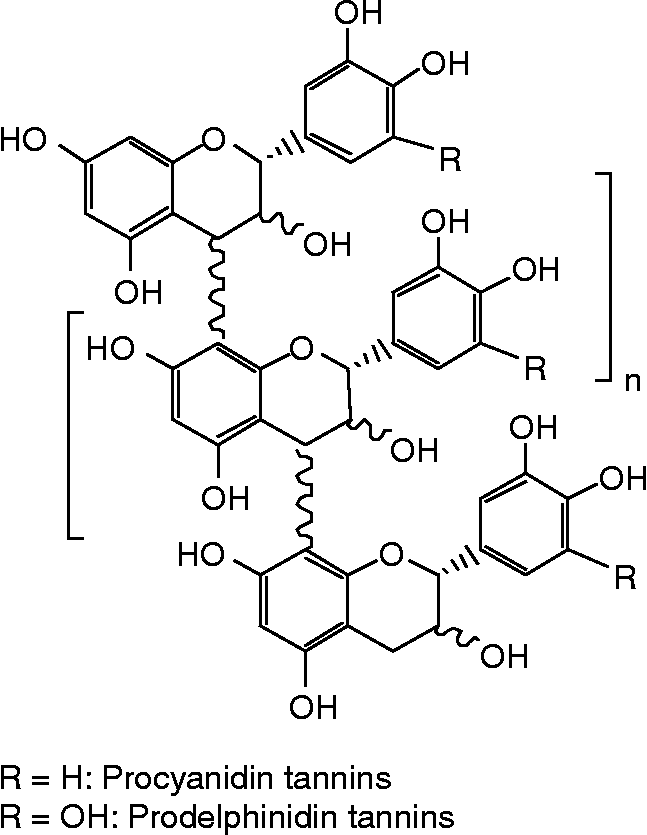
It is a well-established fact that tannins are the active compounds that prevent bloating; stands of O. viciifolia, Lotus or mixtures containing these crops and wild species such as dock (Rumex obtusifolius) (Li et al., Reference Li, Tanner and Larkin1996) contain suitable proportions of the tannins. O. viciifolia–M. sativa mixtures have also proved bloat-safe (McMahon et al., Reference McMahon, McAllister, Berg, Majak, Acharya, Popp, Coulman, Wang and Chen2000; Mueller-Harvey, Reference Mueller-Harvey2009; Wang et al., Reference Wang, Berg, Barbieri, Veira and McAllister2006). This bioactivity of tannins (Fig. 4) is attributed to their capacity to inhibit the growth of Streptococcus bovis, a rumen bacterium that produces dextran-slime, and their ability to destabilize the proteinaceous foam in the rumen (Jones et al., Reference Jones, McAllister, Muir and Cheng1994; Waghorn and McNabb, Reference Waghorn and McNabb2003). Relatively low tannin concentrations in plants are sufficient to remove the danger of bloating following ingestion (1–5 mg tannins/g dry matter) (Li et al., Reference Li, Tanner and Larkin1996).
Onobrychis viciifolia tannins.

Nutritive value
Animals fed on O. viciifolia make large body weight gains, >400 g/d for goats and lambs, and the literature relating to ruminants has been summarized by Waghorn (Reference Waghorn2008). In trials, there were a range of responses to material, and this is undoubtedly complicated by varietal differences. For tannin-containing legumes and tannin-free M. sativa, T. repens and pasture, three trials recorded 19–24% higher daily lamb and cow gains on O. viciifolia than M. sativa, while two trials recorded 3% lower lamb gains on O. viciifolia than T. repens. Comparing sheep responses to O. viciifolia, white clover and lucerne, Waghorn et al. (Reference Waghorn, Jones, Shelton and McNabb1990) calculated that O. viciifolia tannins caused from 19 to 124% more nitrogen to be retained and from 17 to 56% more nitrogen to be digested in the small intestine. This is due to a more efficient utilization of the metabolizable energy and protein in O. viciifolia (Thomson, Reference Thomson1982; Hart and Sahlu, Reference Hart and Sahlu1993; Mueller-Harvey, Reference Mueller-Harvey2009). As a result, ruminants retained between 2.6 and 4.8 g/d more nitrogen from O. viciifolia (if harvested early) than T. repens or M. sativa (Egan & Ulyatt, Reference Egan and Ulyatt1980). John and Lancashire (Reference John and Lancashire1981) also found that live weight gains by sheep revealed the following relative feeding values: white clover (100), O. viciifolia (97), Lotus pedunculatus (87), lucerne (78) and Trifolium pratense (78). A similar trend was found for young goats grazing on O. viciifolia or M. sativa (Hart and Sahlu, Reference Hart and Sahlu1993). Some of these benefits were observed despite the fact that the crude protein (CP) content of O. viciifolia was less than that of M. sativa. Scharenberg et al. (Reference Scharenberg, Arrigo, Gutzwiller, Wyss, Hess, Kreuzer and Dohme2007) measured 10–21% higher plasma levels (P < 0.001) of essential amino acids when feeding O. viciifolia, which has previously been noted for L. corniculatus tannins (Waghorn, Reference Waghorn2008). In addition, the organic matter and nitrogen had from 6 to 7% higher levels of digestibility when wethers were fed with ensiled O. viciifolia–M. sativa mixtures compared with M. sativa (Wang et al., Reference Wang, Barbieri, Berg and McAllister2007). The optimal O. viciifolia:M. sativa ratio for ensiling and ruminal fermentation was found to be 4:6. These benefits have been found in both fresh and conserved O. viciifolia (Waghorn et al., Reference Waghorn, Jones, Shelton and McNabb1990; Hill, Reference Hill, Lane and Wilkinson1997). O. viciifolia silage has up to 50% less soluble non-protein nitrogen and 53% less free amino acid contents than M. sativa silage (Albrecht and Muck, Reference Albrecht and Muck1991). Ruminants make inefficient use of nitrogen from grass and M. sativa silages for milk and meat synthesis (Tamminga, Reference Tamminga1992; Givens and Rulquin, Reference Givens and Rulquin2004). In the absence of tannins, nitrogen fractions can be extensively hydrolysed during ensilage and are subsequently rapidly degraded in the rumen. To achieve the average milk yield of UK dairy cows (5800 kg/lactation), a cow needs to consume at least 160 kg nitrogen annually. Of this, 70% or more (>110 kg nitrogen) is excreted in faeces and urine. However, plant tannins reduce the degradation of proteins during fermentation in the silo or rumen, and this enables ruminants to benefit from a better amino acid supply. Tannins exert this protective effect by binding to plant proteins; the resulting complex is less liable to microbial degradation; this process has been described as ‘rumen-escape protein’ (Mueller-Harvey, Reference Mueller-Harvey2006).
Most binding by tannins takes place at the isoelectric point of the protein (Jones and Mangan, Reference Jones and Mangan1977). In the case of rubisco, which is the major protein in green plants, complex formation is favoured at a ruminal pH of c. 5.6–6.8. The pH in the digestive organs postruminally ranges from < 3 (abomasum) to c. 8 in the lower intestines. At these low or high pH values, tannin–protein complexes are easily dissociated, and protein becomes available for enzymatic hydrolysis (Jones and Mangan, Reference Jones and Mangan1977). Therefore, when less of the protein is digested in the rumen, more can be hydrolysed postruminally into amino acids, which are then available to the animal via absorption from the intestines (Scharenbergy et al., Reference Scharenberg, Arrigo, Gutzwiller, Wyss, Hess, Kreuzer and Dohme2007; Waghorn, Reference Waghorn2008). Enhanced amino acid absorption has also been demonstrated for other tanniferous species such as L. corniculatus (Waghorn, Reference Waghorn2008). Absorption of essential amino acids increased by 62%, while milk, meat and wool yields, ovulation rate and lambing percentage all increased by 10–15% (Waghorn et al., Reference Waghorn, Jones, Shelton and McNabb1990; Min et al., Reference Min, Barry, Attwood and McNabb2003; Waghorn, Reference Waghorn2008). Grabber et al. (Reference Grabber, Broderick, Russelle, Powell, Rotz, Muck, Mertens and Massingill2002) estimated that if M. sativa contained these types of tannins, it could save $300 million in the USA. The EU ‘LEGGRAZE’ project has already demonstrated that the use of O. viciifolia and L. corniculatus significantly increased CP intakes (g/d) compared with T. repens, T. incarnatum and T. ambiguum, but not compared with M. sativa; sheep performance (live weight gains) paralleled these results (Molle et al., Reference Molle, Decandia, Soelter, Greef, Rochon, Sitzia, Hopkins and Rook2008).
Unlike other tannin-containing species, the tannin-filled cells in O. viciifolia are evenly distributed throughout the plant in all organs except the roots (Lees et al., Reference Lees, Suttill and Gruber1993). The effects of tannins on protein solubilization and degradation appear to be highly localized in plant tissues (Min et al., Reference Min, McNabb, Barry and Peters2000); therefore, this even distribution may facilitate a rapid reaction between plant proteins and tannins during mastication and fermentation in the rumen or silo. Furthermore, O. viciifolia has low levels of endogenous plant proteases, which are less than half that of M. sativa (Kingston-Smith et al., Reference Kingston-Smith, Bollard, Shaw, Davies and Theodorou2003). These enzymes are involved in the early stages of protein degradation in the rumen (autolysis), thus potentially contributing to the rumen escape mechanism. Recent research within the EU ‘Healthy Hay’ project demonstrated that O. viciifolia has considerable peroxidase activity (Ahmad et al., Reference Ahmad, Thill, Regos, Hayot, Halbwirth, Smith, Treutter and Stich2010), which may contribute to the formation of covalent tannin–protein links during drying or ensiling, further reducing ruminal protein degradation.
It is important, however, to recognize that there are some less favourable reports about the nutritive value of O. viciifolia, which showed that it did not affect nitrogen retention or amino-acid absorption (Fraser et al., Reference Fraser, Fychan and Jones2000; Bermingham et al., Reference Bermingham, Hutchinson, Revell, Brookes and McNabb2001; Scharenberg et al., Reference Scharenberg, Heckendorn, Arrigo, Hertzberg, Gutzwiller, Hess, Kreuzer and Dohme2008). By using polyethylene glycol, which has a strong affinity for tannins, it is possible to ascertain whether tannins modify the protein digestion process. Parker and Moss (Reference Parker and Moss1981) and Karnezos et al. (Reference Karnezos, Matches and Brown1994) did not find any differences between O. viciifolia and M. sativa, whether grazed or fed as hay, in terms of weight gain of heifers or lambs. In another study, Aufrère et al. (Reference Aufrère, Dudilieu and Poncet2008) did not find any difference in terms of nitrogen utilization by sheep between fresh O. viciifolia and M. sativa. Although lambs retained the same amount of nitrogen from O. viciifolia and M. sativa silages (Fraser et al., Reference Fraser, Fychan and Jones2000), the CP content of O. viciifolia was lower than that of M. sativa at 121 and 183 g protein/kg dry matter, respectively.
Potential environmental benefits
Rising costs of nitrogen fertilizers is driving a trend towards more sustainable farming methods; a home-grown protein source is therefore becoming more important (Pecetti et al., Reference Pecetti, Annicchiarico, Battini and Cappelli2009). Furthermore, nitrogen balance studies consistently show that O. viciifolia reduces urinary nitrogen and increase faecal nitrogen excretions (Aufrère et al., Reference Aufrère, Dudilieu and Poncet2008; Mueller-Harvey, Reference Mueller-Harvey2009; Theodoridou et al., Reference Theodoridou, Aufrère, Andueza, Pourrat, Le Morvan, Stringano, Mueller-Harvey and Baumont2010). Once urinary nitrogen is in the environment, it is rapidly converted to N2O, a potent greenhouse gas (Tamminga et al., Reference Tamminga, Bannink, Kijkstra and Zom2007). Conversely, faecal nitrogen is an environmentally safer form (Grabber et al., Reference Grabber, Broderick, Russelle, Powell, Rotz, Muck, Mertens and Massingill2002). Studies have also indicated that tannins decreased methane production (g/kg dry matter intake) in vivo in sheep and goats by between 20 and 55% (Tamminga et al., Reference Tamminga, Bannink, Kijkstra and Zom2007; Waghorn, Reference Waghorn2008). In addition, evidence has been presented that O. viciifolia can also reduce the shedding of Escherichia coli O157:H7 in cattle faeces (Berard et al., Reference Berard, Holley, McAllister, Ominski, Wittenberg, Bouchard, Bouchard and Krause2009). This is a particular problem during the spring thaw in Canada, when manure mixes with the snowmelt and contaminates the environment in the run-off from the frozen soil.
Biohydrogenation for improved milk and meat composition
Methane production and biohydrogenation are closely linked as both the processes remove hydrogen from the rumen fermentation system (Tamminga et al., Reference Tamminga, Bannink, Kijkstra and Zom2007). However, biohydrogenation destroys potentially valuable plant compounds such as polyunsaturated fatty acids (PUFAs), which are beneficial to human health if they can be transferred from the plant into meat or milk (Givens and Shingfield, Reference Givens and Shingfield2004; Tamminga et al., Reference Tamminga, Bannink, Kijkstra and Zom2007). Biohydrogenation converts PUFAs into the less desirable saturated fatty acids.
Anti-parasitic properties
Gastrointestinal nematodes are a major, worldwide threat to animal welfare and production (Hoste et al., Reference Wang, Berg, Barbieri, Veira and McAllister2006). Nematode resistance against all three classes of anthelmintic drugs is developing rapidly across the world, challenging conventional drug treatments and threatening areas of livestock farming. FAO guidelines strongly recommend that combined strategies should be developed to deal with this problem (FAO, 2004). Annual ruminant production losses due to parasitic nematodes cost millions of dollars (>US$ 300 m in USA in 1995; ~AU$ 220 m in Australia; ~US$ 26 m in Kenya) (FAO, 2004; Waller, Reference Waller2006). Alternative sustainable solutions are now urgently required to replace these drugs. Tannins represent an untapped, natural resource of biologically active compounds. They can modulate nematode biology at key life cycle stages. O. viciifolia and other tannin-containing forage legumes have potential for reducing worm burdens in ruminants (Waghorn, Reference Waghorn2008). Both dried and ensiled O. viciifolia lowered faecal egg counts from lambs that were infected with Haemonchus contortus nematodes (Häring et al., Reference Häring, Scharenberg, Heckendorn, Dohme, Lüscher, Maurer, Suter and Hertzberg2008) and Trichostrongylus colubriformis (Rios-de Álvarez et al., Reference Rios-de Álvarez, Greer, Jackson, Athanadiadou, Kyriazakis and Huntley2008). Similar results were obtained with goats infected with H. contortus, Teladorsagia circumcincta and T. colubriformis (Paolini et al., Reference Paolini, De La Farge, Prevot, Dorchies and Hoste2005). In addition, enhanced immune cell development was observed in the intestinal tissue from sheep after feeding O. viciifolia (Rios-de Álvarez et al., Reference Rios-de Álvarez, Greer, Jackson, Athanadiadou, Kyriazakis and Huntley2008). Regular feeding of O. viciifolia hay to grazing lambs and goats could, therefore, be used to improve host resilience and thus lower pasture contamination. The anthelmintic bioactivity of O. viciifolia is maintained in hay or silage (Ojeda-Robertos et al., Reference Ojeda-Robertos, Manolaraki, Theodoridou, Aufrere, Halbwirth, Stich, Regos, Treutter, Mueller-Harvey and Hoste2010), thus providing an early spring resource around parturition when host immunity of mother and newborn is low.
Phytochemical basis for nutritional and veterinary benefits
The phytochemical composition of O. viciifolia has been investigated for over 35 years (Bate-Smith, Reference Bate-Smith1975; Dewick, Reference Dewick1977; Ingham, Reference Ingham1978; Russell et al., Reference Russell, Shaw, Christmas, Yates and Sutherland1984; Koupai-Abyazani et al., Reference Koupai-Abyazani, McCallum and Bohm1992, Reference Koupai-Abyazani, Muir, Bohm, Towers and Gruber1993a, Reference Koupai-Abyazani, McCallum, Muir, Bohm, Towers and Gruberb; Lu et al., Reference Lu, Sun, Foo, McNabb and Molan2000; Marais et al., Reference Marais, Mueller-Harvey, Brandt and Ferreira2000; Regos et al., Reference Regos, Urbanella and Treutter2009). While most research indicated that the L. pedunculatus and O. viciifolia tannin structures were similar in terms of procyanidin to prodelphinidin ratios (Fig. 4) (Czochanska et al., Reference Czochanska, Foo, Newman and Porter1980; Marais et al., Reference Marais, Mueller-Harvey, Brandt and Ferreira2000; Hedqvist et al., Reference Hedqvist, Mueller-Harvey, Reed, Krueger and Murphy2000), other reports suggested that O. viciifolia tannins were unusual, difficult to extract (Bate-Smith, Reference Bate-Smith1975), with very high molecular weights (Jones et al., Reference Jones, Broadhurst and Lyttleton1976) and capacities for binding proteins (Jones et al., Reference Jones, Broadhurst and Lyttleton1976; McAllister et al., Reference McAllister, Martinez, Bae, Muir, Yanke and Jones2005). An optimal tannin concentration has yet to be defined for O. viciifolia. Studies on Lotus species showed that dietary tannin concentrations below 5% (on a dry matter basis) would benefit ruminant production, while higher levels inhibited protein and carbohydrate digestions (Barry and McNabb, Reference Barry and McNabb1999; McMahon et al., Reference McMahon, McAllister, Berg, Majak, Acharya, Popp, Coulman, Wang and Chen2000; Min et al., Reference Min, Barry, Attwood and McNabb2003). Conversely, O. viciifolia containing up to 8% tannins had a high nutritive value for sheep (Waghorn and McNabb, Reference Waghorn and McNabb2003).
Recent research in the EU ‘Healthy Hay’ project revealed that the tannin composition in the National Institute of Agricultural Botany O. viciifolia germplasm collection showed considerable variation (Stringano et al., Reference Stringano, Hayot, Smith, Theodoridou, Aufrére, Brown, Hayes, Cramer and Mueller-Harvey2010), varying by more than fourfold. The average number of flavanol units per tannin polymer (i.e. mean degree of polymerization) varied sevenfold, prodelphinidin tannin constituents ranged from 53 to 95% and flavanol trans:cis ratios ranged from 12:88 to 34:66. The protein-binding strengths of these molecules are still to be determined. Given this variation among the different O. viciifolia lines, it is not surprising that many animal-feeding trials showed contradictory results in terms of enhancing nitrogen absorption by ruminants (see above). Most research did not specify which O. viciifolia lines had been used to feed the animals, and this now precludes any further interpretation of the results.
The analytical techniques may not have been appropriate for nutritionally relevant tannins (Mueller-Harvey, Reference Mueller-Harvey2006). O. viciifolia tannins are difficult to purify, and this complicates their analysis (Gea et al., Reference Gea, Stringano, Brown and Mueller-Harvey2011). Stewart et al. (2000) demonstrated that the widely used HCl–butanol assay can also lead to contradictory results if inappropriate and impure tannin standards are used. We consider that the excellent nutritional properties of O. viciifolia, which were reported by several authors, were caused by particularly effective tannins or enzymes, and their identities await further investigation through a multidisciplinary approach. We also propose that O. viciifolia composition can be optimized through plant breeding.
Breeding and varieties
Various breeding programmes have successfully improved the agronomic performance of both M. sativa and Trifolium species, but little research has been directed towards improving O. viciifolia varieties in Europe. A few isolated breeders still register new cultivars adapted for specific needs, but the breeding programmes are very small and do not take into account the huge diversity available. O. viciifolia varieties differ largely in terms of winter hardiness, maturity, yield potential and many other factors (Shaw, Reference Shaw1968). Agricultural varieties of O. viciifolia do not rigidly align with either of the two original types, common or giant. Some well-known landraces are Cotswold Common, Hampshire Common and Somborne, which are primarily common types, while Hampshire Giant and English Giant are giant types. New varieties derived from these two types include Nova and Melrose developed in Canada in the 1970s, Eski, Remont and Remunex from the USA in the 1960s and 1970s, Zeus and Vala from Italy, Perly from Switzerland, Fakir from France and Emyr from Hungary (Koivisto and Lane, Reference Koivisto and Lane2001). Shoshone was released in 2006 in Wyoming, USA and has good agronomic performances (Gray et al., Reference Gray, Shigaki, Koch, Delaney, Gray, Majerus, Cash, Ditterline and Wichman2006). G35 was released in New Zealand and is adapted to New Zealand climatic conditions (Rumball and Claydon, Reference Rumball and Claydon2005). Some breeding is also currently ongoing in Italy (Martiniello, Reference Martiniello2005). In 2010, only 19 varieties of O. viciifolia were registered (http://ec.europa.eu/food/plant/propagation/catalogues/comcat_agri_2008/37.html) on the European common catalogue. There are no O. viciifolia guidelines available for the conduct of tests for distinctness, uniformity or stability produced by the International Union for the Protection of New Varieties of Plants. Furthermore, the biological potential of the lines is still not taken into account in breeding programmes.
Conclusion and future perspectives
O. viciifolia is potentially a very useful forage crop, particularly for sustainable farming approaches. It represents an alternative to M. sativa or Trifolium sp. in some locations and can be fed ad libitum in contrast to other forage legumes. The beneficial effects of Onobrychis sp. could be realized by rigorous modern breeding inputs. Currently, a 4-year European project ‘Healthy Hay’ supported by the European Commission and consisting of a consortium of 14 partners is evaluating agronomic, genetic, nutritional and veterinary properties from a unique and extensive germplasm collection. Other Onobrychis species that could be used to increase the diversity available for breeding are currently being identified. In addition, other species of Onobrychis that may be crossed with O. viciifolia to enhance biological properties and agronomic potential are being considered for selection (Hayot et al., unpublished). Taxonomic clarification, identification of beneficial compounds and their metabolic pathways, biological properties assessment and selection of the more promising lines and species are among the information expected to arise from this project. These will be an important source for future O. viciifolia breeding programmes. A precedent has been set in New Zealand, where breeding programmes have already improved the persistence of L. corniculatus. (Waghorn, Reference Waghorn2008).
The divergent findings in terms of the efficiency of nitrogen utilization by ruminants may reflect the choice of lines that were used. Unfortunately, variety name, the type (common or giant) or even plant maturity were rarely specified. We now know that these factors and location all affect tannin and polyphenol composition (Theodoridou et al., Reference Theodoridou, Aufrère, Andueza, Pourrat, Le Morvan, Stringano, Mueller-Harvey and Baumont2010). Aufrère et al. (Reference Aufrère, Dudilieu and Poncet2008) concluded that further research was needed to determine qualitative and quantitative changes in tannin contents and structures according to growth stages and the implications of these changes for tannin–protein interactions in the digestive tract.
Different lines with contrasting polyphenol, tannin and enzyme compositions also need to be evaluated for their nutritional and anthelmintic efficacy to provide guidelines for future plant breeding programmes. One breeding goal will be to develop varieties with stable, heritable tannin and polyphenol composition (Mueller-Harvey and Dhanoa, Reference Mueller-Harvey and Dhanoa1991).
Future plant breeding priorities
In the future, breeding priorities should include an improvement in both total germination and synchronicity of germination in a sward. This has a negative impact on early establishment and can lead to weediness during the first year, which causes an unwelcome management problem to farmers. Other aspects such as a slightly reduced root to shoot ratio of early establishment could also be improved during seedling establishment. Most genetic lines currently channel resources into a very long taproot at the expense of leafy growth; this ensures that the plant is highly drought tolerant, but the lack of a leafy canopy makes it prone to competition from weeds during this first year. These priorities should be allied to the best anthelmintic properties observed in some varieties, due to the presence of the tannins and other secondary metabolites.
Acknowledgements
We acknowledge the support from the EU (MRTN-CT-2006-035805; ‘Healthy Hay’ project) and thank Dr Franck Carbonero for his critical support.