Introduction
The foetal origin hypothesis suggests that prenatal environmental factors such as undernutrition during critical periods of development causes permanent changes in foetal physiology and this leads to increased risk for chronic disease in later life.Reference Kuh, Ben-Shlomo, Lynch, Hallqvist and Power 1 , Reference Belkacemi, Nelson, Desai and Ross 2 Foetal growth is reliant on nutrients and oxygen,Reference Barker 3 and the placenta plays an essential role in the transfer of nutrients from mother to baby. This transfer is dependent on placental size, form and structure; blood supply; and transporter abundance.Reference Belkacemi, Nelson, Desai and Ross 4 Consequently, maternal undernutrition can impair foetal growth by impairing placental development and function.Reference Belkacemi, Nelson, Desai and Ross 2 , Reference Belkacemi, Nelson, Desai and Ross 4 , Reference Jansson and Powell 5
Extensive research has shown that low birth weight is associated with cardiovascular disease later in life.Reference Risnes, Vatten and Baker 6 Placental size has also been associated with future cardiovascular disease.Reference Forsen, Eriksson and Tuomilehto 7 – Reference Barker, Larsen and Osmond 11 These studies have found low placental weight,Reference Forsen, Eriksson and Tuomilehto 7 , Reference Fan, Zhang and Li 8 small placental surface area,Reference Barker, Gelow and Thornburg 9 , Reference Eriksson, Kajantie, Thornburg, Osmond and Barker 10 ovality of placental surface,Reference Eriksson, Kajantie, Thornburg, Osmond and Barker 10 large placenta in relation to birth weightReference Eriksson, Kajantie, Thornburg, Osmond and Barker 10 or a thin placentaReference Barker, Larsen and Osmond 11 to be associated with higher risk for cardiovascular disease in the offspring. Moreover, studies using the Helsinki Birth Cohort have shown the effect of placental size on cardiovascular disease and its risk factors may differ according to maternal height and family socio-economic position, both considered as indicators of maternal nutrition,Reference Barker, Gelow and Thornburg 9 , Reference Eriksson, Kajantie, Thornburg, Osmond and Barker 10 , Reference Barker, Thornburg, Osmond, Kajantie and Eriksson 12 with stronger effects in individuals whose mothers were below average height or from low socio-economic backgrounds.Reference Barker, Gelow and Thornburg 9 , Reference Barker, Thornburg, Osmond, Kajantie and Eriksson 12
To the best of our knowledge, no studies have been conducted on the Swedish population investigating placental weight and its association with cardiovascular disease in middle or old age. The objective of the study is to examine the association of placental weight and other birth characteristics with ischaemic heart disease (IHD) in adulthood in Swedish men and women.
Methods
Sample
The study participants were from the Uppsala Birth Cohort Multigenerational Study (UBCoS Multigen). The original cohort comprised of all live births from Uppsala University Hospital, Sweden, between 1915 and 1929. Deaths and emigrations were traced from Parish records until register data became available in the 1960s; Parish records had almost 98% completeness of follow-up. There were 14,192 live births in the initial cohort and the study population was restricted to singleton births (n=13,748). Of these, 11,580 men and women were still alive and residing in Sweden in 1964 when follow-up commenced. Our final analytical sample included 10,503 individuals (complete cases for all variables used in the study, 52% men). Additional analyses involving own education commenced follow-up in 1970 and had a study population of 10,010 individuals.
Variables
Our main exposure variables were birth weight, placental weight and placenta/birth weight ratio. Birth characteristics (birth weight, birth weight standardized for gestational age (z-score), placental weight, gestational age), year of birth, maternal age at birth and parity were derived from obstetric records.
Social class at birth was based on the father’s occupation, and if single the mother’s occupation. Data were obtained from archived obstetric records and consisted of seven categories: high and intermediate non-manual; farmers and entrepreneurs; low non-manual; skilled manual; unskilled manual (production); unskilled manual (service); and house daughters (unmarried women living in their parents’ home). Social class categories were later classified into three groups for a stratified analysis: high (higher and intermediate non-manual, entrepreneurs and farmers), medium (lower non-manual, skilled manual) and low (unskilled manual, house-daughters). Data on own educational attainment were obtained from the 1970 Census and grouped into three categories: low (less than upper-secondary education), medium (upper-secondary schooling) and high (any post-secondary education).
Incident IHD was defined as the first recorded hospitalization or death with IHD diagnosis among the main or contributing diagnoses. Data were obtained from the Hospital Discharge Registry and the Causes of Death Register. The following International Classification of Diseases (ICD) codes were used to define IHD: ICD-7 (420); ICD-8 and ICD-9 (410–414); and ICD-10 (I20–I25).
Statistical methods
Descriptive statistics and Cox proportional hazards models were carried out using STATA Version 11. Follow-up commenced on 1 January 1964 and continued until diagnosis with IHD, emigration, death or until 31 December 2008 (end of follow-up). To control for possible cohort effects, birth years were divided into three groups (1915–1919, 1920–1924 and 1925–1929). Birth cohort, age and sex were adjusted for in all models. Analyses were also adjusted for parity, gestational age, early life and adult social characteristics, and mutually adjusted for other main exposure variables in a series of hierarchical models. The term ‘foetal growth rate’ was used when birth weight was adjusted for gestational age. The category limits for placental weight and placenta/birth weight ratio were based on limits used in previous studies.Reference Barker, Gelow and Thornburg 9 – Reference Barker, Larsen and Osmond 11
Results
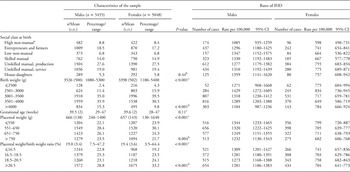
Table 1 presents the characteristics of the sample and the rates of IHD stratified by sex. Incidence IHD occurred at a rate of 1286 cases per 100,000 person-years in men (95% CI 1233–1339) and 724 cases per 100,000 person-years in women (95% CI 686–763) during the follow-up period from 1 January 1964 to 31 December 2008.
Characteristics of study participants born in Uppsala, Sweden, 1915–1929, and the rates of incident ischemic heart disease (IHD) from 1 January 1964 to 31 December 2008 (n=10,503)

a Includes intermediate non-manual social class.
b Pearson χ2 test.
c T-test.
Birth weight and placental weight were positively correlated (r=0.58, P<0.001), with an average increase in birth weight of 207 g (95% CI 201–212) per 100 g increase in placental weight. Of the exposure variables, only social class at birth and gestational age were not significantly different between sexes.
Sex and mother’s parity were independently associated with IHD. Women had half the risk compared with men (HR 0.47, 95% CI 0.44–0.51), and participants whose birth order was three or more also had increased risk for IHD (HR 1.12, 95% CI 1.04–1.21) compared with those who were first born.
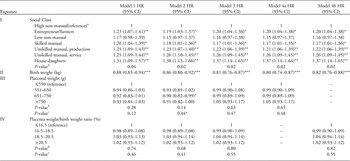
Table 2 presents the hazards ratios for IHD by placental weight (g), placenta/birth weight ratio, birth weight (kg) and social class at birth. A negative linear trend was observed between placental weight and IHD (P<0.05) after adjustment for birth cohort, age, sex and parity; however, the effect of placental weight on future IHD was primarily mediated by foetal growth rate. In contrast, placenta/birth weight ratio showed no evidence of a significant association with IHD in our cohort.
The effect of social class at birth, birth weight, placental weight and placenta/birth weight ratio on future ischemic heart disease (IHD) in Swedish men and women born 1915–1929 and followed from 1961–2009 (n=10,551)

Model 1: Exposures I, II, III and IV adjusted for birth cohort, age, sex.
Model 2: Exposures I, II, III and IV adjusted for birth cohort, age, sex, parity.
Model 3: Exposures I, III and IV adjusted for birth cohort, age, sex, parity, birth weight (kg), gestational age (weeks); Exposure II adjusted for birth cohort, age, sex, parity, gestational age.
Model 4a: Mutual adjustment of social class (exposure I), birth weight (exposure II) and placental weight (exposure III), plus birth cohort, age, sex, parity, gestational age.
Model 4b: Mutual adjustment of social class (exposure I), birth weight (exposure II) and placenta/birth weight (exposure IV), plus birth cohort, age, sex, parity, gestational age.
a Includes intermediate non-manual social class.
b Test for heterogeneity.
c Test for linear trend.
*Significance at the 5% level (P<0.05); **significance at the 1% level (P<0.01); ***significance at the 0.1% level (P<0.001).
Birth weight was negatively associated with IHD (Table 2); the hazard ratio for 1 kg increase in birth weight was 0.88 (95% CI 0.83–0.94) for IHD after adjustment with birth cohort, age and sex. Similarly, birth weight standardized for gestational age (z-score) was inversely associated with IHD. After adjustment for birth cohort, age and sex, the hazard ratio per one standard deviation increase in birth weight for gestational age was 0.92 (95% CI 0.89–0.95) for IHD. The effect did not change after further adjustments for parity, social class at birth and placental weight (HR 0.91, 95% CI 0.87–0.94).
Social class at birth was significantly associated with IHD (P<0.05) (Table 2). Individuals from all social class groups, except those from low non-manual backgrounds, had increased risk for IHD compared with individuals from a high and intermediate non-manual social class. In further analyses, the effect of social class at birth on future IHD was largely mediated by own education (Supplementary Table S1); the association attenuated across all social classes, and significance remained only for men and women whose mothers were house-daughters in the mutually adjusted model with placenta/birth weight ratio.
Tests for statistical interaction of sex and birth weight, sex and placental weight, and sex and placental weight/birth weight ratio in their effects on IHD were non-significant.
In addition, analyses stratified by social class at birth, associations of placental weight with risk of IHD were found in some social groups (Supplementary Table S2). Among individuals from a medium social class, a negative association between placental weight and IHD was seen after adjustment with birth cohort, age and sex (linear trend P=0.005). There was also a borderline negative association between placental weight and IHD among those from low social class after adjustment for birth cohort, age, sex and parity (linear trend P=0.06). However, no association was observed between placental weight and IHD in individuals from high social class. Test for statistical interaction of social class and placental weight in their effect on IHD was significant (P<0.01).
Interestingly, in the analyses stratified by the highest level of own education, a negative association of placental weight with IHD was only observed in men and women with low education (Supplementary Table S3). In these individuals, those with a placental weight ⩽550 g had the highest risk for IHD in later life. Test for statistical interaction between placental weight and own education in their effect on IHD was non-significant (P=0.93).
Discussion
Summary of findings
A negative linear trend was observed between placental weight and IHD after adjustment for birth cohort, age, sex and parity, and the association appeared to be mediated by foetal growth rate. In the analysis stratified by social class at birth, a negative association between placental weight and IHD was observed among individuals from medium social class after adjustment for birth cohort, age and sex. Similarly, a negative association between placental weight and IHD was found for individuals who had a low education. Placenta/birth weight ratio showed no evidence of a significant association with IHD in our cohort.
Individuals from all social classes at birth, except from low non-manual backgrounds, had increased risk for IHD compared with individuals from a high and intermediate non-manual social class, with those from the lowest social backgrounds (unskilled manual workers and house-daughters) having the highest risk, and this association was largely mediated by own education rather than by foetal growth rate. Birth weight and birth weight standardized for gestational age were also negatively associated with IHD but did not seem to mediate the effects of social class at birth.
Methodological considerations
A key strength of our study was using a large well-established historical longitudinal cohort with very good completeness of follow-up; UBCoS Multigen Study provided us with the opportunity to observe individuals from birth to very old age. We were also able to extend previous studies investigating the association between birth characteristics and IHD, which had considerably shorter follow-up periods and lower statistical power.Reference Leon, Lithell and Vagero 13 , Reference Koupil, Leon and Lithell 14 Moreover, it is unlikely that we had misclassified placental weight and other birth size indicators, because all were measured in the same hospital where midwives would adhere to standardized measurement methods.
In contrast, we were unable to measure placental surface area or placental thickness, such as in recent Finnish studies, which found an association with these exposures and cardiovascular disease;Reference Barker, Gelow and Thornburg 9 – Reference Barker, Larsen and Osmond 11 these data were not recorded in the obstetric records from Uppsala University Hospital. Neither were we able to relate placental size to mother’s height or weight in our Swedish data.
Comparison with other studies
Although a number of studies have found no association between placental weight and future hypertensionReference Martyn, Barker and Jespersen 15 , Reference Eriksson, Forsen, Tuomilehto, Osmond and Barker 16 or cardiovascular disease,Reference Barker, Gelow and Thornburg 9 , Reference Barker, Larsen and Osmond 11 , Reference Martyn, Barker and Osmond 17 our overall findings provide some evidence of a negative association between placental weight and IHD. Earlier studies that observed an inverse association between placental weight and future hypertensionReference Barker, Thornburg, Osmond, Kajantie and Eriksson 12 , Reference Whincup, Cook, Papacosta and Walker 18 , Reference Taylor, Whincup, Cook, Papacosta and Walker 19 or cardiovascular diseaseReference Fan, Zhang and Li 8 in offspring include two British cross-sectional surveys investigating birth size and blood pressure in children born in the 1980s;Reference Whincup, Cook, Papacosta and Walker 18 , Reference Taylor, Whincup, Cook, Papacosta and Walker 19 a retrospective cohort study on 2033 individuals born in Beijing between 1921 and 1954 and followed up for coronary heart disease between 2002 and 2004;Reference Fan, Zhang and Li 8 and a study on men and women from the Helsinki Birth Cohort born between 1934 and 1944 examining placental surface area and future hypertension.Reference Barker, Thornburg, Osmond, Kajantie and Eriksson 12 Interestingly, in the original study that explored the association of placental weight and blood pressure, Barker et al. found a positive relationship between placental weight and blood pressure in adults born in Preston, UK.Reference Barker, Bull, Osmond and Simmonds 20
Social class at birth may be reflective of maternal nutrition during pregnancy; infants from lower socio-economic backgrounds have on average lower birth weight compared with those from more advantaged backgrounds,Reference Blumenshine, Egerter, Barclay, Cubbin and Braveman 21 possibly as a consequence of poor maternal diet during pregnancy. As placental weight and birth weight are positively correlated,Reference Jansson and Powell 5 and our own results on birth weight and IHD add to the overwhelming evidence that individuals with impaired foetal growth are at increased risk for cardiovascular disease in later life,Reference Risnes, Vatten and Baker 6 we expected to see a negative association between placental weight and IHD in our study. Placental weight was negatively and statistically significantly associated with IHD after adjustment for birth cohort, age, sex and mother’s parity. Furthermore, the negative relationship between placental weight and IHD was seen among men and women with low educational attainment and in individuals from medium social class at birth in particular.
In a series of studies using participants from the Helsinki Birth Cohort, the combination of low placental size and low childhood socio-economic position predicted future cardiovascular disease and its risk factors.Reference Barker, Gelow and Thornburg 9 , Reference Barker, Thornburg, Osmond, Kajantie and Eriksson 12 , Reference Barker, Osmond, Forsen, Kajantie and Eriksson 22 Barker et al. Reference Barker, Gelow and Thornburg 9 found a negative linear association between placental weight and chronic heart failure only among individuals whose fathers were manual workers, and in yet another studyReference Barker, Osmond, Forsen, Kajantie and Eriksson 22 individuals with low placental weight and from low socio-economic backgrounds had an increased risk for hypertension that was not observed in other social groups. Furthermore, Barker et al. Reference Barker, Thornburg, Osmond, Kajantie and Eriksson 12 found a significant interaction between mother’s height, a proxy for maternal nutrition, and both placental surface area and lesser placental diameter in their effects on hypertension. The authors concluded that effects of placental size on hypertension depend on mother’s body size and socio-economic status. Although we could not explore interactions with mother’s body size, our findings of a negative association between placental weight and IHD in those from the medium social group and among low educated are consistent with the Finnish findings.
We speculate that systematic differences in maternal undernutrition during pregnancy may explain some inconsistent findings in the relationship between placental weight and cardiovascular disease between studies. For example, participants from the Helsinki Birth Cohort were born between 1934 and 1944,Reference Barker, Gelow and Thornburg 9 – Reference Barker, Thornburg, Osmond, Kajantie and Eriksson 12 a period where there were food shortages because of an agriculture depression and World War II, and these food shortages may have been more severe in those from low socio-economic backgrounds. In contrast, our cohort was born when Sweden was prospering because of industry expansion. This may have allowed most mothers to have adequate nutrition during pregnancy, thus decreasing their offspring’s chronic disease risk in adulthood. A higher mean birth weight and a higher mean placental weight in our Swedish sample compared with those reported from the Finnish Birth CohortReference Barker, Larsen and Osmond 11 , Reference Barker, Thornburg, Osmond, Kajantie and Eriksson 12 supports our hypothesis.
A systematic review evaluating the association between socio-economic circumstances during childhood and risk for cardiovascular disease in adult life supported our findings that those from more socially disadvantaged backgrounds in childhood have greater risk for cardiovascular disease in adulthood.Reference Galobardes, Smith and Lynch 23 A likely mechanism is the continuity of socio-economic conditions and social differences in health behaviours across the life course with effects on cardiovascular risk factors, such as smoking, overweight or obesity, dyslipidaemia and insulin resistance.
In summary, we found a negative linear association between placental weight and IHD in our cohort after adjustment for birth cohort, age, sex and parity. Consistent with earlier studies, an increased risk for IHD was also observed in men, among individuals from lower social class at birth and in those with low foetal growth rate. We believe that impaired foetal growth rather than placental size per se is predictive of future IHD. However, the variation in size at birth does not appear to mediate the sizeable long-term effect of social class at birth on risk for IHD in adult men and women.
Acknowledgements
The authors wish to thank Dr Anna Goodman for statistical advice and for input into data management and Dr Pia Chaparro for her comments on earlier versions of this manuscript.
Financial Support
The Uppsala Birth Cohort Multigenerational Study is supported by grants from the Swedish Research Council (Project No. 2006–7498) and the Swedish Council for Health, Working Life and Welfare (Project No. 2007–1010). Ilona Koupil is funded by the Swedish Council for Health, Working Life and Welfare (Project No. 2006–1518).
Conflicts of Interest
None.
Ethical Standards
The authors confirm that the study does not include experiments, complies with the national laws and regulations on research ethics and has been approved by the Regional Ethics Committee in Stockholm, Sweden.