Introduction
Neuroendocrine tumor (NET) is a heterogeneous group of cancers arising from neuroendocrine cells within the aerodigestive tract (Maggard et al., Reference Maggard, O'Connell and Ko2004; Yao et al., Reference Yao, Hassan and Phan2008). NET has been considered a rare type of cancer, but its incidence has increased 6.4-fold between 1973 and 2012 and is now 6⋅98 per 100,000 (Yao et al., Reference Yao, Hassan and Phan2008). The rising incidence, along with earlier detection and increased survival, means that more patients are living with NET than ever before (Hallet et al., Reference Hallet, Law and Cukier2015; Dasari et al., Reference Dasari, Shen and Halperin2017). Accordingly, the prevalence of NET is also on the rise, and NET is now more prevalence than pancreas, hepatobiliary, esophageal, and gastric cancers (Yao et al., Reference Yao, Hassan and Phan2008; Dasari et al., Reference Dasari, Shen and Halperin2017).
Carcinoid tumor refers to a specific type of well-differentiated NET, most commonly arising in the midgut (Maggard et al., Reference Maggard, O'Connell and Ko2004; Yao et al., Reference Yao, Hassan and Phan2008). Carcinoid tumors can secrete serotonin and other vasoactive substances, such as histamine, tachykinins, and prostaglandins, leading to the cluster of symptoms known as carcinoid syndrome (CS) (Zuetenhorst and Taal, Reference Zuetenhorst and Taal2005) which comprises profuse watery diarrhea, abdominal cramping, wheezing, and flushing of the head, neck, and face (Van der Horst-Schrivers et al., Reference Van der Horst-Schrivers, Wymenga and Links2004; Boudreaux et al., Reference Boudreaux, Klimstra and Hassan2010). CS has the potential to significantly reduce quality of life among patients with NET (Larsson et al., Reference Larsson, Sjödén and Oberg2001). This, in combination with both the rising incidence of NETs and the favorable median survival, implies an ever-mounting burden of disease. Fittingly, increasing focus has been placed on assessing the quality of life and treating psychological distress among patients with NET (Larsson et al., Reference Larsson, Sjödén and Oberg2001).
In addition to reporting worse quality of life than controls (Larsson et al., Reference Larsson, Sjödén and Oberg2001), NET patients report high rates of neuropsychiatric symptoms including depressive symptoms (22–50%) (Major et al., Reference Major, Brown and Wilson1973; Soliday et al., Reference Soliday, Garofalo and Smith2004), anxiety (35%) (Major et al., Reference Major, Brown and Wilson1973), and difficulty with impulse control and aggression (75%) (Russo et al., Reference Russo, Boon and Kema2004), though the pathophysiologic mechanism is unknown. Some have postulated that a serotonin imbalance in the brain may partially account for the psychiatric symptoms seen in NET patients (Williams and Dolenc, Reference Williams and Dolenc2005). Serotonin-secreting carcinoid tumors divert most of the body's tryptophan, a serotonin precursor, toward the tumor, thus leaving little remaining tryptophan to cross the blood–brain barrier and effectively decreasing the amount of serotonin produced in the brain (Soliday et al., Reference Soliday, Garofalo and Smith2004).
Serotonergic antidepressants (SAs), including the serotonin-specific reuptake inhibitors (SSRIs), serotonin-norepinephrine reuptake inhibitors, tricyclic antidepressants, and others such as trazodone, mirtazapine, are often used to treat depression, anxiety, irritability, and aggression (Reich, Reference Reich2008; Mehta and Roth, Reference Mehta and Roth2015). Thus, given the high rate of neuropsychiatric symptoms reported in NET patients (Major et al., Reference Major, Brown and Wilson1973; Russo et al., Reference Russo, Boon and Kema2004; Soliday et al., Reference Soliday, Garofalo and Smith2004), the use of SA medications may have an important role in patient care. Despite their safe and common use in cancer patients (Mehta and Roth, Reference Mehta and Roth2015), however, SSRI safety in NET was first called into question when a 1997 case report described the “unmasking” of CS (Noyer and Schwartz, Reference Noyer and Schwartz1997). Later, a 2005 case report described a NET patient who developed severe diarrhea after a single dose of an SSRI (Simbera and Balon, Reference Simbera and Balon2005), leading the authors to conclude that SSRIs should be avoided completely in patients with NET. Finally, another case of an SSRI “unmasking” carcinoid tumor was reported in 2008 (Furse et al., Reference Furse, Green and Mee2008), in which the authors also recommended avoiding SSRIs in NET patients. Around the same time, a small case series was published describing SSRI use in five patients with NET, none of whom had any adverse outcomes, leading the authors to argue that the recommendations to avoid SSRIs altogether may have been premature (Williams and Dolenc, Reference Williams and Dolenc2005). Nonetheless, cautionary notes about the potential dangers of antidepressant use can now be found in both the psychiatry (Russo et al., Reference Russo, Boon and Kema2004) and oncology (Nobels et al., Reference Nobels, Geboes and Lemmens2016) literature. The controversy thus unfolded in the literature over the safety profile of SSRIs (and, more broadly, SAs in general) in NET patients, leaving clinicians unsure of whether they can be safely prescribed. Even the meager body of literature may have had an impact on patient care, with some authors postulating that the controversy has led to systemic under-treatment of depression in carcinoid tumor patients (Soliday et al., Reference Soliday, Garofalo and Smith2004).
Thus, a need exists to synthesize the available evidence on the safety of SA medications in patients with NET. If sufficient evidence exists to warrant avoiding SA use in NET patients, this could greatly impact management, particularly given the high rates of depression and poor quality of life found in this patient population. Therefore, the purpose of our systematic review was to assess the frequency of adverse outcomes following SA use in NET patients. Specifically, we aimed to answer the following questions: (1) Do SAs precipitate CS in NET patients; (2) Is CS exacerbated by SA use in NET patients with pre-existing CS; and (3) Do SA cause serious adverse outcomes (e.g., carcinoid crisis, death) when prescribed to NET patients.
Methods
Data sources and search strategy
We developed our search strategy with an experienced medical sciences librarian (K.M.) and systematically searched PubMed, Embase, CINAHL, PsycInfo, and Cochrane CENTRAL to identify potentially relevant studies from inception of each database to November 2015 (Supplement 1). The search was updated in October 2017 and again in September 2018. We searched for articles in all available languages and with no date or publication type restrictions. We limited our search to “humans” with the intention of excluding pre-clinical studies. Results were organized and duplicates were removed using Endnote X7 (Endnote, Clarivate Analytics). Preferred Reporting Items for Systematic Reviews and Meta-analyses (PRISMA) guidelines were followed (Moher et al., Reference Moher, Liberati and Tetzlaff2009).
Eligibility criteria
We included studies describing NET patients who were prescribed SA medications. Eligible study designs included case studies, case–control studies, prospective or retrospective cohort studies, and randomized controlled trials. Studies reporting multiple antidepressant categories were included if at least 80% of antidepressants were SA.
We excluded (1) non-English studies; (2) pre-clinical studies; (3) books, book chapters, or review articles; and (4) studies not reporting the name of the antidepressant used.
Study selection
Pairs of reviewers (E.I.G., M.M., and Y.A.), independently and in duplicate, screened titles/abstracts and full texts for eligible articles. Any discrepancies were resolved by group consensus.
Data abstraction and risk of bias assessment
Using standardized, pilot-tested data extraction forms, one reviewer (E.I.G.) manually extracted information regarding study characteristics (author name, country, year of publication, study design, sample size), illness characteristics [patient age/gender, tumor site, CS status prior to starting antidepressants, 5-hydroxy indoleacetic acid (5-HIAA) status, presence or absence of somatostatin analog (SSA)], antidepressant characteristics (name, dose), presence of adverse outcomes (e.g., precipitation of CS, worsening of CS), and presence of serious adverse outcomes (e.g., carcinoid crisis, hospitalization, death). A second reviewer (M.M.) then double-checked the data. Using standardized, pilot-tested data extraction forms, two reviewers (M.M. and E.I.G.) independently assessed each included study for risk of bias using a modified Newcastle–Ottawa Scale (Wells et al., Reference Wells, Shea and O'Connell2019) based on the methods described by Murad et al. (Reference Murad, Sultan and Haffar2018); items pertaining to comparability were not relevant as the included studies in this review were case studies. The risk of bias items included representativeness of investigator experience, adequate ascertainment of exposure, adequate ascertainment of outcome, whether alternative causes/explanations for the outcome were ruled out, whether there was a challenge/re-challenge phenomenon, whether a dose-response effect existed, whether follow-up duration was sufficient, and whether sufficient detail was reported to allow investigators to replicate the research or practitioners to make inferences related to their own practice. Items related to reporting of outcomes were omitted for any study not reporting adverse outcomes.
Statistical analyses
We measured the inter-rater agreement of full-text screening with the kappa statistic (Landis and Koch, Reference Landis and Koch1977). We calculated frequencies and percentages using Microsoft Excel (2018).
Results
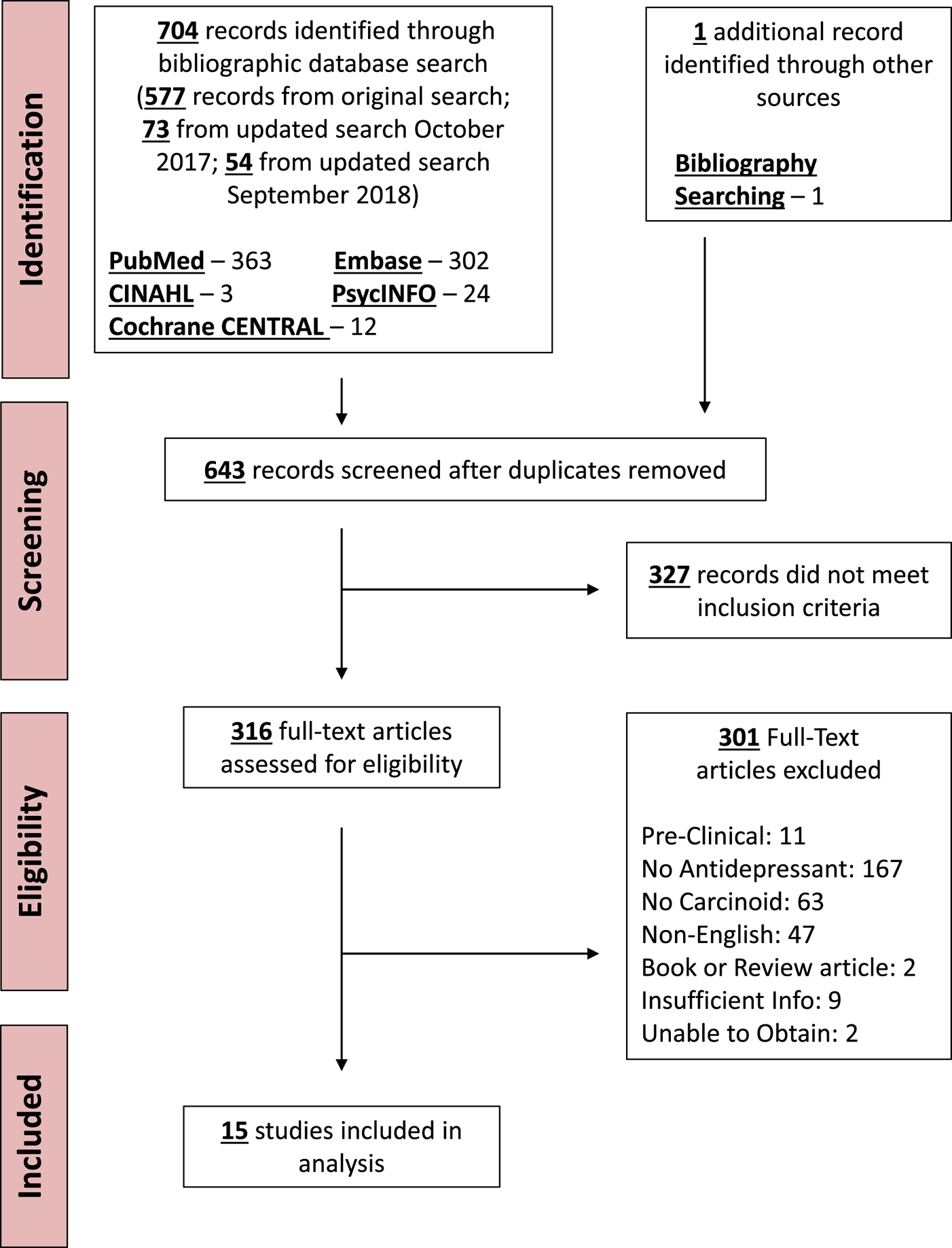
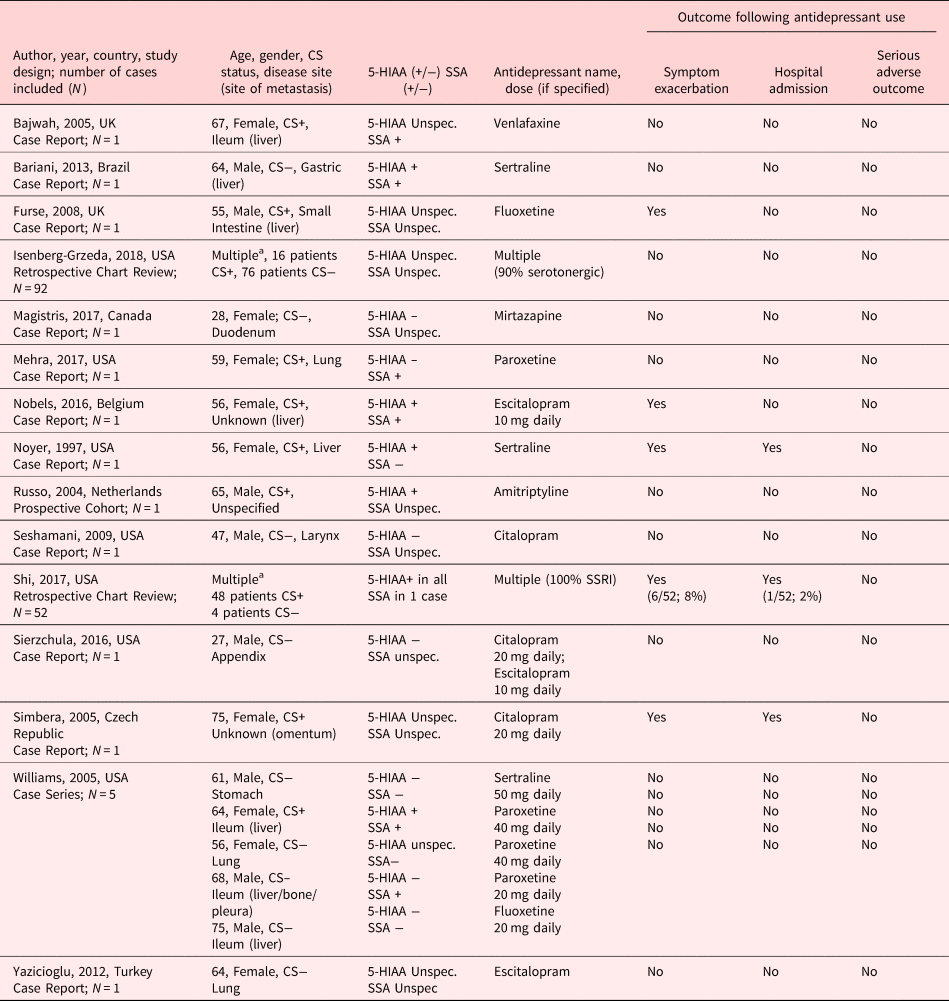
Of the total 705 records identified, 643 were potentially eligible. Of these, 15 articles proved eligible for our review (Figure 1), from which 161 cases were identified. There was substantial agreement between reviewers at the full-text stage (κ = 0.69). Table 1 lists the study and patient characteristics from all studies included in our review. Most of these articles (12 of 15; 80%) reported a single case (Noyer and Schwartz, Reference Noyer and Schwartz1997; Russo et al., Reference Russo, Boon and Kema2004; Bajwah and Lee, Reference Bajwah and Lee2005; Simbera and Balon, Reference Simbera and Balon2005; Furse et al., Reference Furse, Green and Mee2008; Seshamani et al., Reference Seshamani, Einhorn and Mirza2009; Yazicioǧlu et al., Reference Yazicioǧlu, Yekeler and Bicakcioǧlu2012; Bariani et al., Reference Bariani, Carvalheira and Riechelmann2013; Nobels et al., Reference Nobels, Geboes and Lemmens2016; Sierzchula et al., Reference Sierzchula, MacGregor and Onuscheck2016; Magistris and Gamble, Reference Magistris and Gamble2017; Mehra and Kon, Reference Mehra and Kon2017), while the remaining articles (3 of 15; 20%) were comprised of larger case series (Williams and Dolenc, Reference Williams and Dolenc2005; Shi et al., Reference Shi, Yuppa and Dutton2017; Isenberg-Grzeda et al., Reference Isenberg-Grzeda, MacGregor and Bergel2018). Most of the cases identified by our search (149/161; 93%) came from one of the three larger case series.
Selection process for studies included in the systematic review.

Characteristics of studies included in the review

CS, carcinoid syndrome; 5-HIAA, 5-hydroxyindoleacetic acid; SSA, somatostatin analog; +, present; −, absent; unspec., unspecified; SSRI, serotonin-specific reuptake inhibitor.
a Age/gender not specified for large case series.
Risk of bias
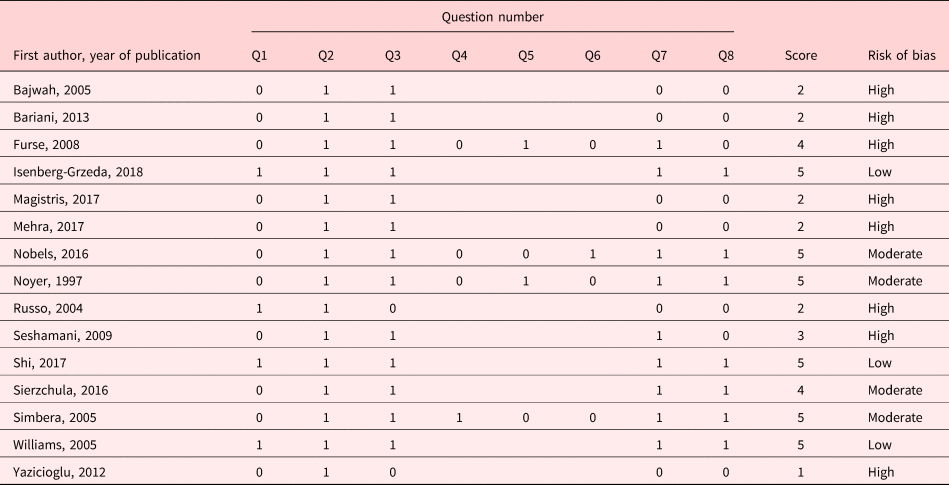
Among the 15 studies we identified, the three case series all had a low risk of bias. The remaining studies were case reports with either high or moderate risk of bias. Table 2 summarizes the risk of bias for all studies.
Risk of bias

Risk of bias based on a modified version of the Newcastle–Ottawa Scale as described by Murad et al. (Reference Murad, Sultan and Haffar2018). Each question (Q1–Q8) is answered “yes” or “no,” and 1 point is assigned for each question, in which the study fulfills the criterion (i.e., “yes”). Studies fulfilling all criteria (8 points) were considered to have a low risk of bias; those fulfilling 5–7 criteria were considered to have a moderate risk of bias; those fulfilling 0–4 criteria were considered to have a high risk of bias. Questions Q4, Q5, and Q6 were omitted when a study did not describe serious adverse outcomes since those questions lacked relevance in such cases. Scores were thus adjusted whereby studies fulfilling all 5 criteria were considered to have a low risk of bias; those fulfilling 4 criteria were considered to have a moderate risk of bias; those fulfilling 0–3 criteria were considered a high risk of bias.
Do serotonergic antidepressants precipitate carcinoid syndrome in NET patients?
We identified 89 cases of NET patients without CS who had been prescribed antidepressants. Five were reported in single case reports, all with a moderate or a high risk of bias (Table 1). The remaining 84 cases were from larger case series, all of which had a low risk of bias (Table 1). Among them, Isenberg-Grzeda et al. (Reference Isenberg-Grzeda, MacGregor and Bergel2018) reported on 76 cases who were prescribed SA over a median duration of 14⋅3 months (0–172 months). The authors reported no instances of antidepressants precipitating CS. Shi et al. (Reference Shi, Yuppa and Dutton2017) reported on four patients with NET and elevated levels of 5-HIAA but without CS, and no instances of antidepressant precipitating CS were reported. The duration of antidepressant use was not reported separately for these four patients. Williams and Dolenc (Reference Williams and Dolenc2005) described four patients without CS who were prescribed antidepressants between 1 month and 5 years, none of whom developed CS. None of these four cases were prescribed SSAs.
Do serotonergic antidepressants exacerbate carcinoid syndrome in NET patients?
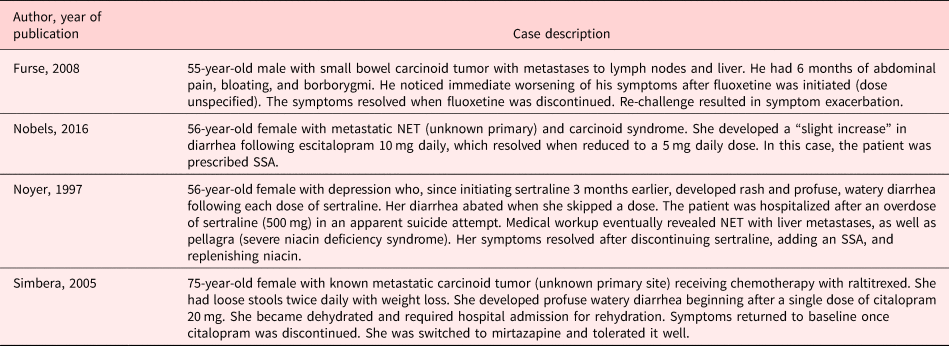
We identified 72 cases of NET patients with CS who were prescribed antidepressants. Seven of these were single case reports (Russo et al., Reference Russo, Boon and Kema2004; Bajwah and Lee, Reference Bajwah and Lee2005; Furse et al., Reference Furse, Green and Mee2008; Nobels et al., Reference Nobels, Geboes and Lemmens2016; Mehra and Kon, Reference Mehra and Kon2017), of which four cases experienced symptom exacerbation following antidepressant use (Table 1; Noyer and Schwartz, Reference Noyer and Schwartz1997; Simbera and Balon, Reference Simbera and Balon2005; Furse et al., Reference Furse, Green and Mee2008; Nobels et al., Reference Nobels, Geboes and Lemmens2016). Detailed descriptions of these four cases with symptom exacerbation are listed in Table 3.
Description of adverse events reported following serotonergic antidepressant use among NET patients

NET, neuroendocrine tumor; SSA, somatostatin analog.
The remaining 65 cases of NET with CS were derived from the three larger case series (Table 1; Williams and Dolenc, Reference Williams and Dolenc2005; Shi et al., Reference Shi, Yuppa and Dutton2017; Isenberg-Grzeda et al., Reference Isenberg-Grzeda, MacGregor and Bergel2018). Isenberg-Grzeda et al. (Reference Isenberg-Grzeda, MacGregor and Bergel2018) reported on 16 of these cases, in which the median duration of antidepressant use was 11.6 months (0–121 months). They found no documented instances of exacerbation of CS symptoms. Shi et al. (Reference Shi, Yuppa and Dutton2017) described an additional 48 of these cases with a median duration of antidepressant use of 4.8 months with 39% of antidepressant trials lasting at least 6 months (range not reported). They reported that six patients experienced worsening of CS symptoms following antidepressant use, but only three discontinued the antidepressant use following the exacerbation of CS. The authors suggested that perhaps the symptoms were tolerable enough to those patients who chose to remain on the antidepressant, or that perhaps the symptoms were attributed to other causes. Finally, among the five cases reported by Williams and Dolenc (Reference Williams and Dolenc2005), one patient had pre-existing CS and was prescribed sertraline. The duration of use was 4 years and no side-effects were reported. The patient was also prescribed an SSA.
Do antidepressants cause serious adverse outcomes when prescribed to NET patients?
Among all 161 cases identified, none reported any instances of carcinoid crisis or death following antidepressant use.
Discussion
We identified 161 cases of NET patients who were prescribed SA medications from among 15 different studies, of which three studies were larger case series with a low risk of bias yielding the overwhelming majority of cases (149/161). We found no cases of SA leading to CS among the 89 NET patients without CS at the time the medication was prescribed, even though antidepressants were prescribed for long durations (up to 172 months) (Isenberg-Grzeda et al., Reference Isenberg-Grzeda, MacGregor and Bergel2018). Thus, we found no compelling evidence that antidepressants precipitate CS among NET patients.
More commonly, we found that antidepressants were associated with an exacerbation of underlying CS symptoms, such as diarrhea or flushing, in those who already had CS. Out of the 72 cases we identified with CS, 10 cases (10/72; 13.8%) reported worsening of diarrhea, flushing, or both. It is worth noting that SSA may provide some buffer against SA-mediated exacerbation of CS symptoms, and only two of these patients were prescribed SSA. Still, the fact that 2 of these 10 patients were prescribed SSA implies that SSA does not seem to buffer from CS exacerbation in all cases. It is also worth noting that only six of the patients decided to discontinue the antidepressant (Shi et al., Reference Shi, Yuppa and Dutton2017), which could reflect that symptom severity was not high, or that the symptoms were misattributed to the disease itself. One other patient improved by lowering the dose of antidepressant (Nobels et al., Reference Nobels, Geboes and Lemmens2016).
It is quite interesting that only 13.8% of CS patients experienced an exacerbation of symptoms when antidepressants were initiated which is less than the 16% reported in the general depression literature (Trindade et al., Reference Trindade, Menon and Topfer1998). This could be understood in several ways. It is possible that diarrhea was misattributed to NET rather than to antidepressant side-effect, and thus would have not been reported as a symptom exacerbation. It could also be that patients were buffered because of SSA, though many reports did not specify whether patients were receiving SSA. Another possibility is that the symptom severity was tolerable to patients, who may not have reported symptoms in that case. Certainly, the fact that 4 of 10 patients chose to continue their antidepressant despite symptom exacerbation is in keeping with this theory. Lastly, it is also possible that antidepressants dosing was lower in NET patients compared to the general population (Isenberg-Grzeda et al., Reference Isenberg-Grzeda, MacGregor and Bergel2018).
The third outcome that we sought to identify was the occurrence of serious adverse outcomes, such as carcinoid crisis or death. We found no instances of carcinoid crisis or death in any of the 161 cases. It is worth noting that three cases did require hospitalization. The first was a patient who took an overdose of sertraline (500 mg), who had previously not required hospitalization while taking therapeutic doses of the medication. Thus, while the description of the hospitalization is quite severe and dramatic, it seems most likely attributable to the overdose, rather than to the usual prescribing of sertraline. In the remaining two cases, the patients were both hospitalized after a single dose of an SSRI caused an exacerbation of CS symptoms, leading to dehydration. The patients both recovered after being rehydrated. One patient stopped the antidepressant and the other continued taking it. Both patients were also receiving chemotherapy at the time, potentially adding to the burden of gastrointestinal symptoms associated with the SA.
Since the initial case report of antidepressants unmasking carcinoid tumor was published in 1997 (Noyer and Schwartz, Reference Noyer and Schwartz1997), only a small number of studies have attempted to shed light on the controversy surrounding antidepressant use in NET patients (Williams and Dolenc, Reference Williams and Dolenc2005; Shi et al., Reference Shi, Yuppa and Dutton2017; Isenberg-Grzeda et al., Reference Isenberg-Grzeda, MacGregor and Bergel2018). To our knowledge, this is the first systematic review of antidepressant safety in NET patients. We found no instances of antidepressants precipitating CS, and instead, antidepressants were prescribed to a large number of NET patients for long durations without ever precipitating CS. A small percentage (13.4%) of patients with pre-existing CS experienced an exacerbation of CS symptoms following antidepressant use, but, interestingly, the prevalence of diarrhea was less than expected in the non-cancer literature (16%).
Thus, despite the dramatic case reports of the unmasking of carcinoid tumors, the subsequent recommendations to avoid SSRIs altogether in NET patients seem unsupported by the entirety of the literature. This conclusion echoes that of other authors (Williams and Dolenc, Reference Williams and Dolenc2005; Shi et al., Reference Shi, Yuppa and Dutton2017), who also deemed the recommendations to avoid SSRIs unwarranted. This is particularly important given that the controversy is suggested to have resulted in systematic under-prescribing of SSRIs to patients with NET (Soliday et al., Reference Soliday, Garofalo and Smith2004).
Of course, symptom exacerbation did occur in a small percentage of patients, but 40% decided to keep taking the antidepressant nonetheless. Given that symptom exacerbation would present with diarrhea or flushing, we agree with the recommendations by Shi et al. (Reference Shi, Yuppa and Dutton2017) that patients should be closely monitored after starting an SSRI. Patients may need to be aware that symptom exacerbation can occur as early as after the first dose, and that a dramatic increase in their symptoms may warrant medical attention. Ultimately, practitioners will have to determine on an individual basis how to respond to symptom exacerbations, including whether antidepressant dose reduction or discontinuation, or whether initiation or dose escalation of SSA are warranted.
Limitations
Our study has several limitations. First, we restricted our search to studies published in English, which may have led to language bias. Second, the number of patients in our review was small, with only 161 cases included, some of whom had missing data. Third, given that all of the included studies were case reports/case series, there was no control group and it is uncertain whether patients who were not prescribed SSRIs would have had similar outcomes. Due to the limitations of case reports, we were also unable to study predictors of adverse outcomes and whether SSA could act as a protective factor. Fourth, we decided to include patients receiving any antidepressant, rather than restricting only to SSRI use, given that SAs could theoretically cause similar adverse outcomes, but owing to the small numbers of non-SSRI antidepressants identified, we were unable to draw any conclusions. Future cohort studies and randomized controlled trials are needed to assess whether SSA is protective against adverse outcomes when initiating antidepressants in patients with NET.
Conclusion
In summary, we found only a small number of cases of adverse outcomes and less than expected based on the general antidepressant literature. No patients developed a carcinoid crisis or death following antidepressant use. While two patients taking therapeutic doses of antidepressants were hospitalized for gastrointestinal side-effects, both recovered and one even continued taking the medication for an additional 2 years. Ultimately, we believe that there is insufficient evidence to warrant a broad cautionary statement to avoid SSRIs in patients with NET. Clinicians should be aware of the potential for symptom exacerbation, and closely monitor when initiating an SSRI. Future studies should explore the efficacy of antidepressants in this patient population.
Supplementary material
To view supplementary materials for this article, please visit https://doi.org/10.1017/S147895152000005X.
Author contribution statement
All authors contributed substantially to either or both of the study conception and/or to the data acquisition, analysis, or interpretation. All authors contributed substantially to the drafting or revising of the manuscript. All authors have given final approval and agree to be accountable for all aspects of the work.
Funding
This research was funded in part through the NIH/NCI Cancer Center Support Grant P30 CA008748.
Conflict of interest
Dr. Isenberg-Grzeda has a consulting agreement with Celgene, USA.