Integrating mental health professionals into primary care settings has become a critical model of mental health care in the Veterans Health Administration (VHA) health care system (Pomerantz et al., Reference Pomerantz, Kearney, Wray, Post and McCarthy2014; Zeiss and Karlin, Reference Zeiss and Karlin2008). Historically, this interdisciplinary approach was initiated to meet the mental health needs of aging Veterans with complex comorbidities, and subsequently expanded to meet the needs of all Veterans (Rasin-Waters et al., Reference Rasin-Waters, Abel, Kearney and Zeiss2018). VHA Geriatrics and Extended Care interdisciplinary programs adopting this integrated care model have included nursing home care, hospice and palliative care, and Home Based Primary Care (HBPC; Karlin and Karel, Reference Karlin and Karel2014; Karlin and Zeiss, Reference Karlin and Zeiss2010; Zeiss and Karlin, Reference Zeiss and Karlin2008).
HBPC is the largest of these VHA-integrated care programs, providing long-term care to mostly older Veterans with chronic and debilitating physical and neurological conditions (Gillespie et al., Reference Gillespie2019; Karuza et al., Reference Karuza2017). The typical HBPC patient requires nursing home level care that can be appropriately coordinated through home visits from an interdisciplinary health care team of nurses, physicians, rehabilitation therapists, dieticians, pharmacists, and social workers. In addition to HBPC social workers who provide care management and family caregiver support, but do not function as mental health providers, licensed clinical social workers (LCSWs) in HBPC are mental health providers trained to deliver therapy. Since 2007, VHA has integrated psychologists and psychiatrists into HBPC programs to improve access to mental health services for Veterans who have a high burden of mental illness and difficulty accessing clinic-based care (Zeiss and Karlin, Reference Zeiss and Karlin2008). Mental health professionals support the entire HBPC team in understanding and treating mental health concerns.
VHA mental health leaders were interested to identify an evidence-based psychological intervention that could be readily applied in HBPC, as part of the VHA Evidence-Based Psychotherapy training programs. One such treatment was Problem-Solving Therapy (PST), which teaches patients adaptive coping through more effective problem-solving skills and has a long history of support for treating depression in both younger and older adults (Bell and D’Zurilla, Reference Bell and D’Zurilla2009; Nezu et al., Reference Nezu, Nezu and D’Zurilla2013). PST also has empirical support as a brief intervention for depression or mixed depression and anxiety (Nieuwsma et al., Reference Nieuwsma, Trivedi, McDuffie, Kronish, Benjamin and Williams2011) and for late-life depression with executive dysfunction (e.g. Areán et al., Reference Areán, Raue, Mackin, Kanellopoulos, McCulloch and Alexopoulos2010).
Though efficacy and effectiveness studies of PST within VHA HBPC programs have not been conducted to date, several trials of older patients receiving in-home care have published significant findings for PST compared with a control condition (for a review, see Gellis and Nezu, Reference Gellis, Nezu, Sorocco and Lauderdale2011). Among older patients seen by a university-affiliated home care agency, brief PST significantly lowered depressive symptoms, improved quality of life, and improved problem-solving ability compared with usual care (Gellis et al., Reference Gellis, McGinty, Horowitz, Bruce and Misener2007). In older home care patients with cardiovascular disease, those enrolled in brief PST relative to usual care with psychoeducation had significantly lower depression and increased quality of life for mental health and emotional role functioning (Gellis and Bruce, Reference Gellis and Bruce2010). A home-delivered Problem-Solving intervention also led to significantly lower depressive symptoms in older adults with depression and cognitive impairment (Kiosses et al., Reference Kiosses, Ravdin, Gross, Raue, Kotbi and Alexopoulos2015). Low-income home care patients with depression who received brief PST also had significantly lower depressive symptoms at posttreatment as compared with home care patients receiving telephone support (Choi et al., Reference Choi, Marti, Bruce, Hegel, Wilson and Kunik2014).
Based on this empirical support, PST was considered an excellent match to address the needs of HBPC Veterans. Likewise, VHA had already begun to implement a Problem-Solving Training group intervention, called Moving Forward, to support effective problem-solving among Veterans in the transition from military to civilian life and, ultimately, any Veteran coping with stress (Tenhula et al., Reference Tenhula2014). Problem-Solving Training is a lower intensity intervention than traditional PST because of the brief, time-limited format with a strong psychoeducational and didactic focus. VHA adapted PST to a group format for use with Veterans in outpatient primary care settings and, then, for use in HBPC using an individual format (PST-HBPC) in consultation with the developers of contemporary PST (Nezu et al., Reference Nezu, Nezu and D’Zurilla2013).
The PST-HBPC protocol follows an individual, home-delivered format that addresses common barriers to effective problem-solving: feeling overwhelmed, feeling hopeless, negative emotions, and ineffective problem-solving skills (Nezu and Nezu, Reference Nezu and Nezu2014; Nezu et al., Reference Nezu, Nezu and D’Zurilla2013). Several aspects of PST correspond well to the needs of an HBPC population, including the ability for the protocol to adapt flexibly to individual patients who may struggle with a wide range of mental disorders and symptoms or life stressors, the time-limited nature of the intervention which minimizes patient and clinician burden, and the process of helping patients to identify and cope with problems over which they may or may not have control (Nezu et al., Reference Nezu, Nezu and D’Zurilla2013).
VHA trained HBPC therapists in this intervention annually between 2014 and 2017. Evaluation of intervention effectiveness in HBPC focused on pre- and posttreatment measures of depression, quality of life, and problem-solving abilities. Given the public health imperative of developing and identifying evidence-based interventions to prevent Veteran suicide, secondary analyses examined pre- and posttreatment changes in death or self-harm ideation. Qualitative measures assessed clinician and Veteran feedback about the program. This paper summarizes the outcomes of this evaluation to describe PST-HBPC effectiveness and to discuss its potential for implementation in other home-based care settings.
Methods
Intervention and evaluation description
PST-HBPC incorporates the principal concepts and skills of PST in the following tool kits: (a) Multi-Tasking for combating feelings of being overwhelmed; (b) Stop, Slow Down, Think, and Act (SSTA, emphasizing the Stop and Slow Down – noticing and lowering the intensity of negative emotions) to manage emotion dysregulation; (c) Visualization for Motivation to decrease feelings of hopelessness; and (d) Planful Problem-Solving (the Think and Act components of SSTA) to increase effective Problem-Solving (Nezu et al., Reference Nezu, Nezu and D’Zurilla2013). These tool kits are further described by Tenhula et al. (Reference Tenhula2014) as implemented in the VA Problem-Solving Training program, Moving Forward.
The Moving Forward intervention was adapted to the needs of the HBPC population, who frequently have cognitive and sensory limitations and complex medical conditions, by increasing opportunities for practice and review of materials (e.g. increasing the number of sessions from four to six, tailoring the example Problem-Solving worksheets to HBPC patients’ problems, and providing large font, visually appealing hand-out summaries to facilitate learning). The intervention was delivered individually rather than in a group because HBPC patients are seen in their homes and many are homebound, making in-person group delivery impossible. Veterans had the option of including a family member, caregiver, or friend as a PST “coach” to support their learning of materials through attending sessions with the Veteran, encouraging the Veteran’s practice, and positively reinforcing the Veteran’s efforts.
Veteran enrollees participating in at least five individual sessions were considered treatment completers. Sessions lasted 45–75 min and were scheduled either weekly or every other week. Clinicians administered 30–45 min of evaluations before the first session and after the last session with an expected treatment duration of 6–14 weeks.
Training format and participants
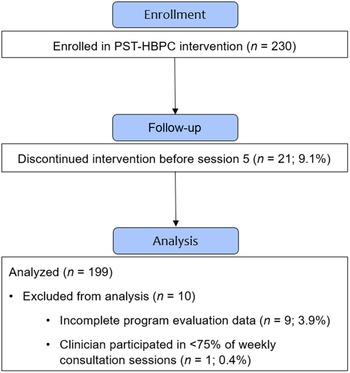
PST-HBPC training participants included 110 HBPC psychologists and 5 LCSWs (n = 115). The program trained HBPC psychologists in 2014 and 2015 and expanded to include LCSWs starting in 2016. Clinicians participated in a 6–7-month training, which included an interactive in-person (2014) or virtual (2015–2017) workshop by PST subject matter experts, with clinical demonstrations and small group practice, and weekly 60-minute small group telephone consultations led by trained PST-HBPC consultants to discuss PST-HBPC implementation with training cases. Clinicians were required to implement the PST protocol with two training cases and to participate in at least 75% of the consultation calls. Analyses excluded 31 training cases for a total of 199 Veterans (86.5% of those initially enrolled) in the final analyses (Figure 1).
Flow diagram of patient enrollment and inclusion in the analyses.

Befitting a dissemination project, this program applied no firm exclusion criteria for enrollment. However, Veterans with moderate to severe cognitive impairment were not appropriate candidates, and clinicians were discouraged from enrolling Veterans at immediate risk of medical or psychological crisis. Inclusion criteria were minimal to mild cognitive impairment, a willingness and ability to participate in a six-session intervention and practice skills between sessions, and no immediate medical or psychological crises (e.g. not imminently suicidal, no unstable psychotic symptoms, and no active and unstable bipolar disorder).
All patients had previously given their broad consent to receive VA health care services before assenting to participate in this program evaluation. The Institutional Review Board for research at Stanford University School of Medicine reviewed the project and determined it was non-research because its purpose was quality improvement.
Measures
To evaluate clinical outcomes for enrolled Veterans, clinicians received instructions and orientation on the administration of the demographic and cognitive measures (pre-enrollment only) and clinical outcome measures (pre- and post-intervention).
Demographics and diagnoses
Clinicians completed a questionnaire on the Veteran’s age, sex, years of education, race and ethnicity, combat era, living situation (e.g. alone, with a spouse or partner), and if applicable, relationship to their caregiver (e.g. spouse, paid caregiver). The questionnaire also asked about the presence of a psychotic disorder, mood disorder, anxiety disorder, posttraumatic stress disorder (PTSD), or other disorder, and included an open-ended question about the presence of any prominent medical conditions.
Cognition
The six-item Blessed Orientation Memory and Concentration Test (BOMC) assessed general cognitive status (Katzman et al., Reference Katzman, Brown, Fuld, Peck, Schechter and Schimmel1983). BOMC total scores based on weighted errors range from 0 to 28, and ≥10 indicates cognitive impairment (Meiran et al., Reference Meiran, Stuss, Guzman, Lafleche and Willmer1996). Whether the Veteran had sufficient cognitive functioning to engage effectively in the protocol was determined based on clinician judgment about the case, the team’s experience with the Veteran, the BOMC standardized test score, and consultation during the weekly calls. Clinicians were generally discouraged from enrolling Veterans with BOMC total scores >10.
Depressive symptoms
The Patient Health Questionnaire-9 (PHQ-9; Kroenke et al., Reference Kroenke, Spitzer and Williams2001) assessed depressive symptom severity (total score), and functional difficulties due to depressive symptoms (item 10, not included in the total score) as outcomes of treatment change. Secondary analyses evaluated ideation about death or self-harm (item 9). A sum score on the nine self-rated items provided a severity score from 0 to 27, with higher scores indicating a greater frequency of bother from depressive symptoms during the past 2 weeks and a cut score of 10 indicative of clinically significant depression.
Quality of life
The brief World Health Organization Quality of Life (WHOQOL-BREF) instrument assessed quality of life in four domains: social, psychological, environmental, and physical health (The WHOQOL Group, 1998). Validated for use internationally, the WHOQOL-BREF consists of 26 items drawn from the original WHOQOL 100-item questionnaire and has 3 reversed scored items (Skevington et al., Reference Skevington, Lotfy and O’Connell2004). Higher domain scores indicate a greater quality of life in that domain.
Problem-solving ability
The 25-item Social Problem-Solving Inventory – Revised short form (SPSI-R:S) assessed beliefs and ability to solve everyday problems (D’Zurilla et al., Reference D’Zurilla, Nezu and Maydeu-Olivares2002). It has strong reliability and validity properties for assessing problem-solving in real-world contexts and has been normed with younger and older adults. Higher SPSI-R:S total scores indicate more effective problem-solving ability. The SPSI-R:S also contains two subscales on problem-solving beliefs, Positive Problem Orientation (PPO) and Negative Problem Orientation (NPO), and subscales for each of three problem-solving approaches – Rational Problem-Solving (RPS), Impulsivity/Carelessness Style (ICS), and Avoidance Style (AS).
Veteran satisfaction
During their post-evaluation session, Veterans rated 19 items on a 5-point Likert-type scale indicating how much they agreed with statements about how satisfied with or helpful they found the program, including specific program skills and materials, length and number of sessions, and whether changes to the program would have been helpful. Two open-ended questions asked Veterans about anything else they found helpful or would have found helpful, and suggestions to further improve the program for other HBPC Veterans.
Clinicians’ feedback
Clinician feedback questionnaires were initiated in 2015, thus not collected in 2014. Due to a transition in the program evaluation leadership, the 2017 feedback questionnaires were also not administered. Clinicians in the 2015 and 2016 training cohorts (n = 52) rated the perceived feasibility and effectiveness of the program on 27 items using a 5-point Likert-type scale and responded to six open-ended questions about how helpful they felt the program was, which aspects were most helpful, for whom they felt the program would be most effective, and suggested changes to the program.
Statistical analysis
To determine the significance of the change in pre- to posttreatment scores, the analysis included three repeated measures multivariate analysis of variance (MANOVA) models, one for each outcome measures: PHQ-9 (total score; item 10 rating), WHOQOL-BREF (four subscales), and SPSI-R:S (total score; five scales). Interpretation of significant t-test comparisons of a measure only occurred if the MANOVA for the measure was significant (p < 0.05). No violations to Mauchly’s Test of Sphericity were detected in the MANOVAs (ps > 0.05); thus, we did not adjust for sphericity and instead report Wilk’s Λ for these analyses.
Feedback from clinicians and Veterans are summarized based on common themes on open-ended questions, the frequency (%) responses on categorical items, and the means (±SDs) for items rated on an ordinal scale.
Results
Veteran baseline characteristics
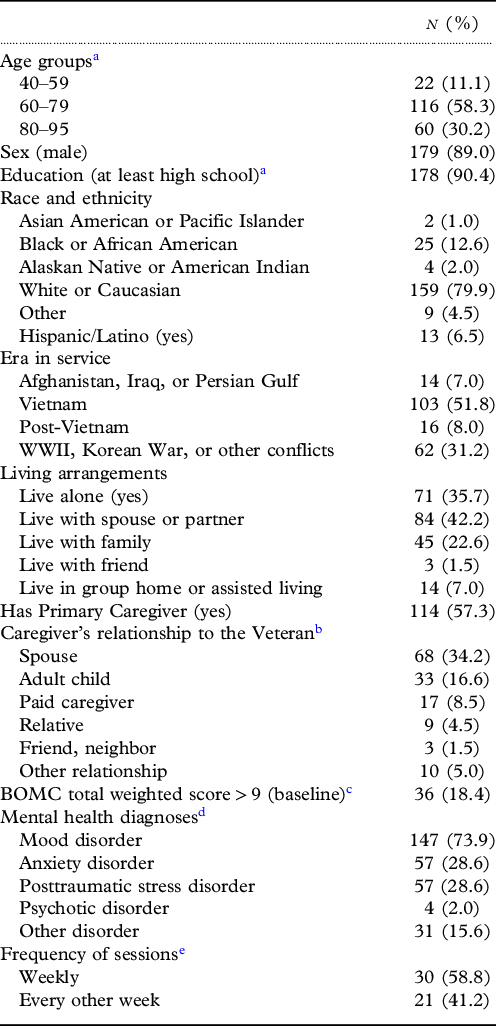
The 199 Veteran enrollees averaged 72.4 (11.9) years old, ranging from 40 to 95 years. As shown in Table 1, participants were predominantly male, White or African American/Black, with at least a high school education. Many lived alone or with a spouse or partner, and more than half had a caregiver. On average, Veterans reported moderate severity of depressive symptoms at baseline (PHQ-9 total score mean = 11.12; SD = 6.08). Regarding psychiatric diagnoses, mood disorders ranked most common, followed by anxiety disorders, and PTSD. Ninety-five % (94.9%) of enrollees had at least one of these psychiatric diagnoses.
Sample description (n = 199)

Abbreviation: BOMC, Blessed Orientation Memory and Concentration Test.
a Missing cases (n = 1 for age; n = 2 for education).
b Veterans could select more than one option.
c BOMC weighted score greater than 9 indicates clinically meaningful cognitive impairment.
d The total percentage collapsed across mental health diagnoses does not equal 100% due to Veterans with two or more mental health diagnoses.
e Information on the frequency of sessions is based on 51 clinician responses from the 2015 and 2016 cohorts.
Treatment outcomes
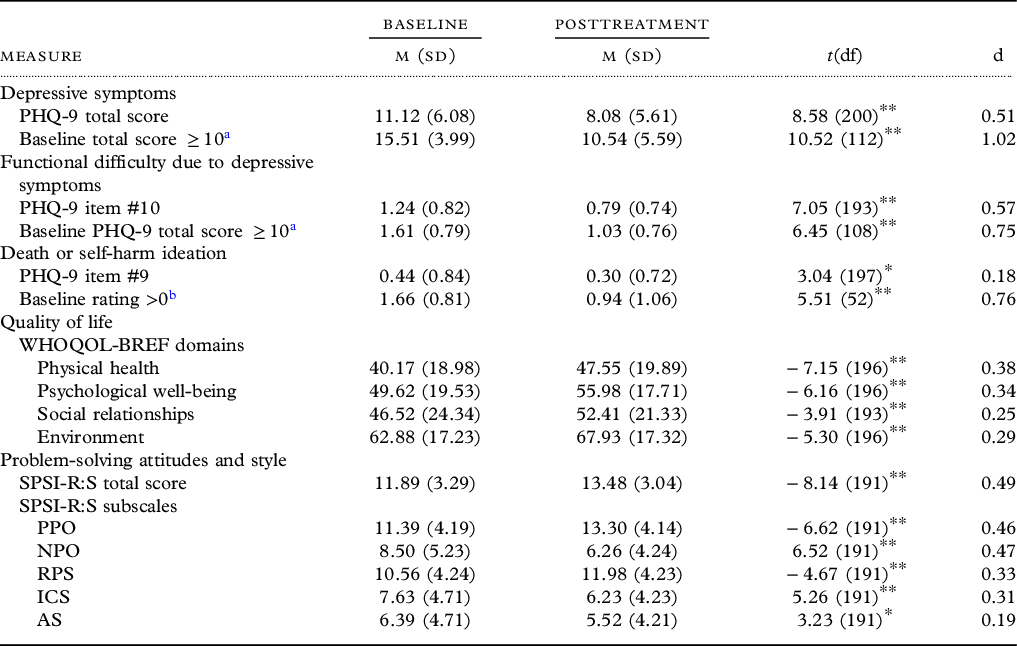
MANOVA models were significant for the PHQ-9 (total score and difficulty item 10), F(2, 192) = 40.10, p < 0.001; Wilk’s Λ = 0.71, partial η 2 = 0.30; the WHOQOL-BREF (subscales), F(4, 190) = 14.83, p < 0.001; Wilk’s Λ = 0.76, partial η 2 = 0.24; and the SPSI-R:S (total score and subscales), F(5, 187) = 15.72, p < 0.001, Wilk’s Λ = 0.70, partial η 2 = 0.30. Table 2 summarizes the pre- and posttreatment means and SDs, and the paired samples t-tests comparing pre- and posttreatment scores and their effect sizes (Cohen’s d).
Means and SDs and t-test comparisons for baseline and final clinical and psychosocial measures (n = 194)

Abbreviations: PHQ-9, Patient Health Questionnaire-9 item; SPSI-R:S, Social Problem-Solving Inventory – Revised: Short Form; PPO, Positive Problem Orientation scale; NPO, Negative Problem Orientation scale; RPS, Rational Problem-Solving scale; AS, Avoidance Style scale; ICS, Impulsivity/Carelessness Style scale.
a Subsample of 113 Veterans with baseline PHQ-9 total scores of 10 or higher.
b Subsample of 53 Veterans endorsing a 1 or higher on the PHQ-9 item 9 for death or self-harm ideation; *p < 0.01. **p < 0.001
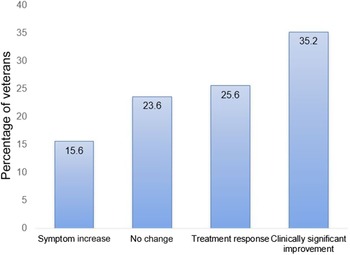
On the PHQ-9 total score and difficulty item, t-test comparisons revealed that on average, Veterans rated significantly lower severity of their depressive symptoms (from moderate-to-mild severity) and lower severity of depression-related difficulty from pre- to post-intervention (ps < 0.001). Despite many Veterans (43.2%; n = 86) reporting nonclinical levels of depressive symptoms at pre-treatment (PHQ-9 total score < 10), over a third of enrollees (35.2%; n = 70) had a clinically significant reduction (≥5 points) on the PHQ-9 total score. Among the 56.8% (n = 113) of Veterans with clinical levels of baseline depressive symptoms (PHQ-9 total score ≥10), 52.2% (n = 59) experienced a clinically significant reduction of ≥5-points on the PHQ-9 total score; and 46.9% fell below the clinical cutoff of 10 on their PHQ-9 total score at posttreatment. Figure 2 summarizes the percentage of Veterans whose PHQ-9 total scores were worse, the same, improved, or significantly improved.
Percentage of Veterans whose PHQ-9 total scores increased, did not change, or improved from baseline to posttreatment. Change categories: Symptom increase = 2 or more point increase; No change = 0 or 1 point increase or decrease; Treatment response = 2 or more point decrease; Clinically significant improvement = 5 or more point decrease.

On the WHOQOL-BREF subscales, Veterans reported significantly better quality of life in their social relationships, physical health, psychological health, and environment from pre- to posttreatment (see Table 2).
Veterans reported more adaptive problem-solving abilities from pre- to posttreatment (SPSI-R:S total score), and significantly higher scores for both the PPO and RPS scales, indicative of improved problem-solving. They also reported a significantly lower tendency to engage in Impulsivity/Carelessness Styles (ICS; ps < 0.001) and a lower tendency to engage in an Avoidance style (AS; p < 0.01; see Table 2).
The 53 Veterans endorsing baseline suicide ideation (PHQ-9 item 9 > 0) reported significantly less death ideation or thoughts of self-harm from baseline to posttreatment, p < 0.001, (d = 0.76; see Table 2). Among these 53 Veterans, 45.3% (n = 24) reported no suicide ideation on the post-evaluation (PHQ-9 item 9 = 0).
Veteran and clinician satisfaction
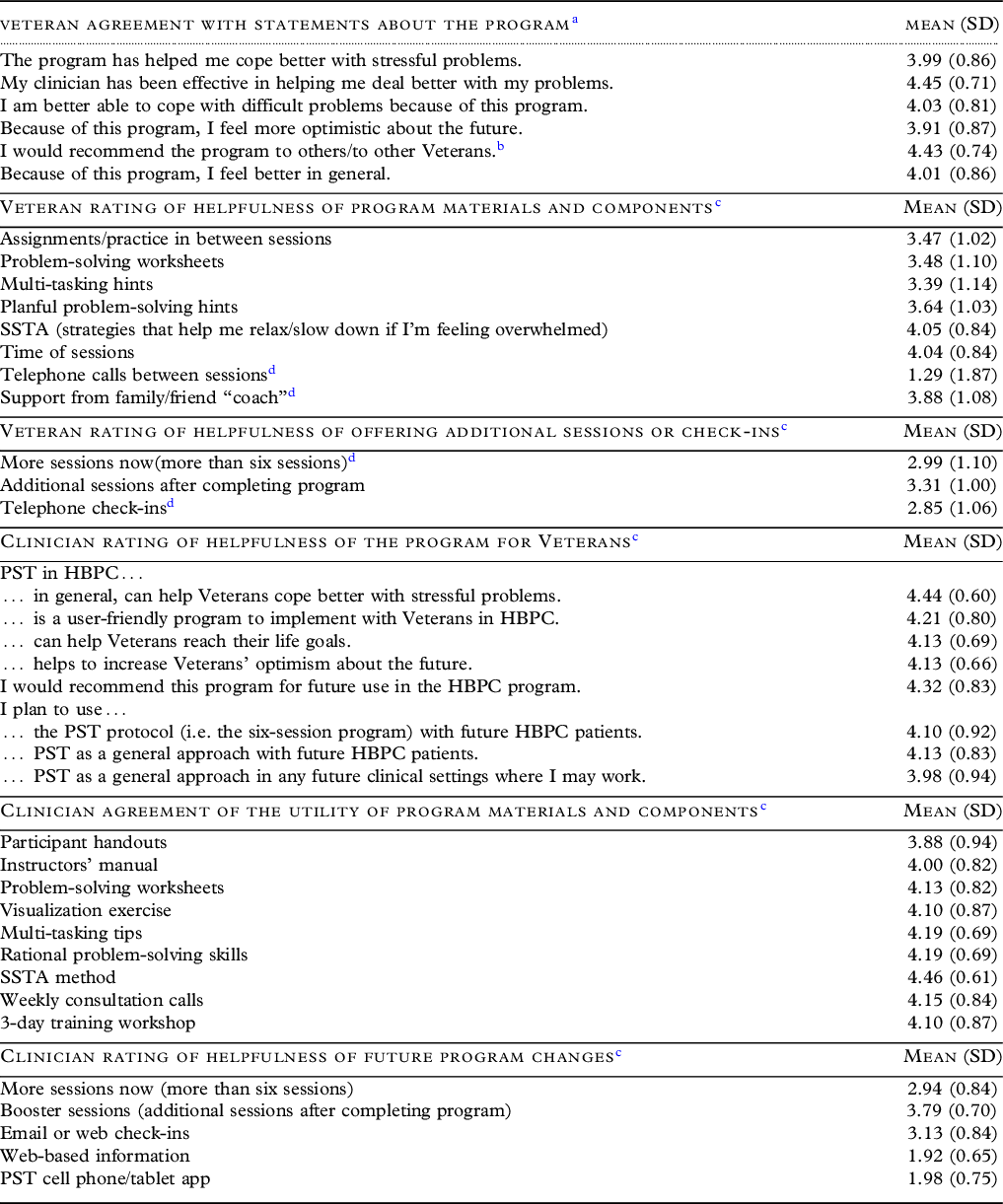
Table 3 summarizes the program satisfaction ratings from Veterans and clinicians. Program satisfaction questionnaires were missing/not returned for 24.6% (n = 49) of Veterans. Veterans who completed ratings (n = 150) generally indicated satisfaction with the program and agreement that the program skills and materials were helpful. Clinician ratings also generally agreed with the utility of the program for Veterans and generally rated the program materials, the training format, and the treatment components as helpful.
Means (standard deviations; SD) of Veteran (n = 150) and Clinician (n = 52) satisfaction with the training program

a Veteran and Clinical rating scale of agreement = 1 (completely disagree), 2 (disagree), 3 (agree somewhat), 4 (agree), 5 (completely agree).
b Item wording changed from “to other Veterans” to “to others” in 2017.
c Veteran and Clinician rating scale of helpfulness = 1 (very poor/unhelpful), 2 (poor/not helpful), 3 (good/helpful), 4 (very good/very helpful), 5 (excellent/extremely helpful).
d Additional missing data for these items (n < 150): Telephone calls between sessions (n = 149), Support from family/friend “coach” (n = 148), More sessions now (more than six sessions) (n = 146), and Telephone check-ins (n = 147).
On additional ratings (not in Table 3), many Veterans and clinicians rated the six-session length of the program and protocol as “just right” (62.7%; n = 94 of 150 Veteran responses; 46.0%; n = 23 of 50 clinician responses). Yet, many clinicians also rated the program as too short (42.0%; n = 21); a smaller percentage of Veterans rated it as too short (18.0%; n = 27). A small percentage of Veterans (19.3%; n = 29) and clinicians (12.0%; n = 6) rated the program as too long. Similarly, although many Veterans and clinicians rated the session length as “just right” (67.3%; n = 101 of 150 Veteran responses; 47.1%; n = 24 of the 51 clinician responses), many clinicians also rated it as too short (43.1%, n = 22), whereas a smaller percentage of Veterans rated the sessions as too short (15.3%; n = 23). A significant percentage of Veterans (81.6 and 62.6%) and clinicians (67.3 and 98.1%) rated having “more sessions now” or “additional sessions after completing the program (i.e. booster sessions)” as something that would be helpful.
Based on open-ended responses, clinicians rated session lengths as too short due to patient distractibility and verbosity, in-home distractions, too much material to cover, patients needing a lot of review from previous sessions due to cognitive or sensory impairment, time needed to discuss significant medical events since the last session, and clinician challenges balancing the delivery of material with engaging the Veteran. Although less common, some Veterans (17.3%; n = 26) and clinicians (9.8%; n = 5) rated the sessions as too long, for which clinicians gave the following reasons: Veteran fatigue or inability to tolerate the length of the program or sessions and the difficulty some Veterans had in completing the evaluation measures on the same day as a treatment session.
Regarding the inclusion of a support coach, 54.7% of Veterans (n = 81 out of 148 responding to this question) used a coach. Of these Veterans, 91.4% (n = 74) rated their experience as “good/helpful” to “excellent/extremely helpful.”
Discussion
This evaluation examined the effectiveness of a VHA training program in Problem-Solving Training for clinicians adapted from an evidence-based behavioral intervention (PST) and implemented with Veterans in the HBPC setting. Whereas, PST has decades of empirical support for patients across a multitude of populations and settings, including those analogous to HBPC, this program is the first to develop and examine Problem-Solving Training’s effectiveness in mainly older HBPC patients using a six-session protocol with an optional “coach” (caregiver or loved one). Results from 4 years of the training program’s protocol implementation support the feasibility and effectiveness of PST-HBPC. This work extends previous (e.g. Choi et al., Reference Choi, Marti, Bruce, Hegel, Wilson and Kunik2014) and more recent efficacy work (e.g. Kanellopoulos et al., Reference Kanellopoulos2020) to demonstrate the real-world effectiveness of a brief problem-solving intervention and training program for reducing depression and increasing quality of life in a medically complex older primary care population.
Veterans completing at least five of six PST-HBPC sessions reported lower depressive symptom severity, lower functional difficulties due to depressive symptoms, higher quality of life across domains of physical health, psychological well-being, social roles, and environmental circumstances, and better problem-solving ability on average from baseline to posttreatment. Importantly, one in three HBPC Veterans (35.2%) experienced at least a 5-point decrease in the severity of their depressive symptoms. Nearly half of Veterans (46.9%) with clinical levels of depressive symptoms at baseline no longer reported clinical levels at posttreatment, which is notable considering other home care setting investigations of PST reporting lower (25.7 and 37.8%) treatment response rates for late-life depression (Choi et al., Reference Choi, Marti, Bruce, Hegel, Wilson and Kunik2014; Kiosses et al., Reference Kiosses, Ravdin, Gross, Raue, Kotbi and Alexopoulos2015). Because our evaluation did not include a control condition, the higher response rate in PST-HBPC relative to other randomized controlled trials is attributable at least in part to interdisciplinary home care and support from skilled providers in the HBPC setting.
Given the multiple risk factors for suicide among HBPC Veterans, including functional disability (Lutz and Fiske, Reference Lutz and Fiske2017), analyses also examined the suicide ideation item from the PHQ-9. Veterans reporting baseline suicide ideation reported significantly less suicide ideation from baseline to posttreatment. Additionally, 45% of the Veterans reporting baseline suicide ideation no longer reported any thoughts of suicide at post-evaluation. Although our program was not designed to target suicide risk directly, PST trials for late-life depression have reported significant reductions in the outcome of suicide risk (e.g. Choi et al., Reference Choi, Marti and Conwell2015). Alongside the scientific evidence published to date, this evaluation provides some support for the effectiveness of PST for reducing suicide ideation in mostly older Veterans enrolled in HBPC and its potential as an intervention for suicide prevention in this population.
Further, Veteran improvements in perceived quality of life could be attributable to a more positive outlook on their ability to solve problems and increased use of planful coping strategies. Because of the complex needs of the HBPC population, improved quality of life across different domains of role-functioning represents a pertinent goal above and beyond a reduction in psychiatric symptoms. Improved quality of life also aligns with goals to promote person-centered care planning and to optimize functioning in valued life activities for the HBPC population.
Veteran evaluation measures also support the acceptability and feasibility of this intervention. The retention of Veteran enrollees (86.5% attended at least five sessions; 84.3% attended all six sessions) compares to PST delivered in similar settings in a similar format (85.7% attending 6/6 sessions; Choi et al., Reference Choi, Marti, Bruce, Hegel, Wilson and Kunik2014). The HBPC setting likely facilitated program retention by meeting with Veterans in their home rather than requiring them to travel to the clinic. Veterans’ feedback generally indicated satisfaction with the program, although the potential for response bias cannot be entirely ruled out.
Programmatically, Veterans and clinicians reported satisfaction with the format of the intervention, including satisfaction with utility of the different protocol components to their Veteran patients, and length and number of sessions. Yet, some Veterans rated the protocol as too short or too long, suggesting that flexibility to shorten or lengthen the duration of the protocol might be useful for certain patients. Both Veterans and clinicians rated having more sessions in the protocol, or additional sessions after completing the protocol as potentially helpful. Given the overwhelming support for maintenance or “booster” sessions, this is a potential consideration for Veterans who might need additional support to maintain the skills learned in this protocol.
Veterans who elected to have a PST support coach generally rated this experience as helpful. With more Veterans, future evaluations could document outcome differences between patients who elect to include a coach and those who do not. Qualitative analysis could also inform protocol implementation based on situations in which having a coach might be contraindicated or encouraged, and how many Veterans would have elected to have a coach but did not have one available. Future evaluations could also examine if a greater frequency of coach involvement attending sessions or assisting the patient to practice PST outside of sessions enhances treatment outcomes.
As a transdiagnostic intervention, Veterans in HBPC who struggle with life transitions, the need for increased assistance, and/or emotional distress, but not necessarily having a mental health diagnosis, could benefit from this program. The findings of this evaluation likely generalize to other home care settings in which LCSWs and psychologists provide mental health services (e.g. Gellis and Nezu, Reference Gellis, Nezu, Sorocco and Lauderdale2011). Because PST-HBPC is delivered as one component of interdisciplinary care within the broader HBPC program, this evaluation does not allow for any determination regarding PST-HBPC’s effectiveness in home care settings without extensive and specialized team resources. Thus, this evaluation does not indicate how well PST-HBPC would generalize to home care settings in the absence of regular interdisciplinary team care, nor if delivered by staff without baseline mental health and psychotherapy expertise and may not translate well to other settings with fewer resources.
Because the program’s goals were not to determine intervention efficacy, it did not include a comparison treatment. Enrollees included those with life stress and no psychiatric diagnosis to those with psychiatric diagnoses and, in some cases, with a documented psychotic disorder. Although evaluation results generalize to HBPC patients, potential confounds due to broad patient selection may have influenced evaluation outcomes.
Future evaluation of PST-HBPC with a larger sample of Veterans may be useful to delineate the patient characteristics predictive of a treatment response (O’Hara et al., Reference O’Hara, Beaudreau, Gould, Froehlich and Kraemer2017). These methods have been fruitful in identifying moderators of treatment response to PST or Supportive Therapy in late-life depression (Beaudreau et al., Reference Beaudreau, Rideaux, O’Hara and Areán2015) and could be used to identify subgroups of Veterans likely to experience positive clinical outcomes based on, for example, demographics, era of service, living with caregiver, psychiatric diagnoses, depressive symptoms, and cognitive status. Future studies could also examine clinician background (LCSW vs. licensed clinical psychologist) as a moderator of treatment outcome, which was not possible in the current program evaluation with only five LCSWs.
Future program evaluations of PST-HBPC should also determine the ideal timing of sessions. More frequent delivery of the six sessions than weekly or every other week could allow for expansion of this protocol to community home care settings that restrict the delivery of care to fewer than 6 weeks.
Certainly, VHA has revolutionized the use of and empirical support for video-delivered mental health treatment, that is, “telemental health” (Fletcher et al., Reference Fletcher2018). Due to the wide availability of technology supporting these services in VHA and the reduced provider and clinic burden relative to making home visits, future program evaluations of PST in HBPC should include the option of telemental health delivery (Fletcher et al., Reference Fletcher2018). PST programs similar to PST-HBPC have shown at least comparable efficacy via telemental health relative to in-person delivery, thus warranting a comparison of telehealth versus in-person delivered sessions to expand PST-HBPC’s use in VHA (Choi et al., Reference Choi, Marti and Conwell2015; Fletcher et al., Reference Fletcher2018).
This program evaluation has several limitations. First, the nature of the home care setting did not make it feasible to implement stricter standards of protocol adherence and competency through collection and coding of audio-recorded sessions. Alternatives to the audio recording could augment the program’s ability to monitor adherence to the protocol, such as consultant-rated competency checklists based on consultation call discussions for each clinician.
Second, this program evaluation emphasized depressive symptoms given PST’s strong support for treating depression, but it did not include other mental health symptoms (e.g. Nieuwsma et al., Reference Nieuwsma, Trivedi, McDuffie, Kronish, Benjamin and Williams2011). Future evaluation is needed to examine other common mental health outcomes, such as anxiety and PTSD symptom severity, given that more than one in four Veterans in this program had a current diagnosis of an anxiety disorder or PTSD. Additionally, the potential for PST to address suicide risk in these settings indicates the need for more comprehensive suicide risk measures than included in the current evaluation to understand which aspects of suicide risk improve with PST. A recent case report of late-life anxiety using the same PST-HBPC protocol and session format found qualitative differences in how suicide risk improved and the components of PST potentially most useful (Lutz et al., Reference Lutz2020).
Third, information on the duration of depressive symptoms prior to enrollment and psychotropic medication use were not collected, but could have influenced outcomes and thus should be included in future evaluations. Future evaluations should also include long-term follow up of symptom measures to determine if treatment gains are maintained over time. Lastly, future programs should collect qualitative information about the types of problems Veterans addressed while in PST, which could be useful for further tailoring the protocol. For instance, if many Veterans report social isolation or other interpersonal difficulties as an issue, provider training could emphasize the application of the protocol to address these problems.
Overall, findings support continued use and evaluation of PST with Veterans in the HBPC setting for improved mood, quality of life, and problem-solving ability, and for the potential for expansion of this 6-month training and implementation with similar patients, such as those receiving care in VHA Community Living Centers (“nursing homes”), geriatric primary care clinics, or home care patients in the community.
Conflict of interest
Dr. Nezu receives royalties for their 2013 and 2019 books. Dr. A. Nezu also receives royalties for the SPSI-R. The remaining authors report no conflicts of interest.
Source of funding
This project was supported by the Department of Veterans Affairs (VA) Office of Mental Health and Suicide Prevention (OMHSP), National Evidence-Based Psychotherapy Training Program and the VA Center for Integrated Healthcare. Writing of this manuscript was partly supported by the Sierra Pacific Mental Illness Research Education and Clinical Center, VA Palo Alto Health Care System.
Description of authors’ roles
S.A. Beaudreau developed the analysis plan, interpreted analyses, and wrote the paper. M.J. Karel contributed to the program evaluation design, provided feedback on the analysis plan and literature review, and revised the paper. J.S. Funderburk developed the analysis plan, provided supervision and feedback on the analysis, and revised the paper. A.M. Nezu and C.M. Nezu contributed to the program evaluation design and revised the paper. A. Aspnes contributed to the program evaluation design, collected and processed program evaluation data, contributed to preliminary analyses presented in 2016, and revised the paper. J.L Wetherell contributed to the design of the program evaluation, provided feedback on the analysis plan, and revised the paper.
Acknowledgements
We thank Drs. Sarah Miller, Michele Mlinac, and Erika Johnson-Jimenez for their 2016 presentation of the initial program evaluation data at the annual convention of the American Psychological Association. Additional thanks to Lee Bernstein, M.A. for assistance with analyses, and Madhuvanthi Suresh, M.S. for editorial assistance. Views expressed in this paper are those of the authors and do not necessarily reflect the position or policy of the Department of Veterans Affairs or the U.S. Government.