In 1863, the geologist Adolf Schmidl published a thick book on the Bihar/Bihor Mountains, a highland region on the border between the Hungarian Kingdom and Transylvania.Footnote 1 Calling the Bihar/Bihor Mountains one of the “least known regions in the Austrian Monarchy,” Schmidl offered his work as small contribution to Vaterlandskunde and one, he hoped, that would inspire others to follow him into the region. The book provided a detailed analysis of the mountains' hydrography, topography, flora, and fauna. The biological diversity of the region especially excited Schmidl, and his discoveries included four new species of plants and a new species of animal (a leech found only in thermal waters). Schmidl was no less impressed by the ethnographic diversity of this region. Although Romanians belonging to the Greek Catholic and Eastern Orthodox churches comprised the vast majority of the population, Schmidl counted six ethnic groups and as many religions in the mountains. According to Schmidl, “national agitation” was “entirely foreign” to the region, whose inhabitants enjoyed peaceful and fraternal relations with one another. The Romanians, he underlined, “are among the most loyal in the Austrian monarchy and their devotion to the dynasty is unfeigned and unshakeable.”Footnote 2
Schmidl's study is not without ideological assumptions concerning the economic, religious, and political conditions of the Bihar/Bihor Mountains. He is largely silent, moreover, on the 1848–1849 revolution, which had brought political mobilization, military conscription, and guerilla warfare to this region. Nonetheless, his work provides a useful benchmark against which to measure the profound changes that shaped the Bihar/Bihor Mountains over the next half century. Following in Schmidl's footsteps, a host of outsiders—merchants, loggers, miners, priests, teachers, officials, and tourists—made their way into the highlands. At the same time, more and more mountain-dwellers descended into the lowlands, either to work seasonally or to settle permanently. New roads and railroads greatly facilitated this movement of people, goods, and ideas. Liberalism and nationalism had already made their appearance in 1848–1849, and by the end of the century, the first rumblings of socialism could also be heard in the mountains.
No less consequential than such developments was the “discovery” of this region by a handful of national-minded Hungarians and Romanians, who lived in towns in and around the Bihar/Bihor Mountains. Most were journalists, officials, teachers, and writers; few had Schmidl's scientific background, and none shared his view that nationalism was unknown in the mountains. The Hungarian journalist Aladár György, for instance, echoed Schmidl when he wrote in 1893 that the region was “the darkest spot on the Hungarian map,” which contained vast reaches “never visited by educated men.”Footnote 3 Outsiders, he continued, knew little about this isolated region and heard only “fantastic stories” about “huts hidden in the forest” and highlanders who arranged hasty marriages at the yearly “maiden market.” Much more worrisome for György, however, were the stories of mountaineers “joyfully tearing up the national [Hungarian] flag and openly speaking of treason with wicked tongues.”
Such rumors had no place in the writings of Teofil Frâncu, a Transylvanian Romanian official who also spent time in the Bihar/Bihor region. Although Frâncu claimed that his account would be based on facts and not poetic fancy, he could not resist musing about national history. Outsiders, he wrote, would find evidence in this region of two past eras: “the epoch of Romanian domination and the epoch of Romanian defeat.”Footnote 4 Even vanquished, however, Frâncu's highlanders retained a long and proud history, fascinating folk customs, and a unique form of the Romanian language. Like György, Frâncu saw evidence of national belonging among the residents of the Bihar/Bihor Mountains. The authors differed only in their attitude toward it.
This small contest between Hungarian and Romanian nationalists must be situated within the wider processes of state making, nation-building, and modernization in Habsburg Hungary in the decades around 1900. The complexities of the Hungarian case, however, have too often been reduced to sterile debates over the campaign of linguistic Hungarianization waged by the Hungarian state and its local officials. To its many critics, Hungary's aggressive national politics undermined Hungarian liberalism, ruined Hungary's international reputation, fatally weakened the Habsburg monarchy, and provided a negative example for Austria-Hungary's successor states.Footnote 5 In recent decades, historians have begun to look at nationalization in new ways, emphasizing the importance of sociological factors such as urbanization, social mobility, and stereotypes and self-images.Footnote 6 It is now possible to situate the Hungarian case alongside similar state- and nation-building projects in Imperial Germany, Tsarist Russia, and France under the Third Republic. Even with these promising developments, however, we still know comparatively little about how nationalist politics played out at the local level, let alone in the countryside.
This article offers a case study of local politics on the Hungarian-Romanian language frontier. By focusing on the Bihar/Bihor Mountains, the article moves from the center to the periphery, from the state administration to local institutions, and from political luminaries to the residents of a relatively isolated and poor region of Austria-Hungary.Footnote 7 Because formal political participation in late-nineteenth-century Hungary was severely limited, my definition of “politics” is necessarily broad, and the evidence examined here includes petitions, newspaper editorials, speeches, and poems. Chronologically, this study focuses on the last decades of the nineteenth century, a time of not only sustained political crisis for both Hungarian and Romanian liberal elites, but also an era of widespread political mobilization on the ground. Under the rubrics of “ghosts and gold mines,” “highlanders,” and “poets,” I address the following questions: Why did nationalists take such interest in the Bihar/Bihor Mountains, by any measure an isolated, marginal region? What patterns of resistance emerge from the highlanders' encounters with competing national movements? Finally, what happened when national activists themselves went into the mountains—did local conditions influence their political practices and ideologies? In answering these questions, this article will demonstrate the inventiveness of national activists, who dreamed of bringing wholesale changes to a remote, alpine region, as well as the resourcefulness of mountain villagers, who deftly employed what anthropologist James Scott has termed the “arts of resistance.”Footnote 8 The result of these encounters, I argue, was a strongly dissonant political culture, in which nationalists were rarely able to call the tune.
Ghosts and Gold Mines
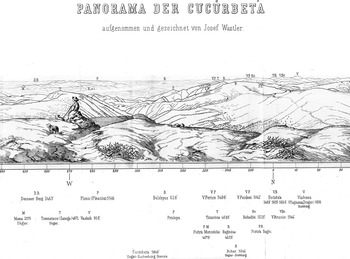
While trekking through the Bihar/Bihor Mountains, Adolf Schmidl attached great importance to mapping and naming. He carefully surveyed and recorded the height of the higher peaks, traced the sources of all major rivers, located and described important natural landmarks (caves, cliffs, and so on), and provided the names and population of all settlements in the area (see Figure 1). The book contains several hand-drawn maps, which offer pastoral details and panoramic views alongside precise topographic data.
“Panorama from Cucúrbetá [Curcubăta Mare].” Reprinted from Adolf Schmidl, Das Bihar-Gebirge an der Grenze von Ungarn und Siebenbürgen (Vienna, 1863).

Schmidl often had to rely on local guides, and his book notes that many of them were unfamiliar with the names of the surrounding mountains and uninterested in scenic views and natural wonders (only a bottle of schnapps, Schmidl added humorously, could hold their interest). Schmidl linked the highlanders' seeming indifference toward “their own native ground” (den eigenen heimatilichen Boden) to a lack of a national consciousness: Only the love of one's country, which presumes wider horizons, can inspire a love of one's natural environment.Footnote 9 For Schmidl, the locals' indifference to landscape and nationhood was unsurprising, because he had encountered such apathy in other alpine regions. And as noted above, this apathy did not preclude a strong loyalty to the Habsburg rulers.
For the Hungarian and Romanian nationalist activists who came after Schmidl, the highlanders' attachment to the Habsburgs was acceptable, but their indifference toward nature and nation was not. The methods they employed revealed the relative strengths of the two national movements (with the Hungarian side holding a distinct advantage), as well as the preoccupations of the educated middle classes rather than the needs of the poor villagers they targeted. By looking first at the nationalists' “imagined geographies” and then at initiatives meant to bring change to the Bihar/Bihor Mountains, one can begin to see the remarkable ambitions of the nationalists, as well as some of the obstacles they encountered.
On the surface, it is difficult to understand why the mountains drew the attention of urban-dwelling, educated nationalists. By any standard, the region was remote and poor. The Bihar/Bihor range is part of the much larger Carpathian Mountains. Its highest peak reaches 1,849 meters, and only a few steep valleys hold sizeable settlements. Traditionally, residents lived from pastoralism, forestry, handicrafts, and mining: The Western Carpathians contain rich gold mines, hence the local Romanian proverb, “There is gold in our mountains, but we have to go around begging.”Footnote 10 Communication was poor, literacy rates low, epidemics frequent, and banditry common through the 1870s.Footnote 11 The larger towns had a few thousand inhabitants and most villages a few hundred. Many settlements lacked elementary schools, with the result that only an estimated two-thirds of children attended school.Footnote 12
The “discovery” of the Bihar/Bihor Mountains is in many ways a familiar story. Across nineteenth-century Europe, the expansion of roads, railroads, schools, market relations, and credit institutions gradually changed the rules of economic life and introduced new political and cultural influences. Visions of profit and progress drew lowlanders to the mountains: The sawmill and the school went hand in hand. Mountain villages near mineral deposits or untouched forests grew rapidly. Aladár György noted the example of Brád/Brad (on the southern slopes of the Bihar/Bihor range), where a veritable gold rush had doubled the population and transformed the landscape; he added with disapproval that this town of 3,000 now had 132 bars and 32 Gypsy bands.Footnote 13 György's disquiet with the effects of mining reflected wider concerns among middle-class Europeans about the disappearance of picturesque landscapes. Nineteenth-century romanticism, when combined with new thinking about health and leisure, had made mountains popular destinations for tourists, pilgrims, and convalescents, and the stirring sights and fresh air sought by these groups seemed threatened by large-scale timber and mining operations.Footnote 14
The educated middle classes also viewed landscapes in light of history and nationhood. A key aspect of this process—the nationalization of the landscape of the Hungarian Kingdom—is a topic still not fully explored by scholars. The anthropologist Tamás Hofer has suggested that the nineteenth-century Austrian idealization of the Alps helped Hungarians choose the Great Hungarian Plain as their national landscape (demographics and national stereotypes also played a role here).Footnote 15 The Austrian/Hungarian dichotomy of mountains/plains could then be applied to Hungary itself, where, it was understood, ethnic Hungarians populated the plains and non-Hungarians (Slovaks, Romanians, and Germans) occupied the mountains. But things were never quite so simple, and theorists within each national group offered competing visions of the national territory and natural frontiers.Footnote 16 What cannot be disputed is that for Hungarian nationalists and their opponents, nationhood and civilization were often as important as economic and social questions in defining the relationship between lowlands and highlands.
National-minded Hungarians and Romanians saw the Bihar/Bihor Mountains through very different eyes. Hungarian writers invariably contrasted the mountains with the surrounding plains—and nearly always found them wanting. Hungarian observers were quick to note, moreover, that the region had once been almost wholly ethnically Hungarian: Only the Ottoman conquest of the sixteenth century and population movements of the eighteenth century had shifted the demographic balance in favor of Romanians.Footnote 17 Surviving Hungarian settlements in the mountains had to be preserved at all costs, if only to stem the tide of Romanians flowing onto the plains. Although Hungarian writers at times described the Romanian highlanders sympathetically, they never tired of describing the villagers' poverty, ignorance, and superstitions. The university professor Sándor Márki was typical: He saw great economic potential in the Bihar/Bihor region and praised the highlanders' sturdiness and self-reliance even as he denounced them for their belief in magic potions, vampires, and demons.Footnote 18
Romanian nationalists offered very different perspectives on the Bihar/Bihor Mountains. Whereas Hungarians linked the region to the plains to the west, Romanians situated it within the larger mountain range to the east, the Apuseni (or Western Carpathian) Mountains. Significantly, the Apuseni were celebrated for their rich Romanian folk culture and their support of the peasant uprising led by Horea (Vasile Ursu Nicola) in 1784 and the successful guerrilla war waged by Avram Iancu against Hungarian armies in 1849 (Frâncu's book about the Apuseni includes folk songs about both Horea and Iancu). Romanian historians also asserted that ethnic Romanians had settled the region long before the Hungarians had arrived (incidentally, a view endorsed by Schmidl). At the same time, Romanian nationalists observed that Bihar/Bihor was situated on the “margins of territory populated by Romanians,” and was thus subject to strong pressures from the Hungarian side.Footnote 19 It was only a small step to blame Hungarian oppression for the region's lack of progress, absence of schools, and general poverty.
What Hungarian and Romanian nationalists agreed upon was that most residents of the Bihar/Bihor Mountains, their rich folk culture and long history notwithstanding, at present lacked a strong national consciousness. The differing representations of the mountains just described conditioned how each group explained this deficiency and the remedies it required. For Hungarian nationalists, the greatest danger lay in the erasure of history and the disappearance of the “islands” of ethnic Hungarians in the mountains. Orbán Sipos, a royal school inspector and tireless promoter of the Hungarian national cause, voiced these fears:
Denationalization in brief: the course of Romanianization is everywhere one and the same, or at least was once so. First the Hungarian [peasant] learned, all too easily, the Romanian language from his neighbor, then he proudly declared that he knew Romanian and as proof ostentatiously used it—until it became a habit. In his contacts [the Hungarian] did not give the Romanian his racial characteristics, but instead took from [the Romanian] his dress, language, domestic customs. The most telling indicator of a Romanian of Hungarian descent is the smoke-clearing chimney left on the roof of a house, something from which our true Romanian counties still shy away today.Footnote 20
For Sipos, language was the first line of national defense, and bilingualism and ethnic mixing were viewed as threats. His image of peasant houses with chimneys—a symbol of the higher level of civilization attained by Hungarians before their “denationalization”—revealed a haunted land, a region once ethnically Hungarian. Sipos thus summoned the romantic image of “national death,” which compelled and justified urgent action on behalf of the remaining Hungarians in the Bihar/Bihor Mountains.
Supporters of the Romanian national cause registered similar complaints about the widespread apathy they encountered in the Bihar/Bihor region. Romanian activists betrayed fewer fears about demographic losses than their Hungarian counterparts; they instead created images of languishing masses and unreliable local leaders. Echoing Sipos, a student worried in 1910 that “foreign influences” had corrupted Romanian peasants in the mountains, with the result that “foolish and tasteless changes had compromised the national character of their houses.”Footnote 21 For Tribuna, a leading Transylvanian Romanian-language newspaper, the greater problem was the region's intellectuals: “Among counties occupied by Romanians, Bihor was for a long time the one in which almost no national deed ever stood out. The local intelligentsia, so to speak, was captivated by the friendships they had with Hungarians, and genuine Romanians (românii verzi) could not do much in such circumstances.”Footnote 22 One of these intellectuals, Iosif Vulcan, a highly respected writer and editor in Nagyvárad/Oradea, conceded that “much has been written in our papers—and not without cause—about the languor of Romanianism (despre lîncezeala românismului) in Bihor.”Footnote 23 To Vulcan, this indolence was not unique to Bihar/Bihor, and he was optimistic that the “day of awakening” would soon arrive. This was a clear invitation for local nationalists to act.
As was usually the case in Bihar/Bihor, the Hungarians moved first. Later sections of this article will examine middle-class efforts to use cultural associations to promote popular education in the mountains; the remainder of this section discusses two initiatives connected to mapping and naming. Both came from the Hungarian side, and both were closely linked to Orbán Sipos, a royal school inspector. The first, an alpine club formed in Nagyvárad/Oradea in 1888, aimed to increase middle-class tourists' knowledge of the mountains through excursions and publications.Footnote 24 Such activities, it was hoped, would eventually bring material and spiritual improvement to the residents of the mountains, whom the club described as “wallowing in misery before the eyes of civilization.” The highlanders themselves, as much as the landscape they inhabited, were the target of the club's activities.
Sipos's second initiative sought to raise the highlanders' awareness of Hungarian history and statehood. From the late 1880s onward, he championed the Hungarianization of place names in the Bihar/Bihor Mountains. In a series of newspaper articles and books, Sipos called for villagers to “fulfill their patriotic duty” by using official Hungarian names and, in the case of communes with names of German, Slavic, or Romanian origins, to adopt more etymologically correct Hungarian ones. Sipos's crusade anticipated a much wider movement across the Hungarian Kingdom and culminated in Law 1898/IV, which held that each settlement could have only one official name (understood to be the Hungarian one) and that this name had to be used for all official correspondence, textbooks, and public signs. As R. W. Seton-Watson once observed, visitors in Pressburg would search in vain for that name on the city's railway stations and post offices; instead, they would find only signs for “Pozsony,” a name unknown to most outsiders.Footnote 25
Both efforts soon failed. The Bihar alpine club remained active for a few years but then ceased activities. Sipos's campaign for Hungarian-sounding place names likewise produced scanty results, and in Budapest, the Hungarian state gradually realized that the administrative efficiency gained by Law 1898/IV was outweighed by the loud criticism coming from home and abroad. By the early 1900s, the government had backed away from strict enforcement of the law. These twin failures are unsurprising. Voluntary associations such as the Bihar alpine club often lost momentum after a few years, and the Hungarian state often lacked the means (and in this case, the will) to enforce its laws. But structural conditions (a weak state, poor communications, and a limited social basis for voluntary associations) tell only part of the story. Clues as to why these efforts went wrong also lurk in the Bihar/Bihor Mountains, and it is to their residents that we now turn.
Highlanders
Schmidl painted a detailed, if often unflattering, picture of the residents of the Bihar/Bihor Mountains. He carefully described the Romanians' music and dances, wedding and funeral ceremonies, and legends and superstitions (for example, a rabbit crossing one's path or three priests walking together can bring bad luck, which only a handful of hay thrown from a wagon can prevent). Although he was struck by the deep religiosity of the people he encountered in the mountains, Schmidl had doubts about whether this faith translated into moral behavior or even regular church attendance, and he had few kind words for the Orthodox Church, with its poorly educated priests and neglected village schools. Schmidl nonetheless observed that the highlanders were skilled workers and quick learners, and he expressed confidence that their morality would improve as they developed greater individual and national consciousness.Footnote 26 Nothing in Schmidl's account suggests that the highlanders were capable of meaningful political activity.
Later observers often reached similar conclusions. The Hungarian professor Sándor Márki found many of the same virtues and vices among the residents of the mountains as did Schmidl. Márki stressed that the population had “not yet acquired a historical and political feeling; that is, each individual creates for himself a world, whose limits perhaps only the priest's unassuming figure will cross.”Footnote 27 Poverty and isolation, Márki concluded, had forced people to think only about their own material needs rather than the wider issues of industry, commerce, and education. The Romanian Teofil Frâncu was more sanguine about the highlanders' political capabilities. He reported that most mountain villages governed themselves and noted approvingly that any resident of a village could take part in its debates and decisions. “Universal suffrage reigns in the communes,” he added—a pointed observation at a time when only a small part of the population had the vote in Hungary.Footnote 28 But other Romanians did not see things as Frâncu did: To the historian Elie Dăianu, “the Bihoreans (Bihorenii), closed in their ancient forests, devoid of communication with the world, have remained very backwards. Their conduct is simple, their faces dark, their minds slow, their spirits melancholy, their speech sluggish, their language old…Their material state is a great hindrance to them.”Footnote 29 In these accounts, isolation produced immorality (with Schmidl), atomization (Márki), backwardness (Dăianu), or a somewhat idealized, egalitarian commune (Frâncu). None of them tells us much about how locals would respond to men like Sipos and to outsiders' plans to transform the mountains.
A closer look at local responses reveals a number of broad patterns. The first involves popular practices of resistance. In campaigning to change the map, Sipos wanted to change attitudes as well. He hoped that determined lowlanders, in conjunction with local elites in the mountains, could demonstrate the advantages of patriotism and civilization to mountain villagers. These ambitions ran up against the highlanders' long-established traditions of resisting local officials and landlords. For example, Schmidl had noted that the inhabitants of the Mountains routinely flouted forestry laws on wood-gathering and hunting and that they stole precious iron from the local mines. He also recorded a local song, whose verses mocked the mayor's wife for her extravagance and the mayor for his subservience to her.Footnote 30 Little seems to have changed in the forty years after Schmidl's visit, and Orbán Sipos later blamed the failure of his efforts in part on the ignorance and poverty of the mountain-dwellers. Yet as James Scott has observed, ignorance is often a disguise for opposition, and petty acts such as poaching and Carvinalesque songs can be read as disguised challenges to established elites.Footnote 31 Even if they do not articulate a coherent ideology, subordinate groups can easily imagine a world turned upside down.
Local leaders also responded evasively to men like Sipos. It is important to bear in mind that Hungarian nationalist efforts were aimed at ethnic Hungarians as much as at Romanians (the same was also true of Romanian initiatives). Sipos was indignant about the lack of support his efforts received from the ethnic Hungarian inhabitants of the Bihar/Bihor Mountains and in particular from local leaders who, because of their education and wider connections, were seen as natural agents of nationalization. An anecdote reported by Sipos sheds light on this indifference, and it is worth quoting in full:
We were waiting for a long time for horses in the mayor's office of a mixed-language village in the Tenke district. The Hungarians here are still a majority. As we waited, an impressive looking man entered, greeted in Romanian the Hungarian-born mayor, who returned the greeting and began their discussion—in the Romanian language. Presently understanding that the man there on business was also a Hungarian, we interrupted the conversation with a gentle reproach, to which the man replied, “Why shouldn't I speak Romanian, when I know it just as well as Hungarian?” The mayor in turn offered as an excuse that he had orders which are different from our principles. This justification certainly did not correspond with the truth, but the mayor still lives and serves today, and if he deems to read these lines, he will recognize himself.Footnote 32
Most obviously, Sipos's account shows the refusal of some locals to attach wider meanings to everyday language use. It also shows Sipos as a man of national principles, willing to intervene in other people's affairs and to shame them when necessary. At the same time, the episode reveals strategies employed by local elites in the face of Sipos' nationalism: the first man's pragmatic defense of bilingualism and the mayor's more shrewd reference to unspecified “orders” that seemingly forced him to speak Romanian.
Behind such episodes lurked unanswered economic questions. Sipos once expressed his hope that the Bihar alpine club, together with railroads, would help end the isolation of the Bihar/Bihor Mountains. Sipos was wrong about the club but right about the railroads. In fact, Sipos, like many national activists, did not fully understand the powerful economic forces remaking Hungary at the turn of the twentieth century. His initiatives thus failed to address the material needs of the highlanders or to win over the region's economic elites, a point brought home painfully in the first decade of the twentieth century. A tireless landowner-turned-alpinist named Gyula Czárán had carried on the work of the Bihar/Bihor alpine club, and from the mid-1890s onward, he blazed hundreds of kilometers of trails through the mountains. In newspapers and pamphlets, Czárán described the unspoiled beauty of the region (and like Schmidl, he noted that his guides worked hardest when rewarded with brandy and tobacco).Footnote 33 Unfortunately, his work seems to have caught the attention of several timber companies, for whom the dense forests of Bihar/Bihor proved irresistible and profitable.Footnote 34 In just a few years, large stretches of forest disappeared, and with them went many of Czárán's trails. Capitalism had not figured in the plans of Sipos or Czárán.
It is striking, then, to read the conclusions of István Györffy, an accomplished ethnographer who studied Hungarian settlements in the Bihar/Bihor Mountains. In a long article published in 1915, Györffy rehearsed all the nationalists' earlier arguments (that Hungarians were the first to settle the region) and summoned all their fears (continued Romanianization in Bihar/Bihor and Transylvania). Yet his conclusions about demographic changes and population movements are remarkably sober and clear-sighted: “The Romanian question,” he wrote, “is primarily an economic question.” If the Bihar/Bihor region was becoming more Romanian, he argued, it was simply because ethnic Hungarians had been faster to leave the mountains, and until economic conditions meaningfully change, it will be difficult to keep them there.Footnote 35
Given the structures of power in late-nineteenth-century Hungary, open defiance of the Hungarian authorities was risky and therefore rare. State and local officials—from the ministers in Budapest to the district magistrates (főszolgabírók) on the ground—closely monitored potential opponents and, when needed, used the threat of censorship, arrest, and other sanctions against them. In Bihar/Bihor, officials carefully watched the Greek Catholic and Orthodox clergy, who were assumed to be most receptive to nationalist appeals.Footnote 36 Officials also monitored confessional schools run by the Greek Catholic and Orthodox churches. Under these conditions, Romanians usually limited their declarations of intransigence to private letters and closed meetings. A good example can be seen in a petition signed by one hundred Orthodox residents of a small village, who asked their church leaders to prevent their confessional school from being converted into a state school. According to the petition, a number of weak-willed villagers had succumbed to the “threats and terrorism” of the district magistrate, who championed linguistic Hungarianization and favored the state school. To the villagers, only a confessional school could preserve their material and moral well-being; a state school, in contrast, would only create “decadence in all areas.”Footnote 37 Perhaps unwilling to stick his neck out, the Orthodox bishop declined to intervene in this case. This incident suggests that highlanders were not ignorant about nationhood—that is, they had a sense of being Romanian. The problem was that their interests did not always overlap with those of Romanian elites. The same was often true of the Hungarian villagers of the mountains, who were likely to respond with caution to men like Sipos.
Sipos's attempts to alter the physical and “mental” maps of the Bihar/Bihor Mountains are nonetheless instructive. They reveal the ways in which nationalists attached political meanings to things the highlanders took for granted: the names of villages, bilingualism, and migrations to the plains for work. At the same time, they alert us to cases in which nationalism failed to rouse the local population, as well as to the strategies used by highlanders to challenge the nationalists' demands.
Such encounters between outsiders and villagers produced some insightful analysis of the tensions inherent in middle-class schemes to bring progress and patriotism to the highlands. The journalist Aladár György, for example, argued that the opening of the Bihar/Bihor Mountains was critical to the development of tourism, transportation, and political unity in the Hungarian Kingdom.Footnote 38 He had no illusions about economic conditions in the highlands, calling the peasants “born wood thieves” and “virtual slaves” of the great landowners. Unlike most Hungarian (and for that matter, Romanian) observers, György attempted to understand things from the highlanders' perspective. The Romanian peasants, he wrote, saw the upper classes as a foreign race and the state as embodied in district magistrates, foresters, and gendarmes. Is it any wonder, he asked, that these villagers do not see themselves as “Romanian-speaking Hungarians” and in fact hate most ethnic Hungarians? The Hungarians themselves, he added, had built “walls of hatred” between themselves and non-Hungarians. György's solution was to bring railroads, schools, and especially industry (he had embraced Marxism as a youth) to the region in the hope that material progress would win the loyalty of the Romanian majority.Footnote 39 But György did not address the question of where the capital for this investment would come from, what factories would actually mean for the people and landscape of the highlands, and, crucially, what these changes would mean for the Hungarian elites who dominated the region. National-minded Hungarians had no ready answers to these questions.
Poets
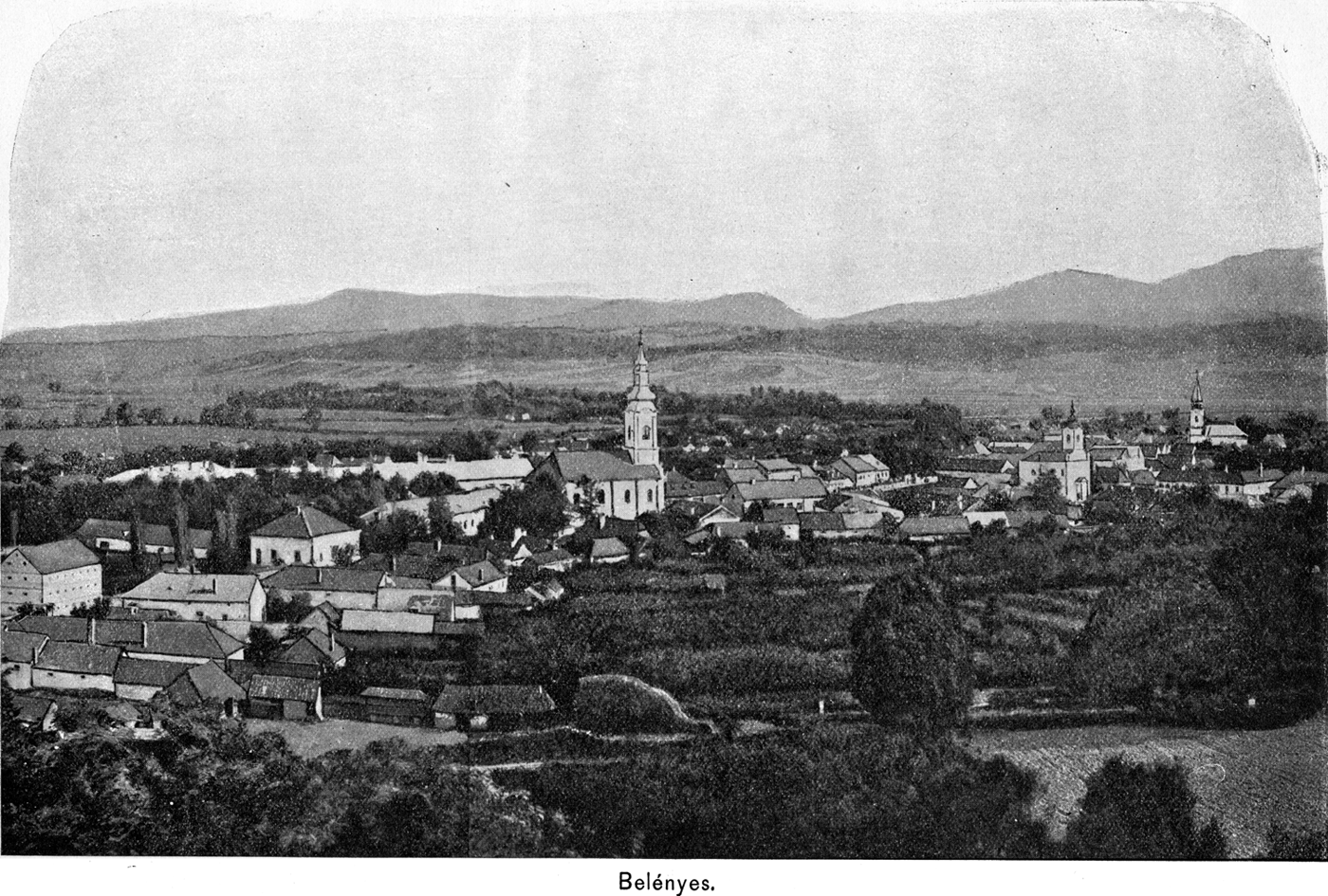
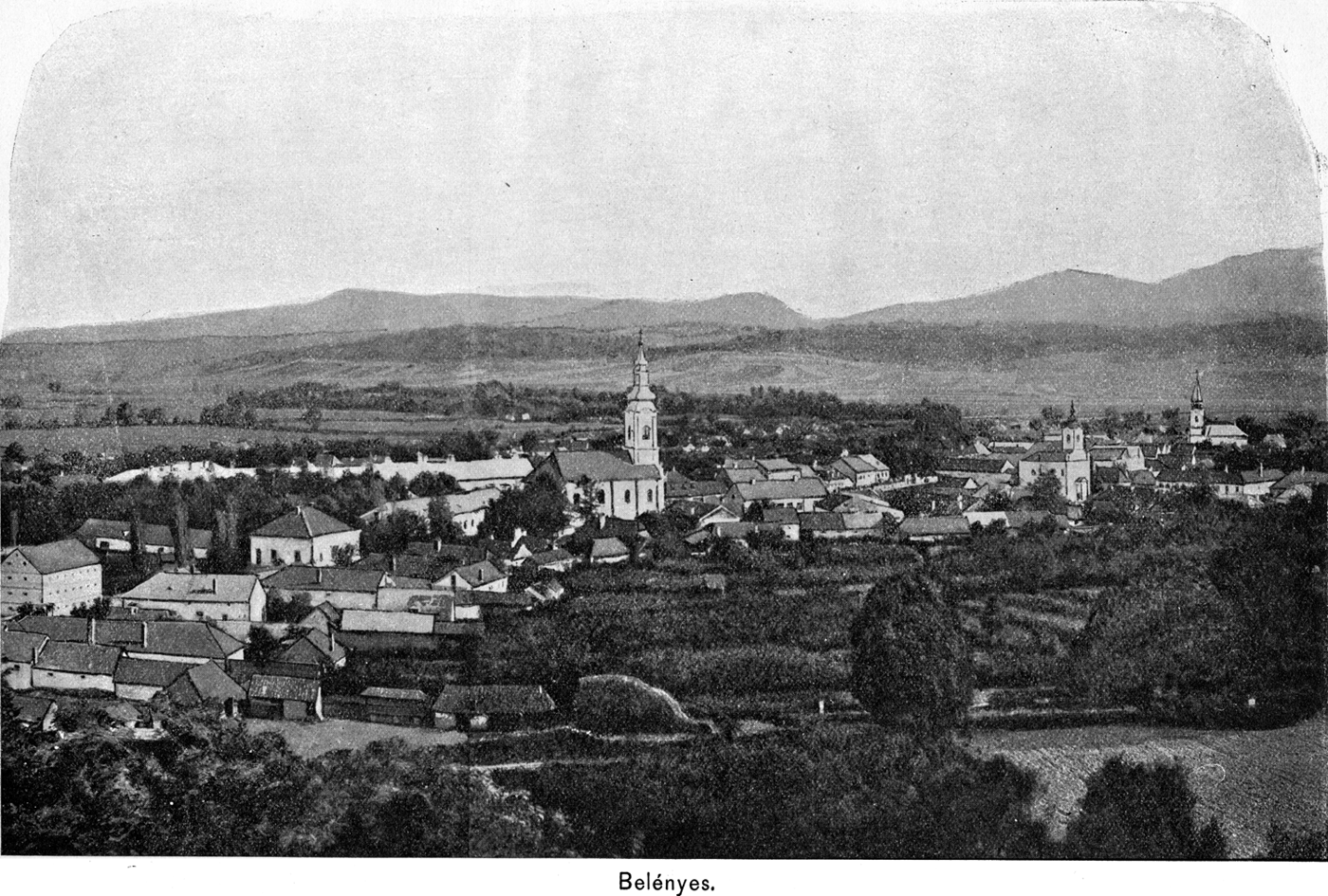
Excursions in the Bihar/Bihor Mountains often began in the small town of Belényes/Beiuş, and Adolf Schmidl included a description of it in his book.Footnote 40 He warned visitors that the town's two inns were no better than those found in villages but praised the local casino with its reading room and good restaurant. Schmidl noted that the town had a good pharmacy, speculated about the origins of the town's name (most historians link it to the Hungarian word for buffalo, bölény), and dutifully visited the four main churches, whose steeples dominated the skyline (Figure 2). Schmidl observed that the town's population had grown rapidly in recent decades, with the result that “the Hungarians had the numerical advantage,” although he was quick to add that “Belényes has a particular importance for the Romanians, since the only Romanian Gymnasium in Hungary [excluding Transylvania] is located here.” As we have seen, Schmidl saw little evidence of ethnic or confessional strife in the Bihar/Bihor Mountains, and ultimately he was much more interested in the caverns and ruins near Belényes/Beiuş than in the town itself.
“Belényes.” Reprinted from Samu Borovszky, ed., Bihar Vármegye és Nagyvárad (Budapest, 1901).
Later observers were much more likely to see national conflict in Belényes/Beiuş. By 1900, the town had nearly 4,000 inhabitants, who were almost equally divided between Hungarian- and Romanian speakers (the surrounding countryside was largely Romanian). But the distribution of power was far from equal. As elsewhere in the region, ethnic Hungarians dominated the local administration and economy, and they had their own social club, reading circle, and newspaper. National-minded Hungarians were quick to point out that Belényes/Beiuş had once been wholly Hungarian and, in the words of the local paper, that “the danger of Romanianization threatens Belényes in its isolation. Each day we lose more and more ground.”Footnote 41 Such fears were surely exaggerated, but Belényes/Beiuş was home to several Romanian institutions (a casino, choir, and savings bank), as well as to the Greek Catholic gymnasium that had attracted Schmidl's attention. These institutions made the town a center of Romanian national activity in the Bihar/Bihor Mountains. Relations between local Hungarians and Romanians were apparently good, but small incidents could set off alarms.Footnote 42 And what would happen when the county's two largest nationalist associations brought hundreds of their followers into the Bihar/Bihor Mountains for mass meetings? By looking closely at these nationalist performances, this section argues that Hungarian and Romanian nationalists had more in common than most scholarship (or their own claims) would lead us to expect. The mountains, it appears, had a civilizing effect on the nationalists, and not the other way around!
Nationalist cultural associations were thick on the ground in late-nineteenth-century Hungary, and the Bihar/Bihor region was no exception. On the Hungarian side, the most significant was the Bihar County Society for Popular Education (A Biharvármegyei Népnevelési Egyesület, or BNE), which began operations in Nagyvárad/Oradea in 1884. Its moving force (once again!) was Orbán Sipos, and its membership included urban professionals, gentry landowners, and a large number of village schoolteachers and clergymen. The BNE's stated mission, to offer financial and pedagogical support to kindergartens, poor students, and underpaid teachers across the county, was largely a smokescreen. Its main goal was to popularize the Hungarian language among Romanian villagers and to rescue what Sipos saw as “denationalized” Hungarians.Footnote 43 To this end, the BNE agitated for Hungarian-language kindergartens in Romanian villages and rewarded teachers in villages whose instruction spread “the spirit of Hungarian patriotism.”
The Romanian side answered with its own cultural associations. Significantly, Bihar/Bihor County had four chapters of the Transylvanian Association for Romanian Literature and the Culture of the Romanian People (Asociaţia Transilvană pentru Literatura Română şi Cultura Poporului Român, or ASTRA), the most important Romanian voluntary association in prewar Hungary.Footnote 44 Teachers, notaries, lawyers, and Greek Catholic and Orthodox priests formed the backbone of its membership. Like the Hungarians' BNE, ASTRA set its sights on the villages, where it organized literacy campaigns, lending libraries, and public lectures (those using magic lanterns or slides were especially popular). In part because it was closely watched by the authorities, ASTRA focused its lectures not on “national self-defense” as did the BNE, but on safely apolitical, useful topics, such as agricultural improvements and public health. Yet the middle-class leaders of ASTRA undoubtedly hoped to raise both the cultural level and national awareness of Romanian-speaking villagers, and in so doing, counter the Hungarian side's incursions.
Full measure of these competing cultural associations can be taken through a careful examination of two general assemblies held in Belényes/Beiuş: ASTRA's in 1898 and the BNE's a year later. One would expect the assemblies to upset relations between local Hungarians and Romanians. Indeed, at the meetings themselves, speakers used language that was certain to provoke the other side. Addressing ASTRA, the local writer and editor Iosif Vulcan noted that Romanians had lived in Bihar/Bihor continuously since the time of Emperor Trajan, implicitly challenging the Hungarians' repeated claim that they had been the first to settle the mountains.Footnote 45 He likewise praised the residents of Bihar/Bihor: “They endured shortages, suffered persecution, and preferred to die….rather than renounce their beloved language.” Not to be outdone, the opening speaker at the BNE's assembly advocated the use of “weapons of culture,” and a young writer read his new poem, “Hungarianization,” which could not have heartened the many educated Romanians who were present.Footnote 46
These combative words, however, should not distract us from several notable features of the meetings. The sources reveal that Hungarian and Romanian middle-class nationalists in Bihar/Bihor used language and public space in ways that suggested close affinities and allowed for mutual recognition. Even die-hard nationalists, it appears, could be quite civil to one another, especially when they found themselves in a small town with a mixed audience.
The local context conditioned these nationalist performances in important ways. Like few events before them, the two assemblies facilitated rather than discouraged interactions among educated Hungarians and Romanians. A number of Romanian writers and teachers had always moved easily between the two camps: Iosif Vulcan, who played a leading role in ASTRA, also served on the BNE's executive board. And when ASTRA held its assembly, a large number of local Hungarian families opened their doors to house the hundreds of Romanians from outside Belényes/Beiuş who attended the meeting. It perhaps helped that the two assemblies shared remarkably similar repertoires (formal meetings, leavened by banquets, toasts, and concerts) and uses of public space. Both included ceremonies at the train station to greet out-of-town luminaries, services in the local churches (ASTRA in the Greek Catholic and Orthodox churches, BNE in the Roman Catholic and Calvinist ones), and a general assembly in the Greek Catholic gymnasium—the only building in town capacious enough to hold such large gatherings. Predictably, the Romanian nationalist press sharply denounced the willingness of the directors of the Greek Catholic gymnasium to open their doors to the BNE.Footnote 47 The local press, however, thought it natural that the BNE should follow in the footsteps of their “Romanian brothers” who had celebrated in Belényes/Beiuş a year earlier.
Both meetings featured remarkably civil language, infused with moderation and kind words for the “other side.” At the BNE assembly, the crowd applauded loudly when the society's president noted that a love of culture united rather than divided Hungarians and Romanians, and the BNE gave prizes to a number of teachers, including three local Romanians. To the liberal, Budapest-based Pester Lloyd, the result was nothing less than a “festival of Hungarian-Romanian fraternization.”Footnote 48 The leading Hungarian-language newspaper of Nagyvárad/Oradea likewise described ASTRA's assembly in very favorable terms, citing ASTRA's hard work, significant achievements, and cautious speeches; its members, the paper asserted, are “sober-minded, Romanian-speaking, but Hungarian citizens” (józan gondolkodású, román ajkú, de magyar polgárok).Footnote 49 The same paper elsewhere praised ASTRA for promoting “the progress of our Hungarian homeland.” The paper's language stands in sharp contrast to reports on ASTRA's assembly from many papers outside Bihar/Bihor. For the Budapest-based Országos Hirlap, the meeting was nothing more than “a Romanian demonstration,” which promised to bring together “those elements, which, when needed, regularly trample the Hungarian flag in the mud.” “West European forms,” it continued, “play only a minor role in the Romanian national movement.”Footnote 50 Like Országos Hirlap, the Romanian newspaper Tribuna also emphasized the national dimensions of ASTRA's meeting, which, it reported, had “reawakened the spirit of national culture” among “the Romanian element in Bihor.” Enemies, the newspapers demonstrate, are easier to see from a distance.
At ASTRA's assembly, numerous speakers referred to the great beauty and rich history of Bihar/Bihor. It is no surprise that ASTRA's assembly closed with an excursion from Belényes/Beiuş into the surrounding mountains, where the natural (and national) landscape could be appreciated firsthand. The BNE likewise demonstrated a strong affinity with the mountains surrounding Belényes/Beiuş. Clear evidence of this came in a remarkable poem read by Ede Sas, a young journalist and dramatist from Nagyvárad/Oradea. Sas's poem, “On the Mountain Top” (Hegytetőn), is set in the Bihar/Bihor Mountains, which it describes in strongly romantic language.Footnote 51 Briefly, the speaker in the poem stands atop a mountain peak at dawn and addresses the people below, whom he promises to lead (as did Moses) to Canaan, the promised land. Within this familiar structure (one perfectly suited to nationalist messages), Sas's poem does several unexpected things. First, although it mentions neither by name, the poem is clearly directed at both local Hungarians and local Romanians and draws no distinctions between them. Second, the poem upends the Hungarian nationalist dichotomy of plains (good)/mountains (bad): here the plains are a lifeless, dreary “desert of hatred”; the mountains in contrast are full of life, love, and beauty. Third, Sas invokes history as a source of unity, not division. In the poem, the dead speak from their graves: “Did we make this land our home,/So that the scourge of civil war destroys it?/We secured it, at the foot of the Carpathians/For the family of peoples to live in happiness!” Last, the poet repeatedly states that fraternal peace and a common patriotism will bring earthly happiness and divine favor. The message is plain: “And the flowers too whisper to us: / ‘Love one another! We are brothers!’” Striking words coming from the BNE's assembly!
In assessing these tolerant gestures, it is important to keep in mind what did not happen. Most obviously, these displays of local pride did not form the basis for a robust regionalism to emerge in Bihar/Bihor: The mountains could inspire poets, but they would not serve as a referent for widespread political mobilization or economic activity. More importantly, the nationalists who gathered in Belényes/Beiuş carefully avoided larger socioeconomic and political questions. Most Hungarian elites had little to gain from challenging the status quo, and the depredations of landlords, the tyranny of foresters, and the violence of gendarmes—the issues that troubled writers like Aladár György—had no place at the BNE's assembly. For their part, Romanian leaders knew better than to speak openly of such matters, undoubtedly aware that open defiance of the Hungarian authorities would come at a high cost. In any event, there is little indication that in the 1890s middle-class activists were prepared to exploit social grievances (such as tensions between tenants and landlords) to build up the Romanian national cause; educated Romanians in fact kept their distance from anything that suggested “socialism.” Only after World War I would Romanian and, to a lesser extent Hungarian, middle-class nationalists seriously attempt to harness social tensions and lower-class violence, although they would still have to contend with many of the obstacles outlined above, as well as with a more robust socialist movement.
What instead emerges from the events in Belényes/Beiuş is a sense of regional particularism: the belief that Bihar/Bihor was somehow immune to the problems that afflicted other regions of comparable ethnic, national, and religious diversity. If nationalist politics is predicated on a sharp divide between “us” and “them,” nationalists in Bihar/Bihor sometimes acted and spoke as if the “us” included their neighbors as much as distant co-nationals from outside the region. Indeed, the nationalist performances enacted in Belényes/Beiuş had as their audience not the laboring classes from the surrounding villages but other nationalists, including those from the “other side.” Educated Hungarians could understand the Romanians' richly symbolic toasts, speeches, and excursions (and vice versa). That speakers on both sides often struck a moderate tone reminds us that local activists can often embrace certain elements of a national program but reject others; they can espouse one formulation of national belonging but criticize another. In short, the assemblies in Belényes/Beiuş show not only that certain contexts can encourage locals to think nationally, but also that the same circumstances can lead nationalists to act locally.
Conclusion
By looking at patterns of everyday political behavior in one region of prewar Hungary, this article has attempted to contextualize the role played on the local level by competing national movements. It has drawn attention to the mundane factors that structured local politics: the urban/rural divide, the civility of local elites, and the importance of newspapers and journalists. It has also described the rich repertoires of informal politics, which in this study encompass both small acts of resistance and symbolic displays of mutual understanding. With few exceptions, this resistance did not openly challenge the existing social and political hierarchy, and they were often misread as evidence of ignorance or of dubious loyalty. Yet the many small acts examined here should not be ignored, for in them one can apprehend the political outlook of men and women in a region far from the center of political power and the many outcomes that local politics can produce.
The case of Bihar/Bihor also demonstrates why nineteenth-century national activists increasingly saw highland regions as a “problem” in need of a solution. There were many reasons why lowlanders ventured into the mountains, including the exploitation of natural resources, the expansion of state administration, and the lure of tourism. But for a small number of activists, such activities took second place to the needs of nationalism. The national programs they outlined, it must be stressed, were largely liberal in character. Both Hungarian and Romanian leaders attached great importance to popular education, to economic development (pushed by the state but guided by the market), and to civil relations with their opponents. But if nationalists dreamed of transforming the lives of the poor residents of the mountains, they did not envision sharing political power with the villagers. Middle-class nationalists were likewise slow to grasp the reasons for their lack of success in the mountains, blaming their failures on ignorance and isolation rather than on the active resistance and indifference of the very people their programs targeted. Their blindness is not surprising, since subordinate groups often disguise their resistance behind outward appearances of conformity.
One final anecdote will serve as a postscript.Footnote 52 In 2002, Romania conducted its most recent statewide census. The results were disappointing for ethnic Hungarians living in Élesd/Aleşd, a small town just to the north of the Bihar/Bihor Mountains. According to the census, Hungarians comprised 19 percent of the town's population (down from 22 percent ten years earlier). The results would have allowed the town to take down its bilingual (Hungarian-Romanian) street signs and public notices, since Romanian law required them only when an ethnic minority comprised at least 20 percent of the population. Remarkably, town leaders (nearly all of them Romanians) decided to leave the bilingual signs and notices in place—a decision with few precedents in the region. To one Hungarian observer, this was nothing short of a “miracle,” in which local leaders “had succeeded in braiding the barbed wire of the law into a rope of friendship.” Behind this unwieldy metaphor lies a familiar tale in which local elites set aside decisions made in the center and find common ground in symbolic politics. Old habits die hard.