Catecholaminergic polymorphic ventricular tachycardia (CPVT) is a cardiac ion channelopathy with an estimated prevalence of one in 10,000, characterised by ventricular arrhythmias triggered by physical exertion or emotional stress.Reference Leenhardt, Lucet, Denjoy, Grau, Ngoc and Coumel 1 , Reference Liu, Ruan and Priori 2 The condition is an important cause of sudden death in the young, a tragic event that may be the first manifestation of the disease.Reference Leenhardt, Lucet, Denjoy, Grau, Ngoc and Coumel 1 , Reference Priori, Napolitano and Tiso 3 – Reference Roston, Vinocur and Maginot 6 It is difficult to recognise, as the resting electrocardiogram (ECG) is normal, the cardiac structure is preserved, and many clinicians are unaware of the diagnosis.Reference Huisma, Potts, Gibbs and Sanatani 7 Even after life-threatening symptoms, the diagnosis is delayed in many children.Reference Roston, Vinocur and Maginot 6 , Reference Kozlovski, Ingles and Connell 8 Traditional therapy includes universal administration of β-blockers and, in some cases, placement of implantable cardioverter-defibrillators (ICDs).Reference Leenhardt, Lucet, Denjoy, Grau, Ngoc and Coumel 1 , Reference Roston, Vinocur and Maginot 6 , Reference Hayashi, Denjoy and Extramiana 9 – Reference Van der Werf, Zwinderman and Wilde 11 Flecainide and ganglionectomy are emerging therapeutic strategies for treatment-refractory cases.Reference Priori, Wilde and Horie 10 To date, the only data to guide therapeutic decision-making are limited to small retrospective case series. Despite this, contemporary advances have improved our mechanistic understanding of arrhythmia, informed novel treatments, and identified unique therapeutic challenges. This progress has moved us closer to developing risk-stratification tools, protecting at-risk relatives from sudden death, implementing more enduring therapies, and improving quality of life in these patients.
Clinical basis
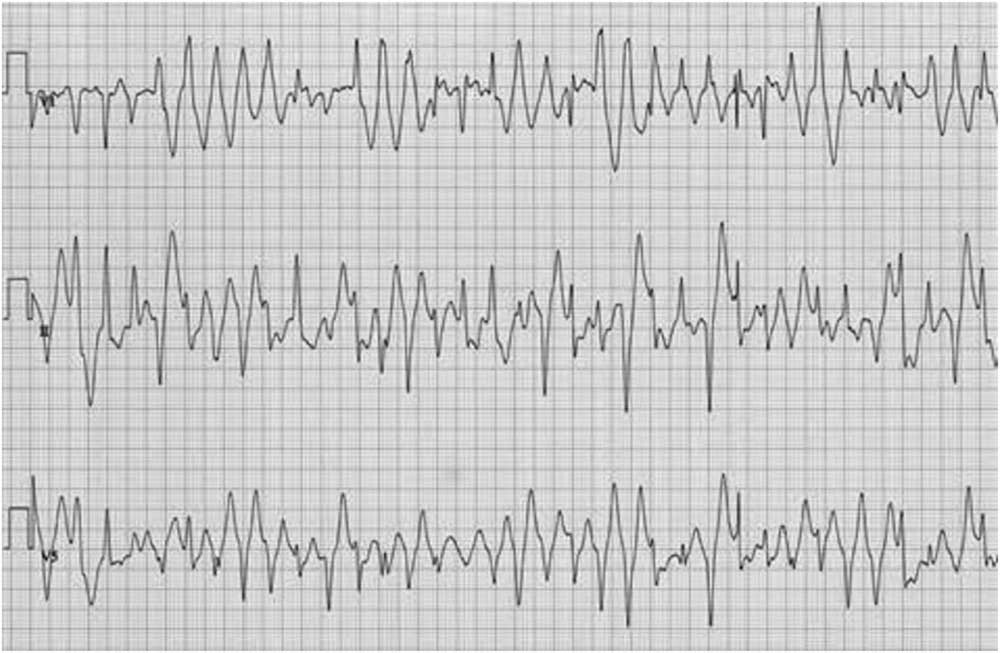
A history of exertional or emotional syncope is an important clue to the diagnosis. The physical examination is normal, and clinical tests for CPVT are limited. The resting ECG is typically normal, although one-quarter of patients have sinus bradycardia, the echocardiogram is unremarkable, and exercise testing is unreliable.Reference Hayashi, Denjoy and Extramiana 9 , Reference Van der Werf, Nederend and Hofman 12 Despite limitations, the exercise test is still the gold standard test and demonstrates a pathognomonic progression. Early in exertion, usually at heart rates >120 beats per minute, patients develop polymorphic ventricular ectopic beats that progress to bigeminy, then couplets, and bidirectional couplets. This can progress to ventricular tachycardia (see Fig 1).Reference Leenhardt, Lucet, Denjoy, Grau, Ngoc and Coumel 1 , Reference Hayashi, Denjoy and Extramiana 9 , Reference Priori, Wilde and Horie 10 , Reference Leren, Saberniak, Majid, Haland, Edvardsen and Haugaa 13 The diagnosis is frequently missed even by cardiologists,Reference Roston, Vinocur and Maginot 6 possibly because of the normal-appearing resting ECG. Data from the recent PACES CPVT Registry suggest that three of every four children present with life-threatening symptoms,Reference Roston, Vinocur and Maginot 6 , Reference Kozlovski, Ingles and Connell 8 yet diagnostic delay of >1 year occurs in 38% of these cases.Reference Roston, Vinocur and Maginot 6
Classic polymorphic ventricular tachycardia during stage 5 of exercise testing using the Bruce protocol in a young boy.

Sudden death is reported in up to 30% as an initial presentation and in approximately half of patients by 20–30 years of age.Reference Leenhardt, Lucet, Denjoy, Grau, Ngoc and Coumel 1 , Reference Bauce, Rampazzo and Basso 4 , Reference Swan, Piippo and Viitasalo 14 More than three-quarters will be symptomatic by the fifth decade of life.Reference Mohamed, Napolitano and Priori 15 A high index of suspicion is essential in evaluating patients with exertional or emotionally induced syncope or sudden cardiac arrest, as this is a hallmark of disease, and treatment is usually life-saving. In addition, children may also suffer cardiac events at rest or events triggered by normal daily activities,Reference Roston, Vinocur and Maginot 6 and it is important to bear in mind that non-exertional triggers do not preclude a diagnosis of CPVT. The occurrence of events at rest and the finding of CPVT as a cause of sudden infant death syndromeReference Tester, Dura and Carturan 16 call into question a long-held assumption that exercise restriction is protective in the condition.
Molecular basis
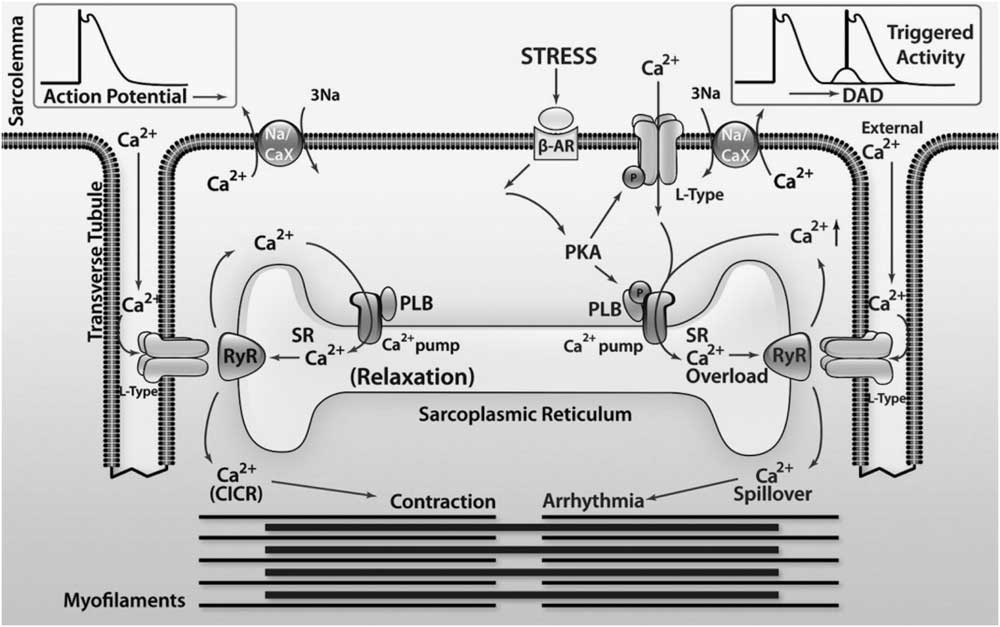
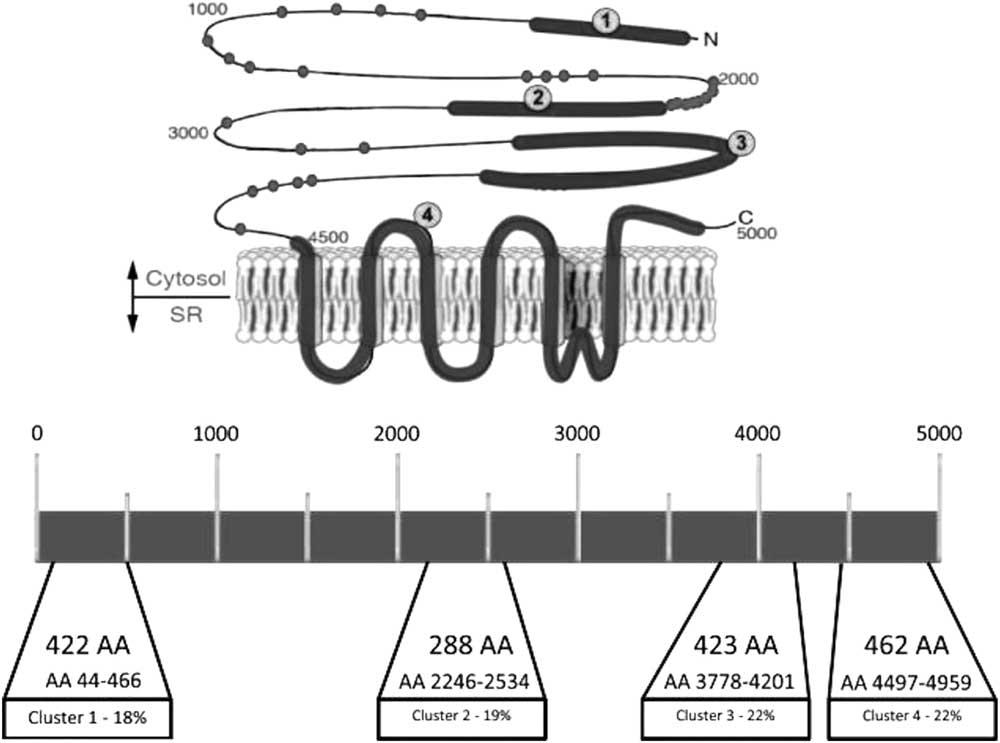
Arrhythmias in CPVT are caused by abnormalities in proteins that control Ca2+ transport in cardiac cells. In 1999, the genetic basis was uncovered by linkage studiesReference Swan, Piippo and Viitasalo 14 followed by a report by Priori et alReference Priori, Napolitano and Tiso 3 of four families with mutations in the gene encoding the cardiac RyR2. RyR2 is a massive homotetrameric protein with each monomer consisting of almost 5000 amino acids; it is the largest and most complex ion channel in mammalian striated muscle, and the gene encoding it is one of the largest in the genome.Reference Kimlicka and Van Petegem 17 , Reference Priori and Chen 18 RyR2 releases Ca2+ from the sarcoplasmic reticulum into the cytoplasm, resulting in muscle contraction, a process known as Ca2+-induced Ca2+ release (Fig 2).Reference Cerrone, Napolitano and Priori 19 The RyR2 mutations associated with CPVT result in a gain-of-function, have an autosomal dominant inheritance pattern, and tend to cluster in one of four genetic “hotspots” (see Fig 3).Reference Priori and Chen 18 That said, precise functional characterisation of the myriad RyR2 mutations published to date is lacking beyond the evidence for excessive Ca2+ leakage during adrenergic stress.Reference Priori, Napolitano and Tiso 3 , Reference Bauce, Rampazzo and Basso 4 , Reference Medeiros-Domingo 20 The consensus diagnostic criteria include genetic testing.Reference Priori, Wilde and Horie 10
The left part of the diagram depicts the mechanism of Ca2+-induced Ca2+ release (CICR), in which an action potential activates the voltage-dependent l-type Ca2+ channel, leading to a small Ca2+ influx. This Ca2+ entry opens the ryanodine receptor-2 (RyR2) channel in the sarcoplasmic reticulum (SR), resulting in SR Ca2+ release and muscle contraction. The right part of the diagram denotes the mechanism of store overload-induced Ca2+ release, in which spontaneous SR Ca2+ release or Ca2+ spillover occurs under conditions of sarcoplasmic Ca2+ overload. Store overload-induced Ca2+ release can activate the Na+/Ca2+ exchanger (Na/CaX), which, in turn, can lead to delayed after depolarisations (DAD) and triggered activities (Illustration Credit: Cosmocyte/Ben Smith). Adapted and re-printed with permission from Priori 2011.Reference Priori and Chen 18 Β-AR=β-adrenergic receptor; PKA=protein kinase A; PLB=phospholamban.

Illustration depicting the approximate location of each “hotspot” cluster on the ryanodine2 channel; 1, 2, 3, and 4 correspond to clusters 1, 2, 3, and 4. van der Werf et alReference Van der Werf, Nederend and Hofman 12 observed a higher incidence of arrhythmias in the terminal hotspots. Adapted and re-printed with permission from Priori 2011.Reference Priori and Chen 18

Limited data support a high de novo RyR2 mutation rate,Reference Van der Werf, Nederend and Hofman 12 , Reference Kawamura, Ohno and Naiki 21 meaning that neither parent carries the genetic mutation. In a Japanese cohort of 14 CPVT1 probands, genetic testing resulted in a de novo RyR2 variant rate of 57%.Reference Kawamura, Ohno and Naiki 21 Cascade screening of 15 Dutch families revealed de novo RyR2 variants in nearly half of the family probands.Reference Van der Werf, Nederend and Hofman 12 This high de novo rate may be explained by the high lethality rate during childhood and adolescence.Reference Gussak 22 On the basis of existing studies, it is impossible to calculate the true rate of de novo variants because of the prevalence of incomplete parental screening.Reference Roston, Hathaway and Kimlicka 23
Calsequestrin (CASQ2) is a protein that interacts with RyR2.Reference Priori and Chen 18 Mutations in the gene that encodes CASQ2 underly CPVT2, a highly lethal form of CPVT, and is inherited in an autosomal-recessive manner.Reference Lahat, Pras and Olender 24 – Reference Postma, Denjoy and Hoorntje 26 In the originally described family, all affected individuals experienced arrhythmias by 10 years of age.Reference Lahat, Pras and Olender 24 A mild arrhythmia phenotype may also occur in heterozygous carriers of CASQ2 variants.Reference Postma, Denjoy and Hoorntje 26 , Reference Kirchhefer, Wehrmeister and Postma 27 , Reference Roston, Hathaway and Kimlicka 23 Further studies are needed to verify the existence of this form of CPVT2 and to determine arrhythmic risk in heterozygous carriers.
A pathogenic mutation in a gene known to underlie CPVT can confirm a diagnosis;Reference Priori, Wilde and Horie 10 however, pathogenicity is often unclear,Reference Roston, Hathaway and Kimlicka 23 and despite standard molecular analysis, and more recently whole-exome sequencing, up to half of cases have no known genetic cause.Reference Priori, Napolitano and Tiso 3 , Reference Bauce, Rampazzo and Basso 4 , Reference Roston, Hathaway and Kimlicka 23 Other proteins and molecules known to interact with RyR2 – for example, ankyrin-B, triadin, junctin, calmodulin, and voltage-gated sodium channel V – are implicated in the condition, although current knowledge is limited to case reports or small series.Reference Mohler, Splawski and Napolitano 28 – Reference Swan, Amarouch and Leinonen 32 Basic and translational studies are underway to understand the newly discovered phenomenon of loss-of-function RyR2 mutations.Reference Jiang, Chen, Wang, Zhang and Chen 33 These variants appear to manifest as unprovoked ventricular fibrillation rather than CPVT.Reference Paech, Gehauer, Karstedt, Marschall, Bollmann and Husser 34 , Reference Zhao, Valdivia and Gurrola 35
Therapeutics
Pharmacological treatments
Since recognising the adrenergic nature of events, β-blockers have been the standard of care.Reference Leenhardt, Lucet, Denjoy, Grau, Ngoc and Coumel 1 , Reference Hayashi, Denjoy and Extramiana 9 , Reference Van der Werf, Zwinderman and Wilde 11 β-blockers, however, are often complicated by breakthrough arrhythmia, poor adherence, under-dosing, and side-effects in many children.Reference Roston, Vinocur and Maginot 6 Studies have demonstrated superior efficacy of non-selective over selective β-blockers.Reference Hayashi, Denjoy and Extramiana 9 , Reference Leren, Saberniak, Majid, Haland, Edvardsen and Haugaa 13 In 2015, Leren et alReference Leren, Saberniak, Majid, Haland, Edvardsen and Haugaa 13 reported clinical outcomes of a temporary bridging course of selective β-blockers before receiving local approval to administer nadolol. Nadolol was associated with fewer arrhythmias and events, as well as a narrower “arrhythmic window”.
In 2011, flecainide’s anti-arrhythmic effect in CPVT patients already on β-blockers was reported.Reference Van der Werf, Kannankeril and Sacher 36 Dual therapy decreases arrhythmia and events in both CPVT1 and genetically elusive disease, especially after β-blocker monotherapy failure.Reference Van der Werf, Kannankeril and Sacher 36 – Reference Watanabe, van der Werf and Roses-Noguer 38 In the PACES CPVT Registry, nearly 50 patients received flecainide-β-blocker combination regimens.Reference Roston, Vinocur and Maginot 6 None of those adherent to optimal doses of both drugs experienced breakthrough syncope or cardiac arrest.Reference Roston, Vinocur and Maginot 6 Flecainide was also well-tolerated in the paediatric age group. The mechanism of flecainide is probably related to direct inhibition of RyR2, although this has been questioned.Reference Smith and MacQuaide 39 Theoretical models support superior efficacy when combined with β-antagonism.Reference Yang, Moreno and Miyake 40 Clinically, flecainide monotherapy is probably still protective in patients truly unwilling or unable to take β-blockers.Reference Padfield, AlAhmari and Lieve 41 Current guidelines state that flecainide is useful as an added treatment in patients who experience breakthrough ventricular tachycardia or syncope on β-blockers.Reference Priori, Wilde and Horie 10 Limited data have also suggested a potential role for propafenoneReference Hwang, Hasdemir and Laver 42 and Ca2+ channel blockers,Reference Swan, Laitinen, Kontula and Toivonen 43 but this is not substantiated by wider studies.
Invasive treatments
Consensus guidelines recommend ICD as a second-line strategy in patients with syncope or cardiac arrest despite optimal drug therapy.Reference Priori, Wilde and Horie 10 ICDs have been shown to rescue patients with CPVT from cardiac arrest;Reference Miyake, Webster and Czosek 44 , Reference Marai, Khoury and Suleiman 45 however, the most substantial study to date focussing on ICDs demonstrated a variety of ICD-related harmsReference Miyake, Webster and Czosek 44 in the setting of CPVT. The high burden of shock failure and challenges related to device programming are important concerns,Reference Roses-Noguer, Jarman, Clague and Till 46 especially because children are at greater risk of inappropriate discharges.Reference Roston, Vinocur and Maginot 6 , Reference Roses-Noguer, Jarman, Clague and Till 46 In the retrospective PACES CPVT Registry, ICDs were associated with a high incidence of adverse events including ICD-related electrical storm in one out of every five childrenReference Roston, Vinocur and Maginot 6 – a potentially lethal complication whereby repeated ICD shocks result in perpetual arrhythmias. ICD discharges probably cause excess release of catecholamines, which is particularly deleterious in an adrenergically provoked condition.Reference Miyake, Webster and Czosek 44 Over-prescription of ICDs may be harmful in patients having a channelopathy.Reference Olde Nordkamp, Postema and Knops 47 In children having long QT syndrome who inappropriately receive an ICD,Reference Gaba, Bos and Cannon 48 psychological morbidity is especially problematic.Reference Koopman, Vrijmoet-Wiersma and Languis 49 In children having CPVT, nearly half will undergo ICD implantation,Reference Roston, Vinocur and Maginot 6 raising similar concerns about the appropriateness of their use. In those who already have an ICD, anecdotal data suggest that novel therapies such as flecainideReference Yu, Kim, won Suh, Song, Lee and Joung 50 and ganglionectomyReference Yu, Kim, won Suh, Song, Lee and Joung 50 – Reference De Ferrari, Dusi and Spazzolini 52 may reduce shocks and ICD-related harm. The results of a randomised controlled trial of flecainide in CPVT patients with ICDs are forthcoming. 53 At present, the role for ICD is unclear, and guidelines recommend them only after standard treatment has failed.Reference Priori, Wilde and Horie 10 This difficult decision is best made by an inherited arrhythmia expert in consultation with the patient and family.
Stellate ganglionectomy is a long-standing treatment for sympathetically driven arrhythmiasReference Schwartz 54 but is a novel approach in CPVT.Reference Roston, Vinocur and Maginot 6 , Reference De Ferrari, Dusi and Spazzolini 52 , Reference Wilde, Bhuiyan and Crotti 55 By interrupting the thoracic sympathetic fibres, the effect of catecholamines on the heart is blunted. The theoretical permanency of the procedure is especially useful in the setting of medication non-adherence.Reference Roston, Vinocur and Maginot 6 , Reference Schwartz 54 A multicentre trial by De Ferrari et alReference De Ferrari, Dusi and Spazzolini 52 showed that life-threatening events were reduced in >80% of patients who had undergone ganglionectomy. Children also enjoyed an improved quality of life after ganglionectomy and would usually recommend it to other patients.Reference Waddell-Smith, Ertresvaag and Li 56 The surgery is invasive, but serious complications are rare.Reference Roston, Vinocur and Maginot 6 , Reference De Ferrari, Dusi and Spazzolini 52 , Reference Waddell-Smith, Ertresvaag and Li 56 Consensus guidelines recommend considering stellate ganlionectomy as a last-line therapy for the treatment of refractory individuals.Reference Priori, Wilde and Horie 10 It is important to note that this guideline predates almost all of the major studies on ganglionectomy in CPVT.
Risk stratification
Algorithms for risk stratification in CPVT have been difficult to develop, owing in large part to limited data. Probands are at higher risk of life-threatening arrhythmias and treatment failure events than their affected relatives.Reference Roston, Vinocur and Maginot 6 , Reference Van der Werf, Nederend and Hofman 12 Traditionally, CPVT1 had been described in severely affected young males,Reference Bauce, Rampazzo and Basso 4 , Reference Van der Werf, Nederend and Hofman 12 , Reference Priori, Napolitano and Memmi 57 and Sy et alReference Sy, Gollob and Klein 58 reported that less symptomatic and older females were usually genetically elusive; however, a larger study did not report this same-sex predilection.Reference Roston, Vinocur and Maginot 6 CPVT1 may also confer a higher risk of life-threatening events compared with genetically elusive disease.Reference Bauce, Rampazzo and Basso 4 , Reference Van der Werf, Nederend and Hofman 12 , Reference Kawamura, Ohno and Naiki 21 The difficulty in predicting phenotype on the basis of genotype alone is likely influenced by a variety of factors, including incomplete familial penetrance, unidentified genetic modifiers, and a limited knowledge of pathogenicity for many novel mutations.Reference Van der Werf, Nederend and Hofman 12 , Reference Roston, Hathaway and Kimlicka 23 , Reference Jabbari, Jabbari and Nielsen 59
A greatest challenge is the poor predictive value of exercise testing. In one large family of >1000 relatives, the initial exercise test was normal in 72% of mutation-positive patients.Reference Wanguemert, Bosch Calero and Perez 60 Life-threatening events, including sudden death, have also been known to occur despite normal exercise testing.Reference Bauce, Rampazzo and Basso 4 , Reference Hayashi, Denjoy and Hayashi 61 In 2012, Hayashi et alReference Hayashi, Denjoy and Hayashi 61 reported exercise testing as having low sensitivity (62%) and specificity (67%) for predicting future arrhythmic events in 67 asymptomatic relatives of proband cases. Indirect data from studies on medications and interventionsReference Van der Werf, Zwinderman and Wilde 11 , Reference Leren, Saberniak, Majid, Haland, Edvardsen and Haugaa 13 , Reference De Ferrari, Dusi and Spazzolini 52 suggest that risk stratification based on arrhythmic burden on exercise testing is a helpful tool. Novel therapies are usually tested on the basis of an exercise test arrhythmia risk score.Reference Van der Werf, Kannankeril and Sacher 36 Out of necessity, the exercise test is used to aid clinical decision making, and the expert consensus guidelines recommend therapeutic escalation on the basis of exercise-provoked arrhythmias.Reference Priori, Wilde and Horie 10 No large population has been followed-up long enough to validate this approach to risk stratification. In genetically elusive families, it is important to monitor potentially at-risk relatives with serial exercise testing to avoid missing the diagnosis.
The ECG and exercise test may have novel roles in disease monitoring and prognostication. The concept of an “arrhythmic window” as a means of evaluating treatment responseReference Leren, Saberniak, Majid, Haland, Edvardsen and Haugaa 13 suggests that minimising the range of heart rates from first ventricular ectopic beat to peak heart rate on exercise testing results in lower rates of life-threatening arrhythmias. Those with a narrower “arrhythmic window” on treatment seem to have fewer events.Reference Leren, Saberniak, Majid, Haland, Edvardsen and Haugaa 13 Tülümen et alReference Tulumen, Schulze-Bahr and Zumhagen 62 have also shown that an early re-polarisation pattern on resting ECG was present in almost half of their CPVT cohort, and that this pattern was associated with syncope. Similar observations related to early re-polarisation patterns have been described in long QT syndrome and genetic cardiomyopathies.Reference Laksman, Gula and Saklani 63 – Reference Chan, Lin and Lo 65
Contemporary studies have identified several genotype–phenotype correlations in CPVT. In 2012, van der Werf et alReference Van der Werf, Nederend and Hofman 12 observed a higher incidence of non-sustained ventricular tachycardia in patients with mutations that localised to the C-terminal region of RyR2. The PACES CPVT Registry has also suggested an association between life-threatening events and mutations in specific regions of RyR2.Reference Roston, Hathaway and Kimlicka 23 In this paediatric population, all intersubunit interface variants of hotspot 1 led to cardiac arrest, and cardiac arrest seems to frequently occur in patients with mutations at the S4–S5 linker and helices S5 and S6 of the C-terminus.Reference Roston, Hathaway and Kimlicka 23
Collectively, these data support the existence of genotypic and arrhythmic predictors of cardiac events, however, larger studies of unselected populations are needed before these prognosticators can be used to inform therapeutic decisions. Further complicating factors in risk stratification are variants of unknown significance and incomplete penetrance in familiesReference Van der Werf, Nederend and Hofman 12 , Reference Roston, Hathaway and Kimlicka 23 – for example, the R420W variant, a well-described founder mutation, results in a variable phenotype that ranges from long-term quiescent disease to recurrent cardiac arrest.Reference Van der Werf, Nederend and Hofman 12 , Reference Roston, Hathaway and Kimlicka 23
Future directions
A variety of challenges remain in the diagnosis and treatment of CPVT. Its rarity and heterogeneity make it difficult to assemble populations large enough to reach meaningful conclusions. The International CPVT Registry based out of Amsterdam has been enrolling since 2013. A paediatric partner registry, based in Vancouver, BC, includes children with CPVT and their first-degree relatives. Combined, these registries have enrolled over 400 subjects to date. These registries will facilitate longer-term monitoring of therapeutic outcomes, will better characterise silent mutation carriers, and may lead to discovery of new candidate genes. Eventually, clinical management may be directed by an “arrhythmia risk score”, based on clinical, electrical, and genetic prognosticators.
Advances also stem from pre-clinical trials using translational approaches. In 2014, Priori’s group cured CPVT in a mouse model using gene therapy.Reference Denegri, Bongianino and Lodola 66 Similar knock-in viral vectors are being tested in human cancer trialsReference Ginn, Alexander, Edelstein, Abedi and Wixon 67 and may be especially useful in monogenic arrhythmia syndromes. Rational drug targeting has been another translational focus, including the clinical success of flecainide, and pre-clinical promise of bortezomib, a monoclonal antibody used in multiple myeloma, which upregulates CASQ2 in animal models of CPVT2.Reference Katz, Shainberg and Hochhauser 68 Ongoing functional studies will spur the discovery of rational drugs that target the molecular mechanisms underpinning arrhythmias.
Conclusions
Catecholaminergic polymorphic ventricular tachycardia is a rare ion channelopathy caused by myocardial Ca2+ dysregulation that can lead to sudden death. Advances include the identification of genotypic predictors of life-threatening events, the characterisation of the substantial burden of treatment failure on standard therapies, and the promise of novel strategies that target the mechanism of disease. Flecainide is now a mainstay of second-line treatment, and its role is likely to expand in the future. More permanent strategies such as stellate ganglionectomy may be especially beneficial in pharmacologically refractory or non-adherent patients. Quality of life is an important but largely ignored consideration in sudden unexpected death syndromes – for instance, simple interventions such as β-blockers are poorly tolerated in the paediatric setting, yet invasive denervation surgery is associated with an improved sense of well-being in children. Of significant concern is the growing body of literature reporting ominous outcomes related to ICDs in CPVT. This strategy should be an urgent research focus, and clinicians need to be cautious of their role in this condition. The development of two large, international registries will likely provide further insights into the disease in the near future.
Acknowledgements
None.
Financial Support
Dr S.S. is supported by the Heart & Stroke Foundation of Canada (G-15-0008870), and Dr T.M.R. is supported by the Rare Disease Foundation of Canada and BC Children’s Hospital Foundation.
Conflicts of Interest
None.
Ethical Standards
The authors assert that all referenced work contributing to this review complies with the ethical standards of biomedical or medicolegal investigation.