Introduction
To meet poultry production requirements and potential, a clear understanding of the physiological mechanisms of chickens is a must for which molecular biology plays a pivotal role in deciphering the central dogma of molecular mechanisms. Molecular biology has explored chicken genomics regarding the structural details and functional aspect of genomes in chicken. The chicken genome is comprised of 39 pairs of chromosomes (eight pairs of macro chromosomes, 30 pairs of micro chromosomes and sex chromosomes) and unlike mammals, the sex chromosomes of male birds is composed with ZZ and females birds with ZW chromosomes. The International Chicken Genome Sequence Consortium, organised by Washington University School of Medicine, submitted a 6.6X draft of the chicken genome assembly of the haploid genome with the size of 1.2 gb in 2004. Successful completion of sequencing and subsequent analysis of 31 chromosomes of Red Jungle Fowl (Gallus gallus) suggested that the chicken genome evolved approximately 310 million years ago from existing mammals and other vertebrates (International Chicken Genome Consortium, 2004; Schmid et al., Reference SCHMID, NANDA, HOEHN, HAAF, BUERSTEDDE, ARAKAWA, CALDWELL, WEIGEND, BURT, SMITH, GRIFFIN, MASABANDA, GROENEN, CROOIJMANS, VIGNAL, FILLON, MORISSON, PITEL, VIGNOLES, GARRIGUES, GELLIN, RODIONOV, GALKINA, LUKINA, BEN-ARI, BLUM, HILLEL, TWITO, LAVI, DAVID, FELDMAN, DELANY, CONLEY, FOWLER, HEDGES, GODBOUT, KATYAL, SMITH, HUDSON, SINCLAIR and MIZUNO2005).
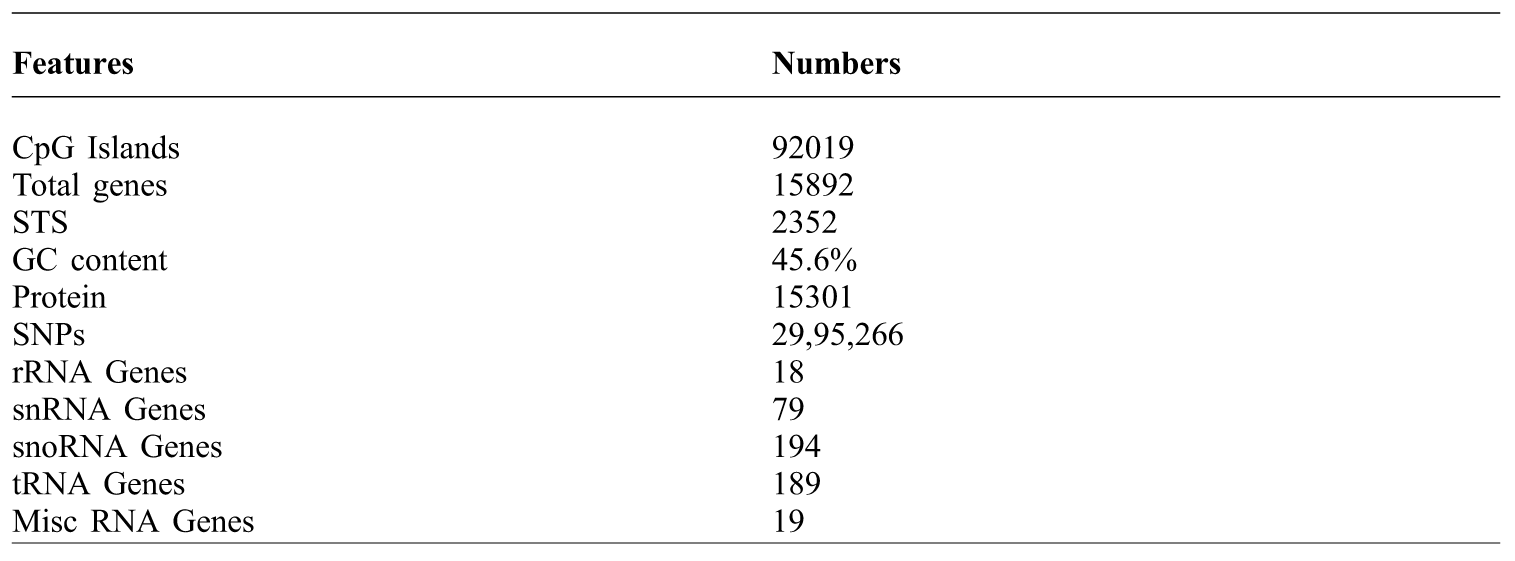
The genome sequence data currently available covers the structural architecture of autosomes of 1-28, 32, sex chromosomes (W and Z) and mitochondrial DNA providing information on mRNA sequences, novel protein coding genes, micro RNA genes, non-coding RNA (ncRNAs), small nucleolar RNAs (snoRNAs), transfer RNA (tRNA), ribosomal RNA (rRNA), genome wide CpG island, genome wide GC content and single nucleotide polymorphisms (Table 1).
Summary of chicken genome delineates the profile.

A genome-wide transcriptome analysis using microarray revealed that the genome regions with highly expressed gene clusters have higher gene densities, shorter genes, shorter average intron and higher GC content as compared to the regions with lowly expressed gene cluster (Nei et al., Reference NEI, SUZUKI and NOZAWA2010). Structural variants in a gene or genome may play a role in phenotypic differences and gene expression levels too. A genome-wide structural variation study using the next generation sequencing approach in broiler and layer breeds of chickens found that a high abundance of structural genomic variants are located in non-coding regions compared to coding regions (Kerstens et al., Reference KERSTENS, CROOIJMANS, DIBBITS, VEREIJKEN, OKIMOTO and GROENEN2011). In this article, an outline of the status of functional genomics in chickens is presented.
High throughput functional genomic approaches/tools
High throughput gene expression profiling has been widely applied in avian genomics research over the last decade as one of the most powerful tool. The oligonucleotide/cDNA microarray, serial analysis of gene expression (SAGE), massively parallel signature sequencing (MPSS), cDNA subtractive hybridisation and next generation sequencing techniques (Deep RNA sequencing) have been utilised to investigate the genome-wide expression pattern of thousands of genes and abundance of mRNA expression, rather than traditional methods allowing only one or a few genes to be examined at a time in various avian species. These high-resolution techniques assess the parallel gene expression profile and epigenome of chicken among the groups of interest (fast vs. slow growth, diseased vs. healthy, resistant vs. susceptible and lean vs. fat line etc). Changes in gene expression levels are often associated with the regulation of various physiological responses, especially those with long-term implications.
Well characterised gene sequences and information of chicken from various public databases facilitated the construction of oligonucleotide/cDNA microarrays for genome wide CpG methylation pattern, detection of copy number variation, SNP detection/genotyping, and differential gene expression studies. Modern microarray platforms greatly enhanced the ability to evaluate global gene expression targets of chicken for about 28,000 genes, micro RNAs and viral genes (Wang et al., Reference WANG, LI, WANG, ZHANG, WANG, WANG and WANG2007; Li et al., Reference LI, CHIANG, ZHU, DOWD and ZHOU2008). MPSS is a modern transcriptome analysis tool, which provides a greater depth of coverage of expression profile. However, only limited studies in chicken have used this technique to address the gene expression levels.
Identification of novel genes by expressed sequence tags (EST)/cDNA library
Expressed sequence tag (EST) or complementary DNA (cDNA) sequences are the key factors for identification of novel genes and understanding the complex molecular cascades of organism ontology. A large-scale cDNA library constructed from 21 different embryonic and adult chicken tissues has identified about 13,000 genes by means of sequencing 339,314 ESTs (Boardman et al., Reference BOARDMAN, SANZ-EZQUERRO, OVERTON, BURT, BOSCH, FONG, TICKLE, BROWN, WILSON and HUBBARD2002). Combined functional annotation of 19,626 cDNA sequences and 485,337 EST's of chicken described presence of 62,546 transcripts cluster, as a proof for presence of 18,989 genes (Hubbard et al., Reference HUBBARD, GRAFHAM, BEATTIE, OVERTON, MCLAREN, CRONING, BOARDMAN, BONFIELD, BURNSIDE, DAVIES, FARRELL, FRANCIS, GRIFFITHS-JONES, HUMPHRAY, HYLAND, SCOTT, TANG, TAYLOR, TICKLE, BROWN, BIRNEY, ROGERS and WILSON2004). Presently chicken genome database contains 600,433 ESTs (http://www.ncbi.nlm.nih.gov/nucest).
Prior to use of modern sequencing techniques, many genome mapping and sequencing projects utilised two types of gene library viz, genomic DNA library and cDNA library. Genomic DNA libraries are constructed with chromosomal DNA of an organism, whereas the cDNA library targets the coding region of a gene in the form of mRNA. Eukaryotic DNA usually has introns and thereby, a genomic DNA library may contain coding regions and non-coding regions. Further, the genomic DNA library may not have entire coding regions in a single clone. Therefore, several clones needs to be analysed to map a particular gene, hence cDNA libraries are generally preferred over genomic DNA libraries to identify the novel genes (Caldwell et al., Reference CALDWELL, KIERZEK, ARAKAWA, BEZZUBOV, ZAIM, KUTTER, BLAGODATSKI, KOSTAVSKA, KOTER, CARNICI, HAYASHIZAKI and BUERSTEDDE2004).
Recent advancements in efficient construction of cDNA library supplements a quantitative gene expression procedure for screening cDNA libraries constructed by suppression subtractive hybridisation (SSH). A subtracted cDNA library is a highly effective method to compare differential expression of mRNA in two populations without a prior knowledge of target sequence. SSH enables the researcher to investigate the alterations in global gene expression levels in a particular cell or tissues from chickens. SSH has been widely employed to investigate the differentially expressed genes in chicken infected with avian metapneumovirus (MPV), Avian leukosis virus subgroup J (ALV-J), Newcastle disease virus (NDV), Avian influenza virus (Zhang et al., Reference ZHANG, LI, CHENG, HU, LI and BI2008; Zhao et al., Reference ZHAO, ZHENG, CHEN, WEN, WU, LI, LIU and ZHANG2009). SSH is also utilised to identify genes expressed in the regeneration of sensory epithelia (Hawkins et al., Reference HAWKINS, HELMS, WINSTON, WARCHOL and LOVETT2006), gene expression in hypothalamus and pituitary associated with broodiness of chicken (Shen et al., Reference SHEN, ZENG, XIE, HE, LI, XIE, LUO, XU, ZHOU, NIE and ZHANG2012) etc. Although SSH is a powerful PCR based tool to study the gene expression pattern, it has many limitations including being technically burdensome, labour-intensive, falsely positive and giving irreproducible results. Presently, whole genome cDNA micro array and next generation sequencing platforms have replaced this traditional technique.
Identification of microRNA
Identifying the mRNA targets of microRNAs (miRNAs) is essential to understand cellular regulatory networks. miRNAs are small non-coding RNA molecules, 21-25 nucleotides in length, completely or partially complementary to messenger RNA (mRNA) molecules (Bartel, Reference BARTEL2004). miRNAs regulates the expression of genes by translational repression, mRNA cleavage, and deadenylation etc. Functional genomics studies in chicken have been committed to identifying the miRNA involved in various pathways and in tissue-wide expression (Rathjen et al., Reference RATHJEN, PAIS, SWEETMAN, MOULTON, MUNSTERBERG and DALMAY2009). To date, approximately 496 miRNAs have been mapped and well characterised in the chicken genome through cloning, high throughput sequencing and computational prediction. miRNAs regulate expression of genes associated with physiology, RNA splicing, editing, translation and turnover. Identification of 135 miRNAs during various developmental stages of early embryogenesis in chicken, shows that the miRNAs are known to control of early developmental processes (Darnell et al., Reference DARNELL, KAUR, STANISLAW, KONIECZKA, YATSKIEVYCH and ANTIN2006).
Due to their smaller size and low abundance in nature, high throughput tools such as microarray and next generation sequencing platforms like SOLID, Ion Torrent, Solexa and Roche 454 are the recently evolved tools for effective quantification of absolute expression with increased sensitivity, resolution and reproducibility. Application of Solexa in different developmental stages of the chicken embryo identified 361 novel miRNAs, 88 new miRNA candidates (Glazov et al., Reference GLAZOV, COTTEE, BARRIS, MOORE, DALRYMPLE and TIZARD2008), 33 novel and 189 known miRNAs in the skeletal muscle of broiler and layer chickens. In another study using the 454 Life Sciences pyrosequencing approach, 14 novel and 110 known miRNAs have been identified in 11 day old chicken embryos (Hicks et al., Reference HICKS, TEMBHURNE and LIU2008). Through in silico analysis with the available miRNA sequences of vertebrates, mammals and birds, it was concluded that certain miRNAs are evolutionarily conserved, and have tissue or organ specific expression associated with sexual organ development during embryogenesis (Darnell et al., Reference DARNELL, KAUR, STANISLAW, KONIECZKA, YATSKIEVYCH and ANTIN2006; Bannister et al., Reference BANNISTER, SMITH, ROESZLER, DORAN, SINCLAIR and TIZARD2011; Cutting et al., Reference CUTTING, BANNISTER, DORAN, SINCLAIR, TIZARD and SMITH2012). Three miRNAs (gga-mir-101, gga-mir-1a and gga-mir-499) linked to the expression levels of activin A receptor type II B are associated with myogenesis and increase in muscle mass in chicken (Li et al., Reference LI, WANG, WU, ZHOU, ZHU and ZHANG2012).
Non-coding RNA (ncRNA) in chicken genome
Identification of miRNA in chickens has stimulated interest to identify other non-coding RNAs (ncRNA) as well. The ncRNA family includes small nuclear RNA (snRNA), small nucleolar RNA (snoRNA) and piwi-interacting RNA (piRNA) (Table 1). Various studies confirm that ncRNA alters the gene expression involved in cellular developmental process in somatic and germline, by modulating the chromatin architecture, transcription, RNA splicing, editing, translation and turnover. Genome-wide identification of ncRNA in chicken gained greater importance to analyse the evolutionary relationship of ncRNA in vertebrates. A comparative genome-wide analysis of 18 vertebrate genome has identified that the ncRNA and IncRNAs (Long non-coding RNAs), are not evolutionarily conserved and are species specific in nature (Zhang et al., Reference ZHANG, WANG, HUANG, ZHU, LIU, YANG, SONG, WU, DENG, SKOGERBØ, WANG, CHEN and ZHU2009; Chodroff et al., Reference CHODROFF, GOODSTADT, SIREY, OLIVER, DAVIES, GREEN, MOLNÁR and PONTING2010). The lncRNAs are another class of ncRNA, having size of approximately 100 to 100,000 bases and usually transcribed by RNA polymerase II or III (Dinger et al., Reference DINGER, AMARAL, MERCER and MATTICK2009). However, the ncRNA has been shown to alters the complex immune response following an Infectious Bursal disease virus infection (IBDV), where viral infections alters the expression pattern of certain ncRNA in immune organs (Wang et al., Reference WANG, BRAHMAKSHATRIYA, ZHU, LUPIANI, REDDY, YOON, GUNARATNE, KIM, CHEN, WANG and ZHOU2009b).
PIWI-interacting RNAs (piRNA) is another class of RNAs found in testis regulates germline and germ cell development, stem cell maintenance, epigenetic regulation, and transposition (Lin, Reference LIN2007). In chicken, the role of piRNA were less understood, however unique expression of chicken testis specific piRNAs suggests that piRNAs are conserved among species and have a role in regulating the development of nerves, germ line and gametes (Yang et al., Reference YANG, WANG, LIU, LIU, LI, HU and LI2012).
Application
productivity
To augment egg production, it is crucial to improve our knowledge of productivity in eggs. Various functional genomics studies have been devoted to identify the genes associated with the function and regulation of oviduct, shell gland and egg shell proteins in chicken. Genes associated with egg production in high and low egg producing lines showed increased expression of thioredoxin, acetyl-CoA dehydrogenase long chain, inhibitor of growth family member 4 and annexin II, coactosin-like protein, transcription factor SOX18 and Mx protein in ovarian follicles and shell gland, apolipoprotein B in the liver of high egg production strains and higher expression of elongation factor 2, ovocalyxin-32 and annexin A2 in shell gland, transcripts of cyclin B2, ferritin heavy polypeptide 1, gag-Pol polyprotein, thymosin β4 and elongation factor α1 in ovarian follicles and 5-aminoimidazole- 4-carboxamide ribonucleotide formyltransferase/IMP cyclohydrolase (PURH) in lower egg laying chickens. These transcripts were associated with signal transduction, protein biosynthesis, cell adhesion, cellular metabolism, skeletal development, cell organisation and biogenesis (Yang et al., Reference YANG, LIN, LIOU, FAN, CHIOU, HUANG, WU, LIN, CHEN, LEE, LEE, DING, CHENG and HUANG2007; Ding et al., Reference DING, KO, OU, WANG, CHEN, HUANG, LEE, LIN, CHEN, LIN and CHENG2008).
Prolactin is a polypeptide hormone, which plays critical role in egg production, controls broodiness and ovarian follicular development. Recent studies have associated the prolactin promoter polymorphism and gene expression with egg production, egg quality and sexual maturity in different breeds of chicken (Cui et al., Reference CUI, DU, LIANG, DENG, LI and ZHANG2006; Bhattacharya et al., Reference BHATTACHARYA, CHATTERJEE, SHARMA, NIRANJAN, RAJKUMAR and REDDY2011a; Reference BHATTACHARYA, CHATTERJEE, SHARMA, NIRANJAN and RAJKUMAR2011b). Gene expression in the shell glands and uterus was explored by cDNA microarray identified genes encoding fabrication of the egg shell (Osteopontin, ovocleidin-116, ovocalyxin 32 and ovocalyxin 21) and transportation of shell minerals (carbonic anhydrase II, H+ transporting ATPase 38 kDa, H+ transporting ATPase 42 kDa, Ca2+ transporting ATPase), antiviral and anti bacterial activity of egg (Ovocalyxin-36, Mx protein , Avian β defensin 9, neuroplastin, beta-2-microglobulin and bactericidal/permeability-increasing protein-like 2) in matured high egg laying hens shell gland (Yang et al., Reference YANG, LIN, LIOU, FAN, CHIOU, HUANG, WU, LIN, CHEN, LEE, LEE, DING, CHENG and HUANG2007; Dunn et al., Reference DUNN, WILSON, LU, BAIN, CROSSAN, TALBOT and WADDINGTON2009; Hincke et al., Reference HINCKE, NYS and GAUTRON2010).
immunity
Transboundary poultry diseases pose a serious threat to food security and affect the poultry trade worldwide. Microarray analysis with 44K Agilent microarray in heterophils isolated from two broiler lines with different genetic background stimulated with Salmonella enteritidis showed differential signalling to activate innate and adaptive immune system in two different lines (Chiang et al., Reference CHIANG, SWAGGERTY, KOGUT, DOWD, LI, PEVZNER and ZHOU2008). Hence, it is necessary to identify the breeds/strains with better immune responses across chicken breeds in order to reduce veterinary costs against important pathogens. Modern breeding programmes may utilise such information for the development of commercially important broiler and layer strains with reduced susceptibility to bacterial or viral diseases (Ask et al., Reference ASK, WAAIJ, STEGEMAN and VAN ARENDONK2006; Cavero et al., Reference CAVERO, SCHMUTZ, PHILIPP and PREISINGER2009). It is well known that chicken eggs and meat contains minerals, saturated fatty acid, vitamins A, E, and K, B12, B2, biotin, choline, folic acid, pantothenic acid and niacin. Due to its high nutrient content and moisture, eggs and meat can act as a carrier for a wide range of infectious bacteria like Salmonella, E. coli and Campylobacter spp. (Hannah et al., Reference HANNAH, WILSON, COX, RICHARDSON, CASON, BOURASSA and BUHR2011; Müller et al., Reference MÜLLER, BÖHLAND and METHNER2011), which cause numerous disease outbreaks worldwide (Nógrády et al., Reference NÓGRÁDY, KARDOS, BISTYÁK, TURCSÁNYI, MÉSZÁROS, GALÁNTAI, JUHÁSZ, SAMU, KASZANYITZKY, PÁSZTI and KISS2008; Howard et al., Reference HOWARD, O'BRYAN, CRANDALL and RICKE2012).
The whole transcriptomic approach following stimulation with salmonella endotoxins identified genes involved in cell to cell cross-talk, haematological systems development and function, immune cell trafficking, consistent expression of NFκB, IL-1B, IL-8, and CCL4 genes. Surprisingly, salmonella endotoxin did not up regulate any of the TLR genes but upregulated the CARD5 domain-containing NOD like receptor 5 (NLRC5) (Ciraci et al., Reference CIRACI, TUGGLE, WANNEMUEHLER, NETTLETON and LAMONT2010).
A recent gene network study using microarrays showed that Salmonella enteritidis infection in chickens induces expression of genes associated with defence/pathogen response and cellular communication, while in uninfected birds, developmental genes were induced (Tsai et al., Reference TSAI, CHIU, WANG and CHOU2010). Hence, it is clear that any infection alters the gene network and consequently diminishes productivity. With salmonella infection in different breeds of chicken, expression of pro-inflammatory cytokines (IL-6 and GM-CSF) and anti-inflammatory cytokine mRNA (IL-10 and TGF-β4) shows differential levels of gene expression and alters expression of immune related genes such as IL-8, IL-18, IL-12α, IL-12β, macrophage inflammatory protein 1β, interferon (IFN)-γ, transforming growth factor β1 in spleen and other immune organs of different lines of chicken (Coble et al., Reference COBLE, REDMOND, HALE and LAMONT2011; Schokker et al., Reference SCHOKKER, DE KONING, REBEL and SMITS2011). Differentially expressed genes in different lines can act as a strong candidate for identification of genetic markers for Salmonella enteritidis resistance (Chiang et al., Reference CHIANG, SWAGGERTY, KOGUT, DOWD, LI, PEVZNER and ZHOU2008).
Host immune response plays an important role in colonisation of Campylobacter jejuni (Duerkop et al., Reference DUERKOP, VAISHNAVA and HOOPER2009). Two genetic lines, one resistant and the other susceptible to C. Jejuni demonstrated differential gene expression pattern in the caecum. Insulin receptor signalling pathways plays a crucial role in C. jejuni colonisation in these two lines following increased expression of T cell-originated protein kinase, IL-17, IL-21, IL-7R and CTLA4 facilitating combined T-lymphocyte activation, increased expression of the NLR recognition receptor NALP, vascular cell adhesion molecule 1 and NADPH oxidase (Li et al., Reference LI, SWAGGERTY, KOGUT, CHIANG, WANG, GENOVESE, HE and ZHOU2010).
Apart from bacterial pathogens, avian influenza (AI) remains a major threat to poultry as well as human beings. Avian influenza virus has been classified into two groups, highly pathogenic avian influenza virus (HPAI) and low pathogenic avian influenza virus (LPAI) based on their differences in virulence. Highly pathogenic avian influenza virus (HPAIV) outbreaks causes huge economic losses to large scale broiler and layer farms on account of significant morbidity and mortality of birds (Al-Azemi et al., Reference AL-AZEMI, BAHL, AL-ZENKI, AL-SHAYJI, AL-AMAD, CHEN, GUAN, MALIK PEIRIS and SMITH2008; Biswas et al., Reference BISWAS, CHRISTENSEN, AHMED, BARUA, DAS, RAHMAN, GIASUDDIN, HANNAN, HABIB, AHAD, RAHMAN, FARUQUE and DEBNATH2008; Aral et al., Reference ARAL, YALCIN, CEVGER, SIPAHI and SARIOZKAN2010; Brown, Reference BROWN2010) and enormous zoonotic impact. In order to address the host antiviral defence and to develop new strategies to control outbreaks of AIV, various functional genomics strategies have been applied to decipher immune response mechanism in birds. Consequently, to analyse immunogenicity of different strains of avian influenza, chicken genome microarrays and real-time PCR were widely used. In various gene expression studies, it was noticed that virus strains with different pathogenicity have different replication efficiency and differentially respond to cytokine pathways (Sarmento et al., Reference SARMENTO, CLAUDIO, ESTEVEZ, WASILENKO and PANTIN-JACKWOOD2008; Xing et al., Reference XING, CARDONA, LI, DAO, TRAN and ANDRADA2008; Penski et al., Reference PENSKI, HÄRTLE, RUBBENSTROTH, KROHMANN, RUGGLI, SCHUSSER, PFANN, REUTER, GOHRBANDT, HUNDT, VEITS, BREITHAUPT, KOCHS, STECH, SUMMERFIELD, VAHLENKAMP, KASPERS and STAEHELI2011). Assessment of cell-mediated immune responses following avian influenza virus exposure gives additional information for developing new vaccines for avian influenza. Upon infection with AIV, the expression of pro-inflammatory cytokines such as IL-1β, IL-6, and interferon related genes were greatly altered (Crowley et al., Reference CROWLEY, HARING, BURGGRAAF and MOORE2003; Watanabe et al., Reference WATANABE, UCHIDA, ITO, ITO and SAITO2011). The signature of toll like receptors (TLR) and cytokine expression were found to be varying across tissues. Chicken exposed to H9N2 strain, resulted inIL-8, IL-1β, TLR-7, TGF-β3, TNF-α, INF-α, INF-γ molecules being highly expressed in the challenged line compared to the control birds. Organ specific expression of TLR4 in trachea, TLR15 in lungs and TLR5 in intestines illustrates the commitment of these receptors in induction of innate and adaptive immune response (Xing et al., Reference XING, CARDONA, LI, DAO, TRAN and ANDRADA2008; Nang et al., Reference NANG, LEE, SONG, KANG, KIM and SEO2011). In general, LPAI viruses cause mild or no disease in chicken. However, upon HPAI and LPAI infection, similar virus replication patterns, cytokine induction, influx of CD8α+, macrophages and dendritic cells in lungs was observed (Rebel et al., Reference REBEL, PEETERS, FIJTEN, POST, CORNELISSEN and VERVELDE2011). Microarray studies in AI infected birds suggest that, even though more genes were triggered in the ileum after HPAIV infection than LPAIV, similar pathways were induced in both the group. Genes associated with TLR pathways and circadian rhythm was down regulated while cell cycle associated pathways were up regulated (Post et al., Reference POST, BURT, CORNELISSEN, BROKS, VAN, PEETERS and REBEL2012).
Many cell lines or organ cultures, such as tracheal epithelial cells (Sarmento et al., Reference SARMENTO, CLAUDIO, ESTEVEZ, WASILENKO and PANTIN-JACKWOOD2008), chicken-derived cell lines, (DF-1, LMH, HD11 and LSCC-RP9) (Watanabe et al., Reference WATANABE, UCHIDA, ITO, ITO and SAITO2011) and monocytic/macrophage cell lines, were used to observe in vitro host immune responses upon AIV infection. A comparative transcriptional study in tracheal organ culture and in vivo infected trachea proved that cell lines or organ cultures are not the ideal system for evaluation of early immune responses (Reemers et al., Reference REEMERS, LEENEN, KOERKAMP, HAARLEM, HAAR, EDEN and VERVELDE2010; Moulin et al., Reference MOULIN, LINIGER, PYTHON, GUZYLACK-PIRIOU, OCAÑA-MACCHI, RUGGLI and SUMMERFIELD2011). Distinct patterns of pro-inflammatory cytokines (IL-1β and IL-6) and IFNγ have been reported, with differences between ducks and chickens upon avian influenza induction (Adams et al., Reference ADAMS, XING, LI and CARDONA2009). However, delayed and differential expression of cytokine-like interferon was associated with increased viral load, mortality and pathogenicity in chicken (Reemers et al., Reference REEMERS, LEENEN, KOERKAMP, HAARLEM, HAAR, EDEN and VERVELDE2010; Moulin et al., Reference MOULIN, LINIGER, PYTHON, GUZYLACK-PIRIOU, OCAÑA-MACCHI, RUGGLI and SUMMERFIELD2011). This information is extremely helpful for the selection of parentstock and to detect vaccine candidates for promoting better immune responses.
Application in nutrigenomics
Nutrigenomics is the study of nutritional profiles in animals via a genomic approach. Whole transcriptome analysis has determined that feed restriction, fasting and delayed feeding significantly alters gene networks associated with hepatic lipogenic metabolism, energy metabolism, signal transduction and cholesterol synthesis in broiler (Dèsert et al., Reference DÈSERT, DUCLOS, BLAVY, LECERF, MOREEWS, KLOPP, AUBRY, HERAULT, LEROY, BERRI, DOUAIRE, DIOT and LAGARRIGUE2008; Richards et al., Reference RICHARDS, PROSZKOWIEC-WEGLARZ, ROSEBROUGH, MCMURTRY and ANGEL2010; Wang et al., Reference WANG, WANG, ZHANG, GU, WANG, WU and LI2010). Fasting affects biological processes by up-regulating neuropeptide Y receptor 5, aromatase, FK506 binding protein 5, somatostatin receptor 5, and coagulation factor C and down-regulating fatty acid binding protein 7, haemoglobin alpha, pro-opiomelanocortin, oxysterol 7-alpha-hydroxylase, protein kinase C and sal-like 3 genes (Higgins et al., Reference HIGGINS, ELLESTAD, TRAKOOLJUL, MCCARTHY, SALIBA, COGBURN and PORTER2010). Upon starvation, the expression of hydroxymethyl glutaryl-CoA synthase gene was up-regulated, while cell cycle and glucagon/insulin balance linked genes were down-regulated (Dèsert et al., Reference DÈSERT, DUCLOS, BLAVY, LECERF, MOREEWS, KLOPP, AUBRY, HERAULT, LEROY, BERRI, DOUAIRE, DIOT and LAGARRIGUE2008). Knowledge about the gene networks involved in feed restriction or fasting may help the poultry breeders to alter the feed ratios for better feed conversion.
Neuropeptides regulate cell-to-cell signalling, reproduction, development, growth, memory, feeding and behaviour in chicken (Hook et al., Reference HOOK, FUNKELSTEIN, LU, BARK, WEGRZYN and HWANG2008). Extensive analysis of chicken EST and microarray data has identified novel neuropeptide transcripts such as apelin, cocaine- and amphetamine, insulin-like 5, neuropeptide S, neuropeptide B, c-RF amide, c-type natriuretic peptide 1 precursor and renal natriuretic peptides in chicken. Differential expression patterns were observed in the central nervous system and hypothalamus of two extremely divergent low and high growing chicken lines derived from the same parent population. Using global cDNA array analysis, genes participating in neuronal plasticity, neuropeptides, lipid metabolism, DNA metabolism, repair, induction of apoptosis and metabolism were found to be differentially expressed among different lines (Ka et al., Reference KA, FRANK, ALBERT, MICHAEL, SVANTE, SIEGEL, ANDERSSON and HALLBÖÖK2011).
In addition to the transcriptomic analysis, a proteomic approach using two-dimensional electrophoresis has been performed to elucidate mechanisms underlying the abdominal adipose tissue fat deposition in broiler chicken. A total of 20 differentially expressed proteins were found to be involved in lipid metabolism, signal transduction and fatty acid transport (Wang et al., Reference WANG, KO, CHIN, HSU, DING and CHEN2009a).
The genetic control of myogenesis in broilers and layers demonstrated involvement of genes related to slow type muscle protein being expressed poorly in broiler chickens. Genes such as troponin I type 1, myoglobin, myosin light chain 3, myosin heavy chain 7B and myosin L2B regulatory light chain were found to be expressed in layer birds (Zheng et al., Reference ZHENG, ZHANG, CHEN, YANG, WANG and ZHU2009). Accumulation of lipids in the adipose tissue is a major problem in broiler industry. The commercial value of broilers can be increased by reduction of fat deposition in the adipose tissue. The mechanisms and pathways underlying the regulation of fat deposition in chickens provide key information about the ontogenesis of fatness and obesity. Gene expression profiling using microarray in different tissue of selected lean or fat lines and high or low abdominal fat chicken lines showed differential expression of genes involved in lipid metabolism, such as fatty acid binding protein, thyroid hormone-responsive protein, lipoprotein lipase, liver basic fatty acid binding protein, malate dehydrogenase, acetyl-Co A acetyltransferase I, hydroxymethylglutaryl-CoA synthase, pyruvate dehydrogenase, isocitrate dehydrogenase 3α, lactate dehydrogenase H subunit, and insulin-like growth factor binding protein-7 in age dependent manner (Wang et al., Reference WANG, LI, WANG, ZHANG, WANG, WANG and WANG2007). Chickens with high abdominal fat content revealed greater expression of the high mobility group AT hook 1 (HMG1A) and the peroxisome proliferator-activated receptor gamma (PPARG) gene in liver as compared to chickens with less abdominal fat (Larkina et al., Reference LARKINA, SAZANOVA, FOMICHEV, BARKOVA, SAZANOV and MALEWSKI2011).
Gene expression omnibus database
Gene Expression Omnibus (GEO) is a repository for high throughput functional genomics data of many organisms. These data include microarray serial analysis of gene expression (SAGE), MPSS and next generation sequencing based experiments measuring the abundance of mRNA, genomic DNA and protein molecules. However, most of the information is concerned with global gene expression studies in chicken following various stimuli such as virus exposure. In addition, recently discovered chicken specific micro RNA and other types of small RNAs are documented in GEO database (Glazov et al., Reference GLAZOV, COTTEE, BARRIS, MOORE, DALRYMPLE and TIZARD2008; Bannister et al., Reference BANNISTER, SMITH, ROESZLER, DORAN, SINCLAIR and TIZARD2011).
Conclusions
Several functional genomics approaches have explored the functions of genes which are expressed in chicken. The genomic information is useful to study the evolutionary relationship of different species to concentrate the accuracy of knowledge regarding the origin of life since the evolution of single cells to multicellular organisms. Large amounts of information has been gathered on functional genomics in chickens, which facilitates the exploration of molecular mechanism involved in productivity, disease resistance and better feed conversion efficiency. The most advanced technologies, including microarrays and next generation sequencing, has been used to study gene expression rapidly and in a reliable manner. The functional genomics approach has enormous potential for unravelling both physiological and immunological mechanisms in biological systems so that the performance of animals may be improved through supporting molecular pathways. In future, functional genomics will not only become a routine diagnostic pathway, but may be used to select elite birds using molecular markers.
Acknowledgements
This work was carried out with the support of National Fellow project funded by Education Division, ICAR.