Surgical site infections (SSI) are one of the most common healthcare-associated infections in the United States and frequently result in increased length of stay (LOS) and mortality. 1 , Reference Kirkland, Briggs, Trivette, Wilkinson and Sexton 2 Some of the more debilitating SSIs complicate spinal fusion (SF) surgery. The National Healthcare Safety Network reported in 2009 that pooled means for SF-SSI rates from 2006 through 2008 ranged from 0.70 to 4.15 per 100 surgeries performed, depending upon risk index category. According to the Scoliosis Research Society national database, from 2004 to 2007 the overall SF-SSI rate was 2.1%, with postoperative wound infection rates for pediatric patients ranging from 0.9% for degenerative disease to 5.4% for kyphosis.Reference Calderone, Garland, Capen and Oster 3 , Reference Smith, Shaffrey and Sansur 4 These infections can be devastating; they typically require long-term intravenous antibiotics, repeated surgical procedures, hardware removal, and prolonged LOS and often result in progression of spinal deformity and disability. It is estimated that the cost of SF care increases more than 4-fold when complicated by an SSI.Reference Labbe, Demers, Rodrigues, Arlet, Tanguay and Moore 5 In adults, these infections are usually diagnosed a mean (SD) of 13.5 (8) days after the procedure. 6 , Reference Rao, Vasquez and Harrop 7 The microorganisms typically affecting these wounds are skin and bowel flora in both adults and pediatric populations. 6 , Reference Milstone, Maragakis and Townsend 8 – Reference Cahill, Warnick and Lee 10
There are limited patient- and procedure-specific risk factors in the literature to assist hospitals in preventing SF-SSI. Lacking in the current Surgical Care Improvement Project (SCIP) bundle are pre-, peri-, and postoperative interventions that might further reduce SF-SSI rates.Reference Anderson, Podgorny and Berrios-Torres 11 In 2008, our hospital implemented a house-wide SSI bundle. This bundle consisted of core SCIP measures: appropriate perioperative antibiotic timing, discontinuing antibiotics 24 hours postoperatively, hair removal with clippers, and maintenance of normothermia. Despite implementing this bundle, SF-SSIs were still prevalent for this low-volume, high-risk surgery. Since many of these patients develop their SF-SSI after discharge, a multidisciplinary team was created to develop a set of prevention interventions that formed a pre-, peri-, and postoperative bundle (PPPB) including the postdischarge period. This bundle was applied to our SF population with the goal of reducing the SF-SSI rate.
METHODS
This was a quality improvement study consisting of an observational time series with multiple planned interventions using the Plan-Do-Study-Act method. No experimental practices or equipment were involved.
Study Population and Setting
All patients undergoing SF surgery at St. Christopher’s Hospital for Children from January 1, 2008, through February 28, 2015, were included. St. Christopher’s is a 189-bed, academic, freestanding children’s hospital located in Philadelphia, Pennsylvania. The population is primarily low income.
Planning the Intervention
Literature review using PubMed and published national guidelines for perioperative and postoperative SF-SSI prevention evidence was conducted for years 1975–2011 (n=146 studies). Retrospective review of our past SF surgeries (2008–2011) revealed inconsistencies in care and identified many areas for improvement with perioperative, postoperative, and postdischarge SF care. A review of SF-SSIs, including specific pathogens identified, was conducted in the preintervention and postintervention phases. The literature review and preintervention SF-SSI analysis created the platform to develop the PPPB.
Interventions
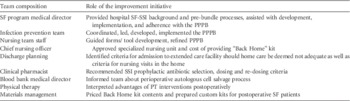
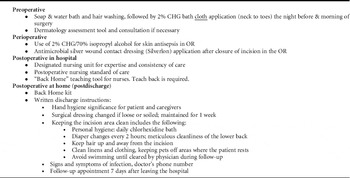
The overall study aim was to reduce the SF-SSI rate by standardizing and improving care delivered to SF patients in the preoperative, operative, and postoperative periods both in the hospital and at home. The process of reducing SF-SSI rates involved creating a multidisciplinary team, performing a gap analysis, and obtaining administration support for the project. The multidisciplinary team consisted of representatives from orthopedics, infection prevention (IP), nursing, hospital administration, discharge planning, pharmacy, blood bank, physical therapy, and materials management. The team was tasked with mapping the current SF perioperative and postoperative processes in order to identify areas for improvement and opportunities for process standardization. Respective contributions of team members are outlined (Table 1). Parents of patients in the preintervention period were interviewed face to face, before hospital discharge, to identify wound care knowledge and access to personal hygiene items such as laundry facilities or a thermometer. Product vendors and literature review were used to evaluate wound care dressings and preoperative bathing products. The silver dressing chosen (Silverlon) is a sterile, nonadherent, antimicrobial barrier that permits the passage of wound fluids, lasts up to 7 days, and can be used with negative pressure wound therapy. The PPPB (Table 2) was implemented in January 2011 and has been in effect for 50 months. All orthopedists who perform SF surgeries and all nurses on the SF nursing unit were educated on the PPPB. A specialized nursing unit, nursing standard of care, “teach back” tool, “Back Home” kit, and patient/caregiver instructions were implemented at the beginning of the postintervention phase. Using the Plan-Do-Study-Act method, a preoperative dermatology assessment tool for patients with back acne was implemented later in the postintervention phase.
Multidisciplinary Team Composition and Roles

NOTE. PPPB, pre-, peri-, and postoperative bundle; PT, physical therapy; SF, spinal fusion; SSI, surgical site infection.
Elements of the Pre-, Peri-, and Postoperative Bundle

NOTE. This bundle is in addition to the core Surgical Care Improvement Project bundle. CHG, chlorhexidine gluconate; OR, operating room.
During the 50-month postintervention phase there were no changes in the surgical technique performed, hardware used (titanium pedicle screws and 2 rods; one each of titanium and cobalt chrome), use of synthetic bone graft matrix, perioperative antibiotic, chlorhexidine gluconate (CHG) skin antisepsis, or surgical indication for scoliosis repair. The perioperative autologous cell salvage process was used in both the preintervention and postintervention phases. The orthopedists do not use vancomycin powder in the SF wound to prevent SF-SSIs.
House-wide SSI surveillance is accomplished using the Theradoc electronic system. Additionally, IP reviews daily bed boards with admission diagnoses, nursing patient updates, and monthly billing codes for infections, as well as maintains excellent communication with the orthopedists performing SF surgery. All SSIs are reported to the National Healthcare Safety Network as mandated by Pennsylvania State law. SF-SSI surveillance was conducted for 365 days after implantation until January 2013 when the National Healthcare Safety Network shortened the mandatory surveillance time to 90 days.
Outcome Measures
The primary outcome was a sustained reduction in the SF-SSI rate. The mean SF-SSI rate after intervention was compared with the 3-year preintervention mean SF-SSI rate for all SF patients and those with neuromuscular scoliosis. Compliance with core SCIP bundle as well as the PPPB was assessed with each SF patient, including perioperative antibiotic timing, re-dosing of antibiotics, use of CHG the night before and the morning of surgery, use of CHG daily baths postoperatively, use of silver dressing postoperatively, and use of the nursing teach-back tool. Hair removal with clippers instead of razors is not monitored because razors have been completely removed from the operating room since the Centers for Medicare and Medicaid Services retired this measure in 2012. 6
Statistical Analysis
SF-SSI rates in the preintervention and postintervention phases were compared using the Fisher exact test for statistical significance with a 2-tailed P value<.05 considered significant. Approximate cost averted was calculated for those SF-SSIs prevented using the difference between the median hospital charges for SF-SSI patients in the preintervention period (not inflation adjusted) minus the insurance reimbursements multiplied by the number of SF-SSIs prevented by the quality improvement program. The total cost of the Back Home kit and the entire program was calculated.
RESULTS
We found little evidence in the literature for peri- and postoperative processes that could be added to a SF-SSI prevention bundle. Preintervention analysis of SF surgeries revealed an average of 31 surgeries performed annually; the duration of surgery typically was 5–7 hours, mean total blood loss was 1,000 mL, and mean LOS was 6 days. We found that SF-SSIs were prevalent for this low-volume, high-risk surgery with a mean SF-SSI rate of 8.2 in the preintervention phase. These SF-SSIs were costly with median SF-SSI charges and reimbursements of $467,000 and $27,775, respectively. The median time to develop an SF-SSI was 28 days and microbiology included both skin and bowel organisms. A total of 75% of the SF-SSIs occurred in patients with neuromuscular scoliosis, 33% of patients wore diapers, 10% of patients were discharged to an extended care facility, and 25% required hardware removal. Hospital patient analysis revealed most were from low socioeconomic populations with 62.7% living below the poverty line and therefore they may be unable to purchase out-of-pocket wound care supplies. The average reading level of parents was fifth grade, with only 28% having a high school diploma.
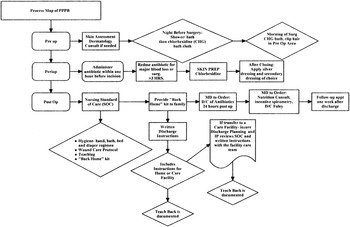
The gap analysis identified the following opportunities for practice improvement: inconsistency with re-dosing of perioperative antibiotics, lack of a postoperative nursing standard of care, variability in nursing units so there were no care experts, lack of postdischarge wound care or written instructions at the appropriate reading level, and variability in orthopedic follow-up times. Process mapping allowed for the design of the PPPB (Figure 1). The PPPB elements included improvements made during the pre-, peri-, and postoperative as well as postdischarge periods (Table 2).
Process map of pre-, peri-, and postoperative prevention bundle (PPPB). D/C, discharge; IP, infection prevention.

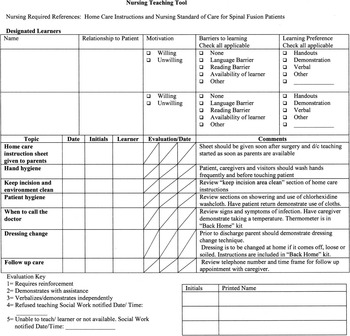
Administrative support permitted the designation of a specialized nursing unit to provide expertise along with continuity and consistency of care. All unit nurses were PPPB educated. A nursing standard of care was developed with increased attention to various aspects of hygiene, including meticulous hand hygiene for staff, patients, and visitors; daily bed and bath care, including the use of CHG cloths daily; attention to toileting issues; and wound dressing. Several tools were developed, including a nursing teach-back tool (Figure 2) and written homecare instructions. Using the teach-back tool, the nurse is required to teach and demonstrate home care to caregivers, including at long-term care facilities, along with demonstration of silver dressing change and temperature taking, ensuring that the caregiver understands and can teach it back to the nurse. If caregivers do not speak English, CyraCom language support service is used. This tool was developed as both a caregiver education guide and a documentation form. It includes general IP measures, signs and symptoms of infections, and an explanation of the Back Home kit. It identifies any barriers to caregiver understanding, such as language or reading level. A Spanish version is also available. The homecare handout is written at a fifth grade reading level and discusses hand and personal hygiene, silver dressing wound care, use of CHG bath cloths, signs and symptoms of infection, when to call the orthopedist, and follow-up appointment information. The Back Home kit was designed to contain 2 antimicrobial silver wound dressings if home replacing is required, sterile water to activate the dressing, waterproof pads, sterile gloves, sterile bulb syringe, CHG bath cloths to clean the back daily for 7 days, a thermometer, the orthopedist telephone number, and follow-up appointment information. The cost for each Back Home kit is $78.
Nursing teaching tool. D/C, discharge.

Monitoring of PPPB compliance was performed on all 126 patients in the postintervention phase and included compliance with perioperative antibiotic timing (100%), re-dosing of antibiotics (98%), use of preoperative CHG cloths (100%), use of CHG daily baths postoperatively (100%), use of silver dressing postoperatively (100%), and use of the nursing teach-back tool (100%).
Most SF patients had idiopathic scoliosis with at least 50 degrees of curvature. The percent of SF patients with neuromuscular indications was comparable (27% and 22%) in the preintervention and postintervention phases, respectively. There were no significant differences in the percent of diapered patients (12% [15/126]), low income patients (60% [76/126]), or those discharged to an extended care facility (2% [3/126]). The preintervention SF-SSI mean rate was 8.2 (8/98) per 100 SF surgeries (2008:13.3 [4/30], 2009: 2.7 [1/37], 2010: 9.7 [3/31]) compared with postintervention mean rate of 2.4 (3/126) (2011: 0 [0/25], 2012: 3.6 [1/28], 2013: 5.4 [2/37], 2014: 0 [0/26], 2015 through February: 0 [0/10]) representing a 71% reduction, although not statistically significant with a P=.0695. The preintervention SF-SSI rate in neuromuscular patients was 23.1 (6/26), representing 75% of all SF-SSIs incurred in the preintervention period. In the 50 months of the postintervention phase there have been no SF-SSIs in neuromuscular patients (0/23), representing a 100% reduction, which was statistically significant with a P=.008.
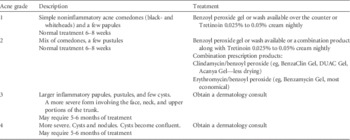
Using the Plan-Do-Study-Act method, we analyzed the 3 SF-SSIs that occurred during the postintervention phase; all occurring in adolescent patients with idiopathic scoliosis. Two of 3 SF-SSIs occurred in patients with uncontrolled acne at the time of surgery and were secondary to Propionibacterium acnes. The dermatology assessment tool was then developed in consultation with a dermatologist (Table 3). The tool was implemented for use during the initial orthopedic evaluation with dermatology referral several weeks to months before the scheduled SF surgery. It has been 20 months since the dermatology tool was implemented and 56 SFs have been performed. There have been no additional SF-SSIs.
Dermatology Assessment Tool

NOTE. How the tool is used: the actual skin assessment used includes pictorial illustrations for each stage of acne. The orthopedic surgeon recommends treatment or a dermatology consult. The patient’s condition is reassessed after treatment and surgery is scheduled if treatment is successful.
The PPPB prevented 7 SF-SSIs in the postintervention phase for an estimated total cost averted of $3.0 million ($3.2 million in median charges minus $194,425 in reimbursements). The total cost of the Back Home kits was $9,828. The total cost of the program is estimated at $26,250 (2 silver dressings: 1 used after surgical closure and 1 used on day of discharge; CHG washcloths once daily for mean LOS of 6 days, and a Back Home kit). The mean (range) attributable LOS for a SF-SSI in the preintervention phase was 24 (6–76) days; therefore, a total of 168 hospital days were prevented by the PPPB.
DISCUSSION
A sustained reduction in the SF-SSI rate was achieved using the PPPB. The SCIP bundle consists only of measures that are performed in the immediate preoperative or operative arenas and does not include peri- and postoperative processes that might further reduce SSI risk.Reference Bratzler and Hunt 12 Postdischarge IP measures are also not included. We included all surgical periods including postdischarge in the PPPB design and gained support from parents/caregivers by providing them with appropriate resources, including education and wound care supplies. In hospitals where SCIP bundle compliance is high, a reduction in SSI rate has been demonstrated.Reference Berenquer, Ochsner, Lord and Senkowski 13 , Reference Nguyen, Yegiyants, Kaloostian, Abbas and Difronzo 14 Elevated SSI rates, despite excellent SCIP bundle compliance, may be secondary to breaches in IP occurring during other surgical periods; however, an exact attributable percentage of SSIs that occur during these periods is not known.
In pediatrics the risk of SF-SSI is strongly associated with scoliosis etiology with neuromuscular scoliosis having a higher SSI risk.Reference Calderone, Garland, Capen and Oster 3 , Reference Labbe, Demers, Rodrigues, Arlet, Tanguay and Moore 5 , Reference Stevens and Beard 15 , Reference Murphy, Firth, Jorgensen and Young 16 Pediatric patients with neuromuscular scoliosis have longer LOS, higher total hospital costs, more diagnoses, and more total procedures than pediatric patients with idiopathic scoliosis.Reference Murphy, Firth, Jorgensen and Young 16 Idiopathic scoliosis SSI rate has a wide range but is still substantial.Reference Richards 17 – Reference Sansur, Reames and Smith 22 The microbiology of these infections is predictable, usually secondary to skin and bowel organisms, suggesting that a breakdown in IP practices surrounding wound care and toileting in the postoperative period may be contributory.Reference Labbe, Demers, Rodrigues, Arlet, Tanguay and Moore 5 , Reference Sponseller, LaPorte, Hungerford, Eck, Bridwell and Lenke 23 Analysis of SF-SSI patients in the preintervention phase revealed similar microorganisms as previously reported in the literature.Reference Labbe, Demers, Rodrigues, Arlet, Tanguay and Moore 5 , Reference Rao, Vasquez and Harrop 7 , Reference Cahill, Warnick and Lee 10 The median time to a SF-SSI of 28 days was longer than previous pediatric SF-SSI analyses, suggesting the presence of potentially modifiable processes in the postoperative period that might reduce risk.Reference Milstone, Maragakis and Townsend 8
Timing of preoperative antibiotics in pediatric SF surgery has been shown to be an independent risk factor for deep SSI. Patients who received inappropriately timed preoperative antibiotics had a 3.5-fold greater risk of SSI than those who received appropriately timed prophylaxis.Reference Milstone, Maragakis and Townsend 8 The PPPB reemphasized the importance of perioperative antibiotic timing and re-dosing. The PPPB also incorporated the use of CHG washcloths and silver dressings, both of which have antimicrobial activities. There is literature evidence for CHG washcloths in the prevention of SSIs.Reference Karki and Cheng 24 , Reference Vitale, Riedel and Glotzbecker 25 CHG washcloths have been also studied in the prevention of pediatric central line–associated bloodstream infections and have been shown to be safe and efficacious.Reference Milstone, Passaretti and Perl 26 The antimicrobial activities of silver dressings have been well studied in burn wound patients and have been shown to decrease burn wound infections.Reference Aziz, Abu and Chong 27 , Reference Khundkar, Malic and Burge 28 Silver dressings have been shown to decrease SSI rates in adult laminectomy patients and in a simulated wound model using P. acnes.Reference Epstein 29 , Reference Bowler, Welsby, Hogarth and Towers 30 The silver dressing is composed of a sustained release of pure ionic silver that is activated upon dampening and has been shown to decrease wound infections and promote wound healing.Reference Heggers, Goodheart and Washington 31 – Reference Pozza, Matthew and Lunardi 33
The multidisciplinary team developed the PPPB. This approach has been previously shown to improve SF-SSI rates in pediatrics.Reference Ballard, Miller, Nyquist, Elise, Baulesh and Erickson 34 Team members contributed detailed information regarding the preintervention processes that assisted construction of the gap analysis and design of the improvement processes. Administrative support was vital to the success of the program by absorbing the cost of the Back Home kit and permitting creation of a designated nursing unit. Administrative support has also been shown to be crucial to making patient safety and IP improvements.Reference Skoufalos, Clarke and Napp 35 – Reference Hanacik, Franson, Gollup and Rytel 37
After PPPB implementation, a 71% reduction in overall SF-SSI rate was observed; although not statistically significant, it represents the prevention of 7 SF-SSIs and a substantial aversion of cost.Reference Perencevich, Stone and Wright 38 However, we did observe a statistically significant SF-SSI rate reduction in neuromuscular patients. All 3 SF-SSIs that occurred in the postintervention phase were idiopathic scoliosis patients with significant untreated dermatologic conditions involving the back (2 with acne and 1 with severe eczema). Patients with back acne have an increased risk of SF-SSI secondary to P. acnes.Reference Nandyala and Schwend 39 Since IP implemented the dermatology assessment tool there have been no further SF-SSIs.Reference Ramli, Malik, Hani and Jamil 40
The limitations of this project include the small sample size due to limited numbers of SF surgeries performed, a single institution, and the quasi-experimental design with pre- and postintervention phases. Many bundle elements were introduced simultaneously and practiced together so it is not possible to ascertain which element is vital to the observed reduction in SF-SSI rate. Since the process of developing any bundle involves the active participation of many hospital personnel, it is possible the Hawthorne effect biased the results toward a positive effect since those delivering care knew they were being observed. However, the length of the postintervention phase of 50 months demonstrated that the observed reductions in SF-SSI have not weakened over time. Ongoing bundle compliance monitoring and continued use of the Plan-Do-Study-Act method will ensure future program success.
The PPPB is relatively cheap to implement and is generalizable to the prevention of other SSIs. The Back Home kit is versatile and could be used for any surgery not involving mucous membrane. Home care instructions using the teach-back method can be adopted for any surgical postoperative teaching. Creation of a specialized unit with nursing staff having extensive training in postoperative wound and medical care can be replicated for other surgical procedures. The PPPB provides evidence that SF-SSIs can be prevented with attention to all surgical periods.
ACKNOWLEDGMENTS
We thank the chief nursing officer and the multidisciplinary team at St. Christopher’s Hospital for Children who assisted in the development and implementation of the project.
Financial support. None reported.
Potential conflicts of interest. All authors report no conflicts of interest relevant to this article.