





Introduction
Coronary artery–pulmonary artery fistulas are rare but clinically significant anomalies. Reported prevalence is 0.05–0.25% in angiography and up to 0.9% with advanced imaging. Abnormal flow from the high-pressure coronary artery to the low-pressure pulmonary artery reduces myocardial perfusion, causing the “coronary steal” phenomenon. They may be asymptomatic or present with dyspnoea, angina, arrhythmia, heart failure, or endocarditis.Reference Rusali, Lupu, Manolache, Rusali, Bordei and Cojocaru1
Treatment depends on fistula size, symptoms, and haemodynamic impact. Small, asymptomatic fistulas may be observed, while closure is advised for large or symptomatic ones. Percutaneous options include coil embolisation, detachable balloon, and liquid embolic agents.Reference Doorey, Sullivan and Levin2,Reference Jagadeesan, Liao and Raveendran3 Doorey et al. reported success with detachable balloons,Reference Doorey, Sullivan and Levin2 and newer methods include balloon-assisted liquid embolic injection.Reference Jagadeesan, Liao and Raveendran3 Shah introduced the “Half-cut balloon technique,”Reference Shah, Shah, Thakur and Sembhi4 and Ağaç described the “Closed-Loop Balloon-Stent Technique.”Reference Ağaç, Vatan and Tatlı5 In our case, coil embolisation failed due to unavailability and limitations, so the closed-loop balloon stent was chosen as a practical, accessible alternative.
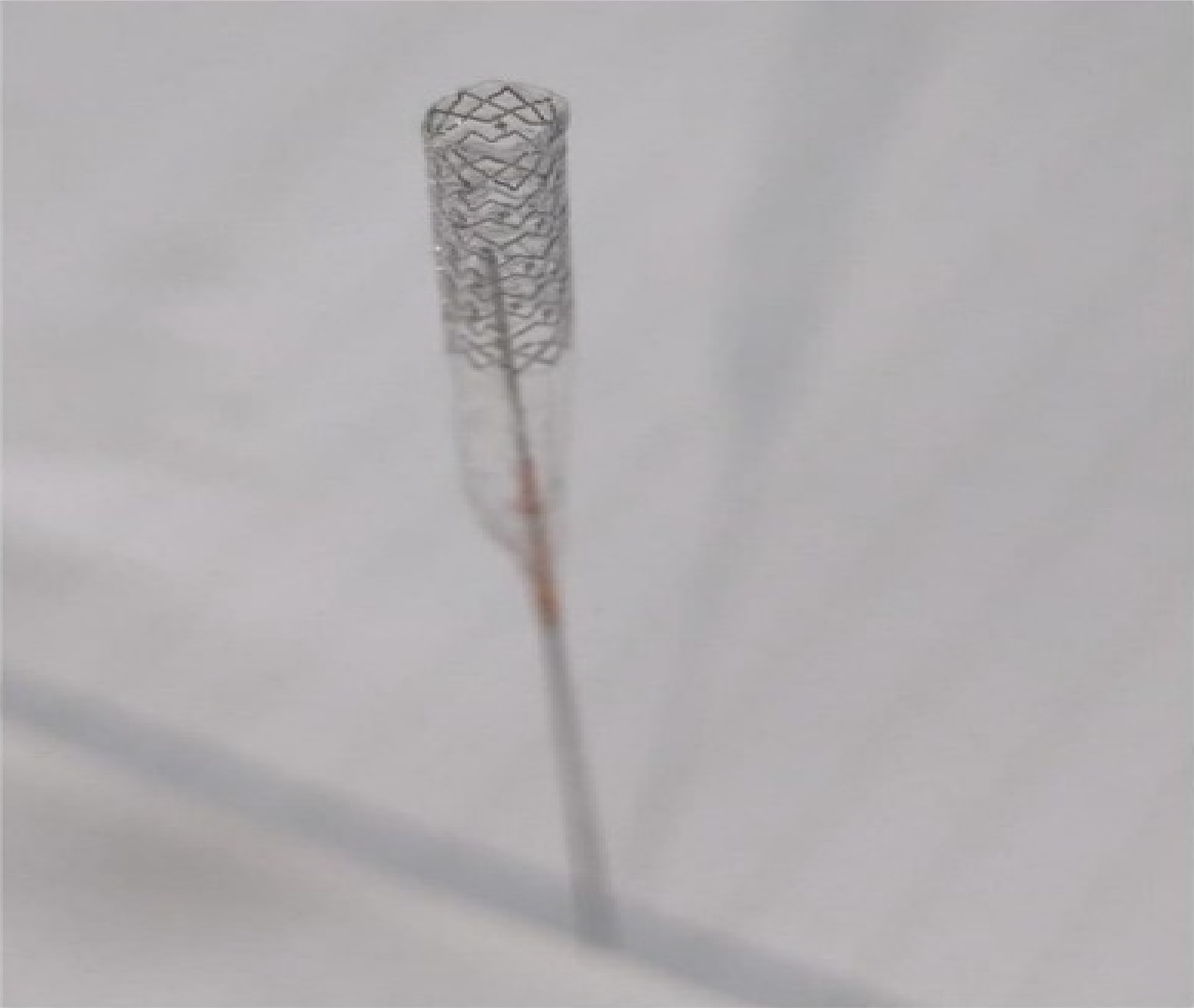
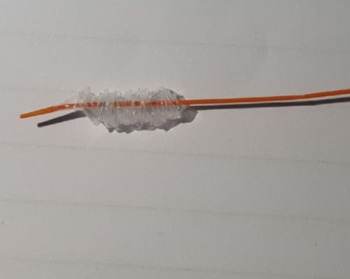
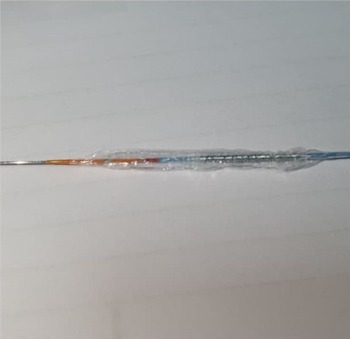
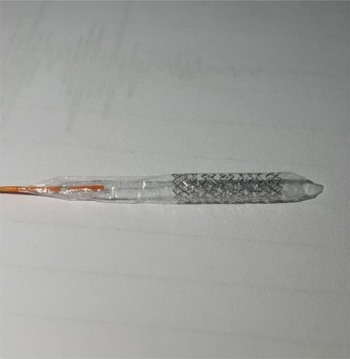
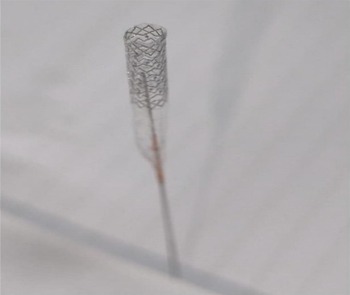
The Closed-Loop Balloon-Stent Technique, first described by Ağaç et al.,Reference Shah, Shah, Thakur and Sembhi4 was successfully applied in this case with guideliner support, which facilitated safe advancement and controlled placement of the balloon in the fistula anatomy. In Figures 1–4, the closed-loop balloon-stent technique is described in detail.
In our case, residual flow persisted after coil embolisation, and symptoms continued. The fistula was therefore closed using the closed-loop balloon-stent technique, consistent with prior reports.Reference Shah, Shah, Thakur and Sembhi4 Coil embolisation is often insufficient in large pulmonary artery fistulas, where surgery or vascular plugs are preferred. However, these devices may not always be available. Thus, the closed-loop balloon-stent method offers a practical alternative applicable to various fistula types when coils or plugs are lacking.
A coronary balloon was taken and separated from its shaft, then cut into two halves from the shaft side.

The distal half of the prepared coronary balloon was mounted onto a coronary stent system (balloon-mounted stent).
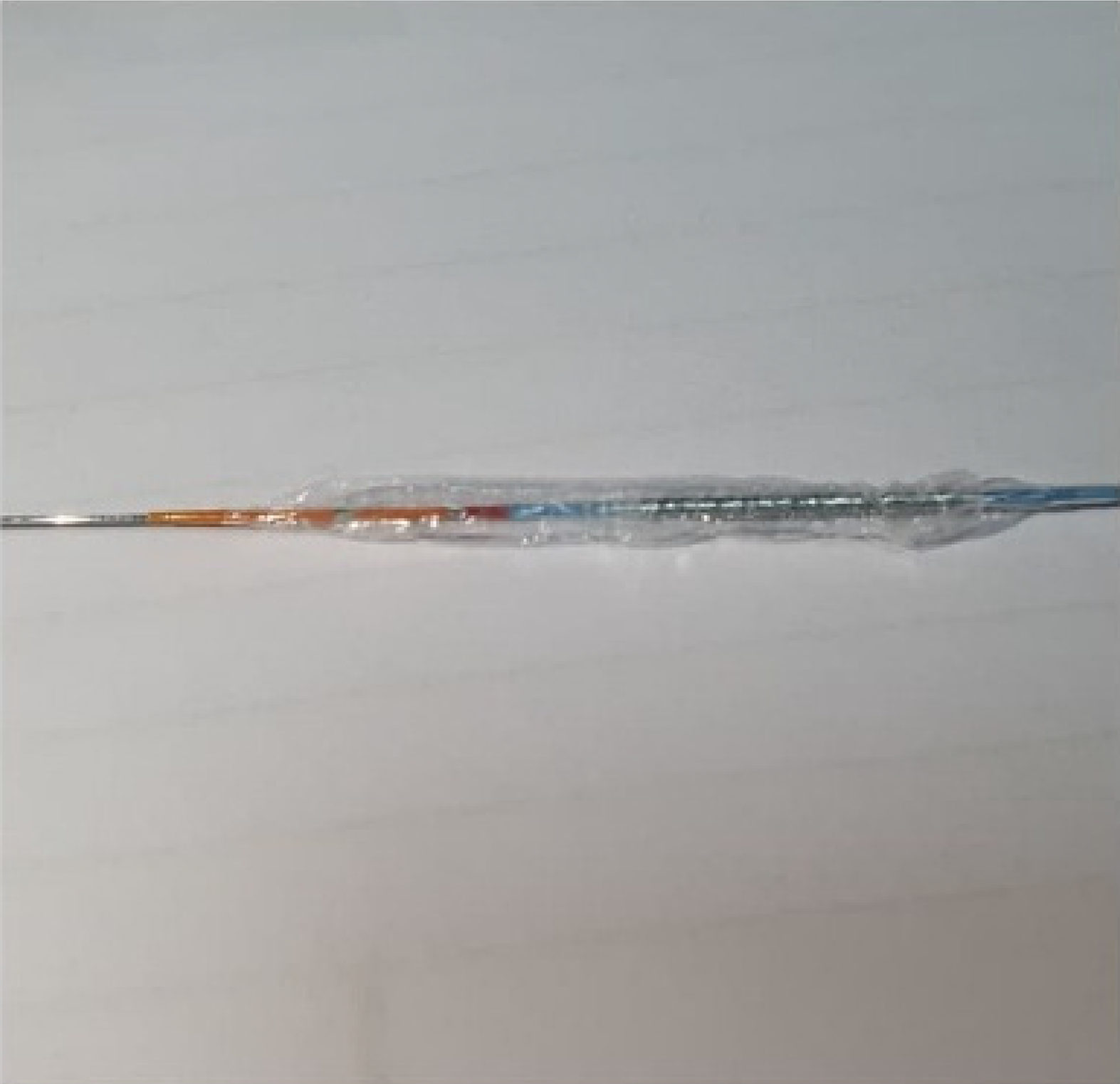
The stent’s own balloon was inflated, securing the upper half-balloon firmly to the stent, thereby creating a novel indigenous plugging device (a cap formed by half of a coronary balloon in front of the stent system).
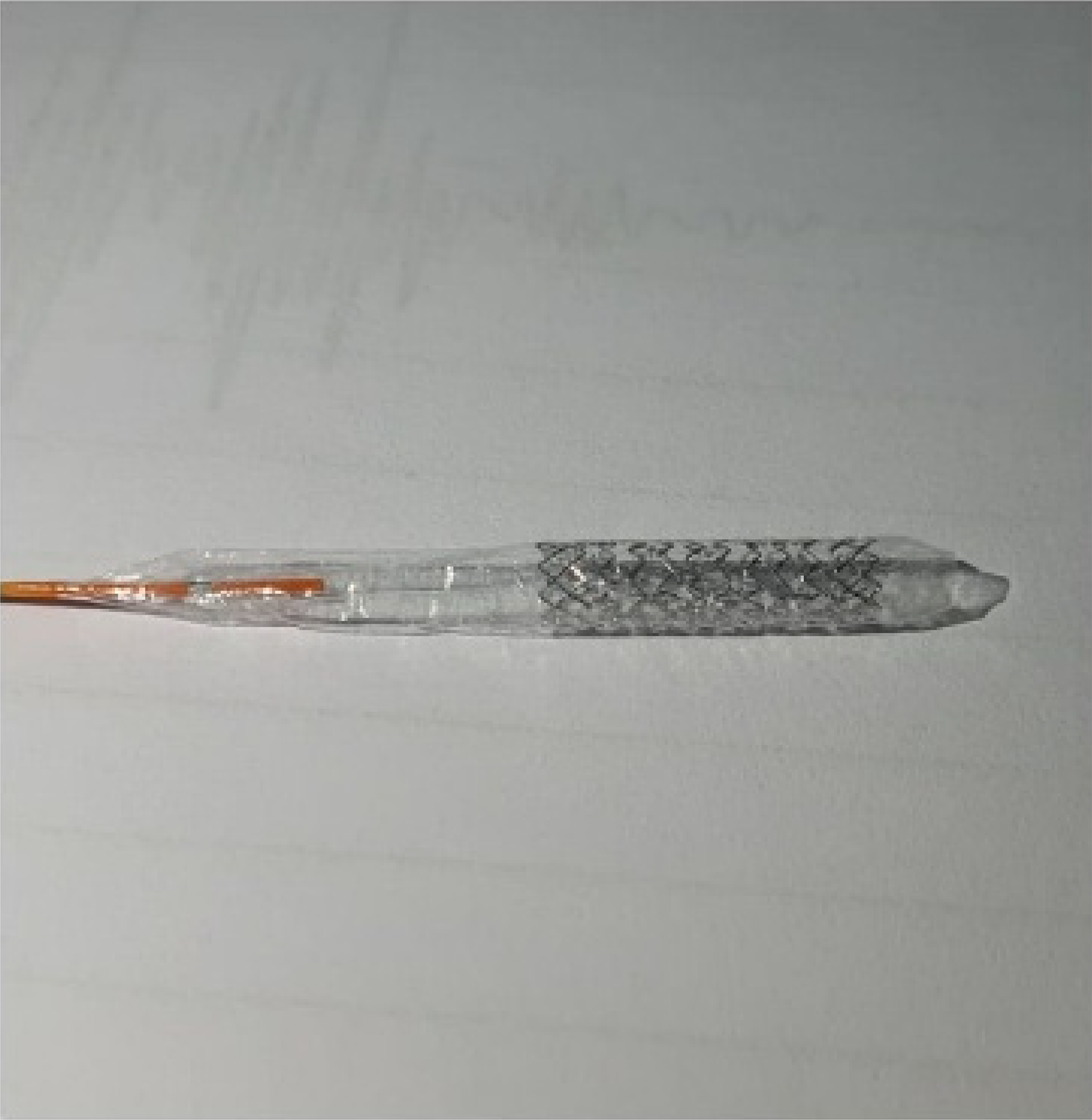
The stent balloon was then withdrawn and removed, and the handmade plug was carefully implanted in the fistula, proximal to the previously placed coil.
Case
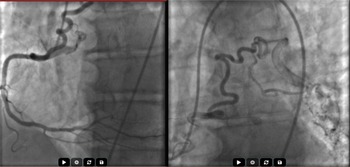
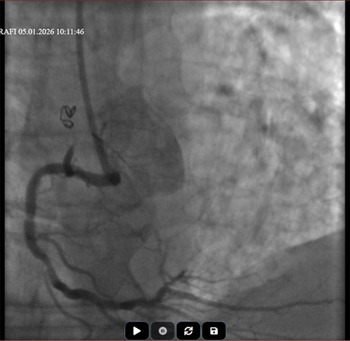
A 70-year-old male patient with a history of coronary artery disease was admitted. One year earlier, coil embolisation had been performed for a fistula between the right coronary artery and the pulmonary artery. However, residual flow persisted after the procedure, and the patient continued to experience exertional dyspnoea. Residual fistulas may lead to persistent symptoms and long-term right heart overload, necessitating careful evaluation. In this case, the fistula was clinically significant; ongoing residual flow and persistent dyspnoea after coil embolisation indicated a haemodynamically relevant shunt, which was confirmed by coronary angiography. On admission, ECG showed normal sinus rhythm. Due to persistent dyspnoea, coronary angiography was performed, which clearly demonstrated that the coil had not completely occluded the fistula, as shown in Figure 5.
RCA-PA fistula.
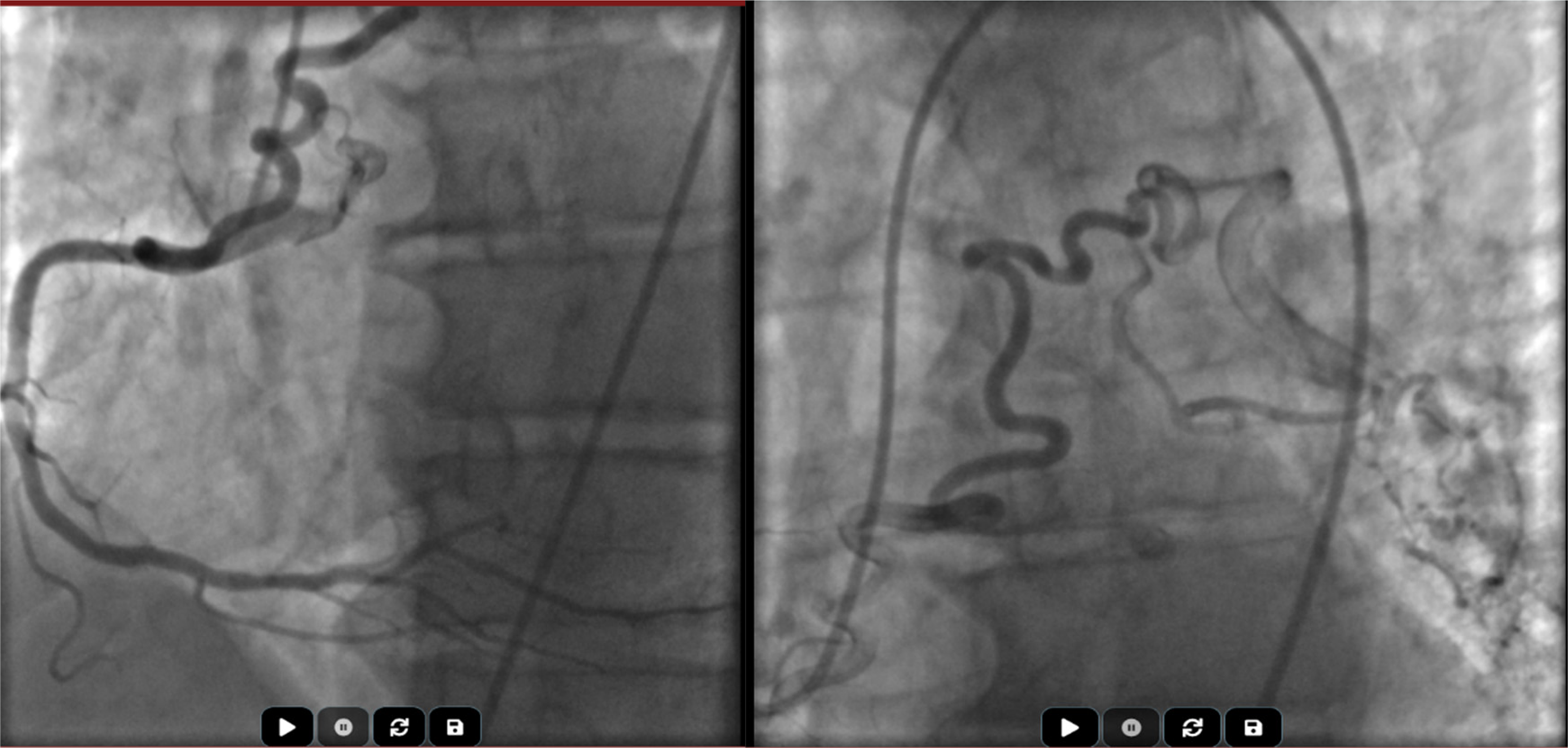
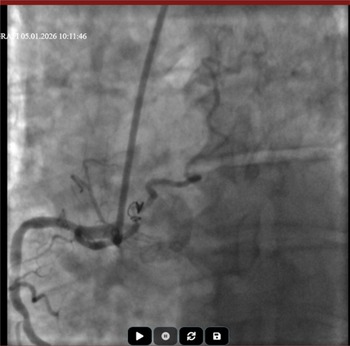
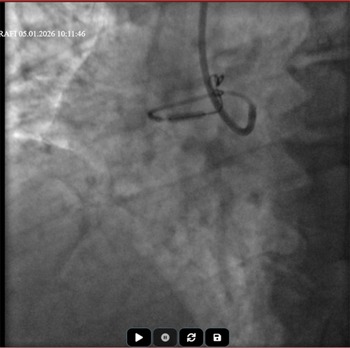
Since a vascular plug was not available, the closed-loop balloon-stent technique was chosen. A 6F JL guiding catheter was engaged in the RCA, and with guideliner support (Figure 6), the closed-loop balloon stent was advanced to the fistula. As shown in Figure 7. As shown in Figure 8, the fistula was successfully closed following the closed-loop balloon-stent procedure.
Residual fistula after coil embolisation.

The closed-loop balloon stent was positioned into the fistula with guideliner support.
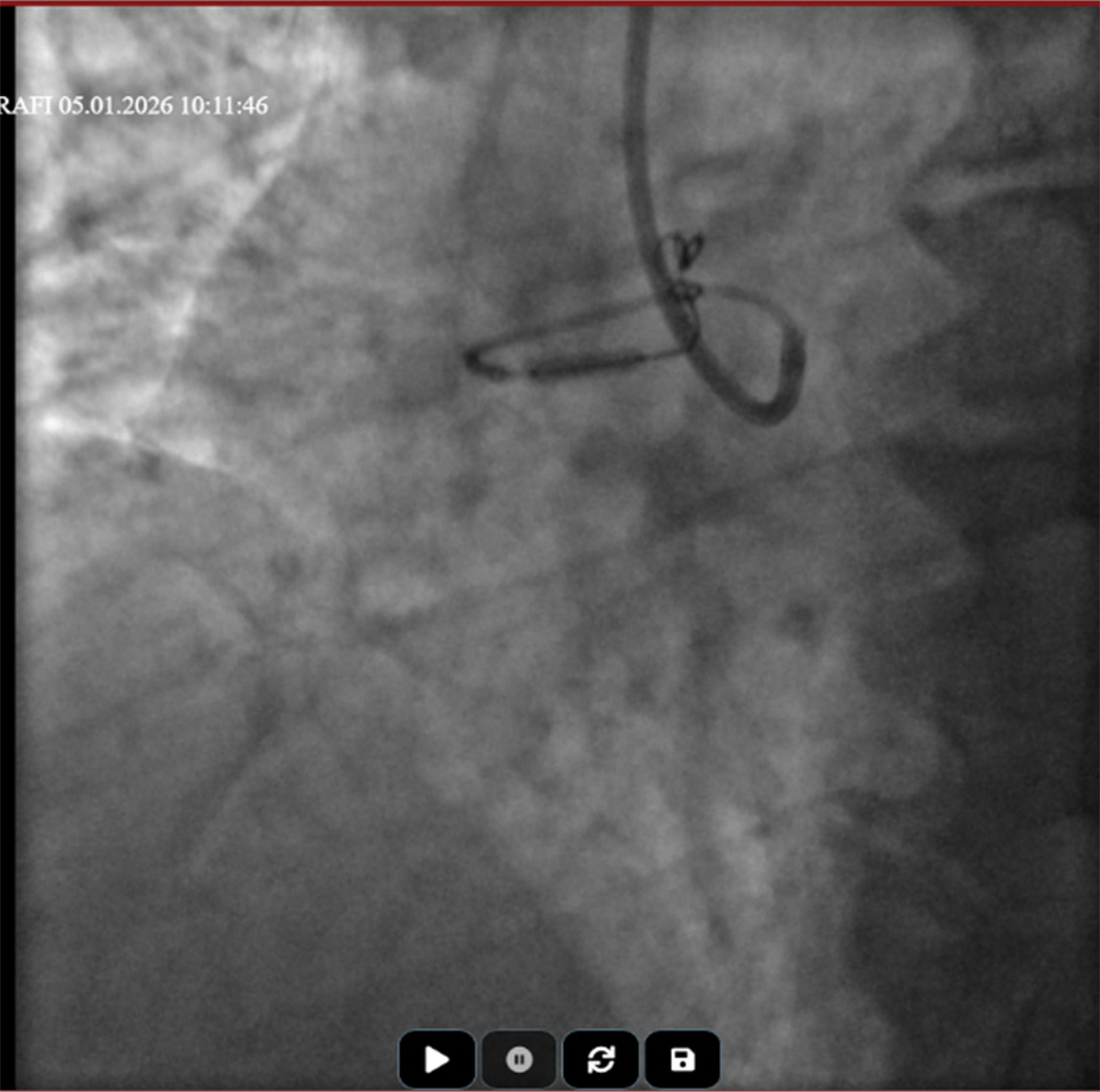
Closure of the fistula after the closed-loop balloon-stent procedure.

This method allowed precise positioning of the balloon at the target site, minimised complications, and achieved complete occlusion of the fistula. Post-procedure, the fistula was closed, and the pathological connection between the pulmonary artery and coronary artery was eliminated.
The closed-loop balloon-stent technique, first described by Ağaç et al.,Reference Shah, Shah, Thakur and Sembhi4 was successfully applied in this case with guideliner support, which facilitated safe advancement and controlled placement of the balloon in the fistula anatomy.
This case is instructive in demonstrating that treatment strategies for rare RCA–PA fistulas can be stepwise. The initial intervention with coil embolisation may not always be sufficient, particularly in large pulmonary arteries; when residual flow persists, alternative techniques must be employed. All angiographic images are shown in Video 1.
Outcome and follow-up
At the 6-month follow-up, conducted via telephone, the patient reported complete resolution of dyspnoea and absence of active symptoms. He was able to climb up to three flights of stairs without experiencing shortness of breath, indicating significant functional improvement.
Discussion
Coronary artery–pulmonary artery fistulas are rare but clinically significant, often presenting with dyspnoea, angina, or heart failure, and may worsen pulmonary hypertension.Reference Zheng, Kumar and El-Hajjar6,Reference Lin, Wu and Kuo7 Small fistulas can be treated with coils, but large ones often require surgery or vascular plugs, which may not always be available. Balloon-based alternatives have been reported, including detachable balloons,Reference Doorey, Sullivan and Levin2 balloon-assisted liquid embolic injection,Reference Jagadeesan, Liao and Raveendran3 and the closed-loop balloon-stent technique.Reference Ağaç, Vatan and Tatlı5 In our case, residual flow persisted after coil closure, causing coronary steal and dyspnoea. A guideliner-assisted closed-loop balloon stent was used, ensuring safe delivery and successful occlusion. This technique represents a practical option in symptomatic patients, with dyspnoea resolution confirming favourable outcomes.
Supplementary material
The supplementary material is available online at https://doi.org/10.1017/S1047951126123853
Ethical standard
This case report was conducted in accordance with the principles of the Declaration of Helsinki. As this is a single-patient case report, formal ethical approval was not required.
Consent statement
Written informed consent was obtained from the patient for publication of this case report and any accompanying images.
The institution at which the work was performed
Kırıkkale University, Faculty of Medicine, Department of Cardiology, Kırıkkale, Türkiye.


 Open access

