1. Introduction
Through half of the twentieth century, international boundaries were viewed as buffers rather than centers of natural resource management. Recent growth of economic activity in cities along the US–Mexico border underscores the need for transboundary environmental resource management. Natural flow in waterways traversing across more than one country's territorial boundaries generates transboundary water pollution. At the western end of the 1,950 mile US–Mexico border, wastewater flows with gravity from the south in Mexico to the north in the US in the Tijuana watershed. For the past 60 years, rapid economic development and urban population growth have outpaced environmental infrastructure in Tijuana, Mexico. Approximately 38 per cent of the city is not connected to the sewer system (Guzman, Reference Guzman1998). Uncontained raw sewage flows into the Tijuana River, ultimately contaminating the US Tijuana River National Estuarine Research Reserve and beaches in the US at the river mouth (Gersberg et al., Reference Gersberg, Brown, Zambrano, Worthington, Weis and Ganster2000). Similarly, sewage pollution linked with the rise in coastal population and inadequate treatment infrastructure is putting at risk human health and wildlife in the North Sea, S.E. Asia, S. and W. Africa, the Caribbean, parts of South America as well as the estuaries in North America (UNEP, 2006). The timing of this paper is fitting in light of the United Nations designation of 2008 as the Year of Sanitation due to World Health Organization estimates of 80 per cent of all sickness in the world being attributed to unsafe water and sanitation (UN Wire, 2007).
The only infrastructure crossing the border in the Tijuana River watershed is a wastewater interceptor from a pump station in Tijuana to the International Wastewater Treatment Plant (IWTP) in San Diego County. Construction of the IWTP began in 1997 on the US side of the border by agreement between the US and Mexico (IBWC, 1990). Although the agreement specifies that secondary treatment will be provided at the IWTP, the first phase of this facility provides only advanced primary treatment. The IWTP receives half of Tijuana's wastewater through gravitational flow. The rest of Tijuana's renegade wastewater flows persist without adequate conveyance and treatment, partially due to the financial constraints of the Tijuana State Commission for Public Services (Comision Estatal de Servicios Publicos de Tijuana, CESPT).
The proximity of San Diego to Tijuana makes them border neighbors with many asymmetries of two countries at different stages of economic development. Currently, the population in San Diego is approximately double the population of Tijuana (2,850,800 to 1,299,850) (INEGI, 2003). However, since 2000, the rate of growth in the population is 11.3 per cent for San Diego and 62 per cent for Tijuana (INEGI, 2003). A consistent problem along the entire US–Mexico border pertains to the asymmetric financial limitations of border residents to self-finance any water quality improvement needed for a continually expanding population. While San Diego maintains a decentralized form of governance and financial infrastructure at the municipal level, Tijuana lacks decentralized management and access to capital such as municipal bonds and tax revenues. The Mexican tax system limits the taxation authority of local governments (Liverman et al., Reference Liverman, Varady and Sanchez1999).
Asymmetries between upstream Tijuana and downstream San Diego matter for transboundary environmental management. Transboundary resources such as waterways can lead to cooperation or conflict, depending on the perceptions of relative benefits to each party at the boundary (Sadoff and Grey, Reference Sadoff and Grey2002). This paper's economic analysis through applied game theory can highlight tradeoffs to Mexico and the US of both noncooperation and cooperation for wastewater management in the Tijuana watershed. The upstream and downstream locations of each country are one type of asymmetry along with differences in costs and damages represented in the model to properly assess incentives for each country's wastewater treatment strategies under both game scenarios.
Asymmetries set the stage for examining a variety of sharing rules involving transfers to induce cooperation among the countries. The analysis includes quantification of the side payments under various sharing rules to solve transboundary pollution between asymmetric countries. Such financial mechanisms are modeled that are relevant for Mexico's and the US's wastewater issues. Existing institutions through the North American Free Trade Agreement enable side payments to be made between the sovereign countries that represent diplomatic rather than litigation channels to solve the shared pollution problem in border waterways over which neither country holds absolute sovereignty.
Due to Mexico's centralized governance, transboundary management is coordinated at the federal level with NAFTA as a framework. As of 1994, two institutions, the Border Environmental Cooperation Commission (BECC) and the North American Development Bank (NADBank) have mandates to develop and finance environmental infrastructure at the border (I.L.M., 1993). This analysis will compare the optimal side payments through various sharing rules with the actual allocations that have been made by both the BECC and NADBank as the principal sources of new capital investment in border water infrastructure. These institutions represent a change from what was a noncooperative institutional arrangement with separate sections in each country of the International Boundary Water Commission (IBWC), formed through a 1944 treaty that did not mention water quality explicitly (Mumme, Reference Mumme1993). Hence, the analysis of this paper will also make a comparison between noncooperative and cooperative financial strategies for wastewater treatment.
This paper's analysis moves beyond the static game framework of Frisvold and Caswell (Reference Frisvold and Caswell2000) for transboundary water management and the dynamic trade and wastewater pollution work of Fernandez (Reference Fernandez2002) at the US–Mexico border. The south to north unilateral pollution in the new analysis results in different asymmetries of costs, damages, and incentives to cooperate. Formal channels of financing transfers through institutions under NAFTA are incorporated into the new applied analysis. Fernandez (Reference Fernandez2005) investigates optimal strategies for solving sediment flow in surface water from the south in Mexico to the north in the US without the formal financial funding of institutions devoted to transboundary water and wastewater projects.
Some general transboundary literature has focused on the strategies for signing an international environmental agreement, emphasizing analysis of the decision to participate and the stability of the agreement. Use of dynamic games to model theoretically a dynamic pollutant includes List and Mason (Reference List and Mason2001). List and Mason (Reference List and Mason2001) show that noncooperation is better than a uniform cooperation emissions strategy, in a model focused on symmetric players only. The literature has empirical examples of transboundary air pollution: Chambers and Jensen (Reference Chambers and Jensen2002), Moussiopoulos et al. (Reference Moussiopoulos, Helmis, Flocas, Louka, Assimakopoulos, Naneris and Sahm2004), Nordenstam et al. (Reference Nordenstam, Lambright, Berger and Little1998), and Nagase and Silva (Reference Nagase and Silva2007). Chambers and Jensen (Reference Chambers and Jensen2002) investigate the use of aid to address uncertainty in transboundary air pollution, while Moussiopoulos et al. (Reference Moussiopoulos, Helmis, Flocas, Louka, Assimakopoulos, Naneris and Sahm2004) conduct a numerical simulation of transboundary air pollution in Europe. Nordenstam et al. (Reference Nordenstam, Lambright, Berger and Little1998) examine the transboundary institutions for US air pollution policy. Nagase and Silva (Reference Nagase and Silva2007) use game theory focused on noncooperative games only to show the limits of decentralized policymaking in attempting to address acid rain air emissions in China and Japan. Candel-Sanchez (Reference Candel-Sanchez2006) models a two-period game with a pollution parameter, rather than a state equation, to focus on a tax for firms to follow the polluter pays principle. Chambers and Jensen (Reference Chambers and Jensen2002) use a two-stage game with generic aid to investigate effects on transboundary air pollution when unsure about politics of the recipient country. Germain et al. (Reference Germain, Toint, Tulkens, Faucheux, Goudy and Nicolai1998) analyze symmetric countries without an actual application to discuss theoretical properties of transfers.
Cooperation in the form of joint management of water quantity appears in theoretical models where the possibility of absolute sovereignty exists (Barrett, Reference Barrett1994; Ambec and Sprumont, Reference Ambec and Sprumont2002). However, in the waterways along the US–Mexico border neither country has absolute sovereignty. The joint management approach lends itself directly to equity analysis because a cooperative agreement between the countries must be reached regarding the decision to undertake a water project and how to distribute the benefits and costs. Jorgenson and Zaccour (Reference Jorgenson and Zaccour2001) characterize side payments in a differential game with the egalitarian principle of dividing surplus equally rather than formally addressing asymmetry. Rogers (Reference Rogers, Dasgupta, Maler and Vercelli1997) indicates that the objectives of equity and efficiency may not be met simultaneously with asymmetry. Some Pareto-optimal allocations can induce envy if the investment occurs only in one country (Rogers, Reference Rogers, Dasgupta, Maler and Vercelli1997). Without an economic focus, geographer Fischhendler (Reference Fischhendler2007) does not recognize two types of incentives for side payments to take place: (1) downstream asymmetric net benefits from greater willingness to pay to avoid costly damages and (2) damages in the upstream country with scant access to finances. He ignores side payments altogether, even though they are taking place through formal NAFTA institutions. Fischhendler also ignores the pollution effects of Mexico that motivate them to cooperate with the US, as the present paper will show.
Empirical studies of transboundary waterways include Gren (Reference Gren2001), which studies nutrient pollution in the Baltic Sea with uniform actions by countries as a form of cooperation. Bayramoglu (Reference Bayramoglu2006) compares noncooperation to symmetric abatement rules for pollution in the Black Sea between Romania and the Ukraine. Linmooth (Reference Linmooth1990) describes qualitatively downstream Netherlands and Belgium paying France to abate pollution along the Rhine River. Rogers (Reference Rogers, Dasgupta, Maler and Vercelli1997) examines the Ganges–Brahmaputra basin as an example of water allocation in an international river basin shared between India, Bangladesh, and Nepal, where a cooperative solution improves all countries' welfare over a noncooperative solution. Roger's static analysis involves joint optimization and compares allocations based on meeting feasibility, Pareto Admissibility, and individual rationality using game concepts and the engineering data of the water system. Kilgour and Dinar (Reference Kilgour and Dinar2001) suggest a water allocation agreement for the Ganges is possibly more stable with relative rather than fixed sharing rules. Bhaduri and Barbier (Reference Bhaduri and Barbier2006) also study the Ganges using a Stackelberg game approach.
Sadoff and Grey (Reference Sadoff and Grey2002) indicate that the redistribution of economic gains must be considered simultaneously with maximizing aggregate benefits. Cooperative game theory can accommodate such strategies involving transfers among asymmetric players for fair and efficient water allocation. Barrett (Reference Barrett1994) analyses a static case of three riparian water countries through use of the Shapley value to select a unique, stable, and efficient allocation rather than as a means to achieve equity.
The difference between the cooperative solution and the noncooperative solution depends on the spillover effects of benefits and costs, which are likely asymmetric due to geographic and economic differences between the countries. The upstream country imposes a negative unidirectional water burden upon the downstream country by preventing the latter from reaching an unconstrained optimal water quality. Compensation through side payments is a viable way to create incentive for cooperation. Even where resource flows occur unidirectionally, precluding mutual control over negative externalities, there is the possibility of Pareto-admissable or ‘win–win’ solutions through side payments. The Shapley value, Chander–Tulkens' cost-sharing rule, equity rule, and the Helsinki rule for reasonableness are the various rules addressed in this paper for making side payments for cooperation. These rules will be compared quantitatively through the empirical case in the Tijuana watershed.
In 1984, the Reagan administration imposed the equal finance rule to pay for border environmental infrastructure. Frisvold and Caswell (Reference Frisvold and Caswell2000) assert that the benefit–cost ratio would have to be much higher in order for any large projects to be built under the equal finance rule. Otherwise, noncooperation would tend to be the outcome. The equal cost-sharing rule was dropped in 1990, which affected an international treatment plant for the Tijuana and San Diego regions (IBWC, 1990). Mexico's cost under Minute 283 was assigned to equal the amount Mexico would have spent on its own treatment plant (IBWC, 1990). Minute 283 promotes individual rationality, as the cost allocation for Mexico to cooperate is the same as noncooperation.
2. Model
The wastewater problem in this paper consists of diffuse and channeled flow across a border. The flow of wastewater is deterministic, unidirectional flow from upstream Tijuana, adjacent to the border with steep slopes draining immediately to the US downstream. The rate of change in total suspended solids pollution in wastewater transported from upstream to downstream is measured at the downstream rivermouth where the stock accumulates, according to equation (1). Total suspended solid stock in the downstream (US) portion of the watershed is term P. Pollution changes according to how much flows in, minus how much flows out.
The instantaneous rate of change in total suspended solid stock transported gravitationally from upstream depends on flood frequency, which helps determine the volume of water in the watershed between upstream and downstream, R, the runoff flow, f, the slope length, S, and abatement of wastewater flow, A (Gray and Sotir, Reference Gray and Sotir1996). The upstream pollution flow function, γ(R,S,f(t)), contains the factors influencing the rate of change in total suspended solids in wastewater moving from the upstream portion of the watershed to the downstream portion of the watershed in the absence of abatement activities. Coefficients b 1 and b 2 denote how one unit of abatement affects total suspended solids for Mexico, A 1, and the US, A 2, respectively. Abatement occurring upstream is b 1A 1 and b 2A 2 is abatement occurring downstream, where both can reduce total suspended solid flow. The parameter δ, 0 < δ < 1, helps depict natural decay of total suspended solids as δP. The term G(1 − δ)P depicts total suspended solid outflow exiting the downstream Tijuana Estuary to the sea. G accounts for change in the total suspended solids since organic and inorganic solids can interact with sediments in the river before exiting at the mouth (Schnoor, Reference Schnoor, Neely and Blau1985)

The objective of wastewater managers (CESPT) in Mexico and the San Diego Wastewater Authority in the US is to minimize the net cost of total suspended solids. The net costs are the sum of abatement costs and damages. The cost minimization in equation (2) is subject to the dynamics of total suspended solids in equation (1)

In equation (2), upstream pollution damages, D 1, are a function of wastewater flow after upstream abatement. Upstream abatement cost is C 1(A 1). Downstream, the US minimizes the sum of damages and abatement costs in equation (3)

subject to equation (1). Increasing, twice differentiable and convex cost functions are in (2) and (3) with C′i > 0 and C″i > 0. Damages are increasing in stock and twice differentiable. Solving for the steady state of pollution flow, stock and abatement will help in comparing game solutions. Subsequent autonomous current value equations suppress the t term.
Noncooperative game
Under noncooperation, each country chooses abatement to minimize its own costs and damages with wastewater infrastructure that is physically divided into two portions, one for Mexico and one for the US, because of political boundaries, not natural boundaries.
Through the minimization of the current value Hamiltonian of Mexico in (4) and the US in (5), that takes into account the current state of pollution, the noncooperative Markov Perfect Nash equilibrium for each country can be derived


Necessary and sufficient conditions for optimality are derived from the first-order conditions, including Pontryagin's minimum principle (Kamien and Schwartz, Reference Kamien and Schwartz1991)


along with the current value costate equations


and the constraint equation

Solving for both shadow values, λ 1 and λ 2, by setting equations (8) = 0 and (9) = 0, yields
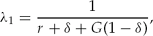
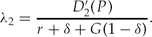
Optimal abatement is derived through the first-order necessary conditions where marginal damages equal the marginal cost of abatement. Both countries control wastewater emissions, where marginal costs of abatement are equal to the shadow value of damages from wastewater pollution in reaction functions in (6) and (7). The costate equations (8) and (9) indicate that the change in the shadow value of wastewater equals the marginal increase in wastewater stock. Substitution of (11) and (12) into equations (6) and (7) shows that the abatement decision is affected by the stock, where marginal costs of abatement equal marginal damages in equations (13) and (14).


The bracketed term on the right-hand side of equation (14) has a ratio of marginal damages from deposition impacts over the instantaneous capital dividend from total suspended solid stock less the marginal rate of increase in total suspended solids transported from upstream to downstream. Noncooperation will be empirically compared to cooperation later in the paper.
Cooperative game
Cooperation enables both costs and damages to be jointly minimized at the watershed scale, not at the individual country scale. The model includes the possibility of transfer payments F(A 1, A 2) through NAFTA institutions of BECC and NADBank between the cooperating countries. The transfer payments compensate the loser since full cooperation does not mean each country is individually better off. Transfer payments can redistribute additional cost savings from cooperation as compensation. The functional relationship of the transfer payment is flexible. It can be as a function of the amount of the public good supplied (Laussel and Le Breton, Reference Laussel and Le Breton1998). In this case, abated wastewater flow as the public good may imply a functional relationship of monetary or technological form to obtain the pubic good for both countries sharing the waterway. A lump sum payment that covers annualized costs to the upstream country for abatement can be the tangible form of the transfer (Bhaduri and Barbier, Reference Bhaduri and Barbier2006). Nonmonetary alternatives to financial transfers have been described in the ‘issue-linkage’ literature including Folmer et al. (Reference Folmer, Van Mouche and Ragland1993), Carraro and Siniscalco (Reference Carraro and Siniscalco1994), and Botteon and Carraro (Reference Botteon and Carraro1996). Equation (15) indicates the current value Hamiltonian with cooperation

First-order conditions include




A cooperative scheme that leads to cumulative costs less than the sum of those that the countries could achieve on their own is optimal and rational (Krutilla, Reference Krutilla, Kneese and Smith1966). Such a result would mean the US and Mexico would not opt for noncooperation. The role of transfer payments to guarantee that cooperation is least costly and individually rational for both countries when asymmetry is apparent will be explored.
Equation (20) combines all first-order conditions
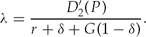
In equation (20) the sum of damages is taken into account in the shadow value of total suspended solids that differs from the noncooperative case. As damages increase, abatement increases in order to avoid the damages. Substituting (20) into (16) and (17) shows marginal costs equal marginal damages in equations (21) and (22).


Asymmetry between the US and Mexico determines the size of transfer payments F′(A 1) and F′(A 2). The country with lower net costs of wastewater abatement and higher transboundary environmental benefits under cooperation could pay the transfer. Thus, the transfer will meet individual rationality if overall costs are minimized more with the transfer under cooperation than costs in a noncooperative game.
Country 2 is willing to pay country 1 to increase country 1's level of abatement and avoid larger costs of its own if C′2 + D′2 > C′1 + D′1. Asymmetry in costs can lead to the country with the lower costs (perhaps, country 1) reducing more emissions than country 2 with higher abatement costs. Such abatement can be compensated for through transfers from country 2 to country 1.
The transfer can reduce stock pollution and total environmental damage in downstream country 2. Hence there is potential to lower overall abatement costs and damages through transfers, in the case where marginal abatement costs and marginal damages increase closer to downstream. The paper offers a quantitative comparison of cases with variation in sharing rules and transfers with empirical costs and damages. The asymmetries in costs and damages between the countries will also be the basis of determining division of the cooperative savings.
3. Data
The state equation of water quality dynamics draws on numerical measures of decay, water flow, slope, flood frequency and volume from the Southwest Wetlands Interpretive Association (1999), Gersberg et al. (Reference Gersberg, Brown, Zambrano, Worthington, Weis and Ganster2000), and Fong and Zedler (Reference Fong and Zedler2000). The referenced value for f is in cubic feet per year from Fong and Zedler (Reference Fong and Zedler2000) based on average rate over four years and the decay parameter δ = .0001 from the same references. Values of R = 0.34 and S = 0.83 are in percentage units according to Southwest Wetlands Interpretive Association (1999) and Gersberg et al. (Reference Gersberg, Brown, Zambrano, Worthington, Weis and Ganster2000). The functional form is set by the advection diffusion total suspended solids (TSS) equation fRS from upstream to downstream (Schnoor, Reference Schnoor, Neely and Blau1985). Average water flow over several years yields a reference value of f = 58 (Southwest Wetlands Interpretive Association, 1999; Zedler, Reference Zedler1998). Estimates for b 1 and b 2 are based on the wastewater abatement in removing micrograms per liter (mg/l). For Mexico, b 1 = 0.69 and for the US, b 2 = 0.71 (CH2MHill, 1997, 1998a,b).
Cost functions depict expenditures of conveying and treating wastewater to remove TSS pollution. Treatment includes technology and maintenance that uses labor, and equipment costs of constructing infrastructure are annualized from projection over the lifetime of the plants. The data consist of current as well as projected expenses for 25 years from 1994, with 25 observations for each country. For Mexico, the various projects with lifetime expenses for 25 years of current and projected expenses are represented in the data. Abatement in Mexico consists of four infrastructure projects with expenses over 25 years of current and projected expenses, including sewer connections and wastewater treatment described below that leads to estimation of an abatement cost function. The costs are a function of quantity of treated wastewater for a set capacity of the conveyance system of 50 million gallons per day (MGD) and treatment plants for Tijuana. Tijuana's wastewater conveyance system prior to 2004 had a nominal capacity of 35 MGD through a lift station and an open channel, which was then incomplete. The 2004 sewer installation increased conveyance capacity to 50 MGD.
Tijuana's conventional wastewater treatment plant since 1989, San Antonio de los Buenos, needs expansion and rehabilitation to help address wastewater for part of the city with more than the current primary wastewater treatment of 17 MGD capacity.
As a complement to conventional wastewater treatment, Ecoparque treats inflows from Otay Universidad housing area in Tijuana up to 273,600 gallons per day. Ecoparque provides biofiltration where wastewater may be diffuse flow over land rather than formally channeled through sewer connections (COLEF, 1997).
The Tijuana Water Master Plan is the fourth project embarked on in 2000 that contributes to infrastructure costs (BECC, 2003).
Parameters in Mexico's wastewater abatement cost function result from regressing both operating and capital costs measured in US dollars on the quadratic form of TSS in mg/l. The fixed costs are combined with variable costs since they are annualized using a rate of 5 per cent over a 25 year lifetime for the projects discussed in previous paragraphs. The mean value of costs for treatment is $1,752,000 and variance is $960,700. Mexico's cost function appears in equation (23) with standard errors in parentheses below along with the R2 value.

US abatement expenditures of the projects discussed in the following paragraphs cover capital cost for equipment and the operating costs of labor in a similar manner as described for Mexico with annualized costs for 25 observations over the lifetime of the infrastructure for three treatment facilities.
Before the IWTP was built, inflows exceeding 211 mg/l routinely bypassed the treatment plant and were combined with treated effluent prior to discharge into the Pacific Ocean without an outfall that would provide the dilution in deep water.
The South Bay Water Reclamation Plant is adjacent to the IWTP, to be part of the City of San Diego water reclamation system to provide 15 MGD of tertiary treated effluent suitable for landscape irrigation. Almost half of the expenditures are covered by the US EPA (San Diego Wastewater Authority, 1997). Treated effluent not used for irrigation is discharged through the S. Bay Ocean Outfall. The plant capacity was expanded from 7.5 MGD to 15 MGD during construction with the expectation of selling the additional flow of recycled water to Mexico. The potential market has not been quantified yet.
CH2MHill (1997, 1998a,b) conducted a study of two options to upgrade the IWTP to secondary treatment, activated sludge and advanced pond system that help in deriving a mean annualized cost of $685,000 with variance of $372,000 for all projects combined to treat waste from upstream arriving at the border and for expenses within the Tijuana National Estuary.
Wastewater treatment costs for the US are, according to equation (24)

with standard errors in parentheses along with the R2 value.
Damages are a function of the quadratic stock of pollution, D 2(P 2), where D 2 is an index of impact of TSS stock for the US health problems of exposed populations. With the buildup of TSS there are harmful pathogens that exceed the California state regulation limit for health and environmental degradation (Cabelli et al., Reference Cabelli, Dufour, Levin and McCabe1983). The TSS correlation to illness dose is referenced from Cabelli et al. (Reference Cabelli, Dufour, Levin and McCabe1983). The US damage function is based on benefits transfer of value generated with the cost of illness technique that includes lost revenue and medical expenses for people impacted by gastrointestinal illnesses (Dwight et al., Reference Dwight, Fernandez, Baker, Semenza and Olson2005) that has been applied to 28 beaches spanning 160 kilometers of coastline in Southern California (Given et al., Reference Given, Pendleton and Boehm2006). This degree of similarity between the original and transfer context is a key factor in the reliability of the benefits transfer approach applied here. The morbidity impact of gastrointestinal illness is from exposure at beaches downstream at the mouth of the Tijuana Estuary. D 2 is derived from the number of exposures multiplied by the illness rate for the number of illnesses multiplied by the average economic cost of illness per gastrointestinal illness. The population at risk was estimated using data on beach attendance provided through local lifeguard agencies (SANDAG, 2003) and reports on the proportion of beachgoers who bathe seasonally (Hanemann et al., Reference Hanemann, Pendleton, Mohn, Hilger, Kurisawa, Layton and Vasquez2004). The average cost of illness per gastrointestinal illness referenced from Dwight et al. (Reference Dwight, Fernandez, Baker, Semenza and Olson2005) includes lost income (wage) and direct medical cost of a gastrointestinal illness episode of the type described in Cabelli et al. (Reference Cabelli, Dufour, Levin and McCabe1983). The monetary value of damages does not include ecosystem damage values, lost recreational values, the willingness to pay to avoid getting sick from swimming, or values to local businesses from concessions, etc. Equation (25) indicates downstream damages.

Mexico's damage function is based on estimates from the Mexican Association of Insurance Institutions (Vargas Aguilar, Reference Vargas Aguilar2003) for lost property value as a function of quadratic diffuse wastewater flow that destabilizes eroding land underlying colonia residences on erodable bluffs in the watershed. Colonias are residential subdivisions in unicorporated areas. They lack basic services of drainage, paved roads, and public utilities of electricity, water, and wastewater treatment (Pombo, Reference Pombo1998). The value of damages in Mexico is expressed in equation (26) as follows

The F parameter of the transfer payment function is derived from the range of grants for wastewater projects that have been discussed in the previous paragraphs, as a function of wastewater flows that these projects address. Since 1994, the US has appropriated $575 million to the US Environmental Protection Agency (EPA) to reduce public health and environmental risks on both sides of the border. EPA supplements binational funding for the projects discussed in previous paragraphs formally channelled from the Border Environmental Cooperation Commission (BECC) and the North American Development Bank (NADBank). EPA's money helps capitalize BECC's technical assistance (PDAP) program and provides grants through the Border Environmental Infrastructure Funds (BEIF) of the NADBank (BECC, 2003; NADBank, 1998). The US General Accounting Office recognizes that EPA funding has been critical for completing environmental infrastructure projects along the US–Mexico border (US GAO, 2000).
Within the Tijuana River watershed, BEIF grant funds from the US EPA channeled through NADBank cover 88 per cent of the $19.52 million cost of a conventional wastewater treatment plant in Tijuana, San Antonio de los Buenos, and 43 per cent of the $30 million cost of improving Tijuana's sewer lines. Ecoparque has transfer payments in the form of 80 per cent of the $180,000 total costs covered by grants from NADBank with EPA funds. The interest rate for the analysis is 5 per cent with all values adjusted to 1998 dollars as the base year (Federal Reserve System, 1999).
4. Results
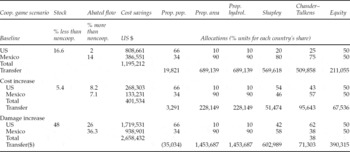
The results correspond to the case where empirical marginal costs of abatement and damages increase from upstream to downstream. Table 1 presents the steady state results for game scenarios. Maple software is used to compute the constrained optimization game solutions with steady state sediment stock, abated flow, cost savings, and the amount of transfer payment for the two countries. All results are compared relative to noncooperation.
Steady state values of stock, abated flow, cost savings, percentage shares, and transfer payments

In table 1, comparisons will be made over stock, abated flow, cost savings, and the sharing rules. The second row indicates units of measure for each category. Rows 3–6 depict the baseline cooperation case as compared to noncooperation, where noncooperative stock is 34.20 cubic feet and noncooperative abated flow for the US is 11.60 cubic feet and 18.54 cubic feet for Mexico. The steady state stock declines by 16.6 per cent (row 3, second column) with cooperation compared to the noncooperative stock of 34.20 cubic feet. Abated flow under cooperation for the US increases by 2 per cent (row 3, column 3) over 11.60 under noncooperation and for Mexico increases by 14 per cent (row 4, column 3) over 18.54 cubic feet under noncooperation. Both countries experience cost savings from cooperation depicted in row 3 column 4 for the US as $808,661 and in row 4, column 4 for Mexico as $386,551 due to lower damages from increased abatement.
Aggregate cost savings of $1,195,212 (row 5, column 4) for both the US and Mexico are attributed to the cooperative solution. Subtracting the optimal cooperation minimized cost from the noncooperation cost yields the cost savings recorded in table 1. The less optimal noncooperative case in terms of more TSS stock and less abatement mirrors attempts by the Tijuana State Commission for Public Services (Comision Estatal de Servicios Publicos de Tijuana or CESPT) to unilaterally build a system that fights gravity by constructing pipelines, a pump station, and a canal to keep water at a high elevation and redirect the flow to a treatment plant to the west. Because of the incomplete system with construction deficiencies, deferred maintenance on the conveyance structures and overwhelming cost of continuous operation of the pump station, raw wastewater flows persist across the border.
Shares under different cost share arrangements are shown in row 3 columns 5–10 for the US and row 4, columns 5–10 for Mexico. Columns 5–7 depict cost shares according to the principle of ‘reasonable and equitable usage’, which holds that each water user is entitled to a ‘fair’ share of water providing a more politically feasible basis for Pareto-Admissible transboundary water sharing according to the Helsinki rule (Beach et al., Reference Beach, Hamner, Hewitt, Kaufman, Kurki, Oppenheimer and Wolf2000). Article V of the Helsinki rule reasonableness criteria can include: land area (column 6), hydrological share (column 7), population (column 5), and practicability of compensation as examples (International Law Association, 1967). A percentage of each of these physical measures in the countries considering cooperation would be the basis for sharing that accommodates asymmetry rather than simply assigning an even ratio between all countries.
The Shapley value for column 8 allocates as a function of the average marginal contribution by each country to net gain from cooperation (Shapley, Reference Shapley, Kuhn and Tucker1953). Chander and Tulkens (Reference Chander and Tulkens1992) indicate that cost sharing consists of two parts: a payment to cover the increase in costs between the Nash equilibrium and the cooperative optimum and a payment for each country's damage proportion according to the Chander–Tulkens cost-sharing rule for column 9.
The additivity property holds where shares in percentage units in columns 5–10 sum to 1 for Mexico and the US. The different cost share rules can be compared by properties such as individual rationality, group rationality, and Pareto optimality, which guarantees that both countries are at least as satisfied as before cooperation and with amount of transfers. All three properties are met with the Shapley value and the Chander–Tulkens cost-sharing rule in columns 8 and 9. However, none of the properties are met with the equity rule in column 10 (Folmer et al., Reference Folmer, Hanley, Mibfeldt, Hanley and Folmer1998). The three properties may not be met by the Helsinki rule of reasonableness in columns 5–7. Differences among different types of sharing transfer payments are presented below.
With the total cost savings to both countries under baseline cooperation depicted in row 5, column 4, the monetary amount of transfer payment can be quantified by dividing up the cost savings by the amount of shares for each country under each cost-sharing rule, depicted in rows 3 and 4, columns 5 through 10. A sensitivity analysis for the size of the transfer is conducted through different types of sharing transfer payments. Three criteria of population, land area, and hydrology are part of the Helsinki rule of reasonableness appearing in column 5, rows 3 and 4. Approximately 34 per cent of the cost savings should be earned by Mexico and 66 per cent by the US if the criterion is size of the population. Tijuana's population of 1.2 million and San Diego's population of 2 million justify these percentages (INEGI, 2000; US Census Bureau, 2000). The physical scale is more like an engineering fixed proportions allocation rather than demand-driven based allocation under the Helsinki rule. Mexico's cost savings of $386,551 should increase by $19,821 (row 6, column 5) through a transfer allocating 34 per cent of the cooperative cost savings of $1,195,212. Since Mexico has 90 per cent of land area and water of the watershed, the share of 90 per cent in both columns 6 and 7, row 4 for the physical criteria would dictate a larger transfer to Mexico. For Mexico, 90 per cent of $1,195,212 would be reached by transferring $689,139 from the US, shown in row 6, columns 6 and 7.
With the Shapley value sharing in proportion to each country's contribution to the cooperative cost savings, a transfer payment to Mexico corresponds with its contribution to 80 per cent of the cost savings according to row 4, column 8. The 80 per cent share of $1,195,212 cost savings is allocated with a transfer of $569,618 to Mexico shown in row 6, column 8. Again, this criterion takes into account the marginal change in costs due to agreeing to cooperate.
With the Chander–Tulkens cost-sharing rule, allocation of cost savings according to the change in costs and damages from noncooperation to cooperation leads to a transfer payment to Mexico. A transfer of $509,858 (row 6, column 9) is based on Mexico's portion of 75 per cent of the cost savings shown in row 4, column 9.
The equity sharing rule is assessed in column 10 with each country at 50 per cent share (rows 3 and 4), which also yields a transfer to Mexico of $211,055 (row 6, column 10). This rule is less applicable as it was formally removed from US–Mexico policy in 1990 through IBWC Minute 283.
In rows 9–12, the results of a 20 per cent increase in costs are shown for both countries. In rows 15–18, the results of a 30 per cent increase in damages are presented. A 20 per cent increase in costs leads to a steady state stock of pollution that is 5.4 per cent less than with noncooperation (row 9, column 2). Cooperation results in 8.2 per cent more abatement for the US than under noncooperation (row 9, column 3) and 7.1 per cent more abatement for Mexico than under noncooperation (row 10, column 3). The total cost savings of $401,534 (row 11, column 4) can be allocated according to the different sharing rules as follows. If population dictates the share, then a transfer payment of $3,291 (row 12, column 5) from the US to Mexico is made to increase Mexico's own savings of $133,231 (row 10, column 4) in order to balance with the 34 per cent share of population shown in row 10, column 5.
If hydrology or land is the criterion, a transfer payment of $228,149 (row 11, columns 6 and 7) to supplement the $133,231 Mexico earns on its own, results in 90 per cent of $401,534 allocated to Mexico based on its physical majority of the watershed shown in row 10, columns 6 and 7. The larger amount of abatement by the US translates into a larger marginal contribution to cost savings under cooperation than Mexico. This matters for the Shapley value, as row 9, column 8 indicates a 54 per cent share for the US, and row 10, column 8 indicates a 46 per cent share to Mexico. The transfer of $51,474 from the US to Mexico enables the Shapley value shares to be allocated, as shown in row 12, column 8. Shares under the Chander–Tulkens rule switch the majority to Mexico with 57 per cent (row 10, column 9) and 43 per cent (row 9, column 9) for the US in terms of total cost savings. So, $95,643 (row 12, column 9) is the transfer payment from the US to Mexico to supplement the $133,231 for a total of 57 per cent of $401,534. Under the equity rule, Mexico receives a transfer payment of $67,536 (row 12, column 10) from the US for 50 per cent of the total cost savings.
The case of 30 per cent in damages results in significant abatement increases under cooperation, where the US abates 26 per cent more and Mexico abates 36.3 per cent more than under noncooperation, shown in rows 15 and 16, column 3. Such abatement results in 46 per cent lower steady state pollution than noncooperation according to row 15, column 2. Increases in abatement are based on cost savings from avoided damages.
Total cost savings of $2,658,432 in row 17, column 4 is allocated with even more dramatic differences between the sharing rules. According to the population criterion, Mexico would need to make a transfer to the US of $35,034 (row 18, column 5) in order that the US receive 66 per cent (row 15, column 5) of $2,658,432 when the transfer payment is added to the $1,719,531 of US cost savings shown in row 15, column 4.
However, this is the only time Mexico would make a transfer payment to the US. If the hydrology or land criterion applies, then the US would transfer $1,453,687 (row 18, columns 6 and 7) to Mexico that is added to the $938,901 (row 16, column 4) that Mexico earns on its own, to sum to 90 per cent of the total $2,658,432 cost savings according to row 16, columns 6 and 7. With the Shapley value, Mexico's abatement contribution signifies earning 58 per cent share of total cost savings and the US earns 42 per cent according to rows 15 and 16, column 8. The US would transfer $602,989 to Mexico to match the share amount of the total cost savings (row 18, column 8). The shares under the Chander–Tulkens rule reverse the majority of total cost savings to the US for a 62 per cent share and a 38 per cent share to Mexico, according to rows 15 and 16, column 9. A transfer of $71,303 (row 18, column 9) is made from the US to Mexico to match the 38 per cent of total cost savings. If instead, the equity rule is applied, then the transfer payment of $390,315 in row 18, column 10 supplements the $938,901 of Mexico to result in a 50 per cent share of the total cost savings of $2,658,432.
5. Conclusions
Transboundary wastewater pollution is addressed in this comparative study of game solutions. Data from the US–Mexico border are accessed for quantitative analysis. Asymmetry in budgets, abatement costs, and damages between upstream Mexico and downstream US are included in the empirical analysis. Incentives for controlling wastewater pollution consist of preventing loss of property upstream and protecting public and environmental health downstream.
Results show that coordinated binational abatement involving transfer payments from downstream to upstream is optimal for minimized costs, damages, and stock of wastewater pollution. Mexico's location and lower marginal cost advantage make it economical to pay for abatement upstream and avoid more severe damages. The negative externalities from wastewater are internalized by analyzing the watershed as a binational single unit through cooperation. Mexico gains less than the US from cooperation for the baseline case. This is due to lower marginal damage costs than downstream in the US. Abatement will be attractive to upstream Tijuana if there is incentive to avoid damages. Upstream abatement increases the likelihood of success for reduction in pollution in the watershed. Transfer payments to Mexico enable control at the source of pollution and hence drive down the stock. The transboundary pollution impedes the downstream US estuary as well as possible damages upstream. Thus investment upstream is essential. Due to the strong link of upstream abatement influencing downstream benefits, the avoided costs of the US are better with the unilateral financial transfer since Mexico increases its abatement. For Mexico to cooperate, the compensation varies according to different types of sharing rules for all cases.
If transboundary cooperation for infrastructure had been envisioned when the original wastewater infrastructure was conceived, it is possible that more reliable and less costly infrastructure could have been constructed as shown by the difference between the noncooperative and cooperative cases in the baseline analysis. A pipeline crossing the border and paralleling the river, a treatment plant at low elevation in the US and discharge of treated effluent through an ocean outfall like those typically used in the US would have resulted through the cooperative solution. By 1998, at least the IWTP and S. Bay Ocean Outfall in the US work with gravity to treat and discharge about half of Tijuana's wastewater in a cooperative way.
The Shapley value, the Chander–Tulkens rule, and the Helsinki rule of reasonable and equitable sharing are among the allocation rules in the study. While the population criterion for reasonableness to allocate shares of costs savings indicates a minor amount for transfer payment in all cases, this method is questionable as population may mean growth-inducing activities would dictate more financial incentives for impacting water quality negatively. Permanent characteristics of land and hydrology imply the upstream has a higher share corresponding to the 90 per cent amount Mexico holds in the watershed. Transfers could increase dramatically with both characteristics as criteria.
Transfer payments from downstream to upstream are large in the baseline case with the Chander–Tulkens cost-sharing rule and the Shapley value. The TSS stock is lowest with both sharing rules.
Asymmetry in financial resources between upstream and downstream makes transfer payments imperative. Tijuana's municipal budget is a proportion (0.05) of San Diego's budget (INEGI, 2003; SANDAG, 2003). All municipalities in Mexico including Tijuana receive only 4 per cent of the annual federal budget, the only source besides the binational institutions for funding public works (Zepeda, Reference Zepeda1993).
A policy change in 1990 referred to as IBWC 1990 Minute 283 accommodates asymmetry between countries through allocation of cost savings other than the equity rule. This policy change is validated through this study that indicates all results other than equity address asymmetry. Prior to 1990, an equal cost share rule on jointly developed pollution control projects impeded efficient solutions to the border sanitation problems in the San Diego-Tijuana region (Mumme, Reference Mumme1993). Then, with the rule, Mexico's cost would be equal to the unilateral alternative of treatment plants it was trying to build if it cooperated with the US, thereby aiming for Pareto efficiency of the cooperative alternative.
One criterion of the Helsinki rule is used by NAFTA institutions for allocation in the Tijuana River watershed as well as the rest of the US–Mexico border. The BECC and NAD Bank include population as a criterion for projects they approve and fund.
The current amount of finances and technical assistance devoted to Tijuana for helping control upstream wastewater is lower than it should be in all cases as shown in the difference between transfers using the Helsinki rule with the population criterion versus any other sharing rule included in this analysis. Transfer payments to Mexico could be higher to abate wastewater. Institutions pondering water quality improvement projects can use the results of this study to determine funding allocation for the right mix of incentives upstream and downstream.
As more wastewater treatment is considered (secondary treatment), the size of the transfer payment can be an integral part of implementing the infrastructure on either side of the border. Under the terms of IBWC Minute 283, Mexico is entitled to the treated effluent from IWTP (in the US) for the uses it deems appropriate; thus, provisions have been made in the plant's effluent structure to connect to a future pump station and pipeline that would return the flow to Tijuana should Mexico request it. However, until additional treatment is provided, the toxicity of the effluent may deter recycling efforts.
A current proposal from the private sector to build secondary treatment in Mexico is referred to as Bajagua and provides a context to explore the extent of US interest in financing upstream wastewater treatment. A pump station, conveyance pipeline, and return pipeline to allow discharge of excess effluent through the S. Bay Ocean Outfall if reuse does not consume all of the effluent is envisioned for Bajagua. This proposal prompted the US Congress to pass legislation (Public Law 106-457) to provide a revenue stream to pay for construction, operation, and maintenance of a secondary treatment plant in Mexico.
To implement this type of project, IBWC Minute 283 would have to be amended since the original document stipulates that all treatment is to be provided in the US. Both countries have agreed to negotiate to amend Minute 283. This plan has been developed as the IBWC has delayed making a decision on secondary treatment alternatives for the IWTP past its 1999 deadline for a permit in order to have the option of ponds in Mexico.
The model is deterministic from actual data on the Tijuana watershed. The model and results from the analysis are useful to other efforts worldwide given the amount of these watersheds and the increasing number of conflicts in need of a formal method to solve transboundary problems.