The EU Joint Programme for Neurodegenerative Disease Research and the UK government have highlighted the need for the development of high-quality specialist services, in particular psychosocial interventions, to support people with dementia (DOH, 2016). People with dementia may reduce their activities due to perceived stigma, neurodegenerative decline, loss of autonomy, and self-confidence (Birt et al., Reference Birt, Poland, Csipke and Charlesworth2017; Lion et al., Reference Lion2020). Furthermore, family and friends may also inadvertently contribute to a reduced sense of self-determination (Sterin, Reference Sterin2002). Given the risk of “prescribed disengagement” at the time of diagnosis (Low et al., Reference Low, Swaffer, McGrath and Brodaty2018), counteracting this soon after diagnosis may facilitate better adjustment and ongoing management of dementia (Burgener et al., Reference Burgener, Buettner, Beattie and Rose2009). This in turn may enhance independence and social inclusion and delay residential home placement (Clarke et al., Reference Clarke2013).
The overall objective of the Promoting Independence in Dementia (PRIDE) program was to develop an intervention to improve independence. This intervention was built on a framework of research, such as epidemiological and qualitative data, and patient and public involvement (PPI) (Csipke et al., Reference Csipke2018; Yates et al., Reference Yates, Csipke and Moniz-Cook2019). PRIDE included work from the English Longitudinal Study of Aging (ELSA; Steptoe et al., Reference Steptoe, Breeze, Banks and Nazroo2013) cohort study which found that loneliness was linked to cognitive decline, although social isolation in itself was not (Rafnsson et al., Reference Rafnsson2017), and those with close social networks had a reduced risk of cognitive decline (Khondoker et al., Reference Khondoker, Rafnsson, Morris, Orrell and Steptoe2017). Furthermore, we found that physical activity was associated with both a lower risk and progression of dementia (d’Orsi et al., Reference d’Orsi2017; Soni et al., Reference Soni2019; Stock et al., Reference Stock, Hogervorst, Stevinson and Rahardjo2015). Our critique of literature about social participation highlighted challenges associated with memory loss, social relationships, and social structures in enabling people with dementia to remain independent (Birt et al., Reference Birt2019). Unlike some similar interventions, stakeholders (persons with dementia, carers, and older people) contributed to shaping the PRIDE intervention (Yates et al., Reference Yates, Csipke and Moniz-Cook2019).
The Medical Research Council recommends that uncertainties associated with conducting a large-scale study can be addressed in feasibility work (Craig et al., Reference Craig2008). Our aims were therefore to examine the feasibility of the PRIDE intervention by investigating: recruitment and retention rates across sites; engagement of intervention facilitators and participants; the acceptability of the PRIDE intervention; and choice of what has the best potential as an outcome measure for a future large-scale study.
Method
Design
This is a mixed methods feasibility study of the PRIDE intervention (see protocol; Csipke et al., Reference Csipke2018). Outcome measures were collected at baseline and post-intervention, to test feasibility of use with participants and to inform the design and methods for a future large-scale study. A subsample of participants and intervention facilitators took part in interviews/focus groups following the intervention, to examine the acceptability, engagement, and delivery of PRIDE.
Participants
Participants were adults (18+) who were able to read and communicate verbally in English and had the capacity to give informed consent in accordance with the Mental Capacity Act (DCA, 2005).
Persons with dementia were community dwelling, with a dementia diagnosis and with mild dementia, as defined by 0.5–1 on the Clinical Dementia Rating (CDR) Scale (Morris, Reference Morris1993). They were expected to have a supporter (family member or friend) willing to participate with them. Supporters were included since, although the intervention focused on those with dementia, the influence of social factors (such as relationships with family or friends) influences the “dynamic balance between opportunities and limitations in dementia”(Vernooij-dasssen, Moniz-Cook & Jeon, Reference Vernooij Dassen, Moniz-Cook and Jeon2018). These factors underpin many of the concepts of PRIDE, such as decision-making, communication, and participation and are also key to delivery of psychosocial intervention in dementia care. Instead of the term “carer,” which implies “dependence,” the term ‘supporter’ was used throughout, since it denotes mutuality and reciprocity within a relationship.
Supporters were eligible if they were in regular unpaid contact with the person with dementia (minimum 3 hours a week).
Intervention Facilitators were either voluntary sector staff working as “Dementia Advisor Workers (DAWs)” who provided information, advice and support, alongside or within memory clinics, or health and research staff working with memory services.
Sample size and sites
Sample size calculations were not made. Instead, we planned to use sites that were geographically varied to explore recruitment across diverse settings, in order to replicate the diversity of provision and organization of services across the country. We aimed to recruit up to five sites across England, with approximately 10 dyads at each site. This would provide sufficient data to evaluate recruitment and retention rates, time required to recruit dyads, whether the participants and facilitators found the intervention to be acceptable, and to test outcome measures. Sites were eligible if they had local researchers within Research and Development departments, to undertake the baseline and follow-up measures; could provide a supervising clinician acting as a principal investigator; and had access to dementia facilitators to deliver the intervention. We provided site-based researchers with training in screening, measure completion, and all study procedures.
Procedures
Recruitment was through National Health Service (NHS) memory services, Join Dementia Research (JDR) (a national register of people interested in taking part in dementia research), and voluntary sector organizations. Potential participants were approached by clinic or voluntary sector staff and given study information. If they agreed to participate, researchers arranged to obtain written informed consent and completed the CDR (Morris, Reference Morris1993) to check that participants had a score of 0.5–1 (mild dementia), following which baseline measures were completed. Dyads were linked with local intervention facilitators who would then meet with them on three occasions, approximately 4 weeks apart. After the final session, follow-up outcome measures were completed, within 4 weeks of the final session.
Referral sources, along with reasons for ineligibility, and retention rates were recorded. Additional support such as telephone calls or requests for extra sessions were recorded. Additional support required by research sites and intervention facilitators, such as site visits and further training, was also recorded.
Ethics
The study was approved by the East Midlands Nottingham 1 Research Ethics Committee (16/EM/0044). Participants were fully informed of potential risks and benefits and that they would be free to withdraw at any time without affecting their care. Participants with mild dementia were expected to have the capacity to provide consent for themselves (Csipke et al., Reference Csipke2018). In addition to providing consent at the start of the study, researchers were aware of the need to regularly check participants’ understanding of the research process. The study also obtained approval from Health Research Authority (https://www.hra.nhs.uk/approvals-amendments/) via the sponsoring university for governance, and legal compliance is required for NHS sites to carry out studies. Safety procedures for researchers in the UK followed standard guidelines. Reporting procedures for serious adverse events (SAEs) were in place at all sites.
The pride intervention
A facilitator delivers the intervention in three 60–90 minute sessions. The intervention aims to equip the person to participate in activities build on communication skills and enable them to continue making choices during the course of their dementia. In between sessions, the person is encouraged to engage in activities to support their independence, social inclusion, and engagement in the community. A paper-based workbook with space for written records supports usage in and between sessions (Yates et al., Reference Yates, Csipke and Moniz-Cook2019).
Acceptability of intervention and study procedures – qualitative data
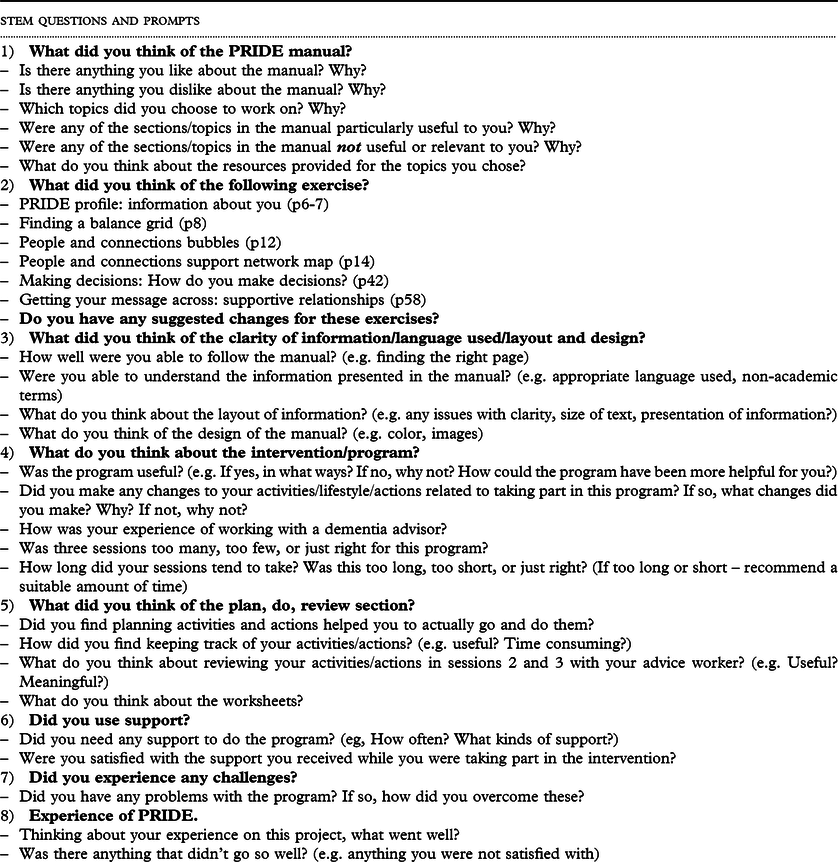
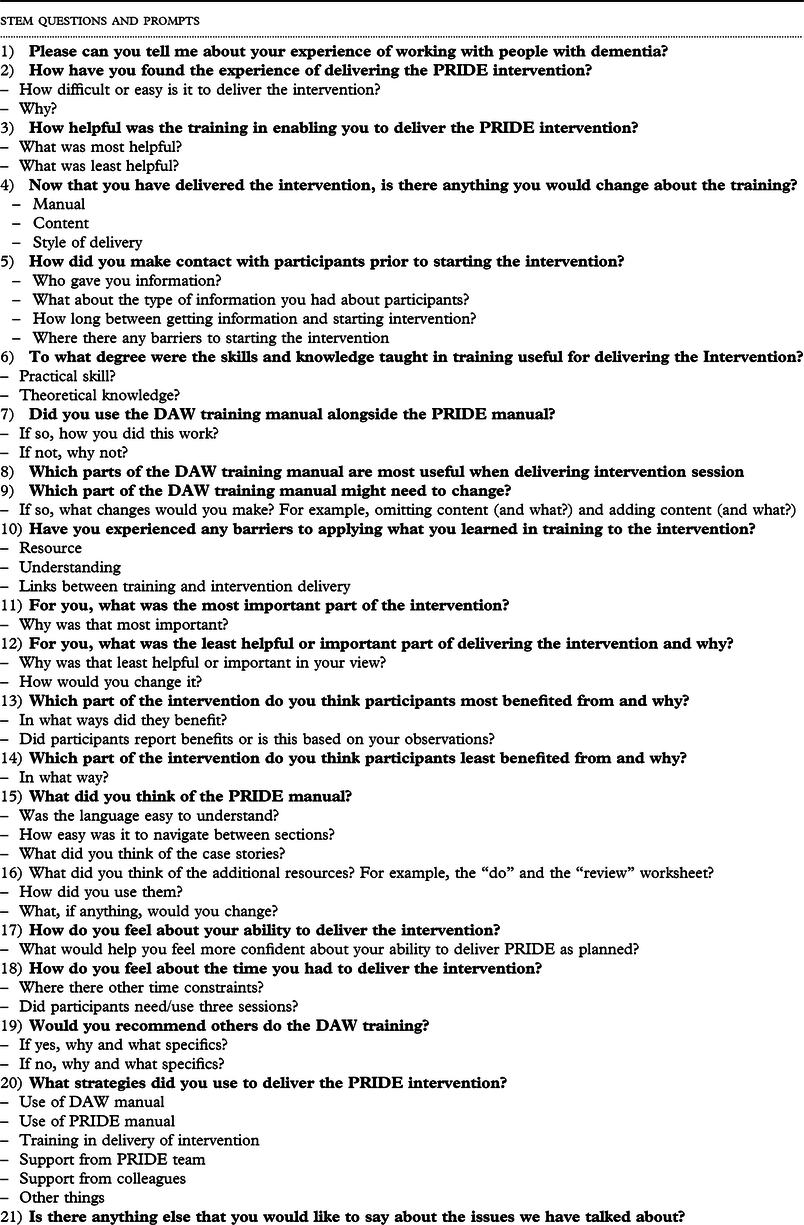
A convenience sample was used to (1) explore if participants found the intervention/study procedures suitable and feasible; (2) obtain their views on taking part, and (3) obtain views of the intervention facilitators. Focus groups and in-depth interviews were used to collect this data, since they provide an opportunity for new perspectives on experiences to develop as participants discuss and where relevant challenge each other’s views (Jenson and Laurie, Reference Jenson and Laurie2016). For interview topic guides, see Tables 1 and 2.
Topic guide for focus groups with participants and supporters

Topic guide for intervention facilitators who delivered the PRIDE Intervention

Feasibility and acceptability of outcome measurement – quantitative data
Researchers read instrument questions out to participants to ensure consistency and promote inclusiveness for those who found reading text difficult. During this time, supporters were asked to complete self-report questionnaires. All measures have demonstrated good psychometric properties and have been used in populations with dementia. However, since some instruments have not been used in intervention studies, the degree of sensitivity to change in terms of reporting treatment effects is unknown. We therefore selected a number of measures that were aligned to the PRIDE intervention concepts and goals, in order to inform on what might be suitable in a future large-scale study.
For people with dementia, the included measures reflected the core of the intervention. These were Self-management Ability Scale (the SMAS-30; Schuurman et al., Reference Schuurmans2005); independence (the CASP-19; Hyde et al., Reference Hyde, Wiggins, Higgs and Blane2003); engagement and independence (the Engagement and Independence in Dementia Questionnaire; Stoner et al., Reference Stoner, Orrell, Long, Csipke and Spector2017); the Impact on Participation and Autonomy scale (Hammar et al., Reference Hammar, Ekelund, Wilhelmson and Eklund2014) measuring self-determination and participation; hope and resilience (the Positive Psychology Outcome Measure; Stoner et al., Reference Stoner, Orrell, Long, Csipke and Spector2017); and loneliness/social support (the ELSA three-item social support questions taken from: the revised version of the UCLA Loneliness Scale; Hughes et al., 2014). Measures also included activities of daily living (The Bristol Activities of Daily Living Scale; Bucks et al., Reference Bucks, Ashworth, Wilcock and Siegfried1996; rated by the supporter), cognitive function (Standardized Mini-Mental State Examination – SMMSE; Vertesti et al., Reference Vertesi, Lever, Molloy, Sanderson, Tuttle and Pokoradi2001; the Hopkins Verbal Fluency and Learning Test; Brandt, Reference Brandt1991); functional mobility (Timed Up and Go test – TUG; Podsiadlo and Richardson, Reference Podsiadlo and Richardson1991); quality of life (Dementia Quality of Life measure; Smith et al., Reference Smith2005; Health-related quality of life – EQ-5D; Euroqol Group, 1990); and economics in relation to well-being (the Icecap capability measure for Older people (ICECAP-O; Coast et al., Reference Coast2008 ).
Supporters completed self-report measures as follows: the quality of life EQ-5D (Euroquol Group, 1990) and the economic well-being measure ICECAP-O (Coast et al., Reference Coast2008).
The Client Services Receipt Inventory (CSRI; Morris, Reference Morris1993) for measuring service costs was also used, but only to examine its acceptability by participants, so no analysis was planned using this instrument.
Participants and intervention facilitators were asked to complete three fidelity checklists, one each after the three sessions, to examine adherence to the intervention (i.e. whether the intervention was delivered as planned and whether the participant engaged with the intervention). Components of the checklists were standardized to reflect the intervention (i.e. Session 1 = 22 components; session 2 = 18 components; session 3 = 12 components). Interventionist and participant (i.e. ‘your experience’) checklists contained the same key components (see Walton et al., Reference Walton, Spector, Williamson, Tombor and Michie2020).
Analyses
Quantitative
Researchers completed measures with participants, and any difficulties were recorded. The analysis steps were to examine missing data for patterns of non-completion; conduct multiple imputations with a linear regression for scale variables at baseline and post intervention to impute missing variables; use basic pre-post t-tests for normally distributed data or non-parametric Wilcoxon signed-rank tests for other data; carry out post hoc analyses, when differences in means warrant this.
Qualitative
Qualitative data from focus groups and interviews with participants and intervention facilitators were audio recorded and transcribed, using framework analysis for evaluation of applied interventions (Srivastava and Thompson, Reference Srivastava and Thomson2009). The analytical steps were familiarization with the data, generating initial codes which reflect the research questions in topic guides, producing a thematic framework, index charting, and mapping of data which enables reflection on differences and similarities in experiences of the stakeholder and also interpretation and presentation of themes; explore findings to see if there were differences in the experiences of people with dementia, supporters, or intervention facilitators, to add further understandings of the intervention in the real world.
Results
Site recruitment and set up
Six NHS Foundation Trusts with memory services expressed an interest in participating in the study. Two sites withdrew following delays due to internal reorganization within their services as they were unable to identify both researchers and intervention facilitators within the timeframe. All participating sites were predominantly urban. Each site was provided with a site set-up visit lasting 2–3 hours, which included training and information covering participant identification/screening/consenting and measure administration. Sites were also given instruction in study procedures such as communications with the research team, data collection and entry, and documentation and site files.
Obstacles to implementing the study
The final sample was smaller than initially planned due to restructuring of national NHS research governance processes and associated delays of 10 months to set-up of the study, which also contributed to the withdrawal of the two sites from the study. The rate of recruitment was also slow, taking 10 months to recruit 34 dyads. A third obstacle related to changes in the facilitator workforce where availability of DAWs fluctuated on an annual basis according to local commissioning arrangements. For example, the aforementioned delays in national governance procedures resulted in intervention facilitators from the voluntary sector who had been willing to engage in intervention delivery, now no longer in post 10 months later; legal agreement with one of voluntary organizations was very time consuming with head office delays impacting on availability of staff to deliver the intervention; where DAWs were available and engaged, the NHS site withdrew from the study; and many DAWs were unable to add to their workload to deliver this intervention even when remuneration for time and training was offered. We overcame obstacles to engaging intervention facilitators by working with NHS research departments at each site and their clinical service managers to nominate intervention deliverers from their memory services.
Dyad recruitment
One hundred and fifteen potential participants were identified across the four participating sites. These were from the JDR register (n = 61), the voluntary sector (n = 5), participants from other studies (n = 23), memory clinics referral (n = 25), and psychiatrist referral (n = 1). Of these, 23 (20%) were uncontactable, 23 (20%) were out of the study-site catchment areas, seven (6%) were not clinically eligible, and 14 (12%) were not eligible for other reasons. Of the 48 who were eligible, 14 (29%) declined to take part, leaving 34 dyads recruited to the study. Recruitment ended at 10 months, to allow for time for intervention delivery and completion of follow-up.
The mean age of participants was 77.67 (SD = 9.07) and 23 (67%) were men. Thirty-three (97%) were White British and one (3%) was of Asian ethnicity. Half of participants were diagnosed with Alzheimer’s disease, six (18%) had mixed dementia, four (12%) vascular dementias, one (3%) with Lewy body dementia, and the remaining six (16%) had an unspecified dementia diagnosis. Twenty-seven (79%) supporters were female. The average age of all supporters was 69.18 (SD = 11.89).
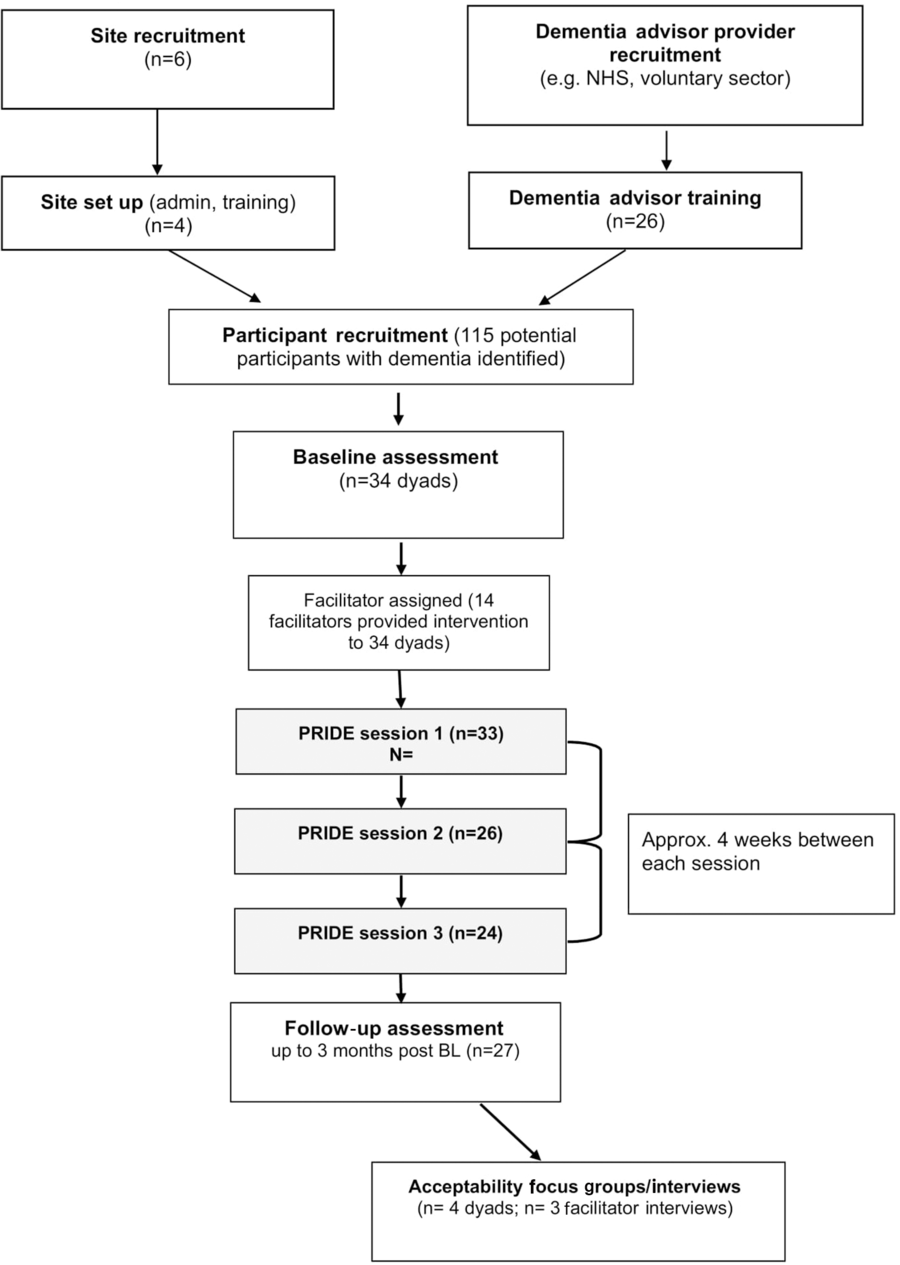
The flowchart of study recruitment and retention is shown in Figure 1.
Flow through feasibility study.

Four participant/supporter dyads (four males with dementia; four spousal supporters) were recruited to a focus group, at two sites and three intervention facilitators (females) also agreed to take part in focus groups. Individual telephone interviews were conducted at two sites with two participants (males) and two supporters (females) at each site.
Facilitator recruitment and training
Twenty-six health professionals from voluntary organizations and NHS teams registered for and completed the training program, with sessions delivered at each site. Training was presented by members of the research team who had been involved in the development of the intervention and all had previous experience of running training programs. Training lasted 1 day, consisting of lectures, interactive groups activities, role-play, and reflection. Managers and staff not planning to deliver the intervention were invited to attend to: enhance support during the study; maximize interaction opportunities between different teams; and build relationships during the training itself. Eleven (43%) were voluntary sector staff, seven (27%) clinical researchers, four (15%) dementia nurses, and four (15%) allied health professionals. Fourteen (54%) of those who took part delivered the PRIDE intervention. The remaining 12 trainees (who did not deliver the intervention due to high workloads) were managers attending the training for their own information, or were staff who were shortly to leave their organizations.
Intervention delivery and uptake
Of 34 consenting dyads, 33 took part in the first session. Subsequently, seven withdrew; one due to ill health, one due to the supporter’s ill health, one due to facilitator drop out, and four gave no reason. Twenty-six (79%) took part in two sessions, and 24 (73%) in all three sessions, none requested an extra session. Five took up the offer of telephone contact, with eight calls taking place. Calls took 5–15 minutes and involved updates from the participants about their activities.
One site reported three SAEs (hospital treatment for a medical condition unrelated to PRIDE).
Site and intervention facilitators were offered support from the study team as required, and two newsletters updating on progress were sent to all sites. The study team offered additional site visits if required, but only one site took up this offer. All sites had on-going questions about procedural issues, which were resolved via telephone or email.
Measure performance
All consenting participant-dyads (n = 34) completed baseline measures and 27 (79%) completed the follow-up.
Outcome measures
Measures were completed without significant difficulty, despite the numerous instruments used, including the lengthy CSRI. Data collection took approximately 1–2 hours, and all were completed in a single session. There were particular challenges associated with the TUG measure of gait, which involved walking across a room in straight line: some participants’ homes did not have sufficient trip-free space – although solutions were found in all cases. None of the measures caused distress.
There were no measures or specific items with enough missing data to warrant concern, and overall less than 2% of data were missing, over both time points, for both participants and supporters.
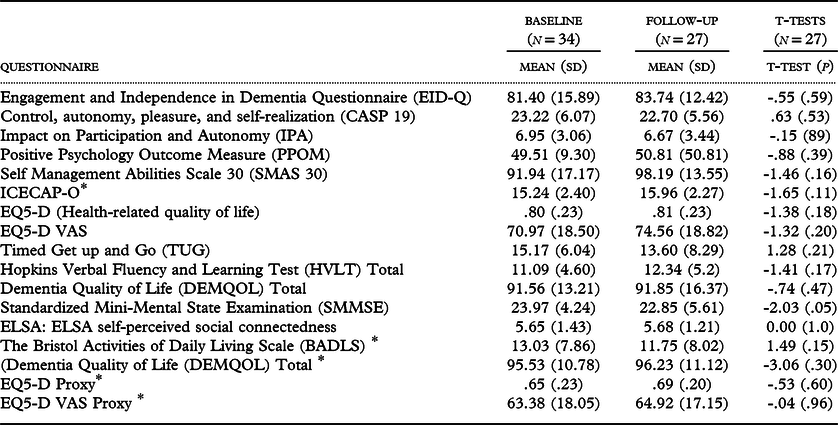
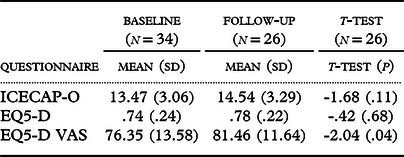
Exploratory t-tests (baseline versus follow-up) were carried out as per study protocol (Tables 3 and 4). No significant differences were found, although the SMMSE approached significance at p = 0.05. Post hoc analysis found that the SMAS had a moderate effect size (d) of 0.41 indicating that self-management scores for people with dementia improved. In addition, the EQ5D for supporters indicated a moderate effect size (d = 0.40) indicating that general quality of life scores improved.
Persons with dementia baseline (BL) and follow-up (FU) scores

High scores indicate better well-being except on the IPA, EQ5-D, and ELSA. * Note. N = 26
Supporters baseline (BL) and follow-up (FU) scores

Note. High scores on ICECAP-O scores indicate greater well-being, and high scores on EQ5D indicate lower well-being.
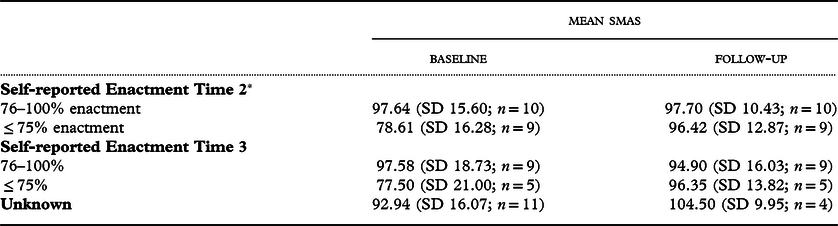
Based on post hoc exploration (effect sizes; Cohen’s D), further analysis of SMAS scores was carried out taking into consideration engagement (from fidelity checklist) with the intervention. In this analysis, only scores on enactment (doing what was planned in the session) were used. Where fidelity checklist scores were available, these were converted into categories of ≤75% or 76–100% enactment. SMAS means were calculated for the two categories where fidelity checklists scored were available, at baseline and follow-up. Those with higher engagement scores demonstrated better self-management abilities at baseline, which remained true at follow-up (no change in scores). The group with lower engagement also had the lower baseline self-management scores, but by the end of the intervention at follow-up, these matched the first group (Table 5).
Enactment of the PRIDE intervention and SMAS scores. Post hoc exploration.

*Enactment was measured after interventions sessions 2 and 3 only.
Note. N’s in the unknown group are those who did not complete either the T2 or T3 enactment question
(For more details on the overall engagement scores, see Walton et al., Reference Walton, Spector, Williamson, Tombor and Michie2020).
Qualitative findings
Three themes emerged from the qualitative analysis: understanding the ethos of the PRIDE intervention, relationships within the PRIDE intervention, and the relevance of the PRIDE intervention.
Understanding the PRIDE study ethos
Participants were able to articulate the ethos of the PRIDE intervention as being that of enabling people with dementia to maintain some independence. The sense of hope instilled through the intervention was captured by a facilitator who stated:
It’s for maintaining independence, isn’t it, and it’s ensuring that people are constantly putting things in place to make sure that they live happy, independent and active lives… to stay in control of their lives. (Facilitator 2)
People with dementia and their supporters spoke of the confidence they gained through being part of the PRIDE intervention.
thought it was very good. [filling in manual] It gives everybody, erm… can’t think of the word… researchers and everybody knows what I’m doing and how I’m thinking. I thought that was good, anyway. (Person with dementia 3)
Facilitators helped participants engage, for example, where a person with dementia found it difficult to communicate, use of a singing video helped her relax, and the facilitator noted:
she held my hand and said thank you, she was understanding that we were adapting it not to make her feel threatened or anything like that but to do it to the way that she enjoyed … so that she could still take part in everything. (Facilitator 3)
Relationships within the PRIDE intervention
Facilitators worked face-to-face through the manual and activities with the participants and helped set priorities and action plans. All people spoke of this personal contact as important:
The best benefit we got was actually talking to the people that came out. I think that made a lot of difference, person to person. (Supporter 2)
Both facilitators and supporters acknowledged the essential role the supporter played in encouraging the person with dementia to engage in the intervention. This might have been helping the person with dementia engage in intervention plans in practical ways such as getting equipment and keeping action plans up to date.
I think he was definitely prompting her to do the knitting and he went out to the shops and bought the wool with her, and… so yeah, and all the sheets that were filled in, he filled those in for her. But she did it all, she was doing all the activity. (Facilitator 1)
However, one facilitator explained how they had had to manage a supporter who wanted to take the lead:
The partner will want to take the lead and speak for the person; we had to change it a little bit just to say please could they [person with dementia] go first and express their feelings. (Facilitator 3)
Not all people with dementia had active support from their family; this was reported as being due to poor health of the supporter or limited interested from the wider family.
I was not able to reach him [the son], so I do not know how aware he was of what we were trying to achieve. (Facilitator 1)
Relevance of the PRIDE intervention
PRIDE was aimed at those with mild dementia, and all thought that the intervention would be most useful soon after diagnosis. This supporter explained it helped to reduce fear following a diagnosis:
We wouldn’t have known where to go and that actually you can have some sort of life, because when something like that is said to you, you think that’s the end. That’s actually where the fear comes because really don’t know where to turn or what to do and somebody coming in and talking to you about it and helping with these sort of things gives you a vision. (Supporter 4)
I think it’s good just being diagnosed because it gives you a look into what help you can get and things like that. (Person with dementia 2)
A facilitator confirmed that the PRIDE intervention would give hope to those newly diagnosed with dementia:
I feel that they’re trying to recognize somebody that’s newly diagnosed, to actually state that because you have a diagnosis, it doesn’t mean that life stops. (Facilitator 3)
This contrasted with other dyads where the person had been living with dementia over 12 months. Here facilitators found it most challenging when they were delivering the intervention to “socially active” couples, who were already very engaged and active in the community. However, it was also recognized that PRIDE may be suitable to lay the foundations of skills that may be useful as dementia progresses:
Because I do think the lady maybe she is at risk of maybe losing some of those activities. (Facilitator 3)
The intervention delivery was centered on the PRIDE manual. While the majority found the manual easy to use, there were some negative comments on layout and the use of smiley faces:
If you don’t mind me saying, I think this is a kiddie’s way of doing this. (Person with dementia 3)
The facilitators used the manual in every session. However, they all gave examples of how they had had to adapt delivery; often this was due to over enthusiasm:
On one occasion I had to scrap everything and pull it right back, because we thought too big, it is good experience. (Facilitator 1)
Discussion
Overall, the intervention and training were feasible to deliver and were well received by those who took part. Of those eligible, 59% consented to be in the study. Seventy-nine percent attended at least two sessions, and 73% attended all three. Setting up sites to be ready to provide the intervention had its challenges. This study demonstrates that to conduct a future pragmatic randomized controlled trial of this type, contextual changes associated with delivery of high-quality research and within study-site organizations should be anticipated with timely ongoing measures taken to overcome challenges. The strength of this study is that (i) we have good data on the required (albeit lengthy) time to recruit participants; (ii) more study sites would be required to allow for drop-out due to within-organization changes; (iii) intervention delivery is best developed and organized by the recruiting study site, since when research teams attempt collaboration across agencies, fluctuating commissioning arrangements can undermine the progress of applied research such as this; and (iv) some outcome measures such as the TUG test may not be flexible enough for this type of study but overall the instruments were feasible and acceptable to participants when delivered by trained researchers, although all may not be needed in a future large-scale trial.
Recruiting sites, as well as participants, is one of the common challenges of health research but also the key to their success (Borschmann et al., Reference Borschmann, Patterson, Poovendran, Wilson and Weaver2014; Kaur, Smyth and Williamson, Reference Kaur, Smyth and Williamson2012; Nuno et al., Reference Nuño2017). Estimating adequate recruitment timelines for a large trial is one of the key functions of a feasibility study (Thabane et al., Reference Thabane2010). We found two significant obstacles. The changes in the UK’s NHS governance approval system was beyond the team’s control and unexpected, especially as we had completed a similar procedure some months prior. Second, matching available intervention facilitators to research sites was difficult. The feasibility study required the recruitment of sites that not only had the capacity to identify, recruit, and assess participants but to also have available suitably qualified staff to provide the intervention. Initially, it was envisaged that Dementia Advisors from voluntary organizations would be able to fulfill this role, since at the time there was a policy-driven role in England, in this sector for this type of work. Although the project had the support of the head and regional offices of voluntary organizations, we found that it was untenable to rely solely on the voluntary sector, since commissioning arrangements varied, in terms of length of contracts and funding for staff. Attrition due to organizational factors and delays in participants recruitment have been found in other studies relying on interventions being delivered by the voluntary sector (Mountain et al., Reference Mountain, Gossage-Worrall, Cattan and Bowling2017), and although our intervention facilitators were paid employees, similar issues arose. Therefore, NHS staff working with memory clinics, typically nursing staff and clinical graduate dementia advisors, were approached to facilitate the intervention. This observation suggests that a wide variety of staff can deliver an intervention of this type. Earlier in the project, the research team had tried facilitating collaboration between NHS sites and the voluntary sector, but stepping back and leaving the study site to arrange delivery proved a better strategy. We found that research and treatment resources can fluctuate within NHS research departments, depending on studies supported at a given time and annual allocation of NIHR funding. This resulted in loss of two of six study sites, thus limiting us to predominantly urban locations. A future large-scale study can anticipate potential fluctuations of resource within organizations and consider stratification of sites according to knowledge of contextual factors, in order to ensure evaluation of the range and diversity of the population studied. Furthermore, we have now developed more specific site requirements when engaging sites where minimum numbers of both researchers and intervention facilitators and a commitment to recruit minimum participants per site are scoped in advance (Shafayat et al., Reference Shafayat2019). Ellwood and colleagues (Reference Ellwood2018) also found that a targeted approach to site recruitment (in their case, care homes) was more successful and less time consuming than a broad approach.
Fewer participants that anticipated were recruited, due to the difficulties encountered with site and intervention facilitator recruitment start dates. Our strategy was to continue until we had enough information to guide us when planning a large trial. In calculating participant numbers for a future large-scale study, an opt-out criterion of about one-third could be anticipated given that 29% of those who met inclusion criteria opted not to take part. Recruitment via the JDR register was not successful for the following reasons: some potential participants were not adequately aligned to the research site locations, and many did not respond to our attempts to engage them. Recruiting from memory clinics was the most successful method of recruitment. Ill health was a common cause for not continuing with the study, which given the age of participants is to be expected, but should not be a reason for excluding participants from trials. Of those who remained in the study, compliance with the three intervention sessions was high.
All measures were acceptable to participants apart from some challenges encountered with the TUG test, and missing data were minimal (i.e. less than 2%). As with other studies of this type, assessment periods were moderately lengthy (1–2 hours), but all assessments were completed in one visit, and no participants were distressed by the questions. With this limited sample, differences between groups were not expected and were perused for exploratory purposes. Based on the results here, the authors conclude that most of these instruments would be suitable for a large-scale intervention trial, but the burden of app (Schuurman et al., Reference Schuurmans2005); lying these can be reduced by using fewer instruments, particularly where underlying concepts overlap. This study provides additional information on the feasibility of using the instruments we chose. These may be considered for other research designs, such as those that aim to elucidate the mechanism of change of psychosocial interventions. Two measures show potential as primary outcome measures, namely, the SMAS-30 (Schuurman et al., Reference Schuurmans2005); people with dementia and the EQ-5D (Euroqol Group, 1990) for supporters.
Participant and facilitator qualitative perceptions of the PRIDE intervention
The convenience sample was small representing only 24% of the dyads recruited, but there was consistency in the accounts provided. It was intended to run groups of up to 5 dyads with a mix of gender, but staggered recruitment to the intervention meant that several dyads had completed the program some weeks before the others. All found the intervention acceptable and reported positive experiences. The timing of the intervention is an important factor with most relevance being with those newly diagnosed. Supporters and facilitators encouraged the person with dementia to act and reflect on activities and tasks. Having a facilitator seems to have empowered the person with dementia to be actively involved in the intervention. This maximized the ethos of the PRIDE study and contrasts with previous research where there have been reports of family members trying to do more than is necessary or needed, for or on behalf of, the person with dementia (Sterin, Reference Sterin2002).
Limitations
The main limitation to this study is that we were unable within our timescale to engage the range of sites planned to explore geographical and participant variability. The present study demonstrated that a variety of dementia staff of differing grades and training can successfully deliver this intervention. Research sites were asked to provide details on the time taken to deliver the interventions, such as travel expenses for each of the home visits and administrative (note keeping) time. However, the cost of training and time taken to deliver the intervention could not be accurately calculated as not all intervention facilitators complied. Improved training and more formal regular ongoing communication between the research team and research site-collaborators are required to collect these data. Having only men with dementia in the focus groups is a limitation as social activities can be gendered. However, age also impacts on social activities, and within the sample, we had a younger man who was engaging, independently of his supporter, in physical social activities outside of the home. Future work will explore these limitations.
Clinical and research implications
Looking further into the mean differences in self-management (SMAS) scores, the moderate effect size suggests that with a larger sample, significant differences are possible. These findings suggest that not only might the intervention be beneficial in improving self-management but also that this could be especially true for those who would gain the most benefit from the intervention. Self-management skills, as measured by the SMAS-30 (Schuurman et al., Reference Schuurmans2005), and the confidence to use these skills can be a key asset to limit the excess disability often found to have a significant impact on dementia (Brody et al., Reference Brody, Kleban, Lawton and Silverman1971; Spector and Orrell, Reference Spector and Orrell2010). Given the concept of the PRIDE intervention and its potential for empowering people with mild dementia to live well, these preliminary findings suggest that the SMAS-30 self-management instrument has good potential as a primary outcome measure in a future large-scale trial.
Conclusions
The PRIDE intervention was feasible to carry out and acceptable to persons with dementia and their supporters. Participants engaged with the intervention and reported positive experiences, suggesting that a move to a larger trial is worthwhile. However, recruiting sites with resources and clinical staff to implement the intervention was an unanticipated challenge that impacted on the number and diversity of sites and participants recruited. Our findings do however provide realistic information on recruitment and retention rates, suggesting longer timelines for site and participant recruitment since for 34 dyads across four urban sites we required 10 months, and suggestions for overcoming the challenges encountered. Involving memory clinic staff as intervention facilitators had a positive impact on overcoming some of the delays encountered. Examination of the performance of outcome measures suggests that most were acceptable and feasible to use. The self-management instrument shows the strongest promise and is in line with the concepts underlying PRIDE. The findings of this feasibility study can be used to inform a future large-scale randomized controlled trial of the PRIDE intervention. Some instruments can be omitted from a future psychosocial intervention study particularly where underlying concepts overlap. However, this study provides additional information on the feasibility of using instruments that may be considered in other designs, such as those that aim to elucidate the mechanism of change of psychosocial intervention research.
Conflict of interest
None.
Source of funding
PRIDE is supported by the Economic and Social Research Council (ESRC) and National Institute of Health Research (NIHR) [ES/L001802/1] and is a partnership between University College London (UCL), University of Nottingham, University of Sheffield, University of East Anglia, University of Hull, Loughborough University, University of Manchester, University of Southern Santa Catarina, Federal University of Santa Catarina, Maastricht University, and Tapestry (formerly Age Concern Havering). Holly Walton’s PhD research is funded by the UCL Economic and Social Research Council (ESRC) Doctoral Training Centre [Grant reference: ES/J500185/1].
Project reference: ES/L001802/1
Sponsor: ESRC 15/08/23
REC: Nottingham 1 ethics committee 16/EM/0044
Description of authors’ roles
MO, EMC, GC, EH, and GM developed the original concept of the study. All authors drafted the original protocol, developed the design and methodology, and contributed to the development of the PRIDE intervention and manual. EC drafted the paper and is the main author. All authors reviewed and commented on drafts of this paper. All authors read and approved the final manuscript.
Acknowledgments
The authors would like to acknowledge the input of the larger PRIDE team and PPI representatives and thank the research sites and participants. https://www.institutemh.org.uk/research/projects-and-studies/current-studies/protect/246-the-pride-study.