Introduction
Ageing is a natural phenomenon that occurs in all biological materials. The ageing process in seeds is characterized by numerous biophysical and biochemical reactions resulting in deleterious changes that accumulate at different times and locations throughout organs (Priestley, Reference Priestley1986; Corbineau et al., Reference Corbineau, Gay-Mathieu, Vinel and Côme2002; Lehner et al., Reference Lehner, Mamadou, Poels, Côme, Bailly and Corbineau2008; Walters et al., Reference Walters, Ballesteros and Vertucci2010; El-Maarouf-Bouteau et al., Reference El-Maarouf-Bouteau, Mazuy, Corbineau and Bailly2011). Cellular water and temperature govern whole seed ageing rates and a direct relationship exists between seed water content and temperature (Ellis and Roberts, Reference Ellis and Roberts1980, Reference Ellis and Roberts1981; Walters, Reference Walters1998).
The relationships between moisture and temperature form the foundation of methods to preserve seed viability during storage. For example, international standards for storage of desiccation-tolerant seeds call for reducing seed moisture content in controlled environments of 10–25% relative humidity (RH) and 5–20°C. Dried seeds can then be stored at reduced temperature, −18°C for long-term storage and 10°C for medium-term storage (FAO, 2014). However, despite the application of procedures to maintain low seed moisture content and temperature, all stored seeds will eventually succumb to accumulated ageing damage.
Species have characteristic seed longevity tendencies. However, there is wide variation within species that does not appear to be related to initial viability (Priestley et al., Reference Priestley, Cullinan and Wolfe1985; Hay et al., Reference Hay, Probert and Smith1997; Clerkx et al., Reference Clerkx, Blankestijn-De Vries, Ruys, Groot and Koornneef2004; Walters et al., Reference Walters, Wheeler and Grotenhuis2005; Niedzielski et al., Reference Niedzielski, Walters, Luczak, Hill, Wheeler and Puchalski2009; Probert et al., Reference Probert, Daws and Hay2009; Lee et al., Reference Lee, Velasco-Punzalan, Pacleb, Valdez, Kretzschmar, McNally, Ismail, Sta. Cruz, Sackville Hamilton and Hay2019). Longevity is considered a complex trait influenced by genetic background, maternal effects, pre- and post-harvest treatments and storage environment. Seed mass is one phenotypic trait that can vary within commercial seed lots and considerable intra-specific mass variation also exists for seeds of wild plants. For example, seed mass variation may be driven by position of the developing embryo on maternal plants, competition for resources by maternal plants, and architecture within and among inflorescences (Vaughton and Ramsey, Reference Vaughton and Ramsey1997; Winn, Reference Winn1991; Kilber and Eckert, Reference Kilber and Eckert2004; Torices and Mendez, Reference Torices and Mendez2010). Differential allocation of food reserves to embryos during development may render seeds at various maturity levels and physiological states that can influence levels of stress tolerance (Probert et al., Reference Probert, Adams, Coneybeer, Crawford and Hay2007; Hay and Probert, Reference Hay and Probert2013; Ellis, Reference Ellis2019). For instance, Pérez et al. (Reference Pérez, Hill and Walters2012) found less developed embryos of Pritchardia remota possessed comparatively reduced levels of dry matter reserves and were less tolerant of desiccation stress than more developed embryos.
Recent studies show that lower mass seeds within populations of Aegilops, Rudbeckia and Brassica expressed greater longevity than higher mass seeds following warm, humid stress (Genna and Pérez, Reference Genna and Pérez2016; Guzzon et al., Reference Guzzon, Orsenigo, Gianella, Müller, Vagge, Rossi and Mondoni2018; Franks et al., Reference Franks, Sekor, Davey and Weis2019). To the contrary, Mira et al. (Reference Mira, Veiga-Barbosa and Pérez-Garcia2019) found greater longevity in higher mass seeds within a population of Hirschfeldia incana. These important studies share certain commonalities. First, seeds were stored under various temperature (e.g. 4–23°C) and relative humidity (e.g. 15–40%) conditions for 2 weeks to 1 year and were considered relatively fresh during subsequent experimentation. Next, all studies subjected previously stored seeds to some form of warm, humid stress tests to gain insight on the mass-based, intra-specific variation of seed viability loss. Finally, the stress tests were not used to assess potential changes in seed vigour during the initial storage period. These tests occurred only once immediately after the initial storage period on presumably fresh seeds.
However, it is possible that seeds of different mass deteriorate at different rates and to different extents throughout applied storage periods. Furthermore, plots of percent germination against time (i.e. deterioration or ageing time courses) typically used to assess viability loss during storage may not show a storage effect until seeds start to die rapidly. Alternatively, the concept of seed vigour encompasses seed traits, such as germination percent, rate and uniformity, which govern the capacity for rapid, uniform seedling emergence and continued development of normal seedlings when confronted with an array of field conditions. Seeds tend to lose vigour before the loss of germination ability (Priestley, Reference Priestley1986; Baalbaki et al., Reference Baalbaki, Elias, Marcos-Filho and McDonald2009). Several methods exist to estimate seed vigour. The so-called ‘ageing tests’ subject seeds to high temperatures (>40°C) and relative humidity (>55%) for various durations followed by germination tests at benign conditions. These methods are used to discern seeds with a high and low capacity for germination or seedling establishment and to generate a relative vigour index (Baalbaki et al., Reference Baalbaki, Elias, Marcos-Filho and McDonald2009). Vast literature exists showing how seed scientists have adapted these techniques to study seed deterioration and model potential seed longevity (Baalbaki et al., Reference Baalbaki, Elias, Marcos-Filho and McDonald2009 [references therein]; Probert et al., Reference Probert, Daws and Hay2009; Genna and Pérez, Reference Genna and Pérez2016; Guzzon et al., Reference Guzzon, Orsenigo, Gianella, Müller, Vagge, Rossi and Mondoni2018; Franks et al., Reference Franks, Sekor, Davey and Weis2019; Mira et al., Reference Mira, Veiga-Barbosa and Pérez-Garcia2019).
Therefore, subjecting seeds to warm, humid stress tests at multiple points during storage, as opposed to one-time point following storage, may be useful to more fully characterize storage effects and evaluate mass-specific deterioration. In this study, we ask: (1) what is the extent of differences in maturity levels and physiological status of seeds of different mass; (2) how does the viability of mass-separated seeds respond to various storage conditions; and (3) how does seed vigour change among mass classes throughout storage. We use seeds of Rudbeckia mollis (Asteraceae) in the current study because previous work indicated variable mass-based germination responses after exposure to thermal and ageing stress (Genna and Pérez, Reference Genna and Pérez2016).
Materials and methods
Plant material, establishment of mass classes and biophysical seed traits across mass classes
We hand-collected mature R. mollis achenes, referred to hereafter as seeds, on 23-August-2016 from approximately 25 plants growing on a farm in Alachua, FL. Seed harvest coincided with natural shedding from the parent plants (Supplementary Fig. S1). We divided the lot into 21 fractions with an air density separator. The nine lowest mass fractions had insufficient seed fill and were discarded. We characterized seed mass of the 12 remaining fractions after weighing four random samples of 25 seeds each. We combined fractions with similar mean seed mass to create three mass-based classes called light, intermediate, and heavy then resampled each class using four random samples of 50 seeds each. We consider seeds that were treated within 2 weeks of collection as freshly harvested or ‘fresh.’ Otherwise, we stored remaining seeds at 4°C until further experimentation (Supplementary Fig. S1).
We generated water sorption isotherms with fresh seeds from all mass classes by randomly selecting 1200 seeds from each mass class then dividing these into 12 samples of 100 seeds each. We randomly assigned each sample to one of 12 saturated solutions of KNO3, KCl, NaCl, Ca(NO3)2, NaI, MgCl2, CaCl2, KAc, LiCl, KOH, ZnCl2 and P2O5 contained within sealed glass desiccators kept at room temperature (ca 23°C). We prepared each saturated salt solution, except for KOH and P2O5, by mixing distilled, deionized water with appropriate salts to create a slurry. We prepared KOH by adding distilled, deionized water to the pellets until fusion occurred. We estimated relative humidity of the saturated salt solutions from values presented in the literature (Winston and Bates, Reference Winston and Bates1960; Vertucci and Roos, Reference Vertucci and Roos1993). We measured fresh mass daily on one sub-sample of 25 seeds from each mass class. Seeds achieved constant mass within 3 d. We measured dry mass after heating seeds at 100°C for 3 d and express percent water content on a dry mass basis.
Seed storage under various conditions of temperature and RH
About 8 months after harvest (Supplementary Fig. S1), approximately 2000 seeds from each mass-based class were randomly separated into 16 samples of 125 seeds each. We then randomly assigned samples to one of four storage treatments including a freezer (−18°C), refrigerator (4°C), air-conditioned laboratory room (ca 23°C) or non-climate-controlled outdoor shed (temperature inside the shed ranged from −0.5 to 34.2°C). The shed, located on the University of Florida campus (Gainesville, FL), had a southern exposure and was enclosed by cinder block walls and a wooden roof with asphalt roofing shingles. A data logger recorded air temperature and RH within the shed (Supplementary Fig. S1). Seeds assigned to the −18 and 4°C treatments were sealed inside foil laminate bags (Moore and Buckle Flexible Packaging, Saint Helens, UK) after 7 d of water content adjustment using saturated LiCl (13.0% RH, 23.5°C). Seed water content averaged 3.5 ± 0.1% (mean ± SE) across seed mass classes. Average room RH was 55.2 ± 0.03% (mean ± SE) and corresponding seed water content was 6.9 ± 0.2% (mean ± SE) across seed mass classes. Samples assigned to the room and shed treatments were put into glass vials with threaded plastic caps; the plastic caps did not have rubber gaskets and were not presumed to be airtight.
We retrieved one sample from each mass class and storage treatment every 28 d for the first 168 d and then every 62 d for 558 d thereafter (Supplementary Fig. S1). We evaluated germination using 100 of the 125 seeds in each sample. We conducted germination tests within an incubator set to 25°C and a 12-hr photoperiod for 28 d. We sowed seeds on damp blotter paper within polystyrene boxes with tight-fitting lids (Model 156C, Hoffman Manufacturing Inc., Corvallis, OR, USA), 25 seeds per dish and four dishes per treatment. We assessed the viability of remaining non-germinated seeds using the tetrazolium staining assay according to Peters (Reference Peters2000).
Assessing changes in vigour during seed storage
We used a warm (41°C), humid (75% RH) treatment for up to 45 d to stress seeds, and germination response was used to indicate vigour (Jianhua and McDonald, Reference Jianhua and McDonald1996). We suspended samples of 1250 seeds from each mass class over 60 ml of saturated NaCl solution using a mesh tray inside a plastic box (tray: 104.8 × 104.8 × 25.4 mm, #60 mesh; plastic box model: 156C; Hoffman Manufacturing Inc., OR, USA). We made saturated NaCl solutions by incremental addition of NaCl into deionized water heated to 45°C, then the plastic boxes containing the saturated NaCl solution and seeds were placed in an incubator at 41°C. We removed 125 seeds per mass class after 0, 5, 10, 15, 20, 25, 30, 35, 40 and 45 d. We sowed seeds for germination as described previously. In Experiment 1, we exposed seeds of each mass class to the warm, humid conditions within 2 weeks of harvest (i.e. fresh seeds) and after 8 months of storage at 4°C to evaluate potential vigour and viability loss prior to storage in the air-conditioned room or non-climate-controlled outdoor shed. In experiment 2, we subjected seeds stored in the room or shed for 6, 12, 18 and 24 months to post-storage warm, humid stress tests (Supplementary Fig. S1). We did not subject seeds stored at −18 and 4°C to the warm, humid stress due to insufficient seed quantity.
Statistical analyses
We utilized one-way ANOVA and Duncan's Multiple Range Test (α = 0.05) to compare seed water sorption traits among mass classes. We fitted seed germination time courses with probit regression and estimated Ki, σ and p50 according to the seed Viability Equation (Ellis and Roberts, Reference Ellis and Roberts1980):
 $${\rm v} = K_i\ndash \left( {\,p/{\rm \sigma }} \right),$$
where v equals the probit percentage viability of the seed lot after p months or days, depending on the experimental storage periods, Ki is the initial viability of the seed lot in probits, σ represents the time in months or days for viability to fall by 1 probit (i.e. the standard deviation of the normal distribution of seed deaths over time), and p50 (the product of Ki and σ) represents the time in months or days for germination to decline to 50% (Ellis and Yadav, Reference Ellis and Yadav2016). We estimated deterioration rates as the inverse of p50. We then implemented two-way ANOVA and mean comparisons where appropriate to evaluate seed deterioration parameters for fresh and stored seeds. Likewise, we employed one-way ANOVA and mean separation to compare seed deterioration parameters for seeds stored in the room and shed for 6, 12, 18 or 24 months. Finally, we constructed contingency tables to analyse all count data associated with seed viability status (i.e. germinated and remaining non-germinated, non-viable fractions) after storage or after warm, humid stress. We applied Pearson's chi-square test, simple comparisons, and analysis of standardized residuals to assess counts of viable and non-viable seeds following storage in the non-climate-controlled shed (Sheskin, Reference Sheskin2011).
Results
Seed–water sorption traits across mass classes
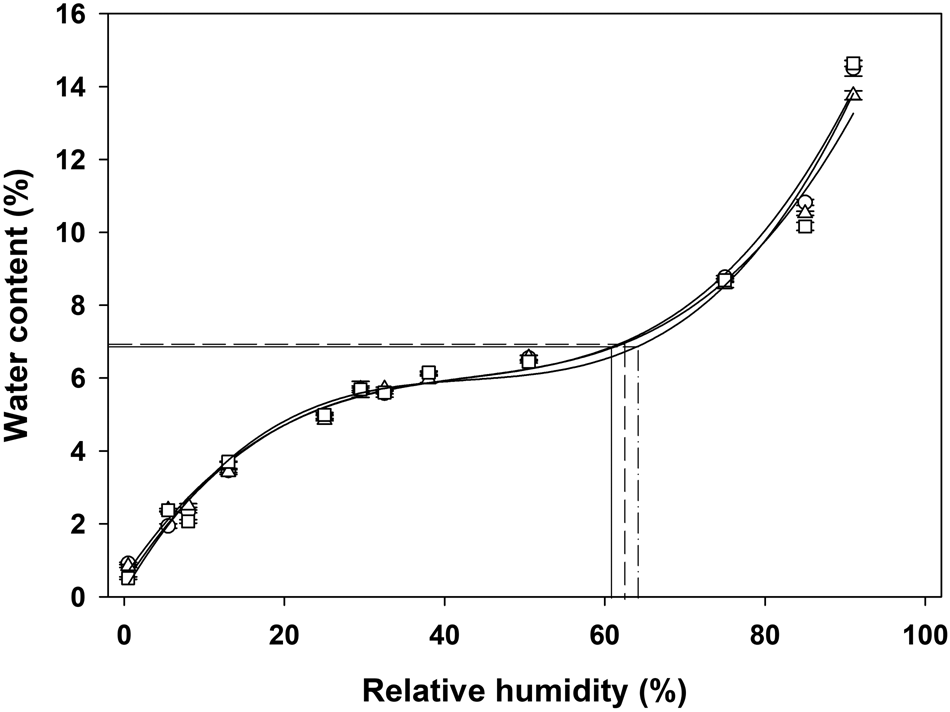
Seed mass averaged 383 ± 7, 409 ± 8 and 447 ± 10 μg (mean ± SE) in the light, intermediate and heavy classes, respectively, and was statistically different between mass classes (F 2,9 = 54.95, P < 0.0001; Table 1). The initial water content of seeds at harvest was approximately 6.89 ± 0.03% (mean ± SE) and not statistically different among mass classes (F 2,8 = 0.38, P = 0.70, Table 1). Each mass class displayed similar reverse sigmoid-shaped water sorption isotherms (Fig. 1). Inflection of the isotherm was noted between 61 and 64% RH (corresponding to water potential values between −68 and −61 MPa) among the mass classes, and otherwise there was minimal variation in seed–water sorption relationships. No significant differences were detected for seed RH given a water content (F 2,8 = 3.37, P = 0.09) or water potential (F 2,8 = 3.38, P = 0.09) among the mass classes (Table 1).
Water sorption isotherms showing the relationship between water content and relative humidity for mass-separated Rudbeckia mollis seeds classified as light (circles, solid curve), intermediate (triangles, dashed curve) and heavy (squares, dash-dot curve). Vertical lines indicate isotherm inflection and associated relative humidity values used to estimate water potential for seeds in the light (solid line), intermediate (dashed line) and heavy (dash-dot line) mass classes. Relative humidity was controlled using saturated salt solutions and the isotherms were constructed at room temperature.

Mean ± standard error and coefficient of variation (CV) for fresh mass, water content and relative humidity (RH) measurements of Rudbekia mollis seeds separated into light, intermediate and heavy categories.

Water potential values calculated from relative humidity.
Mean values within a column followed by the same letter are not significantly different at α = 0.05 level.
Germination of seeds stored under various conditions of temperature and RH
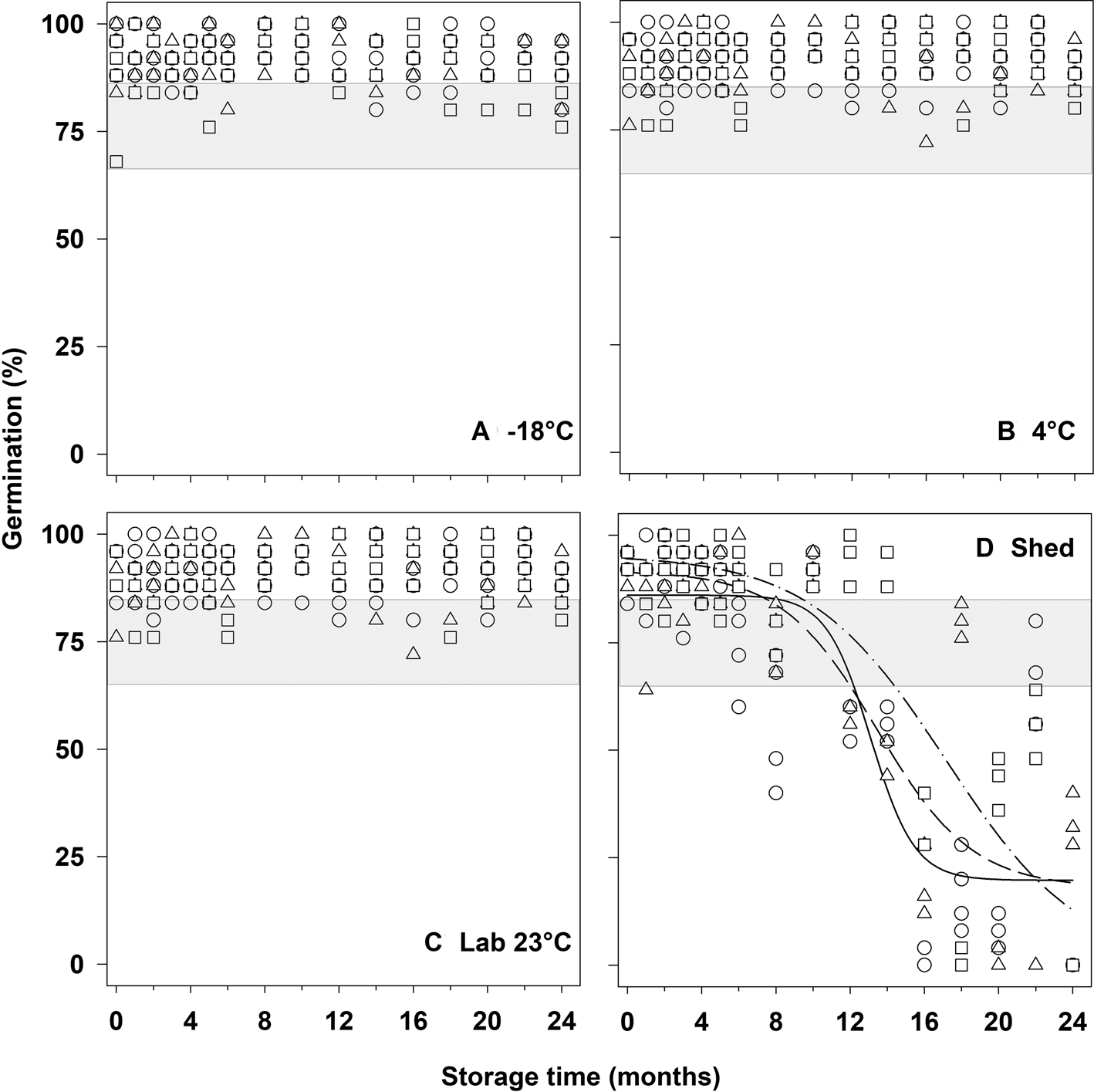
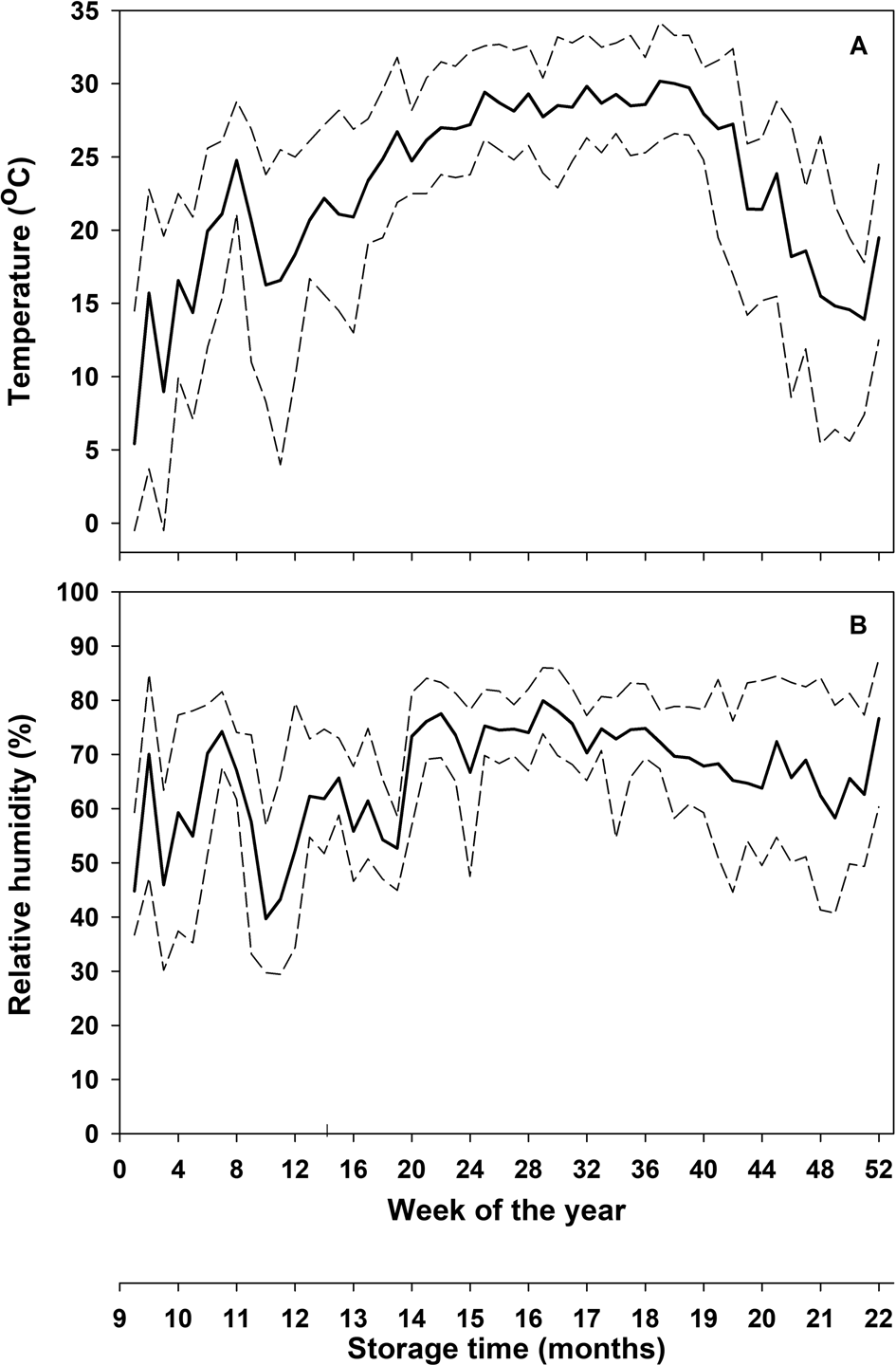
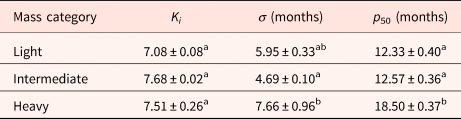
Initial germination, averaged across mass classes, was high for seeds assigned to storage at −18°C (91.0 ± 5.0%), 4°C (86.7 ± 3.5%), room (87.3 ± 4.6%) or shed (93.3 ± 2.1%, mean ± SD). After 2 years of storage, average germination remained above 85% for seeds stored at −18°C, 4°C or at room temperature, regardless of mass class (Fig. 2A–C). Alternatively, seeds from all mass classes that were stored in the shed exhibited marked and variable decline in germination over the 2-year period. Deterioration was evident within 8 months of storage across all mass classes; rapid decreases in germination percentage coincided with the onset of spring when outside temperature and relative humidity increased (Fig. 2D and Fig. 3). Values of p50 ranged from about 12 to 18 months and was significantly higher (i.e. longer shelf-life) for heavy seeds (F 2,11 = 83.31, P < 0.0001; Table 2). Deterioration rates (1 ⋅ p50 −1) for light and intermediate seeds (ca 0.080) were 1.6-fold faster compared to the deterioration rate (0.054) for heavy seeds. Alternatively, heavy seeds displayed slightly more variation for seed deaths over time, but values for σ (i.e. days for germination percent to decrease by 1 probit) only differed significantly between seeds in the intermediate and heavy classes (Table 2).
Germination percentage of mass-separated Rudbeckia mollis seeds stored for 2 years within a (A) freezer (−18°C, moisture adjusted to 15% RH at 23°C), (B) refrigerator (4°C, moisture adjusted to 15% RH at 23°C), (C) climate-controlled laboratory room (23°C, 55.2 ± 0.03% RH (mean ± SE)) or (D) non-climate-controlled shed for 2 years. Seed mass categories: light (circles, solid curve), intermediate (triangles, dash curve) and heavy (squares, dash-dot curve). Horizontal grey bar represents the viability thresholds (i.e. 65–85%) for regeneration of germplasm collections (FAO, 2014, Walters, Reference Walters2015).

Air temperature (A) and relative humidity (B) recorded from January 1 to December 31, 2018 in a non-climate-controlled storage shed. Data were collected using a data logger placed near the experiment.

Deterioration parameters for Rudbeckia mollis seeds during storage for up to 2 years in a non-climate-controlled shed

Values within each column followed by the same letter are not significantly different at α = 0.05 level.
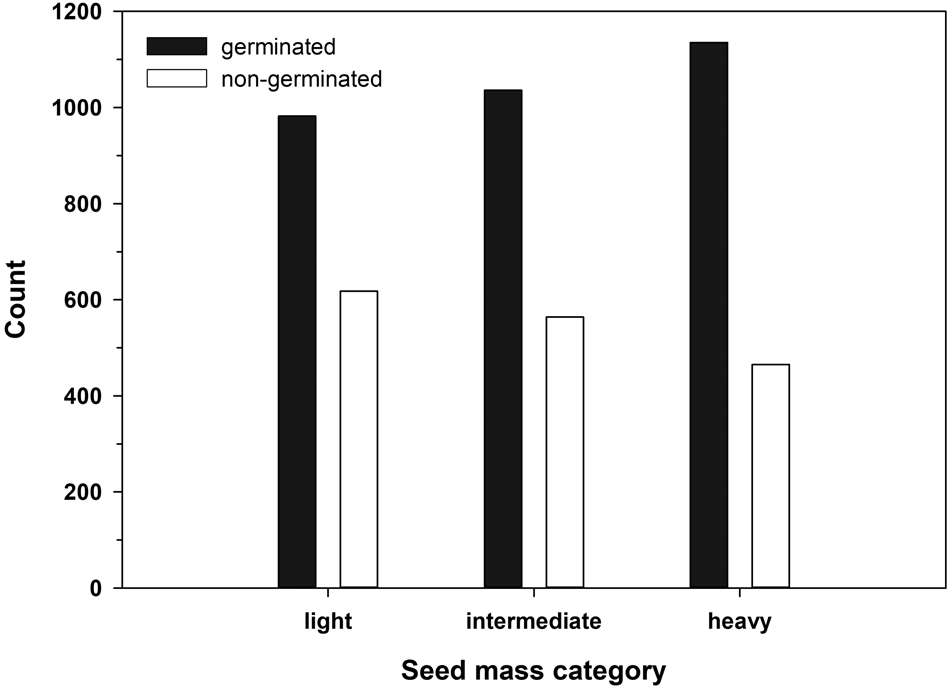
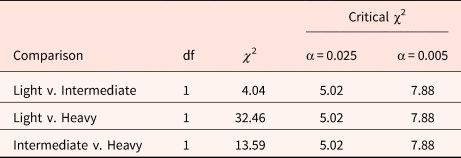
Pooling the germinated and non-germinated counts across all storage times for seeds stored in the shed provides another way to visualize the extent to which seeds in different mass classes lost germination potential. Of the 1600 seeds stored over the 2-year period, more than half germinated (Fig. 4). The ratio of germinating to non-germinating seeds was 1.6, 1.8 and 2.4 for the light, intermediate and heavy classes, respectively, which was significantly different ( $\chi _2^2 = 33.39$, P < 0.0001). Seed viability status was similar between the light and intermediate mass classes but differed for heavy seeds with the largest difference in seed viability status occurring between light and heavy seeds (Table 3).
Counts of germinated (black bars) and remaining non-germinated, non-viable (white bars) Rudbeckia mollis seeds separated into light, intermediate and heavy mass classes then stored in a non-climate-controlled shed for 2 years.

Simple comparisons of total number of viable and non-viable Rudbeckia mollis seeds during storage for 2 years in a non-climate-controlled shed

Seeds were separated into light, intermediate and heavy mass classes prior to storage.
All post-hoc comparisons were evaluated at lower α levels to reduce the likelihood of committing Type I errors that may be associated with any pair of comparisons at the α = 0.05 level (Sheskin, Reference Sheskin2011).
Vigour comparisons between fresh seeds and seeds stored at 4°C for 8 months
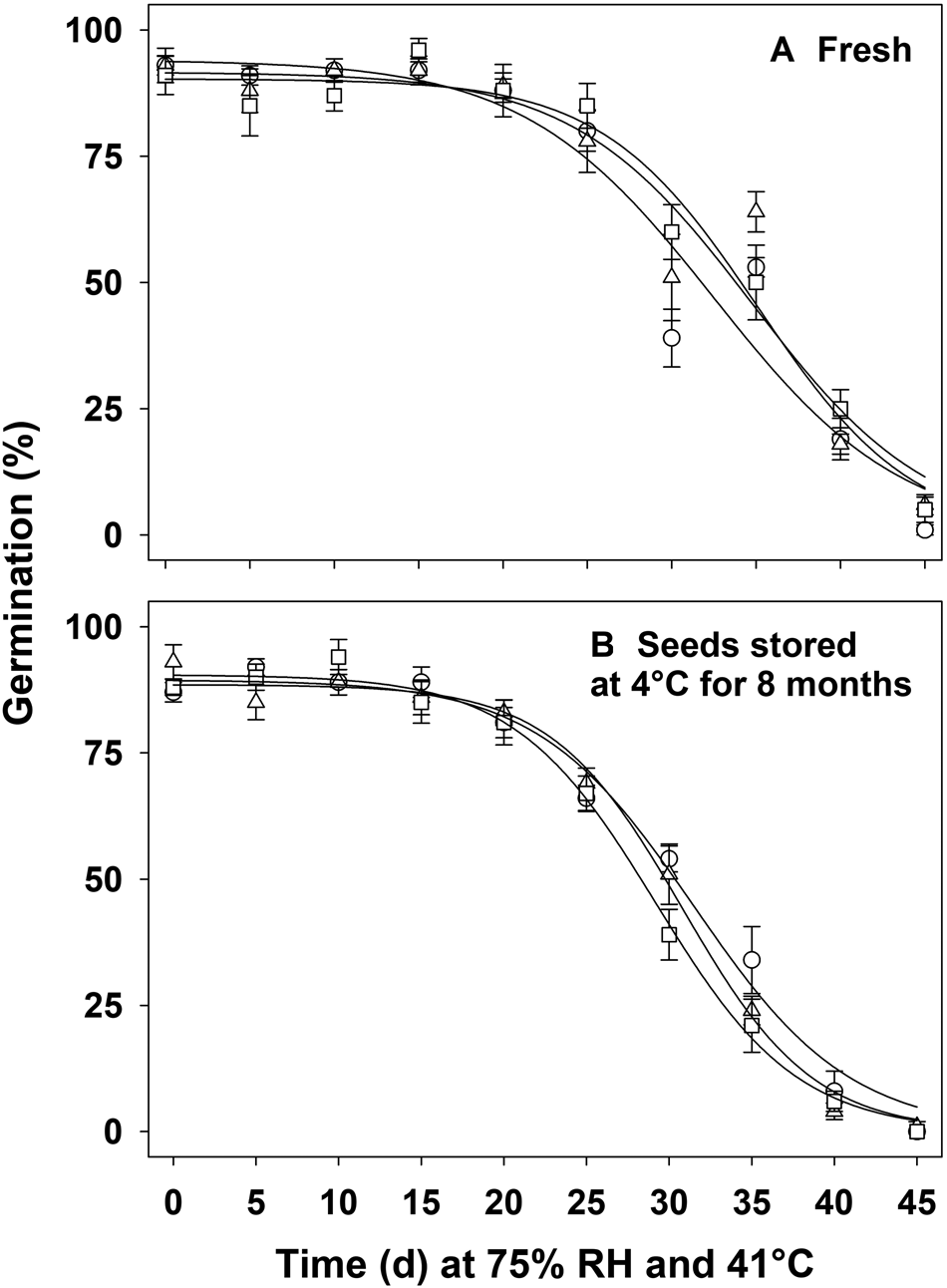
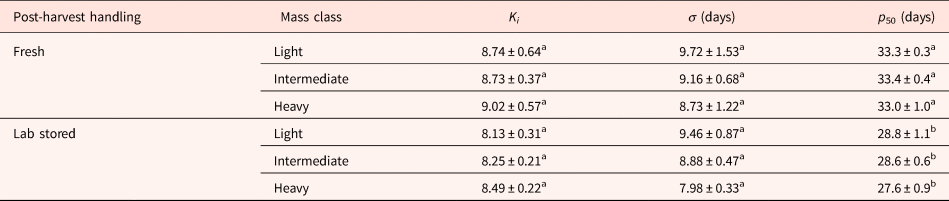
A warm, humid stress was applied to each of these samples causing germination to decline with duration of stress (Fig. 5). Vigour terms were quantified from the deterioration curves fitted to the Viability Equation (equation 1) across mass classes (Table 4). Vigour prior to the stress test (Ki, in probits) ranged from 8.1 to 9.0 for fresh and 8 month stored seeds across seed mass classes. Time for germination percentage to decline by 1 probit (σ, in days) ranged from 8.0 to 9.7; lower values were apparent for the 8-month stored seeds as well as for heavier seeds, though differences were not significant. Longevity was calculated as p 50 (time for germination percentage to decline to 50%) and averaged 33.2 ± 0.6 and 28.3 ± 0.9 d for seeds that were fresh and stored for 8 months at 4°C, respectively (Table 4). Estimated seed deterioration rates for fresh seeds (0.030) were about 1.2 times slower than rates for 8 month stored seeds. Values for Ki and σ showed no significant effects of storage treatment or seed mass according to two-way analysis of variance (Table 5). However, values of p 50 were significantly different between fresh and stored seeds with no significant effect of seed mass (Table 5).
Germination percentage of Rudbeckia mollis seeds divided into light (circles), intermediate (triangles) and heavy (squares) classes then subjected to warm (41°C), high humidity (75% RH) stress test for up to 45 d. Panel A shows the effect of the warm, humid stress in fresh seeds (within 2 weeks of harvest) and panel B shows a similar treatment in seeds that were stored at 4°C for 8 months. Drawn curves represent data fitted to the Viability Equation function (equation 1).

Rudbeckia mollis seed deterioration parameters following warm, humid stress (41°C, 75% RH) for 45 d

Seeds were separated into three mass categories then subjected to stress treatments within 2 weeks of harvest (fresh) or after being stored at 4°C for 8 months.
Values followed by the same letter are not significantly different at α = 0.05 level.
Results of two-way ANOVA on deterioration parameters for mass-separated Rudbeckia mollis seeds following the stress test described in Table 4

The post-harvest handling main effect consisted of the fresh and lab-stored categories. The main effect of mass consisted of the light, intermediate and heavy seed mass classes.
Vigour comparisons between seeds stored for 2 years
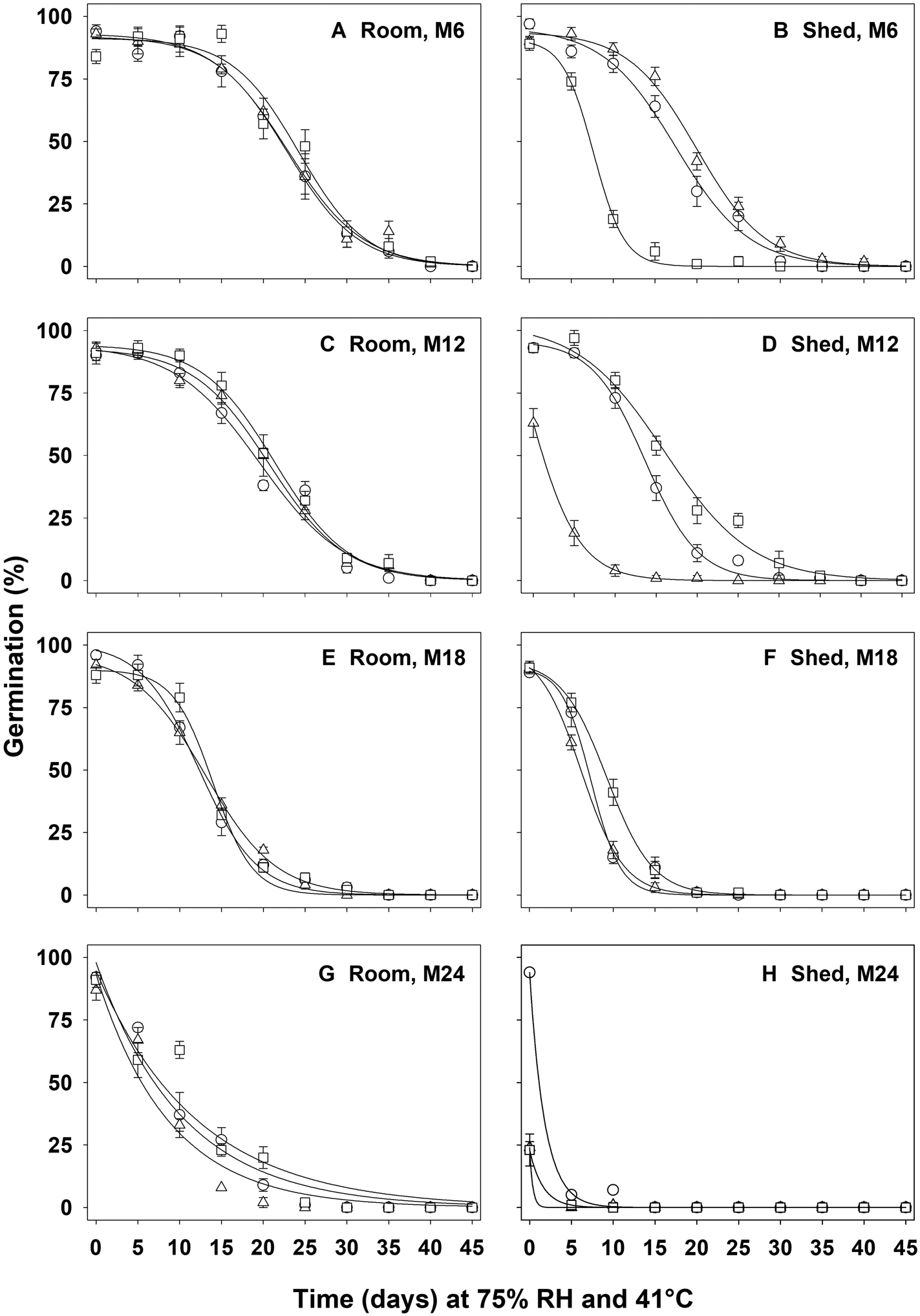
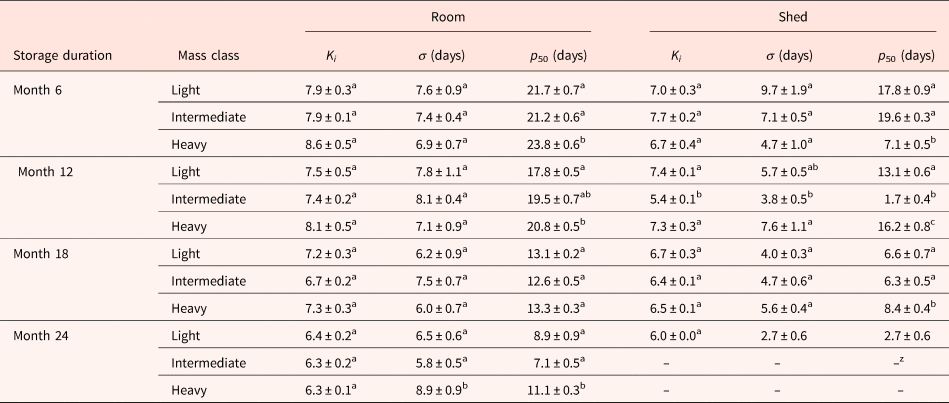
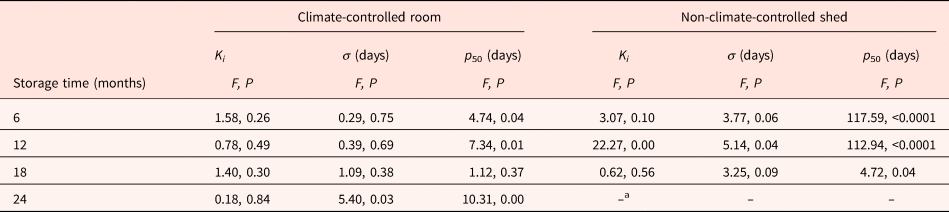
The same warm, humid stress was applied every 6 months to seeds stored at room conditions (23°C and 42% RH) and inside the shed (0–34°C and 38–89% RH) for up to 2 years (Fig. 6). Prior to the stress, germination percentage for seeds stored at room conditions was high (Fig. 2C, data points at 6, 12, 18 and 24 months), while germination percentage for seeds stored in the shed was variable (Fig. 2C, D, data points at 6, 12, 18 and 24 months). The applied stress caused seed germination to eventually decline, and the amount of time to detect a response varied with storage conditions and decreased with storage time (Fig. 6). Data from deterioration curves were fitted to the Viability Equation. Vigour parameters Ki and σ ranged between 6.0 to 8.6 and 2.7 to 9.7, respectively, for different mass classes, storage treatments and storage durations (Table 6). However, neither storage duration nor seed mass class had significant effects on values of Ki and σ according to two-way ANOVA (Tables 6 and 7). Values for p 50 ranged from 2.7 to 23.8 d, with longer times calculated for room storage versus shed storage and shorter storage durations (Table 7). Moreover, p 50 was slightly higher in the heavy seed class for 6, 12 or 24 months of storage at room temperature and for 12 and 18 months of storage in the shed. Overall, deterioration rates were 1.2–8.8-fold faster for seeds stored in the shed compared to seeds stored in the air-conditioned room.
Germination percentage of Rudbeckia mollis seeds divided into light (circles), intermediate (triangles), and heavy (squares) classes then subjected to warm (41°C), high humidity (75% RH) stress test for up to 45 d. Prior to the warm, humid stress test, seeds were stored in a climate-controlled (ca 23°C, 42.5% RH) room (A, C, E, G) or non-climate-controlled shed (B, D, F, H) for 6, 12, 18 or 24 months (M). Drawn curves represent data fitted to the Viability Equation function (equation 1).

Rudbeckia mollis seed deterioration parameters following warm, humid stress (41°C, 75% RH) for 45 d

Seeds were separated into three mass categories then stored for 6, 12, 18 or 24 months in a climate-controlled room (23°C, 42.5% RH) and a non-climate-controlled shed. After storage, seeds were subjected to a warm, humid stress (41.0°C, 75% RH) for 45 d.
zFinal germination percentage did not exceed 50%.
One-way ANOVA results for mass-separated Rudbeckia mollis seeds following 6, 12, 18 or 24 months of storage in a climate-controlled room (23°C, 42.5% RH) or a non-climate-controlled shed and then subjected to warm, humid stress as described in Table 6

a Germination did not exceed 50%
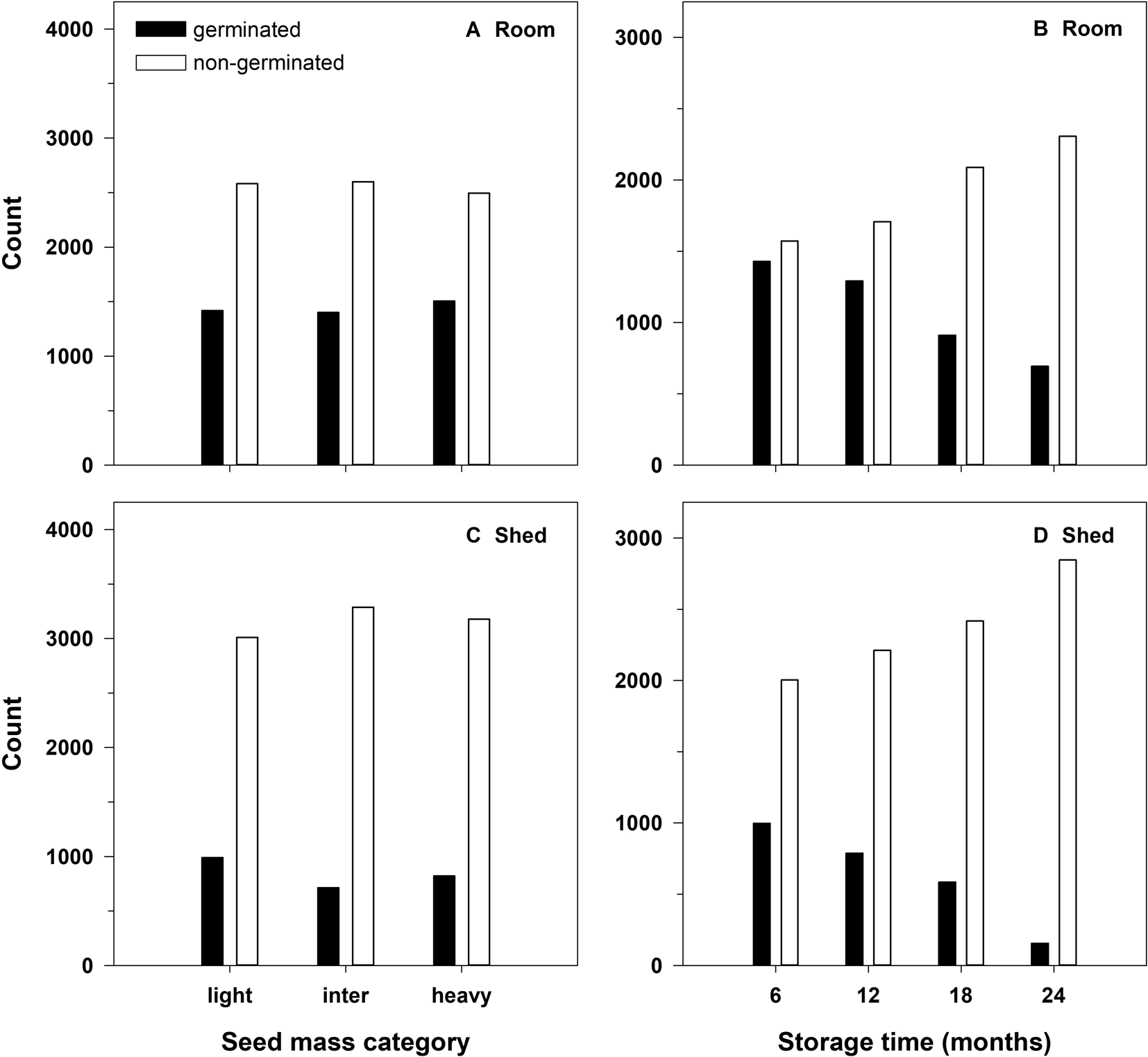
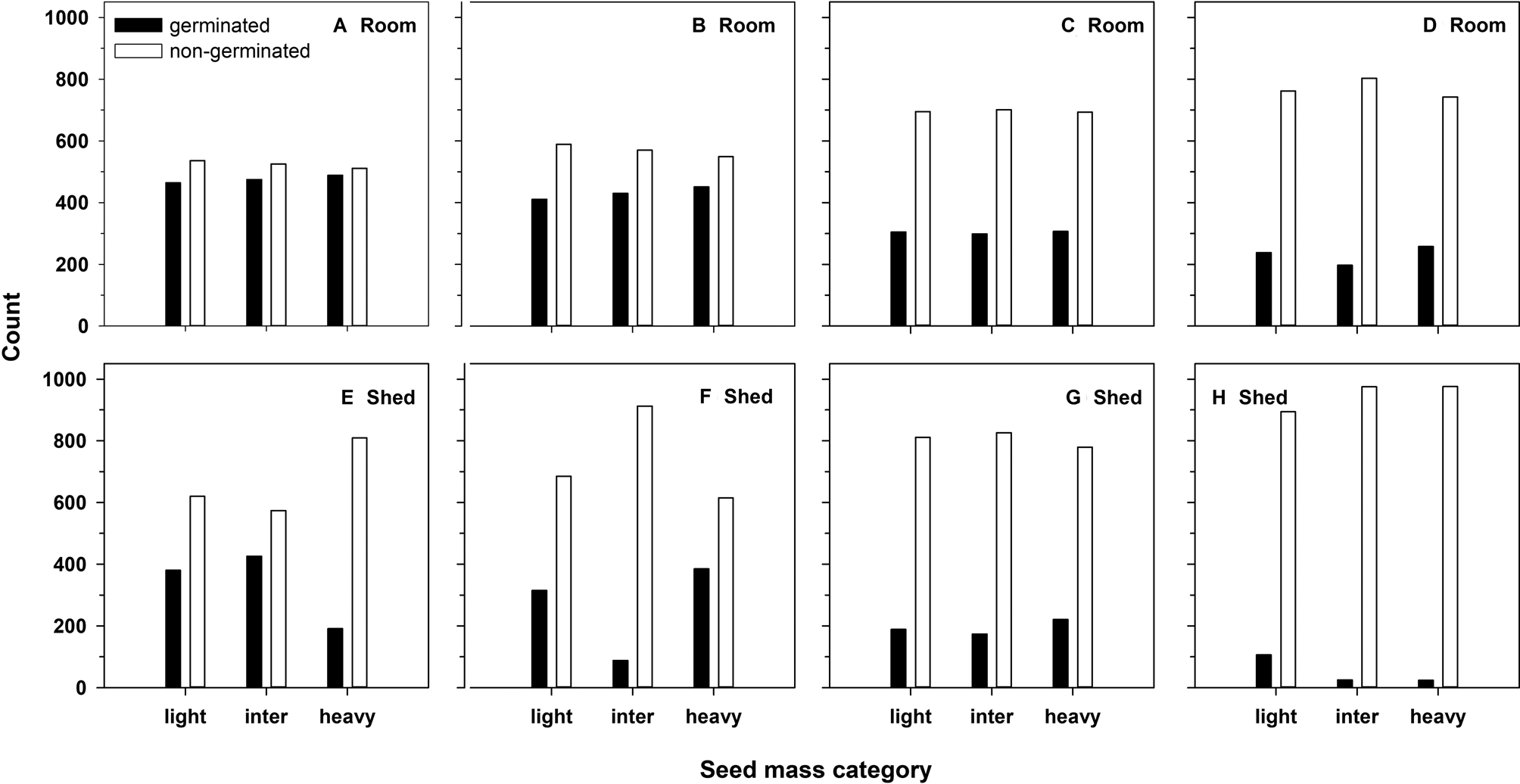
In the stressed seeds, there were more seeds that did not germinate than did when germination tests were pooled across mass classes, storage times and storage conditions (Fig. 7). For example, the ratio of germinated to non-germinated seeds was 1.82, 1.86 and 1.66, and 3.04, 4.61 and 3.87 for the light, intermediate and heavy classes, respectively, for seeds stored under room (Fig. 7A) and shed (Fig. 7C) conditions. The ratio of germinated to non-germinated seeds increased from 1.10 to 3.33 for room stored seeds and from 3.51 to 18.35 for shed-stored seeds as storage duration increased (Fig. 7B, D). Chi-square analyses detected an association between seed mass and viability status ( $\chi _2^2 = 6.75$, P = 0.03) and a strong association between seed storage duration and viability status (
 $ \chi _2^2 = 497.98 $, P < 0.0001 for room storage and
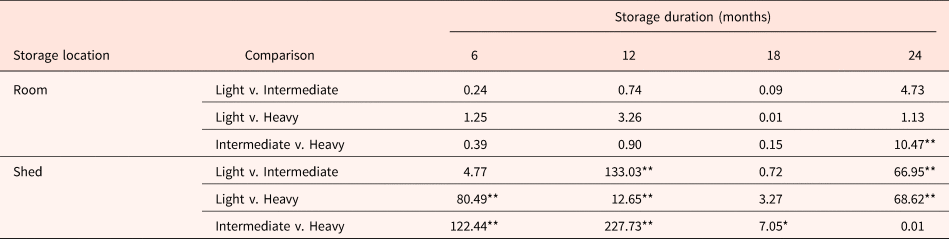
 $\chi _2^2 = 62.72$, P < 0.0001 for shed storage). Effects of mass classes for each storage duration were sometimes detected, with the largest differences occurring at the 12-month storage interval for seeds stored in the shed (Fig. 8 and Table 8).
Counts of germinated (black bars) and remaining non-germinated, non-viable (white bars) Rudbeckia mollis seeds pooled by seed mass category (A, C) or storage duration (B, D). Seeds were stored in a climate-controlled room (A, B) or non-climate-controlled shed (C, D) for 2 years then exposed to warm, humid stress following 6, 12, 18 or 24 months of storage.

Counts of germinated (black bars) and remaining non-germinated, non-viable (white bars) Rudbeckia mollis seeds separated into light, intermediate and heavy mass classes then stored in a climate-controlled room (A, B, C, D) or non-climate-controlled shed (E, F, G, H) for 2 years. Seeds were subjected to saturated salt accelerated ageing following storage for 6 (A, E), 12 (B, F), 18 (C, G) or 24 (D, H) months.

P-values for simple comparisons of total number of viable and non-viable Rudbeckia mollis seeds after storage for 6, 12, 18 and 24 months in a climate-controlled room or non-climate-controlled shed. Seeds were exposed to 75% RH, 41°C for 42 d following each storage period

Critical χ 2-values at α = 0.025 and 0.005 levels equalled 5.02 and 7.88, respectively. Significant and highly significant values denoted by * and **, respectively. All comparison df = 1.
All post-hoc comparisons were evaluated at lower α levels to reduce the likelihood of committing Type I errors that may be associated with any pair of comparisons at the α = 0.05 level (Sheskin, Reference Sheskin2011).
Discussion
Loss of germination potential results from accumulated ageing damage that occurs during seed storage or applied stresses. Growing evidence indicates relationships between intra-specific seed mass variation and seed deterioration associated with high temperature and relative humidity stress (Franks et al., Reference Franks, Sekor, Davey and Weis2019; Genna and Pérez, Reference Genna and Pérez2016; Guzzon et al., Reference Guzzon, Orsenigo, Gianella, Müller, Vagge, Rossi and Mondoni2018; Mira et al., Reference Mira, Veiga-Barbosa and Pérez-Garcia2019). We examined water sorption characteristics of mass-separated R. mollis seeds and then evaluated responses of each mass class to various storage and stress treatments. The stress treatments were used to characterize seed vigour among the mass classes throughout a 2-year period for seeds stored in a climate-controlled room or non-climate-controlled shed. We found some storage effects and post-storage vigour differences among the mass classes during the study.
Water relations in seeds from different mass classes
Water sorption isotherms were similar for different mass classes of R. mollis seeds. Isotherms had the reverse sigmoid shape characteristic of seeds at physiological maturity compared to more hyperbolic-shaped isotherms of seeds with truncated developmental programs prior to shedding (Probert and Longley, Reference Probert and Longley1989; Pritchard, Reference Pritchard1991; Farrant and Walters, Reference Farrant and Walters1998; Walters, Reference Walters1998). Furthermore, Genna (Reference Genna2019) found that cytoplasm from R. mollis seeds from the different mass classes had very little intracellular free space and similar surface areas for cells, protein bodies, starch granules and lipid bodies. Seed density was not significantly different across mass classes as well. The level of cellular surface area composed of reserve materials observed for R. mollis strongly resembles the sub-cellular organization of cells that complete all stages of seed development (Farrant et al., Reference Farrant, Pammenter, Berjak and Walters1997).
There is a positive exponential relationship between seed water content and seed deterioration rate for seeds held at relative humidity greater than about 30% (Ellis et al., Reference Ellis, Hong, Roberts and Tao1990; Walters et al., Reference Walters, Ballesteros and Vertucci2010). Mira et al. (Reference Mira, Veiga-Barbosa and Pérez-Garcia2019) found that smaller seeds of H. incana contained more water and deteriorated more rapidly than larger seeds. However, R. mollis mass classes did not differ significantly for seed water content at higher RH, meaning that the slower deterioration observed in seeds of the heavy seed class stored in the shed should not be attributed to water content per se. Shed RH and air temperature varied between about 40–90% and 15–30°C and packaging was not airtight. This could mean that seed water content fluctuated between about 5.9% (40% RH, 23°C) and 10% (80% RH, 23°C, Fig. 1) and one could hypothesize that the different mass classes had different adsorption and desorption rates. Previous studies showed that mass-separated R. mollis seeds imbibe at similar rates (Genna and Pérez, Reference Genna and Pérez2016), which does not support the hypothesis that lighter seeds possibly stayed hydrated longer and so aged correspondingly faster. The higher proportion of viable seeds of the heavy class compared to the light or intermediate classes throughout the storage period suggests that larger R. mollis seeds may possess a competitive advantage when confronted with stressful storage conditions.
Response of seeds to different storage conditions selects for mass-dependent ageing responses
Seeds stored at −18, 4 and ~23°C at low RH maintained high germination potential for at least 2 years. This is typical of early ageing responses, which appear asymptomatic, especially when conditions are not stressful. In general, the lack of a consistent measured change precluded detection of differences in longevity for different seed mass classes. In contrast, seeds stored under non-climate-controlled conditions (i.e. open shed) lost germination potential over 2 years (p 50 ranged from 12 to 8 months). Mass of seeds appeared to affect kinetics with the heavy seeds maintaining viability longer and the light or intermediate seeds deteriorating more rapidly and uniformly. Seeds stored under these humid, fluctuating conditions would most likely require regeneration after 8 months.
Vigour testing stored seeds uncovers another set of responses across mass classes
Changes in seed health during early storage were not detectable by germination assays alone (Fig. 2A–C). However, stressing stored seeds using warm, high humidity conditions revealed differences in how much stress, in terms of duration, was tolerated. These stress tests revealed slight vigour loss for seeds stored at 4°C for 8 months (28 d before 50% mortality) compared to fresh R. mollis seeds (33 d before 50% mortality) (Table 4). Seed mass class did not have significant effects on calculated p 50 values (Table 5). The higher temperature and RH of the climate-controlled room should cause faster ageing of seeds compared to the 4°C conditions (Ellis and Roberts, Reference Ellis and Roberts1980, Reference Ellis and Roberts1981). This presumed increase in ageing rate could not be detected using germination tests (compare Fig. 2B, C), but was evident from the lowered p 50 observed by stressing seeds at 41°C and 75% RH prior to germination (22 d after 6 months at room temperature, Table 6). As with the shed-stored seeds, the heavy seed class appeared to have a relatively consistent advantage over the lighter mass classes, as demonstrated by higher p 50 for stressed seeds that had been stored for 6, 12 and 24 months (Table 6). Vigour was more severely reduced for seeds stored in the non-climate-controlled shed, but there was no consistent pattern with seed mass class, perhaps because the more dramatic effect of lost viability was expressed.
Seed viability loss during storage under fluctuating conditions compared to controlled conditions highlights the importance of environmental controls to maintain seed quality. These controls are routinely used for seed banks and commercial operations where the cost of the seed is high relative to the cost of the storage facility. However, seeds often encounter unfavourable conditions for germination and seedling growth after storage. For example, many land reclamation and plant restoration projects broadcast seeds into habitats with little to no seed bed preparation or supplemental management. Likewise, some production systems such as rain-fed agriculture, which accounts for 60–95% of farm production systems in regions of Africa, Latin America and Asia (Wani et al., Reference Wani, Sreedevi, Rockström, Ramakrishna, Wani, Rockström and Oweis2009), exposes seeds to the vagaries of local weather conditions. Therefore, understanding how vigour of previously stored seeds may have changed, and the extent to which this applies to seeds of different mass, becomes important when seeds are utilized.
Conclusions
There is increasing evidence of intra-specific variation of seed longevity. Here, we show a possible influence of seed mass on the rate of deterioration in seeds placed at fluctuating or constant high RH conditions. The influence of seed mass has the potential to influence other phenotypic traits such as seedling establishment and subsequent vegetative size class distributions, floral production and timing, temporal patterns of seed shedding, seed persistence, and germination and seedling establishment within succeeding seasons. These changes may shift population demographics and eventual evolutionary trajectories (Donohue, Reference Donohue2002; Donohue et al., Reference Donohue, Dorn, Griffith, Kim, Aguilera, Polisetty and Schmitt2005; Franks et al., Reference Franks, Sekor, Davey and Weis2019). Longer-term studies might determine the extent to which such responses exist for seeds stored under drier and cooler conditions. These studies will be aided by methods that detect physiological changes before mortality (Rahman and Cho, Reference Rahman and Cho2016).
Supplementary material
To view supplementary material for this article, please visit: https://doi.org/10.1017/S0960258520000161.
Acknowledgements
We thank Terry Zinn for providing seed material and logistical support and Alec Chin-Quee for providing technical assistance. We also acknowledge Alfred Huo, Jamie Gillooly, Michael Kane and anonymous reviewers for their constructive comments. Mention of trade names or commercial products in this article is solely for the purpose of providing specific information and does not imply recommendation or endorsement by the US Department of Agriculture. USDA is an equal opportunity provider and employer.
Financial support
This work was supported in part by a University of Florida Graduate Student Funding Award to N.G. and from United States Department of Agriculture Multi-state Project W3168 funding to H.E.P.
Conflicts of interest
None.