Bone mineral density (BMD) is a core indicator for evaluating bone health, directly reflecting bone strength and predicting fracture risk. Childhood and adolescence represent a critical period of rapid bone mass accumulation – individuals accumulate over 40 % of their peak bone mass during this stage, and 60–70 % of peak bone mass is formed by the age of 20 years(Reference Zaretsky, Griess-Fishheimer and Carmi1–Reference Gutiérrez, Luzuriaga-McPherson and Lin4). BMD status during this period has a decisive impact on lifelong bone health(Reference Gou, Tseng and Wang5–Reference Duran, Martakis and Rehberg7). The key factors affecting BMD in children and adolescents include nutritional intake and health behaviours, among which nutritional factors are particularly critical. Adequate nutrients such as Ca and vitamin D are essential for maintaining bone metabolic balance(Reference Nagata, Dimar and Glassman8–Reference Khalid13).
Ultra-processed food (UPF) refers to food that undergoes extensive industrial processing and contains large amounts of sugar, salt, fat and chemical additives. Due to its convenience and palatability, UPF has become an important component of the diet of children and adolescents worldwide. However, high UPF intake is closely associated with chronic diseases such as obesity and diabetes, and its impact on bone health remains unclear(Reference Calvo, Dunford and Uribarri14–Reference Cooke, Greatwood and McCullough16). Although adult studies suggest that UPF may affect bone metabolism through mechanisms such as disrupting Ca–phosphorus balance, increasing urinary Ca excretion and lacking micronutrients related to bone health, the skeletons of children and adolescents are in a stage of rapid development with metabolic characteristics significantly different from those of adults(Reference Wang, Xie and Zhai17,Reference Griess-Fishheimer, Zaretsky and Travinsky-Shmul18) . Thus, there is no consistent conclusion regarding the impact of UPF on BMD in this population.
In addition, lipid metabolism is closely linked to bone homoeostasis: total cholesterol (TC), as a precursor for vitamin D synthesis, can indirectly regulate Ca absorption; HDL-cholesterol protects bone health by promoting osteoblast activity and inhibiting osteoclast formation(Reference Qi, Peng and Xu19–Reference Martiniakova, Mondockova and Kovacova21). UPF intake may affect lipid metabolism, thereby potentially mediating its association with BMD, but this pathway has not been verified in children and adolescents.
Given the high exposure rate of UPF in children and adolescents and its potential complex impact on bone health, existing studies have obvious gaps: there is a lack of large-sample analysis targeting this population, and the specific mechanisms and mediating effects of the association between UPF and BMD remain unclear. Based on the National Health and Nutrition Examination Survey (NHANES) 2011–2018 dataset, this study aims to explore the association between UPF intake and lumbar spine BMD (LSBMD) and subtotal BMD (SBMD) in children and adolescents and analyse the mediating roles of factors such as TC and HDL-cholesterol, providing scientific evidence for bone health protection and dietary guidance in children and adolescents.
Materials and methods
Data sources
The primary data for this study were obtained from the cross-sectional NHANES, which employs a multi-stage complex sampling design and conducts biennial surveys to assess the health and nutritional status of the US population(22,Reference Dwyer, Picciano and Raiten23) .
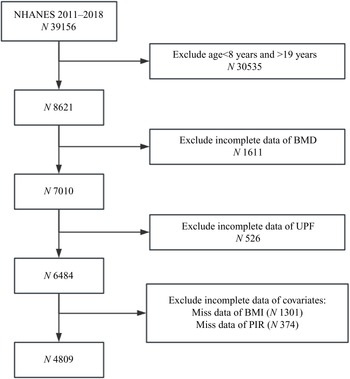
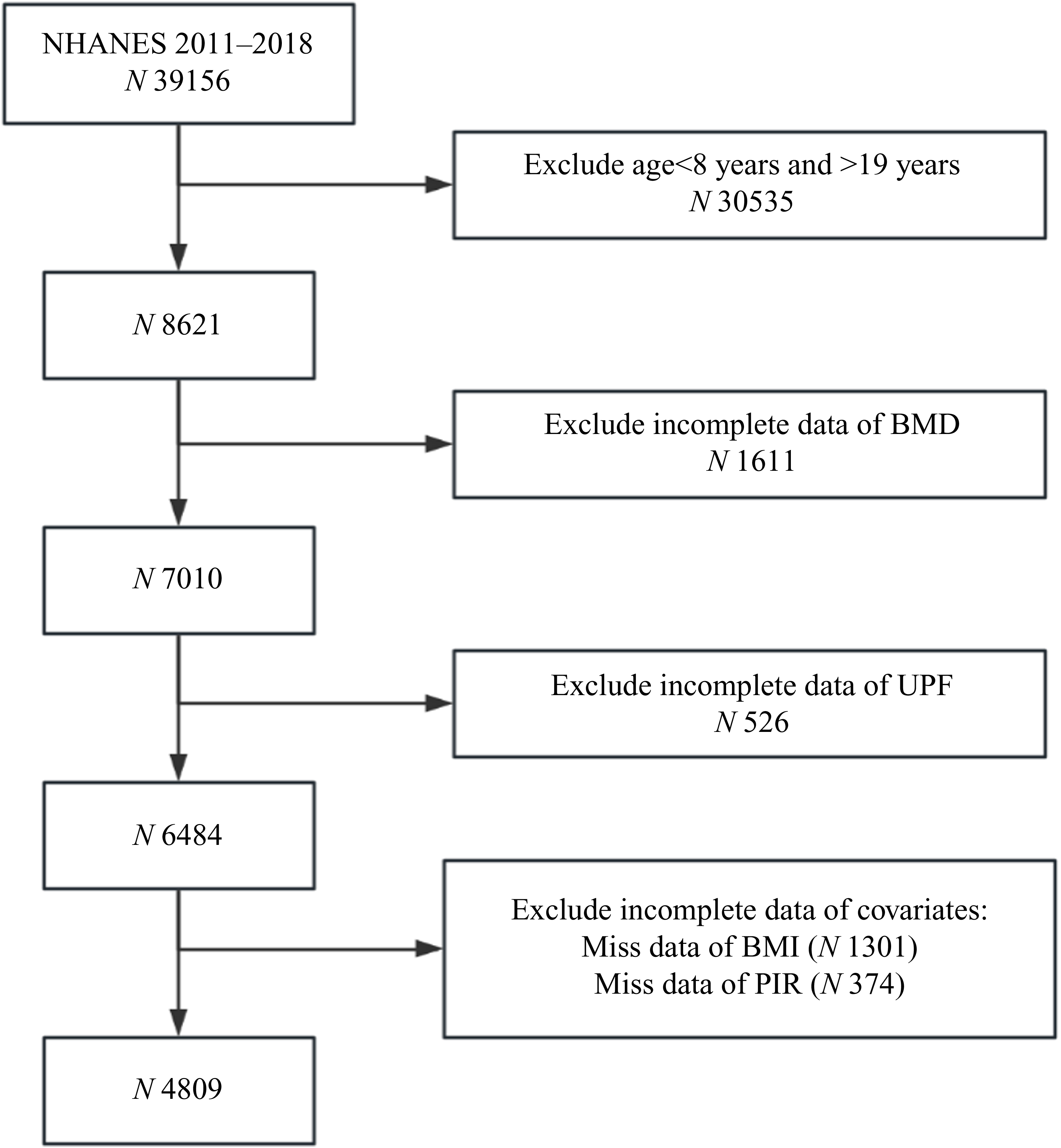
Data from four NHANES survey cycles (2011–2012, 2013–2014, 2015–2016 and 2017–2018) were selected. Inclusion criteria comprised children and adolescents aged 8–19 years with complete data on BMD measurements, UPF intake and all covariates. Exclusion criteria included pregnant individuals, those with missing data on key variables (BMD, UPF, BMI or poverty:income ratio (PIR)) and extreme energy intake reports (< 500 or > 5000 kcal/d). After applying inclusion and exclusion criteria, a total of 4809 children and adolescents aged 8–19 years were included in the analysis (Figure 1).
Flow chart depicting the inclusion and exclusion process of NHANES participants. NHANES, National Health and Nutrition Examination Survey; BMD, bone mineral density; UPF, ultra-processed food; PIR, poverty:income ratio.
Dietary information was collected through two 24-h dietary recalls, conducted by trained staff during interviews. Dietary intake data were collected by trained interviewers using the Automated Multiple-Pass Method, a validated 24-h recall protocol designed to enhance accuracy and minimise reporting errors. To address potential measurement error, we used the average of two dietary recalls and applied NHANES survey weights to account for the complex sampling design. UPF was identified using the NOVA classification system, which categorises food into four groups: unprocessed or minimally processed food, processed culinary ingredients, processed food and UPF(Reference Monteiro24). Common UPF categories included sugar-sweetened beverages, packaged snacks, processed meats, frozen ready-to-eat meals and sweetened breakfast cereals. The percentage of energy derived from UPF intake was evaluated in quartiles. The level of processing and the associated health risks of UPF are significantly higher than those of other categories. LSBMD and SBMD were measured by professionals using dual-energy X-ray absorptiometry, with results reported in g/cm2. According to the 2012 diagnostic criteria from the National Cholesterol Education Program (NCEP), a TC level ≥ 5·17 mmol/l is considered high, and an HDL-cholesterol level < 1·03 mmol/l is considered low(Reference Thiengwiboonwong, Chongsuwat and Temcharoen25). The BMI classification used was based on the CDC growth charts for individuals aged 2–20 years. Normal weight was defined as below the 75th percentile, overweight as the 75th–95th percentile and obesity as above the 95th percentile(Reference Hales, Freedman and Akinbami26).
Statistical analysis
Characteristics were grouped according to quartiles of UPF intake among children and adolescents. Continuous variables were expressed as medians and interquartile ranges (M (P25, P75)) due to non-normal distributions, while categorical variables were presented as percentages (n (%)). Normality was assessed using Shapiro–Wilk tests.
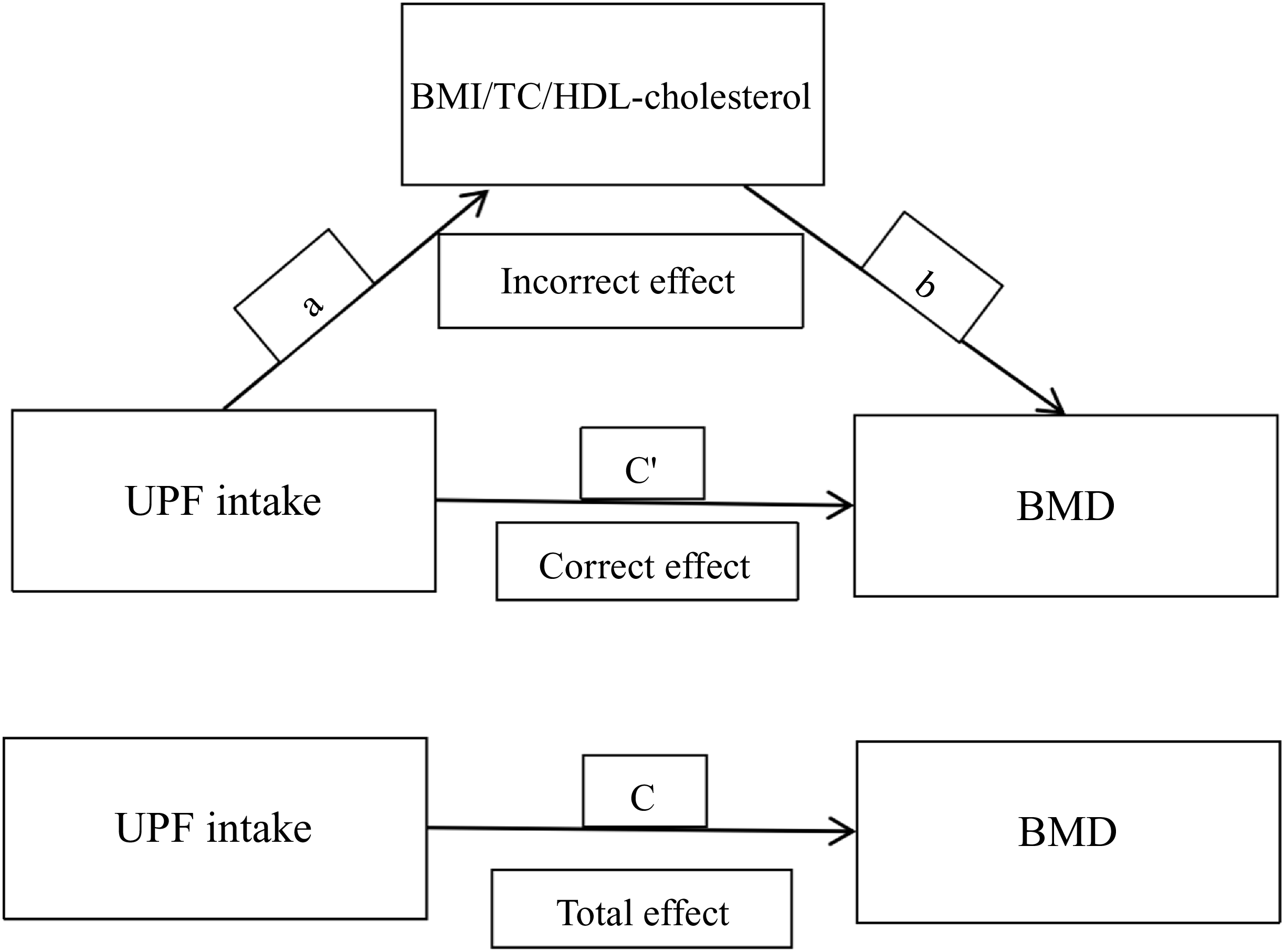
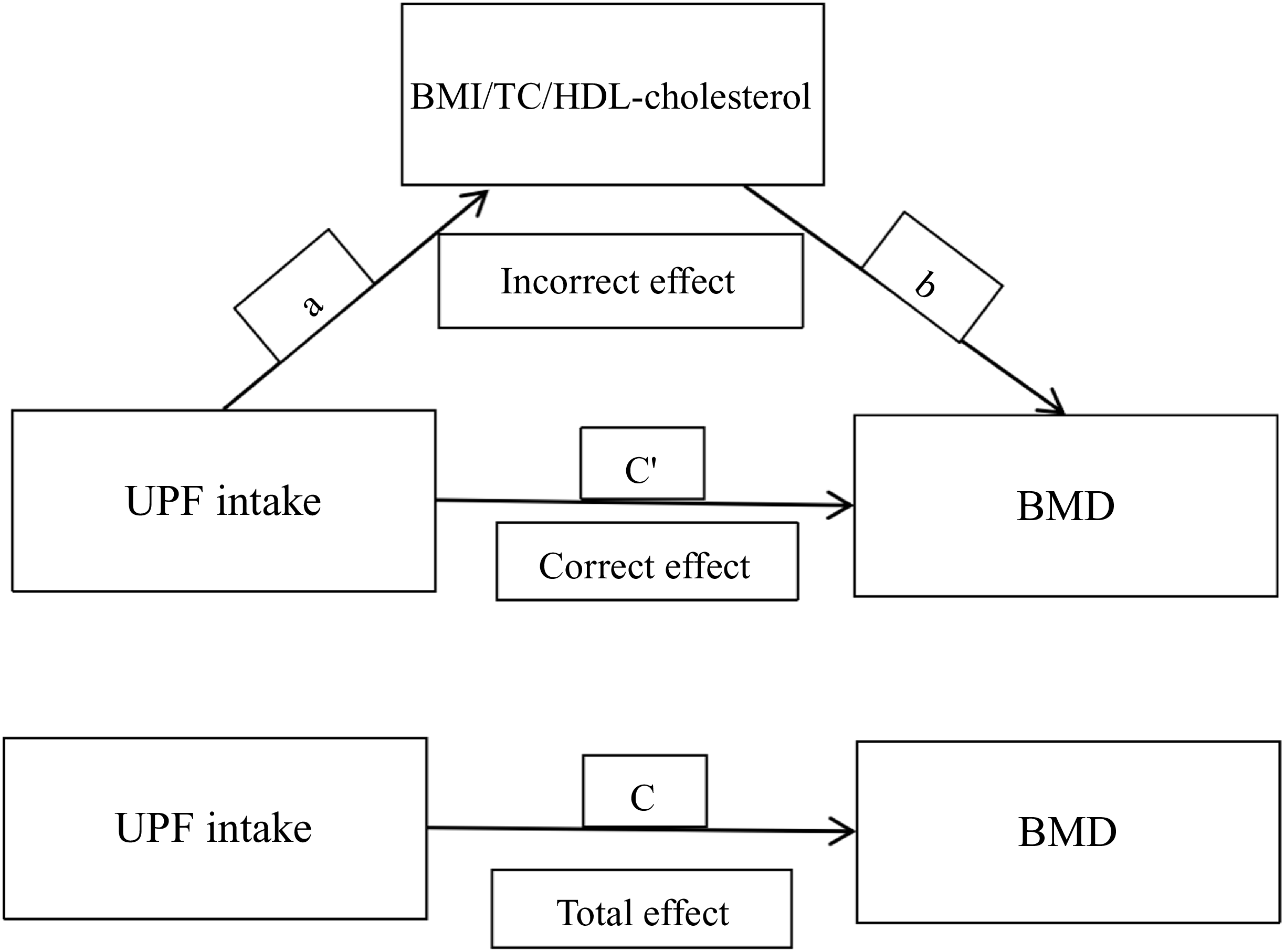
A weighted multiple linear regression model was used to analyse the relationship between UPF intake and LSBMD and SBMD in children and adolescents. Stratified analyses were conducted based on age, sex, race, BMI, TC and HDL-cholesterol. Mediation analysis was performed to examine the mediating roles of BMI, TC and HDL-cholesterol in the association between UPF intake and BMD in children and adolescents (Figure 2).
Mediation analysis diagram. TC, total cholesterol; UPF, ultra-processed food; BMD, bone mineral density.
The covariates in the multivariate regression analysis included age, sex, race, PIR, BMI, survey cycle and standing height. These variables were selected based on their established associations with BMD in paediatric populations and potential confounding effects on the UPF–BMD relationship. Data analysis adhered to the multi-stage complex sampling design methodology, and statistical analyses were conducted using STATA 15.1. A two-sided P < 0·05 was considered statistically significant.
Results
Characteristics description
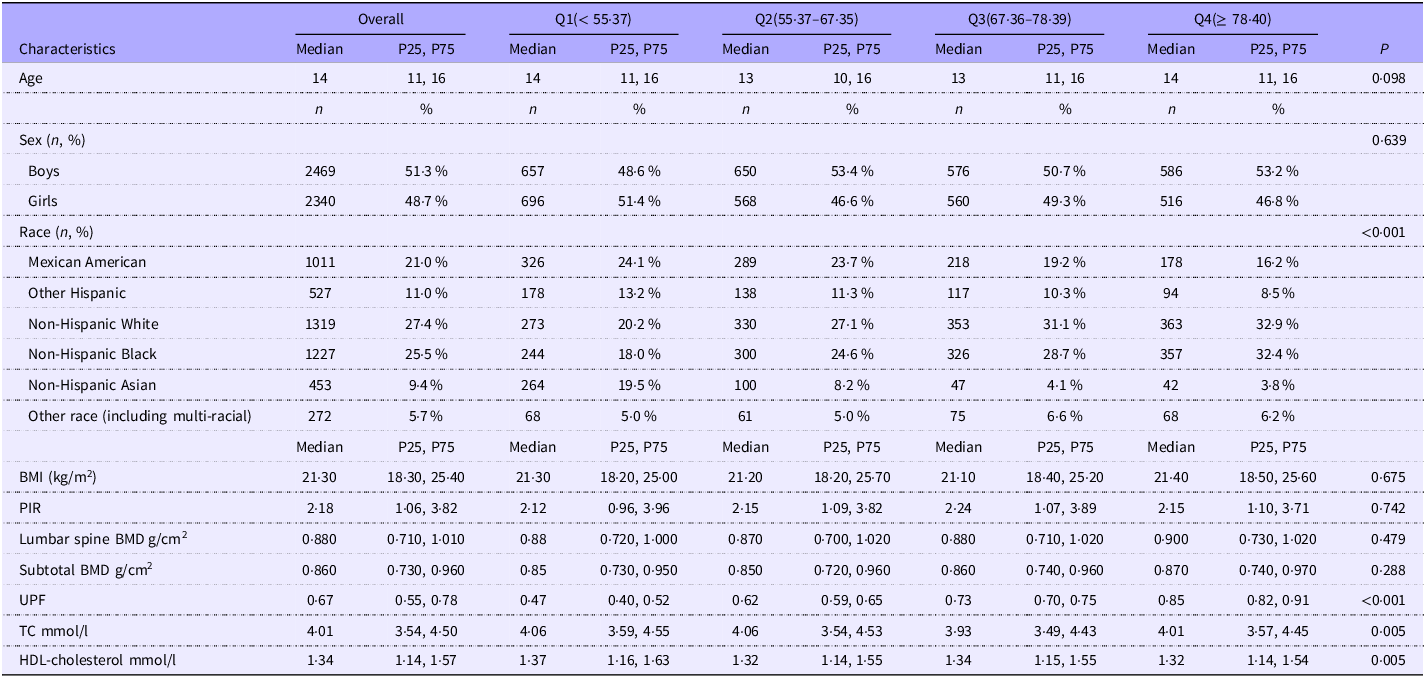
A total of 4809 subjects were included in this study, with an average age of 14 years (interquartile range: 11–16 years), and 51·34 % were boys. The racial composition was 27·4 % non-Hispanic White, 25·5 % non-Hispanic Black, 9·4 % non-Hispanic Asian, 21·0 % Mexican American, 11·0 % other Hispanic and 5·7 % other races.
The median UPF intake was 0·67 (0·55, 0·78), BMI was 21·30 kg/m2 (interquartile range: 18·30–25·40), TC was 4·01 mmol/l (interquartile range: 3·54–4·50) and HDL-cholesterol was 1·34 mmol/l (interquartile range: 1·14–1·57). Significant differences were observed in race, TC and HDL-cholesterol levels across quartile groupings of UPF intake (Table 1).
General sociodemographic characteristics of UPF quartile groups
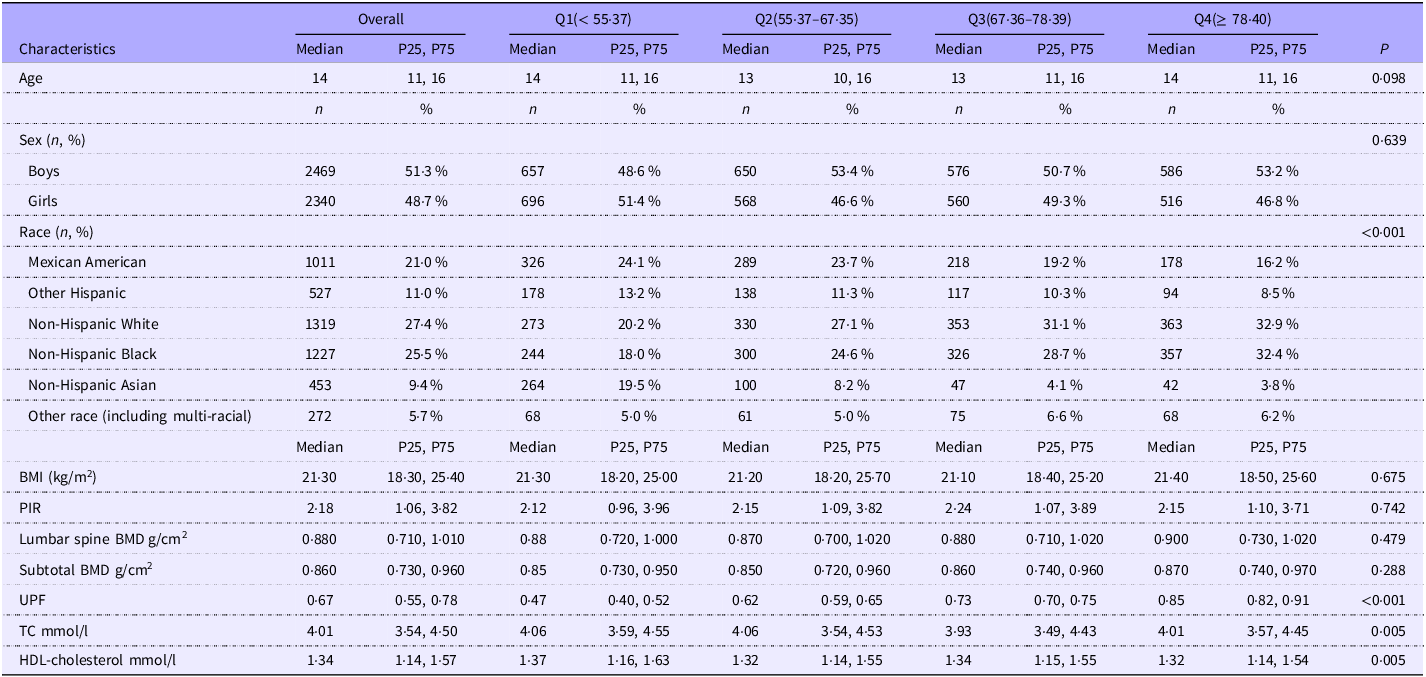
Table 1 Long description
The table presents sociodemographic characteristics across quartiles of UPF intake. It has 14 rows and 13 columns. The columns are labeled Overall, Q1(< 55 37), Q2(55 37-67 35), Q3(67 36-78 39), and Q4(≥ 78 40), each with sub-columns Median, P25, and P75. The rows are labeled Age, Sex, Race, BMI, PIR, Lumbar spine BMD, Subtotal BMD, UPF, TC, and HDL-cholesterol. Each row provides specific data points for each quartile. Notable trends include variations in race distribution and cholesterol levels across different quartiles.
UPF, ultra-processed food; PIR, poverty:income ratio; BMD, bone mineral density; TC, total cholesterol.
The P value was design-based Kruskal–Wallis test, Pearson’s χ 2, and Rao and Scott adjustment.
Association between ultra-processed food intake and bone mineral density
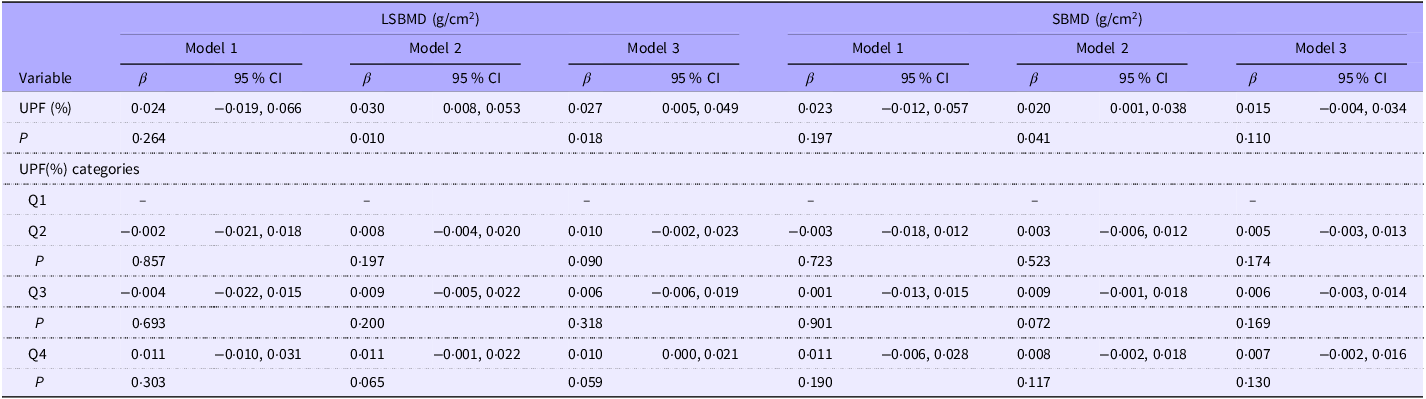
After adjusting for all covariates, UPF intake, as a continuous variable, was positively correlated with LSBMD (β = 0·027, P = 0·018) (Table 2). Stratified analysis revealed significant associations between UPF intake and both LSBMD and SBMD in adolescents across different sexes, ages, races, BMI, TC and HDL-cholesterol levels (P < 0·05) (online Supplementary Table 1). Notably, girls exhibited a significant independent association between UPF intake and both LSBMD and SBMD (β = 0·057, P = 0·001). Among the 12–15-year age group, UPF intake was positively correlated with both LSBMD and SBMD (β = 0·068, P = 0·010; β = 0·045, P = 0·018). Other Hispanic groups also demonstrated a positive association between UPF intake and BMD (β = 0·057, P = 0·024; β = 0·047, P = 0·010). Additionally, positive associations were observed among children and adolescents with normal HDL-cholesterol levels (β = 0·035, P = 0·005; β = 0·021, P = 0·040), non-Hispanic Blacks (β = 0·066, P = 0·012), those in the normal TC group (β = 0·027, P = 0·015) and those in the normal BMI group (β = 0·031, P = 0·028) for LSBMD.
Multiple linear regression analysis of ultra-processed food (UPF) intake with lumbar spine bone mineral density (LSBMD) and subtotal bone mineral density (SBMD) in children and adolescents
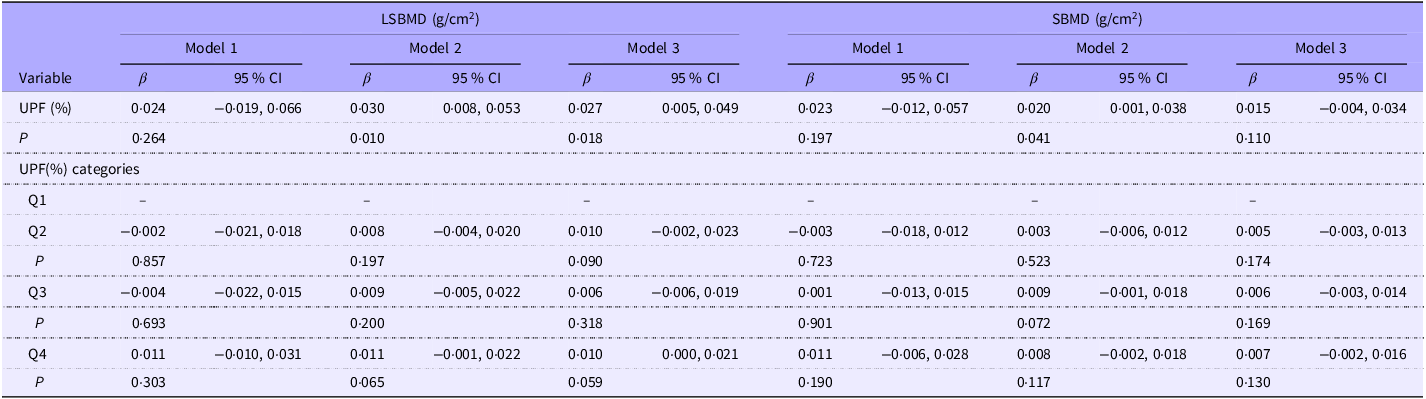
Table 2 Long description
A table with multiple linear regression analysis of ultra-processed food (UPF) intake with lumbar spine bone mineral density (LSBMD) and subtotal bone mineral density (SBMD) in children and adolescents. The table has 12 rows and 12 columns. Column headers are Variable, UPF (%), P, Q2, P, Q3, P, Q4, P. Each column is divided into Model 1, Model 2, and Model 3 for both LSBMD and SBMD. Row 1: UPF (%), Model 1: β 0.024, 95 % CI -0.019, 0.066, P 0.264; Model 2: β 0.030, 95 % CI -0.008, 0.053, P 0.101; Model 3: β 0.027, 95 % CI -0.005, 0.049, P 0.108. Row 2: Q2, Model 1: β -0.002, 95 % CI -0.021, 0.018, P 0.857; Model 2: β 0.008, 95 % CI -0.004, 0.020, P 0.197; Model 3: β 0.010, 95 % CI -0.002, 0.023, P 0.090. Row 3: Q3, Model 1: β -0.004, 95 % CI -0.022, 0.015, P 0.693; Model 2: β -0.009, 95 % CI -0.025, 0.008, P 0.318; Model 3: β -0.006, 95 % CI -0.019, 0.006, P 0.306. Row 4: Q4, Model 1: β 0.011, 95 % CI -0.010, 0.033, P 0.303; Model 2: β 0.011, 95 % CI -0.001, 0.022, P 0.065; Model 3: β 0.010, 95 % CI -0.000, 0.021, P 0.059. Row 5: UPF (%), Model 1: β -0.023, 95 % CI -0.012, 0.057, P 0.197; Model 2: β -0.020, 95 % CI -0.010, 0.038, P 0.041; Model 3: β -0.015, 95 % CI -0.004, 0.034, P 0.110. Row 6: Q2, Model 1: β -0.003, 95 % CI -0.018, 0.012, P 0.723; Model 2: β -0.003, 95 % CI -0.018, 0.012, P 0.523; Model 3: β -0.006, 95 % CI -0.012, 0.001, P 0.174. Row 7: Q3, Model 1: β -0.001, 95 % CI -0.013, 0.015, P 0.901; Model 2: β -0.001, 95 % CI -0.013, 0.015, P 0.072; Model 3: β -0.003, 95 % CI -0.014, 0.009, P 0.169. Row 8: Q4, Model 1: β 0.011, 95 % CI -0.006, 0.028, P 0.190; Model 2: β 0.011, 95 % CI -0.006, 0.028, P 0.117; Model 3: β 0.008, 95 % CI -0.002, 0.018, P 0.130.
PIR, poverty:income ratio.
Model 1: No covariates were adjusted. Model 2: Adjusted by age, sex, race/ethnicity, PIR and cycle. Model 3: Adjusted by age, sex, race/ethnicity, PIR, cycle, BMI and standing height. Cycle data release cycle.
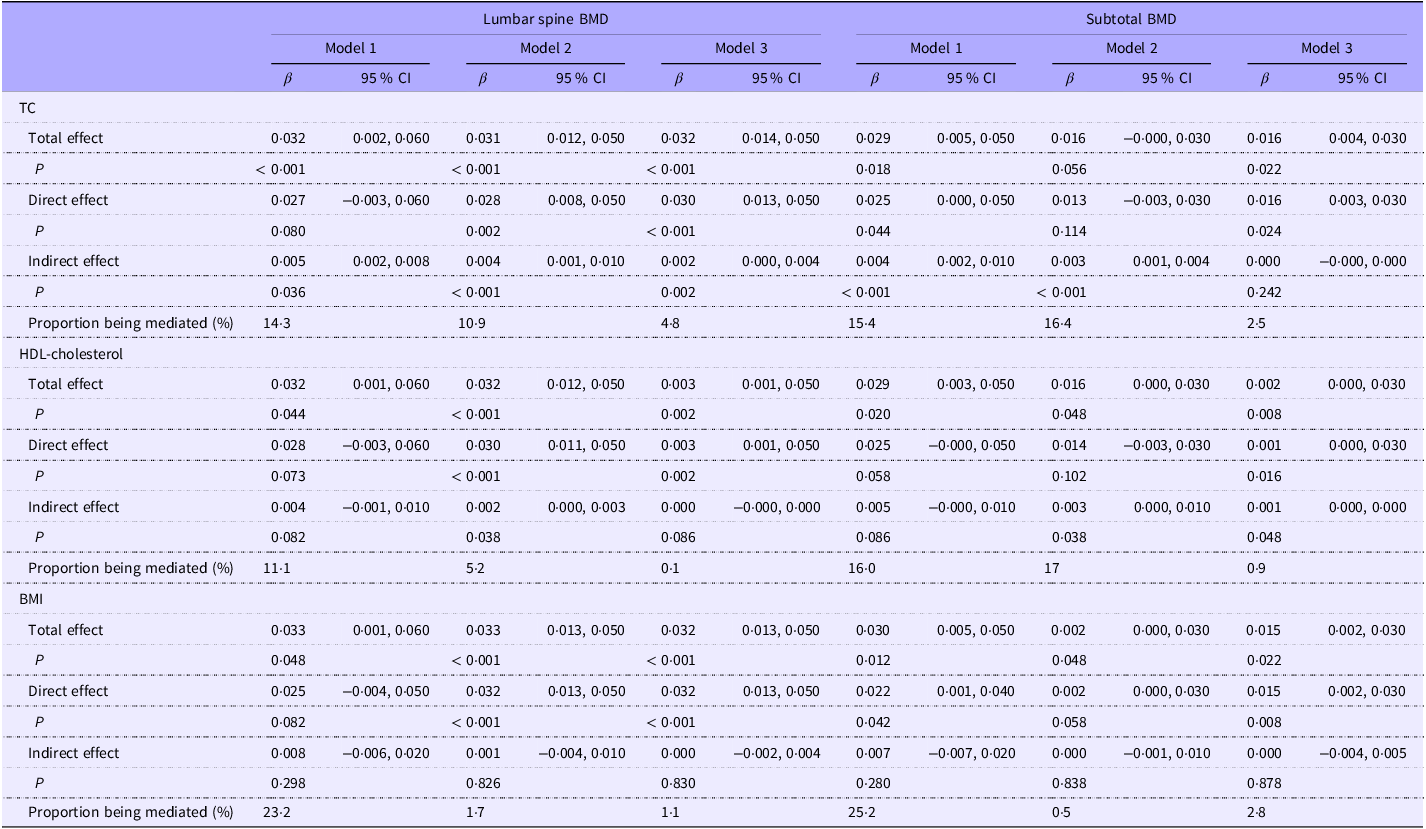
Mediation analysis indicated that TC mediated 4·8 % of the association between UPF intake and LSBMD, while HDL-cholesterol mediated 0·9 % of the association between UPF intake and SBMD (Table 3).
Adjusted indirect, direct and total effects of UPF intake on lumbar spine BMD and subtotal BMD in children and adolescents, mediated by total cholesterol (TC), HDL-cholesterol and BMI
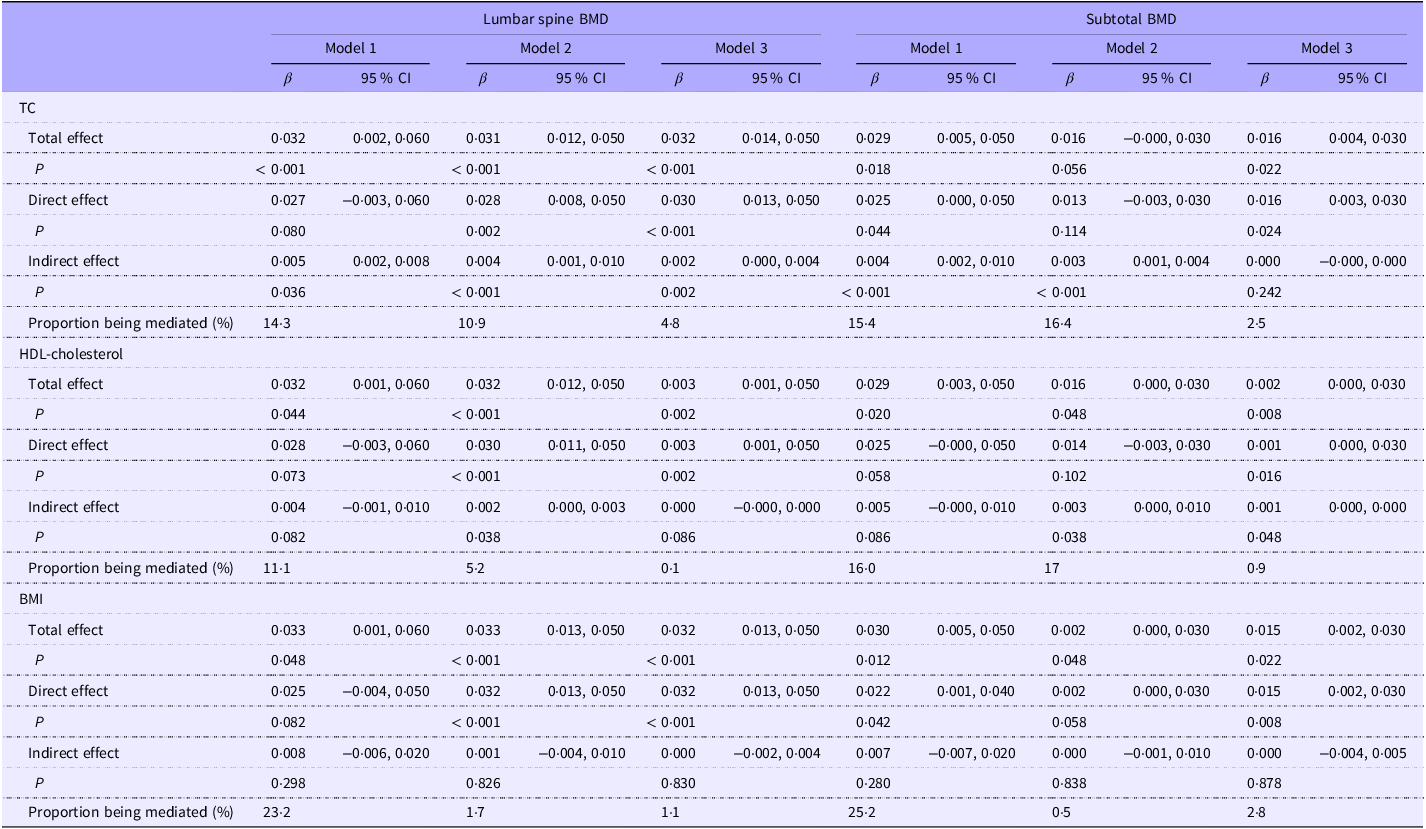
Table 3 Long description
A table comparing the effects of UPF intake on lumbar spine BMD and subtotal BMD in children and adolescents, mediated by total cholesterol (TC), HDL-cholesterol, and BMI. The table has 12 rows and 18 columns. Column headers include Total effect, Direct effect, Indirect effect, and Proportion being mediated (%). Row labels include TC, HDL-cholesterol, and BMI, each with three models for lumbar spine BMD and subtotal BMD. Each row provides values for beta (β), 95% confidence interval (CI), and P-values for total, direct, and indirect effects. Notable trends include varying mediation proportions across different models and factors.
UPF, ultra-processed food; BMD, bone mineral density; PIR, poverty:income ratio.
Model 1: No covariates were adjusted. Model 2: Adjusted by age, sex, race/ethnicity, PIR and cycle. Model 3: Adjusted by age, sex, race/ethnicity, PIR, cycle, BMI and standing height. Cycle data release cycle.
Discussion
This study focuses on the relationship between UPF intake and bone density in children and adolescents. We observed that UPF intake was positively correlated with LSBMD, suggesting that UPF consumption may primarily affect the BMD of cancellous bone. However, the absolute effect size was modest (β = 0·03 g/cm2 per 1 % energy from UPF), corresponding to < 1 % of the population mean LSBMD; thus, the clinical relevance of this association remains uncertain. These findings differ from some previous studies conducted during critical growth periods(Reference Santos, Bierhals and Costa27–Reference Martins, França and Viola34). For instance, Shelley et al. found that bones are targeted by UPF during growth, and this long-term impact may be challenging to mitigate through external interventions such as nutrient supplementation(Reference Baronio and Baptista35). Similarly, Tamara Travinsky-Shmul et al. reported that UPF could damage bone quality in mice, increase bone marrow fat and alter gut microbiota(Reference Kopiczko, Adamczyk and Łopuszańska-Dawid36). However, the conclusions of this study differ, which may be attributed to various factors such as differences in study populations, experimental conditions and methodologies. Additionally, this study is an observational study based on population data, which differs from interventional studies conducted in more controlled environments(Reference Chen, Zhang and Yang37,Reference Griess-Fishheimer, Zaretsky and Travinsky-Shmul38) .
To put this into context, a child moving from the 25th to the 75th percentile of UPF intake (about 20 % energy) would gain about 0·006 g/cm² in LSBMD, a difference far below the least significant change detectable by dual-energy X-ray absorptiometry in paediatric practice (0·025–0·030 g/cm²). Consequently, the association, although statistically detectable in our large sample, is unlikely to inform individual-level clinical decisions.
The stratified analysis revealed differences in the effects of UPF intake on BMD across different sexes, ages, races, BMI, TC and HDL-cholesterol levels. Girls showed greater independence in the association between UPF intake and both LSBMD and SBMD, which may be related to the specific characteristics of bone growth and development in girls. For example, girls typically enter the accelerated phase of bone development earlier, and there are significant differences in peak BMD, bone size and characteristics between girls and boys(Reference Travinsky-Shmul, Beresh and Zaretsky39). The 12-to 15-year-old group represents a rapid growth period, during which UPF intake has a more pronounced impact on BMD, indicating the need for special attention to the dietary structure and nutrient intake of children during this critical stage.
Lipid metabolism is intricately linked to bone homoeostasis. TC and HDL-cholesterol influence BMD by regulating Ca absorption, osteoblast/osteoclast differentiation and inflammatory responses. For example, HDL-cholesterol promotes osteoblast activity while inhibiting osteoclastogenesis, whereas TC modulates lipid-soluble vitamin (e.g. vitamin D) absorption to indirectly affect bone mineralisation(Reference Baronio and Baptista35,Reference Kopiczko, Adamczyk and Łopuszańska-Dawid36,Reference Wang, Fang and Li40) . Mediation analysis further revealed varying degrees of mediation by TC and HDL-cholesterol in the relationship between UPF intake and BMD. TC mediated 4·8 % of the association between UPF intake and LSBMD, while HDL-cholesterol mediated 0·9 % of the association between UPF and SBMD. This suggests that TC and HDL-cholesterol may play important roles in how UPF affects BMD. HDL-cholesterol may mediate the effect on SBMD by influencing lipid metabolism and endocrine regulation. Higher levels of HDL-cholesterol may help maintain normal bone metabolism, promote bone formation and mineralisation and positively impact cortical bone density(Reference Wang, Fang and Li40).
The effect of TC on LSBMD may be related to Ca metabolism and bone nutrient supply. TC might regulate the absorption and transport of Ca, thereby affecting the BMD of cancellous bone. Additionally, TC may indirectly influence bone growth and development by impacting the endocrine system. The positive association between UPF and BMD observed in this study contrasts with experimental evidence linking UPF to bone quality impairment in mice. This discrepancy may arise from age-specific effects: rapid skeletal growth in children and adolescents may render them more responsive to short-term benefits of UPF fortification (e.g. Ca/phosphorus addition). However, emerging research highlights conflicting roles of lipids in bone health: while elevated plasma atherogenic index correlates with microstructural bone deterioration, HDL-cholesterol preserves cortical bone density through anti-inflammatory pathways. These findings underscore the complexity of UPF’s effects on bone metabolism.
Although this study found an association between UPF intake and increased BMD in children and adolescents, this does not imply that UPF consumption is necessarily safe. Several mechanisms may explain the observed positive association. First, approximately 12 % of UPF consumed by US children are fortified with Ca and vitamin D, which may transiently enhance bone mineralisation. Second, the high energy density of UPF may support the elevated metabolic demands during adolescent growth spurts. Third, certain food additives (e.g. phosphates) in UPF might influence bone metabolism, though evidence remains conflicting. However, these potential short-term benefits should not overshadow the well-documented long-term health risks of high UPF consumption, including obesity and cardiometabolic disorders.
This study has several limitations. First, self-reported dietary data are subject to measurement error and social desirability bias, potentially leading to underestimation of UPF consumption. Second, the cross-sectional design precludes causal inference, and residual confounding cannot be excluded despite comprehensive adjustment for known covariates. Third, the NOVA classification involves subjective judgement, though we implemented rigorous quality control with dual independent coding. Fourth, the small effect sizes, while statistically significant, require careful interpretation regarding clinical relevance. Future longitudinal studies should examine temporal relationships and explore specific UPF components that may influence bone health.
Conclusions
This study suggests that UPF intake may be associated with an increase in BMD in children and adolescents, a finding that contrasts with previous research linking UPF consumption to adverse health outcomes, including obesity, diabetes and other chronic diseases. While this positive association with BMD might be related to certain nutritional fortifications or additives in UPF, it is crucial to recognise that the potential benefits observed in this study do not negate the well-documented risks associated with high UPF consumption.
The results of this study should be interpreted with caution. The potential long-term consequences of high UPF consumption on overall health and development, beyond BMD, should not be overlooked. Future research should aim to elucidate the underlying mechanisms by which UPF might affect bone health, considering the complex interplay of dietary components and their long-term impact on children’s and adolescents’ growth and development. Moreover, it is essential to conduct longitudinal studies to better understand the temporal relationship between UPF intake and BMD and to explore the potential moderating effects of different demographic and health-related factors.
In light of these findings, public health recommendations should continue to emphasise the importance of a balanced diet rich in whole foods, while also considering the nuanced effects of UPF consumption on various health outcomes. Educating parents, schools and healthcare providers about the potential risks and benefits of UPF in children’s diets remains a critical component of promoting the long-term health and well-being of the younger population.
Supplementary material
For supplementary material/s referred to in this article, please visit https://doi.org/10.1017/S0007114526106953
Acknowledgements
The authors would like to thank all NHANES participants and staff.
This work was funded by the 2022 Scientific Research Joint Tackling Program of the China National Center for Food Safety Risk Assessment (LH2022GG03), Research Foundation of Capital Institute of Pediatrics (ERB-2023-01, JCYJ2025-08) and Capital’s Funds for Health Improvement and Research (CFH2024-2G-1136).
J. L. and X. Q.: conceptualisation, data curation, formal analysis and writing – original draft. C. W.: funding acquisition, supervision and writing – review and editing. K. D., F. C., C. M., T. L. and E. M. S.: methodology, validation, and writing – review and editing. All authors have read and approved the final manuscript.
The authors declare no competing interests.