


For decades, scholars in security studies and international relations have debated whether women are more peaceful and less militaristic than men, including in combat. Although this assumption is widespread, empirical findings are inconsistent, often revealing how men and women can be equally aggressive in the use of force (Bjarnegård and Melander Reference Bjarnegård and Melander2017; Carreiras Reference Carreiras, Woodward and Duncanson2017; Cohen and Karim Reference Cohen and Karim2022; Cohn Reference Cohn and Cohn2013; Enloe Reference Enloe1989; Karim and Beardsley Reference Karim and Beardsley2017; Sjoberg Reference Sjoberg2014; Thomas and Bond Reference Thomas and Bond2015; Wood Reference Wood2019). Indeed, one might think that women who choose to join military organizations can be just as aggressive as their male peers—if not more so, given the high barriers to entry and the need to continually prove themselves in male-dominated environments. However, we know little about how gender shapes the process through which combatants become socialized into the professional military norms that regulate the use of force.
Recent debates have explored the origins and implications of attitudes toward international humanitarian law (IHL) and the protection of civilians in wartime (Carpenter and Montgomery Reference Carpenter and Montgomery2020; Sagan and Valentino Reference Sagan and Valentino2017). A growing literature has started to examine how military organizations transmit IHL principles to combatants, including fostering “norms of restraint” (NoR) toward civilians (Franke Reference Franke2000; Hoover Green Reference Hoover Green2018; Kahl Reference Kahl2007; Manekin Reference Manekin2020; McQuinn et al. Reference McQuinn, Terry, Kaplan and Gutiérrez-Sanin2021). Professionalized state militaries typically seek to socialize new members into the organization’s dominant values and norms, including beliefs about the lawful or legitimate use of armed force. The prevailing logic is that, although citizens enter military training from diverse backgrounds, the process of socialization leads to a convergence in attitudes toward IHL, resulting in a more cohesive, disciplined fighting force (McQuinn et al. Reference McQuinn, Terry, Kaplan and Gutiérrez-Sanin2021).
Scholars, however, have not examined how gender influences NoR adoption in professional military settings. In this regard, the feminist international relations (IR) literature serves as a helpful guide, showing time and again how militaries typically operate within a system of highly gendered, socially embedded roles, norms, and values (Bulmer and Eichler Reference Bulmer and Eichler2017; Carreiras Reference Carreiras, Woodward and Duncanson2017; Eichler Reference Eichler2012; Enloe Reference Enloe1983; MacKenzie Reference MacKenzie2015; Sjoberg Reference Sjoberg2014; Sjoberg and Gentry Reference Sjoberg and Gentry2007; Wibben Reference Wibben2018; Zalewski and Parpart [1998] Reference Zalewski and Parpart2020). Our argument builds on the concept of “gender order,” defined as “a set of dominant gender relations and notions of masculinity and femininity” (Eichler Reference Eichler2012, 5).Footnote 1 In the context of military organizations, gender orders typically embody a culture of militarized masculinity, which “associates masculinity and combat through the valorization of strength, athleticism, aggression, (hetero)sexual conquest, and brotherhood” (Bulmer and Eichler Reference Bulmer and Eichler2017, 163). Such gender orders create and assign gendered roles to members of a military organization, which may be officially sanctioned, informally perpetuated, or both (Eichler Reference Eichler2012). However, while feminist IR literature has amply demonstrated the “gendered” nature of military socialization, current research overlooks how these gender orders can influence the adoption of ostensibly “ungendered” norms, such as civilian protection.Footnote 2
To understand the relationship between gender, military socialization, and NoR, we investigate how officer training in the United States Military Academy (USMA) at West Point, New York, shapes the attitudes of women and men toward the protection of civilians on the battlefield. Specifically, we examine whether the USMA’s mandatory, intensive training in IHL and combat ethics produces different normative attitudes toward civilian protection among cadets. We focus on USMA because, as the army’s preeminent officer training institution and “flagship of ethics education” (Wilson Reference Wilson, Robinson, de Lee and Carrick2008), USMA’s standardized training in NoR should constitute a challenging test for theories of why combatants might diverge in adopting procivilian norms during the process of military socialization. Professionalized militaries tend to include the principle of noncombatant immunity as part of their formal training. However, militaries are not gender neutral but rather spaces that harbor distinct normative beliefs, rooted in the ideals of militarized masculinities.
We employ a multimethod approach that draws on two sources of empirical evidence. First, we present an original, cross-cohort survey of freshmen and senior cadets from 2013 and 2014 at USMA. During this period, all USMA cadets were required to undergo mandatory training in combat ethics and IHL, although US Army policy prevented women from serving in combat roles following graduation until 2016 (Kamarck Reference Kamarck2016). We find that while cadets of both genders entered USMA with similar attitudes toward civilian restraint, women expressed significantly higher support for NoR when they graduated. In their first year at USMA, women and men were equally likely to agree that it was justifiable to kill a noncombatant if necessary to accomplish a mission or save the life of a fellow soldier. Women and men were also equally likely in their first year to agree that it was acceptable to modify the rules of engagement (RoE), which establish the conditions under which the use of force against civilians is permitted. As cadets in their fourth year, however, women were significantly more likely than men to disagree with these statements.
Second, to understand this divergence, we conduct a series of in-depth interviews with US Army officers who attended USMA as cadets. We find that socialization into NoR is shaped by a gender order at USMA, which operates both explicitly and implicitly. A key mechanism underpinning this gender order is how men and women are routed into different professional specializations within the organization, and the proximity of these roles to the risks of combat. We find that the infantry holds a top position in the gender order at USMA, and promotes a subculture that celebrates traits associated with effectiveness in leading small units in close combat, including aggression, risk taking, and physical ability. However, consistent with a culture of militarized masculinity, these traits are assumed to be exclusive to men and male bodies. As a result, although men and women received a similar standardized education at USMA, women have been excluded from its central subculture through both formal and informal means, including official restrictions, peer pressure, lack of mentoring opportunities, and, in some cases, harassment.
This exclusion in turn has pervasive consequences for how men and women at USMA perceive the humanitarian norms associated with civilian restraint. Several features of the infantry ethos undercut respect for NoR. Men who aspire to be routed into frontline infantry (or “branch infantry”) are socialized to expect to make split-second, life-or-death decisions in combat zones. In these conditions, the infantry subculture stresses group cohesion and loyalty to one’s “brothers.” This commitment prioritizes the well-being of fellow soldiers over harm to civilians. Male cadets who aspire to infantry officer status are also socialized to adopt a “mission-first” approach that prioritizes the objectives of military missions above all else, including the protection of civilians. Importantly, these beliefs are rooted in militarized notions of masculinity—framed as traits uniquely suited to men.
By contrast, women are socialized to expect that they will serve in roles more distant from combat. Formally, women have historically been excluded from combat, and informally, they have been told repeatedly that they do not belong in combat spaces. Consequently, women are less immersed in the infantry subculture, face less countervailing pressure to adhere to USMA’s official NoR training, and are more likely to adhere to norms related to the protection of civilians. Interviews with cadets enrolled after the end of the gender-based combat exclusion policy demonstrate that these differences continued even after formal restrictions on the ability of women to serve in combat roles were removed.
These findings contribute to several ongoing debates surrounding the law of armed conflict and the protection of civilians in wartime. Many state militaries invest significant resources in bringing their armed forces into compliance with IHL and the norm of noncombatant immunity, including through investments in their educational and training practices.Footnote 3 The US has identified minimizing civilian harm during military operations as a strategic priority.Footnote 4 Our evidence suggests that even universal, mandatory training programs might have disparate results within military organizations. In the case of US Army officers, formal and informal socialization pressures appear to run in parallel, making men less restrained toward civilians than women. Governments seeking to minimize the impact of military operations on civilians might consider designing training programs that are tailored to different segments of military organizations, accounting for the complexity, varying incentives, and normative pressures that different groups may face.
Given the challenges scholars face in accessing active-duty military personnel in state armed forces, our original data help to provide a unique picture of gender and military socialization. By drawing on both positivist and interpretivist evidence, we gain insights difficult to achieve through a single epistemological lens alone. This study deepens our understanding not only of how gender affects armed groups, but also how socialization in armed groups influences the attitudes of the men, and increasingly the women, who comprise their ranks.
Socialization, Gender Order, and Restraint
In recent decades, significant scholarship in international relations and conflict research has examined why some armed groups exhibit more restraint toward civilians than others. While early rationalist explanations tended to highlight the importance of battlefield costs and incentives (Downes Reference Downes2011; Kalyvas Reference Kalyvas2006), a more recent literature has identified a wealth of social, cultural, and organizational contributors (Balcells and Stanton Reference Balcells and Stanton2021; Kahl Reference Kahl2007; Weinstein Reference Weinstein2006). Within this development, several authors have highlighted the importance of “norm socialization,” or the process by which organizational practices—such as training, education, and discipline—shape patterns of violence by influencing combatant attitudes (Hoover Green Reference Hoover Green2018; Manekin Reference Manekin2017; Reference Manekin2020). This perspective generally argues that group socialization can affect combatant beliefs regarding appropriate battlefield conduct, including the treatment of civilians during military operations.
Separately, a distinct literature in security studies and military sociology has focused on understanding the process of military socialization within professional militaries. In general, the goal of socialization within armed organizations is to ensure that the attitudes of combatants converge on the official norms of the military. At its core, military socialization involves the process of “strip[ping] away pre-military norms and identities” and transmitting a distinctive culture—a set of attitudes, values, beliefs, ideologies, and norms about how militaries should function—that emphasizes collective membership, hierarchy, and discipline (Brooks, Robinson, and Urben Reference Brooks, Robinson and Urben2024, 1282; see also Sanín and Wood Reference Sanín and Wood2014). This literature highlights how the distinct norms of military professionalism are communicated via a combination of both formal and informal processes of socialization (Kaurin Reference Kaurin2020; Robinson, Cohn, and Margulies Reference Robinson, Cohn, Margulies, Beehner, Brooks and Maurer2021). Formal socialization mechanisms are usually strongest in armed organizations that demand and institute high control over their members, such as professionalized state militaries (Segal Reference Segal1986). Service members in training are often most deeply exposed to professional military norms in military schools such as officer academies (Brooks, Robinson, and Urben Reference Brooks, Robinson and Urben2022, 809; Eck and Ruffa Reference Eck and Ruffa2022). In the US, for example, officer academies act as important loci through which US military culture is inculcated into future leaders via socialization (Böhmelt, Escribà-Folch, and Pilster Reference Böhmelt, Escribà-Folch and Pilster2019; Ruffa Reference Ruffa2018).
In parallel to this literature, a large body of feminist IR research has explored the inherently gendered nature of military organizations and military socialization (Belkin Reference Belkin2012; Eichler Reference Eichler2012; Enloe Reference Enloe1989; MacKenzie Reference MacKenzie2015; Sjoberg Reference Sjoberg2014; Tickner Reference Tickner1992; Von Hlatky Reference von Hlatky2022; Wibben Reference Wibben2018). Feminist scholars have shown how military organizations socialize new members into the ideals of militarized masculinity, which establishes a normative link between being a man and being a soldier. Militarized masculinity rests on the assumption that the “highest status military activities can go only to the masculinized members of society” (Enloe Reference Enloe and Isaksson1988, 90–91). Military organizations therefore tend to promote systems that associate “masculinity with the idealized traits of the warrior” (Karim and Beardsley Reference Karim and Beardsley2017, 31). Several scholars have identified military training as a key setting for the transmission of the ideas and practices associated with militarized masculinities (Whitworth Reference Whitworth2004, 242–43; see also Sasson-Levy Reference Sasson-Levy2003; Tapscott Reference Tapscott2020).
Furthermore, the feminist IR literature has shown how, within military organizations, militarized masculinity creates a gender order, or a professional hierarchy dominated by masculinist ideals (Connell Reference Connell1987; Eichler Reference Eichler2012; Henry Reference Henry2017; Higate Reference Higate2003; Reference Higate2012; MacKenzie Reference MacKenzie2015; Sasson-Levy Reference Sasson-Levy2003; Sjoberg Reference Sjoberg2014). Feminist IR scholars have found that, in many Western militaries, masculinity has often been associated with close combat, including physical fitness, toughness, aggressiveness, sacrifices, and protection—traits that are often assumed to be exclusive to men. Because these characteristics are perceived to be central to the military’s mission, they become hegemonic within military organizations (Duncanson Reference Duncanson, Gottzén, Mellström and Shefer2019; Heinecken Reference Heinecken2016). According to MacKenzie (Reference MacKenzie2015, 1), for example, “the male combat unit lies at the heart of American military identity,” giving rise to mythical notions such as the “band of brothers” and “a few good men.” Within a given gender order, a particular form of masculinity may become dominant, through “discourses and practices that reify hegemonic masculine norms within military cultures” (Bulmer and Eichler Reference Bulmer and Eichler2017, 163).Footnote 5
Scholars have shown how socialization into the ideals of militarized masculinities affects women within military organizations. Sjoberg and Via (Reference Sjoberg, Via, Sjoberg and Via2010, 6), for instance, highlight how “women who join war fighting and peacemaking do not do so in armies or negotiations that are suddenly gender neutral because they are willing to include women. Instead, they join groups whose terms, premises, and behavioral norms are already defined in terms of the masculine values that they have prized before the inclusion of women.” These dynamics can generate a “cultural complex” that deprives women (and others) of professional opportunities, affects organizational setups, and even allows cover-ups of illicit, inappropriate, and gender-based violence or misconduct (Carreiras Reference Carreiras, Woodward and Duncanson2017; Duncanson Reference Duncanson2015; MacKenzie Reference MacKenzie2015; MacKenzie, Gunaydin, and Chaudhuri Reference MacKenzie, Gunaydin and Chaudhuri2020; Welland Reference Welland2013). Women may try to adapt by seeking to mimic or emulate these masculine norms, but they nonetheless still face exclusion (Sasson-Levy Reference Sasson-Levy2003). For example, even when women can meet the physical standards or display the behaviors associated with effectiveness in close combat, they are seen as outliers from a norm (Harel Reference Harel2024).
Militarized masculinity can become institutionalized into the occupational roles that make up a military organization, where they reproduce an existing gender order. Militarized masculinity becomes normalized in the professional context and narrated as functional. Heinecken (Reference Heinecken2016, 216), for example, highlights “the underlying power relations embodied in the military, as well as the various subcultures, occupational categories, and identities associated with them.” By this logic, gender orders and militarized masculinities become ingrained in occupational specialties and narrated as “natural” to the military organization (Heinecken Reference Heinecken2016; Linehagen Reference Linehagen2023; Morris Reference Morris1996; Persson Reference Persson2011).
We build on feminist IR arguments to understand how gendered socialization works by inculcating NoR. Our argument builds on the distinction made by feminist IR scholars between sex (referring to “biological characteristics, primarily genital and reproductive”) and gender (referring to “the social codes that express masculinity and femininity”) (Sjoberg Reference Sjoberg, Baylis, Smith and Owens2023, 261). Specifically, we argue that militarized masculinity, manifested in both formal policies and informal organizational dynamics, leads to different socialization experiences for women and men, which in turn influences their attitudes toward NoR. In the context of the USMA, we also highlight the influential role of the infantry, which is both the most prominent organizational branch in the US Army and the embodiment of the ideals of militarized masculinity. This infantry subculture centers on the values of combat readiness, a mission-first ethos, and an emphasis on brotherhood—plus the belief that these values are exclusive to men. Occupational specialties associated with the infantry in turn become inherently gendered through training.
We argue that the fusion of militarized masculinity with the high esteem afforded to the infantry subculture erodes support for norms of civilian restraint among men. Men who aspire to serve in the infantry are socialized to expect to make high-stakes, life-or-death decisions in combat zones. This proximity to combat gives rise to a subculture that undermines pro-restraint norms in several ways. First, the infantry subculture promotes a mission-first approach that prioritizes achieving military objectives above all else, including the protection of civilians. Second, the infantry subculture inculcates a commitment to protecting the “brotherhood”—prioritizing the well-being of fellow soldiers—that elevates the principle of protecting fellow soldiers over protecting or minimizing harm to civilians. Even men who do not branch infantry may still internalize infantry values because they represent the epitome of an army officer.
However, this dynamic does not resonate the same way with women, who may recognize the prominence of the infantry subculture but are less likely to identify with it due to both formal exclusion and a broader sense of marginalization stemming from an environment of militarized masculinity. Women are pushed toward professional roles that are more distant from combat and in less direct conflict with norms of civilian restraint. As a result, women are more likely to internalize IHL and ethics training. While USMA formally instructs its cadets in combat ethics, officership, and IHL, it also inadvertently socializes the cadets most exposed to combat decisions in ways that may undermine adherence to these norms.
The USMA Combat Ethics Survey
We evaluate our theory by examining the case of the US Military Academy at West Point, the premier officer training institution for future officers in the US Army. We focus on USMA because it should be a “hard test” for theories of divergent socialization. As the army’s four-year educational institution for officer training, USMA provides a distinctively intense and immersive environment for cadets centered on a standardized training program in leadership, ethics, and military professionalism. For this analysis, we focus on USMA’s training in norms of civilian restraint. These norms are conceptualized in army doctrine as part of the “Army Ethic,” which codifies the army’s official NoR regarding the use of force. In this doctrine, restraint on the use of violence originates from multiple sources: IHL, which stipulates that the use of force must be predicated on military necessity, distinction, proportionality, and humanity; the Uniform Code of Military Justice, which renders murder and assault illegal; and the army’s “Soldier’s Rules,” which translate these tenets into practical battlefield rules—namely, that soldiers “fight only enemy combatants,” “treat civilians humanely,” “destroy no more than the mission requires,” and “prevent violations of the law of war” (Department of the Army 2013). These sources thus define and operationalize “restraint” in army doctrine and training as primarily the directing of force against military targets and the limitation of the use of force against noncombatants or nonmilitary objects.
During the period of this study, USMA cadets were required to take a “package” of academic and training courses related to NoR. This program consisted of 92 hours of formal classroom training in ethics, military law, and international law, including courses on professional military ethics, officership, constitutional and military law, the Uniform Code of Military Justice, and IHL.Footnote 6 USMA’s training also employed informal methods of socialization using interactive exercises, including discussions and simulations, that applied Army Ethic concepts to operational scenarios (Bell Reference Bell2022). For example, USMA’s MX400 class on officership used cadet discussions, ethics simulations, “tactical decision games,” mock trials of historical war crimes cases, and video calls with soldiers in Iraq and Afghanistan to explore issues of combat ethics on the battlefield. This informal socialization process was also based on USMA’s mandatory weekly Leader Challenge and Company Commander’s Leader Professional Development programs, in which cadets viewed and discussed videos on ethical dilemmas encountered in the field by recent USMA graduates. For example, a session on “fire discipline and minimizing civilian casualties” explored the “considerations, trade-offs, and consequences of making life-and-death decisions that affect our Soldiers, the mission, and non-combatants,” incorporating first-person accounts from officers who served as company and platoon commanders in Operation Iraqi Freedom (Center for Junior Officers, n.d.).
In addition to its intensive training environment, USMA is also of particular interest because its highly institutionalized training is rooted in a gendered history that, until recently, firmly and explicitly placed women in a secondary and subordinate category within its training environment. While women have been able to enlist in the army since 1948, USMA kept its doors closed to women until 1976. Even following its opening, women continued to be excluded from full integration at the institution, particularly under USMA’s gender-based combat exclusion policy. As part of a change in overall army policy, USMA opened combat positions to women graduating in the class of 2016 (Dickstein Reference Dickstein2016). Consequently, USMA’s IHL training program under the combat exclusion policy makes an ideal test case for identifying the impact of formal and informal gender orders on combatant adoption of NoR.
To investigate how views toward NoR evolve among women and men in response to USMA training, we first examine original data from a survey of USMA cadets, a unique population of military members often difficult to access for nonmilitary research.Footnote 7 Surveys were designed and administered by one of the authors to measure the attitudes of USMA cadets on a range of ethical issues bearing on the use of force. The surveys were conducted in 2013 and 2014 in two mandatory classes for all cadets: a first-year (freshman) English class and a fourth-year (senior) officership class. For each class, three sections were randomly selected for participation in the surveys. Course instructors left the rooms while the survey was administered. Anonymity was ensured for all participants, and every participant could leave at any point. A total of 212 USMA cadets (109 first-year and 103 fourth-year cadets) completed the survey, representing just under 10% of the overall size of the first- and fourth-year classes.Footnote 8 By using data from two class cohorts, we can measure how attitudes toward restraint differ between men and women at the beginning and end of their training.Footnote 9
To measure attitudes toward NoR among cadets at USMA, we draw on the concept of the “combatant’s trilemma.” This framework captures the trade-offs combatants face when balancing the competing goals of military objectives, force protection, and civilian protection (Bell Reference Bell2022; Bell, Gift, and Monten Reference Bell, Gift and Monten2022; Zambernardi Reference Zambernardi2010).Footnote 10 To capture the choice between civilian protection and military advantage, we presented respondents with the following statement: “During combat operations, it is justifiable to intentionally kill a civilian when it is necessary to accomplish the mission.” To assess views on the balance between protecting civilians and protecting fellow soldiers, we used the following prompt: “During combat operations, it is justifiable to intentionally kill a civilian if it will save the life of a soldier.” Responses were coded on a one-to-five Likert scale, from “strongly agree” (scored as one) to “strongly disagree” (scored as five) (i.e., higher numbers indicate greater restraint). To further probe respondent attitudes, we framed this same dilemma within the RoE, the army rules that constrain the use of force against civilians, presenting two additional prompts: (1) “During combat operations, it is justifiable to ‘modify’ the Rules of Engagement to save the life of a soldier”; and (2) “During combat operations, it is justifiable to allow members of my unit to ‘modify’ the Rules of Engagement to save the life of a soldier.”
These questions encourage cadets to grapple with high-stakes ethical dilemmas that they might reasonably encounter in the “fog of war,” trading off the competing values of achieving mission objectives, protecting fellow soldiers, and exhibiting restraint. Following insights from legal and ethics studies, the questions are stripped of legal “fact patterns” so that they better measure underlying attitudes rather than strict knowledge of the law of war (Stephens Reference Stephens2019). Questions are also devoid of significant details and context that might limit the generalizability of the scenarios. In this way, responses are more likely to reflect the first impulses, or “gut instincts,” of cadets toward the appropriate use of force. We acknowledge the possibility that respondents might articulate more favorable attitudes toward civilian protection if they believe this is expected. Cadets were assured of anonymity to help to lessen this concern, as well as the opportunity to opt out.
Table 1 depicts the attitudes of first- and fourth-year cadets, reporting the main results of linear models that regress attitudes toward NoR on gender, class year, and a vector of individual-level covariates, including party identification, race, religious participation, academic ability, and having a parent in the military.Footnote 11 As this table shows, there are no statistically significant gender differences in attitudes toward restraint for first-year cadets. Women and men report statistically equivalent responses, both in terms of views on the use of force as well as in adherence to the army’s RoE. Conversely, fourth-year cadets report notably divergent responses across genders. Women in their fourth year were more likely to disagree that it was justifiable to kill a civilian to accomplish a military objective or to save the life of a fellow soldier. Similarly, fourth-year women were more likely to disagree that it was justifiable for an individual or unit to modify their RoE to protect fellow soldiers. These results are robust to regressions estimating gender-year interactions (table A1 in the online appendix), as well as ordered probit models (table A2 in the online appendix).
Effect of Gender and Year on Attitudes toward Restraint

Table 1 Long description
The table presents regression coefficients and standard errors for four scenarios: 1 Kill mission, 2 Kill save soldier, 3 I modify R o E, and 4 Unit modifies R o E. Each scenario is split into Freshmen and Seniors columns.
Key findings include:
* Female: For Seniors, coefficients are positive and significant across all scenarios: 0.72 star for Kill mission, 0.91 star star for Kill save soldier, 0.91 star star for I modify R o E, and 0.83 star star for Unit modifies R o E. For Freshmen, coefficients are mostly negative and non-significant.
* Republican: Shows significant negative coefficients for Freshmen in scenario 3 -0.59 star star and scenario 4 -0.65 star star.
* Parent military: Shows a significant negative coefficient for Seniors in scenario 1 -0.60 star.
* Constant: All values are positive and highly significant, ranging from 2.33 to 4.93.
* N: Sample sizes are 106 for Freshmen and 99 to 100 for Seniors.
* R squared: Values range from 0.02 to 0.16.
Note: Higher coefficients indicate greater restraint. Standard errors are in parentheses. Significance levels: star p < 0.05; star star p < 0.01; star star star p < 0.001.
Note: Higher coefficients indicate greater restraint. Standard errors in parentheses. * p < 0.05; ** p < 0.01; *** p < 0.001.
Predicted values are plotted in figure 1. Across all measures, both women and men exhibit directionally higher levels of norm adoption as fourth-year cadets compared with first-year cadets. However, support for civilian restraint rose more among fourth-year women than among fourth-year men. For example, our model estimates that both women and men similarly agreed as first-year cadets that it was justifiable to intentionally kill a civilian to accomplish a military mission. However, in their fourth year, women were more likely to disagree with this statement, while men were more likely to be neutral. Similarly, in their first year, both men and women largely agreed with the statement that is justifiable to “modify” their RoE during combat operations to save the life of a soldier, while only women were likely to disagree with the statement by their fourth year.
Predicted Values Plot: Effect of Gender and Year

Figure 1 Long description
The Y-axis is labeled Predicted restraint and ranges from 0 to 5. The X-axis contains four categories: First-year female, First-year male, Fourth-year female, and Fourth-year male. A legend on the right identifies four scenarios: circle for Kill civilian for mission, square for Kill civilian to save a soldier, diamond for I modify R o E to save a soldier, and triangle for Unit modifies R o E to save a soldier.
In all four groups, the circle scenario consistently shows the highest predicted restraint.
For First-year females, the circle is at approximately 3.2, while the other three scenarios cluster lower between 2.3 and 2.5.
For First-year males, the circle is at 3.5, with the other three scenarios lower between 2.3 and 2.7.
For Fourth-year females, all values increase significantly. The circle reaches its peak at approximately 4.7, while the other three scenarios rise to between 3.8 and 4.1.
For Fourth-year males, the circle is at 4.0, and the other three scenarios are clustered between 3.0 and 3.3.
Vertical error bars are present for every data point, indicating the range of variance for each predicted value.
These results point to two conclusions. First, first-year women and men enter USMA with relatively similar attitudes toward NoR. More specifically, the women and men who arrive at USMA hold broadly equivalent views regarding how violence should be used in pursuit of the goals of military objectives, the security of fellow soldiers, and the protection of civilians. Second, despite USMA’s standardized training in NoR, cadet attitudes toward restraint diverge significantly over time by gender. By graduation, women exhibit a stronger shift toward restraint, revealing a greater reluctance to harm civilians even to save the life of a fellow soldier or to achieve military advantage. Men also directionally become more concerned with protecting civilians, but overall this shift is weaker.
Understanding Attitude Divergence at USMA: Evidence from In-Depth Interviews
To understand this divergence in attitudes toward restraint, we conducted 18 in-depth interviews with former USMA cadets (see Bell et al. Reference Bell, Gift, Monten and Ruffa2026).Footnote 12 In-depth interviews are generally characterized by a limited number of questions asked, a focus on recalling important times and processes, and allowing space for silence and pauses (Fujii Reference Fujii2018; Kapiszewski, MacLean, and Read Reference Kapiszewski, MacLean and Read2015; Lareau Reference Lareau2021; Martin Reference Martin and Mosley2013). The majority of each interview was unstructured, in which we asked broad questions that allowed interviewees to narrate their time at USMA. We then asked specific questions about civilian restraint only when the topic did not emerge organically. This interpretivist approach allowed us to “let the field speak to us” and enabled patterns to emerge naturally (Fujii Reference Fujii2018; Kurowska and Guevara Reference Kurowska, de Guevara, Curini and Franzese2020). From our early interviews, we observed a recurring theme among cadets related to the connection between gendered socialization and attitude divergence. Once this pattern emerged clearly, we began following up with more probing questions (Martin Reference Martin and Mosley2013). This format enabled interviewees to describe their trajectories at USMA, including why they joined USMA, their socialization and training experiences, and their memories related to gender and learning about NoR in war.
We first piloted our interview template with three cadets training in an Army Reserve Officer Training Corps program at a civilian university. As summarized in table 2, we then interviewed a sample of former USMA cadets. At the beginning of each interview, we asked for their informed consent and reiterated that they could stop the interview at any time. Interviews were time intensive, lasting up to 120 minutes. Consistent with established practice in qualitative interview methods, data collection continued until interviews reached a “saturation point,” in which interviews reflected a well-established and consistent pattern of responses (Saunders et al. Reference Saunders, Sim, Kingstone, Baker, Waterfield, Bartlam, Burroughs and Jinks2018).
Summary of Interview Participants

Table 2 Long description
The table consists of three columns: Participant designation, Gender, and Branch. There are 18 participants listed.
* U S M A A: Woman, Corps of Engineers.
* U S M A B: Woman, Aviation.
* U S M A C: Woman, Field Artillery.
* U S M A D: Woman, Transportation.
* U S M A E: Man, Infantry/Signal Corps.
* U S M A F: Woman, Corps of Engineers/Infantry.
* U S M A G: Woman, Military Police/Infantry.
* U S M A H: Woman, Field Artillery.
* U S M A I: Woman, Corps of Engineers.
* U S M A L: Woman, Field Artillery.
* U S M A M: Woman, Military Intelligence.
* U S M A N: Man, Infantry.
* U S M A P: Man, N/A.
* U S M A V: Man, Infantry.
* U S M A W: Woman, N/A.
* U S M A X: Man, Corps of Engineers.
* U S M A Y: Man, Infantry.
* U S M A Z: Man, Military Intelligence.
A note indicates that U S M A P and W attended U S M A but did not commission as officers.
Note: USMA P and W attended USMA but did not commission as officers.
We focused primarily on the time period corresponding to our survey data, during which the infantry remained closed to women in the army. We combined two different sampling strategies: “strategic” and “snowball” (Kapiszewski, MacLean, and Read Reference Kapiszewski, MacLean and Read2015; Lareau Reference Lareau2021). To ensure variation in relevant backgrounds, we sought to maximize the sampling of cadets by gender and branch. Of the total interviews, about half were with women and half with men. Among the former cadets interviewed, 13 continue to serve as active-duty officers.
We present our qualitative evidence in three steps. First, we describe how cadets experienced the environment of militarized masculinity at USMA, which contributed to a gender order that minimized the role of women. Second, we describe the prominent role played by the infantry subculture. We find that the infantry subculture—and the ideals related to achieving “Ranger” status—embodied the most extreme traits of militarized masculinity, and excluded women through both formal and informal means. Third, we present evidence that the high esteem afforded to the infantry subculture limited the acceptance of civilian restraint norms to a greater degree among men than women.
Militarized Masculinities at USMA
Over the course of the four years, USMA cadets are fully immersed in the academy training environment. This all-encompassing socialization experience begins with an intensive seven-week “boot camp”–style initiation known as “Beast Barracks.” During the training process, cadets are expected to develop close social bonds and embrace new military identities that forge them into a community of like-minded future officers.Footnote 13 One officer recounted, “Beast is very good about just bringing all the people from all over the United States and even other countries and, kind of tearing you down and then building you back up as a team.”Footnote 14 Another officer recalled, “[T]here’s definitely a shock. … [They’re] controlling every aspect of your life. … You are in a bit of a bubble.”Footnote 15
Interviews with former cadets suggest that USMA military culture is dominated by beliefs of militarized masculinity, creating different socialization experiences for women and men early on. Our interviewees, across branches and profiles, observed that traits like physical strength, toughness, and aggressiveness were prioritized above nearly all else at USMA, accompanied by the gendered belief that these qualities were associated with men and male bodies. This combination of beliefs ensured that only peak physical performers—almost all of them men—rose to the top of the hierarchy.Footnote 16 A former cadet who branched infantry noted that aggression and competition were defining features of USMA and associated with men:
[T]hat’s a big undercurrent at the school. … [T]hat mentality of … just kind of aggression and, being … the “tip of the spear” and all those things that they preach just over and over … for years on end. … [M]aybe that’s more geared … toward the male population.Footnote 17
USMA I, a woman who branched engineering, for example, reflected on how conventional ideas of masculinity centered on athletic fitness framed expectations of success at USMA:
Honestly, I think [in] the military … this is part of toxic masculinity. … [T]his idea that … if you’re physically fit, nothing else matters. … [Fitness is] like this weird proxy for leadership and … I think it’s part of toxic masculinity.Footnote 18
Similarly, women reported feeling pressure to conform to the expectations of masculine toughness, but found that they needed to work harder to receive the same recognition as men, that they or their work was diminished, or that they could never get it “right.” A woman officer observed, “I can be as fit as them, [but] they will not acknowledge it because they still think this is a man’s job.”Footnote 19 A woman officer who could not branch infantry described a similar dynamic:
[W]hen a guy walks up into a new job, people give him the benefit of doubt. He’s probably going to be good. Whereas I think when a woman walks in, they think she’s probably going to be bad. She needs to earn it. And that is, I do think that that does exist in combat arms.Footnote 20
And she continues reflecting on how
I shadowed an MP [Military Police] officer and even he was like, “I expect you to try at PT, physical training.” And I was like, “I don’t know why you just told me that, and then didn’t tell the guy to do that too.” So that was kind of annoying. He just assumed that I was a woman and that I wasn’t going to be fit. So that’s probably where the whole physical culture in combat arms come into play.Footnote 21
Other women believed they had to exhibit greater toughness to receive the same credit as male cadets. One woman, for instance, lamented the effort she spent trying to integrate within USMA’s culture: “[T]here’s definitely a culture with the women at West Point that you won’t succeed, unless … you’re tough enough. … [N]ot necessarily you act like the boys but that you … get a little bit tougher, a little bit more in your face, a little bit … harder.”Footnote 22
A female officer observed that expectations for a woman at USMA created a dilemma:
[I]t was just this weird balancing act. You wanted to achieve physically, you wanted to be one of the guys, you wanted to be seen as strong enough that nobody was going to question why you were there. Like you’re taking a slot from a man and he would have done better than you. So you always wanted to achieve that physical level, but there was also a weird balance as a woman. It was like, you can’t be too feminine, but you can’t be too masculine. You have to be somewhere in between.Footnote 23
This belief was shared even among male cadets. For instance, a male officer who branched infantry told us,
I think a lot of that is because they have to be … better. They have to be the 1% of the officers they’re working with to be considered successful. And it’s an unfortunate truth, but there’s many male officers who can just kind of skate by, and they’ll get into jobs, and they’ll do fine, and their career will keep on progressing. But there’s obviously much more of a spotlight on females when they’re in leadership roles, just because they are in such a minority in the military.Footnote 24
Along similar lines, interviewees recounted that women were largely excluded from informal mentorships that were important for advancing at USMA. Men frequently reported being immersed in mentoring networks that encouraged and prepared them for advancement. According to one male officer,
When I was a cadet, when I had all … this informal mentorship … first question I’d ask any new officer was … “How was Ranger School? What did you do to train up for it? What was it like when you were there?” Because it’s this big black box that’s just terrifying to people.Footnote 25
By contrast, USMA C, a woman who wanted to branch infantry but was not allowed, told us,
[T]here just needs to be someone who’s made it to say, “It’s okay to sit at the table. It’s okay to take your spot.” Just, guys’ egos, man. It’s like, it’s so much easier for them. Whereas women are just more self-conscious, including me. So yeah, it just takes getting used to, and then being okay with it, like feeling like you’ve earned it.Footnote 26
A woman who wanted to branch infantry observed that the lack of mentoring opportunities was partly due to the lack of women officers at USMA, creating a self-reinforcing cycle of exclusion: “[Women] don’t feel like they have that [infantry] role model that they may have in a different branch.”Footnote 27 Another woman officer similarly recounted that in the period she attended USMA, “I don’t remember any women officers at West Point that I wanted to be like. There were so few of them, and they were not good role models.”Footnote 28
Finally, several cadets recounted how women’s abilities were systematically diminished within this masculinist culture. Several interviewees attested that USMA’s lower physical standards for women led many men to judge women as unfit for battle and, hence, unfit for the infantry.Footnote 29 Other officers confirmed that women who participated in infantry-oriented training—such as summer infantry-specialized courses—were not seen as equals. As one male interviewee recounted,
[T]he attitude is … they only achieve their achievements because they’re women or it’s because their standards are lower and therefore easier for women to get to that level. Either way a male can always find a way to devalue a female cadet’s achievements for some reason.Footnote 30
Similarly, a woman officer who found that she could meet male physical standards observed that her male colleagues at USMA treated her as if they believed,
“Oh, you’re [a] really good cadet, and you can meet the standard, but most women can’t.” And I always felt, it’s kind of a backhand compliment, like, “Oh, well, thanks.” And it kind of makes women distance themselves from each other … it’s just this vicious cycle of low expectations on women.Footnote 31
Men similarly reported this dynamic and the informal methods by which women were excluded from being seen as equals. USMA E, a man, recalled how women were left out of conversations or demeaned behind their backs:
[T]he female cadets at West Point who didn’t perform well were definitely the butt of many jokes. And, never with them in the room, it was always behind closed doors as like … off-color humor, like locker room humor, stuff that you would expect from a whole bunch of just testosterone-filled young men.Footnote 32
Other women reported being exposed to arbitrary crackdowns for not fitting the ideal of the masculine soldier. For example, one woman, who had considered branching infantry, recalled an unsettling event:
I had one NCO and officer along the way who didn’t like women. … [T]hey said they didn’t like women who were determined. They were going to try and throw a bunch of women out. They did succeed in throwing several women out.Footnote 33
Branching at USMA: Infantry and the “Ranger” Ideal
A crucially important element of the socialization experience at USMA was the distinction between the army’s career specialties, particularly between the “combat arms,” such as infantry and armor, and “noncombat arms,” including support and logistics specialties such as Signal Corps, Military Intelligence, and Medical Service Corps.Footnote 34 Choosing these career fields (or “branches”) is one of the most critical decisions that cadets face at USMA. While cadets formally declare their desired branch at the start of their senior year, cadets also feel pressure to develop their branching preferences early in their training. A recurring theme in the interviews was USMA’s overwhelming institutional reverence for the infantry branch, which was viewed by faculty, staff, and cadets alike to be the preeminent career specialty in the US Army.Footnote 35 This reverence manifested itself in a unique subculture that prioritized infantry service and, to a large extent, set infantry-bound cadets apart from the rest. The US Army’s gender-based combat exclusion policy prevented women from joining infantry units prior to 2016, forcing women who had graduated from USMA into noncombat branches instead. However, even after the combat ban was removed, informal forms of exclusion continued to discourage women from infantry service.
The preeminence of the infantry subculture—embodying an extreme form of militarized masculinity—circulates among cadets from their earliest days at USMA, reminding women time and again that the USMA ideal was a male infantry officer, and that this space did not belong to them. A male graduate, for example, recalled how he realized the primacy of the infantry at USMA as early as Beast Barracks:
[V]ery early on, when you do cadet basic training, [infantry training is] the very first thing that you do. … And so from a very, very, very early point, I realized that that was the center of gravity of everything and so therefore that’s what I should set my sights on.Footnote 36
A male cadet who branched infantry observed, [E]verything in the military, everything [in] the army is infantry or infantry support … culturally, there’s only one combat arm. … [I]f you want to go to combat, there’s only one branch you join, and that’s infantry.”Footnote 37 Another infantry officer summarized, “[T]hey always hype up the infantry more so than anything else. … [T]hey call it drinking the Kool-Aid.Footnote 38
From early on, the process of specialization is deeply gendered: aspiring to branch infantry is the prerogative of male cadets. A female cadet realized soon after arriving at USMA that there were specialties—mostly infantry—where she were not welcome: “[T]here are a bunch of ways in which we were made to not feel welcome, but there in every situation, the infantry culture was that like, we were just not welcome, but like expected to contribute.”Footnote 39 USMA F remembers distinctly how “when me and my fellow friend would talk about perhaps one day being allowed to branch infantry, our fellow cadets would … [tell] us: ‘That is not for you girls, let us fight the war.’”Footnote 40 One woman, who branched infantry three years after attending USMA when she was finally allowed, remembered: “I got very frustrated by the ‘Oh, it’s cute. Like, the female cadets can participate in this for the summer, but we don’t have to worry about you after that. Because, you’re not serious.’”Footnote 41 Similarly, according to USMA M, “[m]any of the men will sort of gravitate toward combat arms, right? So, infantry. … Most of the women are not in combat arms. So there’s somewhat of an understanding, right?”Footnote 42
For USMA cadets, at the core of the infantry subculture is the “Ranger ideal,” the veneration of soldiers who have graduated from the Ranger School—an achievement widely considered one of the most prestigious a soldier can earn. The Ranger regiment is an elite special forces unit within the US Army, often tasked with undertaking complex joint special operations missions. One former USMA cadet and Ranger School graduate, for example, recounted that striving for Ranger status was relentlessly ingrained into the minds of cadets from the start of their USMA experience: “When you go to West Point, they really preach the expectation that you need to be … Airborne, Ranger, infantry. … [T]his is what you need to be to be a successful officer.”Footnote 43 USMA E, an infantry officer, put it even more distinctly: “Ranger School is held up very, very high on a pedestal of gold. And it’s like, if you go to Ranger School and graduate, then you are better than everybody else in the whole United States Army.”Footnote 44
Interviewees routinely described the close connection between the Ranger ideal and the infantry at USMA. For instance, USMA P stated that attending Ranger School was a de facto requirement in the infantry, especially for soldiers who wanted to project a reputation for authority and strength:
[I]t’s not explicitly required for an infantry officer to go to Ranger School. However, it is culturally required. … [I]f you want to be this very macho masculine soldier you’re going to go to infantry and you’re going to go to Ranger School. That’s the path you take. That’s how you become this big, masculine, bad-ass solider. And I think that definitely appeals to men more than women. … You don’t find as many women that are super gung-ho about becoming the super soldier.Footnote 45
Similarly, USMA V said that the Ranger “tab,” an army honor recognized with a uniform marking, is perhaps the most impressive “chest candy” a soldier can wear: “It’s always visible. … [Y]ou can … see what’s on that guy’s shoulder … you see that on every single officer as you walk around that school [USMA], [and] you think, ‘Okay, well, this is someone who’s successful.’”Footnote 46 This infantry officer continued,
I would feel like a complete failure if I didn’t get my Ranger tab. I think that there’s a ton of pressure. Many males that come out of West Point when they graduate Ranger School, everyone, all of my classmates, I know they’ve viewed getting their Ranger tab and graduating from Ranger school more importantly than getting their diploma from West Point, because that’s what validated them as a real soldier. … [Y]ou’re preached that you have to be this aggressive super-soldier essentially to have any [say] in the army. That’s kind of seen throughout your four years.Footnote 47
Notably, however, women were prevented from participating in the Ranger ideal, through both formal and informal means. At the time of the survey, army regulations barred women from attending Ranger School—a restriction that remained active until 2015 (Michaels Reference Michaels2015). Additionally, many male cadets rejected that women could achieve the Ranger ideal. One male infantry officer, for instance, remembered,
When the first woman graduated Ranger School [in 2015], there was definitely an attitude that the standards must’ve been lowered: She must’ve had to have done less push-ups [and] she must’ve been not been carrying as much weight. She must’ve had … a longer run time because she couldn’t possibly perform at the level that men perform at.Footnote 48
In sum, the USMA’s infantry subculture epitomized an extreme version of militarized masculinity. Women were excluded from participating in USMA’s central subculture through both formal and informal mechanisms, resulting in different socialization. Ranger School, and the paramount status of the army’s Ranger ideal, further excluded women from the top of USMA’s professional hierarchy.
Effects on Cadets’ Attitudes toward Restraint
In this section, we present evidence that militarized masculinity, combined with the preeminence of the infantry as an occupational specialty, has important implications for women’s and men’s respective attitudes toward civilian restraint. Evidence from in-depth interviews with former cadets suggests that the intertwined effects of the infantry subculture and militarized masculinities, emanating from the army’s gender-based combat exclusion policy and informal gendered practices, translated into divergent attitudes regarding the use of force and civilian restraint in battle. Although women and men at USMA both underwent mandatory training in ethics and the laws of war, the intertwined mechanisms of the USMA’s infantry subculture and militarized masculinity exposed men—particularly those branching infantry—to a “warrior ethos” that stressed achieving tactical objectives and protecting fellow soldiers, thereby deprioritizing the principle of civilian protection. Additionally, interview evidence suggests that high esteem for this infantry subculture leads to a neglect of NoR not only for cadets branching infantry, but also for men not branching infantry. In short, the neglect of restraint reverberates among men in all branches. But it does not reverberate with women, who see the prominence of the infantry subculture but do not identify with it. We find two reasons for this effect. First, the exclusion of women from close ground combat cut them off from the infantry subculture. Second, we find suggestive evidence that the general feeling of exclusion due to a culture of militarized masculinities makes women less prone to subscribing to the Ranger myth. USMA’s gender order ensured that women’s exposure to this subculture and its warrior ethos was much more limited.
Being a full-fledged member within the infantry subculture inculcates cadets with the importance of achieving military objectives and protecting fellow servicemen as dominant imperatives. According to interviewees, this mentality helped in many ways to deprioritize the importance of civilian protection within the balance of the combatant’s trilemma. Interviewees noted that for men, attitudes about NoR began to shift as they began assimilating into the infantry subculture. For these cadets, combat scenarios moved from the abstract hypotheticals of their early training years to concrete, real-life situations that they could envision confronting after commissioning.
Several interviewees suggested that the concepts of ethics or the law of war seemed more like a luxury afforded to those not involved in combat.Footnote 49 One male infantry officer, for example, observed, “The ones who have to make those [ground combat] decisions are primarily males. So … it’s much more real for them.”Footnote 50 A male cadet who branched infantry and later attended Ranger school reflected on how the reality of pursuing combat arms shifted his priorities:
I came out of high school and was an extremely compassionate and skilled 18-year-old listening to people and helping coach people. … Then I got immersed in the West Point culture where now everything that you do is based around accomplishing the mission. And it’s like, “Hey, you gotta take care of your soldiers.” However, it’s mission first, the mission is the most important thing, because if you don’t accomplish the mission, then everybody’s going to die.Footnote 51
In the words of several infantry cadets, the belief that the mission and force protection took priority over everything else was due to their proximity to combat and the awareness that they were ultimately responsible for making life-or-death decisions on the battlefield:
The objective is the most important thing, because in the last hundred yards, you don’t have the time to make that decision. Like it’s, you can train to that. And hopefully we do get there. … But the ones who have to make those [life-and-death] decisions are primarily males. So that might be why … it’s much more real for them. … Women are, you have Signal [the army communications branch], you have a lot of the rear-area things where they’re not really making those decisions, just like everything else. Right? It’s easy to be a Monday-morning quarterback and to say, “Oh, I would have absolutely thrown the short pass as opposed to the long pass.” You’re not the one making the decision.Footnote 52
One interviewee described the “calculus” of infantry officers:
[T]here’s a very academic idea that sounds good in the classroom. And then anybody on the ground realizes that somebody is going to get killed, if you don’t take those actions [to protect a fellow soldier]. That sometimes I think overtakes this moral ideal of saying, “Hey, if we don’t attack that person, they’re going to go set an ambush for us. And then all of us are going to die.” So, I think people have felt that on the ground like, “No, this doesn’t make sense. This isn’t the right thing to do.” Letting this guy next to me [get killed] is not the right thing to do. Letting him get home to his kids is the right thing to do. I think that’s the calculus that goes on on the ground.Footnote 53
Another infantry officer put the dilemma even more bluntly, saying that “you would want, you would hope, I guess in theory to see that the people going combat arms are the ones that cared more about the law of armed conflict,” although he acknowledged that “the aggression that’s preached” in the infantry is at odds with this ideal.Footnote 54 A woman who branched field artillery shared a similar view of how infantry officers see civilian protection:
To them, it’s just another thing to think about. It’s just another thing on the long list of things. Yep. We thought about the laws of war. We talked about the rules of engagement, check, next slide. They don’t see anything else, other than that bullet. … [T]he infantry doesn’t see it as their problem. That’s somebody else’s problem.Footnote 55
One male infantry officer explicitly compared the infantry subculture at USMA to a college fraternity house where men going into combat have to do whatever is necessary—even if it risks harming civilians—to protect themselves and their units:
[I]f you think of it like a frat house, that’s like an infantry, typical infantry culture mentality … it’s very type-A, “If I want it, I take it.” Like, “You are going to have to fight me for this” type of deal. And that’s the mentality that … but it’s also something you want to breed, right? Because the last 50 … the last hundred yards is where the infantry fights … in the last hundred yards, you don’t have the time to make that decision. … [I]f it’s them or me, we choose me.Footnote 56
At the same time, the USMA environment creates a set of conflicting pressures for men who did not branch into combat roles. Some evidence suggests that male cadets not branching infantry were equally socialized to the core beliefs of the infantry subculture and emulated these attitudes toward restraint. These men did not experience the same systematic “othering” or exclusionary social dynamics faced by women and had at least the option of aspiring to infantry or Ranger status. For example, USMA Y recalled that at USMA, “people say like, ‘Oh, like they deserved it or they should have been shot.’ I heard some of those comments from other male cadets. I didn’t hear or remember any distinct input from women.”Footnote 57
Nonetheless, male cadets who branched into noncombat roles were also aware that they would not have to make the same life-and-death decisions as infantry officers, or had more freedom to develop more pro-restraint views. USMA X, who became an officer in the Corps of Engineers after graduation, recounted that at USMA, “I took the cadet honor code very, very seriously. And then that kind of flowed into the laws of war. … [I]f you’re fighting, you should never include people that didn’t voluntarily choose to do so.” Still, USMA X was aware that “I haven’t had a situation where I’ve had to test the strength of my moral fiber.”Footnote 58 In fact, he felt socially excluded at USMA for his ethical beliefs:
People thought I was like a robot. I was so fastidious on the ethics code that some people didn’t actually want to hang out with me because they’re like, “No, he might tell on you if you do something wrong.” … I joined the junior varsity lacrosse team and … one of them actually told me, he was like, “You’re not a lax bro,” which is just slang for, you know, a chill guy. He was like, “You’re just a guy that plays lacrosse. You’re not one of us.”Footnote 59
These tenets of the infantry subculture and related attitudes about NoR were less likely to reverberate with women. Women echoed men in noting how the high stakes of ground combat shape cadet views toward civilian protection in war. One female helicopter pilot—despite being a combat-arms officer herself—conceded that not being in the infantry distanced her from use-of-force dilemmas that infantry soldiers routinely grapple with:
I do think that there is a different mentality that I personally have in regards to killing bad guys, as opposed to what the men I work with do. … We’re not on the ground, I’m not shooting a pistol at someone, or an M4 … I’m protected by a helicopter. … So maybe that’s why I’m a little bit more reserved when it comes to that.Footnote 60
According to a female officer who attended USMA toward the end of the combat ban,
I came to West Point thinking, “Yeah, I’m not going to go infantry. I’m not even allowed.” … So few of the women that I graduated with, including myself, thought about shooting civilians, you know what I mean? It’s not a situation that I envisioned myself in. … So if I had gone to branch … and I knew that there was a decent, a 25% chance that I was to be given, not military intelligence, finance, anything else, but [a combat arm], I would have a completely different outlook. I would need to develop a completely different mentality toward what I was about to embark on.Footnote 61
Other women expressed similar opinions, suggesting again that distance from combat led women to hold different priorities than just the mission or protecting colleagues. According to one woman,
typically the support branches are back further from the fights and … not as invested. … [T]he fight is further from them, so it’s not at the forefront of their mind. … And I think combat arms being up there in the fight, experiencing the turmoil and what’s happening … that objective takes precedence and [someone in] combat arms understands how important that is to the mission.Footnote 62
In the words of another interviewee,
women were precluded from serving in these [combat] roles that would more realistically be expected to make these types of decisions. … [I]f you don’t have that [infantry] mentality, then I think that maybe war is more abstract and in the abstract it’s easier. Like the philosophically right answer is to protect women and children.Footnote 63
By contrast, a cadet who branched infantry reflected on the other side of this account:
[W]ell, I guess that if you are really embracing this Ranger culture and that’s whom you want to be, perhaps you pay less attention to civilian protection, just because aggression is more important. And if you don’t, maybe you are more open to also … that balance a little bit better. … Women are probably much more likely to go in a lot of the support branches.Footnote 64
Other cadets highlighted how the contagious nature of this male-dominated infantry subculture perpetuated shared values that excused a lack of restraint toward civilians on the battlefield. According to one woman,
you’re very heavily influenced by the people around you. … [I]f there is a masculine climate there … if you’re surrounded by all these like-minded men and they’re talking about, “It’s okay to do this because X, Y, and Z, because we’re doing a job,” I think it’s really easy to have that team mentality, or that groupthink, and then accept that as truth. … Whereas women, we’re in the minority, so we’re expected to be more cautious.Footnote 65
Finally, interview evidence indicates that differences in attitudes toward NoR continued even after the end of the army’s gender-based combat exclusion policy. For example, a female officer who transferred from military police to infantry following the removal of the combat ban observed, “In my mind it comes down to, ‘Are we going to become as bad as the people we’re fighting?’ … I look at it from a very moral standpoint. I think that it’s not the right thing to do.”Footnote 66 Reflecting on the tendency of male colleagues to place their “team” over military objectives, which could be jeopardized by failing to protect civilians, she continued,
[M]en seem to have a very, very strong team identity and dynamic. And it always seemed surprising to me how much men immediately were like, “I’m going to do everything I can for my team.” Which seems to be the right mindset that you’re supposed to have in the military. But I took issue with it sometimes when it was like, you’re going to do everything you can for your team, to the detriment of everybody else around you? You might be a good platoon leader, but are you helping your company out? And [they were] like, “I don’t care about them. All I care about is my guys that I’m in charge of.”Footnote 67
Alternative and Complementary Explanations
There are several plausible alternative explanations for this pattern of results. First, similarities in attitudes toward restraint among women and men in the freshman year might originate from a selection effect, where women who make it into an elite military academy hold similar views to their male counterparts (Barnes and O’Brien Reference Barnes and O’Brien2025).Footnote 68 However, evidence from our in-depth interviews suggests that cadets matriculating at USMA generally lacked fully formed opinions regarding civilian restraint at the outset of their studies.Footnote 69 A logistics officer, for example, recounted, “[W]hen I was 18, I didn’t … tend to think about laws of war. I don’t think, not at 18, at least not for me.”Footnote 70 Similarly, one officer recalled, “[B]efore I joined West Point, I probably only had a vague understanding of what they [the laws of war] were.”Footnote 71 Another officer described her views toward IHL as “very moldable” when she first entered USMA as a cadet.Footnote 72 In addition, the selection argument could not explain why women’s and men’s attitudes toward restraint diverge over the course of identical USMA training.
Second, the pattern of our results might be explained by social desirability bias. First-year women may have provided falsely “amped up” responses in their views toward the use of force, subsequently revealing their “true” restrained attitudes only as fourth-year cadets. This could initially derive from a desire to mimic or emulate what they perceived to be the prevailing masculine norms, a practice that has been identified in a wealth of previous research (Harel Reference Harel2024; Sasson-Levy Reference Sasson-Levy2003). Alternatively, after four years of training of IHL, combat ethics, and officership, women in their final year may have expressed prorestrained views out of a belief that this is the technically “correct” answer.Footnote 73 In both cases, our interview strategy employed several well-established practices to mitigate the risk of social desirability bias (Bergen and Labonté Reference Bergen and Labonté2020). The interviews were anonymous, and cadets were informed from the beginning about the confidential nature of the conversations. Consistent with the unstructured approach, the interviewer also introduced the study without clear guidelines and attempted to establish a nonjudgmental rapport with each cadet, drawing on empathy and narrating brief, personal experiences from war zones.Footnote 74 Each cadet was also assured that the interviewer was unaffiliated with the US military, and that the study had received the appropriate ethical approval. Additionally, no interviewee, man or woman, reported or appeared to perceive a need to conceal or misrepresent their actual attitudes toward IHL during their first year. Instead, interviews suggest that both genders matriculating at USMA generally lacked fully formed opinions regarding violence and restraint at the outset of their studies.Footnote 75
Finally, one crucial question is how occupational specialties interact with gender to explain attitudes toward restraint in combat. If occupational choice alone drove attitudes toward NoR, we would expect the attitudes of women and men at USMA to converge after combat roles were open to women. However, interview evidence suggests that informal barriers continued to prevent the full integration of women. This view also cannot explain why the women in our interview sample who became infantry officers after the end of the combat ban continued to hold more positive attitudes toward civilian protection.Footnote 76 At the same time, interview evidence suggests that the USMA environment created a set of cross-cutting pressures for men who did not branch infantry. These male respondents appeared to feel the tensions between two imperatives: the strong pull of the infantry subculture, but also the realization that they were not fully part of it. Taken together, this evidence suggests that occupational specialties matter because they become inherently gendered.Footnote 77
Conclusion
In this paper, we investigated the attitudes of female and male cadets at USMA toward civilian restraint during military operations. Drawing on a unique survey of soon-to-be commissioned officers at USMA at both the start and end of military training, we find no significant gender difference among cadets entering the military in their perspectives toward civilian restraint. However, after four years of intensive, and formally identical, officer training in combat ethics and IHL, women displayed more favorable attitudes toward restraint than men. In-depth interviews with former cadets reveal that the gender-specific experience of military socialization at USMA helps to explain our survey results. Despite undergoing identical formal training in ethics and IHL, the USMA’s environment of militarized masculinity appeared to contribute to diverging support for restraint among women and men.
We find that USMA’s environment, rooted in a gendered infantry subculture that prizes toughness, physicality, a mission-first mentality, and brotherhood with fellow soldiers, created two socialization tracks. Men at USMA were heavily prepared for the infantry, which affirmed their proximity to combat and the necessity to make high-stakes, life-or-death choices. By contrast, women were both formally and informally excluded from serving as infantry officers and instead were encouraged to perform roles more distant from combat. As a result, evidence suggests that women at USMA encountered less countervailing pressure to adhere to USMA’s official NoR training, and subsequently were more likely to express support for NoR. Interview evidence suggests that, even after the end of the combat exclusion policy in 2016, these differences continued due to ongoing informal barriers to women fully integrating into the USMA’s infantry subculture.
Although our evidence comes from the USMA, the core mechanism we identify is likely not US-specific but instead institutional: gender orders embedded in elite ground-combat subcultures impact the transmission and adoption of NoR. Where professional militaries privilege a high-status combat-arms ideal—often infantry—and where access to that community is formally or informally gendered, we should expect similar gender-differentiated norm socialization, even in formally standardized training environments. In addition, while our survey was administered during the latter years of the US Army’s 2001–14 counterinsurgency period, the ethical dilemmas they reference are not confined to that operational context. Our survey items were intentionally framed around general battlefield trade-offs rather than US-specific scenarios, capturing generalizable assessments about balancing mission objectives, force protection, and civilian harm in contemporary operations. In contemporary high-intensity combat settings, the scale of military activity and persistent uncertainty at the tactical level limit the extent to which combatants can rely on prior legal assessments of potential targets (Corn Reference Corn, Ronald and Jensen2019). Importantly, the increasingly civilian-dense character of modern battlefields places greater responsibility on combatants and commanders to interpret and apply RoE governing civilian harm.
Finally, these findings have several implications for future research and policy related to strengthening civilian protections in wartime. First, a key question is whether women and men will converge in their attitudes toward restraint, as formal barriers to women serving in combat roles are reduced over time. Our interview evidence suggests that, following the end of the US Army gender-based combat exclusion policy, women who joined the infantry branch or qualified as Rangers continued to adopt distinct attitudes on restraint from their male colleagues. Further surveys and interviews might investigate whether the persistence of deeply ingrained gender norms or organizational path dependencies inhibit meaningful shifts in attitudes toward restraint among women, even after formal barriers have been removed. Conversely, as more women are integrated into frontline combat roles in professional militaries, they may increasingly emulate, mimic, or adapt to the attitudes of male colleagues (Sasson-Levy Reference Sasson-Levy2003). In addition, as several scholars have observed, norms and practices taught during training may not always carry over when combatants are faced with the reality of war (Manekin Reference Manekin2020). Future research might build on this insight to investigate whether differences in attitudes toward restraint translate into differences in actual battlefield behavior. Finally, our paper has important policy implications for civilian and military leaders concerned with upholding IHL, particularly for commanders, trainers, legal officers, and others charged with promoting adherence to NoR. Greater attention to the role of gender order and gendered socialization are essential to ensure that all members of a military organization absorb core lessons about restraint in war.
Supplementary material
To view supplementary material for this article, please visit http://doi.org/10.1017/S1537592726105908.
Data replication
Data replication sets are available in Harvard Dataverse at: https://doi.org/10.7910/DVN/DX0KLB
Acknowledgments
We are deeply indebted to all USMA cadets who spoke to us for their openness and willingness to share their experiences. We thank Lt. Col. Jim Golby (USA, Ret.), Lt. Col. Pete Kilner (USA, Ret.), Lt. Col. Michael Turner (USA, Ret.), Lt. Col. Eric Weis (USA, Ret.) as well as the USMA’s William E. Simon Center for the Professional-Military Ethic, the USMA’s Center for Junior Officers, and the officers and cadets at USMA who assisted this study. We would also like to thank the editors at Perspectives on Politics and the anonymous reviewers for their very helpful and constructive feedback and guidance. The authors gratefully acknowledge feedback and suggestions on earlier versions of this manuscript from Béatrice Chateâuvert-Gagnon, Ariel Colonomos, and Sabrina Karim, as well as participants of panels and research seminars at the International Studies Association and the Gender and Security Sector Lab at Cornell University. All remaining errors are our own.

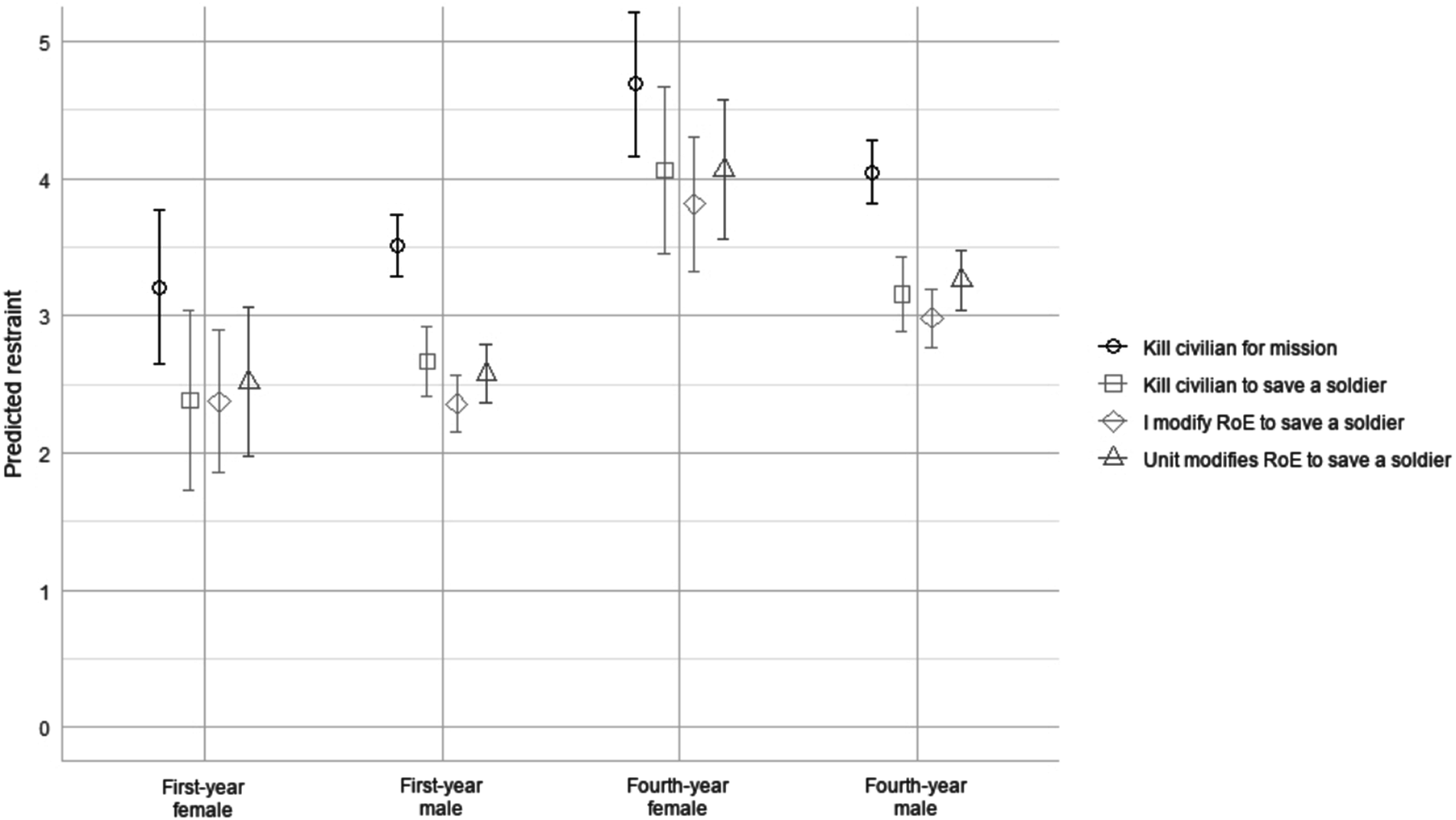
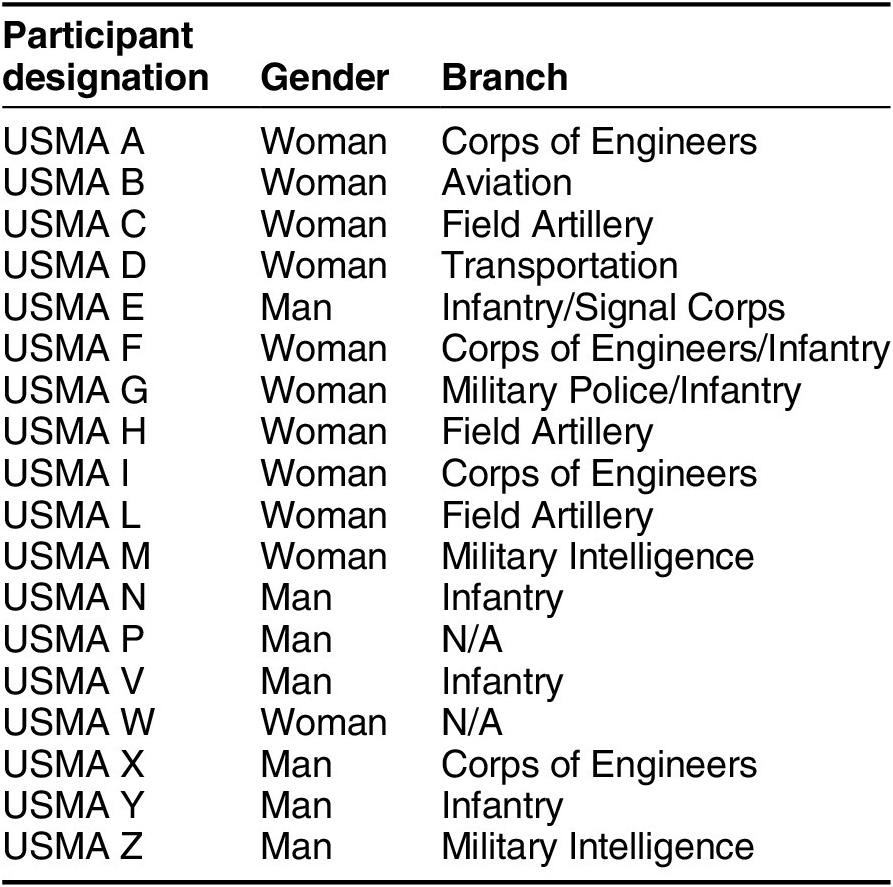


 Open access

