Acute, uncomplicated upper respiratory tract infections are responsible for >10 million outpatient adult visits per year in the United States.Reference Gonzales, Bartlett and Besser1 Acute bronchitis is a self-limited inflammation of the upper respiratory tract and is caused by a virus in at least 90% of cases.Reference Harris, Hicks and Qaseem2 Despite being largely viral in nature, antibiotics are inappropriately prescribed for acute bronchitis up to 70% of the time and account for 44% of all antibiotic prescriptions written in outpatient facilities.Reference Harris, Hicks and Qaseem2, 3 A Cochrane review of antibiotic prescribing for acute bronchitis found no difference in clinical improvement between antibiotic and placebo groups.Reference Smith, Fahey, Smucny and Becker4 Rate of antibiotic avoidance for patients with acute bronchitis is included as a Healthcare Effectiveness Data and Information Set (HEDIS) quality performance measure and reported by health insurers in the United States; however, this measure has not significantly improved over the past decade.5 Key US stakeholders have recently called for a reduction in inappropriate antibiotic use in ambulatory settings.3, 6, Reference Sanchez, Fleming-dutra, Roberts and Hicks7
Electronic health record clinical decision support tools, prescriber and patient education, audit and feedback, and prescriber peer comparison have all been shown to reduce broad spectrum antibiotic prescribing and guideline-discordant prescribing for acute respiratory tract infections (ARTIs) in previous studies.Reference Litvin, Ornstein, Wessell, Nemeth and Nietert8–Reference Gifford, Vaeth and Richards12 However, the impact of behavioral interventions is often not retained long term after the intervention has been completed, and the use of electronic health record alerts alone has not been successful.Reference Linder, Meeker and Fox11, Reference Sharp, Hu and Shen13, Reference Hansen, Carson, Leedahl and Leedahl14 The primary objective of this study was to determine the impact of an antimicrobial stewardship intervention that included a passive, prescriber-directed, electronic best-practice advisory (BPA) coupled with prescriber education on the rate of antibiotic prescribing for acute, uncomplicated bronchitis among ambulatory adults. Secondary objectives included patient-, prescriber- and site-level predictors of antibiotic prescribing.
Methods
Study setting
The study was conducted at outpatient settings within a large, private, integrated health system with locations throughout eastern Wisconsin and northeastern Illinois (Aurora Health Care). The health system includes 15 emergency departments (EDs), >30 urgent care clinics, and >150 ambulatory clinics. The health system shares a single electronic health record for inpatient and ambulatory services, Epic (Verona, WI; www.epic.com), and has both system-employed and private practice prescribers.
Study design
We conducted a retrospective, quasi-experimental study evaluating a multifactorial antimicrobial stewardship intervention on antibiotic prescribing for outpatient adults with a primary diagnosis of acute, uncomplicated bronchitis. The intervention was designed by the antimicrobial stewardship committee in collaboration with key ambulatory physician stakeholders. Until this intervention, the antimicrobial stewardship committee focused its efforts almost entirely on inpatient antimicrobial use. This intervention was the committee’s first attempt at a large-scale ambulatory intervention, and there were no competing local antimicrobial stewardship efforts for adults with upper respiratory infections for the duration of the study period. Patients ≥18 years of age with a primary diagnosis of acute bronchitis were eligible for inclusion. The study was reviewed and approved by the health system’s institutional review board.
The intervention consisted of implementation of a BPA in the electronic health record (Supplementary Fig. 1a online). In the ED setting, the BPA displayed to prescribers when discharge to home orders were placed for patients with a bronchitis-related diagnosis code. The BPA contained a hyperlink to an algorithm directing toward appropriate outpatient pharmacologic and/or supportive treatment for patients with bronchitis (Supplementary Fig. 1b online). In the ambulatory clinic and urgent care settings, the BPA appeared when a bronchitis-related diagnosis code was entered for the visit or was added to a patient’s problem list; this BPA provided the same hyperlink to the bronchitis treatment algorithm as the ED BPA. In all settings, the BPA was passive because the prescriber had the ability to view the treatment algorithm but was not forced to do so via hard stop mechanisms. This passive-alert design limited the need to access the algorithm when a prescriber was already aware of the recommendations.
An online continuing medical education module was created and made available to prescribers. The module became available on September 29, 2017, and remained available throughout the remainder of the study period. This was an optional educational activity that provided 0.5 AMA PRA category 1 credits. The module described evidence-based recommendations for the care of adults with bronchitis in the ambulatory setting, patient counseling tips and resources, and an explanation of the BPA.
Data collection
In total, 14 International Classification of Disease, Tenth Revision (ICD-10) codes were used to define bronchitis (Supplementary material online). For EDs and urgent care clinics, the preintervention period was January 1–November 30, 2016, and the postintervention period was December 1, 2016–December 31, 2018. For ambulatory clinics, the preintervention period was January 1, 2016–September 28, 2017, and the postintervention period was September 29, 2017–December 31, 2018.
Data were systematically extracted from the electronic health record using SAP Business Objects Business Intelligence Platform 4.1 version 14.1.5.1568 software (SAP America, Newtown Square, PA). Patient-level data elements collected included patient age (dichotomized as >65 and ≤65 years), race/ethnicity, gender, height, weight, body mass index (BMI, kg/m2, in 4 strata), vital signs (not available for ED patients), smoking status (dichotomized as any current or past smoking exposure and no smoking exposure), appointment length, time spent waiting for the appointment, primary diagnosis code and receipt of antibiotics, if any. Strata of BMI included underweight (BMI < 8), normal weight (BMI 18–25), overweight (BMI 25–30), and obese (BMI >30). Prescriber-level data included prescriber type (physician, nurse practitioner [NP], or physician assistant [PA]) and medical specialty for physicians (emergency medicine, family medicine, internal medicine, or other). Site-level data included facility type (ED, urgent care clinic, or ambulatory clinic) and location.
Antibiotic receipt was defined as a prescription for an oral antibiotic deemed to be prescribed for an upper respiratory tract infection that was written upon discharge from the outpatient facility. These antibiotics included amoxicillin, amoxicillin-clavulanic acid, azithromycin, cefuroxime, cefprozil, cefdinir, cefditoren, cefixime, cefpodoxime, ceftibuten, clarithromycin, doxycycline, levofloxacin, and moxifloxacin. All other antibiotics and/or anti-infectives (eg, antifungals) were excluded.
Statistical analysis
Only the index encounter for patients with >1 encounter for acute bronchitis during the study period was included in the analysis. Descriptive characteristics were summarized using means and standard deviations (SD) or medians and interquartile ranges (IQR) for continuous variables and frequency and percentages for categorical variables. Some incorrect entries were observed within certain variables and the following maximum values were utilized: appointment wait time (60 min), appointment length (60 min), BMI (100 kg/m2), and heart rate (200 beats per min). Patient-level, prescriber-level, and site-level characteristics were compared between all patients in the pre- and postintervention groups and between those patients who did not receive an antibiotic in the pre- and postintervention groups. Categorical variables were compared using Pearson’s χ2 test or Fisher exact test, as appropriate and continuous variables were compared using 2-sample t test for independent samples. Univariate analyses were performed to determine significant predictors for antibiotic prescribing in the pre- and postintervention groups separately. Patients seen in the ED were excluded from the multivariable model because they lacked vital-sign data. Predictors with a P < .05 in the univariate analysis were included in a forward, stepwise multivariable logistic model, and variables with a P < .10 were kept in the model. All tests were 2-tailed, and a P < .05 was considered to be statistically significant. SAS version 9.4 software (SAS Institute, Cary, NC) was used for all statistical analyses.
Results
In total, 171,546 unique ambulatory adults had a primary diagnosis of acute bronchitis during the study period. The BPA activated on every encounter for acute bronchitis in the postintervention period, and prescribers clicked into the treatment algorithm 5.3% of the time. Overall, 160 prescribers completed the CME course. Of the prescribers who completed the CME course, 33 (22.0%) were physicians, 28 (18.7%) were physician assistants, and 89 (59.3%) were nurse practitioners. The study included 1,805 unique prescribers, and <10% of prescribers completed the CME course.
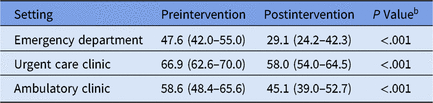
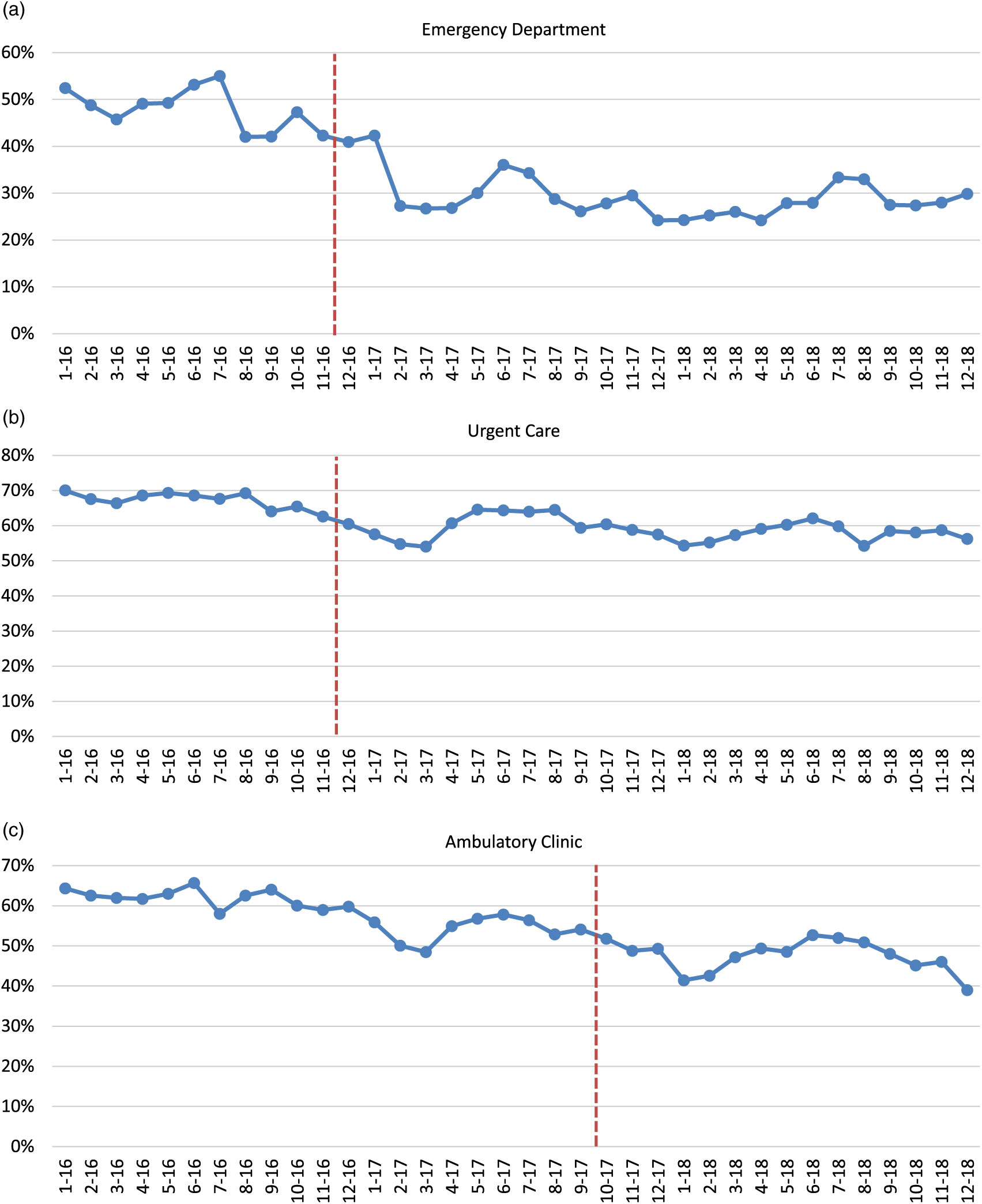
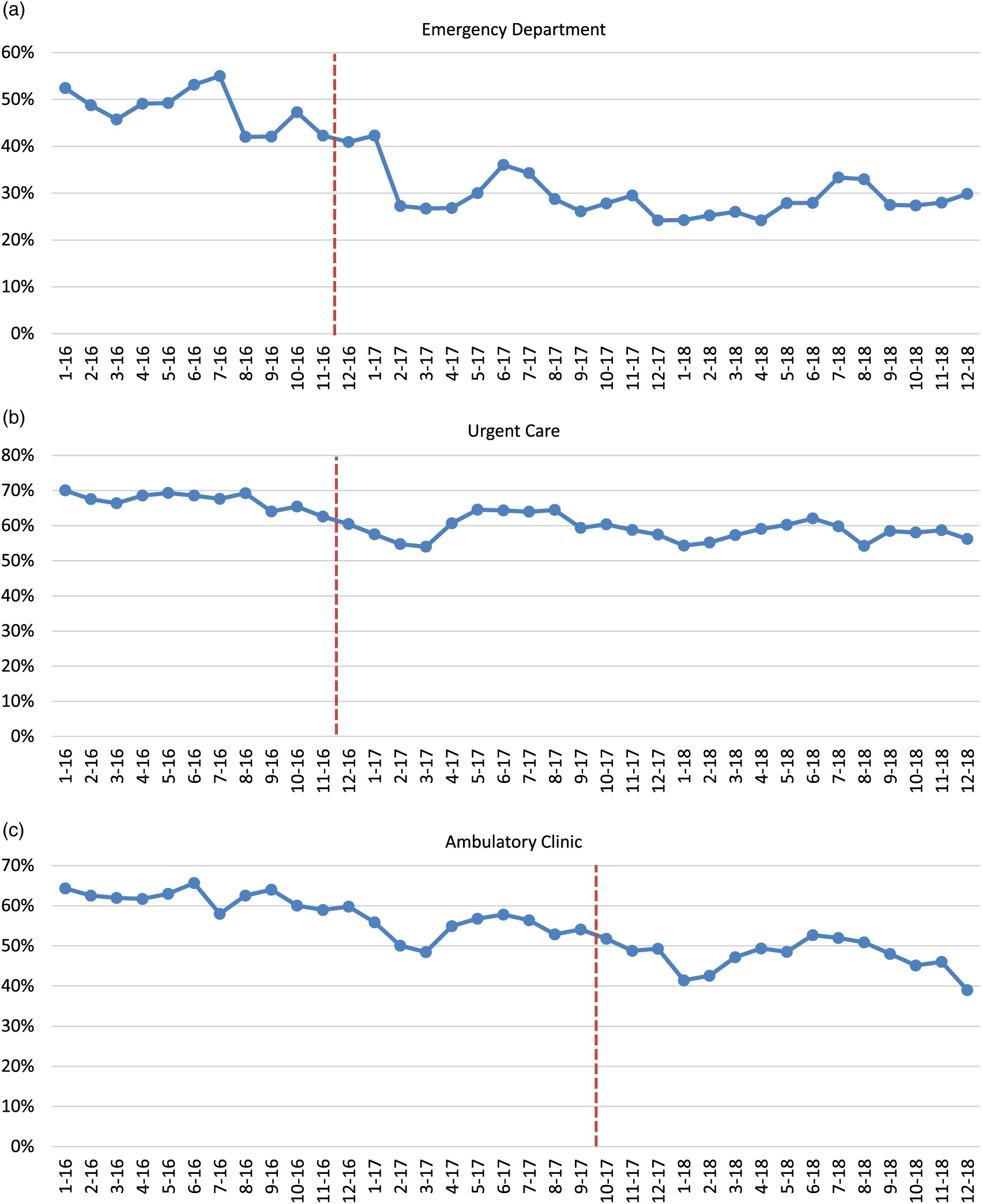
A 9.4% reduction in antibiotic prescribing for acute bronchitis was observed: 49,877 of 81,975 patients (60.8%) preintervention vs 46,018 of 89,571 patients (51.4%) postintervention (P < .001). This reduction corresponds to 8,441 fewer antibiotic prescriptions written in the postintervention period. Reduction in prescribing was greatest in the ED setting, with an 18.5% reduction compared to 8.9% and 13.5% in urgent care clinics and ambulatory clinics, respectively (Table 1). In the ED setting, an initial decrease in prescribing was observed that persisted throughout the postintervention period, while in the urgent care and ambulatory clinic settings, a more gradual decrease over time was observed (Fig. 1).
Antibiotic Prescribing Rates in the Pre- and Postintervention Periods by Facility Typea

a All data presented as the overall antibiotic prescribing rate for the study period by setting with the monthly antibiotic prescribing rate range shown in parentheses.
b P values derived from a comparison on antibiotic prescribing rates before and after the intervention using the Fisher exact test.
Rates of antibiotic prescribing over time by facility type. Dashed lines indicate date of intervention implementation. Trendline equations for each facility type based on study phase: a) emergency department: Preintervention: y = −0.0227x + 1013.2, Postintervention: y = −0.0081x + 378.79; b) urgent care clinic: Preintervention: y = −0.0158x + 738.49, Postintervention: y = −0.0032x + 196.08; c) ambulatory clinic: Preintervention: y = −0.019x + 867.93, Postintervention: y = −0.0074x + 368.25.
Macrolides were the most commonly prescribed antibiotic class both pre- and postintervention (61.4% and 55.9%, respectively). We detected statistically significant decreases in rates of fluoroquinolone (from 4.8% to 2.6%) and macrolide prescribing and increases in penicillin (from 17.2% to 20%), cephalosporins (from 7.4% to 8.5%), and tetracycline (from 9.3% to 13%) prescribing in the postintervention period.
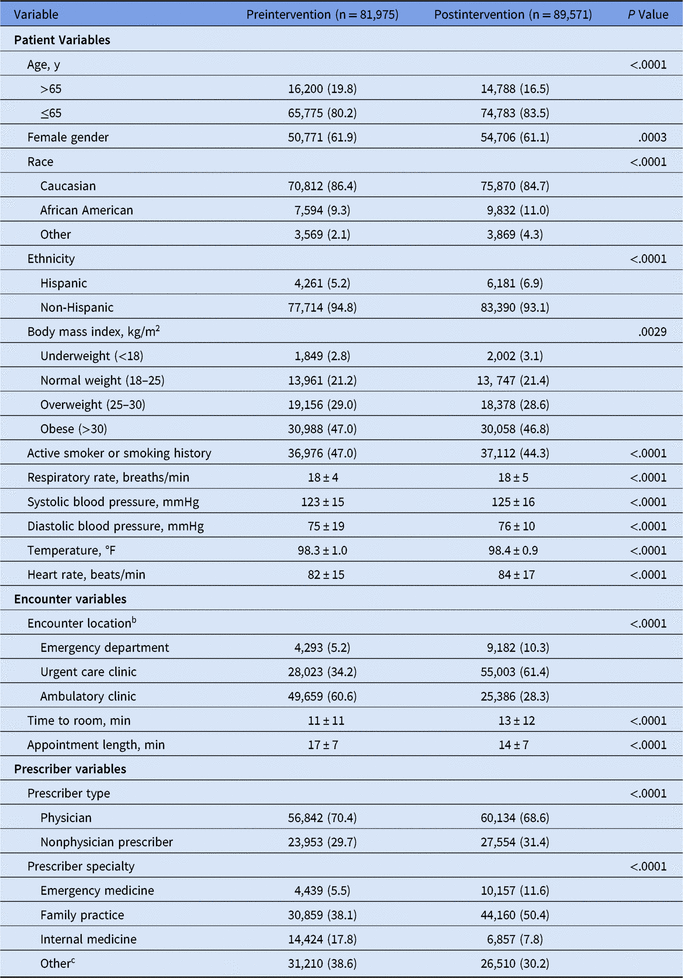
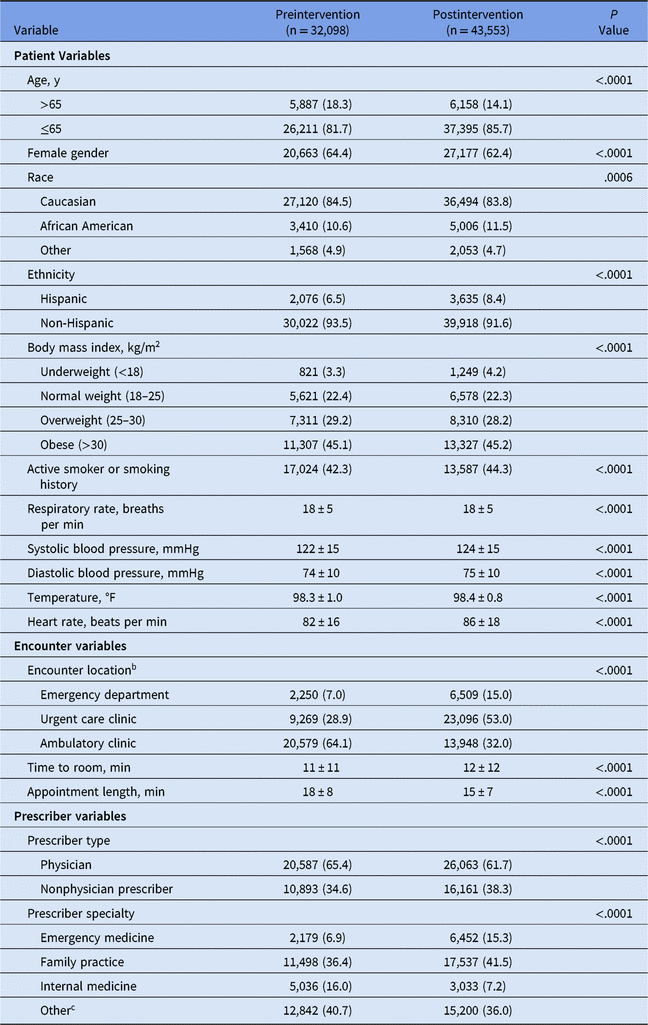
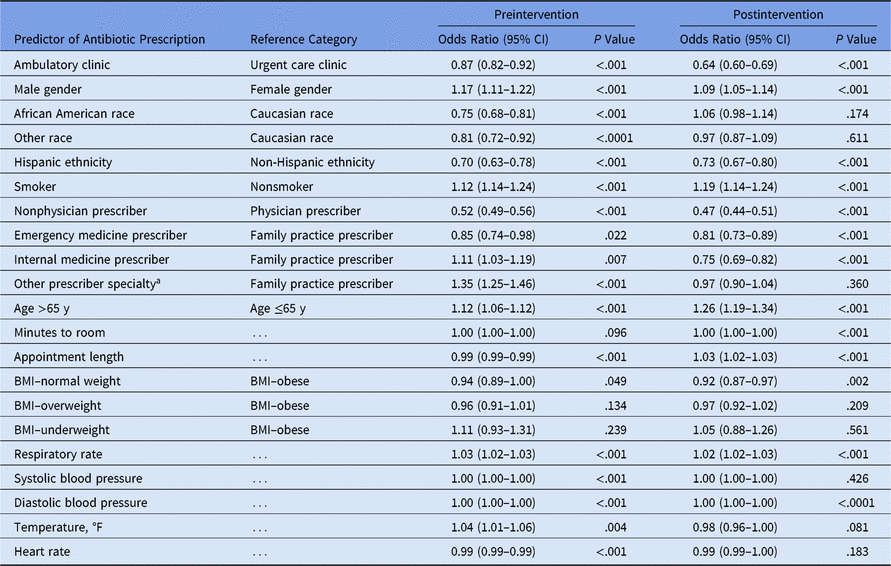
Comparisons of patient-level, prescriber-level, and site-level characteristics between the pre- and postintervention groups and between those patients who did not receive an antibiotic in the pre- and postintervention groups are shown in Tables 2and 3, respectively. In the multivariable analysis, we detected some differences in the variables independently associated with antibiotic prescribing between the pre- and postintervention groups (Table 4). Specifically, patient race, other prescriber specialty, systolic blood pressure, body temperature, and heart rate were not independently associated with antibiotic prescribing in the postintervention group. In both study groups, the following factors were independently associated with less frequent antibiotic prescribing: normal body weight, being seen in an ambulatory clinic (compared to urgent care), treatment by a nonphysician prescriber, and Hispanic ethnicity. Patients >65 years of age and those who smoked were more likely to receive antibiotics in both groups.
Characteristics of Patients with Acute, Uncomplicated Bronchitis during the Study Period (N = 171,546)a

a All data are presented as mean ± standard deviation or no. (%).
b The BPA was implemented on December 1, 2016, in emergency departments and urgent care clinics and on September 29, 2017, in ambulatory clinics.
c 23.7% were physicians specializing in subspecialties of internal medicine, obstetrics, or a surgical specialty; 76.3% were nurse practitioners or physician assistants without a declared specialty.
Characteristics of Patients Not Prescribed Antibiotics During the Study Period (N = 75,651)a

a All data are presented as mean ± standard deviation or no.(%).
b The BPA was implemented on December 1, 2016, in emergency departments and urgent care clinics and on September 29, 2017, in ambulatory clinics.
c 23.7% were physicians specializing in subspecialties of internal medicine, obstetrics, or a surgical specialty; 76.3% were nurse practitioners or physician assistants without a declared specialty.
Multivariable Model of Antibiotic Prescribing Among Ambulatory Adults with Primary Diagnosis of Bronchitis

a 23.7% were physicians specializing in subspecialties of internal medicine, obstetrics, or a surgical specialty; 76.3% were nurse practitioners or physician assistants without a declared specialty.
Discussion
An outpatient antimicrobial stewardship intervention which combined prescriber education with an electronic BPA reduced antibiotic prescribing rates for ambulatory adults with a presumptive diagnosis of bronchitis. Reduction was greatest in the ED setting compared to urgent care and ambulatory clinics. This result may be due to the smaller, cohesive group of emergency medicine prescribers within the health system who have active representation on the antimicrobial stewardship committee. Emergency medicine prescribers may also have additional laboratory and diagnostic resources rapidly available to increase diagnostic certainty compared to prescribers in other outpatient settings. These observations are similar to a 2014 US claims analysis demonstrating antibiotic prescribing for respiratory diagnoses was more common in urgent care clinics than EDs; however, antibiotic prescribing was less frequent in clinics than EDs in their analysis.Reference Palms, Hicks and Bartoces15 A variety of interventions to improve outpatient antibiotic prescribing for ARTIs have been studied, including education, audit and feedback, and peer comparison. An in-person, interactive education session for 19 urgent-care NPs and PAs demonstrated a 61.9% reduction in immediate antibiotic prescribing for bronchitis, from 91.7% to 29.8% (P < .001).Reference Link, Townsend, Leung, Kommu, Vega and Hendrix16 The sustainability of this intervention is unclear as the posteducation measurement period was just 2 months.
Education coupled with personalized audit and feedback reduced broad-spectrum antibiotic prescribing for ARTIs in pediatric primary care.Reference Gerber, Prasad and Fiks9 Meekeret alReference Meeker, Linder and Fox10 implemented peer comparison of prescribing rates, justification of antibiotic indication, and EHR alerts suggesting alternative therapies for primary care clinicians. They found a greater reduction in antibiotic prescribing for inappropriate ARTIs compared to control.Reference Meeker, Linder and Fox10 Both of these cluster randomized clinical trials had lower baseline antibiotic prescribing rates than in our study; however, rates of antibiotic prescribing in our study are consistent with US and international data.Reference Harris, Hicks and Qaseem2 , 3 , Reference Hashimoto, Matsui and Sasabuchi17 Meeker et al demonstrated a significant reduction in the control group of prescribers, who received education and were aware of monitoring of prescribing rates as potential influencing factors in that decline.Reference Meeker, Linder and Fox10
Although our study used education, it primarily leveraged the electronic health record to attempt to impact antibiotic prescribing practices. Interestingly, the BPA treatment algorithm was only clicked into 5.3% of the time, likely because prescribers became familiar with the algorithm. In a previous study of patients with acute rhinosinusitis, an electronic alert alone failed to reduce prescribing in urgent care and ambulatory care clinics.Reference Hansen, Carson, Leedahl and Leedahl14 Gonzales et alReference Gonzales, Anderer and McCulloch18 implemented either a printed or computerized decision support intervention, and found associated decreases in antibiotic prescribing for acute bronchitis. However, they also incorporated patient education through use of a brochure and clinician education and feedback on prescribing practices, so the result was not attributable to the decision support intervention alone.
Major challenges associated with our study were prescriber-reported barriers to decreased antibiotic prescribing. Prescribers often cite patient expectations, time pressure, and diagnostic uncertainty as reasons they prescribe antibiotics despite awareness of guideline recommendations.Reference Ackerman, Gonzales, Stahl and Metlay19 Prescriber misperception of patient expectations and concern for patient satisfaction has persisted over time despite literature that patients’ sense of understanding of their condition, not receipt of an antibiotic prescription, is what leads to satisfaction with the encounter.Reference Ong, Nakase and Moran20 In our study, nonphysician prescribers were less likely to prescribe an antibiotic than physicians, although it is unknown whether physicians saw higher acuity patients. A recent study of antibiotic prescribing for ARTIs that did evaluate patient comorbidities reported in their unadjusted analysis that nonphysicians and resident physicians were less likely to prescribe than attending physicians.Reference Jung, Sexton, Owens, Spell and Fridkin21
Our study has several limitations. Its design was neither randomized nor controlled. We attempted to address the nonrandomized design by performing multivariable regression to account for potential confounders. However, many patient-level variables are lacking in ambulatory encounters. Variables collected are similar to previous literature in this area.Reference Litvin, Ornstein, Wessell, Nemeth and Nietert8–Reference Meeker, Linder and Fox10, Reference Gifford, Vaeth and Richards12–Reference Hansen, Carson, Leedahl and Leedahl14, Reference Jung, Sexton, Owens, Spell and Fridkin21 Our inclusion of vital signs for urgent care clinic and ambulatory clinic encounters is notable because many previous studies have not included these data. However, these data were missing for ED encounters; therefore, we elected to omit ED encounter from our multivariable analysis. Emergency department patients accounted for <8% of the study population, and we believe this decision to omit them from the multivariable model in favor of inclusion of vital sign data was justified. Since the intervention was tied to diagnosis code, there may be concern for a shift in diagnostic coding to diagnosis codes not included in the BPA.Reference Roth, Gonzales and Harding-Anderer22 We did not collect data on other possible diagnosis codes that may be used by providers for bronchitis; however, the total number of patients per quarter was relatively consistent throughout the study (data not shown), indicating that there was not a large deviation from the diagnostic codes included in the study. Our analysis did not account for whether patients filled their antibiotic prescriptions nor whether prescribers wrote delayed-fill prescriptions. The latter is a tactic prescribers may use to increase patient satisfaction and obviate need for another visit.Reference Harris, Hicks and Qaseem2 Additionally, providers may have prescribed antibiotics for bronchitis that were not on our a priori list of antibiotics. We also lacked data describing the diversity of the various ambulatory care settings (eg, rurality, patient volumes, etc) precluding inclusion of these data in our analysis. Lastly, we were unable to include a safety analysis because antibiotic-related adverse effects were not retrievable without chart review nor were revisits due to the same diagnosis.
The strengths of our study include the large number of patients, study period length beyond a single year, and deployment of a best practice alert across the ambulatory continuum of care within a large integrated health system. We included all adult patients with acute bronchitis and did not access our data via a proprietary healthcare database. Although electronic health record interventions alone show modest results, combined with education of prescribers and patients, there may be capacity to facilitate outpatient antimicrobial stewardship.
A passive, prescriber-directed, electronic BPA combined with education was associated with a statistically significant reduction in antibiotic prescribing for ambulatory adults with acute bronchitis, particularly in the ED setting. This analysis combined with previous studies highlights the necessity of multimodal antimicrobial stewardship interventions in the ambulatory setting. Despite a promising reduction in antibiotic prescribing in this study, prescribing rates remain far above the expected appropriate rates. Future studies should incorporate broad patient education and address prescriber-reported barriers to appropriate antibiotic prescribing in the outpatient setting.
Supplementary material
To view supplementary material for this article, please visit https://doi.org/10.1017/ice.2019.295
Acknowledgements
None.
Financial support
No financial support was provided relevant to this article.
Conflicts of interest
All authors report no conflicts of interest relevant to this article.