INTRODUCTION
The decline in soil fertility continues to be an important barrier to food security in smallholder farming systems of southern Africa (Bationo et al., Reference Bationo, Hartenmink, Lungu, Naimi, Okoth, Smaling and Thiombiano2006; Henao and Baanante, Reference Henao and Baanante1999; IFAD, 2011). Among other factors, which include low input use (Bationo et al., Reference Bationo, Hartenmink, Lungu, Naimi, Okoth, Smaling and Thiombiano2006), it has been reported that continual soil inversion through conventional tillage using the hand hoe or an animal-drawn mouldboard plough (conventional agriculture: CONV) can in some situations lower soil fertility (Holland, Reference Holland2004). CONV can lead to low levels of soil organic matter and degradation of soil structure and result in compacted and hard setting soils (Chivenge et al., Reference Chivenge, Murwira, Giller, Mapfumo and Six2007; Holland, Reference Holland2004; Vogeler et al., Reference Vogeler, Rogasik, Funder, Panten and Schnug2008). These soil structural changes, in turn, lead to reduced infiltration, increased runoff and erosion, and in many cases reduced crop yields (Jin et al., Reference Jin, Hongwen, Rasaily, Wang, Guohua, Yanbo, Xiaodong and Lijin2011).
Globally, conservation agriculture (CA) has been promoted as a means to protect soils from erosion and compaction, conserve/retain moisture and reduce production costs (Hobbs et al., Reference Hobbs, Sayre and Gupta2008; Holland, Reference Holland2004). CA comprises the simultaneous application of three agronomic principles: (1) minimal mechanical soil disturbance, (2) maintenance of permanent soil cover with organic mulch and (3) diversification into legume-based crop rotations (Twomlow et al., Reference Twomlow, Urolov, Jenrich and Oldrieve2008). Many studies have been conducted globally on CA, and its benefits, challenges as well as factors affecting performance are well documented (Giller et al., Reference Giller, Witter, Corbeels and Tittonell2009; Gowing and Palmer, Reference Gowing and Palmer2008; Kassam et al., Reference Kassam, Friedrich, Shaxson and Pretty2009; Rockström et al., Reference Rockström, Kaumbutho, Mwalley, Nzabi, Temesgen, Mawenya, Barron, Mutua and Damgaard-Larsen2009; Wall, Reference Wall2007). In the USA, the pioneer of CA and the country with the largest area under CA (approximately 25 million hectares), the major benefits have been realised in production cost saving at the farm level, e.g. fuel savings ranging between 60 and 80 litres per hectare have been reported (APCAEM, 2007).
Results on the yield performance of CA in relation to CONV in sub-Saharan Africa are mixed (Guzha, Reference Guzha2004; Stone and Schlegel, Reference Stone and Schlegel2006). Experiments conducted by Materechera and Mloza-Banda (Reference Materechera and Mloza-Banda1997) in Malawi illustrated a non-significant yield difference between CONV and CA in the first two years of a three-year study, and during the third year the yield in CA was significantly lower. Similar findings were reported by Mashingaidze et al. (Reference Mashingaidze, Madakadze and Twomlow2012) in Zimbabwe. Results from the Laikaipia CA project in Kenya showed similar maize yield in plots managed under CONV and CA (Apina et al., Reference Apina, Wamai, Mwangi, Kaumbutho and Kienzle2007). On the other hand, improved soil water supply, rooting depth and crop yields through the use of minimum tillage techniques have been reported in the semi-arid regions of Kenya (Gicheru et al., Reference Gicheru, Gachene, Mbuvi and Mare2004; Rockström et al., Reference Rockström, Kaumbutho, Mwalley, Nzabi, Temesgen, Mawenya, Barron, Mutua and Damgaard-Larsen2009). In Zimbabwe, Thierfelder and Wall (Reference Thierfelder and Wall2012) reported higher yields in CA plots than in CONV plots on sandy soils in dry seasons but lower yields in CA plots in very wet seasons due to water logging. In Bazale Extension Planning Area in Malawi, maize yields were higher in CA plots than in CONV after the first season (Ngwira et al., Reference Ngwira, Thierfelder and Lambert2012).
Various agronomic factors were reported to have an impact on the performance of CA and often determine its performance in relation to CONV. Rusinamhodzi et al. (Reference Rusinamhodzi, Corbeels, van Wijk, Rufino, Nyamangara and Giller2011) conducted a meta-analysis using worldwide maize grain yield data (rainfed) and concluded that CA performance was better on well-drained soils, under high N input (>100 kg ha−1) and further yield increases were obtained with rotation.
From 2004 to 2010, the International Crops Research Institute for the Semi-Arid Tropics (ICRISAT) implemented a programme to simultaneously promote CA and conduct research to optimise the performance of the practice in the smallholder sector of Zimbabwe. The programme largely promoted hand-hoe dug planting basins (Basins) as a minimum tillage option for the farmers, most of whom have no access to draft power and often plant late (Mazvimavi et al., Reference Mazvimavi, Twomlow, Belder and Hove2008). Animal-drawn tine rippers were later promoted but to a limited extent. The research component consisted of a series of on-station and on-farm trials and management practices such as fertiliser application rate, manure application and mulching were tested.
Although valuable insights were realised from individual experiments, no effort was made to integrate the trial results in order to derive the impact of CA on overall productivity. We used meta-analysis to assess the performance of CA compared with CONV using data sets of experiments conducted by the ICRISAT in southern Zimbabwe from 2004 to 2010. Meta-analysis is a means of assessing a hypothesis through research synthesis, where results from a set of independent studies are evaluated in terms of the same hypothesis (Borenstein et al., Reference Borenstein, Hedges, Higgins and Rothstein2009; Rosenberg et al., Reference Rosenberg, Adams and Gurevitch2000). A detailed description of meta-analysis calculations in relation to the standardised effect size is given in Rusinamhodzi et al. (Reference Rusinamhodzi, Corbeels, van Wijk, Rufino, Nyamangara and Giller2011). In this study, it was hypothesised that CA generally results in improved grain yield over CONV and that the yield performance under CA is influenced by soil type, rainfall amount and distribution and selected management practices that include rates of inorganic fertilisers, manure application and mulching.
METHODOLOGY
Site descriptions
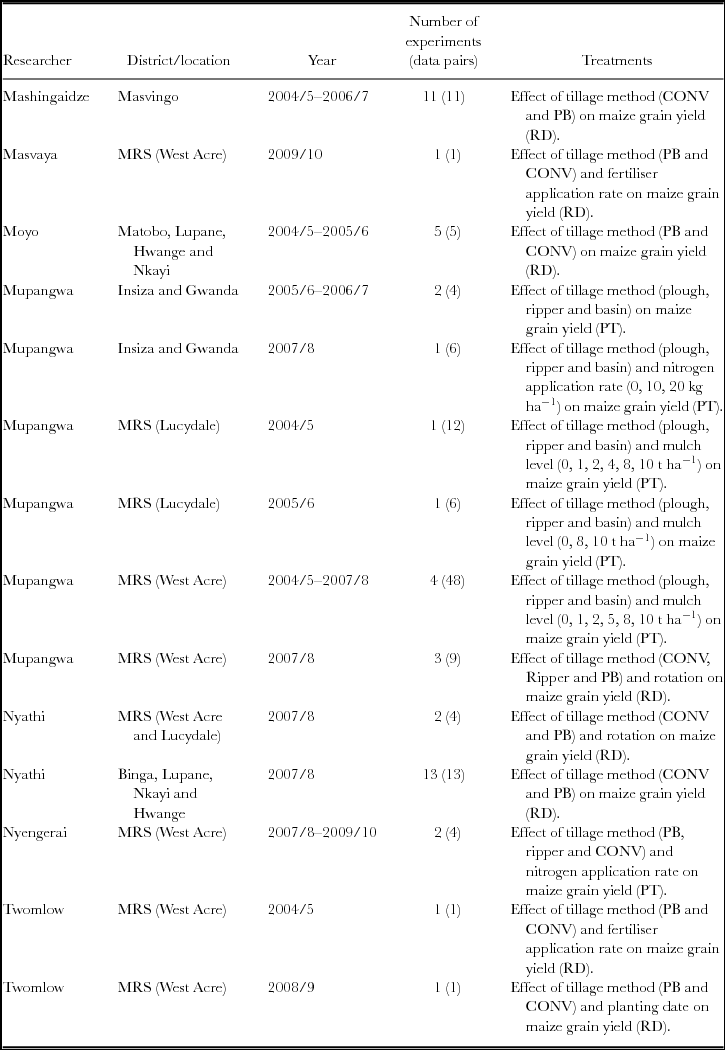
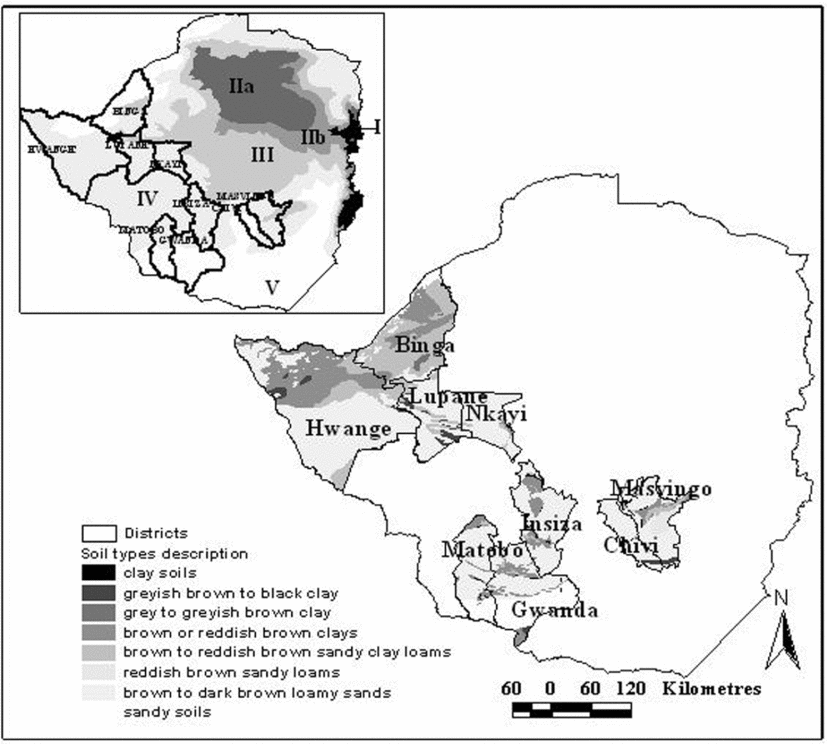
The data used in this study were collected from both on-station and on-farm experiments (detailed in Table 1) located in the semi-arid zones of southern Zimbabwe (Figure 1), where rainfall is relatively low, variable, erratic and extended mid-season dry spells are common (Mupangwa et al., Reference Mupangwa, Walker and Twomlow2011). The on-station experiments were conducted at West Acre (28°30.92′ E, 20°23.32′ S) and Lucydale (28°24.46′ E, 20°25.64′ S) farms, both located at the Matopos Research Station, which has a long-term annual average rainfall of 584 mm (Mupangwa, Reference Mupangwa2009). The soil at West Acre farm is a moderately deep and poorly drained black clay (Chromic – Leptic Cambisol), whereas that at Lucydale is a moderately deep and well-drained sand (Eutric Arenosol; Moyo, Reference Moyo2001). On-farm data were collected from experiments conducted in eight districts whose average rainfall ranges from <450 to 800 mm per annum. The major soil type on the smallholder farms is coarse-grained sand (>70%) deficient in organic matter and nutrients and with limited water retention capacity; however, some of the experiments were conducted on farms with relatively more fertile loams and heavy clays (Figure 1).
The studies used in the meta-analysis, showing the researcher, district, year in which the experiment was carried out, number of experiments (number of data pairs compared in parentheses) and treatments under comparison in southern Zimbabwe.

MRS: Matopos Research Station; PT: data from published thesis; RD: raw data from ICRISAT archives.
Map of Zimbabwe showing the location of districts in which the on-farm experiments were conducted between 2004 and 2010 by the ICRISAT.
Semi-arid areas in Zimbabwe are more suitable for sorghum (Sorghum bicolor (L.) Moench) and pearl millet (Pennisetum glaucum L.) but most smallholder farmers have a preference for maize (Zea mays L.), the staple crop that accounts for more than 50% of the total cropped area (Langyintuo, Reference Langyintuo2005; Twomlow et al., Reference Twomlow, Steyn and Du Preez2006). Other crops include bambara nut (Vigna subterranea (L.) Verdc), groundnut (Arachis hypogaea L.) and cowpea (Vigna unguiculata (L) Walp.). Crop yields achieved by farmers are generally low, e.g. the yields for maize oscillate around 1 t ha−1 whilst those for sorghum are often below 0.2 t ha−1 (Twomlow et al., Reference Twomlow, Steyn and Du Preez2006). In addition to the problem of weeds (Mashingaidze et al., Reference Mashingaidze, Madakadze and Twomlow2012), the most important biophysical constraints to crop production are low soil fertility and limited moisture availability (Ncube et al., Reference Ncube, Dimes, Twomlow, Mupangwa and Giller2007). Crop production is strongly integrated with livestock production and the latter is kept to support crop production through the provision of draught power and manure, diversify household income sources through sales of meat and milk, and serve as a capital asset. Most crop residues are either fed to animals either in managed enclosures (cattle pens) or through post-harvest stubble grazing, although some farmers use a few of their crop residues as mulch (Mazvimavi and Twomlow, Reference Mazvimavi and Twomlow2009).
Meta-analysis
Meta-analysis is used to evaluate, in an aggregated manner, the results from a set of experiments that were based on the same hypothesis (Borenstein et al., Reference Borenstein, Hedges, Higgins and Rothstein2009; Rosenberg et al., Reference Rosenberg, Adams and Gurevitch2000). For each individual experiment in the set, the effect of the treatment is considered an independent estimate of the overall true effect and is subject to random variation. In our study, we specifically used the weighted mean difference (WMD) to calculate the overall effect size of CA (equation (3)). For the derivation of the WMD, the first step is to calculate the effect size of each experiment used and this is done through the subtraction of the treatment mean from the control mean (equation (1)).
A weight is then assigned to individual effect sizes through division by the variance for tillage for the particular experiment (equation (2)). In this manner, more precise studies have a greater contribution to the combined effect size. The combined effect size is then calculated by adding the individual effect sizes being used in the study and dividing this figure by the total of the weights from each experiment used (equation (3)). The overall WMD is considered to be significantly different from the control if the 95% confidence interval (CI) for the treatment mean does not overlap with the control (equations (4) and (5)) (Rosenberg et al., Reference Rosenberg, Adams and Gurevitch2000, Reference Rusinamhodzi, Corbeels, van Wijk, Rufino, Nyamangara and Giller2011):
 \begin{equation}
{\rm Mean}\,{\rm difference}\,{\rm (MD)}\,{\rm = }\,{\rm mean}_{{\rm treated}} \, - \,{\rm mean}_{{\rm control}} ,\end{equation}
 \begin{equation}
{\rm weight}_i \, = \,\frac{1}{{{\rm variance}_{\rm i} }}\, = \frac{1}{{{\rm SD}_i^2 }},\end{equation}
 \begin{equation}
{\rm Weighted}\,{\rm mean}\,{\rm difference}\,{\rm (WMD)}_{{\rm overall}\,\,} = \,\sum\limits_{i = 1}^{i = n} {({\rm weight}_i *{\rm MD})} /\,\sum\limits_{i = 1}^{i = n} {{\rm weight}_i ,}\end{equation}
 \begin{equation}
\,{\rm CI}_{95\% } \, = \,{\rm mean}_{{\rm overall}} \, \pm \,(1.96\,*\,({\rm variance}_{{\rm overall}} )^{0.5} ),\end{equation}
 \begin{equation}
{\rm Variance}_{{\rm overall}} \, = \,\frac{1}{{\sum\limits_{i = 1}^{i = n} {{\rm weight}_i } }}.\end{equation}
Experimental treatments
In this study, we compared the effects of CA (planting basins and rip lines) on maize grain yields with those of CONV (animal-drawn mouldboard ploughing) under different agronomic conditions. The Basins were opened up on unploughed land and measured 15 cm in length, breadth and depth with an inter-row and intra-row spacing of 90 and 60 cm, respectively. The rip lines were opened up, with locally available commercially produced ripper tine that was attached to the beam of an animal-drawn plough, on unploughed land to a depth of approximately 15 cm and were spaced at 90 cm.
Raw data that were available in ICRISAT archives and published data were used (Table 1 summarises the experiments used). Prior to use for meta-analysis, analysis of variance (ANOVA) was carried out on the raw data using GENSTAT 13th Edition. Only experiments with three or more replicates of each treatment were used for the meta-analysis. On farm experiments in which farmer records showed major differences in management between CA and CONV were excluded. Data from each experiment were collected in the form of mean yield for CA, (X A), mean yield for CONV (XC), standard deviation (SD) for tillage and number of replicates (n). Where the SD was not reported by the author, the coefficient of variation (CV) was used for the calculation of the SD by employing the formula (SD = CV/100 * X TILLAGE), where X TILLAGE is the tillage mean (see Rusinamhodzi et al., Reference Rusinamhodzi, Corbeels, van Wijk, Rufino, Nyamangara and Giller2011). It must be noted that in a single experiment where all three tillage methods were compared, two data pairs were derived for use in the meta-analysis as we compared the yield under CONV with that under Basins and the Ripper separately. Likewise, a single experiment that tested the effect of the three tillage methods and two levels of another factor such as mulch application rate would yield four data pairs for use in meta-analysis (that is, under each CA method, each level of mulch would be a data pair). A total of 48 experiments were used for the meta-analysis, 81 data pairs compared maize yield from Basins with that of CONV and 44 data pairs compared the yield from Ripper with CONV. Data pairs derived from a single experiment ranged from 1 to 12.
The total data set used in our analysis comprised of experiments conducted under various agronomic conditions. Where available, the following agronomic data were obtained for each experiment: soil texture (sand and clay), seasonal rainfall amount in the year of study, rainfall distribution in the year of study (poor/well distributed), nitrogen fertiliser (N) application rate, manure application rate, mulch application rate, trial location (on-farm/on-station) and the number of years the experiment ran for.
Nitrogen application rate varied from 0 to 30 kg N ha−1. Manure application was noted as yes/no. This is because the rate of manure application used for on-station trials was 3 t ha−1 and the amount applied for on-farm trials varied. In many cases, it was noted as applied/not applied in the raw data set without a specific mention of the amount. Mulch application rate in the studies used for meta-analysis varied from 2 to 10 t ha−1.
For the calculation of the WMD of CA, the Ripper and Basins were separated. We then used agronomic data collected to form different subsets of data under each CA method. There were insufficient data for Ripper +0 kg ha−1 N and for Ripper +no manure; these subsets were not analysed. The soils were grouped into sandy and clay textural classes, and loams were classified as clay soils and sandy loams as sandy. This was done because there were very few data pairs (<5) for these soils to allow formation of a category that could be individually assessed. For seasonal rainfall amount, experiments that were conducted under 320–500 mm yr−1 were grouped together as were those conducted under 500–830 mm yr−1. Furthermore, seasons were grouped according to rainfall distribution; seasons in which both the first and second halves of the season received equal to or above long-term average rainfall were classified under the well-distributed rainfall pattern. Those in which at least one half of the season received rainfall below the long-term average were classified under the poor rainfall distribution pattern. Data on long-term rainfall averages for the first (October–December) and second (January–March) halves of the seasons were obtained from Mupangwa (Reference Mupangwa2009). Two groups were formed according to N application rate and manure application; for N it was 10–30 kg ha−1 N (micro-dose range) and zero N application, while for manure the groups were manure application and no manure application; mulch application was also noted as yes/no. For experiment location, grouping was on-farm and on-station. Not all agronomic data were available for each experiment used and, as a result, subsets varied in size, and minimum subset size used was nine. There were insufficient data available for us to form subsets according to duration/number of years under minimum tillage and, as a result, the effect of tillage duration on maize grain yield was not assessed. All data were analysed using STATS DIRECT version 2.7.8.
RESULTS
Effect of planting method
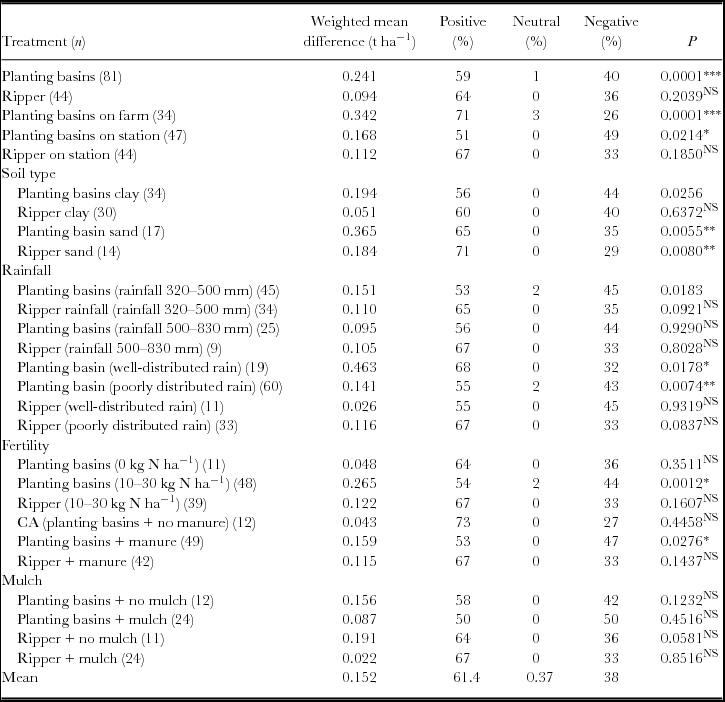
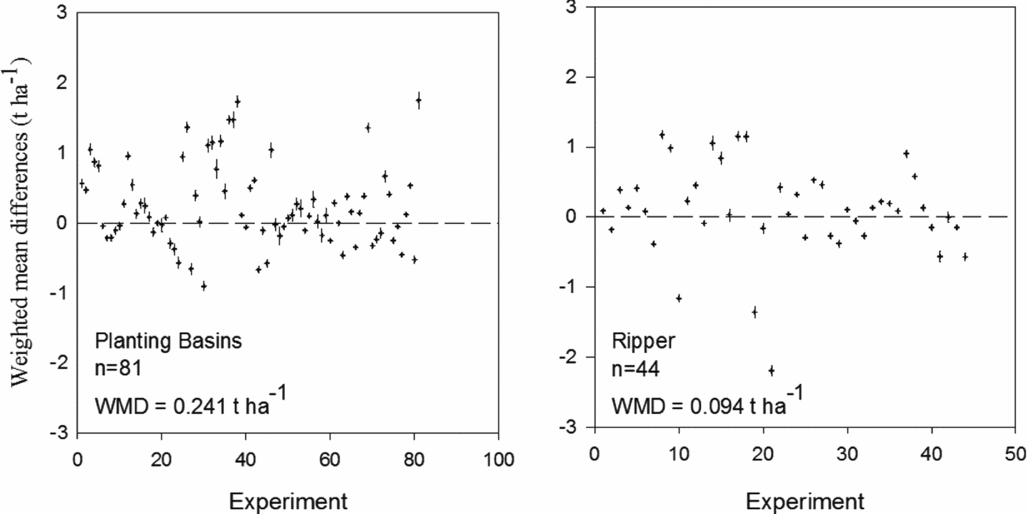
The distribution of WMD is shown in Table 2; the average WMD was 0.152 and the lowest was 0.022 t ha−1 and was observed on Ripper + mulch. The highest WMD was observed for Basins when the seasons had a well-distributed rainfall pattern (0.463 t ha−1). Generally, Basins performed better than the Ripper, a WMD of 0.241 t ha−1, which was significant compared with 0.094 t ha−1, which was not significant (Table 2 and Figure 2). The effect of Basins was significantly different (p < 0.001) from CONV in 64% of the paired comparisons. In contrast, the effect of the Ripper was significantly different from CONV in only 8% of the paired comparisons.
Weighted mean difference for maize yield (t ha−1) under conservation agriculture for experiments conducted in Zimbabwe from 2004 to 2010 and distribution of observed effects relative to maize grain yield under conventional tillage.
NS: non-significant; *significant at 5%; **significant at 1% and ***significant at <1%.
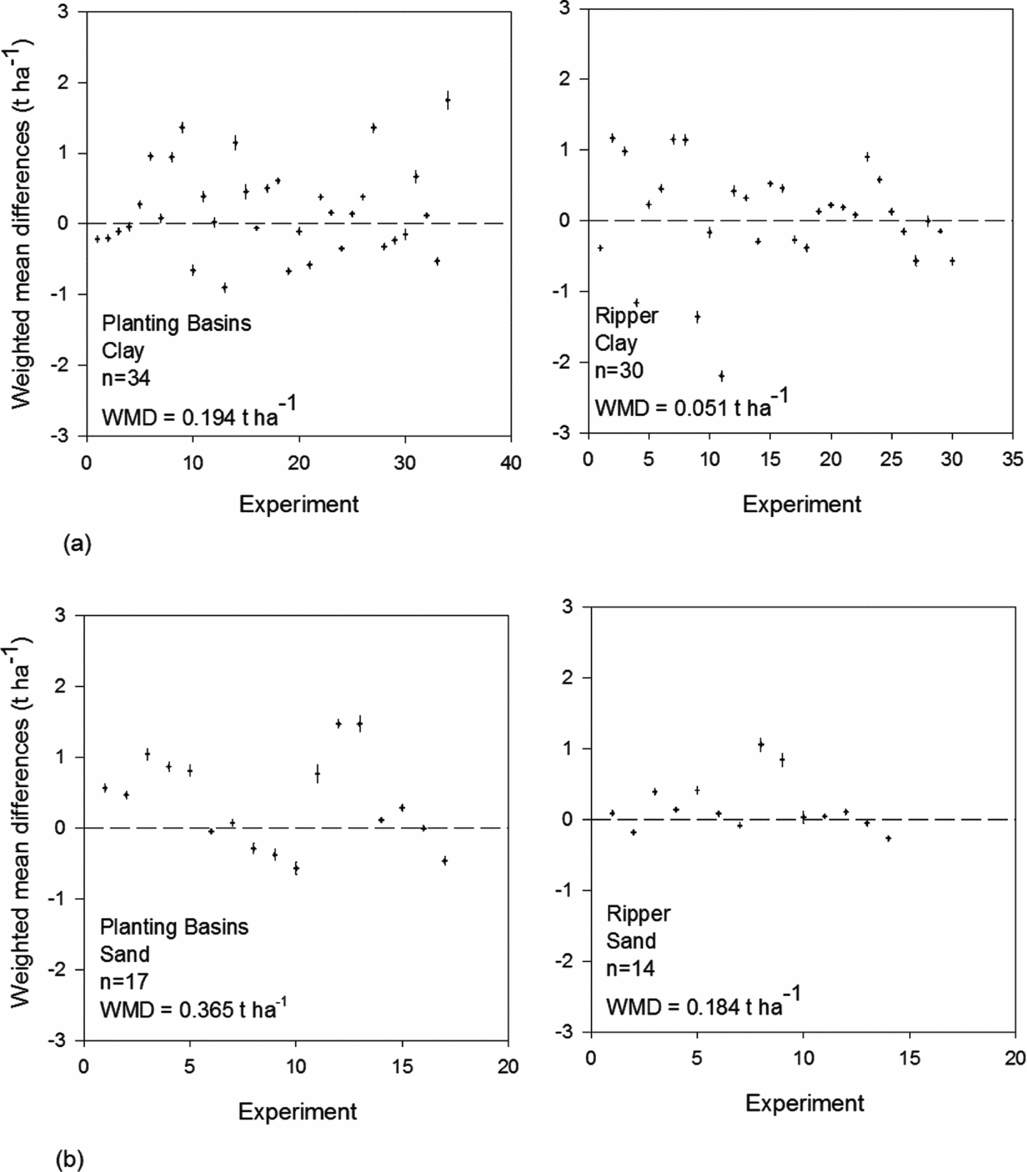
Weighted mean differences in maize grain yield between CA and CONV for experiments detailed in Table 1, planting basins left and ripper right.
When separated into trial location, Basins on-farm had a highly significantly different (p < 0.001) WMD (0.342 t ha−1), with 71% of the experiments having a positive response. WMD for Ripper on-farm was not calculated because of the limited data (n < 5). For experiments that were located on-station, Basins had a significant (p = 0.0214) WMD (0.168 t ha−1), with 51% of experiments having a positive effect.
Effect of soil type
When comparisons were made on clay soil, the WMD for Basins was 0.194 t ha−1 and that for Ripper was 0.051 t ha−1, a difference of 0.143 t ha−1 between the two CA practices (Figure 3a). This effect was only significant for the planting basins. For sandy soils, CA practices performed better relative to the clay soils. The WMD for Basins was 0.365 t ha−1, which was 188% higher than on clay. The Ripper behaved in a similar manner with a WMD of 0.184 t ha−1, which was 360% higher than for clay soils (Figure 3b). For both the Basins and Ripper, the effect was significantly different from CONV (p < 0.01).
Weighted mean differences in maize grain yield between CA and CONV on different soil types, planting basins left and ripper right: clay (a) and sand (b).
Effect of rainfall amount and distribution
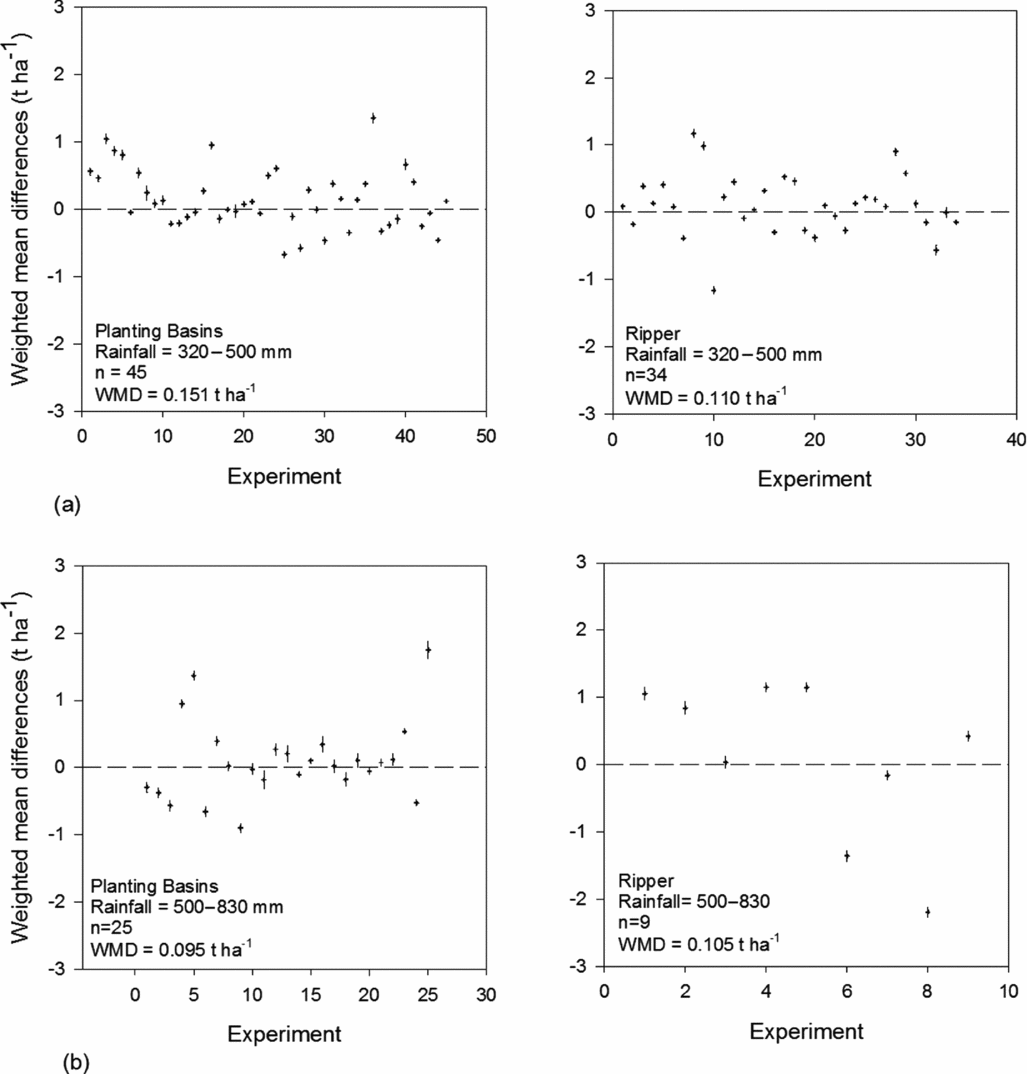
The WMD (0.151 t ha−1) of Basins was significant (p < 0.05) under a lower rainfall range (320–500 mm) whereas that of the Ripper (0.110 t ha−1) under the same rainfall range was non-significant, compared with CONV (Figure 4a). For a higher rainfall range (500–830 mm), the WMD for both CA treatments, 0.095 t ha−1 for Basins and 0.105 t ha−1 for Ripper, was non-significant (p > 0.05) (Figure 4b).
Weighted mean differences in maize grain yield between CA and CONV under different rainfall conditions, planting basins left and ripper right: (a) 320–500 mm and (b) 500–830 mm.
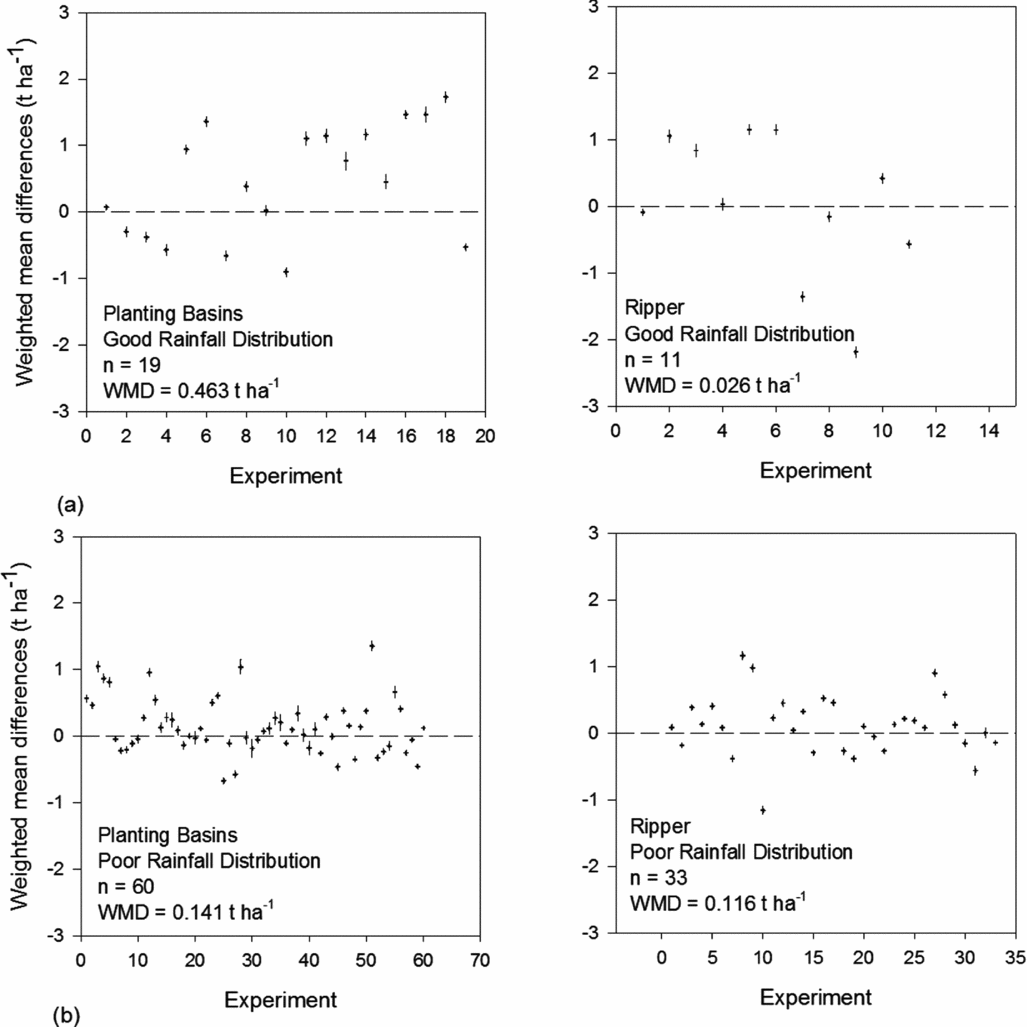
When the rainfall pattern was well distributed, Basins had a higher WMD, 0.463 t ha−1, than when it was poorly distributed, 0.141 t ha−1 (Figures 5a and b, Basins). As shown in Figure 5(a) with Basins, for well-distributed rainfall patterns, 32% of the experiments had a negative effect (range −0.29 to −0.899 t ha−1) and 68% had a positive effect (range 0.02–1.731 t ha−1). For a poorly distributed rainfall pattern, 43% of the experiments had a negative effect (range −0.002 to −0.668 t ha−1), there was no response in 2%, and 55% had a positive effect (range 0.203–1.359 t ha−1) (see Figure 5b, Basins). The effects of Basins under the different rainfall distribution patterns were significant (p < 0.05) for good rains and very significant (p < 0.01) for poor rainfall distribution patterns. For Ripper, the opposite effect was observed (Figures 5a and b, Ripper): the well-distributed rainfall pattern resulted in a lower WMD of 0.026 t ha−1 and for the poorly distributed rainfall pattern the WMD for ripper was 0.116 t ha−1. While both effects were not significant at p < 0.05, the effect of the rippers under a poorly distributed rainfall pattern was significant at p < 0.1.
Weighted mean differences in maize grain yield between CA and CONV under different rainfall distribution patterns, planting basins left and ripper right: (a) well-distributed rainfall pattern (rainfall equal to or above average in the first and second halves of the season) and (b) poorly distributed rainfall pattern (rainfall below average for at least one half of the season).
Response to nitrogen, manure and mulch application
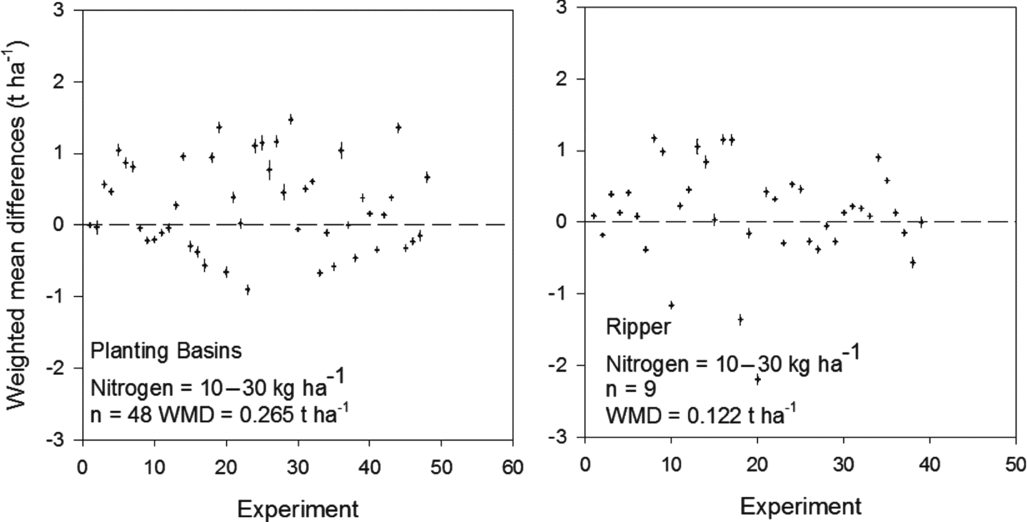
Compared with experiments conducted with an N application rate of 10–30 kg N ha−1, the application of 0 kg ha−1 nitrogen fertiliser resulted in a lower WMD (Figure 6). When no fertiliser was applied to Basins the effect was non-significant, and when fertiliser was applied the effect was very significant (p < 0.01). For Basins, the WMD with zero N was 0.048 t ha−1, as shown in Figure 6(a) and Table 2. When nitrogen was applied at micro-dose rates of 10–30 kg N ha−1, the WMD for Basins was 0.265 t ha−1, and 44% of the experiments had a negative effect (range −0.002 to −0.899 t ha−1), 2% had no response, and there was a positive response in 54% (effect size range 0.02–1.473 t ha−1) (Figure 6). There were no data on experiments for ripper + zero N. At an application rate of 10–30 kg N ha−1, the WMD for the Ripper was 0.122 t ha−1, which was higher than that observed when all experiments under the ripper were compared with CONV (see Figure 2 and Table 2). However, the effect was not significant.
Weighted mean differences in maize grain yield between CA and CONV, with different levels of nitrogen application with 10–30 kg N ha−1, planting basins left and ripper right.
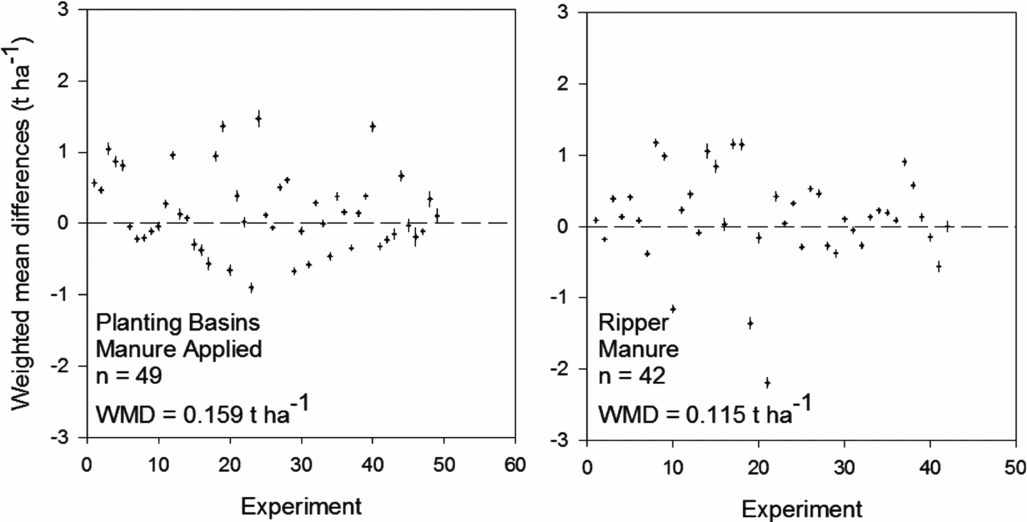
CA responded positively to the application of manure, as shown in Figure 7. When manure was not applied, the WMD of Basins was 0.043 t ha−1, which was not significant. With the application of manure, the WMD of Basins was 0.159 t ha−1 and was significant (p < 0.05). This was in contrast to a weaker response for the Ripper which was not significant and had a WMD of 0.115 t ha−1 (Figure 7). With manure, 47% of Basin experiments responded negatively (range −0.002 to −0.899 t ha−1) and 53% responded positively (0.02–1.471 t ha−1).
Weighted mean differences in maize grain yield between CA and CONV with manure applied, planting basins left and ripper right.
The application of mulch to both Basins and Ripper had no significant impact on the overall crop performance (Table 2). Despite this lack of significance, it is worth noting that the application of mulch to Basins depressed the overall WMD to 0.087 t ha−1, compared with 0.156 t ha−1 for plots that were not mulched, a decrease of 44%, as shown in Table 2. Similar trends were observed for the Ripper with a WMD of 0.191 t ha−1 for plots that were not mulched, compared with 0.022 t ha−1 for mulched plots, a decrease of 88%. For Basins + zero mulch, 42% of the observed experiments had a negative effect (−0.002 to −0.46 t ha−1) and 58% had a positive effect (0.077–0.944 t ha−1). When mulch was applied to the Basins, 50% of the experiments had a negative effect (−0.04 to −0.899 t ha−1) and the positive range was 0.02–1.359 t ha−1.
DISCUSSION
Planting method
In a majority of cases, CA performed better than CONV (Table 2). However, it was noted that in the 27 scenarios analysed, the proportion of experiments in which the effect size of CA was negative ranged between 26 and 50%. In 12 of the 27 studied scenarios, CA had a negative effect in >40% of the experiments. These findings show that while our study illustrated that CA generally performs better, the chances of a negative effect are still considerable and as such CA alone does not adequately address the production challenges in the smallholder farming systems of the semi-arid tropics. This observation supports concerns raised by other authors that have undertaken reviews of CA interventions in the smallholder sector, see for example Gowing and Palmer (Reference Gowing and Palmer2008) and Giller et al., (Reference Giller, Witter, Corbeels and Tittonell2009).
The experiments used in our study had been under CA from 1 to 6 years. This phase is normally a transition period in soil fertility dynamics under CA (Giller et al., Reference Giller, Witter, Corbeels and Tittonell2009). Many authors found that in many cases yields under CA begin to improve relative to CONV after more than 10 years because of improvements in some soil fertility parameters (Giller et al., Reference Giller, Witter, Corbeels and Tittonell2009). It is likely that in the majority of cases observed, the effect of the Ripper was non-significant because soils were still under transition from CONV to CA, and available soil fertility amendments were spread along the length of the rip line, compared with direct placement in the planting basins.
For Basins the effects may be more apparent in the initial phases of CA implementation because of early-season water harvesting, the facilitation of early planting (especially in the smallholder farming systems) and the concentration of soil fertility amendments, or some combination (Mupangwa, Reference Mupangwa2009; Nyengerai, Reference Nyengerai2010) further influenced by field and soil type (Ncube, et al., Reference Ncube, Twomlow, Dimes, van Wijk and Giller2009; Zingore et al., Reference Zingore, Murwira, Delve and Giller2007). In West Africa, where the ‘Zai pit’ is practised, quantities of the available soil fertility amendment influence the number of pits prepared (L. Harrington, personal communication), as there is no yield response to an unfertilised pit (Fatondji et al., Reference Fatondji, Martius, Bielders, Vlek, Bationo and Gerard2006). With Basins, smallholder farmers in Zimbabwe have been found to plant up to three weeks earlier than under CONV (Mashingaidze et al., Reference Mashingaidze, Madakadze and Twomlow2012). This is a condition that normally favours good establishment of the main cereal crops because when using Basins, farmers do not have to wait for the first rains to soften the soil before they can plough and hence the early planting (Mazvimavi and Twomlow, Reference Mazvimavi and Twomlow2009). Farmers who plant early tend to achieve higher yields in Zimbabwe due to more conducive growth conditions at the start of the rainy season (Twomlow et al., Reference Twomlow, Steyn and Du Preez2006, Reference Ncube, Twomlow, Dimes, van Wijk and Giller2009).
Concerning trial location (on-station vs on-farm), there was a higher WMD in trials that were conducted on-farm. In this case, the effect of CA could have been greater on-farm because of the low fertility conditions, which trigger a higher response to simple technologies compared with the response in fertile soils (Vanlauwe and Zingore, Reference Vanlauwe and Zingore2011). The greater response on-farm could have also been because planting basins facilitate earlier planting and concentrate available soil fertility amendments, which when combined normally lead to better crop yields (Mashingaidze et al., Reference Mashingaidze, Madakadze and Twomlow2012).
Soil type
In this study, the performance of CA was better on sandy soils than on clay soils (Figure 3). In sandy soils, Basins probably performed better largely because of the combination of better drainage than in clay soils where temporary water logging reduces crop growth (Rusinamhodzi et al., Reference Rusinamhodzi, Corbeels, van Wijk, Rufino, Nyamangara and Giller2011) and the initial low fertility of the soils. In semi-arid areas, rainfall intensities can be as high as 40 mm h−1 (FAO, 1991). Such intensities can cause localised water logging and the effects are profound in heavy clays where internal drainage is relatively poor. In the semi-arid areas of Zimbabwe, the effect of water logging has been found to be pronounced under the planting basin tillage system, where water has a tendency to stagnate in the plots after heavy thunderstorms during the early part of the season (Mupangwa, Reference Mupangwa2009; Nyengerai, Reference Nyengerai2010). Pessarakli (Reference Pessarakli1999) reported that two to three days of water logging in maize plants can negatively affect crop yields. Mason et al. (Reference Mason, Pritchard and Small1987) reported that exposing young maize plants to 24 hours of water-logged conditions (this treatment being imposed twice) resulted in a yield reduction of 37.6% compared with a crop that was never waterlogged. The reduction in crop yields on poorly drained soils under CA was also reported by Griffith et al. (Reference Griffith, Kladivko, Mannering, West and Parsons1988).
For the Ripper system, performance was probably higher under sandy soils because of the improved soil seed contact. The ripper tillage system has a tendency to produce small clods along the rip line on clay soil and this can negatively affect crop establishment. The effect of aggregate size on crop establishment has been studied by Braunack (Reference Braunack1995). The author compared maize establishment under different aggregate sizes and found that where the aggregate sizes where <1, 1–2, 2–5 and 5–15 mm, maize emergence was 45, 61, 53 and 28%. This indicated the existence of an optimum aggregate size distribution for crop establishment.
Rainfall amount and distribution
There was a higher WMD under CA for the lower rainfall range and this was notably so when Basins were used. This observation was likely to be a result of better water availability under CA because of water harvesting in the Basins, particularly at the beginning of the season (Mupangwa, Reference Mupangwa2009), a condition that enhances crop establishment. When the rainfall pattern was well distributed, the Basins had a higher WMD (the highest of all differences observed) than when it was poorly distributed, showing that basins do not necessarily address the problems associated with poorly distributed rainfall. In fact, a wetter than normal start to the season in southern Zimbabwe is accompanied by a significant increase in the density of grass weeds both on and off station (Mashingaidze et al., Reference Mashingaidze, Madakadze and Twomlow2012).
In the semi-arid areas of southern Africa, it is known that rainfall distribution, rather than the lack of it, is the major challenge to crop production (Mupangwa et al., Reference Mupangwa, Twomlow and Walker2008; Rockström et al., Reference Rockström, Kaumbutho, Mwalley, Nzabi, Temesgen, Mawenya, Barron, Mutua and Damgaard-Larsen2009). It is estimated that three out of every five years, the semi-arid areas of Zimbabwe are affected by mid-season droughts, which last for about three weeks (Motsi et al., Reference Motsi, Chuma and Mukamuri2004) and can have serious impacts on household food security (Ncube et al., Reference Ncube, Twomlow, Dimes, van Wijk and Giller2009). Our study showed that CA alone is not an adequate technology to address the effects of poor rainfall distribution as it performs better with good rainfall distribution patterns, and there is need to use it in conjunction with other drought mitigation technologies.
Nitrogen, manure and mulch application
The analysis illustrated the importance of using some form of soil fertility amendment, particularly N fertiliser in crop production, even under semi-arid conditions. It has also illustrated the importance of manure in soil fertility management. In their meta-analysis, Rusinamhodzi et al. (Reference Rusinamhodzi, Corbeels, van Wijk, Rufino, Nyamangara and Giller2011) reported that the N application rates of <100 kg ha−1 have fewer advantages of CA than application rates >100 kg N ha−1 under high potential conditions. Ncube et al. (Reference Ncube, Dimes, Twomlow, Mupangwa and Giller2007) found that in the semi-arid regions of Zimbabwe, maize yields due to manure applications at 3 t ha−1 were 1.96 t ha−1 compared with 1.2 t ha−1 from plots without manure. Responses that were further enhanced when small quantities of N fertilizer were applied as a top dressing.
These findings underpin the fact that soil fertility is an important limiting factor in maize production in the smallholder farming systems of southern Africa (Bationo et al., Reference Bationo, Hartenmink, Lungu, Naimi, Okoth, Smaling and Thiombiano2006; Twomlow et al., Reference Twomlow, Rohrbach, Dimes, Mupangwa, Ncube, Hove, Moyo, Mashingaidze and Maphosa2010). This study illustrates that for CA to be effective, adequate plant nutrients must be applied to the soil and in relation to the yield potential of the target area, which agrees with the observation made by Fatondji et al. (Reference Fatondji, Martius, Bielders, Vlek, Bationo and Gerard2006) in West Africa. Our study also illustrates that, although mulch is seen as a key component of the CA package currently being promoted, in the low input system of southern Zimbabwe, its application depresses yield and this is likely to be a result of the high C-to-N ratio of maize stover (Cheshire et al., Reference Cheshire, Bedrock, Williams, Chapman, Solntseva and Thomsen1999). Although the residue is spread on the soil surface, micro-faunal activity incorporates it into the soil and immobilises the available N. Consequently, it might be hypothesised that a higher N input under CA may be required, compared with CONV, because of N immobilisation effects of the cereal stover. Unfortunately, there is no published evidence from Africa to prove or disprove this hypothesis at present.
Smallholder farmers typically apply low levels of mineral fertiliser and very little if any manure (Ncube et al., Reference Ncube, Dimes, Twomlow, Mupangwa and Giller2007), often concentrated on the field closest to the homestead (Ncube et al., Reference Ncube, Twomlow, Dimes, van Wijk and Giller2009; Zingore et al., Reference Zingore, Murwira, Delve and Giller2007). The average rate of nutrient application in African smallholder agriculture has been estimated to range between 7 and 10 kg ha−1 of N, P and K (Bationo et al., Reference Bationo, Hartenmink, Lungu, Naimi, Okoth, Smaling and Thiombiano2006; Kumwenda et al., Reference Kumwenda, Waddington, Snapp, Jones and Blackie1996). These application levels are approximately one-third of the amount that is taken up by one tonne of maize (Hussaini et al., Reference Hussaini, Ogunlela, Ramalan and Falaki2008). Therefore, there is need to facilitate the improved use of soil fertility amendments, especially for N input, in these farming systems to boost yield beyond the one tonne per hectare limit.
CONCLUSIONS AND RECOMMENDATIONS
The hypothesis that CA improves maize grain yield compared with CONV was accepted for planting basins CA, and therefore planting basin CA is a preferable practice given its environmental benefits. However, the hypothesis that CA stabilises maize grain yield under conditions of poor rainfall distribution/mid-season droughts was rejected; therefore, it should be implemented in combination with other drought mitigation technologies such as crop diversification and the use of drought-tolerant varieties. The hypothesis that yield performance under CA is affected by various agronomic conditions was accepted. The performance of CA under semi-arid conditions is enhanced by the addition of small amounts of mineral N fertiliser and cattle manure but is depressed by surface mulching with high C-to-N crop residues. CA Basins should be recommended for soils, such as sandy soils, that have good drainage.