Introduction
Afterload management, including but not limited to blood pressure management, is often desired after paediatric cardiac surgery. Thus, nicardipine and nitroprusside are frequently used after paediatric cardiac surgery. Specifically in the neonatal population, there are some concerns surrounding the use of nicardipine, as it is a calcium channel blocker, and the neonatal myocardium has been demonstrated to be more sensitive to calcium.
Due to this presumed sensitivity to calcium, many believe that a calcium channel blocker could lead to cardiac dysfunction in the neonate and even infant population. There is a growing body of evidence, however, that nicardipine may be used in the neonatal and infant populations without negative effect.Reference Liviskie, DeAvilla, Zeller, Najaf and McPherson1–Reference Nakagawa, Sartori, Morris and Schneider5 Additionally, nicardipine may offer similar blood pressure reduction but with lower financial cost.Reference Lushaj, Hermsen and Nelson2,Reference Wong, Mruk, Grimaldi, Patel, Mirea and Engelhardt3 There are limited published studies regarding afterload or systemic vascular resistance in the neonatal population. What does exist generally comes from the paediatric cardiac surgery experience and demonstrates that lower afterload and lower systemic vascular resistance are associated with improved outcomes.Reference Loomba, Dyamenahalli and Savorgnan6–Reference Hoffman, Tweddell and Ghanayem11
This study had a primary aim to characterise the association between nicardipine and systolic blood pressure in neonates and infants after cardiac surgery. Secondary aims included characterisation of the association of nicardipine and oxygen delivery.
Methods
Study design
This study protocol was approved by the institutional review board at Advocate Children’s Hospital. It is in accordance with the Helsinki Declaration. This study was a single-centre, retrospective, descriptive study primarily aimed at characterising the association between nicardipine and systolic blood pressure. Secondary aims were to characterise the association between nicardipine and ionised calcium and renal oxygen extraction.
Variables of interest
The variables of interest collected were as follows: heart rate, mean arterial blood pressure, arterial saturation by pulse oximetry, cerebral near infrared spectroscopy, renal near-infrared spectroscopy, serum lactate, serum ionised calcium, vasoactive infusion score, and nicardipine dose. The presence or absence of a functionally univentricular heart was also collected. These were defined as those with parallel circulation or Glenn circulation. Parallel circulation was defined as any circulation in which the saturation of blood going to the pulmonary and systemic circulations was equal.
Two-site near-infrared spectroscopy values were collected. A cerebral and renal value were collected. Near-infrared spectroscopy values were obtained using the Casmed Fore-Sight Elite tissue oximeter (CAS Medical Systems, INC., Branford, CT, USA). These were used to indirectly trend the underlying venous saturation.Reference Law, Benscoter and Borasino12,Reference Loomba, Rausa and Sheikholeslami13
Heart rate, mean arterial blood pressure, arterial saturation by pulse oximetry, cerebral near-infrared spectroscopy, and renal near-infrared spectroscopy were collected from the Etiometry platform (Etiometry Inc., Boston, MA). Heart rate was collected in beats per minute, mean arterial blood pressure in mmHg, arterial saturation by pulse oximetry in %, cerebral near-infrared spectroscopy in %, and renal near-infrared spectroscopy in %. This is a streaming data capture platform that collects haemodynamic data from various clinical monitors with high temporal resolution (every 5 s). Haemodynamic data captured from Etiometry are stored for retrieval for future use. All high-fidelity data was smoothed to 5-minute rolling averages to help account for outliers.
Serum lactate and serum ionised calcium were collected from the electronic health record system. Serum lactate was collected in mmol/L, and serum ionised calcium was collected in mmol/L.
The nicardipine dose was captured as mcg/kg/min.
Vasoactive inotrope score was calculated as per previously described. Cumulative nicardipine dose at each timepoint was also calculated (mcg/kg). Cerebral and renal oxygen extraction was calculated as ((arterial saturation by pulse oximetry—near-infrared spectroscopy)/near-infrared spectroscopy).
Baseline data was defined as the data from the 20 minutes preceding initiation of nicardipine. If nicardipine was stopped before the time period of interest was complete, the remainder of the data after nicardipine was discontinued were not included for further analyses.
Patient selection
Patients under 12 months of age who were cared for in the paediatric cardiac ICU after cardiac surgery from September 1, 2022, to January 1, 2024. Cardiac surgery included any primary surgical intervention occurring in an operating room that required a thoracotomy or sternotomy. The beginning of this time period coincides with when Etiometry was first implemented at the institution. Patients who were not started on a nicardipine infusion while in the cardiac ICU during the postoperative period were excluded from this study. Patients who had a nicardipine infusion started in the operating room were excluded. Patients who didn’t remain on a nicardipine infusion for at least an hour were also excluded. Patients were only included if they had blood pressure data available from an arterial line.
Clinical practice
In the institution where the study was conducted, nicardipine is often used as first-line treatment when additional afterload reduction is required. Nitroprusside is generally added in addition to this. As such, the study was designed without a comparison to nitroprusside, as there would have been limited patients for comparison. There has been increased use of nicardipine in the unit as the initial agent in infants.
Statistical analyses
Absolute counts and percentages of descriptive variables were tabulated. Mean and standard deviation of continuous variables were calculated. Analyses of variance were calculated for heart rate, systolic blood pressure, diastolic blood pressure, arterial saturation by pulse oximetry, cerebral oxygen extraction, renal oxygen extraction, ionised calcium, lactate, and nicardipine dose.
Next, a time series regression was conducted to model systolic blood pressure with ionised calcium, vasoactive inotrope score, and cumulative nicardipine dose as the independent variables. The regression model was fit using ordinary least squares regression. It is important to keep in mind that in the setting of a time series regression, the data is structured such that each time point for each patient is essentially a separate data point. This means that the sample size for such an analysis is the number of total data points. Additionally, this approach with time series regression allows for quantifying the effect of time as well.
All statistical analyses were done using the R statistical package. A p-value of less than 0.05 was considered statistically significant. Any use of the words “significant” and “significantly” in this manuscript will refer to statistical significance unless otherwise explicitly stated.
Results
Cohort characteristics
A total of 37 patients were included in the final analyses. Each patient had data collected at 5 data points for a total of 185 time points.
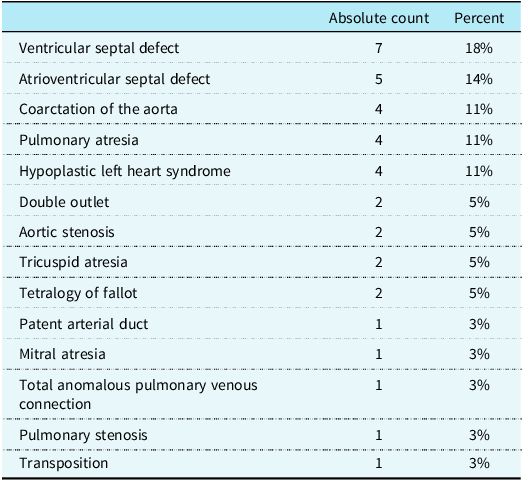
Of these patients, the mean age was 3 months. Of the 37 patients, 8 (22%) were neonates. Of the 37 patients, 12 (32%) were functionally univentricular. The principle cardiac diagnoses are outlined in Table 1.
Primary cardiac diagnoses of patients in the cohort

Univariable analyses, analyses of variance
Nicardipine infusion dose in mcg/kg/min significantly changed over the study period (p < 0.001). Systolic blood pressure significantly changed over the study period with a decrease of approximately 14 mmHg after 8 hours of a nicardipine infusion (p = 0.017). The largest change in systolic blood pressure tends to happen in the first hour of the infusion (Figure 1).
Graph of systolic blood pressure over time.

Heart rate, diastolic blood pressure, cerebral oxygen extraction, renal oxygen extraction, ionised calcium, lactate, and vasoactive inotrope score did not significantly change over the study period (Figures 2–5).
Graph of heart rate over time.

Graph of cerebral oxygen extraction over time.

Graph of renal oxygen extraction over time.

Graph of ionised calcium over time.

Infusion dose in mcg/kg/min as well as cumulative nicardipine dose over time in mcg/kg are demonstrated in Figures 6 and 7, respectively.
Graph of nicardipine infusion dose.

Graph of cumulative nicardipine dose.

Time series regression
A time series regression to model systolic blood pressure resulted in a model that was statistically significant. Ionised calcium, vasoactive inotrope score, cumulative nicardipine dose, and time were all significantly associated with systolic blood pressure. The beta coefficients were 4.02 for ionised calcium, -0.47 for vasoactive inotrope score, -0.0147 for cumulative nicardipine dose, and -1.55 for time. Put in a clinical context, this means that an increase in the ionised calcium by 1 mmol/L was associated with an increase in systolic blood pressure by 4.02 mmHg, an increase in the vasoactive inotrope score by 1 was associated with a decrease in systolic blood pressure by 0.47 mmHg, an increase in the cumulative nicardipine dose by 1 mcg/kg was associated with a decrease in blood pressure by -0.01 mmHg, and every hour of a nicardipine infusion was associated with a decrease in blood pressure by 1.55 mmHg. This demonstrates that with respect to nicardipine and systolic blood pressure, both cumulative dose and duration are associated with effect, independently.
Discussion
Blood pressure control may be of clinical importance in children after cardiac surgery, as blood pressure reduction may contribute to reduction of systemic vascular resistance. That is not to imply that mean arterial blood pressure and systemic vascular resistance are interchangeable but simply to note that mean arterial blood pressure is one of the three major components of systemic vascular resistance. The current study demonstrates that a nicardipine infusion is associated with decreased systolic blood pressure in infants after cardiac surgery without being associated with changes in cerebral or somatic oxygen delivery.
These data are important, as they reflect that systolic blood pressure can be decreased with nicardipine without decreasing systemic oxygen delivery to either the cerebral or somatic beds. The maintenance of cerebral and renal oxygen extraction implies that there wasn’t a significant difference in cardiac function (contractility) during the use of a nicardipine infusion. Or even if there was a slight difference, it did not impact systemic oxygen delivery. As the organs need oxygen, as long as contractility is ample to support adequate oxygen delivery, that is what is needed. Oxygen delivery is the product of oxygen content and cardiac output. Cardiac output is further modulated by heart rate, preload, afterload, and contractility.Reference Loomba14,Reference Loomba and Flores15 Heart rate did not significantly change; preload is difficult to assess, but no significant change in central venous pressure may indicate minimal change in preload. Afterload likely decreased as a component of its systemic vascular resistance, and a reduction in mean arterial pressure with a similar central venous pressure should lead to a reduction in systemic vascular resistance without a significant change in systemic cardiac output. And no significant decrease in systemic oxygen delivery in the setting of the just-discussed findings implies that there wasn’t a significant change in contractility. It is possible that contractility decreased a little, but the reduction in afterload was of enough magnitude to offset this and thus allow for maintenance of cerebral and renal oxygen delivery. Regardless, it appears that there was not a significant decrease in ventricular contractility. This is the result of a series of assumptions, though, but going through the logic is important as it highlights important physiologic concepts. Even if contractility decreased a little, it was not at the expense of oxygen delivery. To note, however, contractility wasn’t directly assessed in this study, and this is speculation.
The direct finding that systemic oxygen delivery to both the cerebral and renal beds was maintained and the indirect finding that cardiac contractility could not be significantly changed are of particular note, as some avoid the use of nicardipine in neonates and infants. This avoidance occurs as there is concern that neonates and infants may have more sensitivity to calcium and, thus, may experience a decrease in cardiac function with the use of calcium channel blockers such as nicardipine. While objective data from studies such as the current study are still scarce regarding nicardipine’s effect on neonatal myocardium, physiology also helps lend insight into the concern of nicardipine and neonatal cardiac function. Anecdotally, the concern is that the neonatal myocardium is particularly sensitive to calcium and that nicardipine, by virtue of being a calcium channel blocker, may limit the amount of calcium uptake by the myocardium to be used for contraction and lead to decreased contractility.
It is first important to start off by addressing the neonatal sensitivity to calcium.Reference Seguchi, Harding and Jarmakani16 At the heart of this notion is the observation that neonates have underdeveloped sarcoplasmic reticulum.Reference Seguchi, Harding and Jarmakani16 The sarcoplasmic reticulum is responsible for storing and releasing calcium in the myocardium, and when not fully developed, it is unable to act as the store for calcium, and thus, there is a greater dependence of the myocardium on extracellular calcium. This study demonstrates that there is no significant change in serum ionised calcium associated with nicardipine infusion and that there was no hypocalcaemia (ionised calcium less than 1.0) at any point in time at the cohort level. Thus, the underdeveloped sarcoplasmic reticulum and subsequent increased dependence on extracellular calcium should not be of particular issue with the use of nicardipine. Additionally, there are differences in the expression of calcium-handling proteins in the neonate which may lead to the requirement of higher calcium for contraction. There’s no reason to believe nicardipine impacts this in any way, and the greater need for calcium is still respected by nicardipine, which is not associated with decreased extracellular calcium levels. Thus, nicardipine does not seem to be associated with any change that should impact the extracellular amount of calcium available to myocardium that may be more dependent on it to maintain contractility.
It is also then important to actually explore whether or not nicardipine even directly acts on the myocardium. The predominant type of calcium channels in both vascular smooth muscle and myocardium are Cav1.2 L-type channels. In the vascular smooth muscle, these channels are required for 70% to 90% of the calcium entry required for contraction of the vascular smooth muscle. This is why blocking such receptors with calcium channel blockers can be helpful in preventing vascular smooth muscle contraction and subsequent vasoconstriction. With respect to the myocardium, Cav1.2 L-type channels are only estimated to be responsible for 10% to 20% of total calcium influx during myocardial contraction.Reference Striessnig17 The remainder comes from the sarcoplasmic reticulum and other calcium channels present in the myocardium. The myocardium also has a more complex cascade that maintains calcium homeostasis involving cyclic adenosine monophosphate and protein kinase A. In addition to greater redundancy of calcium modulating mechanisms and lower dependence of myocardium on Cav1.2 L-type channels, the myocardial Cav1.2 L-type channels are simply less likely to be affected by nicardipine. Nicardipine can only bind to inactive Cav1.2 L-type channels.Reference Westhoff and Dixon18,Reference Morales, Hermosilla and Varela19 Due to frequent contraction of myocardium compared to vascular smooth muscle, myocardial cells spend less time in the inactive state, and thus the Cav1.2 L-type channels are less likely to be blocked by nicardipine. Thus, the notion that neonatal myocardium is particularly sensitive to calcium and thus nicardipine may impact cardiac function in neonates is an overstated misapplication of actual pharmacokinetic and physiologic phenomena.
In reality, pharmacokinetic and physiologic considerations support the clinical findings of the current study that nicardipine can reduce blood pressure in neonates and infants without affecting cardiac function.Reference Liviskie, DeAvilla, Zeller, Najaf and McPherson1–Reference Wong, Mruk, Grimaldi, Patel, Mirea and Engelhardt3,Reference Nakagawa, Sartori, Morris and Schneider5 Nicardipine has been demonstrated to be equally effective at reducing blood pressure in neonates and infants while also being cheaper and having a reduced adverse effect profile when compared to nitroprusside. Provider- and unit-based use of nitroprusside for neonates and infants for concerns of decreased cardiac function are not being supported by published data, although such data are still scarce.
The time series regression was also able to quantify the effect of time and cumulative nicardipine dose. Previous studies have demonstrated a largely dose-dependent effect of nicardipine, while the current data demonstrated a large component of the effect was also time meditated, with increased duration of nicardipine infusion being associated with greater reduction in systolic blood pressure. Additionally, the regression demonstrated that while the model was significant, the included independent variables of cumulative nicardipine dose, vasoactive inotrope score, ionised calcium, and time accounted for approximately 21% of the variance in systolic blood pressure. This does not mean the model isn’t insightful and that the described associations don’t hold truth but simply that other factors affecting blood pressure were not captured.
While these are helpful data and add to a small but growing body of data, they are not without their limitations. This is a single-centre study, which means that centre-specific practice patterns may reduce the generalisability of findings. It is less likely that there are marked differences in practice, but this cannot be eliminated as a possibility. The retrospective nature of this study also only allows for association and not causation to be assessed. There was also no direct assessment of cardiac function by echocardiography. Despite these limitations, these data are still valuable.
Data from the current study and the few other studies investigating nicardipine in neonates and infants highlight that there may be equipoise to perform a multicentre study randomising neonates requiring afterload reduction after cardiac surgery to either nicardipine or nitroprusside. Such a study would be able to characterise the haemodynamic effects of the agents as well as compare the effects of both to one another. Such a study could systematically capture ionised calcium levels and calcium administration to compare these between the two groups as well. It would also be of importance to capture the local costs of each therapy as well to determine whether or not one or another has a cost advantage. Direct assessment of ventricular contractility with echocardiography would also be helpful. Such a study could prove beneficial to the care of neonates undergoing cardiac surgery.
Conclusion
Through the utilisation of high-fidelity physiologic data of neonates and infants after cardiac surgery, nicardipine was associated with decreased systolic blood pressure. Furthermore, indirect measures of cardiac function are not impacted. Additionally, concerns around a negative effect on calcium levels with use of this calcium channel blocker were not substantiated. This important afterload reducer should not be discounted in this patient population. Future prospective multicentre studies could help provide additional insight and validation.