Introduction
Eggs are an important food with high nutrient quality and content for humans. Due to their nutrient profile, variety and low costs as food, eggs are one of the most popular foods across the world. Animal products contribute to total lipids, cholesterol and saturated fatty acid intakes in human diets. Eggs have been controversial foods for health agencies and nutritional experts, because of cholesterol (about 200-300 mg/100 g) and saturated fat (about 3 g/100 g) levels (Li et al., Reference LI, ZHOU, ZHOU and LI2013). For these reasons, the public had previously been warned against increased egg consumption due to cholesterol intake and the potential association with cardiovascular diseases. However, subsequent research confirms that, in comparison with saturated and total fatty acids, the specific type of dietary cholesterol from eggs has limited impact on blood levels and cardiovascular disorders, although the increasing, inappropriate phobia of high cholesterol levels has decreased general consumption (Djousse and Gaziano, Reference DJOUSSE and GAZIANO2008; Eilat-Adar et al., Reference EILAT-ADAR, SINAI, YOSEFY and HENKIN2013). Thus, it would be of interest to develop products derived from or nutrients within eggs through some nutritional manipulations that help to maintain consumer health. Nowadays, retail markets for functional eggs are already present, mainly those enriched with omega-3 PUFA (poly unsaturated fatty acids) or with low content of cholesterol. Generally, these eggs are produced by modifications in layer diets, whereas much less attention has been paid to the development of designer eggs by means of technological methods (Fraeye et al., Reference FRAEYE, BRUNEEL, LEMAHIEU, BUYSE, MUYLAERT and FOUBERT2012; Elkin et al., Reference ELKIN, YING and HARVATINE2015).
Designer eggs can provides more than 600 mg omega-3 PUFA and 6 mg tocopherol. There are further beneficial impacts for egg consumers due to its balanced ratios of omega-6/omega-3 PUFA (1:1) and PUFA/SAFA (1:1). Therefore, the functional egg may give an alternative choice of food product to egg consumers around the world (Raghuveer and Tandon, Reference RAGHUVEER and TANDON2009; Miranda et al., Reference MIRANDA, ANTON, REDONDO-VALBUENA, ROCA-SAAVEDRA, RODRIGUEZ, LAMAS, FRANCO and CEPEDA2015). Designer eggs are available in global markets with different names according to geographical area like the Columbus eggs, Eggs Plus, docosahexaenoic acid (DHA) enriched eggs, omega 3 eggs, Bio-omega 3 eggs, England's best, Greek eggs, Baby eggs, Achyrona Ωmega eggs and omega-3 herbal eggs, sometimes tied in to rearing methods, e.g. organic production. (Surai and Sparks, Reference SURAI and SPARKS2001). The egg industry has responded well in seeking new techniques to improve the negative perceptions of consumers about problems of eggs and their products, particularly the cholesterol content.
The following review focuses on the concept, production and nutritional values of designer eggs. It describes the significance of designer eggs and their health benefits for human consumers. The information provided is relevant for nutritionists, researchers, scientists and veterinarians and, most importantly, for consumers who are the main stakeholders.
Production of designer eggs
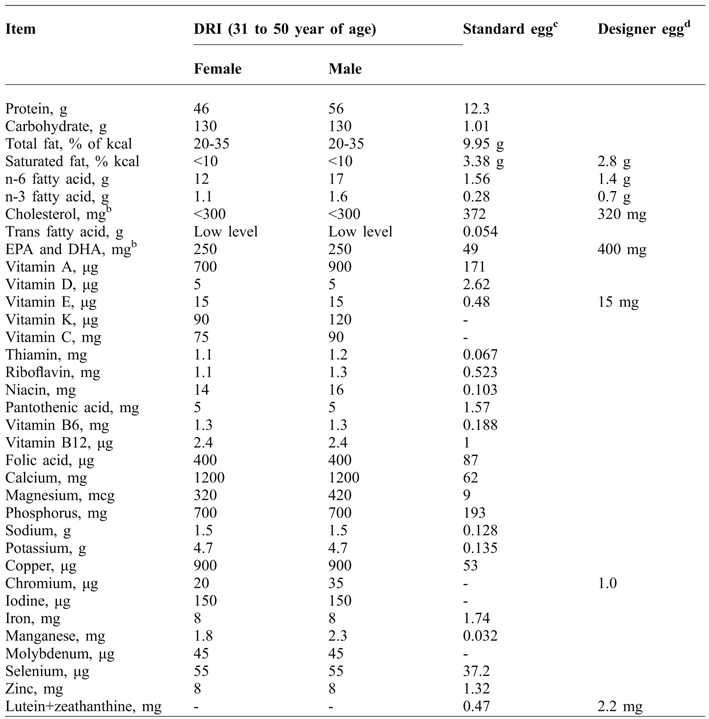
Proteins from eggs are highly digestible and contain the important essential amino acids in a profile that is similar to the ideal balance of amino acids needed by consumers, alongside various minerals and vitamins. However, the nutrients present in eggs are not optimised compared with the recommended intake in humans for improved health status (Table 1). In comparison with the average egg, cholesterol, n-3 fatty acid and lutein plus zeaxanthin can be improved by 13.97, 150, and 368%, respectively, while saturated fat and n-6 fatty acids were decreased by 17.15 and 10.25%, respectively in designer egg via various dietary interventions (Otten et al., Reference OTTEN, HELLWIG and MEYERS2006). A study by Song and Kerver (Reference SONG and KERVER2000) showed that eggs provided about 20-30% of recommended daily intake (RDI) of vitamins E, A and B12 and 10-20% of RDI of total fatty acids, saturated and polyunsaturated fatty acids as well as folate. In this respect, an egg can deliver 10% protein, 6% vitamin A, 6% vitamin D, 3% vitamin E, 15% vitamin B2, 4% vitamin B6, 8% vitamin B12, 6% folic acid, 2% thiamine, 4% zinc and 4% iron of the RDI for humans. A large number of these nutrients in eggs can be improved by modifying dietary compositions, e.g. vitamin E, omega 3 fatty acids, selenium and carotenoids (Surai and Sparks, Reference SURAI and SPARKS2001).
Dietary reference intake (DRIa; per day) of different nutrients and contents of nutrients (per 100 g) in standard and designer eggs.

aOtten et al. (Reference OTTEN, HELLWIG and MEYERS2006)
bAdapted from US Department of Health and Human Services (2015)
cAdapted from American Egg Board (2017)
dAdapted from Sahoo and Jena (Reference SAHOO and JENA2014)
The composition and nutrient density of poultry diets can affect composition and nutritional quality of eggs and their products (Alagawany and Mahrose, Reference ALAGAWANY and MAHROSE2014; Alagawany et al., Reference ALAGAWANY, ABD EL-HACK, FARAG, TIWARI, SACHAN, KARTHIK and DHAMA2016). For example, if an animal is fed on a diet that is deficient in certain nutrients, the products from those animals will also contain sub-normal concentrations of these nutrients (Alagawany et al., Reference ALAGAWANY, EL-HINDAWY, ALI and SOLIMAN2011; Reference ALAGAWANY, ABD EL-HACK, LAUDADIO and TUFARELLI2014). The resistance to ailments of a well-nourished animal may decrease the presence of potentially hazardous pathogens in their products that may adversely affect public health. So, improved animal health by such nutritional manipulations reduces the need for administration of therapeutic drugs, which may minimise the chances of drug residues. Furthermore, using a well-balanced ration in poultry enhances the performance, carcass and meat quality as well as food safety (Roberts et al., Reference ROBERTS, XIN, KERR, RUSSELL and BREGENDAH2007; Pesti, Reference PESTI2009; Alagawany et al., Reference ALAGAWANY, EL-HINDAWY, ATTIA, FARAG and ABD EL-HACK2015). The production of functional foods requires careful application of diet formulation in poultry, and the nutritive values of ingredients must be adequate to have an impact on public health and welfare as well as to ensure good quality poultry products. Nutritionists, researchers and food technologists have introduced low-fat foods, owing to general implications in lowering the risk of some ailments like stroke, cancer and cardiovascular diseases.
Consumers are increasingly aware nutrients that can have beneficial impacts on public health and disease prevention (Lock and Bauman, Reference LOCK and BAUMAN2004). The egg is not naturally rich in omega-3 PUFA, and nutritional manipulations of omega-3 PUFA in poultry rations are needed to result in enriched omega-3 PUFA eggs (Kassis et al., Reference KASSIS, GIGLIOTTI, BEAMER, TOU and JACZYNSKI2012). However, this trend is limited due to the physiology of poultry. An easiest technique to get designer egg is to produce eggs enriched in linolenic acid, a precursor of DHA that is considered to have a defensive impact versus heart diseases (Weggemans et al., Reference WEGGEMANS, ZOCK and KATAN2001). To achieve this, the poultry diets can be enriched by algae, linseed or chia seed oils, and as a result, the yolk is enriched with DHA and alpha-linolenic acid (ALA) (Koning and Mol, Reference KONING and MOL1989; Weber et al., Reference WEBER, GENTRY, KOHLHEPP and MCCROHAN1991). Using vitamin E in layer diets at 200 ppm has been found to show valuable antioxidant effects (Galobart et al., Reference GALOBART, BARROETA, BAUCELLS and GUARDIOLA2001). Ayerza and Coates (Reference AYERZA and COATES2001) pointed out that mixing flaxseed (2.5%) with chia seeds (11.5%) (Salvia hispanica, as a rich source of ALA) in layer diets successfully improved total ω-3 concentration by 590%, polyunsaturated (% of total fatty acids) by 59.03%, linoleic acid by 19.94% and linolenic acid by 14.64% in yolk without any undesirable impact on sensory traits. Inclusion of 5% flaxseed plus 9% chia seeds in layer diets improved DHA by 60.90% in egg yolk when compared to an unsupplemented control (Ayerza and Coates, Reference AYERZA and COATES2001). Fredriksson et al. (Reference FREDRIKSSON, ELWINGER and PICKOVA2006) confirmed that increased levels of ALA in hen diet determined higher concentration of DHA in yolk. Increasing dietary levels of flaxseed oil and milled flaxseed improved the concentration of eicosapentaenoic acid (EPA), ALA and DHA in yolk, and the fatty acid deposition from flaxseed oil was two times greater in comparison with milled flaxseed when fed at the same dietary levels (Ehr et al., Reference EHR, PERSIA and BOBECK2017).
Significance of designer eggs
Numerous studies have carried out on quality and chemical composition of eggs and their industrial uses and biological nutraceutical functions (Trindade-Neto et al., Reference TRINDADE-NETO, PACHECO, ALBUQUERQUE and SCHAMMASS2011; Alagawany, Reference ALAGAWANY2012; Mahima et al., 2012). Eggs (white and brown shell) are considered as valuable sources of nutrients. The concept of designer eggs has been introduced with the aim to improve the consumption of egg in the food market. Other than eggs of chickens; those from quails, ducks, geese and turkeys are present in the market for consumers.
A normal egg provides 70 kcal of energy in the form of proteins, carbohydrates, fatty acids, amino acids, fats, cholesterol and PUFAs as well as potassium, sodium and contributes to platelet inhibition, anti-ACEI and anti-ROS activities. Eggs contain anti-inflammation and anti-coagulation components, and contain anti-hypertensive peptides like ovokinin along with 12 important minerals and vitamins, which can help to protect organs such as the heart from many diseases (Miguel and Aleixandre, Reference MIGUEL and ALEIXANDRE2006; Cherian, Reference CHERIAN2009; Mine and Roy, Reference MINE and ROY2011). Eggs are a cheap source of high quality protein along with balanced ratio of vitamins (except vitamin C) and minerals but due to high content of cholesterol (200 mg/egg), the per capita consumption of eggs is low (Stadelman, Reference STADELMAN1999; Surai and Sparks, Reference SURAI and SPARKS2001). A reduction in consumption has a direct impact on poultry industry; hence attempts are being made to manipulate and improve the nutritive value of the eggs. Improvements of nutrients generate today's so-called ‘functional or designer eggs’, which have been used to achieve the different goals which are discussed below.
Lowering cholesterol
Although there are controversies as to whether cholesterol has adverse effect on health or if the intake of dietary cholesterol can increase blood cholesterol, consumers are concerned about the high cholesterol contents, which average 200 mg/egg in eggs (Surai and Sparks, Reference SURAI and SPARKS2001). Several studies have conducted in an attempt to minimise the harmful impacts of triglyceride and total cholesterol in eggs and poultry meat (Stadelman, Reference STADELMAN1999; Surai and Sparks, Reference SURAI and SPARKS2001; Eilat-Adar et al., Reference EILAT-ADAR, SINAI, YOSEFY and HENKIN2013). Dietary manipulations and usage of drugs or natural feed additives can help in lowering egg cholesterol, but have not been very successful as nutritional, pharmacological and genetic manipulations have generally resulted in maximum 10% reduction (Elkin, Reference ELKIN2006). However, use of PUFA in poultry diets significantly reduces cholesterol and total lipids content. A few studies suggest that egg cholesterol could be decreased by 25% using combinations of dietary strategies. Supplementation with the Gynura procumbens plant in laying hen diets decreased cholesterol by 12% in egg yolk (Lokhande et al., Reference LOKHANDE, INGALE, LEE, SEN, KHONG, CHAE and KWON2014). Laudadio et al. (Reference LAUDADIO, CECI, LASTELLA, INTRONA and TUFARELLI2014) reported that the contents of cholesterol in blood and egg yolk were lowered by 13.7 and 19.1%, respectively in layers receiving rations enriched with alfalfa meal (Medicago sativa) in comparison with an unsupplemented control diet. The effective role of alfalfa meal as a hypocholesterolemic factor in egg can be partially attributed to lipogenesis inhibition in the liver, as it is well known that using Medicago sativa is effective in decreasing re-absorption of biliary cholesterol in the intestine of birds, which regulates its whole-body content by decreasing the cholesterol level in the blood and yolk. Moreover, yolk cholesterol was lowered by feeding low-fibre alfalfa meal; although the hypocholesterolemic impact may be reversed to the presence of saponins in this meal (Mourao et al., Reference MOURAO, PONTE, PRATES, CENTENO, FERREIRA, SOARES and FONTES2006). Ahmad et al. (Reference AHMAD, YOUSAF, SABRI and KAMRAN2012) reported that egg cholesterol was decreased in birds supplemented with omega-3 fatty acids. Sprouted alfalfa and flax seed lowered cholesterol in eggs by about 9%, which has been suggested as a result of a synergy among several plant substances (phytoestrogens, sterols, fatty acids, chlorophyll, polyphenols, catechins) which affect cholesterol biosynthesis (Mattioli et al., Reference MATTIOLI, DAL BOSCO, MARTINO, RUGGERI, MARCONI, SILEONI, FALCINELLI, CASTELLINI and BENINCASA2016).
Sujatha and Narahari (Reference SUJATHA and NARAHARI2011) reported that supplementation with a combination of flax seed, spirulina and vitamin E (FSE), fish oil and selenium (FOSe), and FSE+FOSe reduced yolk cholesterol levels by 23.2%, 26.4% and 22.5%, respectively, which is higher than the values reported from other studies (Scheideler and Froning, Reference SCHEIDELER and FRONING1996; Mattioli et al., Reference MATTIOLI, DAL BOSCO, MARTINO, RUGGERI, MARCONI, SILEONI, FALCINELLI, CASTELLINI and BENINCASA2016). This greater cholesterol reduction has been attributed to the combined effects of omega-3 fatty acids and antioxidants (vitamin E, spirulina and organic Se) in diets. Shahid et al. (Reference SHAHID, CHAND, KHAN, SUHAIL and KHAN2015) reported that hemp seed decreased cholesterol concentration in eggs by 32% at a 25% level of supplementation, due to the presence of phytosterol that may lower the absorption of cholesterol from the intestine and inhibit cholesterol synthesis in liver.
Eggs enriched with minerals and vitamins
Dietary manipulation makes it is possible to improve the level of iodine, selenium, and chromium in eggs without affecting the important calcium and phosphorus level. Most minerals are found in in the shell, comprising large concentrations of calcium and phosphorus. Supplementation of chromium in quail rations at different doses have been shown to lower egg cholesterol (Sahin et al., Reference SAHIN, AKDEMIR, TUZCU, HAYIRLI, SMITH and SAHIN2010) and improve egg quality (Şahin et al., Reference ŞAHIN, KÜÇK, ŞAHIN and OZBEY2001). Surai (Reference SURAI2000a; Reference SURAI2000b) reported that supplementation with organic selenium could substantially improve the accumulation of selenium in the egg. In fact, the production of selenium-enriched eggs is very simple and can be achieved by inclusion of 0.4 mg/kg as Se yeast to produce an egg containing about 30 mg of selenium which is approximately 50% of RDI.
Other trials have shown that functional eggs, compared to standard eggs, can have 26 times more vitamin E, 16 times higher vitamin A, seven times more selenium and six times more DHA (Surai et al., Reference SURAI, YAROSHENKO, DVORSKA and SPARKS2003; Fisinin et al., Reference FISININ, PAPAZYAN and SURAI2009). They can boost human intake of natural anti-oxidants like folate, vitamin E, lutein, zinc, selenium, carotenoid, pigments, flavonoid compounds, phosvitin and lecithin to support the immune response.
Designer eggs can have increased contents of antioxidant vitamin E and A, which can have a protective impact against heart diseases (Pryor, Reference PRYOR2000). Lachance (Reference LACHANCE1996) pointed out that inclusion of designer eggs into the human diets by 12 to 16 eggs per month increased vitamin E consumption up to the level of 23 mg per day.
Improved fatty acid profile
Markets exist for designer eggs with lower ratios of saturated to unsaturated fatty acids. This ratio is commonly altered by using canola oil in the feed. Designer eggs offer balanced ratios of PUFA/SAFA (1:1) or omega-6/omega-3 PUFA (1:1). Omegas 3 PUFA are important nutritional factors that modulate the immune function and are important for developing nervous system. They lower blood platelet aggregation, incidence of thrombosis, blood pressure and atherosclerosis, in addition to their antitumor, anti-inflammatory and cardioprotective effects (Marshall et al., Reference MARSHALL, KUBENA, HINTON, HARGIS and VAN ELSWYK1994; Hamosh, Reference HAMOSH2008).
The egg contents of omega-3 fatty acids can be raised by supplementing the diets of laying hens with certain dietary supplements, for example, from groundnut oil, fish oil, safflower oil, linseed, fish meal or algae. Omega-3 fatty acids include EPA, docosapentaenoic acid (DPA), DHA and LNA, whereas arachidonic acid (AA) and linoleic acid (LA) are examples of omega-6 fatty acids. Omega-3 fatty acid intake through designer eggs for humans can protect against cardiovascular problems, such as heart attack, and can replace the fish product in the consumer´s diet (Horrocks and Yeo, Reference HORROCKS and YEO1999). Schreiner et al. (Reference SCHREINER, HULAN, RAZZAZI-FAZELI, BOHM and IBEN2004) and Ebeid et al. (Reference EBEID, EID, SALEH and ABD EL-HAMID2008) stated that the egg yolk contents of n-6 PUFA and n-3 PUFA showed a linear decrease and increase (P<0.05) respectively in hens compared to control. Meluzzi et al. (Reference MELUZZI, SIRRI, MANFREDA, TALLARICO and FRANCHINI2000) and Simopoulos (Reference SIMOPOULOS2000) reported that the key n-3 PUFA and n-6 PUFA are LNA and LA; respectively. LNA is metabolised inside the body to EPA, DHA and DPA, while LA is transformed into AA. Levels of EPA, LNA, DHA and DPA were higher in gg yolk from hens fed on linseed meal and fish oil as dietary supplements (Yalcin and Unal, Reference YALCIN and UNAL2010). Lawlor et al. (Reference LAWLOR, GAUDETTE, DICKSON and HOUSE2010) found that the egg yolk DHA was improved by 161.29% in hens fed diet with 6% microencapsulated fish oil compared to a control. Diets containing 3% to 4% fish oil can result in about 180 to 250 mg DHA/egg, but the efficiency of transfer was reduced with increasing the concentration of fish oil (Van Elswyk, Reference VAN ELSWYK1997). Similarly, LNA was increased in the egg yolk after feeding hens diets contained omega-3 FA dietary supplement Ahmad et al., Reference AHMAD, YOUSAF, SABRI and KAMRAN2012). Bovet et al. (Reference BOVET, FAEH, MADELEINE, VISWANATHAN and PACCAUD2007) reported that the egg yolk ALA and EPA were improved by 168 and 10%, respectively in hens fed diets supplemented with different fish oil concentrations.
Dietary inclusion of different n-3 PUFA doses from Isochrysis microalgae in laying hens linearly enhanced the n-3 long chain-PUFA concentration in yolk up to a dose of 1.20 g n-3 PUFA/kg feed. Higher doses resulted in a plateau of the amount of n-3 long chain-PUFA incorporation, reflecting a decreased efficiency of n-3 long chain-PUFA enrichment in the yolk (Lemahieu et al., Reference LEMAHIEU, BRUNEEL, TERMOTE-VERHALLE, MUYLAERT, BUYSE and FOUBERT2014). Sprouted alfalfa inclusion in hen diets increased EPA by 109%, DHA by 22% and LNA by 22% while, sprouted flax seed increased EPA by 64%, DHA by 91% and LNA by 55% (Mattioli et al., Reference MATTIOLI, DAL BOSCO, MARTINO, RUGGERI, MARCONI, SILEONI, FALCINELLI, CASTELLINI and BENINCASA2016).
Efficiency of transfer to yolk varies significantly depending upon n3-PFA sources. In a study using flaxseed, fish oil, microalgae and the commercial product DHA Gold (Lemahieu et al., Reference LEMAHIEU, BRUNEEL, RYCKEBOSCH, MUYLAERT, BUYSE and FOUBERT2015), the lowest enrichment efficiency (6%) was observed with flaxseed (an α-linolenic acid source). Greater PUFA transfer efficiencies were noted with addition of the n-3 long chain-PUFA sources. For n-3 long chain-PUFA sources (fish oil, microalgae and DHA Gold) differences in transfer efficiencies were observed (≈55%, ≈30% and ≈45%, respectively), mainly because of different bio-accessibility of the n-3 PUFA profiles.
Conjugated linoleic acids (CLA) have various health benefits such as anti-adipogenic, anti-inflammatory, anti-atherogenic and anti-carcinogenic properties. Feeding hens with enriched diet increased CLA contents in eggs in a dose dependent manner (Sirri et al., Reference SIRRI, TALLARICO, MELUZZI and FRANCHINI2003; Hur et al., Reference HUR, KANG, JEONG, YANG, HA, PARK and JOO2003). At more than 5% of dietary CLA supplementation, the concentrations in the yolk can reach a plateau (Hur et al., Reference HUR, KANG, JEONG, YANG, HA, PARK and JOO2003), however CLA supplementation increases saturated fatty acids, yolk moisture content and firmness and impaired the sensory quality of eggs. In addition, the proportions of linoleic acid, arachidonic acid, and DHA in egg yolk lipids were reduced when the dietary CLA increased (Qi et al., Reference QI, WU, ZHANG, YUE, XU, JI and QI2011). Interestingly, a recent study indicated that CLA content could be increased by feeding Lactobacillus reuteri (Herzallah, Reference HERZALLAH2013). Pomegranate seed oil (0.5 to 1.5% level) was used as a source of punicic acid and was found to increase CLA content from 0.07 (control) to 4.11% of fatty acid at 1.5% level after 12 weeks of feeding without affecting egg quality (Kostogrys et al., Reference KOSTOGRYS, FILIPIAK-FLORKIEWICZ, DEREŃ, DRAHUN, CZYŻYŃSKA-CICHOŃ, CIEŚLIK, SZYMCZYK and FRANCZYK-ŻARÓW2017).
Recently, it has been a target in human nutrition to reduce n6 to n3 fatty acid ratio (n6/n3) because this is more important for the fat and cholesterol metabolism in the body than absolute n-6 or n-3 PUFA concentrations (Wijendran and Hayes, Reference WIJENDRAN and HAYES2004; Mandal et al., Reference MANDAL, GHOSH and PATRA2014). High dietary intakes of n-6 PUFA have been proposed to be a main limiting factor in the conversion of C18:3n-3 to EPA and DHA. Standard eggs have high n6/n3 fatty acid ratio. Hempseed supplementation lowered n6/n3 ratio in eggs (Neijat et al., Reference NEIJAT, SUH, NEUFELD and HOUSE2016), and eggs from hens supplemented with different ratio of n6/n3 substantially increased DHA and EPA concentration in egg along with a decrease in n6/n3 fatty acid.
Antibodies and other products
Novel biotechnology facilitates the process of developing genetically modified chickens that could be used to produce eggs with benefits such as insulin for diabetes treatment and variable antibodies that could be used in treatment of microbial toxins and snake venoms (Thalley and Carroll, Reference THALLEY and CARROLL1990). Transgenic hens could be used to produce antibodies in their egg´s albumin. Egg yolk antibodies (EYA) are antigen specific to antibodies in the yolk which could be obtained by injecting hens subcutaneously or intramuscularly by a specific antibody resulting in production of IgY antibodies (Lee et al., Reference LEE, MINE and STEVENSON2000; Smith et al., Reference SMITH, KING and GODISKA2001). Eggs could be utilised as a source of immunogens that enhance the immune system of human beings, particularly children, against many diseases (Sun et al., Reference SUN, MO, JI and LIU2001). EYA could be used as antibacterial and antiviral agents in humans and animals and to treat enteric infections caused by E. coli, corona and rotaviruses in calves and pigs and against rabies (Mine and Kovacs-Nolan, Reference MINE and KOVACS-NOLAN2002). EYA could serve as antivenom against rattlesnake, king cobra and scorpion venom. In addition, these may provide antibacterial agents against large number of bacteria such as Salmonella typhimurium, Salmonella enteritidis, Escherichia coli, Helicobacter pylori, Yersenia ruckeri, Porphyromonasgingivalis, Vibrio anguillarum, Streptococcus mutans, Staphylococcus aureus, Pseudomonas aeruginosa and Campylobacter jejuni. Moreover, it could counteract viral infections like Newcastle disease, infectious bursal disease and parasites like Eimeria tenella (Sunwoo et al., Reference SUNWOO, LEE, MENNINEN, SURESH and RAND SIM2002; Suzuki et al., Reference SUZUKI, NOMURA, MASAOKA, GOSHIMA, KAMATA, KODAMA, ISHII, KITAJIMA, NOMOTO and HIBI2004; Yu et al., Reference YU, WANG, WANG, QIN and HUANG2004; Schade et al., Reference SCHADE, CALZADO, SARMIENTO, CHACANA, PORANKIEWICZ-ASPLUND and TERZOLO2005). EYA could be used instead of some synthetic antibiotics for animals for the purposes of immune sera production, enhancement of productive performance and economic efficiency in addition to its health benefits for both human and poultry (Surai and Sparks, Reference SURAI and SPARKS2001; Dhama et al., Reference DHAMA, BASARADDI, TIWARI and ANANTHAKRSHNA2011). For these reasons, designer eggs can be used as a source of immunoglobulins that could be utilised as immunotherapeutic agents to enhance the functions of immune system.
Improved yolk colour and pigments
Egg yolk contains some carotenoids (hydroxy compounds named xanthophylls, among them, zeaxanthins are the most effective ones); these affect the yolk colour and could prevent the risk of cataract and macular degeneration related to aging (Ribaya-Mercado and Blumberg, Reference RIBAYA-MERCADO and BLUMBERG2004), increase antioxidant capacity and decrease peroxidative damage to lipids (Cucco et al., Reference CUCCO, GUASCO, MALACARNE and OTTONELLI2007). Carotenoids present in high amounts in some pigmented feedstuffs like yellow corn and its derivatives (corn distiller′s dried grains, corn gluten meal), alfalfa meal, marigold-petal meal and dried algae meal which are used as feed ingredients for laying hens, and this helps the transfer of such pigments into egg yolk (Sim, Reference SIM1998; Laudadio et al., Reference LAUDADIO, CECI, LASTELLA, INTRONA and TUFARELLI2014). Eggs with highly pigmented yolks are used in preparing mayonnaise, pasta and various bakery products making them higher in cost. Roberson et al. (Reference ROBERSON, KALBFLEISCH, PAN and CHARBENEAU2005) found that feeding birds on distillers dried grains and solubles (DDGS diet) at 6, 9, and 12% significantly (P<0.05) increased the yolk colour score compared to unsupplemented hens at 29, 33, 37, and 41 weeks of age. Similarly, Shalash et al. (Reference SHALASH, ABOU EL-WAFA, HASSAN, RAMADAN, MOHAMED and EL-GABRY2010) and Deniz et al. (Reference DENIZ, GENCOGLU, GEZEN, TURKMEN, ORMAN and KARA2013) observed that the colour score of egg yolk was significantly improved by increasing the DDGS content to 15 or 20% in hen diets. However, Lumpkins et al. (Reference LUMPKINS, BATAL and DALE2005) recorded no changes in colour score of egg yolk after feeding hens diets containing 15% DDGS. Akdemir et al. (Reference AKDEMIR, ORHAN, SAHIN, SAHIN and HAYIRLI2012) additionally reported that supplementing poultry diets with carotenoid-rich plants increased the concentrations of yolk carotenoids. With different microalgae inclusion in the diets of laying hens, yolk colour was shifted from yellow to a more intense red colour with supplementation of Phaeodactylum, Nannochloropsis and Isochrysis, due to the transfer of carotenoids into the egg. Karadas et al. (Reference KARADAS, GRAMMENIDIS, SURAI, ACAMOVIC and SPARKS2006) studied different diets containing alfalfa concentrate (2%; 18.2 mg/kg of total carotenoids), tomato powder (2%; 4.28 mg/kg of total carotenoids), marigold extract (2%; 12.8 mg/kg of total carotenoids), or marigold extract and tomato powder (16.7 mg/kg of total carotenoids), compared to a wheat/barley control diet (0.56 mg/kg of total carotenoids).
Visual assessment of yolk colour (Roche colour fan) showed a stabilised yolk colour of 1.6, 7.7, 8.5, 8.8 and 10.6 for the control, alfalfa, tomato powder, marigold and marigold plus tomato powder treatments, respectively and total carotenoid concentrations of the egg yolks were 2.2, 22.4, 4.1, 39.0 and 37.7 μg/g for the experimental groups, respectively. In a study by Hammershøj et al. (Reference HAMMERSHØJ, KIDMOSE and STEENFELDT2010), yolk redness increased substantially in the order that control < yellow < orange < purple, when hens were fed with different coloured carrot varieties (red, orange and purple). A similar trend was observed for yolk yellowness; however, orange and yellow carrots reached the same level. Yolk colour and carotenoid contents correlated positively and significantly. In particular, purple carrot treatment increased the yolk content of lutein (>1.5-fold) and β-carotene (>100-fold) compared with the control. However, transfer efficacy of carotenoids to egg yolk and their influence on yolk colouration differ greatly depending upon the type of carotenoids present and chemical form of the molecules. Accordingly, β-carotene has no influence on yolk pigmentation, whereas lutein and zeaxanthin are highly active yolk colorants (Loetscher et al., Reference LOETSCHER, KREUZER and MESSIKOMMER2013).
Enrichments of bioactive components
Enrichment of bioactive components in eggs is a more recent trend. These bioactive components can have health benefits in humans. The intake of phytoestrogens needed to achieve a biological effect in humans seems to be 30-50 mg/d (Setchell, Reference SETCHELL2003) and one egg per day provides about 25% of isoflavones requirements. Laying hens are generally fed with high level of dietary isoflavones due to the use of soybean meal, which is a relevant source of isoflavones (1-2.5 g/kg; Vincent and Fitzpatrick, Reference VINCENT and FITZPATRICK2000). However, the phytoestrogen content in egg yolk of standard egg is low, and can only be considered a modest source of isoflavones (Kuhnle et al., Reference KUHNLE, DELL'AQUILA, ASPINALL, RUNSWICK, MULLIGAN and BINGHAM2008). In the study by Mattioli et al. (Reference MATTIOLI, DAL BOSCO, MARTINO, RUGGERI, MARCONI, SILEONI, FALCINELLI, CASTELLINI and BENINCASA2016), supplementation of sprouted alfalfa and flax seed increased several plant bioactive compounds, including isolariciresinol (220%), daidzein (173%) and equol (28%) by alfalfa and isolariciresinol (142%), daidzein (327%) and equol (15%) by flax seed. Lutein and zeaxanthin improve eye health by protecting the macula from degenerative, oxidative and photochemical damage (Burke et al., Reference BURKE, CURRAN-CELENTANO and WENZEL2005). Although the egg yolk contains smaller amounts of lutein compared to some vegetables (i.e. spinach), it has higher bioavailability. Feeding alfalfa and flax sprouts to hens increased the concentrations of lutein and zeaxanthin and other carotene compounds (Mattioli et al., Reference MATTIOLI, DAL BOSCO, MARTINO, RUGGERI, MARCONI, SILEONI, FALCINELLI, CASTELLINI and BENINCASA2016) in eggs. Lutein concentrations in yolk increased when high concentration of carotenoids were added in the diet, and yolk contained 1.65, 18.0, 2.03, 31.1 and 28.6 μg/g in the control, alfalfa, tomato powder, marigold and marigold plus tomato powder treatments, respectively. In other poultry, inclusion of tomato powder in quail feed resulted in lycopene transfer to the eggs (Karadas et al., Reference KARADAS, GRAMMENIDIS, SURAI, ACAMOVIC and SPARKS2006). A recent study reported that fermented buck wheat extract increased L-carnitine and γ-aminobutyric acid (GABA) content in designer eggs (Park et al., Reference PARK, UPADHAYA and KIM2015). Use of fermented buckwheat extract in layer diets enriched L-carnitine (13.6%) and GABA (8.4%) in the yolk (Park et al., Reference PARK, LEE, NGUYEN, AN, KIM, YOU, PARK and KIM2017). L-carnitine plays a major role in oxidation of mitochondrial fatty acids while, GABA has several positive effects on mammalian physiology, including reducing anxiety, regulation of blood pressure, enhancement of immunity and antihypertensive effects (Park et al., Reference PARK, LEE, NGUYEN, AN, KIM, YOU, PARK and KIM2017).
Conclusions and future perspectives
Diet is one of the most important factors that have significant influences on the health, and eggs can provide a useful vehicle for increasing intake of important nutrients to humans. This has resulted in efforts to develop dietary components with high nutritive values that could modulate the body immune functions, treat some diseases and health problems such as cancer and diabetes, regulate blood pressure, decrease cholesterol level and alleviate cardiac problems and allergies. Designer eggs containing extra amounts of desirable nutrients and related compounds from feed can be used to supply important nutrients like fatty acids, minerals and vitamins. They may act as a potential source of pharmaceuticals that supply the body with antibodies essential for maintaining good health. In spite of these promising benefits, human consumers may not easily accept changes of transgenic nature, although egg manipulation by dietary means is already well accepted. Due to such attitudes, the beneficial effects of designer eggs on human diet and health should be investigated well based on precise scientific research. However, efficiency of transfer of nutrients from diet to eggs reaches a plateau beyond which further enrichment of nutrients in eggs is not achieved. Enrichment typically involves higher cost of production and thus retailers and consumers need to pay a higher price for them. Therefore, the health benefits from designer eggs needs to be highlighted by appropriate labelling on final packaging.
Acknowledgments
All the authors of the manuscript thank and acknowledge support of their respective Universities and Institutes.