INTRODUCTION
The pelagic thresher shark Alopias pelagicus Nakamura, 1935 is common in the Pacific and Indian Oceans, and the Mediterranean Sea; however many aspects of their biology are unknown. This species is considered to be oophagous (Otake & Mizue, Reference Otake and Mizue1981), due to the eggs capsules and fragment of shell found in the stomachs of embryos. Liu et al. (Reference Liu, Chen, Liao and Joung1999) established that the thresher shark has two embryos per litter and mature at a moderate age, and if a female gives birth once a year they only produce about 40 embryos per generation. Liu et al. (Reference Liu, Chang, Ni and Jin2006), based on spawning per recruit analysis, suggested that in Taiwan waters the stock was slightly overexploited. This information suggests that this species is extremely vulnerable to overexploitation and in need of close monitoring (Liu et al., Reference Liu, Chen, Liao and Joung1999).
In Ecuadorian waters, the only research on the biology of the pelagic thresher was developed by Polo-Silva et al. (Reference Polo-Silva, Rendón and Galván-Magaña2009) which studied the feeding habits during the rainy season and found that their main prey is squids and fish. Alopias pelagicus is one of the most important species in the catches in Ecuador, and in the fishing port of Manta represents 36% of total landing (Martínez et al., Reference Martínez-Ortíz, Galván-Magaña, Carrera-Fernández, Mendoza-Intriago, Estupiñan-Montaño, Cedeño-Figueroa, Martínez-Ortíz and Galván-Magañ2007). The objective of this paper is to provide information on relevant reproductive aspects that can be useful for fisheries management of this shark species in Ecuador.
MATERIALS AND METHODS
Study area
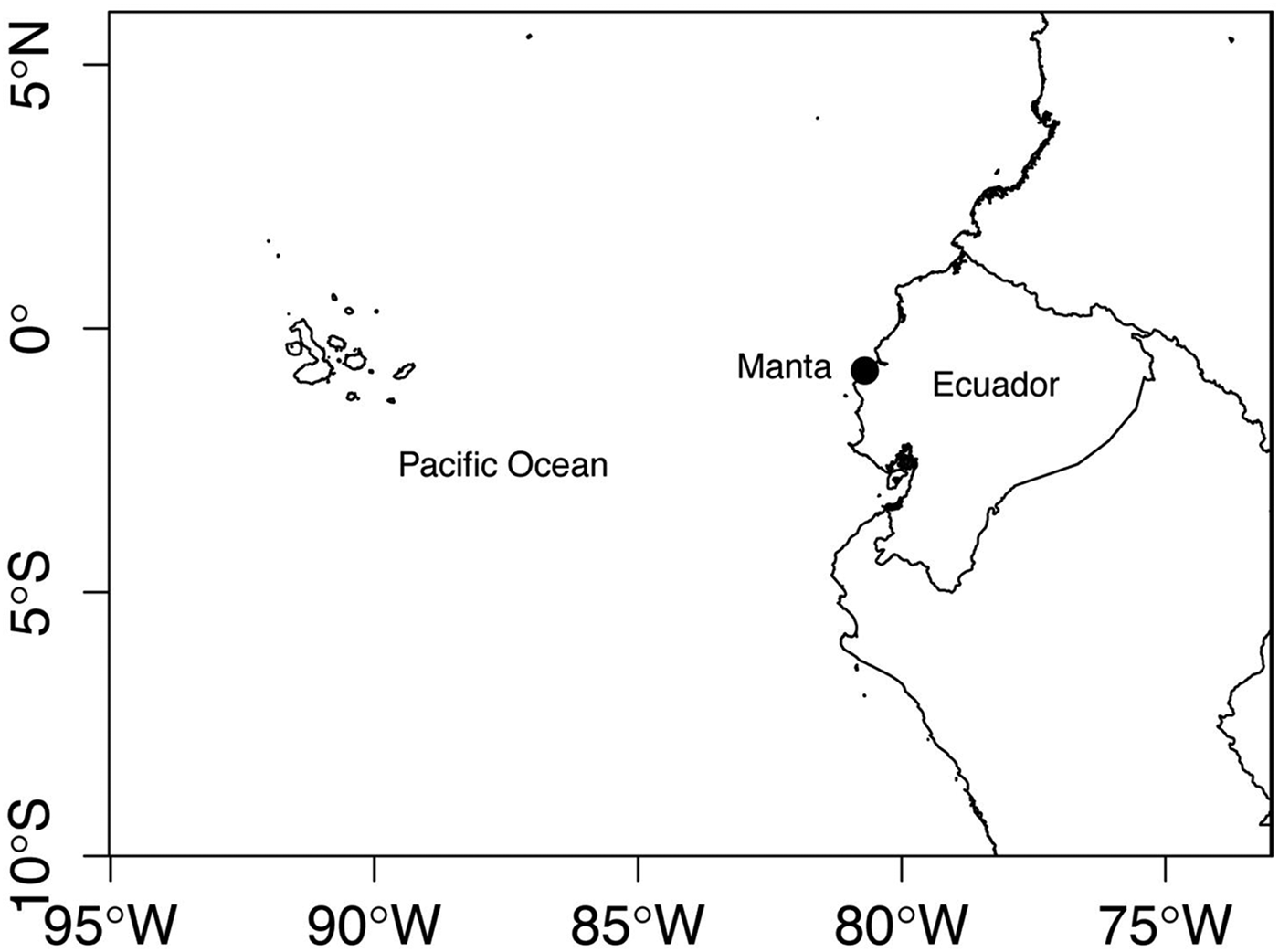
Manta is a city located at 0°56′S and 80°43′W (Figure 1). Samples were collected at ‘Tarqui’ beach, a highly active fishing area where large pelagic fish such as common dolphinfish, billfish, tuna and sharks are landed and commercialized all year long.
Map of the study area. Filled circle mark the locality where samples were taken.

Data collection and reproductive aspects
From April 2005 to February 2006, 101 males and 140 females of pelagic thresher shark were collected from artisanal fishery catches, which use mainly gill nets and longlines. Total length (TL) and precaudal length (PL) of each individual were measured; a ventral incision from the cloaca to the middle of the pectoral fins was made to allow access to the body cavity and collect the reproductive apparatus.
Sexual maturity in males was determined from the size and condition of the clasper (rotation, calcification, rhiphiodon aperture and semen presence) and the development of the testes. Males were divided into three reproductive stages. Immature: short and non-calcified clasper, testes soft, elongated and not lobated. Maturing: long and semicalcified claspers with teste starting to lobate. Mature: fully calcified claspers with fully lobated testes.
Maturity in females was established from the condition and size of ovarian follicles and morphology of the reproductive tract. Two reproductive stages were distinguished. Immature: small ovaries with translucent or white oocytes, thin oviducts, poorly developed oviducal glands and threadlike uteri. Mature: either gravid or containing maturing ovarian follicles with developed oviducts, glands and uteri.
For females, mating scars, embryos and uterine eggs were recorded, including the length and width of the ovary, diameter of the largest oocyte, width and length of the oviducal gland and uterus width. If embryos were found, sex, total length and weight were recorded.
Data analysis
Size composition was analysed for both sexes using frequency histograms and comparisons between sexes were performed with the Kolmogorov–Smirnov test. Sex-ratio was analysed with the null hypothesis of a 1:1 proportion, using a χ2 test. Morphometric relationship between PL and TL was carried out by a linear regression analysis.
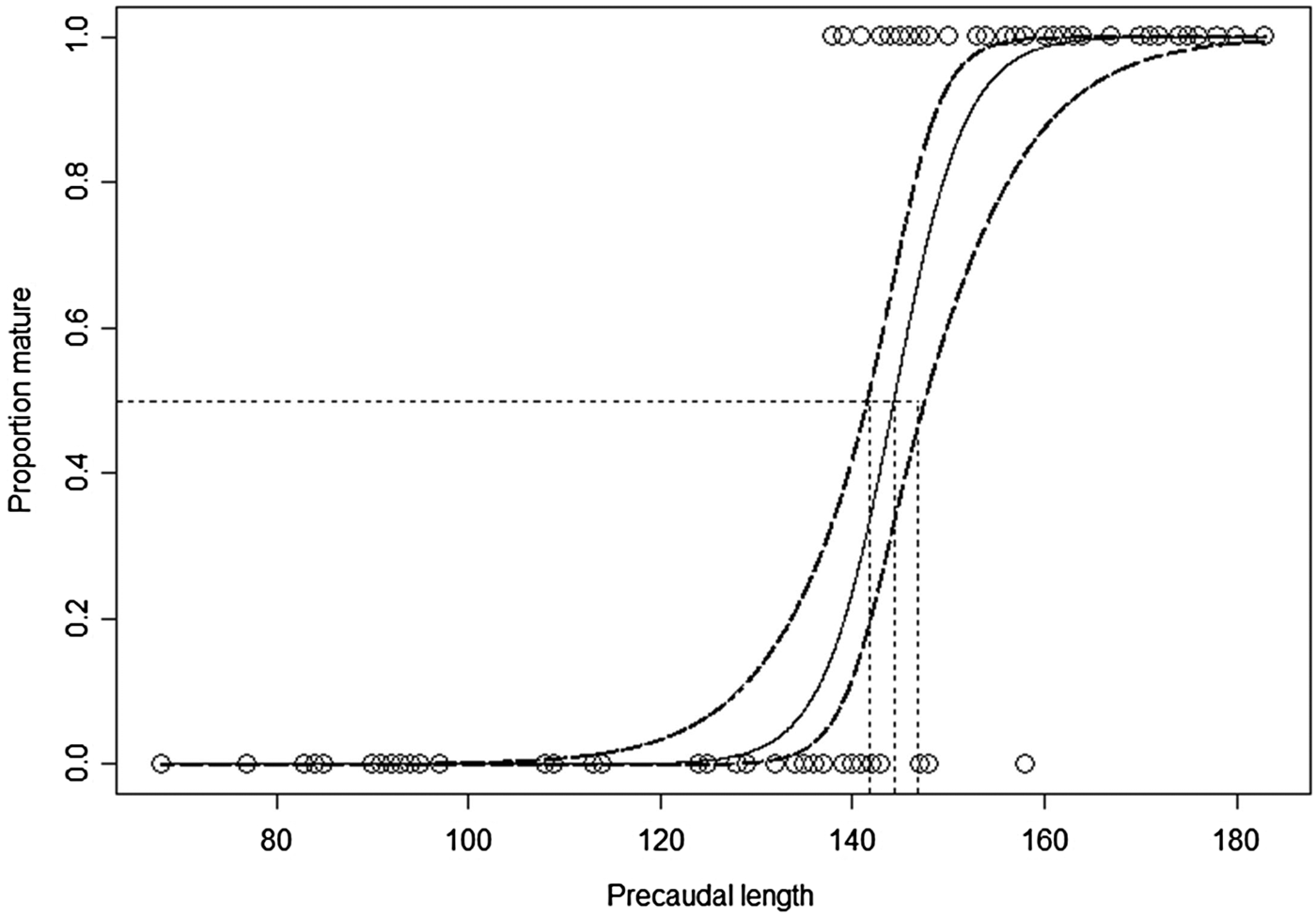
The relationship between reproductive structures and PL was plotted to indicate the start of sexual maturity (Natanson & Cailliet, Reference Natanson and Cailliet1986). Median size at maturity (PL50) was estimated for females and males by fitting a logistic regression model to binomial maturity data (0, immature; 1, mature) (Mollet et al., Reference Mollet, Cliff, Pratt and Stevens2000). In males the binomial data are based on clasper condition, and maturing males were considered immature. The equation was fitted using maximum likelihood and is:
 $$P = 1/1 + e^{a+\lpar b^{\ast}PL\rpar }\comma \;$$
where P is the proportion of mature individuals and a and b are model parameters. Gestation period was estimated using the embryo size variation, which also helped to identify birth period and reproductive cycle.
RESULTS
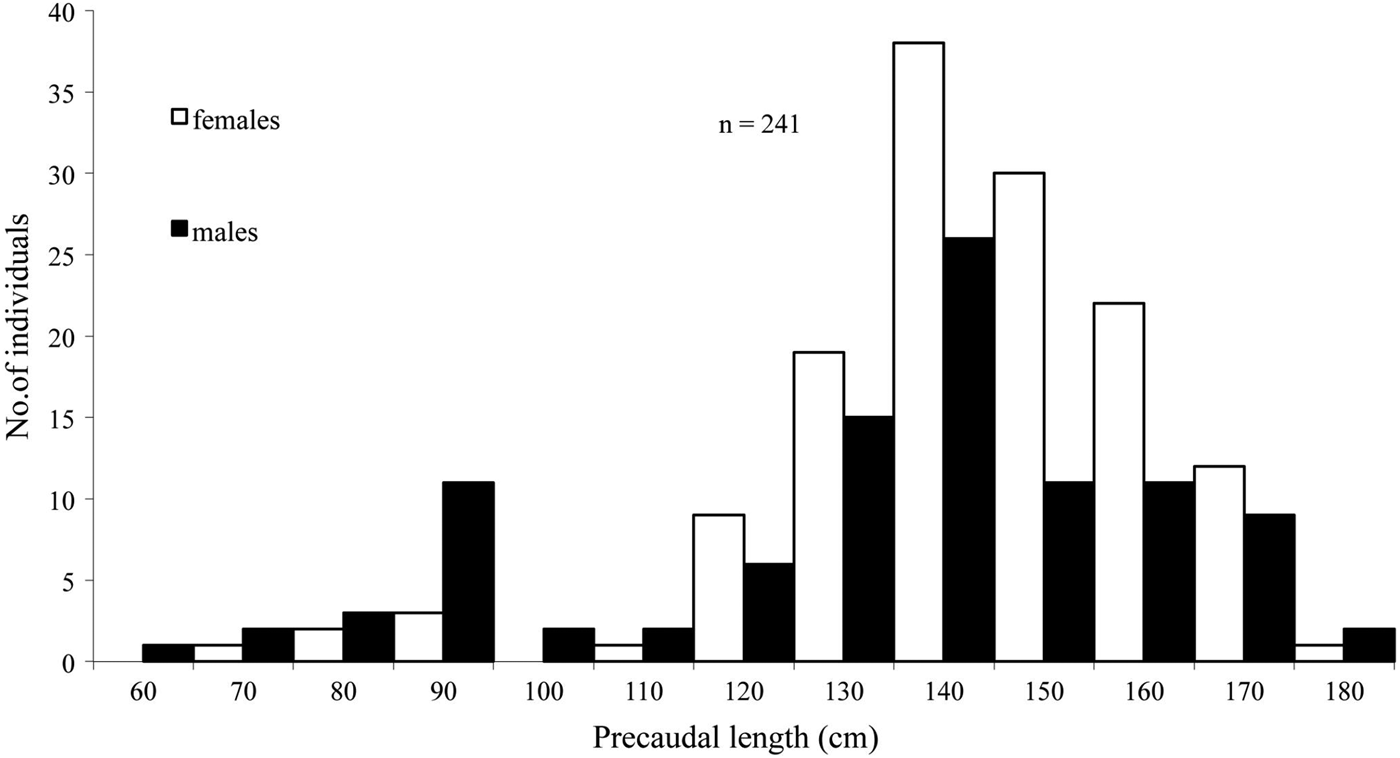
The size ranged from 68 to 183 cm PL. Male size varied from 68 to 183 cm PL; female size varied from 70 to 180 cm PL (Figure 2). The smallest male was found in May 2005; whereas the smallest female was found in September 2005.
Length–frequency distribution of sexes combined of the pelagic thresher shark.
Based on size distribution there are more adult or developing sharks for both sexes. In males, the mode was 135 cm PL, which corresponds to developing individuals. Females had a mode of 144 cm PL. Females were more abundant than males in most size-classes. Males were slightly larger than females, but did not show significant differences (D = 0.18, P > 0.05)
During the whole sampling period, the number of females was larger than the number of males, with a total proportion of 1.4F:1M (χ2 = 6.31, P < 0.05). There were no statistical different in the sex-ratio of adults and juveniles (χ2 = 2.65, P > 0.05 and χ2 = 3.66, P > 0.05, respectively). In embryos the sex-ratio was 0.77F:1M (χ2 = 1.37, P > 0.05) and was not significantly different from 1:1.
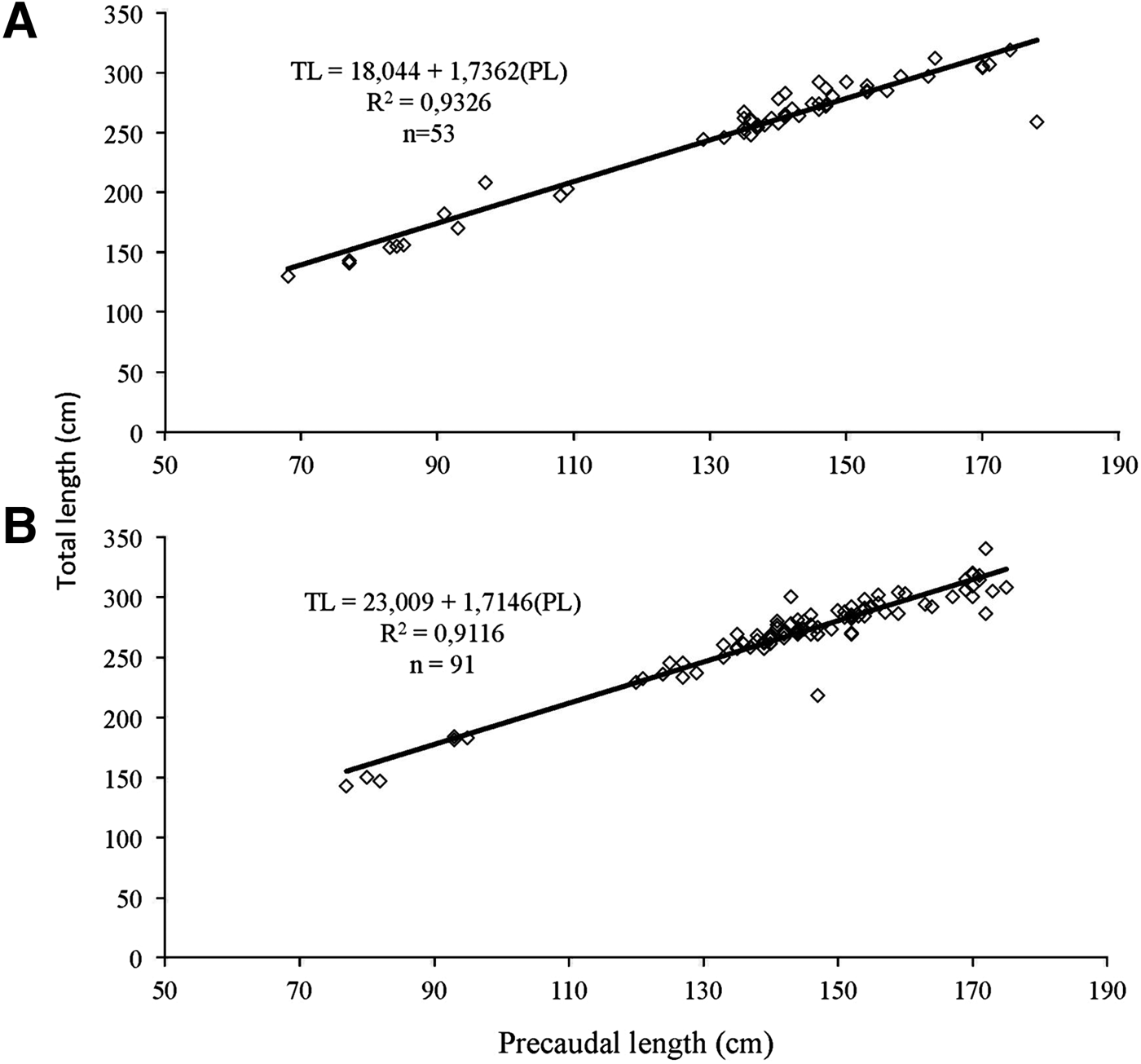
A strong correlation between TL and PL was found for females (r 2 = 0.91) and males (r 2 = 0.93). (Figure 3).
Relationship between precaudal (PL) and total length (TL) in (A) male and (B) female pelagic thresher sharks.
Size at maturity in males
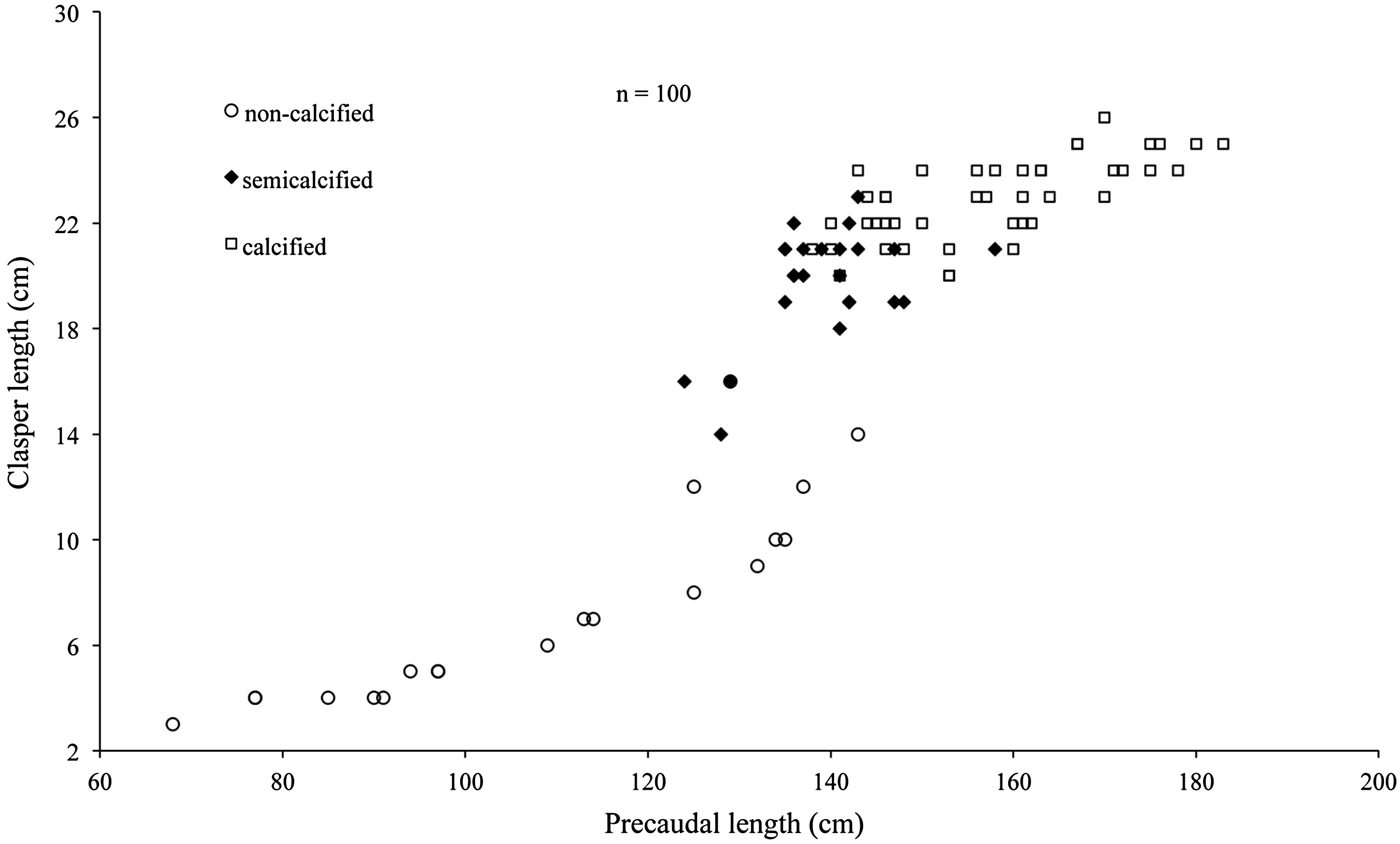
In pelagic thresher sharks that had a PL under 124 cm PL, non-calcified claspers were present, with a 4.8 cm length on average. From 124 cm PL, claspers start to calcify from the base towards the distal part and increase in size. There were examples with semicalcification characteristics at 158 cm PL. Claspers continue to increase until 140 cm PL (Figure 4).
Relationship between clasper length and precaudal length according to clasper calcification in male pelagic thresher sharks.
Copulation organs reach their complete development at 183 cm PL, with an average length of 22.9 cm, including total calcification, easy rotation and opening of the rhipidion. There were sperm in claspers of 48 males during all sampling months.
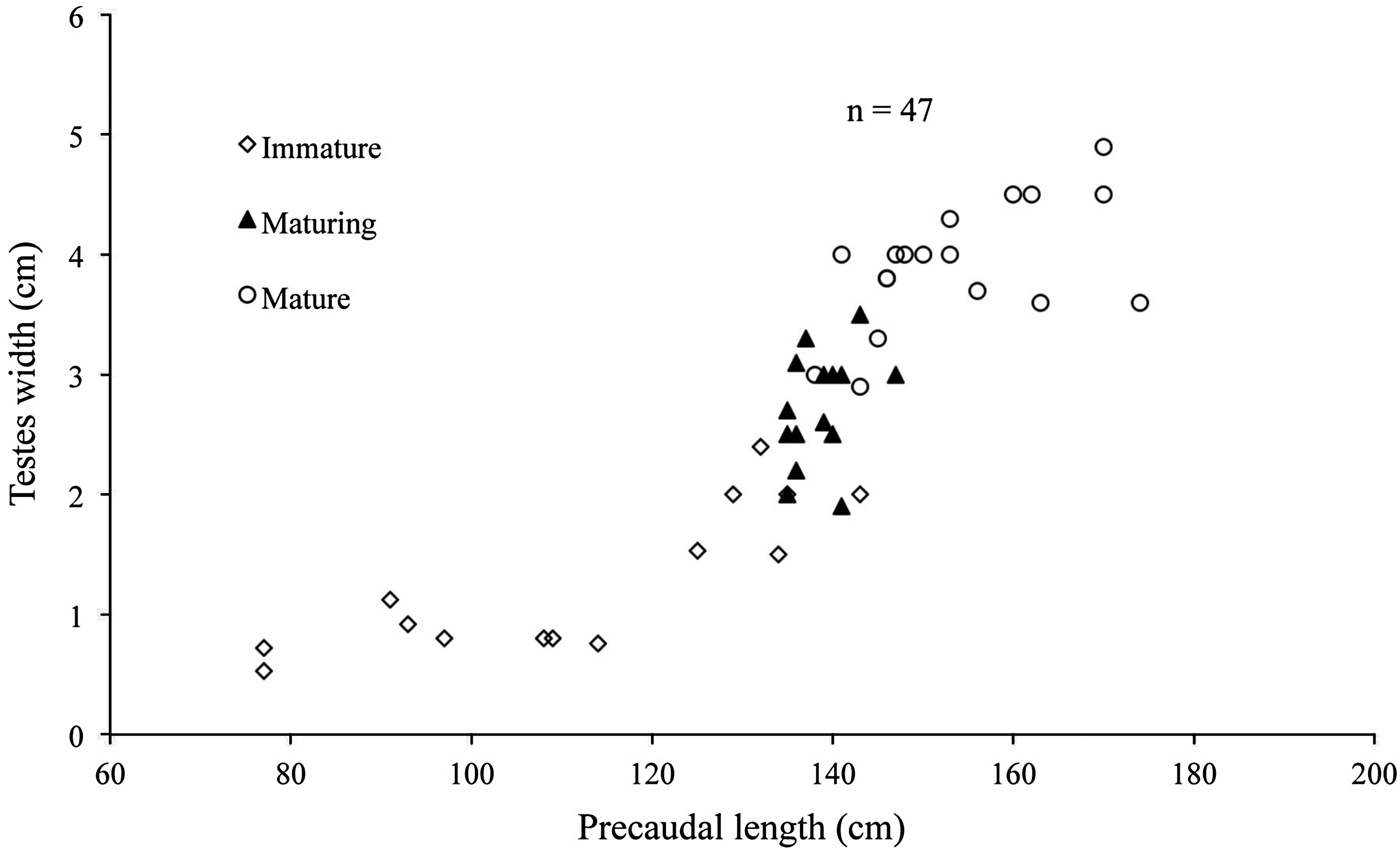
Testes length ranged from 3.3 to 16 cm and reached its maximum development at a PL of 146 cm. There was no linear relationship between testes length and PL (r 2 = 0.4606). Testes width varied from 0.53 to 4.9 cm and had a better linear correlation with PL (r 2 = 0.7695) (Figure 5).
Relationship between testes width and precaudal length in pelagic thresher sharks.
The median size at maturity PL50 in males occurs at 144.3 cm PL (95% CI 141.7–146.8) (Figure 6). The largest immature male based on clasper characteristics measured 158 cm PL and the smallest mature male measured 138 cm PL (258 cm TL).
Maturity ogive for male pelagic thresher sharks. The median size at maturity and confidence intervals are indicated.
Size at maturity in females
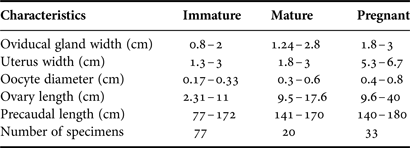
All females under 140 cm PL were immature due to the reduced development of reproductive structures, mainly the ovary and oviducal glands. From this size the development increases and the oocytes present vitellogenic activity, the glands develop and the uterus walls are thicker. Glands widen and can have a reddish colour externally. Pregnant females, in addition to having embryos, are characterized by larger ovaries that can reach 40 cm in length; the oocytes are completely full of vitellus (Table 1).
Characteristics of female pelagic thresher sharks in different maturity stages.
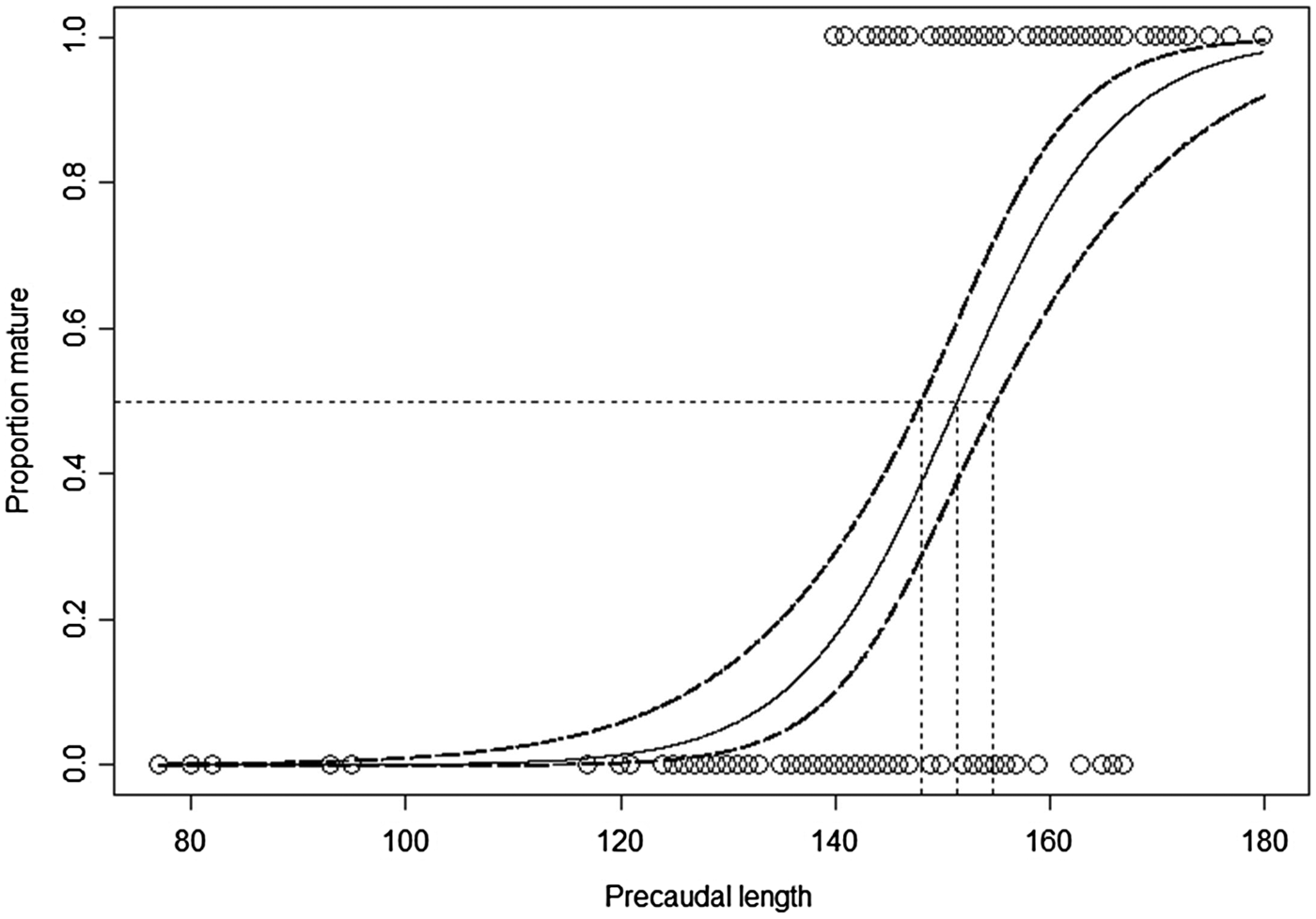
There were differences in the development of reproductive structures, but no correlation between them and the PL. Maturity ogive predicted a PL50 of 151.4 cm PL (95% CI 148.1–154.7) for females (Figure 7). The smallest pregnant female measured 140 cm PL (263 cm TL), while the largest immature female measured 167 cm PL (309 cm TL).
Maturity ogive for female pelagic thresher sharks. The median size at maturity and confidence intervals are indicated.
Embryonic development and reproductive cycle
The development occurs in its totality within the uteri. The embryos consume vitellus from the egg and later feed on unfertilized eggs produced by the mother that are covered by a capsule. These capsules varied in number from 1 to 38, in different proportion in each uterus. They could also be found inside the embryós mouth and measured between 4.5 and 9 cm in length and 1.44 cm wide.
We found 33 pregnant females and the smallest embryo measured 8.5 cm TL. In this embryo the fins start their development and the sex cannot be identified. There are external branchial filaments; the body is a whitish transparent colour. At 20 cm TL the embryo body is pink, the sex can be identified and teeth can be observed. After 40 cm TL, embryos are more developed, they start to take the coloration characteristic of this shark species and vitelline material can be found in the stomachs and intestines. From 80 cm TL embryos they are an exact replica of the adult and consume whole the unfertilized eggs.
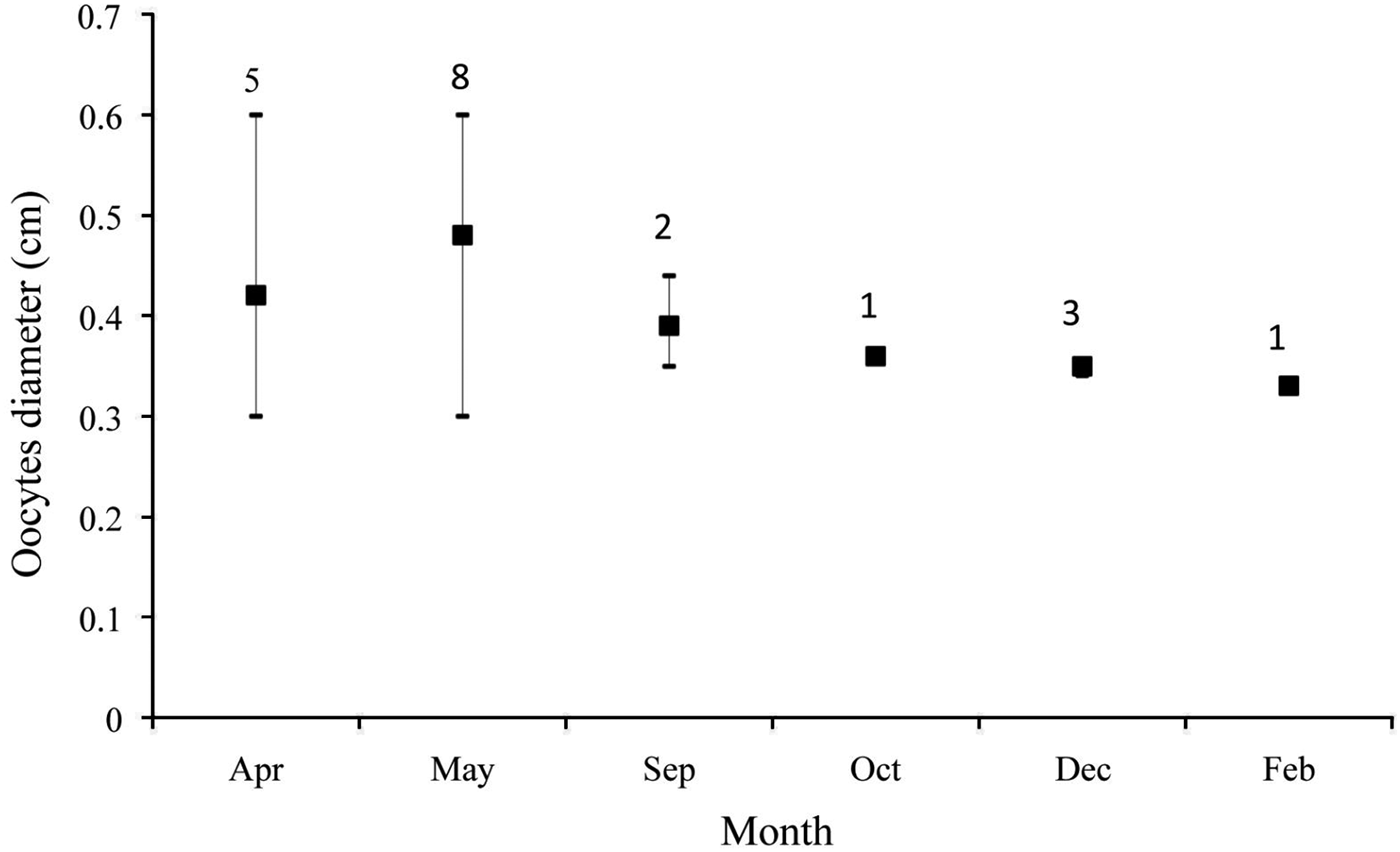
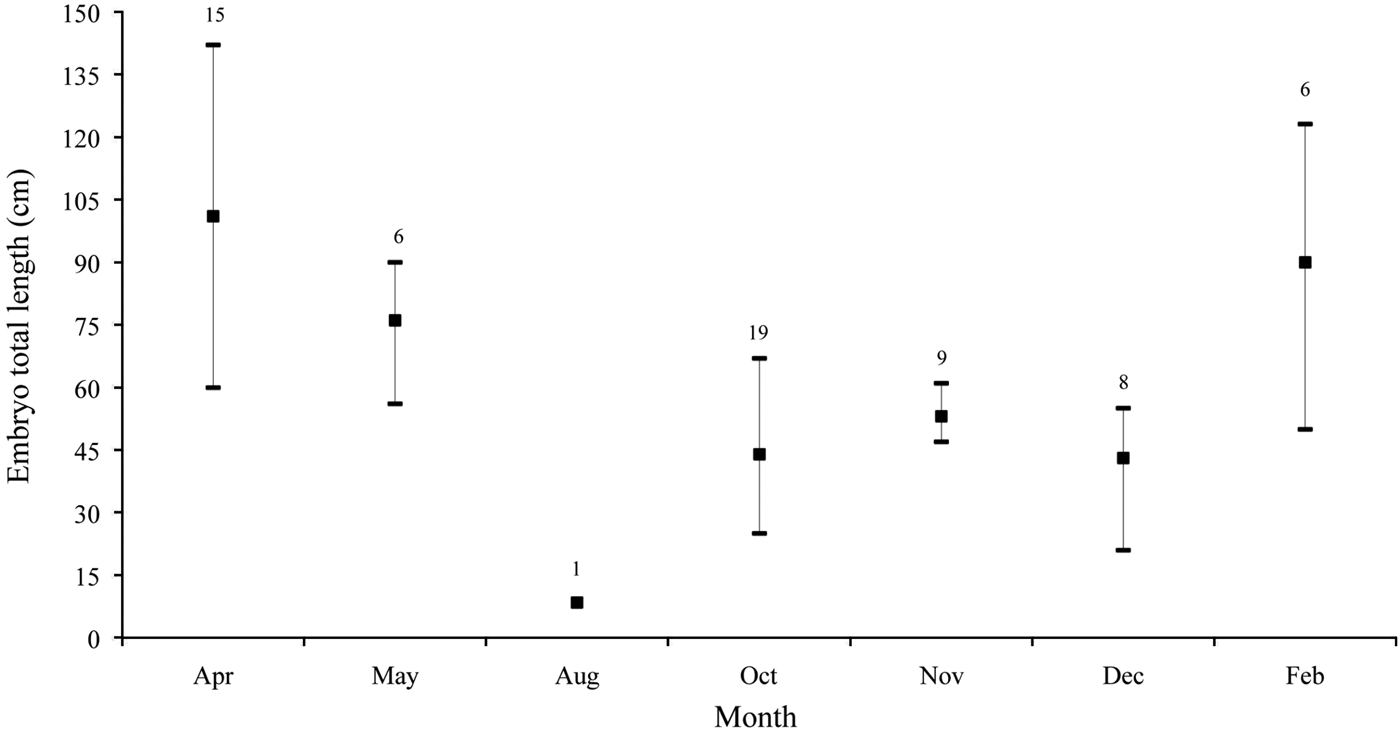
Ovulating females with the largest oocytes were found in May and reached 0.6 cm (Figure 8). During June to August, November and January there were no females in this stage. In addition, in June and September we observed ten females that did not have visible embryos but five had nutritive capsules in the uteri and five had enlarged uteri, and all these females had ripe oocytes in the ovary. The smallest embryo (8.5 cm TL) was recorded in August and no embryos were recorded in July and January. Embryos reached larger sizes between February and April; the largest embryo measured 142 cm TL and was recorded in April (Figure 9). With these data we could state that the pregnancy period is close to 9 months.
Monthly variation of largest oocytes diameter in mature non-pregnant female pelagic thresher sharks.
Monthly variation of embryo length in pregnant female pelagic thresher sharks.
DISCUSSION
The size composition of pelagic thresher sharks in Ecuador was dominated by juveniles and adults. This makes evident size segregation and shows that pelagic thresher shark catches can be made up of a limited size interval, which indicates that catches do not impact a nursery or birthing area. There were no differences in size distribution between sexes in this study, but in Taiwan waters Liu et al. (Reference Liu, Chen, Liao and Joung1999) found that females reached larger maximum PL than males (188 cm and 170 cm PL, respectively). This sexual dimorphism is a common condition in elasmobranchs (White et al., Reference White, Platell and Potter2001; Hazin et al., Reference Hazin, Fischer and Broadhurst2006; Colonello et al., Reference Colonello, Lucifora and Massa2007), since the female needs to produce large oocytes and, in viviparous species, carry their offspring.
The sex-ratio suggests that the predominance of females in the sample was probably related to sexual segregation, although among adults and juveniles there were no significant differences. Wourms (Reference Wourms1977) indicated that elasmobranchs tend to segregate when they reach maturity, except in the reproductive period. Pratt & Otake (Reference Pratt and Otake1990) recommend obtaining sexual proportion based on embryos, but since in embryos the sex-ratio was no different from 1F:1M, we could infer that segregation occurs in adults or maturing individuals.
Seminal fluid in claspers of males did not show a defined seasonality for reproduction (mating), since there was sperm in different numbers of animals and during all the months of sampling. This pattern has been reported for males of some elasmobranchs and has been proposed as an evolutionary condition (Braccini et al., Reference Braccini, Gillanders and Walker2006) or related to a relatively stable habitat (temperature and depth) which the species inhabit (Mejía-Falla et al., Reference Mejía-Falla, Navia and Cortés2012).
Clasper length and calcification were the most accurate way of determining maturity in males in our study, and are recommended for some other species, given the simplicity of obtaining them (Mejía-Falla et al., Reference Mejía-Falla, Navia and Cortés2012). Besides, it is common in elasmobranch that secondary sexual characteristics develop after sexual organs (Natanson & Gervelis, Reference Natanson and Gervelis2013). A linear relationship between testes width and PL was not found, but some other model should be explored in addition. Due to the inability to obtain measurements from all specimens, this characteristic was not used to estimate median size at maturity.
The size at maturity (PL50) for males proposed in this study (144.3 cm PL; 268.6 TL) is similar to that established by Liu et al. (Reference Liu, Chen, Liao and Joung1999) between 140 and 145 cm PL (8 years) for pelagic thresher in Taiwan waters. The PL50 estimated for females (151.4 cm PL; 282.60 TL) is above the range established by Liu et al. (Reference Liu, Chen, Liao and Joung1999) between 145 and 150 cm PL, which corresponds to an age of 8 years, although immature females of 167 cm PL (309 cm TL) were recorded in our study, which demonstrates that maturity can arrive at a late stage.
Females mature at a larger size than males and this characteristic is similar to other alopiids that attain largest maximum lengths. For A. superciliosus the maturity was reported between 279–300 cm TL and 332–341 cm TL for males and females, respectively (Gruber & Compagno, Reference Gruber and Compagno1981; Chen, et al., Reference Chen, Liu and Chang1997). While Natanson & Gervelis (Reference Natanson and Gervelis2013) for A. vulpinus estimated a median size at maturity for males in 188 cm FL (fork length) and 216 cm FL for females.
In mature and pregnant females mating signs which are common in sharks and rays were not observed (Demski, Reference Demski1990). This might be due to the fishing areas not coinciding with mating areas.
This species has embryos that reach large sizes. The survival opportunities increase in neonates of larger sizes and with abundant nutritive supplements (Gilmore, Reference Gilmore1983). The largest embryo measured 142 cm TL, and was very similar in its morphology to the adults; near birth, this embryo was smaller than one found by Liu et al. (Reference Liu, Chen, Liao and Joung1999), which measured 158 cm TL. It is worth noting that the smallest shark captured by the Ecuadorian fishery and recorded in this study was 136 cm TL, which indicates that size at birth is between 136 and 142 cm TL in the Ecuadorian Pacific.
We estimated a gestation time of 9 months in Alopias pelagicus, and according to our observation the embryos are synchronous and present an annual pattern, which could not be established by Liu et al. (Reference Liu, Chen, Liao and Joung1999) for this species in Taiwan waters because they found females in various stages of pregnancy throughout the year. This reveals differences in reproductive parameters in the species that might be influenced by both life history and environmental traits. Such regional and latitudinal variations have often been documented in chondrichthyan (Yamaguchi et al., Reference Yamaguchi, Taniuchi and Shimizu2000; Lombardi-Carlson et al., Reference Lombardi-Carlson, Cortés, Parsons and Manire2003; Licandeo & Cerna, Reference Licandeo and Cerna2007).
We observed continuous vitellogenesis in mature non-pregnant and pregnant females, and the ovary did not decrease in size during pregnancy (the oocytes were even larger in pregnant females), suggesting an annual cycle with concurrent vitellogenesis and gestation, as described by Castro (Reference Castro2009) for A. pelagicus and A. superciliosus. For the common thresher shark A. vulpinus Cailliet & Bedford (Reference Cailliet and Bedford1983) estimated an annual cycle, but different observations have been made by Natanson & Gervelis (Reference Natanson and Gervelis2013), who found females in various stages, and according to the proportion of resting to pregnant and postpartum females they suggested a biennial cycle and evidence of a triennial cycle that could not be proved. We did not find evidence of a resting phase in female pelagic thresher sharks, and despite the small number of samples in some months, we observed some seasonality in the reproductive cycle that may be a strategy to compensate for the reduced number of offspring.
Alopias pelagicus is a poorly known species and this investigation presents relevant reproductive information such as late maturity, synchronous reproductive cycle and low biological productivity, having only two embryos per uterus. Because of the importance of this species in fisheries, extending the monitoring and new biological data are needed.
ACKNOWLEDGEMENTS
A.F.R. thanks Colombo Estupiñán, Darwin Mendoza, Leonardo Cevallos for assistance with sampling and all the fishermen and people who work at Tarqui beach that allowed us to collect the samples and data.
FINANCIAL SUPPORT
F.G.M. thanks the Instituto Politécnico Nacional (COFAA; EDI) for fellowships.