INTRODUCTION
Lymphatic filariasis (LF) is a disease caused by a group of lymphatic-dwelling filarial nematodes transmitted by mosquito vectors which infect approximately 120 million people in over 90 countries, and whose disease sequelae impose a severe economic and social burden on affected communities and individuals (Michael and Bundy, 1997; Ramaiah et al. 1999; Zagaria and Savioli, 2002). Currently, a global public-private partnership, under the auspices of the World Health Organization (the Global Alliance for the Elimination of Lymphatic Filariasis), aims to eliminate this disease as a public health problem within the next 20 years. It is hoped that this will be achieved by community-wide yearly mass treatment with the broad spectrum anthelmintic albendazole (ABZ) in combination with the well-known microfilaricide diethylcarbamazine (DEC) or ivermectin (IVM) (Dean, 2002; Maher and Ottesen, 2000; Ottesen, 2000, 2002; Zagaria and Savioli, 2002). Benzimidazoles and avermectins have been used extensively in veterinary medicine for over 2 decades, and this has led to the development of drug resistance to both types of compounds by many helminth parasites affecting livestock (Prichard et al. 1980; Prichard, 1990; Wolstenholme et al. 2004). Consequently, there is concern that lymphatic filarial nematodes in humans may also develop such drug resistance, as this could severely hamper the control programmes. There have already been some reports of tolerance to DEC by filarial parasites (Eberhard et al. 1988, 1991). Recently, we have shown that a mutation at position 200 of the beta-tubulin gene, from phenylalanine to tyrosine (TYR200), known to cause benzimidazole resistance in veterinary parasites is present in populations of Wuchereria bancrofti from West Africa, and is significantly higher in treated than in non-treated populations (Schwab et al. 2005). Thus, selection for albendazole resistance may already be occurring.
Mathematical models can be invaluable in helping to understand parasite population dynamics and predict the impact of chemotherapy on these dynamics (Anderson and May, 1982, 1985). Models aiding in the design and implementation of control programmes have been successfully used for the filarial nematode Onchocerca volvulus (Habbema et al. 1992; Alley et al. 2001; Basáñez and Ricárdez-Esquinca, 2001).
Simple analytical models have examined various aspects of LF transmission and disease dynamics (Hayashi, 1962; Subramanian et al. 1989; Grenfell et al. 1990; Grenfell and Michael, 1992; Michael and Bundy, 1998) by assuming equilibrium with respect to age or time and therefore exploring temporal dynamics or age infection profiles. EPIFIL is an age-structured, deterministic model which incorporates some probabilistic elements (the frequency distribution of the number of microfilariae that will be transmitted to vectors) and describes changes in parasite population abundance with both age and time (Chan et al. 1998, 1999; Norman et al. 2000). Stochastic microsimulation models have also been developed [e.g. LYMFASIM (Plaisier et al. 1998)]. Both EPIFIL and LYMFASIM models have been used to examine the effect of various control strategies based on different antiparasitic and antivectorial measures (Das and Subramanian, 2002; Michael et al. 2004; Stolk et al. 2003; Subramanian et al. 2004). In addition, EPIFIL is now available as a free resource for health workers in operational settings (Chan et al. 1999). However, neither of these models has so far been used to explore the spread of drug resistance, which requires incorporation of genetic structure into the parasite population (Anderson et al. 1989).
One such model has been presented for the investigation of the spread of anthelmintic resistance in the sheep parasite Trichostrongylus colubriformes, considering various sheep management and anthelmintic delivery practices in a simple framework which includes up to three anthelmintic resistance genes, each with 2 alleles, associated with resistance to a single drug or to each of 3 drugs (Barnes and Dobson, 1990). A second, more general model applicable to direct life-cycle parasites, based on the simpler 1 locus-2 allele system examines different anthelmintic treatment strategies (Smith, 1990). More complex, deterministic and stochastic models for the evolution of anthelmintic resistance in trychostrongylids (Smith et al. 1999) predict that host immunity, parasite fecundity and aggregation will have an important impact on the spread of resistance. More recently, the impact of spatial heterogeneity and metapopulation transmission dynamics on the spread of drug resistance has been examined using stochastic models (Cornell et al. 2000, 2003). These models predict that rare recessive alleles may spread through overdispersed parasite populations more rapidly than initially anticipated.
An excess of homozygotes for the TYR200 mutation was observed in a population of W. bancrofti microfilariae from West Africa (Schwab et al. 2005). A preliminary analysis of these data indicates that excess homozygosity is equivalent to Wright's hierarchical (inbreeding) F-statistic or FIT=0·44 (measuring the degree of parasite inbreeding within individuals in the total host population; T. S. Churcher et al., unpublished). Although the mechanisms generating this are unknown, an increased homozygosity will likely lead to a faster spread of recessive drug resistance. Here we describe a model that incorporates simple parasite population genetics into the transmission dynamics model EPIFIL in order to explore the consequences of both random and non-random parasite mating upon the evolution and spread of drug resistance in filarial parasites under the current combination therapy treatment regimes.
Model development
Population dynamics
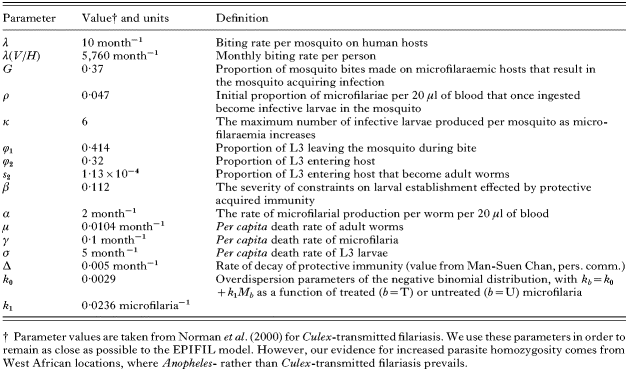
The model described in this paper is based on EPIFIL, whose code is now publicly available (Chan et al. 1999; Norman et al. 2000). EPIFIL consists of a system of partial differential equations which describe, with respect to time and host age, the rates of change of mean adult worm burden (W), mean microfilarial count per 20 μl of blood (M), mean numbers of L3 larvae per mosquito (L), and mean strength of acquired protective immunity by the human host (I). In EPIFIL, acquired immunity is assumed to depend solely on past experience to adult worms and to affect the establishment of L3 larvae within the definitive host. Density dependence within the mosquito vector is represented by a saturating function of L3 output with increasing microfilarial input, and is influenced by an assumed negative binomial distribution of microfilariae in the human population (Norman et al. 2000). The equations of the EPIFIL model are reproduced in Appendix A. Parameters for EPIFIL are summarized in Table 1.

Population genetics
In order to model the spread of anthelmintic resistance through the parasite population, we have assumed that resistance to ABZ is associated with a single autosomal locus with 2 alleles S, r, with r, the recessive allele conferring resistance. Each of the EPIFIL equations, originally for homogeneous macrofilarial, microfilarial, and infective larvae populations, were structured into worms homozygotes and drug sensitive (with genotype SS), heterozygous drug-sensitive (Sr), and homozygous resistant (rr) (see Appendix B). We have assumed that there are no costs or trade-offs associated with resistance (e.g. resistant parasites may have a lower fecundity rate). Under chemotherapeutic pressure, the fitness of the resistant parasites is higher than that of the susceptible worms.
Random mating
Initially, random mating was assumed and thus genotype distributions of microfilariae were calculated from those of adult worm populations by means of simple Mendelian genetics. In order to reflect treatment coverage, treated and untreated parasite populations were modelled separately. At the point of transmission, the respective contributions of each infective larval population (depending on coverage level) were introduced into the equations for adult worms. The model thus assumes that the same individuals are treated at each round. Total mean parasite loads are a combination of the 3 genotypes for the treated and untreated sections of the parasite populations, the latter in proportions depending on coverage.
Non-random mating
In order to examine the effect of non-random mating, we have included a parameter F in the equations to indicate deviation from Hardy-Weinberg equilibrium, as a crude way to incorporate increased homozygosity (see Eqns (B6) to (B8) of Appendix B). Wright's inbreeding FIT-statistic is a phenomenological rather than a mechanistic measure of homozygosity, and therefore does not explicitly describe the biological processes involved in producing an excess of homozygotes. By setting a fixed value for this parameter, the same adjustment factor for increased homozygosity is applied from generation to generation. The amount of excess homozygosity was calculated from a preliminary analysis of data obtained in Burkina Faso (Schwab et al. 2005); a detailed description of this calculation and of the possible mechanisms generating homozygosity will be presented elsewhere.
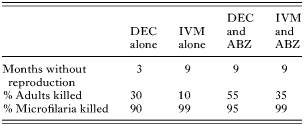
Assumptions on drug efficacy, measured as percentage of worms (macro- and microfilariae) killed and female worms sterilized, were based on those made by Michael et al. (2004) and other published drug trials (Addiss et al. 1997; Ismail et al. 1998; Dunyo et al. 2000) and are summarized in Table 2. Treatment was modelled as instantaneous reductions in adult worms (macrofilaricidal effect), microfilarial populations (microfilaricidal effect), or female worm reproduction rate (sterilizing effect) by the percentage efficacy following treatment. Sterilized females did nor resume microfilarial production immediately but after a period of time specified for each drug (Table 2). (In Table 2 it is assumed that microfilaricidal efficacy for the ABZ+IVM combination is higher than that of combinations containing DEC, but see Tisch et al. 2005). All model outcomes in this paper examine the effect of 10 yearly treatments on the genotype distribution of the microfilariae (the stages more feasibly sampled for genetic analyses).

Model code was written using the JSIM numerical integration software from http://nsr.bioeng.washington.edu/PLN/Members/butterw/JSIMDOC1.6/JSim_Home.stx/view. Differential equations were solved using the Euler method. Prior to the initiation of control perturbations, parasite populations were assumed to be at endemic equilibrium.
RESULTS
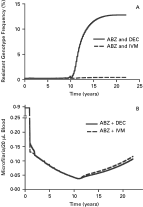
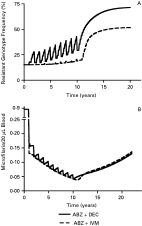
We have examined different factors affecting the spread of anthelmintic resistance in W. bancrofti. Two different treatment regimes are currently used in the LF control programme. ABZ and DEC are used in most areas of the world though in parts of Africa, where onchocerciasis is co-endemic, DEC cannot be used and patients are treated with ABZ and IVM. We have examined the effect of both of these treatment regimes on the spread of ABZ resistance. Results of this analysis can be seen in Fig. 1. Fig. 1A shows the genotype frequency of the recessive, resistant homozygote in the microfilarial population, after 10 yearly treatments with either drug combination. Coverage was assumed to be 85% of the total population, and the initial resistance allele frequency was taken as 5%. Fig. 1B shows the mean microfilaraemia (all microfilaria genotypes combined) for each treatment regime. Model outcomes without the presence of ABZ resistance are virtually indistinguishable from those portrayed in Fig. 1B, and are therefore not shown. This indicates that the spread of ABZ resistance is unlikely to impair the impact of the control programme on microfilarial levels. Treatment with ABZ and IVM leads to an increase of the resistant genotype by a factor of 1·74. However, since the initial genotype frequency is 0·25%, it will only reach 0·44%, and thus will still be uncommon in the population. Treatment with ABZ and DEC has a much larger impact on the frequency of the ABZ-resistant genotype. Our model indicates that the genotype frequency will rise to 12·7% and thus increase by a factor of 4·8 (Fig. 1A).

Fig. 1. The effect of 10 yearly treatments with albendazole (ABZ)+diethylcarbamazine (DEC), or ABZ+ivermectin (IVM), with 85% coverage of the total population, on the spread of ABZ resistance in Wuchereria bancrofti populations. (A) Average frequency (in percentage) of resistant genotype microfilariae. (B) Mean microfilaraemia per 20 μl of blood in the human host population. Solid line: ABZ+DEC, dashed line: ABZ+IVM.
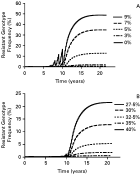
In order to further examine these results, we have carried out a sensitivity analysis on different parameters of the model. The results of these analyses are displayed in Figs 2–6. It can be seen that when treating with the ABZ+DEC combination, selection for ABZ resistance is strongly dependent on increasing the differential microfilaricidal efficacy of the ABZ+DEC combination over DEC alone (Fig. 2A), and the assumed macrofilaricidal efficacy of DEC (Fig. 2B) (Table 2). When treating with the ABZ+IVM combination, the spread of resistance is less affected by small changes in drug efficacies (data not shown).

Fig. 2. The effect, on the ABZ resistant genotype frequency (%) of Wuchereria bancrofti microfilariae, of increasing (A) the differential microfilaricidal efficacy (% of microfilariae killed) due to adding ABZ to DEC, and (B) adulticidal efficacy (% of macrofilariae killed) of DEC, when administering 10 annual treatments with ABZ+DEC to 85% of the human host population.

Fig. 3. The effect of increasing therapeutic coverage (the percentage of the total host population treated) of 10 yearly treatments, on the spread of ABZ-resistant genotype microfilariae (A and C), and average microfilaraemia (B and D), for combination therapy with ABZ+DEC (A and B), and ABZ+IVM (C and D).

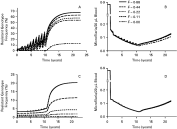
Fig. 4. The effect, on the spread of ABZ resistance in Wuchereria bancrofti, of increasing the levels (F) of non-random parasite mating (i.e. increased homozygosity as measured by the Fisher FIT statistic), following 10 yearly treatments at 85% coverage with: ABZ+DEC (A and B), and ABZ+IVM (C and D). Panels (A) and (C) represent the frequency (%) of resistant genotype microfilariae, and panels (B) and (D) the mean microfilaraemia.

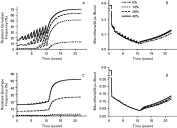
Fig. 5. The effect, on the spread of ABZ resistance in Wuchereria bancrofti, of varying the initial resistance allele frequency (in %) following 10 yearly treatments with 85% coverage. (A) Frequency (%) of resistant genotype microfilariae. (B) Mean microfilaraemia for ABZ+DEC. Panels (C) and (D) present the corresponding results for ABZ+IVM.

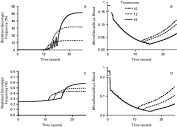
Fig. 6. The effect of increasing the number of annual treatments with 85% coverage on the spread of ABZ resistance in Wuchereria bancrofti. (A) Frequency (%) of resistant genotype microfilariae. (B) Mean microfilaraemia for ABZ+DEC. Panels (C) and (D) correspond to treatment with ABZ+IVM.
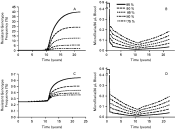
Treatment coverage affects the speed at which ABZ resistance spreads, with increasing coverage considerably increasing selection for the resistant genotype (Fig. 3). When coverage reaches 95% with ABZ+DEC, the ABZ resistant genotype frequency in microfilariae will reach almost 40% 10 years after cessation of the 10 yearly treatments (Fig. 3A). Coverage will also affect the frequency of the ABZ resistant genotype after treatment with ABZ+IVM. However, though the resistant genotype will increase by a factor of 2·5 when changing treatment coverage to 95%, this frequency will reach only 0·64% 10 years after halting the annual treatments, and thus will only have a marginal effect (Fig. 3C). As expected, mean microfilaraemia during the period of treatment, depends on treatment coverage with either ABZ+DEC or ABZ+IVM (respectively, Fig. 3B and D), with lowest microfilaraemia corresponding to highest coverage. Therefore, very low microfilaraemia levels during control, mask strong selection and increased frequency of resistant genotypes once control is halted.
We have also examined the effect of non-random mating. Inbreeding changes the distribution of genotypes, increasing homozygosity and hence the number of resistant genotypes at a given allele frequency. Non-random mating can have a dramatic impact on the outcomes of selection, as shown in Fig. 4. With a Wright's FIT-statistic equivalent to parameter F=0·44 in the model, the ABZ resistant genotype would reach a frequency of over 60% after ceasing 10 yearly treatments with ABZ+DEC. It may also be noted that even a much lower F value of 0·11 will lead to a resistant genotype frequency of over 50% (Fig. 4A). In the case of 10 yearly treatments with ABZ+IVM, an F value of 0·44 will lead the resistant genotype frequency to increase from 0·25% to just over 20%, under the assumptions of 85% coverage. The corresponding microfilarial intensities are shown in Fig. 4B (ALB+DEC) and 4C (ALB+IVM).
Schwab et al (2005) found initial frequencies of the ABZ resistant genotype of up to 26%. Thus we examined how quickly resistance will rise if initial frequencies are higher than the 5% assumed in the other models. In Fig. 5, it may be observed how changing the initial ABZ resistance frequencies before treatment will dramatically change the spread of resistance once mass drug administration is stopped (Fig. 5). An initial resistant genotype frequency of 10% will lead to an increase in the resistant genotype frequency to over 50% after 10 treatments with ABZ+DEC. However, if the initial frequency is further increased to 40%, the proportion of resistant microfilariae will rise to reach 70% (Fig. 5A,B). When treating with ABZ+IVM (Fig. 5C,D), the effect of increasing initial frequency of ABZ resistance is similar, but less dramatic than with ABZ+DEC. These simulations assume no resistance to DEC or IVM.
Increasing the duration of the treatment programme also considerably affects the spread of ABZ resistance. Here we consider the effect of up to 30 yearly treatments with ABZ+DEC. It was estimated that it will take 15 years of treatment for the ABZ resistant genotype frequency to reach over 50% (Fig. 6A). When treating with ABZ+IVM, 15 yearly treatments are estimated to lead to an increase in the resistant genotype frequency from 0·25% to just under 6% (Fig. 6C). The effects of these treatment schedules on microfilarial intensity are shown in Fig. 6B and D.
We have used parameters for homozygosity and initial frequency obtained from villages in Burkina Faso to indicate the spread of ABZ resistance in these communities (Fig. 7). Both treatment regimes are estimated to result in the frequency of the ABZ resistant homozygote reaching 50% after 10 yearly treatments at 85% coverage, though little difference will be seen in microfilarial burdens.

Fig. 7. The effect, on the spread of ABZ resistance in Wuchereria bancrofti, of 10 annual treatments at 85% coverage with ABZ+DEC (solid line), or ABZ+IVM (dashed line), using the initial allele frequencies and FIT values recorded in the village of Tangonko, Burkina Faso (Schwab et al. 2005). (A) Frequency (%) of resistant genotype microfilariae. (B) Average microfilaraemia.
DISCUSSION
The development of drug resistance in lymphatic filarial parasites could represent a serious threat to the GPELF, which currently aims to eliminate the disease by blocking transmission. The model presented in this paper examines factors affecting the spread of ABZ resistance under current treatment strategies for W. bancrofti, under a series of structural and parameter assumptions. Although the model provides quantitative results, given the uncertainties still remaining about such assumptions, the qualitative insights gained are more important than the actual predictions. Based on the assumptions of drug efficacies made here, treatment with ABZ+DEC would lead to a much quicker spread of ABZ resistance than that with ABZ+IVM. The model indicates that treatment with ABZ+DEC for 10 years, at 85% coverage and an initial ABZ resistant genotype frequency of 0·25%, would increase the resistant microfilarial genotype frequency to approximately 13%. Treatment with ABZ+IVM would lead to a negligible increase in the resistant genotype.
Sensitivity analysis of the of ABZ+DEC treatment regime shows that the spread of ABZ resistance would be highly dependent on the additional microfilaricidal activity gained when adding ABZ to DEC (as compared to DEC alone), and the degree to which DEC alone can kill adult parasites. Some additional microfilaricidal activity, caused by ABZ, is required in order to give resistant worms enough of a selective advantage for the allele frequency to change after the introduction of treatment. Increasing DEC adulticidal activity dramatically reduces the spread of ABZ resistance. Therefore, care must be taken when assumptions about drug efficacy are made, as small parameter changes can lead to larger changes in the outcomes predicted by the model. The ABZ+IVM combination treatment is much less affected by small changes in the microfilaricide and macrofilaricide efficacy parameters. An important factor in the behaviour of different treatment regimes is the fact that DEC sterilizes adult worms for a shorter period than IVM. Thus, following each IVM treatment, very little reproduction occurs for 9 months and selection for the ABZ resistant allele is minimal (as we have assumed no resistance to IVM).
The spread of ABZ resistance is strongly dependent on treatment coverage. Higher levels of therapeutic coverage would lead to faster microfilarial reductions, but also to quicker spread of ABZ resistance. Our model indicates that increasing the treatment coverage by 10% (from 85% to 95%) would lead to an almost 4-fold increase in the frequency of ABZ-resistant microfilariae in the population after cessation of the 10 yearly treatments with ABZ+DEC. This is due to the fact that untreated hosts act as refugia of susceptible parasites. Similar results have been observed for animal parasites (Coles, 2002; van Wyk, 2001). In this model it is assumed that the same individuals in the population are being treated at each round, as is the case for systematic compliers. Without using individual-based, more realistic models, our conclusions remain tentative.
During the treatment period, little increase in the resistant homozygote frequency in the microfilarial population is apparent. During this time, the treated hosts are being continually infected by L3 larvae derived from untreated hosts. These larvae have the genotype distribution of the untreated group, which is similar to the initial overall genotype distribution. Within the treated hosts, susceptible worms are dying at a faster rate than resistant worms (the macrofilaricidal efficacy of DEC+ABZ is assumed to be 55% whereas that of DEC alone is 30%). Therefore, although the resistant genotype frequency of the adult worm population is increasing continually over time during treatment, this is not reflected in substantial changes in microfilarial genotype, partly because adult worms in treated hosts are reproducing only to a very small degree. Consequently, the overall genotype distribution in the microfilarial population is predominantly influenced by that of the microfilariae in untreated hosts, where the adult genotype frequency remains fairly constant. Thus, there is no considerable change in the genotype distribution of the microfilarial population during the course of the treatment. Following the end of treatment, the adult worms in the treated individuals can reproduce once again. These adult worms have a high ABZ resistance allele frequency so the microfilariae resistant genotype frequency starts to rise until the adult worm allele frequency in the treated and untreated hosts reaches equilibrium.
Though the genotype structure of the microfilarial population is clearly changing, there is only a small impact on microfilaraemia. This is a consequence of using combination treatment. While ABZ resistance may be developing, it has been assumed that DEC or IVM still remain effective in clearing microfilariae from the blood of patients. Thus, ABZ resistance may not become immediately apparent, but it may have a considerable impact should DEC or IVM become no longer effective for treatment (e.g. if DEC or IVM resistance were to develop).
Based on the results obtained from the models, and with default parameters, it would take 15 years of treatment with ABZ+DEC in order for half of the microfilaria population to be homozygous resistant to ABZ. This exceeds the time frame intended by the GPELF, which proposes that duration of chemotherapy should last the time equivalent to the lifespan of an adult worm, estimated to vary between 4 and 6 years (Vanamail et al. 1996; Michael et al. 2004). However, there is considerable uncertainty around this estimate, and values ranging from 5 years (Vanamail et al. 1989) to ~40 (Carme and Laigret, 1979), with a mean of ~10 years (Subramanian et al. 2004) for the LYMPHASIM model have been presented. The adult worm lifespan assumed by EPIFIL is approximately 8 years (Norman et al. 2000). Michael et al (2004) believe that it may not be feasible to reach the goals of the GPELF in areas of high endemicity within the proposed time-span of 4–6 years.
Some areas may have high levels of initial benzimidazole resistance allele frequencies, as demonstrated by Schwab et al. (2005). Similar observations were also made in trichostrongylid parasites (Beech et al. 1994). Our model indicates that when ABZ+DEC are used together, an increase of the initial resistant allele frequency from 5% to 10%, would result in half of all microfilariae in the population becoming resistant after halting the 10 years of annual treatment. If the resistance allele frequency is initially 26%, this proportion would increase to 63%. Initial allele frequencies may vary in different geographical locations and were found to be around 26% in some areas of Burkina Faso, and less than 1% in some microfilarial samples from Ghana (Schwab et al. 2005). It is therefore advisable to develop resistance markers for monitoring purposes in areas where treatment is being introduced. Given that the sampling protocol will greatly influence the estimated values of ABZ resistance frequencies, the results above need to be taken with caution. We are developing population genetics models to address these issues and the results will be presented elsewhere (Churcher et al., unpublished).
Results from this model suggest that excess homozygosity, caused by non-random parasite mating, would lead to a rapid increase in the selection of recessive resistance alleles. Inbreeding is incorporated very crudely within the modelling framework, and it had the aim to illustrate the serious implications that excess homozygosity would have on the spread of drug resistance. Our current model makes no assumptions about the mechanisms driving non-random mating. It has been demonstrated in the past that recessive alleles may be selected far more quickly than initially anticipated, due to metapopulation structure and resulting inbreeding (Cornell et al. 2000, 2003). Filarial worm populations are subdivided in the host population, and thus random mating is unlikely to occur. In addition, vectors may not evenly ingest microfilariae and distribute infective larvae through the host populations and are more likely to take consecutive blood meals from people within the same household (Michael et al. 1998; 2001), which may lead to inbreeding.
We show here, using parameters obtained from villages in Burkina Faso, that the effects investigated previously (i.e. inbreeding, high initial allele frequency), when combined together will have an additive affect on the final resistance allele frequency. This is because the relationship between allele frequency and homozygosity is non-linear.
Though mathematical models are not necessarily accurate quantitative predictors of population dynamics in the field, because assumptions made in the models may turn out to be not entirely correct, they do help highlight influential factors (Cornell, 2005). EPIFIL was optimized in India, particularly in the locality of Pondicherry, where LF prevalence is relatively low, and integrated vector management has taken place for a long time (Subramanian et al. 2004). Also, the operation of acquired immunity, which was thought to be essential for reproducing observed infection patterns in Pondicherry, has not been substantiated in other geographical regions (Stolk et al. 2004). Transmission intensity may be different in other areas, such as Africa, where there are different vectors (EPIFIL is parameterised for Culex-transmitted LF). In addition, this is a deterministic model that does not consider transmission breakpoints (e.g. no explicit mating probabilities for adult worms are incorporated), and is unable to take into account variability among individual hosts and parasites. Incorporating greater biological complexity into the model will be necessary for obtaining accurate quantitative conclusions, though we feel this is not likely to affect in great measure the qualitative conclusions drawn from our results.
Concluding remarks
We show that it is important to take into account the efficacies and mechanisms of drug effects when applying control strategies in order to predict the spread of drug resistance. Furthermore, it is important to be aware of initial resistance allele frequencies, as these will affect the speed at which resistance spreads, and thus monitoring field situations with appropriate resistance markers is advisable. The requirements of high coverage and compliance, and the lengthy duration of chemotherapy-based control programmes, risks anthelmintic resistance or at best, a decrease in the efficacy of the drugs of choice. Incorporation of vector control into control programmes can reduce the time required to meet control goals (Basáñez et al. 2002; Michael et al. 2004) and may thus prevent drug resistance from undermining the achievement of these goals. In addition, if aspects of the parasite's biology increase homozygosity in the population, the spread of resistance will be faster than if the parasite population is mating randomly. The results of the model also indicate that if monitoring of allele frequencies is not undertaken during the control programme, and low W. bancrofti infection levels persist by the time control is stopped, drug resistance may only become apparent once regular treatment has been interrupted, recrudescence occurs, and treatment is re-applied.
We would like to thank Dr M.-S. Chan and co-workers for providing us with the source code of EPIFIL, the National Simulation Resource of the University of Washington for the JSim software, Dr R. Beech for useful discussions, and The National Science and Engineering Research Council of Canada, the Centre for Host Parasite Interactions, Quebec, GlaxoSmithKline, and the Medical Research Council, UK (T.S.C. and M.G.B.) for financial support.
APPENDIX A. BRIEF DESCRIPTION OF THE EPIFIL MODEL
Our model was based on the epidemiological model EPIFIL (Norman et al. 2000), which describes, with respect to time, t, and host age, a, the rate of change of the mean number of adult woms per host, W; the mean microfilarial count per 20 μl of blood, M, and the average magnitude of the protective immune response, l, acquired due to infection experience (and assumed to be elicited by the adult worm stage, but targeted against establishment of incoming larvae) as follows,


L* is the average number of L3 larvae per mosquito, with the asterisk denoting equilibrium as the temporal changes in the infective larval population take place at a much faster rate than those in the adult worm and microfilarial stages, and therefore it has been assumed that

. The function f[M(a, t)] combines the density-dependent relationship between microfilaraemia in the host and development of L3 larvae in the vector with the assumed negative binomial distribution of microfilariae among hosts,

with ρ being the initial, linear rate of increase in L3 larvae per microfilaria in 20 μl of blood, ρ/κ the severity of density-dependent constraints upon larval uptake and/or development; κ the level at which the function saturates (the maximum number of L3 produced per mosquito as microfilaraemia increases), and k the overdispersion parameter of the negative binomial; g is the proportion of bites which result in infection of mosquitoes, and π(a) is the proportion of the host population surviving to age a, based on a population in Pondicherry, India, with equation,

with m=29 and n=65.
Since λ is the biting rate per mosquito on humans, and V/H is the vector to human ratio, λ(V/H) is the mosquito biting rate as measured in the field by human landing catches; φ1 is the proportion of L3 larvae that leave the mosquito's proboscis at the time of biting and are deposited onto human's skin, φ2 is the proportion of the latter which enter the host through the wound caused by the mosquto bite, s2 is the proportion of larvae that, having entered the host, will develop into adult worms; h(a) is the proportion of hosts of age a that are bitten, thereby making the biting rate on humans age-dependent (it is assumed to increase linearly until the age of 9 years and then to become unity); β measures the severity by which larval establishment is decreased by acquired immunity, I (which is assumed to increase with accumulated worm burden or worm experience); μ, γ and σ are, respectively, the per capita death rates of adult worms, microfilariae and L3 larvae; Δ is the rate of decay of the immune response, and α is the per capita reproductive rate of adult worms (the rate at which fertilized females produce microfilariae per 20 μl of blood).
Prevalence of microfilaraemia is estimated from microfilarial density using the negative binomial distribution and is given by

APPENDIX B. INCORPORATION OF PARASITE POPULATION GENETICS INTO EPIFIL
We now extend the EPIFIL model by incorporating genetic structure into the worm population in order to examine the spread of benzimidazole resistance. We track the number of worms of each of three genotypes (homozygote susceptible (SS), heterozygote susceptible (Sr) and homozygote resistant (rr) (Durrheim et al. 2004) in both the treated and untreated sections of the human population. The mean number of adult worms per person of each genotype is denoted, after dropping the age and time dependency, by Wbq, with subscript b indicating the treatment category (b=T or b=U for worms within, respectively, hosts treated or untreated with benzimidazoles), and superscript q specifying the worm genotype (q=SS, Sr, or rr). For example, WTSS denotes the mean number of adult homozygote susceptible worms (of genotype SS) in the treated population. Similar notation is used to represent the mean number of microfilariae per 20 μl blood, Mbq, and the mean number of L3 larvae per mosquito, Lbq. The level of acquired immunity in the treated and untreated human population is specified by, respectively, lT and lU. The modified EPIFIL equations are as follows,


where C is the proportion of the population treated (coverage), Mb=MbSS+MbSr+Mbrr and Lb=LbSS+LbSr+Lbrr. The expression for L*q determines the average number of L3 larvae per mosquito for each genotype that infect the treated and untreated sections of the population. As with EPIFIL, the L3 population is assumed to be at equilibrium and is calculated using equation (B5).
In order to obtain microfilariae of a particular genotype, we use Mendelian genetics to calculate the probability ωbq that new microfilariae will belong to a particular genotype given the genotype frequencies of their parent adult worms,


Parameter F adjusts for excess homozygosity. In the case of random mating, F is set to 0. In the case of non-random mating, F is set to 0·44 (see main text).
Functions that model density dependence operating within the mosquito are calculated separately for treated and untreated populations,

with kb=k0+k1Mb representing a degree of overdispersion that depends linearly on microfilarial density and will therefore change in the treated sections of the population under microfilaricidal therapy.