Niedenthal et al. emphasize a functional perspective on facial expression processing of variant forms of smiling behaviors. We remain skeptical, however, of their central thesis, that simulative sensitivities modulate the autonoetic representation or epistemic “meaning” of other people's facial expressions. The authors provide no direct support for how simulation or mimicry of musculature movement patterns is necessary for effectively responding to, and hence processing, other people's facial expressions. For example, although the authors discuss how smiles are reflexively mimicked, and how facial movement plays a role in subjective emotional experiences, they present no support to show that the inhibition of facial mimicry modulates the accuracy of facial judgments. Moreover, we feel that the authors overemphasize the role of higher-order cognitive abilities such as the need to infer meaning of self- and other-generated expressive behaviors. Certainly, all socially-embedded species as well as human infants are able to mimic and effectively respond to (e.g., with avert gaze) their social surroundings via heuristical processes that do not require epistemic-supporting mental faculties. More parsimonious conceptualizations of facial expression processes suggest cognitive representations of meaning play only a supplementary role compared to perceptual and behavioral heuristics in producing and responding to discrete facial musculature movement patterns such as smiles.
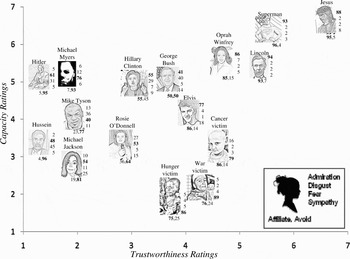
One set of models that may alternatively explain how observers process different types of smiles is the Socio-Relational Framework of Expressive Behaviors (SRFB; Vigil Reference Vigil2009). According to this paradigm, both the appraisal and the expression of nonverbal behavior can be understood in terms of two primary dimensions of affective responses. The first dimension is the heuristical motivation to either attract or dissuade interactions and relational bonding with others, depending on whether other people signal the potential to be a reciprocating social partner or whether they signal interpersonal threat. The second dimension is the appraisal (in the perceiver) and the phenotypic display (in the expresser) of what has been referred to as capacity and trustworthiness cues. Capacity cues signal one's aptitude or ability to inflict beneficial or detrimental consequences on others and are usually associated with the impression of dominance. Trustworthiness cues, in contrast, signal one's interpersonal intentions and motivations and are usually manifested as appeasement or vulnerability displays that are associated with impressions of submissiveness. Several scientists have insisted that the perceptual processing of capacity and trustworthiness cues in others is both necessary and sufficient for predicting interpersonal (e.g., affiliative or avoidant) dispositions and discrete emotive responses toward others (e.g., Fiske et al. Reference Fiske, Cuddy and Glick2006; Rosenberg et al. Reference Rosenberg, Nelson and Vivekananthan1968; Todorov Reference Todorov2008; Vigil Reference Vigil2009; Wojciszke Reference Wojciszke2005). As shown in Figure 1, trustworthiness perceptions are parsimonious predictors of the basic desire to either affiliate with, or to avoid, social objects (see also Wojciszke Reference Wojciszke2005). As hypothesized by the SRFB (Vigil Reference Vigil2009, p. 379), simultaneous perceptions of high- versus low-capacity levels can be used to predict specific and discrete affiliative (admiration vs. sympathy) and avoidant (disgust vs. fear) reactions toward social objects (Fig. 1).
Figure 1.
The social objects are positioned according to mean capacity and trustworthiness ratings from a normative sample of adults (n = 839). The two values under each social object are the percentage of subjects that then reported a desire to either affiliate with, or to avoid the object, respectively. The four values on the right side of each object, from top to bottom, are the percentage of subjects that then responded to the object with either: admiration, disgust, fear, or sympathy, respectively. The most frequent behavioral intention (affiliate or avoid) and emotion reported by participants for each object are in bold.
According to the SRFB, because disgust and admiration project the impression of dominance, while fear and sympathy project the impression of submissiveness (see Leary Reference Leary1957; Marsh et al. Reference Marsh, Adams and Kleck2005; Montepare & Dobish Reference Montepare and Dobish2003), these emotions reflect the proclivities to advertise the capacity and trustworthiness components of one's own reciprocity potential to others (Vigil Reference Vigil2009). Thus, it is possible to interchange socially relevant information through heuristical perceptual and behavioral algorithms, independent of executive mental faculties. Rather, simulative and representational abilities probably evolved to anticipate the outcomes of social situations that can result in variable consequences such as discussion of third-party affiliates or monitoring future patterns of others' behaviors (Geary Reference Geary2005). Specific and functional responding to, and hence processing of, other people's facial expressions does not require the monitoring of pluralistic consequences, but rather instant and uniform (approach/avoidant) responses to the immediate behavioral states of others, irrespective of representational meaning.
In this sense, discrete facial expressions, including smiling, should correspond to features of the mouth and eye regions that signal capacity and trustworthiness cues to others (Vigil Reference Vigil2009). For example, people may signal capacity cues through the baring of teeth (e.g., Duchenne smiles that demonstrate bilateral symmetry, healthiness, and weaponry) and through direct threat stares, which may operate to conceal eye sclera (e.g., demonstrating the capacities to concentrate on the environment, to endure the risk of inciting interpersonal evaluation and potential conflict, and the motivation to protect the eye). Likewise, trustworthiness cues can be demonstrated through the concealment of teeth (e.g., closed-mouth appeasement smiles) and exaggeration of displayed sclera, which may instead operate to explicate one's vulnerability (e.g., from dust particles and sun glare) and allow observers to easily monitor the signaler's attention, thereby reducing one's threat impression to others (tears are also produced from wide-eyed positioning). Humans display the teeth and conceal the sclera in correspondence with dominant emotions (e.g., joy and anger), and they conceal the teeth and expose the sclera in correspondence with submissive emotions (e.g., sadness, fear, surprise, and sympathy). Thus, heuristical presentation and concealment of teeth and sclera across discrete emotive gestures may have evolved in part to signal capacity and trustworthiness cues to others, and ultimately promoting interpersonal affiliation and avoidance. These possibilities support an alternative model to Niedenthal et al.'s proposal, by showing that the cognizant awareness of and the epistemic search for the meaning of emotional sensations may not be necessary for effective responding to different types of smiles and nonverbal expressive behaviors more generally.





Niedenthal et al. emphasize a functional perspective on facial expression processing of variant forms of smiling behaviors. We remain skeptical, however, of their central thesis, that simulative sensitivities modulate the autonoetic representation or epistemic “meaning” of other people's facial expressions. The authors provide no direct support for how simulation or mimicry of musculature movement patterns is necessary for effectively responding to, and hence processing, other people's facial expressions. For example, although the authors discuss how smiles are reflexively mimicked, and how facial movement plays a role in subjective emotional experiences, they present no support to show that the inhibition of facial mimicry modulates the accuracy of facial judgments. Moreover, we feel that the authors overemphasize the role of higher-order cognitive abilities such as the need to infer meaning of self- and other-generated expressive behaviors. Certainly, all socially-embedded species as well as human infants are able to mimic and effectively respond to (e.g., with avert gaze) their social surroundings via heuristical processes that do not require epistemic-supporting mental faculties. More parsimonious conceptualizations of facial expression processes suggest cognitive representations of meaning play only a supplementary role compared to perceptual and behavioral heuristics in producing and responding to discrete facial musculature movement patterns such as smiles.
One set of models that may alternatively explain how observers process different types of smiles is the Socio-Relational Framework of Expressive Behaviors (SRFB; Vigil Reference Vigil2009). According to this paradigm, both the appraisal and the expression of nonverbal behavior can be understood in terms of two primary dimensions of affective responses. The first dimension is the heuristical motivation to either attract or dissuade interactions and relational bonding with others, depending on whether other people signal the potential to be a reciprocating social partner or whether they signal interpersonal threat. The second dimension is the appraisal (in the perceiver) and the phenotypic display (in the expresser) of what has been referred to as capacity and trustworthiness cues. Capacity cues signal one's aptitude or ability to inflict beneficial or detrimental consequences on others and are usually associated with the impression of dominance. Trustworthiness cues, in contrast, signal one's interpersonal intentions and motivations and are usually manifested as appeasement or vulnerability displays that are associated with impressions of submissiveness. Several scientists have insisted that the perceptual processing of capacity and trustworthiness cues in others is both necessary and sufficient for predicting interpersonal (e.g., affiliative or avoidant) dispositions and discrete emotive responses toward others (e.g., Fiske et al. Reference Fiske, Cuddy and Glick2006; Rosenberg et al. Reference Rosenberg, Nelson and Vivekananthan1968; Todorov Reference Todorov2008; Vigil Reference Vigil2009; Wojciszke Reference Wojciszke2005). As shown in Figure 1, trustworthiness perceptions are parsimonious predictors of the basic desire to either affiliate with, or to avoid, social objects (see also Wojciszke Reference Wojciszke2005). As hypothesized by the SRFB (Vigil Reference Vigil2009, p. 379), simultaneous perceptions of high- versus low-capacity levels can be used to predict specific and discrete affiliative (admiration vs. sympathy) and avoidant (disgust vs. fear) reactions toward social objects (Fig. 1).
The social objects are positioned according to mean capacity and trustworthiness ratings from a normative sample of adults (n = 839). The two values under each social object are the percentage of subjects that then reported a desire to either affiliate with, or to avoid the object, respectively. The four values on the right side of each object, from top to bottom, are the percentage of subjects that then responded to the object with either: admiration, disgust, fear, or sympathy, respectively. The most frequent behavioral intention (affiliate or avoid) and emotion reported by participants for each object are in bold.
According to the SRFB, because disgust and admiration project the impression of dominance, while fear and sympathy project the impression of submissiveness (see Leary Reference Leary1957; Marsh et al. Reference Marsh, Adams and Kleck2005; Montepare & Dobish Reference Montepare and Dobish2003), these emotions reflect the proclivities to advertise the capacity and trustworthiness components of one's own reciprocity potential to others (Vigil Reference Vigil2009). Thus, it is possible to interchange socially relevant information through heuristical perceptual and behavioral algorithms, independent of executive mental faculties. Rather, simulative and representational abilities probably evolved to anticipate the outcomes of social situations that can result in variable consequences such as discussion of third-party affiliates or monitoring future patterns of others' behaviors (Geary Reference Geary2005). Specific and functional responding to, and hence processing of, other people's facial expressions does not require the monitoring of pluralistic consequences, but rather instant and uniform (approach/avoidant) responses to the immediate behavioral states of others, irrespective of representational meaning.
In this sense, discrete facial expressions, including smiling, should correspond to features of the mouth and eye regions that signal capacity and trustworthiness cues to others (Vigil Reference Vigil2009). For example, people may signal capacity cues through the baring of teeth (e.g., Duchenne smiles that demonstrate bilateral symmetry, healthiness, and weaponry) and through direct threat stares, which may operate to conceal eye sclera (e.g., demonstrating the capacities to concentrate on the environment, to endure the risk of inciting interpersonal evaluation and potential conflict, and the motivation to protect the eye). Likewise, trustworthiness cues can be demonstrated through the concealment of teeth (e.g., closed-mouth appeasement smiles) and exaggeration of displayed sclera, which may instead operate to explicate one's vulnerability (e.g., from dust particles and sun glare) and allow observers to easily monitor the signaler's attention, thereby reducing one's threat impression to others (tears are also produced from wide-eyed positioning). Humans display the teeth and conceal the sclera in correspondence with dominant emotions (e.g., joy and anger), and they conceal the teeth and expose the sclera in correspondence with submissive emotions (e.g., sadness, fear, surprise, and sympathy). Thus, heuristical presentation and concealment of teeth and sclera across discrete emotive gestures may have evolved in part to signal capacity and trustworthiness cues to others, and ultimately promoting interpersonal affiliation and avoidance. These possibilities support an alternative model to Niedenthal et al.'s proposal, by showing that the cognizant awareness of and the epistemic search for the meaning of emotional sensations may not be necessary for effective responding to different types of smiles and nonverbal expressive behaviors more generally.