INTRODUCTION
The death of a spouse is one of the most stressful events that individuals encounter over a lifetime (Stroebe & Stroebe, Reference Stroebe and Stroebe1987), and often these deaths are preceded by long and demanding periods of informal caregiving (Aneshensel et al., Reference Aneshensel, Pearlin and Mullan1995; Minino & Smith, Reference Minino and Smith2001). Previous research has documented a wide range of mental, physical, and social decrements associated with spousal death and caregiving, including increased depression, decreased life satisfaction and social activities, and increased mortality (e.g., Schulz et al., Reference Schulz, O'Brien and Bookwala1995; Schulz & Beach, Reference Schulz and Beach1999; Carr et al., Reference Carr, House and Wortman2001; Davis & Nolen-Hoeksema, Reference Davis and Nolen-Hoeksema2001). Hospice and end-of-life caregivers may be at particular risk for these declines, as they are often highly engrossed in the caregiving experience while simultaneously facing the loss of a loved one. One recent study found that spousal caregivers of hospice patients spent an average of 97 h/week in the caregiving role and were at an increased risk for depression, decreased life satisfaction, and health problems compared with demographically matched noncaregiving controls (Haley et al., Reference Haley, LaMonde and Han2001). Similarly, another study found that caregivers of dying cancer patients reported significant emotional and financial difficulties as a result of the caregiving experience (Phipps et al., Reference Phipps, Braitman and True2003).
Stress process models are increasingly used for studying both caregiving and bereavement (e.g., George, Reference George1990; Pearlin et al., Reference Pearlin, Mullan and Semple1990; Stroebe & Schut, Reference Stroebe and Schut1999; Haley et al., Reference Haley, LaMonde and Han2003). Applied to this context, stress process theories suggest that well-being outcomes, such as depression or life satisfaction, are not based solely on an individual's exposure to caregiving stressors such as patients' functional impairments or duration of caregiving. Each individual appraises the stressfulness of the situation while simultaneously examining the availability of resources, such as social support, and the combination of these factors determines the degree to which that stressor affects the caregiver's well-being. This theoretical approach can be helpful in examining two opposing hypotheses in the caregiving and bereavement literature: resource depletion and relief. Resource depletion theory proposes that a depletion of resources results from prolonged exposure to caregiving stressors leaving the surviving spouse more vulnerable to negative outcomes during widowhood. Alternatively, relief theory states that the reduction in caregiving burden following the loss of a spouse results in improvements in mental and physical health outcomes (Schulz et al., Reference Schulz, Newsom and Fleissner1997a). In addition to the resource depletion and relief hypotheses, stress process models can also be used to examine anticipatory grief. The anticipatory grief hypothesis suggests that individuals who have time to psychologically prepare themselves for the loss of a loved one may be at a decreased risk for difficulties after the death. It is believed by some researchers that this theory may be particularly important within the context of caregiving and bereavement, although the research to date is inconclusive (Schulz et al., Reference Schulz, Newsom and Fleissner1997a).
Although considerable literature examines the impact of stressors, appraisals, and social resources on mental and physical health during caregiving, few studies have explored the impact of these variables on bereavement outcomes. Those that have suggest that longer duration of caregiving, greater activities of daily living (ADL) assistance, negative appraisals of the caregiving experience, and lower social resources are related to poorer well-being outcomes during bereavement (Cleiren et al., Reference Cleiren, van der Wal and Diekstra1988; McHorney & Mor, Reference McHorney and Mor1988; Bass & Bowman, Reference Bass and Bowman1990; Sankar, Reference Sankar1991; Mullan, Reference Mullan1992). It is possible that the finding relating longer duration of caregiving with higher levels of relief is evidence in support of the anticipatory grief hypothesis; however, the results in this area have not been definitive (Schulz et al., Reference Schulz, Newsom and Fleissner1997a). One study that focused on positive aspects of caregiving found that higher preloss caregiving perceptions of benefit from caregiving was associated with higher levels of postloss depression and grief (Boerner et al., Reference Boerner, Schulz and Horowitz2004). The authors of this study concluded that individuals who experience more positive aspects of the caregiving experience may have a more difficult adjustment period due to the simultaneous loss of both a family member and a meaningful role and suggested that future research focus on a more comprehensive picture of the caregiving experience (Boerner et al., Reference Boerner, Schulz and Horowitz2004).
The current study addresses the extent to which stressors, appraisals, social support, and well-being while caregiving predict well-being during bereavement. Specifically, we were interested in the following questions: How do caregiving stressors (duration of caregiving, hours/week caregiving, and functional impairments), appraisals (stressfulness of functional impairments and positive aspects of caregiving), and objective (size of social network, overall social support, number of visits and social activities) and subjective (satisfaction with social support) measures of social support while caregiving affect postloss depression, life satisfaction, and grief in bereaved former hospice caregivers? To address these questions, we conducted a longitudinal study of elderly spousal caregivers of terminally ill patients enrolled in a large, nonprofit hospice, and completed both pre- and postloss assessments.
We hypothesized, in the context of the stress process theory, that higher preloss measures for both depression and life satisfaction would be associated with higher postloss measures for both depression and life satisfaction. For the relationship between caregiving stressors and our three outcome measures, we examined two competing theories:
1. Resource depletion theory predicted that higher preloss levels of caregiving stressors (hours/week caregiving, duration of caregiving, and ADL/independent activities of daily living [IADL] impairment) would be associated with higher levels of depression and grief and lower levels of life satisfaction postloss after controlling for baseline.
2. Anticipatory grief hypothesis predicted that individuals who experienced longer duration of caregiving would be associated with lower levels of grief and depression postloss.
Within the domain of appraisals, the two theories suggested the following:
1. Resource depletion hypothesis suggested that higher preloss levels of perceived stressfulness of the caregiving experience and lower positive aspects of caregiving would be associated with higher levels of postloss depression and grief and lower levels of postloss life satisfaction after controlling for baseline well-being measures.
2. Relief hypothesis predicted that higher levels of perceived levels of stressfulness of caregiving and higher levels of positive aspects of caregiving would be associated with a greater sense of relief postloss, particularly higher levels of life satisfaction and lower levels of depression and grief after controlling for baseline well-being measures.
In relation to social resources, the resource depletion hypothesis predicted that, after controlling for baseline well-being measures, higher levels of preloss objective (size of social network, overall social support, number of visits, and social activities) and subjective (satisfaction with social support) measures of social support would be associated with lower levels of postloss depression and grief and higher levels of postloss life satisfaction.
METHODS
Participants
Spousal caregivers of terminally ill older patients diagnosed with either end-stage dementia or lung cancer were recruited as part of a larger research project conducted by the LifePath Hospice of Tampa, Florida, and the School of Aging Studies at the University of South Florida, Tampa, Florida. The current project involves a follow-up of these participants. Full details regarding the sample are described elsewhere (Haley et al., Reference Haley, LaMonde and Han2001, Reference Haley, LaMonde and Han2003). Briefly, the original project involved the recruitment of 80 spousal caregivers over the age of 50 who were caring for terminally ill hospice patients from LifePath Hospice of Tampa, Florida. All patients were diagnosed by their family physicians with either end-stage dementia (n = 40) or lung cancer (n = 40) and were certified by their family physicians as having 6 months or less of life expectancy. To be eligible for the research project, caregivers had to be (a) the spouse of the patient, (b) the primary caregiver for the patient, and (c) able to understand spoken and written English.
The current project included 50 of the original 80 elderly spousal caregivers of dementia (n = 21) or lung cancer (n = 29) patients. On average, 8 months elapsed between the Time 1 (T1–Preloss) and the Time 2 (T2–Postloss) interviews (range 2–24 months). Of the 30 excluded caregivers, 13 declined participation, 9 moved out of the area, and 8 were not recertified by LifePath Hospice and thus could not be contacted for follow-up. The participants who remained in the study did not differ significantly from those who were not included in the follow-up interview on any demographic characteristics or baseline variables.
Data Collection Procedure
Each eligible caregiver was contacted via telephone and asked to participate in the research project, and those that agreed were interviewed in their homes by a trained research assistant. The appointments were usually scheduled within 2 weeks of the patient's admission to hospice. The caregivers received no financial compensation for their participation.
The bereaved caregivers were then contacted after their spouse's death and again administered a comprehensive structured personal interview and questionnaire in their homes, usually within 4.5 months following the date of the patient's death (range 1–10 months).
Measures
Caregiver Demographics
Caregiver age, gender, education, and race/ethnicity were assessed through self-report during the preloss interview.
Caregiving Stressors
Duration of caregiving in months, hours of caregiving per week, and patient self-care problems were assessed during the preloss interview. Duration of caregiving and hours per week caregiving were assessed using self-report. Patient self-care problems (α = .89) included impairments in both functional abilities (ADL; Katz et al., Reference Katz, Ford and Moskowitz1963) and completing household chores (IADL; Lawton & Brody, Reference Lawton and Brody1969), with higher scores indicating more self-care problems.
Appraisals
Stressfulness of ADL and IADL impairments (α = .87) was assessed during the preloss interview using a 0–3 Likert-type scale, with responses ranging from not at all stressful to very stressful for each of the functional abilities (Katz et al., Reference Katz, Ford and Moskowitz1963; Lawton & Brody, Reference Lawton and Brody1969). Stressfulness scores were adjusted for the number of problems experienced by the patient, so scores reflect the average subjective stressfulness of problems, independent of how many problems the caregiver faced, with higher score indicating more stressful appraisals.
Positive aspects of caregiving (α = .80) were assessed during the preloss interview using an 11-item self-report measure developed by Schulz et al. (Reference Schulz, Newsom and Mittelmark1997b). The participants were asked to rate each item using either a yes or no response, with higher scores indicating more caregiving benefit.
Social Resources
Social activities (α = .62) were assessed during the preloss interview using the 16-item Multilevel Assessment Inventory (MAI; Lawton et al., Reference Lawton, Moss and Fulcomer1982), which utilizes a 5-point Likert-type scale with responses ranging from 0, indicating never, to 5, indicating 12 or more times to examine level of caregiver participation in social activities during the previous month. Higher scores indicate higher number of social activities.
Size of the social network (α = .74) was assessed during the preloss interview using an eight-item measure from the revised Lubben Social Network Index (Lubben, Reference Lubben1988). Participants were asked to list the number of relatives and friends they hear from or feel close to using a 6-point Likert-type scale with responses ranging from 0, indicating zero, to 6, indicating nine or more. Additionally, the frequency of contact with a close friend or relative was rated using the same response range with responses indicating less than monthly to daily. Higher scores on this measure indicated a larger social network.
Social support (α = .76) and satisfaction with social support (α = .63) were assessed during the preloss interview using a scale by Krause and Borawski-Clark (Reference Krause and Borawski-Clark1995). Specifically, to assess social support, participants were asked to rate how often others have provided tangible, emotional, and informational support during the past month on 11 items using a 4-point Likert-type scale with responses ranging from 1, indicating never, to 4, indicating often. Satisfaction with social support was assessed by participant ratings for each of the three types of social support (three items) using the same response range with responses indicating not at all to very satisfied. For both of these measures, higher scores indicate higher levels of received social support and satisfaction with social support.
Well-Being
Depression (α = .81) was assessed during both the preloss and postloss interviews using the 20-item Center for Epidemiological Studies-Depression Scale (CES-D; Radloff, Reference Radloff1977). Participants rated how often they experienced symptoms associated with depression over the past week using a 4-point Likert-type scale with responses ranging from 0, indicating rarely or none of the time (less than once a day), to 3, indicating “most of the time (5–7 days)” with four positive items reverse coded. Higher scores on the CES-D indicate higher frequency/severity of depressive symptomatology.
Life satisfaction (α = .76) was assessed during both preloss and postloss interviews using the 13-item Life Satisfaction Index-Z (LSI-Z; Wood et al., Reference Wood, Wylie and Sheafor1969). Participants were asked to indicate if they agreed, disagreed, or were uncertain about items related to general statements about life, with five items reverse coded. Higher scores on the LSI-Z indicate higher levels of overall life satisfaction.
Grief (α = .88) was measured during the postloss interview using 13 items from the Texas Revised Inventory of Grief (TRIG; Faschingbauer et al., Reference Faschingbauer, Zisook, DeVaul and Zisook1987). This scale assessed symptoms associated with separation distress using a 5-point Likert-type scale with responses ranging from 1, indicating completely false, to 5, indicating completely true. Higher scores on this scale indicate higher levels of grief.
Analysis
We first examined correlations between the demographic characteristics, specifically age, gender, education, and race/ethnicity, and the three outcome measures, depression, life satisfaction, and grief, to determine if any were needed as covariates in the regression analyses. Due to the small sample size, only demographic characteristics and preloss caregiving well-being variables that were significantly correlated with the dependent variables were utilized in the regression analyses. We also examined patient diagnosis (cancer or dementia) to determine if there were any group differences in our three outcome measures.
We then conducted univariate analyses to understand which variables were significant predictors of postloss depression, life satisfaction, and grief. The domains of variables used for this step of the analysis include preloss caregiver well-being, caregiving stressors, appraisals, and social resources. This step allowed us to determine which predictors to use in the regression models.
Finally, we created three hierarchical multiple regression models (one for depression, one for life satisfaction, and one for grief) using the significant predictors from the previous analyses in order to gain a better understanding of the relationship between preloss characteristics and their effect on postloss well-being outcomes. Additionally, using this rationale for selection of predictor variables allowed us to limit the number of predictors in order to accommodate for the limited sample size. The order of entry for the regression models was as follows: (1) any necessary covariates (as determined by step one) and preloss caregiver well-being measures, (2) objective measures of caregiving, (3) subjective appraisals of the caregiving experience, and (4) objective and subjective measures of social support.
RESULTS
Descriptive Analysis
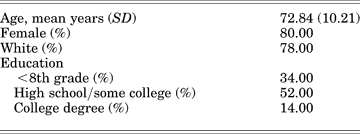
As shown in Table 1, the sample had a mean age of 72.84, was predominantly female, and identified themselves as primarily Caucasian American (n = 39), with 3 African Americans, 7 Hispanics, and 1 Asian American (in subsequent analyses, race/ethnicity was examined as a dichotomous variable, with individuals categorized as either White or non-White). In addition, there were no differences across diagnosis for any of the variables in this study.
Demographic characteristics of the sample (n = 50)

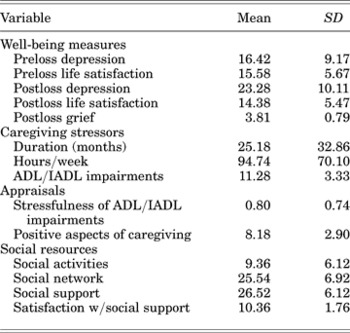
Table 2 shows the means and standard deviations for all caregiver stressors, appraisals, social resources, and well-being variables utilized in the univariate and regression analyses.
Means and standard deviations for all study variables (n = 50)

Univariate Analyses
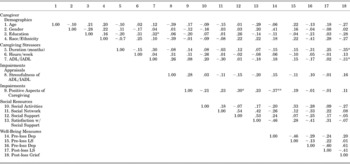
Table 3 displays the results of the univariate correlational analysis for all of the variables included in this study. Among the demographic variables, we found that race/ethnicity was negatively correlated with postloss depression, indicating that non-White hospice caregivers reported higher levels of depressive symptomatology during bereavement. We also found that lower baseline depression, fewer months caregiving, lower levels of social activities, smaller size of social network, and lower satisfaction with social support were all significantly correlated with higher postloss depressive symptomatology. Neither of our preloss measures of appraisal of the caregiving experience (stressfulness of ADL/IADL impairments and positive aspects of caregiving) was significantly correlated with postloss depression.
Correlation matrix for all study variables

Higher levels of satisfaction with social support while caregiving was the only variable significantly correlated with higher levels of life satisfaction postloss. None of the caregiving stressor, appraisal, or objective social resource measures, and, interestingly, life satisfaction preloss were significantly correlated with life satisfaction postloss. (Follow-up regression analysis was not conducted for postloss life satisfaction due to the fact that only one variable was significantly correlated with this outcome variable.)
Fewer months in the caregiving role and lower number of ADL/IADL impairments were significantly correlated with grief in the correlational analysis. None of the baseline measures of well-being, appraisal variables, or social resource measures were significantly correlated with grief in our sample.
Regression Models
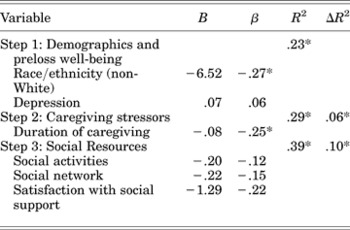
The regression model with postloss depression as the dependent variable is shown in Table 4. Being non-White and having fewer months in the caregiving role were associated with higher postloss depression. The block of social resource variables accounted for significant variance, but none of the individual variables reached statistical significance. The model accounted for 39% of variance in postloss depression.
Regression model for postloss depression

* p < .05.
The model with grief as the dependent variable was examined using linear regression, as the two variables that were significantly correlated with grief were both from the same block of the proposed hierarchical regression model (caregiving stressors). The two variables utilized in this regression model were duration of caregiving and ADL/IADL impairments. This block of variables accounted for 17.2% of the variance in the model. When both variables were considered simultaneously the number of ADL/IADL impairments was not associated with higher levels of grief postloss (B = −.05, β = −.23, p = .111), but fewer months in the caregiving role was associated with higher levels of grief (B = −.01, β = −.29, p = .04).
DISCUSSION
This study sought to identify how preloss caregiving experiences were associated with postloss depression, life satisfaction, and grief using a stress process theory framework in a sample of bereaved former hospice caregivers. Our results supported both the resource depletion and anticipatory grief hypotheses and suggested that short-term bereavement outcomes are different than factors that predict well-being while caregiving. Our findings also highlighted the importance of studying multiple domains of well-being outcomes, as the significant associations and predictors for depression, life satisfaction, and grief showed great variability.
The regression models indicated that being non-White, having fewer months caregiving, and having lower levels of social resources were significant predictors of depression. The findings from our analyses were consistent with the anticipatory grief hypothesis that longer duration of caregiving was related to better well-being outcomes during bereavement and the resource depletion hypothesis that higher levels of social resources would be associated with lower depression postloss in our sample. However, neither the resource depletion or relief hypothesis related to the role of appraisals of the caregiving experience was supported in this study. Interestingly, preloss depression was not very highly correlated with postloss depression in our study. Prior studies have found relative consistency in depression scores over time while an individual is still in the caregiving role and much higher correlations between preloss and postloss depression (Goode et al., Reference Goode, Haley and Roth1998; Boerner et al., Reference Boerner, Schulz and Horowitz2004); however, the latter finding has not always been consistent (Bonanno et al., Reference Bonanno, Wortman and Lehman2002). It is likely that the short-term nature of our bereavement follow-up was important in this finding, as prior research has shown that it is common for grieving persons to be acutely distressed regardless of their baseline levels of depression, particularly in the short term (Raphael et al., Reference Raphael, Minkov, Dobson, Stroebe, Hansson and Stroebe2001).
Given the findings from our sample as they relate to depression, it may actually be the concept of anticipatory grief that is playing the most important role. Individuals who had been providing care for a longer period of time exhibited lower levels of depressive symptomatology in our sample, suggesting that on an individual level, having time to adjust to the inevitable loss following a debilitating illness may lead to better outcomes during bereavement. The idea that individuals experience a sense of relief following the loss of a spouse, particularly after a period of extensive caregiving (Mullan, Reference Mullan1992; Schulz et al., Reference Schulz, Mendelsohn and Haley2003) and that unexpected death leads to higher levels of depression (Carr et al., Reference Carr, House and Wortman2001) have both been demonstrated in the bereavement literature. One of the strengths of our study is the tremendous variability in duration of caregiving. Only 32% of our sample had been providing care to their spouse for 6 months or less and 48% had been involved in caregiving for more than a year. It is possible that the inclusion of such a wide range of caregiving durations allowed us to see the effects of anticipatory grief. Effects such as those related to relief may be more evident on longer-term follow-up.
Due to the small sample size and the diversity in the non-White participants, it is beyond the scope of this study to be able to thoroughly interpret the finding that race/ethnicity was associated to postloss depression. However the strength of the relationship between these two variables suggests that future attention needs to be paid to the differing effects of bereavement on multiple racial and ethnic groups. One study that examined reactions of caregivers of Alzheimer's disease patients to the loss of the care recipient using both White and African American participants found that African American caregivers reported less acceptance of the relative's death, greater perceived loss, and less anticipatory grief (Owen et al., Reference Owen, Goode and Haley2001). The authors of this study suggested that ethnic differences in bereavement merit future research, and our finding related to the association between race/ethnicity and depression lend credence to that suggestion. One additional recent study that examined the effects of widowhood on well-being found that African American and Caucasian American widows reported similar levels of overall grief, yearning, intrusive thoughts, shock, depressive symptoms, and anxiety (Carr, Reference Carr2004). This study did find differences between these two groups on two outcomes, anger and despair, with African Americans reporting significantly lower levels compared to Caucasian Americans. Future studies should include large enough samples to examine differential effects of bereavement on distinct racial/ethnic groups, because cultural variables appear to have a marked impact on end-of-life issues (Kwak & Haley, Reference Kwak and Haley2005).
The second outcome variable examined in this study was life satisfaction. None of the hypotheses relating to caregiving stressors or appraisals were supported by the research findings, and, interestingly, only satisfaction with social support was significantly associated with postloss life satisfaction. These findings lend support to the idea that positive and negative well-being outcome measures are not mutually exclusive and need to be examined independently of each other in order for researchers and practitioners to begin to understand the complex relationship between preloss characteristics and bereavement.
Our results related to grief following the loss of a spouse indicated that fewer months in the caregiving role and a lower number of functional impairments were significant predictors of higher levels of grief. These findings were both consistent with and distinct from those seen in the depression model. The univariate analyses revealed that none of the appraisal or social resource variables was significantly associated with grief, contrary to the tenets of resource depletion and relief hypotheses. As discussed above, it is possible that for our sample, the factor that most protected an individual from experiencing a higher grief reaction was the chance to prepare him- or herself for the loss. Additionally, caregivers who were exposed to higher levels of functional impairments experienced less grief, suggesting that having to provide assistance to a spouse on everyday tasks such as dressing, toileting, and bathing may have also been a factor in aiding these individuals in adjusting to the loss with less distress. The fact that social resources were not significant in the grief analyses as they were in depression lends support to the belief by many researchers that grief and depression are distinct concepts that represent different facets of bereavement and need to be examined in the research as such (Prigerson & Jacobs, Reference Prigerson, Jacobs, Stroebe, Hansson and Stroebe2001; Bonanno et al., Reference Bonanno, Wortman and Lehman2002; Boerner et al., Reference Boerner, Schulz and Horowitz2004). Current bereavement researchers have differentiated between grief and depression in the development of bereavement trajectories (Bonanno et al., Reference Bonanno, Wortman and Lehman2002) and have also begun to identify symptoms of “traumatic grief” that are distinct from those of depression-related depression and anxiety (see Prigerson & Jacobs, Reference Prigerson, Jacobs, Stroebe, Hansson and Stroebe2001).
Our study had a number of limitations, including a single, relatively short-term follow-up and a small sample size. Although the use of both preloss and postloss data allowed us to examine predictors, the postloss interview was conducted in a relatively short amount of time after the death (approximately 4 months). The inclusion of at least one additional longer-term postloss data collection point would have allowed us to examine patterns of depression, life satisfaction, and grief over time. Greater power related to a larger sample size, similar to the one used by Boerner et al. (Reference Boerner, Schulz and Horowitz2004), may have produced additional significant predictors. Furthermore, we were limited in the sophistication of our statistical analyses and were unable to utilize methodologies such as mediating and moderating analysis and structural equation modeling, which have been used by other researchers to evaluate stress process models of caregiving (Haley et al., Reference Haley, Roth and Coleton1996; Goode et al., Reference Goode, Haley and Roth1998). As previously discussed, we were unable to make any inferences about the finding related to race/ethnicity and postloss depression due to both the small sample size overall and the small numbers of individuals from any particular cultural group. It is important to note, however, that the sample size and study design are consistent with other studies in the field.
One of the long-term goals of this research is to aid both researchers and practitioners in identifying factors present prior to the loss of a spouse that place caregivers at risk for complications during bereavement. By expanding the domains of variables used in this area of research, it is possible to gain an understanding not only of which factors put an individual at risk for negative outcomes, but also to identify those that are protective factors that lead to a healthy adjustment to bereavement. The findings from our study suggest that caregiving appraisals may not play as significant a role in adjustment to bereavement as they do while caregiving. In addition, the need for continued focus on social resource variables as potential buffers against negative well-being outcomes during bereavement was supported by our study. Our findings also highlight the importance of including caregiving context variables in future research and the inclusion of individuals who have a variety of caregiving experiences. We found evidence in support of both the resource depletion and anticipatory grief hypotheses; however, this is still a relatively new area of research and there is much more to be done before interventions targeting at-risk caregivers can be developed and implemented in caregiving populations. Finally, studies of long-term bereavement outcomes will be necessary to better understand the clinical implications of caregiving experiences, because initial grief reactions may not be predictive of clinically significant, long-term adaptation.
ACKNOWLEDGMENTS
This article was completed with support from LifePath Hospice and the Institute on Aging at the University of South Florida. The authors are greatly appreciative of the contributions of Stephanie Bailey, Laurie LaMonde, Claire Robb, and Susan Stormer in conducting the research. This research was conducted in partial fulfillment of a doctoral dissertation at the University of South Florida and we would like to thank Drs. Paul Jacobsen, Susan McMillan, and Sandra Reynolds for their participation on this doctoral committee.