1 Introduction
Though much has been written of dialects of English found in North America (e.g. Wells Reference Wells1982, Olive, Greenwood & Coleman Reference Olive, Greenwood and Coleman1993, Clopper, Pisoni & de Jong Reference Clopper, Pisoni and Jong2005, Labov, Ash & Boberg Reference Labov, Ash and Boberg2006), the variety of English spoken in the Hawaiian Islands has received very little attention. As a necessary first step in documenting this unique dialect of English, this paper presents an acoustic analysis of the vowel systems of young adult Hawai‘i English speakers from the island of Oʻahu.
1.1 English in Hawai‘i
Though Hawai‘i is politically affiliated with the United States, the social demographics of Hawai‘i inhabitants are quite different than those of other areas in the country. In Hawaiʻi, there is no clear numeric ethnic majority, and there is a wide diversity of first languages. In addition, many people from Hawai‘i align themselves with a ‘local’ identity, an identity that is tied with language, place, and ethnicity. This identity is salient to inhabitants of the state and distinct from mainland U.S. identity. At the same time, the state is highly influenced by mainland media and tourists from various English-speaking countries. As such, we believe that the circumstances exist for the variety of English spoken in Hawai‘i to be quite different from varieties found in other parts of the world, but the specific linguistic features that make Hawaiʻi English different from other varieties has received little attention from scholars.
English was first spoken in Hawai‘i in the 18th century, when sailors began to stop in the islands to trade. Before then, the population spoke Hawaiian; but as explorers, sailors, missionaries, and workers came to Hawai‘i, they brought with them a variety of languages (including English), as well as trade pidgins. With the establishment of plantations, even more people arrived in Hawai‘i, bringing with them the languages they spoke, including Cantonese, Japanese, Portuguese, and Filipino languages. These languages came into contact on the plantations, where many new pidgins formed. The most prevalent of these was Pidgin Hawaiian, which had Hawaiian as its lexifier and which was spoken into the 1890s (Siegel Reference Siegel2000). However, as American political influence in Hawaiʻi grew, so too did the influence of English, especially in education (Stueber Reference Stueber1964). As a result, the primary lexifier to the local pidgin became English. The children of the plantation workers nativized the pidgin into a creole (Robert Reference Robert, Escure and Schwegler2004), which became known as Pidgin and is often referred to by linguists as Hawai‘i Creole. Hawai‘i Creole became the mother tongue of many inhabitants, while English was used in official capacities. Throughout the 20th century, efforts were made to further promote the use of English, particularly in academic settings. Both Hawai‘i Creole and English continue to be used in the islands today (Drager Reference Drager2012) and, given that many people speak both, it is likely that Hawaiʻi Creole and Hawaiʻi English have exerted some amount of influence on one another's structures (Sato Reference Sato, Wolfson and Manes1985). Therefore, it is important to provide information about descriptions of both Hawai‘i English and Hawai‘i Creole that have been given in the literature, particularly because many of our speakers are speakers of both languages, and also because it is possible that some of the different phonetic realizations produced in the dialect of English in Hawai‘i overlap with those found in the creole.
The small amount of documentation of Hawai‘i English can be found in Sato (Reference Sato, Hyltenstam and Viberg1993) and Hay, Drager & Thomas (Reference Hay, Drager and Thomas2013). Sato describes a continuum of how Hawai‘i Creole is spoken, and introduces Hawai‘i English as one end of that spectrum. Sato (Reference Sato, Hyltenstam and Viberg1993: 135) lists four features as indicative of Hawai‘i English: fully realized vowels where schwa might be used in other dialects (e.g. ‘t[u]day’), stopping of the voiced interdental fricative, monophthongized mid vowels /e/ and /o/ where other varieties may have diphthongs, and the vocalization of syllable-final /ɹ/ (e.g. [k hɑ] ‘car’). The analysis of Hawai‘i English low back vowels in Hay et al. (Reference Hay, Drager and Thomas2013) shows overlapping realizations by young Hawai‘i English speakers, suggesting that these sounds are merged in Hawai‘i English. However, Hay et al. (Reference Hay, Drager and Thomas2013) did not investigate any other Hawai‘i English vowels, so little else is known about the vowel system. With the limited descriptions of Hawai‘i English and with virtually no available acoustic data, it is important that a preliminary acoustic analysis of the vowels be undertaken.
It is possible, however, that phonetic realizations of Hawai‘i English vowels are similar to those found in Hawai‘i Creole. While there has been no acoustic analysis of the vowels of Hawai‘i Creole as of yet, data obtained through auditory analysis by Sakoda & Siegel (Reference Sakoda, Siegel, Burridge and Kortmann2008) suggest that there are seven vowels in the basilectal Hawai‘i Creole system. The fleece and kit vowels have a single realization most similar to English fleece; dress and trap are not distinct and are realized most similarly to English trap; goose and foot are not distinct and are realized similarly to English goose; and lot and strut are not distinct, and some speakers realize this single phoneme more similarly to English lot and others more similarly to strut (Sakoda & Siegel Reference Sakoda, Siegel, Burridge and Kortmann2008: 221–225). In addition, goat and face are sometimes monophthongal, but the realizations of Hawaiʻi Creole face and goat depend on context; face is monophthongal word-finally and before voiceless sounds, and goat is monophthongal word-finally and before /m/ (Sakoda & Siegel Reference Sakoda, Siegel, Burridge and Kortmann2008: 223). Our data are compared with Sakoda & Siegel's description of Hawai‘i Creole vowels in order to determine how similar the phonological systems of Hawai‘i Creole and Hawai‘i English are.
1.2 Vowel realizations in dialects of English
The present work illuminates how the English spoken in Hawai‘i fits into the greater picture of the phonetic variation found in other varieties of English, particularly those of North America.Footnote 1 North American varieties are likely candidates for sharing phonetic features due to the historical settlement of English-speaking Americans in the islands. Non-American varieties also have a history in Hawaiʻi (Reinecke & Tokimasa Reference Reinecke and Tokimasa1934, Kent Reference Kent1993). We have provided an overview of vowel systems found in these varieties in order to compare them with what we observe in our Hawai‘i English data, and we will return to these descriptions throughout the paper.
1.2.1 Front vowels in English
The short front vowels (kit, dress, and trap) are involved in different shifts across the English-speaking world, and the direction of the shift depends largely on the region in which the variety is spoken. In the American North (New York, New England, the Inland North, and the Mid-Atlantic), trap is raised and diphthongal before both oral and nasal consonants (Labov Reference Labov2001). Furthermore, kit and dress, in the Inland North, are often realized in a centralized or, in the case of dress, a low-central position (Labov Reference Labov2001, Labov et al. Reference Labov, Ash and Boberg2006). In the South, the short front vowels kit and dress are realized as raised and tense, so that the pronunciation of sit and set approximate see it and say it, respectively; trap follows a similar trajectory to that found in the North (Labov et al. Reference Labov, Ash and Boberg2006: 243). In contrast, the short front vowels are lowering and retracting in the West (Eckert Reference Eckert2008, Kennedy & Grama Reference Kennedy and Grama2012) and Canada (Clarke, Elms & Youssef Reference Clarke, Elms and Youssef1995), except that, among Anglo speakers in California, trap appears to be raising in pre-nasal position (Eckert Reference Eckert2008). Outside the United States in New Zealand and Australia, the short front vowels are moving in the opposite direction. In New Zealand, kit centralizes so that fish sounds like fush, and trap and dress are realized in raised, lax positions, so that had sounds like head and head sounds like hid (Watson, Maclagan & Harrington Reference Watson, Maclagan and Harrington2000). In Australia, kit and dress are raising and tensing, so that hit sounds like heat, and head sounds like hayed (Harrington, Cox & Evans Reference Harrington, Cox and Evans1997, Cox Reference Cox1999); the nucleus of trap, however, appears to be lowering and retracting (Cox Reference Cox1999).
Realizations of fleece and face also vary according to region. In American dialects, fleece is generally realized as tense with a slight offglide, while face is realized with either a lax or a tense nucleus with an offglide (Wells Reference Wells1982: 487). In the American South the nucleus of fleece and face are lower and laxer, as they participate in the Southern Shift (see discussion of kit and dress in the previous paragraph). In addition, speakers of the North-Central dialect generally realize face as tenser and more monophthongal than the rest of North America (Wells Reference Wells1982: 487). The pronunciations of fleece and face vary much more considerably in non-American English dialects; fleece is realized with a lax nucleus in Australian (Wells Reference Wells1982: 597) and New Zealand English (Wells Reference Wells1982: 607), and face is realized in both varieties with a front, low nucleus close to trap (Wells Reference Wells1982: 597, 609). In some varieties of the British Isles (e.g. London), fleece tends to be diphthongal with a mid or high-mid nucleus (e.g. [əi]) in open syllables (Wells Reference Wells1982: 366). face is realized with great range across the British Isles, as [eː] in the north (e.g. Leeds and Yorkshire) and [ʌɪ] in the south (e.g. Birmingham and London) (Wells Reference Wells1982: 363–364).
1.2.2 Back vowels in English
One of the most prominent ongoing changes in the Englishes around the world is the fronting (or centralizing) of the high, back vowel goose. Footnote 2 Goose is fronted in post-coronal positions in North American English, with the exception of only a few dialect regions (Labov Reference Labov2001, Labov et al. Reference Labov, Ash and Boberg2006: 152). Goose is also fronting in London, especially among non-Anglos (Kerswill et al. Reference Kerswill, Cheshire, Fox and Torgensen2007), as well as elsewhere in England (Torgersen, Kerswill & Fox Reference Torgersen, Kerswill, Fox and Hinskens2006), New Zealand (Maclagan et al. Reference Maclagan, Watson, Harlow, King and Keegan2009) and in Australia (Harrington et al. Reference Harrington, Cox and Evans1997, Cox Reference Cox1999: 9–10). The fronting of goose in post-coronal contexts has to do with a glide between coronals and goose that is no longer realized in most North American dialects. However, a difference in the vowel quality remains for some speakers, resulting in a fronter onglide in those cases where there would have historically been a glide (Labov et al. Reference Labov, Ash and Boberg2006: 150). Given the widespread occurrence of this fronting and the phonetic motivation for it, it would be unsurprising to observe front or at least central realizations of goose in Hawaiʻi. For many of the mainland American varieties in which goose-fronting has been observed (such as in the Pacific North-West and California), goat is also fronted in post-coronal environments (Ward Reference Ward2003, Hall-Lew Reference Hall-Lew2009, Kennedy & Grama Reference Kennedy and Grama2012). In fact, ‘in the history of many languages, the fronting of /o/ or /o w/ [goat] is found parallel to and somewhat behind the fronting of /u/ or /u w/ [goose]’ (Labov et al. Reference Labov, Ash and Boberg2006: 155). Thus we might expect that if we observe goose fronting in Hawaiʻi, we would also find goat fronting, especially if the fronting of goose appears to be well-established.
The behavior of the low back vowels lot and thought is highly dependent on region. Lot and thought are largely distinct in the Commonwealth, with the notable exception of Scotland (Wells Reference Wells1982, Stuart-Smith Reference Stuart-Smith, Kortmann and Upton2008), where they are merged. By contrast, the lot–thought merger is quite common in the United States, for example, in the West of North America (Clopper et al. Reference Clopper, Pisoni and Jong2005, Labov et al. Reference Labov, Ash and Boberg2006), and these vowels are completely merged or undergoing merger in many other parts of North America as well (Gordon Reference Gordon, Murray and Simon2006, Baranowski Reference Baranowski2007, Irons Reference Irons2007, Bigham Reference Bigham2010), including Canada (Avis Reference Avis and Davis1972, Roeder & Gardner Reference Roeder and Gardner2013). In the North and the West, few speakers make a distinction in either production or perception (Labov et al. Reference Labov, Ash and Boberg2006: 264). In these cases, thought is said to have merged into the space of lot.
In Midlands and California English, strut is realized in a fronted (Labov et al. Reference Labov, Ash and Boberg2006: 265) or centralized (Hinton et al. Reference Hinton, Moonwomon, Bremmer, Luthin, Clay, Lerner and Corcoran1987, Eckert Reference Eckert2008: 34) position, respectively. However, in the North, strut is realized in a low back position (Labov et al. Reference Labov, Ash and Boberg2006: 188). In various dialects in the North of England, foot and strut are merged, so that both vowels are realized as high and lax (Wells Reference Wells1982: 197), while some more conservative dialects realize foot before /k/ as high and tense (Wells Reference Wells1982: 198). In some dialects across the English-speaking world (e.g. Scottish English), foot is realized as high and tense (Wells Reference Wells1982: 133). That these changes in back vowels are so widespread across different English-speaking countries may suggest that these changes are more likely to also be evident in Hawai‘i English.
1.2.3 Diphthongs
Realizations of mouth and price are also dependent on region. In the Northern U.S. and in Canada, these vowels participate in the Canadian shift, where the nuclei of these vowels are raised before voiceless obstruents (Chambers Reference Chambers1973). Elsewhere in the U.S. (e.g. the West, the Midlands, and the South), the nucleus of mouth is realized in a fronted position, a pattern which mirrors the fronting of goose and goat throughout the country (Labov et al. Reference Labov, Ash and Boberg2006: 157). Furthermore, price is realized as monophthongal in much of the Southern Midwest and the South (Labov et al. Reference Labov, Ash and Boberg2006: 129).
2 Methodology
This study presents the vowels of speakers of Hawai‘i English, reporting wordlist data as well as naturalistic data collected in casual conversational settings. While wordlist data provide a high level of control in regard to phonological environment and phrasal context, it is important to analyze spontaneous speech concurrently because spontaneous realizations of the vowels more authentically represent the phonetic realizations that are used outside of a laboratory setting. As such, a larger group of speakers’ wordlist vowels were analyzed (to minimize the effect of outliers), and a subset of these speakers’ spontaneous speech was also analyzed (to maximize naturalness). Results from both types of data are presented in this paper.
The interviews with each speaker were around one hour long and took place either where the speaker worked or on the university campus where they study. Interviewers were speakers of American English between the ages of 23 and 33 years who presently live in Hawai‘i but are not from the islands. Using interviewers from other parts of America better ensures that participants will speak English throughout the interview and not switch into Hawai‘i Creole. The interview questions were meant to elicit casual spontaneous speech from the speakers, and the interviewers worked to create a reciprocal conversational environment instead of strictly following a script so that the data would more closely represent an authentic conversation style. Following the interview, speakers read a short wordlist. The wordlist included vowels in a variety of phonological environments, but for this paper, only the vowels which were preceded by /h/ and followed by either a voiced or a voiceless coronal stop were analyzed, except for the choice vowel, which was collected in the v_d frame to avoid including a non-word.Footnote 3 Recordings were made in a quiet room using either a Zoom H2 portable recorder or a Tascam DR-05, depending on availability. All recordings were made at a sampling rate of 44.1 kHz.
The wordlist data of 23 speakers were analyzed. All 23 were between the ages of 18 and 26 years at the time of the interviews; 12 speakers were male and 11 female. All of the speakers were born and raised on the island of Oʻahu and had not lived for an extended period of time anywhere else. From these 23 speakers, 10 (five females and five males) were selected for the analysis of spontaneous speech tokens as well. These speakers were between the ages of 19 and 24 years at the time of the interviews.
At least 20 minutes of each of the interviews were transcribed and time-aligned in Transcriber for analysis of spontaneous speech. The transcriptions and their corresponding audio files were then force-aligned at the segment level using the HTK (the Hidden Markov Model Toolkit) forced-aligner. For each vowel in the vowel system, a variety of phonological contexts and word types were chosen for analysis, with a maximum of 10 instances of a single lexical item used for each vowel for each speaker. Both function and content words were analyzed, but, for simplicity, only values from content words are reported in this paper. Vowels followed by /ɹ/ were not used because the forced aligner was not accurate in segmenting these environments, and they are notoriously difficult environments to consistently segment by hand. Vowel realizations in this context will be analyzed in future work. The textgrid and audio alignments were checked individually by hand for 100% of the tokens to ensure correct alignment, and any alignments that were not satisfactory were not analyzed for this study. If there was background noise or overlapping speech, the token was set aside and not analyzed.
A Praat script was created to extract information from the audio file and textgrid: the identity of the vowel, the word in which it appeared, the preceding and following environments, and the vowel's duration and mean f0. Additionally, readings of F1, F2, and F3 were extracted at seven points throughout the vowel: at 20, 30, 40, 50, 60, 70, and 80 percent through the duration of the entire vowel. The formant values were plotted, and outliers were checked for accuracy in Praat and discarded if deemed to be an incorrect reading. Three hundred and fifty-eight vowels from the wordlists were analyzed, and 2931 vowel tokens were examined from spontaneous speech.
Since seven readings were taken for each vowel, the data can be presented in different ways, including both midpoint values and vowel trajectories. Though average formant values at the midpoint of a vowel are valuable, vowels are not static segments; they are constituted by movement of the tongue, even during the production of a single segment. Vowels differ in their formant contours, and listeners use these differences to identify the vowel (Watson & Harrington Reference Watson and Harrington1999). In addition, spectral change is an important aspect of regional dialect variation (Fox & Jacewicz Reference Fox and Jacewicz2009). Readings from multiple points throughout the vowels can show us the direction and degree of the movement, telling us much more about the individual realizations of the vowels.
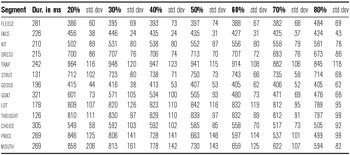
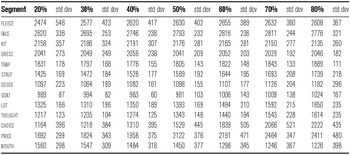
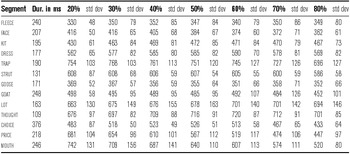
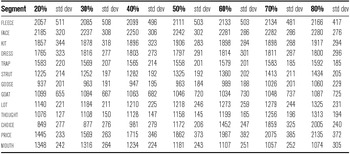
Formants’ Hertz values are provided for reference in the appendix, but because all speakers have unique physiological traits related to the size and length of their vocal tracts, the plots contain normalized values. We use the Lobanov method of normalization due to its comparative advantage in preserving phonemic and social variation while reducing physiological difference (Adank, Smits & van Hout Reference Adank, Roel and Hout2004). Using the same methods outlined for spontaneous speech, formant values were extracted from /h/-initial words in the wordlist for the four vowels at the corners of the English vowel space: had, hot, heed, and who'd. The mean and standard deviation of the vowels’ midpoints were calculated, and these were used to normalize the formant values from both the wordlist tokens and the interview data. Wordlist recordings were used for calculating the speakers’ vowel spaces because wordlist data tend to be less centralized and thus better represent the outer boundaries of a speaker's vowel space. Moreover, this ensured that the measurements used for normalization were comparable across speakers, since not all speakers produced all vowels in all phonological contexts during the interviews.
3 Hawai‘i English vowel spaces
3.1 Midpoint values
In order to examine the vowel system of Hawaiʻi English, we begin by discussing vowel plots based on the midpoints of F1 and F2, for the wordlist data and for spontaneous speech. We then turn to plots of the first and second formant trajectories in order to investigate the possibility of differences in the movement of the vowels across time.
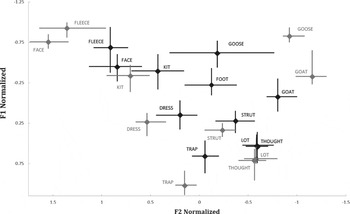
Figure 1 shows the median values of each vowel's temporal midpoint for both the wordlist and spontaneous speech data. Crosses extend to the interquartile values of each midpoint, showing the amount of variation in midpoint values across tokens and speakers (see Ferragne & Pellegrino Reference Ferragne and Pellegrino2010). Thus, each cross accounts for the inner 50 percent of the data analyzed, as an indicator of each vowel's central tendency and also its relative variability. In comparing vowel plots from the wordlist with those from spontaneous speech, the spontaneous data are more centralized than that from the wordlist. The high peripheral vowels fleece and goose are lower in the space in the spontaneous data, and the low peripheral vowels are higher. The vowels along the front dimension are proportionally backer, while the vowels along the back dimension are fronter. For the most part, the difference between the formants of the vowels in spontaneous versus read contexts reflects the centralization that is related to shorter durations and less careful speech, though the difference exhibited in goose is more than just centralization, as there is a great deal of variability in F2. The primary reason for this difference is the consonantal context effects that will be discussed later in this section, though another possible cause for this difference is the that goose in particular has been shown to exhibit atypical behavior in F2 due to environment and prosodic effects (Hillenbrand, Clark & Nearey Reference Hillenbrand, Clark and Nearey2000). Apart from centralization, there were few inconsistencies between the two types of data. We first discuss the consistencies, since we feel we can more safely say that these are characteristic of Hawaiʻi English, and we then turn to those where there is less (and in some cases very little) consistency across the two data elicitation types.
The medians and interquartile ranges of the midpoints of readings of the vowels taken from both the wordlists and interviews. Readings from the wordlist are shown in gray while readings from the interviews are shown in black.

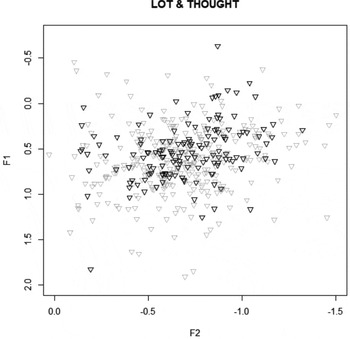
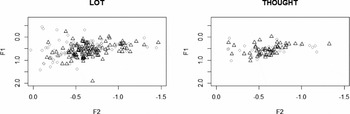
Evident in both sets of data is the merging of lot and thought. Their medians are extremely close, with their interquartile ranges showing a great deal of overlap. The overlap of individual tokens is also shown in Figure 2, where lot tokens are shown in gray while thought tokens are in black. The two vowels occupy the same space, though lot seems to have a wider dispersion than thought. In addition, contrary to the result found in Hay et al. (Reference Hay, Drager and Thomas2013), there was no distinction between pre-alveolar and non-pre-alveolar realizations. Both phonetic environments showed equal amounts of merging, as can be seen in Figure 3. Of the dialect regions included in the Atlas of North American English (ANAE), roughly half of them show a complete merger in all phonological contexts for lot and thought. The merger appears to be advancing in most other areas as well, such as in New York (Dinkin Reference Dinkin2011), New Jersey (Coye Reference Coye2009), Missouri (Gordon Reference Gordon, Murray and Simon2006), and the South (Fridland Reference Fridland2001, Irons Reference Irons2007). Our data show that Hawai‘i also seems to be participating in this merger.
Dispersion of lot and thought tokens for all speakers. The lot tokens are shown in gray and the thought tokens are shown in black.

Dispersion of lot and thought in pre-alveolar and non-pre-alveolar contexts. In each plot, pre-alveolar tokens are shown as gray circles while non-pre-alveolar tokens are shown as black triangles.

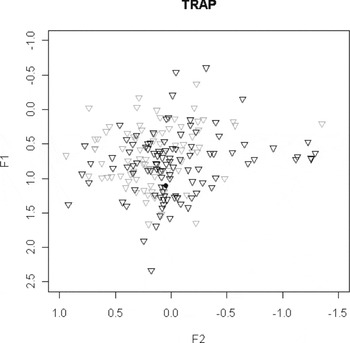
Another finding from this set of data is the realization of the short front vowels dress and trap. Though the status of kit is unclear, as its realization seems to vary widely by speaker in our data, dress and trap are realized much lower in the vowel space than in some other dialects (see Labov et al. Reference Labov, Ash and Boberg2006: 78–82). As can be seen in Figure 1 above, in both the wordlist and the spontaneous data, the F1 median of the midpoint of dress is similar to that of strut and the median of the midpoint of trap is below that of lot and thought. Thus, both dress and trap are quite low in the vowel space for these speakers. Trap is also very close to strut in backness, showing that it has been backed to a central position. A similar change, the lowering and retraction of the short front vowels, kit, dress, and trap, is found in the Canadian Shift (Clarke et al. Reference Clarke, Elms and Youssef1995) and in the Californian Vowel Shift (Eckert Reference Eckert2008). Labov et al. (Reference Labov, Ash and Boberg2006) characterize the Canadian shift as a backing and lowering of dress and trap, made possible by the space made available because of the lot–thought merger. The California Vowel Shift is characterized in Eckert (Reference Eckert2008) as including a lowering and backing of the three vowels, though it is also marked by a fronting of strut, a feature which does not seem to be part of Hawai‘i English. Furthermore, according to Eckert, Anglo speakers raise trap before nasals, whereas Latinos produce back realizations of trap regardless of context (Eckert Reference Eckert2008: 34).Footnote 4 We investigated this context in our data and found that trap is produced with a similar F1 in both pre-nasal and pre-oral contexts. Figure 4 shows instances of trap before a nasal in gray and before all other segments in black. The clouds of tokens occupy a similar place in the vowel space, and we do not observe the clear split evident in the Californian-Anglo data.
Pre-alveolar trap tokens for all speakers, showing the overlap between tokens that occur before nasal (gray) and non-nasal (black) segments.

Goose midpoint tokens from the interview data for all speakers, showing how post-coronal vowels (in gray) are fronted.

There are also some inconsistencies between the wordlist and spontaneous speech data shown in Figure 1, and these deserve special comment. As mentioned above, goose appears to be realized differently across the data sets. We believe that this is due to a combination of the overall tendency to centralize vowels in spontaneous speech and an effect of phonological environment.Footnote 5 In Hawai‘i English, like many other varieties, goose fronts in post-coronal position. This causes the distribution of readings of the second formant of goose tokens to be spread out in the spontaneous data, as non-post-coronal tokens are not fronted. In the wordlist data, however, there are no post-coronal lexical items collected, so all goose tokens are realized in the back of the vowel space. This difference provides an excellent example of the importance of collecting different types of data from participants, as wordlist data alone would not demonstrate the realization of goose across contexts if those contexts were not included in the wordlist.
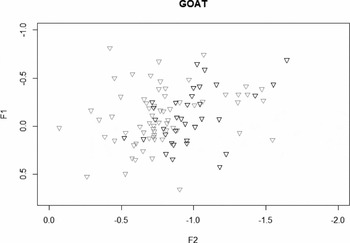
The tendency to produce fronted realizations of goose is also seen in other dialects of English and is largely mediated by preceding context. Since there are only a small number of regions in the North and the East that do not show participation in this distinctive fronting (Labov et al. Reference Labov, Ash and Boberg2006: 152) and since there is phonetic motivation to front back vowels in this context (Harrington, Kleber & Reubold Reference Harrington, Kleber and Reubold2011), it is not entirely unexpected that Hawai‘i would also participate in this change. Instances of goose in Hawai‘i English seem to follow the same pattern as that found in other dialects, with higher F2 values at the beginning of the vowel, lowering as the vowel progresses. However, other regions participating in goose fronting generally also participate in the fronting of goat in post-coronal environments (Labov et al. Reference Labov, Ash and Boberg2006). For our speakers, goat is back in all positions, regardless of preceding phonological environment. While post-coronal tokens may be realized in a slightly less back position, as shown in Figure 6, the difference between them is small and the post-coronal tokens are certainly not centralized. It is believed that the back and monophthongal quality of goat in Hawai‘i English (discussed further on) has a social significance, so this may be one reason for its resistance to fronting.
Goat midpoint tokens for all speakers, showing how the distributions of vowels in post-coronal position (in gray) overlaps with tokens in non-post-coronal position (in black).

Finally, Figure 1 shows that the position of face in the vowel space is different across the two data types. For spontaneous data, face is found lower and slightly backer than fleece. For the wordlist data, however, face is realized in a fronter position than fleece; in fact, quite far front in the vowel space. Closer analysis of this difference shows that for the wordlist data, there is a great deal of overlap in the midpoint readings of the two vowels, with the outer readings pulling the averages of the two vowels away from one another; face to the front and fleece further back.
3.2 Trajectories
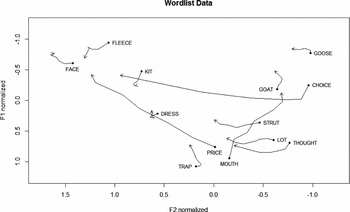
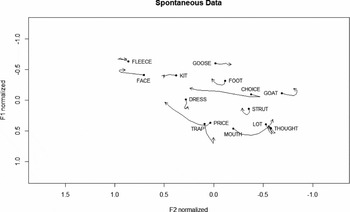
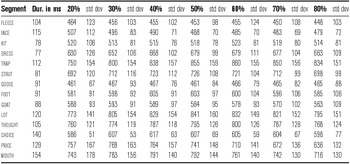
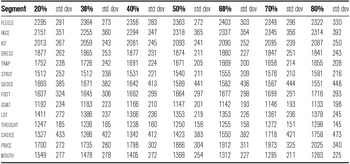
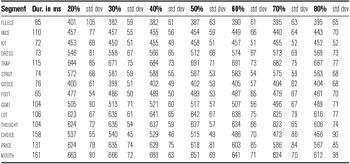
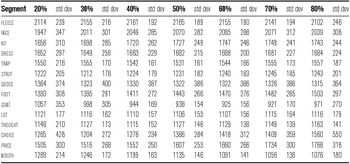
While midpoint values are informative, it is also possible for formant trajectories to play a role in, for example, maintaining distinctions between vowels, and the temporal midpoint may not be the best representation for some vowels. Thus, to explore the vowel realizations further and to examine the diphthongs, the trajectories of all of the vowels are presented in Figures 7 and 8 for wordlist and spontaneous speech data, respectively. The trajectories are calculated as means of the Lobanov normalized values from the seven equidistant points that were measured for each vowel. In Figures 7 and 8, a line is drawn between these seven points for each vowel. Drawing a line segment between measured points is used in lieu of a smoothed curve between the first and last measurements as it more faithfully represents our data. Furthermore, taking multiple measurements provides clearer information about the vowel's movement over its trajectory in comparison to, for example, taking two measurements (e.g. one at 20% and one at 80%). For example, Koops (Reference Koops2010) demonstrates that though Southern /u/ sounds monophthongal in perception, a close analysis of its trajectory behavior indicates that the vowel behaves more like a triphthong. In the current study, tables with the vowel durations and raw Hertz values at each of the seven points are provided in the appendix for each of the vowels.
Trajectories of all vowels from the wordlist, based on the means of measurements taken at seven equidistant points within the vowels’ durations

Trajectories of all vowels from the interviews, based on the means of measurements taken at even equidistant points within the vowels’ durations

Both choice and price are realized in a way that is typical of non-Southern American English varieties. Given our data, there is no marked difference between the choice vowel in Hawaiʻi and any other North American varietyFootnote 6 (Labov et al. Reference Labov, Ash and Boberg2006: 96–97). price has a raised nucleus and offglide when preceding voiceless obstruents, though this difference is not nearly as pronounced as that found in Canadian English (Labov Reference Labov2001). The trajectories of mouth are quite different across the data sets. In the spontaneous speech data, mouth begins in the F1-F2 space of the low and back realizations of trap and moves into the space of lot, and the movement of the vowel is toward the back of the vowel space rather than an upward movement. Compared to the normalized values for /a w/ in the ANAE, the nucleus of Hawaiʻi English mouth in the spontaneous data appears to be backer and higher than what is found in many other dialects (compare Labov et al. Reference Labov, Ash and Boberg2006: 105). The realization of mouth in the wordlist data begins lower in the vowel space and moves all the way into the space of goat. It moves back simultaneously, but to a much lesser degree than in the spontaneous data, where much of the movement is along the front/back dimension. Therefore, the realization of mouth from interview data is different than that found in other varieties whereas the wordlist data are similar.
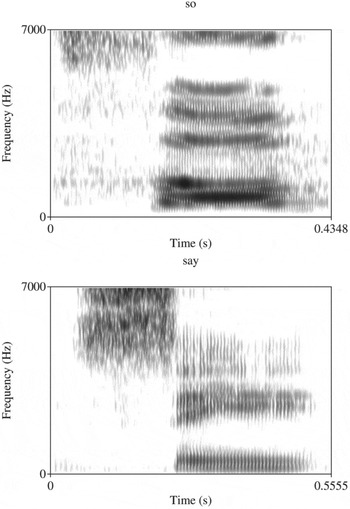
Note that the trajectories of both goat and face are very short in the data from both the wordlists and the interviews, particularly when compared to price, choice, and mouth. A typical goat vowel shows very little spectral change. This lack of spectral change is apparent in the top spectrogram in Figure 9, which is from a female speaker's pronunciation of so. The face vowel reveals a similar lack of spectral change, as demonstrated by the spectrogram of a male speaker saying say shown in the bottom spectrogram in Figure 9.
Female speaker saying ‘so’ with a monophthongal realization of goat (top), and male speaker saying ‘say’ with a monophthongal realization of face (bottom).

As mentioned above, Hawai‘i Creole shows a differentiation in phonetic environments wherein goat and face are realized as monophthongal, goat word-finally and before /m/ and face word-finally and before voiceless sounds. While in Hawai‘i English, there seems to be little difference in the amount of movement of face in each of these conditions, word-final and pre-bilabial goat segments are more monophthongal in Hawai‘i English than other segments, suggesting that attention to phonological context may be carried over from Hawai‘i Creole in the case of goat only. If the monophthongal realizations have been borrowed from Hawai‘i Creole, most speakers appear to have generalized monophthongization to all instances of face after transfer. These relationships are shown in Figure 10.
Face and goat trajectories for all speakers. Word-final and pre-voiceless tokens of face are shown in gray, and word-final and pre-bilabial nasal tokens of goat are shown in gray.

The monophthongal quality of the Hawai‘i English goat vowel is not entirely unique to Hawai‘i, nor is the monophthongal quality of face. These two vowels are realized without their upglides in parts of the Northern Midwest, and are lengthened and most common before voiceless consonants (Gordon Reference Gordon, Kortmann, Schneider, Burridge, Mesthrie and Upton2004). Several researchers view the monophthongal realizations found in these varieties to be consequences of language contact, and Thomas (Reference Thomas2001) notes that places where goat and face are realized in this way are regions that have had high numbers of second language speakers. While the languages of influence may be different in Hawai‘i and the Northern Midwest, Hawai‘i English has been in constant contact with other languages over an extended period of time, and many of these languages also have monophthongal /o/ and /e/ (e.g. Japanese, and Hawai‘i Creole).
5 Conclusion
This study has provided an acoustic analysis of the vowels of the dialect of English spoken in Hawai‘i, highlighting the ways that Hawai‘i English is different than other varieties of English, while also noting similarities. The realizations of vowels in Hawai‘i English are found in varieties of English spoken in the continental United States. The amalgamation of the various realizations, however, is not found elsewhere. The similarities between Hawai‘i English and other dialects referred to above involve regions throughout the Northern and Western dialects of North America, and the vowel system described herein does not behave exactly as any of these regional varieties. There are many influences on language use in Hawai‘i, including political ties, tourism, immigration, and geographical isolation. Thus, we might expect that English in Hawai‘i would be affected by any or all of these factors, and that people born and raised in Hawai‘i might speak a unique variety of English. We hope that this paper sets the groundwork for the continuation of acoustic phonetic work in Hawai‘i English (on the consonants, vowels, intonation patterns, and the socially meaningful ways in which these realizations may vary), and that these data serve as a foundation in understanding the dialect.
Acknowledgements
We would like to thank Chris Koops for his comments on an earlier version of this paper, and Rebecca Clifford, Heather Davis, Ākeamakamae Kiyuna, Justin Ragasa, Ruth Robertson, and Molly Ward for their help with data collection. We would also like to thank Kent Sakoda for his help with understanding the sounds of Pidgin/Hawai‘i Creole. Thank you also to the anonymous reviewers for your very helpful comments. Finally, we would like to express our thanks to our participants for allowing us to record and analyze their voices. All errors, of course, remain our own.
Appendix. Frequency values
Frequency values from spontaneous speech for 1st and 2nd formants for both male and female speakers at 20%, 30%, 40%, 50%, 60%, 70%, and 80% through the duration of the vowel
Females’ mean F1 values, collected from wordlists, at seven points throughout the vowel, shown in Hertz.

Females’ mean F2 values, collected from wordlists, at seven points throughout the vowel, shown in Hertz.

Males’ mean F1 values, collected from wordlists, at seven points throughout the vowel, shown in Hertz.

Males’ mean F2 values, collected from wordlists, at seven points throughout the vowel, shown in Hertz.

Females’ mean F1 values, collected from interviews, at seven points throughout the vowel, shown in Hertz.

Females’ mean F2 values, collected from interviews, at seven points throughout the vowel, shown in Hertz.

Males’ mean F1 values, collected from interviews, at seven points throughout the vowel, shown in Hertz.

Males’ mean F2 values, collected from interviews, at seven points throughout the vowel, shown in Hertz.